
Vox clamantis in deserto






David Warsh: Putin, doping at the Olympics and history
When a co-founder of the Russian Anti-Doping Agency died unexpectedly, in February, a couple of months after the world anti-doping authority accused Russia of widespread state-sponsored cheating and corruption, it didn’t make the news. When his 52-year-old successor died two weeks later, of a heart attack, after cross -country skiing, it did.
When the agency’s former laboratory chief fled Russia for Los Angeles in May, it made the front page of The New York Times. Grigory Rodchenkov described an elaborate state-run doping program at the Sochi Winter Olympic Games, in which at least 15 Russian medal-winners participated. Anti-doping experts and members of a Russian intelligence service worked nights, passing supposedly tamper-proof bottles of urine back and forth through a hand-sized hole in the wall, in order for samples to be ready for testing the next day.
No sensible person doubts that the Russian government has been cheating on its doping tests – or that ultimate responsibility lies with Sports Minister Vitaly Mutko, a Vladimir Putin ally since the early ’90s, and with Putin himself.
What was there to be gained? Medals, obviously. In the Winter Games in Vancouver, in 2010, Russia won 3 gold medals and 15 altogether. Four years later, as the host in Sochi, Russia dominated the games, winning 13 gold medals and 33 overall. The comeback served to burnish the narrative of turnaround under Putin, at least for domestic consumption
But what about larger question, of Russia going forward as member of the community of nations? What does the doping scandal tell us about what Putin is trying to accomplish? To glimpse the outlines of a satisfying answer to that question, you have to take a longer view – much longer. You have to start with the Cold War, and with the former Soviet Union.
. xxx
Next year will mark the hundredth anniversary of the Bolshevik Revolution. Get ready for an avalanche of commemoration. For a concise statement of what that was all about, it’s hard to beat the opening sentences of Jonathan Haslam’s Russia’s Cold War: From the October Revolution to the Fall of the Wall (Yale, 2011):
“On the grand scale of history, the Cold War stemmed directly from a thoroughgoing revolt against Western values established since the Enlightenment, a wholesale rejection of an entire way of life and its economic underpinnings increasingly dominant since the seventeenth century, and the substitution of something new and entirely alien in term of culture and experience. That revolt began with the October Revolution in 1917.’’
A longtime professor of history at Cambridge University, Haslam today is serving a six-year term as the George F. Kennan Professor at the Institute for Advanced Study, in Princeton. Russia’s Cold War is utterly absorbing, as helpful as anything I have seen for understanding the course of developments after World War II, thanks to the simple expedient of tracking the course of the Soviet experiment largely through Russian eyes.
For our purposes, let’s fast forward to 1980, when the Summer Olympics were held in Moscow, and the U.S. stayed away, in protest of the Soviet invasion of Afghanistan. Barely noticed at the time was China’s return to the Olympics after an absence of 24 years, four years after the death of Mao Zedong. The Chinese skipped the Moscow session that year, but sent 24 athletes to the winter games, at Lake Placid.
By 1980, the Soviet Union was already in crisis, Haslam notes. Soviet growth, which averaged 3.4 percent from 1961 to 1975, had slowed to 1.1 percent a year from 1976-1990, even as population was increasing 14 percent. Oil and gas exports had soared during the 1970s, but the proceeds had been spent on the military-industrial complex, Third World aid and agricultural imports instead invested of new enterprises. Grain imports had tripled since 1973. Now energy prices had peaked. Real oil prices would fall 90 percent during the decade.
By 1983, Ronald Reagan and European NATO allies, especially France, were turning up the pressure. The Soviets were technologically weak; Reagan proposed the Strategic Defense Initiative, or “Star Wars” defense, as it became known. Arms limitation talks were called off. Espionage became more brutal on both sides. The next four years or so, as described by former Washington Post reporter David Hoffman in The Dead Hand: The Untold Story of the Cold War Arms Race and Its Dangerous Legacy (Doubleday, 2009), were genuinely scary. After the Reykjavik summit, in October 1986, at which Mikhail Gorbachev surprised everyone by proposing a 50 percent cut in strategic weapons in exchange for the West agreeing to not deploy SDI weapons, tensions slowly abated
Haslam:
“[W]hether one likes to admit it or not, the Carter-Reagan build-up in counterforce systems, the anticommunist zeal within Reagan’s administration, and the obsession with space-based defense played a key role in the unraveling of Soviet security policy across the board… Thatcher’s endless berating of Gorbachev, untiring pressure from Kohl, and the hard line of the Bush administration when faced with requests for financial aid all played their part in forcing the Soviet leadership to reconsider past policy and move to ever more radical change so as to enable perestroika to advance at home.’’
Let’s skip over the decline of Gorbachev and the rise of Boris Yeltsin, fascinating though that story is, described in Autopsy on an Empire: The American Ambassador’s Account of the Collapse of the Soviet Union (Random House, 1995), by Jack Matlock. Let’s skip over, too, the wild and wooly ’90s, which are well-covered in Yeltsin: A Life (Basic Books, 2008), by Timothy Colton. This is a Sunday morning column, after all. And as for China’s explosive growth after 1978, let’s simply mention Ezra Vogel’s Deng Xiaoping and the Transformation of China (Harvard, 2011), with its matter-of-fact account of Deng’s suppression of student demonstrations in the “Beijing Spring” of 1989.
Thus we arrive at 1999, when, for reasons that are made clear in The New Tsar: The Rise and Reign of Vladimir Putin (Knopf, 2015), by Steven Lee Myers, Yeltsin, having maneuvered Putin into office as prime minister, resigned abruptly in his favor on the last day of 1999. Myers has written a remarkably good book. I am going to skip over most of that, too.
. xxx
On the eve of taking over, Putin produced a blueprint to accompany his 2000 campaign for the presidency. In fact, “Russia at the Turn of the Millennium’’ had been prepared by German Gref, another member of the circle that had launched his career back when St. Petersburg was still known as Leningrad, but Putin had carefully read and annotated the document and it was fundamentally his. Posted on the government Web site on Dec. 28, it was a new kind of campaign document, at least for Russia.
The dramatic turn in global development of the previous 20 or 30 years had caught the Soviet Union mostly unaware, Putin wrote. The Russian empire had been powerful, but it hadn’t been rich. Its GDP had halved in the ’90s; its GNP was a tenth of that of the U.S. and a fifth of China. For the first time in centuries, Russia was in danger of slipping into the second or even third rank of nations.
The reason why was not in question. Putin:
“For three-quarters of the twentieth century Russia was dominated by the attempt to implement communist doctrine. It would be a mistake not to recognize, and even more to deny the unquestionable achievements of those times. But it would be an even bigger mistake not to realize the outrageous price our country and its people had to pay for the social experiment…. The experience of the 1990s vividly demonstrates that our country’s genuine renewal without excessive costs cannot be achieved by merely experimenting with abstract models and schemes taken from foreign textbooks. The mechanical copying of other nations’ experience will not guarantee success either.’’
Elsewhere:
“Russia is completing the first, transition stage of economic and political reforms. Despites problems and mistakes, we have entered the main highway of human development. World experience convincingly shows that only this path offers the possibility of dynamic economic growth and higher living standards. There is no alternative.…’’
And:
“Russia was and will remain a great power…. It will not happen soon, if ever, that Russia will become the second edition of, say, the U.S. or Britain in which liberal values have deep historic roots. Our state and its institutions and structures have always played an exceptionally important role in the life of the country and its people. For Russians a strong state is not an anomaly to be discarded. Quite the contrary, they see it as the source and guarantee of order, and the initiator and main driving force of change.’’ (The document wasn’t originally posted in English; this is from a translation by Richard Sakwa, of University of Kent.)
Myers divides the saga of Putin’s life into five parts: his youth and service as a young officer in the KGB, perhaps the least corrupt and best-informed agency in the dying empire; his rise to power in the ’90s as a member of the circle that gathered around reform Leningrad Mayor Anatoly Sobchak, a law professor, and Putin’s subsequent move to Moscow as a mid-level appointee in the second Yeltsin administration; his first eight years as Russian president, 2000-2008; Putin’s service as “prime minister” under President Dimitri Medvedev when law prevented him from running for re-election; and his return to the top job in 2012. Medvedev and Putin announced a few weeks before the election that they would again switch places. Not everyone was surprised: a few months earlier after Medvedev had created a storm in Russian government circles when he failed to order a veto of a U.N. resolution that preceded the U.S.-led NATO bombing that overthrew the Qaddafi regime.
Myers sees “no clear purpose” in Putin’s return in 2012, other than “the exercise of power for its own sake.” The Russian president had restored neither the Soviet Union nor the czarist empire over the course of a dozen years, Myers writes. Instead Putin had created “a new Russia, with the characteristics and instincts of both. Brief and fragile in the ’90s, democracy has vanished. Putin had made himself the indispensable leader. He would not encounter much opposition if he chose to run for re-election in 2018. He would be only 72 years old after leaving office in 2024.’’
I am more inclined to take Putin at his word. The expansion of NATO membership that began with Bill Clinton over Yeltsin’s objections, and which continued under George W. Bush and Barack Obama, seems to me one of the central themes in understanding the course of events in Russia since 1992. Putin gave a clear account of Russian objections in a speech in Munich in February 2007, and warned against further expansion. In August 2008 Medvedev waged and won a short war with neighboring Georgia after the would-be NATO member sought to annex South Ossetia. Then came the events in Ukraine in 2014, when Russia seized Crimea from Ukraine after a change of government in Kiev. Putin defended his right to do so in a vigorous speech, “The Spring Snaps Back.” Sanctions followed; the Russian economy has since tumbled into recession. The events in Ukraine represented a “fundamental break,” Myers writes. Putin no longer cared how the West would respond.
. xxx
So where does Olympic cheating fit in? I don’t know the Russian psyche well enough to expound with any conviction on the intricate system of relevancies surrounding the issue. Why Russians Like Vladimir Putin, by state-funded Russia Today television commentator Peter Lavelle, is probably representative of what many ordinary Russians say to themselves. What ordinary Russians think about the deaths of anti-doping officials – or runaway oligarchs, journalists, and turncoat spies – is not part of his story.
I do know that, like all the rest of us — all other thinking citizens, not just those of us in the West – Putin has been pondering the outcomes of a series of epic natural experiments performed over the last hundred years. The attempt to radically transform human nature under communism failed. Markets work, and the combination of international trade and technical change make most people richer, though inevitably some are made worse off. During the ’80s, U.S. and NATO spending contributed to the Soviet collapse. China after 1978 retained its apparatus of political control and boomed; Russia after 1989 abandoned its apparatus of control and fared much less well.
Finally, as columnist Michael Powell just reminded us yesterday in The New York Times, Putin knows that the U.S. had a considerable Olympic doping scandal of its own during its strenuous contest for supremacy with the Soviet Union, especially after the 1984 Los Angeles Olympics amid Ronald Reagan’s “Morning in America” re-election campaign. Under a headline that began, “Lest We Forget …,” Powell wrote:
“For much of the 1980s and 1990s, the United States had a pervasive doping problem in Olympic Sports that was enabled by the USOC {U.S. Olympic Committee}. Test results disappeared, doped-up athletes ran and jumped and swam their way to medals, and complicit coaches prospered. Our Olympic leaders and corporate sponsors and many of us in the news media placed hands over eyes and blocked ears at talk of American doping.
“So the doping scandal probably doesn’t tell us very much about Putin’s larger designs and ambition. It may gain him something domestically; internationally, IT probably doesn’t cost him very much. The Western press doesn’t like him very much, anyway. See David Remnick, "Trump and Putin: A Love Story,'' if you doubt it. Remnick is a distinguished journalist, author of Lenin’s Tomb: The Last Days of the Soviet Empire (Random House 1993) and Resurrection: The Struggle for a New Russia (Random House 1997). Since 1998, he has edited The New Yorker. But, having been a correspondent in Moscow for four years, he is also a charter member of what I have called “the Generation of ’91” – idealists in government and policy circles caught up in the fervent hope that Russia would become more like the US. It already has. It may become yet more so.’’
Perhaps that is the moral of the doping scandal. Both nations cheated in hopes whipping up patriotism, in the throes of risky attempts to improve their positions. In the U.S., the government never was directly involved, and no one was killed, though guilty officials were promoted to senior positions. In Russia not everyone was involved: 271 athletes were cleared to compete, 118 fewer than had been entered. Unattractive as the Russian approach may have been over the decades to American values, in general the Russians have increasingly, slowly, come to play by shared rules.
David Warsh is a long-time financial journalist and economic historian and proprietor of economicprincipals.com, where this first ran.
Hot, lazy and full
"August creates as she slumbers, replete and satisfied."
-- Joseph Wood Krutch

Not great at pastoral care

'The Minister's Black Veil,'' by Varujan Boghosian, in his show at the Berta Walker Gallery Wellfleet (Mass.) through Aug. 21.
Llewellyn King: Vietnam wants to be U.S conduit to North Korea
Can Vietnam talk some sense into North Korea, and in so doing make itself the go-to country in Asia for diplomatic fixes? There are those in Hanoi, and quite a few scattered across the foreign policy establishment, who think so.
Vietnamese President Tran Dai Quang believes so, and would like to be the intermediary between the United States and North Korea.
Back-channel talks — if they can be called that — have begun. Influential American academics have met with leaders in Vietnam and President Quang has been involved. An idea, however inchoate, is in the air in Hanoi – and the government would very much like to see the concept grow.
For Hanoi, being useful to both Washington and Pyongyang, would help Vietnam gain international stature, as well as accelerate its importance in the region.
Globally, Asian scholars and diplomats are hoping to see strong initiatives, particularly from the United States, to affect the seeming intractability of a number of issues in Southeast Asia, which include North Korea’s adventurism and China’s continued expansion in the South China Sea. An additional irritant is China’s damming of the Mekong River, starving Vietnam, Laos and Cambodia of water.
No one involved believes that a communications channel will cause Kim Jong-un, the North Korean leader, to abandon his war games with rocket and missile tests. But they do believe that when and if there is a need to have some kind of opening to North Korea, and to speak to its obtuse leadership, Vietnam is uniquely well-placed facilitate a conversation.
Vietnam, like North Korea, has fought the United States. It also knows what it is like to be dependent on China for its survival, as North Korea is and as North Vietnam was. It also knows what it is like when that kind of lifeline of dependence goes wrong. Vietnam fought a war with China in 1979, with intermittent clashes until 1990.
Hanoi’s hopes to become a bigger player in the Asia diplomatic firmament extend beyond helping the United States with Pyongyang. It would like to be a bigger player in general in Asian diplomacy and use its unique history with the United States and with China to make it a valuable go-between with other countries including Myanmar and even Iran.
“Vietnam feels it has come of age among nations and wants to play a role in offering its good offices to the United States and other world powers,” says a Vietnamese academic, who lives in the United States and is involved in these early diplomatic moves. He says Vietnam, after the fall of Saigon in 1973 and the abrogation of the peace treaty in 1975, and the United States have come a long way and enjoy very good relations. Polls show the United States is favorably regarded by 78 percent of the Vietnamese population of nearly 100 million. President Obama visited a thrilled Vietnam in May. Eight percent of the foreign students studying in the United States are from Vietnam.
But all is not completely rosy. The foreign policy establishment in Washington, as well as a plethora of civil rights groups, worries about human rights in Vietnam, its authoritarian ways and the treatment of dissidents.
Particularly vexing to those who would like to see Vietnam become a kind of Asian Switzerland, friendly to all and skilled at bringing disputatious parties together, is the treatment of journalists, bloggers and others who are imprisoned when they run afoul of the Vietnamese leadership’s sensitivities. Press freedom is high on the list of reforms the West in general would like to see if Vietnam is to realize the role which it seeks.
For its part, Vietnam would like to see the United States take a stronger stand against China’s virtual annexation of the South China Sea and to pass the Trans-Pacific Partnership agreement. Here, there are real fears that the hostile political climate in the United States will do damage to its relations with Southeast Asia at a critical time.
Still, Vietnam wants ever-closer relations the United States and a bigger diplomatic role in Asia. The feelers are out.
Llewellyn King is a long-time publisher, editor and columnist and host of White House Chronicle, on PBS. This column originated on Inside Sources.
On the edge of space
"One summer night, out on a flat headland, all but surrounded by the waters of the bay, the horizons were remote and distant rims on the edge of space."
-- Rachel Carson
James P. Freeman: 1966 was a very good year for Frank Sinatra
“To do is to be – John Stuart Mill
To be is to do – Jean-Paul Sartre
Do be do be do – Frank Sinatra”
--Graffiti, Cambridge University Library, 1966
It was in the Mad Men era, before things got really weird, excessive and decadent.
People dressed up for airline travel. Mini-skirts were all the rage while gentlemen still adorned stingy-brimmed fedoras. Batman, Star Trek and How the Grinch Stole Christmas all made their television debuts in living color but Vietnam was beamed into living rooms nightly in black and white. The U.S. Supreme Court affirmed “Miranda Rights’’ and LSD was made illegal. Project Gemini was exploring new frontiers in outer space and, for the first time in 400 years, the leaders of the Catholic and Anglican churches exchanged fraternal greetings, on earth, in Rome.
As a counter to Berkeley’s counter-culture, Ronald Reagan was elected governor of California. The average home cost $14,200 and a gallon of gas cost just 32 cents. Mercury Record Company introduced the music cassette to the U.S. market and fans burned vinyl records in reaction to reading that John Lennon said the Beatles were “more popular than Jesus.” The Jimi Hendrix Experience recorded “Hey Joe.” And a 50-year-old, with a style and swagger all his own, won the Grammy Award for Best Vocal Performance, Male, for “It Was a Very Good Year.” The man was Frank Sinatra and the year was 1966.
This was the environment Sinatra was operating in 50 years ago. He was enjoying success again in the mid-sixties -- in music and movies, having returned from the brink of extinction in the early 1950s. But 1966 was different. There was a definitive creative tension in popular music that year, where the contemporary electric sounds --the cacophony -- were colliding with the more traditional acoustic sounds -- the symphony. In his astute cultural observation, author Jon Savage in 1966: The Year the Decade Exploded concludes, the year began in “pop” and ended in “rock.”
“It was the year,” Savage writes, “in which the ever lasting and transient pop moment would burst forth in its most articulate, instinctive and radical way.” The 7-inch single outsold the long-player for the last time. “After 1966, nothing in pop would ever be the same.”
The pace of change and the drive for even greater expression in popular culture, in general -- and music, in particular -- could render someone hopelessly dated and irrelevant rather quickly, if they did not act. Fear of being left behind competed with a desire to be current. Sinatra, too, must have sensed something in the air, that tension.
The year before, in 1965, Sinatra’s music (especially on the album September of My Years, which, incidentally, won Album of the Year at the 1966 Grammy Awards, and on “It Was a Very Good Year,” the single that yielded Sinatra the above Grammy for Best Vocal Performance, Male) was tinged with reflection and tortured with resignation, surely as a consequence of hitting middle age.
His first release of 1966 was in March, with Moonlight Sinatra. Recorded in late 1965, it was familiar territory, romantic and ruminative; another in a series of concept albums, playing off of Beethoven’s “Moonlight Sonata” theme. It was new but not innovative.
In his famous April 1966 Esquire magazine essay, “Frank Sinatra Has a Cold,” written mostly in 1965, Gay Talese noted that the entertainer “survives as a national phenomenon, one of the few prewar products to withstand the test of time.” But he still craved relevance, not just survival.
In 1966, Sinatra -- beyond The Voice but not yet The Chairman of the Board -- wanted to be cutting-edge, yet retain his classic style. Personally and professionally he reflected perfectly the “tumult” and “urgency” of the year Savage wrote about: Sharp-edged and sharply dressed, he held the freakish, Technicolor of bohemian hippiedom in absolute disdain. But he married Mia Farrow, then sporting a modern Twiggy-like hairdo, just 21 years old. And musically, as then-young music producer, Jimmy Bowen, said, “he wanted Top 40 radio… he wanted hits.” Where The Beatles were happening. As he had done over a decade beforehand, he would have to radically retool his sound. That would require adding a new instrument to the repertoire to introduce new tones and colors. Something hip.
The Vox Continental organ (and later the Hammond B3) was a staple in many of the mid-sixties hits in popular music. Transistor-based, it was able to replicate a “reedy, eerie” sound, but also looked and sounded futuristic. It was the signature sound on the Animals’ “House of the Rising Sun,” and used by the likes of The Beatles, The Dave Clark Five, The Monkees, and, later, The Doors -- all hit makers.
Recorded on April 11, 1966 and distributed hastily via plane and courier (fearing a version by Jack Jones would hit the airwaves before his version), Sinatra’s “Strangers in the Night,” (a product of producer Bowen and engineer Ernie Freeman) became a massive success, reaching number one in the United Kingdom (June 4) and the United States (July 2). It would be the last Sinatra song to hit the top of the Billboard charts and features a “surprisingly quixotic scat” coda: “dooby-dooby-do.” A new, but immortal, Sinatraism.
Despite the achievement, as Will Friedwald notes in his extraordinary book, Sinatra! The Song is You, “the rest of the Strangers [In the Night] album had been originally earmarked for another project; Sinatra and Reprise annexed the material under the ‘Strangers’ banner out of a quick need for an album to complement his mega-hit single.”
Ironically, the singer initially hated “Strangers.” Even with a melodic hook and moody hesitancy the sound came from familiar territory. The remaining collection, wrote Friedwald, was a “set so beautifully done it almost seemed as if Sinatra were apologizing for the original track.” And that’s where things got interesting.
Paired with long-time arranger Nelson Riddle (largely responsible for creating the classic Sinatra soundtrack, as defined by the test of time), it was Riddle who, according to an iTunes review of the album, “wanted to modernize Sinatra within believable limits.” Irrepressibly, “The Popular Sinatra,” announced the back cover to the LP, “Sings for Moderns.” In a kind of throw down, Stan Cornyn’s liner notes warn that Sinatra, “defies fad. He Stayeth.”
Two tracks, sequenced behind “Strangers,” heralded the new Sinatra sound, the organ-infused “Summer Wind” and “All or Nothing at All.” They were among “the last fully realized, top-drawer examples of the Sinatra-Riddle collaboration.”
The “Summer Wind” was the “greatest triumph” of the collaboration in its ‘60s phase, concludes Friedwald. The song employs two orchestras – the organ and the big band – that “become a countermelody and background riff to Sinatra’s exposition of the central melody.” Riddle constructed a stunningly catchy “leitmotif to represent the breeze,” where the organ lifts into a crescendo and softly fades away, the protagonist’s “fickle friend.” If anything, the organ adds a contemporary texture to the track. It reached number 25 in the charts on Oct. 1, 1966, but retains a remarkable staying power, a favorite of fans even today.
“All or Nothing at All,” a Sinatra ballad first recorded in 1939, was given a complete reworking; an up-tempo, jazz-inspired swinging swirl, the organ is even more emphatic. Riddle’s liberal use of it, combined with a more pop-oriented rhythm section, presents a modern, sophisticated masterpiece -- where the singer is at his most commanding, confident and in control, in years. Here, the organ and orchestra “don’t play at the same time but trade phrases back and forth like two warring big bands in a Savoy Ballroom battle.” It is arguably the quintessential post-modern Sinatra tune. So utterly cool, it never approaches parody status, a dreadful hallmark of some of Sinatra’s later work.
Released on May 30, Strangers in the Night would remain on the charts for 43 weeks and would be Sinatra’s last number one album, and, incredibly, his last with Riddle and his orchestra. Clocking in at 27 minutes and 10 seconds, a complex compression of old and new, the album would revitalize him. Indeed, Sinatra was back, standing tall, a hit maker again.
Keeping the momentum going, in July Sinatra at the Sands was released as a double album, featuring live performances of the 1966 incarnation of the brash, Rat Pack leader. Taken from a series of shows recorded at the hotel’s Copa Room, in January and February of that year, it contains none of the year’s new material. Remarkably, it does not even anticipate the new sound or direction. Playful and cascading with attitude as wide as America, it does, however, showcase Quincy Jones’ fine traditional arrangements and Count Basie’s solid orchestra.
That’s Life, released on November 18, did further the exercise in experimentation, reaching number 6 on the album charts. The single, “That’s Life”, is propelled, right from the opening bars, by a rhythmic and melodic organ, more rooted in the blues, than jazz, and way up in the final mix. Gritty and a bit more raucous than its predecessors, the song peaked at number 4 on the charts, fittingly, on Dec, 24. After “Strangers,” it would be the second in a trilogy (the third being 1969’s “My Way,” which reached number 27 on the charts that year) of songs most closely identified as “ballad-rock” or “contem-pop” during the1960s Reprise era. As Friedwald writes, this formula became the “dominant mode” of future Sinatra singles and albums.
On March 2, 1967, Sinatra’s efforts from the previous year were fully recognized. The song “Strangers in the Night” won Grammy’s in four different categories, including Record of the Year and Best Vocal Performance, Male. Sinatra at the Sands won Stan Cornyn the award for Best Album Notes. And, in an exquisite twist of fate, Strangers did not win Best Album honors. Instead, exhibiting a bizarre sense of humor, Grammy voters awarded Sinatra: A Man and His Music (an album issued in 1965, too late for inclusion in the 1966 Grammy nominations) that distinction.
Five years before a self-imposed “retirement,” and two decades before becoming a caricatured figure, Frank Sinatra was at the height of his artistic and commercial appeal in 1966. You can almost still see him, impeccable, with a lit cigarette and tumbler of whiskey, as he might have described that year in his own unique vernacular: “Oh, it was a gas.”
James P. Freeman is a New England-based writer and a former columnist with The Cape Cod Times
Chris Powell: Too much even for Cole Porter?
Until a few weeks ago the Connecticut Department of Children and Families was using its Internet site to propagandize children about sex and politics by publicizing a list of purported definitions of sexual terms.
The definitions held that every form of sexual expression and conduct is normal except one and that anyone who questions anything sexual is an enemy of the people. The one purportedly sexual deviancy admitted by the list was interest in guns. "Someone who has an unnatural romantic relation with firearms or affection for or love of firearms" was termed an "ammosexual."
"Binary sex" was defined as "a traditional and outdated view of sex, limiting possibilities to 'female' or 'male.'" The supposedly proper outlook was reflected by the term "gender gifted" -- "a person whose capacity for gender expression exceeds the binary." Such people, according to the list, might better be described with a new gender-neutral pronoun, not by "he" or "she" but rather "ze."
Even a few ordinary words were redefined and sharply narrowed in their meaning by the list. "Advocate" became "a person who works to end intolerance, educate others, and support social equity for a group," while "ally" became "any non-lesbian, gay, bisexual, or transgender person who supports the rights of LGBT people."
The list forbade use of a few sexual terms as disrespectful even as it advocated a disrespectful term of its own: "gayby," the baby of a same-sex couple, as if babies need to be classified according to the gender of their parents. (What are the children of "gender-gifted" parents to be called? Thankfully the list didn't say.)
It's good that the country has become more libertarian about entirely personal matters. No one really needs to care much that, for example, some men want to dress as women and some women want to dress as men. But whose bathrooms they use is another matter.
For it is one thing to tell children that much of gender is a social construct, that sexuality can be fluid and mysterious, that gender dysphoria is a phenomenon deserving scientific study, and that it may be best to be kind to people and refrain from unnecessary judgments. It is something else to tell children that social norms have no legitimacy, that people must be politically correct, and that the only perverts are people who support the Second Amendment.
Even the songwriter Cole Porter, who, in a repressive era, still managed to enjoy plenty of extravagance, including sexual extravagance, recognized lyrically, in this song “Anything Goes,’’ the necessity of a little social order.
In olden days a glimpse of stocking
Was looked on as something shocking.
But now, God knows --
Anything goes. ...
The world has gone mad today
And good's bad today
And black's white today
And day's night today
And that gent today
You gave a cent today
Once had several chateaux.
The sexual-definitions page on the DCF internet site was disclosed by an internet site, the Daily Caller, whose report was publicized by the Connecticut Capitol Report Internet site, whereupon the department recognized the content's inappropriateness for children or at least its political indefensibility and removed it.
A DCF spokesman told the Journal Inquirer that the department had no idea where the definitions came from or who was responsible for conferring the department's endorsement on them and that it would be impossible to find out. This only raised suspicion that the department didn't want to know and that, as its troublesome record suggests, its attitude remains that even with children anything goes.
Chris Powell, an essayist on cultural and political topics, is also managing editor of the Journal Inquirer, in Manchester, Conn.
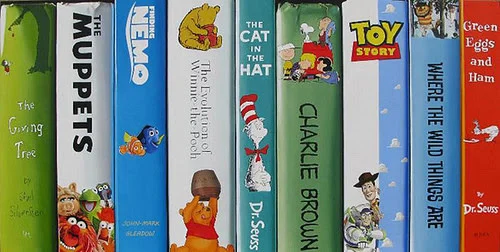
In search of lost time
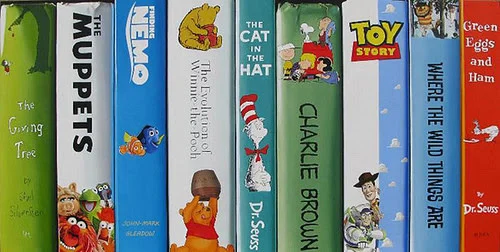
"Forever Young'' (photo realist painting), by John Mark Gleadow, at his recently ended show "John-Mark Gleadow Live,'' at the Wit Gallery, Lenox, Mass.

Robert Whitcomb: Blue State economics; overrated fracking; ugly Route 114
This is the latest "Digital Diary'' column from GoLocal24.
Two somewhat related stories: General Electric moving to Boston and the Red State-Blue State economic divide
For decades, we have heard about the glories of the Sunbelt, now often called the Red States. These generally Republican-run places are cited as exemplars of economic growth. Their leaders also like to assert that unlike the Democratic-leaning Blue States they’re centers of individualism, and not wallowing in tax-supported programs.
But in any event, the Red States continue, after all these years of air-conditioning, to have the nation’s highest levels of poverty, the worst health indicesand the worst sociological problems, such as violence, illegitimacy, drug addiction and so on. The Blue States are, generally, the rich states and with much better social indices.
That’s in large part because the rich folks who run the Red States do everything they can to keep their taxes low, and thus, for example, favor sales taxes, which are regressive, over income taxes, which are not. Thus public infrastructure – in education, health, transportation and environment -- suffer.
Meanwhile, the Blue States, for their part, tend to put money into physical infrastructure, education and mass transit (in their metro areas) that help the locals keep churning out innovation. (Actually, if they want to get richer, they’d increase investmentin these areas.)
The suckers in places like much of the South follow the fool’s errand of electing anti-tax fanatics to keep the local lobbyists happy, with such political tools as touting the glories of guns to help distract the citizenry.
Because of federal policies that favor moving tax money from rich places to poor ones, Blue States heavily subsidizethe Red States, for all their latter’s whining about the Blue States’ ‘’socialistic’’ tendencies. After all, the people in the richer states pay more in federal income taxes than the ones in the poorer (generally the Red States) because Blue States’ policies have tended to make their citizens better paid than those in the Sunbelt. The real welfare states are the Red States. (An exception in all this is Utah, with its Mormon rigor.)
I have written about thesocio-economicgap between the Red and Blue States for years. And that gap seems to be widening again. Look at a new statistical analysis in an essay “The Path to Prosperity Is Blue,’’ by Professors Jacob S. Hacker and Paul Pierson in theJuly 31 New York Times using U.S. Census and other government data.
Which gets us to GE, whose management, led by CEO Jeff Immelt, is moving from one Blue State, Connecticut, to Boston. The main reason is the density of engineering and other talent in Greater Boston, which Massachusetts’s very good public education, healthcare and transportation infrastructure has helped to build up. (That many of GE’s up-and-coming stars don’t particularly like their current boring suburban office park also played a role in the decision to leave the Nutmeg State. They want to be in an exciting city.)
Of course, while Connecticut’s infrastructure has been slipping it still is superior to most of the Red States’. Just the fact that it has lots of passenger trains gives it an advantage.
Massachusetts, under GOP and Democratic governors, has long accepted the importance of investment in infrastructure. That has helped make it and keep it rich – rich enough to send some of its residents’ income to Red States.
As Professors Hacker and Pierson note at the end of their piece: ‘’{W}e should remember that the key drivers of growth (and incomes} are science, education and innovation, not low taxes, lax regulations or greater exploitation of natural resources.’’
“And we should be worried, whatever our partisan tilt, that leading conservatives promote aneconomic model so disconnected from the true sources of prosperity.’’
xxx
Speaking of “exploitation of natural resources,’’ some states, and parts of states, have had famous booms from fracking for natural gas. One of the selling points has been that because burning natural gas contributes less to global warming than burning oil or coal, that fracking is an environmentally better. But increasing evidence that fracking releases huge amounts of methane at and near the drilling sites suggests that it’s far from the wonderful transition fuel away from oil and coal that it has been made out to be. Redouble efforts to boost wind, solar, hydro and geothermal, please.
xxx
It’s clear that the cold killer Vladimir Putin’s Russia is engaged in a relentless cyberwar against the United States. Failure to find ways to push back to undermine the Putin regime will only embolden him further. Clouding everything is Donald Trump’s admiration for Putin and the developer’s business dealings in Russia.
xxx
The Trump phenomenon and the return of the Clintons has of course elicited much denunciation of them. But why not more attacks on the people who hired them – the voters? Mr. Trump and Mrs. Clinton have been public figures for a very long time, and most oftheir strengths and dirty laundry have long been visible. In spite of that, Republican and Democratic primary voters gave them the nod, even when other candidates with good records in public service were running in both parties.
Perhaps this year’s primary campaign might encourage party organizations, in the states and nationally, to reduce the roles of the primaries, now conducted in electronic media echo chambers, and increase the influence of party elders. The idea would be to save the parties from an increasingly ill-informedcitizenry who wants to hear again and again the mantras that reinforce their wishful thinking.
Bring back the “smoke-filled rooms’’ filled with smart political operators insulated to some extent from the short-termism and demagoguery that some of the electronic media, in particular, facilitate.
Okay, this will probably neverhappen because it would be called “undemocratic’’ even though the parties legally have the right to determine their own rules for nominee selection. Indeed, the body politic would be healthier if the parties wrestled back the power and influence that they have lost to special-interest groups and hysterical media. The general election, of course, is quite a different creature.
And, while we’re at it, let’s bring back some of that pork-barrel spending, aka “earmarks’’ (a very minor part of government budgets) that has been a lubricant in getting legislation crafted and passed in the days before Congress became gridlocked.
Reform reform.
xxx
Route 114 in Middletown, R.I., on the way to the way to partly gorgeous Newport, is one of America’s uglier and more depressing stretches of strip malls and other commercial crud. Now that the Internet and middle-class wage stagnation are ravagingbrick-and-mortar stores, we can expect many more stores on this depressing stretch to close.
Hopefully, the abandoned commerce will be replaced by trees and other plants and such possible routes to a better future as solar-energy arrays or wind turbines.
xxx
Providence needs more revenue but putting parking meters around the Thayer Street retail area has been a loser so far. The confusion and cost to drivers associated with the meters has scared away many customers, already inconvenienced by the many parking spaces handed over to Brown as part of a desperate payment-in-lieu-of-taxes deal a few years back.
The money that the city makes from the meters may end up more than offset by lower real-estate taxes because of commerce killed by themeters. The city needs an agonizing reappraisal of this policy for Rhode Island’s Harvard Square.
Wayland Square, a few blocks away, seems to have avoided the worst effects of the meter invasion. Nearby free street parking and some large parking lots are probably the main reasons. Indeed, the square bustles with stores (some new) and eateries and lots of walkers and buyers.
In both places, denser and more frequent mass transit would help address the parking problem, and in a fiscally fairer way: The added sales tax that would go to the state from prospering stores and restaurants would help finance RIPTA expansion, in a virtuous circle.
Robert Whitcomb is overseer of New England Diary.
PCFR 2016-17 season to start off with Brexit
From the Providence Committee on Foreign Relations (PCFR), which will lead off its 2016-17 season with famed international political economist Prof. Mark Blyth.
See: thepcfr.org for details on the PCFR, whose email is: pcfremail@gmail.com.
Mr. Blyth, whom some of you have heard on NPR commenting on Brexit, will speak on Wednesday, Sept. 14, on Europe after Brexit.
He is Eastman Professor of Political Economy andProfessor of Political Science and International and Public Affairs at Brown.
He is an internationally celebrated political economist whose research focuses upon how uncertainty and randomness affect complex systems, particularly economic systems, and why people continue to believe stupid economic ideas despite buckets of evidence to the contrary. He is the author of several books, including Great Transformations: Economic Ideas and Institutional Change in the Twentieth Century (Cambridge: Cambridge University Press 2002, Austerity: The History of a Dangerous Idea (Oxford University Press 2013, and The Future of the Euro (with Matthias Matthijs) (Oxford University Press 2015).
Coming fast after that will be:
Prof. Morris Rossabi, probably the world’s greatest expert on Central Asia and particularly Mongolia: a democracystuck between the police states of Russia and China, Sept. 21. How does this faraway country do it? He’ll be speaking to us soon after returning from Mongolia and other points in Asia.
Then:
FormerU.S. Ambassador to Slovakia Tod Sedgwick, on thetense situation in Central Europe, Oct. 5.
Meanwhile, the World Affairs Council and the PCFR are preparing a forum for Oct. 20 at the Hope Club on the foreign-policy visions of the U.S. presidential candidates. Stay tuned.
Naval War College Prof. James Holmes on the geopolitics of global warming, Nov. 15.
German General Consul Ralf Horlemann on the role of Germany in an E.U. without the U.Kand with an aggressive Russia pressing in from the east, Dec. 14.
International epidemiologist Rand Stoneburner, M.D., on Zika and other burgeoning threats to world health, Jan. 18.
Indian Admiral Nirmal Verma, on military and geopolitical issues in South and Southeast Asia, Feb. 15.
Dr. Stephen Coen, director of the Mystic Aquarium, on the condition of the oceans, March 8.
Brazilian political economist and commentator Evodio Kaltenecker on April 5 to talk about the crises facing that huge nation.
Joining us June 14 will be Laura Freid, CEO of the Silk Road Project, founded and chaired by famed cellist Yo-Yo Ma in 1998, promoting collaboration among artists and institutions and studying the ebb and flow of ideas across nations and time. The project was first inspired by the cultural traditions of the historical Silk Road.
We’re working on a May speaker. And we’re trying to keep some flexibility to respond to events. Everything in human affairs is tentative. ”We make plans and God laughs….’’
We are talking with Michael Soussan to talk about the U.N., diplomacy, Iraq and his book Backstabbing for Beginners, now being made into a major movie; an expert on the ocean-fishing industry, and an international travel expert.
Our 2015-2016 season speakers included:
Evan Matthews, director of the Port of Davisville, on international shipping changes, particularly in the context of the expansion of the Panama Canal.
Greg Lindsay, writer, futurist and expert on cities around the world and their relationship to airports.
Hedrick Smith, PBS documentary maker, former star foreign correspondent.
David Alward, Canadian general consul.
Allan Cytryn, international cybersecurity expert.
Andrew Michta, U.S, Naval War College expert on Russia and NATO.
Rima Salah, High U.N. humanitarian-relief official.
Eduardo Mestre, Cuban-American civic leader and international banker.
Scott Shane, of The New York Times, expert on international terrorism.
Paul Glader, author, foreign correspondent and expert on Germany.

Election Day art

"Imaginary Explosions, vol. II'' (sketch and film still), by Caitlin Berrigan, in the show "Obstacle Course,'' at New Art Center, Newton, Mass., Oct. 28-Nov. 22.
David Warsh: A sense of grief at conventions
The disparity between political conventions was striking. The Democrats were in good shape. The Republicans were a mess. Yet, as New York Times columnist David Brooks observed on PBS television, a sense of loss, of grief, pervaded both. What is that about?
Much more than individual losses were at issue; the deaths of soldiers in combat, of police officers in the line of duty, of victims of excessive force, of sufferers from treatable diseases. The new mood involves both parties in at least the tacit recognition of the existence of a series of limits – on trade, immigration, military force, inequality, atmospheric pollution.
For 70 years these limits often have been overlooked, ignored or even denied in favor of the pursuit of the overriding goals of peace, prosperity and global poverty reduction, under the banner of “globalization.” At last these limits have become unavoidable.
The emergence of the Trump and Sanders insurgencies in the U.S., the Brexit vote in Britain, the formation of ultra-nationalists movements in Europe, are obvious markers of the new mood. The sea-change presents itself in different ways in different places. ISIS is a protest too.
Writers on the left have been taking positions on these issues for years, not that a broad-based political platform has yet appeared. In "Abdication of the Left,'' Dani Rodrik, of Harvard University’s Kennedy School of Government, offered a short survey last month:
“Consider just a few examples: Anat Admati and Simon Johnson have advocated radical banking reforms; Thomas Piketty and Tony Atkinson have proposed a rich menu of policies to deal with inequality at the national level; Mariana Mazzucato and Ha-Joon Chang have written insightfully on how to deploy the public sector to foster inclusive innovation; Joseph Stiglitz and José Antonio Ocampo have proposed global reforms; Brad DeLong, Jeffrey Sachs, and Lawrence Summers (the very same! [as earlier pressed for financial deregulation]) have argued for long-term public investment in infrastructure and the green economy.
The Economist recently added to the canon Alberto Alesina, of Harvard, and Enrico Spolaore, of Tufts, for their 2003 book The Size of Nations. Robert J. Gordon, of Northwestern, belongs there as well, for The Rise and Fall of American Growth: The US Standard of Living since the Civil War. And, on the eve of the Brexit referendum, Angus Deaton, of Princeton, last year’s Nobel laureate in economics, weighed in with a short essay, “Rethinking Robin Hood.”
“As Rodrik wrote, ‘There are enough elements here for building a programmatic economic response from the left.”’
So far the Right is flummoxed. The Wall Street Journal holds out for accelerated growth. The Economist sees mainly a schism between open and closed, whereas the new cautiousness with respect to the disruptive effects of immigration and trade wants a more pragmatic, conciliatory metaphor.
Meanwhile, Donald Trump is a one-man wrecking crew of Republican Party orthodoxies: immigration, trade, social issues, the Iraq war, Russia, NATO cohesion. Who knows what will be left of the party when he is done?
Ten “battleground” states, according to the Website 270toWin: Colorado, Nevada, Iowa, Wisconsin, Ohio, Pennsylvania, Virginia, North Carolina, New Hampshire, Florida. One hundred days until Tuesday November 8. My guess is that Clinton will win them all. Then we can get on with the hard part, coming to terms with grief.
David Warsh, a long-time economic historian and financial journalist, is proprietor of economicprincipals.com, where this originated.
Falling before the fall
"When in still air and still in summertime
A leaf has had enough of this, it seems
To make up its mind to go; fine as a sage
Its drifting in detachment down the road."
- Howard Nemerov, "Threshold''
Leigh Vincola: Eat your sea vegetables
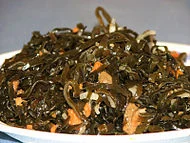
Seaweed salad
Fifty years ago, Charlie Yarish was fishing on Long Island when he first took an interest in seaweed. Where the fishing was good, he found certain types of seaweed, and where it wasn’t so great, other types of seaweed gathered.
A spark was ignited for the young scientist, and Yarish took this excitement all the way to Dalhousie University in Halifax, where he was invited to participate in a three-month intensive field research program as an undergraduate. Yarish set out to answer all of his questions about this beautiful, diverse vegetation by growing it. Ultimately, the time he spent in Halifax change his life forever.
Today, decades of research and experimenting later, Yarish is known as the grandfather of the emerging sea vegetable farming industry in the United States. He is a professor of marine science at the University of Connecticut and runs a seaweed research lab out of the Stamford campus.
There’s really not a lot to argue about when it comes to seaweed farming. It’s good for the environment, good for human health and good for the fisheries economy.
Yarish recognized this early on and saw, that while scientifically possible, no large-scale seaweed production was happening in the United States the way it was in Asia. He set out to change that making it his goal to nurture East Coast kelp farmers by following an “open source” approach.
All new farmers have access to Yarish’s knowledge and research. In return, Yarish asks that each farmer make his or her products available to his research lab, so that he can continue to unravel the mysteries of seaweed and figure out the part it plays in marine biology.
Yarish puts it simply, “Sea vegetable farming has a great environmental benefit, while also providing a valuable commodity that is nutritionally beneficial.”
Environmentally friendly
Seaweed farming is as much about coastal resource management as anything, and the environmental benefits are central to Yarish’s work. As the co-chair of the Long Island Sound Study, Yarish showed that similar to shellfish, seaweed is a nutrient bioextractor, meaning that seaweed removes harmful nitrogen, phosphorus and carbon from the water.
Kelp farming also doesn’t require fresh water. When it comes to farming kelp, all that is needed is already there and the outcome is that the marine ecosystem is left healthier than how it was found.
Health benefits
The most common farmed kelp species in New England is the sugar kelp. Winged kelp and horsetail kelp are other species that are in experimental phase. These varieties — and all seaweeds — are high in the essential minerals, trace elements and vitamins that we often don’t get from our diets.
In fact, in the United States, much of the food that we eat is nutrient poor, and our health is suffering because of it. Sea vegetables concentrate the minerals from the seawater, making them some of the most nutritious plants on earth. Adding just a few grams of dried seaweed to your meal daily can have a huge impact on overall health.
Fisheries economy
There are those who believe the future of fishing is aquaculture. “Kelp farming is giving people from the fishing industry the opportunity to have new, viable careers,” Yarish said.
The technology of sea vegetable farming is rather simple. Reproductive plants are grown in a laboratory to the size of a pinhead and wrapped around a PVC spool. When they’ve reached the right size, the seeds are unraveled in the sea on long lines and set to grow for five to six months.
Harvest season is in the spring, and from there are several ways to get seaweed to market: fresh, frozen, dried and value added. Today, 14 farmers from New York to Maine have seized this opportunity and are operating under licenses from their own state. Yarish is connected to each of them.
“I pass on all knowledge to the new farmers and that is essential to the success of our industry,” he said.
One key farmer to Yarish is Bren Smith, owner of Thimble Island Ocean Farm and executive director of GreenWave in New Haven, Conn. As a lifelong commercial fisherman, Smith was looking for solutions to help an ancient industry that was failing him and became the face of Yarish’s research.
Smith developed what he calls 3D Ocean Farming, a farming model that includes seaweed and shellfish and addresses issues of the environment, health and the economy. At GreenWave, part of Smith’s mission is to help new kelp farmers. The Farm Startup and Farmer Apprentice Program provides assistance with finding grant money, permitting, training and essential gear. GreenWave also is creating restorative hatcheries, where seeds are produced for sea vegetable farming, and is building seafood hubs where farmers can process and produce foods for distribution.
GreenWave is one of a few locations in New England that owns a “kelp cutter,” a seaweed processing machine that Yarish helped bring to the United States from a Korean manufacturer. The kelp cutter has significantly improved the amount of time it takes to get sea vegetables to market, and is an essential piece of equipment for large-scale productivity.
Currently, many if not most of the kelp farmers in southern New England use the cutter at GreenWave, according to Yarish. Maine Fresh Sea Farm also has one. and Yarish’s goal is to “sprinkle the cutter all over the East Coast as the industry demands it.”
He said the infrastructure is there for a seaweed boom, and like many food trends much of its success lies in the hands of chefs. When chefs begin experimenting with sea vegetable flavors and pushing people’s pallets, mainstream enthusiasm will follow.
For instance, Providence chef Jason Timothy of Laughing Gorilla Catering has been experimenting with kelp from the Point Judith Kelp Co. this summer.
Yarish has had a full career but he’s not done yet. Now that the foundation has been laid and kelp farming is taking hold on the East Coast, he is busy looking 10 or 15 years ito the future and making plans for better protecting the planet’s ocean environments. Yarish’s attention has turned toward figuring out how seaweed and ocean biomass will be a solution to future energy problems.
Editor’s note: The author is a partner in Laughing Gorilla Catering.

Trying to put us back in charge
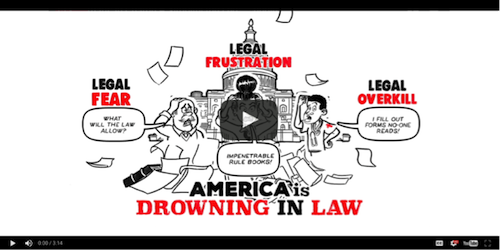
My old friend Philip K. Howard sent this along. It’s well worth reading, and joining Common Good. http://www.commongood.org/
-- Robert Whitcomb
Common Good has launched a national bipartisan campaign – called “Who’s in Charge Around Here?” – to build support for basic overhaul of the federal government.
The campaign, which has been endorsed by leaders from both political parties, will show how to remake government into simple frameworks that let people to take charge again. Rules should lay out goals and general principles – like the 15-page Constitution – and not suffocate responsibility with thousand-page instruction manuals.
The campaign is co-chaired by former U.S. Sen. Bill Bradley (D.-N.J.) and Common Good Chair Philip K. Howard. Among those who have already endorsed the campaign are former Governors Mitch Daniels (R.-Ind.) and Tom Kean (R-N.J.), and former U.S. Sen. Alan Simpson (R.-Wyo.) who co-chaired the Simpson-Bowles Commission on government reform.
Americans are frustrated. They can’t take responsibility. Bureaucracy is everywhere. The president can’t fix decrepit roads and bridges. A teacher can’t deal with a student disrupting everyone else’s learning. Physicians and nurses take care of paperwork instead of patients. A manager can’t give an honest job reference. Parents get in trouble for letting their children explore the neighborhood. Washington does almost everything badly. Take any frustration, and ask: Who’s in charge around here? That’s a problem.
Modern government is a giant hairball of regulations, forms and procedures that prevent anyone from taking charge and acting sensibly. No one designed this legal tangle. It just grew, and grew, and grew, until common sense became illegal. That’s the main reason that government is paralyzed. That’s why it takes a team of lawyers to get a simple permit. Every year, the red tape gets denser.
Our campaign will use video and social media to drive a national conversation to return to Americans the freedom to let ingenuity and innovation thrive in their daily lives. The campaign’s first three-minute video, narrated by Stockard Channing, uses white-board animations to explain how government should work. Titled “Put Humans in Charge,” the video is available here.
Americans know that common sense has taken a backseat to stupidity, but political debate has not drawn a clear link to suffocating legal structures. The campaign features “The Stupid List” showing how obsolete and over-prescriptive bureaucracy undermines infrastructure and the environment, schools, health care, jobs and the economy. The Stupid List is available here.
“Whether you are Democrat or Republican, you are a citizen first,” said Co-Chair Bill Bradley. “A functioning government serves a citizen’s interests. We need sensible reform that encompasses compassion and responsibility. Common Good demonstrates such an outcome is not impossible.”
“Voter frustration with broken government will only grow until Washington reboots to reset priorities and cut needless bureaucracy,” said Co-Chair Philip K. Howard. “It’s time to mobilize for a dramatic overhaul – replacing mindless compliance with common sense. That’s the only way to liberate American initiative and make government responsive to modern needs. America’s global competitiveness depends upon it.”
The campaign’s Website is Take-Charge.org. The campaign is active on Facebook, Twitter and Instagram. For further information, contact Emma McKinstry at emckinstry@highimpactpartnering.com.
Common Good (www.commongood.org) is a nonpartisan reform coalition whose members believe that individual responsibility, not rote bureaucracy, must be the organizing principle of government.
The founder and chairman of Common Good is Philip K. Howard, a lawyer and author of The Rule of Nobody (W. W. Norton) and The Death of Common Sense (Random House), among other books.
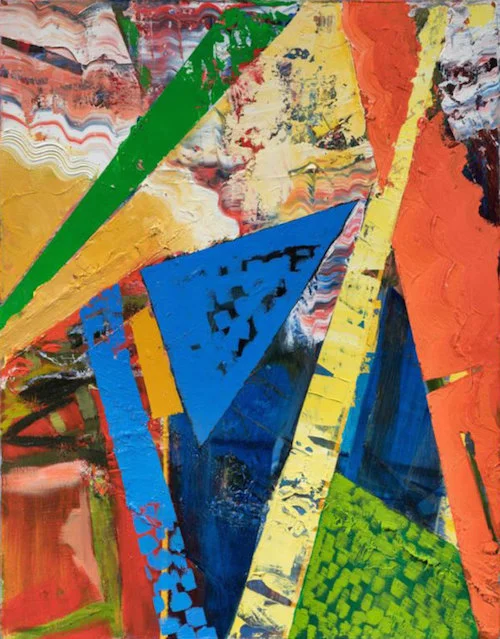
It works in politics, too
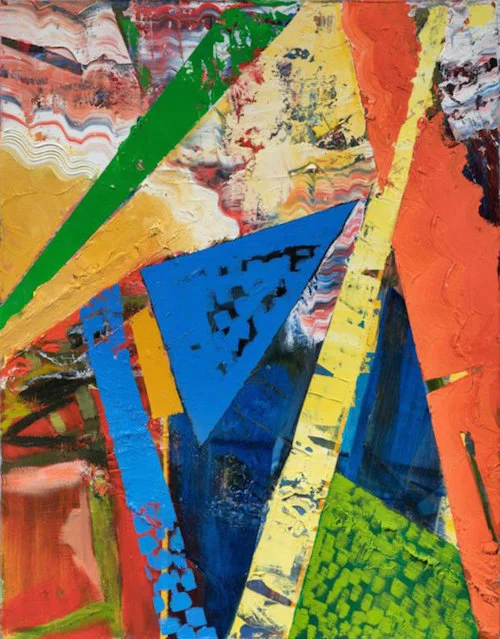
"Triangulation'' (oil and acrylic on canvas), by Irwin E. Thompson, in the show "Pathways to Abstraction'' at New Art Center, Newton, Mass., Sept. 20-Oct. 22. The gallery says that the "abstract scientific principles that were central to his career as a medical researcher have long fueled his interest in nonrepresentational art.''
Josh Hoxie: GOP platform includes more tax breaks for the rich
Via OtherWords.org
It was easy to get caught up in the circus that was the Republican National Convention. Rousing speeches (plagiarized and original) and raucous floor votes make for great television and funny Internet memes.
Unfortunately, as we’ve come to expect from events organized by Donald Trump, the convention was decidedly light on substance. For an inkling of what a Trump administration might actually do, we have to look elsewhere.
Let’s start with Mike Pence, the newcomer to the ticket and a relative unknown to most voters.
The self-described Tea Partier served six terms in the House of Representatives and one term as governor of Indiana. He’s best known for his staunchly conservative stances on social issues, notably on reproductive health and LGBT rights.
But Pence also stands way outside the mainstream on economic issues, with a clear track record of coddling the wealthy. He’s an ardent supporter of trickle-down economics, the debunked idea that giving more money to the rich will somehow help the rest of us.
As a congressman in 2010, for instance, Pence made the bizarre claim that raising income taxes would decrease federal revenue. Unsurprisingly, Politifact — the Pulitzer Prize-winning fact-checking group — rated that false.
More recently, Pence put his ideas into action in Indiana, enacting a major tax cut that helped give his state one of the most regressive tax structures in the country.
Indeed, on taxes, Pence is largely in line with Trump, who’s shown significant support for massive tax cuts for wealthy people like himself.
During the primary, Trump released a tax plan that would cost a whopping $24 trillion over the next two decades, the nonpartisan Tax Policy Center calculates — most of it in cuts for high earners. Now in the general election, reports indicate he may be promoting a more modest package of cuts, but an unmistakably regressive one nonetheless.
Under the soaring subtitle “Restoring the American Dream,” page one of this year’s Republican Party platform dives straight into ideas around tax reform. The tax code, it claims, “has the greatest impact on our economy’s performance.”
“Getting our tax system right,” it goes on, “will be the most important factor in driving the entire economy back to prosperity.” What Trump and Pence consider “getting it right” is massive tax cuts for the ultra wealthy.
How do the American people feel about this?
I’m sure many see cutting their tax bill as a great thing — the adult equivalent of an elementary school class president promising to end homework or double the length of recess. But most see past this.
Cutting taxes means major cuts to programs that millions of families depend on. It means slashing budgets or perhaps completely eliminating child nutrition programs, senior prescription health plans, and early-childhood education programs. And the list goes on.
Perhaps that’s why for the third year in a row, an annual Gallup poll shows that most Americans agree with the statement, “Our government should redistribute wealth by heavy taxes on the rich.”
Further, a recent poll from Pew Research showed 78 percent are either “very bothered” or “somewhat bothered” by the “feeling that some wealthy people don’t pay their fair share.”
Trump’s candidacy has been anything but predictable, and there’s a long way to go before Election Day in November. But with Pence on the ticket and the GOP platform in place, it’s clear tax cuts for the wealthy are part of the plan.
Josh Hoxie directs the Project on Opportunity and Taxation at the Institute for Policy Studies.
'With parching power'
"All your renown is like the summer flower that blooms and dies; because the sunny glow which brings it forth,
soon slays with parching power."
-- Alighieri Dante

No they aren't anymore

"Love Outside the Box'' (mixed media), by Betsy Cook, in her show "Stitches in Time,'' at the Monkitree, gallery, in Gardiner, Maine, through Aug. 24.