
Vox clamantis in deserto





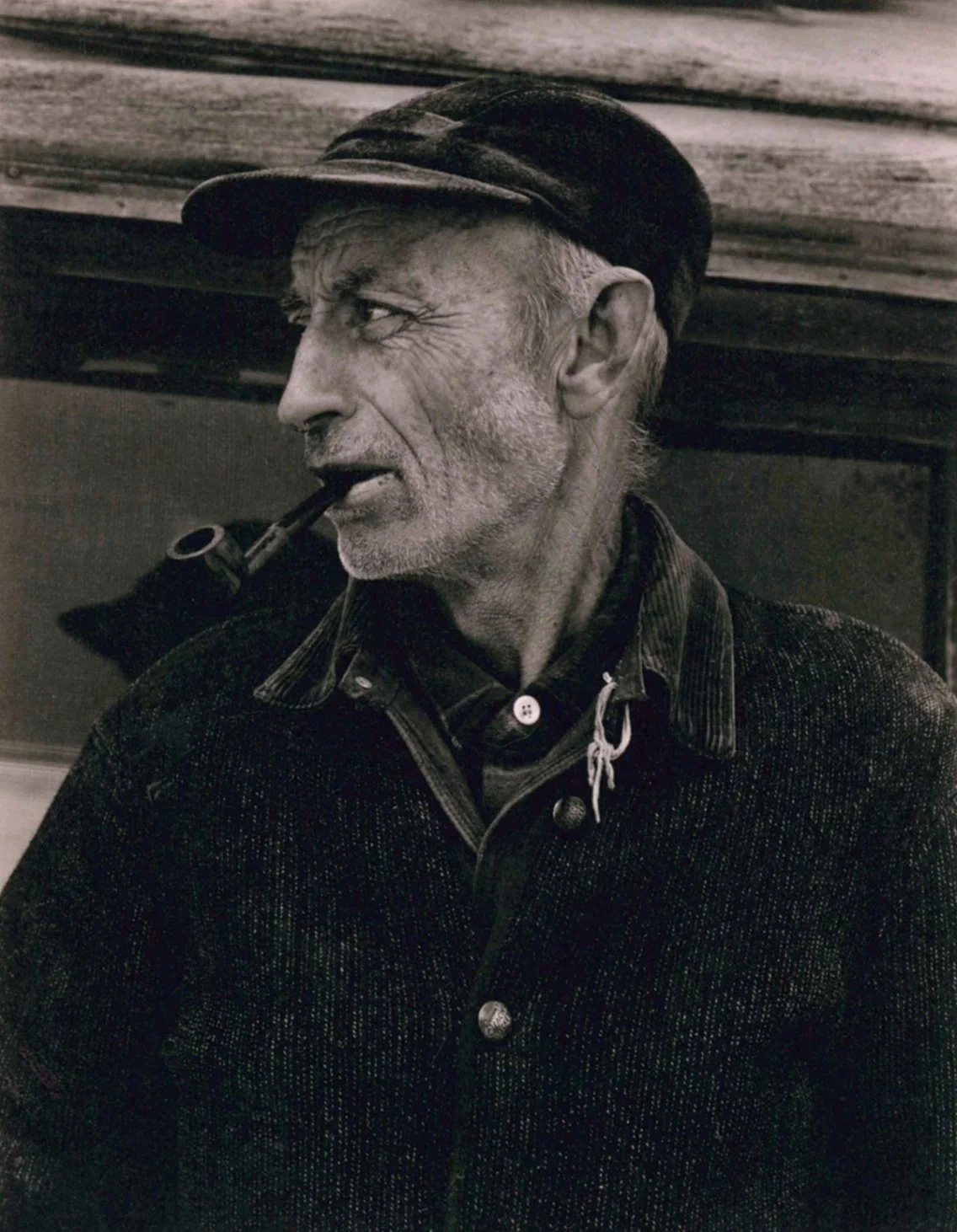



Report From Rhode Island - 1940's social values
.....State of Rhode Island, with an emphasis on the social values & attitudes its citizens hold in such high regard.
An overview of the State of Rhode Island, with an emphasis on the social values & attitudes its citizens hold in such high regard. The film also shows how industry in the State is helping America's efforts during World War Two.
The stunning revival of an old N.H. mill city
Read how the old textile mill city of Manchester, N.H., has become a marvel of the new millennium. This Politico piece says that "Manchester had to let go of the past before it could move forward.''
James P. Freeman: Michael Dukakis: The last traditional progressive
Beaming over the convention of the consonant caucus, the speaker uttered what would be the second most memorable line in the 1988 presidential race: “This election isn’t about ideology, it’s about competence…” This dramatic statement was later bested by George H.W. Bush’s “read my lips…” tax pledge.
Atlanta’s Democratic National Convention that July proved to be, in retrospect, the last stand for Michael S. Dukakis, the last traditional progressive. As progressivism gallops to a new beat of populism, modern-day revivalists should look to Dukakis as their godfather.
He is last major living link to the progressive forefathers. Born in Brookline in 1933, he was also born into the first progressive era of Presidents Roosevelt, Wilson and Roosevelt. It would mark the first time the republic would rely upon government, not self-sufficiency, for sustenance, emblematic of modern times.
Citizens needed progress up from the Founders’ ideas. A strong central government, believing in its boundless abilities, could master public and private affairs, thereby delivering happiness. The Constitution was inelastic; its limitations were to be disdained as impediments to the very progress government sought to engineer. Politics became a science.
Dukakis’s long career in public service is writ large with progressive themes. In 1965, as a young Massachusetts state representative, he introduced a measure to legalize contraceptive use for married couples, an early imprimatur of his activism. For the commonwealth’s conservative Catholic bloc in the House, however, voting on birth- control laws written by Protestants in the 1890s proved to be controversial and complicated. Boston's Cardinal Richard Cushing, remarkably, advised its members in the legislature: “If your constituents want this legislation vote for it. You represent them. You don’t represent the Catholic Church.” The bill passed.
Arguably, this episode — more than John F. Kennedy’s 1960 election to the presidency — helped convert a majority of Catholics from Republicans to Democrats in Massachusetts. Suddenly, it seemed, culture impacted Catholic politics as much as theology. Those majorities remain intact today. Dukakis was elected to the first of three terms starting in 1974 and he remains Massachusetts’s longest-serving governor.
His first attempts as a reformer were rebuffed and he lost the 1978 primary. Not nonplussed, he was reelected in 1982 with an even more robust belief in government’s efficacy.
He originally opposed the initial concept of the Central Artery/Tunnel project in Boston but expanded its scope to accommodate business and government interests. Boston’s Big Dig cost nearly $4 million a day at its peak. Initially a $2.2 billion expenditure in the early 1980s, final estimated outlays are $22 billion, to be paid off in 2038. The administration of this public-private partnership exposed a skewed risk-reward model (socializing losses, privatizing profits).
Under his leadership, after delays and denial for exemption, Massachusetts was found to be in violation of the landmark Clean Water Act. Every day 100,000 pounds of sludge and 500,000 gallons of barely treated wastewater were dumped into Boston Harbor. A federal court, not political epiphany, ensured the cleanup.
Former EPA Administrator Michael Deland said that the commonwealth’s willful disobedience was “the most expensive public policy mistake in the history of New England.” Raw sewage stopped flowing into the nation’s oldest harbor in September 2000.
Dukakis in 2009 reflected on “two of the biggest projects in history at the time.” The harbor restoration — mandated, mind you — “came in on time and 25 percent under budget.” Of theBig Dig, he said: “We all know what happened with the other.”
The difference? “It was about competence of the people running the projects…”
Few remember that Al Gore (not the elder Bush) first raised the weekend-furlough matter during the presidential primary. Dukakis vetoed a bill in 1976 that would have denied murderers, like Willie Horton, such freedom. The program was ultimately abolished after questions were raised about criminal rehabilitation.
Before there was Obamacare and Romneycare there was Dukakiscare. He signed into law the nation’s first universal healthcare insurance program in 1988. A tiny Republican minority quietly disrupted its funding, leaving it an obscure footnote to history.
At 82, still residing in Brookline, still a progressive sanctuary, Dukakis leaves a lasting legacy. He has affected the lives of more residents in Massachusetts than anyone in a century. Clearly, that is a triumph of ideology over competence. As government at all levels struggles with executing competent stewardship, people should look at Dukakis in another light. He at least addressed competence as a core competency.
New-fashioned progressives have abandoned it.
James P. Freeman is a New England-based writer for the New Boston Post. and a former columnist with The Cape Cod Times.
Preparing for bug season

"Insecta'' (detail; cut and painted paper, various sizes), by Randal Thurston, at the Museum of Art at the University of New Hampshire, Durham.
Besides the flowers coming up early after this mild winter, so insects are arriving early too.
On the early flowers: I had a deja vue experience the other day walking by a bunch of crocuses blooming on a lawn. It seemed about a day since I last saw them but in fact it was almost a year ago. Thus spring comes faster and so does fall as you get older.
-- Robert Whitcomb
Llewellyn King: Ireland's pain was America's gain
There will be the “wearing of the green” all over the world come St. Patrick’s Day on March 17. Nowhere more so than in Boston, Chicago and New York. That’s right, not even in Ireland; although they’ve gotten the hang of their own saint’s festival in recent years.
For centuries, until the Americans showed their cousins in Ireland how to party on St. Patrick’s Day, it was a somber, religious feast day.
St. Patrick was what was known as a “Romano-British” missionary, who went to Ireland in the 5th century, probably in the latter half of the century. We know this from fragments of his own writing. He settled around Armagh, in the north of Ireland, and became the first bishop of Armagh, Primate of Ireland. He described the Irish as “heathen men.”
Myth tells of St. Patrick driving the snakes out of Ireland. But myth has many faces in Ireland, and is part of the charm of the Irish – a charm that has affected the whole world, and stirs people far removed from that small and at times very troubled island to wear something green, drink and pay homage.
Not the least of the celebrations this year, as in recent years, will be in London, where so many of the agonies of Ireland had their genesis. The English — and I was born into the British Empire — have treated Ireland savagely down through the centuries. Oliver Cromwell, the English reformer, wrote of his incursion into Ireland, “God made them as stubble to our swords.” At the battle of Drogheda in 1641, about which Cromwell was writing, the English killed some 3,500 Irish patriots. Hard work with broad swords.
William of Orange, the Dutch Protestant ruler who became William III of England, Scotland and Ireland, invaded Ireland on July 1, 1690 to fight massed Catholic forces, led by James II, the deposed Catholic king of England. The two armies faced each other across the River Boyne, just to the north of Dublin. William won the battle, but his victory left a divide between Irish Protestants and Catholics which exists in modified form to this day.
The “wearing of the green” most likely dates from the uprising of 1798, when the Irish tried to throw off the English yoke with French help, and were soundly defeated by Gen. Charles Cornwallis, who was seething from his defeat in the American Revolution. The Irish, who were rounded up and hanged in groups of 20 a day by some of the English general’s officers, showed their defiance by wearing something green — often a shamrock in their hats. The English considered that an offense: sedition.
Cornwallis also oversaw the formal incorporation of Ireland into Britain. But to his credit, he fought with George III (remember him?) over Catholic emancipation, and for a while resigned his commission.
More horror from England was on the way — and persisted essentially until Irish independence in 1922. During the potato famine (1845-49), England refused to let relief ships with grain land in the belief that the famine was part of a natural order, as laid out by the philosopher Thomas Robert Malthus. One million people died as potatoes were their only sustenance.
In this case Ireland’s pain was America’s gain. Hundreds of thousands of Irish fled starvation for a new life in America. This diaspora changed Ireland and America, forever. It is how 50 million Americans claim Irish ancestry.
The Irish in America began to celebrate the national saint of their motherland in their new land — and so was born the St. Patrick’s Day joyous celebration.
To my mind, the final Irish reprisal against England is not the world recognition but that Irish writers, writing in English, not the Irish language, have had such an incalculable impact on English literature. To take a few names at random Beckett, Behan, Goldsmith, Joyce, Shaw, Synge, Swift, Wilde and Yeats.
In Ireland, there is an endless flow of wonderful language. The Irish will never say “yes” or “no” when they can give you a sentence with a flourish, which makes the mundane poetic.
Once in Dingle, my wife asked a waiter: “Is the fish fresh?”
He answered, “If it were any fresher, it would be swimming, and you wouldn’t want that would you?”
Also in Dingle, when I asked an elderly man whether the pub he was sitting outside of was open, he replied, “He would hardly be open now.”
The English occupied their land, but the Irish occupied their language and added to it with their genius. Erin go bragh!
Llewellyn King is a long-time publisher, columnist and international business consultant. This first ran on InsideSources.
Masters of letters to the editor
Years ago, not when I worked there, The Providence Journal, in its prosperous and growing days, had an annual dinner to honor the best writers of letters to the editor in the previous year.
Over the years there have been masters of that craft on the Commentary pages. Three who come to mind; Robert Riesman, an eloquent and urbane businessman, philanthropist, military expert and leading national Democrat who died in 2004; Felicia Nimue Ackerman, a Brown University philosophy professor who is still going strong, and another great friend of mine, Marvin Greenberg, a retired business executive and health-policy expert who recently died after a long, tough battle against cancer.
Whatever the occasional dissimilarities of their views, their letters usually share the concision, general knowledge, logic and humor, especially in denunciation, necessary for a memorable letter to the editor in a general-interest publication.
I'm sorry I wasn't around to attend one of those dinners where some masters of this very public craft were honored.
I should also note that good writers of letters to the editor tend to be good company in person, too.
--- Robert Whitcomb
Coming through for us
"I have said that there was great pleasure in watching the ways in which different plants come through the ground, and February and March are the months in which that can best be seen."
-- Henry N. Ellacombe
Alone inside

"Encountering --The Space Between,'' by Carolyn Enz Hack, in the group show "Them, Us & You.'' at Studio Place Arts, Barre, Vt., through April 16.
The exhibit focuses on "questions regarding how we connect with ourselves, one another and our world,'' says the gallery notes say.
Emily Schwartz Greco: The career of a sleazeball energy mogul
via otherwords.org
Aubrey McClendon, the ousted head of Chesapeake Energy who died last week in a mysterious car crash, was a Miley Cyrus businessman — a wrecking ball who blurred the lines between his own wealth and assets belonging to all Chesapeake shareholders. Both pools of money came from oil and gas fracking, the inherently destructive extraction method he championed.
Drilling by injecting water, toxic chemicals, and sand into the ground at a high pressure to fracture layers of rock has helped nearly double U.S. oil production and boosted natural gas output by 50 percent. It has also poisoned the environment, stoked climate change, triggered earthquakes and made a small number of Americans filthy rich.
McClendon leveraged his earnings to buy a stake in Seattle’s basketball team and duplicitously transplant it to Oklahoma City. He collected homes in places like Bermuda and Vail, along with antique maps and boats. At one point, he possessed 100,000 bottles of fine wine.
The Oklahoman also splurged on his conservative political agenda, bankrolling right-wing candidates and helping to finance the misleading “Swift Boat Veterans for Truth” attack ads that contributed to Democratic presidential nominee John Kerry’s 2004 defeat.
He was also a self-serving philanthropist who gave the Sierra Club $25 million to support its anti-coal campaign. To its credit, the Sierra Club rejected his donations — which McClendon treated as an investment in boosting natural gas demand — after 2010.
McClendon topped the AP’s list of the nation’s highest-paid CEOs in 2008, when his compensation totaled $112.5 million even as Chesapeake’s shares plunged 60 percent. Under his leadership, the company barely paid federal corporate taxes and became a leading purveyor of junk bonds.
Chesapeake’s board booted McClendon in 2013 after the Reuters news service revealed that he’d treated the company’s coffers like his own piggy bank and made its employees work on his private ventures. Among those side business was a $200 million hedge fund that reaped profits when Chesapeake’s stock fell.
Once the energy company made McClendon walk the plank, he boarded a golden yacht. Chesapeake gave its fired CEO 33 installments of $112,500, followed by a lump-sum payment of $7.2 million and other gilded perks, according to Bloomberg.
He launched a new fracking company called American Energy Partners. But the 56-year-old former billionaire’s fortune was already dissipating when he perished, partly because of the collapse in oil and gas prices fracking brought on.
The government has reportedly chosen to dismiss its indictment of McClendon while continuing to investigate whether the oil and gas industry is systematically ripping off landowners by rigging the bidding process for fracking leases. Chesapeake says the feds have granted it immunity.
In the days following its co-founder’s death, the company’s beaten-down shares rallied.
“The knowledge that the executive would no longer be able to exercise his influence on the company may very well have been a weight off investors’ minds,” observed Fortune’s Jen Wieczner.
McClendon was apparently worth more to Chesapeake’s shareholders dead than alive.
Emily Schwartz Greco is the managing editor of OtherWords, a non-profit national editorial service run by the Institute for Policy Studies.
Charles Chieppo: Pay for success social programs
To its many critics, President Lyndon Johnson's War on Poverty is often described as the classic 1960s social program: a well-intentioned but naive effort that spends billions of dollars year in and year out without making much of a dent in poverty.
But imagine if government only paid social-service providers if their efforts actually yielded the desired results. That's the idea behind "pay for success" programs, also known as social impact bonds. Under this concept, businesses and/or philanthropies provide up-front money for programs to address difficult social problems. If they achieve a set of measurable outcomes within an agreed-upon time period, the funders get their investments back, plus interest. If not, government pays nothing.
Pay for success programs seem to be attracting a growing number of bipartisan fans since I wrote about them in 2014, and two new programs illustrate how implementation of the concept is becoming more sophisticated.
Last month, Connecticut Gov. Dannel Malloy, a Democrat, announced a four-year initiative to keep children from 500 families out of foster care. Social workers from the Yale Child Study Center will focus on parents with substance-abuse problems as part of an intensive effort to keep the children in their homes.
No funder has been named yet for the $12 million initiative, but several have expressed interest. If successful, the state will reimburse the up-front money plus a 5 to 6 percent interest payment. It's a pretty good deal considering that Joette Katz, commissioner of the state's Department of Children and Families, told The Washington Post that Connecticut currently pays about $350 million annually for services to children in foster care and institutions.
In South Carolina, Republican Gov. Nikki Haley recently announced a $30 million, four-year program to send registered nurses who specialize in maternal and child health into the homes of low-income pregnant women to teach them parenting skills and ways to keep their children healthy. The effort is funded by foundations and a corporation.
The Connecticut and South Carolina programs highlight the opportunity pay for success presents for prevention programs that can yield long-term savings but might not get funded through the traditional appropriations process. The South Carolina program also addresses the potentially sticky issue of determining whether a program has achieved the agreed-upon outcomes by designating an MIT research group to conduct an evaluation. Such provisions enhance the integrity and perception of pay for success.
As a model that is dependent on what funders are willing to invest in, pay for success isn't the silver bullet for addressing every stubborn and costly human-services problem. But particularly during a time when some once again seeing economic clouds looming, they can be a valuable tool for helping our neediest citizens by focusing state and local government resources on the best kinds of programs -- those that actually work.
Charles Chieppo is a research fellow at the Ash Center at Harvard's Kennedy School. This originated at governing.com.
Greg Gerritt: Give up on economic growth
Via ecoRI News (ecori.org) Editor’s note: The following speech was given by Greg Gerritt, founder of the think tank ProsperityForRI.com, at a March 3 discussion, held at Brown University and co-sponsored by Main Street Resources and ecoRI News.
I have been asked to provide a bit of context and contrast this evening about the economic environment we find ourselves in.
Economic growth is dead in the old mill towns of the industrialized West, and it is never coming back. There will still be economic growth in the tropics and Asia, the places there are still untapped natural resources and indigenous communities to plunder, and the cities are swelling with people streaming out of the countryside. But in the eastern United States and western Europe what passes for growth is simply the financialization of the economy that is letting the 1 percent scoop up all of what is called growth, while everyone else gets poorer, ecosystems collapse and infrastructure fails.
On Jan. 31, the entire front page of the Sunday New York Times Book Review section was devoted to three books exploring the end of economic growth. It is time for those working in economic development to understand the new environment better and to prepare plans that match its opportunities rather than repeat the old stories. Don’t try to spin the growth machine faster, that makes it worse for most of us. We must adapt Rhode Island economic development to the low-growth environment and work to create a more widespread prosperity through reviving ecosystems and economic justice.
The Brookings report offers Rhode Island jobs for 20 to 25 percent of the population, with no plan on how to create jobs in the neighborhoods that need jobs at a living wage. It promises riches if we take orders from the Koch brothers, underfund our infrastructure and our schools by cutting taxes, and bet on industries that are harmful to the community or make jobs disappear. We are admonished to follow the dictates of the business climate indexes, but there is no correlation between a state’s business climate rankings and the health of its economy.
While simple and efficient processes are important, the history, resource base and culture of a community are much more important than the business climate in determining economic success, and there is no evidence that lax environmental, public health and safety standards improves the economy in our neighborhoods any more than subsidies to the 1 percent to build baseball stadiums.
Our response to climate change is much more important than the business climate. Our willingness to end the use of fossil fuels, create zero-net energy buildings, generate electricity from the sun and wind, grow much more of our own food, and sequester carbon in the soil will determine our fate.
As growth and jobs fade into the sunset, reducing inequality in the ownership of assets becomes much more important. As (French economist Thomas) Piketty notes, the growing inequality in and of its self is grinding down the economy. An economic plan offering subsidies to the rich for industries that are shedding employment, and chock full of subsidies to the real-estate industry is one that leaves our communities behind.
I would like to have more time to devote to the relationship between what is happening in the forest and what is happening in Rhode Island. The World Bank says that keeping the forest in the hands of the forest people, and assets in the hands of the poor, gives better outcomes than any other strategy for development, and may be the only chance we have to stop climate change.
This information needs to inform how we redevelop our old riverine neighborhoods. The disempowered, disenfranchised and marginalized people of our environmental-justice communities mirror many of the problems rainforest people have in dealing with development, and the solutions in the forest work here, too. Build economies from the bottom up, not the top down.
A holistic approach to the health of our communities — reducing pollution, reducing harms, good nutrition — serves our communities better than our current obsession with using high-tech biomedical businesses to grow the economy. Here is one little fact: It is absolutely impossible to have affordable health care for all if you use the medical industrial complex to drive economic growth. When the healthcare industry grows faster than our wages, the industry draws investment while most of us still cannot afford to go to the doctor.
Finally, pay attention to the resistance. It is global, and brings the wisdom of the world to your neighborhood. Building more fossil-fuel infrastructure such as gas pipelines and power plants will create stranded assets, pollute vulnerable communities and add to the climate disasters.
We can live in Flint, Mich., we can live in Ferguson Mo., or we can have prosperous communities that heal ecosystems and practice justice. It’s your choice.

Where the continent fades away

"Off Chatharbor Lane, Chatham, Cape Cod,'' by Bobby Baker. Copyright Bobby Baker Photography.
Former city worker tells the truth about Cianci
This piece by former Providence municipal worker Joaquim L. DeAmonim expresses a well-justified outrage that state and city officials honored, after his recent death, the profoundly corrupt former Mayor "Buddy Cianci,'' whose nonstop sleaze did great damage to the city and state. Their pathetic honoring of him was a signal to businesses and individuals who might consider moving to the state that too much much of the leadership remains at least passively corrupt.
Rake away the clowns who voted for this
The bill to control leaves and other yard debris discussed in this Providence Journal editorial may be one of the stupidest ever passed by a legislative body. If only more people who know how to read and think would run for office!
David Warsh: Of Ross Perot, Donald Trump and 'the China shock'
Donald Trump’s hostile takeover of the Republican Party is nearly complete. I was as slow as the next guy to see in coming. But now that the fox is almost in charge of the chicken coop. I have some ideas about why it happened, and why just now.
Let’s go back to the last time a billionaire decided to run for president. That was 1992, when software entrepreneur H. Ross Perot ran as an independent candidate. I was able to refresh my memory thanks mainly to a useful conference volume, Ross for Boss: The Perot Phenomenon and Beyond (SUNY Press, 2001), edited by Ted G. Jelen, of the University of Nevada at Las Vegas. This comparison last September by John Dickerson of Slate was prescient.
Perot was born in Texarkana, Texas, in 1930, the son of a cotton broker. An Eagle Scout, an Annapolis graduate, a star salesman for five years for IBM Corp., he quit in 1962 to found a software firm, Electronic Data Systems. In 1984 he sold the company to General Motors Corp., its principal client, for $2.4 billion. Four years later he and his son started a second firm, Perot Systems Corp. They sold it to Dell Inc., in 2009, for $3.9 billion
During the 1980s Perot became absorbed in POW/MIA issues in Vietnam. By the early ’90s, he had become involved in many of the larger controversies of the day. During 1991, he appeared regularly on popular television talk shows, criticizing presidents Ronald Reagan and George H. W. Bush for having failed to balance the federal budget. He portrayed Washington as being in the grip of lobbyists, many of them working for foreign interests. He criticized trade agreements. He denied having presidential ambitions.
In February 1992, Perot appeared on Larry King Live to encourage citizens to nominate him by petition in 50 states as presidential candidate of the Reform Party. He proclaimed his lack of political experience as an asset. He promised to spend as much as $100 million of his own money – more than either party could expect to raise in those days well before the Supreme Court struck down spending limitations – and argued that meant he couldn’t be bought. By June, he was running even with Bush and Bill Clinton in most polls.
That same month he got in an argument with two high-profile political consultants who urged him to immediately launch an expensive advertising campaign, and, when one of them resigned, Perot asserted that he, too, would withdraw, explaining that he felt that he had revitalized the Democratic Party by threatening to enter the contest. A barrage of negative publicity followed. Perot was ridiculed as eccentric and judged to be a quitter.
In late September Perot returned to the race, “for the good of the country,” in time for three televised debates among the candidates in October. This time he emphasized opposition to the pending North American Free Trade Agreement, and warned of the “giant sucking sound” accompanying jobs lost overseas. He spent nearly $50 million in a month on “infomercial” advertising, much of it in states that he had no hope winning.
Perot received 19 percent of the popular vote in the November election, but failed to win a single state and received not a single vote in the Electoral College. Clinton slipped past Bush with 43 percent of the popular vote. Martin Nolan, chief political correspondent for The Boston Globe for 30 years, remembers, “Perot did not defeat GHWB electorally, but more by draining attention. He made the incumbent president a ‘low-energy’ candidate.”
Four years later Perot was back, this time as the official nominee of his Reform Party. This time he polled fewer than half as many votes. He left politics and returned to the relative obscurity of the business world.
Perot’s role in galvanizing support for budget-balancing measures is still hotly debated. The Clinton administration, the Federal Reserve, Congress and the Federal Communications Commission all played a part (the FCC by facilitating the rapid build-out of communications technology and the Internet).
In any case, by the end of the ’90s, the federal budget was balanced. Perot’s criticism of trade-liberalization measures found little traction, though. The North American Free Trade Agreement became law in 1994, and the following year the World Trade Organization replaced the General Agreement on Tariffs and Trade.
Perot’s greatest influence was probably that described by his running-mate in 1992, Adm. James Stockdale: “Ross showed you don’t have to talk to [ABC’s] Sam Donaldson to get on television…. American candidates can now bypass the filters and go directly to the American, people.” Subsequent independent presidential candidates have included Pat Buchanan and Ralph Nader.
Fast forward to 2016 and Donald Trump. Much has changed since 1992.
Exhibit A is an important new essay by a trio of labor economists, arguing that trade theorists didn’t well understand what was happening in the world these last 35 years – particularly the last 10. Read “The China Shock,’’ by David Autor (of the Massachusetts Institute of Technology), David Dorn (of the University of Zurich), and Gordon Hanson (of the University of California at San Diego) is headed for the authoritative Annual Review of Economics. They argue that theorists failed to anticipate how extensive dislocations would be, especially in the U.S.:
“Just as the economics profession was reaching consensus on the consequences of trade for wages and employment [that they would be modest], an epochal shift in patterns of world trade was gaining momentum. China, for centuries an economic laggard, was finally reemerging as a great power, and toppling established patterns of trade accordingly. The advance of China…has also toppled much of the received empirical wisdom about the impact of trade on labor markets. The consensus that trade could be strongly redistributive in theory but was relatively benign in practice has not stood up well to these new developments.’’
Talk about an inconvenient truth! Is Donald Trump right? Were we fools to liberalize so quickly? I don’t think so. The short-term and medium-run costs are clearly greater than had been expected: Poorer cities are remarkably slow to adjust, with wages and labor-force participation rates remaining depressed, and unemployment rates high, for a decade and more.
But is the world a better, safer place than when it was divided into market economies, communist nations, and Third World growing ever-so-slowly, if at all? Steven Radelet, of Georgetown University, makes the case in The Great Surge, the Ascent of the Developing World (Simon and Schuster, 2015). In Global Inequality: A New Approach for the Age of Globalization (Harvard/Belknap Press, 2016), Branko Milanovic, for many years lead economist at the World Bank, describes the stresses.
In any event, it appears that most of the hectic global transition is over. Today it is China that is contemplating layoffs. The greatest gains from trade almost certainly lie ahead – but for whom?
Meanwhile, Peggy Noonan, the former Reagan/George H.W. Bush speechwriter who for many years has been an influential columnist for The Wall Street Journal, describes the new contest as between the “protected” and the “unprotected.” She recently told Karen Tumulty, of The Washington Post, “We are witnessing history. Something important is ending.”
What has already ended, I think, were the 50 wonderful years after 1945 in which the United States, having emerged less scathed from World War II, was more or less unchallenged as the world’s only economic superpower – a long splendid day in which the eight years of the Reagan administration constituted the late afternoon.
How might Trump do with issues like these in the general election? Again, Marty Nolan: “In ’92, Perot prospered in cold, remote country: Maine, Minnesota, Alaska. He was zip in the late Confederacy.” If you look at the maps of exposure to industrial competition in “The China Shock,’’ it’s the Midwest and the Southeast where the trade shocks have hit hardest. Slim chance that Trump would, like Perot, go away with a goose-egg, if he is the nominee.
That said, I fully expect Hillary Clinton to win in November. She has the right language to succeed: The task now is to fill in what has been hollowed out. If Trump is its candidate, the trick for the GOP to learn as much as possible from this election to shed the heavy burden of ideology that Trump has lampooned, to abandon the absolutism of recent years in favor of practical compromise – either that or fade into history.
So it seems possible, even likely, that Trump’s campaign will prove helpful to straightening things out between the parties. I think Paul Krugman got it exactly right when he wrote the other day: “We should actually welcome Trump’s ascent. Yes, he’s a con-man, but he’s also effectively acting as a whistle-blower on other people’s cons. That is, believe it or not, a step forward in these weird, troubled times.”
To which I can only add, yes, that’s so, as long as Trump is defeated soundly enough to discourage a third such billionaire in the future, one who might be smarter than the first two.
David Warsh, a longtime financial journalist and economic historian, is proprietor of economicprincipals.com.
Stubborn enough to get through winter

"This hill
crossed with broken pines and maples
lumpy with the burial mounds of
uprooted hemlocks (hurricane
of ’38) out of their
rotting hearts generations rise
trying once more to become
the forest
just beyond them
tall enough to be called trees
in their youth like aspen a bouquet
of young beech is gathered
they still wear last summer’s leaves
the lightest brown almost translucent
how their stubbornness has decorated
the winter woods"
- - Grace Paley, "A Walk in March''
I remember as a boy being struck by how so many of those ugly brown oak leaves hung on the trees on our windswept hilltop near Massachusetts Bay until they were pushed out by the new buds in the spring. Of course that's not nearly as amazing as flowers coming out of the ground only a few weeks after that ground was frozen solid.
-- Robert Whitcomb
Llewellyn King: DOE seduces and abandons innovative companies
I am not a government-basher per se. As a reporter, I have covered it too long to say that the bureaucracy is always incompetent and lazy. But I have also seen how the government wastes money, veers from one project to another, and is indifferent to any damage done by its autocratic ways.
The government, for better or worse, is the great risk-taker on new technologies. As such, it has added immeasurably to the wealth of the nation, from the creation of the technologies that led to the fracking boom and the Internet to the creative advances one now sees in airliners.
After the Pentagon, the Department of Energy (DOE) is the worst offender of the love-it-then-leave-it school of support for technology innovation.
The country is littered with the carcasses of abandoned projects, such as the Yucca Mountain nuclear spent-fuel repository, which was canceled by the Obama administration to please its political ally, Sen. Harry Reid (D.-Nev.). Price tag: more than $15 billion.
This cancellation has had two other damaging effects: the first is there is still no permanent place to store nuclear spent fuel, which is piling up in America; and the second is the demoralizing of talented engineers and scientists by the government’s vacillation. These effects may be as huge as the price tag.
Gifted people throw themselves into government projects and move their families across the country to the work sites. Then the government says, “Thanks for your work on the project, but we are canceling it. Now, shove off!” These contractor employees do not have government protections; they are subject to government caprice.
In South Carolina, for example, a huge project to build a plant to blend weapons-grade plutonium into nuclear fuel for civilian reactors is 70-percent completed and hanging by a thread. That is because after spending $5 billion, the DOE wants to do something else equally expensive, according to one consultant.
Or take Gen4 Energy, a small, Denver-based company that has been strung along by the DOE and now is preparing pink slips. Its plan is to build a small (25-MWe), advanced nuclear-power plant for use at mining sites, military bases and remote places that need electricity, such as Alaskan villages and those in less-developed countries. These reactors would work for 10 years and then would be swapped out and replaced with a new, factory-built module.
Robert Prince, Gen4 Energy’s CEO, who came out of retirement to lead the advanced reactor project, says it is a unique, safe design using tested materials and concepts. The Gen4 advanced reactor design was in the running for development funding from the DOE.
The DOE uses a device called a “funding opportunity announcement”(FOA), to encourage technology developers. In 2013, it issued an FOA and handed out grants of $1 million each to four advanced reactor designers, including General Electric, General Atomics, Westinghouse and Gen4 Energy.
The DOE’s next step was to issue another FOA. This time, the department planned to split $80 million over 10 years for just two designs, provided the grantees came up with their own $10 million. Gen4 and the others prepared detailed proposals and waited.
In January, the DOE picked two rector designs: one from a consortium that includes Bill Gates and the Southern Company, and the other from technology entrepreneur Kam Ghaffarian. Neither were in the first round.
The DOE decision hit Gen4 Energy particularly hard, as it was the smallest contender and probably the one most in need of DOE help as it labored on its design, which had originated in the Los Alamos National Laboratory and was due for feasibility testing at the University of South Carolina, according to Prince. “We really thought we had a shot,” he said.
Not so. Love from the DOE is a sometime thing. Just ask Prince, who now must tell investors and staff that the $10 million or so they have already spent is gone and the business must pack up, technology abandoned, lives shattered, hope sunk.
Gen4 Energy is not alone in its disappointment. Other companies with exciting designs for reactors are also disappointed. Careers, brilliant ideas, and untold dollars are lost in the way the DOE seduces and abandons people and technologies.
Llewellyn King is a longtime publisher, columnist and international business consultant (and friend of the overseer of this site). The piece originated at InsideSources.
Robert Whitcomb: FBI right about terrorist's iPhone
The U.S. government has the stronger argument in its battle with Apple over obtaining access to possible information about terrorism in the iPhone of Syed Rozwab Farook. That Islamic fanatic and his wife, Tashfeen Malik, murdered 14 people in San Bernardino, Calif., last Dec. 2 before police killed them.
The fact is, as Microsoft founder Bill Gates told the Financial Times, “This is a specific (emphasis is mine} case where the government is asking for access to information.’’
“They are not asking for some general thing; they are asking for a particular case.”
“It is no different than [the question of] should anybody ever have been able to tell the phone company to get information, should anybody be able to get at bank records” to investigate a crime, Mr. Gates added.
The government's case, backed by a federal judge, rests on long-established law holding that "no item -- not a home, not a file cabinet and not a smartphone -- lies beyond the reach of a judicial search warrant" in investigating crimes, Manhattan District Atty. Cyrus Vance has noted.
There exists no "right of privacy" to withhold evidence of a crime. The idea that the cellphone is a privileged device off-limits to law enforcement is absurd.
U.S. Magistrate Judge Sheri Pym is not telling Apple to create a “backdoor’’ that puts all users in new danger of being electronically violated. She has told Apple to help the FBI get into a single iPhone to obtain information that might save people from being murdered by ISIS-related terrorists.
We don’t want to break anyone’s encryption or set a master key loose on the land,” FBI Director James Comey has said.
Judge Pym has ordered Apple to create temporary software to let the FBI try many passwords on the phone without its data disappearing, which it normally would after 10 tries because of the company’s security walls.
Apple chief executive Tim Cook complains that such a “backdoor” could be used on other phones. But it stands to reason that Apple could control its software to unlock specific devices, after the government obtained warrants detailing compelling circumstances.
Apple’s hypocrisy in this is impressive.
Consider its close cooperation with China, a police state. There, Apple has moved its local user data onto servers run by state-owned China Telecom, which mines such information with abandon. And Apple submits to security audits by Chinese officials. But then, Apple hopes to continue enjoying 40 percent profit margins by expanding further in China -- the company’s second-largest market.
Apple – at least for public consumption -- worries that if the U.S. government forces it to let authorities into Farook’s phone that China will demand the same right, which might scare away some potential iPhone buyers there. But there’s little indication that Apple will not continue giving the dictatorship whatever it wants.
James Lewis, a senior fellow at the Center for Strategic and International Studies, noted in the Los Angeles Times:
"What's driving this is Apple's desire to persuade the global market, and particularly the China market, that the FBI can't just stroll in and ask for data. {But} I can't imagine the Chinese would tolerate end-to-end encryption or a refusal to cooperate with their police, particularly in a terrorism case."
Law enforcement must have the tools to keep up with criminals, who increasingly use such tools as encryption, Bitcoin currency and disappearing messages. In this case, Apple, rather than worrying that the publicity connected with letting the U.S. government get into a criminal’s cellphone might hurt profits, should focus on saving lives. (Do tech execs, shielded by wealth and gated communities, not feelquite as threatened by terrorists as the poorer people (e.g., in San Bernardino) who are usually the victims?)
Meanwhile, let’s worry more about how private-sector organizations such as Apple, Microsoft, Google and Yahoo, invade our privacy and follow us wherever we go. As Fortune magazine columnist Stanley Bing wrote: “It's just the beginning, guys. Every breath you take. Every move you make. Every bond you break, every step you take, Apple will be watching you.’’
Robert Whitcomb, a fellow of the Pell Center for International Relations and Public Policy, in Newport, R.I., is overseer of New England Diary and a former editor at the International Herald Tribune and The Wall Street Journal.
We're beyond this -- maybe

"Winter Blues'' (oil on canvas), by Nancy Whitcomb, in the show From "Wit and Whimsy (Nancy Whitcomb) to Underwater Photography" (Neil Greenspan, M.D.) at the Gallery at Temple Habonim, Barrrington, R.I., March 4-May 5. Artists' reception Sunday, March 6, 1-3 p.m.
Temperatures may reach close to 70 this coming week, and we've had a very mlld winter, except for a couple of days of record lows last month. But blizzards can descend on us in March -- most famously the Blizzard of '88 (1888), which paralyzed the Northeast for days, and three big snowstorms in a week in March 1956.
Still, that the crocuses are blooming in south-facing places raises one's hopes. Soon we'll enjoy the sweet melancholy of spring fever, which has always reminded me of the similar mood created by Indian Summer, in late October and early November.
--- Robert Whitcomb