
Vox clamantis in deserto





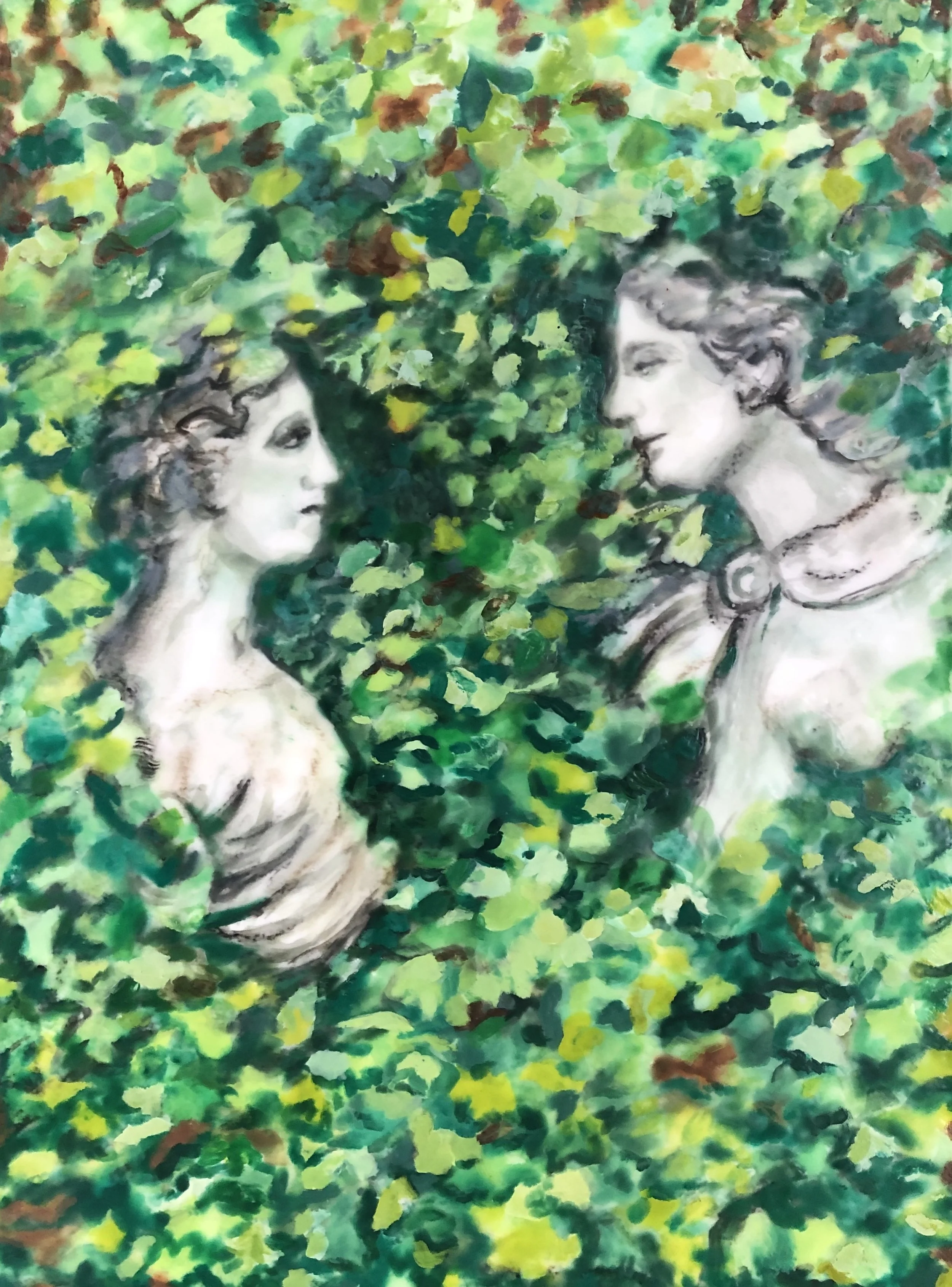
He'll take the vegetarian plate
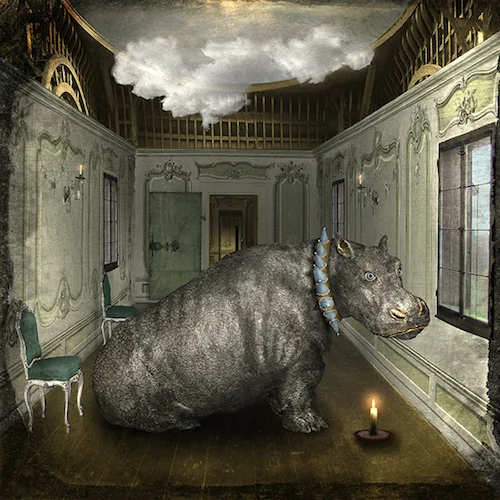
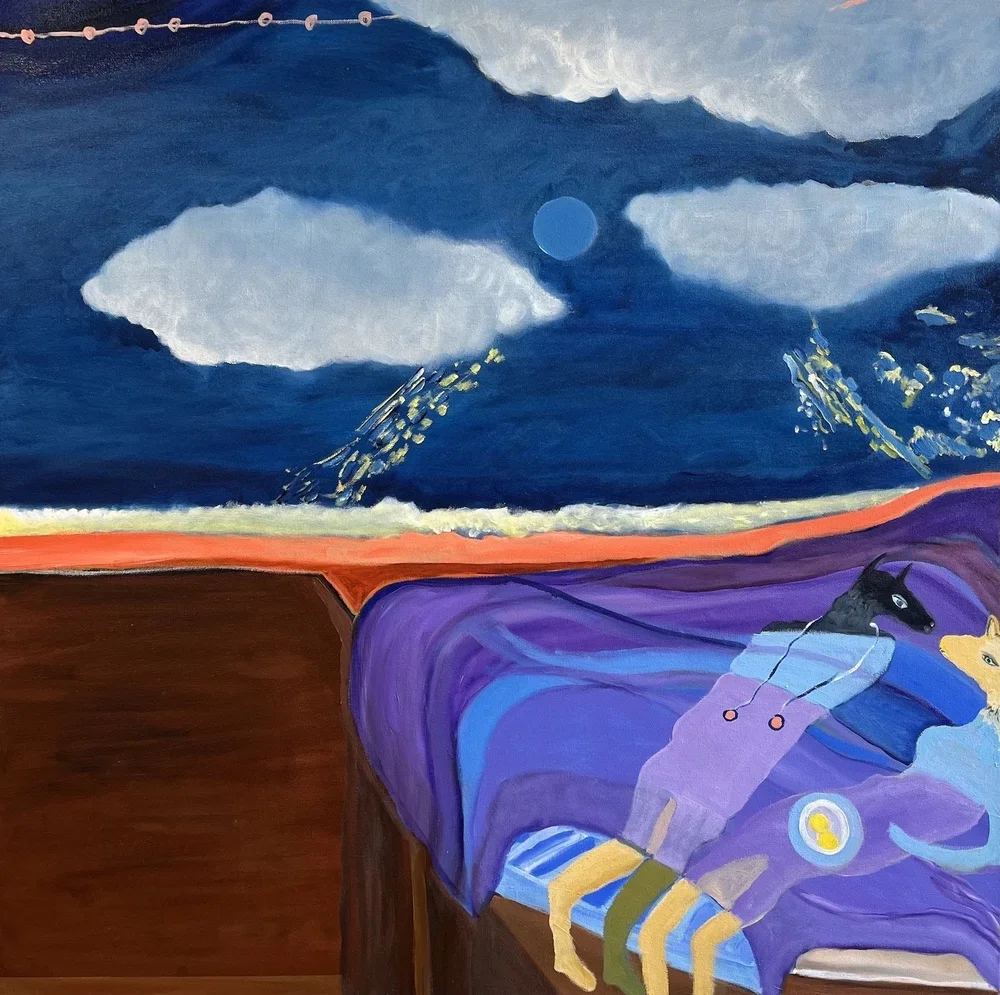
"Only on Thursdays'' (pigmented digital print), by Maggie Taylor, in her show "Maggie Taylor: Stranger Things Have Happened'' through March 19 at Lanoue Gallery, Boston.
Will they still love him anyway?
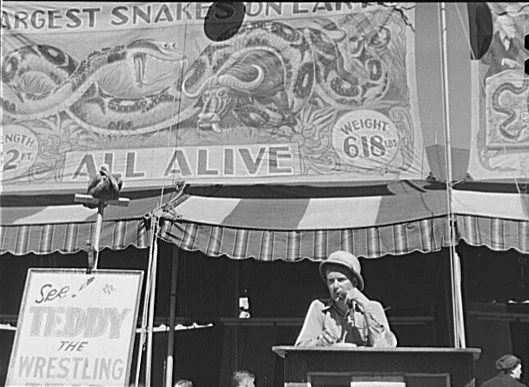
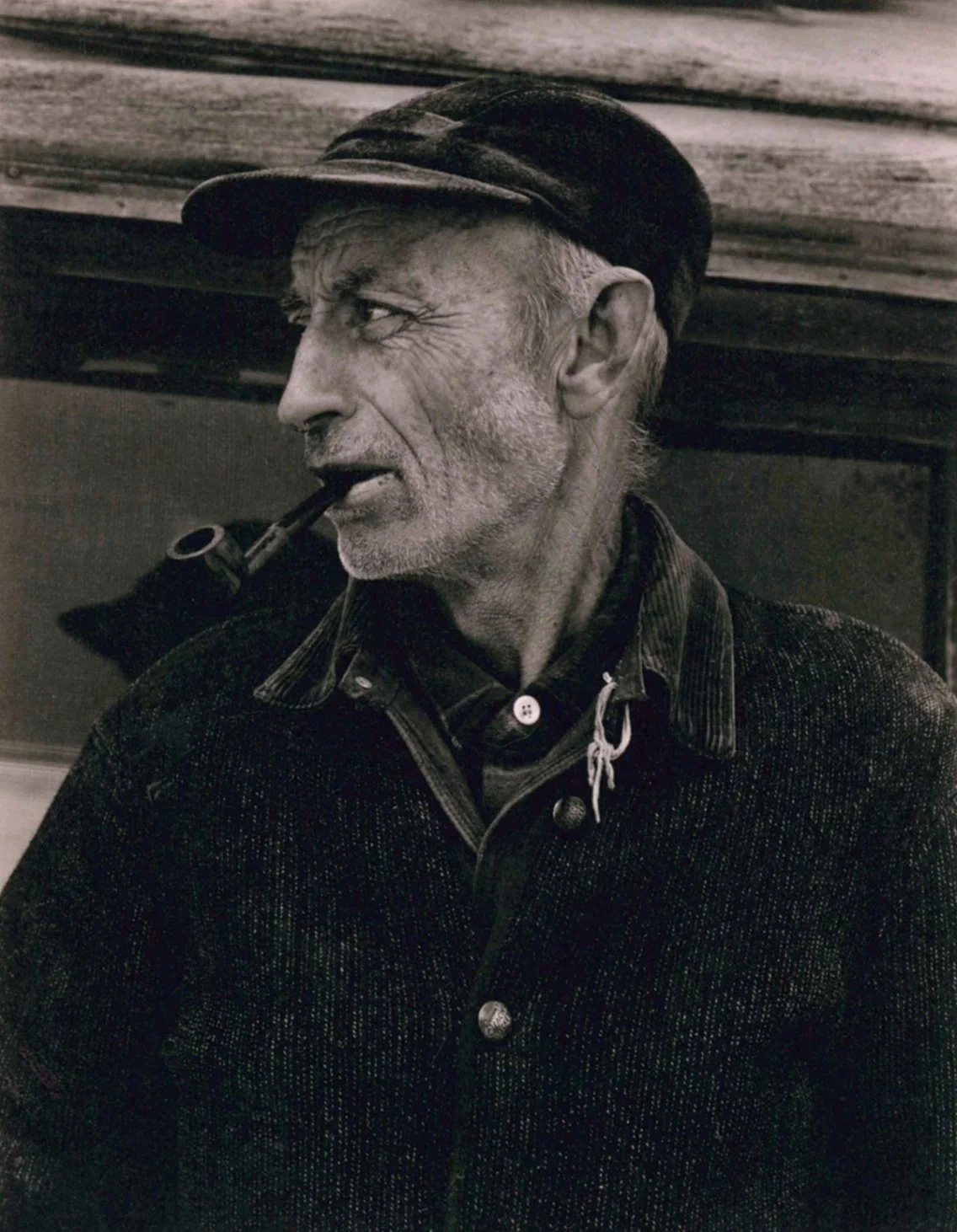
Barker at the 1941 Vermont State Fair.
--- Photo by Jack Delano
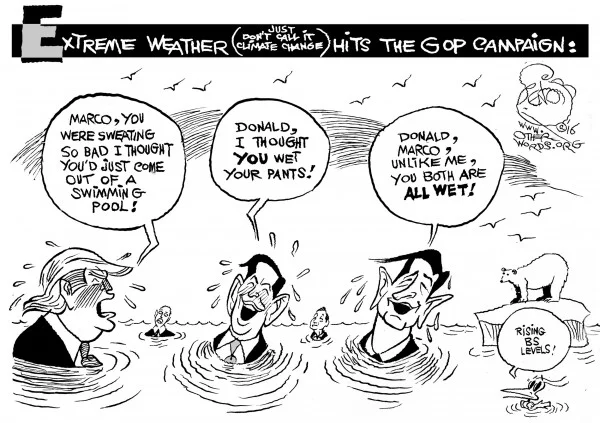
Fox News, the broadcast wing of the Republican Party, last night applied its fact-checking skills to Donald Trump’s often absurd, contradictory, chaotic and fact-free “policy’’ prescriptions, while mostly giving Ted Cruz and the man whom Mr. Trump calls “Little Marco’’ Rubio a pass. The GOP establishment is terrified that the real estate developer/operator and “reality TV’’ star will win the nomination and drag the party into an historic defeat in the fall. Yes, he would.
Of course, Messrs. Cruz and Rubio’s allegiance to the truth has also sometimes been erratic, and they too are not averse to demagoguery, but Donald Trump is in another league. His career has been one con after another.
See: www.trumpthemovie.com
A question is whether Mr. Trump’s followers and potential followers see the way the debate was run -- to bring him down -- as unfair pilling on, leading Trumpists to double-down on their support of the carnival barker.
Unfortunately for their credibility, and even morality, all three non-Trump candidates on the stage said that they'd support the New Yorker if he wins the nomination. How could they in good conscience endorse someone Ted Cruz and Marco Rubio (John Kasich was milder) called dangerous, corrupt and otherwise immoral? They have been gentler even to Hillary Clinton.
Meanwhile, the amiable John Kasich took credit last night, as do other national politicians active in the ‘90s, for the prosperity and federal budget surpluses of the late ‘90s.
In fact, those happy things resulted from the money freed up by “peace dividend’’ from the end of the Cold War, an income-tax increase accepted bravely by President George H.W. Bush and the explosion in computer/Internet business, especially after Tim Berners-Lee invented the World Wide Web, in 1989. The last brought in tons of tax revenue and gave new high-paying jobs to many people, albeit mostly the well-educated.
Mr. Kasich had nothing to do with any of that. But he seems to be a nice man and a competent governor of Ohio, though I would have preferred to see the brilliant and innovative former governor of Indiana, and now president of Purdue University, Mitch Daniels on the stage instead.
-- Robert Whitcomb
And pony rides
One idea for humanizing the brutalist plaza at Boston City Hall: Erect a Ferris wheel.
Or maybe it's better not to know
Herewith Thrillist's "12 things you should know before dating a New Englander''.
Only to the uninitiated
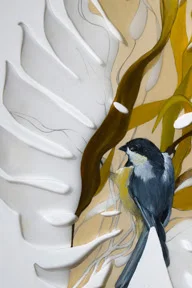
From the "Strange Surroundings'' show of Resa Blatman, at the Foster Gallery, Noble and Greenough School, Dedham, Mass., through April 8.

Don't tell the Garden Club
"The Wrong Garden'' (oil on canvas), by Nancy Whitcomb, in the show From "Wit and Whimsy (Nancy Whitcomb) to Underwater Photography" (Neil Greenspan, M.D.) at the Gallery at Temple Habonim, Barrrington, R.I., March 4-May 5. Artists' reception Sunday, March 6, 1-3 p.m

"The Wrong Garden'' (oil on canvas), by Nancy Whitcomb, in the show From "Wit and Whimsy (Nancy Whitcomb) to Underwater Photography" (Neil Greenspan, M.D.) at the Gallery at Temple Habonim, Barrrington, R.I., March 4-May 5. Artists' reception Sunday, March 6, 1-3 p.m.
Llewellyn King: America's great gale of 2016
If you accept that seminal means an event or moment after which things will never be the same again, then we are living through a seminal year.
In matters big and small, change is in the wind.
This wind has been blowing through presidential primary and caucus states and is defining the 2016 presidential election. Donald Trump and Bernie Sanders are not so much the leaders of this time of change, but rather the products.
The product is something hard to pin down, but it is there nonetheless — a sense that it is time to turn the page, to read the next chapter; a yearning for something fresh.
The Millennials, hunched over their cell phones, are looking for the future in their small screens. The rest of us are looking for it in new leaders, new lifestyles; and new thinking, sometimes about old ideas.
Societies go through periods when they feel the need to change up things. But they want a sped-up evolution rather than a full-fledged revolution. This is such a time.
Change is everywhere from the bold, new things television is doing — frontal nudity, gay coupling and interracial love — to the kind of car we favor.
While we grapple with change and yearn for the new, we are surprisingly open-minded. American values appear to be undergoing a recalibration: We are getting more socially tolerant. Social conservatives are a diminished force.
Young people do not have the same commitment that their parents had to conventional employment, to be defined by where they work. This leads to a world where people are less concerned with appearances, and all that goes with appearances. The business suit and its essential accoutrement, the necktie, are on the way out – and in much of the country, they are now curiously out of date. Apartments are being favored over houses because of new social values.
My generation experienced the hopeful 1940s (just the tail end), the smug 1950s, the turbulent 1960s, the oil-shocked 1970s, and the computer-excited 1980s, which continued unabated until the dot-com bubble burst at the turn of the century – but re-inflated with new developments in Internet products like Facebook, Twitter and YouTube.
In recent times, the only new American billionaire outside of the Internet was Hamdi Ulukaya, who popularized Greek yogurt in country hungry for yogurt choices. That is a dumbfounding fact. It means that it will be harder to get investment in old-line businesses and start-ups. The smart money has become myopically obsessed with the cyberworld.
If you were to go to Wall Street today to raise money for a new nuclear reactor that put all doubts of the past to rest and offered income for 100 years — there are such machines on the drawing board – you would find it hard to raise money; easier for a new Internet messaging system. This when there is no shortage of Internet messages (too many, I cry each morning). We are leery of the hard and enamored of the soft.
We sense that the education system is not doing its job; that it is broken and needs fixing. But how, we are not sure. We are sure, though, that we are going to change it.
We sense that we had the dynamic wrong in foreign affairs; that change at home, like toppling a generation of political leadership, is desirable, while toppling leaders abroad is a fraught undertaking, as with Saddam Hussein, Muammar Gaddafi and Bashar al-Assad.
We feel less good about the wealthy, and we are less sure that there are secure places for us in the future. We watch cooking shows and order in pizza. We gave up smoking and started jogging. But we are, so to speak, deaf to the damage we are doing to our ears with incessant music piped to them by earbuds.
We are more nationalistic and less confident at the same time. We treasure our values more, and wonder about their long-term durability.
The largest contradiction that can easily be inspected is in the themes of Trump and Sanders: Trump has rehabilitated a kind of racism aimed at immigrants, while Sanders has made the taboo word “socialism” acceptable in political dialogue.
The desire for change has moved from a slight wish to a hard desire for a new alignment. It is everywhere, from what we eat to how we feel about the climate. But we do not agree on this new alignment, hence the huge gulf between Sanders followers and Trump adherents.
Llewellyn King is a long-time publisher, international business consultant and columnist (and friend of the overseer of New England Diary). This piece first ran inInsideSources.
But with prayers for a refund after April 15
“Indoors or out, no one relaxes in March, that month of wind and taxes, the wind will presently disappear, the taxes last us all the year.”
-- Ogden Nash
'Spawtlight: The Horrible Truth About Boston'
"The parody trailer by comedy network Above Average explores a world in which the dedicated Spotlight team finishes their work on sexual abuse in the Catholic church and investigates what else is wrong with Boston: everything."
Here's a parody of the movie Spotlight, about The Boston Globe's investigation of priestly sexual abuse of children in that city, the Roman Catholic Diocese's coverup thereof and the general unpleasantness of the Hub.

Todd McLeish: Is weird weather El Nino, global warming or both?


From ecoRi News (ecori.org)
The weather this winter in southern New England has been far from typical, and it’s having serious implications for wildlife and natural history phenomena.
The official temperature at Rhode Island's T.F. Green Airport on Feb. 1 reached 66 degrees Fahrenheit, a record high for the date, But two weeks later, on Valentine’s Day, it plunged to minus 9, the coldest temperature in Rhode Island in more than three decades. A week later, it was back in the 60s again.
On Feb. 24, the National Weather Service issued a severe thunderstorm warning, the first time it has ever done so in February. That follows a warmer-than-usual January and record warmth in December.
The periods of warm weather in February triggered daffodils, crocuses and other early-blooming flowers to sprout a month or more before they usually do. Wood frogs and spring peepers were observed hopping across roads and chirping loudly in vernal pools in many locations during the last week of February, which is also several weeks earlier than usual.
On Feb. 25, Keith Killingbeck, a professor of botany at the University of Rhode Island, noticed a red maple tree with flower buds expanding, nearly two months early.

If the weather remains warm, these plants and animals shouldn’t experience any ill effects. But what will happen if a freeze returns, as it often does in March?
“Early spring plants are pretty tolerant of cold temperatures,” Killingbeck said, “but it depends on how cold it gets and how long those cold temperatures last. It’s in the realm of possibility that flowers could pop open, bloom and get zapped by a long, cold frost and be toast for the season. A lot of trees are susceptible, too. That’s a lot of energy the plants and trees expend for nothing.”
Killingbeck said that such an event wouldn’t affect the survival of the plants, but it eliminates an entire year of reproduction.
Frog and salamander reproduction could be affected, too. In a typical year, evening rains in mid- to late March trigger wood frogs, spring peepers and spotted salamanders to migrate from their wintering locations among the leaf litter and in shallow burrows to temporary pools and small ponds, where they mate and lay their eggs. But the warm weather in late February triggered some to begin their migrations several weeks early. The return of winter conditions in March could jeopardize any eggs that have already been laid.
Lou Perrotti, director of conservation programs at Roger Williams Park Zoo and an expert on reptiles and amphibians, said wood frogs are especially cold hearty and will hunker down until the weather is just right.

“The males arrive [in their breeding ponds] first and start calling the girls down, but if it is too cold they will not call and the girls will not move,” he said. “So breeding won’t happen until the temperatures and precipitation are optimal.”
It’s not unusual for a thin layer of ice to form on amphibian breeding ponds after the frogs and salamanders have laid their eggs, according to URI herpetologist Peter Paton. Some eggs may die as a result, he said, but those submerged below the surface should survive. Adult frogs are usually able to avoid being trapped under the ice by exiting the pond.
Paton does worry, however, about repeated cold and warm spells in March. Wood frogs and spring peepers survive the winter by slowing their metabolism, dropping their body temperature, and allowing the water in their bodies to freeze solid. They survive unharmed thanks to the production of a concentrated sugar solution that acts as an anti-freeze to protect their organs.
“But I don’t know how many times they can withstand freezing and thawing in one season,” he said. “They might not do well if they have to keep doing it.”
Plants and amphibians aren’t the only wildlife that seems to be a bit confused by the weather. On Feb. 25, David Gregg, executive director of the Rhode Island Natural History Survey, posted a video on Facebook of a group of bees swarming around his bird feeder. He said it appeared as if the bees were licking the sunflower seeds.
“I understand that one of the concerns about global warming is the mismatch between bees and flowers,” he said. “The bees are active because the weather's warm, but there aren’t any flowers out yet for them. So maybe that causes them to go after alternative food sources such as my bird seed.”
Climate change may well be playing a role in the unusual weather this year, but also playing a role is this year’s strong El Nino, which changes weather patterns in complex and unpredictable ways.
“This overriding element of global warming is impacting everything on our planet,” Killingbeck said, “and then on a little less universal scale, the El Nino year on top of that is messing with certain pockets of the globe as well.”
But he said that all is not lost for this year. At least not yet.
“We’re at a critical time right now,” Killingbeck said. “It all depends on what happens in the next month. It could still get back to normal. If we get back to more seasonable temperatures in March, the plants should do what they usually do in spring. Or we could have 70 degrees in March and all bets are off.
“But just because we’ve had a wacky winter doesn’t necessarily mean we won’t have a normal spring.”
Rhode Island resident and author Todd McLeish runs a wildlife blog.
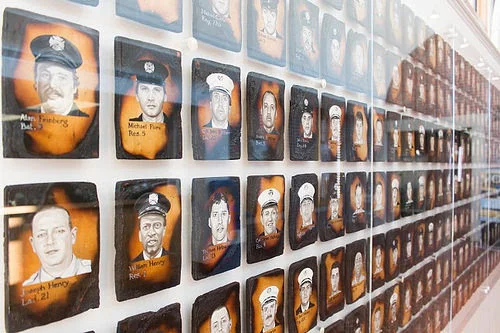
Slain public servants
“Early spring plants are pretty tolerant of cold temperatures,” Killingbeck said, “but it depends on how cold it gets and how long those cold temperatures last. It’s in the realm of possibility that flowers could pop open, bloom and get zapped by a long, cold frost and be toast for the season. A lot of trees are susceptible, too. That’s a lot of energy the plants and trees expend for nothing.”
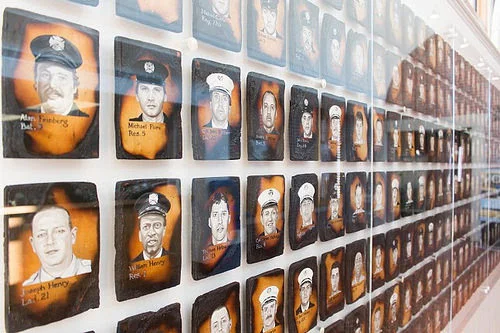
'Better Angels: Firefighters of 9/11,' by Dawn Howkinson Siebel, at the Wood Museum, Springfield, Mass through July 10.
Her work features 343 portraits, one for every New York City firefighter lost in the attacks on the World Trade Center. The images are along a 21-foot-long wall, allowing visitors to come face to face with men who made a living out of risking their own in order to save others.
Faux virtual

Painting by Donald Groscost, in the "Defying Perceptions'' show at Heath Gaudio Fine Art, in New Canaan, Conn. March 5-April 9.
He creates big paintings that are "formal investigations of painterly abstraction and the process of image simulation'' in our Digital Age, says the gallery.
His paintings "deceivingly appear to be created by some form of virtual media, with a vibrancy of palette that only heightens the impression of a mechanically transmitted image.''

An arrogant plutocrat for the masses; bees imperiled

How curious that middle- and lower-income Americans who feel with some justification that they have been treated with disdain by an increasingly arrogant and selfish plutocracy turn for leadership to a sleazy, arrogant and narcissistic member of the plutocracy.
xxx
The Zika virus is leading to calls for massive pesticide spraying to kill mosquitoes carrying the virus. The trouble with that is that such spraying will also kill the bees upon whose pollination much plant and animal life depends. Bees are already in decline, a continuation of which could pose an existential threat to humans.
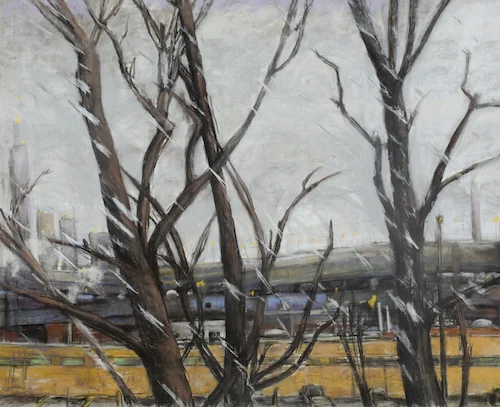
Month of meteorological mood disorders
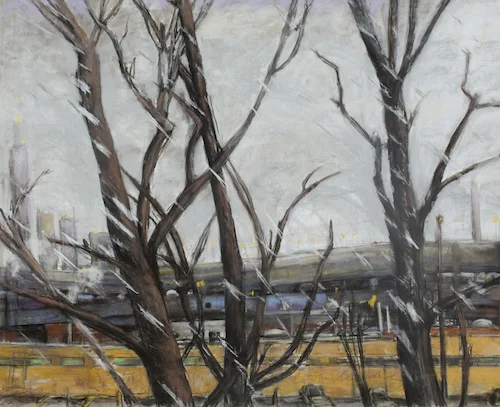
"It was one of those March days when the sun shines hot and the wind blows cold: when it is summer in the light, and winter in the shade."
-- Charles Dickens


David Warsh: Newspaper truths and movie truths

Spotlight, about The Boston Globe’s 2002 series of stories that put an end to efforts by the Archdiocese of Boston to cover up over the years the behavior of pedophile priests, won the Oscar for best picture. But no matter who won the best picture Oscar at the Academy Awards last night, 2015 was a goodyear for topical flicks. Spotlight was a brilliant success. So was The Big Short.
Both translate important news stories into Hollywood vernacular.
Spotlight viewers have often applauded at the end of showings; some left the dark in tears.
The Big Short tells how in 2006 three disparate groups of investors sought to bet against big mortgage lenders, and how, despite their ingenuity, they failed to make as much money and/or fame as they hoped they might. Running commentary, their own and others, on the cupidity of Wall Street provides counterpoint to the bittersweet saga. People leave the theater laughing and shaking their heads.
Each movie drives home important truths. Predatory priests wreak havoc on young lives. The hierarchy of the Catholic Church in Boston defended its pedophile priests’ immunity from the criminal justice system until The Globe undertook an all-out reporting campaign to overturn its indifference.
Mortgage lending in the U.S. and elsewhere went crazy after 2003, but the market stayed manic longer than the film’s prescient short-sellers were able to maintain their bets that it would fall. Only several months after they got out did the market crash.
But there’s movie truth and newspaper truth. What follows is newspaper truth.
***
Spotlight depends for its drama on the fiction that a chasm separating darkness from light existed between Globe editors and reporters who worked for the Taylor family in the 1990s and the paper under management sent in 2001 by its new owner, the New York Times Co.
In fact, two successive Globe editors in the ’90s, John S. (Jack) Driscoll and Matthew V. Storin, gradually turned the stories of various local pedophile priests, James R. Porter, John R. Hanlon, and John J. Geoghan in particular, from short items about lawsuit filings tucked away well back in the paper’s Metro section into front-page news. In each case they were reacting to the efforts of crusading attorneys. They were gingered along the way by various Globe reporters, including Alison Bass, Daniel Golden, James Franklin and David Armstrong; by reporter Kristen Lombardi, of the Boston Phoenix; and by Globe columnist Eileen McNamara.
As early as 1993, Cardinal Bernard Law had called down “the power of God” on The Globe , as he sought to downplay the newspaper’s reports of priestly misconduct. By 2000 he had himself been accused of protecting a notorious pedophile. By the next spring it had become public knowledge. By the summer of 2001, the story was simmering just below the boiling point.
That’s where the movie begins, as a new editor arrives at The Globe. Martin Baron (played in the film by Liev Schreiber), a highly skilled news editor, is fresh in from the frontlines of watchdog journalism in Florida as chief editor of The Miami Herald (the Elián González custody battle, the contested 2000 presidential election vote count). He’s also an outsider to Boston, untrammeled by the tribal loyalties of the city. He quickly recognizes that there is more to the story of priestly abuse than had been made of it so far. So starting his first day on the job, he turns up the heat.
He assigns the story to the Spotlight Team, the pioneering investigative unit The Globe had created 30 years before, led by Globe veteran Walter (Robby) Robinson (portrayed in the film by Michael Keaton) and supervised by assistant managing editor Ben Bradlee Jr. He signals his intent by going to court to unseal depositions.
The 9/11 attacks intervene, but behind the scenes the Spotlight Team searches through records, pesters lawyers, and interviews victims, seeking to document the extent of the problem. In November a judge unseals a stack of critical depositions. By January Spotlight is ready to commence the public phase of its investigation, with a blockbuster story about Cardinal Law sending serial offender Geoghan to a new parish, despite having been warned against him by a trusted lieutenant. Tips flood in as the film ends.
That much is both newspaper and movie true.
The movie takes plenty of small liberties to retain its sharp focus and buttress the storyline of darkness and light. All seem to fall within standard Hollywood practice known as “based on a true story.” The statistics are a mess, because the stories discussed are describing events that took place over a span of40 years. The only real laugh-out-loud moment comes when the actress playing the crackerjack columnist McNamara whispers, “You mean there’s more than one?”
During 2002, the Spotlight treatment turned what had been a series of stories about a series of bad apples and their punishments into an overarching scandal of a church hierarchy mired in stubborn denial of its problems, unwilling to take the steps necessary to fix them. The Spotlight Team grew from four to ten persons, who together wrote some 600 stories. Cardinal Law resigned in disgrace in December. And the next April, the Spotlight Team won its third Pulitzer for The Globe -- this one its Gold Medal for Meritorious Public Service. By then, the story had begun to be replicated around the world.
Unfortunately, no book has been written about that epic contest of wills, though David France’s Our Fathers: The Secret Life of the Catholic Church in an Age of Scandal (Crown, 2004) employed the story as its spine. There are only the newspaper stories themselves, published as Betrayal: The Crisis in the Catholic Church (Little Brown, 2002); a Columbia Journalism School case study from 2009 that reads like a film treatment; and, of course, the screenplay itself, by Josh Singer and director Tom McCarthy. Baron, who retained his ties to Hollywood (earlier he had been business editor of the Los Angeles Times), apparently advised the filmmakers throughout. In 2013 he became executive editor of The Washington Post.
The film version departs from what a good newspaper story would tell back at that chasm. A new sheriff who takes in hand a troubled town is a plot familiar from many a classic Western. It doesn’t describe what happened in Boston.
Certainly there had been a time within memory when The Globe routinely downplayed news that the Boston Archdiocese found distressing. For much of its first century, the paper catered to readers in Boston’s rapidly expanding working class – preponderantly Irish, Catholic, Democratic, and, with every passing decade, more females. Editors clearly went out of their way not to offend. As recently as the early 1960s, sentences deemed inappropriate in coverage of the church were quietly excised by a senior editor thought to be in close touch with church headquarters.
After Thomas Winship took over as editor, in 1965, this began to change. The Globe had bested the respectable old Herald Traveler in a no-holds-barred newspaper war during the late 1950s and through the ’60s. Winship took advantage of his paper’s victory to rebuild The Globe into New England’s dominant newspaper, which made its mark with editorials like those that criticized the Vietnam War and vigorously supported court-ordered desegregation in Boston, if not always the busing that aimed to achieve it.
After William O. Taylor succeeded his father as publisher, in 1978, the paper continued to soar. The Globe credo was still spelled out in the words of its founder on a brass plaque in the lobby: “My aim has been to make The Globe a cheerful, attractive and useful newspaper that would enter the home as a kindly, helpful friend of the family….” (The saga is scrupulously told in a chapter of Common Ground: A Turbulent Decade in the Lives of Three American Families, the classic account of Boston’s busing troubles in the 1970s, by J. Anthony Lukas.)
In 1993, the New York Times Co., corporate parent ofThe Times and a handful of much smaller papers, bought The Globe for $1.13 billion, the highest price ever paid for a newspaper up until then. For the next few years, The Globe continued to thrive under Boston management.
The NYT Co.’s makeover ofThe Globe began in 1998, when star columnist Mike Barnicle was humiliated and then forced to quit instead of scolded as he might have been in the past for any lapses. His defenestration was preceded by that of another columnist, Patricia Smith. People still argue about the merits of the cases, even as they forget the details. Both separations were inevitable in the circumstances.
In 1999, NYT Co. chief executive Arthur Sulzberger Jr. dismissed Globe publisher Benjamin Taylor and replaced him with a previously unknown executive from New York. Senior staffers Martin Nolan, David Nyhan, Gerard O’Neill, and Thomas Mulvoy took buy-out packages.
Then in summer 2001, Storin announced he, too, was leaving and New York hired Baron as the new editor. He made it clear that he intended to make over the Boston paper to a more stringent standard. The Taylor family credo had been discarded. “Make the news more relevant to readers,” as one newsroom catch-phrase had it at the time; “the joyless pursuit of excellence,” according to another. (I was one of those who leftThe Globe not long after Baron arrived.)
The other thing the movie leaves out is the backlash. There’s no easy way of telling what broad efforts by New York’s managers to re-shape The Globe cost the paper in terms of readership, especially since the decline in its revenues and circulation coincided with invention of search advertising and the rise of social media. But The Globe’s slide since 2002 appears to have been more precipitous than that of almost all other major papers, such that in 2009 New York threatened to simply close down the newspaper if labor concessions weren’t forthcoming.
Finally in 2013 NYT Co. soldThe Globe for $70 million, or around 6 percent of what it had paid20 years before, not to the Taylor-led group that had sought to buy it, but to another outsider, Boston Red Sox owner John Henry. Henry recently has become embroiled in misadventures of his own.
Thanks to the movie, The Globe’s brand has never shined brighter. And the paper itself, far slimmer than before, seems to have returned to its roots, under editor Brian McGrory. The business model, however, is badly damaged, perhaps even broken. The story of what happened to The Globe after it was sold awaits its Tony Lukas.
***
The Big Short is based on The Big Short: Inside the Doomsday Machine, by Michael Lewis. Starting with Liar’s Poker: Rising through the Wreckage on Wall Street (Norton), in 1989, then with another ten books, Moneyball and The Blind Side among them, Lewis has demonstrated an astonishing knack for finding the right characters in order to tell important stories.
There are four main characters in the film – three idiosyncratic speculators, unknown to one another, each obsessed with betting against the housing market, and the bond trader who showed them how to play their hunch, using the new and less risky derivative instruments known as credit default swaps.
Actor Christian Bale plays real-life California neurosurgeon-turned-hedge-fund-manager Michael Burry; Steve Carell plays a Wall Street New York veteran who resembles real-life Steve Eisman in the book; and Brad Pitt is the worldly mentor to a pair of thirty-something friends who had worked briefly managing money on Wall Street before going into business for themselves in a backyard shed in Berkeley, Calif.
Ryan Gosling plays the Deutsche Bank bond trader – Greg Lippmann in real life – who taught them all the new way to make their trades. He is “Patient Zero,” in author Lewis’s pungent phrase. He is the narrator of the film. And since traders don’t do things by themselves, each of the four has associates, lawyers, therapists, family members – a highly interesting cast of characters who make the movie version remarkably true to real life in markets but who nevertheless get in the way of understanding.
The better way to place a wager against a market that Gosling peddles in the film is the strategy he describes in presentations that he makes to potential investors, “Shorting Home Equity Mezzanine Tranches.” Director and screenwriter Adam McKay ingeniously treats the strategy as a McGuffin – a device that sets the plot in motion without needing to be fully understood – though he makes two attempts to explain it as he goes along.
In the first instance, actress Margo Robbie describes the pooling and securitization of subprime mortgages – from a bubble bath (itself a sly joke, since Robbie appeared in considerably less in The Wolf of Wall Street, as Leonardo di Caprio’s mistress/second wife); in the second instance, in a Las Vegas casino, University of Chicago Booth School of Business Prof. Richard Thaler and singer Selena Gomez explain the nature of derivatives.
So much for the MacGuffin. What exactly is a credit default swap? It is an insurance contract, a derivative of a security, not the underlying asset itself. The esoteric new market was created in the 1990s and proved so useful to investors, for various reasons, that it grew exponentially. Gilliam Tett, of the Financial Times, tells the origin story in Fool’s Gold: How the Bold Dream of a Small Tribe at J.P. Morgan Was Corrupted by Wall Street Greed and Unleashed a Catastrophe, Free Press, 2009.
And the advantage such markets offered over traditional methods of shorting an asset? Author Lewis describes the basics this way in his book.
The beauty of the credit default swap, or CDS, was that it solves [a] timing problem. Eisman no longer needed to guess exactly when the subprime mortgage market would crash. It also allowed him to make the bet without laying down cash up front…. It was also an asymmetric bet, like laying down money on a number in roulette. The most you could lose were the chips that you put on the table; but if your number came up, you made 30, 40 , even 50 times your money.
There are two important things you don’t learn from the film version of The Big Short. One is that there was an investor, John Paulson, who actually made “a Soros trade,” a killing so great as to enter the ranks of legendary investors. The poignancy in the film derives from the fact that none of its heroes makes nearly as much money as he had hoped, because various backers run out of nerve.
Neurologist Burry makes $750 million for his investors in 2007, but the fund he is managing shrinks to $600 million, and threats of withdrawal continue throughout the coming year. Disillusioned, fearing for his health, Burry closes his firm in Cupertino a year later, despite gains of 489 percent over seven years.
Those thirty-something investors who started their fund in a backyard shed? By 2008, they are managing $135 million, up from $30 million, but can’t enjoy their subprime triumph because they are too worried about how to invest next. Eisman has sold his last CDS back to Lippmann in July 2008. He enters the autumn conventionally invested in the stock market, betting that the banks will fail.
Meanwhile, Paulson, a relatively well-known Wall Street investor previously deemed to have been a reliable hitter of singles and occasional doubles, succeeded brilliantly where Burry earlier had failed. In 2006 Paulson raised $137 million (including $30 million of his own money) with no other purpose than making bets with credit default swaps against subprime mortgages. He and his associates picked the right securities to short, and hit the jackpot: $15 billion for his hedge fund in 2007, including some $4 billion for himself. The story, with many of the same characters as The Big Short, is told in The Greatest Trade Ever: The Behind-the-Scenes Story of How John Paulson Defied Wall Street and Made Financial History (Broadway Books, 2009), by Gregory Zuckerman, of The Wall Street Journal.
The second thing you don’t learn from The Big Short is what actually happened after Lehman Brothers failed in September 2008, triggering a run on the banking system. The climax of the film comes in March 2008, as Bear Stearns is merged into J.P. Morgan, The scene at the end of the movie, with the Eisman character (Carell), sitting with his partners on the steps of St. Patrick’s Cathedral in Manhattan on Sept. 18, 2008, as the whole world teeters on the brink, serves in the film, as in the book, to emphasize the immense harm that is about to ensue: the homes foreclosed, the jobs lost, the confidence shattered, the political divisions exacerbated.
The reason why has already been given: simple greed.
Never mind. The Big Short is a brilliant success, conveying the same truths about financial markets in 2007 that Michael Lewis adduced in the book – that finance is complicated, that money managers talk fast and crack jokes, that life is unfair. So it’s not the whole story. What is?
. ***
Movies are wonderful, but a problem arises when movie critics who know little about the background write as though the screenplay were newspaper truth.
Thus Nigel Andrews, in the Financial Times: “Tom McCarthy (The Station Agent) directs and co-writes as if the film were a hot-button documentary hijacked by stars, and in a way it is.”
A.O. Scott, in The New York Times: “Before 2001 – with some exceptions, notably in work by the columnist Eileen McNamara (played by Maureen Keiller) – the paper overlooked the extent of the criminality in the local church and the evidence that the hierarchy knew what was going on.”
Anthony Lane, in The New Yorker: “…Marty Baron, of all people, shy, taut, and humorless, in Schreiber’s clever portrayal – struck me as the hero of the hour. He is mocked for being, as one insider labels him, ‘an unmarried man of the Jewish faith who hates baseball,’ but it is precisely his status as an outsider that allows him to initiate the quest. Folks in the Church, and elsewhere in the city, know what went on, yet they don’t really want to know. It’s all too close to home. Baron wants to know.”
Ty Burr, in The Boston Globe: “’Spotlight’” makes the sharp, sobering point that it took an outsider, Baron, to notice what the locals didn’t, or couldn’t, or maybe even wouldn’t, and that The Globe had more than one chance to open an investigation years earlier than it did. The movie paints this as the regrettable bureaucratic oversight of a hectic workplace. It’s also true that people are flawed, and that institutions thrive by not making waves. Until something changes, and they do.”
And, perhaps most surprisingly, historian and journalist Garry Wills, of Northwestern University, in the New York Review of Books: “An instinctive deference to the Church had inhibited the press in this Roman Catholic city from recognizing a scandal in its own backyard. Baron was not subject to that thrall.”
As for the scene that serves as a climax, which occurs when, on the eve of the publication of the story that is to finally break the long silence, the team discusses the fact that in 1993, when Robby was metro editor, he had buried on page 43 the story of a lawyer’s claim that he had obtained settlements against 20 pedophile priests who had been retired or put on indefinite leave. It turns out it didn’t really happen like that. It was the screenwriters, not the reporters, who were tipped by lawyer Roderick MacLeish (played in the film by Billy Crudup) to the existence of that long-ago clip.
McCarthy and Singer found it and read it, then queried Robby about its significance. He promptly acknowledged he had been metro editor at the time – and they subsequently wrote a scene to buttress the story of the chasm between darkness and light. In the film Baron then pronounces benediction: When people have been in the dark for a long time, he says, they are necessarily disoriented; a light is turned on and suddenly things at last seem clear. All he knows, he says, is that the team has done a good job.
“That moment [the confession of knowledge and failure to act] was probably the one moment where we took something that was not [precisely true] and we felt that we had the right to include it,” director McCarthy told Jeff Labrecque of Entertainment Weekly for his story. “Spotlight players confront the clue that became the movie’s key twist.” The screenwriters already had “concluded from their research that the Globe was probably guilty of sins of omission, if not commission, when it came to its coverage of the Church in the early 1990s,” wrote Labrecque. Their discovery was a dramatic gift too good to pass up.
Maybe so, in the powerful logic of movie abstraction. But it’s far from newspaper truth. What really happened in that interval in 1993 was that The Globe changed editors and publishers, from Jack Driscoll and Bill Taylor to Matt Storin and Ben Taylor. The staff wrapped up the Porter and Hanlon stories, and prepared to take up the Geoghan saga when, two years later, attorney Mitchell Garabedian brought his blockbuster suit.
By the spring of 2001, a new judge, Constance M. Sweeney, had been chosen to take over the case. She was another outsider, a Springfield native, and a largely unsung hero of the story. In December she would, on The Globe’s motion, release 10,000 documents in the 84 lawsuits against Geoghan and Cardinal Law. The stage had been set for the Spotlight series – the single most important story in the 142-year-history of The Boston Globe.
David Warsh, a longtime financial journalist and economic historian, is proprietor of economicprincipals.com.
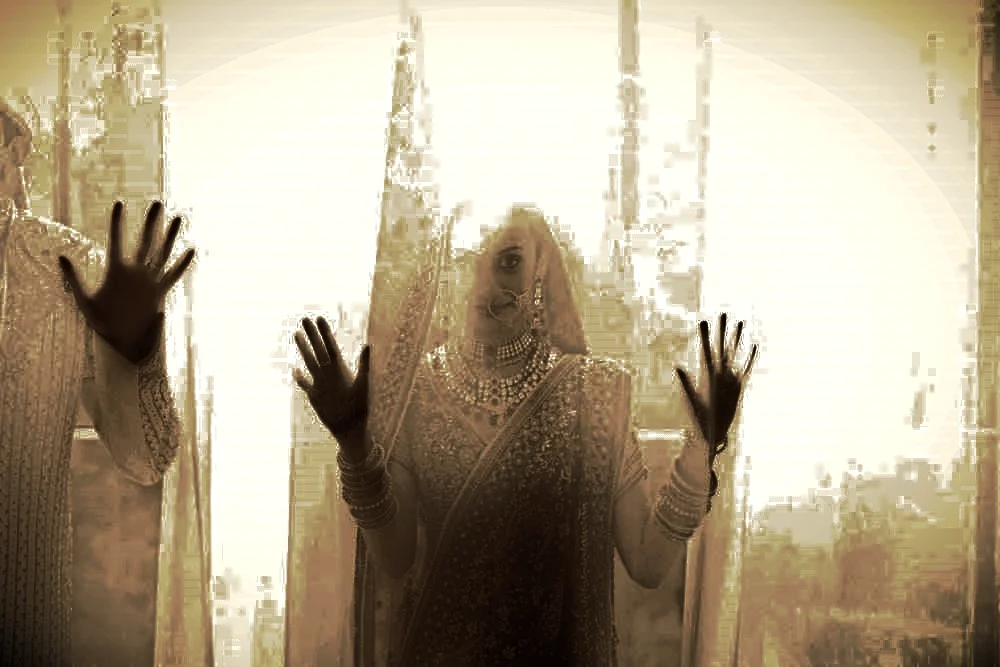
Raja Kamal/Arnold Podgorsky: Reform Judaism's lessons for Muslim immigrants

In a recent article in the Eurasia Review, Riad Kahwaji identified a troubling relationship between ISIS-inspired terrorist attacks and increasingly hostile reactions from nationalist and other right-wing parties across Europe. Muslim immigrants most often arrive in the West from Islamic countries beset by oppression, illiteracy and poverty, he notes. Western Muslim leaders have not effectively addressed these challenges, and resistance to assimilation by many in their communities has made them more vulnerable to extremism.
Among the factors that make integration into Western societies difficult for Muslim immigrants are the ways in which Islamic principles have been inculcated by parents and other elders; apparent biases concerning life in the West that have been influenced by government, political and religious propaganda in their countries of origin; and a lack of cultural empathy, common languages, and understanding of Western culture. In addition, Muslim communities in Europe are overly reliant upon imams recruited from abroad who are not overseen by an Islamic higher authority that sets standards of education and practice for the clerics.
Combine these factors with resistance from elements of the predominantly non-Muslim population, high unemployment rates among young Muslims and lack of opportunity for social and economic advancement, and it is easy to see why a significant minority of Muslim youths in Europe and certain U.S. communities are susceptible to radicalization. In France, about 10 percent of the population is Muslim, but 70 percent of the prison population is – and prison is the single most fertile ground for recruitment of terrorists. Attacks by individuals and groups purporting to represent Islam not only alienate average citizens but also produce a furious backlash of anti-immigrant fervor on the part of right-wing political leaders and organizations.
To address the challenges faced by Muslim immigrants, it might be instructive to consider the lessons of the Judaic diaspora. After their destruction of the Second Temple in Jerusalem, in 70 A.D., the Romans expelled the Jewish people from the Holy Land. For centuries, Jews often lived separately from indigenous populations, gathering in tightly knit communities. Informed by suspicion of “the other” and often by outright antisemitism, what today would be called “host communities” frequently prohibited Jews from participating in most professions and crafts and in the political and cultural life of the societies. Sometimes, anti-Jewish attitudes were expressed violently, and attacks on Jewish people and their communities were not uncommon. Jewish separateness, whether voluntary or enforced, was essentially the norm.
By the end of the 18th Century Reform Judaism emerged in Germany and eventually in the U.S. The movement developed in part as an extension of the growth of rationalism in Western thought since the Enlightenment and in part as a reaction to the strictures and separateness that traditional Judaism demanded. The Reform movement (and, to a lesser extent, the movement for Conservative Judaism) advocated a relaxation of the more fundamental practices of traditional Judaism and greater assimilation into the economic, educational, and political mainstream of European societies. It welcomed modernity. In place of strict observance, Reform Judaism emphasized ethics, charity, and the admonition to “heal the world” as essentials of the Jewish character.
To bolster new ideals, an infrastructure of Jewish institutions and organizations evolved that not only served the needs of Jews but also interacted with similar structures in host societies. Among the new institutions that were most critical were seminaries that provided rigorous professional education for new generations of rabbis.
Over time, the threats of political oppression and violent antisemitism diminished in many places (not at all times or in all places, but generally). Progress was made in part because it was based on the long-established Judaic principle that Jews are to respect the laws of the lands they inhabit (except where they directly conflict with fundamental Jewish belief as, for instance, in the case of idol worship).
The Reform movement spawned contemporary Jewish pluralism, which now includes several streams of Jewish thought and practice. These diverse approaches provide an example of integration and response to evolving philosophical and political norms, while preserving essential and nourishing tenets of the Jewish faith. Adherents have managed to assimilate effectively into societies that are predominantly non-Jewish by adapting religious practice and expression to fit with the laws, culture and customs of their adoptive homelands.
Might the experience of the Jews in Western societies provide a model for the growing Muslim communities of Europe and North America? Perhaps so, but it is essential that reform in Islamic practice and custom be initiated and molded by leaders in those Muslim communities. We recognize that such efforts to reform will be met with resistance, but success is possible if all remember that, in our diverse communities, we can only embrace the ways of peace by respecting and making room for each other – and, in matters of faith, there is always more than one path up the mountain.
Raja Kamal is senior vice president of the Buck Institute for Research on Aging; based in Novato, Calif. Arnold Podgorsky is a lawyer and former president of Adas Israel Congregation in Washington, DC, a Conservative synagogue.
More training for New Englanders
“Early spring plants are pretty tolerant of cold temperatures,” Killingbeck said, “but it depends on how cold it gets and how long those cold temperatures last. It’s in the realm of possibility that flowers could pop open, bloom and get zapped by a long, cold frost and be toast for the season. A lot of trees are susceptible, too. That’s a lot of energy the plants and trees expend for nothing.”

Our friends at the New England Board of Higher Education ran this note on their Web site (nebhe.org):
New England's railroads are an overlooked asset in the region's education and economic future. MassLive reports that planning is in the early stages for frequent north-south passenger trains on the "Knowledge Corridor" from Springfield, Mass., stopping in Holyoke, Northampton and Greenfield. Recently, freight trains began carrying the first shipping containers loaded on the Portland, Maine waterfront to connect with freight customers throughout North America. It’s cheaper to move heavy cargo by train than truck, because more can be moved at once with less fuel and fewer workers. In the Boston area, the Massachusetts Bay Transportation Authority is revisiting an idea first proposed in 2014 to sell large quantities of discounted passes to colleges and universities. Railroads already offers convenient passenger service to Bridgewater State University and the University of New Hampshire, as well as Greater Boston campuses.

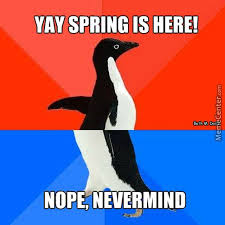
Smiling through the slush
"Spring is when you feel like whistling even with a shoe full of slush."

"Spring is when you feel like whistling even with a shoe full of slush."
-- Doug Larson