
Vox clamantis in deserto




Chris Powell: Irresponsibility about retirement and voting
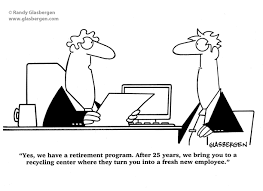
Government, Lincoln said, should do for the people what they need to have done but cannot do at all or so well for themselves as individuals. While Connecticut has not been following Lincoln's standard for a long time, if his standard ever was followed state government would reject the proposal to establish a retirement savings program for private-sector workers.
Of course people don't save enough for retirement, and government probably would suffer less expense for care of the aged if they saved more. But the proposed retirement savings program has little to recommend it.
First, such a program would accomplish nothing that people can't already do for themselves. The program would do no more than establish individual retirement accounts for people and require employers to facilitate regular payroll deductions to fund the accounts. But many employers already offer retirement savings plans with regular payroll deductions, and it is no problem that many employers don't, since hundreds of investment houses will establish them for individuals and fund them through automatic deductions from an individual's checking account.

Either way the results for the retirement saver are the same.
Second, advocates of a state program acknowledge that it probably would not cover its management costs until it had amassed a billion dollars in retirement savings contributions. That probably would take a few years and maybe much longer. In the meantime a substantial new state government agency would have to be created to run the retirement saving system at tax expense.

Of course the agency's employees would not have to participate in the retirement savings plan supervised by their agency. As state government employees they would qualify for state government's excellent defined-benefit retirement savings plan and retiree medical insurance, benefits guaranteed by state government, while the pension agency itself was providing private-sector workers only an ordinary defined-contribution retirement savings plan -- that is, a plan with benefits subject to stock market risk and no medical insurance.
The only good reason to establish such a retirement savings system would be to facilitate the gradual transition of state government’s defined-benefit pension system into a defined-contribution system for new employees.
xxx
Connecticut Secretary of the State DeniseMerrill has what ordinarily might be a good idea -- to register people as voters whenever they undertake a transaction at offices of the state Motor VehiclesDepartment, unless, of course, they are already registered or don't want to register. Merrill estimates that as many as a third of Connecticut's eligible adults are not registered to vote though most have driver's licenses.
The problem is that amid the turmoil at the Motor Vehicles Department arising from the botched recent implementation of its new computer system, the department lately hasn't been competent to do even its ordinary work. If the department started registering voters now, many might end up registered in the wrong towns. So Merrill's proposal should be set aside for a few years.
In any case the problem with all those unregistered adults is not the current voter registration system, in which registration already is easy. People can register during business hours at town halls, at the many registration outreach events held by voter registrars, and on the Internet.
Even so, not only do maybe a third of the state's eligible adults fail to register, but in a typical election half of the people who are registered don't bother to vote. Indeed, participation in Connecticut's elections was far higher years ago when voter registration was not as easy as it is now.
So Secretary Merrill is not addressing the real problem -- the failure of parents and public education to engender civic virtue amid the corruption of prosperity, which is the historic bane of civilization.
Chris Powell is managing editor of the Journal Inquirer, in Manchester, Conn.
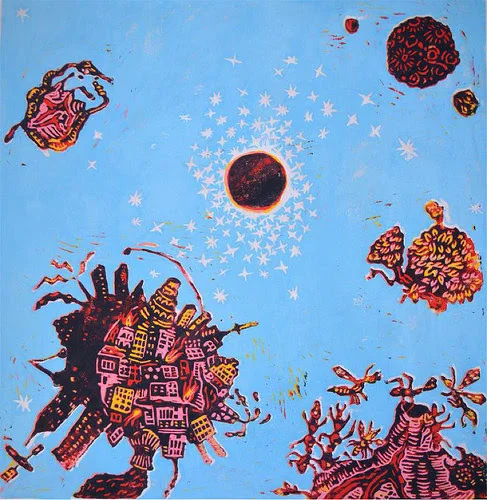
"Blackhole'' (print), by Vinicius Sanchez
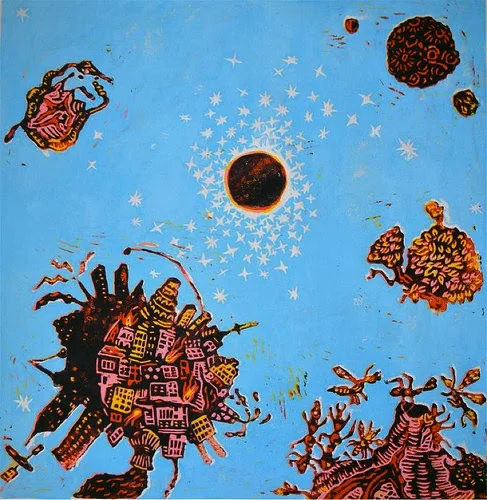
"Blackhole'' (print), by Vinicius Sanchez, in the show "Push/Pull: Recent Work from the Printmaking Faculty,'' at the Cambridge Center for Adult Education, through March 11.
Nitrogen runoff versus herring runs
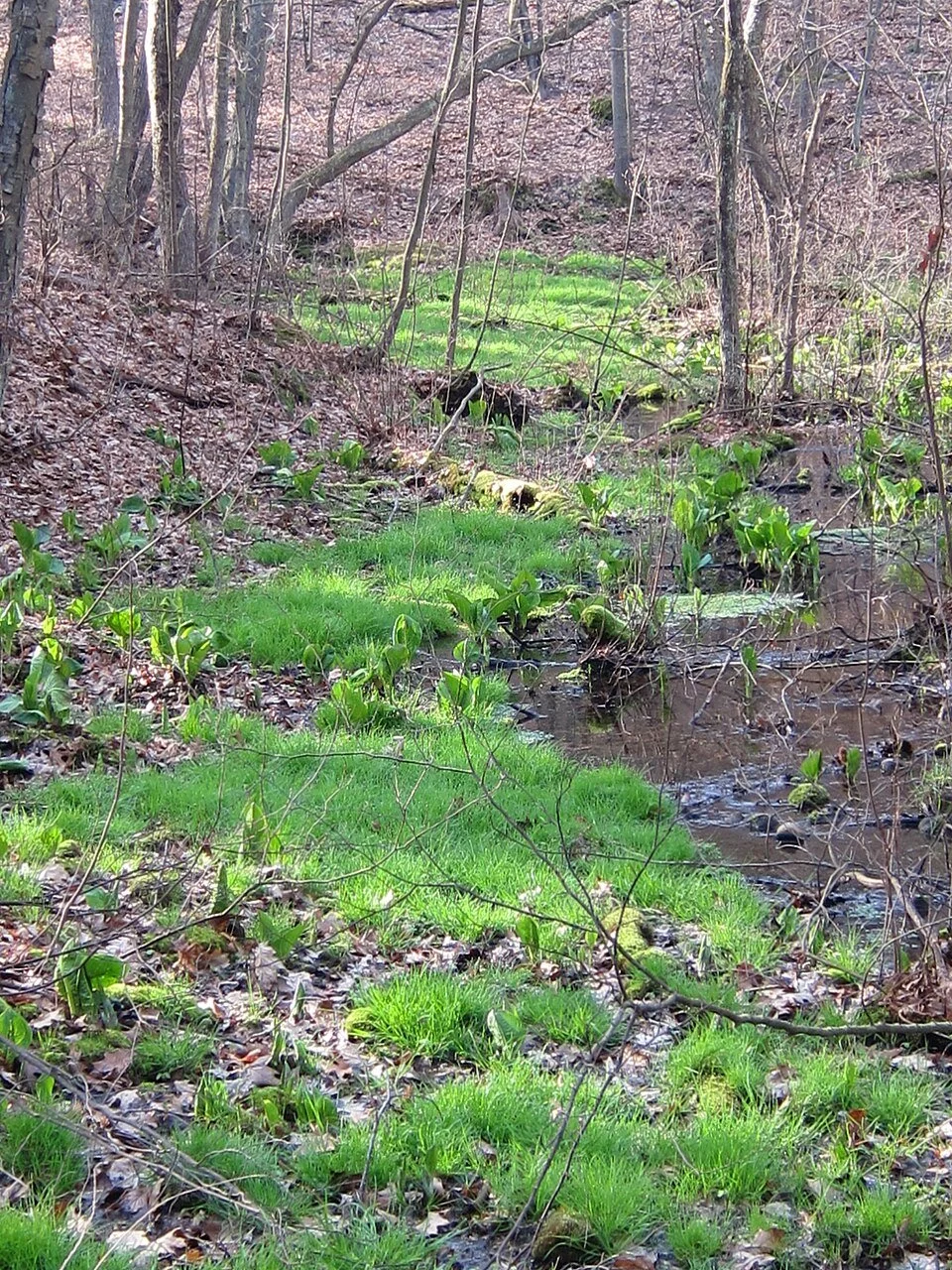
A herring run in part of Westport, Mass., renews questions about nitrogen pollution's destructive effect on wetlands.
Some observers believe that elevated nitrogen levels from lawns, farms and and golf courses discourage marsh grasses from putting down the deep roots that knit marshes together since the runoff makes nitrogen excessively plentiful at surface levels. And they worry that the nitrogen fuels the thick green algae that can clog herring runs during warm weather and kill much life by sucking up too much of the oxygen.
Playground

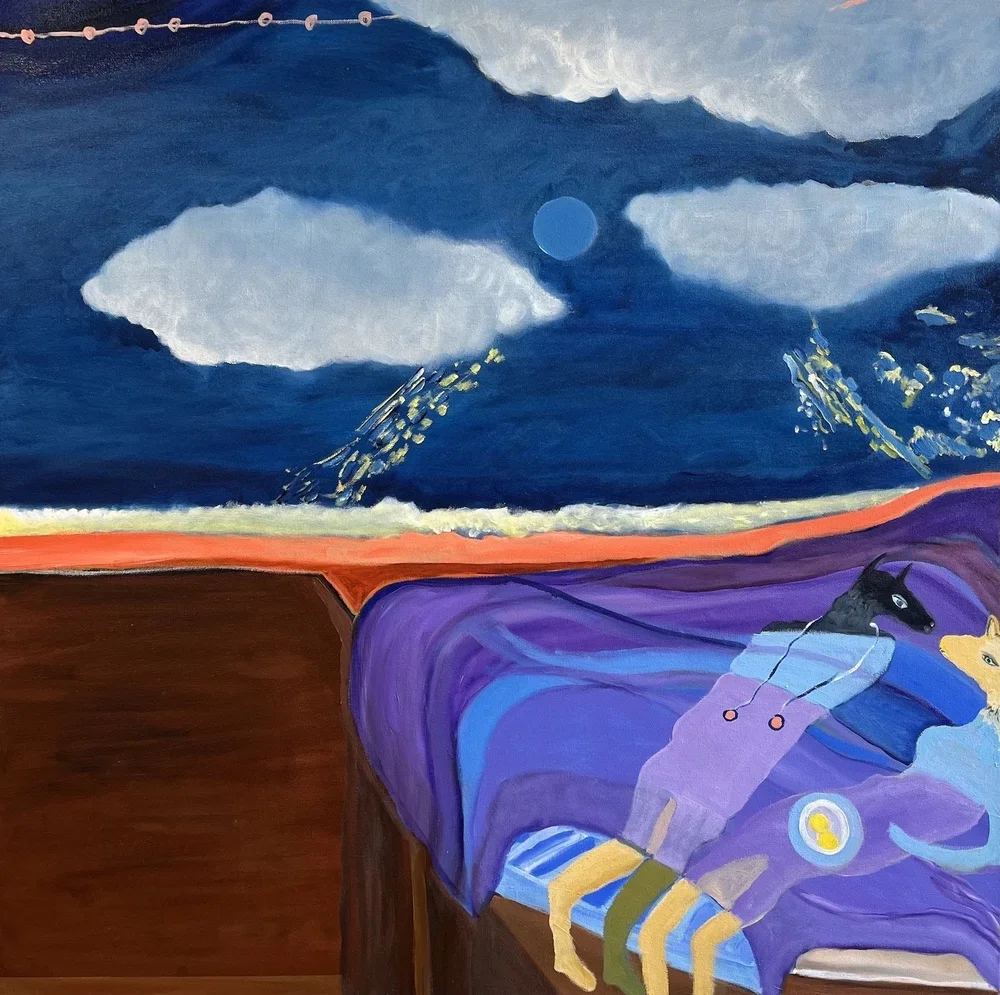
"Study for Bed 1'' (oil on canvas), by Jacob Collins, in his show "Jacob Collins: Landscapes and Still Lifes,'' at Adelson Galleries, Boston, opening March 4.
Yankee architectural economy

"Consumable Sugarhouse,'' in Norwich, Vt.
“A sap run is the sweet good-bye of winter”
So wrote American naturalist John Burroughs in 1886 about the weeks in March and early April when warm sunny days and still-freezing nights draw the sap through the veins of sugar maples ripe for tapping.
For Keith Moskow FAIA and Robert Linn AIA, both of Moskow Linn Architects, Boston, this year’s sugaring season will also be a sweet reminder of summer, when Studio North, their weeklong intensive-training program for architecture students who want to learn building basics as well as design skills, created a sugarhouse with “consumable” walls. The structure, built with standard framing material, is a pavilion, open on three sides, with a metal shed roof.
It is sited on a gentle wooded slope with a pond view near Norwich, Vt. The maples are uphill, so gravity carries the sap from the trees through tubes to a storage tank at the solid back wall of the 11-by-14-foot house. It takes a lot of wood to fuel the evaporator inside the shed that will boil down the sap, which is 98 percent water, turning it into syrup.
The design solution is to pack the open walls with firewood. In winter, the shed serves as a way station for cross-country skiers. In sugaring season, logs are taken from the top down, and by the end of the sugaring season only the frame and roof remain. Syrup made, wood consumed, the walls of the pavilion open to the forest, and the structure becomes a rustic teahouse ready for a long meditative summer.
This was sent by:
Moskow Linn Architects – Studio North
88 Broad Street
Boston, MA 02110
617 292 2000
'Land of abstraction'

.
"Shippwrekked (BR15-108'') (acrylic on fabric), by Brent Ridge, in show "Liz Gargas and Brent Ridge,'' at the New Art Center, Newton, Mass., March 4-April 10. The gallery says that Mr. Ridge "operates in a land of abstraction rooted in appropriation, landscape, and post-industrial aesthetics''
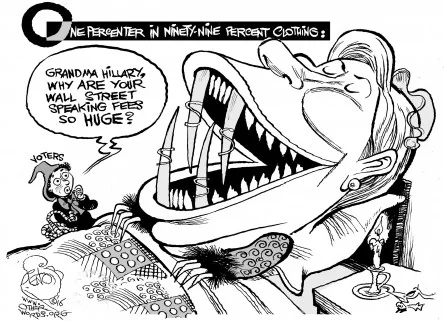
Anastasia Walker: Public hoopla over private parts
via OtherWords.org
As the recent attention lavished on figures like Laverne Cox and Caitlyn Jenner attests, trans visibility continues to rise in the United States. But that doesn’t mean life is suddenly easy for us transwomen.
Take something as simple as obeying nature’s call. Trips to public restrooms can be terribly stressful for us — even for folks like me who ”pass” as cisgender.
It took me over a year after I first embraced being trans to screw up the courage to enter a women’s room. Even now, two years after I first started presenting as female 24/7, I find myself furtively scanning the faces of the other women when I’m standing in a long bathroom queue.
Why? To confirm that no blowup is brewing.
Being identified as trans by an unfriendly stranger can lead directly to verbal or physical harassment — or even assault. So when we’re out in public, we often avoid behavior that might attract attention. Like making eye contact. Or showing our hands. Or speaking.
Unfortunately, conservative legislators across the country are making this experience more stressful than it already is.
Over the past year, laws have been proposed in several states that would ban transgender citizens from using bathrooms appropriate to their gender identity. These bills call for fines and even jail time for anyone who refuses to comply.
South Dakota, where lawmakers have passed a bathroom bill targeting transgender schoolchildren, may become the first state to enact one.
Republican Gov. Dennis Daugaard, in whose hands the decision now lies, initially claimed he’d never even met a trans person — and didn’t intend to before deciding whether to sign it. (He was forced to reverse that position, thankfully, and met with some trans students on February 23.)
Why is the far right making so much public hoopla over our private parts? They say it’s to preserve ”privacy rights.” Behind that highfalutin rationale, though, is the specter of (cisgender) women and girls being attacked by male sexual predators “disguised” as female.
To transgender Americans, these “bathroom bills” represent one of the more frustrating — and mystifying — forms of backlash against our emergence into the national spotlight.
Frustrating because the fear-mongering these bills foster is obstructing passage of sorely needed reforms, like protecting trans kids from bullying at school.
Mystifying because, as groups like the American Civil Liberties Union, Media Matters, the Human Rights Campaign, and the Transgender Law Center have shown, there’s no credible evidence whatsoever that “the predatory transwoman” exists anywhere outside of right-wing fantasies.
So why all this clamoring to restrict our bathroom access?
The truth is, the right isn’t concerned about our actions (real or imagined). Indeed, as the South Dakota governor’s bizarre initial refusal to meet one of us attests, who we are as people is beside the point.
The menace we pose is instead symbolic: Our very existence threatens their vision of a strictly gendered social order — one rooted in the nuclear family, with Adam and Eve serving as the prototype. To accept gender variance is to question the fundamental distinction between “man” and “woman” that this vision depends on.
But instead of arguing that their vision trumps a more inclusive one that embraces us, they’re demonizing us. Instead of recognizing us as a vulnerable group whose rights need to be protected, they’re trying to make us illegal.
Sadly, this scapegoating resonates with many people. The pivotal role a vicious anti-trans ad campaign played in toppling Houston’s high-profile LGBT rights ordinance last November bears this out all too well.
On the upside, times are changing: Demonizing us is no longer enough to keep us in the closet. The fact that they’re resorting to crass fear-mongering over who pees where suggests how desperate they’re getting.
Education and increased visibility are slowly shifting public opinion in our favor. In the meantime, lawmakers should focus on the many real challenges facing the nation right now — and let us pee in peace.
Anastasia Walker is an essayist, poet and scholar who lives and works in western Pennsylvania.
Might be washed away in 100 years
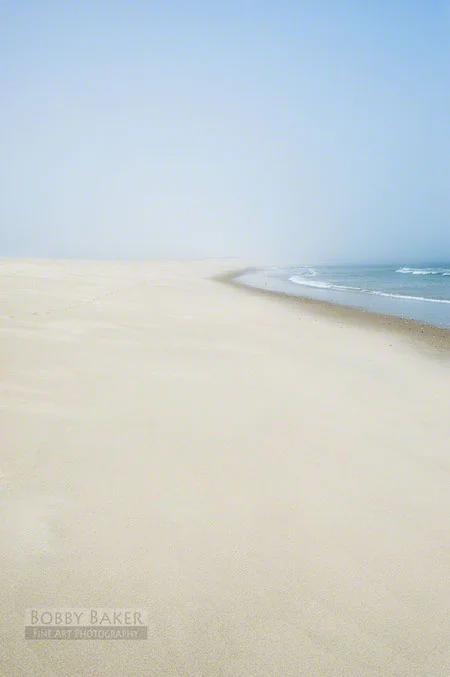
"South Beach,'' by Bobby Baker. (copyright Bobby Baker FIne Art Photography.)
This is not a proper introduction

"BITS Bayside 5'' (archival inkjet, silkscreen, palladium leaf on paper), by Gabriel Martinez at Samson Gallery, Boston.
David Warsh: Trying to make sense of America's age of disaggregation
"I am as eager as the next guy to make sense of Donald Trump and Bernie Sanders, but I do not expect to work my way through to useful opinions by following the primary and caucus returns."
Seeking distance from the dispiriting political news, I spent the best hours of last week reading various chapters of four books by Princeton historian Daniel T. Rodgers. I am as eager as the next guy to make sense of Donald Trump and Bernie Sanders, but I do not expect to work my way through to useful opinions by following the primary and caucus returns. So I turned to the work of a scholar who has spent his career writing about the evolution of the political culture of modern capitalism in the U.S. over the last 150 years.
I first read Rodgers a few years ago after an old friend recommended Age of Fracture, which had won a Bancroft Prize in 2012. I was struck by how attentive the historian had been to various developments in economics in the 1960s and ’70s I knew something about: the influence of deregulators such as Ronald Coase and Alfred Kahn, macroeconomists Milton Friedman and Robert Lucas, lowbrow supply-siders, highbrow game theorists, legal educator Henry Manne.
I know much less about the other realms Rodgers reconnoitered in the book in order to elaborate his central metaphor – international relations, class, race, gender, community, narrative. But I know that his fundamental diagnosis rings true. Life today is more specialized, more highly differentiated, and, yes, somehow thinner than in the past.
"Conceptions of human nature that in the post-World War II era had been thick with context, social circumstance, institutions and history gave way to conceptions of human nature that stressed choice, agency, performance and desire. Strong metaphors of society were supplanted by weaker ones… Imagined collectivities shrank; notions of structure and power thinned out. Viewed by its acts of mind the last quarter of the century, was an era of disaggregation, a great age of fracture.''
Over the next year I skimmed Rodgers’s three previous books. They turned out to offer a fairly seamless narrative of, not so much economic history, but arguments about economic history, over the course of a century and half. Rodgers was born in 1942, graduated from Brown University in 1965 and got his Ph.D. from Yale in 1973, taught at the University of Wisconsin until 1980, when he moved to Princeton University, where today he is the Henry Charles Lea Professor of History, emeritus
That first book, The Work Ethic in Industrial America: 1850-1920, traced American attitudes towards work, leisure and success, from relatively small-scale workshops before the Civil War to highly mechanized factories at the beginning of the industrial age. The second, Contested Truths: Keywords in American Politics since Independence, identified a handful of ostensibly technical terms – “utility,” “natural rights,” “the people,” “government,” “the state,” and “interests” – and examined their use in arguments, especially as the confident tradition he describes as “liberal” gave way to a rediscovery, both academic and popular, of “republicanism” in the Reagan years.
The third work, Atlantic Crossings: Social Politics in a Progressive Age, is a highly original reconstruction of various ways “progressivism” was understood in the first half of the twentieth century, in Europe and the United States: corporate rationalization, city planning, public housing, worker safety, social insurance, municipal utilities, cooperative farming, wartime solidarity, and emergency improvisation in the Great Depression. (A research assistant was Joshua Micah Marshall, who went on to found the influential online news site Talking Points Memo.)
Age of Fracture is the fourth.
It’s a rich vein. I plan to mine all four over the next few months, making a Sunday item, when and if I can. One needs something to discipline mood swings during the rest of the campaign, and I’ve decided that, for me, this is it.
Today I’ll offer a small but concrete example of what Rodgers calls “ideas in motion across an age,” or, in this case, many ages. American exceptionalism is a persistent theme with him: the free-floating idea that, as “the first new nation” and “the last best hope of democracy,” the United States has a mission to transform the world and little to learn from the rest of it. Is that the note that Trump so single-mindedly and simple-mindedly strikes when he promises to “make American great again”? It helps me to think so.
As for Rodgers, he is spending the year in California, writing a fifth book, a “biography” of a 1630 text that would come in time to be seen as central to the nation’s self-conception — the John Winthrop sermon that contains the famous phrase, “[W]e shall be as a city on a hill.”
David Warsh, a veteran economic historian and financial journalist, is proprietor of economicprincipals.com, where this originated.
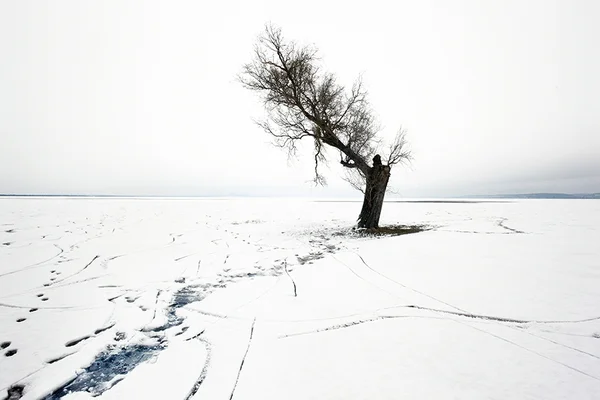
The most serious charge...
"The most serious charge which can be brought against New England is not Puritanism but February."
- Joseph Wood Krutch
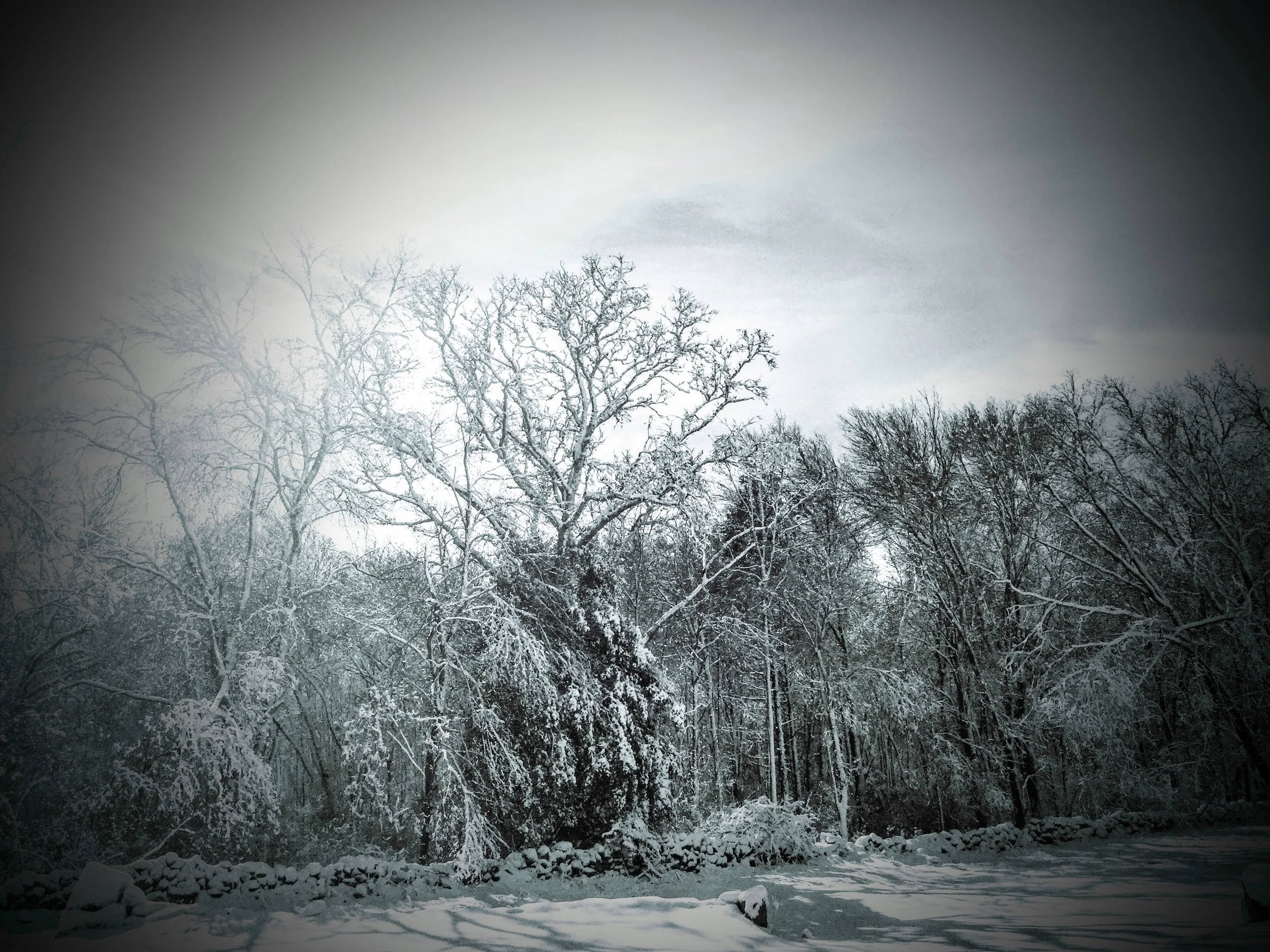
Post-industrial grid
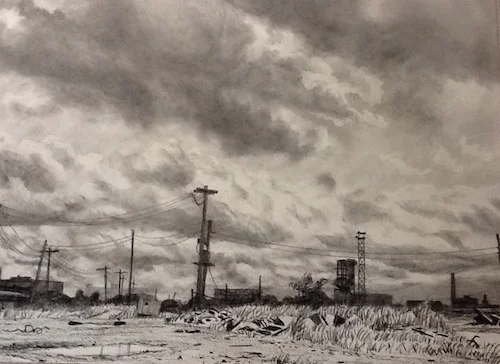
'
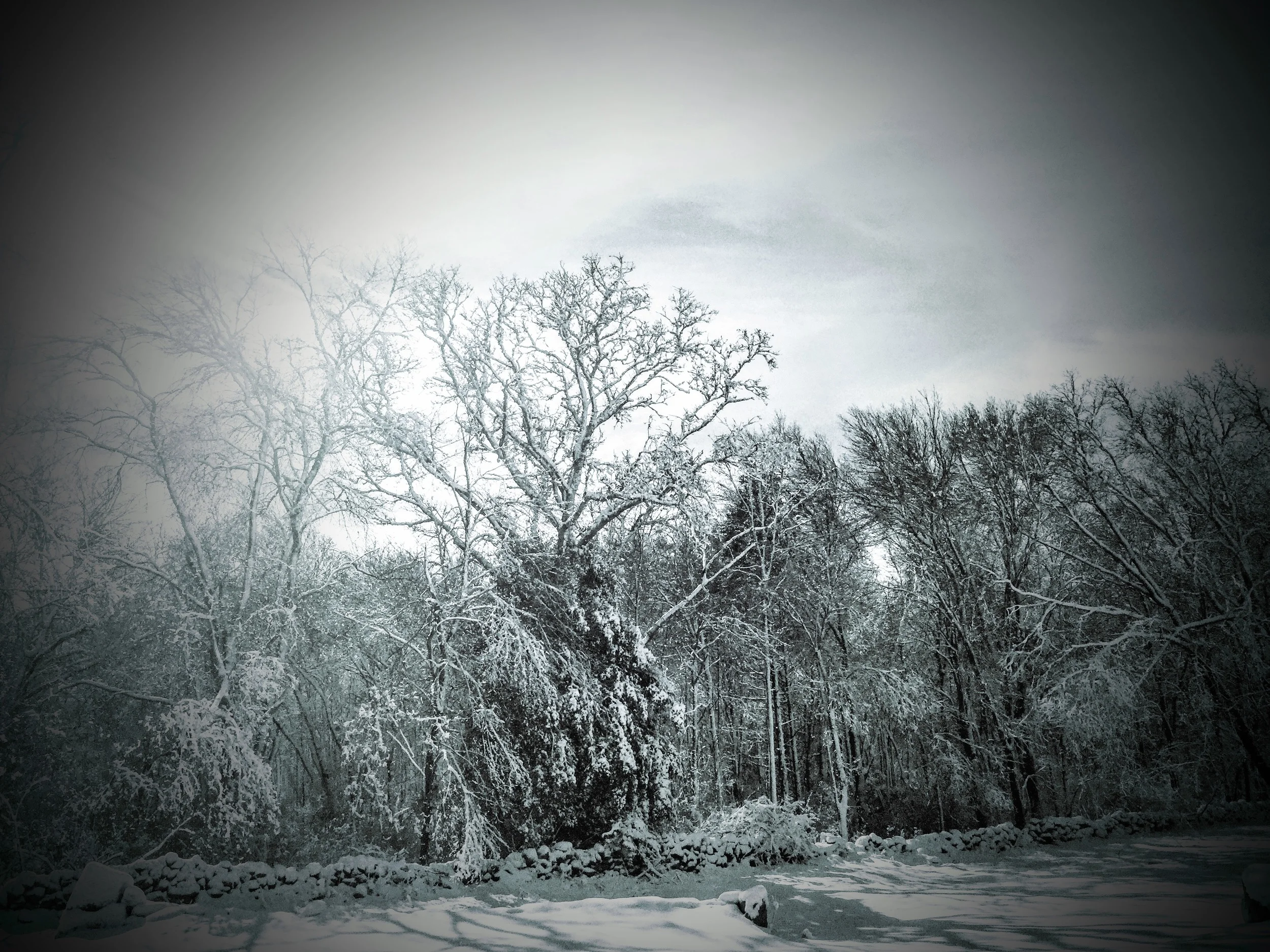
"Landscape'' (drawing), by David Campbell, in a show at the Brickbottom Gallery, Somerville, Mass., through Feb. 27.

Stephen J. Nelson: Trying to keep ideological chains out of colleges
The lively experiment that is the college and university in America is characterized by sustained struggles and tempered triumphs that have both undergirded and challenged the fundamental foundation of the academy. The economist and philosopher Kenneth Minogue conveyed in his bookThe Concept of the University that the university can and should allow ideologies to be debated within its gates. However, ideologies cannot be permitted to gain a foothold of control.

Those with political agendas, desires for social reform or other civic interests—no matter how principled or valuable to society—cannot be allowed to shape the university in that image and to those ends. If that happens, the university is no longer the university, but rather a wholly different institution—more a political party, a social action agency or a public policy think tank.
Large questions shape the framework of the academy in America. These include: ideological and the degree to which there should be restrictions and if so what kind on speech and behavior, curricular debates and the expression and treatment of political views, whether exercised by presidents in the bully pulpit, by faculty and students, or by those given the platform to speak on campus.
All in all, the contemporary college and university environment is at least as politicized and ideologically driven as at any time in its history, if not more so. The big question is how the college or university can maintain the fundamental identity at the foundation of its heritage in the face of ideologies that would pull it willy-nilly in one direction or the other, and bend it to the expediency of their competing and mutually exclusive points of view.
The college and university is a complex entity, in many ways an organism with interlocking, related but independent parts. Many within its gates, and certainly many critics on the outside, do not fully comprehend and appreciate how fragile the academy is. Though reductionist regarding the political winds and sways in today’s academy, the forces on today’s neo-conservative Right seek preservation, maintenance of the traditions and traditional curriculum and culture of the academy. Those on the progressive Left seek the transformation of society, the use of the college and university for egalitarian, social justice and minority-advancement ends.
Political correctness critics on the Right believe that there exists a lock exerted by the Left in all aspects of campus and student life, and a dangerous domination of the Left’s political agenda in both administrative and faculty appointments and ranks. These critics are certain that colleges and universities are shot through with litmus tests, and are bound and determined unalterably to stamp their political leanings and convictions not only within campuses, but infiltrating society and the nation as well.
In the face of these charges, the Left has pushed back using their own contending tropes. They deny these accusations. The Left is not monolithic. It features many slices and shades of individual differences. The criticisms of the Left are unfair, often ad hominem (which in many cases they are). As one example, the Dartmouth Review ran a headline in the early days of the tenure of Dartmouth President James Freedman, a Jew that read, “Ein Reich, Ein Volk, Ein Freedman,'' with the allegation that he and Dartmouth were rounding up conservatives on campus and putting them on trains in White River Junction, Vt.
However, these dueling perspectives and allegations prompt crucial questions. What if the roles of Left and Right were reversed and the shoe was on the other foot? In going about their business and using their leverage to shape the culture of the academy, is the liberal, progressive Left ignoring the legacy that their influence will surely leave behind?
In other words, if Leftists in the academy are indeed dominant and able to get their way, what would happen if they were on the outside looking in? What if they were consigned to the minority position with little power? What ammunition would they in turn use in the climb to reclaim territory? Wouldn’t they likely throw at their enemies on the Right what the Right now throws at them?
Playing willy-nilly with the core principles and values—a commitment to unfettered inquiry, free speech and expression of idea, a journey to be as objective as possible, and judgments made about ideas, not on the basis of political axes to grind—of the university is an extremely dangerous game. Its effect erodes the foundations of the academy and creates the prospect that what is wrought can come back to bite you.
This is “the shoe is on the other foot” conundrum. Surveying this scene, the late philosopher Ron Dworkin used “an old liberal warning. But it is a warning that cannot be repeated often enough.” That warning and the fear about the damage it does to academic freedom is that “Censorship will always prove a traitor to justice.” The late cultural critic Edward Said, a colleague of Dworkin at Columbia, claimed the antidote to foundational principles of the university being sacrificed on the scaffold of dueling political parties parading ideological points of view is in Cardinal Newman’s idea that “intellectual culture” constitutes the foundation of the university.
Over the past four decades, a number of critical issues and events have shaped the college and university. What have we come to today?
Donald Downs, a University of Wisconsin historian and observer experienced in the academy, notes that when the “right not to be offended” is exploited and trumps everything else in the arena of free speech and academic freedom, a double whammy results. This is precisely the problem that critics of political correctness decry: that the actions of colleges and universities become overwrought in an effort to placate the complaints of the minority. The result: The creed of the academy is eroded and the interests of the majority of its constituents are thwarted and suppressed.
Downs is concerned that we can never lose our commitment in the academy to free and open debate. Among other things, this means academicians and university leaders must exert enormous care as they assess what should be considered “in” versus what is considered “out” in curriculum, in the courses professors teach, in who is invited and permitted to speak on campus, and in how the university ensures free discussion and dialogue in all its affairs.
In the environment of the academy over the past five or more decades (certainly traceable to the aftermath of World War II and the McCarthy era), critical thinking challenged and criticized longstanding premises, and what were presumed to be established mores, ethical assumptions and beliefs. For many, this critique of society and culture created a vacuum of morality and values.
Into that breach came those demanding moral replacements, often pressing the cause by sheer demagoguery. For example, curricular battles often were reduced to whether American and other Western ideals were being supplanted by more superficial and less fitting set of cultural norms that were designed to undermine and erode the political philosophies and governing assumptions of the tested Western traditions. Both sides of the political correctness divide have made careers out of presenting themselves as the saviors to fill this vacuum, and to fix a society and academy that is in disarray and lacks moral fiber and moral compass.
The mores, debates and controversies, particularly in the 1960s and early 1970s, jumpstarted and stirred up ideological thinking. Social and political culture provided new grist for the mills of advocates for competing positions and to the coining of the term political correctness. The danger to the university became ever more clear: When the university caves to political correctness and tilts to being a social, political and cultural institution of change, it loses its identity as the university.
Maintaining rational dialogue in the academy across these divides is not a simple task and never has been. As the great thinker and experienced denizen of the Ivory Tower, Isaiah Berlin commented: “Unless we are able to escape from the ideological prisons of class or nation or doctrine, we shall not be able to avoid seeing alien institutions or customs as either too strange to make any sense to us, or as issues of error, lying inventions of unscrupulous priests. …”
The escape route for the academy in America from the confines and bondage of extreme forms of political correctness on one side—and the politically motivated critics of those progressive, leftist agendas on the other—is only through reliance on its foundation: the college and university qua the college and university.
In the battleground between warring political factions of Left and Right, the university has to be a balance wheel, it has to navigate in the middle, refusing to take sides and welcoming all comers. That is after all what it means for the university to be the university. The crucial balancing act is between the tyrannies of both the majority and the minority. Both sides in the political correctness debates would claim the wish to avoid becoming a tyranny of the minority or of the majority. However, both sides shamelessly seek and are more than willing to use this leverage when it is to their advantage and suits their purposes.
The American Association of University Professors (AAUP) warned in its 1915 “Declaration of Principles on Academic Freedom and Academic Tenure” about the “’tyranny of public opinion.’” The AAUP added to that admonition declaring in its 1940 Statement of Principles on Academic Freedom and Tenure: “Institutions of higher education are conducted for the common good and not to further the interest of either the individual teacher or the institution as a whole. The common good depends on the free search for truth and its free exposition.”
A major question for the college and university at present and for the future is: Is the tyranny of public opinion worsening or is it simply a longstanding threat that each generation, in and outside the gates, must regularly confront in a democracy?
The college or university always faces the challenge to navigate successfully the choices between tradition and change, and between what can and should be dearly held, and what may need to be jettisoned in light of present and coming demands. Change is inevitable and should not be feared. Historian Jacques Barzun’s counsel provides context: We should “ask why that same phenomenon [that things are getting worse] recurs; in other words, the historical-minded should look into the meaning and cause of the undying conviction of decline. One cause, one meaning, is surely that in every era some things are in fact dying out and the elderly are good witness to this demise.”
The formation of the academy in America is a distinctive saga, unique to the American Republic and how it has been shaped and formed since its very beginnings and Colonial college roots. This saga demands continual reexamination and revisiting in every generation and in every era. It is a saga that endures. It is a history that only when we are able to get our arms around it and to gather a firmer grasp of it, are we able to have a more enlightened and nuanced sense for the story of the shape and shaping of the college and university in America.
Stephen J. Nelson is professor of educational leadership at Bridgewater State University and senior scholar with the Leadership Alliance at Brown University. His most recent book, College Presidents Reflect: Life in and out of the Ivory Tower, was released in 2013. His forthcoming book, The Shape and Shaping of the College and University in America: A Lively Experiment (Rowman and Littlefield, Lexington Books) will be released in March. This commentary originated in the New England Journal of Higher Education, part of the New England Board of Higher Education (nebhe.org).
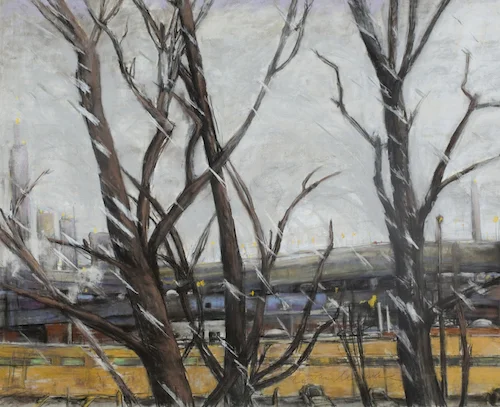
The official state weather
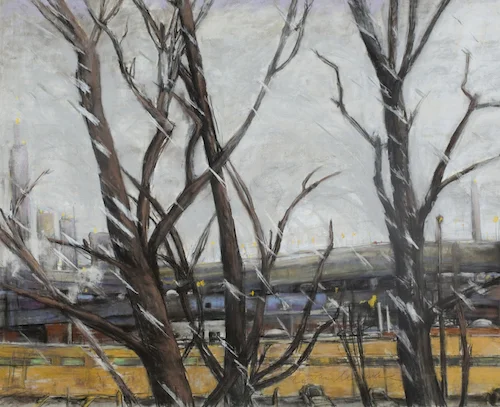
"Sleet,'' in a show of Cynthia Maurice, at the Brickbottom Artists Association, Somerville, Mass., through Feb. 27.
It always is
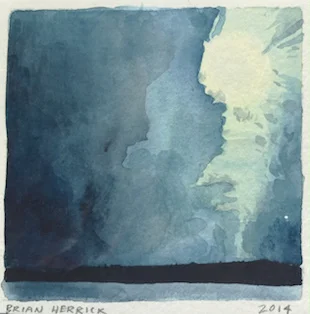
"Storm Season'' (watercolor), by Brian Herrick, at Patricia Ladd Carega Gallery, Center Sandwich, N.H.
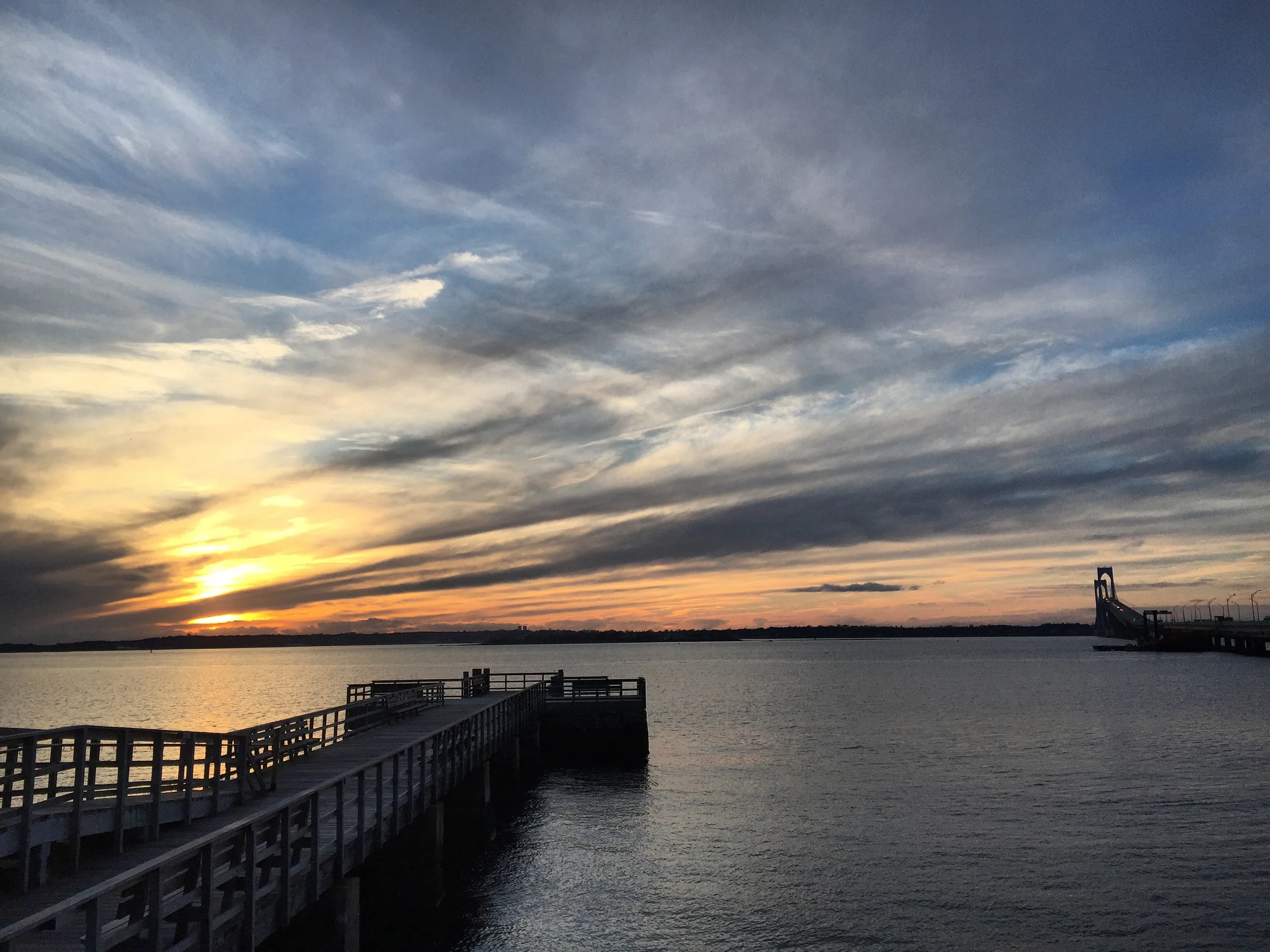
Many Rhode Islanders should seek higher ground
By TIM FAULKNER
for ecoRI News (ecori.org)
PROVIDENCE — Rhode Island’s Executive Climate Change Coordinating Council (EC4) is expected to update the governor and General Assembly on its progress in May. Some of the information they will be presenting is both encouraging and worrisome.

ecoRI News reported this month that the state revised its sea level-rise estimates to 7 feet by 2100. The estimate also includes a projected increase of 2 feet by 2050.
James Boyd, coastal policy analyst for the Coastal Resources Management Council (CRMC), presented a vivid image of what the revisions mean during the EC4’s Feb. 10 meeting. A photo taken during a moon tide Feb. 9 showed what a 2-foot increase looks like.
“This is monumental change on the Rhode Island landscape,” he said.
For now, higher “nuisance” tides are all already on the rise, Boyd said, occurring three to five times annually, rather than once or twice.
The new 7-foot estimate can be seen online through CRMC’s STORMTOOLS program. New features in the program show the effects of storm surges and flooding on individual properties across Rhode Island. Municipalities and developers can also look at the coastal climate impacts on commercial areas, and bridges and roads.
Jared Rhodes, chief of the Statewide Planning Program, said coastal communities in southern Rhode Island are largely embracing efforts to adapt to climate-change impacts. But the measures aren’t gaining traction with some cities and towns in upper Narragansett Bay, he said.
“From my perspective, many of the communities don’t see this as something that’s an urgent issue right now,” Rhodes said. “And I think that’s something we need to still keep pushing and find ways to help the municipalities apply the tools that have already been developed so that we can help them see that this is a real issue.”
Boyd said the increased frequency of powerful storms and nuisance flooding will likely draw attention to the need for communities to adapt. He noted that Warwick was chosen, along with Charlestown, for a pilot program that assigns numerical risk factors for climate impacts to all homes and businesses.
The program will be run by CRMC and funded with a $200,000 grant from the U.S. Department of Housing and Urban Development. Another HUD grant will fund new flood mapping of the Pawtuxet River watershed. If successful, other watersheds will be mapped.
Leah Bamberger, the city’s director of sustainability, said STORMTOOLS may be useful for homeowners on Providence’s East Side, but likely won’t draw attention from renters, residents living in multi-family homes and those without the means to interact online.
The city’s sustainability plan focuses on transforming community centers into emergency shelters and cooling centers, and places for residents to interact. Rather than a small number of large shelters across the city, Bamberger said, “It’s better to have small spaces where (residents) know people and are comfortable there.”
Providence’s sustainability plan also aims to address the long-term resiliency of the Port of Providence and surrounding neighborhoods, including the Rhode Island Hospital area. The new flood maps show the port and Allens Avenue, through downtown, flooded by storm surge from a major hurricane.
The city’s commitment to the Compact of Mayors means Providence will set its own greenhouse gas-reduction targets and adopt a climate adaptation plan. By joining the compact, cities with similar risks share ideas for solving climate vulnerabilities.
Last year, Providence divested its pension investments from the 15 most polluting coal companies. A draft of land use and development plan is expected in April. It is expected to include progress reports on stormwater management, building codes and standards, and neighborhood risk assessments.
The state Department of Health (DOH) has made the most progress with climate adaptation efforts. Julia Gold, DOH’s climate-change program manager, has overseen several initiatives to identify and address public health impacts, such as heat and at-risk populations. Resolving climate risks related to senior citizens are ongoing, such as shelter-in-place planning and technical assistance for 30 elderly housing sites across the state.
Gold plans to make an educational film containing individual stories about climate risks such as flooding and the heat-island effect, and solutions. Gold said the film isn’t meant to scare people about the risks but “that we are presenting solutions. That positive change is occurring and there is hope.”
New aerial shoreline maps reveal that erosion is advancing quickly along the southern coast, from Westerly to North Kingstown. Matunuck Beach in South Kingstown is seeing the worst erosion, with an average of 5 feet of erosion annually between 2010 and 2014.
Boyd explained that erosion isn’t caused by sea-level rise but is the result of potent storms such as Hurricane Sandy in 2012 and Hurricane Irene in 2011.
The $100,000 in Gov. Gina Raimondo’s proposed fiscal 2017 budget for a new coastal resiliency center at the University of Rhode Island would offer technical guidance to municipalities in understanding the impacts of climate change. Risks to infrastructure, hospitals, drinking water and wastewater systems would be addressed.
Some of that guidance could recommend that coastal roads such as Matunuck Beach Road and Atlantic Avenue in Westerly be abandoned or shortened.
“Now you start looking at real damage costs so you can start making some intelligent choices whether you want to rebuild (after storms) in that location or relocate,” Boyd said.
Brown University researcher and lecturer Caroline Karp supports comprehensive planning to address the concept of no-build zones in areas frequently damaged by flooding and storms, as well as areas that are predicted to suffer from climate-change impacts. No-build, she said, involves denying building permits, and suspending town services and maintenance to roads and infrastructure in those areas.
Kendra Beaver, staff attorney for Save The Bay, said CRMC and the state Department of Environmental Management don’t appear to be considering climate impacts when issuing permits related to construction. Potential property owners, she said, are therefore not likely to know the risk of damage to homes and other structures.
“There has to be some obligation on the part of the permitting agencies to right now consider what you know about the impacts of climate change before you issue any permits at all,” Beaver said.
Karp said she also wants the EC4 to address climate impacts on vulnerable wildlife rather than just vulnerable infrastructure.
University of Rhode Island Prof. Peter August, chair of the EC4 Science and Technical Advisory Board, said his committee is concerned about this issue and is looking at monitoring changes in fauna and flora of ecosystems, as well as the impact of stormwater runoff on wildlife.

Jill Richardson: Believe it or not, no candidate is perfect
Let me tell you something people don’t often say when arguing about presidential candidates on Facebook: No candidate is perfect.

But that doesn’t mean it’s not worth choosing to support one.
For example, you can support Bernie Sanders because you believe he’s the best all-around candidate, while simultaneously accepting that he tends to be clumsy when it comes to matters of race.
It’s also possible to support Hillary Clinton while noting that you dislike her vote in favor of the Iraq War, or are concerned about the millions of dollars her family’s foundation accepted from Saudi Arabia.
The same goes for Republican candidates. Each of those contenders comes with advantages and disadvantages.
In other words, whatever your leanings are, you need to weigh each candidate’s pros and cons. How well do their proposals match your values? Do you believe they have a shot at actually getting something done?
It’s a balancing act.
Hillary has more foreign policy experience than Bernie, although you might not consider that a good thing if you don’t like the decisions she made as a senator and secretary of state. Bernie doesn’t have a history of supporting pro-corporate economic policies like Hillary, and that’s a perk if you share his economic populism.
A ridiculous way to choose a candidate, by the way, is by selecting the one whose genitalia matches your own. And it’s an insult to women to suggest that any of us ought to, as former Secretary of State Madeleine Albright did when she said there’s a “special place in hell” for women who don’t support Hillary Clinton.
Even if you make your choice based on the issues, however, whomever you choose is still imperfect. In fact, it’s dishonest to claim that your preferred candidate is, by virtue of being the best person running in your eyes, without flaws.
And it’s dumb.
If you want what’s best for America, then it makes sense to pick the best candidate — and then push them to become even better.
On the flip side, it’s also foolish to abstain from supporting any candidate because no contender perfectly matches your views.
The death of Supreme Court Justice Antonin Scalia is a good reminder of one of the most enduring legacies that any president can leave: Supreme Court justices. President Ronald Reagan appointed Scalia, who carried on Reagan’s values long after he left office.
Our next president will remain in office for up to eight years, but his or her Supreme Court nominees will probably shape our legal system for decades to come. No matter your feelings on the individual candidates, a win for your party in November could create an opportunity to nudge the Supreme Court in the direction of your choice for the next 20 or 30 years.
In other words, we should behave like rational, logical grownups as we select the next leader of our country. All candidates have their own flaws. Our job as citizens is to pick the best one and push them to become even better after we vote.
Jill Richardson is the author of Recipe for America: Why Our Food System Is Broken and What We Can Do to Fix It.
EcoRI News: Warmer water, different N.E. fish

--NOAA chart
By ecoRI News staff
See ecori.org
National Oceanic and Atmospheric Administration (NOAA) scientists recently released the first multi-species assessment of just how vulnerable U.S. marine fish and invertebrate species are to the effects of climate change.
The study examined 82 species off the Northeast coast, where ocean warming is occurring rapidly. Researchers found that most species evaluated will be affected, and that some are likely to be more resilient to changing ocean conditions than others.
“Our method identifies specific attributes that influence marine fish and invertebrate resilience to the effects of a warming ocean and characterizes risks posed to individual species,” said Jon Hare, a fisheries oceanographer at NOAA Fisheries’ Northeast Fisheries Science Center, in Narragansett, R.I., and lead author of the study. “This work will help us better account for the effects of warming waters on our fishery species in stock assessments and when developing fishery management measures.”
The study is formally known as the “Northeast Climate Vulnerability Assessment” and is the first in a series of similar evaluations planned for fishery species in other U.S. regions. Conducting climate change-vulnerability assessments of U.S. fisheries is a priority action for NOAA.
The 82 Northeast marine species evaluated include all commercially managed fish and invertebrate species in the region, a large number of recreational fish species, all fish species listed or under consideration for listing on the federal Endangered Species Act, and a range of ecologically important species.
NOAA researchers, along with colleagues at the University of Colorado, worked together on the project. Scientists provided climate model predictions of how conditions in the region's marine environment are predicted to change in the 21st Century. The method for assessing vulnerability was adapted for marine species from similar work by the U.S. Fish & Wildlife Service to characterize the vulnerability of wildlife species to climate change.
The method tends to categorize species that are “generalists” as less vulnerable to climate change than are those that are “specialists.” For example, Atlantic cod and yellowtail flounder are more generalists, since they can use a variety of prey and habitat, and are ranked as only moderately vulnerable to climate change.
The Atlantic sea scallop is more of a specialist, with limited mobility and high sensitivity to the ocean acidification that will be more pronounced as water temperatures warm. Thus, sea scallops have a high vulnerability ranking.
The method also evaluates the potential for shifts in distribution and stock productivity, and estimates whether climate-change effects will be more negative or more positive for a particular species.
“Vulnerability assessments provide a framework for evaluating climate impacts over a broad range of species by combining expert opinion with what we know about that species, in terms of the quantity and the quality of data,” Hare said. “This assessment helps us evaluate the relative sensitivity of a species to the effects of climate change. It does not, however, provide a way to estimate the pace, scale or magnitude of change at the species level.”
Researchers used existing information on climate and ocean conditions, species distributions and life history characteristics to estimate each species’ overall vulnerability to climate-related changes in the region. Vulnerability is defined as the risk of change in abundance or productivity resulting from climate change and variability, with relative rankings based on a combination of a species exposure to climate change and a species’ sensitivity to climate change.
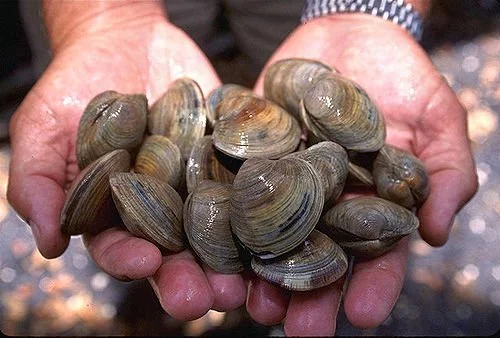
Each species was evaluated and ranked in one of four vulnerability categories: low, moderate, high and very high. Animals that migrate between fresh and salt water, such as sturgeon and salmon, and those that live on the ocean bottom, such as scallops, lobsters and clams, are the most vulnerable to climate effects in the region.
Species that live nearer to the water’s surface, such as herring and mackerel, are the least vulnerable. Most species also are likely to change their distribution in response to climate change, according to the study. Numerous distribution shifts have already been documented, and the study demonstrates that widespread distribution shifts are likely to continue for the foreseeable future.