







A_map_of_New_England,_being_the_first_that_ever_was_here_cut_..._places_(2675732378).jpg

Vox clamantis in deserto

Commentary Robert Whitcomb Commentary Robert Whitcomb

Partners chief mulls Plans B and C

Read More
Commentary Robert Whitcomb Commentary Robert Whitcomb

Dead-looking but still alive

tree From "Artists Perspectives on Trees,'' now at Blue Wave Art Gallery, in Amesbury, Mass. It seems impossible at this time of brutal cold, but the buds on some trees have swollen a bit lately as the light has brightened.

Read More
Commentary Robert Whitcomb Commentary Robert Whitcomb

Health center and community center

In a time of more outpatients and fewer inpatients, a Connecticut hospital chain, St. Vincent's Medical Center, based in Bridgeport, turns a health center into a community center too. Hospitals are retooling themselves to address  dramatic  economic, technological, regulatory and demographic change.  


Read More
Commentary Robert Whitcomb Commentary Robert Whitcomb

Where are the disaster funds for battered Boston?

  E.J. Graff,  telling the world about  Boston's slow-motion catastrophe from blizzard after blizzard and weeks of deep freeze, asks:

"Where are the federal disaster funds, the presidential visit, Anderson Cooper interviewing victims, volunteers flying in, goods and services donated after hurricanes and tornadoes? The pictures may be pretty. But we need help, now. ''

Read More
Commentary Robert Whitcomb Commentary Robert Whitcomb

A Ukrainian battalion's bitter experience

Read More
Commentary Robert Whitcomb Commentary Robert Whitcomb

Shades of green, if not obscene

  jasmina


"Taking on the Obscenery III'' (ink and gesso on paper), by JASMINA JANOWSKI, in her show "Taking in the Obscenery,'' at Heather Gaudio Fine Art, in New Canaan, Conn., Feb. 21-April 11.

We see no signs of obscenity here. Perhaps a reference to the sexuality assorted with the coming of spring and its green? "In the spring of the year/ inhibitions disappear....''

Anyway, the gallery's notes say:

"Danowski translates personal situational experiences onto canvas and paper, creating vibrantly harmonious poetic abstractions that are filled with a richness of color and texture. Drawing from memories or associations with places or situations, she starts by dabbing the pigment onto a prepared surface, allowing the medium to respond to the marks she creates: at times a bevy of paint, at others an isolated gestural mark reminiscent of Japanese calligraphy.''

Read More
Commentary Robert Whitcomb Commentary Robert Whitcomb

'Coming Home' to Wabanaki

canoe Quill Canoe, in the "Coming Home'' show at Abbe Museum, in Bar Harbor, Maine, through next Dec. 19.

The  show consists of collections of Wabanaki objects from museums across the Northeast.

The Wabanaki are group of tribes concentrated in Maine, Quebec and the Maritime Provinces 

''From baskets to beadwork, woodcarvings to birchbark canoes, many pieces of Wabanaki material culture have ended up in museums far away from the Wabanaki homeland,  where it is difficult for community members to see these pieces of their history and culture. In recent years, the Abbe has spoken with several Wabanaki people about Micmac, Maliseet, Penobscot and Passamaquoddy collections residing in museums outside of Maine, and whether it would it be possible to bring pieces 'home' for a while so that community members could study them more closely. '' Thus this show.

Bar Harbor is beautiful in the winter,  in an elemental way, and  easier to get around  than blizzard-bound Boston. It surprisingly culturally rich and has such energizing institutions as the College of the Atlantic.


Read More
Commentary Robert Whitcomb Commentary Robert Whitcomb

Cutler J. Cleveland and Richard Reibstein: Divesting fossil fuels makes sense

Should university endowments divest from fossil fuels? A public discussion of this question has seen some university presidents issuing statements that they would not divest—that investments should not be used for “political action.” Many universities hold large endowments that have significant positions in fossil fuel companies or funds that hold fossil fuel assets. Universities consume fossil fuels in most aspects of campus operations. But universities also support most of the research that has identified the existence, nature and consequences of climate change, and the principal purpose of the university is to educate, particularly the young adults who will live and work in the climate of the future.

Arguments for universities to divest from fossil fuels are frequently based on moral grounds. Ignoring the moral issue at the core of the climate challenge presents real peril to the reputation of universities and their standing in society. The costs of climate change stretch across generations due to the long atmospheric lifetimes of greenhouse gases and the inertia in the Earth’s climate system, posing the question of what the impacts of today’s societies are on the well-being of their children and grandchildren.

The poor bear the brunt of the economic and health impacts of climate, a relationship that holds within every nation, and between rich and poor nations. Climate change requires development of the capacity to manage our collective impact on our environment, and universities have a duty to help foster this development. Universities cannot pretend they have no such responsibility without forsaking the role they have historically engendered as trustees of humanity’s capacities, values and understanding.

But the case for divestment is not limited to moral imperatives. Holding assets in fossil fuel companies, and in companies that are fossil fuel-intensive, poses a significant array of risks for universities that appear on multiple, simultaneous fronts. Fossil fuel companies will eventually experience a dramatic decline in demand for their products, producing so-called “stranded carbon.” Price volatility of fossil fuel assets is the norm, and it will be exacerbated by rising concerns about extractive practices and the forced internalization of external costs, shareholder advocacy, the elimination of generous subsidies, and intense competition from energy efficiency and fast-developing, low-carbon sources of energy.

Taken as a whole, the financial, moral and reputational risks associated with holding assets in fossil fuel companies create a compelling case for divestment, even without considering the rising opportunity costs of not transferring investments to cleaner alternatives. Careful examination of the stated reasons for not divesting shows that they do not hold water.

Instead of viewing the choice as “business as usual” or “disinvest,” universities should engage with other universal owners—asset owners who recognize that their portfolios are diversified across multiple industries and asset classes—and learn how to invest responsibly. Aligning their financial interests with their commitments to sustainability will not be accomplished overnight, but that does not justify turning a blind eye to the fact that a healthy portfolio requires a healthy economy. Universities can first disinvest in the highest-polluting and irresponsible operations, and launch a process of learning where to reinvest in the cleaner opportunities of the future.

Developing the capacity to identify good investments that make sense from both a moral and a financial standpoint, and doing that work will help inform the rest of us. Doing this work visibly fulfills the university’s role in society, and will attract high-quality students, faculty and donors. Once this work begins, the question of where the line is to be drawn recedes in importance.

These actions would provide the world with a lesson worthy of education institutions that really are concerned with the future. The actions would demonstrate that universities understand that money-management is not separate from moral and environmental consequences, and that the universities will not participate in the fiction that they are separate. That alone would have incalculable value because it would help convince others. Even the most cold-blooded investor will eventually have to acknowledge that these risks are growing, as is the value of industries that are not vulnerable to regulation, resistance and devaluation.

University leaders should recognize how intelligently going down the road of divestment fulfills their role in society, and that failing to fulfill the university’s basic mission will eventually degrade its reputation and capacities.

Cutler J. Cleveland is a professor of earth and environment at Boston University. Richard Reibstein is a lecturer in the department. This piece is adapted from Energy in Context, a blog the authors started with two colleagues from the B.U., Department of Earth and Environment: professors Nathan Phillips and Robert K. Kaufmann. See the full report at The Path to Fossil Fuel Divestment for Universities: Climate Responsible Investment. We received this via the New England Journal of Higher Education, a service of the New England Board of Higher Education (nebhe.org).


Read More
Commentary Robert Whitcomb Commentary Robert Whitcomb

William Morgan: A plea for snow tires

snowtire2 (See  exciting snow-tires-in-action pictures below.)

If Rhode Islanders are the nation’s worst drivers, then it figures that a snowstorm makes matters worse. Given the Little Rhody driver’s reputation for aggressiveness, failure to acknowledge such basic guideposts as  traffic lights, stop signs, or courtesy, winter conditions will only greatly magnify the legalized game of chicken that is driving in the Ocean State.

Given the attitude with which Rhode Islanders fling their cars around, it seems unlikely that we might consider serious drivers training, one that would include time on a skid pad. Scandinavian countries, for example, prudently require an extensive road test in snow and on ice.

Even if drivers in such places as Sweden and Finland are better trained to deal with winter, the Nordic countries require all cars to be shod with snow tires. You might think there are a lot of four-wheel-drive vehicles just south of the Arctic Circle, yet Oslo and Stockholm have mostly regular cars, including a lot of rear-wheel-drive ones, that get about fine with snow treads at all four corners.

Snow tires may seem like a quaint relic of the past. But if you look in old photo albums of Christmases past, you may see your parents and grandparents standing by cars with those knobby tires that actually got them places. Or take a look at Yankee Magazine, say, which often features nostalgic photos of New England villages in the snow where the cars don’t seem to be spinning wildly out of control or blocking school buses filled with children. (Our forebears also had other advantages, such as standard transmissions, less powerful machines, and perhaps a more realistic understanding of a car’s limitations.)

In the past quarter century all-season tires replaced snow tires. These are actually only three-season tires, despite manufacturers’ putative claims. The argument was that snow tires were noisy on the highway, and besides, who wanted the inconvenience of swapping tires twice a year—sort of like changing those cumbersome old wooden storm windows. The result has been a dangerously false sense of confidence in year-round tires, which simply do not get you through snow as well as tires specifically designed for the job.

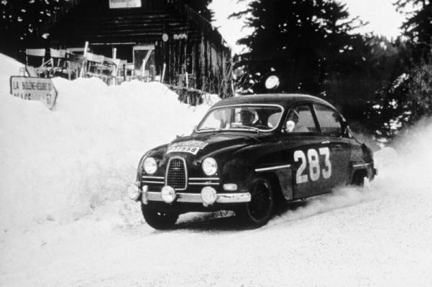
The other problem with modern tires is their width. Look again at those images of Grandfather driving the Ford Woody up College Hill, in Providence, or at cars competing in winter rallies in Canada or the Pyrenees: They  are riding on relatively narrow tires. A fat wide tire may look cool, and it is perfect for peeling out of the Dairy Queen parking lot on a hot summer’s night, but it performs poorly in rain, snow, or ice. Like a cross-country ski or an ice skate, a tire needs be skinny and offer as little resistance as possible.

Which brings us to the irony of the all-wheel-drive car or the SUV. Macho looking but fat tires offset the additional traction provided by four-wheel drive. Worse, buyers of SUVs have an over-inflated belief about their vehicles’ bad weather driving abilities: Big-soled shoes and the application of far too much horsepower are likely to increase skids and lessen surefootedness.

The modern car may have seat belts, air bags and sophisticated navigational equipment, but the most important safety device is still a good driver. Use the excuse of coming global warming to put off buying snow tires, if you must. Yet there are still a few tips—dare not call them rules        –that might help us get about if more snow comes.

Driving a Range Rover, a Cadillac Escalade, or a Porsche Cayenne may stroke your Indiana Jones fantasies, but it does not make you a better driver.

Setting out in any kind of car without first cleaning all the windows makes you a dumb driver.

Keep your gas tank full. Abandoning your car on the interstate because you forgot to top up is both needless and very dumb.

A light touch on the accelerator is always best. A powerful engine may fuel your testosterone level, but on snow and ice more power means less control.

From a practical point, fewer spinouts and fender-benders may keep winter traffic flowing a bit more smoothly. So, if we cannot put our in-your-face driving manners on hold for the winter, perhaps we can replace the metaphor of the driver as bruising defensive lineman with that of a graceful cross-country skier.

William Morgan is a Providence-based author and architectural historian. A version of this piece appeared in The Providence Journal in January  2008 and last month. The pictures below are added now.

63volvo

 Eric Carlson in 1963 Monte Carlo Rally with snow tires.


Carlson

 1963 Volvo in a winter road race using snow tires.


Read More
Commentary Robert Whitcomb Commentary Robert Whitcomb

Jim Hightower: Aetna the big business apostate

Business schools preach a strict, anti-social doctrine of corporate management that comes down to this: CEO's must be idiots.

By that I mean the original Greek word idiotes, which applied to people who care only about themselves and the prosperity of their immediate family. They’re the ones who reject any responsibility to the larger society, civic affairs, and the common good.

That selfish ethos is what prevails in today’s corporate suites, where it’s claimed that the only responsibility of executives is to maximize profits for the “family” — that is, for themselves and their major shareholders.

If they have to stiff workers, sidestep environmental rules, and shaft consumers to do it, well, that’s the lot of idiotes.

But now comes an apostate to this doctrinal idiocy.


Mark Bertolini,  chief executive of the Hartford-based health-insurance giant Aetna, says CEO's should raise the minimum wage their companies pay to a level approaching minimal fairness. Rather than just calling for it, though, he actually did it. He lifted Aetna’s lowest wage to $16 an hour, plus improved health benefits.

Then Bertolini really gave up the game: He publicly revealed that these increases aren’t so financially painful after all.

The total cost to Aetna will be about $26 million a year. That’s nothing for a company with annual revenues of $62 billion.

The only pain that Bertolini might feel is loneliness when he enters the CEO Club and sees other insurance chieftains turn their backs and shun him over his leadership on the moral matter of shared prosperity.

Indeed, the CEO's of Humana, Anthem and other insurers say “no” to raises for their employees, sniffing that they pay “competitive wages” — which is just a dishonest way of saying “low wages.”

Whether those idiotes like it or not, Aetna just lifted the national standard for competitive wages.

Moreover, the insurer has thrown open the doors of the executive suites to an honest public conversation about the morality of the suits inside jacking up their compensation while holding down everyone else’s pay.

Jim Hightower is a columnist for otherwords.org, where this originated.

Read More
Commentary Robert Whitcomb Commentary Robert Whitcomb

Chris Powell: Muslims ask to be seen as they are

MANCHESTER,Conn. 
Being Muslim in America these days may be almost as hard as being a young black 
man -- not quite as hard, since, if they want to, Muslims can conceal their 
religious affiliation. But these days both groups can't escape the hurtful 
stereotypes -- young black men because poverty and crime are so racially 
disproportionate, Muslims because their faith is being hijacked by theocratic 
gangsters whose crimes grow more horrifying by the day. 

Are these stereotypes being taken as license for murder in America? Many blacks 
think so whenever a young black man dies in a confrontation with police. And now 
many Muslims think so because of the murder this month of three Muslim college 
students in Chapel Hill, N.C. The motive of the man charged with the 
atrocity awaits official confirmation. 

At their mosque in Berlin, Conn., last week Muslims from the Hartford area gathered to 
mourn the murdered students and protest the stereotyping, especially as they 
find it perpetuated by television newscasts, where sensation is often the 
objective and where “Islamic” can hardly be spoken without some connection to 
gangsterism. 

That's not us, the Hartford-area Muslims told their neighbors last week, 
continuing: The world wants to see "moderate" Muslims -- normal people, good 
people wishing only good for others -- so here we are. Take note of us! 

Adherents of most other religions in Connecticut came to the mosque to join the 
Muslims in their mourning and their demand to be seen as they are. 

As this is America, Muslims shouldn't have to protest so that they might be 
considered as individuals any more than young black men should have to. Their 
own blameless lives should be enough to fend off prejudice. They should not have 
to call attention to themselves. 

But if they choose to do so, as the Hartford-area Muslims did last week, they 
can declare that they mean no harm and want to live in a pluralistic and 
democratic society with a government that respects and protects all, as the 
ethnic and religious groups that preceded them here wanted, and thereby oppose 
the gangsters and do the world a service. They also will be astonishing and 
shaming the prejudiced and thus making it easier for their children. 

All ethnic and religious groups that came to America faced prejudice and even 
aggression from some of those who preceded them, though even Jews, most vilified 
of all, may not have had to deal with the defamation that Muslims have faced lately 
because of the hijacking of their religion abroad. 

But then the country's hard-earned precedents of individual liberty and equality 
before the law have never been stronger. Muslims should claim those precedents 
boldly, grant them gladly, and make themselves at home. The universal nation 
will not refuse them. 

* * * 

As improvements on the Metro-North commuter railroad are not happening as fast 
as its riders in Connecticut would like, some state legislators are proposing 
that state government should seek another operator for the part of the railroad 
that serves Connecticut, the tracks long having been state property. 

This would not be practical, since Connecticut's part of the railroad is 
inseparable from New York's part and most of the railroad's commuters move back 
and forth across the state line every day. 

Connecticut has only itself to blame for its dissatisfaction with Metro-North. 
For nobody made the state assign its railroad to a New York state agency when 
the railroad's private operator failed four decades ago. Connecticut simply 
wasn't prepared to take responsibility then, and it still isn't prepared. 

But Connecticut  could  take responsibility for improving 
the railroad by seeking membership on its board and sharing credit for success 
and blame for failure -- if Connecticut's elected officials are ever interested 
in more than being able to blame someone else about the railroad. 

Chris Powell is managing editor of the Journal Inquirer, in Manchester, Conn. 
Read More
Commentary Robert Whitcomb Commentary Robert Whitcomb

Llewellyn King: The individual as microbusiness


The genius of Uber is dumbfounding. I’m not talking about what it pays its drivers (not enough), whether it’s putting taxis out of business (it is). I’m talking about the sheer brilliance of unleashing the value stored in the family car. Likewise, Airbnb which isn’t denting the hotels, but is causing tax collectors to go apoplectic.

These Internet companies are unleashing the value that families have had hidden in their driveways and spare bedrooms.What’s next? Your guess is as good as mine. If your guess is right, there are folk over at Google who’d like to talk to you.

Airbnb (which connects people looking for accommodation with those offering it in their homes) may be a tad more exciting than Uber (which puts private car owners in the transportation business) because it is catering to a specific traveler market. Hotels have become so unpredictable in their opportunistic pricing that private travelers are happy to leave them to business travelers who are less price-sensitive.

Then there’s GrubHub, which offers free online ordering from thousands of delivery and takeout restaurants. It may well be the next big thing in the market.

These are three examples of how the Internet, which giveth and taketh away, is reordering the economy. They’re beacons for how the economy might replace the jobs that are being lost to computers. They also offer extra income or full employment for people who don’t have marketable educations: driving a car and keeping a pretty home don’t require college degrees in science.

The nature of work is changing, and one of the consequences is that more of us are becoming self-employed: private contractors.

The Internet enables a large number of artisan skills to be marketed. I’ve just found an online advertisement for a dressmaker. Long before Walmart and “Project Runway,” dressmakers abounded. Women would ask their neighborhood dressmaker to “run up something” for a special occasion or whatever. Mass retailing, plus the difficulty of marketing beyond word-of-mouth, pretty well ended that, but it may come back. Now you may live in Atlanta, but you can order a bridal gown from an Etsy dressmaker in Seattle.

The Red Truck Bakery & Market, housed in an old gas station in Warrenton, Va., sends its Meyer Lemon and other goodies across the country. Artisanal baking meets the Internet.

Years ago, a friend of mine developed a knit teddy bear. It was a beautiful thing; tactile, safe for small children. I don’t recall whether my friend had gotten around to naming her stuffed bruin, but he was a darling -- although I don’t know why stuffed bears have to be male.

Anyway the said unnamed, unsexed, stuffed bear didn’t make it into many young arms because of marketing. The big retailers didn’t want it. Things are very competitive in Bear Land, and Paddington Bear and company don’t want other teddy bears crashing their picnic on the store shelves.

That was more than 30 years ago. Today, Bear X could be sold on the Internet. Now I’d wager the big chain retailers would come begging -- offering the little thing a whole shelf for itself.

The miracle of today is that it could happen differently. The concomitant fact is that we’re going to need more cottage industry and more self-employed contractors because the jobs of yesterday are disappearing, and the companies are less and less inclined to hire permanent staff.

Years ago, the jewelry business moved offshore; now it’s moved to American homes. It’s possible for a creative person to make jewelry at home and sell it online.

A new age of self-employment is at hand. Recently, I’ve worked with two inspiring millennials. One is a gifted and filmmaker, and the other a computer wizard. Both are making a living, and neither has given any serious thought to getting a job in the conventional way.

It’s not the age of small business, but microbusiness: the individual with something to sell, whether it's artisanal furniture or a skill. The millennials seem to know this instinctively, the rest of us are learning it.

Want to hire a veteran journalist who works from home? Call me.

Llewellyn King (lking@kingpublishing.com) is executive producer and host of "White House Chronicle" on PBS.  He is a long-time  entrepreneur, publisher, editor, writer and international business consultant.


Read More
Commentary Robert Whitcomb Commentary Robert Whitcomb

Between stillness and action

  Duehr

From left,  "Chicago El'' (detail) (pigment print on mylar), by GARY DUEHR; "Cuba #29'' (detail)  (pigment print, oil, resin and wood), by JENNIFER LISTON MUNSON; "Michigan Motel,'' (detail) (oil on canvas), by DAVID PALMQUIST.

They're in the "MOTION, MEMORY'' show at Brickbottom Gallery, Somerville, Mass., March 12-April 11

The gallery notes that this fascinating show  presents the work of three artists whose work is a hybrid of photography, painting or printmaking.

"Although photography’s origin is that of freezing motion (and time) as a way of preserving memory, each of these artists explores how photography, when altered or extended, can allow motion to partially wipe away the memory of a place or event. They all owe a debt to Einstein’s notion that time only occurs when change happens; if nothing changes, time does not pass. These three artists try to catch the moment of transition between stillness and action.''

"How often we want to freeze time and how often to speed it up!'' Of course, the desire to freeze time tends increase with age.


Read More
Commentary Robert Whitcomb Commentary Robert Whitcomb

ecoRI News: Researchers make 2 biofuels from single algae

  From EcoRI News

WOODS HOLE, Mass. — A common algae commercially grown to make fish food holds promise as a source for both biodiesel and jet fuel, according to a new study published in the journal Energy & Fuels.

The researchers, led by Greg O’Neil of Western Washington University and Chris Reddy of the Woods Hole Oceanographic Institution (WHOI), exploited an unusual and untapped class of chemical compounds in the algae to synthesize two different fuel products, in parallel, from a single algae.

“It’s novel,” said O’Neil, the study’s lead author. “It’s far from a cost-competitive product at this stage, but it’s an interesting new strategy for making renewable fuel from algae.”

Algae contain fatty acids that can be converted into fatty acid methyl esters (FAMEs), the molecules in biodiesel. For their study, O’Neil, Reddy and colleagues targeted a specific algal species called Isochrysis for two reasons: growers have already demonstrated they can produce it in large batches to make fish food and it’s among only a handful of algal species around the globe that produce fats called alkenones. These compounds are composed of long chains, which the researchers believed held potential as a fuel source.

Biofuel prospectors may have dismissed Isochrysis because its oil is a dark, sludgy solid at room temperature, rather than a clear liquid that looks like cooking oil. The sludge is a result of the alkenones in Isochrysis — precisely what makes it a unique source of two distinct fuels.

Alkenones are well known to oceanographers because they have a unique ability to change their structure in response to water temperature, providing oceanographers with a biomarker to extrapolate past sea surface temperatures.

But biofuel prospectors were largely unaware of alkenones. “They didn’t know that Isochrysis makes these unusual compounds because they’re not oceanographers,” said Reddy, a marine chemist at WHOI.

Reddy and O’Neil began their collaboration by first making biodiesel from the FAMEs in Isochrysis. Then they had to devise a method to separate the FAMEs and alkenones to achieve a free-flowing fuel. The method added steps to the overall biodiesel process, but it supplied a superior quality biodiesel, as well as “an alkenone-rich ... fraction as a potential secondary product stream,” the authors wrote.

“The alkenones themselves, with long chains of 37 to 39 carbons, are much too big to be used for jet fuel,” O’Neil said.

But the researchers used a chemical reaction called olefin metathesis, which earned its developers the Nobel Prize in 2005. The process cleaved carbon-carbon double bonds in the alkenones, breaking the long chains into pieces with only 8-13 carbons.

“Those are small enough to use for jet fuel,” O’Neil said.

The scientists believe that by producing two fuels — biodiesel and jet fuel — from a single algae, their findings hold some promise for future commercialization. They stress that this is a first step with many steps to come, but they are encouraged by the initial result.

“It’s scientifically fascinating and really cool,” Reddy said. “This algae has got much greater potential, but we are in the nascent stages.”

Among their next steps is to try to produce larger quantities of the fuels from Isochrysis, but they are also exploring additional co-products from the algae. The team believes there is plenty of other potential products that could be made from alkenones.

“Petroleum products are everywhere — we need a lot of different raw materials if we hope to replace them,” O’Neil said. “Alkenones have a lot of potential for different purposes, so it’s exciting.”

Their research was funded by the National Science Foundation, the Massachusetts Clean Energy Center and WHOI.

Editor's Note from Robert Whitcomb: I worked with Chris Reddy as his editor for some very good op-ed pieces on coastal issues. Dr. Reddy is a well-known expert on the long-term effects of fossil-fuel pollution, with special knowledge of the effects of such pollution on Buzzards Bay. This is part of the fabulous work that comes out of the great scientific center of Woods Hole, a beautiful village in Falmouth. (Many of my relatives came from Woods Hole.)

Read More
Commentary Robert Whitcomb Commentary Robert Whitcomb

David Warsh: Ukraine and 'Planning Armageddon'

SOMERVILLE, Mass.

So German Chancellor Angela Merkel and French President François Hollande succeeded.   They traveled to Moscow and persuaded Vladimir Putin to pledge to pause and perhaps eventually end Russia’s military support for the Russian-speakers in the Ukrainian civil war – more than 5,000 dead and 1 million refugees so far.

So the pressure on President Obama from U.S.  hawks to begin a proxy war with Russia by supplying weapons to the Ukrainians will ease, at least not now. For a sensible opinion, see Bloomberg View in the days before the bargain

''[T[he law that president Petro Poroshenko signed in December  to end Ukraine’s neutral status and set a course for membership in NATO has created a diplomatic obstacle to peace.  The US and its allies should make clear to Ukraine that its NATO ambitions are unrealistic.  Right or wrong, the alliance doesn’t want Ukraine, and Russia sees its membership in NATO as a red line.''

The Washington Post afterwards took a more pugnacious view

''[T]he deal brokered by German and French leaders with Russia’s Vladimir Putin does little to restrain his ambition to create a puppet state in eastern Ukraine that could be used to sabotage the rest of the country…. By going along with the Europeans’ desperate diplomatic gambit, [Mr. Putin] ensured that not even minor sanctions would be adopted at a European Union summit Thursday. He also provided President Obama with reason to overrule those in his administration seeking to supply arms to Ukraine. Mr. Putin can resume military aggression at will, while the push for new sanctions or weapons could take weeks or months to regain momentum.''

So did the The Wall Street Journal:

''[W]hat better time for Vladimir Putin to agree to another cease-fire that consolidates his military gains, extracts additional political concessions from Kiev, puts off further Western sanctions, and gives President Obama another diplomatic alibi not to supply Ukraine’s demoralized and ill-equipped military with desperately needed defensive weapons?… Mr. Putin will consolidate his latest victory, survey the European landscape for weak spots, and make another move before America gets a new President who might do more to resist his conquests.''

But it was The Economist, in its first major outing under new editor-in-chief Zanny Minton Beddoes, that went over the top. On the cover, a sinister Putin manipulates strings attached to gullible European marionettes, figures who are not shown. Chancellor Merkel and President Hollande?  No, only Europe’s emergent populist parties, including Syriza in Greece, at least if you believe the sidebar. The editorial, “The View from the Kremlin: Russia’s War on the West,” begins:

''He is ridiculed for his mendacity and ostracized by his peers. He presides over a free-falling currency and a rapidly shrinking economy. International sanctions stop his kleptocratic friends from holidaying in their ill-gotten Mediterranean villas. Judged against the objectives Vladimir Putin purported to set on inheriting Russia’s presidency 15 years ago – prosperity, the rule of law, westward integration – regarding him as a success might seem bleakly comical.  But those are no longer his goals, if they ever really were. Look at the world from his perspective, and Mr. Putin is winning….His overarching aim is to divide and neuter that alliance [NATO], fracture its collective approach to security, and resist and roll back its advances.''

Then in a long essay, “What Russia Wants:  From Cold War to Hot War.”

''Nearly a quarter-century after the collapse of the Soviet Union, the West faces a greater threat from the East than at any point during the cold war. Even during the Cuban missile crisis of 1962, Soviet leaders were constrained by the Politburo and memories of the Second World War. Now, according to Russia’s chief propagandist, Dmitry Kiselev, even a decision about the use of nuclear arms 'will be taken personally by Mr Putin, who has the undoubted support of the Russian people'. Bluff or not, this reflects the Russian elite’s perception of the West as a threat to the very existence of the Russian state

''In this view Russia did not start the war in Ukraine, but responded to Western aggression. The Maiden uprising and ousting of Viktor Yanukovych as Ukraine’s president were engineered by American special services to move NATO closer to Russia’s borders. Once Mr Yanukovych had gone, American envoys offered Ukraine’s interim government $25 billion to place missile defenses on the Russian border, in order to shift the balance of nuclear power towards America. Russia had no choice but to accept.''

In fact, many sophisticated Europeans and Americans share the basic Russian view of the situation.  They see the campaign to expand NATO to Russia’s southern borders as the fundamental cause of Ukrainian civil war.  Essentially this seems to be the Bloomberg View. Subsequent editorials (you have to know where to look)  here, here, and here take a sterner but still sensible view. )

Whence the dissonance between Bloomberg and The Economist?

As it happens, I have been reading Planning Armageddon: British Economic Warfare and the First World War, by Nicholas A Lambert (Harvard, 2012). Towards the end of the book, an idea tumbled out.

Planning Armageddon has been making the rounds in national security circles since it appeared, for obvious reasons:  If plans for an economic blitzkrieg were first developed a hundred years ago, based on British recognition that that international trade had become so important it might be possible to cripple and collapse as rival’s financial system by a series of swift moves in the event off war, how much greater must be the field for mischief in the present age?

It turns out such plans were developed – and even put into action.  Historians have long known that all sides expected a war in 1914 to end quickly.  Lambert shows why.  The Germans had their Schlieffen Plan, led off by a quick march through the neutral Low Countries to capture Paris, based on Prussia’s earlier triumph in the Franco-Prussian War, in 1870.  The Brits, it turns out, had the Desart Committee’s plan for all-out economic war.

Worked out in considerable detail by the Admiralty between 1905 and 1908, the British plan involved using all possible means to disrupt Germany’s trade, chiefly its  food supply, including instigating a banking panic.  A Committee on Imperial Defense refined the plan.  In 1913, the government approved it.  And on Aug. 4,  1914, two weeks after Austrian government  made  an unprecedented threat to government of Serbia, it was put into action.

Immediately the economic war plan began to crumble, The panic touched off by the news that was imminent was worse than had been expected.  The ban on trading with the enemy affected not just but neutral nations, especially the United States, but powerful groups in Britain, too.  The British Board of Trade and the Foreign Office turned immediately against the government’s plan.

By the end of August the British cabinet had begun to dilute it in favor of a very different policy they called “blockade” – and sent an expeditionary force to the Continent instead.

Protected by wartime censorship and secrecy until official histories could render it all but invisibility, the aborted economic blitzkrieg disappeared from view – until Lambert, with access to previously secret archival materials, brought it to modern attention.    Here are three expert reviews of his book, and a response from the author.  It’s as good a story as Erskine Childers’s 1903 classic novel, The Riddle of the Sands, with the added virtue that it’s true.  .

One thing I took away from Planning Armageddon is that military strategists in capitals around the world can be counted on to be doing with computers and present-day financial communication systems what their Edwardian counterparts were doing a hundred years ago – laying plans to disrupt their foes’ economies as thoroughly as possible if it comes to war,.  When Russia’s Kiselev says Putin  will use nuclear weapons if the existence of the Russian state is threatened, economic Armageddon is the kind of thing he’s got in mind – an all-out attempt to starve the Russian government into submission.

The other thing I took away is that, just as market interests swamped the British plan for all-out economic war in 1914, probably they will disrupt the clamor for U.S.  proxy war with Russia in 2015.  There’s a reason that Bloomberg View takes a calmer stance towards the Russian bullying of Ukraine than does The Economist. Its subscribers have more skin in the game.

David Warsh, a long-time financial journalist and economic historian, is proprietor of economicprincipals.com.

Read More
Commentary Robert Whitcomb Commentary Robert Whitcomb

A cold and heartless universe

friese "Night Sky," by  NANCY FRIESE, in the ''RISD Faculty Biennial,'' Feb. 20-March 22, at the Museum of Art of the Rhode Island School of Design.

Read More
Commentary Robert Whitcomb Commentary Robert Whitcomb

Don Pesci: Senator Murphy for a 'progressive foreign policy'

VERNON, Conn.


U.S. Sen. Chris Murphy (D.-Conn.), who has been in the Senate only a little more than  two years and two weeks, is now “Desperately Seeking A Progressive Foreign Policy,” the title of a column the senator wrote on his new blog.
According to Mr. Murphy, the modern progressive movement is still in its swaddling clothes. The new movement was “founded on foreign policy” after Democrats had spent a couple of decades "in the wilderness during the era of the Democratic Leadership Council… in the early days of the Iraq war.”
The modern progressive movement, Mr. Murphy writes, sprang from Howard Dean’s presidential bid, in 2004, during which time “progressives mounted their first serious assault in years on the conventional thought hegemony by challenging the neoconservative foreign policy vision. Many of today’s icons of the progressive movement — MoveOn, Democracy for America, Daily Kos — arguably originate from this fight. Today’s progressives were molded in the fire of foreign, not domestic, policy.”
The young progressive movement now has become reactive, “absent, from serious, meaningful foreign policy debates.” Progressives have been unwilling to engage in such debates in part because there has been for the last few years a Democrat in the White House. Mr. Murphy does not point out in his maiden progressive articulation that President Barack Obama is possibly the most progressive chief executive since Woodrow Wilson left the White House, in 1921. Progressives have understandably deferred to the commander in chief “when it comes to articulating views on international events.”
Mr. Murphy rejects neo-conservativism robustly as “a non-starter” a “philosophy of knee jerk military intervention” and “the original motivating force behind the modern progressive voice.” Isolationism is likewise repugnant “as most progressives believe in America playing a positive role in the world. We simply believe that we should lean into the world with something other than the pointed edge of a sword.”
Mr. Obama struck a responsive chord in his May 2014 West Point speech, “where he prioritized the use of our military for counterterrorism efforts and emphasized the need to strengthen rule of law and human rights in developing nations.” However, “we break with him on rather substantial questions like domestic surveillance, drone attacks, and most recently, military intervention in Syria.”
From the battlements, Mr. Murphy shouts out orders to his progressive troops: “It’s time for progressives to outline a coherent, proactive foreign policy vision, (italics original).”
The organizing principles of Mr. Murphy’s progressive vision, he writes, would involve: a) “A substantial transfer of financial resources from the military budget to buttress diplomacy and foreign aid so that our global anti-poverty budget, not our military budget, equals that of the other world powers combined,” b) “A new humility to our foreign policy, with less emphasis on short- term influencers like military intervention and aid [which Mr. Murphy highly recommended in a)] and more effort spent trying to address the root causes of conflict,” c) “An end to unchecked mass surveillance programs, at home and abroad, as part of a new recognition that we are safer as a nation when we aren’t so easily labeled as hypocrites for preaching and practicing vastly differently on human and civil rights,” and d) “a categorical rejection of torture, under any circumstances.”
A rapid implementation of Mr. Murphy’s principled vision is necessary because “We are entering well into the fourth month of unauthorized U.S. military actions in Iraq and Syria amidst calls from the new Republican Senate majority to send ground troops back to the Middle East” and “fragile negotiations to end Iran’s nuclear weapons” program are under threat “from good-intentioned but misguided efforts to pass new sanctions legislation against ISIS.''
A recent request to  Congress from Mr. Obama for additional presidential authority to prosecute a war against ISIS, a terrorist group that beheads American journalists, murders American aid workers and crucifies Christians, would seem to violate Murphy principle a), since both the congressional authority and the funds necessary to prosecute a war against ISIS for at least three years certainly would not involve a “transfer of financial resources from the military budget to buttress diplomacy.” It would also violate Murphy principle b), which calls for a new humility that emphasizes a greater “effort spent trying to address the root causes of conflict” rather than investing time and money on “on short- term influencers like military intervention and aid.”
Still we are left with the two remaining principles of Mr. Murphy’s progressive vision as yet unassaulted by the progressive Mr. Obama or non-progressives in Congress. Rand Paul, an arch libertarian, has come out strongly against snoops hiding in the telephone receivers of average Americans, and Mr. Obama has long favored assassination, death by drone, to torture. It turns out that the progressive principles enunciated by Mr. Murphy in his progressive blog are not all that cutting edge.
Progressives within the Democratic Party may want to start looking for a new John the Baptist.
Don Pesci (donpesci@att.net) is a writer who lives in Vernon
Move to:
Read More
Commentary Robert Whitcomb Commentary Robert Whitcomb

In six months

sabaka  

"Geraniums on Steps'' (watercolor on paper), by K.  SABAKA, at Alpers Fine Art, Andover, Mass.

Read More
Commentary Robert Whitcomb Commentary Robert Whitcomb

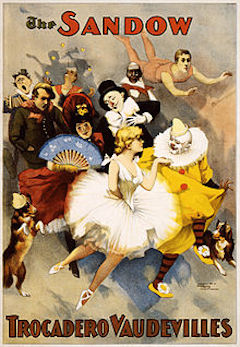
Robert Whitcomb: That's show biz; corrupt NYC condos

vaudeville  

I’d lay at least part of the tempest about Brian Williams’s exaggerations/lies/amnesia regarding his Iraq, Katrina, Mandela adventures, etc., to coverage cutbacks by the big TV networks. While 30 years ago, the then Big 3 – ABC, CBS and NBC (Mr. Williams’s employer) -- had dozens of correspondents, including some abroad, there are far fewer now, as with big newspapers.

So the celeb known as ‘’the anchor’’ has garnered an ever-larger percentage of networks news’s money and attention. These hosts are under persistent pressure, fueled by the necessary narcissism and vast salaries, to promote themselves as world-historical personalities – making themselves players in great events, albeit leavened by (a stagey) self-deprecation.

The networks lavish so much attention on the anchorpersons that relatively few Americans know the names of the other network journalists, who, more accurately, should be called entertainers anyway.

Meanwhile, these enterprises, to push aside charges from the right that they’re leftie elitists, get the anchors to very self-consciously present themselves as comrades in arms with U.S. troops. This can often seem forced. As Tom Lehrer once sang in “Send the Marines”: “We’ll send the best we’ve got, {the film stars} John Wayne and Randolph Scott.’’)

Television journalism is mostly an entertainment/personality/emotional vehicle, not a serious ‘’content’’ medium. At best, it’s a highly theatrical headline service. So Mr. Williams, et al., are tempted to embellish stories to emphasize their centrality in the news and their emotional bonds with viewers. (Of course, even a “rigorous reporter’’ covering, say, the bond market, should have a bit of the entertainer’s knack for holding an audience.)

Spending more money to obtain and verify more “content’’ (i.e., ‘’facts’’) isn’t part of networks’ business plans. Most Americans are more interested in opinion and personality anyway. And unless U.S. troops are fighting abroad, Americans, except the affluent and some intellectuals, usually have little interest in foreign things.

Of course, like Mr. Williams, most of us redact our pasts, though usually not so much for career reasons, as with an anchorman. We forget, reconstitute and transpose events and chronology. Then we try to untangle the lines of contingency and intention that made us. (In so doing, we pile up even higher hills of regret until, if we’re fortunate, the sense of accelerating time leads to a weary acceptance of our messy histories.)

One of the best current specialists in the flimsy architecture of memory is the English novelist Julian Barnes (See “The Sense of an Ending’’). Proust may be the king of this domain.

But Brian Williams seems to have set out early to publicly/officially mislead, and he could have long ago corrected himself. Perhaps he will in his memoirs, with which he’ll make more millions. Another prediction: Mr. Williams will host a talk show. He, of course, has the gift of gab, and he seems to actually like people, unlike, say, Johnny Carson (whose basic aloofness I always liked).

****

The Feb. 8 New York Times story headlined “Hidden Wealth Flows to Elite New York Condos’’ detailed how vast quantities of foreign wealth (much of it ill-gotten) has flowed into American real estate, much of it through dummy companies. While this flow has helped send housing prices soaring in some sexy U.S. cities, and thus driven from them more of the middle class, there’s happier sign here.  See: http://www.nytimes.com/images/2015/02/08/nytfrontpage/scan.pdf

It’s a reminder how nations, such as America, with the rule of law, including clear property rights --instead of arbitrary governance by the crooks who run such places as Russia -- are rewarded. Police/gangster states are not reliable places to keep your money. You never know when the rules will be changed without warning and the rulers demand a bigger cut.

If not for certain ruthless individuals but certainly for entire nations, honest and orderly legal systems, subject to constant review by uncensored news media and democratically elected officials, create far more wealth than can a dictatorship. Only a fool would put most of his money in places like Russia and China.

Indeed, Mr. Putin reportedly has billions salted away in nice nations. See: http://www.thefiscaltimes.com/Articles/2013/09/13/Putin’s-Billions-Just-How-Rich-Russia’s-President


****

We just got back from staying at a relative’s place in Florida, whose warmth and that you can walk with little fear of fracture on the ice especially entices cabin-fevered New Englanders this winter. It’s enough to make you tolerate the Sunshine State’s grim grid in many places of too-wide roads; strip malls, and relentlessly chewed-up countryside.


(I was on vacation when the Williams crisis exploded – it’s the perfect vacation story, as People magazine is perfect for doctors’ waiting rooms.)


Robert Whitcomb (rwhitcomb51@gmail.com) oversees New England Diary (newenglanddiary.com). He's a former Wall Street Journal, International Herald Tribune and Providence Journal editor, a Fellow of the Pell Center for International Relations and Public Policy and a partner in a healthcare- sector consultancy.

Read More
Commentary Robert Whitcomb Commentary Robert Whitcomb

Greek mythologies

  It's not surprising to see the economic fantasists now running Greece cozying up to Vladimir Putin's Russian police state. There's the shared (and reactionary) culture of the  Orthodox Church, for one thing, and the  irrationality that comes with years of living in corrupt civic cultures.

And it's not surprising that the Greeks have made such a mess of European Union membership. It should never have been allowed into the E.U. It's a corrupt, quasi-Middle Eastern nation, although it was also  a wellspring of Western Civilization. Thank God  the E.U. haven't let in the Turks, now fast becoming another corrupt dictatorship.


--- Robert Whitcomb

Read More