A_map_of_New_England,_being_the_first_that_ever_was_here_cut_..._places_(2675732378).jpg

Vox clamantis in deserto

Commentary Robert Whitcomb Commentary Robert Whitcomb

A trio of dubious remarks in the news

  The day is young, but here are most idiotic remarks I was reminded of today on the radio:

American Kenneth Bae "thanking'' his North Korean captors for releasing him when in fact his arrest by the verminous Kim dynasty,  run by mass murderers, torturers and kleptocrats, was yet another outrage by a criminal government.


Apple CEO Tim Cook saying a couple of weeks back that he was "proud'' to be gay. What's there to be proud of anymore than you should be proud of having brown eyes?

Then there's President Obama's' stupid promise that the U.S. would not put in ground troops in Iraq again. For one thing, he has.  (They are officially ''advisers''.) For another, presidents must always make sure our enemies know that  we will act very firmly to protect our interests. And keep 'em guessing on how. Is Obama really as ingenuous as he sometimes seems?


And never, ever tell our enemies that we will do something to them if they do something bad and then don't do it. That's what happened when President Obama told Syria's murderous Assad regime not to  stop using chemical weapons. Obama drew a "red line'' on the issue. Assad then proceeded to murder over a thousand people with poison gas and we did nothing. Obama's credibility has never recovered, and his inaction encouraged other corrupt dictators, most n0tably Vladimir Putin, to do what they get a sort of sexual charge out of doing -- ever expanding their power.


Old Joe Kennedy had a good line: "Never tell anyone to go to hell unless you can send him there.''


-- Robert Whitcomb

Read More
Commentary Robert Whitcomb Commentary Robert Whitcomb

David Warsh: The science of U.S. financial panics


Some professors find a second wind when they stop teaching.  Norman Maclean wrote A River Runs Through It after he retired from the University of Chicago, in 1973. Fifteen years later, he published a sequel, Young Men and Fire.   Samuel Hynes, of Princeton University, has a hit on his hands with The Unsubstantial Air: American Fliers in the First World War – at 90!  Charles P. Kindleberger published Manias, Panics, and Crashes: A History of Financial Crises after becoming emeritus at the Massachusetts Institute of Technology in 1976 and then kept writing for another twenty-five years.

Meet Elmus Wicker, economic historian, of Indiana University.  Since his retirement, in 1993, Wicker has published three slim, dense, but thoroughly accessible and strangely graceful books, each about 150 pages long.  Any one of them would be easy to overlook, but together they represent detailed portraits of three of the four signal events in the monetary history of the United States since 1867.

They are The Banking Panics of the Gilded Age (Cambridge University Press,  1996); The Great Debate on Banking Reform: Nelson Aldrich and the Origins of the Fed (Ohio State University Press, 2005); and The Banking Panics of the Great Depression (Cambridge, 2000). What’s missing?  Only a narrative of the fourth such episode, the banking panic of 2008. As Wicker has written:  “The recent financial crisis came as a total surprise. I never expected to see a reoccurrence in my lifetime.” Neither did anyone else.

That’s why a substantial fraction of the small community of economists who take seriously the historical perspective on central banking traveled to Bloomington, Ind.,  in rolling hills 40 miles southwest of Indianapolis, for a day-long conference last month to honor the 88-year-old Wicker.

Ellis Tallman, of Oberlin College and the Federal Reserve Bank of Cleveland, who, with Eric Leeper, of Indiana University, organized the conference, recalled,  “I ran into Elmus at an economics conference in 1995 or so. I asked him why he was attending, since I’d been told he had retired. He replied, ‘Ellis, retirement means doing only what you like to do.’” Wicker clearly enjoyed the proceedings. “Rarely [otherwise] does anyone recognize your presence [in the field],” he said.

Speakers included Charles Calomiris, of Columbia University; High Rockoff, of Rutgers University; Richard Sylla, of New York University; Gary Gorton, of Yale University’s School of Management; Jeremy Atack, of Vanderbilt University; Mary Tone Rodgers, of the State University of New York at Oswego; George von Furstenberg, of Indiana; James Boughton, of the International Monetary Fund; Gary Richardson, of the Federal Reserve Bank of Richmond; David Wheelock, of the Federal Reserve Bank of St. Louis; Will Roberds of the Federal Reserve Bank of Atlanta; and Al Broaddus, former president of the Richmond Fed.

Wicker was born in 1926, in Lake Charles, La. He graduated at  18  from Louisiana State University, received a master’s in 1948 there and spent the next three years as a Rhodes Scholar at Queens College, Oxford. John Hicks, already famous as a mathematical economist, was his tutor. Wicker received his Ph.D. from Duke University in 1956.

By then he was teaching at Indiana University and there he remained for the next 40 years, a legendarily demanding teacher who led the movement to establish an honors college and helped launch a second good department of economics in Bloomington, at the business school.  Wicker to students, circa 1969: “If some of you don’t flunk this examination, I’ll swim to Moscow and back!”  Voice from the rear of the hall, “Why back?”

Throughout, Wicker’s intellectual journey has closely paralleled the joint project of Milton Friedman and Anna Schwartz, whose landmark book, A Monetary History of the United States 1867-1960, called attention to the banking panics of the 1930s. So little-noted had these been in the tumult of the onset of the Great Depression that they were all but forgotten until 1962, when Friedman and Schwartz assigned great significance to the collapse of banking and credit.

Wicker’s first book, Federal Reserve Monetary Policy 1917-1933 (Random House). appeared in 1966. Its concluding chapter: “From Easy Money to the Collapse of the Banking Mechanism: 1932-1933.” For the next  15 years, he conducted a kind of siege warfare against strict monetarist interpretations of the Great Depression.  A colleague arranged an introduction to Schwartz, a National Bureau of Economic Research associate of sterling reputation.  She and Wicker became mutual admirers. A money and banking textbook, written with his friend Boughton, never saw a second edition, but by then the ever-closer attention Wicker paid to the events of the early '30's had begun to pay off.

The galvanizing event, Wicker later wrote, was discovery on a library shelf of John McFerrin’s “remarkable but largely neglected” study of Caldwell and Co., the largest investment banking house in the South, whose failure in 1930 precipitated runs on 120 banks in four states.  The collapse of this “Morgan of the South” turned out to be far more important than New York’s unfortunately-named Bank of the United States, a commercial bank serving a mainly immigrant population to whose failure Friedman and Schwartz had attached great significance.

Wicker published two journal articles based on his discoveries, but not until retirement was he able to set down his reinterpretation of the events of the  '30s's  in book form. His verdict?  It was complicated – far more complicated than the simple story of Fed ineptitude that Friedman and Schwartz had given their readers to believe.

By then, however, Calomiris and Gorton, working together, had raised a new set of questions about the possibility that the Fed had helped turn an ordinary recession into a deep depression.  They argued in a 1991 paper that the nature of banking panics had fundamentally changed after the Fed was created to take over responsibilities previously shouldered collectively by the banking industry itself.

Hence Wicker’s second book, a close look at panics in the period governed by the National Banking Acts of 1863 and 1864, culminating in the Panic of 1907. His conclusion, “The New York Clearing House bungled a once-and-for-all opportunity for effective voluntary action to forestall banking panics and thereby ward off the establishment of a government central bank, voluntary action failed, and government intervened to fill the vacuum.”  The third book, an examination of the political debate through which the Fed was put together, follows naturally in turn.  A fourth manuscript, an examination of the Fed’s attempts to pop stock market bubbles, as in the poorly-timed tightening of 1928, awaits a publisher.

Wicker’s books are expensive -- $130 if you wanted to buy all three. I wish someone would put them together in a single paperback edition, perhaps with some new material and a foreword by one of the younger scholars. It would make a readable tour of banking history for the general reader, with enough theory thrown in to understand something of economists’ disagreements about the facts. It would give the most energetic and scrupulous critic of Friedman and Schwartz some of the visibility he deserves. More important, it would broaden understanding of what happened in 2008, by putting those events where they belong – in historical perspective.

David Warsh, a longtime financial journalist and economic historian, is proprietor of Boston-area-based economicprincipals.com.

Read More
Commentary Robert Whitcomb Commentary Robert Whitcomb

Historian returns to painting

Sarah's Favorite 17.5 x 14.5   

"Goose Wing,'' by Abbott Gleason, one of the works of the retired Brown University history professor recently shown at  Bank Rhode Island Turk's Head Gallery,  in Providence. Mr. Gleason moved full time into painting about a decade ago, when he was diagnosed with Parkinson's disease.


In doing so, he was returning to a great passion of  his youth -- a passion in part fueled by the example of his mother, a professional artist. Another early passion was jazz, which he used to perform himself as an amateur musician and that can often  be heard in the 19th Century house he shares with his wife, Sarah, on College Hill in Providence.

Read More
Commentary Robert Whitcomb Commentary Robert Whitcomb

After the architecture

 christopher


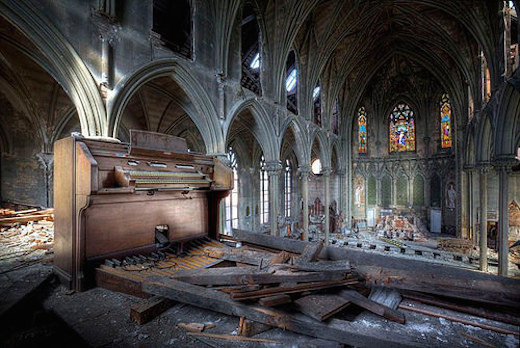
From MATTHEW CHRISTOPHER'S show "The Age of Consequences,'' at the Helen Day Art Center, in Stowe, Vt., through Nov. 23.

Mr. Christopher's  photos look at abandoned and often dilapidated spaces in America. These are  testimonials and historic markers  that question ''the path of this country by reminding the viewers of these decayed and rusted industries, churches and mental health facilities...''

He says that "This is my collection of the things I found in the aftermath, evidence of who we once were and what would become of us. Our era would become known as the 'The Age of Consequences,' and while we knew deep in our hearts that things were falling apart, there was a time in the beginning where we could still look the other way."

Read More
Commentary Robert Whitcomb Commentary Robert Whitcomb

Mutilated hindrances to progress?

nasser
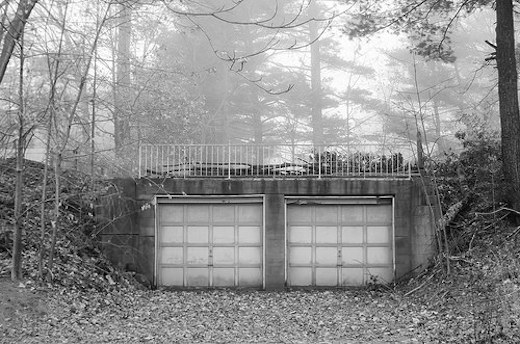
"From the "Trees Grow and Fall'' show of Iranian artist Nasser K at 555 Gallery, Boston, Nov. 15-Dec. 6.

The gallery notes say:

''It is now, when they {trees in the fall} stand naked before us, baring their timbered skeletons, that we are truly privy to their grand structure and strength. And it is now when we see portions of their guts cut away to make room for power lines, their limbs fenced out to make room for us, and we have to stop and wonder: can trees and humans coexist?

''These photos depicted trees being pushed back or mutilated by newly built structures, while others had been replaced entirely by electric poles made out of their own corpses. How is it possible that in the forest, trees rise majestically as the world's sentinels of life, symbols of goodness and clean air, but in the city packed with people, cars, buildings, and buses, trees become hindrances to progress, nuisances to be eliminated?''


Read More
Commentary Robert Whitcomb Commentary Robert Whitcomb

Harvard through the back door

  Harvard: Where a $36 billion endowment means that  anything can be turned into a course


Read More
Commentary Robert Whitcomb Commentary Robert Whitcomb

Graffiti and marvelous marshes

  I noticed a major expansion of graffiti on walls bordering the Amtrak line today as I went to New York. Did the public-works folks run out of money to clean this up, or don't they care?

As a longtime advocate of James Q. Wilson's "Broken Windows'' theory, I found the mess depressing.  Ignoring it leads to further anti-social behavior. Maybe making such defacement of public space a felony would help.

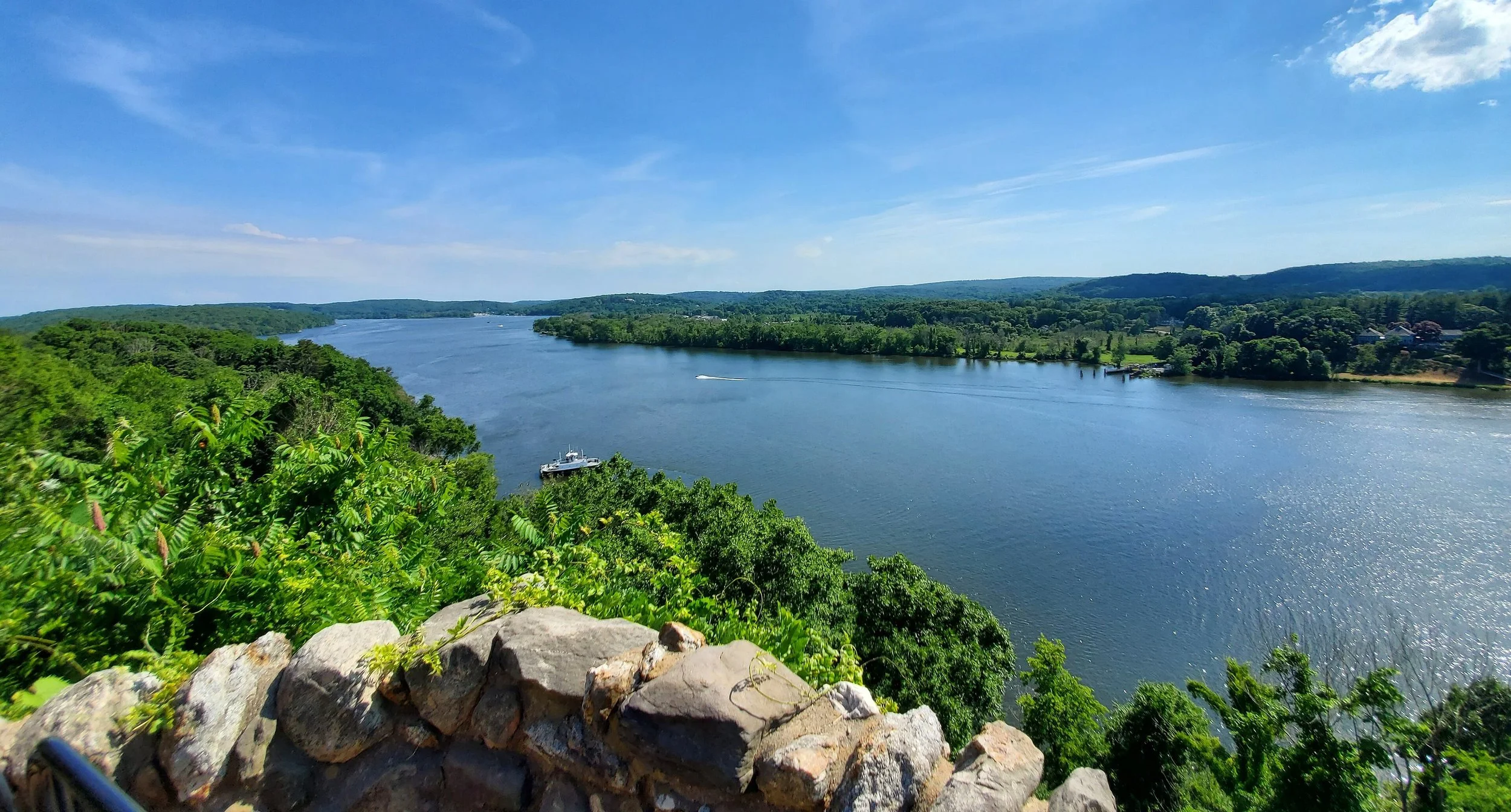
But the beauty of the train's route along the Connecticut shore is quite something, even if we take it for granted. The marshes along the sound and the woods beyond were golden today.


--- Robert Whitcomb

Read More
Commentary Robert Whitcomb Commentary Robert Whitcomb

Don Pesci: Conn. GOP losses will lead to more corruption

You don’t have to love me. I’m a porcupine
--Conn. Gov.  Dannel Malloy
VERNON, Conn.
There are two ways to lose an argument: by not saying enough or by saying too much. Likewise, there are two ways to lose an election. The Republican nominee for Connecticut governor, Tom Foley, cannot be accused of having said too much in his attempt to wrest the gubernatorial office from Democratic Governor Malloy. Mr. Malloy, on the other hand, has never in his long political career said too little.
Mr. Malloy’s second gubernatorial campaign and President Obama’s second presidential campaign were remarkably similar. Of the two, fortune -- as well as lots of money, a great  ground game, sharper demagoguery, a media used to genuflecting before incumbents and a progressive ideology that has not yet wearied the general public in Connecticut – smiled broadly on Mr. Malloy, while baring its teeth towards Mr. Obama. National progressives lost the Senate and sent Joni Ernst to the chamber where she will no doubt “make the pigs squeal.”
The headline on the Drudge Report early the morning after was celebratory: “REPUBLICANS TAKE CONGRESS +7 +8? +9? SENATE, THE DEM DISASTER.”
In South Carolina, Tim Scott was appointed by Governor Nikki Haley to the U.S. Senate after Republican Jim DeMint resigned to join the Heritage Foundation. Now returned to the Senate, Mr. Scott is the first black candidate to win a race in South Carolina since just after the Civil War and the first African-American senator from the South since Reconstruction.
Governor Haley more than a year ago warmly embraced PTR, formerly a Bristol, Conn.-based semi-automatic weapons manufacturer fleeing Mr. Malloy’s thrown quills. Malloy said, following the Sandy Hook Elementary School mass murder that gun manufacturers want “to sell as many guns to as many people as possible—even if they are deranged, even if they are mentally ill, even if they have a criminal background. They don’t care. They want to sell guns.” Sturm Ruger, of Southport Conn.,  had at the same time begun t expanding its business in Mayodan, bringing 500 new jobs to North Carolina over the next five years.
 
Both Mr. Obama and Mr. Malloy are progressive politicians, which is to say both tend to yield to autocratic leftist impulses. To put it another way, progressives, as a rule, do not fancy trickle-up democracy. In Mr. Obama’s case, the chief executive, faced with a legislature one house of which was dominated by the opposition party, simply misused the constitutional prerogatives of his office to redraft legislation by choosing which portions of bills passed into law he would or would not execute.
Mr. Malloy does not have this problem, both houses of Connecticut’s General Assembly having been dominated for decades by members of his own party. Under the Malloy administration, Connecticut has what might be termed unitary party problems.
In a governing system in which power is shared between the two major parties, political corruption is more easily rooted out. In a tripartite system in which the balance of power is evenly distributed between the three departments of government – the executive, the legislative and the judiciary – corruption is more visible because there are more competitive eyes on the ground to report such indelicate corrupt activities that political flesh is heir to.
A legislative branch in which both parties share power is more keenly aware of corruption and more ethically ordered. Disclosure is the most formidable enemy of corruption, and disclosure is more likely in a legislature in which power and authority is shared between the parties. In a political system in which the legislative and executive power is vested in a single party, corruption – politically defined as non-democratic, authoritarian governance – tends to become the well hidden rule rather than the exception.
In Connecticut, where Democrats once again have swept the boards, back room deals, questionable elections, opacity in government and the arrogance of unchecked power – Mr. Malloy is expert in throwing his quills at those who presume to question him – will be the rule for the next few years. Connecticut’s  congressional Delegation, all Democrats, will be returning to a Congress masterfully captured by Republicans. The raucous voices of Connecticut’s two U.S. senators and their influence over congressional events will be muted for the last two years of Mr. Obama’s lame-duck presidency; the media influence on the Malloy administration will be similarly ineffectual. The few contrarians in the state’s largely pro-status quo Media conglomerate -- those few, that brave band of brothers – had better be on the lookout for the sharp quills.
Don Pesci  (donpesci@att.net) is a  political writer who lives in Vernon, Conn.
Read More
Commentary Robert Whitcomb Commentary Robert Whitcomb

A green to get you through the winter

lang  

"The last morning at Karmê Chöling, June 2014'' (archival pigment print), by MARY LANG, in  her "Gazing Into Space'' show at Kingston Gallery, Boston,  through Nov.  5.


Read More
Commentary Robert Whitcomb Commentary Robert Whitcomb

Out of this, us

smith  

"Electron Madness III Then and Now'' (oil on panel) in RHONDA SMITH'S show "Rhonda Smith: And There Was Matter,'' at the Kingston Gallery, Boston, Dec. 3-28.

Read More
Commentary Robert Whitcomb Commentary Robert Whitcomb

Flaccid Democrats ignore the biggest issues

Debacle. Bloodbath. Drubbing. Call it what you will. For Democrats, this was an ugly Election Day. But there’s no mandate for right-wing policies in its aftermath.

Arkansas voters chose to raise the minimum wage while electing a senator who opposes doing so. Colorado voters are pro-choice and elected a senator who isn’t. Voters want action on climate change and gave the Senate over to those who are in the pocket of Big Oil. The most rational voters — given what’s coming in Washington — were those in the District of Columbia and Oregon, who chose to make marijuana legal.

The 2014 mid-term elections were fundamentally about frustration with a recovery that most people haven’t enjoyed. The Republicans blamed this on President Obama and claimed Democrats were guilty by association. That aroused the GOP base as candidates played down their conservative stances on reproductive choice and went silent on marriage equality.

Democrats chose not to run nationally against Republican obstruction, under the assumption that their broad opposition to right-wing social positions would mobilize their own base.

Senate Republican leader Mitch McConnell, of Kentucky, who drove the Republican strategy to obstruct every Obama initiative and then paint Obama a failure, is now warbling the soothing tones of bipartisan cooperation.

Any “cooperation” will, of course, be on Republican terms. GOP leaders will invite Obama to join in on  such “reforms”  as reducing corporate tax burdens, paring Social Security benefits, approving budgets that savage the vulnerable and lard the Pentagon, and cutting ruinous trade deals that undermine American workers.

To pay for infrastructure, the Republican-led Congress will champion the “repatriation” of the dough that corporations have stashed abroad, handing those tax dodgers a massive tax break and an incentive to avoid even more taxes in the future.

This is the Wall Street “bipartisan” agenda and it’s ready to go. Immigration and renewable energy? You can bet they’re off the table.

The White House faces a choice. Will it lay out what the country needs? Will President Obama make his case against those who would take the country backward? Or will he just provide political cover for global deals that stack the deck even more for the powerful and against the rest of us?

He shouldn’t be left to make that choice by himself.

In the circular firing squad already blasting away, Democrats will blame these losses on their own liberalism. Conventional wisdom will urge them to move rightward and cooperate with newborn “moderate” Republicans. They’ll be told that the way back to power is to embrace “centrist” policies on trade, tax reform, and entitlements.

But this election exposed the Democratic establishment’s fallacies. Social issues alone, which increasingly favor Democrats, can’t spur victory. Sophisticated campaign targeting and get-out-the-vote operations can’t substitute for the passion, clarity, and vision that motivate the Democratic base to vote.

Democrats won’t win votes by adopting a corporate agenda. They must drive an agenda that will bring about an economy that works for everyone.

There’s a populist majority waiting to be forged. Millions will rally for full-employment economics, for fairly taxing the rich and corporations, investing in rebuilding the country and educating all children, strengthening retirement security, making college affordable, lifting the minimum wage, taking on the corruption of our politics by big money, and transitioning to the new and more sustainable energy options that will create good-paying jobs.

Sen.  Elizabeth Warren, of Massachusetts, has it right: Voters think the government is corrupted and doesn’t work for them. If our country is to deal with the real challenges it faces — extreme inequality and economic decline for the majority, catastrophic climate change for the whole world, an oppressive war on working people — we the people have to stand up and fight.

Democrats will have to make it clear that they’re ready to join in.

Robert Borosage is the co-director of the Campaign for America’s Future. This originated on OtherWords.org.


Read More
Commentary Robert Whitcomb Commentary Robert Whitcomb

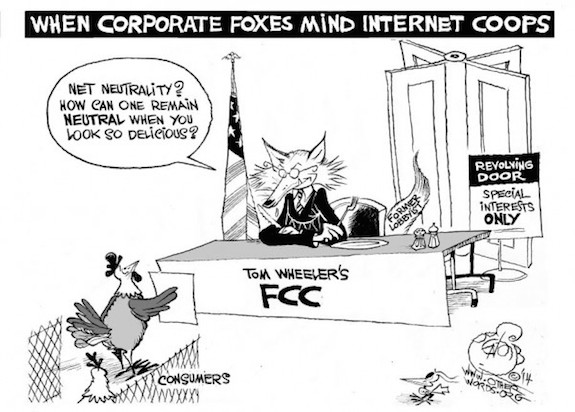
Fox at FCC

  fcc

Read More
Commentary Robert Whitcomb Commentary Robert Whitcomb

Robert Whitcomb: Republicans bother to vote


‘’The people have spoken … and now they must be punished.’’


-- New York City Mayor Ed Koch’s quip after an election loss


The politicians elected yesterday to new jobs will soon be blamed for doing the same sort of things that their ousted predecessors did as they tried to mate good governance with reality and ambition/ego with idealism.


Distracted and often ignorant citizens, many of whom are usually fleeing reality at a good clip, will demand a perfection from their elected officials that they would never demand of themselves. They will also praise, or more likely blame, the politicians for everything from the weather to the economy’s gyrations. (The first is out of politicians’ control --- unless you factor in the need for us to reduce the amount of carbon dioxide we’re pumping into the air. The second has so many global variables that government’s ability to manage economic cycles remains highly constrained.)


In its existential anxiety, the “the Public’’ will continue to depend on politicians to solve all its problems. Modern electronic media, with their instant ‘’analyses’’ and search for simple, vivid narratives, heighten this dependence and the resulting anger when public/personal problems aren’t immediately fixed.


Our news media (who roughly represent the citizenry’s character flaws) intensify our tendency to pour our hopes and fears into a few people, or even just one (especially the president). Such personalization is easier than trying to understand the details of, say, public policy, economics and history, let alone science.


My sense of the sloth of those who attribute all fault and praise in a big news event to one or very few individuals came together back in 1992, when President George H.W. Bush was in effect blamed for not restoring Dade County, Fla., to its pre-Hurricane Andrew strip-mall glory within 36 hours. Then in 2005, the public blamed his son for the Hurricane Katrina New Orleans mess, although that disaster was inevitable – New Orleans was/is a very corrupt, badly managed city most of which is at sea level or below.


And now some call the complicated (scientifically and otherwise) Ebola situation President Obama’s fault. (That his father was African may inform some of the attacks against him in this….)


Meanwhile, the public takes commands from the media and politicians about how they should feel. If the preponderance of the big (and small) media say that “Americans are pessimistic’’ or ‘’optimistic,’’ then we salute and feel accordingly, whatever the unemployment rate. But not for long, since the conventional-wisdom narrative can be changed overnight and the change “go viral.’’


That’s not to say that politicians’ characters and personalities don’t count – especially in great crises --- e.g., Lincoln in the Civil War or Churchill in the summer of 1940 as Britain stood virtually alone against the Nazi onslaught. But they rarely count nearly as much as we’d like to think they do. Life is far too complicated.


Now we look forward to more gridlock in Washington because the public doesn’t know what it wants (other than more services and lower taxes). It says “government doesn’t work’’ and ensures that it doesn’t by its conflicting and rapidly changing voting -- or, especially in a mid-term election, its nonvotes. The nonvoters are always among the biggest complainers.


Democrats have particularly little excuse for whining this year. A Pew Research Center survey shows that among those who were unlikely to vote last Tuesday, 51 percent favored Democrats and 30 percent the GOP. In this matter, Republicans are harder-working: They summon the energy to take 20 minutes to vote.


xxx


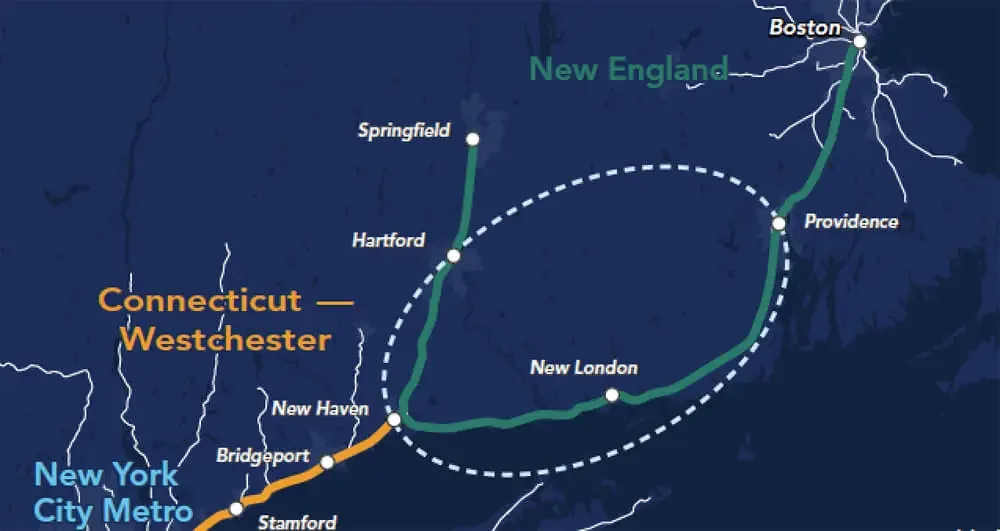
The lack of a direct long-distance rail connection between Boston’s South Station and North Station has always seemed to me ridiculous. Connecting them would make it considerably easier to move between southern and northern New England and further energize passenger rail as demographics (including a huge increase in the number of old people and a new propensity of younger people not to drive) makes public transportation ever more important.


The link should have been made at least a century ago. But the dominant New England railroads of the time – the Boston & Maine (at North Station) and the New Haven (at South Station) -- the city and the state’s couldn’t get it done, as it wasn’t done between New York’s Grand Central Station and Pennsylvania stations.


The Big Dig’s cost overruns haunt efforts to make this link. But rail projects make rich cities even richer by making them more efficient and attractive. The Big Dig made Boston more of a world city. Past gubernatorial foes Michael Dukakis, a Democrat, and Bill Weld, a Republican, recently joined to promote the link. All of New England will benefit if they succeed.


Robert Whitcomb is a Providence-based editor and writer and a partner in Cambridge Management Group (cmg625.com) a healthcare-sector consultancy. A former editorial-page editor for The Providence Journal and  a former finance editor of the International Herald Tribune, he's also a Fellow of the Pell Center for International Relations and Public Policy and oversees this site, newenglanddiary.com


Read More
Commentary Robert Whitcomb Commentary Robert Whitcomb

Frank Carini: Good news about reusing old places

Frank Carini is editor of ecoRINews, whence this piece originated The Industrial Revolution left many New England cities and towns with a legacy: manufacturing pollution that turned once-productive, and often pristine, land and water into dumps. This practice of contaminating natural resources and then leaving behind scarred remains, after the offending business went bankrupt or left for greener pastures, continued well into the 20th century.

The result: By the end of the 1980s, thousands of brownfields dotted the southern New England landscape, especially in its core urban areas. Remediating brownfields is a constant battle that pits public health and environmental concerns against cost factors. Clean-up efforts are often interrupted by hidden obstacles, such as underground storage tanks filled with waste oil, and finding the responsible party to pay the price is virtually impossible.

A brownfield, according to the Environmental Protection Agency (EPA), is an abandoned or underutilized industrial/commercial facility where redevelopment is complicated by real or perceived environmental contamination. And these derelict and damaged properties represent do-overs — at least that’s how the EPA sees it.

“We view these sites as opportunities,” said Frank Gardner, EPA brownfields coordinator for Region 1. “Every brownfield site is an opportunity. We provide funding to actively clean up these properties, to make them safer for the public and for economic development."

In the past few years, southern New England has been the beneficiary of considerable EPA funding to help remediate brownfields. In fiscal 2014, for example, the EPA distributed a total of $67 million to all 50 states for such projects — Rhode Island received $2.1 million, Massachusetts $5.9 million and Connecticut $5.3 million.

Brownfield remediation projects, on average, leverage $17 per EPA dollar expended, according to Gardner. He also said the federal agency’s Brownfields Program creates additional benefits, such as increasing residential property values near remediated sites by 5 percent to 12 percent, and empowering states, communities and other stakeholders to work together to prevent, assess, safely clean up and reuse brownfields. The EPA notes that since the program’s inception in 1995 it has leveraged 90,363 jobs nationwide.

But transforming blighted brownfields into community assets is no easy task. It takes money — plenty of it — patience, often a public-private partnership and some creative thinking. One Massachusetts program, for example, encourages ground-mounted solar projects on brownfields and landfills.

On a contaminated brownfield near two schools, the city of New Bedford got inventive and contracted with Con Edison Solutions and BlueWave Capital to build a solar project. This solar installation is intended to be used to help support energy education and encourage students to consider working in the renewable-energy industry.

Successfully overhauling such properties also depends largely on a site’s contamination level, according to Cynthia Gianfrancesco, who runs the Rhode Island Department of Environmental Management’s (DEM) Targeted Brownfields Assessment Program. The program began in 1996 as a pilot in communities, such as Providence, North Smithfield and Woonsocket, with long histories of manufacturing and heavy industry.

“Most of the sites in Rhode Island are heavily contaminated,” she said. “They were once textile mills and then became sites for jewelry manufacturing. We’re dealing with an industrial history of more than 200 years.”

Those centuries of incineration, smelting, metal plating, concrete manufacturing, etching and electroplating contaminated much of southern New England’s land and water. But a number of private and/or public projects has breathed new life into long-abused properties.

Since 1994, the EPA Brownfields Program has awarded Rhode Island $34.8 million, Massachusetts $106.3 million and Connecticut $71.8 million to fund a three-state total of 1,422 remediation projects. That 20-year total of $212.9 million helped clean up 301 properties in Rhode Island, 783 in Massachusetts and 338 in Connecticut, but it represents just a slice of the money that was needed to advance those projects.

“EPA brownfields funding is just a building block, not the entire block,” Gardner said. “Most of these projects need to cobble together funding from various sources. EPA money is just a piece of it. It’s like putting a jigsaw puzzle together.”

And those 1,422 brownfield remediation projects the EPA has helped fund since 1994 represent just a fraction of the southern New England sites plagued by contaminated soil, polluted waters and abandoned properties rife with toxic waste, such as asbestos and lead. Little Rhody, for instance, has some 1,800 brownfields, according to best estimates.

But the number of properties in southern New England contaminated by the region’s industrial past is slowly declining.

A once heavily polluted property, the Steel Yard is now a Providence attraction.

(See Joanna Detz/ecoRI News) ''Providence success stories'') From locomotive manufacturers to steel mills, Providence has a long history of industrialization. While the city’s manufacturing industry gave rise to an economic boom in the late 19th and early 20th centuries, few operating mills remain today.

It was with a slight tip of the hat to those industries that made Providence economically great that the Steel Yard was founded in 2002. The visionaries who started the nonprofit artists collective also wanted to acknowledge the legacy of environmental degradation that heavy manufacturing has had on the city and state’s natural resources.

The Steel Yard is in the city’s Olneyville neighborhood, a once flourishing industrial enclave for textile, jewelry and metal manufacturers. A dozen years ago, the site was closed and in disrepair. For years, Providence Steel had sprayed its finished girders with lead-based paint, with the overspray leaving high concentrations of lead in the property’s soil.

The cost to transform this 3.5-acre brownfield on Sims Avenue into a community asset was substantial. The eight-year remediation project cost nearly a million dollars, and was completed thanks to federal and state grants, fundraising efforts, and donated materials and labor. Today, the old Providence Steel buildings have been converted into more than 9,000 square feet of workspaces for artists, and classrooms for education and job training in the industrial arts. The property has become a signature city attraction.

The Steel Yard, however, isn’t the only Providence brownfield to enjoy an expensive makeover. Two Octobers ago, community members, neighbors and representatives from Groundwork Providence gathered to celebrate the completion of the Hope Tree Nursery, in an industrial area on the city’s West Side that once housed metal manufacturers.

Situated on the former Sprague Industries site, a brownfield still laden with residual toxins from its factory days — no soil can be removed, so the trees are grown in pots — Hope Tree Nursery now provides the Elmwood neighborhood access to affordable trees grown locally. The nursery’s physical presence also has improved the look and feel of Sprague Street.

Two distressed areas along the Woonasquatucket River have been revitalized and turned into community assets. Riverside Park, a former brownfield and high-crime area, is now a 6-acre neighborhood oasis. Its redevelopment brought with it a bike path, new housing and the opening of small grocery store, and crime has fallen sharply.

Contamination from the former Lincoln Lace and Braid factory — petroleum, metals and volatile organic compounds (VOCs) — had spread to this industrial river. It cost $991,000 — funded by state and federal money — to cealn up the property, which is now a passive greenspace connected via a bike path to other urban parks.

WaterFire Providence will soon make its new home on a three-parcel site on Valley Street once occupied by a rubber manufacturer and machine shop. The ongoing renovation includes a stormwater management system. The property also will be used as an incubator for artists and businesses, and will host after-school programs.

A 25-acre site on the Providence/Johnston line and bordered by the Woonasquatucket River, had been contaminated by lead and arsenic, until the early 2000s, when the Button Hole Golf Course opened. Today, the nine-hole course is a teaching center that brings golf to urban youth.

The city’s neighbor to the north, Pawtucket, another community with a rich industrial history, recently announced that renovations to the Festival Pier waterfront park off School Street will be completed at the end of November. The park is expected to open to the public Dec. 1.

When finished, the $2 million brownfield remediation of the Old State Pier property, a former oil terminal along the Seekonk River and home to the popular Chinese Dragon Boat Races, will feature a new plaza, lighting, benches, a canoe/kayak launching area and a boat ramp.

xxx  Mosaico, a nonprofit community development corporation, has owned the the former National India Rubber Co. on Wood Street in Bristol for four years. Before  that, the brownfield was in receivership, several buildings were in disrepair and there were outstanding DEM violations tagged to the 14-acre former Kaiser Mill Complex.

During its heyday, this industrial complex employed more than 1,200 people, and local families set their clocks to the mixture of solids, liquid particulates and gases belched from its smokestack at 7 a.m., noon and 5 p.m.

Mosaico applied for and received Targeted Brownfields Assessment Program funding from DEM to complete an environmental assessment of the property. The nonprofit then applied for and received a $200,000 EPA brownfields grant. The money is being used to clean up contamination, address stormwater management requirements and cap portions of the site with new landscaping.

Mosaico is seeking additional funding to complete improvements on the remainder of the site, which would allow for increased occupancy and economic development opportunities. About 60 percent of the space is occupied by some 25 companies, which range from boat builders to sign and skateboard makers.

The Thames Street Landing transformed an abandoned waterfront property in Bristol into a commercial development. (BETA Group Inc.)This popular waterfront town also features two other ambitious brownfield redevelopment projects — Thames Street Landing and Premier Thread.

Thames Street Landing was empty for three years before this redevelopment project began in 1999, on property originally used as a lumberyard. Most of the site’s contamination — lead, arsenic, petroleum and polycyclic aromatic hydrocarbons (PAHs) — resulted from production of coal, coke and lumber in the last 40 years of the 1800s. Some 20,000 yards of contaminated soil was removed from the 2.2-acre site, and the entire project cost $8.3 million, most of it privately funded.

This waterfront property now features retail establishments, a restaurant, offices, apartments and a hotel, transforming a once highly contaminated, abandoned lot into a central part of the town’s economic and social structure.

“The project spurred development around it, and the neighborhood took off,” said Kelly Owens, an associate supervising engineer for DEM and one of seven agency employees devoted to brownfield work. “It created some true economic development.”

The Thames Street site of the former Premier Thread factory and old Narragansett Electric manufactured gas plant is now high-end condominiums. This project, Owens said, also helped stimulate neighborhood development.

“We hope our funding helps fill in the blanks and reduce some uncertainty,” said the EPA’s Gardner. “Just about every town in New England had a mill or manufacturing facility. The Industrial Revolution certainly left a mark.”


Read More
Commentary Robert Whitcomb Commentary Robert Whitcomb

Buddy Cianci: Old times in New Times

Read More
Commentary Robert Whitcomb Commentary Robert Whitcomb

From eggs to eyes

eggs  

From "Egg Noir,'' a  show at the Sandglass Theater, in Putney, Vt., (often a weird place) on Oct 24-25,  which, using puppetry traditions, says Art Scope Magazine,  is ''a surreal exploration of genetic engineering, 'Egg Noir' is an object theater piece theorizing about the course of human vision. A scientist who breeds egg heads, a machine who makes them into eye balls and a poet in the desert who records the eye's vision, are locked into a routine that produces a healthy eyeball. All is well until one day a villain infiltrates this world and modifies one of the freshly hatched eggs in the beginning of the production chain.''

Delightfully creepy.

Read More
Commentary Robert Whitcomb Commentary Robert Whitcomb

We wouldn't want to be PC!

amesbury  


From "Unlock: A Very non-PC Exhibit--- Visual, political commentary on our culture, the environment and politics.'' With artists Mitchel Ahern, Augustus Goertz, Greg Kitterle, Dave Magdalenski, Asia Scudder, and Carol Wintle at the Blue Wave Gallery, Amesbury, Mass., through Nov. 11.


Of course, everyone claim to be non-PC these days.


Read More
Commentary Robert Whitcomb Commentary Robert Whitcomb

John O. Harney: New England vs. demographics

  BOSTON

“The Great Recession and not-so-great recovery applies to all of us.”

That was University of Southern Maine professor Charlie Colgan’s  remark at at the New England Economic Partnership (NEEP) conference Oct. 13 as he noted that Maine was just two-thirds of the way back to pre-recession employment levels.

The  New England forecasts at the Fall Economic Outlook conference were  generally cautiously optimistic, sprinkled with the expressed and implied NEEP mantra: “Having said that, I could be wrong.”

It may be the dismal science, but it’s an experiment you're part of every time you go to work or buy anything.

“What is relatively unique in New England is the region’s demographics—with a rapidly aging population and steep declines in young adult population threatening the region’s workforce skills and education advantage,” said New England Forecast Manager Ross Gittell, chancellor of the Community College System of New Hampshire.

In Maine, for example, Baby Boomers and their children simply had fewer babies, so all of Maine’s added population in the next 40 years will come from in-migration, but the big sources of that in-migration—Vermont and New Hampshire—are also shrinking, said Colgan. Will productivity increase enough to keep Maine and New England competitive?

Gittell and others joked that given the demography, the region should have focused on under-18 housing instead of over-65 housing.

Colgan noted that ship and boatbuilding have returned to Maine as a major industry (thanks to more destroyers  being built at Bath Iron Works) and natural-resource industries have returned, in a sense, with Lincoln Logs coming back to Maine from China.

Colgan, by the way, is one of the professors let go recently by the University of Southern Maine—part of a higher-education disinvestment story that may say more about the future of the New England economy than any other layoff tracked by NEEP.

He warned that people in Maine see the loss of old-economy jobs such as the impending closure of the Verso paper mill in Bucksport as a tragedy, while they view the laying off of intellectuals at USM, who may be “from away” (though Colgan’s not) as a win for taxpayers.

Among tidbits from the other NEEP forecast managers:

Fairfield University professor emeritus Edward Deak noted that just 60 percent of Connecticut jobs lost during the recession have been regained in the Land of Steady Habits. No one knows whether they are as good as the jobs they’re replacing. What is clear in Connecticut, said Deak, is that “the well-to-do are doing very well.”

Connecticut has the sixth-oldest population in the U.S., though many people over age 65 are leaving the state after retiring. In retail, more purchases are being made via the Internet by working women with young children; fewer at the malls, Deak said, adding that when you look at Connecticut skylines, you don’t see any cranes. It’s all work on old buildings.

Bryant University assistant professor Edinaldo Tebaldi seemed relieved that Rhode Island is no longer first in unemployment; now it’s third. But this “gain” is associated with shrinking of the labor force, and the number of jobs is still below pre-recession levels.

New Hampshire has gone the other direction. Center for Public Policy Studies economist Dennis Delay said New Hampshire had been outperforming New England and U.S. job growth especially in early '80s, but is no longer the superstar. He showed 2012 migrants by higher educational attainments: lots of graduate or professional degrees among the foreign-born, but also many without a high school diploma. Delay noted that New Hampshire ranks high in indicators of home ownership, voter turnout and low welfare costs, but also high in student debt and low in growth of people ages 25-44—so-called wealth-building years.


Vermont economist Jeff Carr noted that about 90 percent of jobs  there lost during the recession had been recovered—second in New England to Massachusetts, which has fully recovered jobs. Vermont is difficult to analyze because the job totals in each sector are small. But that small size adds to anxiety about the loss of a few-hundred highly paid jobs at the closing Vermont Yankee nuke; as well as perpetual concern about IBM because its decisions are made in Armonk, N.Y. Carr also cited the importance of Vermont’s food industry, including craft brewers. (The  same day, the Vermont Foodbank reported that one-quarter of Vermont's citizens don't know where their next meal is coming from.)

Carr joked that he is in favor of financial-services bonuses in New York City and Boston because they boost Vermont's sizable second-home economy.

According to the New England regional forecast, prepared by Gittell, the regional economy will continue to see growth rates below the national average. The NEEP forecast is that total employment growth will average 1.3 percent a  year—and all the New England states are projected to have employment growth below the national average over the forecast period out to 2018.

Mark Zandi, chief economist at Moody’s Analytics, opened the conference with a presentation on the U.S. Economic Outlook. In a year or so, growth in gross regional product could go from 3% to 4 percent fueled partly by more housing, including pent-up demand among millennials who have been renting. The economist, and increasingly visible TV pundit, contended that financial aspects of economy are in great shape, especially high-income households. Middle-incomes households are still encumbered by debt, he said, but the high end does most of the spending, “though I’m not arguing economy can flourish without everyone participating,” said Zandi.

Phew. He told of his son majoring in philosophy. (Reminded me of the founder of one of the nation’s leading career-oriented online providers confiding that his child was majoring in sociology on a traditional campus.)

Despite Zandi’s general optimism, the risks include interest rates and a mélange of global issues, Zandi noted, adding that even Ebola could undermine traveling and spending (may not be rational to be so concerned about it, but people are). In response to a question, Zandi said he doesn’t think income and wealth inequality is a big issue in a given year, compared with the lack of labor. No one’s going to be writing a book about income inequality soon, he said. Really?

In his keynote address, former Maine Gov. John E. Baldacci, now at the law firm of Pierce Atwood, cited the importance of energy and exports in the region’s economic future. He hailed natural gas as the foundation fuel, while the region works toward renewables, including solar, tidal and wood.

He tied exports to tourism, noting that the owner of New Balance sneakers was introduced to Maine via ski vacations, where he was treated well, then announced plans to open plants in the state.

In a concluding panel, William Guenther, chair and CEO of Mass Insight, boasted: “Massachusetts has benefited for years from the talent cluster that we have offered business.” He noted, however, that technology-focused jobs are growing in such areas as big data analytics, cybersecurity, and computer sciences, but the state is not producing enough college graduates with degrees in science, technology, engineering or math (STEM) to keep up with demand from business. "Jobs will always come to where the talent is,” said Guenther.

Jobs also go where there’s energy work. The state and Canadian province with the most explosive job sectors are oil- and gas-rich North Dakota and Alberta.

John O. Harney is executive editor of The New England Journal of Higher Education, the online publication of the New  England Board of Higher Education (nebhe.org), where this column originated.


Read More
Commentary Robert Whitcomb Commentary Robert Whitcomb

Putin has big plans for it

russia  

From the show "Russian Photography: Siberia Imagined and Reimagined,'' at the Museum of Russian Icons, Clinton, Mass., through Jan. 10.

The museum explains that the show "brings  {new} photographs of Siberia by Russian photographers to the American public for the first time. Countless images of Siberia by non-Russian photographers have been published and those depictions have shaped perceptions around the world. 'Siberia Imagined and Reimagined' offers an insider’s view.''

No Gulag pictures in this show!

Cole Porter, in his musical "Silk Stockings,'' had a song called "Siberia,'' in which one of the lines was that in Siberia, "you never have to send out for ice.''


Read More
Commentary Robert Whitcomb Commentary Robert Whitcomb

November no and yes

Bad things about November include the lack of light and the headache-inducing tradition of having Thanksgiving on a Thursday afternoon. The good things include no more weeding for a while and the breezy openness of the woods after a hard freeze (still waiting around here for one) and a good Nor'easter.

Read More