

A_map_of_New_England,_being_the_first_that_ever_was_here_cut_..._places_(2675732378).jpg

Vox clamantis in deserto

Commentary Robert Whitcomb Commentary Robert Whitcomb

'Crime against nature' in Belmont?

By ecoRI News


BELMONT, MASS.

Some 20 supporters standing along Acorn Park Drive held signs that read, “Don’t cut our floodplain silver maple trees” and “Stop the cutting before it’s too late.” The arrests follow years of organizing to defend the Silver Maple Forest, an important floodplain for Cambridge, Belmont and Arlington, according to Friends of Alewife Reservation, a major opponent of the proposed development.

O’Neill Properties Group of Pennsylvania, the company behind the development of The Carnegie Abbey Club and Residential Tower in Newport,  has been the major backer of the Silver Maple Forest project, which would include 300 mainly luxury units and 60 affordable units. The town hasn’t yet determined final permitting, and the city of Cambridge continues with hearings concerning the property.

Project opponents wanted to draw attention to the start this week of clear-cutting 8 acres of woodlands in Belmont and Cambridge. Earlier this week, five opponents trespassed to tie pink protection ribbons on many trees, to call attention to tree cutting in the Upper Alewife basin’s only regional floodplain forest. Major cutting was seen on the morning of Oct. 17 and prompted the conscientious acts of civil disobedience, according to Ellen Mass, a local activist who has been drawing attention to the forest for years.

“People are acting out of their own conscience, and many have never before been arrested but consider this a serious environmental crime, especially in this era of climate change,” Mass said.

The Oct. 17 arrests were peaceful and without incident, according to police. Dana Demetrio, Sylvia Gillman, Ben Beckwith and Paula Sharaga were escorted by police out of the forest after refusing to leave when asked to do so. They said final town permitting is “up in the air,” so it’s “nonsensical” to clear-cut before building permits are approved.

Development opponents say the 15-acre floodplain forest provides invaluable services. Local activists have called the idea of clear-cutting in a floodplain that provides a safety net for tens of thousands of people in the Mystic River watershed a “crime against nature.”

Read More
Commentary Robert Whitcomb Commentary Robert Whitcomb

David Warsh: 150 years of economists' drama

  The Nobel Prize for economics, granted the other day to Jean Tirole, of  the Toulouse School of Economics, capped a  20th Century drama whose story has barely begun to be told. I can describe it here only in the broadest way; thanks to the Swedes, the details will now gradually emerge, as did those of similar developments in the past. But some idea about the episodes’ broader place in the scheme of things, as it pertains to you, can be had by viewing it in historical perspective.


The story begins in the 1920s, in the years before John Maynard Keynes took center stage.  Edward Chamberlin (1899-1967) was a bright young graduate student who had come east from Iowa City to Harvard University with a firm grasp of railroad economics. His 1927 thesis developed what he called a theory of monopolistic competition:  a more realistic account, he said, of the behavior of companies in markets where sellers are few, industries he called oligopolies, and the prospect of more intelligent regulation.


In fact, Chamberlin was rediscovering ideas published by Augustin Cournot, in 1838, so the story of strategic economic behavior really begins then.  If you have a taste for historical detective work, read Secret Origins of Modern Microeconomics: Dupuit and the Engineers, by Robert B. Ekelund Jr. and Robert F Hébert (University of Chicago, 1999). In terms of the memories of the living, the story starts in the ’20s).


It took Chamberlin six years to get The Theory of Monopolistic Competition ready for the university press.  By then he was a Harvard professor.  By then, too, a young mother married to British economist Austin Robinson had developed a similar way of amending the prevailing dogma.  Joan Robinson (1903-83) obtained a job as an assistant lecturer at Cambridge University, from whose Girton College she had graduated a few years before. Her book, The Economics of Imperfect Competition, appeared in Britain just weeks apart from Chamberlin’s in the U.S.


Chamberlin and Robinson began a battle over whose critique  of standard theory would prevail.  (Harold Hotelling, of Columbia University, had joined the fray as well.) The excitement was enough to bring young Paul Samuelson to Harvard as a graduate student the autumn of 1935, but it didn’t last long.  Keynes’s General Theory of Employment, Interest and Money appeared the next year, and by 1938 monopolistic competition had been shouldered aside by the new “macroeconomics,” of which Samuelson became the avatar.


After the war, the literature that Chamberlin (but not Robinson)  had spawned mostly retreated into business schools, disguised as corporate strategy. Harvard economist Joseph Schumpeter joined a center for entrepreneurial studies just before he died. Harvard Prof. Edward Mason soldiered on, training a new generation of specialists (including Carl Kaysen) in industrial organization and development economics. Chamberlin and Robinson continued to bicker. Chamberlin never developed a second act; Robinson in the early ’50s began a bold but ultimately unsuccessful attempt to improve on Ricardo and Marx. (Samuelson later wrote that the Swedes had missed a chance when they failed to add Robinson’s name to the 1974 award to Gunnar Myrdal and Friedrich von Hayek, two other influential theorists of the ’30s.)


Meanwhile, leadership in industrial organization swung from Harvard to the University of Chicago, where George Stigler had nothing but contempt for Chamberlin.  The three central tenets of Chicago price theory, as Stigler described  them: that markets were more efficient  than was commonly supposed (advertising, for example, was signaling, a source of information); that competition was far harder to eliminate,and that regulators were easily influenced by those whom they regulated.  Twenty-five years of studies in these veins by Stigler, his colleagues and their students culminated in a Nobel Prize for Stigler, in 1982.  In his 1988 autobiography, Memoirs of an Unregulated Economist, he wrote that Chicago economics had conquered the field:  “By 1980 there remained scarcely a trace of the two Harvard traditions of Chamberlin and Mason in the work of current economists.”


The joke was on him.  Monopolistic competition was about to come roaring back, in the form of The Theory of Industrial Organization, published that same year by a young MIT PhD, Jean Tirole. He had written most of it as a researcher at the Ecole Nationale des Ponts et Chaussées, the very school of bridges and highways at which Jules Dupuit had pioneered price theory a century and a half earlier. Tirole returned to MIT as an assistant professor in 1984.


Interest in monopolistic competition had been building in Cambridge throughout the ’70s, owing to the possibility of coming to grips with strategic interaction  afforded by game theory.  Now a new microeconomics hit Chicago price theory head on, couched in the formal style of expression developed at MIT. Stigler knew the blow was coming, from “the major eastern schools and Stanford University”; it was “closely related in spirit  to Chamberlinian economics,” he wrote,  “much more rigorous (as well it should be fifty years later) but has not shown equal gains in empirical motivation or empirical applicability.”  Last week the Royal Swedish Academy of Sciences disagreed, awarding its prize in economics to Tirole,  32 years after the recognition of Stigler.


More drama unfolded in 1982, the year that four Stanford economists colloquially (and jokingly) known as “the Gang of Four” published a series of articles showing how incomplete information could be incorporated into all manner of problems in industrial organization, starting with what had become known as “the chain store problem” (clobber or accommodate the new entrant who  tries to enter your market?). The most important of these, Reputation and Imperfect Information, by David Kreps and Robert Wilson, and Predation, Reputation and Entry Deterrence, by Paul Milgrom and John Roberts, published simultaneously in the Journal of Economic Theory, showed how cooperative behavior could emerge and evanesce in everyday competitive settings.   The new models were tools that rendered Tirole’s subject dynamic, open to experiment and investigation.  Powerful and inexpensive computers suddenly yielded a means.  A green flag dropped on a decade of breakneck work on a “new empirical industrial organization.”


Not everyone welcomed the new style.  A new Handbook of Industrial Organization was dominated by Tirole’s work.  Sam  Peltzman, of the University of Chicago, reviewed it this way in 1991.


Here the reader is ushered into the City of Theory. This is an ethereal sort of place.  Policy makers and policy issue are very much in the background.  The businesspeople who dwell here are not the type who are troubled by details such as the best way to get something produced and delivered to customers. Rather they resemble chess players whose consuming passion is to divide their opponents’ grand strategy. When they do worry about dealings with subordinates or customers, strategic considerations are never far from their minds In part the reason in that there is not much of a legal system in the City of Theory, and in part that the subordinates and customers are fairly good chess players themselves. So many contracts are implicit and their provisions must be… compatible.


Over the course of the ’90s, policy makers and policy issues, corporations and their customers, came to be seen more and more as resembling the chess players that had been described by Tirole.  Deregulation opened a torrent of possibilities, from corporate restructurings to auctions to outsourcing and new compensation arrangements.  Practice was informed by theory; the strategic perspective carried the day.  By the end of the decade, the University of Chicago surrendered; it hired Roger Myerson away from Northwestern to teach game theory to the next generation of students; in 2007 Myerson shared a Nobel Prize himself with Eric Maskin and  Leonid Hurwicz for the work that had put Tirole in business.


In 1994 Tirole moved back to France.  Today he is chairman of the Toulouse School of Economics, where he consults widely on issues of regulation, especially in Europe.  He has become an expert on banking.  Joshua Gans, of the University of Toronto, compares Tirole’s impact on regulatory economics to that of Pasteur on public health; Peter Klein, of the University of Missouri, finds his Ecole Polytechnique/MIT style irritatingly abstract; Tyler Cowen lauds Tirole’s essays in behavior economics.


The worst thing that can be said of the Nobel is that, by freezing discussion until the returns are in and a decision has been made, it forces us to view current events in a rearview mirror. Perhaps that is just as well; sometimes the excitement isn’t sustained.  But by providing a series of focal points, the Nobel Prize in Economic Sciences renders unmistakably visible events that otherwise would be easy to miss. If Chamberlin and Robinson were around, they might stop arguing long enough to grump “We told you so” – perhaps even marvel at the verisimilitude that 90 years of ingenuity had wrought.


David Warsh is an economic historian, longtime financial journalist and proprietor of economicprincipals.com.

Read More
Commentary Robert Whitcomb Commentary Robert Whitcomb

Welcome to my McMansion

chem2  


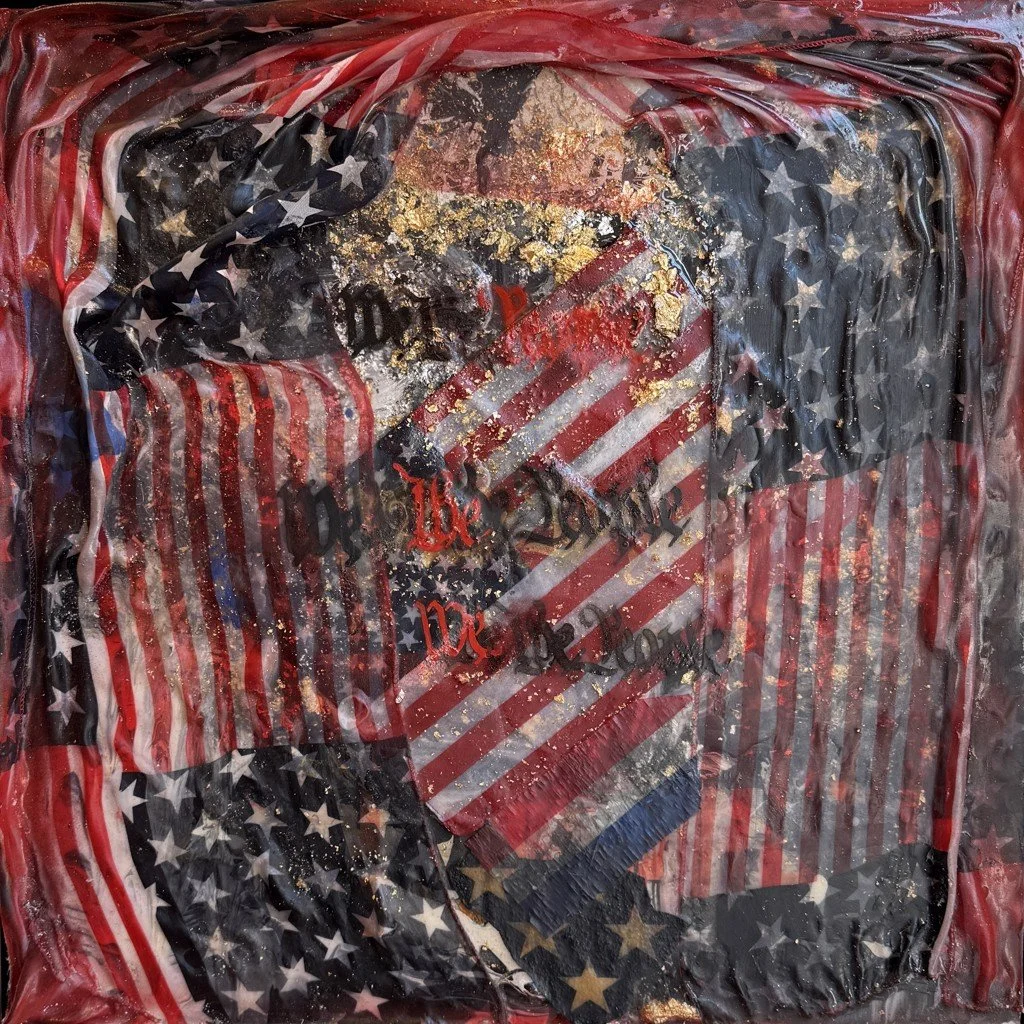
"Barbed Flags,'' by JOCELYN CHEMEL, at the New Art Center, in Newton, Mass.

Read More
Commentary Robert Whitcomb Commentary Robert Whitcomb

Diana Anahi Torres: Elite schools a better financial deal

As high-school seniors start to churn out their college applications, elite campuses are trying to catch the attention of high-achieving and gifted low-income students around the country.

It may be hard to believe, but schools like Harvard University and Amherst College are opening their doors to more highly qualified high school students who grew up facing economic hardship yet can thrive in their campuses. Given the record sizes of the endowments supporting the most selective schools, these full rides won’t bust their budgets.

At $1.8 billion, for example, Amherst’s endowment amounts to about $1 million per student.

This means Harvard can turn out to be more affordable than your own state school. But the path from a poor neighborhood to an elite college, as Richard Pérez-Peña recently wrote in The New York Times, is almost impossible to travel without the support of teachers or mentors who know how to guide students through the process.

I’ve been there and I couldn’t agree more.

Consider many of my friends in Albuquerque, New Mexico, N.M.  Around two out of three of the students I grew up with dropped out of high school and at most 10 percent got a college degree. The rates are even lower when you account for race, class, immigration status and gender.

It took Alan Marks, a seasoned educator and Stanford University graduate who has dedicated his career to helping students in my community attend college and mentoring them, to introduce me to my potential.

Marks encouraged me to take demanding college classes while I was still in high school and to participate in extra-curricular activities I felt passionate about. He recommended summer courses, invited me on trips to visit campuses, helped me study for standardized tests, and told me that I should consider applying to the top schools in the nation.

By senior year I had a 4.4 GPA, five college-level courses under my belt, and an idea of the schools I wanted to apply to. But even with his guidance, I found the application process daunting.

The first time I looked at the tuition pages for the top-ranked schools, I balked. It cost upward of $55,000 a year to attend them, a price tag my mom, a domestic worker, and dad, an auto body worker, could never afford to pay.

“Their financial aid packages are generous,” my mentor assured me. You won’t have to worry.”

His encouragement and unyielding support led me to four years at Amherst College, for which I paid less than $10,000. The total was less than what I would have paid to attend one of New Mexico’s public universities for one year.

And the $10,000 paid for much more than four years of college classes.

Amherst’s comprehensive financial-aid package paid for my tuition, fees, room and board, two round-trip flights a year, health insurance, personal expenses, and research opportunities. All I had to worry about was a minimal student contribution. I paid for that with a mix of outside scholarships, summer jobs, and negligible student loans.

Amherst, however, is one of very few schools willing to do what it takes to boost its economic diversity. Thanks, in part, to the commitment of its former president Anthony W. Marx to attract students from all walks of life, at least 20 percent of its students come from working class and poor households.

But it’s not enough for these top colleges to offer generous financial aid packages to low-income students with great grades.

More educators and mentors who work with economically challenged yet high-achieving students need to encourage and help those kids consider applying to and attending those schools. And qualified, low-income students need to know that earning a degree from a top-notch school could turn out to be within their reach.

So, as I ask high school seniors who can relate to my story, what are you waiting for? Apply to your dream Ivy League universities. (The official Ivy League consists of Yale, Harvard, Brown, Dartmouth, Columbia, Cornell, the University of Pennsylvania and Princeton.)

There’s nothing to lose except a great opportunity.

Diana Anahi Torres is the New Mexico Fellow at the Institute for Policy Studies, in Washington.

This piece comes via OtherWords.org.
Read More
Commentary Robert Whitcomb Commentary Robert Whitcomb

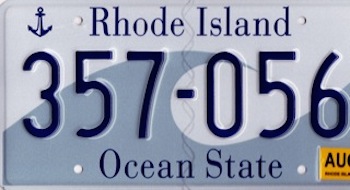
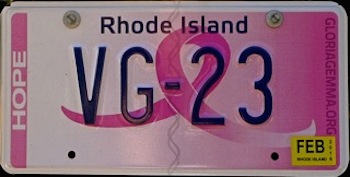
The R.I. license-plate-design crisis continues

There is something about a bureaucrat that loves a poorly designed license plate. Only three weeks ago I was railing against new pink breast-cancer plate as an example of inexcusably deficient graphic quality. In that time, the State of Rhode Island and Providence Plantations, apparently tired with its "Wave" plate designed by the famous designer and RISD graduate Tyler Smith, has come up with an aggressively bland replacement.

To begin with the letters are now all digitally printed, rather than embossed. Despite what 3M lobbyists may tell you, flat letters are not more visible. Rhode island has been about the last hold out with raised letters, which are not only more readable, but they are more elegant.

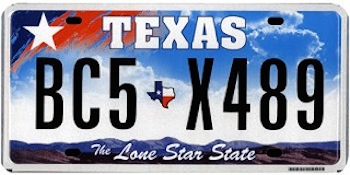
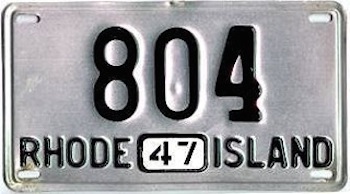
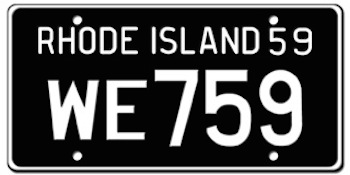
Which of the plates  below is more legible?

The blue may be handsome, but its punch is mitigated by the white border, which tends to bleed out the blue. Using gold for the sailboat (which is too small to be really read properly) and the double mottos is just a little unnecessary glitz.

Why does a license plate even need a motto? Does the happy phrase "Ocean State" make us like ourselves more? Does it really boost tourism?

And as for "Beautiful," this new slogan that is being applied to roadsigns across Rhode Island is both superfluous (either our state is beautiful or it is not) and a mark of insecurity (do we really need to be told, are we not smart enough to figure it out, or is is like a creme that promises to make us feel more attractive?).

What is really sad is that past Rhode Island plates have been absolute winners in terms of dignity and superior design. Instead of adopting this undistinguished blue bit of blah, let us go back to the no-nonsense plates of the past. No mottos, so cheap boosterism, just our name.


plate1x


plate2x


plate3x

plate4x


plate5x


plate6x


plate7x


Read More
Commentary Robert Whitcomb Commentary Robert Whitcomb

Llewellyn King: The old-guy techno blues

I have to face it: like most people of my generation, I am a technological dunce.

In my pocket, there is an electronic miracle in the form of a cellphone. I am told it has enough computing power to plan a moon shot and run a nuclear submarine, or wake me up in the morning, organize my schedule, and provide me with reading material and audio and visual entertainment all day long. Wow!

On a good day, if I have remembered to charge this pocket Einstein, I can make a phone call. I can receive phone calls, too. But that is more problematic because I have to find it and handle it gently, otherwise it disconnects the calls – which leads people to believe that I do not want to speak to them.

Mostly, I would be happier if the phone did not do such extraordinary things, for it has become a reproving presence, mocking and denigrating me because I cannot calculate on it the cost of traffic congestion in the United States or, for that matter, my checking account balance – a truly modest calculation.

Apart from making me feel even more stupid than necessary, the wretched super-device – and I hate to make this accusation – is sneaky. It steals money. It lives in my pocket and helps itself to my money which, metaphorically, also dwells there. Unlike real phones – a dying breed like the necktie – you have to be deliberate about disconnecting a call, or you will continue to be charged for it.

Woe betide you if you take the malicious little bloodsucker out of the country: The fees and charges can cost you as much as your trip. And if you turn on the data roaming to peek at your email, you may want to begin a new life for yourself, wherever you are, because your financial destruction, which this seemingly innocent action will trigger, will probably be complete.

In a simpler time, when I left home in the morning, I needed just my wallet and my keys. Now I need a checklist of devices.

I need a wristwatch, because I forget that I can get the time on my cell phone and other electronic gadgets. Probably I could find out how many days I have left on earth, if I knew which app to download on my cellphone – preferably a free one.

I need an electronic book mostly because I have spent a lot of money getting one – and now I am damned well going to read books, newspapers and magazines on it.

I need the dreaded cellphone because I have become addicted to it. Maybe I can go to cellphone addiction rehab at the Betty Ford Center – if I can afford it, after all the money I have spent on roaming charges.

Of course, I cannot get out the door without a laptop, or some such device, to check my email and my Facebook, Twitter and LinkedIn accounts because nobody is going to phone me, despite the fact that everyone in America seems to have a cellphone. This is the Great Cellphone Paradox: The more people have cellphones, the more they prefer email or some version of it.

The cellphone manufacturers will respond by equipping new cellphones with apps for everything on earth, from dealing with in-laws to finding out how much the dude at the next desk really earns. The one thing you will not be able to do with them is, er, make a phone call.

In the meantime, I will have to persevere with typing with my thumbs or move to North Korea. Now if only I could borrow a cellphone, so I could call my cellphone, so I can find it.

Llewellyn King is host and executive producer of "White House Chronicle,'' on PBS.


— For the Hearst-New York Times Syndicate

- See more at: http://www.whchronicle.com/?p=2528#sthash.D0bDTTFr.dpuf

Read More
Commentary Robert Whitcomb Commentary Robert Whitcomb

Chris Powell: One last reason to be in journalism

These remarks were made Oct. 9 at a meeting celebrating the Yankee Institute for Public Policy's 30th anniversary, held at the Hartford Club. HARTFORD

Thank you for your Truth Teller Award. Now if I can get the State Employee Bargaining Agent Coalition's Lie Teller Award I'll have a matched set.

Somebody told me that this award means I'm the best newspaper columnist in Connecticut. Of course I'm grateful for that thought -- indeed, these days anyone should be grateful just to be read. But such praise reminds me of what Bill Buckley said when Lillian Hellman was described as "the greatest living American female playwright." Buckley called it a little like marveling at the tallest building in Wichita, Kansas.

Awards prompt reflection about one's life, and I'm starting to appreciate how Groucho Marx felt when, in 1972, not long before he died, Roger Ebert asked him what he thought of his spectacular career on stage, in movies, and on radio and television.

Groucho replied: "I'd trade it all for an erection."

Back then such an observation would have been considered distasteful. Not anymore. If he was still around Groucho could parlay it into still another career in television, courtesy of the pharmaceutical industry and its ad agencies, and hardly anyone would be offended. Indeed, since half the country now is close to what was Groucho's age then, most people today probably would concur with him -- as I do, if for a more political reason.

In college I took a poetry course that introduced me to some fine things, like W.H. Auden's poem "In Memory of William Butler Yeats," as well as to the work of Yeats himself. Yeats had been the literary giant of Ireland, and when he died Auden wrote:

Now Ireland has her madness and her weather still,

For poetry makes nothing happen. ...

So much for poetry, I thought; Yeats and Auden should know. But maybe, I thought, journalism could make something happen, and it didn't even have to rhyme. So I left college early for the newspaper job.

I still think journalism can make something happen, or prevent something from happening, which can be just as good, and that's a reason for sticking with it. But journalism's efficacy is declining fast along with literacy and civic engagement amid the bane of civilization, the corruption of prosperity, so making something happen or preventing something is not so much my reason anymore.

No, I stick with journalism more out of spite. I just couldn't stand for certain people to think that nobody is on to them.

So here in Connecticut you may be stuck with me a little longer, just as Wichita is stuck with the Epic Center, the tallest building not only in that city but in all of Kansas though having only 22 stories. To learn the qualities of agreat journalist, you'll have to listen not to me but to Stanley Walker, who was city editor of the New York Herald-Tribune in the 1930s. Walker explained:

What makes a good newspaper man? The answer is easy. He knows everything. He is not only aware of what goes on in the world today but his brain is a repository of the accumulated wisdom of the ages.

He is not only handsome but he has the physical strength that enables him to perform great feats of energy. He can go for nights on end without sleep. He dresses well and talks with charm. Men admire him; women adore him; tycoons and statesmen are willing to share their secrets with him.

He hates lies and meanness and sham but keeps his temper. He is loyal to his paper and to what he looks upon as his profession; whether it is a profession or merely a craft, he resents attempts to debase it.

When he dies, a lot of people are sorry, and some of them remember him for several days.

Thanks again for your award. I will remember you always for it, and if you remember me through dinner tonight I'll consider it a triumph.

Chris Powell is the managing editor of the Journal Inquirer, in Manchester, Conn.


Read More
Commentary Robert Whitcomb Commentary Robert Whitcomb

Singing the Spanish blues

  bonnie


"Spanish Skies'' (c-print) by BONNIE EDELMAN, at Heather Gaudio Fine Art, New Canaan, Conn.,  through Oct. 21.

Read More
Commentary Robert Whitcomb Commentary Robert Whitcomb

Northern illumination

I'm here near the northern tip of Cape Breton Island, in an atmosphere of memorable clarity. Surprisingly, to me, plants are still growing and the land looks almost as lush as it does hundreds of miles south, though the colors of the maples remind you of how late in the year it is. The  vegetable gardens are still producing crops, though I suppose that may change in a few days.

Though there is much poverty, the houses and farms are neat, adding to the sense of coming into a more innocent, or at least more dignified, world.

I wish I were here in May to see the icebergs calved off the Greenland Ice Sheet float by off the point here.

The place evokes a Rockwell Kent picture.

--- Robert Whitcomb


Read More
Commentary Robert Whitcomb Commentary Robert Whitcomb

Wind is the cheapest energy

Read More
Commentary Robert Whitcomb Commentary Robert Whitcomb

New Hampshire's lovely, strange, sad Canterbury tale

canter4x  

Commentary and photos by WILLIAM MORGAN

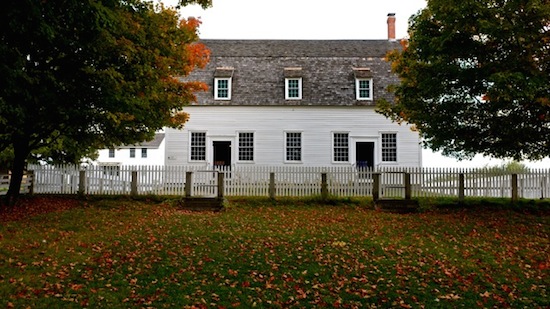
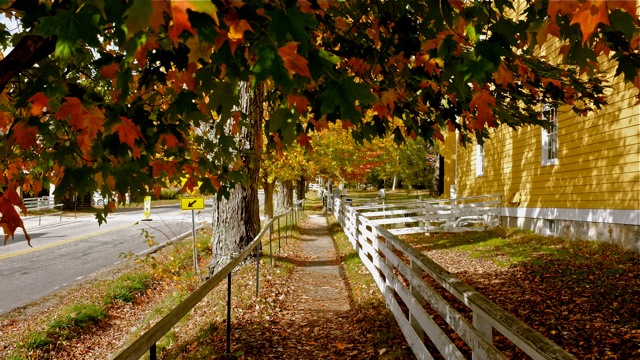
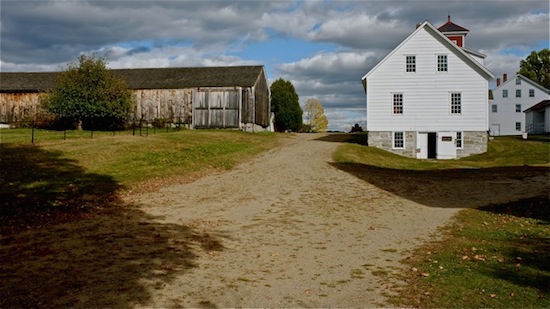
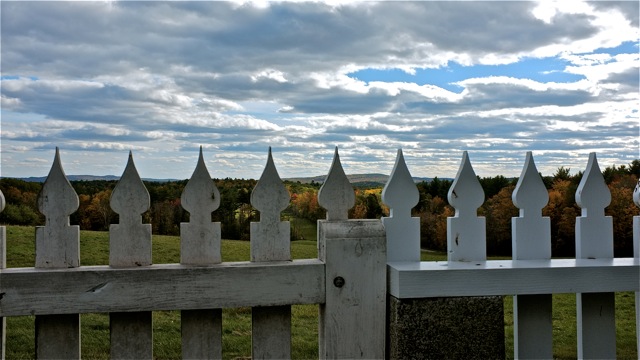
One of the  treats of living in New England is spending a glorious October afternoon in New Hampshire. And of all the delightful, picture post-card perfect towns, one of the least unspoiled is the Shaker Village at Canterbury. (More photos below.)

There has been enough written about the Shakers. Yet a place  like Canterbury can be very seductive: a utopian community where  celibate people trying to be holy lived the simple life,  farming and crafting timeless furniture.

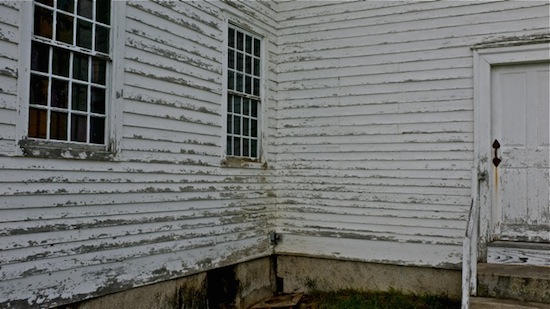
Still, there is always a sense of unreality at  most historic villages, such as Williamsburg or Plimoth Plantation. Canterbury has been saved from the worst excesses of that syndrome by not having a lot of money – the place is clearly struggling, buildings need paint and repair, while ghost tours, antique -car shows and the gift shop can only bring in so much revenue.

And, as with any Shaker community, no matter how well interpreted, there is still a dark side, a sadness. Besides the people fleeing the industrial life in the 19th Century, not to mention the creepiness of sect founder, Mother Ann Lee, one cannot escape the poor business model of an enterprise that relied solely on converts for growth.

In 1850, the Canterbury  Shaker Village had 5,000 acres; today there are less than 700. But that land protects the community from whatever kind of trailer-park development would seek out a back-of-beyond rural area with no industry or promise of work. So, while ostensibly preserving the legacy of Shakers, Canterbury has maintained a real slice of what much of New Hampshire was like before World War II.


canter1


canter2


canter3


fence

Read More
Commentary Robert Whitcomb Commentary Robert Whitcomb

Robert Whitcomb: Time to go Atlantic

INGONISH, Nova Scotia  

Some of us head into seasonal affective disorder at this time of year, which the brilliant if brief foliage can’t stop.

The sharpest downer comes when Daylight Savings Time ends, this year on Sunday, Nov. 2. There is, of course, a brief benefit of the change: We can loll in bed for an extra hour. I remember as a boy looking forward to that Sunday morning for weeks.

But then, that afternoon, darkness descends all too early.

So an Oct. 5 essay in The Boston Globe by Tom Emswiler, “Why Massachusetts should defect from its time zone,” caught my eye. Mr. Emswiler recommends New England adopting Atlantic Time, which is used in eastern Canada. He writes that “it matches the time we already use in the summer, and would simply mean that in the fall, we don’t have to fall back.” We’d keep the clock an hour forward all year. No more need for those twice-yearly reminders, with smiley clock faces, in the news media.

He notes that “Boston lies so far east in the Eastern Time Zone that during standard time, our earliest nightfall of the year is a mere 27 minutes later than in Anchorage,’’ which is a lot farther north than New England. And consider Downeast Maine, where tourist agencies like to advertise the summit of Cadillac Mountain, on Mount Desert Island, as the first place in the United States where you can see the sun rise.

Two criticisms of Mr. Emshiler’s idea (variants of which others have made) are that current school-opening policies would mean that the kids would have to wait in the dark for school buses and that farmers would have to get up in even deeper dark than they already do.

On the first issue, why not open school an hour later than now? After all, studies have suggested that the sleeping cycles of young people, especially adolescents, clash with the typical 7:20-8 a.m. openings of public schools.

See: http://journals.lww.com/jrnldbp/Abstract/2014/01000/Later_School_Start_Time_Is_Associated_with.2.aspx

And, as I remember from when we lived in Paris — much farther north than New England — students can handle an 8 a.m. sunrise.

As for the farmers, the serious ones (not the affluent hobbyist farmers) already get up in the dark. And of course, the New England agricultural sector, while showing some signs of revival with the “locavore’’ and organic-food movements, is very small employment-wise.

Perhaps a bigger issue might be what to do with southwestern Connecticut, which is so tied to the New York City market. Perhaps just eastern New England would move to Atlantic Time? Some have suggested as a compromise that we’d just make a half-hour difference with Eastern Time instead of an hour. Too confusing! Most people think in hour increments. And other states have split time zones without heavy damage.

My hunch is that going on Atlantic Time would raise the spirits and mental and physical energy of more New Englanders than not, by alleviating the late-afternoon grimness of late fall, winter and early spring. (The afternoon darkness particularly puts a damper on the ambiguous charms of Thanksgiving and Christmas and adds anxiety to Sundays, on which we dread the approach of the work and school week.)

The problem is not so much the total hours of darkness — otherwise why are Canadians and Scandinavians among the world’s happiest people, according to surveys? (Their sense of community and strong social services explain much of their happiness.) Rather, I think, it’s the time of day when there’s light, for, among other things, taking a walk, shopping or otherwise enjoying the outside; a bright winter day can be exhilarating.

The change might save on heating (but not air-conditioning) and overall electricity costs for many people: More workers would arrive home when there’s still natural light and at close to the warmest time of the day. Whether this time-zone change would make commuting by car less or more dangerous is an interesting question. You could say that early-morning drivers in the dark might present more risks because many would still be groggy from sleeping. But you could also say that letting more drivers wearied by work commute home when there’s still light would be safer.

Still, would businesses complain about being on the same time zone as Halifax instead of New York and Washington? Maybe, but if proposals for a free-trade area encompassing the United States, Canada and the European Union come to fruition, which I hope they do, New England, or at least eastern New England, going on Atlantic Time might be a boon by putting us nearer to E.U. times.

In any event, it’s time to end the twice-yearly confusion.

Robert Whitcomb (rwhitcomb51@gmail.com), a bi-weekly contributor, is a former editor of these pages, a Providence-based editor and writer and a partner in a health-care sector consultancy.

Read More
Commentary Robert Whitcomb Commentary Robert Whitcomb

Travel is so unsettling

  nubull


Work by BRENDAN BULLOCK in his "Travel Journals'' show at the Maine Media Library, in Rockport, Maine, though Nov. 15. His work features black-and-white  and color photos he took  in India, Newfoundland (above), Tanzania and Peru. Bullock's strangely  intimate images capture the aesthetic  and emotional effects on him of his wide travels.
This picture reminds me of  corners of where I am -- on Cape Breton Island (below is a picture of the island's Cabot Trail)  -- except the fall colors and sea are vivid here today on  this gorgeous but remote and mountainous coast. I'm here with friends to tour around and see the Celtic Colours festival and the land where my Scottish ancestors lived for a while before shoving off to the States to try to make money.
It's hard to believe now that coal-mining was once the major (and very dangerous) industry here.
_-- Robert Whitcomb
cabot


Read More
Commentary Robert Whitcomb Commentary Robert Whitcomb

John O. Harney: Getting ready for the sixth mega-extinction

BOSTON More than 250 higher-education leaders from campuses across the U.S. met last week in Boston for the 2014 Presidential Summit on Climate Leadership.

The summit was organized by Second Nature, the supporting organization for the American College & University Presidents' Climate Commitment (ACUPCC). Almost 700 colleges and universities have signed the ACUPCC and committed to achieve carbon neutrality by balancing the amount of carbon released with an equal amount offset or buying enough carbon credits to make up the difference, but boosters voiced frustration that the number hasn’t been growing in recent years.

Registering at the Revere Hotel (still the 57 to me) I was greeted with a questionnaire that Emerson College students are using to track the summit's carbon footprint. I was proud to declare that I came by train and on foot.

On the way into town, I had tweeted about a new finding that global warming (recently sanitized as ‘’climate change’’) is wrecking havoc on fall colors. Also that day, papers were reporting on 35,000 walruses coming ashore in Alaska due to melting sea ice. Just two weeks earlier, 400,000 people marched in New York City and elsewhere to call for action on climate change. The summit seemed timely, if not late.

At the conference, Kate Gordon, executive director of the Risky Business Project, outlined her no-nonsense research focusing on climate change’s impacts on energy, agriculture and extreme heat. She and her co-authors wanted to speak in the language of business so they framed the issue as a “risk assessment” and delivered their report in the backyard of Wall Street.

Assessing economic risk of climate change is complicated. Louisiana’s gross state product fell slightly after Hurricane Katrina, but the rest of the country’s grew based partly on storm-related recovery activity.

More importantly, some of the risks of climate change will cascade. For example, there’ll be more “heat stroke days” when the body cannot cool itself off by perspiring. That will mean lost labor productivity (especially in states with lots of outdoor work, led ironically by North Dakota) as well as more air conditioning and therefore demand for more power plants, which incidentally are mostly built along rising seas.

The Southeast will be hit especially bad. And that’s where much of American manufacturing, including green manufacturing, is increasingly based. There was dark joking about moving football’s hot (in more ways than one) Southeastern Conference to the Northwest, where warming with make the weather better suited for outdoor sports. But dead seriousness about how Cargill (whose exec is among the veritable rogue’s gallery of backers who advised the work) could move its corn farming from Iowa to Manitoba to keep up with the weather, but Iowa farm families would be left high and dry.

Among other things, Gordon urged a more interdisciplinary look at sustainability. Why not make it a case study for first-year business students, she asked.

In a separate session, George Washington University President Steve Knapp and American University President Neil Kerwin explained how their campuses are meeting more than 50% of their energy needs with solar energy from North Carolina.

D.C. is promoted among the best college towns in America, but Knapp and Kerwin agreed that colleges in other places could forge collaborations for this purpose. Though some experts are skeptical about locking in rates because energy costs could go down, Kerwin said the ability for the colleges to come together allowed their supplier Duke Energy Renewables company to go to capital markets for better deals. Knapp and Kerwin also credited politically savvy students with the success and urged other higher ed leaders to prepare the ground with trustees in advance.

A panel moderated by New England Board of Higher Education President Michael K. Thomas explored how sustainability champions can get their message to national audiences. Portland State University President Wim Wiewel suggested more emphasis on foundation support in the face of a tight federal government as well as forming a committee to focus on “partnership creation.” Millersville University President John Anderson noted that he is using his appointment to a hospital board to advance AAUPCC's message by reminding them how hurricanes Sandy and Katrina clobbered hospitals.

The audience provided solid observations about building national action. Cal State Chico reps observed that student associations are key. A former Second Nature employee said she previously worked at NACUBO, where staff listen most attentively to advice when it comes from presidents. Penn State's sustainability director said he gets together with counterparts via the Big 10 athletic conference. The president of Cal State Northridge noted that she is a member of the NCAA, and pondered what might happen if the national athletic association turned to sustainability. A staffer from Illinois State University asked how can colleges can leverage their alumni on behalf of climate efforts. A GW sustainability official called for more positive stories and more group purchasing. An official of the American Meteorological Society said his group has courses at universities across the nation. Another campus official noted that federal policy on sustainability is out of touch with newer thinking. Sustainability guru Tony Cortese, formerly of Tufts and a co-founder of the AAUPCC, said the time is right now for climate action, as it was when AAUPCC started.

One non-scientific observation (a rarely acknowledged qualifier on this subject) is that the audience revealed a remarkable lack of diversity, even for a meeting of New England “thought leaders.” Also some communication contamination … lots of diagrams and terms like programs and ideas being “birthed” … perhaps because these folks know the end is nigh with, as another sustainability hero, former Unity College President Mitch Thomashow warned, the human-caused sixth mega-extinction knocking at the door.

John O. Harney is executive editor of The New England Journal of Higher Education (nebhe.org).

Read More
Commentary Robert Whitcomb Commentary Robert Whitcomb

Chris Powell: This cat (a cynic?) broke a libertarian indifference

From out of the darkness the poor creature practically hurled itself at the family as they got out of their car in the garage -- mewing frantically and craving attention. He wore no collar and no veterinarian was going to open his office on a Saturday night just to try to locate an identifying microchip on a stray cat.

So they cut up some leftover chicken and put it in a dish on the garage floor along with a little bowl of water, placed some old towels on a chair for a bed, and invited the cat to stay the night, safe from the coyotes that howled from the adjacent farm field and woods, while leaving the garage door open enough so that he could leave.

In the morning the cat was still there -- handsome and friendly if hungry again. There was more leftover chicken. He ate and went outside and returned hours later, whereupon the search for his owner began, with posters and an advertisement in the newspaper.

Meanwhile, with the installation of a makeshift litter box and the purchase of cat food, the cat settled into the house, exploring, showing off his jumping skills, nuzzling for attention, closing his eyes and purring when petted, hopping onto a lap to curl up and fall asleep, mewing again for his breakfast and dinner and for going outside in the morning, and disappearing for hours but always returning, if sometimes not until after nightfall.

Dad, who had for cats only the libertarian indifference for which they themselves are renowned, was smitten by the affection this one bestowed constantly and so doted on him and carefully combed through his fur for ticks upon each return from the wild.

While allergic to cats, Mom found him adorable and tolerated his run of the house, thinking it would be temporary -- that if his owner wasn't found soon, a good home would be arranged for him elsewhere.

Daughter loved him and picked him up and moved him as necessary to keep him out of trouble.

The cat hated being confined but loved perching on a chair in the sun room to survey a wide area before napping. Eventually he spent his nights on a down comforter on the bed in a guest room, having carefully ascertained the softest spot in the house.

Figuring that if he was going to be part of the family, the cat had to be worried about like everyone else, Dad repeatedly went outside in the evening to call for him to come home, but the cat came home only when he wanted to. When they took him to a veterinarian, no microchip was found, so they got him a rabies vaccination and an identification tag, which they affixed to a collar he wore only resentfully. A day later he trotted home jauntily without it.

The adoption campaign supervised by Dad's colleague at the office, a cat lover and kind and patient soul, was picking up speed when Dad started hoping that it would fail and that the cat somehow could be kept despite Mom's allergy.

But after a little more than a week the call came. The cat's owner had been alerted by a poster and identified the cat perfectly and was only a half mile away. So the family put him in the car and delivered him.

The cat didn't seem thrilled to be home and his owner didn't seem thrilled to have him back either, and while Dad knew this was still the right ending, he was heartbroken.

After all, he hadn't gotten even a kiss goodbye. Had all that nuzzling and purring been sincere or was it all merely a cynical act?

Just in case, Dad has been keeping the deck light on at night.

Chris Powell is managing editor of the  Journal Inquirer, in Manchester, Conn.

Read More
Commentary Robert Whitcomb Commentary Robert Whitcomb

After a lot of living

OLYMPUS DIGITAL CAMERA "Bodyscape #24 (oil canvas), by BETSYANN DUVAL, at Bromfield Gallery, Boston in its current "Fall Frontal'' show.

Read More
Commentary Robert Whitcomb Commentary Robert Whitcomb

Charles Pinning: 'Living through stained glass'

It was a sunny fall day, and we were stretched out on the grass of Dexter Park in Providence. Behind us loomed the crenellated towers of the ginormous Cranston Street Armory, a castle-like structure of ochre brick.

“He was a tea dancer,” I said to Linda.

“What the hell’s that?” she asked, a smile breaking across her face.

“Rich ladies would have teas in their homes, and he would go dance the tango with them.”

“Are you making this up?”

“No. He was, reputedly, a gigolo before he became Rudolph Valentino, and he danced for money and sometimes even for free.”

“And he danced there?” asked Linda, gesturing with her thumb to the Armory.

“Yes. That’s a fact. He would travel and give tango exhibitions, and he came to Rhode Island once and performed right there, at the Cranston Street Armory.”

“Can we go get some lunch? I’m starving,” said Linda.

“Sure. And I’ll tell you another story about the Cranston Street Armory.”

Sitting at a restaurant table outside, I reached across and took one of Linda’s hands in mine.

“Isn’t it funny that we can hold hands like this, but if you were my girlfriend, people would look at us?” said Linda.

“Do you really think they would?”

“Are you kidding? They would give us dirty looks. I wish I was a man. Six feet tall, at least, and two hundred pounds.”

“Good Lord, why?”

“So I could smash people in the face who make me angry.”

“I don’t make you angry, do I?” I asked.

“Not usually. Do you like holding my hand?”

“I love holding your hand.”

“My girlfriend would kill me if she saw us doing this.”

“You have beautiful hands, Linda.”

“Why don’t you tell me the other story about the Cranston Street Armory?”

“OK. When I was a kid, my father and I drove to Providence to see the Rhode Island Auto Show, which was held in the Cranston Street Armory. As soon as we walked in the door, the cigarette smoke was so thick both of my nostrils started bleeding.”

“They allowed smoking?”

“Linda, when I was a kid, people smoked everywhere. People smoked in hospitals and doctors’ offices. My parents didn’t smoke, so I wasn’t used to being around it. Plus, I was prone to nosebleeds anyway. But I remember it was so acrid and sharp, then — bloosh!”

“So, did you leave?”

“Well, my father really wanted to see the show, so he took me out to the car and I lay down in the back seat while he went back in.”

A month later, Linda told me that she and her girlfriend were moving to San Francisco.

“It’s supposed to be friendlier,” she said.

“You mean for gays?”

“Yeah. And for lesbians, too.”

“You mean you’re a lesbian?” I asked her.

“Ha-ha,” she replied.

“Maybe you’re not. Sometimes I get that feeling.”

“You’re just wishing I wasn’t. For you.”

“It’s true. So what?”

“You know, when you told me that Rudolph Valentino danced at the Cranston Street Armory, I didn’t know who you were talking about. I had to research him.”

“You’re kidding!”

“C’mon. You’re old enough to be my father.”

“So what? Valentino died in—”

“1926.”

“That’s decades before I was born. He’s part of American history. If I knew of him, you certainly should have.”

“Well, I didn’t. I should get going,” said Linda, and she kissed me on the cheek.

“I love you,” I said.

“I know,” she replied.

Two years later, I was weed rousting when an unfamiliar sedan pulled up to the curb. Linda stepped out. She wore jeans and a light brown zippered jacket. Her hair had grown to her shoulders with a natural wave.

We sat in my side yard and drank iced tea that still left my mouth parched.

“So,” ventured Linda with great effort and after a deep sigh, “do you have a girlfriend?”

“I do,” I replied, feeling my face grow hot.

“I thought you would,” said Linda, to which I replied, “I assume you and what’s-her-name are still together?”

“Uh-huh,” said Linda, and then she looked down.

It was like living life through stained glass. Every word now was carrying more weight than could be borne. It was impossible to go on. Linda stood up. From a jacket pocket she withdrew an old postcard protected in a plastic sleeve.

“I saw this at a flea market and thought of you. Here—” and she handed it to me.

It was a colorized photograph of the Cranston Street Armory. Beneath the photograph was printed, “New Armory.” I turned it over. On the backside the postmark, 1923, was still clearly visible, and there was a penciled message. In an elegant, cursive hand the message read: “Thanks for the dance. (signed) Rudolph Valentino.”

When I looked up, Linda was already heading back to her car.

Charles Pinning is the author of the Rhode Island-based novel “Irreplaceable”.

Read More
Commentary Robert Whitcomb Commentary Robert Whitcomb

Betting on Buddy's buddies

Somehow that would-be casino developer Joe Paolino and developer Pat Conley are among the biggest backers of Buddy Cianci for a return gig in Providence's City Hall is not confidence-building. Welcome to Atlantic City. -- Robert Whitcomb

Read More
Commentary Robert Whitcomb Commentary Robert Whitcomb

Down on the plantation of the 'hospitality industry'

Some politicians and others tout the "hospitality industry'' as wonderful for jobs and economic development. In fact, its sucks -- it pays close to slave wages and has crummy working conditions.  Perhaps the best place to see this poverty creator in action is in Orlando, Fla., home of the rapacious Disney World. -- Robert Whitcomb

Read More
Commentary Robert Whitcomb Commentary Robert Whitcomb

Digital driftwood

freedroe  

"Homage to Roethke'' (digital photo), by JUSTIN FREED,  Galatea Fine Art, Boston, in its show "Claudine Bing & Justin Freed: Rhythms of the Universe','' Nov. 1-30.

He says: ''Awe sustains us. I believe in cellular memory.''


Read More