
Vox clamantis in deserto








David Warsh: Deconstructing the Great Panic of 2008
By DAVID WARSH
BOSTON
Lost decades, secular stagnation -- gloomy growth prospects are in the news. To understand the outlook, better first be clear about the recent past. The nature of what happened in September five years ago is now widely understood within expert circles. There was a full-fledged systemic banking panic, the first since the bank runs of the early1930s. But this account hasn’t yet gained widespread recognition among the public. There are several reasons.
For one thing, the main event came as a surprise even to those at the Federal Reserve and Treasury Departments who battled to end it. Others required more time to figure out how desperate had been the peril.
For another, the narrative of what had happened in financial markets was eclipsed by the presidential campaign and obscured by the rhetoric that came afterwards.
Finally, the agency that did the most to save the day, the Federal Reserve Board, had no natural constituency to tout its success in saving the day except the press, which was itself pretty severely disrupted at the time.
The standard account of the financial crisis is that subprime lending did it. Originate-to-distribute, shadow banking, the repeal of Glass-Steagall, credit default swaps, Fannie and Freddie, savings glut, lax oversight, greedy bankers, blah blah blah. An enormous amount of premium journalistic shoe leather went into detailing each part of the story. And all of it was pieced together in considerable detail (though with little verve) in the final report of the Financial Crisis Inquiry Commission in 2011.
The 25-page dissent that Republican members Keith Hennessey, Douglas Holtz-Eakin and Bill Thomas appended provided a lucid and terse synopsis of the stages of the crisis that is the best reading in the book.
But even their account omitted the cardinal fact that the Bush administration was still hoping for a soft landing in the summer of 2008. Nearly everyone understood there had been a bubble in house prices, and that subprime lending was a particular problem, but the sum that all subprime mortgages outstanding in 2007 was $1 trillion, less than the market as a whole occasionally lost on a bad day, whereas the evaporation of more than $8 trillion of paper wealth in the dot-com crash a few years earlier was followed by a relatively short and mild recession.
What made September 2008 so shocking was the unanticipated panic that followed the failure of the investment banking firm of Lehman Brothers. Ordinary bank runs – the kind of things you used to see in Frank Capra films such as "American Madness" and “It’s a Wonderful Life”– had been eliminated altogether after 1933 by the creation of federal deposit insurance.
Instead, this was a stampede of money-market wholesalers, with credit intermediaries running on other credit intermediaries in a system that had become so complicated and little understood after 40 years of unbridled growth that a new name had to be coined for its unfamiliar regions: the shadow banking system – an analysis thoroughly laid out by Gary Gorton, of Yale University’s School of Management, in "Slapped by the Invisible Hand'' (Oxford, 2010).
Rather than relying on government deposit insurance, which was designed to protect individual depositors, big institutional depositors had evolved a system employing collateral – the contracts known as sale and repurchase agreements, or repo – to protect the money they had lent to other firms. And it was the run on repo that threatened to melt down the global financial system. Bernanke told the Financial Crisis Inquiry Commission:
As a scholar of the Great Depression, I honestly believe that September and October of 2008 was the worst financial crisis in global history, including the Great Depression. If you look at the firms that came under pressure in that period… only one… was not of serious risk of failure…. So out of the thirteen, thirteen of the most important financial institutions in the United State, twelve were at risk of failure within a week or two.
Had those firms begun to spiral into bankruptcy, we would have entered a decade substantially worse than the 1930s.
Instead, the emergency was understood immediately and staunched by the Fed in its traditional role of lender of last resort and by the Treasury Department under the authority Congress granted in the form of the Troubled Asset Relief Program (though the latter aid required some confusing sleight- of-hand to be put to work).
By the end of the first full week in by October, when central bankers and finance ministers meeting in Washington issued a communique declaring that no systemically important institution would be allowed to fail, the rescue was more or less complete.
Only in November and December did the best economic departments begin to piece together what had happened.
When Barack Obama was elected, he had every reason to exaggerate the difficulty he faced – beginning with quickly glossing over his predecessor’s success in dealing with the crisis in favor of dwelling on his earlier miscalculations. It’s in the nature of politics, after all, to blame the guy who went before; that’s how you get elected. Political narrative divides the world into convenient four- and eight-year segments and assumes the world begins anew with each.
So when in September Obama hired Lawrence Summers, of Harvard University, to be his principal economic strategist, squeezing out the group that had counselled him during most of the campaign, principally Austan Goolsbee, of the University of Chicago, he implicitly embraced the political narrative and cast aside the economic chronicle. The Clinton administration, in which Summers had served for eight years, eventually as Treasury secretary, thereafter would be cast is the best possible light; the Bush administration in the worst; and key economic events, such as the financial deregulation that accelerated under Clinton, and the effective response to panic that took place under Bush, were subordinated to the crisis at hand, which had to do with restoring confidence.
The deep recession and the weakened banking system that Obama and his team inherited was serious business. At the beginning of 2008, Bush chief economist Edward Lazear had forecast that unemployment wouldn’t rise above 5 percent in a mild recession. It hit 6.6 percent on the eve of the election, its highest level in 14 years. By then panic had all but halted global order-taking for a hair-raising month or two, as industrial companies waited for assurance that the banking system would not collapse.
Thus having spent most of 2008 in a mild recession, shedding around 200,000 jobs a month, the economy started serious hemorrhaging in September, losing 700,000 jobs a month in the fourth quarter of 2008 and the first quarter of 2009. After Obama’s inauguration, attention turned to stimulus and the contentious debate over the American Recovery and Reinvestment Act. Summers’s team proposed an $800 billion stimulus and predicted that it would limit unemployment to 8 percent. Instead, joblessness topped out at 10.1 percent in October 2009. But at least the recovery began in June
What might have been different if Obama had chosen to tell a different story? To simply say what had happened in the months before he took office?
Had the administration settled on a narrative of the panic and its ill effects, and compared it to the panic of 1907, the subsequent story might have been very different. In 1907, a single man, J.P. Morgan, was able to organize his fellow financiers to take a series of steps, including limiting withdrawals, after the panic spread around the country, though not soon enough to avoid turning a mild recession into a major depression that lasted more than a year. The experience led, after five years of study and lobbying, to the creation of the Federal Reserve System.
If Obama had given the Fed credit for its performance in 2008, and stressed the bipartisan leadership that quickly emerged in the emergency, the emphasis on cooperation might have continued. If he had lobbied for “compensatory spending” (the term preferred in Chicago) instead of “stimulus,” the congressional debate might have been less acrimonious. And had he acknowledged the wholly unexpected nature of the threat that had been turn aside, instead of asserting a degree of mastery of the situation that his advisers did not possess, his administration might have gained more patience from the electorate in Ccngressional elections of 2010. Instead, the administration settled on the metaphor of the Great Depression and invited comparisons to the New Deal at every turn – except for one. Unlike Franklin Delano Roosevelt, Obama made no memorable speeches explaining events as he went along.
Not long after he left the White House, Summers explained his thinking in a conversation with Martin Wolf, of the Financial Times, before a meeting of the Institute for New Economic Thinking at Bretton Woods. N.H. He described the economic doctrines he had found useful in seeking to restore broad-based economic growth, in saving the auto companies from bankruptcy and considering the possibility of restructuring the banks (the government owned substantial positions in several of them through TARP when Obama took over). But there was no discussion of the nature of the shock the economy had received the autumn before he took office, and though he mentioned prominently Walter Bagehot, Hyman Minsky and Charles P. Kindleberger, all classic scholars of bank runs, the word panic never came up.
On the other hand, the parallel to the Panic of 1907 surfaced last month in a pointed speech by Bernanke himself to a research conference of the International Monetary Fund. The two crises shared many aspects, Bernanke noted: a weakening economy, an identifiable trigger, recent changes in the banking system that were little-understood and still less well-regulated, sharp declines in interbank lending as a cascade of asset “fire sales” began. And the same tools that the Fed employed to combat the crises in 2008 were those that Morgan had wielded in some degree a hundred years before – generous lending to troubled banks (liquidity provision, in banker-speak), balance-sheet strengthening (TARP-aid), and public disclosure of the condition of financial firms (stress tests). But Bernanke was once again eclipsed by Summers, who on the same program praised the Fed’s depression-prevention but announced that he had become concerned with “secular stagnation.”
The best what-the-profession-thinks post-mortem we have as yet is the result of a day-long conference last summer at the National Bureau of Economic Research. The conference observed the hundredth anniversary of the founding of the Fed. An all-star cast turned out, including former Fed chairman Paul Volcker and Bernanke (though neither historian of the Fed Allan Meltzer, of Carnegie Mellon University, or Fed critic John Taylor, of Stanford University, was invited). Gorton, of Yale, with Andrew Metrick, also of Yale, wrote on the Fed as regulator and lender of last resort. Julio Rotemberg, of Harvard Business School, wrote on the goals of monetary policy. Ricardo Reis, of Columbia University, wrote on central bank independence. It is not clear who made the decision to close the meeting, but the press was excluded from this remarkable event. The papers appear in the current issue of the Journal of Economic Perspectives.
It won’t be easy to tone down the extreme political partisanship of the years between 1992 and 2009 in order to provide a more persuasive narrative of the crisis and its implications for the future – for instance, to get people to understand that George W. Bush was one of the heroes of the crisis. Despite the cavalier behavior of the first six years of his presidency, his last two years in office were pretty good – especially the appointment of Bernanke and Treasury Secretary Henry Paulson. Bush clearly shares credit with Obama for a splendid instance of cooperation in the autumn of 2008. (Bush, Obama and John McCain met in the White House on Sept. 25, at the insistence of Sen. John McCain, in the interval before the House of Representatives relented and agreed to pass the TARP bill. Obama dominated the conversation, Bush was impressed, and, by most accounts, McCain made a fool of himself.)
The fifth anniversary retrospectives that appeared in the press in September were disappointing. Only Bloomberg BusinessWeek made a start, with its documentary “Hank,” referring to Paulson. The better story, however, should be called “Ben.” Perhaps the next station on the way to a better understanding will be the appearance of Timothy Geithner’s book, with Michael Grunwald, of Time magazine, currently scheduled to appear in May. There is a long way to go before this story enters the history books and the economics texts.
David Warsh is proprietor of www.economicprincipals.com, economic historian and along-time financial journalist. He was also a long-ago colleague of Robert Whitcomb.
Dark New England waters
 #block-56148f14e4b09c917e19b525 {
}
#block-56148f14e4b09c917e19b525 .sqs-html-content {
}
#block-56148f14e4b09c917e19b525 {
mix-blend-mode: var(--tweak-text-block-blend
);
border-radius: var(--tweak-text-block-radius);
}
#block-56148f14e4b09c917e19b525 {
}
#block-56148f14e4b09c917e19b525 .sqs-html-content {
}
#block-56148f14e4b09c917e19b525 {
mix-blend-mode: var(--tweak-text-block-blend
);
border-radius: var(--tweak-text-block-radius);
}
Jay A. Halfond: Wallflowers in the online-education revolution
By JAY A. HALFOND
BOSTON For the past decade, we have been mired in generalizations in debating online education. Broad, often anecdotal and generally unsubstantiated comparisons have been made about the virtual and physical classroom–often taking the worst of one in contrast to the best of the other. But the range of what falls under the rubric of online distance learning is now far too vast to support simple and sweeping generalizations.
Most education conducted online is not necessarily for students at a distance—but an option for traditional, on-campus students. These students are mixing and matching, opting in and out of various learning modalities — and, in effect, voting for variety in their choice of how and when to learn. Still other institutions have developed programs offered fully at a distance to a national and increasingly global audience—which poses far different challenges.
Some institutions encourage faculty to build homespun online courses on their own, with little or no support, and of dramatically variable quality. Others provide sophisticated assistance and tools that help develop educational products with what Hollywood would call high production values. Some institutions target older, post-traditional students, who have the maturity and motivation to participate in asynchronous learning.
As with online courses, in-person classes reveal remarkable disparity, and those who know something about both have great difficulty comparing the average of one with the average of the other. Reducing so much variation into a glib opinion can be tone-deaf to the rich nuances and diversity of what is taking place. The academic landscape is vast and complex—and this complexity is humbling for those trying to understand our era or forecast its future.
But this is what survey research attempts to measure and help us better understand. The 2013 Inside Higher Ed Survey of Faculty Attitudes on Technology, jointly administered by Inside Higher Ed and Gallup, is the second annual attempt to gauge academic opinion on technology and teaching. Often, faculty opinion is based on little direct experience or familiarity, or biased based on their own plunge into online learning. Regardless, the evolving subjective perceptions of e-learning are fascinating to see unfold. Even when experiences are anecdotal or uniformed, this survey shows how, in aggregate, educational technology is gradually becoming a fixture within academe. But not without its nagging controversies. We are in the midst of something between an evolution and a revolution — a modification of business-as-usual and a major transformation. These findings provide a snapshot of our changing times, which will likely look dated and even naive a few years from now.
Lack of familiarity breeds contempt
More than one-fifth of America’s faculty—regardless of rank, institution and first-hand experience—agrees that online education can produce learning outcomes comparable to the traditional classroom. While 21% of all faculty respondents agree or strongly agree that “Online courses can achieve student learning outcomes that are at least equivalent to those in-person courses,” this ranges from 17% of tenured faculty to 25% of part-time faculty and 59% of Technology Administrators. (I would predict lower results had the word “can” not appeared in this question.). All faculty, though, tend to think more highly of their own institution’s capability for quality online courses, with agreement growing to 26%. And those who themselves have taught online are twice as positive as those who only teach in-person. In short, the closer professors are to the actual experience, the most favorable they are. Faculty engaged early and often in online learning become the true believers—and enthusiasts for innovative teaching that seeps into all of their instruction. The key is to make the initial experience positive—by providing adequate support, reward, and respect for the time commitment this takes.
Context matters. The faculty surveyed are more prone to be positive for any one of a number of factors: if an online course is credit-bearing, part of a full degree or certificate program, or offered by an accredited not-for-profit institution, particularly those that offer both online and classroom-based courses and has a proven track record in technology-enhanced education. The institution’s halo establishes confidence in its course offerings, including those online. Online distance learning needs to be woven into the mainstream to seem credible.
The Inside Higher Ed survey substantiates the important role that accreditation plays as gatekeepers in distance learning, even if regional accreditors are just beginning to construct their capability to assess online quality. And those who have taught online value the institution’s track record more so (91%) than those without first-hand experience (79%). Faculty with online experience place a greater emphasis on that experience in determining institutional credibility. These professors perhaps appreciate the important collective element in introducing fully online programs—that it takes a village to deliver a quality distance-learning program. Quality distance-learning programs envelop faculty with the tangible resources to succeed. Institutions with reputations at stake will not leave faculty adrift to create quality online courses.
Drilling down to the components of the learning process, faculty generally believe that the online classroom is most effective at conveying content, but less so in addressing individual student needs (such as interaction in and out of class, especially in reaching students at risk).
Across this survey, tenured faculty emerge as those most leery of the quality of the online classroom. Is this because of their relatively older age? Their conservatism, cautiousness or protective concern for the institution’s reputation? Or simply their relative lack of first-hand familiarity with the online experience? Across this survey, those who have experienced online teaching are more likely to find it equal or superior to in-person teaching especially in conveying content, responding to individual students, grading and communicating to the class. The best way to convert faculty to the cause of online teaching is to have them participate, and ideally more than once. Engagement seems to correlate with support. If skepticism dissipates with experience, what will happen as more and more faculty engage in online teaching themselves?
Just a few years ago, we saw a knee-jerk negativity toward distance learning—both as pedagogy and as relevant to the academic mission. There was a casual association of online and for-profit education, and a tendency to hold upstart alternative means of course delivery to an even higher standard than the conventional classroom. Online was vilified and the traditional classroom glorified. The skeptical spotlight was on new modalities and rarely on the mixed success of prevailing modes of teaching.
But when experience conflicts with beliefs, cognitive dissonance sets in, and those beliefs are forced to adjust. And that is what has been occurring across academe—as professors alter their attitudes toward online education to match the evidence from their own teaching and among colleagues and institutions they respect. A surprising 29% of the faculty respond that they have taken at least one credit-bearing online course—and 49% of those who teach online indicate they had had also been a student in an online course. Fundamental assumptions and beliefs about teaching and learning are slowly being questioned, re-examined and debated. All students—both those who learn at their computer as well as those who attend courses on campuses—will benefit as a result.
Prejudice against the virtual classroom is evolving towards a more balanced view. Academic DNA inevitably generates a healthy skeptical perspective—but faculty minds are now opening up to new possibilities.
Tempered view toward MOOC-mania
America’s faculty, according to this Inside Higher Ed survey, are not swayed by MOOC hoopla. MOOCs are so remote to their world, involve only a tiny fraction of faculty at a still very small number of institutions, and, thus far, do not represent an enviable or desirable form of academic delivery. Only 14% of faculty respondents say MOOCs are offered on their campuses, and 17% say their institutions are planning to offer MOOCs. More than three-quarters of the respondents accuse the news media of overstating the value and importance of MOOCs, and only one-quarter believe MOOCs have great potential for positive impact. The fact that elite universities are offering some MOOCs has done little to improve online learning, according to all but 19% of the respondents. They are simply not persuaded that this is a development that matters much, or at least as much as pundits claim. Those who champion this revolution might very well be underestimating the counter-revolution it likely could generate.
Only 22% are inclined to believe MOOCs are creditworthy, and 67% fault the offering institution for not granting credit to its own students who enroll in MOOCs produced by their own faculty. Only 10% find MOOC completion rates acceptable. However, about half feel that MOOCs have some potential to address the high cost of higher education for students and their families. Only 13% say that MOOCs make them excited for the future of academia. Perhaps this is because any potential impact of MOOCs would be a double-edged sword. To address the challenges of tuition cost and student access, online education would need to become so scalable (with a much higher student-teacher ratio) that fundamental changes in teaching would occur. While adaptive learning, competency-based curricula and sophisticated analytics are very promising, faculty are likely to be concerned that any new structural model that addresses cost inevitably disrupts their roles, independence, satisfaction, and even job security—and likely to be questioning whether MOOCs, pedagogically, are a step forward or backward.
Those elite schools offering MOOCs have done so often outside their own internal and external processes. This skunk-works approach helped launch these efforts, but faculty believe they must now be drawn back in to justify the institution’s brand. Indeed, 81% of those surveyed believe that the accrediting bodies should be evaluating MOOCs, and 82% believe that these first need to be reviewed internally by the institution’s faculty.
Disrupting the advocates of disruption
Despite its spotlight, online teaching is still nascent. Almost three-quarters of all faculty have never taught online, and a surprising 30% of those say they have never been asked to. Robust distance-learning programs are still a minority activity across the vast array of American academe. From this survey, we learn that only 27% of the schools where these faculty teach even have degree programs offered at a distance, and only another 23% of these institutions provide random online courses. (This likely understates reality since faculty might not be aware of particular online efforts at their institution.
This also raises the definitional question of what constitutes an “online” course or program.) Thus, half of America’s institutions might not even be in the business of online education—yet. Though the prophets of disruption are either premature or perhaps sublimating their own hopes, they may yet prove correct as elearning evolves gradually over the decade ahead. But we should not underestimate the resilience and openness to managed change within America’s faculties. Professors may tinker with the technology and integrate it over time into being better teachers—but perhaps with a speed and subtlety that frustrates those calling for quick and comprehensive solutions.
Thus far, the evidence does not suggest that a significant portion of the student population—especially those in the traditional years of college—want to abandon the on-campus experience altogether in favor of distance learning. The excitement of our times is that students at each successive stage of their higher learning now have choices. Opting for newer modes or opportunities does not mean relinquishing traditional ones. The menu simply has grown.
We are still at an early phase — and the Cassandras will need to be a little more patient for patterns to emerge. Responsible academic leaders, observers and writers will need to temper their enthusiasm that online learning will be the panacea for all that ails academe. The overwhelming majority of America’s faculty have little first- or second-hand familiarity with online teaching.
Until they do, they are less likely to fully recognize its value and virtues. Online teaching is still a minority and marginal component of higher education—though rapidly seeping into the mainstream. As it does, we are likely to see its growing acceptance, along with a more discerning view of the benefits and rich diversity that digital technology provides in reaching and educating an ever-growing segment of the population. When that happens we are also likely to hear far fewer generalizations, even in opinion surveys. We could also see a renewed appreciation of the traditional classroom and residential campus.
Jay A. Halfond is former dean of Boston University’s Metropolitan College, on sabbatical before returning as a full-time faculty member at Boston University, and currently the UPCEA Innovation Fellow and Wiley Deltak Faculty Fellow. This originated on the news and opinion Web site of the New England Board of Higher Education (www.nebhe.org), on whose editorial advisory board I served.
Under construction!
To New England Diary followers. The site is being expanded and improved. The changes will be completed within a couple of days and archived material will reappear. Thank you for your patience.
Take it on faith
 "Garden of Faith,'' by GABRIEL MARTINEZ (2013, archival inkjet, silkscreen, 24K gold leaf on paper), at Samson Gallery, Boston.
Adventures at the Andaz
By ROBERT WHITCOMB (This piece originated at www.cmg625.com).
NEW YORK
I wandered down to the Wired (magazine) Data/Life conference here on Nov. 5-6 on the suggestion of a Cambridge Management Group colleague. There was a lot of interesting stuff that can help people understand where health care, health-care economics and health-care technology are going. And, perhaps especially, where health-care capitalism is going; how fitting that the conference was held at the Andaz Hotel, on Wall Street.
There was remarkably little talk about Obamacare or even about Accountable Care Organizations.
Personal- and population-health data, behavior modification and neat new devices were in the spotlight, and the attendees saw them as considerably more important than Obamacare in the long run. The confab was sponsored by Poland Spring (healthy product, except that oil is used to make its water bottles), IBM (whose Watson computer, with its impressive analytics ability, seems to hold considerable promise for improving health care) and Withings, which makes self-monitoring health devices. Such self-monitoring was a big theme (and marketing play) of the conference.
The first major speaker, Rushika Fernandopulle, M.D., set the stage by noting that great challenges in improving the bad (for the Developed World) U.S. health-care system outcomes and the system’s bankrupting costs include boosting primary care and moving from focusing on acute care to chronic care of diseases, especially such lifestyle-related ones as diabetes, heart disease and certain cancers. As later speakers made clear, new technology and better date are revolutionalizing, by rationalizing, such care already.
Then there was Dr. David Agus, a sort of rock-star (big on TV) cancer doctor and a pioneer in new technologies for personalized health care. The doctor, wearing blue jeans, said it was important to get back to the focus on being able “to die of old age’’ instead of highly preventable diseases. To do this, let’s make far more use of population-health data – think like a climatologist, looking at the earth from above. And let data be your skeptical guide. (Remember when margarine was said to be less bad for you than butter?) And look at the data associated with inactivity -- for instance, that sitting for five hours every day does as much danger to your health as smoking a pack and half a day, he told the crowd.
And, he said, such seemingly small things as going to bed and getting up, and having meals, at the same times of day can be very health-improving. There are real data about this.
Remember, he said, that 50 percent of our health problems are environmental. And read data showing how statins and a baby aspirin cut your risk of heart attack and cancer. (But a later speaker, Dr. David Newman, raised some questions about claims for the routine use of these substances.)
At the same time, Dr. Agus said, some stuff is over-rated or worse, such as taking supplemental doses of Vitamin D. He noted that America spends more on badly or untested supplements than it does on cancer research. Watch the data, with more and more of it available weekly!
While pressing for more data, and pointing to greater patient access to their own personal health data, he also raised the point that constantly watching these data can cause stress…. (Which another new device will monitor?) Which brings up an issue of the whole conference: We’re all supposed to be monitoring ourselves much of the time. Can that get out of control? Will it lead patients to drive doctors and nurses crazy?
It also occurred to me that much of what the conference speakers touted seemed to assume, wrongly, that virtually all Americans can be digital-saavy. In fact, many still don’t have computers and have no idea how to use the Internet. (Going digital is, however, a handy way to lay off more employees and jack up operating profits in the health-care sector and other industries.)
In any case, having much more peer-reviewed data transparency – for medical professionals and patients alike – will be key to improving America’s health outcomes, he suggested.
Then there was David Newman, M.D., of Mt. Sinai Hospital in New York and editor of the very interesting www.TheNNT.com – a data-based site focused on, among other things, on the need to be wary of such panaceas as statins (which, he noted, can give you diabetes). If one has already shown that he or she has heart disease statins can be helpful, but for those who don’t, it can do more harm than good, he said. (The present writer has “severe arterial disease’’ and recently had a triple bypass after many years of taking statins. He’d like more data himself!)
Dr. Newman lauded Affordable Care Act incentives to encourage more skeptical use of stents. He said they’re overprescribed (because lucrative). Indeed, many folks at the conference cited favorably the ACA’s interest in incentives that encourage cost controls that simultaneously improve outcomes. And a more personalized approach to individuals’ risk is needed. We must learn how to better customize treatment.
Beware, he said, of industry-tainted promotion of certain lucrative drugs and procedures.
All in all, he said “Health care has under-treated those without easy access to the system and over-treated those {affluent and/or with insurance} those with it.’’ And what he called “information asymmetry’’ (Iack of transparency) explains much of the medical and economic failures of America’s system.
Ronald DePinho, M.D., president of M.D. Anderson Cancer Center, in Houston, spoke of Anderson’s ambitious plan to sharply reduce some major cancers in the next decade through better use of data (such as using IBM’s Watson artificial intelligence) and public education (e.g., reducing sun exposure amongst children to reduce the likelihood of melanoma later). The idea is to be able to reduce the number of people who go to Anderson and instead be able to diagnose and treat from afar through better data use. Physicians and hospital officials should monitor the Anderson plan carefully. Anderson is, after all, the world’s biggest cancer center.
Martin Blazer, M.D., of New York University, for his part, spent most of his time talking about the beneficial uses of bacteria and the overuse of antibiotics, especially in early childhood. We must, he said, restore our internal “eco-system’’. And we must learn more about our “metabolic pathways.’’ Again, Big Data makes this easier.
Then there were the new medical systems being promoted by some businesspeople. Elizabeth Holmes, of Theranos, talked up her company’s full-service, very patient-friendly laboratory services for drugstores, with only pin pricks needed to get enough blood for full analysis. Theranos has an agreement with Walgreen’s.
Sean Duffy, for his part, talked up Omada Health, which helps patients at risk of diabetes track their behavior through such things as coaching and digital tracking. And Mike Huang talked up Glow, with its mobile app used to predict a woman’s daily fertility cycle, thus, he says, making it easier for couple to conceive. There’s even a financial-assistance program for those who fail to conceive naturally after 10 months!
Life gets more and more intense.
My favorite was Neurotrack, which, as co-founder Elli Kaplan explained, is developing a cognitive test that can detect the earliest neurological effects of Alzheimer’s, thus allowing patients to act to delay its full onset.
Finally, there are devices, discussed in much detail at the conference, with the hope, of course, that venture capitalists there would bite. The conference reminded a little of a car dealership promoting its new models.
Consider David Icke’s company, MC10, which is developing new flexible electronic devices to be worn externally or internally to help diagnoses and therapy. An interesting one is a device to be worn on a football helmet to monitor concussion danger. Then there’s Jawbone, represented by its vice president for software, Jeremiah Robison, like most of the speakers young (and newly rich). It makes wearable devices and audio devices to, among other things, get people to take walks and go to bed to improve their health. (Orwell for president?)
In other words, we and medical professionals will be tracking ourselves every minute. Self-consciousness raised to new levels.
Several speakers suggested that it’s past time to even let the patients, of all people, know what their procedures will cost ahead of time – in the face of secrecy by many health-care institutions and insurance companies, which will fight such transparency all the way because its means they won’t make as much money. Speakers and attendees saw great promise in getting patients to start asking what medical stuff costs. Such questions will change the course of treatment.
The conference made it clear that more transparency was coming with better and better measurement of health-care outcomes. “You can’t improve what you can’t measure,’’ as David Icke of MC10 remarked to the conference.
With wearable health-monitoring devices, much more data and better ways to monitor and analyze it and heightened consumer participation through social media and other new tools, it’s clear that the revolution in health care – and health-care financing -- can only accelerate. It all almost makes the ACA seem inconsequential.
Meanwhile, a bunch of people might become billionaires based on what they learned at the Andaz conference. They’ll be selling stock up the street at the New York Stock Exchange.

The market's geometry

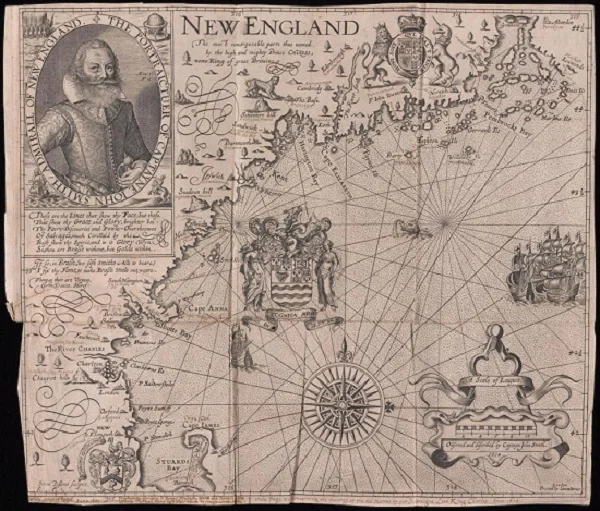
"The Market Is a Snake,'' by MICHAEL YEFKO, in the show "Further on Down the Yellow Brick Road,'' at Hera Gallery, in Wakefield, R.I., through June 20. In it he explores "temporal aspects of geometry.''
He says: "I want to create a landscape of meaning for the viewer where meaning evolves from visual cues and self-references.''

What is really meant by 'patient engagement'?
”Here is the CFAH definition of patient engagement: ‘Actions people take to support their health and benefit from their health care.’ What’s missing from this definition? What would you add, subtract or word differently?”
A colleague of mine at Cambridge Management Group (cmg625.com), senior adviser Marc Pierson, M.D., had some pithy things to say when the Center for Advancing Health (CFAH) recently interviewed him and other health-reform experts.
Here are some of the remarks of Dr. Pierson, who is also retired vice president for clinical information and quality for PeaceHealth’s St. Joseph Medical Center, Bellingham, Wash.:
CFAH: ”Here is the CFAH definition of patient engagement: ‘Actions people take to support their health and benefit from their health care.’ What’s missing from this definition? What would you add, subtract or word differently?”
Dr. Pierson: ”….Defining {patient} engagement is very much the product of who is doing the defining. If from within health care, then the key question becomes for what or for whom is ‘patient’ engagement primarily intended to benefit?…I would prefer thinking of ‘people’ engaged in their health and health care. However, I do like that this definition recognizes that both health and health care require people’s active participation…Medical care is not the same as health. Health is much more than the lack of illness…We need to incorporate more perspectives from real people and ask them what they need to become more engaged with their medical conditions, their health, and their well-being.”
CFAH: ”If a person is engaged in their health and health care, what difference does that make? To whom?”
Dr. PIERSON: “Typically, engagement is defined by health care insiders as paying attention to what you are told to do and being compliant with ‘orders.’ The current non-system of health care plays into this by being disconnected and difficult for people to understand or navigate….
”Health care offers technology and knowledge but is set up for the people that work inside it, not for its clients’ ease, safety, or affordability. Payment for health care is based on professionals managing clients’ ill health, not on engaging with people to prevent illness, create well-being, or for self-care of illnesses and chronic conditions.
”People are scared of what they are not allowed to know or understand. They don’t want to be more dependent. They don’t want to end up going to an emergency room. Their primary relationships are with family, friends, neighborhood, and community — not professional service providers.”