
Vox clamantis in deserto






Llewellyn King: This is not the time to politicize electricity
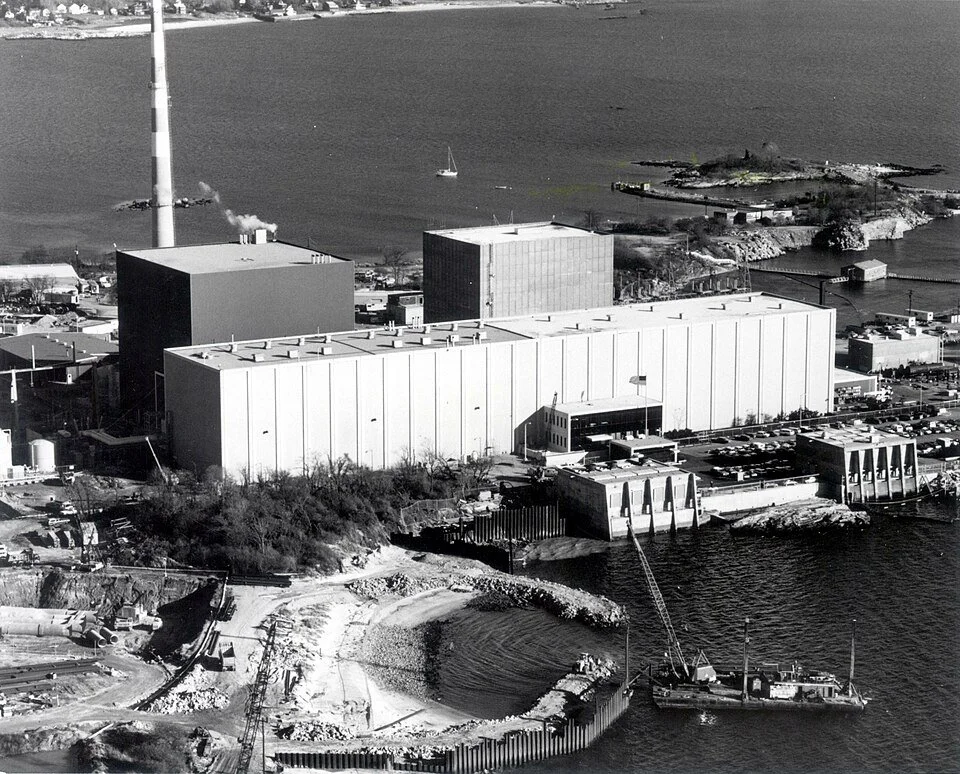
The Millstone Nuclear Power Plant, in Waterford, Conn., is the only multi-unit nuclear plant in New England. The only other remaining nuclear plant in New England is in Seabrook, N.H.
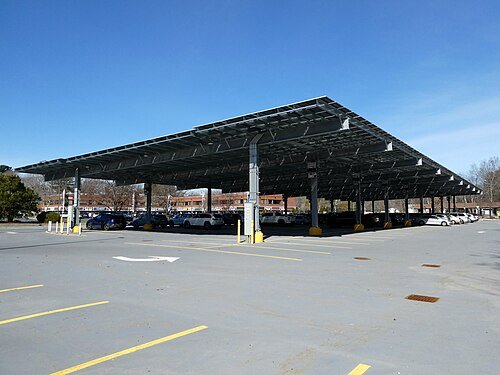
Solar panels over parking at the West Natick, Mass., MBTA station.
WEST WARWICK, R.I.
The future of electricity is being discussed in terms of how we make it: whether it should be generated by nuclear, wind and solar or by coal and natural gas.
Nuclear is favored by the utilities and the Trump administration, but it will take decades and untold billions of dollars to build up the needed nuclear capacity.
The administration has muddied the situation by denouncing wind, halting most offshore wind development, and heavily favoring coal and natural gas.
The utility companies that make and deliver electricity favor what has been described as “all of the above," weighted by regional resources and state laws.
Twenty-three states and Washington, D.C., have zero-carbon goals. Their laws say that by a certain date, carbon-emitting power plants must be phased out.
The administration says turn right, and the states say turn left. But the nation can ill afford a debate over electricity supply.
America needs more electricity now and will need much more in the near future, reflecting the growth in demand for transportation, manufacturing and, above all, the demands of data centers and artificial intelligence — demands that are growing relentlessly.
Changing how we manufacture electricity isn't helpful if the nation is to avoid blackouts and brownouts. They could begin any time, depending on that great variable: weather.
It used to be that if you asked utility executives what kept them awake at night, they would say, “Cybersecurity." Now they say, “Weather." I know. I ask some of them regularly.
Electricity is fundamental. It is unlikely to be replaced. Its essentiality is uncontested. However, what we use to make it — hydro, wind, solar, natural gas, coal, geothermal and nuclear — is changeable. The methods can be superseded by something else.
It is impossible to conceive of electricity being replaced by another force. Electricity is in nature as well as the wall plug. In short, we may well have different kinds of cars, airplanes and homes in the future, but electricity will be the constant, as vital as water.
In recent years, as summers have gotten hotter and drier, electricity has become more and more important. With some places having temperatures of over 100 degrees for weeks and months, air conditioning has moved from being a source of comfort to being essential for life. In Arizona alone, heat deaths are running over 600 a summer — and it is hard to measure accurately who has died because of heat.
There is some good electricity news that doesn't seem to have been politicized.
Batteries are getting better, and more of utility scale are being installed. The electricity-system operators in California and Texas — California ISO and ERCOT — have both said that in critical times, their systems have been saved by utility batteries. They are the silent heroes of the moment.
Likewise, another critical change has been the development of better transmission wires, known in the industry as connectors. Traditionally, they have been made with a steel core and the electricity moving in aluminum around the core, which provides strength and stability. The new connectors have light carbon-fiber cores, which don't sag when hot and carry nearly twice as much electricity as the steel-cored variety.
The so-called Big Beautiful Bill savages the renewable- power sector by phasing out tax credits, which had become the building blocks of the sector. Now many solar and wind projects will evaporate, and some companies will fail.
Part of the genesis of today's problem is that another kind of polarization hampered the ordered growth of nuclear power — the logical new frontier of electric generation — in the latter three decades of the 20th Century. Fears over nuclear safety were fanned by politicians and the environmental movement.
The environmentalists favored coal over nuclear before wind and solar were perfected. That legacy means nuclear power is now in need of a whole new workforce and supply chain.
President Trump wants to build 10 big nuclear plants of the kind that make up the present nuclear fleet of 95 reactors. He will find that the workers and expertise for that kind of effort are in perilously short supply and will take years to rebuild.
To take any power source off the table today for political reasons is to endanger the nation.
On X: @llewellynking2
Bluesky: @llewellynking.bsky.social
Llewellyn King is executive producer and host of White House Chronicle, on PBS, and an international energy-sector consultant. He’s based in Rhode Island.
Llewellyn King: Rich nations must lead the way on the bumpy road to a green future
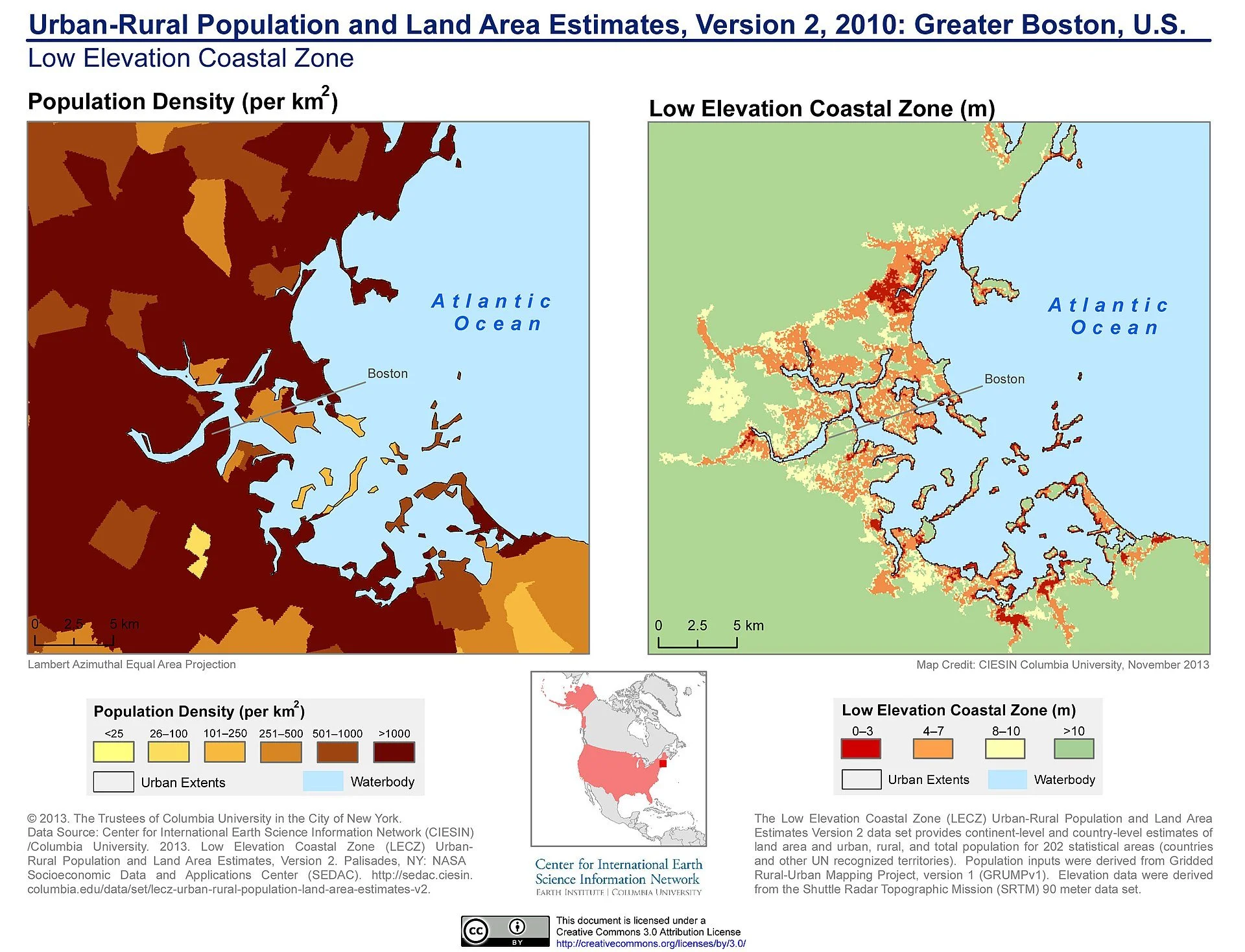
Rising seas caused by global warming threaten Greater Boston.
SEDACMaps - Urban-Rural Population and Land Area Estimates, v2, 2010: Greater Boston, U.S.
ABU DHABI, United Arab Emirates
I first heard about global warming being attributable to human activity about 50 years ago. Back then, it was just a curiosity, a matter of academic discussion. It didn’t engage the environmental movement, which marshaled opposition to nuclear and firmly advocated coal as an alternative.
Twenty years on, there was concern about global warming. I heard competing arguments about the threat at many locations, from Columbia University to the Aspen Institute. There was conflicting data from NASA and other federal entities. No action was proposed.
The issue might have crystallized earlier if it hadn’t been that between 1973 and 1989, the great concern was energy supply. The threat to humanity wasn’t the abundance of fossil fuels. It was the fear that there weren’t enough of them.
The solar and wind industries grew not as an alternative but rather as a substitution. Today, they are the alternative.
Now, the world faces a more fearsome future: global warming and all of its consequences. These are on view: sea-level rise, droughts, floods, extreme cold, excessive heat, severe out-of-season storms, fires, water shortages, and crop failures.
Sea-level rise affects the very existence of many small island nations, as the prime minister of Tonga, Siaosi Slavonia, made clear here at the annual assembly of the International Renewable Energy Agency (IRENA), an intergovernmental group with 167 member nations.
It also affects such densely populated countries as Bangladesh, where large, low-lying areas may be flooded, driving off people and destroying agricultural land. Salt works on food, not on food crops.
Sea-level rise threatens the U.S. coasts — the problem is most acute for such cities as Boston, New York, Miami, Charleston, Galveston and San Mateo. Flooding first, then submergence.
How does human catastrophe begin? Sometimes it is sudden and explosive, like an earthquake. Sometimes it advertises its arrival ahead of time. So it is with the Earth’s warming.
Delegates at the IRENA assembly felt that the bell of climate catastrophe tolls for their countries and their families. There was none of the disputations that normally attend climate discussions. Unity was a feature of this one.
The challenge was framed articulately and succinctly by John Kerry, U.S. special presidential envoy for climate. Kerry’s points:
—Global warming is real, and the evidence is everywhere.
—The world can’t reach its Paris Agreement goal of limiting warming to 1.5 degrees Celsius by 2030 or the ultimate one of net-zero carbon by 2050 unless drastic action is taken.
—Warming won’t be reversed by economically weak countries but rather by rich ones, which are most responsible for it. Kerry said 120 less-developed countries produce only 1 percent of the greenhouse gases while the 20 richest produce 80 percent.
—Kerry, notably, declared that the technologies for climate remediation must come from the private sector. He wants business and private investment mobilized.
The emphasis at this assembly has been on wind, solar and green hydrogen. Wave power and geothermal have been mentioned mostly in passing. Nuclear got no hearing. This may be because it isn’t renewable technically. But it does offer the possibility for vast amounts of carbon-free electricity. It is classed as a “green” source by many government institutions and is now embraced by many environmentalists.
The fact that this conference has been held here is of more than passing interest. Prima facie, Abu Dhabi is striving to go green. It has made a huge solar commitment to the Al Dhafra project. When finished, it will be the world’s largest single solar facility. Abu Dhabi is also installing a few wind turbines.
Abu Dhabi has a four-unit nuclear power-plant at Barakah, with two 1,400-megawatt units online, one in testing and one under construction. Yet, the emirate is a major oil producer and is planning to expand its production from more than 3 million barrels daily to 5 million barrels.
The Russian invasion of Ukraine has made oil more valuable, and even states preparing for a day when oil demand will drop are responding. Abu Dhabi isn’t alone in this seeming contradiction between purpose and practice. Green-conscious Britain is opening a new coal mine.
The energy transition has its challenges — even in the face of commitment and palpable need. The delegates who attended this all-round excellent conference will find that when they get home.
In the United States, utilities are grappling with the challenge of not destabilizing the grid while pressing ahead with renewables. Lights on, carbon out, is tricky.
On Twitter: @llewellynking2
Llewellyn King is executive producer and host of White House Chronicle, on PBS. And he’s based in Rhode Island and Washington, D.C.
White House Chronicle
InsideSources