
Vox clamantis in deserto

UNH’s new ocean-Mapping Center to open next year
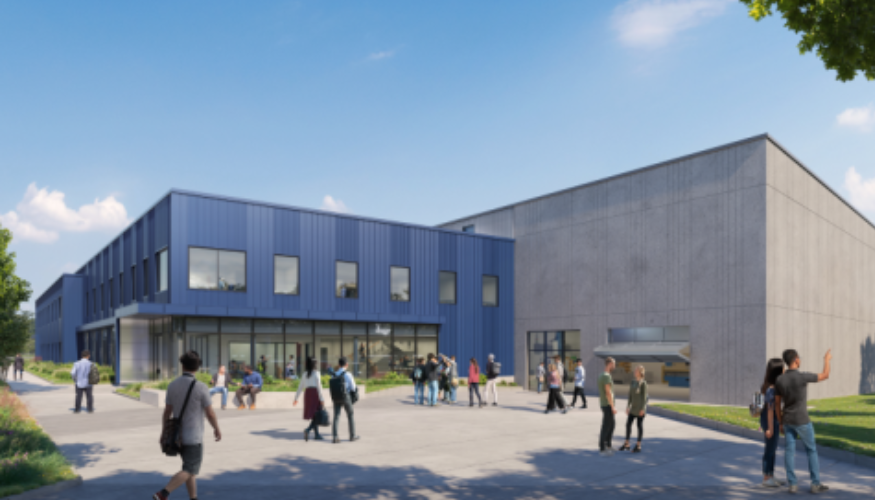
UNH ocean-mapping center
Edited from a New England Council report:
“The University of New Hampshire has broken ground on a new 70,500-square-foot facility at UNH’s flagship campus, in Durham, that will house the Center of Excellence for Operational Ocean and Great Lakes Mapping. Funded by the National Oceanic and Atmospheric Administration (NOAA) and the National Institute for Standards and Technology, the state-of-the-art research, office, and instructional space in Durham is expected to open in fall 2027.
“The facility builds on a longstanding partnership between UNH and NOAA, dating back to 1999, that has made the university a global leader in ocean floor and coastal mapping. Since its inception, the center has mapped more than one million square kilometers of ocean floor, discovered shipwrecks, and pioneered the use of autonomous vehicles for ocean data collection. The new building will include high-bay areas for staging equipment and small vessels, as well as dedicated space for industry partners to co-locate — with the number of companies co-locating at UNH growing by more than 400 percent since 2022.
“‘This new building will provide an advanced facility for our world-renowned Center for Coastal and Ocean Mapping and expand UNH’s decades-long leadership in hydrographic excellence,’ said UNH President Elizabeth Chilton.”
UNH, NOAA expanding ocean-mapping center
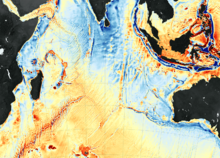
Seafloor map of southern Indian Ocean.
This is from the New England Council (newenglandcouncil.com)
"NEC member the University of New Hampshire (UNH) — in partnership with the National Oceanic and Atmospheric Administration (NOAA) – is expanding its Center for Coastal and Ocean Mapping and Joint Hydrographic Center by adding nine additional labs, offices, and an amphitheater. The joint UNH-NOAA initiative was established in 2000 with the goal of mapping the worldwide ocean floor.
"Students and scientists at the center on UNH’s Durham campus monitor live streams from ships that are collecting data of ocean floor, track fish and whale patterns, and create 3D prototypes. Currently, only 11% of the ocean’s 140 million square mile floor is mapped and internationally, scientists aim to complete a map of the ocean floor in the next thirteen years to ensure ships can safely navigate the ocean by being aware of any potential hazards below them. The center is home to 25 students and scholars from around the world who work with both the private sector and government agencies to achieve that goal.
'''I’ve always wanted to explore the ocean for as long as I can remember. We have better maps of the moon than we do of the ocean,' said UNH student Victoria Dickey during U.S. Rep. Carol Shea-Porter’s recent visit to the center.''
To read more, hit this link.