
Vox clamantis in deserto









Sonali Kolhatkar: To avoid diarrhea, buy produce at your local farmers markets
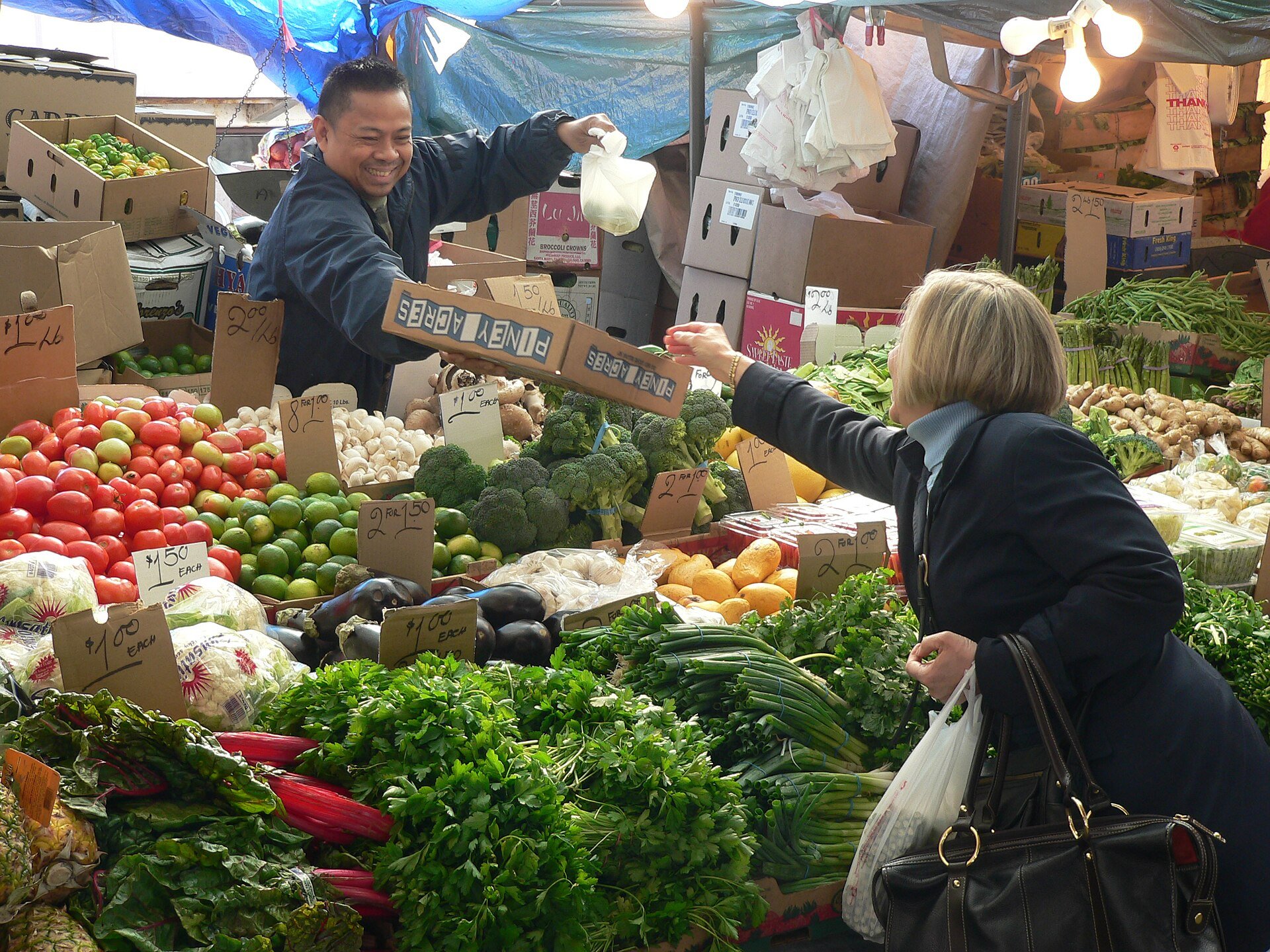
Haymarket farmers market, in downtown Boston, sells produce from a wide area of New England.
Via OtherWords.org (but not picture above)
The recent, record-breaking outbreak of Cyclospora infections linked to lettuce consumption has left Americans wondering what food is safe to eat.
What brands of lettuce are safe and which aren’t are important questions. But even more important might be why such outbreaks happen in the first place — and how our government has made them increasingly likely.
Nobody wants explosive diarrhea — and yet the way our federal government has left us unprotected is enough to make one sick.
The chief culprit in the cyclosporiasis debacle is our centralized, monopoly-based food system. The outbreak has been linked to Taylor Fresh Foods, which supplies many restaurants. Many brands of bagged lettuce and salad are also Taylor products — whether consumers realize it or not.
In fact, according to Farm Action, “Just four companies — Taylor Fresh Foods, Cultrale-Safra, Itochu, and Bonduelle — control 54 percent of the U.S. fresh-cut salad market.” Similarly, only a handful of corporations control meat, dairy, grains, and beverages. Another handful controls food distribution.
This means that the industry practices giving rise to contaminated foods happen on a very large scale — and those foods are then distributed all over the country. That a single outbreak in one company can potentially impact the entire nation is a grave weakness in the food system.
Monopolies like Taylor Farms use the profits they generate from dominating our food supplies to lobby the federal government for weaker oversight. According to Wired, the company has contributed millions of dollars to conservative political committees, including a super PAC called MAGA Inc.
It has also spent hundreds of thousands of dollars to directly lobby against food safety regulations. News even emerged recently of representatives from Taylor Farms calling the White House to try to delay a recall of their lettuce.
The Trump administration has been more than happy to comply with Big Food’s wishes to reap billions in profits with little oversight.
Last year the administration weakened the nation’s already thin food safety monitoring service, FoodNet, by making it optional to track numerous types of infections — including cyclosporiasis. “We’re really gutting one of the cornerstones of food safety,” epidemiologist Elaine Scallan Walter warned the New York Times last September.
Mega monopolies aren’t just bad for our gut. They also contribute to higher prices and reduced access to fresh foods.
Their sheer size gives them what Civil Eats called “enormous power to make decisions about what food is produced how, where, and by whom, and who gets to eat it.” Big Food companies have repeatedly been found guilty of illegal price fixing. They routinely package the same foods under different labels to give the impression of diversity and competition.
Small farms are one important solution. Their supply chains are localized, making it easier to track and stop infections before they spread on a national scale. Independent farmers are selling out of lettuce at farmers markets as people seek out clean greens.
Yet instead of promoting and aiding small farmers — as he promised to do when running for president in 2024 — President Trump has cut back support for training new farmers, who might be competitors to companies like Taylor Farms, whose CEO is a Trump campaign donor.
His administration also cut a program that matched small producers with food banks — feeding hungry people while financially stabilizing independent farmers — along with a disaster aid program for minority farmers. The funding losses have left small farmers reeling.
What will help prevent future outbreaks is restoring and expanding regulatory agencies tracking infectious outbreaks. And breaking up food monopolies while sustaining and strengthening small farms.
The question is: will the federal government have the guts to do what it takes to protect the American people’s guts?
Sonali Kolhatkar is host and executive producer of Rising Up With Sonali, an independent, subscriber-based syndicated TV and radio show.
Bret R. Shaw: So who shops at farmers markets?
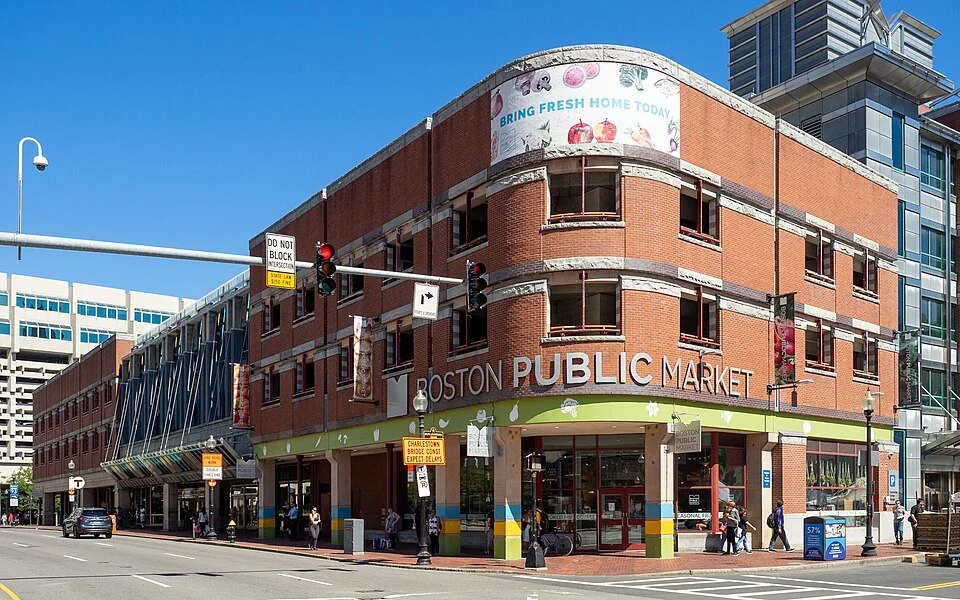
The Boston Public Market houses more than a dozen year-round vendor stalls, and is open seven days a week. Vendors or the indoor market are selected by the operator, the non-profit Boston Public Market Association, and must sell food and other products produced or otherwise originated New England, as well as a limited amount of certain produce that can’t be grown in the six-state region.
From The Conversation (except for picture and caption above.
Bret R. Shaw is a professor of life sciences communication at the University of Wisconsin at Madison.
His work tied to this article was supported by the U.S. Department of Agriculture National Institute of Food and Agriculture (USDA NIFA, award no. 2023-68006-38984).
People who shop at the more than 8,700 farmers markets operating in the U.S. either year-round or seasonally generally fall into six distinct groups. Three of them are more interested in farmers markets than the others. I study local food systems as a strategic communications scholar, and that’s the main takeaway from a study that I conducted with several colleagues.
As we explained in the March 2026 edition of British Food Journal, people who fall into those groups have different levels of interest in farmers markets but also have some things in common. Most people who shop at them are motivated to go because they want healthy, fresh food, they support local farmers and they think going to the farmers market is fun.
This is not a niche activity. An earlier study I worked on found that 81% of U.S. adults said that they shop at a farmers market at least once a year.
For both studies, we pulled survey data from a nationally representative sample of 5,141 U.S. consumers that was conducted Aug. 2-11, 2023. It had a margin of error of plus or minus 1.8 percentage points.
Researchers define farmers markets and local food in different ways. So we asked respondents to simply think of farmers markets as places where they can buy food directly from more than one vendor and where all or most of the items are locally grown, raised or made. We defined local food as being grown in their state or 250 miles or less from their homes.
We determined that about 18% of those surveyed are “highly engaged” farmers market shoppers. They care a lot about food and enjoy buying, preparing and eating fresh food. They are excited about many aspects of farmers markets, which are places where this group shops for a variety of reasons, such as supporting local farmers, buying nutritious, delicious food and connecting with community.
Nearly 65% of these shoppers were women. This group was the most diverse, with 27% of respondents identifying as Hispanic, 20% Black and 4% multiracial. They also had significantly lower average annual household incomes than other groups, averaging US$40,000-$50,000.
We found that another 18% of the people surveyed were “health-focused.” Like the highly engaged shoppers, they make buying and eating healthy food a high priority. However, this group doesn’t enjoy cooking as much. The health-focused group tends to avoid genetically modified foods, as well as convenient options like takeout food, frozen dinners and microwave-ready meals.
About 58% of them were women and their average age was 57, making them the oldest of the groups. Roughly 70% of the health-focused group was white, making it less diverse than the highly engaged group but more diverse than some of the other groups.
Finally, about 19% of the respondents were what we called “emerging interest” farmers market shoppers. They value convenience and learning about food. This group was the most likely to see going to the farmers market as a fun activity.
Emerging interest shoppers were nearly evenly split by gender, with 52% women. Their average age was 44 years old, making them the youngest of the groups.
It’s not always a love of radishes that draws shoppers to these stalls. Lev Radin/Pacific Press/LightRocket via Getty Images
We also identified three groups of consumers who were less interested in farmers markets than the highly engaged, health-focused and emerging interest shoppers, even if some of them do occasionally shop at the markets anyway.
About 16% of farmers market shoppers are people we identified as “convenience” shoppers. They are more likely to eat frozen dinners and buy takeout. They rarely cook meals from scratch using produce and other fresh ingredients.
About 43% of them say they never or rarely shop at a farmers market. Around 59% of them are men and 37% are people of color.
Tashana Small sells mac and cheese ‘cupcakes’ topped with pulled pork, Buffalo chicken tenders and Cajun shrimp at a farmers market on Long Island in 2023. Erica Marcus/Newsday RM via Getty Images
Roughly 17% of these shoppers fall into a “practical” category. They methodically plan their grocery shopping and are among the least interested in farmers markets, with more than half saying that they either rarely or never shop at them.
Practical consumers were close to evenly split by gender; 53% were women. Their income tended to be the highest of the groups, typically in the $60,000-$75,000 range.
We called the 12% of the shoppers in the final group we surveyed “uninvolved.” This group showed very little interest in farmers markets or any other food-related activities. About 3 in 4 rarely or never go to farmers markets. Nearly 70% of uninvolved farmers market shoppers were men and 76% were white.
When someone in the uninvolved group goes to a farmers market, they may be going out of happenstance or because someone in their life wants them to go – not due to any personal interest.
Michelle Andrews: New food stamp contractor upsets farmers markets' carts
In the Haymarket farmers market in downtown Boston.
By MICHELLE ANDREWS
When the woman stopped by Phil Munson’s stall at a Rochester, N.Y., farmers market recently, he noticed a change. A regular customer, she browsed his Fisher Hill Farm vegetables as usual and selected a few to buy. But this time, instead of offering cash for her produce, the woman paid with the wooden tokens available for people using Supplemental Nutrition Assistance Program (SNAP) benefits, formerly known as food stamps.
Because the market accepts SNAP benefits, the woman could make her regular purchases with no difficulty. She also qualified for New York’s FreshConnect program, an incentive for SNAP beneficiaries to improve their access to fresh food. So, she got an extra $2 for every $5 she spent at the market, boosting her purchasing power by 40 percent.
Munson said the customer bought eggs that day in addition to her usual vegetables.
“She was really happy to get the benefit,” Munson recalled. “She said, ‘I can’t believe how much they gave me.’”
Federal and local officials have long said they are eager to get farmers’ produce to low-income families’ dinner tables, but for people like Munson’s customer, the ability to use SNAP benefits in the future is uncertain. While using food stamps to purchase vegetables at a farmer’s stall may seem like a simple exchange, it depends on complex government contracting requirements and increasingly sophisticated technology.
A change this year in federal contracts has left some market operators and advocates nervous. The company that provided the technology used by roughly 1,700 of the more than 7,000 farmers markets that accept SNAP benefits said it is pulling out of the business.
Earlier this year, federal officials announced they had picked a new contractor to provide equipment to help expand the number of markets that handle SNAP transactions. That contractor, when choosing the companies it would work with, did not include the Novo Dia Group, whose “Mobil Market+” app is used by those markets. Following that, Novo Dia announced it would, as of the end of July, no longer provide that service even to existing clients.
The announcement, coming at the height of the market season, took many operators and advocates by surprise and set off an urgent scramble to avoid a disruption in service. The National Association of Farmers’ Market Nutrition Programs stepped in to fund the processing platform’s operations for one month, and New York Gov. Andrew Cuomo later announced a short-term agreement with the company to provide service nationally through the end of February.
What happens after that remains unclear.
For some farmers, SNAP customers make up an important part of their market business.
“I think it would be noticed if it went away,” said Anita Amsler, whose family sells produce and eggs from their Oldhome Farm at the Rochester Public Market year-round.
Some advocates, however, see the current situation as an opportunity to improve the long-term prospects for the acceptance of SNAP and other nutrition benefits at farmers markets.
“A crisis is a terrible thing to waste,” said David Sandman, president and CEO of the New York State Health Foundation, who has written about the SNAP processing problems. He said his organization and others are interested in options for continuing to make the Nova Dia app available nationally through a public-private partnership.
The markets’ popularity among SNAP users is growing. SNAP benefit redemptions by farmers and markets grew by more than a third from 2012 to 2017, to $22.4 million, according to the U.S. Department of Agriculture.
“They are important touchstones and places for people to access their food the way other consumers do,” said Ellen Vollinger, legal director at the Food Research & Action Center, an advocacy group that works to reduce hunger among the poor.
When farmers market customers want to use SNAP benefits, their first stop is typically at a central market office — like a tent or a trailer — to swipe their SNAP electronic benefits card for whatever amount they want to spend. They are generally given wooden tokens or paper scrip in small denominations of $1 or $5 to spend at the market. They may also get incentive coupons — like those from New York’s FreshConnect program — to boost their purchasing power.
The USDA’s Food and Nutrition Service, which oversees SNAP at the federal level, has long championed farmers markets as an important way to provide people with nutritious food while also supporting farmers economically.
Every few years, that agency awards a contract to a firm to manage the wireless processing equipment program for farmers markets and farmers who want to begin accepting SNAP benefits. In March, it selected Financial Transaction Management of Reston, Va.
The Farmers Market Coalition, the previous contractor, had offered equipment to markets through three providers, including .
The new contractor opted not to work with Novo Dia. When choosing equipment options, Financial Transaction Management focused on cost effectiveness and compliance with standards that protect farmers markets from liability in the event of a data breach, said CEO Angela Sparrow by email.
“It did throw Novo Dia into a tailspin,” said Diane Eggert, executive director of the Farmers Market Federation of New York, who helped put the stopgap funding for the company in place and is seeking a long-term solution. “They needed to continue growing to maintain operations.”
Novo Dia didn’t respond to a request for comment.
The Mobile Market+ app works with a smartphone to enable processing of SNAP benefits. The smartphone technology enhances markets’ ability to track sales and transactions through the app and allows for frequent technology updates, Eggert said.
The current equipment provided by the new contractor is a standard wireless point-of-sale device that uses older, outdated technology, critics say.
Financial Transaction Management is processing applications from farmers markets for its equipment. As of Sept. 24, 140 applications were in the review-and-approval process, and 46 pieces of equipment had shipped, according to USDA officials.
The Food and Nutrition Service said it is interested in modernizing its approach. It wants to employ a “bring your own device” model for the market operators who want to begin processing SNAP in which “markets and farmers would use a smartphone and FNS would facilitate provision of [an] app,” officials said.
To that end, the USDA is testing a mobile application and encryption device that could be used with a smartphone to accept SNAP benefits. The new app, which will require a separate PIN-encryption device, is “not as streamlined” as the Novo Dia app, according to USDA officials. Still, “this is an option that could provide additional flexibility for farmers and markets while also reducing cost to the federal government.”
That option may be available by year’s end.
In addition to federal efforts to promote SNAP purchases at farmers markets, some states, such as California, have taken an active role in providing their markets with free wireless equipment to process transactions.
But the current upheaval has sown uncertainty among many farmers markets about their ability to handle SNAP transactions next year.
Last year, the Rochester Public Market processed more than $800,000 in SNAP benefits and $300,000 in incentives, said Margaret O’Neill, program director for Friends of the Rochester Public Market, a nonprofit that runs the market’s SNAP program. She said she has tried to reassure her vendors and customers that a solution will be found: “It’s a huge market for us.”
Michelle Andrews: andrews.khn@gmail.com, @mandrews110
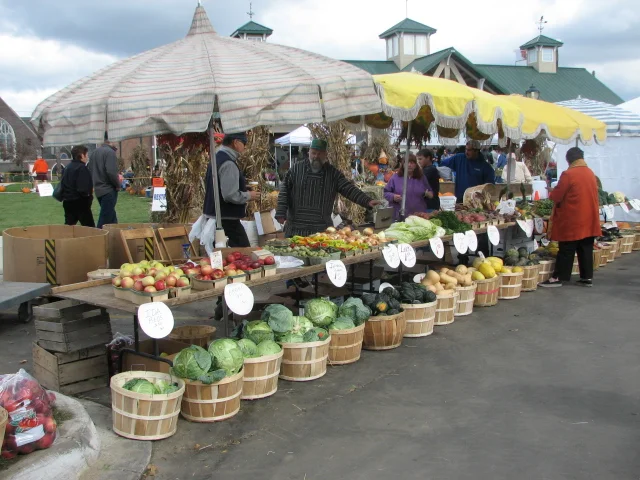
Brian Wakamo: We subsidize the wrong kind of agriculture
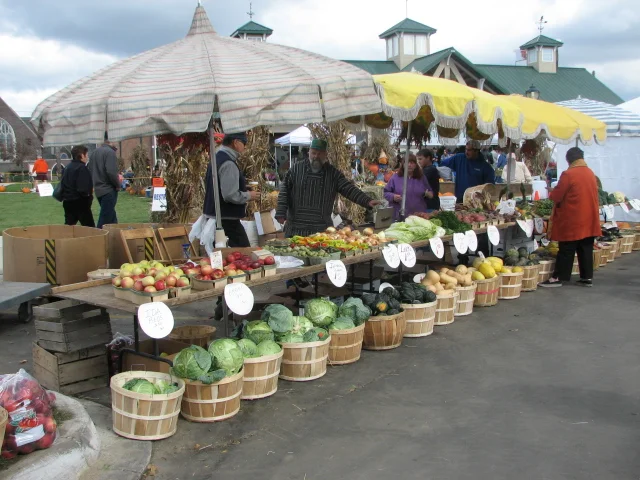
-- Photo by Sstevenson24
From OtherWords.org
Summer: the season of barbecues, baseball games, and backyard fun. It’s also the time of year when the American farming industry comes into full swing producing the crops we hold near and dear.
The pastoral ideal of golden fields of corn and wheat is what comes to mind for most people, and they’d be on the right track. Corn, soybeans, and wheat are the three biggest crops grown in this country, and — along with cows, pigs, and chicken — make up the bulk of our farming output.
There’s a reason for this: The federal government heavily subsidizes those products. In fact, the bulk of U.S. farming subsidies go to only 4 percent of farms — overwhelmingly large and corporate operations — that grow these few crops.
For the most part, that corn, soy, and wheat doesn’t even go to feed our populace. More of it goes into the production of ethanol — which is also heavily subsidized — and into the mouths of those cows, pigs, and chickens stuffed into feedlots. Those grains purchased by the feedlots are also federally subsidized, allowing producers to buy grains at below market prices.
When we do eat these foods, they’re sold back to us in unhealthy forms, pumped full of high fructose corn syrup and growth hormones. Large corporate farms and feedlots also poison waterways, drain aquifers, and pollute the air.
Meanwhile, small farmers continue to go broke, thanks to the low cost of foods subsidized by the government for corporate buyers. Even the few companies that provide seeds and equipment for farmers receive their own tax breaks from state governments, while farmers are stuck with the bill of goods sold to them from companies like John Deere and Monsanto.
Does this help feed America? Not really: We still buy most of our food from far-flung places. So why is our government subsidizing this production model?
Plain and simple: Corporations buy these subsidies for pennies on the dollar.
In 2011, the agribusiness industry spent around $100 million to lobby and campaign for federal support. They got billions in subsidies in return, making them the biggest recipients of corporate welfare.
This is disgraceful. Why should our government support big businesses that poison us and our environment?
Congress is now considering a new Farm Bill. The recently shot-down first draft cut funding for rural development and conservation programs, while opening up loopholes for corporate farms to access more subsidies. That should open the field for newer, better ideas.
All politicians champion small businesses, especially those in the heartland where most agricultural production takes places. If they’re going to subsidize agriculture, why not give more support to family farms, which often farm more sustainably and grow much healthier foods?
Instead of supporting factory farms and mono-crops, we could provide incentives for crop rotations, reduced usage of pesticides and herbicides, pasture-raised meat, and organic practices. Studies show that practices like organic farming produce only marginally less than conventional farms.
These practices are a part and parcel of a growing segment of the agricultural industry bolstered by health and environmentally conscious consumers. Farmers who sell their products at farmers markets and through community supported agriculture groups should be heralded and paid for their support of the community.
This could also lower the costs of healthier foods, which often are priced prohibitively for the people who need them most. Expanding the market for food farmed sustainably and ethically grown would benefit all consumers — and address the health crisis brought on by the mass consumption of unhealthy foods.
Why should we subsidize things that harm us all when we can help out the farmers who support a better life and environment for us all?
Brian Wakamo is a Next Leader on the Global Economy Project at the Institute for Policy Studies.