
Vox clamantis in deserto







Don Morrison: We need protection from tech bros and their gigantic data centers
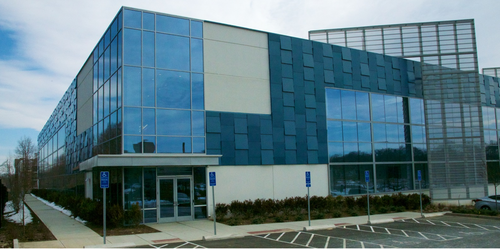
Cervalis' Norwalk facility, Connecticut's largest data center.
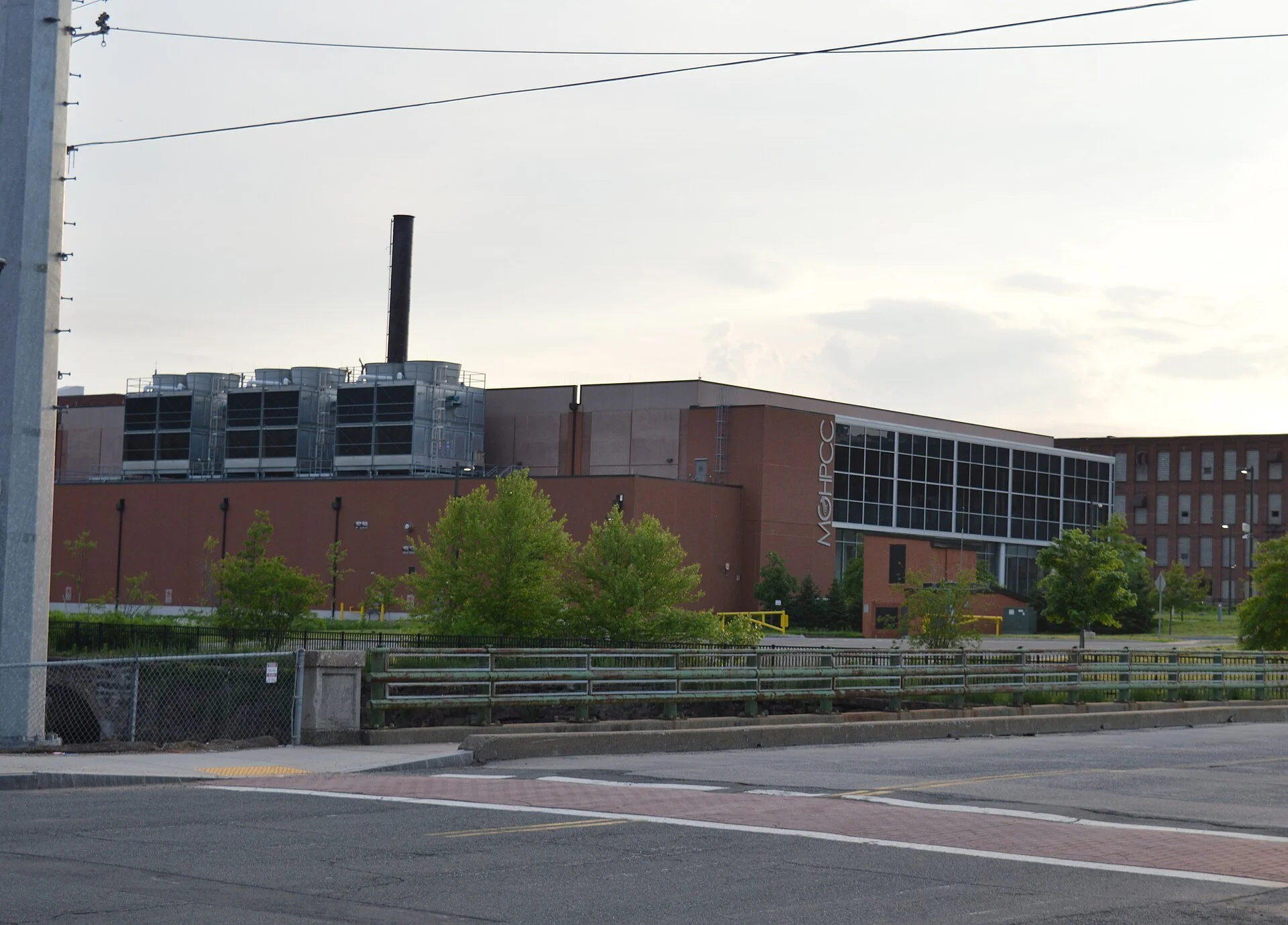
The Massachusetts Green High Performance Computing Center, in Holyoke.
So, I’m driving down the interstate and need to make a pit stop. As I approach the exit, my steering wheel freezes up. I hit the brakes, to no effect. Panic rising, I tell the car’s voice assistant to pull over. It responds in a soft and friendly tone: “I’m sorry, Don, but I’m afraid I can’t do that. It’s not part of the mission.”
That’s when I wake up. Ever since I saw an HBO rerun of Stanley Kubrick’s 1968 film 2001: A Space Odyssey, featuring a polite but frighteningly stubborn computer named HAL, I’ve been having variations of this dream. I now realize it’s not about a car. It’s about how we’re losing control of artificial intelligence, even as it reshapes our lives.
To many of us, that development might seem too distant to worry about, and maybe even something to cheer. After all, Siri, Alexa, ChatGPT, Claude, Waymo and “smart” household appliances have already made life easier in so many ways. Yet I’m not alone in worrying about AI and its potentially disastrous effects — on our jobs and, ultimately, our democracy.
In a new study by the Massachusetts Institute of Technology and Australia’s University of Queensland, 272 experts examined two dozen potential types of AI-related disaster and found that 18 of them have at least a 10 percent chance of happening in the next five years. Among those potential catastrophes: a new cyber-weapon will cause at least 1 million deaths or $100 million in losses; also, AI-generated misinformation will wreak emotional harm on multitudes or affects the outcome of an election.
AI mishaps are already with us. News reports — and a few lawsuits — indicate that prolonged interactions with chat bots may have contributed to delusions, emotional crises and in some cases, suicides. Criminals are using “deepfake” photos and even voices to facilitate identity theft and extortion. The internet is filled with AI-generated “slop,” annoying but largely harmless, though some of it is aimed at changing our political views.
The problem isn’t so much that such fantasies are convincing. It’s that every year it gets easier to manufacture more plausible ones. Eventually, the public might not know what to believe. Even President Trump now posts AI-generated images, nearly all of them obvious confections and mildly amusing — like last week’s “photo” of him showing his controversial White House ballroom project to George Washington.
Not so amusing is news that the federal government and both houses of Congress now allow the use of AI in official business, often without much supervision. Rep. Anna Paulina Luna of Florida was embarrassed last week when her staff posted a summary of a proposed defense bill amendment that retained the words “Claude responded,” a sign they had used the AI chatbot.
More troubling still was last month’s disclosure that an autonomous OpenAI agent escaped its testing environment and hacked into Hugging Face, an AI-development platform. No serious harm was done, but the fact that intrusion occurred at all — and went undetected for days — have raised fears that we might be losing control of AI and that our personal data is in danger.
So, it appears, are our communities. Artificial intelligence systems require enormous computing power, which is supplied mostly by data centers: shopping-mall-sized complexes filled with computer servers. The centers consume vast amounts of land, water (for cooling) and electricity. They strain local power grids, drive up retail electricity prices, create noise and otherwise degrade the quality of life in thousands of localities.
Though polls show that as many as 70 percent of Americans oppose them, data centers are popping up all over the place. The U.S. now has around 4,000, with at least 2,000 more planned or under construction.
Of course, data centers provide jobs and property-tax revenues for localities, just as the growth of AI generally is expected to boost U.S. economic growth. Yet the toll on American society and democracy could be high. What’s truly worrying is that the decisions about what risks can be acceptable in pursuing AI’s future are being taken by a group of people who stand to profit from its unfettered growth.
The industry is dominated by a handful of tech-firm founders, nearly all of them men, who — along with their major investors — have become multibillionaires. These and other wealthy “tech bros” have put vast sums into political action committees (PACs). Elon Musk spent $243 million to help elect Donald Trump in 2024 and plans a $100 million effort for Republicans in this year’s midterm elections. Leading the Future, a network of super-PACS, has amassed $100 million to support candidates who share the AI industry’s opposition to regulation and taxation.
A major battle is shaping up. Many Americans are worried about the growing disparity of wealth in the U.S. between AI winners and victims. Many also worry about the possibility of losing their own jobs — and not just the manufacturing and clerical positions currently affected. AI can now generate movie scenes, prepare tax returns, develop new drugs, even write news stories and opinion columns. A college degree may no longer offer the protection it once did.
Amid such anxiety, people see the enormous wealth generated by AI and think they deserve a share. A few states have responded with higher taxes on data centers. A new Virginia levy on data-center power consumption is expected to raise $600 million in the coming year. Some members of Congress want to impose stronger safety rules and more rigorous anti-trust regulation on artificial intelligence giants. Let’s hope it’s not too late.
Despite the industry’s public-relations efforts, the current wave of anxiety over the rise of the AI is unlikely to subside anytime soon, nor should it. Only if people get worried enough to take action can we wrest control of this ground-shaking technological revolution from the self-serving handful who profit from it.
As someone who must endure HAL’s occasional efforts to take control of his dreams, I’ll be pulling for the triumph of real — not artificial — sanity.
Don Morrison is a veteran editor, reporter, columnist and media executive. A part-time resident of The Berkshires, he’s a member of the editorial advisory board of The Berkshire Eagle.
Michi Trota: The public pays a pile for Big Tech’s data centers
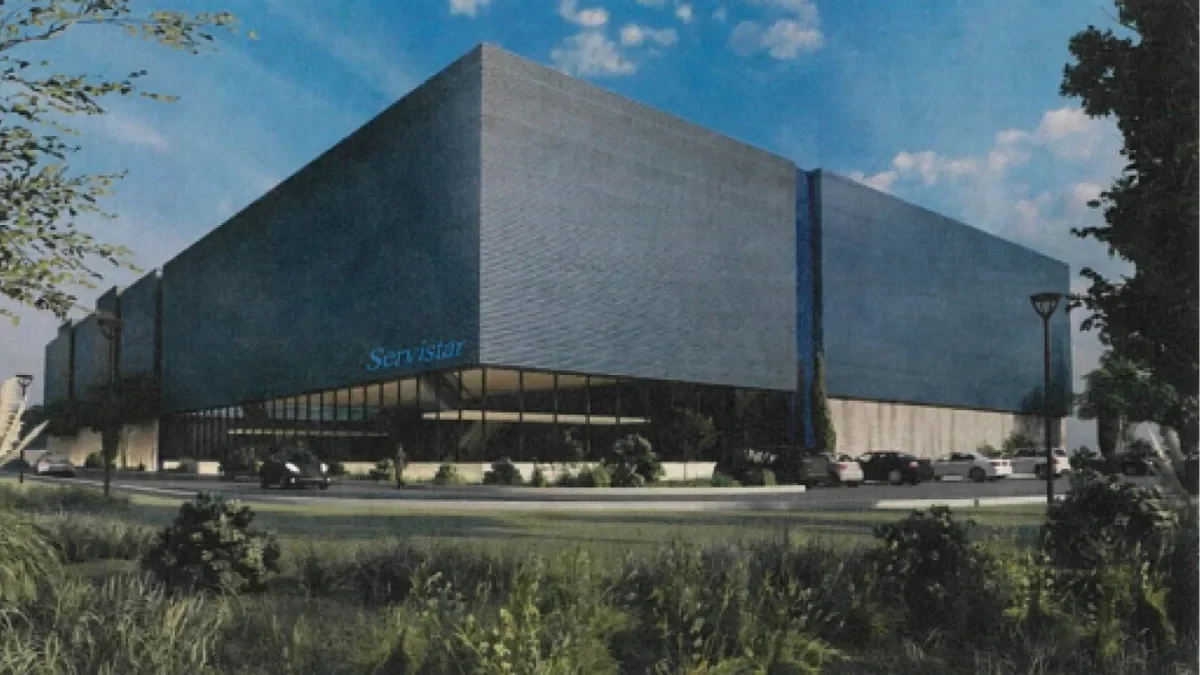
Servistar’s proposed huge data center in Westfield, Mass. It would require massive amounts of electricity.
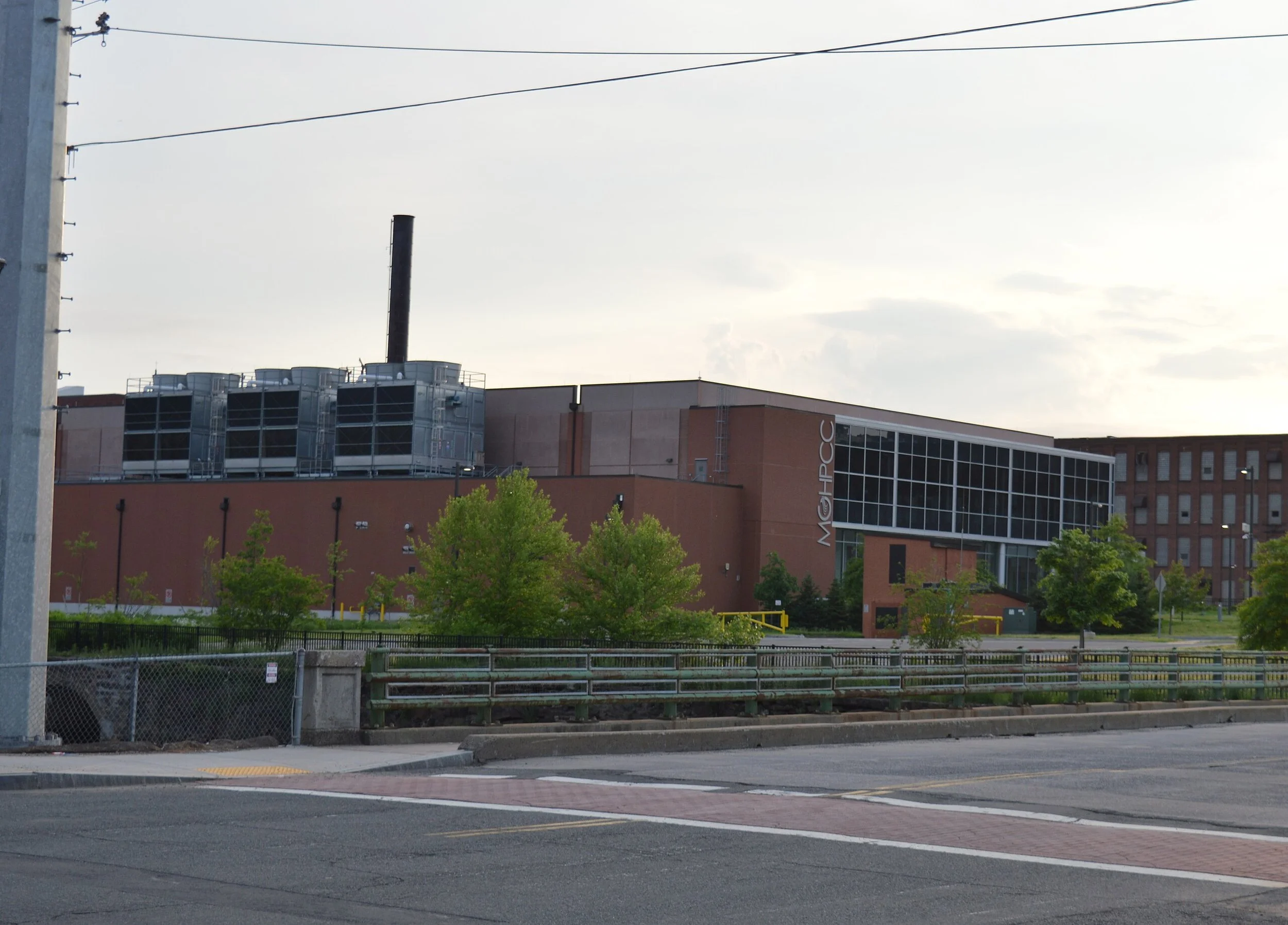
The Massachusetts Green High Performance Computing Center, in Holyoke, a collaboration between several universities and corporate sponsors. including the University of Massachusetts, MIT, Harvard, Boston University, and Northeastern, and Dell ENC as well as Cisco.
Via OtherWords.org
Bill Gates recently made headlines by suggesting that climate change is no longer a priority, but the American public begs to differ.
In this last election, climate change was a defining issue in such states as Virginia and Georgia, where voters grappled with rising energy costs. And no matter how much tech billionaires try to distract us, increasing power costs and our worsening climate are directly connected to such corporations as Google, Meta, Microsoft, and Amazon racing to dominate the AI landscape.
According to the U.S. Energy Information Administration, the price of energy has risen at more than twice the rate of inflation since 2020, and Big Tech’s push for more power-hungry data centers is only making it worse.
The data centers proliferating across the country drive up energy costs by powering energy-ravenous generative AI, cloud storage, digital networks, and other energy intensive programs — much of it fueled by coal and natural gas that exacerbate climate change.
In some cases, data centers consume enough electricity to power the equivalent of a small city. The wholesale price of electricity in areas housing data centers is up a whopping 267 percent from five years ago — and everyday customers are eating those costs.
Americans are also shouldering increasing costs of an extreme climate.
The Joint Center for Housing Studies at Harvard noted that insurance prices rose 74 percent between 2008 and 2024 — and between 2018 and 2023, nearly 2 million people had their policies canceled by insurers because of climate risks.
Meanwhile, home prices have gone up 40 percent in the past two decades — meaning that the cost of home repair and recovery from climate disasters has also grown, all while wages remain stagnant.
Data centers aren’t just putting our wallets at risk. Power grids across the country are already strained from aging infrastructure and repeated battering during extreme weather events.
The additional pressure to feed energy-intensive data centers only heightens the risk of power blackouts in such emergencies as wildfires, deep freezes, and hurricanes. And in some communities, people’s taps have literally run dry because data centers used all the local groundwater.
Worse still, Big Tech’s AI energy demand has triggered a resurgence in dirty energy with the construction of new gas-powered energy plants and delayed shutdowns of fossil fuel-powered plants. The tech industry is even pushing for a revitalization of nuclear energy, including the planned 2028 reopening of Three Mile Island — site of the worst nuclear power plant disaster in U.S. history — to help power Microsoft’s data centers.
Everyday people bear the costs of Big Tech’s hunger for profits. We pay it in rising energy bills, our worsening climate, our lack of access to safe water, increased noise pollution, and risks to our health and safety.
It doesn’t have to be this way. Instead of raising our bills, draining our local resources, and destabilizing our climate, Big Tech could create more energy jobs, lessen our power bills, and sustain communities.
We can demand that tech giants such as Microsoft, Meta, Google, and Amazon uphold their commitments to use 100 percent renewable energy and not rely on fossil fuels and nuclear energy to power data centers.
We can insist that data centers only go where they’re wanted by ensuring communities are given full transparency and protection in how they’re affected by power usage, water access, and noise pollution.
The current administration is ignoring its obligations to the American public by refusing to rein in Big Tech. But tech billionaires still have a responsibility to the very public they depend on for their existence.
Michi Trota is the executive editor of Green America.
Ayse Coskun: AI strains data centers
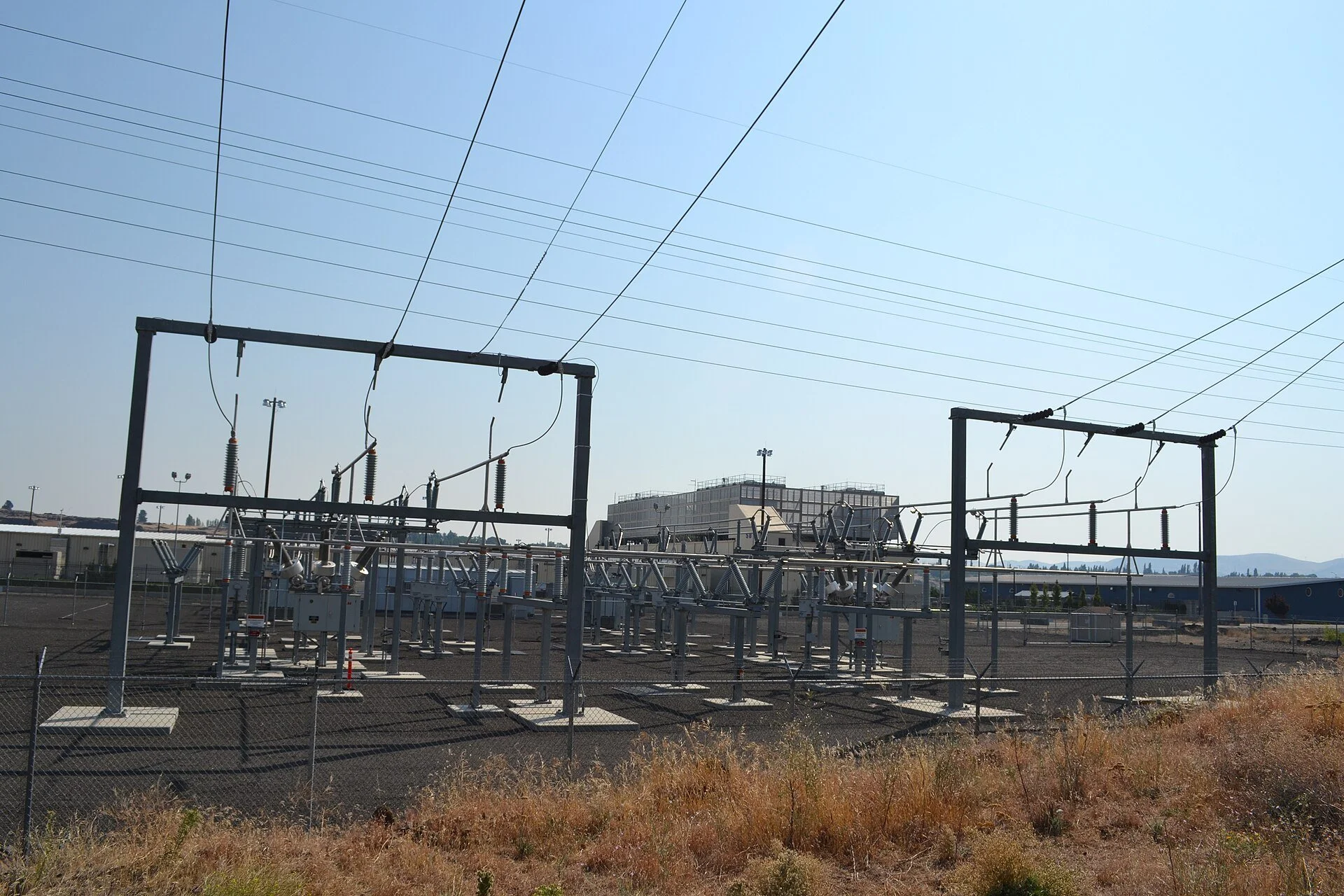
Google Data Center, The Dalles, Ore.
— Photo by Visitor7
BOSTON
The artificial-intelligence boom has had such a profound effect on big tech companies that their energy consumption, and with it their carbon emissions, have surged.
The spectacular success of large language models such as ChatGPT has helped fuel this growth in energy demand. At 2.9 watt-hours per ChatGPT request, AI queries require about 10 times the electricity of traditional Google queries, according to the Electric Power Research Institute, a nonprofit research firm. Emerging AI capabilities such as audio and video generation are likely to add to this energy demand.
The energy needs of AI are shifting the calculus of energy companies. They’re now exploring previously untenable options, such as restarting a nuclear reactor at the Three Mile Island power plant, site of the infamous disaster in 1979, that has been dormant since 2019.
Data centers have had continuous growth for decades, but the magnitude of growth in the still-young era of large language models has been exceptional. AI requires a lot more computational and data storage resources than the pre-AI rate of data center growth could provide.
AI and the grid
Thanks to AI, the electrical grid – in many places already near its capacity or prone to stability challenges – is experiencing more pressure than before. There is also a substantial lag between computing growth and grid growth. Data centers take one to two years to build, while adding new power to the grid requires over four years.
As a recent report from the Electric Power Research Institute lays out, just 15 states contain 80% of the data centers in the U.S.. Some states – such as Virginia, home to Data Center Alley – astonishingly have over 25% of their electricity consumed by data centers. There are similar trends of clustered data center growth in other parts of the world. For example, Ireland has become a data center nation.
AI is having a big impact on the electrical grid and, potentially, the climate.
Along with the need to add more power generation to sustain this growth, nearly all countries have decarbonization goals. This means they are striving to integrate more renewable energy sources into the grid. Renewables such as wind and solar are intermittent: The wind doesn’t always blow and the sun doesn’t always shine. The dearth of cheap, green and scalable energy storage means the grid faces an even bigger problem matching supply with demand.
Additional challenges to data center growth include increasing use of water cooling for efficiency, which strains limited fresh water sources. As a result, some communities are pushing back against new data center investments.
Better tech
There are several ways the industry is addressing this energy crisis. First, computing hardware has gotten substantially more energy efficient over the years in terms of the operations executed per watt consumed. Data centers’ power use efficiency, a metric that shows the ratio of power consumed for computing versus for cooling and other infrastructure, has been reduced to 1.5 on average, and even to an impressive 1.2 in advanced facilities. New data centers have more efficient cooling by using water cooling and external cool air when it’s available.
Unfortunately, efficiency alone is not going to solve the sustainability problem. In fact, Jevons paradox points to how efficiency may result in an increase of energy consumption in the longer run. In addition, hardware efficiency gains have slowed down substantially, as the industry has hit the limits of chip technology scaling.
To continue improving efficiency, researchers are designing specialized hardware such as accelerators, new integration technologies such as 3D chips, and new chip cooling techniques.
Similarly, researchers are increasingly studying and developing data center cooling technologies. The Electric Power Research Institute report endorses new cooling methods, such as air-assisted liquid cooling and immersion cooling. While liquid cooling has already made its way into data centers, only a few new data centers have implemented the still-in-development immersion cooling.
Running computer servers in a liquid – rather than in air – could be a more efficient way to cool them. Craig Fritz, Sandia National Laboratories
Flexible future
A new way of building AI data centers is flexible computing, where the key idea is to compute more when electricity is cheaper, more available and greener, and less when it’s more expensive, scarce and polluting.
Data center operators can convert their facilities to be a flexible load on the grid. Academia and industry have provided early examples of data center demand response, where data centers regulate their power depending on power grid needs. For example, they can schedule certain computing tasks for off-peak hours.
Implementing broader and larger scale flexibility in power consumption requires innovation in hardware, software and grid-data center coordination. Especially for AI, there is much room to develop new strategies to tune data centers’ computational loads and therefore energy consumption. For example, data centers can scale back accuracy to reduce workloads when training AI models.
Realizing this vision requires better modeling and forecasting. Data centers can try to better understand and predict their loads and conditions. It’s also important to predict the grid load and growth.
The Electric Power Research Institute’s load forecasting initiative involves activities to help with grid planning and operations. Comprehensive monitoring and intelligent analytics – possibly relying on AI – for both data centers and the grid are essential for accurate forecasting.
On the edge
The U.S. is at a critical juncture with the explosive growth of AI. It is immensely difficult to integrate hundreds of megawatts of electricity demand into already strained grids. It might be time to rethink how the industry builds data centers.
One possibility is to sustainably build more edge data centers – smaller, widely distributed facilities – to bring computing to local communities. Edge data centers can also reliably add computing power to dense, urban regions without further stressing the grid. While these smaller centers currently make up 10% of data centers in the U.S., analysts project the market for smaller-scale edge data centers to grow by over 20% in the next five years.
Along with converting data centers into flexible and controllable loads, innovating in the edge data center space may make AI’s energy demands much more sustainable.
Ayse Coskun is a professor of electrical and computer engineering at .,Boston University
Disclosure statement
Ayse K. Coskun has recently received research funding from the National Science Foundation, the Department of Energy, IBM Research, Boston University Red Hat Collaboratory, and the Research Council of Norway. None of the recent funding is directly linked to this article.