
Vox clamantis in deserto







Chris Powell: Tax credits for dairy cows and journalists?
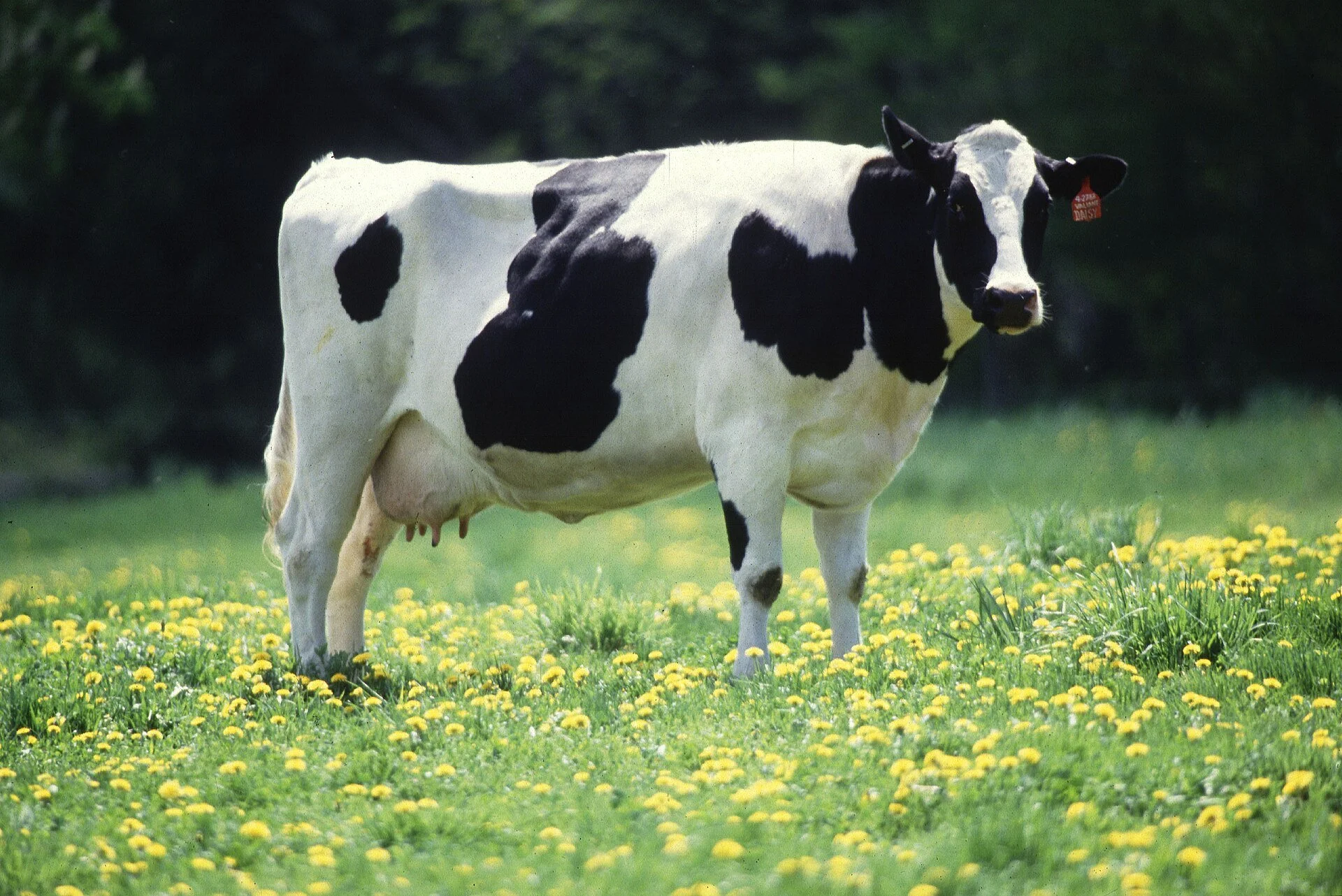
Trying to keep this Holstein happy.
MANCHESTER, Conn.
Connecticut's dairy farmers, long having suffered in a marginal business and having been reduced in numbers from about 800 in the 1970s to only 80 today, say they are on the brink of failure and require a subsidy from state government to survive.
Other states, including Massachusetts, provide what Connecticut's dairy farmers want: a tax credit to offset low milk prices. So such legislation has been proposed in the General Assembly by state Sen. Stephen Harding, R-Brookfield, whose district is rural and has many farms.
The farmers estimate that collectively they are likely to lose $20 million this year, so the legislation's tax credit would cover that loss.
Of course dairy farms aren't the only businesses in trouble in Connecticut. The state is nearly the highest taxed in the country and might be losing population if not for illegal immigration. These days hardly a business enters or expands in the state without seeking some sort of financial incentive or tax abatement from state or municipal government.
Struggling businesses that receive no such subsidy might look at the proposal to subsidize dairy farms and wonder: What's so special about them?
Cows may be cute and dairy farms quaint, but the legislature should ask that question and, if it approves the subsidy legislation, provide a clear answer to it.
For could Connecticut really not survive without dairy farms? Would it be wrong to let Massachusetts and other states subsidize the milk consumed in Connecticut?
Farming generally is also a marginal business in Connecticut, so if dairy farms get a state subsidy, why shouldn't other farms get one too?
Legislators may have noticed -- and enjoyed -- the sharp decline of the news business in the state in recent years. Local news, the most expensive to produce, since its potential audience is smallest, has nearly vanished. The state's newspapers are shadows of their former selves with less local news than ever. Few radio stations in the state have reporters anymore, and television news increasingly emphasizes weather as if its viewers live without windows.
Last year there was some talk in the legislature about subsidizing the news business in the hope of reviving it. Nothing was done, but if cows can get tax credits, anything serving the public interest more than chocolate milk might have a fair claim as well.
After all, if every dairy farm in Connecticut closed, the state still would get plenty of dairy products elsewhere. For the state's dairy farms aren't as crucial to dairy products in Connecticut as the trucking industry is.
But if Connecticut's news organizations disappear, no one in other states will step in to provide the missing news. Indeed, most news organizations in other states are in as much trouble as Connecticut's are, and for the same reasons.
This doesn't mean that government subsidies for news organizations are a good idea. Government money is inevitably compromising, and defining news organizations for tax purposes would be a challenge. For journalism is a constitutional right, not a profession -- a right anyone can exercise at any time with no more capital than a pen, a pad, and an Internet site or e-mail provider.
Indeed, state policy might be of more help to news organizations not with subsidies but with schools that made their students more literate, more familiar with history and government, more civic-minded, and less full of self-esteem after 13 years of social promotion.
The only people who read newspapers and follow news organizations anymore are people who care about their communities, want to know what is going on in them, and want the authorities to be held to account -- and many if not most people today no longer care about that. More than half Connecticut's eligible adult population didn't vote in the last election for governor. In such an environment there is little future for journalism, civic-mindedness, and democracy itself.
Government subsidies for failing industries are horrible precedents, inviting more special pleading and subsidies. But maybe every Connecticut journalist will have to rent a cow.
Chris Powell has written about Connecticut government and politics for many years (CPowell@cox.net).
Save our dairy farms
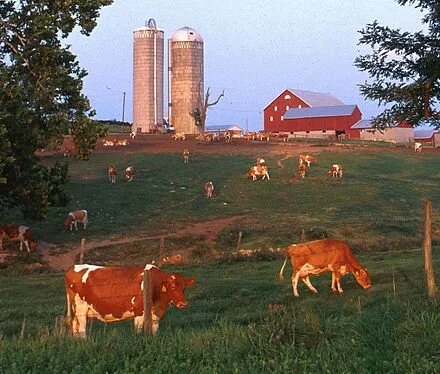
From Robert Whitcomb’s “Digital Diary,’’ in GoLocal24.com
Over the last half century, New England has lost most of its dairy farms, most of them small. Most rural towns had at least one such farm. The rural/suburban town I lived in as a boy had several, including one across the road from our house. We used to go over there and try to irritate the bull. Now there are only about 125 dairy farms in the state, though much of Massachusetts remains rural west of Worcester.
It’s tough to compete with huge agribusiness dairy operations that are outside New England; they can usually produce milk and other dairy products more cheaply. But besides the aesthetic/psychological rewards to us of their beautiful open green spaces, New England’s dairy farms offer some local security by ensuring a supply of nearby food as a buffer against transportation and other supply-chain problems of far-away agribusinesses in the Midwest and elsewhere. (The Coronavirus reminds us of supply-chain dangers.)
And I’m not just talking about dairy. Many New England farms also sell fruits, vegetables, maple syrup and so on, and some are also growing solar energy – all that full-sunlight land for panels.
Let’s help keep as many of these farms open as possible, first off by buying more of their stuff.