
Vox clamantis in deserto




William Morgan: Why we need writing on architecture
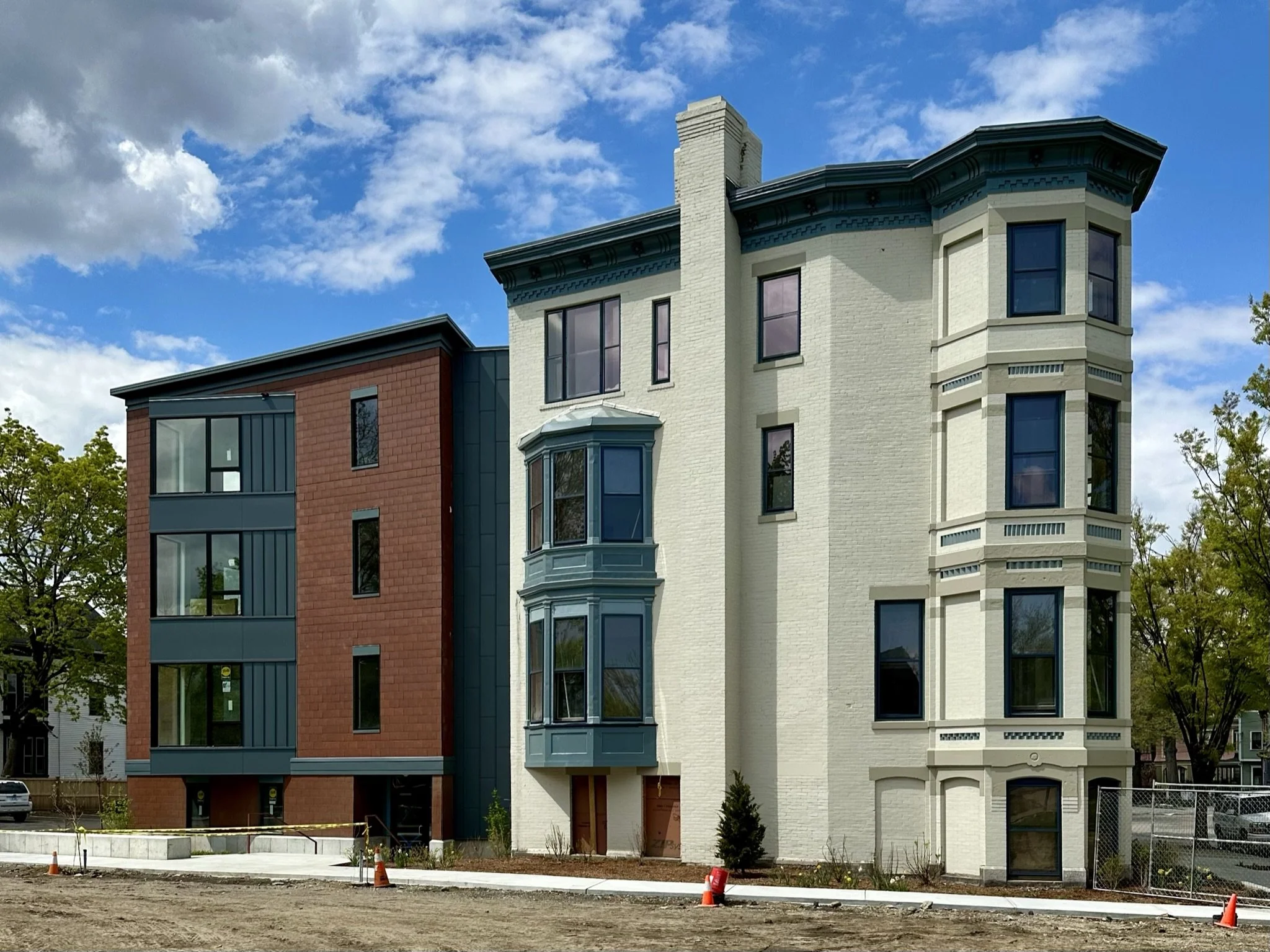
Conversion and expansion of the old Miriam Hospital, in Providence’s Armory District, into apartments. Jack Ryan is its architect. He was recognized with two awards at this year’s AIA-RI annual dinner.
— Photos by William Morgan
Remarks on receiving the ARCHISTAR award from the Rhode Island chapter of the American Institute of Architects at its annual on Nov. 6.
Some years ago, a visitor to my mother’s home, saw one of my books on the coffee table. and declared, “William Morgan. He’s a famous architectural historian.” “No, he’s not” my mother replied, “He’s my son.”
So, it is nice to be recognized. Thank you, AIA – Rhode Island.
When I was the age that kids dream of future careers as astronauts, brain surgeons, or firemen, did I want to grow up and be an architecture critic? No. But from the first lecture in Art 1 in college, I knew my life would be in architecture. Torn tracing paper at Columbia’s architecture school demonstrated that my path would not be as a designer. So, instead I became an historian, and, I hope, an advocate for the role of good architecture.
My wife, Carolyn, and I chose to move to Providence over 25 years ago. We had a list of what might be our ideal places, but we came largely because the city was so rich architecturally, so damned attractive, so human-scaled. (We were snowed by the idea that the city was removing the I-195 overpass from downtown.)
While teaching in the architecture school at Roger Williams University, I started writing for The Providence Journal. I also spent a couple of years as architecture critic for Art New England. (I was let go when I refused to remove the line that “Brown had the lowest architecture I.Q. in the Ivy League” from an article about Rafael Viñoly’s Watson Institute building.) Many of you may know me from my dozen or so years with GoLocalProv.com. I also wrote for Design New England’s entire run, until The Boston Globe decided to shutter the award-winning magazine.
Architectural writing of any kind is more important than ever. The Mother of the Arts is being marginalized, and there needs to be more conversation, more public discussion of the built environment. There have been so many losses, so many failures.
For example, the stupidity of the I-195 makeover of a big chunk of downtown Providence – a tremendous civic opportunity that has been squandered. The bland leading the bland. Not to mention the victory of architecturally illiterate developers, and the triumph of the second-rate.
Good architecture has to compete with, and often cede ground, to “design build,” or building plans available on the Internet for a few dollars. And then there is the challenge of Artificial Intelligence.
If your aim is only to monetize your abilities –that is, if the bottom line is always more important than aspirations or art, you are bound to lose what really matters. And what about the inability of government to maintain bridges and roads, much less plan an intelligently constructed and well-designed commonweal?
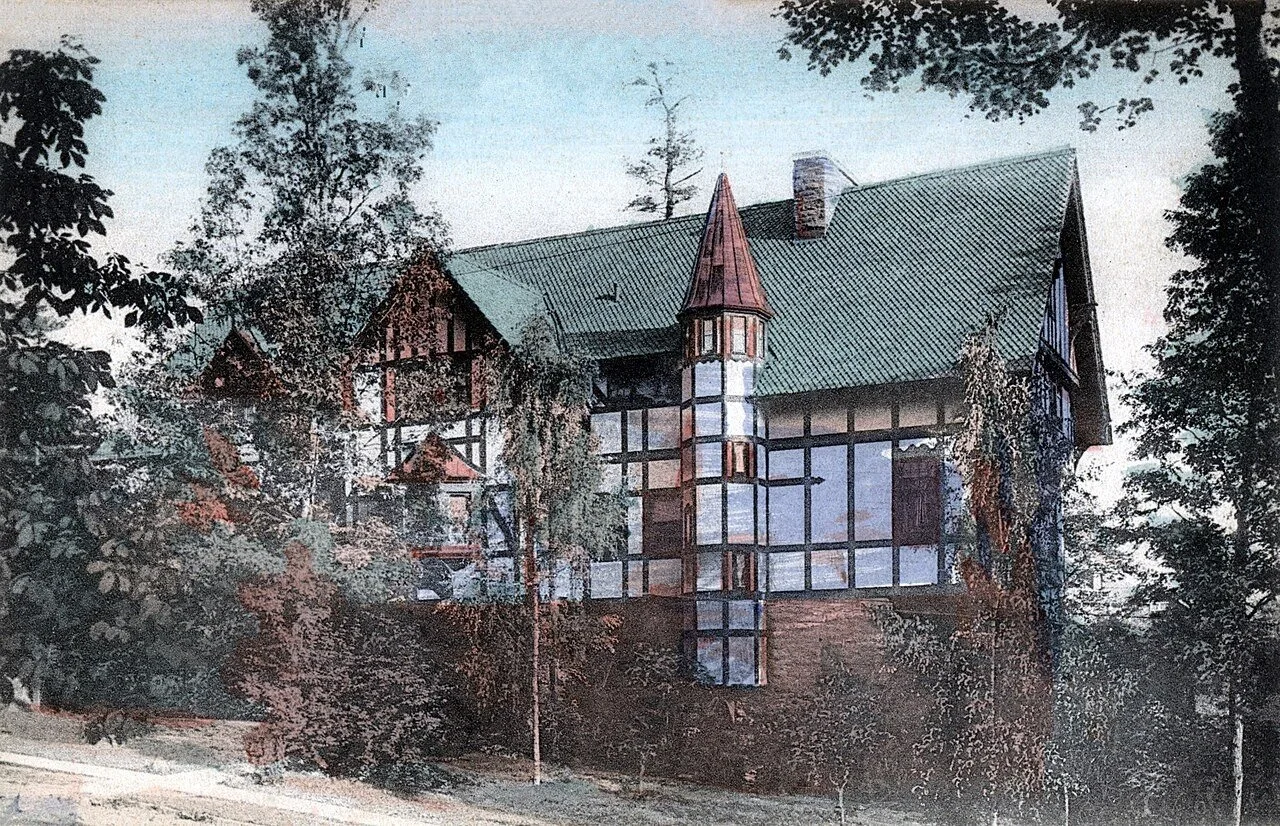
Trump’s destruction of the East Wing of the White House should remind us of political leaders who understood place and symbol-making. Harry Truman insisted that a crumbling people’s building had to be restored, not replaced. Woodrow Wilson, who designed his own Tudor revival house, did much to create the Collegiate Gothic campus as president of Princeton University.
(The original East Wing was built in the early 19th Century and later torn down, while the version Trump demolished was constructed under Franklin Roosevelt in 1942 with the design by government architect Lorenzo Winslow.)
FDR not only designed his presidential library, in Hyde Park, N.Y., and the wooden case for the East Room piano, but wrote about Dutch Colonial architecture in the Hudson Valley.
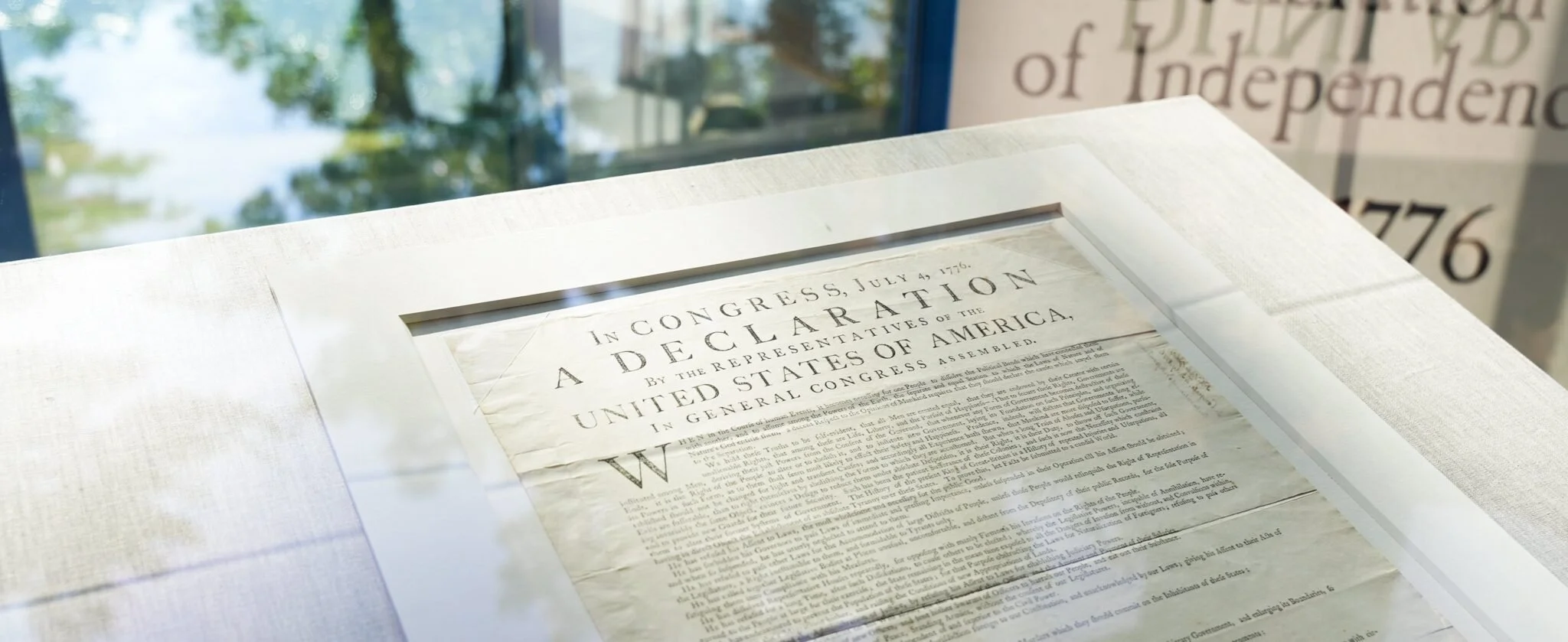
And, of course, Thomas Jefferson, who was not only the brightest man in the land, but who believed in architecture’s fundamental role in defining our republic. Like it or not, we will be judged by our buildings.
The design profession – rather than politicians, contractors, or money men–needs to become the voice of planning that lifts the city and landscape out of the doldrums of mediocre vision into buildings and spaces that support human connection and raise the human spirit.
Thank you for this award, and for all that you do to fight the battle for good architecture.
Architectural historian, critic and photographer William Morgan’s books include Academia: Collegiate Gothic Architecture in the United States and The Cape Cod Cottage
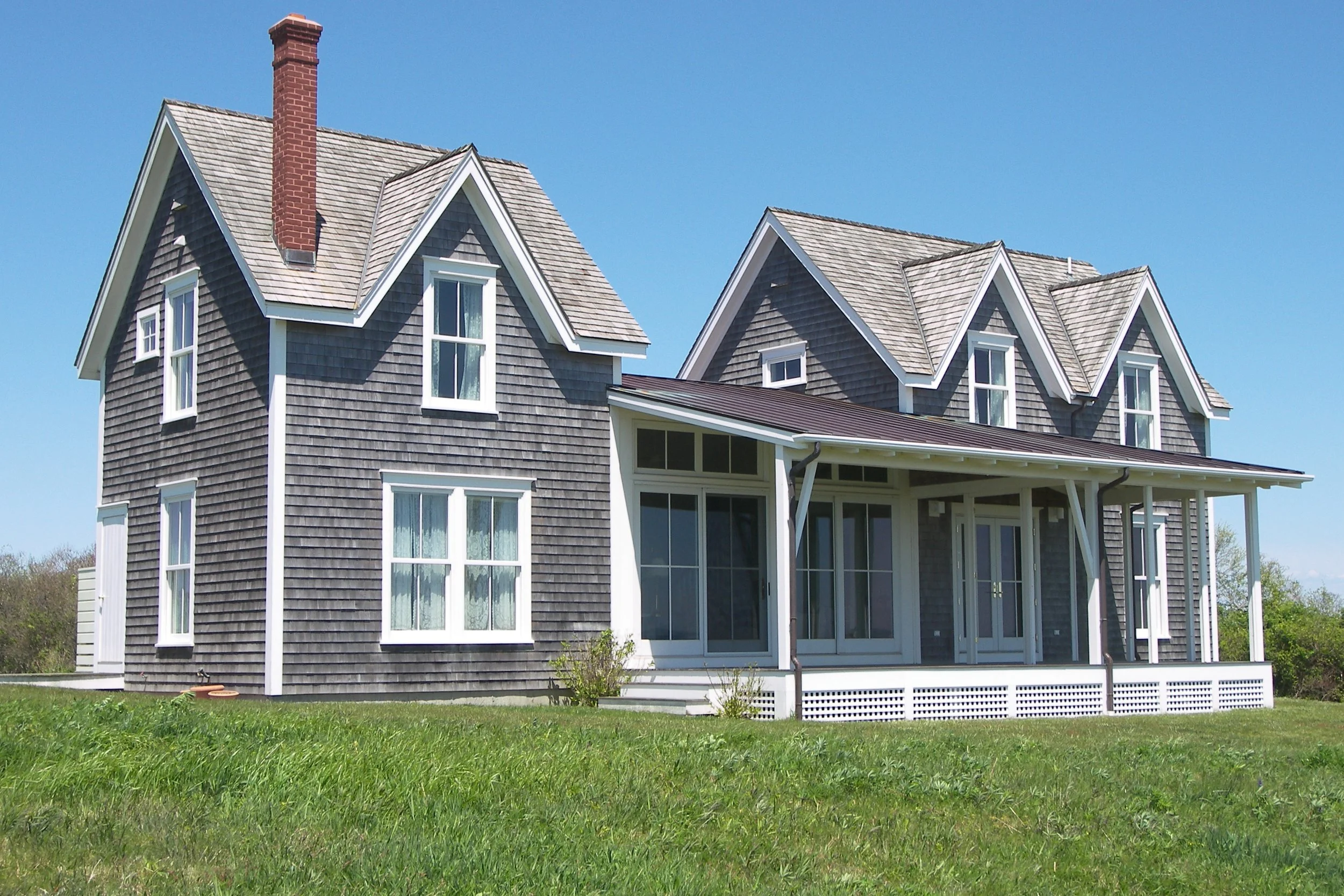
Block Island house by Estes Twombly Architects, the Newport practice with probably more AIA-RI awards than any other firm.