
Vox clamantis in deserto







Chris Powell: Don’t ask state employees if Connecticut should raise taxes
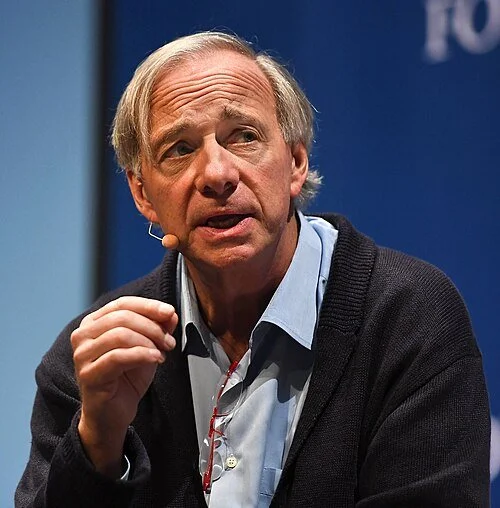
Hedge-fund mogul Ray Dalio, one of several billionaires living in Greenwich, Conn., long a home for very rich people.
MANCHESTER, Conn.
According to state Sen. Jan Hochadel, D-Meriden, Connecticut shouldn’t be afraid of taxing the wealthy more.
In a newspaper essay the other week Hochadel cited a study done last year by something called A Better Connecticut Institute. The study, the senator wrote, contended that “income taxes play almost no role in where high-earning individuals choose to live," and that “when states raise taxes on top earners, the number of wealthy residents who actually leave is statistically insignificant," only around 2 percent.
“Wealthy people, like everyone else, care about more than their tax bill," Hochadel wrote -- they also care about schools, public services, public safety, economic opportunities, and such.
Well, of course. But no one says that the wealthy care only about taxes and not about those other things. They care about many things, including taxes. It is a matter of judgment and degree.
Besides, who exactly should be considered wealthy for tax purposes?
The senator writes of “millionaires," but when retirement savings are added, housing-price inflation has made millionaires of tens of thousands of Connecticut residents who are not close to being plutocrats but still pay a lot in taxes. Millionaires are not as rich as they used to be.
Maybe certain billionaires don’t care about Connecticut's income tax, but then why have so many state residents who are not billionaires been moving to Florida and other low-tax states as they near retirement and even before? Why are states that don't tax their residents as much as Connecticut does growing economically and in population even as Connecticut's economy is stagnant and its population might be decreasing if not for the illegal immigration state government encourages?
As Connecticut's illegal immigration from Central America and the Caribbean suggests, migration is not entirely a matter of warmer winters. Those illegal immigrants see more money for themselves where there are colder winters. Contrary to Hochadel's suggestion, money and people still tend to go where they are treated best.
Liberal Democratic state legislators such as Hochadel have two reasons for framing their desire to increase state government spending as a matter of raising taxes only on the wealthy.
First is that these legislators can’t make a good case for spending more on the merits of the spending itself, a case that would persuade the less than wealthy. For decades these legislators have been bleating about poverty in Connecticut and appropriating more to alleviate it without reducing poverty at all. Some state government policies plainly perpetuate poverty. No state government seeking to reduce poverty would subsidize childbearing outside marriage and run schools by social promotion as Connecticut does. But ministering to poverty and making it generational provides much political patronage for Democrats.
Second is that while state government still neglects much human need, liberal Democratic legislators, being the tools of the government-employee unions, don't dare to examine the mismanagement, waste, fraud, and general excess in government, where much money could be saved. Reports in this regard by news organizations and the state auditors almost always pass without comment from liberal Democratic legislators. Most look away even from federal prosecutions of corruption in state government.
Now that Connecticut has become a one-party state, Democrats have become the party of government for its own sake -- not the party of efficient and effective government. Hochadel's essay revealed her as an embodiment of this problem.
The organization whose study the senator cited in her essay, A Better Connecticut Institute, consists mainly of government employee unions, and Hochadel herself is an officer of the Connecticut chapter of the American Federation of Teachers.
That is, the institute represents mostly state and municipal government employees, who just happen to be the recipients of most state and municipal government tax revenue.
Just as you shouldn't ask the barber if you need a haircut, you shouldn't seek advice from government employee unions about whether taxes should be raised so more money can be spent on their members. Bettering Connecticut requires much more than making government employees happy.
Chris Powell has written about Connecticut government and politics for many years (CPowell@cox.net).
Chris Powell: Close down the ‘doctor’ racket; when beggars die
MANCHESTER, Conn.
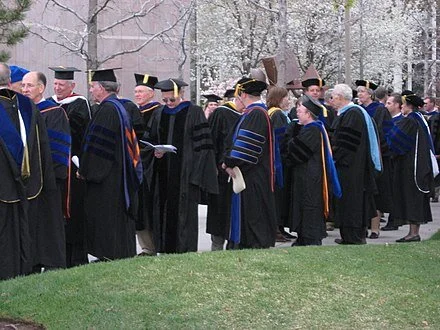
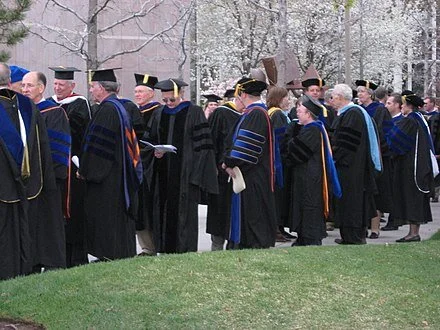
Legions of the politically correct are insisting that President-elect Joe Biden's wife, Jill, be given the honorific title "Doctor" because she holds a doctoral degree in education, which she received largely on the basis of a mediocre term paper. Objections to her honorific are being denounced as sexist and anti-intellectual, an insult to all women with doctoral degrees, as if men haven't gotten such degrees and claimed the title too, and as if all doctorates signify learning and service commanding special respect.
But journalistic style long has been to confer "doctor" only on those holding degrees in medicine and dentistry, and the reason for this was hilariously demonstrated last March, when television show hostess Whoopi Goldberg remarked on The View that she hoped that if Joe Biden were elected president he would appoint his wife surgeon general.
“She's a hell of a doctor," Goldberg said. "She's an amazing doctor.”
Of course, Mrs. Biden has no more qualifications to practice medicine than Goldberg has to pontificate on TV while advertising her ignorance.
The problem is that people generally associate "doctor" with medical authority, so conferring the title on those with other degrees causes misunderstanding.
But with the explosion of what likes to call itself higher education there are now millions of people around the world with non-medical doctorates who like to style themselves "Doctor" to pose or intimidate, though their usefulness may be less than that of elevator operators and lamplighters.
The higher-education industry long has thrived on this pretension, though elements of the working class quickly caught on to it, as was indicated by an episode of the Dobie Gillis television show in the early 1960s.
Having advanced from high school to junior college, Dobie tells his skeptical father, a grocer, why a certain professor is so great: because he has a doctorate, a Ph.D.
Dobie's father asks: "What kind of doctor is that?"
Dobie explains: "You know, Dad -- a doctor of philosophy."
Dobie's father knowingly replies: "Oh, yeah -- the kind that don't do nobody no good."
Back in the days of Dobie Gillis a Connecticut educator of working-class origin, an Army veteran of combat in World War II who never would have gotten to college without the GI Bill, became a Ph.D himself and sought to democratize higher education for the working class. He had seen the "doctor" racket up close and he was not too pompous to acknowledge it. He said that the title was most useful for getting restaurant reservations. He was my father, Theodore Powell.
(Editor’s note: Here’s Theodore Powell’s obit.)
xxx
When beggars die there are no comets seen.
The heavens themselves blaze forth the death of princes.
As it was in Julius Caesar's time and Shakespeare's, it remains today in Connecticut.
Last week Devon Dalio -- eldest son of Connecticut's richest resident, investment-fund manager, Ray Dalio -- was killed in a car crash in Greenwich and it became international news. Gov. Ned Lamont issued a statement mourning the loss, since Ray Dalio and his wife, Barbara, are prominent philanthropists and his neighbors in Greenwich.
Three days later the Connecticut Post reported that four young men had been shot at a bar in Bridgeport, two of them fatally. In Waterbury the Republican-American reported that shootings in that city have more than tripled this year and people in some neighborhoods are afraid to go outside. And The Hartford Courant and (Manchester) Journal Inquirer examined the great increase in drug-overdose deaths in the state this year.
Neither the governor nor anyone else in authority issued any special lament for these losses. After all, such stuff is all normal now. Its casualties are nobodies, practically beggars, not princes.
Of course, some of this social disintegration can be attributed to the virus epidemic and the closing orders that disproportionately impoverish the working class, people less able to work from home. But this disintegration was under way in Connecticut long before the epidemic and state government has undertaken no inquiry into its causes -- and isn't likely to do so as long as the people who suffer most from it keep providing the huge pluralities that sustain the power of the oblivious, indifferent, ineffectual and self-serving.
Chris Powell is a columnist for the Journal Inquirer, in Manchester, Conn.
Chris Powell: No state is big enough to hold back a big business
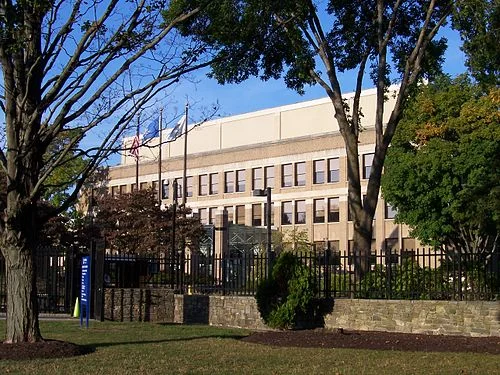
Headquarters of United Technologies Pratt & Whitney unit, in East Hartford, Conn.
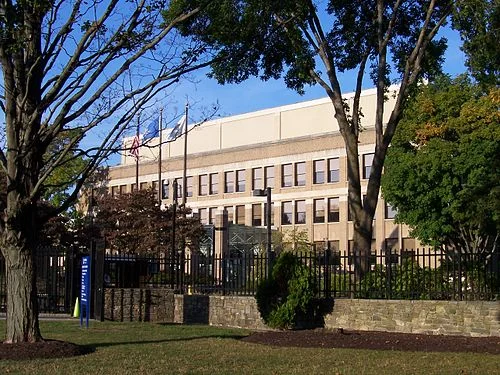
Connecticut has been more surprised than it should have been by the announcement from United Technologies Corp. that upon its merger with Raytheon Co. it will move its headquarters from Farmington to Raytheon's outside Boston, in Waltham.
As much as some politicians feared and others hoped that the move was prompted by the state's awful economic conditions, it wasn't. Rather the move was just another natural step in the evolution of a company that began a century ago as the Pratt & Whitney machine tool shop in Hartford.
The tool shop became a manufacturer of aircraft engines, merged with the predecessor of Boeing to become United Aircraft and Transport Corp., started making airplanes as well as their engines, was broken up by New Deal-era antitrust legislation, kept growing anyway, and became a conglomerate -- United Technologies -- that was heavily dependent on government contracts. As such UTC came to need political support outside Connecticut, so it diversified operations into other states and even other countries.
As a result UTC's employment in Connecticut, around 19,000, has declined to a fraction of what it was a few decades ago, and state government could have done little to prevent it. For these days no conglomerates and big government contractors are going to stick to one state. It's not just their need for national political influence for securing federal government business. It's also to avoid becoming hostage to any one predatory state government.
So Connecticut's economic future does not depend on the big companies already here. For the same reasons motivating UTC, they are more likely to expand out of state. Instead Connecticut's economic future depends on growth by smaller companies already here and entry here by companies elsewhere.
But good luck drawing or keeping anyone here while the most important thing state government has to offer anyone is the duty to share the burden of $70 billion or so in unfunded state and municipal employee retirement obligations -- that is, the duty to pay more in taxes every year [ITALICS] forever [END ITALICS] to sustain a pension-and-benefit society.
xxx
SLUSH FUND MAY EXPLAIN IT: Maybe there's a good case for giving an exemption from state freedom-of-information and ethics laws to the Partnership for Connecticut, the entity just created by billionaires Ray and Barbara Dalio and state government in the name of improving public education. The Dalios are donating $100 million, state government is appropriating an equal amount, and more donations will be sought from other wealthy people.
But if there is a good case for the exemption, nobody is making it.
Spokeswomen for Governor Lamont and the Dalios insist that the partnership should be exempt from the accountability laws because it's not really a state agency. But it was created and funded by the new state budget, a majority of its board will be state officials, and it will dispense public money to public schools. Private entities don't need any provision in the state budget exempting them from FOI and ethics laws, since those laws apply only to government agencies.
So the budget writers thought the partnership would be considered a state agency subject to the accountability laws unless another law asserted, against the evidence, that it wasn’t a state agency.
Why did the budget bestow such an exemption and exactly who asked for it and why? The spokeswomen for the governor and the Dalios were asked about this more than a week ago but have declined to provide an answer. So here's a guess: The partnership will make a great slush fund.
Chris Powell is a columnist for the Journal Inquirer, in Manchester, Conn.