
Vox clamantis in deserto

But that bird can bite
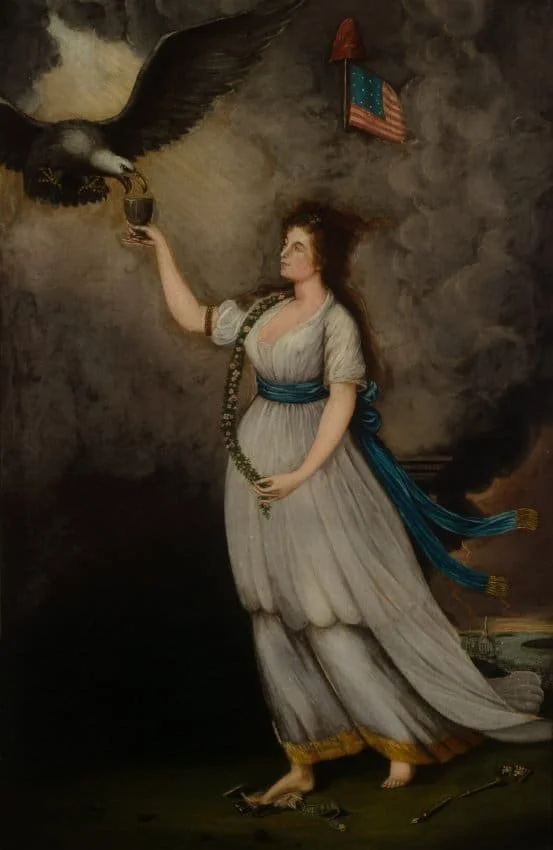
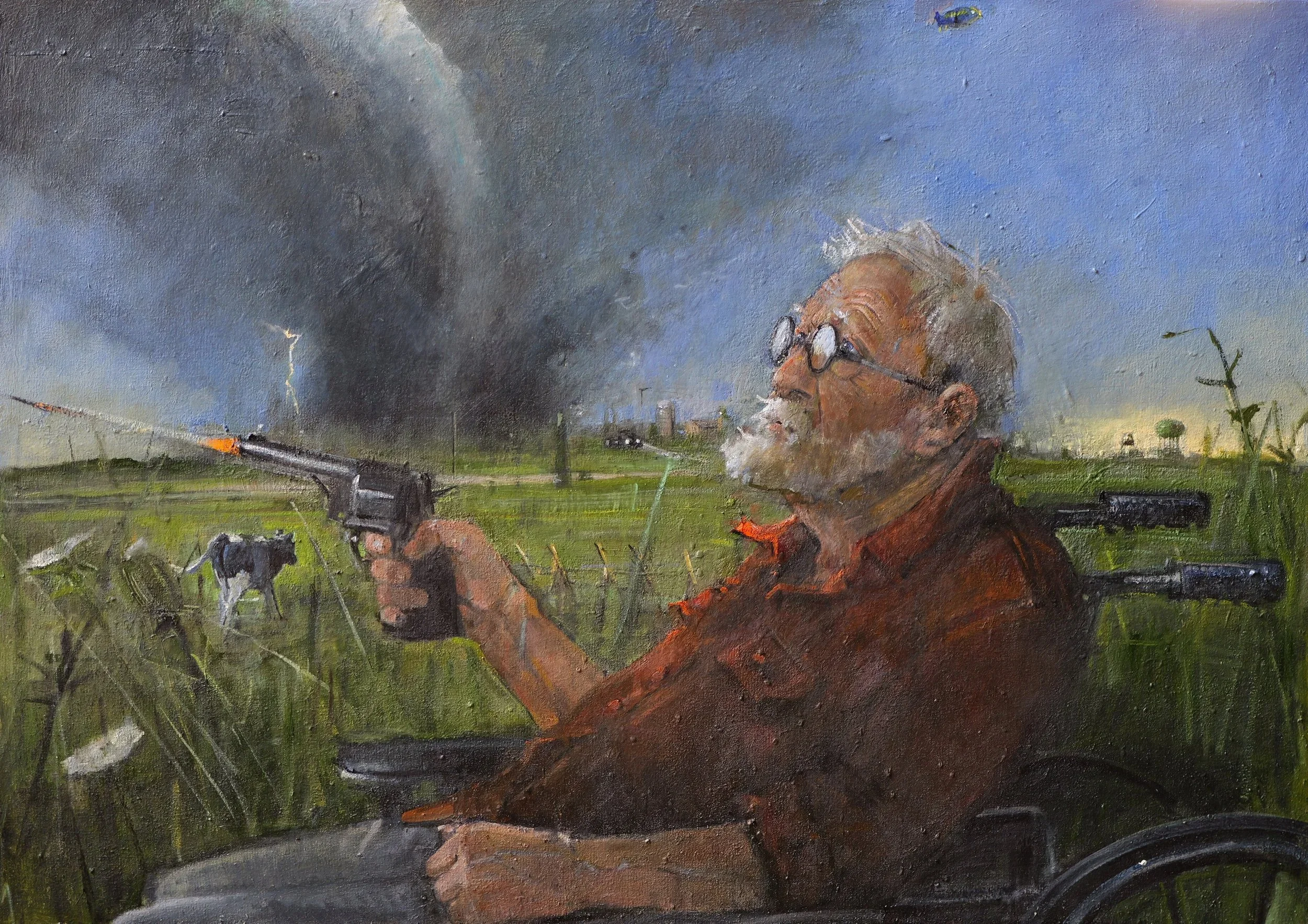
“The Goddess of Liberty Feeding the Eagle” (oil on canvas, ca. 1805), by Samuel Lovett Waldo, in the show “America’s 250: Selections from the Collection,’’ at the Lyman Allyn Museum, New London, Conn., through Sept. 27.
Fairey the ‘inciter’
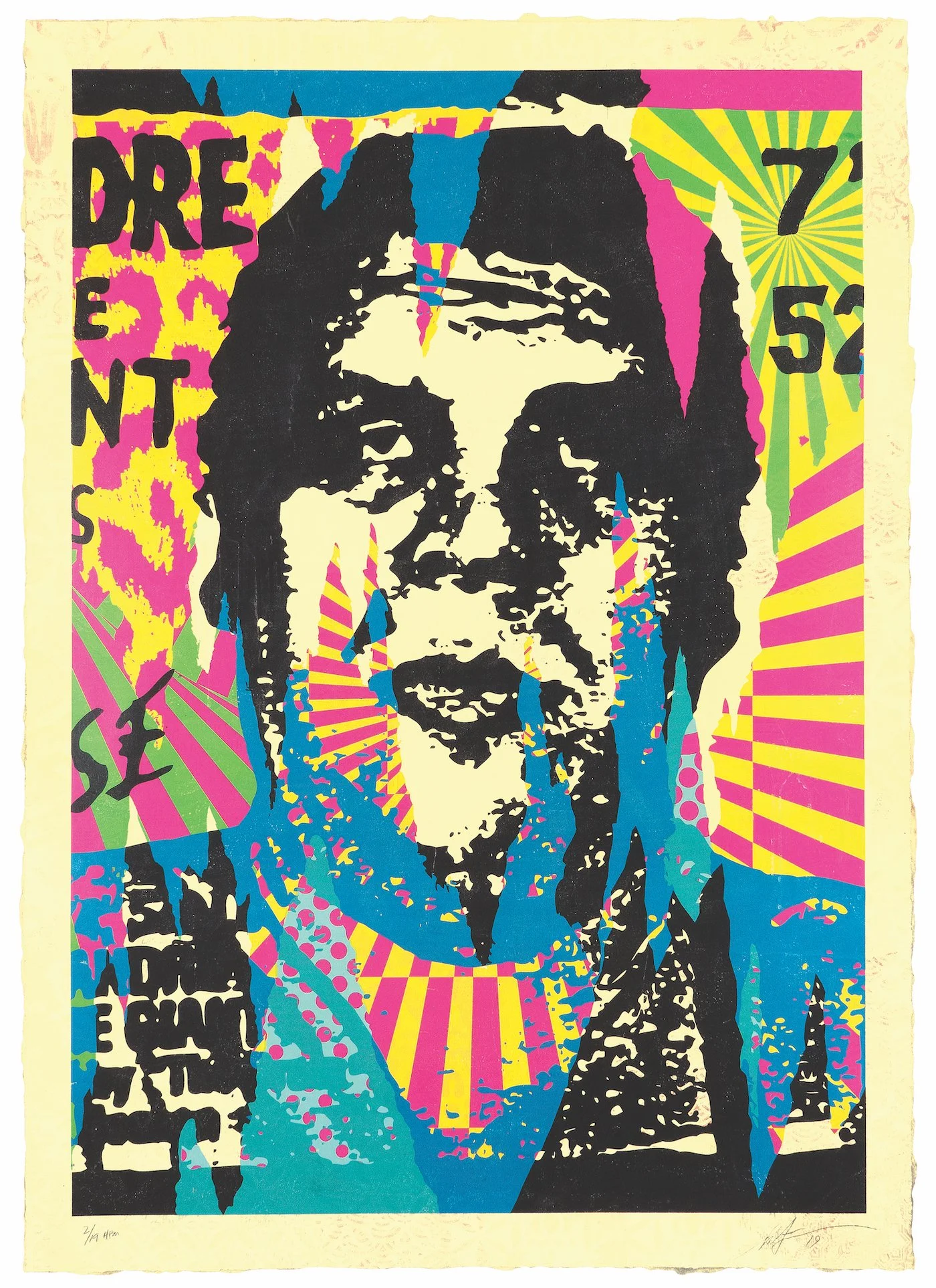
“O.G. Rips” (silkscreen and mixed-media collage on paper), by Shepard Fairey, in his show “Facing the Giant: Three Decades of Dissent,’’ at the Lyman Allyn Museum, New London, Conn., June 6-Sept. 3.
The museum explains that Mr. Fairey is “among the best known of American contemporary street artists, ranging from his early images influenced by punk rock and skate culture to more recent works focusing on social justice, environmentalism and political engagement.
“Propagandist, arch manipulator, inciter, provocateur—these are all words used to describe Shepard Fairey, whom many hail as an originator of the modern urban art scene. In 1989, as a student at the Rhode Island School of Design (RISD), Fairey ran a sticker art campaign called “Andre the Giant Has a Posse’’. The project evolved into his trademark Obey Giant series, artistic manifesto, and a global phenomenon.’’
\
Painting shaping photography
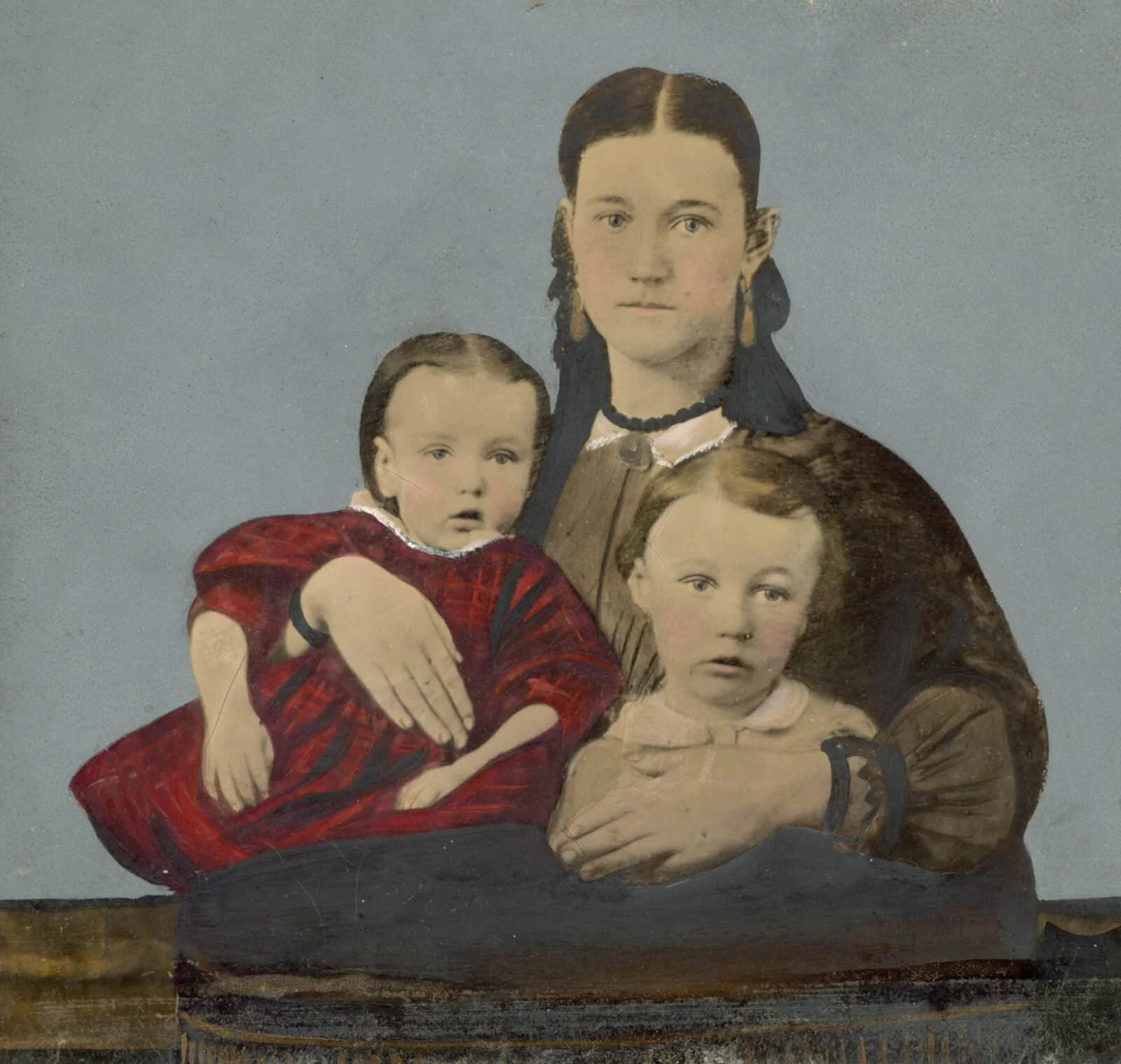
Overpainted full plate tintype, circa 1860’s-’70’s, in the show “Photography and the Painted Image,’’ at the Lyman Allyn Art Museum, New London, Conn., Jan. 17-April 12.
The museum explains:
“This exhibition explores the intersection between photography and painting, highlighting the ways in which the two mediums have overlapped and complemented each other.
The first section showcases the painted backdrop, a hallmark of 19th- and early 20th-Century portrait studios, where elaborate hand-painted backgrounds framed sitters within idealized worlds.
“The second section turns to the painted foreground, focusing on carnival and arcade photographs in which participants posed within humorous or fantastical cutouts that transformed their identities through caricatures and other painted figures.
“The final section explores the painted photograph itself – images enhanced, tinted, or entirely transformed by the application of pigment, from subtle hand-coloring to bold overpainting.
“Together, these works reveal how painting not only shaped the settings and surfaces of photography but also extended its capacity for imagination, spectacle, and self-representation, offering new ways of seeing and being seen.’’
‘Wildly divergent depictions’
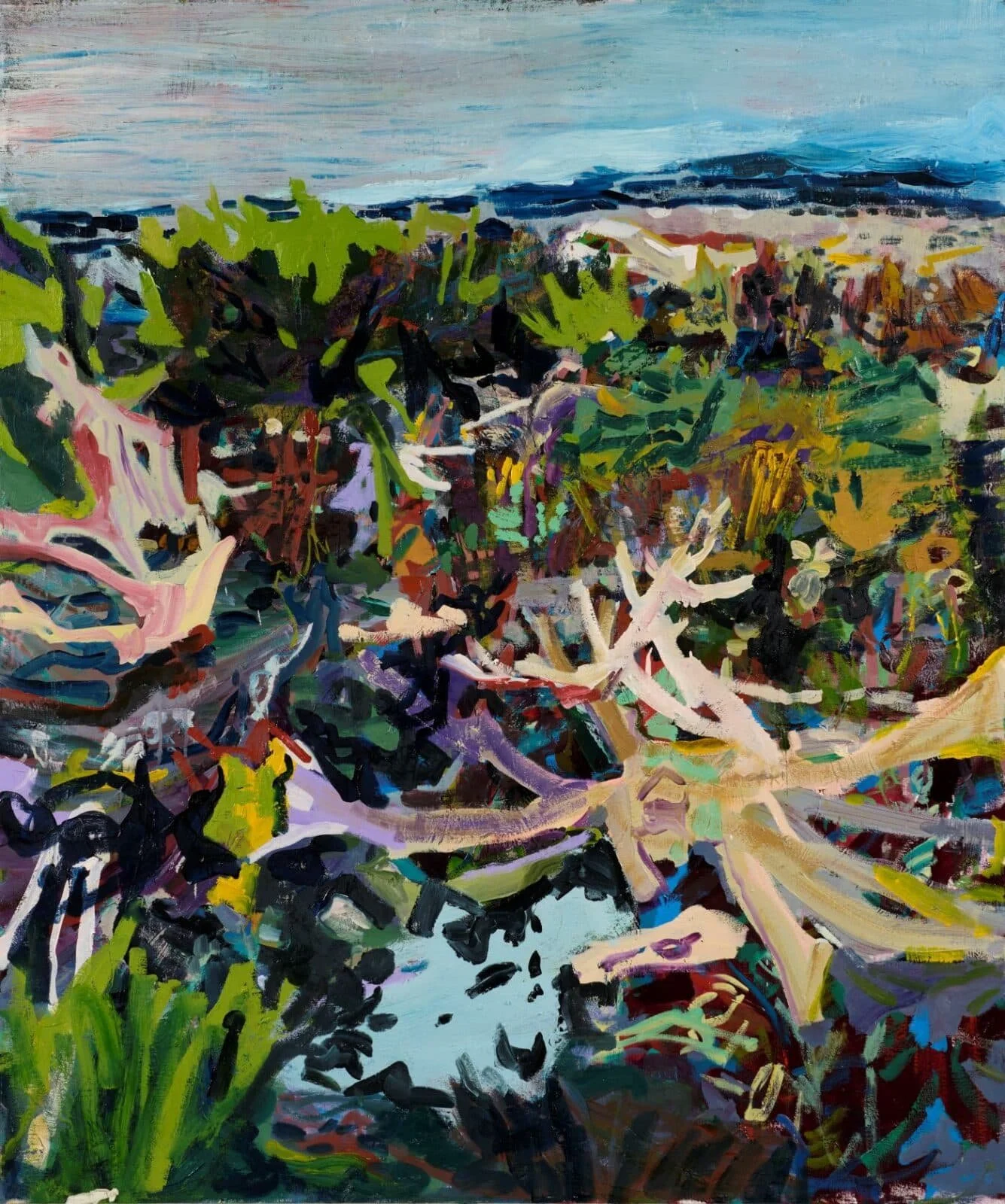
“After the Fall” (oil and acrylic on canvas), by Allison Gildersleeve, in her show “Here Somewhere,’’ at the Lyman Allyn Museum, New London, Conn., Oct. 11-Jan. 18.
The museum says:
“Places are not inert; they are repositories for all that has passed through them. In Allison Gildersleeve’s work, time is not sequential and location is not fixed. Gildersleeve picks apart and reassembles the familiar, using the variability of memory as her guide. As she puts the pieces together, her work skips through time at an erratic pace, shuffling the monumental with the mundane and twisting landscapes and interiors into compositional mazes. Gildersleeve grew up in the southeastern corner of Connecticut in a colonial farmhouse surrounded by acres of woods. She returns again and again to the settings of her childhood – wooded areas, home interiors, open highways, back country roads – to show that repeated visits to the same place invariably result in wildly divergent depictions.’’
Connecting place to narrative
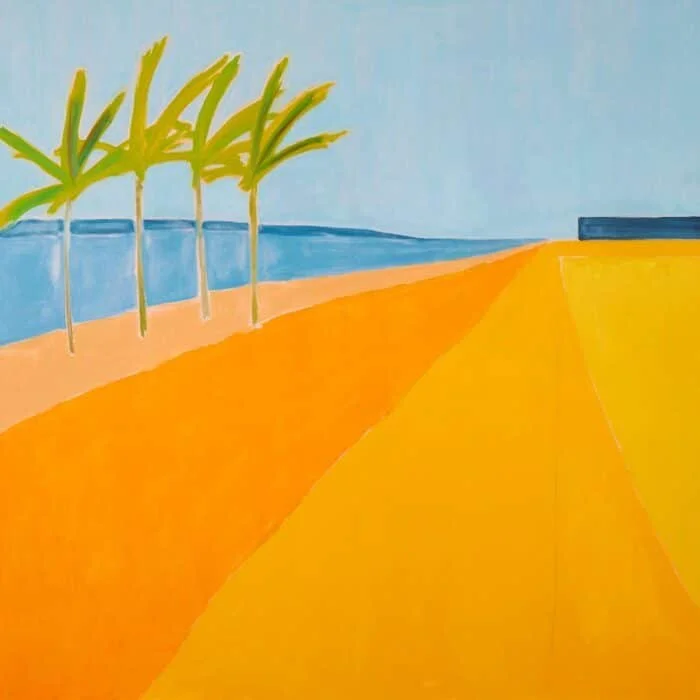
“Chicago” (oil on canvas), by Elizabeth Enders, in her show “A Different Time, A Different Place,’’ at the Lyman Allyn Museum, New London, Conn., Oct. 14-Jan 14. A New London native, she divides her time between Waterford, Conn., and New York City.
—Courtesy of the artist and the Betty Cuningham Gallery, New York.
The museum says:
“Exploring landscape, nature, and the role of place in the imagination, this exhibition presents the recent work of contemporary artist Elizabeth Enders (American, born 1939). In vibrant paintings and watercolors, Enders depicts abstracted landscapes, inviting viewers on a wide-ranging journey. Inspired by experiential knowledge and by places and events of the past and present, Enders renders volcanoes, rivers, oceans, deserts, fields, plants and tropical foliage, along with unusual monuments and structures found in places such as Egypt and Iceland. Such pieces consider how place is connected to meaning and narrative. ‘‘
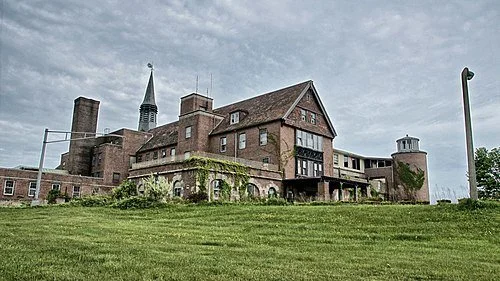
The historic and spooky Seaside Sanatorium, in Waterford