
Vox clamantis in deserto










Fred D. Begley: How NIH became backbone of medical research and boosted U.S. innovation and economy
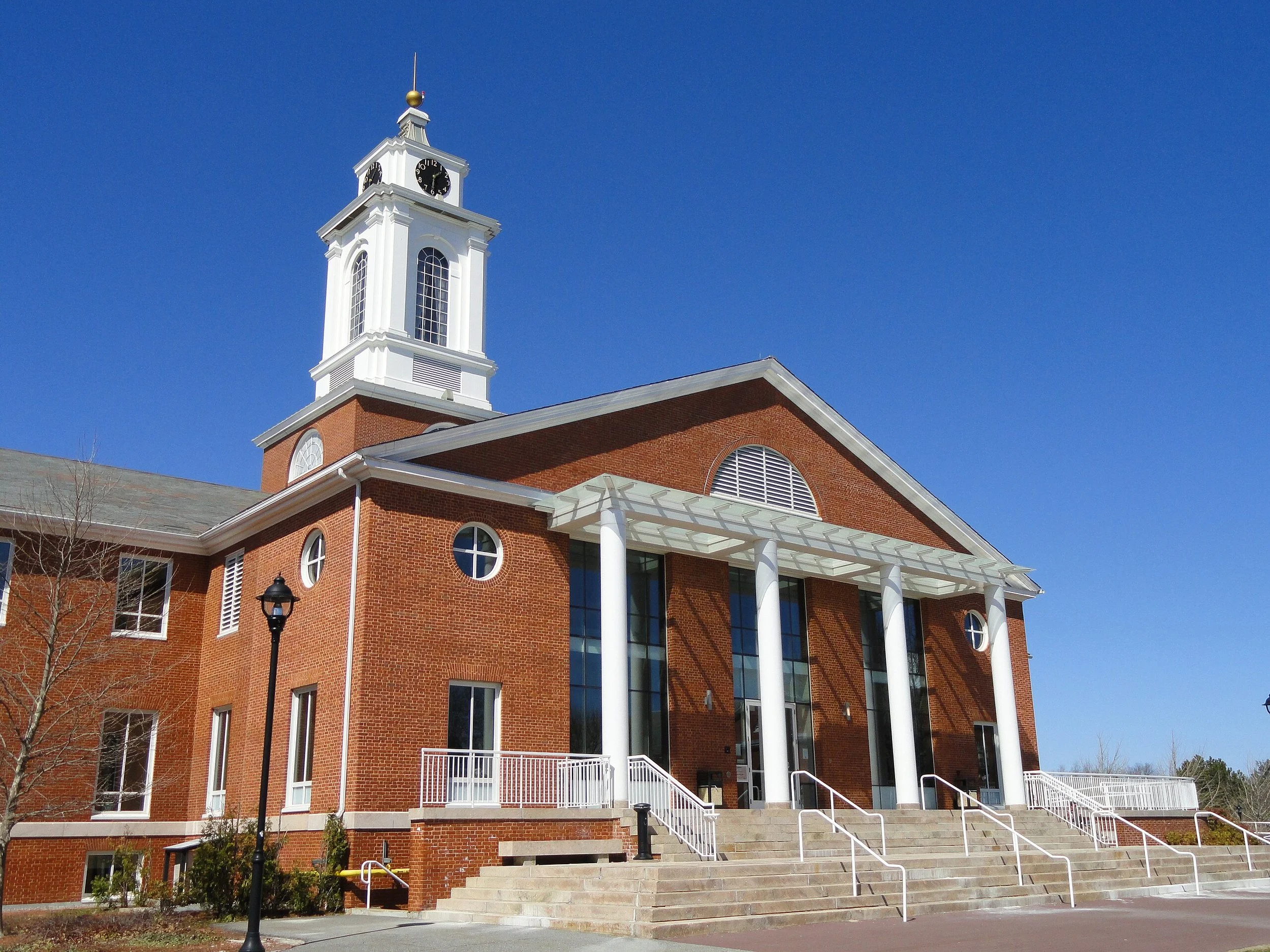
Bentley University Library, in Waltham, Mass.
From The Conversation, except for image above.
Fred D. Ledley is director of the Center for Integration of Science and Industry at Bentley University.
His research has been supported by grants to Bentley University from the Institute for New Economic Thinking, National Pharmaceutical Council, West Health, and the National Biomedical Research Foundation.
(Editor’s note: There are many NIH-linked facilities in New England.)
As a young medical student in 1975, I walked into a basement lab at the National Institutes of Health in Bethesda, Md., to interview for a summer job.
It turned out to be the start of a lifelong affiliation – first as a trainee, then as a grantee running a university laboratory and finally, now, as a researcher of economics and public policy studying the agency’s impact on health care and on the national economy.
On that initial visit 50 years ago, I got my first direct experience with the NIH’s mission: to tap the enormous potential of basic science to improve human health and medical care. And over the long arc of my career, I watched the agency enact this mission in ways that brought enormous value to the country. NIH funding trained a legion of biomedical scientists, produced countless therapies that underpin much of modern medicine and catalyzed the launch of the biotechnology industry.
But widespread federal grant terminations and disruptions to federal funding in 2025 have left scientists who depend on NIH support reeling. And a 40% cut to the NIH budget for 2026 proposed by the White House threatens the agency’s future.
Origins and growth of the NIH
The NIH was founded through the Ransdell Act of 1930, which converted the former Hygienic Laboratory of the Marine Hospital Services into the seeds of a new government institution. That laboratory had been established in 1887 to develop public health measures, diagnostics and vaccines for controlling diseases prevalent in the U.S. at the time, such as cholera, yellow fever, smallpox, plague and diphtheria. With the act’s passage, the Hygienic Laboratory was reimagined as the National Institute of Health.
The NIH, initially called the National Institute of Health, was created in 1930 with the passage of the Ransdell Act. President Franklin D. Roosevelt dedicated the new NIH campus in Bethesda, Md., on Oct. 31, 1940, saying, ‘We cannot be a strong nation unless we are a healthy nation.’ National Institutes of Health
Sen. Joseph Ransdell of Louisiana envisioned the NIH as an agency with a broader mandate for translating scientific advances to improve human health. In arguing in 1929 for the creation of the new institute, he read into the Congressional Record an editorial from The New York Times that highlighted rapid advances in chemistry, physiology and physics.
The editorial lamented that “never in the whole history of the world had efforts to improve health conditions been behind the advance in other sciences.” Pointing to millions of Americans suffering from sickness leading to economic losses “into billions,” it argued for the need for a medical sciences institute coordinating “a national effort to prevent diseases that are or may be preventable.”
In 1945, a report called Science – The Endless Frontier, by Vannevar Bush, highlighted the government’s central role in supporting science that harnessed nuclear energy, implemented radar and developed penicillin – all important elements of the United States’ success in World War II. Bush argued that these wartime successes presented a model for growing the American economy, preventing and curing disease and projecting American power.
The NIH became central to this model. Its budget increased substantially during and just after World War II, with postwar adoption of Bush’s plan, and again after 1957 when the nation redoubled its commitment to science following Russia’s launch of Sputnik and the start of the space race. The National Cancer Act of 1971, which established the separate National Cancer Institute, reaffirmed the nation’s commitment to government-funded research. This new institute’s funding provided much of the seed capital for the emergence of biotechnology.
In the 1980s, the Stevenson-Wydler and Bayh-Dole acts created a clear pathway for developing commercial products from federally funded research that would provide public benefits and economic stimulus. These federal laws made it a requirement to pursue patenting and licensing of NIH-funded research to industry.
One project’s evolution reflects NIH’s mission
Today, the NIH represents the backbone of efforts to improve health and health care, supporting each step in the process from preliminary discovery to clinical advance. These steps correspond to the stages of an individual scientist’s path.
By putting study volunteers into a specially constructed metabolic chamber, NIH researchers in the 1950s could study how the human body uses air, water and food. The nurse here is affixing a hood onto a volunteer to measure oxygen consumption. National Institutes of Health
I experienced this progression in my own career. After establishing my first independent laboratory with a grant for early-stage researchers, then called a First Independent Research Support and Transition grant, a Research Project grant, widely known as an R01, funded my lab’s work identifying genes that cause inherited metabolic diseases in newborns. R01 grants are the main mechanism that academic biomedical scientists in the U.S. rely on to support innovative research.
Later, an NIH Program Project grant enabled us to investigate how the genes we had identified could be used to treat children. A General Clinical Research Center grant supported the hospital facilities necessary for clinical research and paid for patient care. Other grants supported our medical students and fellows as they embarked on their own careers as well as applications of our research to areas such as child health, reproductive biology and gastroenterology.
As our research on gene therapy progressed, NIH Small Business grants contributed to our founding a company that raised US$200 million in investments and partnerships and created hundreds of new jobs in Houston. Grants to small businesses continue to play a crucial role in helping universities commercialize discoveries.
Is the NIH effective?
For the past decade, I have led a research center focused on characterizing the process of developing new drugs. Our work, which is not funded by the NIH, shows that an established foundation of basic research on the biology underlying health and disease is necessary for successful drug development – and that most of this research is performed in public institutions.
We have found that NIH funding supported basic or applied research related to about 99% of newly approved medicines, clinical trials for 62% of these drugs and patents governing about 10% of these products.
Based on research conducted at the NIH, azidothymidine, or AZT, in 1987 became the first drug approved to treat AIDS. Here, the drug, added to the middle vial, protects healthy immune cells from being destroyed by HIV, the virus that causes AIDS. John Crawford, National Cancer Institute, National Institutes of Health
Studies also show that this NIH funding saves industry almost $3 billion per drug in development costs. Over the past decade, there has been $800 billion in new investment in biotechnology. The U.S. biopharmaceutical industry directly supports more than 1 million jobs.
Medicines enabled by NIH funding have been crucial for increasing life expectancy and health – dramatically decreasing deaths due to heart disease and stroke, improving cancer outcomes, controlling HIV infection, improving the management of immunological diseases and easing the burden of psychiatric conditions.
The Trump administration is currently questioning the role of science in maintaining the nation’s health, economy and global posture. Yet the NIH stands as a testimony to the vision articulated by its early architects.
At its heart is the conviction that science is good for society, that persistent investment in basic research is essential to technological advances that serve the public interest, and that our nation’s health and economy benefit from developments in biology.
Susan Sandler Brennan: The rotary that leads to career success

The library of Bentley University, in Waltham, Mass.
Via the New England Board of Higher Education (nebhe.org)
Working in college career services, I see companies recognizing that the path from college to career has shifted from a one-way to a two-way street where employers and students can connect. Truth be told, it’s more of a rotary—with many exits—because it takes a committed community to successfully transition students to their first jobs and beyond. The career-development ecosystem includes not only employers, but also career services, peers, faculty members and alumni. Each “exit” connects students to important voices and learning opportunities.
Part of what will give students the confidence to explore these exits is learning how to build trust with the people who will guide them on their path. It’s my job in career services at Bentley University to present opportunities to students, starting from their first year on campus, that open doors to these career relationships. Here’s how we help students build a career community:
Student career colleagues
Juniors and seniors who are motivated, successful and well-rounded can be positive influences on their peers. Acting as "career colleagues," these juniors and seniors provide a comfortable and welcoming environment for new Bentley students to engage with Career Services in drop-in hours and in the classroom. Students trust their peers because they have more common experiences and believe they will give good advice, since they’ve recently been through the same process. And with this model, professional staff members are able to have more in-depth transformational advising appointments as students advance in their major. During her sophomore year, Caroline Gervais of the Class of 2019, used career colleagues for résumé review and advice about internship searches. She found that talking with her peers about their past career experiences and how they handled situations similar to her own to be incredibly valuable.
Faculty
Higher education institutions have to build curriculum around market demand and faculty need to be aware of the skills that employers are demanding. Bentley’s own market research shows companies want multifaceted employees who have the essential hard and technical skills, but they want those coupled with traditional soft skills like communication and collaboration. It’s no longer enough for a data analytics expert to know the numbers. They also have to be able to communicate the story those numbers tell. Our faculty focus on blending business with the liberal arts to prepare students. For example, we offer a liberal studies major—which allows business majors to add a second major with a liberal arts concentration. Students might combine a major in economics and finance with a liberal arts major in earth environment and global sustainability, leaving them well prepared to develop a business plan for a growing solar power company. Other institutions are following suit.
Scott Latham, vice provost for innovation and workforce development at the University of Massachusetts at Lowell, made this point during a recent event hosted by Bentley about the future of work: “Having discussions where you have faculty and industry in the room is incredibly important … If that doesn’t happen and you don’t have buy-in [from faculty], then you’re not going to be able to align your workforce needs with our curriculum.”
Employers
Open and ongoing communication with recruiters is a key part of what we do in career services. To prepare our students for the workforce, we need to stay on top of market demand and the kinds of skills employers want. Internships that have purpose—with opportunities to contribute to a project and be taken seriously—are good ways to connect students and employers. I also see more recruiters leveraging their best storytellers (employees or student interns) to come to our career fairs and share what it’s really like to work there: culture, growth and what they will be doing day to day. When Gervais heard about a 2018 summer merchandising internship opportunity at TJX, she talked to recruiters at a career fair and applied that same day. She also reached out to two Bentley students who had completed a TJX internship; they counseled her throughout the interview process.
Alumni
Many companies are sending alumni back to their respective campuses to recruit students. In addition to the obvious—instant commonality on each side—this greatly expands an employer’s outreach. Bentley alumni also serve as mentors to our students; examples include participation in the classroom through corporate partnerships, informational interviews as part of our career development seminar, or hosting job shadows, site visits and internships. Prior to applying for the TJX internship, Gervais attended a networking night at Bentley,where she was able to discuss merchandising career opportunities with alumni who work at the company. She was particularly interested in their insights on how their Bentley experience helped them prepare for the positions they now hold, as well as post-internship opportunities in the company’s merchandising track. Now that Gervais has secured the position with TJX, she has found several other alumni connections and mentors who she can refer to for guidance and advice in the future.
What’s important to note about the rotary is that while it presents opportunity at each exit, many students will experience a roadblock if they don’t build the confidence to take new routes that are outside their comfort zone. As educators, mentors and employers, it’s up to us to serve as a personalized GPS system that will help guide them along their journey.
Author and clinical psychologist Meg Jay talks about the fact that successful people have often had to overcome challenges and adversity, which in turn helps build resilience. This demonstrates that we have the power to prepare students for lifelong success regardless of their circumstances. Resilience is also important in the context of the job market. Millennials, for example, change jobs every few years. As rapid technological change affects all generations, we will need the resilience to prove our value and work alongside technology.
When my son first learned how to drive, he told me that when he got to a rotary, he put the music on full blast and pretended he was in the Gladiator movie. His philosophy: “I’m going in and I’m going to get around this thing.” We need to help students build their confidence and build a supportive community so they know they can deal with difficult choices and situations. They learn how to become resilient. They go boldly into the rotary.
Susan Sandler Brennan is associate vice president for university career services at Bentley University. She is a co-chair of NEBHE’s Commission on Higher Education & Employability.