
Vox clamantis in deserto


Channeling ‘family mythology’
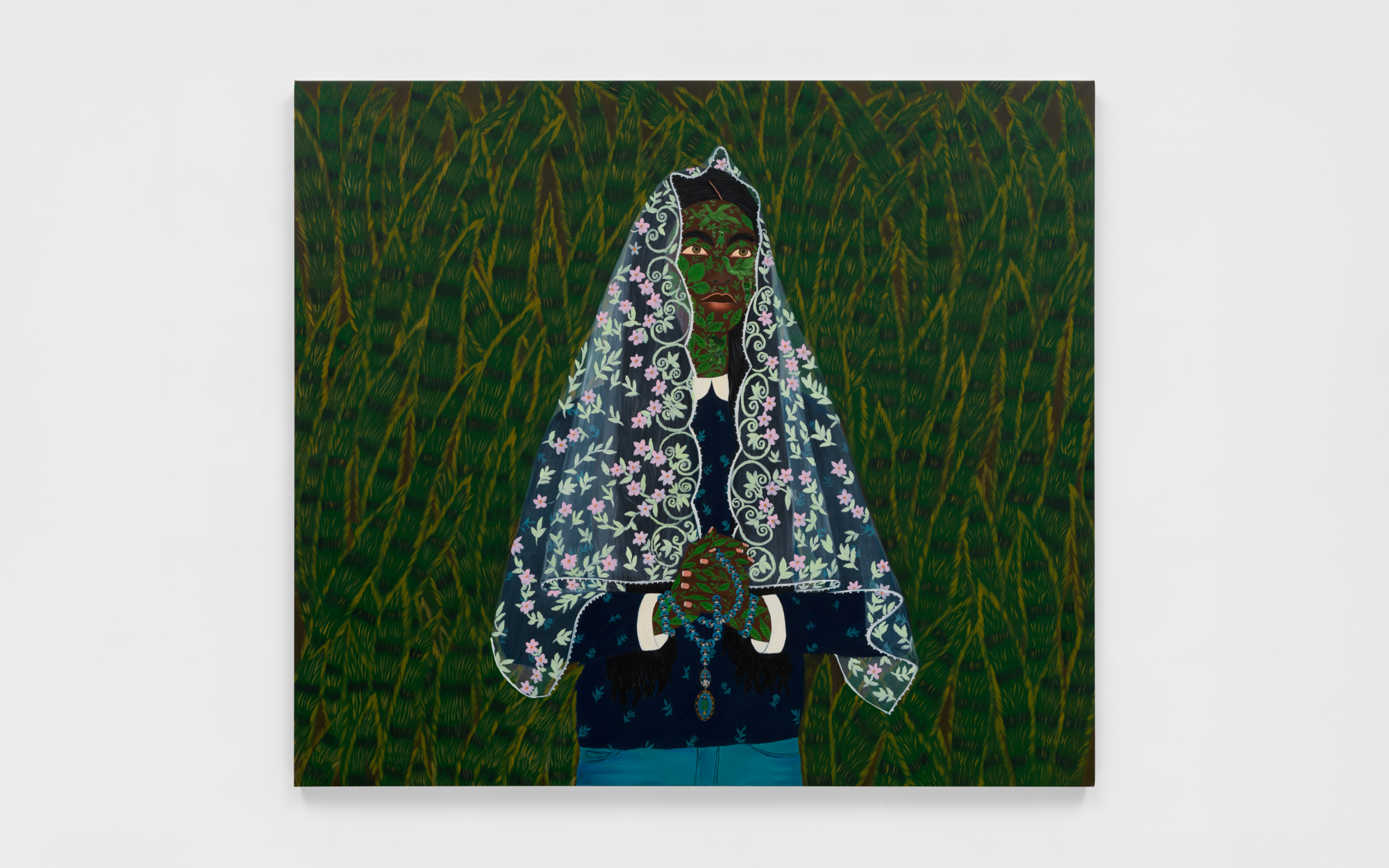
Painting by Kelly Sinnapah Mary, in her show at the Aldrich Contemporary Art Museum, Ridgefield, Conn., through June 13, 2027.
She says: “When I paint, I am channeling both my family mythology––the stories that have been told to me, the memories I have––and broader histories and cosmologies to imagine a new world.”
The museum says the show brings together “a comprehensive view of her work to date and will include approximately forty paintings, sculptures, works on paper, and installations across two immersive institutional environments including the debut of new work.’’
Retyping Conn. suburban angst
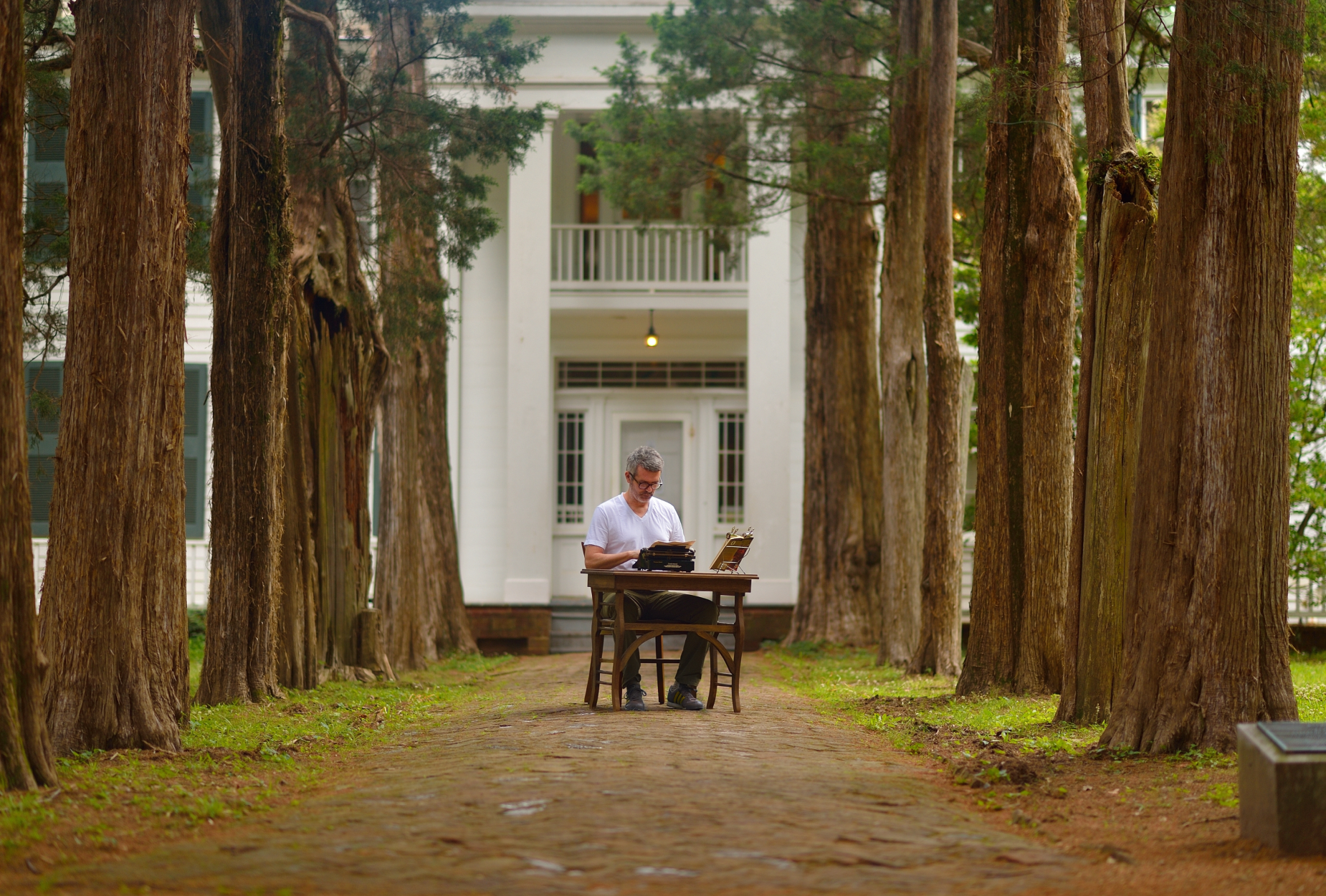
Tim Youd at work retyping for the show “Aldrich Decennial: I am what is around me,’’ which opens June 7 at the Aldrich Contemporary Art Museum, Ridgefield, Conn.
The museum says:
This is part of Mr. Youd’s long-running “100 Novels Project,’’ in which the artist retypes an entire chosen book onto a single sheet of paper, reinforced with another sheet, layering every word until the page becomes an abstract, ink-saturated record of the entire novel.
At The Aldrich, Youd will enact a live, durational retyping of Richard Yates’s famed 1961 debut novel Revolutionary Road, about suburban angst in a Connecticut suburb, on the same model typewriter that Yates used. This is part of the museum’s recurring 10-year series spotlighting Nutmeg State- based artists. This year’s program runs from June 7, 2026 to Jan. 10, 2027. Youd’s project draws on the state’s rich literary history and Yates’s own ties to Connecticut.
Roving the museum’s campus, Youd will work daily in public view from June 7 through June 27, inviting visitors to interact with him. The project will culminate with a framed diptych, a relic of the process.
(And there’s John Cheever….)
‘Reimagined histories’
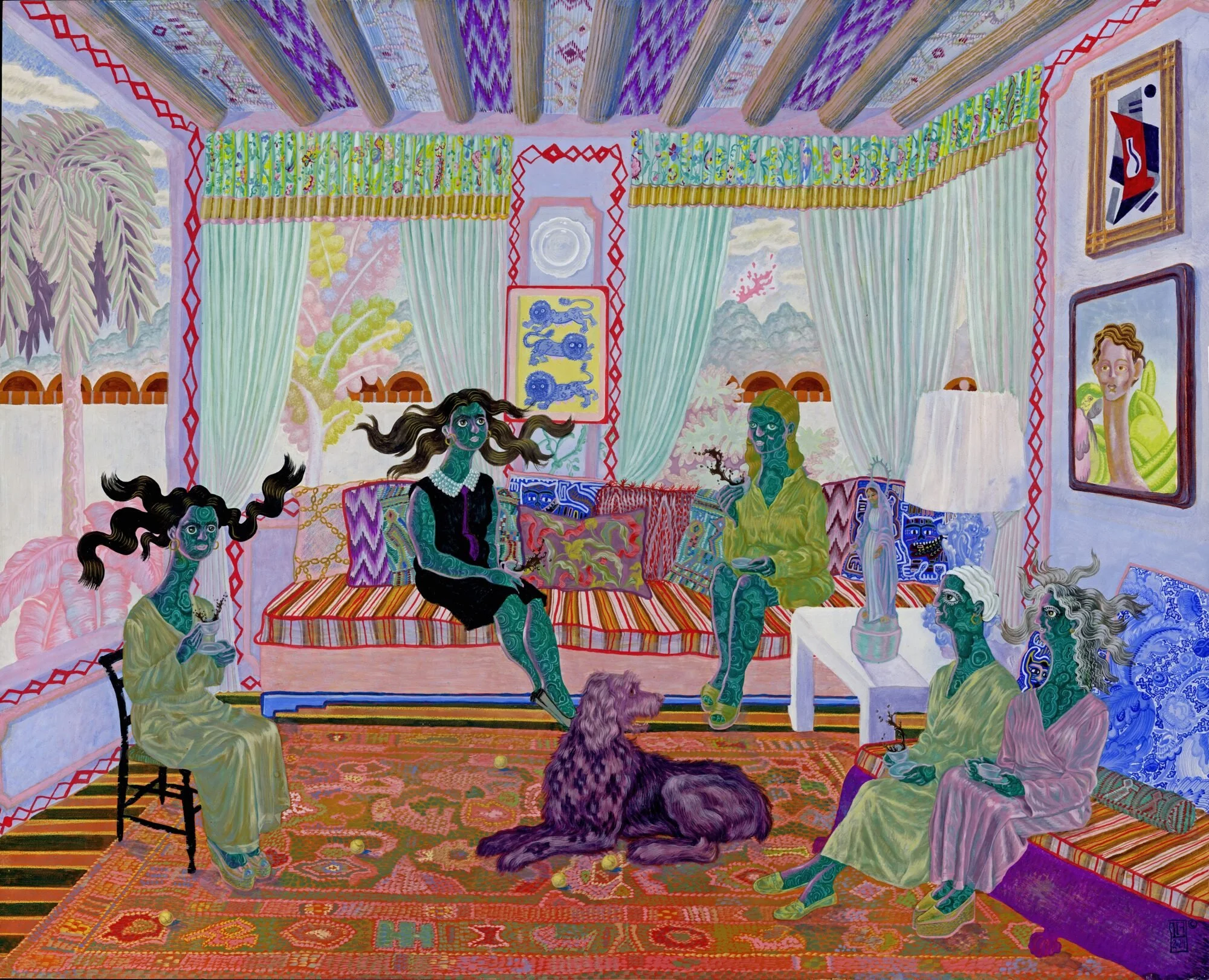
In Larissa Bates’s sh0w “Motherland/La Madre Patria,’’ at the Aldrich Contemporary Art Museum, Ridgefield, Conn., Jan. 15-May 25.
The museum says Ms. Bates, whose are paintings are in gouache, egg tempera, and acrylic ink, explores her bicultural upbringing— ‘‘bridging the cloud forests of Costa Rica with rural Vermont, where her father was part of the experimental architecture community in Prickly Mountain. Her robust visual language stitches together fragments of objects, rooms and landscapes from her youth into reimagined histories, a framework through which she reconciles personal memory and feelings of cultural loss.’’
‘Dissolving the boundaries’

From Eastefania Puerta's show “Laughing Death Drive’’ at the Aldrich Contemporary Art Museum, Ridgefield, Conn., to Jan. 11, 2026.
The museum says:
“Born in Colombia and raised in East Boston, Puerta channels her experience growing up undocumented into a practice that redefines categorization—dissolving the boundaries between alien and natural, comforting and threatening, spoken and withheld. Influenced by literature, mythology, and psychoanalysis, she explores themes of shapeshifting and transformation, reflecting on what is gained or lost through cultural and material translation.’’
Psychoacoustic experience
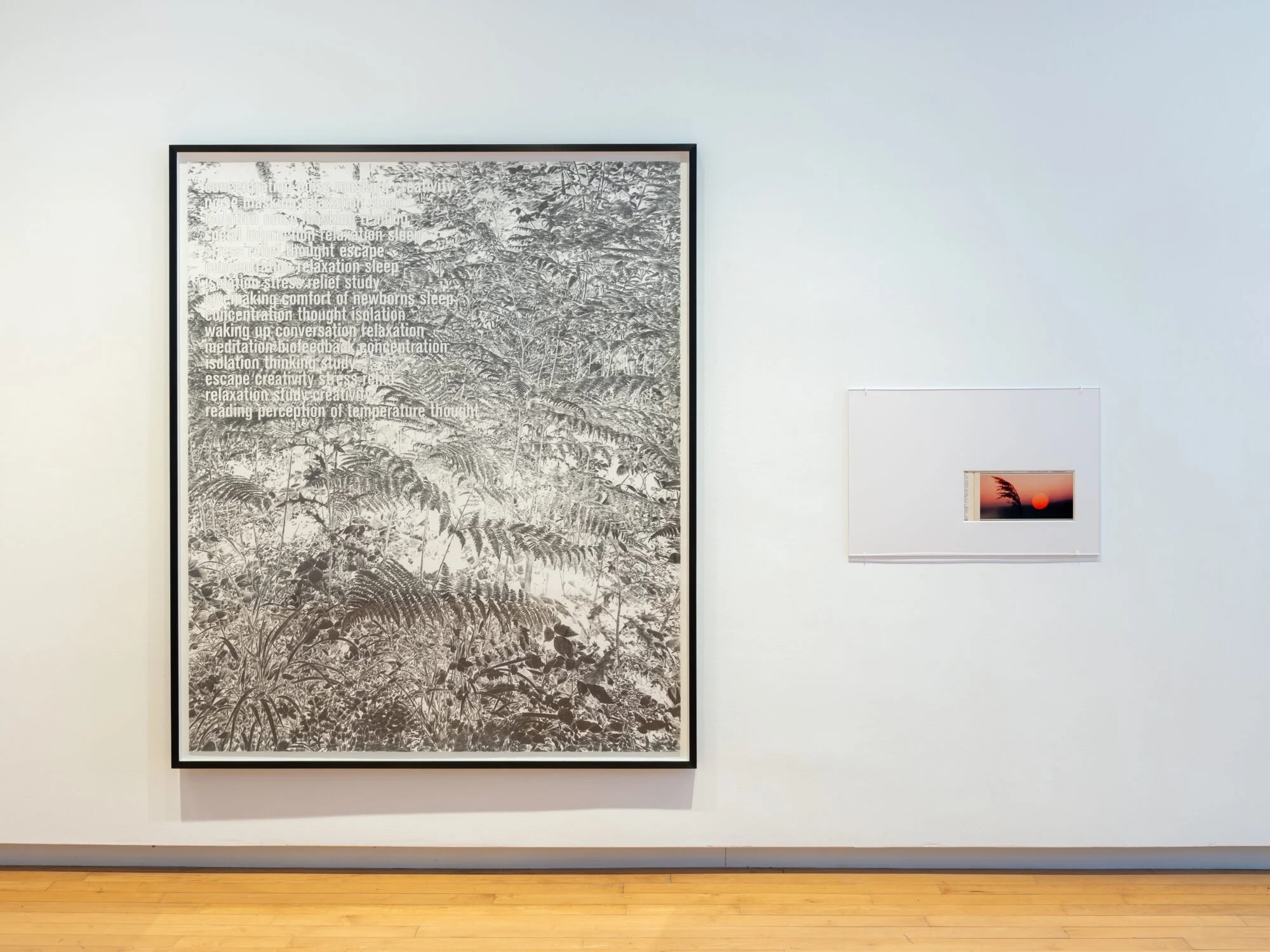
From Martin Beck’s show “… for hours, days, or weeks at a time,’’ through Oct. 5, at the Aldrich Contemporary Art Museum, Greenwich, Conn.
The museum explains that the show “explores the methods and means through which environments are captured, compressed, and represented. Using drawing, sound, video, and installation, the exhibition presents a suite of works informed by Beck’s research into ‘environments,’ a series of 11 vinyl records from the 1970s produced by the Syntonic Research Inc. label that registered the acoustics of nature and meditative sounds with high-fidelity recording technology. Marketed as psychoacoustic experiences with the potential to alter domestic and workspace atmospheres—for listeners to transcend the monotony of bureaucratic space and activity—the records laid the groundwork for an emerging industry catering to the care, efficiency, and control of the self. Beck’s interest in these records is their pioneering role as atmospheric tools for self-optimization within an ever more competitive capitalist setting.’’
‘Between forged and found’

“Garganta Cueva,’’ by Estefania Puerta, in her show at the Aldrich Contemporary Art Museum, Greenwich, Conn., Sept. 18-Jan. 11.
The museum says:
“‘Estefania Puerta’ marks the artist’s first solo museum presentation, featuring two new wall reliefs alongside ‘Garganta Cueva’ (2023). Born in Manizales, Colombia, Puerta immigrated to the United States at age two, settling with her family in East Boston. Drawing from her experience growing up undocumented, her work recasts the terms of categorization—blurring the lines between what is forged and found, felt and repressed, spoken and withheld. Influenced by literature, mythology, and psychoanalysis, she delves into themes of shapeshifting and transformation, reflecting on what is gained or lost through cultural and material translation.’’
Between dislocation and belonging
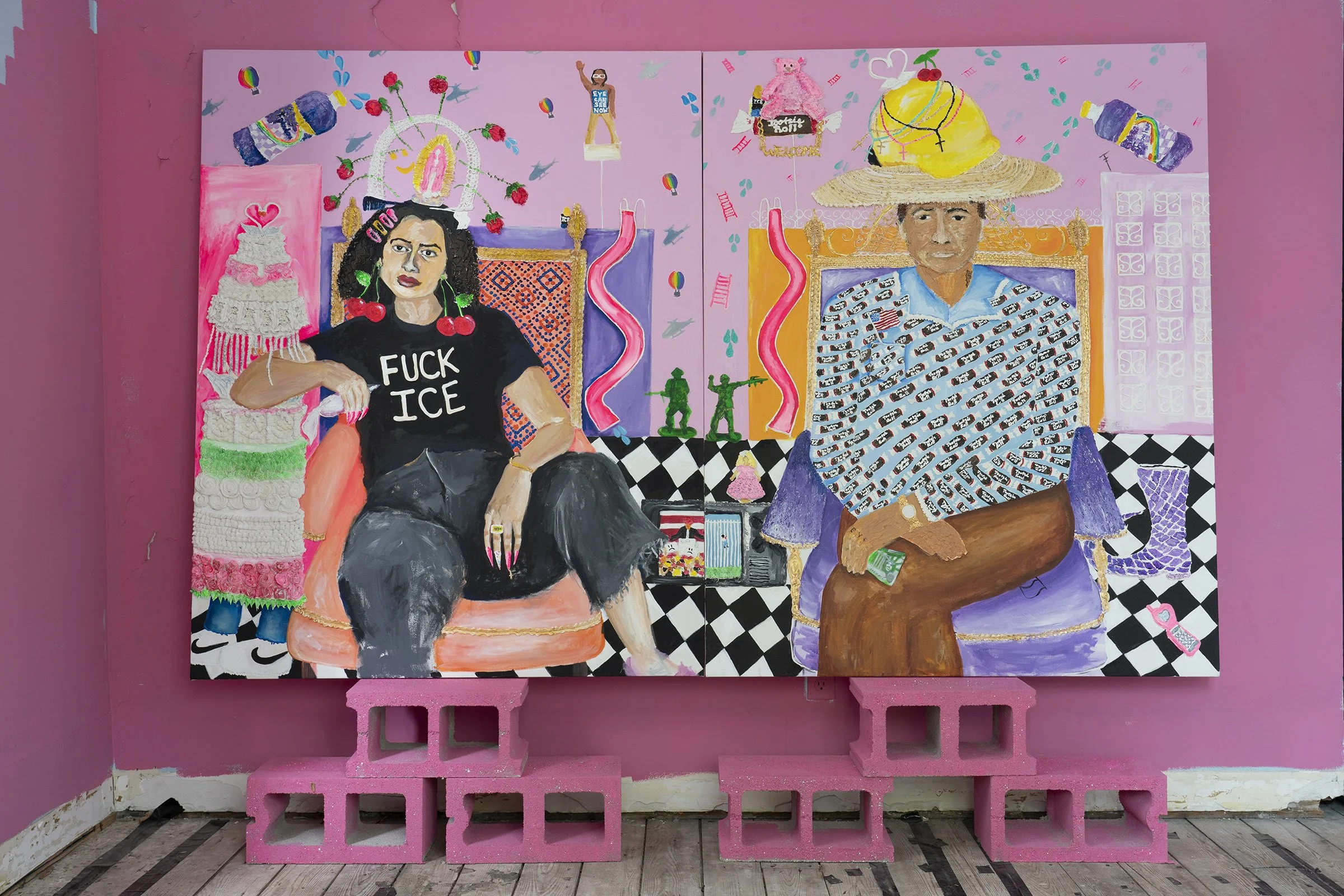
From Yvette Mayorga’s current show, “Dreaming of You,’’ at the Aldrich Contemporary Art Museum, in Greenwich, Conn.
The museum says:
“Inspired by her mother’s work at a bakery after immigrating to the United States from Jalisco, Mexico, Mayorga frosts thick acrylics onto sculptures and canvases with piping bags and icing tips to achieve delectable textures. … Mayorga’s handicraft intimately immerses the viewer in the tension between dislocation and belonging that defined her girlhood as a first-generation Mexican-American in the Midwest in the ‘90s and 2000s.’’
Find shelter where you can
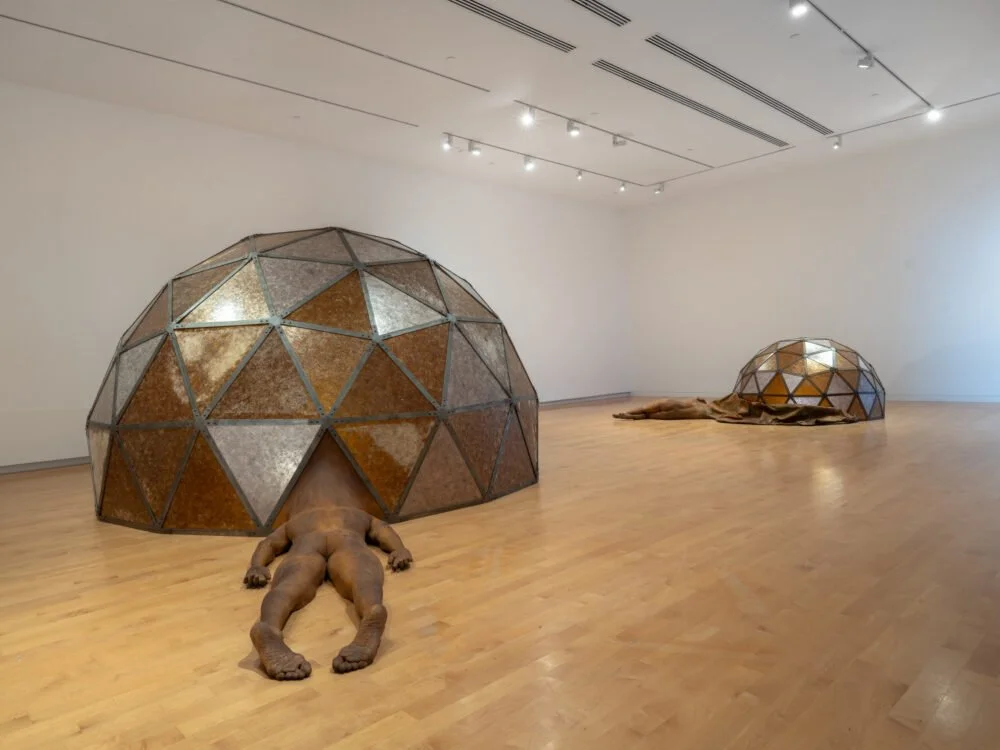
From Chiffon Thomas’s show “The Cavernous,’’ at the Aldrich Contemporary Art Museum, Ridgefield, Conn., through March 17.
The museum says:
“Chiffon Thomas’s first solo museum exhibition will unveil a new body of work, including the artist’s first public sculpture. Thomas’s interdisciplinary practice, spanning embroidery, collage, sculpture, drawing, performance, and installation, examines the ruptures that exist where race, gender expression, and biography intersect. Thomas’s practice is informed by his background in education, percussion, and stop motion animation, as well as a childhood steeped in religion.’’
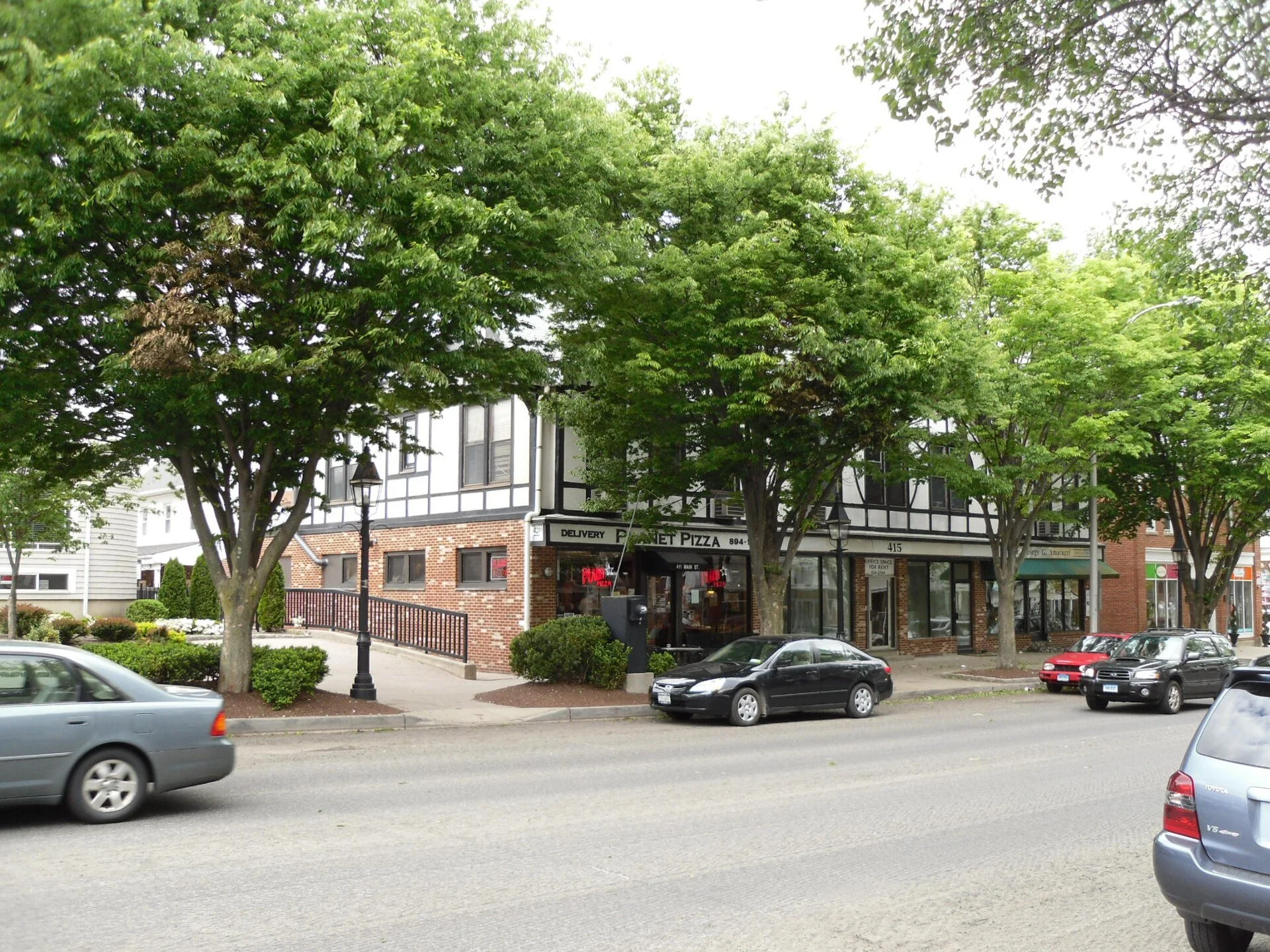
In Ridgefield’s rather spiffy downtown
— Photo by Doug Kerr
‘Decomposition and rebirth’
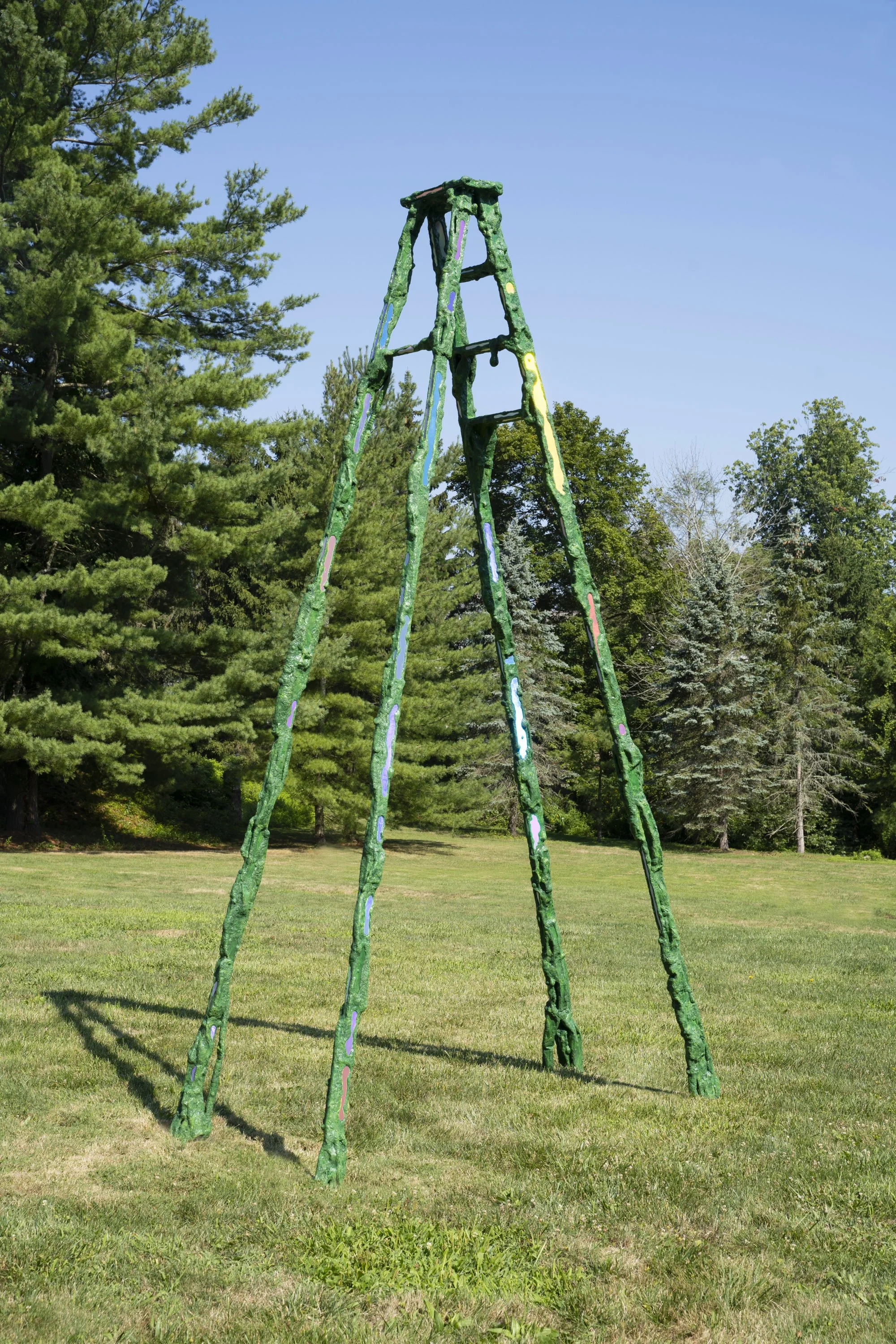
“Last Steps,” by David Shaw, in Ridgefield, Conn., in the The Aldrich Contemporary Art Museum’s Main Street Sculpture program through next April 23.
The museum says:
“Shaw’s recent work explores the indistinct boundaries that separate nature, technology, and consciousness. ‘Last Steps,’ which takes the form of a step ladder, is in a process of decomposition as well as rebirth, with gleams of spectral light appearing in gaps in the moss-like growth that has enveloped it, suggesting an alternate reality or a regenerative possibility lurking beneath the surface.”
“The artist’s use of the ladder form—but with missing rungs—speaks of the challenges we face as a civilization as we try to heal what has been lost.’’
Shaw says: “As we begin to embrace our responsibilities to the natural world, ‘Last Steps’ is both an image of our frustrated, unattainable, and perhaps misguided desire for progress, and a symbol of hope that the world wants to rebuild, that life wants to continue.”
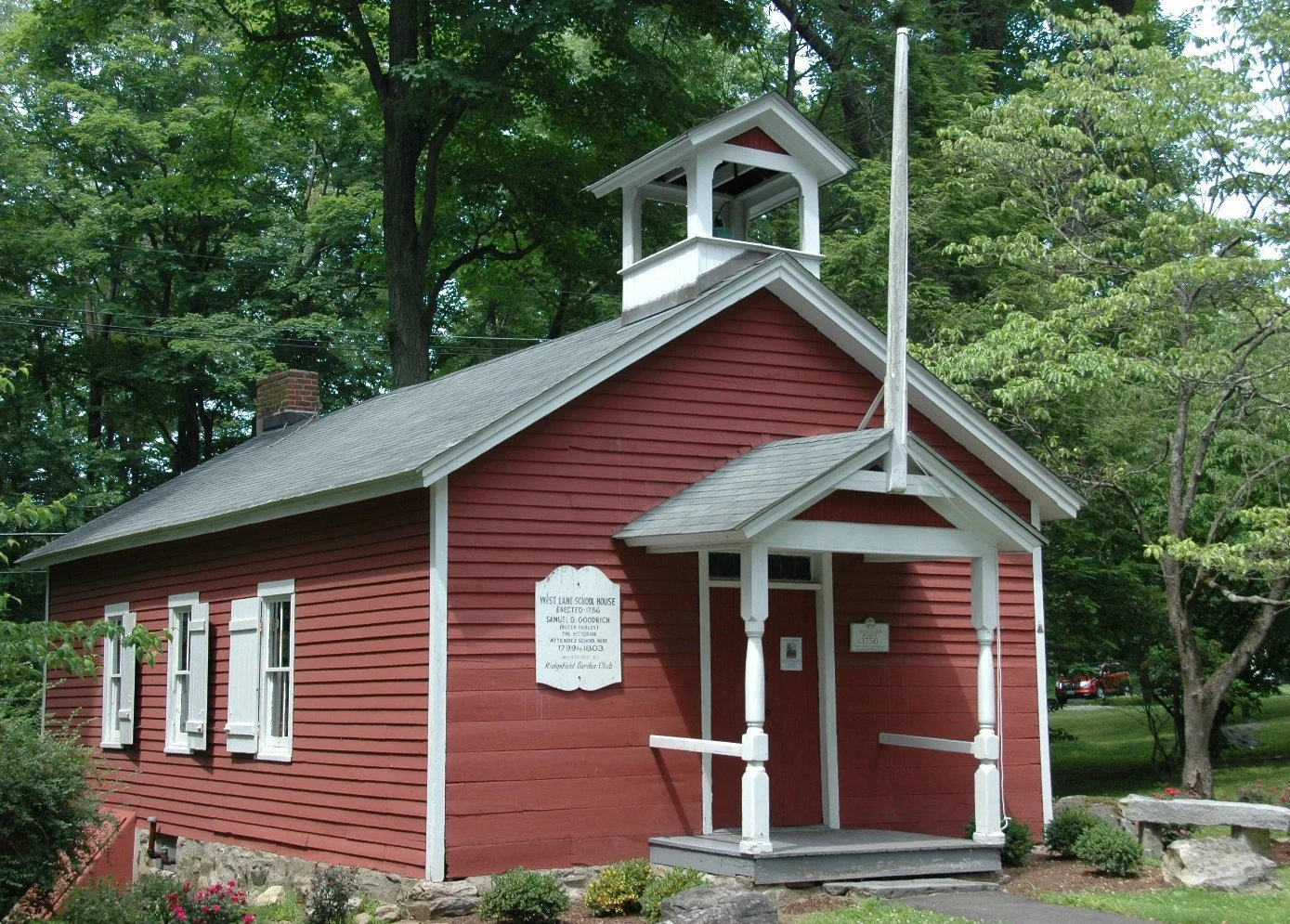
Ridgefield’s Peter Parley Schoolhouse (c. 1750), also known as the Little Red Schoolhouse or the West Lane Schoolhouse, is a one-room schoolhouse in use by the town until 1913. The site and grounds are maintained by the Ridgefield Garden Club. The building is open certain Sundays and displays the desks, slates, and books the children used.