William Morgan: Seeds of its own destruction?
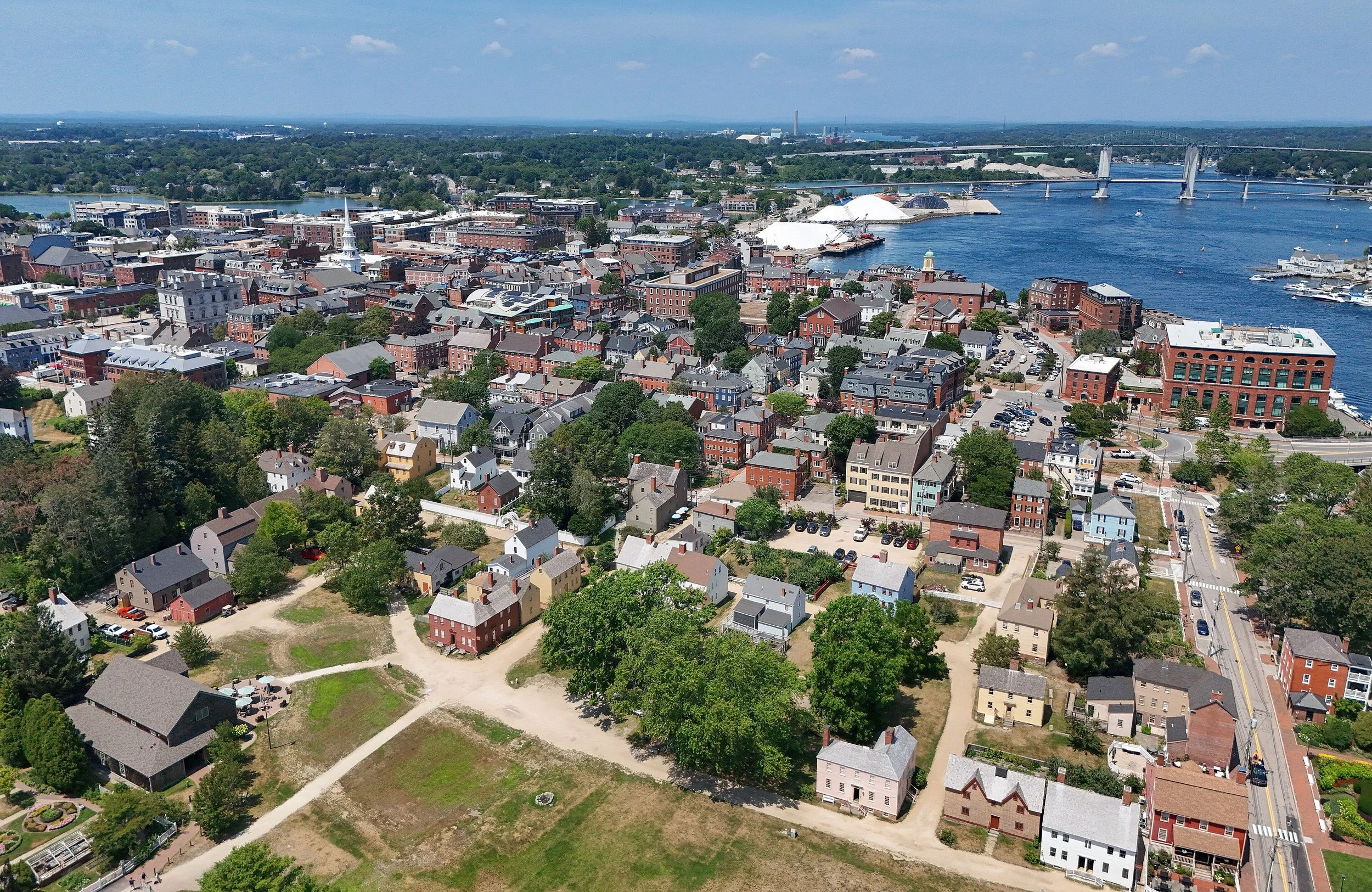
Portsmouth, New Hampshire
— Photo by Quintin Soloviev
(All photos below by William Morgan)
Two buildings in the downtown historic district of Portsmouth, N.H., suggest the problems of history and growth in what has become a “destination.” The delicate Federal-style customs house of 1817 speaks of New England’s glorious maritime past. The recent Buckley’s Market, a franchise dining and food emporium, represents an awkward attempt at being contemporary.
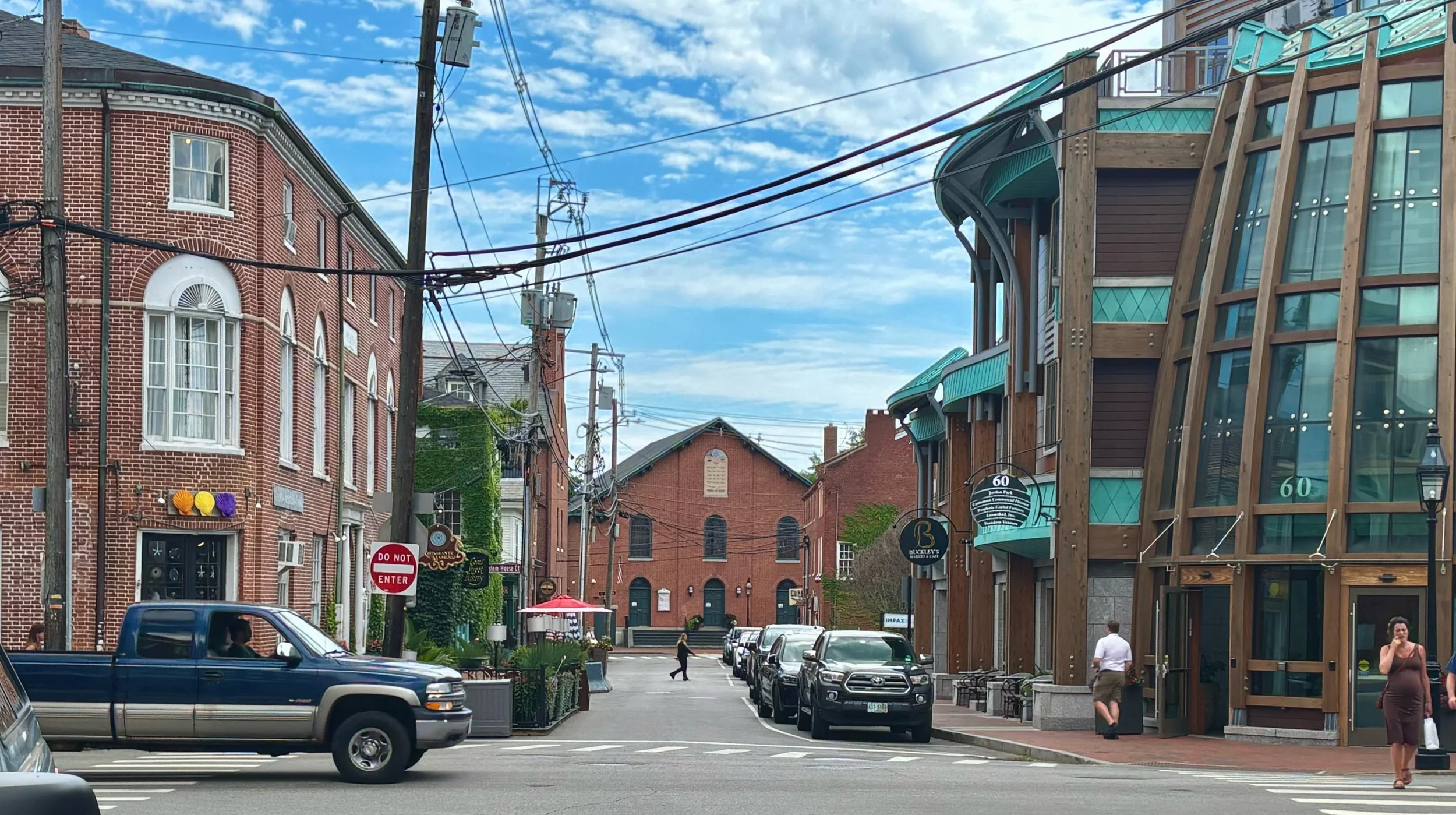
Penhallow Street, Portsmouth. Customs House to left; Buckley’s to right; Temple Israel at end of block
The Customs House served as the harborside city’s post office until 1858, when it was replaced by a granite Italianate pile designed by Ammi B. Young, the New Hampshire native who served as the first Supervising Architect of the United States Treasury. Despite the grandeur of Young’s imposing civic palace, the 1817 Customs House (no doubt by a local housewright) is typical of Portsmouth’s remarkably cohesive townscape composed of somewhat utilitarian two-and three-story brick structures.
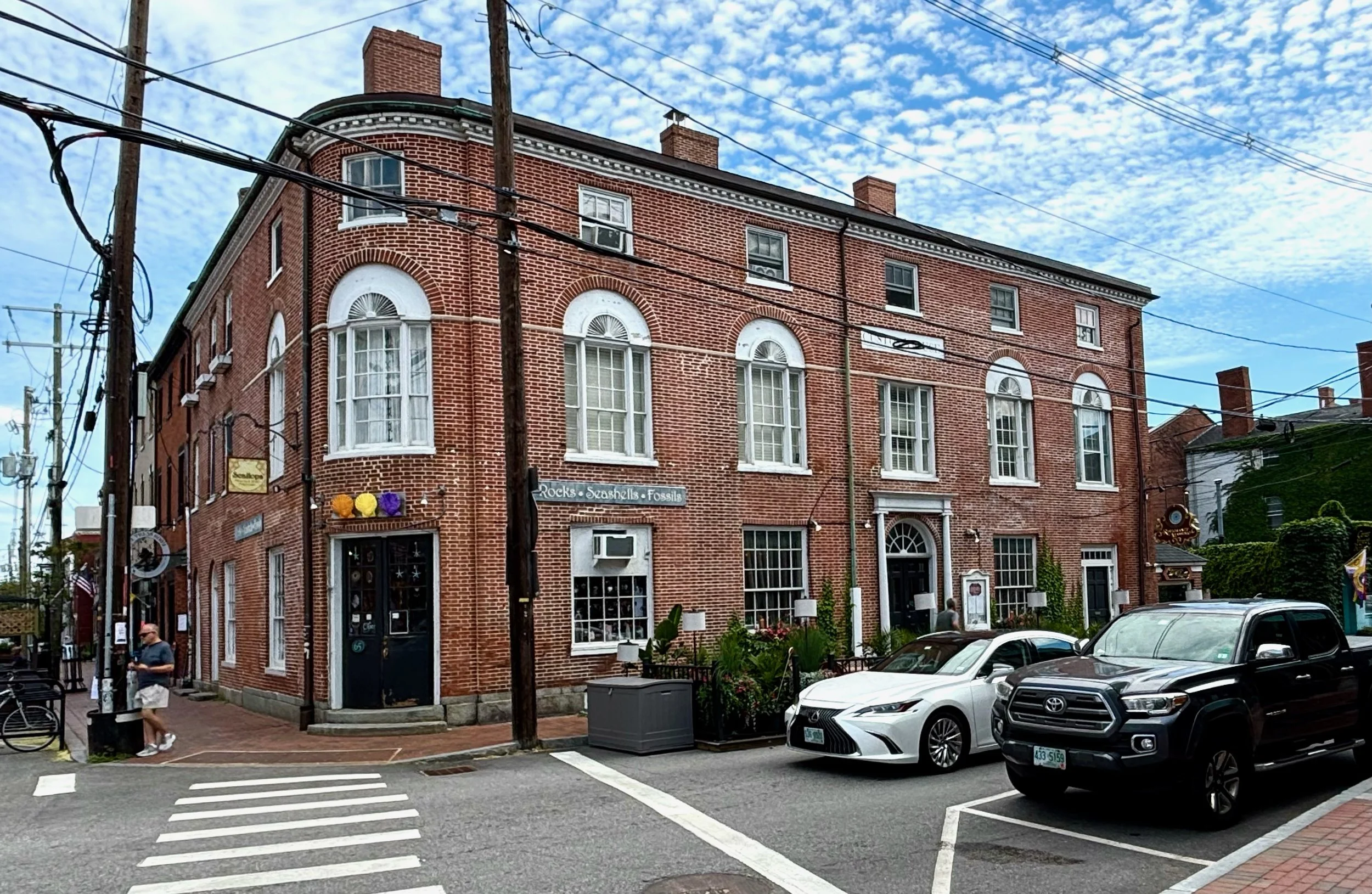
What a lovely way to turn a corner: a small structure achieves monumentality through graceful proportions, offset by exquisite fanned Palladian windows.
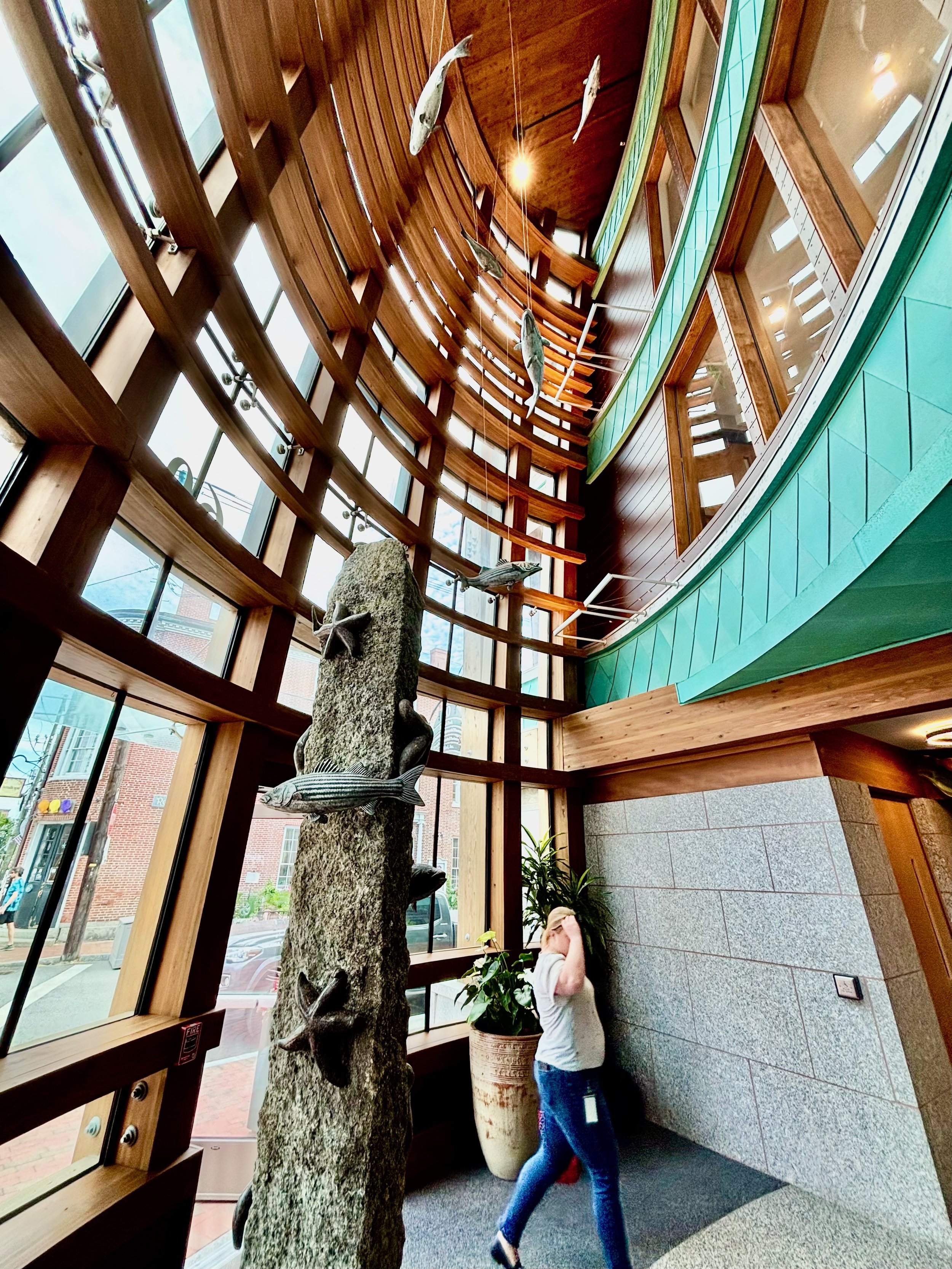
Right across the street from this appropriately gentle neighbor is the market-restaurant-office-block, clearly a bully who gives the architectural finger to one of the most attractive historic downtowns in New England. No plaque alerts us to the architect’s name, presumably a corporate hack, who through ignorance or just meanness, wanted to inflict urbanicide. Yet, a sensitive modern design could enhance the street, contributing to its evolution. Instead, we have a combination giant football and aquarium, along with a mélange of silly aqua-colored details.
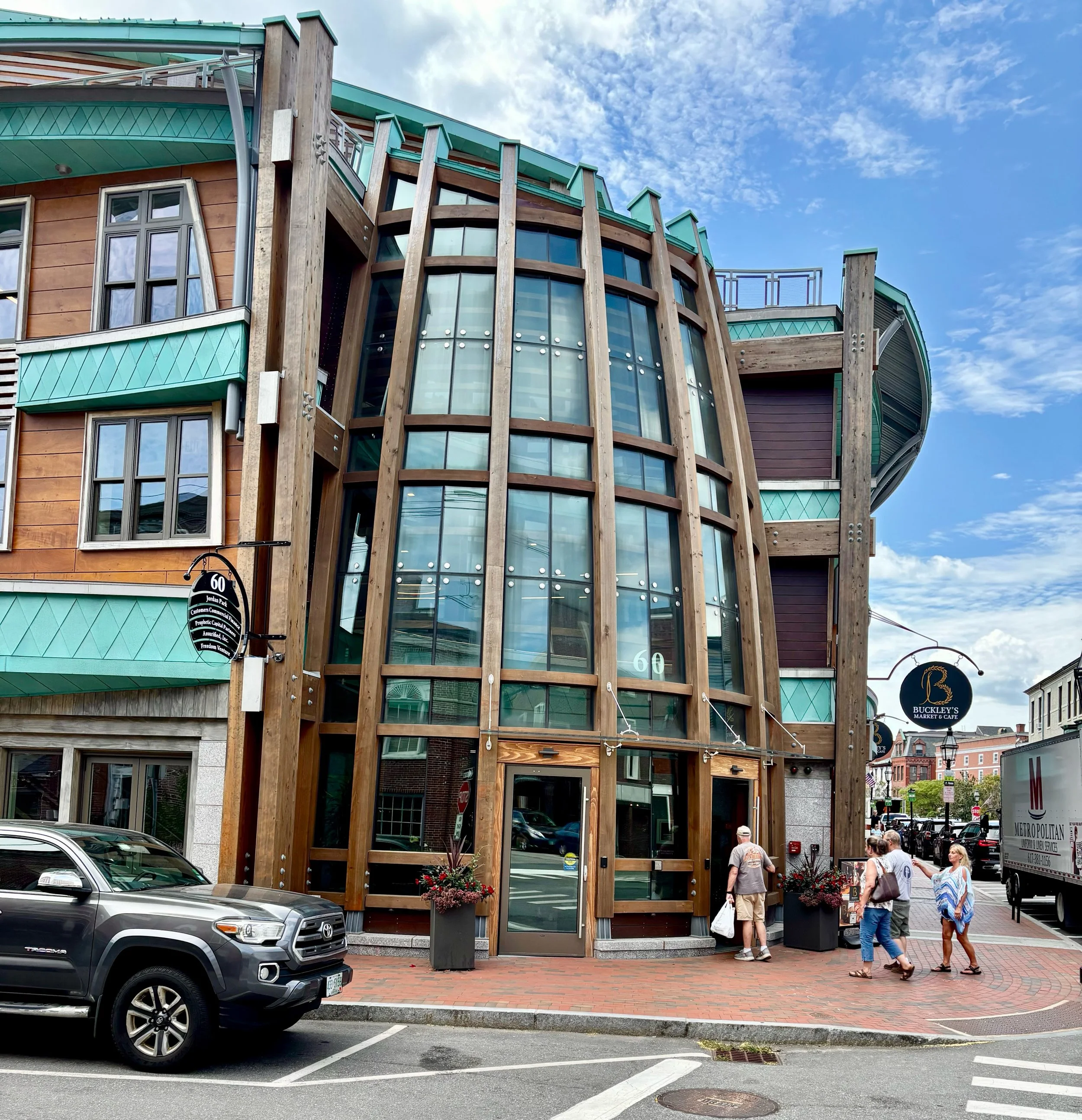
A nautical take on the Pro Football Hall of Fame, in Canton, Ohio?
Despite the promise of an impressive entrance, the way into the marketplace is a cramped, silo-like funnel, decorated with kitschy floating fish. Perfect for Miami Beach, perhaps, but it is difficult to ascertain how this is related to New Hampshire’s colonial capital. On the other hand, this tacky intrusion may be the future of this once handsome small city. Portsmouth, like Nantucket, Newport and Salem, are seeing themselves over-developed–literally destroyed by the very thing that made them so appealing. The cultivation of beauty planted the seeds of their own destruction.
On summer days, especially, and on weekends during the entire year, crowds of tourists jam the streets, in search of what? History, or T-shirts and ice cream, beer and margaritas? Several behemoth luxury hotels–all in brick, in developers’ pathetic attempt to blend in with the city’s early fabric–have recently been built and more are under construction. One wonders who their patrons are. Meanwhile, working folk in the Portsmouth area have to commute farther and farther in search of affordable housing.
In the 1960s I had my first job, as a researcher, at Portsmouth’s Strawbery Banke, a Williamsburg-like village composed of endangered 18th-Century houses brought to the site. Such historic preservation was something of a novelty to the tawdry Navy town. A friend from nearby Wells, Maine, then described Portsmouth as the sort of town where on Sunday mornings hung-over men saddled up to the drugstore soda counter and ordered Bromo-Seltzers. A Baltimore friend to whom I introduced Portsmouth, declared it was “Annapolis without money.”
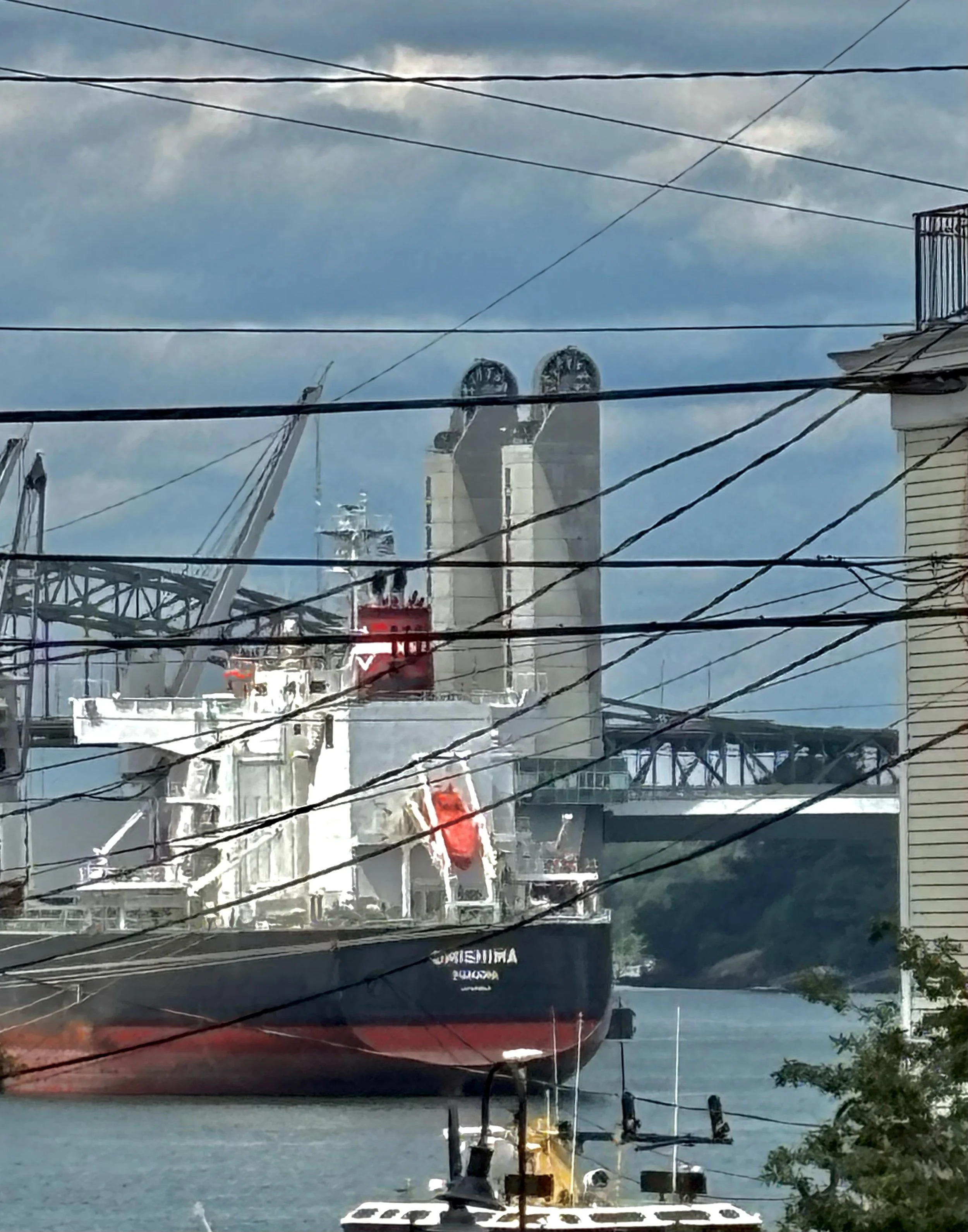
A Japanese tanker moored in the Piscataqua River, just a few hundred yards from downtown
That gritty dockland vibration is still preserved by the working waterfront (huge mounds of salt for New Hampshire’s icy roads, for example, are stockpiled on the edge of the tourist district), the presence of the Portsmouth Naval Shipyard (which is actually in neighboring Kittery, Maine) and a few frayed edges. But how long can Portsmouth protect its rich physical history from the curse of gentrification?
William Morgan is a Providence-based architectual historian and critic and photographer. The author of many books, he also writes essays on American popular culture. His books include Academia: Collegiate Gothic Architecture in the United States, Monadnock Summer, The Cape Cod Cottage, American Country Churches, among others.