William Morgan: Sculpting Melville, boosting Mass. South Coast tourism
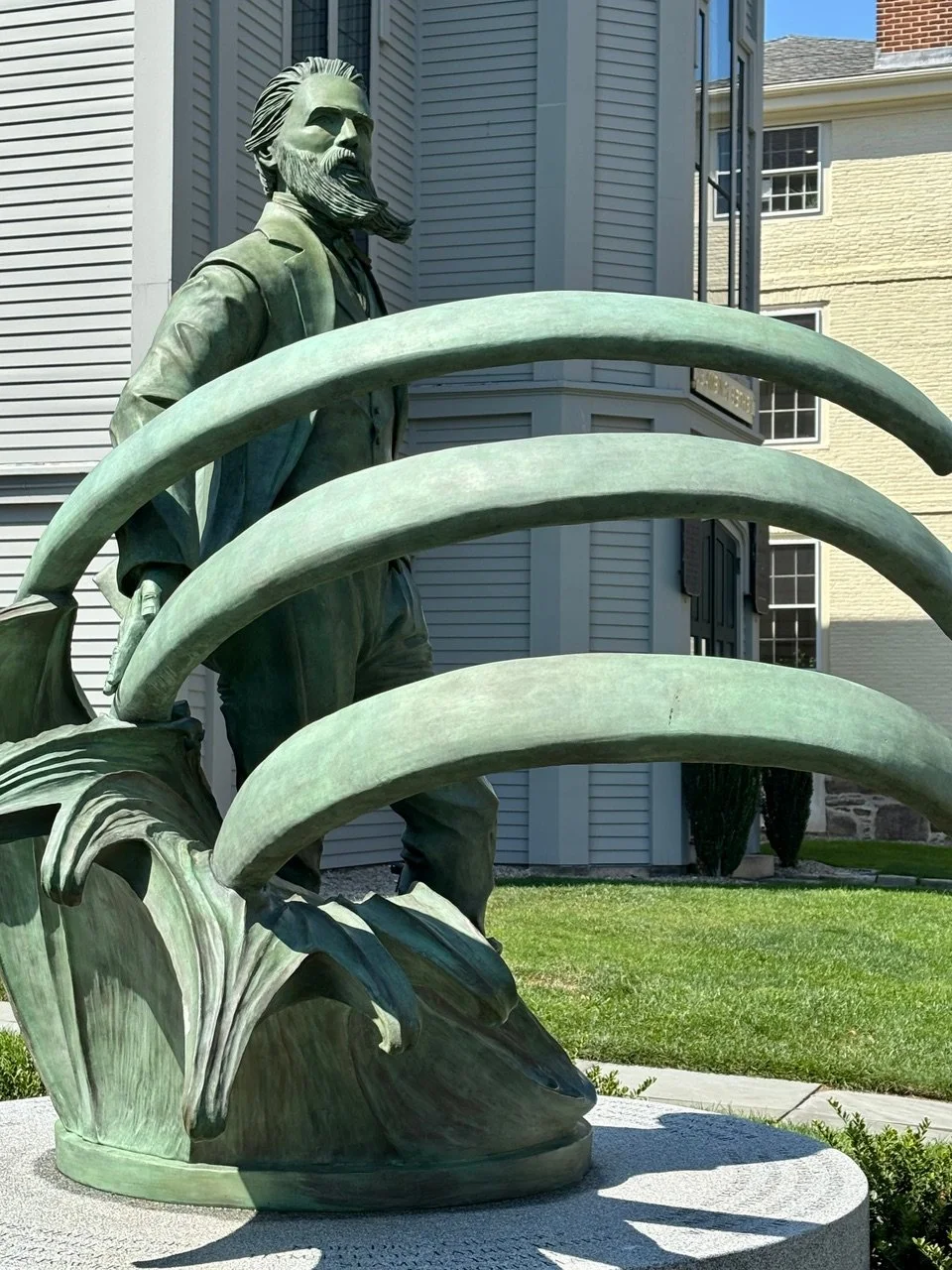
This summer a dramatic statue of author Herman Melville was unveiled at the Seamen’s Bethel, across from the Whaling Museum in New Bedford, Mass. One wonders if Melville were quite as handsome as his depiction in bronze by Stephanie Rocknak. The author of Moby Dick is rendered dramatically, a windblown figure merged with a whale’s ribs and the ocean’s waves.
There are many seminal novels by major novelists that are indelibly associated with cities, but it might be fair to say that Melville’s tale of Ishmael, Captain Ahab, and the white whale has contributed much to boosting contemporary New Bedford‘s fortunes. With its two whale skeletons and a half-size model of a whaling ship, the Whaling Museum is one of New England’s great treasures, drawing a steady stream of tourists to a spectacular if small area of restored buildings in what some might see as an otherwise tawdry town with limited attractions. Whaling made New Bedford America’s richest city in the mid-19th Century, and the popularity of the great American novel has kept the romance of that past alive.
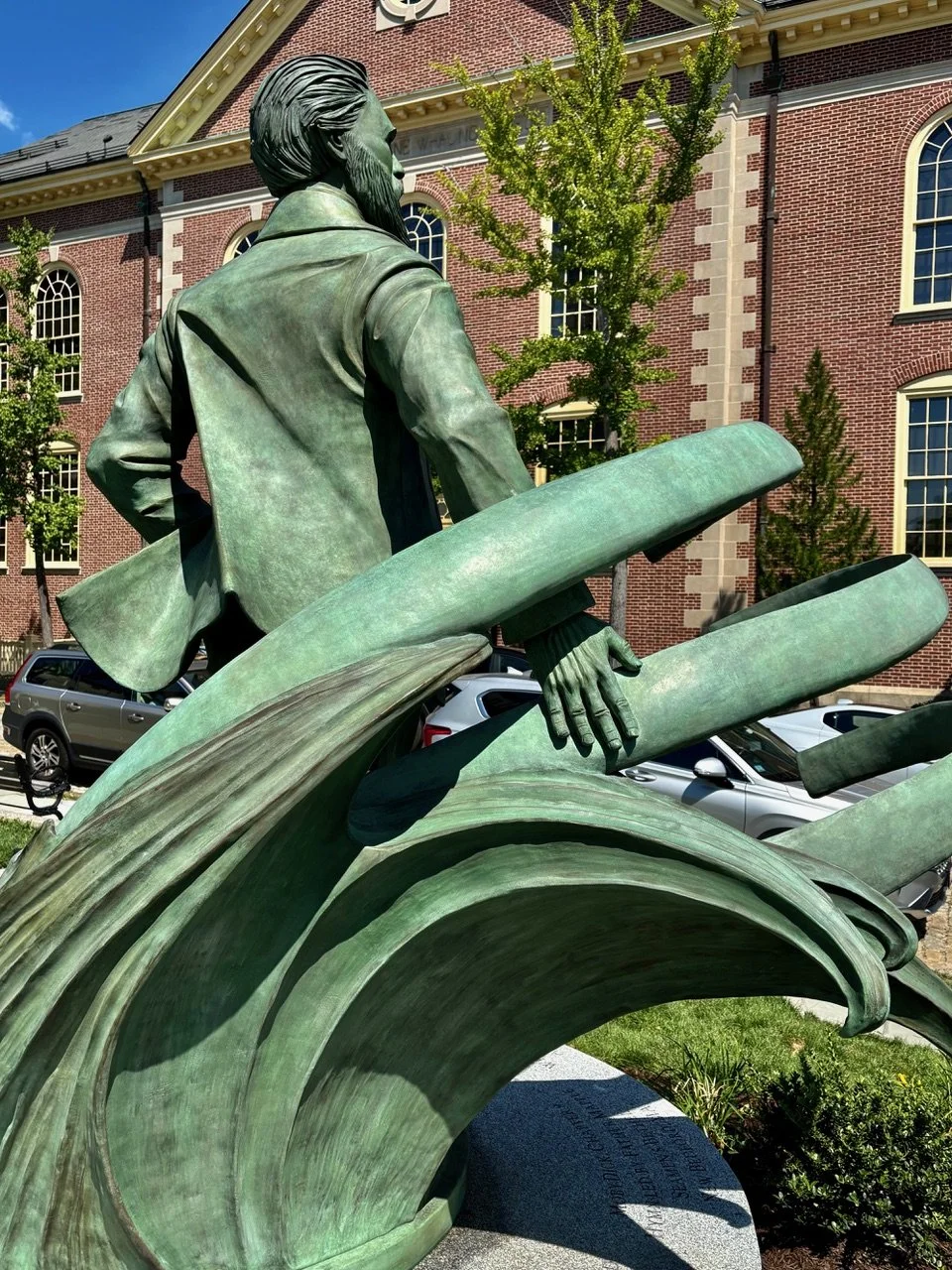
Most artists have second jobs as teachers, and Rocknak is no exception, except that at Hartwick College, in Upstate New York, she teaches philosophy and cognitive science. Perhaps best known for her narrative, life-size bronze of Edgar Allan Poe in Boston, complete with a raven and papers blowing in the wind, most of her work has been in wood. With the Melville, Rocknak was experimenting with a combination of traditional public statuary and abstraction – mixed metaphors, if you will. And she is mostly successful — the rib and wave connection is awkward at best, but civic monuments are tricky, and far too many run to a kind of Soviet realism, which often comes across as mawkish.
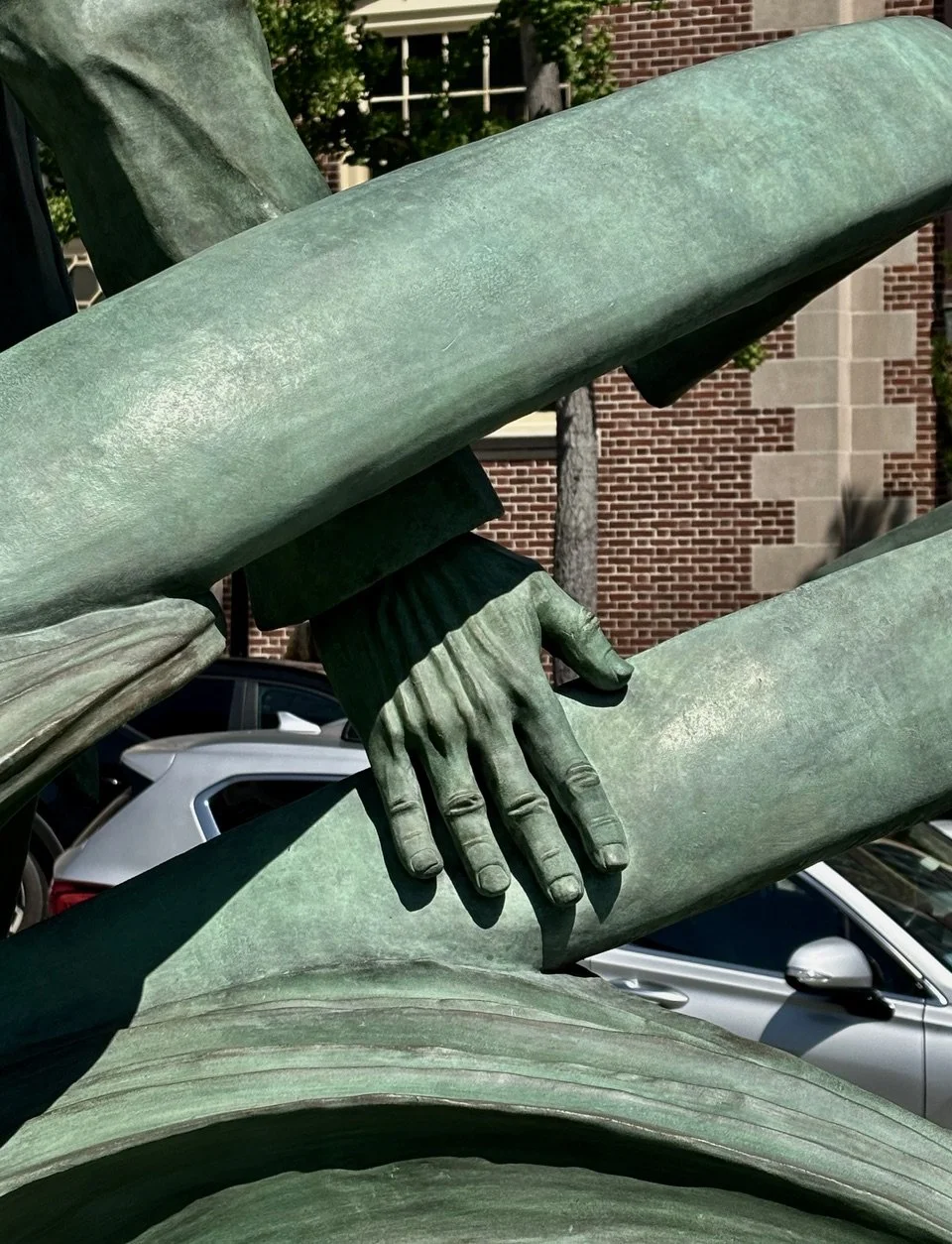
The very nature of public sculpture is conservative, so Rocknak sagely offers acknowledgments to some of very best mentors. Melville’s right hand on the whale’s rib recalls the great Baroque artist’s Bernini’s exceedingly lifelike rendition of Pluto’s hand pressing into the maiden’s thigh in the Abduction of Proserpina. The standing figure of Melville echoes the equally nautical Admiral David Farragut in New York by Augustus St. Gaudens, where the sculptor wisely relegated the water nymphs and waves to the plinth.
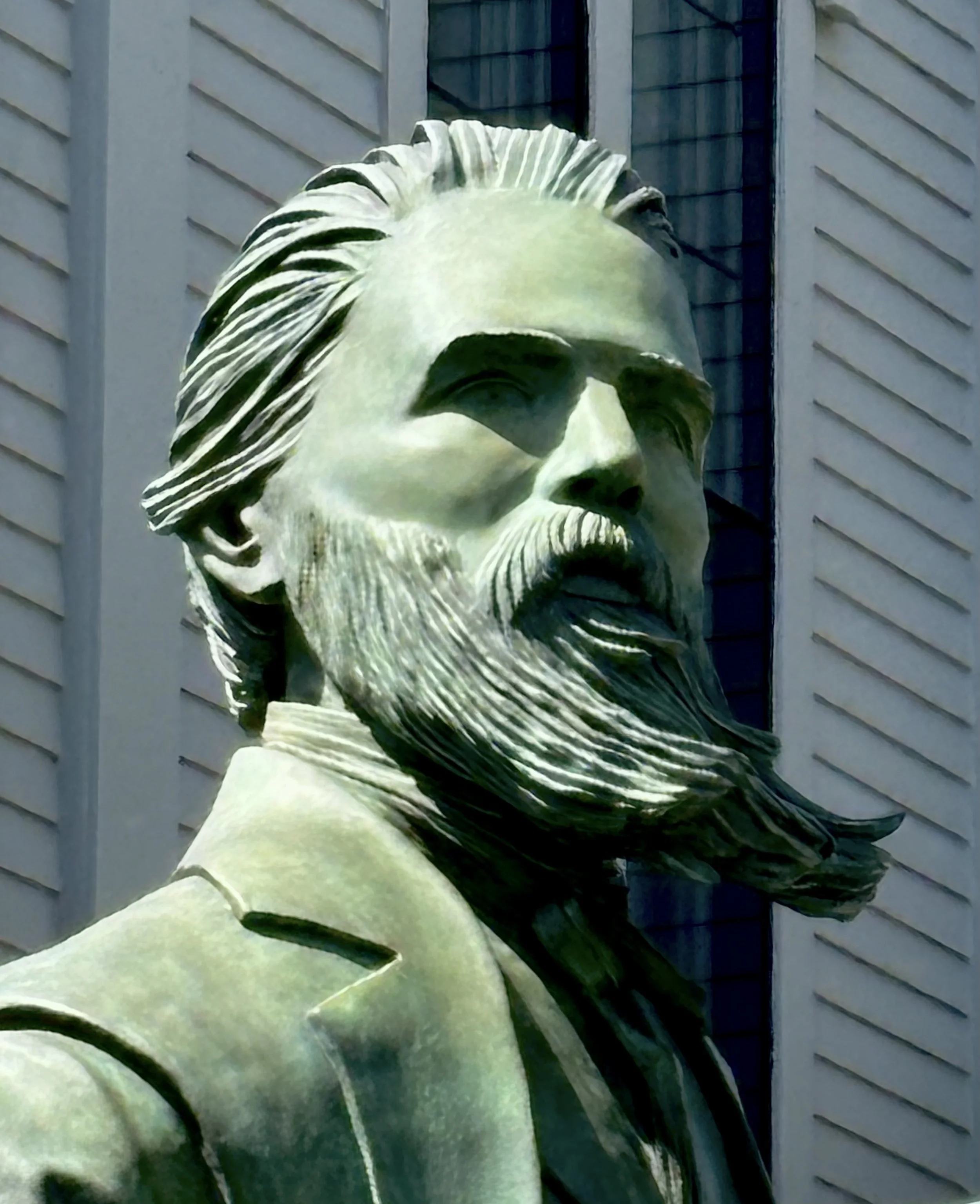
For a possible book on the 9/11 memorials, I looked at hundreds of commemorative monuments from all across America. At the end there were fewer than a score of works that qualified as exceptional art. Stephanie Rocknak’s Melville, on the other hand, is a triumphant tribute to the author of Moby Dick.
William Morgan encountered Moby Dick in a course on American literature at Tufts University. A Providence-based architectural historian and photographer, Morgan is the author of American Country Churches and Yankee Modern, among other titles.