Chris Powell: Build housing without sprawl; are schools sanctuaries for illegals?
MANCHESTER, Conn.
Supposedly there was going to be a special session of the Connecticut General Assembly in the fall to arrange a compromise on the housing legislation passed by liberal Democratic legislators during this year's regular session but vetoed by Gov. Ned Lamont. Fall is here but neither the governor nor the legislature has issued such a call. It's not clear what's happening.
But in a commentary the other day the Yankee Institute's Meghan Portfolio argued that a special session would not be good for democracy. “Special sessions often operate in the shadows," she wrote. “Bills frequently don't appear until the very day of the vote, sometimes only hours before. Towns, taxpayers, and even rank-and-file legislators are left in the dark. This isn't policymaking. It's ambush politics."
Indeed, special-session legislation can get written by a few leaders without public participation and review. Only after its enactment are the “rats’’ in the legislation discovered -- provisions that never would have been approved if adequately publicized.
Connecticut's housing shortage is an urgent problem, the biggest factor in the state's outrageously high cost of living. But the thrust of the vetoed legislation -- reducing the obstructive influence of suburban zoning and imposing more rent control -- was never going to get much housing built quickly. Mainly the legislation would have let liberals feel better about themselves even as it made them hypocrites on environmental protection.
Many towns that have used zoning to exclude the middle and lower classes don't have the infrastructure necessary for higher-density housing -- water, sewer, and electrical systems, wide roads, and school capacity.
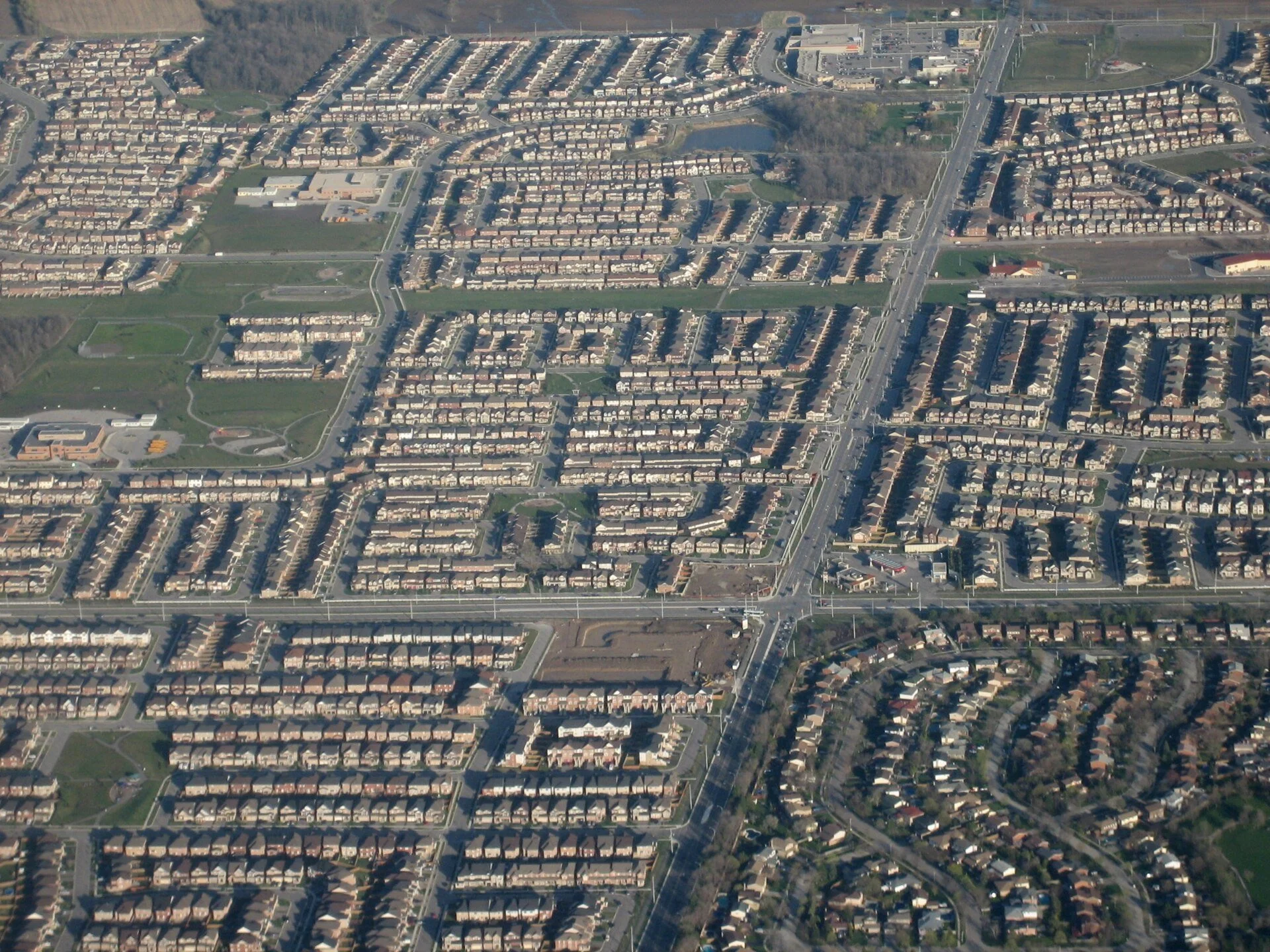
Of course their exclusive zoning was meant to keep things that way. But tearing up the countryside with more suburban sprawl to spite the bigoted snobs will have more disadvantages than it's worth when there is a much faster and more efficient way to build housing.
Connecticut's cities and inner suburbs are full of abandoned industrial property, decrepit tenements, and vacant or half-empty shopping centers. Many are eyesores. Additionally, much office space in the cities is vacant. All these properties are already served by the necessary infrastructure and redeveloping it as housing would do no environmental damage. Most of their neighbors might be glad if something shiny and new replaced the eyesores.
This is where Connecticut's urgent housing effort should concentrate, and that effort should be managed by a state housing development board, empowered to condemn decrepit or underused properties, take others by eminent domain, and option the properties to developers for market-rate housing, with the options withdrawn if developers fail to make quick progress.
A state whose leaders seem to think that the state government has enough money to buy the Connecticut Sun WNBA basketball team, when the state already has two nationally ranked public university teams, should have no trouble finding the money to build thousands of units of housing in a hurry. Or the state could skip the basketball team purchase and just build the housing instead.
xxx
Governor Lamont is right to want federal immigration agents to stop wearing masks and to start wearing badges and clothing identifying them as government agents when they make arrests. Masked and unidentified and looking like gangsters, the agents invite getting shot or stabbed by their targets or bystanders. Connecticut U.S. Rep. John B. Larson has introduced legislation in Congress to stop the gangsterism.
But the governor recently went far beyond the sensible. He held a press conference with school superintendents to discourage immigration agents from making arrests at schools, though there seem to have been no such arrests in Connecticut. The governor said he wants everyone to “feel safe" in school.
Why should people “feel safe" anywhere in the country if their presence is illegal? Why should immigration law not apply inside a school? If, as the governor, state Atty. Gen. William Tong, and many state legislators keep insisting -- that Connecticut is not a “sanctuary state" -- what would the governor make schools if not a sanctuary?
Of course journalists spared the governor the trouble of explaining. When obvious questions are politically incorrect, they can't be asked.
Chris Powell has written about Connecticut government and politics for many years (CPowell@cox.net).