Vox clamantis in deserto

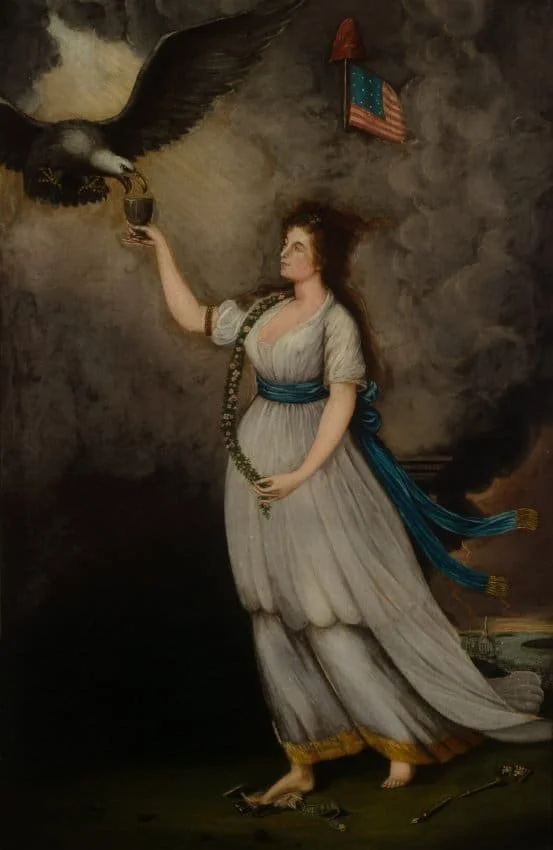



Overstudied?
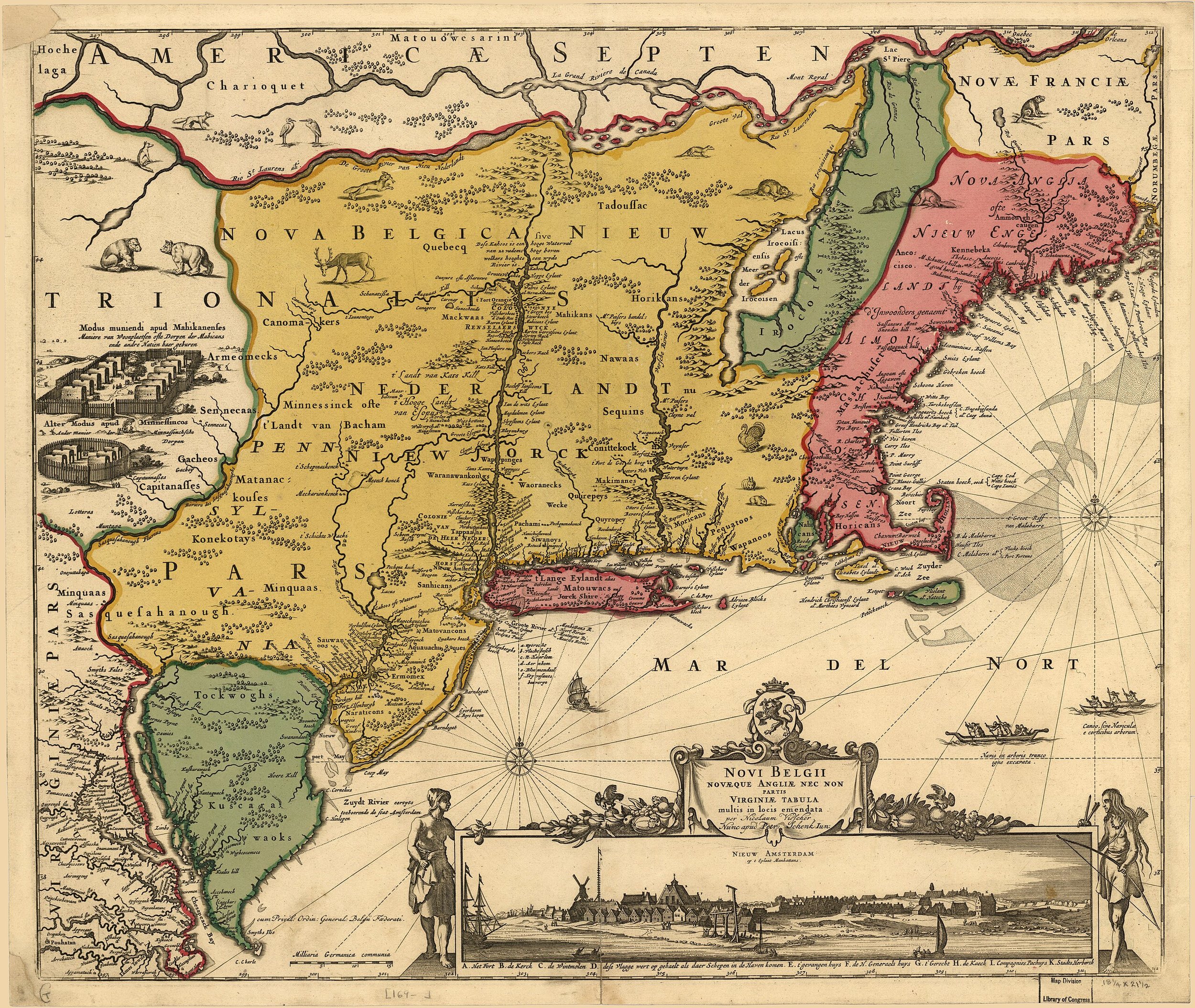
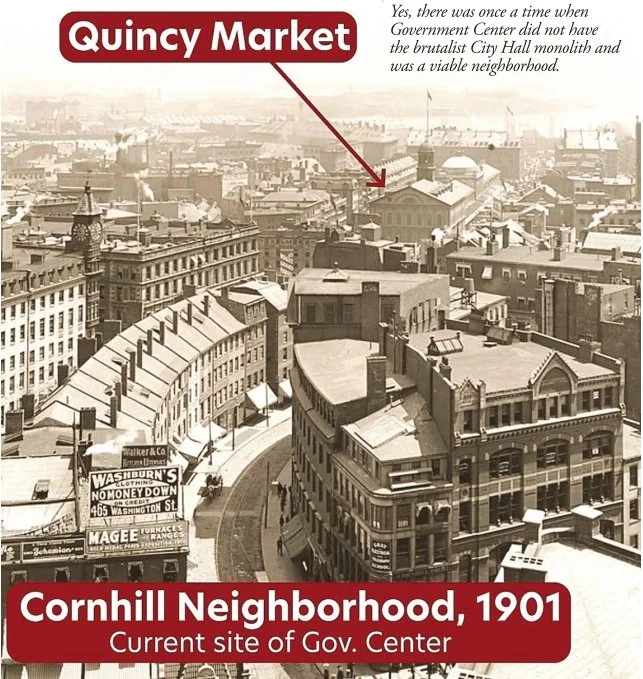
Dutch map from 1651.

1659 public notice in Boston declaring celebration of Christmas illegal.
“So many able historians have worked over seventeenth-century New England that one would think there was little left to be learned from the people who lived there - fewer than 100,000 {colonists — mostly of English origin} at the end of the century. Seldom, apart perhaps from the Greeks and Romans, have so few been studied by so many.”
— Edmund Morgan (1916-2013), historian at Yale University
Choreography of images
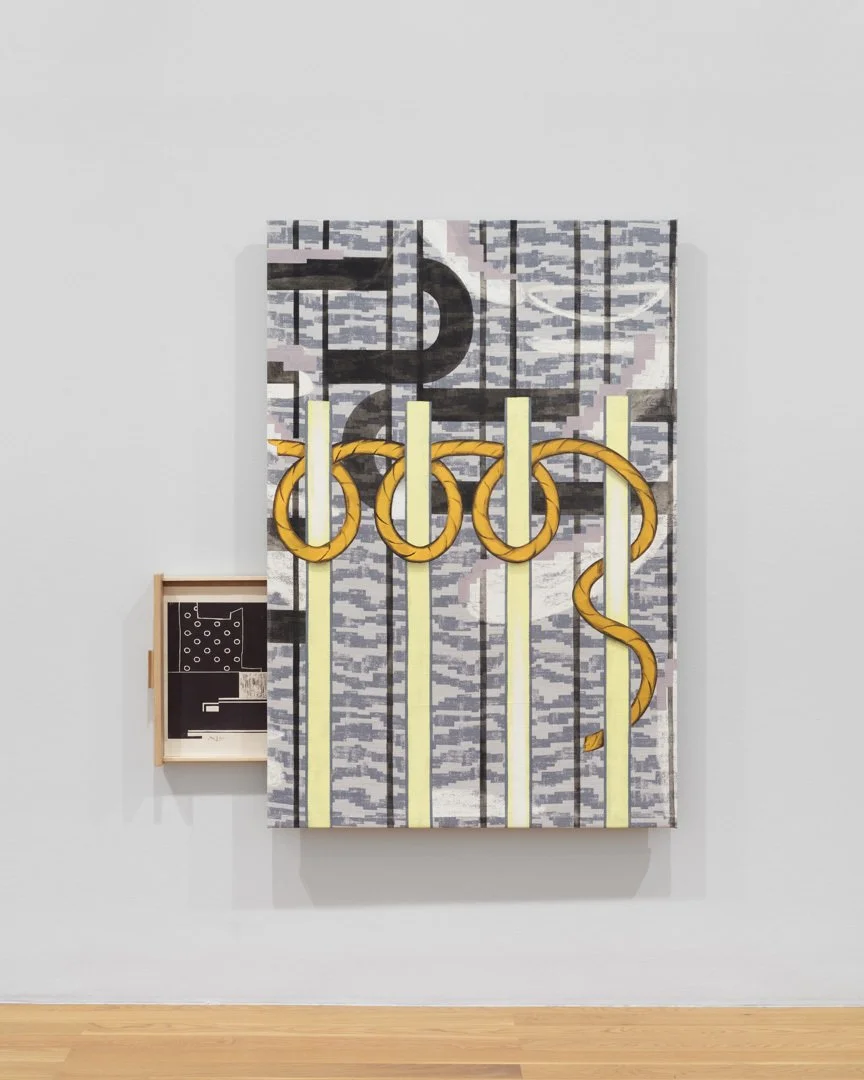
“The Origins of Asymmetry’’ (oil on patterned fabric and drawer with woodcut print), by Sónia Almeida, in her show “Stages,’’ at the Clark Art Institute, Williamstown, Mass., Feb. 14, 2o26 to Feb. 24, 2027.
The museum says:
“The artist is fascinated by patterns, image-reproduction technologies, and instructional materials. ‘Stages’ reflects her interest in how an artwork performs and the choreography it implies for viewers, but also in process: steps and layers, of which there are many in Almeida’s richly textured works.’’
Llewellyn King: Trump regime uses ICE as part of its assault on the rule of law; we are all imperiled
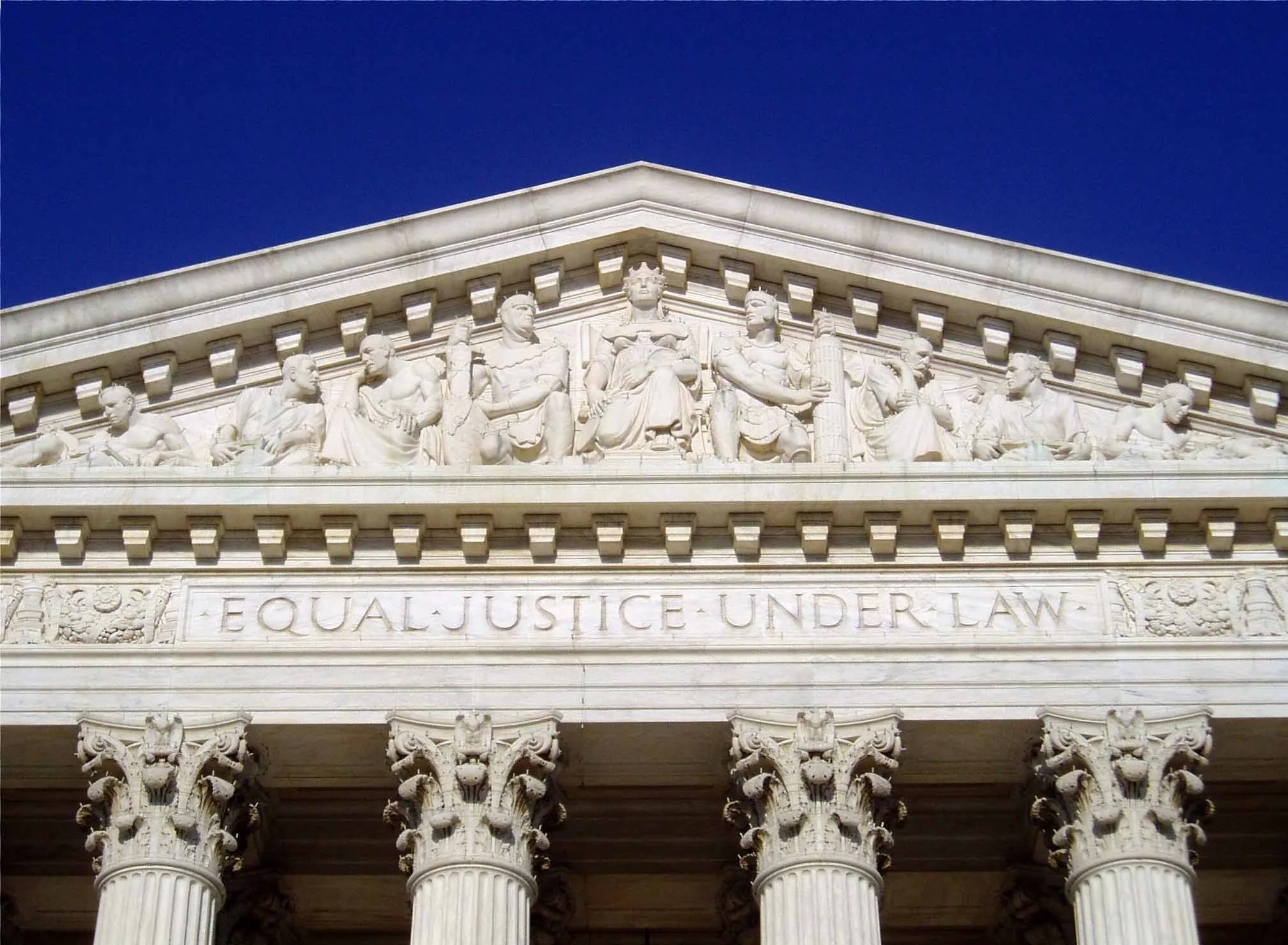
“Equal Justice Under Law,” by Robert Ingersoll Aitken, over the western façade of the U.S. Supreme Court Building.
—Photo byMattWade
WEST WARWICK, R.I.
The men you see in masks on your television savagely arresting people may not seem like your affair. But they are your affair and mine, and that of every other American.
U.S. Immigration and Customs Enforcement operates outside of the law. It doesn’t disclose charges, and no one arrested sees a court of law.
ICE agents are also the affair of the whole world, for while they are symbols of local terror, they are also symbols of America’s withdrawal from the one critical underpinning of civilization: the rule of law.
Without it, society isn’t much. No one is secure, even those who are in charge.
At another time, the victim may be the oppressor. When there is no law there is only fear. One day, the persecutor behind the mask may find himself persecuted by another man behind another mask.
Once power is wielded indiscriminately, it is free to serve many masters.
During a campaign by the government of Argentina to suppress left-wing political opponents, known as the Dirty War, from 1976 to 1983, a new way of settling personal disputes arose.
The police arrested so many and killed them secretly — between 10,000 and 30,000, and the victims became known as the “disappeared” — that soon murder became easier. If you didn’t like a rival or even a family member, you “disappeared” them — and that was that. No one would report such disappearances to the police for fear that it was the work of the police.
When I was in Argentina after the Dirty War, I was told about a man who didn’t like his mother-in-law and disappeared her. Lawlessness breeds lawlessness.
Currently, in areas of America where ICE is present, there is a common assumption that if someone suddenly goes missing, it means that ICE has detained them, and they are likely being sent to a detention center for deportation.
Mickey Spillane, the American crime writer, once said the only difference between the police and the criminals was that the police were employed by the government. We see that with ICE.
In 1215, at Runnymede, the nobles of England told King John to cut it out. They demanded an end to the arbitrary confiscation of property and his majesty’s habit of handing out sentences without trial.
Habeas corpus (“that you have the body”) dates in English law to before the Magna Carta, but it was codified there. The Napoleonic Code embraces many of the same elements as the Magna Carta, although Napoleon eschewed English common law when he revised French law into the code in 1804.
Now, about half of the world’s legal systems are based on the French code and half, including 49 U.S. states, are based on English common law. Louisiana has a hybrid of the two.
Nonetheless, it is a tenet of both systems that the individual will face trial and know his or her accusers, that the accused could be tried by his or her peers, and that the accused has rights.
Historically, the British relied heavily on the rule of law. In fact, law and its application became a mainstay of maintaining order in Britain and in the Empire. It was part of the concept of British exceptionalism.
The dignity and openness of trials were an important part of the colonial ethos. In Southern Rhodesia, before the country suffered a civil war and became Zimbabwe, I was a defendant for a minor dispute with a hotel over a bill. Even though I had settled the bill, I was ordered to appear before the native commissioner’s court in the remote area of the country where the hotel was situated.
The court was a room with a single table and chair. Everyone else sat on the floor. It was crowded with justice-seekers and defendants, all of them black.
Only the commissioner and I were colonials. I thought the process would be nothing more than a courtesy call, a wink and blink.
Finally, the great man with bushy, unkempt, white hair and a mustache called me to the table. He read the now-moot complaint and dressed me down in terms I have never been dressed down, before or after, ven by irate readers.
He said I was a disgrace to Britain, to my ancestry, to my family, and to my school. But, he said, I had especially let down the Empire. I was warned that if I ever faced him again for any reason, no matter how minor, I would get strict punishment.
It was really a rough way to treat a teenager, but it was part of the justice of the day that had to be seen as being even-handed and blind.
In Oliver Twist, Dickens wrote that “the law is an ass.” I think it is a beautiful beast, despite running afoul of it in colonial Africa. We need it back in the U.S. stable.
Llewellyn King is executive producer and host of White House Chronicle, on PBS, and an international energy consultant. His email address is llewellynking1@gmail.com, and he’s based in Rhode Island.
‘Juvenation’

Hermit Thrush, Vermont’s state bird.
— Photo by Andy Reago & Chrissy McClarren
“Look. And smell. Breathe deeply. Feel the air; touch it now and sense its purity, its vigor, its super-constant juvenation (that supposedly has given Vermonters their long life — if you discount their stubbornness.)’’
— Evan Hill, in The Connecticut River
‘Rootedness in exile’

From Eva Sturm-Gross’s show “Beasts of Eden,’’ at AVA Gallery and Art Center, Lebanon, N.H., Jan. 16-Feb. 14.
The gallery says:
“What does it mean to inherit a broken tradition? Eva Sturm-Gross’s premier solo exhibition, ‘Beasts of Eden,’ represents an invitation into a fragmented symbolic world. The mystics of the Middle Ages teach us that the reality of creation is a shattered one, like the shards of a broken vessel. Her work thus balances the central tension of Jewish diaspora, communicating both a longing for messianic redemption on the one hand and a rootedness in exile on the other. This rootedness is expressed principally by Sturm-Gross through the animals of the Upper {Connecticut River} Valley, her homeland. The creatures that populate ‘Beasts of Eden’ are drawn from her encounters with the natural landscape surrounding her childhood home in Hartland, Vermont. Biblical narratives here are portrayed by the fauna of the Upper Valley.’’
Taste test

Untitled photo by Cang Xin, at the Museum of Art, Rhode Island School of Design.
.
Boston’s Big Three
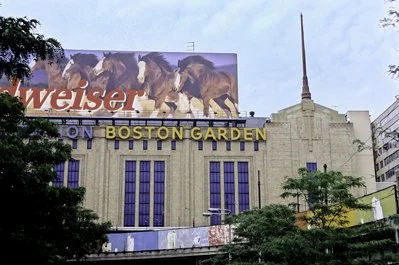
The Boston Garden in 1994. It was demolished in 1998 and replaced by the TD Garden, though many still call that building The Boston Garden.
“Boston’s three major industries are sports, politics and revenge.’’
— Larry Moulter, writer, former sports-sector executive (including as manager of the Boston Garden), political operator, and writer.
Light is usually appreciated

In James Turrell’s show “Into the Light,’’ at MASS MoCa, in North Adams, Mass.
The museum says:
“In James Turrell’s hands, light is more than simply a source of illumination: it is a discrete, physical object. His sculptures and architectural interventions elevate our experience and perception of light and space. Squares of sky seem to float, suspended, in ceilings or walls; architecture disintegrates; and brilliant geometric shapes levitate in midair.’’
Philip K. Howard: America’s paralyzing ‘back-of-house problem’
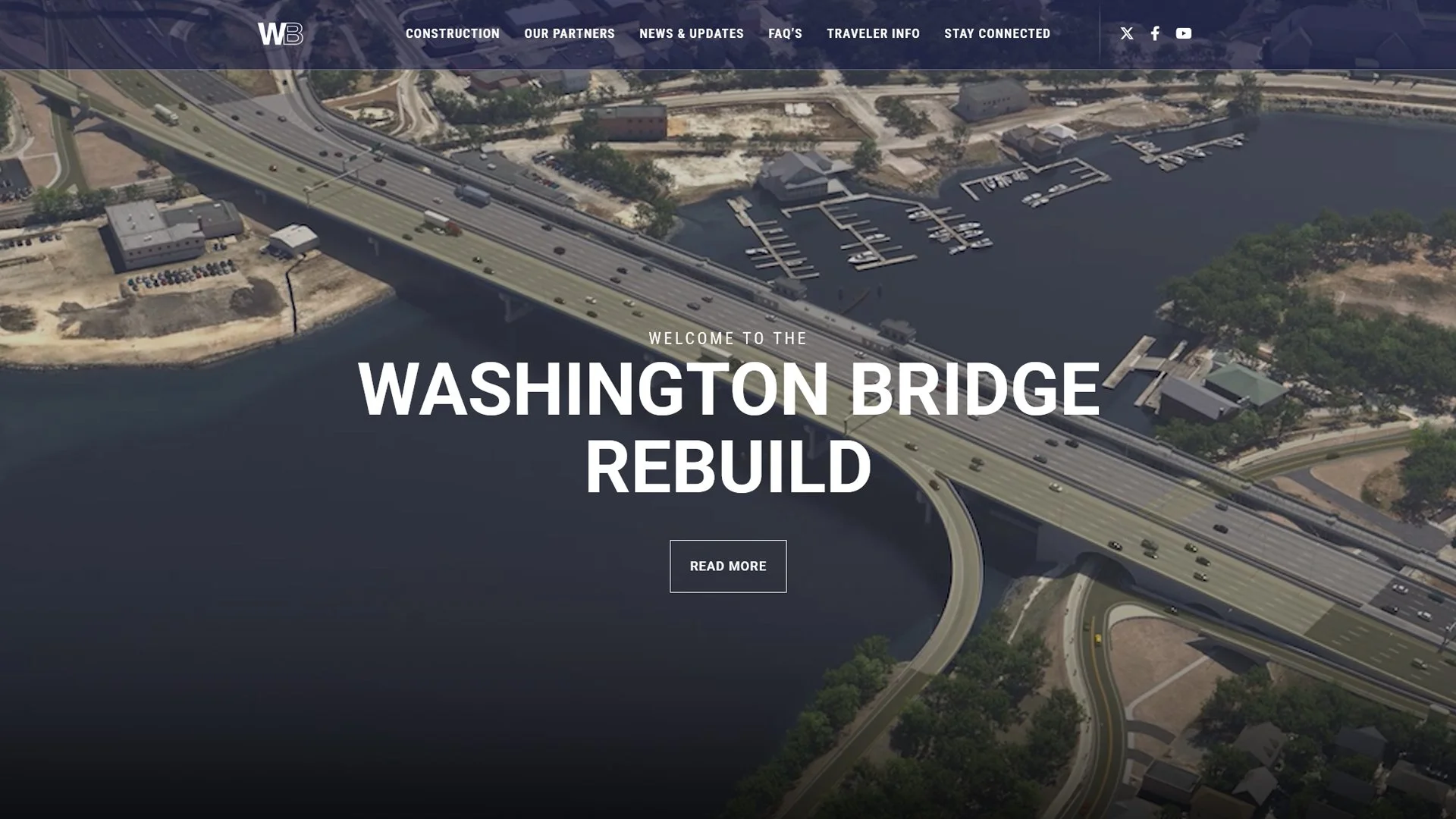
The westbound part of the Washington Bridge, connecting Providence and East Providence, R.I., via Interstate 195, was closed for critical safety reasons in December 2023 and is not scheduled to reopen until December 2028, a frustrating delay that can be largely laid t0 administrative incompetence and the entanglements of red tape. Its closure has caused much economic and other damage to the region.
Washington used to be petty and inept. Now it’s a roller-coaster. What will Trump do tomorrow? New York too. Is the “warmth of collectivism” promised by Mayor Mamdani a precursor for class warfare?
Americans are right to want a new vision for governing. But the political instinct for radical cures ignores a main cause of public frustration—the inability of government to do almost anything sensibly.
Sooner or later the focus on affordability will shine the spotlight on how government spends taxpayer dollars—almost 40 percent of GDP is spent by government. How much is wasted, how much productive initiative is stymied, when government is effectively unmanageable?
Public fraud on an industrial scale in Minnesota is the latest evidence that government is out of anyone’s control. In that case, as fraud expert Linda Miller explains, oversight officials had no authority to hold suspicious payments pending investigation. Most of the failures of the red tape state—for example, years-long processes for infrastructure permitting and defense procurement—can be traced to the disempowerment of responsible officials to act on their best judgment.
It’s hard to have a sober discussion on rebooting public operations, however, when holding on tight to avoid worse fates. Perhaps it’s asking too much of political leaders to get off the soap box. The chainsaw approach by Trump’s DOGE initiative failed because it dramatically slashed the number of public employees instead of cutting the red tape that prevents them from doing their jobs.
What’s new is growing public recognition that American government has a “back-of-house” problem, as Manhattan Institute’s John Ketcham calls it—that many public failures are due to inept operations, not poor policies. Biting critiques of the red-tape state by liberal writers Marc Dunkelman (Why Nothing Works) and Ezra Klein and Derek Thompson (Abundance) ask why Democrats—supposedly the party of good government—do nothing to overhaul these inept structures.
Dislodging powerful interest groups at the public trough is unlikely to attract political support, however, without broad outrage. So, instead of talking to deaf ears, perhaps the next step is to amp up the pressure by quantifying just how much money the red tape state is costing taxpayers. A private “spring cleaning commission” could be organized by civic leaders to do the work of analyzing the main areas of public waste and ineffectiveness, and propose simpler frameworks that citizens can demand.
In an essay on authority and freedom, published over the weekend by The Atlantic, I describe what the new frameworks should look like. In John Ketcham’s “back-of-house” essay, republished by The Washington Post, he relies on our work to conclude: “American governance…needs a new model of public decision-making—one capable of reversing over-proceduralization and its harmful effects. Howard argues, rightly, that someone must be empowered to make trade-offs in service of the national good.”
If you like the idea of a private “spring cleaning commission,” please share your ideas on how it should be organized and led.
Philip K. Howard, a New York-based government reformer, civic leader, lawyer and photographer, is chairman of Common Good, the nonpartisan reform group.
The ‘sound of the land’

The earliest known photograph of a snowman, c. 1853, by Mary Dillwyn.
One must have a mind of winter
To regard the frost and the boughs
Of the pine-trees crusted with snow;
And have been cold a long time
To behold the junipers shagged with ice,
The spruces rough in the distant glitter
Of the January sun; and not to think
Of any misery in the sound of the wind,
In the sound of a few leaves,
Which is the sound of the land
Full of the same wind
That is blowing in the same bare place
For the listener, who listens in the snow,
And, nothing himself, beholds
Nothing that is not there and the nothing that is.
— “The Snow Man,’’ by Wallace Stevens (1879-1955), Connecticut-based poet and insurance executive
Story of our lives

“Misdirection” (charcoal and acrylic ink on paper), by Ben Sears, in the group show “Plus One,’’ at Bromfield Gallery, Boston, Feb. 4-March 1.
‘The beauty of decay’
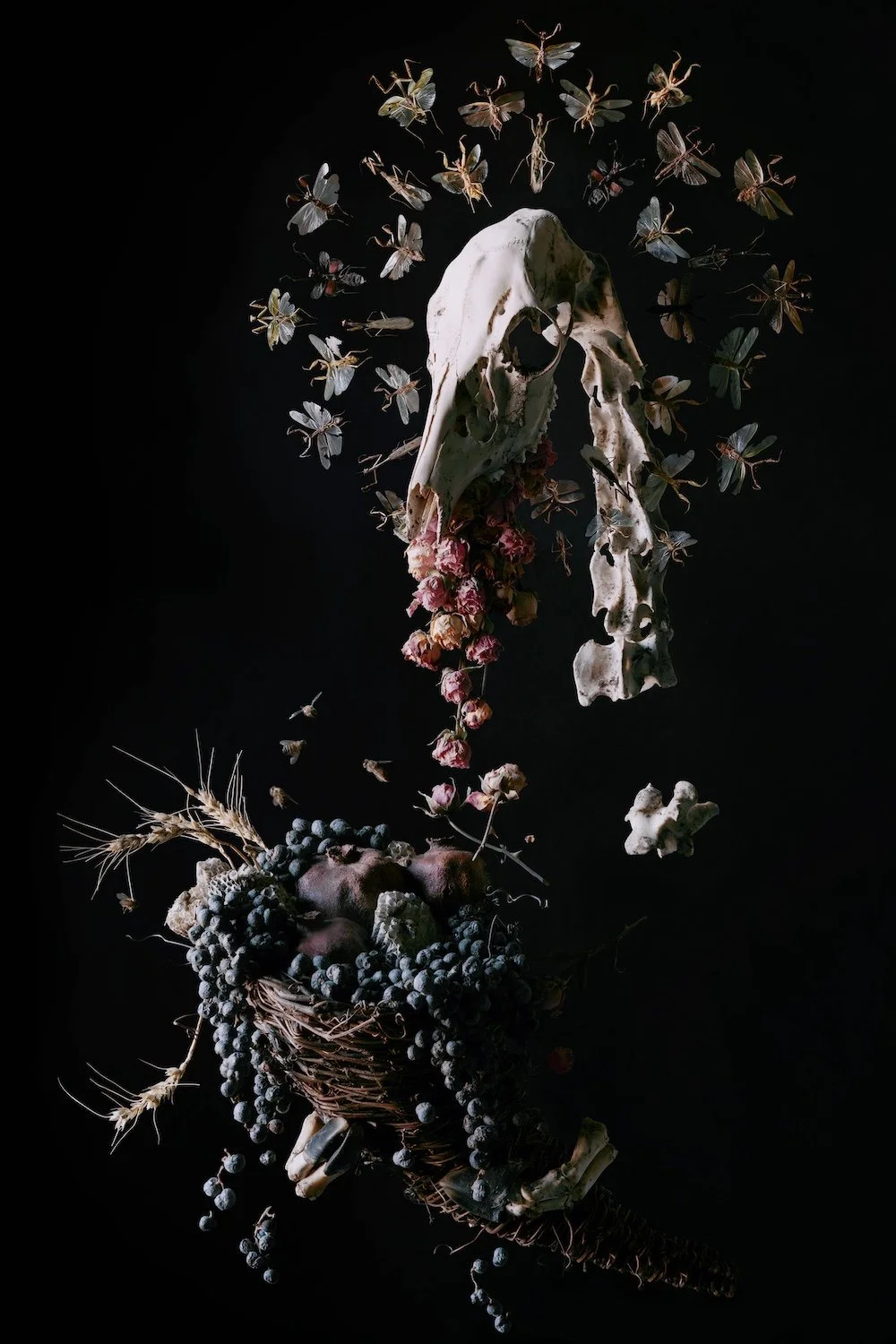
“Abundantia’’ (ink jet print), by Tara Sellios, in her show “Ask Now the Beasts,’’ at the Fitchburg (Mass.) Art Museum, through May 24.
The museum says:
“Tara Sellios is a Boston-based artist whose monumental photographs highlight the beauty of the grotesque. Sellios creates still life vignettes from organic materials, including animal bones, insect specimens, and dried flowers which she photographs using a large format 8 X 10 camera. Printed at a large scale, Sellios’s photographs capture the vivid details of her materials. Sellios’s imagery takes inspiration from Christian devotionals including illuminated manuscripts, altarpieces, and stained glass windows while engaging with historical traditions of still life painting, particularly Dutch vanitas paintings. ‘Ask Now the Beasts’ derives its title from the Book of Job, exploring the concepts of the harvest and the apocalypse. In this new work Sellios considers the cyclical nature of Earth, intertwining symbols of death and references to life with the beauty of decay.’’
Llewellyn King: Memories of a ‘91 trip to Venezuela; of course it’s much worse now
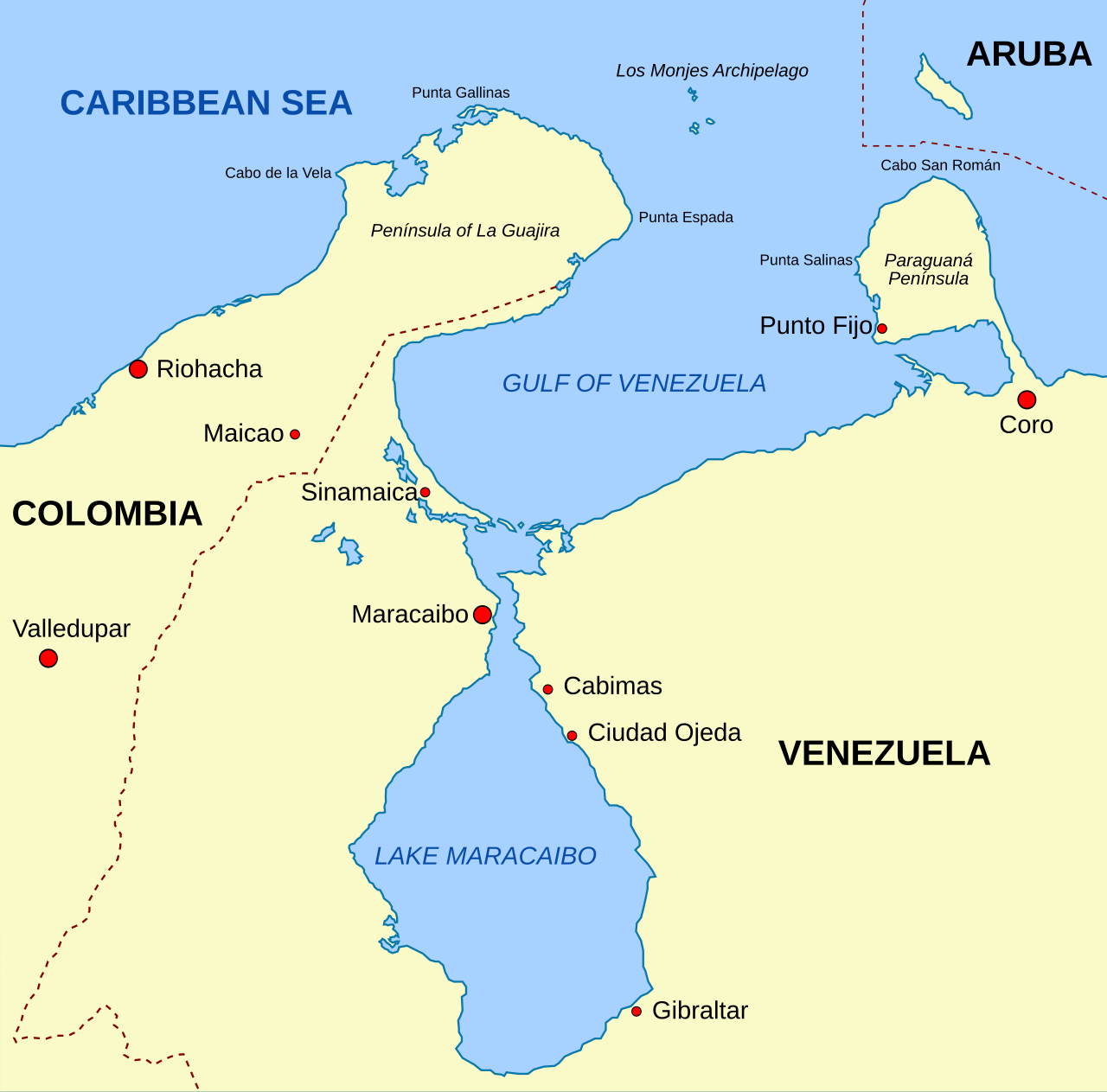
Venezuela’s main oil-producing region.
Editor’s note: New England used to heavily depend on oil from Venezuela for heating. Much heating oil for the Northeast now comes from Canada.
WEST WARWICK, R.I.
In 1991, the state oil company of Venezuela, Petroleos de Venezuela, S.A., known as PDVSA, invited the international energy press to visit.
I was one of the reporters who flew to Caracas and later to Lake Maracaibo, the center of oil production, and then to a very fancy party on a sandbar in the Caribbean.
They were, as a British journalist said, “putting on the dog.”
At that time, PDVSA executives were proud of the way they had maintained the standards and practices which had been in force before nationalization in 1976. The oil company was, we were assured, a lean, mean machine, producing about 3.5 million barrels per day.
They were keen to claim they had maintained the same esprit under state ownership as they had had when they were privately owned by American companies.
They had kept political interference at arm's length, executives claimed.
PDVSA's interest then, as it has always been, was more investment, particularly in its natural gas, known as the Cristobal Colon project.
In President Trump's takeover of Venezuela's moribund oil sector, natural gas hasn't been much mentioned — although there may eventually be more demand for natural gas from Venezuela than for its oil.
We had a meeting with Venezuela's president, Carlos Andres Perez, who was called CAP. He painted a rosy future for the country and its oil and gas industry.
CAP believed the oil revenues would modernize the country. Particularly, he said that technology was needed to make the heavy oil more accessible and manageable.
And there's the rub. While everyone is quick to point out that Venezuela's oil reserves are the largest in the world, all oil isn't equal.
Venezuela's oil is difficult to deal with. It doesn't just bubble out of the ground. Instead, 80 percent of it is highly viscous, more like tar than a free-flowing liquid. And it has a high sulfur content.
In other words, it is the oil that most oil companies, unless they have special production and refining facilities, want to avoid. It takes special coaxing to extract the oil from the ground and ship it.
Venezuelan oil has a high “lifting cost” which makes it expensive to begin with. At present, that cost is about $23 per barrel compared to about $13 per barrel for Saudi Arabian oil.
During the energy crisis, which unfolded in the fall of 1973 with the Arab oil embargo, U.S. utilities considered pumping it with a surfactant (a thinner) to Florida and burning it directly in boilers like coal.
As evidence that the oil operation hadn't been damaged by nationalization, executives proudly told us that PDVSA produced more oil with 12,000 employees than the state oil company of Mexico, PEMEX, produced with 200,000.
In other words, the Venezuelans had been able to resist the temptation to turn the oil company into a kind of social- welfare program, employing unneeded droves of people.
Now I read the workforce of PDVSA stands at more than 70,000 and oil production has slipped to about 750,000 barrels a day.
By 1991, the oil shortage which had endured since the Arab oil embargo had eased, and PDVSA was worried about its future and whether its heavy oil could find a wider market.
Particularly, it was worried about the day when it would run out of the lighter crudes and would be left only with its viscous reserves.
Two oil companies have been shipping oil to the United States during the time of revolution and sanctions: Citgo, a PDVSA-owned operator of gas stations in the United States, and Chevron. Both have waivers issued by the United States, although Citgo is under orders to divest and is set to be bought by Elliott Company (owned by Paul Singer, a Trump supporter), which may play a big role going forward in Venezuela as its expertise is in lifting.
About that party on a sandbank. Well, PDVSA wanted to show the press that it could spend money as lavishly as any oil major.
We were flown in a private jet to an island, then transported on speedboats to a sandbank, where a feast worthy of a potentate was set up under tents. The catering staff had been taken off the sandbank, so the effect was that the party had miraculously emerged from the Caribbean Sea.
On X: @llewellynking2
Llewellyn King is executive producer and host of White House Chronicle, on PBS and an international energy-sector consultant. He’s based in Rhode Island.,
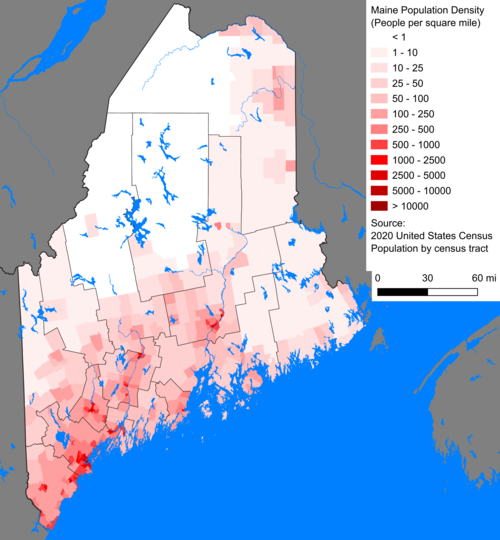
Important for Maine and beyond
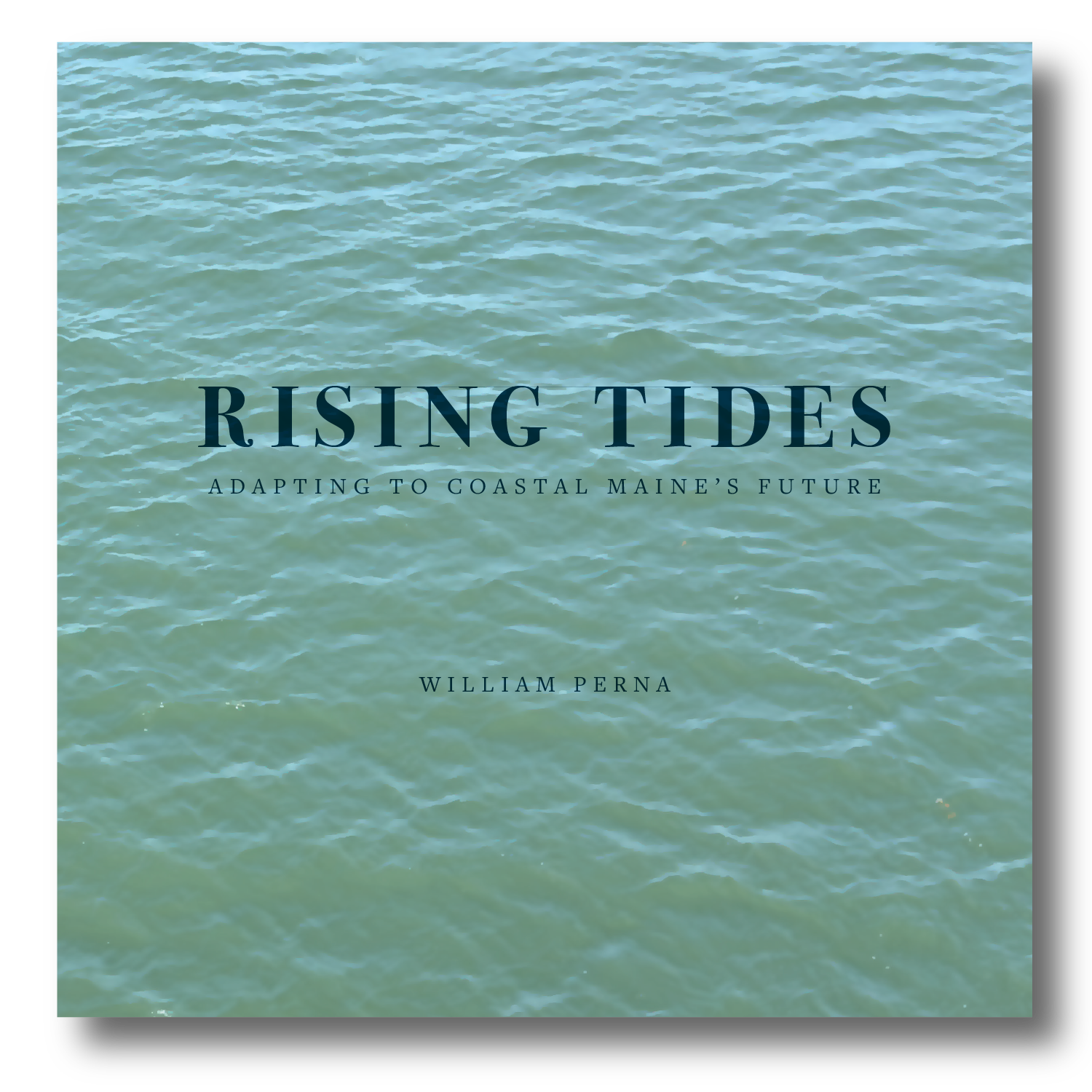
Rising Tides: Adapting to Coastal Maine's Future
$45.00
Hardcover - 10×10
Rising Tides: Adapting to Maine’s Coastal Future captures the memorable voices of Mainers in a rapidly changing world. These include oyster farmers and other aquaculturalists, fishermen, marine biologists and other scientists, and community leaders who are navigating dramatic changes along and off Maine’s iconic coast.
Presenting deep geological, climatological, and human history, in-depth interviews, and other research, the book shows the challenges and opportunities as rising seas caused by global warming, along with sometimes controversial shoreline development, are reshaping ways of life along The Pine Tree State’s storied coast. The vivid changes include shifting fisheries, new industries and markets and the technology that pushes them.
The problems, opportunities, and adaptations in Maine carry lessons for coastal communities around the world. These are global issues described locally through the stories of Mainers on the frontlines. A powerful and timely portrait, Rising Tides is both a warning and an inspiration. It displays the dangers posed by change while also serving as a testament to the ingenuity and determination required not only in Maine but on coasts everywhere.
Dreaming of AI
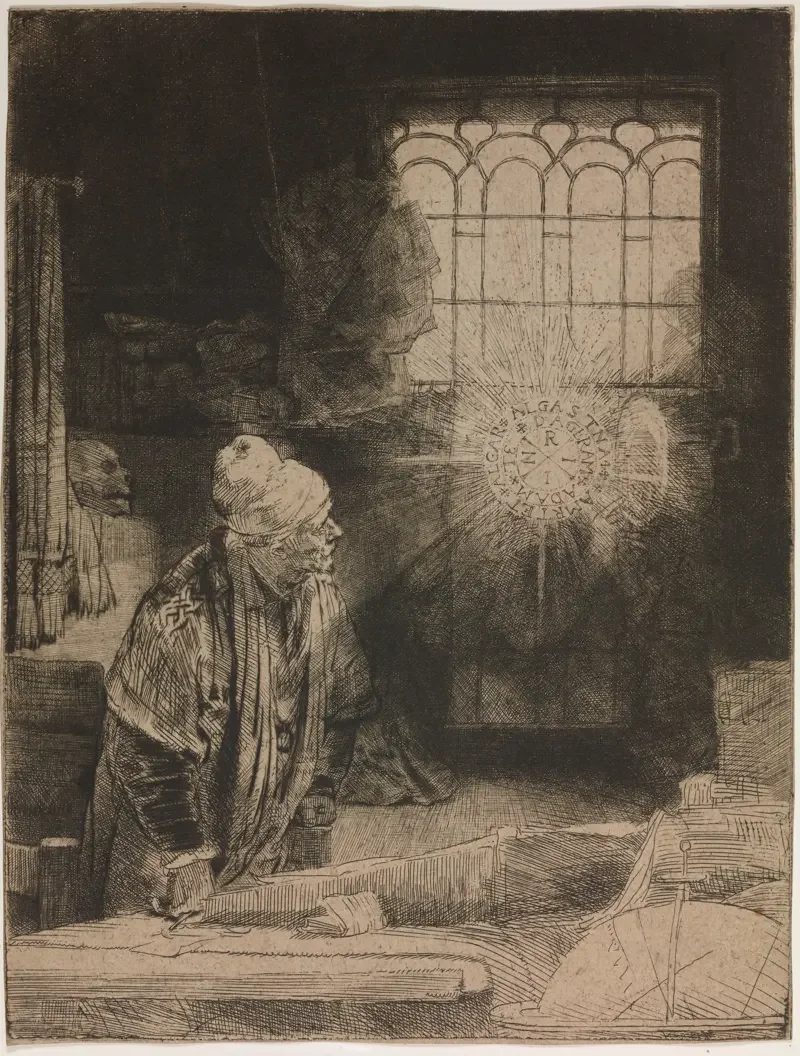
“A Scholar in His Study (Faust)” (1652) (etching, drypoint and engraving), by Rembrandt van Rijn, in the show “Global Crossings: Selections From the Lunder Collection,’’ at the Colby (College) Museum of Art, Waterville, Maine, Feb. 5-June 7.
Chris Powell: Looking for lessons from happier signs in long-suffering Bridgeport
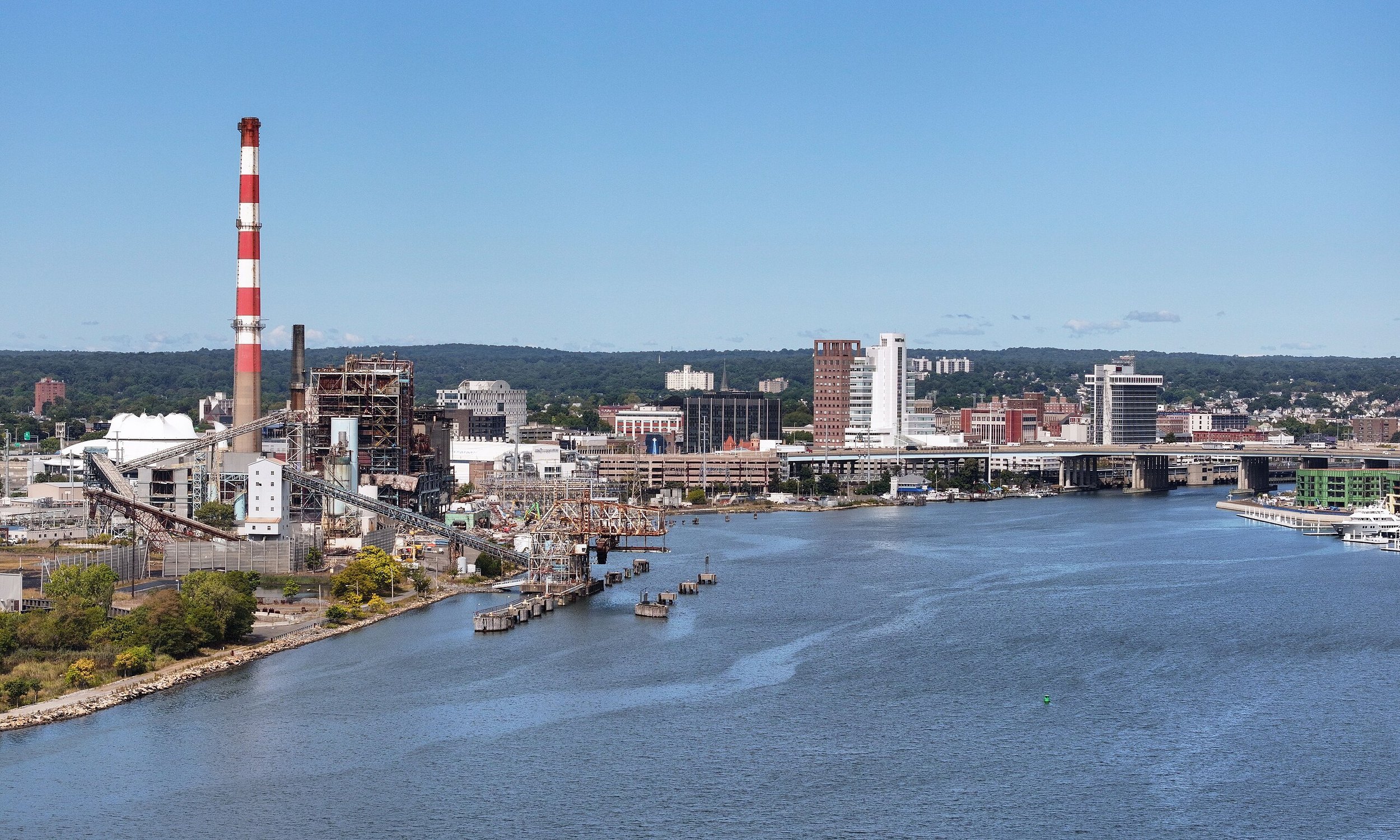
Skyline of Bridgeport in 2025
— Photo by Quintin Soloviev
MANCHESTER, Conn.
For decades Bridgeport has been Connecticut's worst concentration camp for the poor, easily defeating Hartford, New Haven, and Waterbury for murders, mayhem, wretched poverty, and depravity. State government has taken the city seriously only in regard to the pluralities it produces for Democrats despite its seemingly eternal wretchedness.
But the other week veteran Bridgeport journalist, author and historian, Lennie Grimaldi, broke on his site, OnlyInBridgeport.com, what he fairly suggested could be Connecticut's story of the year, though it is yet to be told elsewhere. That is, Bridgeport, long considered the state's crime capital, having experienced 50 or more murders per year back in the 1990s, had only three in 2025, far below the year's totals in New Haven (16) and Hartford (11). Other major crimes in the city are down too.
Meanwhile Bridgeport's population is rising again and has surpassed 150,000, securing its status as the state's largest city.
Grimaldi speculates that the improvement results in part from federal and local police action against gangs, improvements in housing projects, and more community engagement by the police. One must hope that it's not just a fluke.
Maybe the city's old geographic advantages are reclaiming some appeal too. It has an excellent harbor and is developing a commercial and residential project there. It's on the Metro-North and Amtrak rail line as well as Interstate 95, only slightly less convenient to New York City than prosperous Stamford but more convenient to New Haven's higher-education and medical institutions. The Hartford HealthCare Amphitheater downtown is a regional draw and a soccer stadium may be built. The city has a university and a community college.
But as with Connecticut's other cities, Bridgeport's overwhelming problem remains its demographics, its concentration of poverty, its lack of a large, self-sufficient middle class that can staff a more competent, less selfish municipal government, a government that remains compromised by excessive Democratic patronage and absentee ballot scandals.
And then, of course, there are the thousands of fatherless children in the city's schools, many of them virtually illiterate and demoralized because of neglect at home. State government finally has taken note of the dysfunction of Bridgeport's school system and is intervening somewhat, if not enough. But education will always be mostly a matter of parenting.
While the city's property taxes remain nearly the highest in the state, property taxes are high in all Connecticut's cities, in large part because of state government's refusal to let cities control labor costs and its failure to insist on better results for the huge amount of state funding cities receive.
Mayor Joe Ganim may be doing as well as a mayor in Connecticut can do under urban circumstances. At least he seems to have put his corruption behind him, having been convicted and jailed after his first stint as mayor.
Neither Bridgeport nor Connecticut's other cities can repair themselves on their own. Their futures will be determined mainly by how much the state wants its cities to do more than manufacture poverty while keeping the desperately poor and their pathologies out of the suburbs -- whether the state ever wants to examine and act seriously against the policy causes of poverty, which were operating long before Donald Trump became president.
It should not require a Ph.D. to see that subsidizing childbearing outside marriage with various welfare benefits and then socially promoting fatherless children through school, leaving them uneducated in adulthood and qualified only for menial work, has not led them to self-sufficiency and prosperity but rather to dependence, generational poverty, and mayhem. Only the poverty administrators prosper from such policy.
Indeed, Connecticut seems to think that instead of two parents every child should have a social worker and a probation officer, as well as a "baby bonds" account with the state treasurer's office to ease the burdens to be faced after being raised without two parents.
The “baby bonds" are new but the rest of it is old and just makes poverty worse.
Chris Powell has written about Connecticut government and politics for many years (CPowell@cox.net).
‘The Landscape listens’
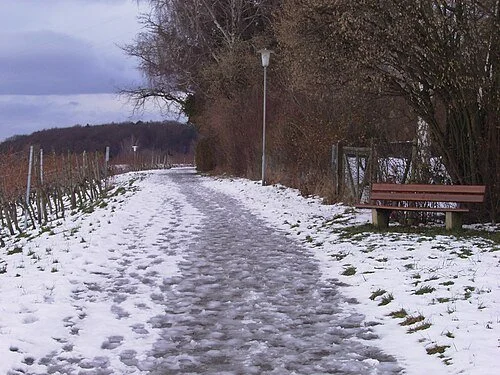
January thaw
There's a certain Slant of light,
Winter Afternoons –
That oppresses, like the Heft
Of Cathedral Tunes –
Heavenly Hurt, it gives us –
We can find no scar,
But internal difference –
Where the Meanings, are –
None may teach it – Any –
'Tis the seal Despair –
An imperial affliction
Sent us of the Air –
When it comes, the Landscape listens –
Shadows – hold their breath –
When it goes, 'tis like the Distance
On the look of Death
— Emily Dickinson (1830-1886)
Flexible dress code
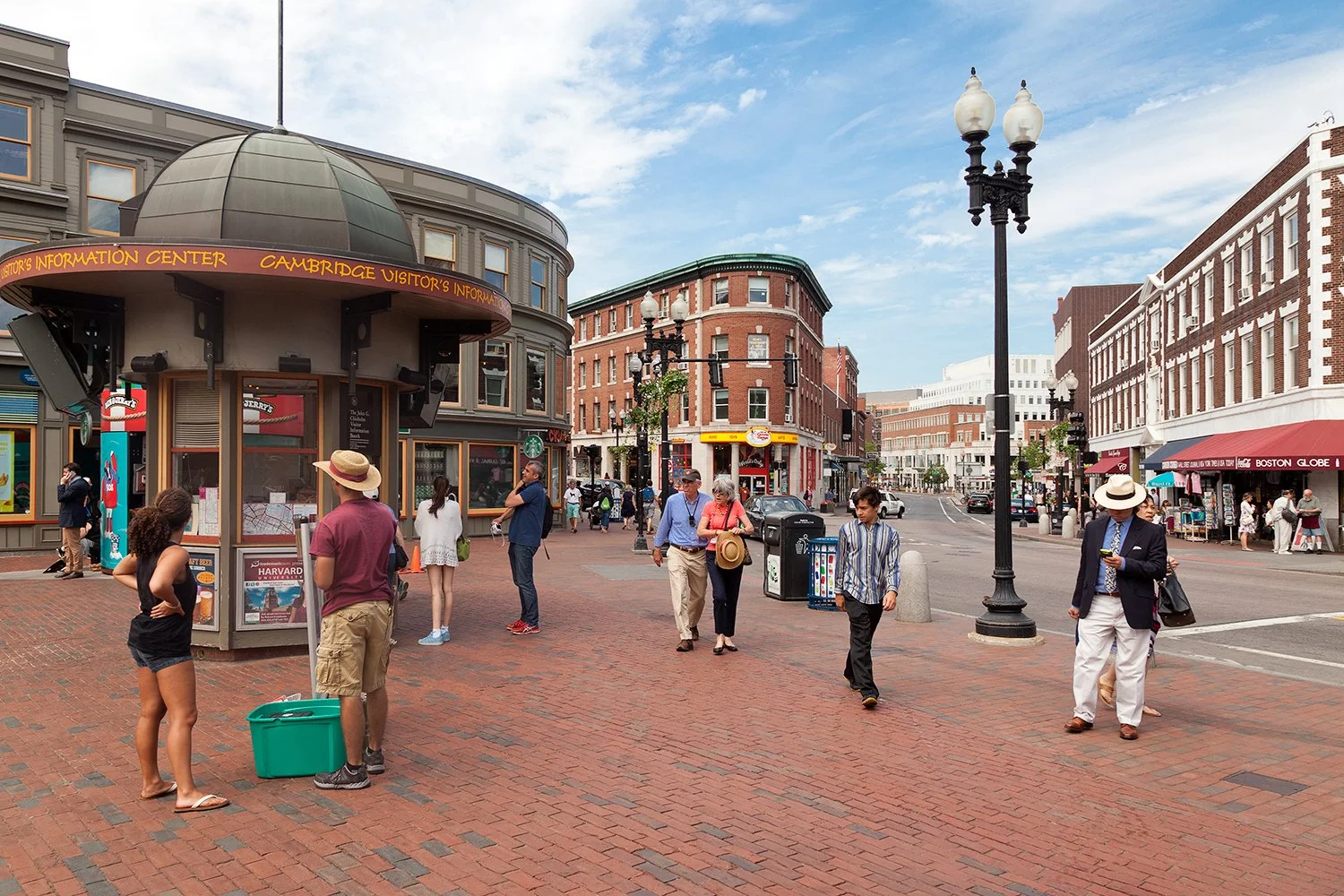
Harvard Square, in Cambridge, Mass.
— Photo byWgreaves)
“I especially miss Harvard Square — it’s so unique. Nowhere else in the world will you find a man with a turban wearing a Red Sox jacket and working in a lesbian bookstore. Hey, I’m just glad my dad’s working.’’
— Conan O’Brien (born in 1963 and grew up in Boston area), comedian, TV host and writer.
Battery storage for more energy independence
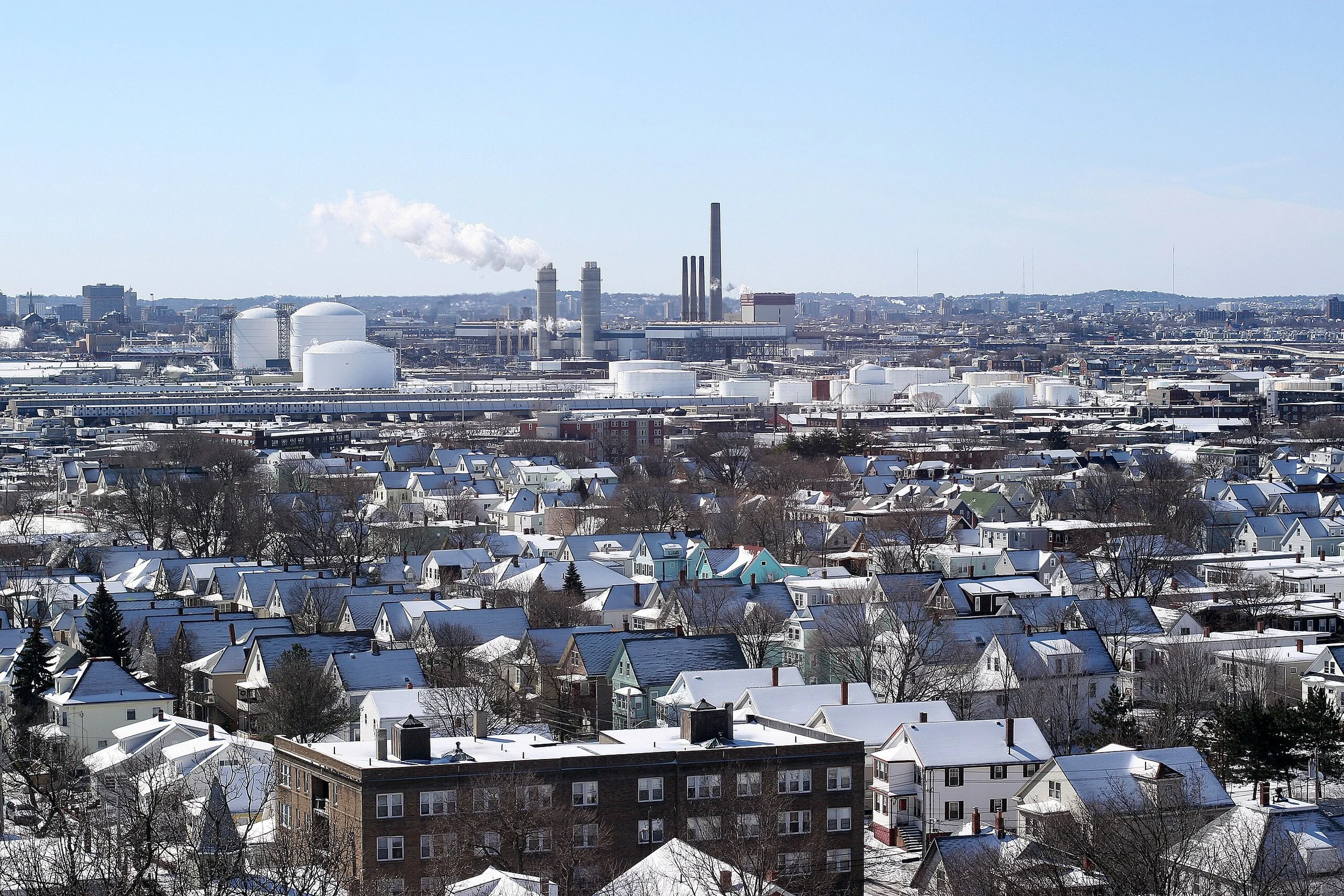
Everett, looking towards the Mystic Generating Station.
Adapted fromRobert Whitcomb’s “Digital Diary,’’ in GoLocal24.com
As usual, Massachusetts is among those places seeking to strengthen its long-term economy by making itself more self-sufficient in energy. Consider that state officials are entering contract talks with four companies to build a big battery storage facility in Everett on, appropriately, an old Exxon oil-storage field. The facility would be used to store electrical energy when demand is low and release it when it’s high.
New England must move as fast as it can to reduce its energy dependence on the rest of the country and do it in partly by encouraging projects that don’t come under federal/Red State/fossil-fuel sector control – control that opens up the region to economic, political and environmental sabotage by Washington.

Inside a battery storage power plant at Schwerin,Germany, with modular rows of accumulators.