
Regional culinary innovators
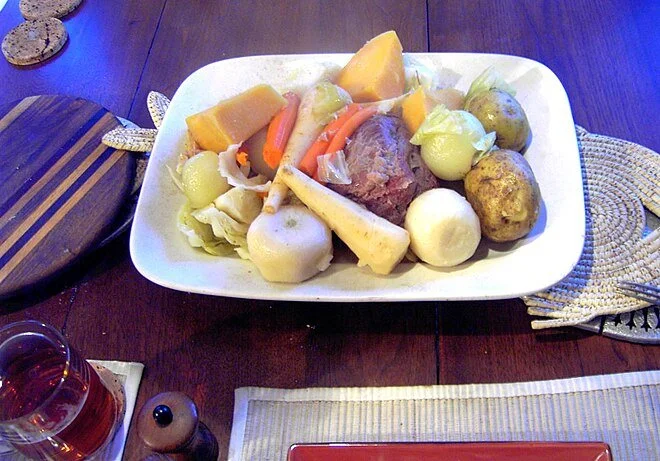
New England boiled dinner with cabbage, potato, white turnip, rutabaga, carrot, onion, and parsnip.
“Aunt Fanny’s headstone in the roadside graveyard is moss-stained …but her reputation as queen of the kitchen still lingers of the village of Franconia (N.H.), for she was one of those natural cooks who are ‘born with a mixing spoon in one hand and a rolling pin in the other.’ New England has produced many. They invented baked Indian pudding and apple pandowdy. They established the boiled dinner as a Thursday institution, and Boston baked beans and brown bread as the typical Saturday night supper.’’
— Ella Shannon Bowles and Dorothy S. Towle, in Secrets of New England Cooking (1947)
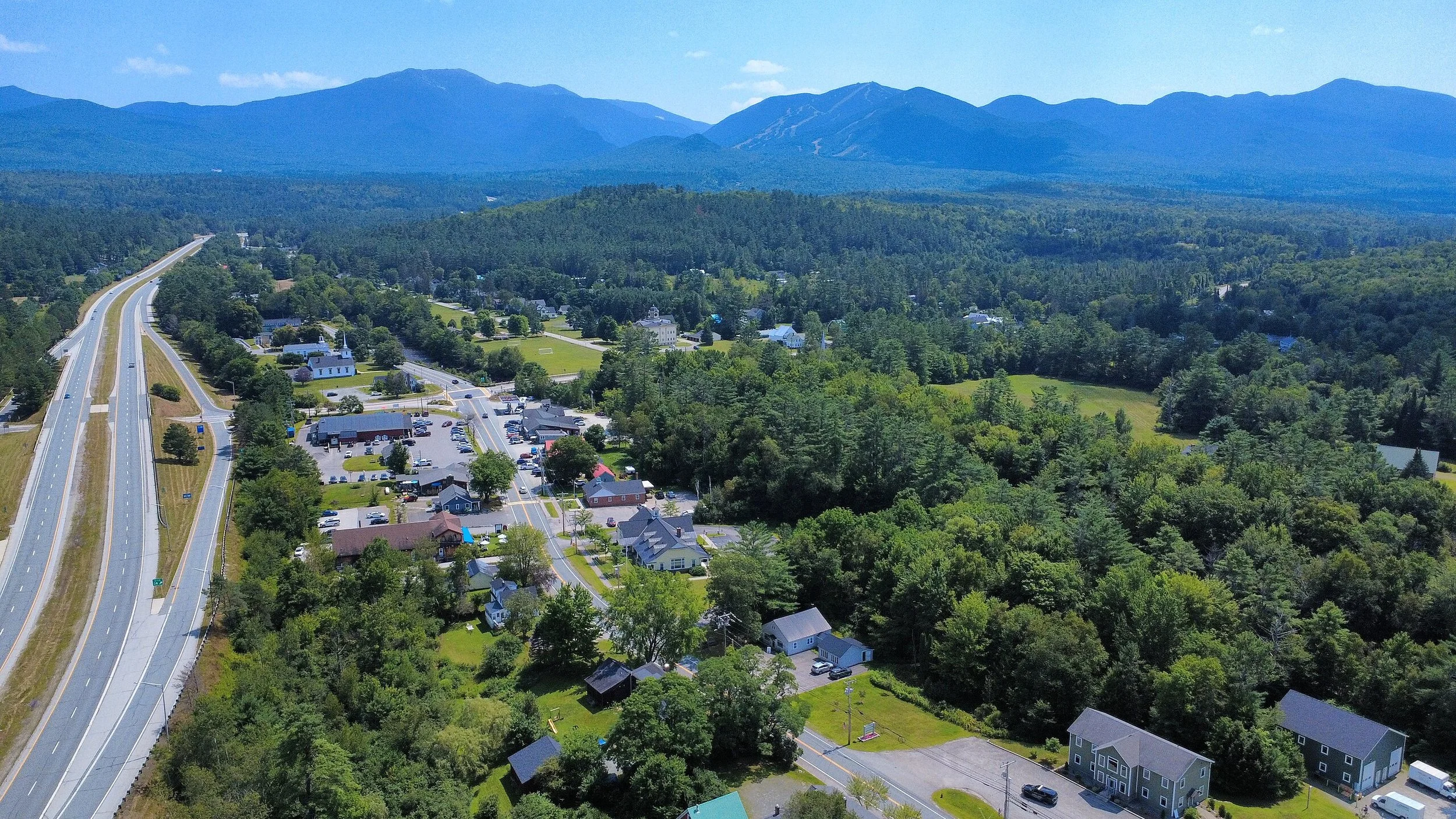
View of Franconia, N.H., from the northeast.
Ascended Dreamer photo
‘Between looking and understanding’
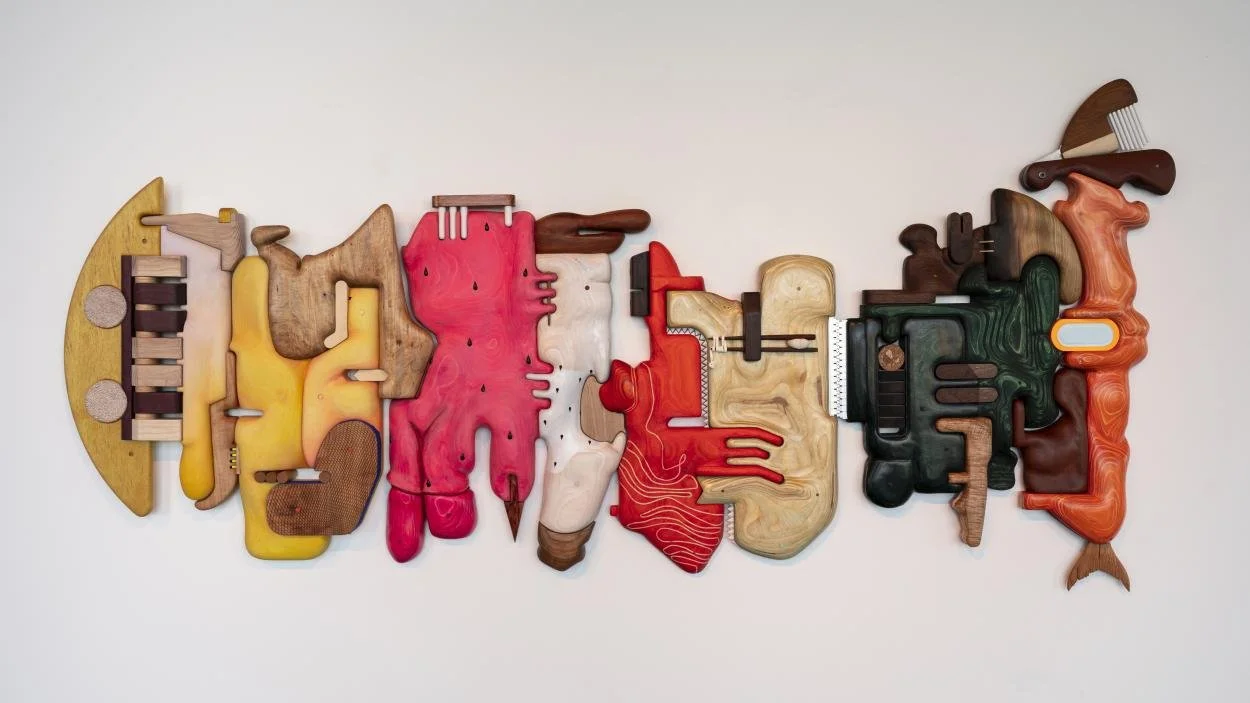
“Grocery Conveyor” (mixed media), by Cathy Della Lucia, in her two-person show with Lee Williams titled “Sculptural Ideas: Line, Color, and Form,’’ at Burlington City Arts, March 13-June 20, 2026
The gallery says:
“Foundational art elements–line, color, and form–influence the composition of sculpture as well as how we interact with it in an idiosyncratic way. The effect that sculpture has in space and the physical imposition it creates engages our subconscious and our non-verbal observations. Using tools like line, color, or form to communicate gesture, scale, or motion, three-dimensional artwork both passively and actively manipulates our perceptions. This idea may seem basic, but it often carries broader implications about the artist's intent or the artwork's impact on the viewer. ‘Sculptural Ideas: Line, Color, and Form’ seeks to close the gap between looking and understanding when interacting with contemporary sculpture.
The color of longing
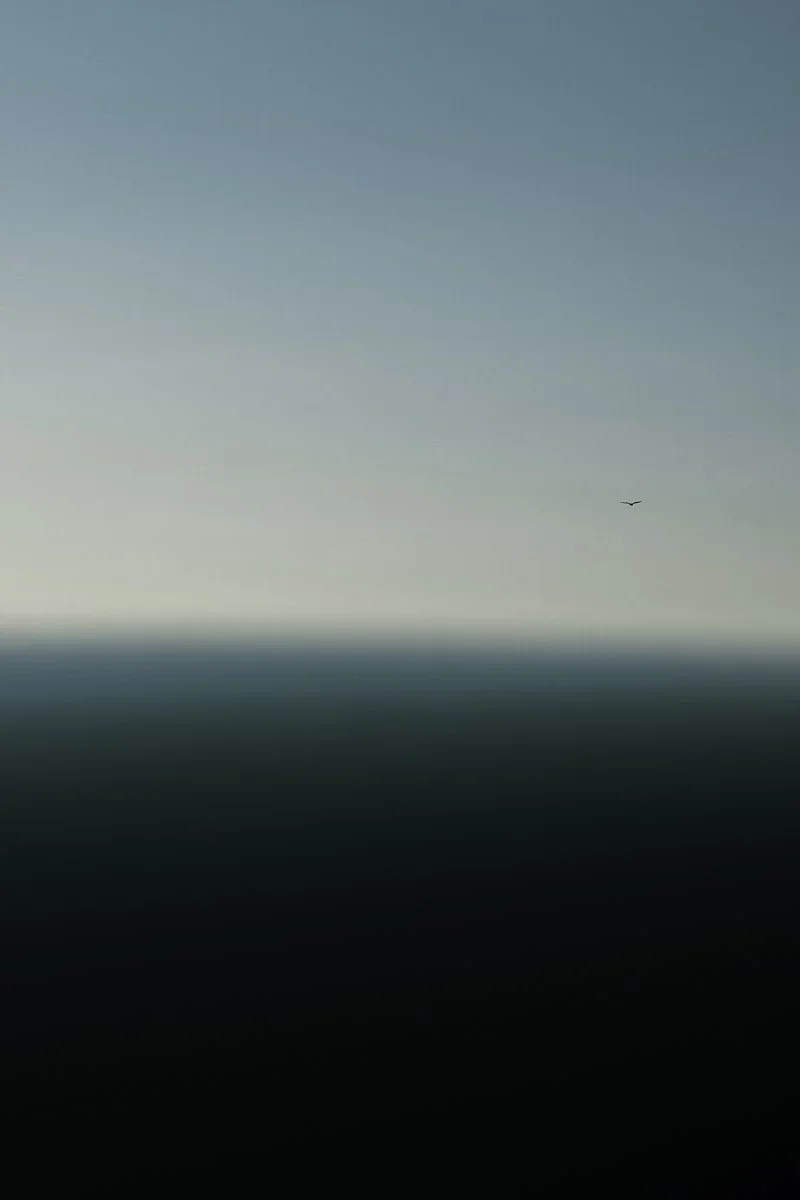
Untitled digital image by Diego Navarro, in the group show “The Blue of Distance,’’ at Kingston Gallery, Boston Jan. 2-Feb 1.
The gallery says:
This group exhibition is in response to the essay, “The Blue of Distance,” by Rebecca Solnit:
"For many years, I have been moved by the blue at the far edge of what can be seen, that color of horizons, of remote mountain ranges, of anything far away. The color of that distance is the color of an emotion, the color of solitude and of desire, the color of there seen from here, the color of where you are not. And the color of where you can never go. For the blue is not in the place those miles away at the horizon, but in the atmospheric distance between you and the mountains. ‘Longing,' says the poet Robert Hass, ‘because desire is full of endless distances.' Blue is the color of longing for the distances you never arrive in, for the blue world."
Chris Powell: Eastern Conn. State U. tries to revive the ‘noble savage’ myth
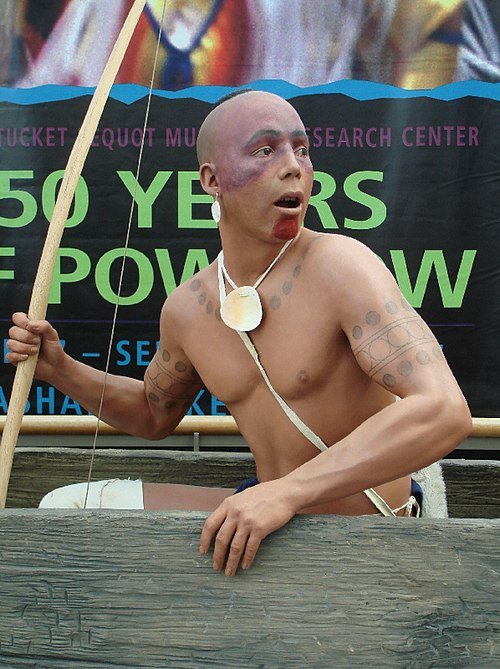
Exhibit at the Mashantucket Pequot Museum and Research Center, near the tribe’s Foxwoods Resort Casino, in eastern Connecticut.
MANCHESTER, Conn.
Having realized that it had been overlooking a prerequisite of political correctness in academia, Eastern Connecticut State University, in Windham, this month adopted a formal “land acknowledgment" that will be ceremoniously proclaimed at the start of major university events.
It reads: “We respectfully acknowledge that the land on which Eastern Connecticut State University stands, and the broader land now known as the State of Connecticut, is the ancestral territory of the Eastern Pequot Tribal Nation, Golden Hill Paugussett Tribe, Mashantucket Pequot Tribal Nation, Mohegan Tribe, Nipmuc Tribe, and Schaghticoke Tribe, who have stewarded this land throughout the generations with great care. We honor their resilience, cultural heritage, and enduring presence. As Connecticut’s public liberal arts university, we are committed to fostering greater awareness of Indigenous histories and contemporary experiences, and to building relationships grounded in respect, reciprocity, and responsibility."
And so the university now will perpetuate the myth and stereotype of the “noble savage": that the Indians of old were good, one with nature, eternally peaceful, and uncorrupted by civilization, unlike the civilization that succeeded theirs, of which everyone should be ashamed.
Of course, the struggle for land and sovereignty is not peculiar to Connecticut. While the struggle is fortunately concluded in the United States, it is the history of humanity and continues throughout the world. Even the “noble savages" of old, including those in what became Connecticut, struggled with each other for land and sovereignty before the European tribe came to dominate the area three centuries ago by making alliance with the Mohegans and Narragansetts to eradicate the troublesome Pequots.
The university says the Indian tribes of old “have stewarded this land throughout the generations with great care."
Huh? The tribes of old were mainly hunters and foragers, not industrialists. They didn't build roads, dams, sawmills, schools, factories, and railroads. They didn't make great advancements in medicine. They sometimes practiced slavery and polygamy. Any stewardship they performed ended centuries ago.
That is, they were people of their time and culture, as their adversaries were, and as everyone is.
But now that some of their ultra-distant descendants have obtained lucrative state grants of exclusivity, their “stewardship” includes casinos, through which some of them have accumulated great wealth that is imagined to be reparations for wrongs done to their ultra-distant ancestors, even as their casinos nurture costly addictions to gambling, which an ever-ravenous state government happily whitewashes when it shares the profits.
Indeed, it's unlikely that Eastern would nurture this obsession with ancestry if there wasn't casino money in it, since ancestor worship is emphatically un-American. The Mother of Exiles says so herself from New York Harbor: “‘Keep ancient lands, your storied pomp,’ cries she with silent lips.’’
That is, in the civilization now operating in these parts one's ancestry doesn't matter any more than anyone else's does, and everyone who has lived here a little while becomes as “indigenous” as everyone else is.
Despite its many faults, the current civilization at least has greatly diminished, if not quite eliminated, tribalism, what with Eastern and other institutions of higher education trying to revive it with “land acknowledgments."
Contrary to Eastern's implication, no one today is guilty of the injustices of the distant past, and even back then there was plenty of guilt to go around. If guilt is to be imposed, the present offers injustices enough. They won't be corrected by the politically correct posturing that is sinking higher education.
ARE THEY US?: A few days ago Connecticut got another invitation to take a good look at itself.
State police said a pedestrian was killed on Interstate 95 in Stamford when he was struck by four cars -- and the first three drivers fled the scene. Maybe the fourth would have fled as well if his car hadn't been disabled in the collision.
Could all the drivers really have thought that they had hit a deer or a bear, not a person? Who are these people? Are they us?
Chris Powell has written about Connecticut government and politics for many years (CPowell@cox.net).
Llewellyn King: Journalism is a business of serial judgment under pressure
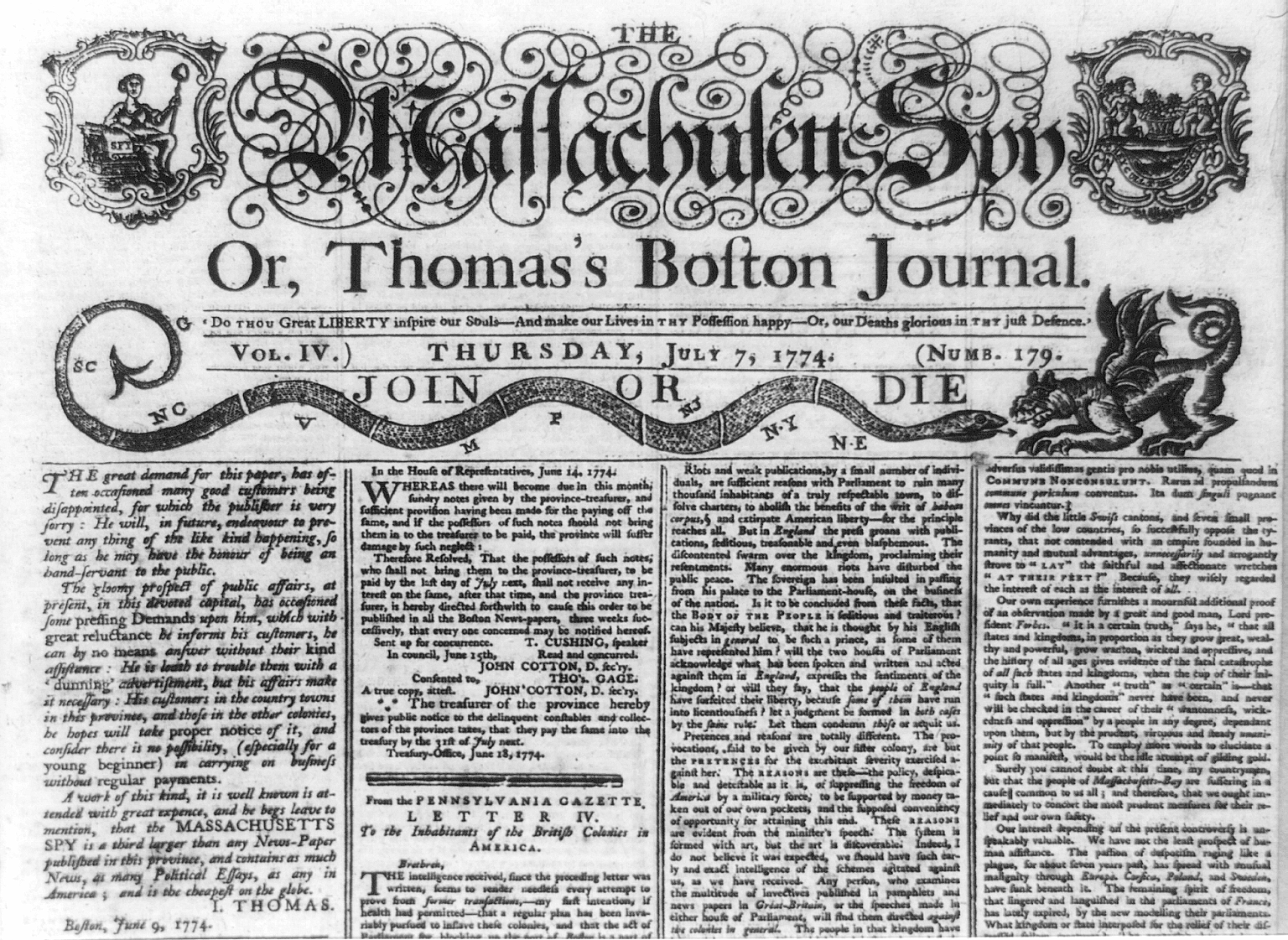
An example of the nonobjective newspapers that dominated American journalism until ideals of objective rep0rting slowly started to take hold around the turn of the 20th Century in larger cities.
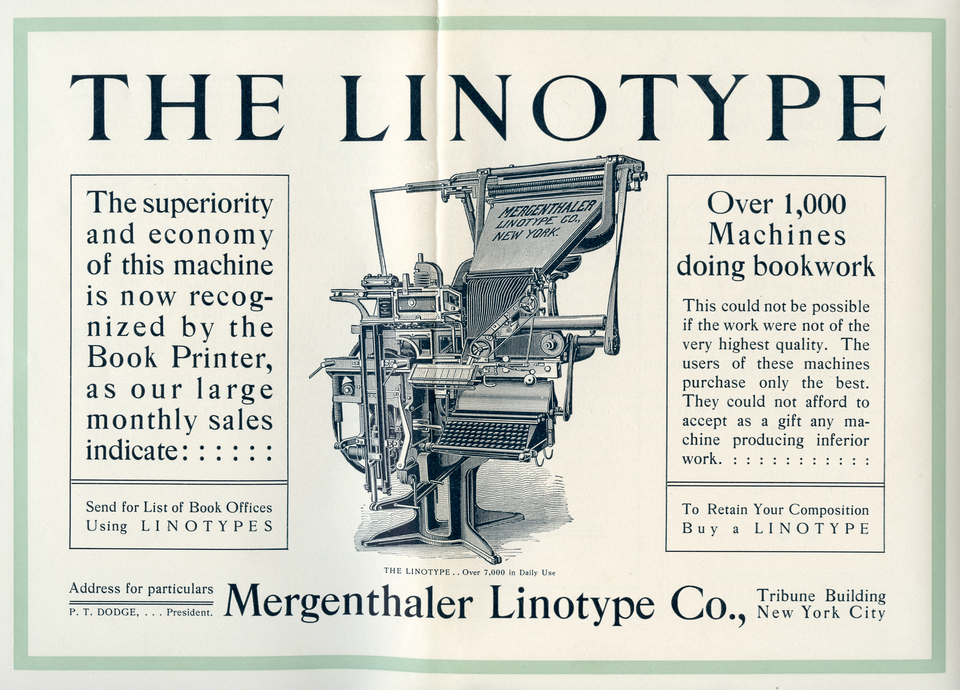
The Linotype machine was very important in newspaper printing until computerization doomed it.
WEST WARWICK, R.I.
The BBC has fallen on its sword. The director general has resigned and so has the head of news over the splicing of tape of President Trump's rambling speech on Jan. 6, 2021, which preceded the sacking of the Capitol by his fanatical followers.
The editor and the technician who did the deed for the esteemed BBC program Panorama haven't been publicly identified.
Agreed, they shouldn't have done what they did. But was there malice?
Journalism is a business of serial judgment. It is replete with mistakes — things that we who practice the craft wish we hadn't done.
I have worked as an editor in film, with tape and on newspapers, and I have seen how the paranoia of politicians can cast a whole news organization as a biased enemy when that wasn't the case.
Before a single sentence or an article appears in a newspaper or a video appears on television, dozens of judgments have been made — not by teams of academics or by ethicists or by juries, but by individuals responding to time pressure and what they judge to be newsworthy.
The unsaid pressure to keep it interesting, to have news worth something, is always there. The reader has to be kept reading or the viewer watching.
After something is published or broadcast, it can be beacon-clear what should have been done or corrected, but in the moment, those defects are opaque.
Let me take you behind the veil.
It is a hot night in 1972. There is a presidential election brewing and among those running for the Democratic nomination is Henry “Scoop" Jackson, the well-known Democratic senator from the state of Washington.
I am working in the composing room of The Washington Post as the editor in charge of liaising between the printers and the editors. The job is sometimes called a stone editor after the “stone’’ — big metal tables that held the pages and where the newspaper was assembled in the days of hot type via Linotype machines.
It was a busy news night, and it was when David Broder was the political reporter without rival. He was industrious and thorough, dedicated and prolific. As the night wore on, Broder would often add new stuff to his story, and it would grow in length.
In desperation when things got tough and deadlines were pressing, we would cut back the size of the photos, which had run in the first edition. The editor on duty would just ask the printers to do this: It was known as “whacking the cut."
In short, the photo would be reduced in size by cutting it down physically. The engraving would be put in a guillotine and some of it would be cut off, whacked.
That night, we had a large photo of Jackson addressing a large crowd.
But as the night wore on and different editions and mini editions, known as replates, were assembled, I ordered the cut whacked and whacked again. The result was that by the time the main edition went to press, the good senator was talking to a much smaller audience — although it did suggest that many more were there but not seen.
Jackson thought that this was a deliberate bias by The Post to suggest that he couldn't draw a large audience, and he called the legendary executive editor Ben Bradlee.
Bradlee asked the national editor, Ben Bagdikian, who was to become an authority on newspaper ethics, what happened. When they came to me, I explained how we trimmed the pictures.
While Bradlee was amused, Bagdikian added it to his concern about newspaper ethics.
Journalism is executed by individuals under pressure, much of it intense. It is a business of multiple judgments made sequentially, often without a lot of contemplation.
I once worked at the BBC in London, and the same pressures were present. I was scriptwriter and editor on the evening news. You made decisions all the time: This frame in, those 20 frames out. An outsider might imagine prejudice and foul intent in the way one clip was used and others were not.
In the news trade, judgments can trip you up, but making judgments is essential. Later the judge is judged, as at the BBC.
On X: @llewellynking2
Llewellyn King, based mostly in Rhode Island, is executive producer and host of White House Chronicle, on PBS. He was a long-time publisher and remains an international energy-sector consultant.
‘Secure your rights’

“The Death of General Warren at the Battle of Bunker’s Hill, June 17, 1775,’’ by John Trumbull.
“Stain not the glory of your worthy ancestors, but like them resolve never to part with your birthright; be wise in your deliberations, and determined in your exertions for the preservation of your liberties. Follow not the dictates of passion, but enlist yourselves under the sacred banner of reason; use every method in your power to secure your rights; at least prevent the curses of posterity from being heaped upon your memories.’’
— Joseph Warren (1741-1775), physician, second president of the Massachusetts Provincial Congress and commissioned a major general in the Massachusetts Militia. This quote is from his 1772 “Boston Massacre Oration’’.
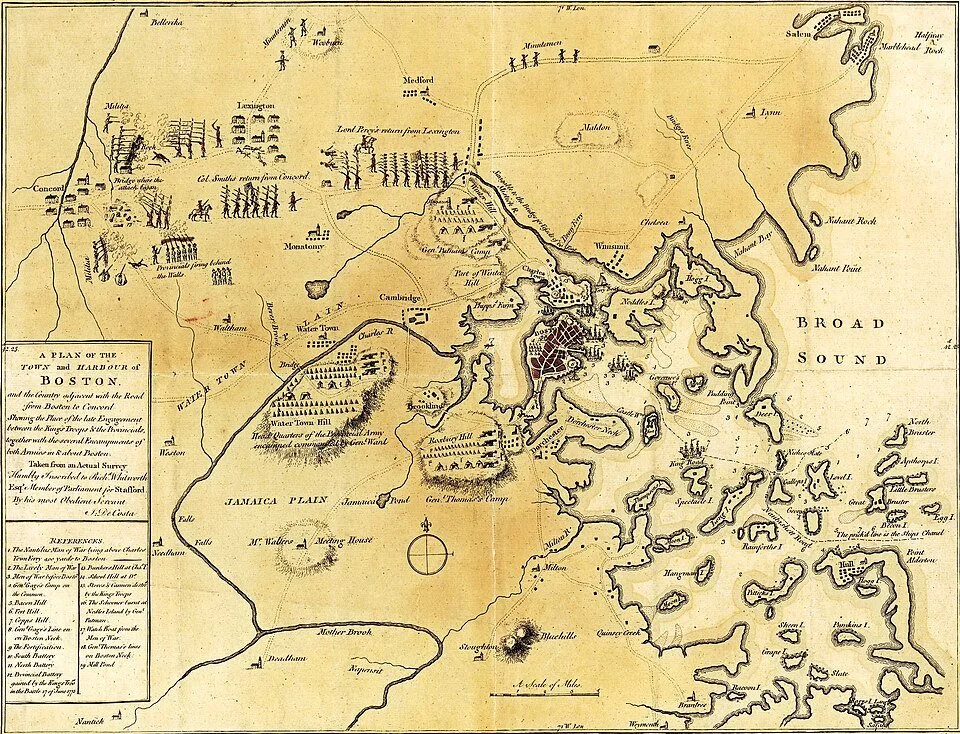
1775 map of the Boston area, with some inaccuracies.
His ‘Proof of Life’

From Dennis Svoronos’s show “Proof of Life,’’ at Boston Sculptors Gallery, through Dec. 7
The gallery says:
“Years after his brain-cancer diagnosis, Dennis Svoronos remains surprisingly alive, and ponders the problems he and others face being among the masses of life-long patients. Through interactive and kinetic work, he conveys the horror and humor of the place between chronically ill and unexpectedly well.
“To these ends, Svoronos has made work with thousands of replicated medications, created eerie animatronics and uses brain-scanning technology in his own device called an MRI (Mind Reactive Instrument). As a patient himself, Svoronos uses his work to create a safe space to discuss and debate issues affecting our most vulnerable.’’
Integration through eating
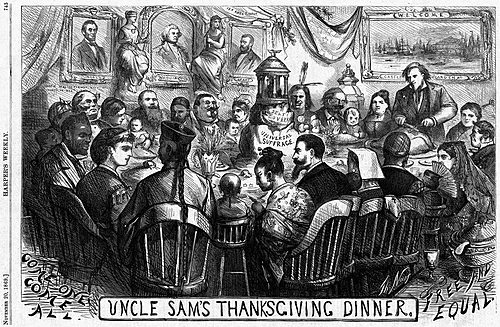
This is famed cartoonist Thomas Nast’s 1869 vision, in Harper’s Weekly, of immigrants seated in harmony around America's Thanksgiving table, mirroring writer Sara Josepha Hale's desire to help Americanize immigrant populations through the adoption of the holiday.
Our first civil war
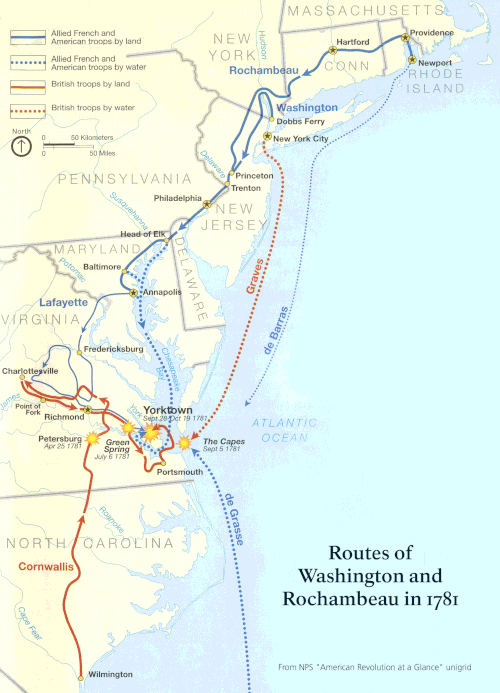
Map of the movements that led to the American (and French) defeat of the British at the Battle of Yorktown, the final major engagement of the American Revolutionary War, which was also a civil war.
Adapted from Robert Whitcomb’s “Digital Diary,’’ in GoLocal24.com
“How is it that the loudest yelps for liberty come from the drivers of slaves?”
-- English writer, scholar and philosopher Samuel Johnson (1709-1784) in 1775
I’ve been watching some of Ken Burns’s PBS series The American Revolution. I tire of the relentless violin music heard in his shows, but the very timely series does serve to undermine various popular myths of the Revolutionary War and, more broadly, The American Founding. It was far more than a noble desire for freedom from an empire, albeit one run by an elected parliament along with troubled, but not evil, king.
The British would have done well to follow the advice of the great Anglo-Irish politician and political philosopher Edmund Burke (1720-1797), who argued for conciliation between the British government and Americans who had felt that their traditional rights as British subjects were being violated by a far too dictatorial, rigid and aggressive government in London.
While Burke didn’t back giving American colonists representation in Parliament, at least partly because of the distance across the Atlantic, he did push for letting colonial legislatures set their colonies’ own taxes and many other policies. After all, he argued, the colonies had long experience of various degrees of autonomy, including considerable self-government.
Many Americans displayed great antipathy toward British-imposed taxes (but enacted, among other things to pay for protection from foreign powers such as the French). “No taxation without representation!’’
The Revolution was also about Americans’ greedy and brutal lust for seizing the tribal lands of Indians across the Appalachians – people whom the British mostly wanted to leave alone -- and an effort by the South to keep their partially slave-based system expanding.
Indeed, you could argue that the revolution was more about money than Enlightenment ideals of republican government.
And it was a bloody civil war between Loyalists for the British and those wanting their own country. There were ethical and other good and evil points on each side.
The Loyalists certainly thought they’d be better off governed under the relatively orderly British Empire than under the sometimes anarchic and rough people now calling themselves “Americans.’’
Lots of Loyalists fled, to Britain, the Maritime Provinces, Quebec and elsewhere, especially as Americans stole their property and in some cases threatened their lives. Some fled along the Maine Coast to points east enough that they thought they’d be safe. But the Treaty of Paris, in 1783, pushed the boundary further east than many had expected, and they found themselves stuck on the U.S. side of the border. At that point, many Loyalists were too tired to move again, and so they stayed put and became “Americans.’’ At least that’s what a Loyalist descendent living in Brunswick, Maine, told me!
The American Revolution helped lead to the very different French Revolution. You can read how and why they took such different courses by reading Hannah Arendt’s classic study On Revolution.
I suspect that a few of my New England ancestors (who were mostly around Boston and on Cape Cod) were Loyalists, but old documents suggest that most of them were “Patriots.’’ I love the old terminology of that war. I came across this from a family record:
“In 1775 John Butler is linked to Private Captain Joseph Palmer’s co. when they marched for 3 days {to where?}. Also with Captain Barrachia {!} Bassett’s co. dated January 13th 1776 a distance of 170 miles. Also on Captain Joseph Palmer’s co Col. Freeman’s regt. For service of 8 days on alarm {waiting for British troops to show up?} at Dartmouth and Falmouth in September 1778.’’
Would the world have been better off if the 13 colonies had remained part of the British Empire? Could they thus have been in better position to have encouraged Britain to adopt some of Americans’ better ideas/ideals (and, to quote Lincoln, “the better angels of our nature”) about government, the economy and other sectors, and society in general? These were ideas and ideals, some of them infused with a rhetorical egalitarianism, less common in Britain, and made manifest in the thoughts and actions of the often bickering Founders? Of course, there are far too many variables to know what would have happened. But playing “what if’’ is fun.
The only fairly sure bet is that slavery would have ended sooner here if London had remained in charge. The public opinion that slavery was evil was stronger in the United Kingdom than in what would become the United States, where part of the nation’s economy profited so much from it.
Meanwhile, one wonders how The Founders would have reacted to the current American regime of bottomless corruption and drive for tyranny, and that a plurality of those who bothered to vote backed a person with a 50-year record of private and public depravity. Of course, The Founders were always terrified that an extreme narcissist demagogue would take power in a lie-infested “populist’’ wave.
And now it’s happened.
Then rest up for the next
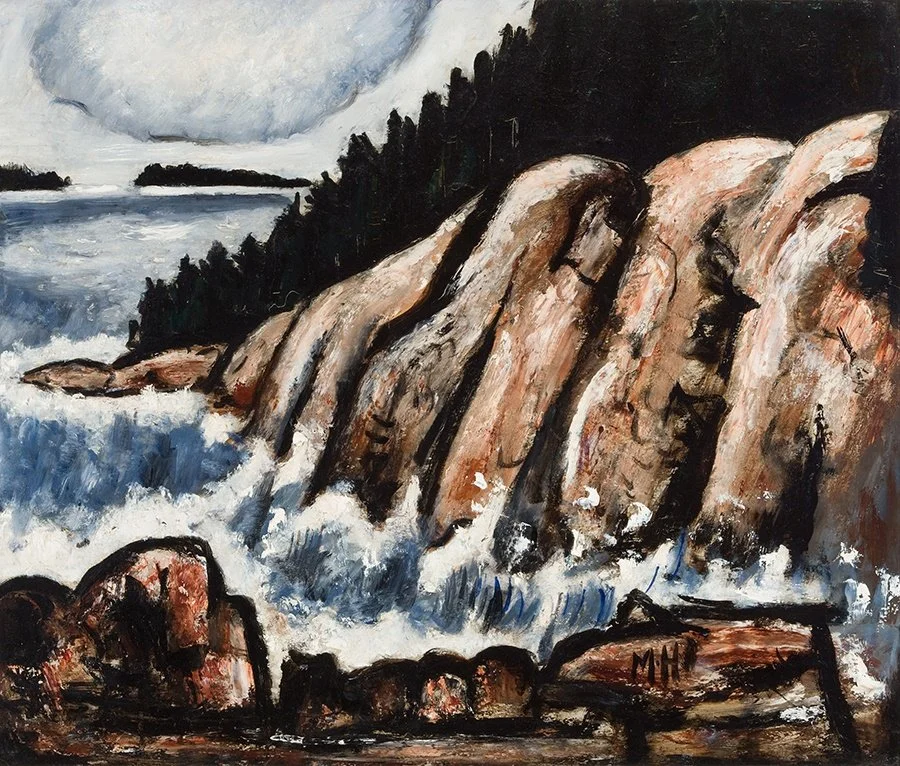
“End of Storm, Vinalhaven’’ (oil on masonite), by Marsden Hartley (1877-1943), at Bates College Museum of Art, Lewiston, Maine.
Arthur Allen: What to know about the Kennedy-ravaged CDC’s baseless attacks on childhood vaccination
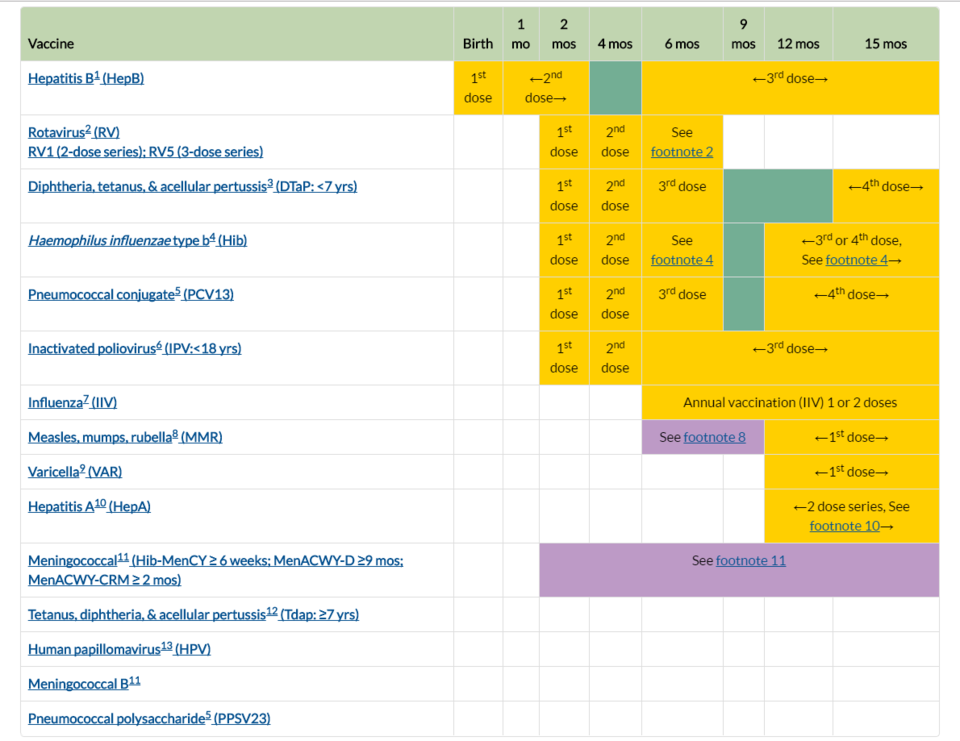
The CDC’s directions for very-early-childhood vaccinations in 2017.
From Kaiser Family Foundation Health News (KFF Health News) except for image above.
“The CDC website has been lobotomized.”
—Atul Gawande, an author and a surgeon at Brigham and Women’s Hospital, in Boston
The rewriting of a page on the CDC’s website to assert the false claim that vaccines may cause autism sparked a torrent of anger and anguish from doctors, scientists, and parents who say Health and Human Services Secretary Robert F. Kennedy Jr. is wrecking the credibility of an agency they’ve long relied on for unbiased scientific evidence.
Many scientists and public-health officials fear that the Centers for Disease Control and Prevention’s website, which now baselessly claims that health authorities previously ignored evidence of a vaccine-autism link, foreshadows a larger, dangerous attack on childhood vaccination.
“This isn’t over,” said Helen Tager-Flusberg, a professor emerita of psychology and brain science at Boston University. She noted that Kennedy hired several longtime anti-vaccine activists and researchers to review vaccine safety at the CDC. Their study is due soon, she said.
“They’re massaging the data, and the outcome is going to be, ‘We will show you that vaccines do cause autism,’” said Tager-Flusberg, who leads an advocacy group of more than 320 autism scientists concerned about Kennedy’s actions.
Kennedy’s handpicked vaccine-advisory committee is set to meet next month to discuss whether to abandon recommendations that babies receive a dose of the hepatitis B vaccine within hours of birth and make other changes to the CDC-approved vaccination schedule. Kennedy has claimed — falsely, scientists say — that vaccine ingredients cause conditions like asthma and peanut allergies, in addition to autism.
The revised CDC webpage will be used to support efforts to ditch most childhood vaccines, said Angela Rasmussen, a virologist at the University of Saskatchewan and co-editor-in-chief of the journal Vaccine. “It will be cited as evidence, even though it’s completely invented,” she said.
Kennedy personally ordered the website’s alteration, he told The New York Times. The CDC’s developmental disability group was not asked for input on the changes, said Abigail Tighe, executive director of the National Public Health Coalition, a group that includes current and former staffers at the CDC and HHS.
Scientists ridiculed the site’s declaration that studies “have not ruled out the possibility that infant vaccines cause autism.” While upward of 25 large studies have shown no link between vaccines and autism, it is scientifically impossible to prove a negative, said David Mandell, director of the Center for Autism Research at Children’s Hospital of Philadelphia.
The webpage’s new statement that “studies supporting a link have been ignored by health authorities” apparently refers to work by vaccine opponent David Geier and his father, Mark, who died in March, Mandell said. Their research has been widely repudiated and even ridiculed. David Geier is one of the outside experts Kennedy hired to review safety data at the CDC.
Asked for evidence that scientists had suppressed studies showing a link, HHS spokesperson Andrew Nixon pointed to older reports, some of which called for more study of a possible link. Asked for a specific study showing a link, Nixon did not respond.
Expert Reaction
Infectious-disease experts, pediatricians, and public- health officials condemned the alteration of the CDC website. Although Kennedy has made no secret of his disdain for established science, the change came as a gut punch because the CDC has always dealt in unbiased scientific information, they said.
Kennedy and his “nihilistic Dark Age compatriots have transformed the CDC into an organ of anti-vaccine propaganda,” said Amesh Adalja, a senior scholar at the Johns Hopkins Center for Health Security.
“On the one hand, it’s not surprising,” said Sean O’Leary, a professor of pediatrics and infectious disease at the University of Colorado. “On the other hand, it’s an inflection point, where they are clearly using the CDC as an apparatus to spread lies.”
“The CDC website has been lobotomized,” Atul Gawande, an author and a surgeon at Brigham and Women’s Hospital, told KFF Health News.
CDC “is now a zombie organization,” said Demetre Daskalakis, former director of the National Center for Immunization and Respiratory Diseases at the CDC. The agency has lost about a third of its staff this year. Entire divisions have been gutted and its leadership fired or forced to resign.
Kennedy has been “going from evidence-based decision-making to decision-based evidence making,” Daniel Jernigan, former director of the CDC’s National Center for Emerging and Zoonotic Infectious Diseases, said at a news briefing Nov. 19. With Kennedy and his team, terminology including “radical transparency” and “gold-standard science” has been “turned on its head,” he said.
Cassidy Goes Quiet
The new webpage seemed to openly taunt Sen. Bill Cassidy (R-La.), a physician who chairs the Senate Health, Education, Labor, and Pensions Committee. Cassidy cast the tie-breaking vote in committee for Kennedy’s confirmation after saying he had secured an agreement that the longtime anti-vaccine activist wouldn’t make significant changes to the CDC’s vaccine policy once in office.
The agreement included a promise, he said, that the CDC would not remove statements on its website stating that vaccines do not cause autism.
The new autism page is still headed with the statement “Vaccines do not cause Autism,” but with an asterisk linked to a notice that the phrase was retained on the site only “due to an agreement” with Cassidy. The rest of the page contradicts the header.
“What Kennedy has done to the CDC’s website and to the American people makes Sen. Cassidy into a total and absolute fool,” said Mark Rosenberg, a former CDC official and assistant surgeon general.
On Nov. 19 at the Capitol, before the edits were made to the CDC website, Cassidy answered several unrelated questions from reporters but ended the conversation when he was asked about the possibility Kennedy’s Advisory Committee on Immunization Practices might recommend against a newborn dose of the hepatitis B vaccine.
“I got to go in,” he said, before walking into a hearing room without responding.
Cassidy has expressed dismay about the vaccine-advisory committee’s actions but has avoided criticizing Kennedy directly or acknowledging that the secretary has breached commitments he made before his confirmation vote. Cassidy has said Kennedy also promised to maintain the childhood immunization schedule before being confirmed.
The senator criticized the CDC website edits in a Nov. 20 post on X, although he did not mention Kennedy.
“What parents need to hear right now is vaccines for measles, polio, hepatitis B and other childhood diseases are safe and effective and will not cause autism,” he said in the post. “Any statement to the contrary is wrong, irresponsible, and actively makes Americans sicker.”
Leading autism research and support groups, including the Autism Science Foundation, the Autism Society of America, and the Autism Self Advocacy Network, issued statements condemning the website.
“The CDC’s web page used to be about how vaccines do not cause autism. Yesterday, they changed it,” ASAN said in a statement. “It says that there is some proof that vaccines might cause autism. It says that people in charge of public health have been ignoring this proof. These are lies.”
What the Research Shows
Parents often notice symptoms of autism in a child’s second year, which happens to follow multiple vaccinations. “That is the natural history of autism symptoms,” said Tager-Flusberg. “But in their minds, they had the perfect child who suddenly has been taken from them, and they are looking for an external reason.”
When speculation about a link between autism and the measles, mumps, and rubella vaccine or vaccines containing the mercury-based preservative thimerosal surfaced around 2000, “scientists didn’t dismiss them out of hand,” said Tager-Flusberg, who has researched autism since the 1970s. “We were shocked, and we felt the important thing to do was to figure out how to quickly investigate.”
Since then, studies have clearly established that autism occurs as a result of genetics or fetal development. Although knowledge gaps persist, studies have shown that premature birth, older parents, viral infections, and the use of certain drugs during pregnancy — though not Tylenol, evidence so far indicates — are linked to increased autism risk.
But other than the reams of data showing the health risks of smoking, there are few examples of science more definitive than the many worldwide studies that “have failed to demonstrate that vaccines cause autism,” said Bruce Gellin, former director of the National Vaccine Program Office.
The edits to the CDC website and other actions by Kennedy’s HHS will shake confidence in vaccines and lead to more disease, said Jesse Goodman, a former FDA chief scientist and now a professor at Georgetown University.
This opinion was echoed by Alison Singer, the mother of an autistic adult and a co-founder of the Autism Science Foundation. “If you’re a new mom and not aware of the last 30 years of research, you might say, ‘The government says we need to study whether vaccines cause autism. Maybe I’ll wait and not vaccinate until we know,’” she said.
The CDC website misleads parents, puts children at risk, and draws resources away from promising leads, said Paul Offit, director of the Vaccine Education Center at the Children’s Hospital of Philadelphia. “Kennedy thinks he’s helping children with autism, but he’s doing the opposite.”
Many critics say their only hope is that cracks in President Donald Trump’s governing coalition could lead to a turn away from Kennedy, whose team has reportedly tangled with some White House officials as well as Republican senators. Polling has also shown that much of the American public distrusts Kennedy and does not consider him a health authority, and Trump’s own approval rating has sunk dramatically since he returned to the White House.
But anti-vaccine activists applauded the revised CDC webpage. “Finally, the CDC is beginning to acknowledge the truth about this condition that affects millions,” Mary Holland, CEO of Children’s Health Defense, the advocacy group Kennedy founded and led before entering politics, told Fox News Digital. “The truth is there is no evidence, no science behind the claim vaccines do not cause autism.”
Arthur Allen is a KFF Health News reporter. Céline Gounder, Amanda Seitz and Amy Maxmen contributed to this report.
Arthur Allen: aallen@kff.org, @ArthurAllen202
And adjusted for inflation since then?
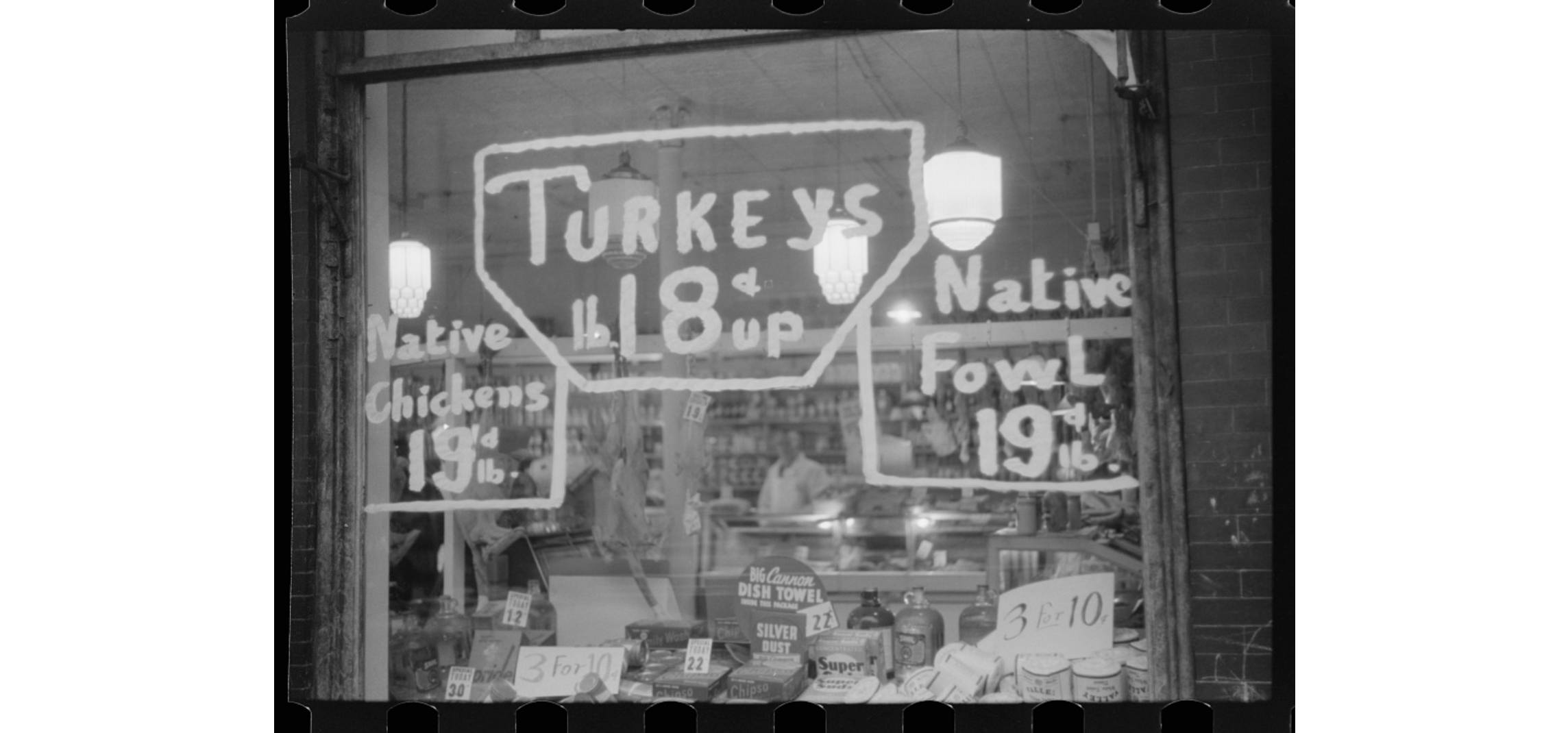
A butcher shop window in Norwich, Conn., during Thanksgiving week in 1940, by famed photographer Jack Delano (1914-1997), perhaps most famous for his Great Depression era photos.
No screwballs like him
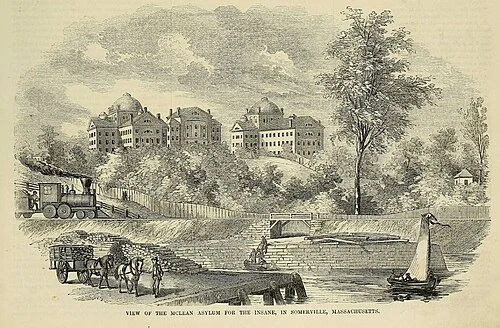
Print of the McLean Asylum (founded in 1811) in 1853, in Somerville, Mass. The hospital was moved to Belmont in 1895.
  “In  between the limits of day,
hours and hours go by under the crew haircuts
and slightly too little nonsensical bachelor twinkle
of the Roman Catholic attendants.
(There are no Mayflower
screwballs in the Catholic Church.)''
—From “Waking in the Blue,’’ by American poet Robert Lowell (1917-1977). The poem is based on his stay in McLean Hospital, a psychiatric institution in Belmont, Mass., that became famous, for among other things, a place for very discreetly treating celebrities such as Lowell. A descendent of Mayflower passenger James Chilton, he suffered from bi-polar disorder.
Read Alex Beam’s book Gracefully Insane: Life and Death Inside America's Premier Mental Hospital.
‘Driven by raw emotion’
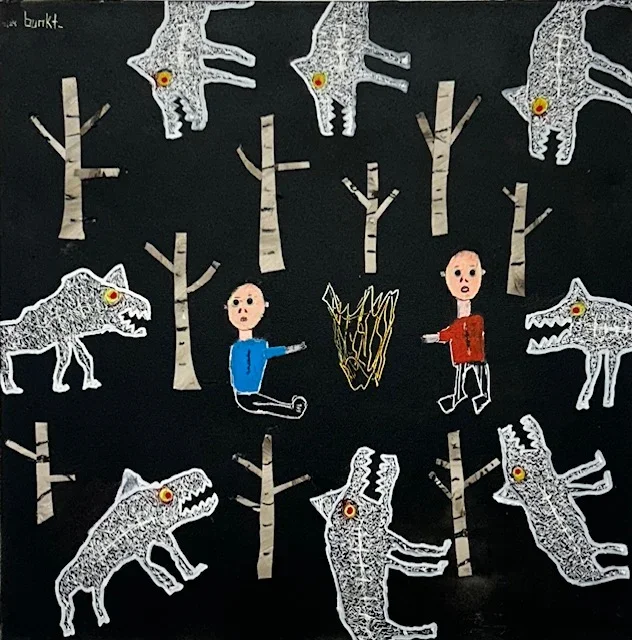
Painting by New Hampshire artist Brian Wagoner, whose artist name is Bunkt, in his show “Give and Take: Works by Bunkt,’’ at 3S Artspace, Portsmouth, N.H., through Nov. 30.
The gallery says:
“Bunkt’s art is driven by raw emotion–– an interplay of anxiety, excitement, and anger emerging from within chaos. His studio floor is strewn with supplies and unconventional materials, reflecting a process that is ever-changing and experimental. Each painting evolves through countless transformations—glued, stapled, burnt, cut, and rearranged—revealing a story of hardship and resilience.’’
He’s a self-taught and began his public artistic career at age 45.
Melancholy metro
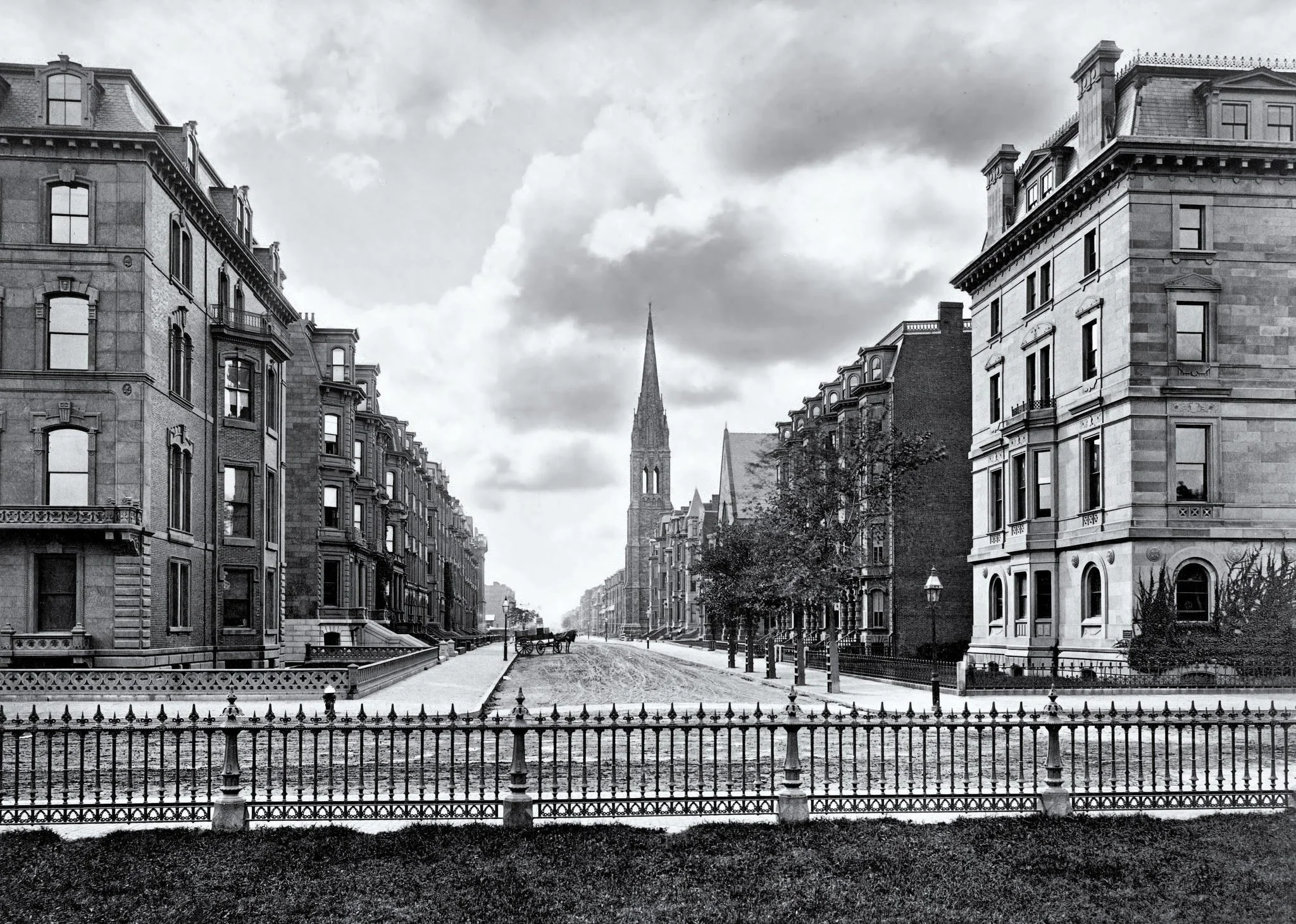
Newbury Street, Boston, in 1880, before all the expensive shops moved in.
Grappling with history
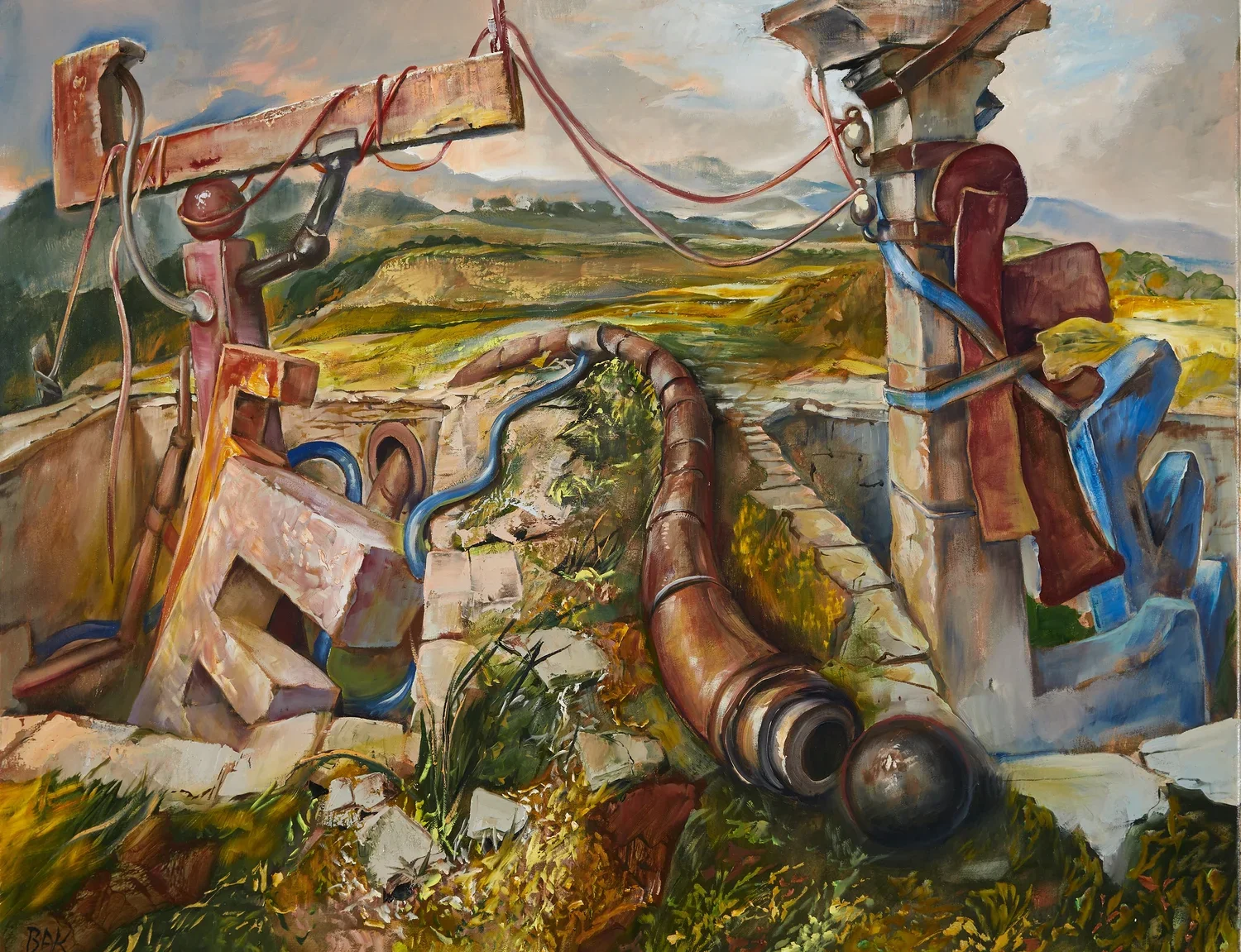
Work by painter and Holocaust survivor Samuel Bak (born 1933), in his show “Question of Life,’’ at Pucker Gallery, Boston, through Dec. 7.
Mannie Lewis: Women did most of the work at the myth-thick “First Thanksgiving’’
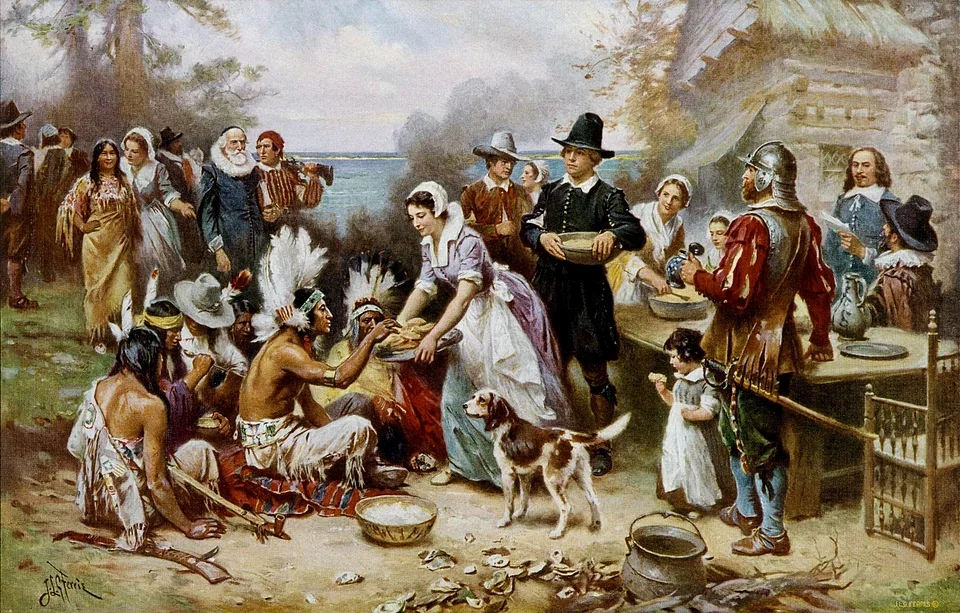
“The First Thanksgiving, 1621” (oil on canvas), by Jean Leon Gerome Ferris (1899). The painting shows common misconceptions about the event, in what is now Plymouth, Mass., that persist to today. Pilgrims did not wear such outfits, nor did they eat at a dinner table. The Wampanoags are dressed in the style of Native Americas living on the Great Plains.
From The Boston Guardian (except for picture above)
(New England Diary’s editor, is chairman of The Boston Guardian.)
As you sit down for Thanksgiving dinner this year, consider including these people in your list of reasons to be grateful, Susanna White, Elizabeth Hopkins, Eleanor Billington and Mary Brewster.
Like many a good gathering, they did most of the work but reaped little of the credit. They were the only four grown women present at the first historic feast in 1621, according to records. These women cooked a three-day feast for 53 pilgrims and about 90 Wampanoag men.
The four women who made the meal that became known as the first Thanksgiving did so because they were the four women who survived to see it. Five young girls lived as well.
Primary sources on the first Thanksgiving are scant.
William Bradford, the tiny colony’s leader, wrote one of just two primary accounts known to date.
“They begane now to gather in the small harvest they had, and to fitte up their houses and dwellings against winter, being all well recovered in health and strenght, and had all things in good plenty; for as some were thus imployed in affairs abroad, others were excersised in fishing, aboute codd, and bass, and other fish, of which they tooke good store, of which every family had their portion,” he said.
Edward Winslow kept the other record. As it turns out, he married Susanna White, the first of our four Thanksgiving chefs, after her husband William White died.
Largely what is known of the women at the first Thanksgiving is based on their associations to their husbands.
Many historians note that Susanna White was friends with Elizabeth Hopkins, wife of Stephen Hopkins, but little else is known of Hopkins.
Eleanor Billington and her family had a reputation for being troublesome. Her son Francis drew scorn for firing a musket inside the Mayflower. Her husband John was executed for murder in 1630.
Mary Brewster and her husband, William, were known for their religiosity, and William Brewster’s role as a Pilgrim leader continues to be celebrated by his descendants through the Elder William Brewster Society.
The accomplishments of those such as William Brewster, William Bradford and their contemporary men are well documented. Lesser known are the women who made the first feast, whose biographies are short and whose tasks were likely limited.
Those not included at all. Historical mentions of Wampanoag women at the first feast are even scarcer.
Berlin’s paper past

From the Brown Company Photographic Collection at the Museum of the White Mountains, at Plymouth (N.H.) State University, about the once big paper industry centered in Berlin, N.H., in a region with forests providing the mills with raw material.
The museum explains:
The Brown Company Photographic Collection documents the history of the company’s paper mill from the late 19th Century through the mid-1960s.
Much of the collection chronicles the social, cultural, and recreational lives of the workers, their families, and the place of these people in the life of Berlin. The images, which are accessible from the Web site, let viewers add written content about the photographs, or to share information about the paper mill by telephone.
Chris Powell: The case for vegetarianism is getting stronger
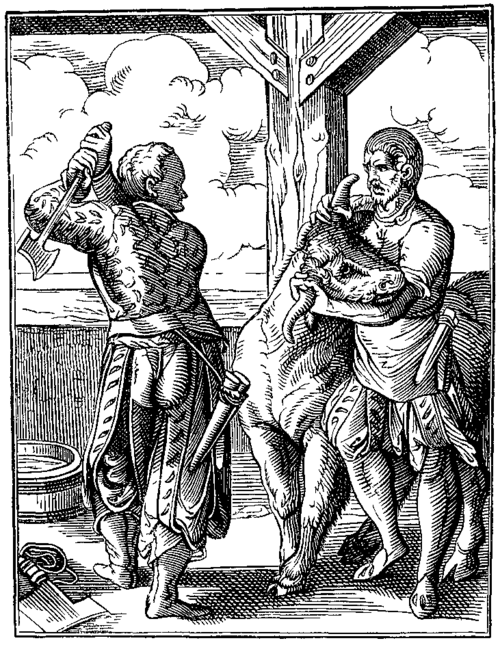
“The Butcher and his Servant’’ (1568), drawn and engraved by Jost Amman
MANCHESTER, Conn.
Wesleyan University, in Middletown, Conn., often rivals Yale University in New Haven for nutty political correctness, and that's how many people perceived its most recent news. A group of Wesleyan students, faculty members, and alumni has asked the university to erect a plaque outside the university's dining hall to memorialize all the animals killed for the food eaten inside.
Such a plaque would be a rebuke not just to meat eaters on campus but to the university itself, so it's hard to see how Wesleyan could erect it without also taking meat off the dining hall menu and formally converting the campus to vegetarianism. Once the plaque was erected, anything less would be hypocrisy.
Such a plaque also might make the university's priorities seem strange, what with poverty, homelessness, child neglect, and other human ills worsening throughout Connecticut, often within sight of the university.
Even so, the plaque concludes: “There will come a time when we will look back on this treatment of our fellow animals as indefensible. We will recognize that all animals feel, think, love, and strive to live -- even those who do not look or behave exactly as humans do -- and that their lives are as precious to them as ours are to us."
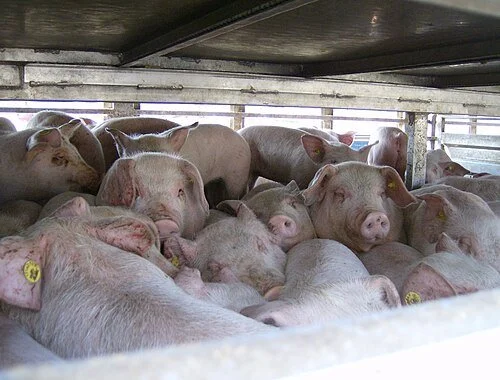
Pigs being transported to be slaughtered and eaten, much of the meat as bacon.
This is not so nutty, insofar as society has already conceded some of it in principle with laws against gratuitous cruelty to animals. But vegetarianism is up against all history, starting with animals themselves, many of which have no scruples against eating each other.
In Genesis the Bible conveys divine approval for eating meat: “And God said, Let us make man in our image, after our likeness: and let them have dominion over the fish of the sea, and over the fowl of the air, and over the cattle, and over all the Earth, and over every creeping thing that creepeth upon the Earth."
Indeed, without the meat industry many animal species and breeds, being raised primarily for food, might virtually disappear. Who would go through the trouble and expense of raising beef cattle just for the sake of biodiversity?
But guilt about eating meat is not peculiar to Wesleyan. There is much ethics-based vegetarianism in Hinduism, and some American Indian tribes offered prayers of thanks to honor the animals they hunted for food, though whether this was sincere respect or just rationalization for participating in the kill is arguable. Few people ordering hamburgers have to witness the prerequisite slaughtering and butchering of the animals that their meat comes from. Witnessing such spectacles in the stockyards and meat-packing factories can depress appetites.
Of course, vegetarianism does not automatically confer goodness. Taking a break from plotting mass murder in November 1941, Hitler assured his dinner companions, “The future belongs to us vegetarians."
It's still better that he lost the war.
But the case for vegetarianism, or at least for greater respect for animals, is getting stronger for new reasons.
Companion animals, particularly dogs and cats, long have been famous for their sometimes uncanny ability to communicate with and protect people. But in recent years home videos posted on the Internet have proven what had been mainly anecdotal -- the astounding intelligence and ability to communicate with humans possessed not just by dogs and cats but even by wild animals, farm animals, and birds as well.
Amelia Thomas, a journalist, animal scientist, and farmer in Canada, has detailed this in a fascinating new book, What Sheep Think About the Weather: How to Listen to What Animals Are Trying to Say.
“There's no us and them," Thomas says. “Rather, infinite varieties of us."

Chimpanzees are humans’ closest relatives.
Having worked a little with chimpanzees, some of whom have learned American sign language, Thomas quotes the primatologist Mary Lee Jensvold: “The more you appreciate what thinking beings they are, the more you also understand the depth of their suffering."
There are no chimps on the menu at Wesleyan, but if the vegetarian plaque is erected there, over time it may get harder to argue with.
Chris Powell has written about Connecticut government, politics and other topics for many years (CPowell@cox.net).