
Vox clamantis in deserto








Llewellyn King: AI could be apocalyptic for jobs

WEST WARWICK, R.I.
The Big One is coming, and it isn't an earthquake in California or a hurricane in the Atlantic. It is the imminent upending of so many of the world's norms by artificial intelligence, for good and for ill.
Jobs are being swept away by AI not in the distant future, but right now. A recent Stanford University study found that entry-level jobs for workers between 22 and 25 years old have dropped by 13 percent since the widespread adoption of AI.
Another negative impact of AI: The data centers that support AI are replacing farmland at a rapid rate. The world is being overrun with huge concrete boxes, Brutalist in their size and visual impact.
Meta Platforms (of which Facebook is part) plans to spend hundreds of billions of dollars to build several massive AI data centers; the first called Prometheus and the second Hyperion.
CEO Mark Zuckerberg said in a post on his Threads social media platform: “We're building multiple more titan clusters as well. Just one of these covers a significant part of the footprint of Manhattan.”
Data centers are voracious in their consumption of electricity and are blamed for sending power bills soaring across the country.
But AI has had a positive impact on the quality of medicine, improving accuracy, consistency and efficacy, according to the National Institutes of Health.
Predictive medicine is on a roll: Alzheimer's Disease and some cancers, for example, can be predicted accurately. That raises the question: Do you want to know when you will lose your mind or get cancer?
Where AI is without downside is medical “exaptation.” That happens when a drug or therapy developed for one disease is found to be effective with another, opening up a field of possibilities.
AI also offers the chance of shortening clinical trials for new drugs from years to a few months. Side effects and downsides can be mapped instantly.
Life expectancy is predicted to increase substantially because of AI. Omar Hatamleh, an AI expert and author, told me, “A child born today can expect to live to 120.”
Likewise, predictive maintenance with AI is already useful in forecasting the failure of industrial plants, power station components and bridges.
Oh, and productivity will increase across the board where AI and AI agents — the AI tools developed for special purposes — are at work.
The trouble is AI will be doing the work that heretofore people have done.
Pick a field and speculate on the job losses there. This may be fun to do as a parlor game, but it is deeply distressing when you realize that it could happen in the very near future — such as in the next year.
Most are low-skilled white-collar jobs, such as those in call centers, or in medical offices checking insurance claims, or in an accounting firm doing bookkeeping. In short, if you are a paper pusher, you will be pushed out.
Look a little further — maybe 10 years — and Uber, which has invested heavily in autonomous vehicles, will have decided that they are ready for general deployment. Bye-bye Uber driver, hello driverless car.
Taxis and truck drivers might well be the next to get to their career-end destinations quicker than they expected.
By the way, autonomous vehicles ought to have fewer accidents than cars with drivers do, so the insurance industry will take a hit and lots of workers there will get the heave-ho. And collision repairs may be nearly outdated.
These aren't speculation; they are real possibilities in the near future. Yet the political world has been arguing about other things.
As far as I am aware, when the leadership of the U.S. military gathered at the Marine Corp Base Quantico in Virginia on Sept. 30 to get a pep talk on shaving, losing weight and gender superiority, they didn't hear about how AI is transforming war and what measures should be taken. Or whether there will be work for those who leave the military.
The Big One is coming, and the politicians are worrying about yesterday's issues. That is like worrying about your next guest list when an uninvited guest, a tsunami of historic proportions, is coming ashore.
On X: @llewellynking2
Bluesky: @llewellynking.bsky.social
Llewellyn King is executive producer and host of White House Chronicle, on PBS. He’s based in Rhode Island.
Brandeis will revamp its curriculum

The rather bizarre Usen Castle, at Brandeis University, in Waltham, Mass.
Edited from a New England Council report
Brandeis University will revamp its curriculum to center it around career-readiness. The university’s president, Arthur Levine, recently introduced ‘‘The Brandeis Plan for Reinventing the Liberal Arts,’’ which aims to give students new skills and the opportunity to enter the workforce early.
The new plan’s key elements include a redesigned core curriculum, a focus on career development from day one of a student’s time at Brandeis, a career-competency second transcript, and a unified academic structure that combines liberal arts with professional education.
‘‘We’re choosing a bold path forward, one that invests in Brandeis’s academic future and reaffirms our leadership in higher education,’’ said Lisa Kranc, chairwoman of the Brandeis Board of Trustees.
Or just realism

“Apathy” (plastic, wire, wood, PVC pipe, cement block), in Sally B. Moore’s show “Human/Beast” at Boston Sculptors Gallery, through Nov. 2
Chris Powell: Enough with Conn. basketball!

Connecticut Sun logo
MANCHESTER, Conn.
Why are Connecticut Gov, Ned Lamont and state Treasurer Erick Russell so enthusiastic about using state pension money to make state government a minority owner of the Mohegan tribe's Connecticut Sun women's basketball team and move it to Hartford from the tribe's reservation in rural eastern Connecticut?
Though questions abound, the governor and the treasurer don't seem to have conducted even a basic analysis of the team's current and likely future finances.
On the Mohegan reservation the Sun plays for free at the tribe's beautiful arena. Do the governor and treasurer suppose that the team also could play for free at the People's Bank Arena, in Hartford, which is overseen by the Capital Regional Development Authority? Has the authority been asked if it would forego revenue and incur only expenses from a major new tenant?
Playing in Hartford, the Sun would face intense competition from the University of Connecticut men's and women's basketball teams, which play most of their games at the People's Bank Arena, not on campus in rural Storrs. Such competition almost certainly would impair the profitability of all three teams. Have the governor and treasurer factored this into whatever informal calculations they have made?
For eight years Hartford has had a beautiful minor-league baseball stadium downtown. Yet the stadium is still making only financial losses for the city, and the city is heavily subsidized by state government. Does state government want to subsidize the city indefinitely for another big entertainment project?
The Hartford office-building project called Constitution Plaza was built in the early 1960s in the hope of reviving downtown and the city generally. It didn't. Today Constitution Plaza is sleepy.
The same aspiration was behind the predecessor of the People's Bank Arena, the Hartford Civic Center, which opened in 1975. The civic center came with a shopping mall. But Hartford continued its decline demographically and economically anyway, and with few customers the shopping mall went out of business.
Twenty years ago state government decided to push downtown Hartford around for the third time in 40 years with the Adriaen's Landing project -- a convention hall, hotel, museum, and restaurant district. But it too is sleepy and has yet to do much for the city.
Indeed, a decade ago the Hartford area's shopping, restaurant, and entertainment focus shifted to West Hartford because of the better demographics there and the greater amount of housing nearby.
The arena in downtown Hartford has served a great purpose for Connecticut, in large part because the UConn teams have played there so often, much closer to the state's center of population than Gampel Pavilion.
But does anyone really believe that the big problem of the Hartford area is the lack of a professional women's basketball team when there is already so much great basketball and some good minor-league baseball in the city?
A century ago Hartford was believed to be the richest city in the country. Today it is among the poorest. Why it changed is yet to be examined officially, but all the games played at the downtown arena and the baseball stadium haven't yet persuaded middle-class people to return to the city to live. Most people at the games go home to the suburbs.
Only more middle-class housing and middle-class schools are likely to restore the city -- schools with academic tests for admission and advancement, not schools like Hartford's, which happily advance and graduate illiterates without apology. All other undertakings in the name of reviving Hartford are mere distractions.
With luck the Women's National Basketball Association will disabuse the governor, the treasurer, and state legislators out of using pension money to become a powerless minority owner -- a prisoner -- of an undertaking that risks becoming a long-term loss. The league and the Mohegans know that Connecticut is a much smaller market than Boston and Houston and a team in those cities would be much more profitable. The league and the Mohegans want only to make money, which is fine, especially since state government often seems to want only to lose it.
Chris Powell has written about Connecticut government and politics for many years (CPowell@cox.net).
The circle route

“Topography No.2’’ (acrylic on canvas) by Christopher O’Connor, at Portland (Maine) Art Gallery.
‘Even toward dark’
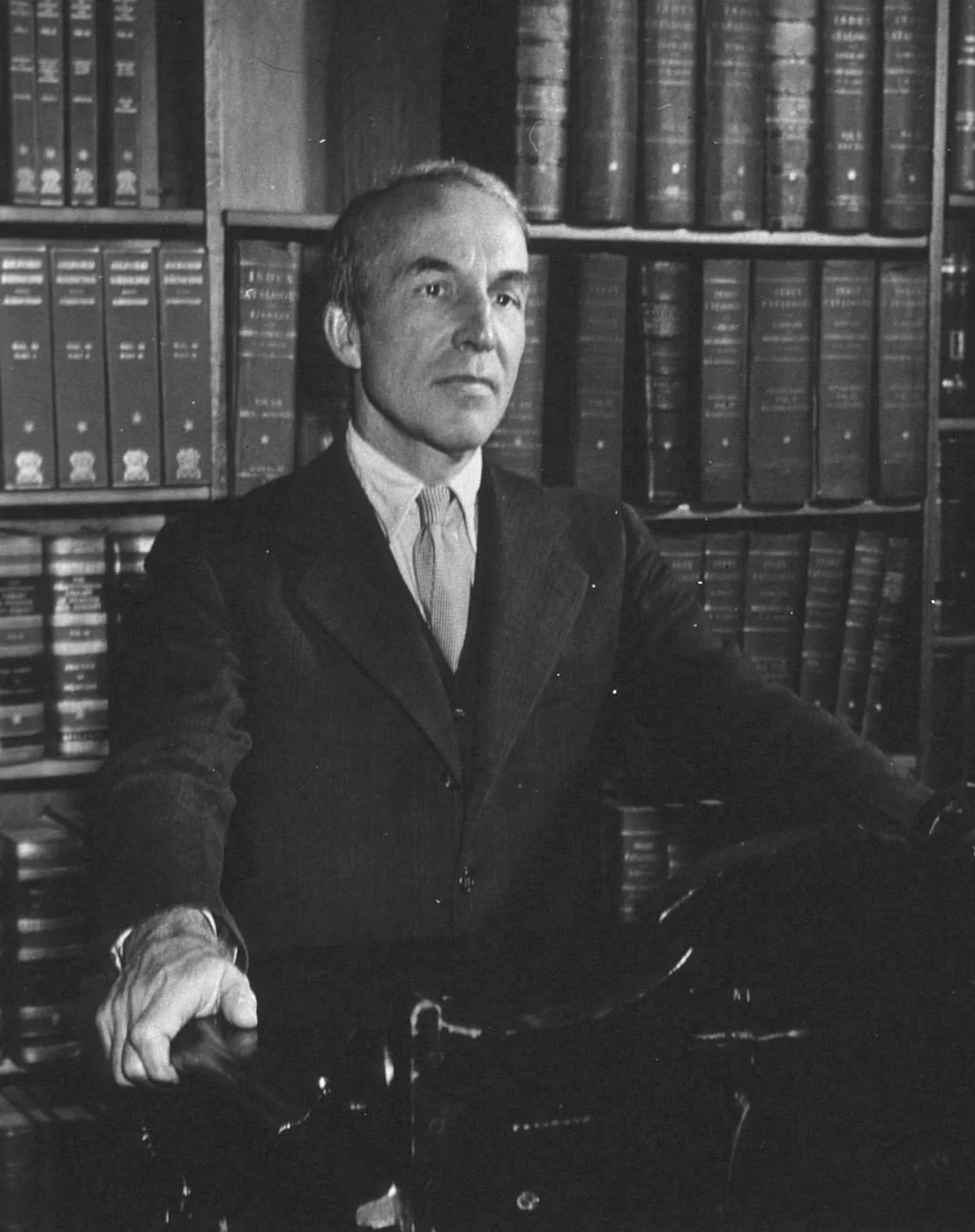
Archibald MacLeish in 1944.
“We are as great as our belief in human liberty—no greater. And our belief in human liberty is only ours when it is larger than ourselves: liberty, as Mr. Lincoln put it, ‘not alone to the people of this country but hope to the world.’ We must become again his ‘last, best hope of earth’ if we wish to be the great Republic which his love once saved. We know that we must say so even now, even toward dark, without voice to lead us, without a leader standing to come forth. We must say it for ourselves. No one else will say it for us
Archibald MacLeish (1892-1982), poet, playwright, essayist, government official and lawyer. He lived much of his adult life in Conway, Mass. This was in a column he wrote for The New York Times of July 3, 1976. He referenced the Watergate scandal.
Very good and very bad
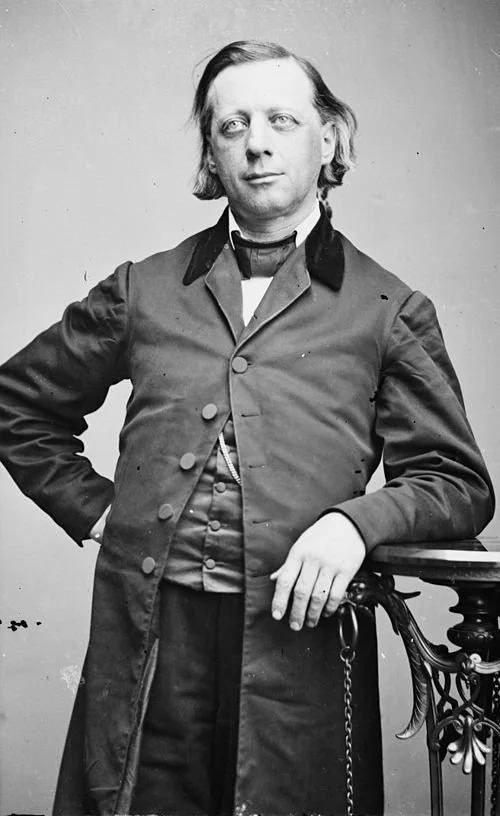
Henry Ward Beecher
“Perhaps nowhere in the world can be found more unlovely wickedness — a malignant, bitter, tenacious hatred of good — than in New England. The good are very good and the bad are very bad.’’
Henry Ward Beecher (1813-1887), Congregational minister, reformer and writer in his 1868 novel, Norwood, or Village Life in New England. His adultery trial transfixed the nation.
Monica Duffy Toft: Eisenhower wouldn’t have agreed with bombastic Hegseth
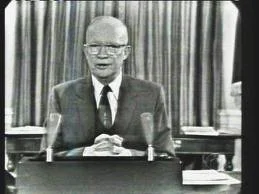
President Eisenhower delivering his televised farewell address on Jan. 17, 1961.
From The Conversation, except for picture above.
Monica Duffy Toft is professor of international politics and director of the Center for Strategic Studies at The Fletcher School, Tufts University.’
She does not work for, consult, own shares in or receive funding from any company or organization that would benefit from this article, and has disclosed no relevant affiliations beyond their academic appointment.
MEDFORD, Mass.
Hundreds of generals and admirals converged on Quantico, Va., on Sept. 30, 2025, after being summoned from across the globe by their boss, Pentagon chief Pete Hegseth, for a session that, as expected, covered what Hegseth often describes as the “warrior ethos.”
Listening quietly, they heard Hegseth promise to make the military “stronger, tougher, faster, fiercer and more powerful than it has ever been before,” and declare that he would fix “decades of decay” in the military.
President Donald Trump spoke for more than an hour in a political speech that derided presidents who came before him. He asserted that “political correctness” would be banished from the military.
The meeting came soon after Trump’s Sept. 5 executive order renaming the Department of Defense the “Department of War.” With that change, Trump reverted the department to a name not used since the 1940s.
The change represents far more than rebranding. It signals an escalation in the administration’s embrace of a militaristic mindset that, in 1961, President Dwight D. Eisenhower warned against in his farewell address, and that the nation’s founders deliberately aimed to constrain.
The timing of this name change feels particularly notable when considered alongside recent reporting revealing secret U.S. military operations. In 2019, a detachment of U.S. Navy SEALs crept ashore in North Korea on a mission to plant a listening device during high-stakes nuclear talks. The risks were enormous: Discovery could have sparked a hostage crisis or even war with a nuclear-armed foe.
That such an operation was approved by Trump in his first term at all exemplifies an increasingly reckless militarism that has defined American foreign policy for decades. That militarism is the very subject of my book, “Dying by the Sword.”
Further, the name change was announced just days after Trump authorized a U.S. military strike on a Venezuelan boat that the administration claimed was carrying drug-laden cargo and linked to the Tren de Aragua cartel. The strike killed 11 people. The administration justified the killings by labeling them “narcoterrorists.”
The U.S. has beefed up military exercises in Puerto Rico during a campaign in the Southern Caribbean against boats suspected of transporting illegal drugs. Miguel J. Rodríguez Carrillo/Getty Images
Abandoning restraint
The Department of War existed from 1789 until 1947, when Congress passed the National Security Act reorganizing the armed services into the National Military Establishment. Just two years later, lawmakers amended the act, renaming the institution the Department of Defense.
Officials disliked the “NME” acronym – which sounded uncomfortably like “enemy” – but the change was not only about appearances.
In the aftermath of World War II, U.S. leaders wanted to emphasize a defensive rather than aggressive military posture as they entered the Cold War, a decades-long standoff between the United States and Soviet Union defined by a nuclear arms race, ideological rivalry and proxy wars short of direct great-power conflict.
The new emphasis also dovetailed with the new U.S. grand strategy in foreign affairs – diplomat George F. Kennan’s containment strategy, which aimed to prevent the expansion of Soviet power and communist ideology around the world.
Kennan’s approach narrowly survived a push to a more aggressive “rollback” strategy of the Soviet Union from its occupation and oppression of central and eastern Europe. It evolved instead into a long game: a team effort to keep the adversary from expanding to enslave other peoples, leading to the adversary’s collapse and disintegration without risking World War III.
On the ground, this meant fewer preparations for war and more emphasis on allies and intelligence, and foreign aid and trade, along with the projection of defensive strength. The hope was that shaping the environment rather than launching attacks would cause Moscow’s influence to wither. To make this strategy viable, the U.S. military itself had to be reorganized.
In a 1949 address before Congress, President Harry S. Truman described the reorganization sparked by the 1947 legislation as a “unification” of the armed forces that would bring efficiency and coordination.
But a deeper purpose was philosophical: to project America’s military power as defensive and protective, and for Truman, strengthening civilian oversight.
The wisdom of this restraint is clearest in Eisenhower’s farewell address, of January 1961.
In less than 10 minutes, the five-star general who had commanded Allied forces in Europe as they swept to victory in World War II cautioned Americans against the rise of a “military-industrial complex.” He acknowledged that the nation’s “arms must be mighty, ready for instant action,” but warned that “the potential for the disastrous rise of misplaced power exists and will persist.”
New enemies, destabilizing regions
The risky North Korean team mission by the Navy SEALs illustrates how America’s militaristic approach often produces the very dangers it aspires to deter.
Rather than enhancing diplomacy, the operation risked derailing talks and escalating conflict. This is the central argument of my book: America’s now-reflexive reliance on armed force doesn’t make America great again or more secure. It makes the country less secure, by creating new enemies, destabilizing regions and diverting resources from the true foundations of security.
It also makes the U.S less admired and respected. The State Department budget continues to be dwarfed by the Department of War’s budget, with the former never reaching more than 5.5% of the latter. And the U.S. Agency for International Development, or USAID, once the leading arm of U.S. soft power as quiet purveyor development aid around the world, is now shuttered.
Today’s Pentagon budget exceeds anything Eisenhower could have imagined.
Trump’s rebranding of the Department of Defense into the Department of War signals a shift toward framing U.S. power primarily in terms of military force. Such a framing emphasizes the use of violence as the principal means of solving problems and equates hostility and aggression with leadership.
Yet historical experience shows that military dominance alone has not translated into strategic success. That’s the mindset that lost the U.S. endless wars in Afghanistan and Iraq, and failed in interventions in Libya and Syria – conflicts that altogether cost trillions of dollars and hundreds of thousands of lives while leaving the country less secure and eroding its international legitimacy.
“Only an alert and knowledgeable citizenry,” Eisenhower said, can compel the proper balance between military power and peaceful goals.
The very title of my and my co-author’s book comes from the Gospel of Matthew – Chapter 26, verse 52 – that “to live by the sword is to die by the sword.”
Throughout modern history, true security has come from diplomacy, international law, economic development and investments in health care and education. Not from an imaginary “warrior ethos.”
America, I would argue, doesn’t need a Department of War. It needs leaders who understand, as Eisenhower did, that living by the sword will doom us all in the end. Real security comes from the quiet power that builds legitimacy and lasting peace. The U.S. can choose again to embody those strengths, to lead not by fear but by example.
At new museum in Westerly

“Autumnal Landscape,’’ by Harriet Randall Lumis (1870-1953), at the new Westerly (R.I.) Museum of American Impressionism.
At least close to ground

The nearly complete South Station Tower in August. The station building was constructed in 1899 to replace the downtown terminals of several railroads. Today, it’s a major intermodal domestic transportation hub.
— Photo by Kenneth C. Zirkel
“At least when I get on the Boston train I have a good chance of landing in the South Station and not in that part of the daily press which is reserved for victims of aviation.’’
— Ogden Nash (1902-1971), American poet famous for his light verse.
When government is a lawbreaker
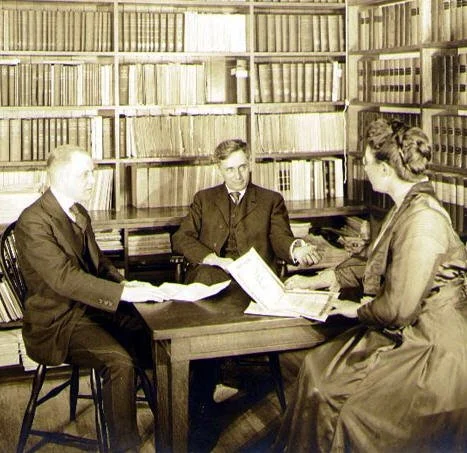
Louis D Brendeis (center) in his Boston office in 1916
“Crime is contagious. If the government becomes a lawbreaker, it breeds contempt for law; it invites every man to become a law unto himself; it invites anarchy.”
xxx
“[T]he only title in our democracy superior to that of President [is] the title of citizen.”
—Louis D. Brandeis (1856-1941), Boston lawyer and civic reformer who was a U.S. Supreme Court justice in 1916-1939.
ICE rule on students would slam education and economy
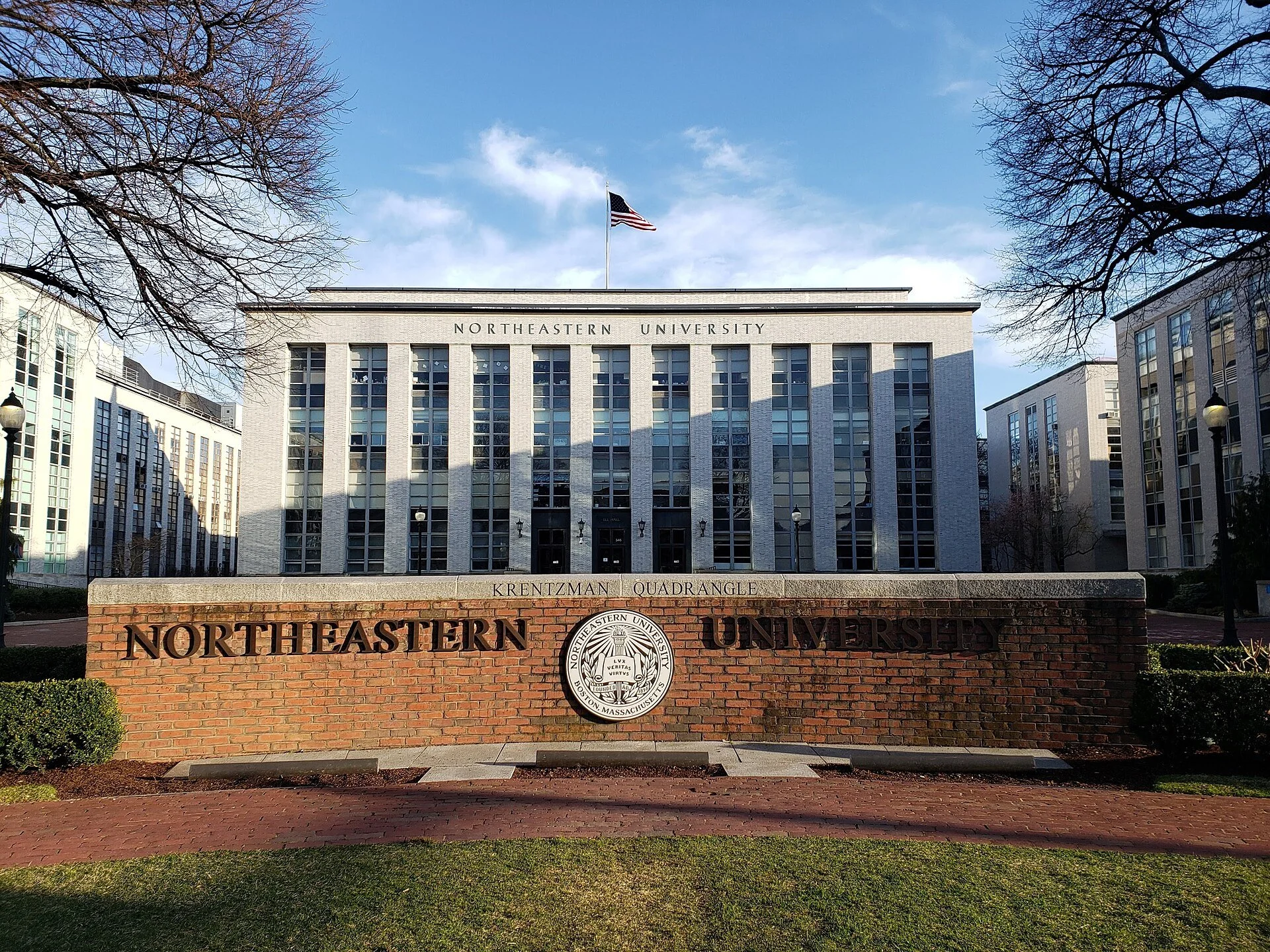
Northeastern University’s Ell Hall, on Huntington Avenue, Boston. Part of Northeastern success and contributions to the New England economy can be attributed to its drawing so many highly accomplished students from abroad.
Edited from a report by The New England Council
“The council has submitted comments on the proposed rule ‘Establishing a Fixed Time Period of Admission and an Extension of Stay Procedure for Nonimmigrant Academic Students, Exchange Visitors, and Representatives of Foreign Information Media.’
In its letter, the council expressed significant opposition to U.S. Immigration and Customs Enforcement’s (ICE) proposed rulemaking due to concerns that the rule would create unnecessary fear, confusion, and procedural roadblocks for international students, exchange visitors, and universities.
“The comment letter further noted that the rule will impede institutions of higher education in New England and across the United States from attracting and retaining the best and brightest minds to study and engage in research for issues and fields critical to our nation’s prosperity and well-being.
“In New England, international students have a significant positive economic impact, totaling $5.148 billion, and supporting 47,425 jobs during the 2023-2024 academic year. During that academic year, 115,086 international students were enrolled at higher educational institutions in the region.
“For more information on this issue or the Council’s Higher Education Committee, please contact Mariah Healy, director of federal affairs at mhealy@newenglandcouncil.com.’’
Putting his fingers on the city

“City Lights” (9000 fingerprints), by Benjamin Archibald, who is showing at Glimpse Gallery, Concord, N.H., Oct. 9-Nov. 9. He’s based in Bristol, N.H.

Downtown Bristol, N.H.
Ken Gallager photo
‘Encroaching on each side’

Babson Farm granite quarry, Halibut Point State Park, in Rockport, on Cape Ann.
User:Chensiyuan photo
“{Cape Ann} is a singular region. If a little orchard plot is seen, here and there, it seems rescued by some chance from being grown over with granite….The granite rises straight behind a house, encroaches on each side, and overhangs the roof, leaving space only for only a sprinkling of grass about the door, for a red shrub or two to wave from a crevice, and a drip of water to flow down among gay weeds.’’
— Harriet Martineau (1802-1876), English writer and sociol0gist
‘Wildly divergent depictions’

“After the Fall” (oil and acrylic on canvas), by Allison Gildersleeve, in her show “Here Somewhere,’’ at the Lyman Allyn Museum, New London, Conn., Oct. 11-Jan. 18.
The museum says:
“Places are not inert; they are repositories for all that has passed through them. In Allison Gildersleeve’s work, time is not sequential and location is not fixed. Gildersleeve picks apart and reassembles the familiar, using the variability of memory as her guide. As she puts the pieces together, her work skips through time at an erratic pace, shuffling the monumental with the mundane and twisting landscapes and interiors into compositional mazes. Gildersleeve grew up in the southeastern corner of Connecticut in a colonial farmhouse surrounded by acres of woods. She returns again and again to the settings of her childhood – wooded areas, home interiors, open highways, back country roads – to show that repeated visits to the same place invariably result in wildly divergent depictions.’’

Embracing grief

“Double Sorrow Double Joy” (double-headed sunflower from farm, planted after 2023 Vermont floods) (embalming thread, resin, dyed ribbon, wood), by Lydia Kern, at Burlington (Vt.) City Arts, in the group show “Do We Say Goodbye?Grief, Loss and Mourning,’’
-Image courtesy Burlington City Arts.
The gallery says the show explores “personal and collective encounters with grief" through the work of artists Peter Bruun, Bethany Collins, Jordan Douglas, Mariam Ghani, Lydia Kern, John Killacky, Nirmal Raja, and Jamel Robinson. Through photography, painting, video, and installation, these eight artists challenge “the finality of loss, inviting us to embrace grief as a shared yet deeply individual journey."
Llewellyn King: Trump policies are threatening U.S. leadership of world science
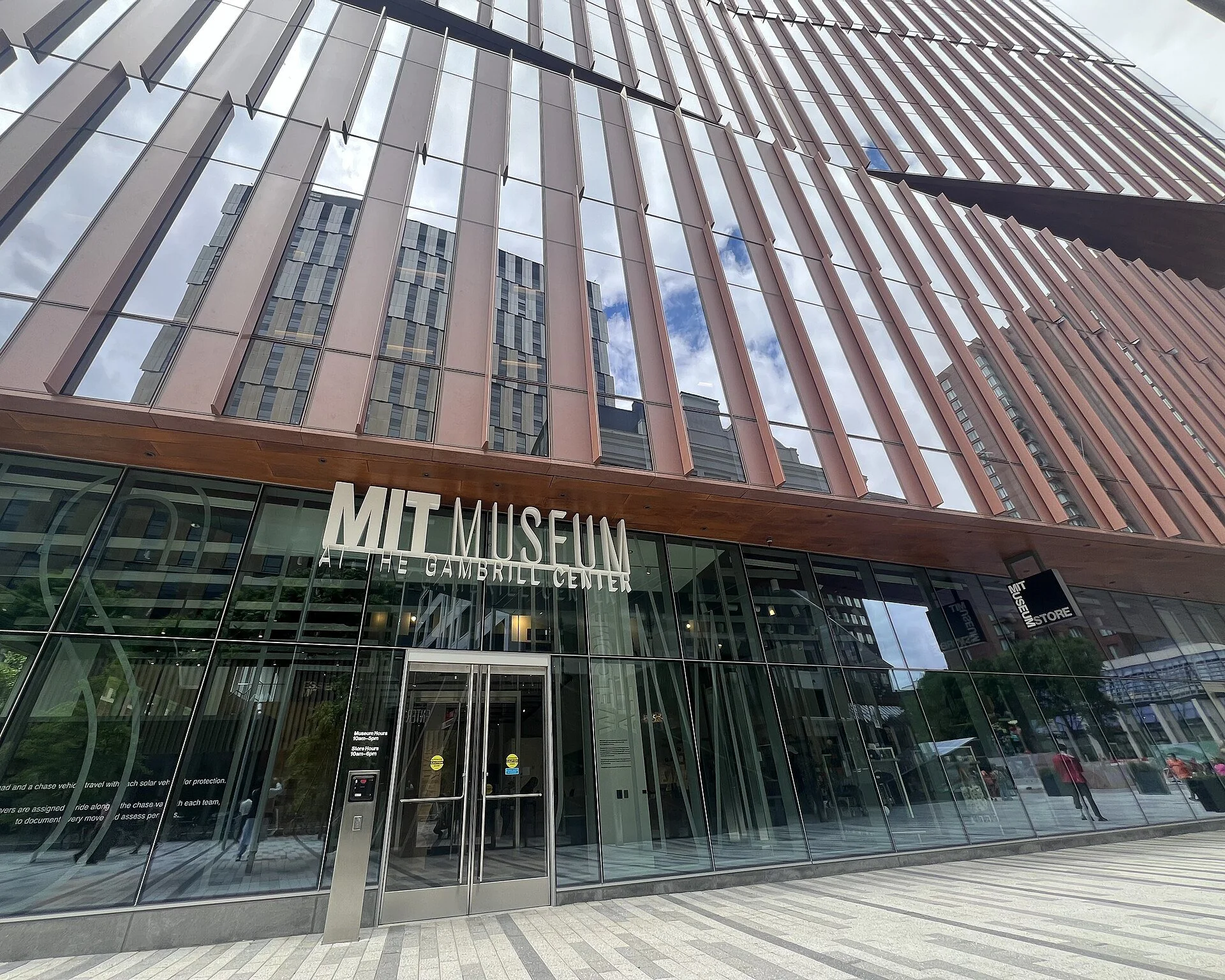
Entrance to the MIT Museum, in Cambridge Mass. The Massachusetts Institute of Technology, founded in 1861, has played a major role in advancing science and engineering.
S5A-0043 photo
WEST WARWICK, R.I.
Pull up the drawbridge, flood the moat and drop the portcullis. That, it would seem, is the science and research policy of the United States circa 2025.
The problem with a siege policy is that eventually the inhabitants in the castle will starve.
Current actions across the board suggest that starvation may become the fate of American global scientific leadership. Leadership which has dazzled the world for more than a century. Leadership that has benefited not just Americans but all of humanity with inventions ranging from communications to transportation, to medicine, to entertainment.
An American president might have gone to the United Nations and said, “As we the people of America have given so much to the world, from disease suppression to the wonder of the Internet, we should expect understanding when we ask of you what is very little.”
This imaginary president might have added, “The United Nations is a body of diverse people, and we are a nation of diverse people.
“We have been a magnet for the talent of the world from the creation of this nation.
“We are also a sharing nation. We have shared with the world financially and technologically. Above all, we have shared our passion for democracy, our respect for the individual and his or her human rights.
“At the center of our ability to be munificent is our scientific muscle.”
This president might also have wanted to dwell on how immigrant talent has melded with native genius to propel and keep America at the zenith of human achievement -- and keep it there for so long, envied, admired and imitated.
He might have mentioned how a surge of immigrants from Hitler’s Germany and elsewhere in Europe gave us movie dominance that has lasted nearly 100 years. He might have highlighted the energy that immigrants bring with them; their striving is a powerful dynamic.
He might have said that striving has shaped the American ethos and was behind Romania-born Nikola Tesla, South Africa-born Elon Musk or India-born and China-born engineers who are propelling the United States leadership in artificial intelligence. The genius behind Nvidia? Taiwan-born Jensen Huang.
I have been reporting on AI for about a decade — well before ChatGPT exploded on the scene on Nov. 30, 2022. All I can tell you is wherever I have gone, from MIT to NASA, engineers from all over the world are all over the science of AI.
The story is simple: Talent will out, and talent will find its way to America.
At least that was the story. Now the Trump administration, with its determination to exclude the foreign-born -- to go after foreign students in U.S. universities and to make employers pay $100,000 for a new H-1B visa -- is to guarantee that talent will go somewhere else, maybe Britain, France, Germany or China and India. Where the talent goes, so goes the future.
So goes America’s dominant scientific leadership.
At a meeting at an AI startup in New York, all the participants were recent immigrants, and we fell to discussing why so much talent came to the United States. The collective answer was freedom, mobility and reverence for research.
That was a year ago. I doubt the answers would be as enthusiastic and volubly pro-American today.
The British Empire was built on technological dominance, from the marine chronometer to the rifled gun barrel to steam technology.
America’s global leadership has been built, along with its wealth, on technology, from Ford’s production line to DuPont’s chemicals.
Technology needs funding, talent and passion (the striving factor). We have led the world with those for decades. Now that is in the balance.
President Trump could make America even greater: beat cancer, go to Mars, and harness AI for human good.
Those would be a great start. To do it, fund research and attract talent. Keep the castle of America open.
On X: @llewellynking2
Llewellyn King is executive producer and host of White House Chronicle, on PBS, and an international enerygy consultant. He’s based in Rhode Island.
The intersections of disruption

“Les Ocean Melodies’’ (acrylic on canvas), by Serj Tankian, in his show “The Art of Disruption,’’ at the Armenian Museum of America, Watertown, Mass., through Feb. 28, 2o26.
The museum explains:
Inspired by Mr. Tankian’s 2024 memoir Down with the System, this immersive exhibition highlights the intersections of music, painting, and protest that define his work. Best known as the frontman of the Grammy Award-winning rock band System Of A Down, Tankian has also emerged as a powerful visual artist and advocate for social justice, genocide recognition, environmental protection, and Armenian cultural identity.
Chris Powell: Build housing without sprawl; are schools sanctuaries for illegals?

MANCHESTER, Conn.
Supposedly there was going to be a special session of the Connecticut General Assembly in the fall to arrange a compromise on the housing legislation passed by liberal Democratic legislators during this year's regular session but vetoed by Gov. Ned Lamont. Fall is here but neither the governor nor the legislature has issued such a call. It's not clear what's happening.
But in a commentary the other day the Yankee Institute's Meghan Portfolio argued that a special session would not be good for democracy. “Special sessions often operate in the shadows," she wrote. “Bills frequently don't appear until the very day of the vote, sometimes only hours before. Towns, taxpayers, and even rank-and-file legislators are left in the dark. This isn't policymaking. It's ambush politics."
Indeed, special-session legislation can get written by a few leaders without public participation and review. Only after its enactment are the “rats’’ in the legislation discovered -- provisions that never would have been approved if adequately publicized.
Connecticut's housing shortage is an urgent problem, the biggest factor in the state's outrageously high cost of living. But the thrust of the vetoed legislation -- reducing the obstructive influence of suburban zoning and imposing more rent control -- was never going to get much housing built quickly. Mainly the legislation would have let liberals feel better about themselves even as it made them hypocrites on environmental protection.
Many towns that have used zoning to exclude the middle and lower classes don't have the infrastructure necessary for higher-density housing -- water, sewer, and electrical systems, wide roads, and school capacity.
Of course their exclusive zoning was meant to keep things that way. But tearing up the countryside with more suburban sprawl to spite the bigoted snobs will have more disadvantages than it's worth when there is a much faster and more efficient way to build housing.
Connecticut's cities and inner suburbs are full of abandoned industrial property, decrepit tenements, and vacant or half-empty shopping centers. Many are eyesores. Additionally, much office space in the cities is vacant. All these properties are already served by the necessary infrastructure and redeveloping it as housing would do no environmental damage. Most of their neighbors might be glad if something shiny and new replaced the eyesores.
This is where Connecticut's urgent housing effort should concentrate, and that effort should be managed by a state housing development board, empowered to condemn decrepit or underused properties, take others by eminent domain, and option the properties to developers for market-rate housing, with the options withdrawn if developers fail to make quick progress.
A state whose leaders seem to think that the state government has enough money to buy the Connecticut Sun WNBA basketball team, when the state already has two nationally ranked public university teams, should have no trouble finding the money to build thousands of units of housing in a hurry. Or the state could skip the basketball team purchase and just build the housing instead.
xxx
Governor Lamont is right to want federal immigration agents to stop wearing masks and to start wearing badges and clothing identifying them as government agents when they make arrests. Masked and unidentified and looking like gangsters, the agents invite getting shot or stabbed by their targets or bystanders. Connecticut U.S. Rep. John B. Larson has introduced legislation in Congress to stop the gangsterism.
But the governor recently went far beyond the sensible. He held a press conference with school superintendents to discourage immigration agents from making arrests at schools, though there seem to have been no such arrests in Connecticut. The governor said he wants everyone to “feel safe" in school.
Why should people “feel safe" anywhere in the country if their presence is illegal? Why should immigration law not apply inside a school? If, as the governor, state Atty. Gen. William Tong, and many state legislators keep insisting -- that Connecticut is not a “sanctuary state" -- what would the governor make schools if not a sanctuary?
Of course journalists spared the governor the trouble of explaining. When obvious questions are politically incorrect, they can't be asked.
Chris Powell has written about Connecticut government and politics for many years (CPowell@cox.net).