
Vox clamantis in deserto






Masochism, not sadism
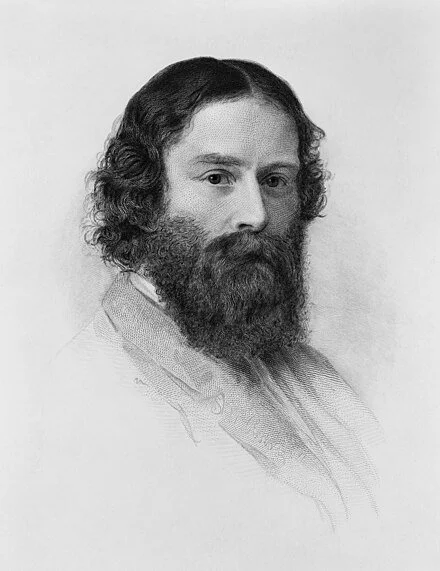
James Russell Lowell, circa 1855
“Democracy gives every man the right to be his own oppressor.’’
— James Russell Lowell (1819-1991), Massachusetts-based poet
In search of precision
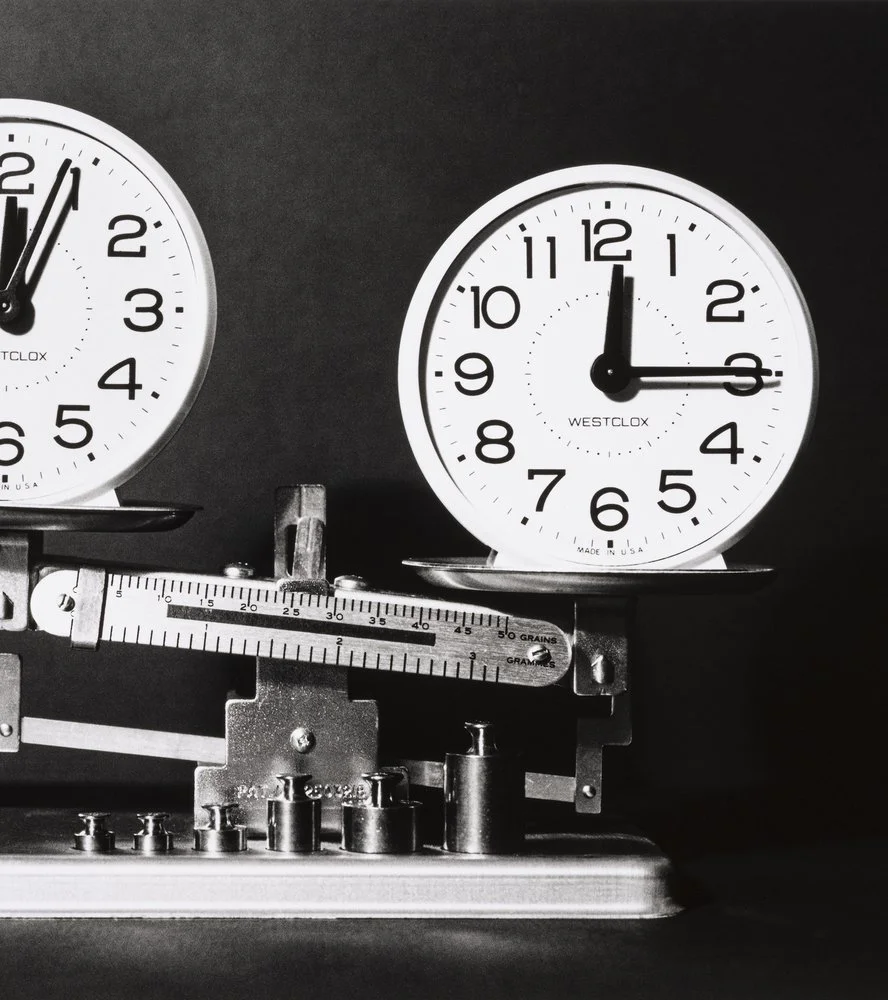
From Kenji Nakahashi’s show “Strange Beauty,’’ at the Bruce Museum of Art, Greenwich, Conn., Feb. 6-May 4, 2025.
The museum says:
“Best known for his conceptual and street photography, Kenji Nakahashi (American, b. Japan, 1947–2017)produced a highly experimental body of work grounded in the everyday.’’

Stephanie Armour: Prepare to lose health coverage if Trump takes power

“People in this election are focused on issues that affect their family, “If people believe their own insurance will be affected by Trump, it could matter.”
— Robert Blendon, a professor emeritus of health policy and political analysis at Harvard
Via Kaiser Family Foundation Health News
Health care is suddenly front and center in the final sprint to the presidential election, and the outcome will shape the Affordable Care Act and the coverage it gives to more than 40 million people.
Besides reproductive rights, health care for most of the campaign has been an in-the-shadows issue. However, recent comments from former President Donald Trump and his running mate, Ohio Sen. J.D. Vance, about possible changes to the ACA have opened Republicans up to heavier scrutiny.
More than 1,500 doctors across the country recently released a letter calling on Trump to reveal details about how he would alter the ACA, saying the information is needed so voters can make an informed decision. The letter came from the Committee to Protect Health Care, a national advocacy group of physicians.
“It’s remarkable that a decade and a half after the ACA passed, we are still debating these fundamental issues,” said Larry Levitt, executive vice president for health policy at KFF, a health information nonprofit that includes KFF Health News. “Democrats want to protect people with preexisting conditions, which requires money and regulation. Republicans have looked to scale back federal regulation, and the byproduct is fewer protections.”
The two parties’ tickets hold starkly different goals for the ACA, a sweeping law passed under former President Barack Obama that set minimum benefit standards, made more people eligible for Medicaid, and ensured consumers with preexisting health conditions couldn’t be denied health coverage.
Vice President Kamala Harris, who previously backed a universal health care plan, wants to expand and strengthen the health law, popularly known as Obamacare. She supports making permanent temporary enhanced subsidies that lower the cost of premiums. And she’s expected to press Congress to extend Medicaid coverage to more people in the 10 states that have so far not expanded the program.
Trump, who repeatedly tried and failed to repeal the ACA, said in the September presidential debate that he has “concepts of a plan” to replace or change the legislation. Although that sound bite became a bit of a laugh line because Trump had promised an alternative health insurance plan many times during his administration and never delivered, Vance later provided more details.
He said the next Trump administration would deregulate insurance markets — a change that some health analysts say could provide more choice but erode protections for people with preexisting conditions. He seemed to adjust his position during the vice presidential debate, saying the ACA’s protections for preexisting conditions should be left in place.
Such health-policy changes could be advanced as part of a large tax measure in 2025, Sen. Tom Cotton (R-Ark.) told NBC News. That could also open the door to changes in Medicaid. Conservatives have long sought to remake the health insurance program for low-income or disabled people from the current system, in which the federal government contributes a formula-based percentage of states’ total Medicaid costs, to one that caps federal outlays through block grants or per capita funding limits. ACA advocates say that would shift significant costs to states and force most or all states to drop the expansion of the program over time.
Democrats are trying to turn the comments into a political liability for Trump, with the Harris campaign running ads saying Trump doesn’t have a health plan to replace the ACA. Harris’ campaign also released a 43-page report, “The Trump-Vance ‘Concept’ on Health Care,” asserting that her opponents would “rip away coverage from people with preexisting conditions and raise costs for millions.”
Republicans were tripped up in the past when they sought unsuccessfully to repeal the ACA. Instead, the law became more popular, and the risk Republicans posed to preexisting condition protections helped Democrats retake control of the House in 2018.
In a KFF poll last winter, two-thirds of the public said it is very important to maintain the law’s ban on charging people with health problems more for health insurance or rejecting their coverage.
“People in this election are focused on issues that affect their family,” said Robert Blendon, a professor emeritus of health policy and political analysis at Harvard. “If people believe their own insurance will be affected by Trump, it could matter.”
Vance, in a Sept. 15 interview on NBC’s “Meet the Press,” tried to minimize this impact.
“You want to make sure that preexisting coverage — conditions — are covered, you want to make sure that people have access to the doctors that they need, and you also want to implement some deregulatory agenda so that people can choose a health care plan that fits them,” he said.
Vance went on to say that the best way to ensure everyone is covered is to promote more choice and not put everyone in the same insurance risk pool.
Risk pools are fundamental to insurance. They refer to a group of people who share the burdens of health costs.
Under the ACA, enrollees are generally in the same pool regardless of their health status or preexisting conditions. This is done to control premium costs for everyone by using the lower costs incurred by healthy participants to keep in check the higher costs incurred by unhealthy participants. Separating sicker people into their own pool can lead to higher costs for people with chronic health conditions, potentially putting coverage out of financial reach for them.
The Harris campaign has seized on the threat, saying in its recent report that “health insurers will go back to discriminating on the basis of how healthy or unhealthy you are.”
But some ACA critics think there are ways to separate risk pools without undermining coverage.
“Unsurprisingly, it’s been blown out of proportion for political purposes,” said Theo Merkel, a former Trump aide who now is a senior research fellow at the Paragon Health Institute, a right-wing organization that produces health research and market-based policy proposals.
Adding short-term plans to coverage options won’t hurt the ACA marketplace and will give consumers more affordable options, said Merkel, who is also a senior fellow at the Manhattan Institute. The Trump administration increased the maximum duration of these plans, then Biden rolled it back to four months.
People eligible for subsidies would likely buy comprehensive ACA plans because — with the financial help — they would be affordable. Thus, the ACA market and its protections for preexisting conditions would continue to function, Merkel said. But offering short-term plans, too, would provide a more affordable option for people who don’t qualify for subsidies and who would be more likely to buy the noncompliant plans.
He also said that in states that allowed people to buy non-ACA-compliant plans outside the exchange, the exchanges performed better than in states that prohibited it. Another option, Merkel said, is a reinsurance program similar to one that operates in Alaska. Under the plan, the state pays insurers back for covering very expensive health claims, which helps keep premiums affordable.
But advocates of the ACA say separating sick and healthy people into different insurance risk pools will make health coverage unaffordable for people with chronic conditions, and that letting people purchase short-term health plans for longer durations will backfire.
“It uninsures people when they get sick,” said Leslie Dach, executive chair of Protect Our Care, which advocates for the health law. “There’s no reason to do this. It’s unconscionable and makes no economic sense. They will hide behind saying ‘we’re making it better,’ but it’s all untrue.”
Harris, meanwhile, wants to preserve the temporary expanded subsidies that have helped more people get lower-priced health coverage under the ACA. These expanded subsidies that help about 20 million people will expire at the end of 2025, setting the stage for a pitched battle in Congress between Republicans who want to let them run out and Democrats who say they should be made permanent.
Democrats in September introduced a bill to make them permanent. One challenge: The Congressional Budget Office estimated doing so would increase the federal deficit by more than $330 billion over 10 years.
In the end, the ability of either candidate to significantly grow or change the ACA rests with Congress. Polls suggest Republicans are in a good position to take control of the Senate, with the outcome in the House more up in the air. The margins, however, will likely be tight. In any case, many initiatives, such as expanding or restricting short-term health plans, also can be advanced with executive orders and regulations, as both Trump and Biden have done.
Stephanie Armour is a KFF Health News reporter
Coolidge looks at the history of his native state
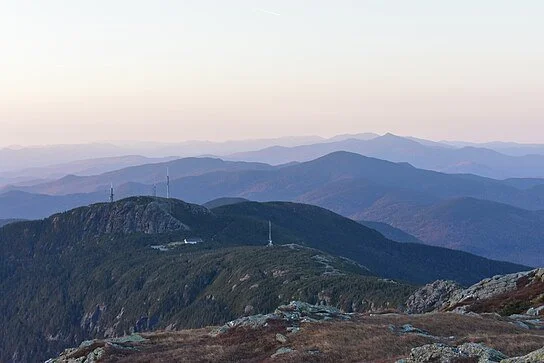
Looking south from the summit of Mt.Mansfield, the Green Mountains’ highest peak.
Speech by then Vice President Calvin Coolidge
Title: The Green Mountains
Date: June 12, 1923
Location: Burlington, VT
Context: 150th anniversary of the settlement of the city of Burlington
We do not meet to-day so much to think new thoughts l as to rehearse old stories. Our purpose is not to survey new courses, but to relocate ancient landmarks. We review the past not in order that we may return to it but that we may find in what direction, straight and clear, it points into the future. We do not come here burdened with regrets or depressed by any memories of faded splendor, but to rejoice in the possession of hope fulfilled and to glory in the vision of desire realized. The promise which attended the founding and settlement of the city of Burlington has been abundantly redeemed.
The recorded beginnings of this locality lie far back on the verge of American history. When the Cavalier was struggling to plant the first colony in Virginia, just as Henry Hudson was entering the bay of New York, or ever the prow of the Pilgrim Mayflower had been turned toward Plymouth Rock, the great Champlain undoubtedly landed here in 1609. He determined, in no small part, by his fateful collision with the dominant Indian power of this region on the farther shore of the lake, which made them ever after hostile to France and friendly to England, that the prevailing civilization of this country was to be not Latin but Anglo-Saxon. For one hundred and fifty years the tide of conflict rose and fell, One Hundred and Fiftieth Anniversary of the Settlement of the City of Burlington, Vermont, leaving inextinguishable marks and names, until the banners of the old régime passed down the lake forever to encounter Wolfe on the plains of Abraham, holding the master-key to this new continent.
So the time passed when this alluring territory was to be famed chiefly as the meeting-place of the contending forces of native Indians or invading white men and was to become the permanent habitation of a peaceful civilization. The days of conflict were not all gone, but the days of sufficient tranquillity for stable development had come. The power and influence of France, with its devotion and loyalty to church and King, were not to be swept away, for the good does not perish, but whatever it had wrought for good was to be merged in a new order. A new day was rising, a new life was stirring, a new era was opening for the Western world.
The beginnings of this city were tinged strongly with the dominant spirit of the times. The people of the land were for the first time coming to be consciously American. To a reassertion of the old rights there was beginning to be added the assertion of new rights. The colonists had come to feel their power and were reaching out to exercise it with a new boldness. Stronger impulses and broadening opportunities were rousing the old spirit of the pioneer. The country was on the eve of a new birth of freedom.
The territory now comprising most of the State of Vermont made a strong appeal to these sentiments. At first it was supposed to be under the jurisdiction of New Hampshire, which granted charters to many towns within its borders, under which the settlers held title to their lands; next, with the support of crown and Parliament, claimed by New York, which not only asserted political jurisdiction but undertook to deny the legality of the title to any lands not conveyed by its authority. These contentions brought on conflicts, both before the court and in the country, which resulted in the inhabitants, now hostile to the British rule that proposed to confiscate their homes, declaring their independence and organizing the new State of Vermont, and in that condition they maintained themselves, in spite of the constant opposition of powerful adjoining States, the threats of the Congress to send the army against them, and all the peril of war with a mighty empire, until finally admitted to the Union. Those days furnished no example of more heroic devotion than that which was exhibited by the unconquerable defenders of the Green Mountain State.
It was amid such conditions that Burlington came into being. Though her territory was little vexed by all these conflicts, those who founded the town, whose names were early associated with its settlement and development, bore a dominant part in the brilliant and thrilling history of those significant times. One of these was that romantic figure, Ethan Allen, picturesque in word, dashing in action, a typical pioneer. Another was Remember Baker, a skilful mechanic, a trained woodsman, a brave officer, one of the trusted leaders of the settlers. Associated with them was Thomas Chittenden, a man of sound judgment and a strength of character that commanded the confidence of his fellow men. Joined with this band, though never directly connected with your city, was Seth Warner, wise, brilliant, cautious, a soldier gifted with the ability to command. Surpassing them all in breadth of intellect was Ira Allen, a man of affairs, a diplomat and a statesman. This group of pioneers, all Burlington proprietors except Warner, laid the foundation of the State of Vermont, and performed untold sevrice in the promotion of the American cause.
Burlington was chartered by Governor Wentworth of New Hampshire, June 7, 1763, apparently to parties nearly all resident of New York. A few years later the Onion River Company, composed of four of the Allens and Baker, appear as the proprietors. They cut a road through from Castleton to Colchester in 1772, and Ira Allen made the first survey of land within the town September 30 of that year. The first settler was Felix Powell, who came in 1773. He owned land at Apple Tree Point, on which he built a log house. He had also been the first settler in Dorset. In 1778 he sold his rights to James Murdock, of Saybrook, Connecticut, and so, having gained the fame of being the first settler, left others to finish what he had so well begun. In November, 1774, Stephen Lawrence of Sheffield and others bought land in town, but did little in the way of settlement. During this year and the following Lemuel Bradley and others established themselves on the Intervale, but in the summer of 1776 these settlements, in common with all north of Rutland County, were abandoned on account of the impending war.
The first meeting of the proprietors was held at Salisbury, Connecticut, March 23, 1774, of which Thomas Chittenden was the moderator and Ira Allen the clerk. During the ensuing year more meetings were held at Fort Frederick, which was a blockhouse they had built on the Colchester side of the river to protect the settlements, the last being May 1,.1775. Although this meeting stood adjourned to the first Monday of the following September, it was never held. Only a few days before news had come of the momentous events at Lexington and Concord. The land was aflame. No longer could men turn their thoughts to the peaceable affairs of territorial development. They listened to a sterner call than that which comes from commercial enterprise, yet they accorded to it an even more ready response. No other meeting of the proprietors was held until that of January 29, 1781, which met at the house of Noah Chittenden in Arlington.
A few days after the May meeting Ethan Allen was at Bennington sending for Baker and Warner, who were at Fort Frederick, to join him in the surprise attack on Ticonderoga and Crown Point, which they did. Allen captured Ticonderoga May 10, and Warner took Crown Point on May 11. These victories, with their capture of ammunition, arms, and about two hundred pieces of cannon, were to have a result all out of proportion to the small force engaged in their accomplishment. Just how important this operation turned out to be was best realized by the British when one morning in the following March they saw the cannon which Allen had captured so mounted on Dorchester Heights as to command their positions in the city and harbor and force them to evacuate Boston.
After the war the inhabitants began to return. Stephen Lawrence moved his family into town in 1783. Settlement proceeded rapidly. The first recorded town meeting was held in Burlington, March 19, 1787, when Stephen Lawrence, Frederick Saxton, and Samuel Allen were chosen selectmen. They voted to raise a tax of twopence on the pound to purchase town books, and the same for the repair of highways and bridges, but this later was reduced to one penny at a meeting held the first Monday of the following May. The first freemen’s meeting on record was held the first Tuesday of September, 1794. The last Tuesday of the following December occurred the first recorded election of a representative to Congress. The first recorded marriage is that of Lucy Caroline, a daughter of Ethan Allen, to Samuel Hitchcock, May 26, 1789, and the first recorded birth is that of their daughter, Loraine Allen Hitchcock, on June 5, 1790. So now the government of town, of State, and of nation was proceeding in accordance with public law. Immediately began that general development toward a modern city which has since continued without ceasing.
It is altogether probable that Ira Allen perceived the possibilities for the development of Burlington as a centre of population, transportation, and commerce, by reason of its location and natural advantages. He supported his judgment with his resources, which at that time were very considerable. He owned, at different periods, a large portion of all the land within the limits of the town. He was instrumental in locating here the University of Vermont, to which he made generous contribution. Although his residence was across the river. in Colchester, his chief interests and chief efforts were here.
The old names early associated with the town now began to appear—Ferrand, Catlin, Van Ness, Buel, Pearl, Sawyer, and others. The first store, always an important meeting-place in a new and small community, was built by Stephen Keyes and opened in 1789. Professional men, doctors and lawyers, soon joined the growing community, which became of sufficient importance and accessibility that the legislature met here in 1803.
The desire formally to organize the religious life soon appeared. About 1795 the Reverend Chauncey Lee preached here for some time, and was followed by Reverend Daniel C. Sanders, who preached at intervals until 1807. In 1799 the town voted to raise two hundred dollars, “to be paid in grain, beef, pork, butter, and cheese, to be delivered to the minister who shall be hired in Burlington for the year ensuing,” and it was further voted, on June 15, 1805, to form themselves into a religious society, known as the First Society of Social and Public Worship in the Town of Burlington. In 1810 this society was divided on the line of liberal and conservative. The conservatives took the name of the First Calvinistic Congregational Society, ordained Reverend Samuel Clark on April 19, 1810, and built the Unitarian Church in 1816. These were followed by the Methodist, Baptist, Episcopal, Catholic, and other churches, which now minister to the religious well-being of a devout people.
The cause of education must have had very early attention, for at the March meeting in 1790 it had been sufficiently developed so that it was voted to divide the town into school districts. In 1812 a system of graded schools was apparently started, and some years later the Burlington Academy took over the high-school work, which it continued until 1849, when the Union School superseded it. The Burlington Female Seminary, an institution which was of great importance, started in 1835. There were also other schools for young women. The University of Vermont was chartered and located in Burlington in 1791, a lot of fifty acres was assigned to it, and a building was begun in 1794 and completed in 1798. In 1799 citizens of the young town gave 2,300 pounds sterling to this enterprise, when the entire grand list of the town, as then figured, was but 2,174 pounds sterling, and the whole number of polls but 224. The Reverend Daniel C. Sanders was chosen president, October 17, 1800, and the university formally admitted four young men to its courses. The charge for tuition was established at ten dollars a year. The town was thus early equipped to provide that liberal education which is one of the foundations of an enlightened civilization.
One of the oldest newspapers in Vermont, known as The Sentinel, began to be published here in 1801. This was followed by The Free Press, which was started in 1827. The town has been, almost from its beginning, well provided with the best that could be had in the way of newspaper publications and has benefited through the tremendous influence which they wield for good by informing the public mind. Newspapers are one of the strongest supports of the republic.
Navigation was an early contributing force to the material welfare of the town. In early days it was carried on with a fleet of sailboats. The second steamboat in the world in actual point of construction, was built at Burlington, christened Vermont, and launched in June, 1808. By 1814 regular communication had been established with Boston by four-horse coach. The Champlain Canal, opened in 1823, connected the lake with the Hudson River, which left Burlington one of the chief ports on the continuous waterway from New York City to Montreal, while the coming of the railroads in · 1849 opened up the overland route to Boston.
The early settlers and proprietors had nearly all some share in the Revolutionary War. Some of them, like the Allens and their close associates, played a most heroic and important part. But this glory must all be shared with other places, for it represents not so much a local production as an importation. The next conflict was on a_ different basis. The War of 1812 and its causes were not popular issues in New England. A very considerable commerce was at stake, but beyond that the substantial element of this section preferred the conservatism of Great Britain to the radicalism and imperialism of France in that era. On February 2, 1809, the town unanimously adopted resolutions which declared its loyalty to the National Constitution and its government, but condemned the embargo policy of the Federal administration. Nevertheless, Burlington responded eagerly to every requirement for national defense when the actual need arose. Colonel Isaac Clark, being sent here, called out the local militia, purchased and fortified the Battery, which dates from that time, for the protection of the town. Captain Thomas MacDonough of the navy was stationed here. He had very valuable assistance from the people in winning the great naval battle at Plattsburg, September 11, 1814, by which he regained entire control of the lake. Captain Horace B. Sawyer, a native of the town, was made prisoner when the British captured the Growler and Eagle, but returned to serve on the famous frigate Constitution, taking part in her remarkable victory over the Cyane and Levant.
When the call came from Lincoln, in April of 1861, the Burlington company, under Captain David B. Peck, at once responded. Their example was followed by a host of others who served with distinction until the close of the war. The part which was taken by this town in the lesser contest with Spain and the brilliant and effective contribution made to the success of the Great War demonstrated that, in military spirit and power, it retains its ancient vigor. One of your townsmen, a graduate of the Naval Academy, Lieutenant-Commander Jonas H. Holden, was on the battleship Maine, but was rescued only to be lost on the vessel which mysteriously disappeared in the Gulf of Mexico during the World War. Another, Lieutenant Devere Harden, with the regular army, was the first American officer wounded in France, while still another, Admiral Henry T. Mayo, had the merited distinction of being commander-in-chief of the Atlantic fleet.
In the comparatively short space of time of a century and a half Burlington has steadily advanced from the day of Felix Powell, the lone settler on the northern frontier, to the day when it is the metropolis of an extensive and cultivated region of activity and industry. It became the centre of an important foreign and domestic commerce, and has ranked as one of the chief lumber ports of the nation in bygone times. The falls of the Winooski, on its border, have been a valuable source of water-power, which has supported the industrial interests of the region. Manufacturing has contributed to make this not only a source of distribution but a source of production. It provides employment for thousands of wage-earners and its annual output reaches many millions of dollars. In its material development Burlington has become a city marked by enterprise and wealth.
Men of ability and fame have given an added distinction to these surroundings, already honored by reason of the quality of its citizenship. It has been often represented in the governor of the State, in the national House and Senate, and in the high diplomatic stations of our country abroad. The first to be governor was Cornelius P. Van· Ness, who also served as minister to Spain, and the last was Urban A. Woodbury; Heman Allen was minister to Chili, and that learned scholar George P. Marsh was minister to both Turkey and Italy, while Edward J. Phelps was ambassador to Great Britain. One of the men who ranked very high as a United States senator, a profound lawyer, and an able statesman, was George F. Edmunds. One of your present citizens, a leading figure of the Vermont bar, Charles H. Darling, has been an assistant secretary of the navy.
The material resources and wealth of the’ community, the ability of distinguished men, the high character of the people, and the practical application of the teachings of religion, have all combined to make this city well-governed, well-educated, and richly endowed with many charities. All these forces have united to create a moral and spiritual power, the influence of which has been felt in the uttermost parts of the earth. The world is not what it would have been without that influence. It has increased the vigor of health, the strength of intellect, the power of character, and extended the domain of everlasting righteousness.
To-day we behold the wonder of all these accomplishments. We realize that they have been wrought by the hand of man working in harmony with the will of Divine Providence. When we inquire what manner of men they were, what principles they represented, what character they developed, the answer is revealed in their work. They were active, enterprising men, intent upon conducting a successful business. They were endowed with imagination and vision, but their chief guide was that hard common sense which is the result of continued experience with hardships and difficulties, always the heritage of the pioneer. They had come up out of much tribulation. Their methods were bold and direct, the very essence of all that was practical. They believed in common honesty and simple justice. They were determined to be free. It was in accordance with these standards that they fashioned their town and established their Commonwealth. The local public policy of that day is declared in the town charter. All the fit pine-trees were reserved for masting the royal navy. Of the seventy-two shares provided for in the charter, one was reserved for the incorporated society for the propagation of the gospel in foreign parts; one for the glebe for the Church of England; one for the first settled minister of the gospel; and one for the benefit of a school in the town.
Although the perils of war had left the region of Burlington bare of inhabitants, compelling the people to take refuge in more thickly populated and better-protected settlements at the south, they did not cease to exert a powerful influence over the destiny of those rebellious days. The founders of this city appear as leaders in the records of the public actions which established the State of Vermont. At the convention held in Dorset, September 25, 1776, Burlington was represented by Lemuel Bradley, and those present who were connected with the Onion River Company were Thomas Chittenden, Ira Allen, and Heman Allen. When the convention reconvened at Westminster Chittenden and the two Allens were present. Here, on January 16, 1777, they adopted the momentous resolutions asserting their readiness to do their “full proportion in maintaining and supporting the just war,” but declaring that they should hereafter be “a separate, free, and independent jurisdiction or state.” Chittenden was a member of the committee that drafted this declaration, and the Allens were on committees instructed to plan for further proceedings. The claim of independence that they set forth they made a reality by their future action.
When the convention met at Windsor, July 2, 1777, undoubtedly Chittenden and the two Allens were there, although almost the only record is the Constitution, which on July 8 was adopted. That document asserted that government was “derived from and founded on the authority of the people only,” forbade slavery, adopted manhood suffrage, recognized that conscience, speech, and press should be free, undertook to guarantee the protection of life, liberty, and property, prescribed trial by jury, provided for town and county schools and a State university, admonished the people to observe the Sabbath, maintain religious worship, and remember that “a firm adherence to justice, moderation, temperance, industry, and frugality are absolutely necessary to preserve the blessings of liberty and keep government free.” Those who held these opinions were not likely tamely to submit or long to be deprived of success.
The charter of the town and the constitution of the State recognized religion as the foundation of human relationship. They acknowledged that their obligation of spreading the gospel was world-wide. Having contributed to the clergy at home and the missionary abroad, they extended liberal support to the cause of education. They knew that learning belonged to the people. In sustaining the royal navy they were not only providing for the defense of the realm but extending the domain of commerce. They were well aware that the observance of the plain virtues of life is not only the source of all individual character but the foundation of all national greatness. The principle of freedom and equality was not a visionary doctrine with them but a rule of action to be put into practice. Within the State of Vermont no person could ever be held as a slave and no man was ever too poor to have a vote.
These rights were neither secured nor maintained without the exaction of supreme sacrifice. Whatever property interests the inhabitants had in Burlington at the outbreak of the war were rendered practically valueless. The leading men of the region risked their lives in the capture of Ticonderoga and Crown Point. Remember Baker was killed by an enemy bullet in the closing days of the summer while leading a scouting party toward Canada. Ethan Allen, a month later, was captured in his attempt to take Montreal. Transported across the sea in irons, he was held for nearly three years in British prisons. It is probable that the house of a Felix Powell in Pittsford, which was plundered and burned in his absence, was that of your original settler. Mrs. Powell looked on, hidden in the woods near by. In such destitution she bore a child before the next morning. Some fell in the disaster at Hubbardton, others on the victorious field at Bennington. They all showed such a spirit that Burgoyne reported them to be the most active and most rebellious race on the continent, that hung like a gathering storm on his left. That storm, more violent than his forebodings, swept him to destruction at Saratoga.
That same spirit had been exhibited in every hour of peril in all their history. They had established a reputation which gave entire credibility to Ethan Allen, when he declared: “I am resolutely determined to defend the independence of Vermont . . . and rather than fail will retire with the hardy Green Mountain Boys into the desolate caverns of the mountains and wage war with human nature at large.” Washington, who knew the power of their soldiers, issued a warning against any attempt by the Congress to subdue the State with the army. He knew, and plainly said, that such a people, occupying such a territory, could not be conquered. Besides, Washington admired courage, believed in freedom, and loved justice. It was said that he looked with sympathy on the cause of the struggling little State of Vermont.
Yet these people were neither quarrelsome, lawless, nor violent. They had that respect for constituted authority which had been bred in their race by more than a thousand years of liberty under the law. It has been their characteristic to submit their cause to the courts, as John Hampden submitted his cause, as James Otis submitted that of his clients; and only when the plain requirements of justice were denied did they determine to meet an illegal decision with righteous resistance. So the settlers of the Green Mountains, under the leadership of Ethan Allen and his associates, submitted their cause to the determination of the royal court at Albany.
When the court, which apparently had a personal interest in its own decision, found against them, and the opposing authorities intimated that it would be wise to submit because might oftentimes made right, it was found that the settlers were by no means inclined to yield to the application of that principle. Such a course might be decreed at Albany, but it would not be executed in Vermont. Allen remarked grimly, “The gods of the valleys are not the gods of the hills,” and further offered to make his meaning clear to those who would come up to Bennington. To those who went up with the unauthorized writ of this court, his word was kept. They were chastised with the twigs of the wilderness and sent home, bearing on their backs, as the test of the higher authority of this jurisdiction, the unmistakable imprint of the beech seal, in the hope that those who considered irrelevant and inadmissible the Warrant of the King, an Order of Council, and the Broad Seal of the Royal Province of New Hampshire might recognize the weight of this more impressive evidence.
Outlawed, with a price set on their heads, in constant peril of death, yet through all this conflict, though they met threat with threat, they never inflicted loss of life upon any one; they never resisted the execution of either civil or criminal process which they considered lawful. Such was the character of the men of that day, such were their works. The first moderator of the Onion River Company, Thomas Chittenden, became the first governor of the State, holding the office many years. The first clerk, Ira Allen, became the first State treasurer, ranking as a benefactor of mankind. Another member, Ethan Allen, became a national hero, holding forever the applause of his countrymen. They were supported by the invincible forces of truth and justice. They were destined to immortality.
The standards which the men of that day adopted, the principles in accordance with which they acted, have the power to supply their own vitality. They are self-perpetuating. Had the authorities of New York been content to exercise political jurisdiction over the Green Mountain region and leave undisturbed the land titles acquired and paid for in good faith, instead of using their power to further the unjust speculations of some of their high officials, undoubtedly the settlers would have remained a contented part of the Empire State. The desire to locate farther away from the molestations of Albany would not have sent the proprietors of the Onion River Company into this locality. The power of leadership which they developed would have been used for some other purpose than to defy the governor of New York and the King of Great Britain. The city of Burlington, with its population, its wealth, its commerce, its university, and the State of Vermont, with all its romantic history and its glorious contributions to liberty, would not have come into being. Ticonderoga and Crown Point might still hold a British garrison. There might have been no evacuation of Boston, no victory at Bennington, no decisive battle at Saratoga, and no final success at Yorktown. It was the overreaching greed for gain and an overmastering desire to impose an autocratic rule that raised up the makers of Burlington and set in her midst a crowning citadel of knowledge and of truth which will defend the cause of justice and liberty for all mankind forevermore.
When Ethan Allen and his eighty-three Green Mountain Boys stood within Fort Ticonderoga, in the dawn of that May morning, this man, some time to be charged with the darkness of infidelity, did not fail to utter the word of light when he demanded the garrison captain surrender “in the name of the Great Jehovah and the Continental Congress.” He there gave expression to the faith and the cause for which he and his fellow patriots ever stood ready to make the supreme sacrifice. For God and country. That faith has been justified. That cause has been prospered. Could there be any better description of the purpose which has created the city of Burlington? Could there be any firmer foundation on which its influence will stand through all eternity? The same sun is above us which lighted the morning of that day with all that it has come to mean. The same gleaming waters remain. The same shadowy mountains tower around us. The same dream city rises from the shore, now a reality. In those who shall continue to behold them, let them inspire the same spirit, the same abiding faith, the same power, through sacrifice, to minister to the same great cause. For God and country.
Abstract from real life

“Serpent #1” (digital print), by Jo Sandman, in her show ““Glyphs”at Brickbottom Artists Association and Gallery, Somerville, Mass., through Nov. 8.
The gallery says:
“As a young artist studying at Black Mountain College in the 1950s, Jo Sandman became interested in abstract shape as expressions of visually poetic language or glyphs. Her show includes collage, mixed media sculpture, and photography dating from the 1950s until 2014.’’
‘Inflexibly territorial’

Cutler, Maine

Waldoboro, Maine, in the late 19th Century,long after much of it had been deforested for farming.
“Many small towns I know in Maine are as tight-knit and interdependent as those I associate with rural communities in India or China; with deep roots and old loyalties, skeptical of authority, they are proud and inflexibly territorial.’
— Paul Theroux (1941), American travel writer and novelist.

William Morgan: The joy of a ferry ride across the Connecticut River
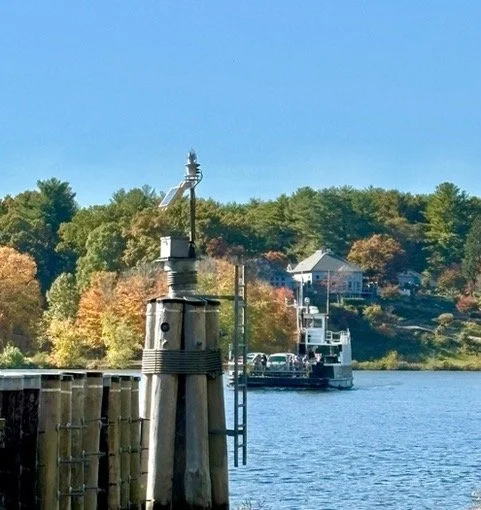
Looking toward the Chester-Hadlyme ferry as it crosses the Connecticut River.
— All photos are by William Morgan except the last one.
Is there anyone who does not love a ferry? One thinks of the large ferryboats across Long Island Sound or those heading to Nantucket and Martha’s Vineyard. Yet, the 65-foot Selden III has been making the five-minute crossing of the Connecticut River between Chester and Hadlyme, a village in Lyme, for three quarters of a century. It is now operated Apri1-Nov. 30.
The one-way fare for the nine-car ferry is $5 on weekdays and $6 on weekends. It is a delightful trip and a cheap, if supremely low-key, thrill. The hamlet of Hadlyme consists of a handful of handsome Federal and Greek revival houses. The attractive and historic town of Chester, on the western shore, has beautiful marshes and fields, a testament to the Connecticut River’s meandering history.
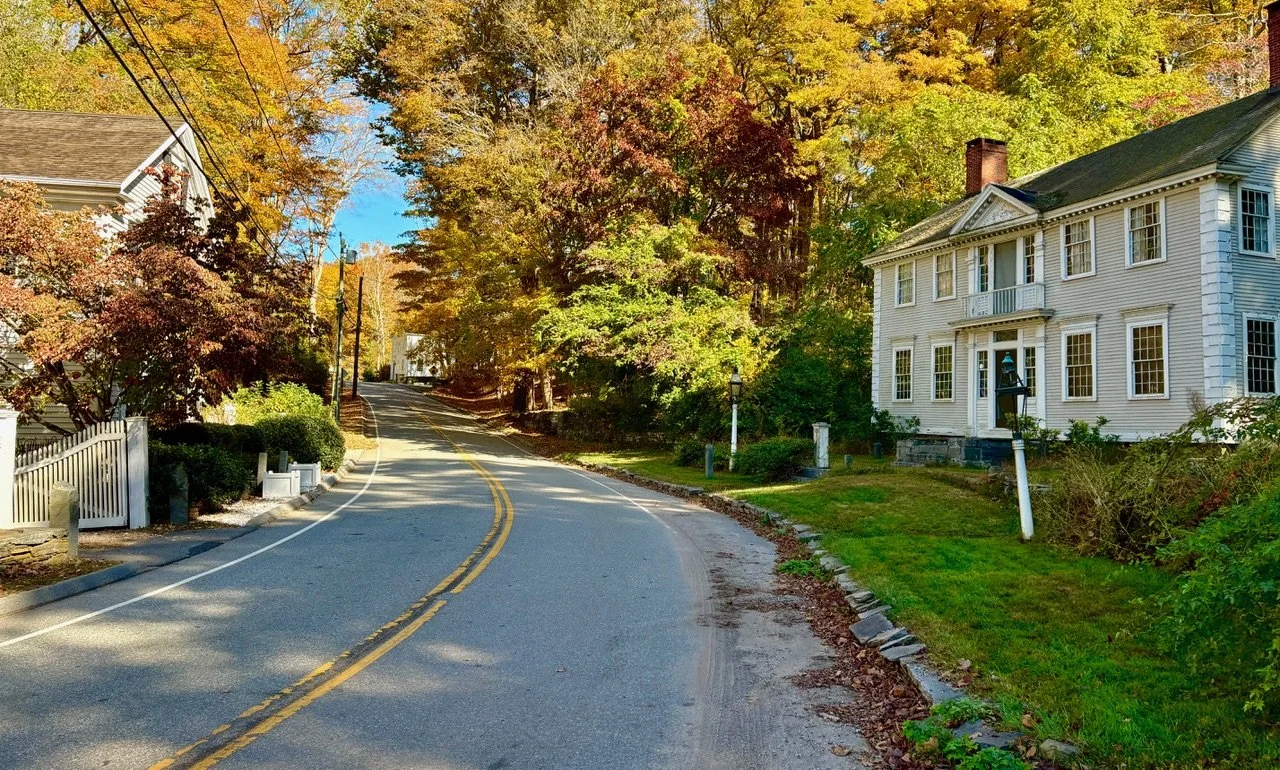
In Hadlyme,Conn.
There has been a ferry at this spot since 1769, and it was especially important during the American Revolution when the British controlled the coastal highway (what is now U.S. Route 1). I first discovered the ferry through the 1961 movie Parrish, which was set in the tobacco country farther up the valley. Starring Claudette Colbert and Karl Malden, the film opens with the eponymous protagonist Parrish, played by Troy Donahue, riding on the Chester-Hadlyme Ferry. Curious, I tracked the ferry down, and used it occasionally when I went to visit my dissertation adviser, who had retired to Chester.

Setting out on the Connecticut on a recent fall day.
Perhaps people who use the ferry every day are immune to its pleasures. But on a warm October afternoon, almost everyone left their cars to experience being on the water. A dozen years ago the State of Connecticut, seeking budget cuts, decided to close the ferry. There was a such an uproar that the state kept the service running. It is a welcome change of pace in a frantic world.
William Morgan is a Providence-based architecture writer who has published several books with New England themes, including A Simpler Way of Life: Old Farmhouses of New York and New England and The Cape Cod Cottage.

Better then to take the train and maybe it will again

Map of the various alignments of the Boston Post Road. Scanned from S. Jenkins’s The Old Boston Post Road, (G.P. Putnam and Sons, New York and London, 1914)

Flesh meets our wired future

“Dream From the Future 2” (oil on canvas), by Alfred DeAngelo, in his show “Something We Imagined,’’ at the Copley Society of Art, Boston, through Nov. 2.
The gallery says that De Angelo looks ‘‘through’’ appearances, and “embodies the essential mysteries of existence through the lens of Surrealism.’’
Jay L. Zagorsky: Americans spend a lot on Halloween while complaining about their finances

— Photo by Anthony22
BOSTON
Halloween was once a time of both tricks and treats. Lately, Halloween has become one big treat for businesses, with consumers spending an estimated US$11.6 billion on this one-night holiday. That’s roughly the same amount of money as Americans spend on children’s books each year.
This massive amount of spending is puzzling, given the media is filled with stories about the economic hardships many families face.
As a business school professor who has written previously about Halloween, I was curious why Halloween spending is just below all-time highs at the same time many people report high levels of economic angst.
The best data on Halloween spending come each year from the National Retail Federation, which surveys Americans about their shopping plans just before the holiday. It found that U.S. consumers will spend over $11 billion this year, which is about half the amount spent annually on dental care for children under age 17.
The most recent survey also shows that about three out of four Americans will celebrate in some fashion. Because not everyone observes the holiday, the federation calculates that the typical person celebrating will spend $104 on Halloween.
Twelve-foot skeletons don’t come cheap. Marvin Joseph/The Washington Post via Getty Images
The federation breaks down spending into four categories. About one-third of spending will be on costumes for children, adults and pets. Another third will be spent on decorations like giant skeletons. About a final third is spent on candy, and the remaining sliver is spent on greeting cards.
Back in 2005, the federation estimated the holiday would generate only $3.3 billion of spending. This means Halloween spending has grown dramatically, by about three and a half times, in just two decades, or about double if we are adjusting for inflation.
What has driven Halloween spending skyward? Some of the growth is due to inflation, which has increased prices by about 65% over the past two decades. Some of the growth is due to more people living in the U.S. In 2005, the U.S. had about 290 million people, while today the figure is closing in on 340 million.
While these two factors explain some of the growth, they don’t explain it all.
To understand more, I looked at some government data:
The U.S. tracks what the typical family spends on a wide variety of products and services to measure the cost of living. Spending each year is monitored via the Consumer Expenditure Survey. This survey has publicly provided data on annual candy spending since 2013, when it found the typical family spent $88 a year on candy.
The latest figures for 2023 show U.S. families have developed a very sweet tooth: Candy spending by the typical family is now at $164, which means candy outlays have almost doubled from a bit over a decade ago.
While this increase in candy consumption undoubtedly boosts spending at Halloween, it also has a downside. The American Dental Association has shown a dramatic increase in spending at the dentist office, as many people make emergency dentist visits as teeth get cracked on candy.
New York City’s Tompkins Square Park Halloween Dog Parade on Oct. 19, 2024. Jamie McCarthy/Getty Images
Spending on costumes has also soared.
In 2005, the best estimate was that $1.2 billion would be spent on just dressing up, while this year the figure is $3.8 billion.
Why so much? Costumes used to be just for children, but today many adults are dressing up. About 1 in 5 adults say they will be wearing a costume for Halloween. Beyond costumes for people, Americans spend millions of dollars on costumes for their pets.
The National Retail Federation has not tracked my favorite Halloween category, pumpkin sales, but the U.S. Department of Agriculture has. When I was young, each family in my neighborhood typically had one pumpkin on their doorstep. Now, I routinely see houses with many – both in my old neighborhood and my new one, which is a few miles away in another part of Boston.
It seems it’s not just my neighbors who are buying more gourds. In 2005, the USDA calculated that there were about four and a half pounds of pumpkins for sale for every person just before the holiday. In 2023, the amount had risen to almost six pounds per person. This means there are about 50% more pumpkins available for carving and for making pies.
While polls suggest many Americans are feeling financially fragile, the data indicates it isn’t having much impact on Halloween spending. After all, over the past two decades, Halloween has become an ever-bigger commercial holiday.
Halloween can be scary, but it doesn’t have to be scary for your finances. If you are struggling financially this year, before buying on credit giant candy bars that only get half-eaten, or cute pet costumes most animals probably don’t want to wear, think about maybe cutting back.
Jay L. Zagorsky is an associate professor of markets, public policy and law at Boston University.
He does not work for, consult, own shares in or receive funding from any company or organization that would benefit from this article, and has disclosed no relevant affiliations beyond their academic appointment.
Beware the disguise

“The fields pulsate yet with the sound of cricket and cicada….{The} ponds lie there misty, warm, seductive. One day camougflaged as summer,fall can easily toss off this disguise and appear as prophet: cold, wet,angry.’’
— Anne Bernays in “Fall’ in New England: The Four Seasons (1980)
Marine matters in metal

“The Discarded” (reclaimed metal and paint), by Boston artist Morris Norvin, in his show “A Plea from the Sea,” at the Nesto Gallery at Milton Academy, Milton,Mass.
The gallery says:
“Norvin ponders the mystery and magic of the world’s oceans with reclaimed metal, for the importance of its health that directly affects us all.’’
Where teachers can live too
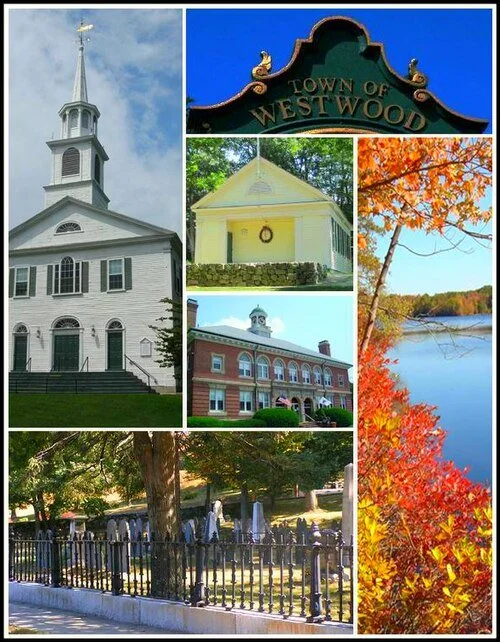
From left to right: Westwood First Parish Church, inscription on town clock, Fisher School House, Hale Reservation, Town Hall, and the Old Burial Ground.
— Wikipedia montage
From Robert Whitcomb’s “Digital Diary,” in GoLocal24.com
Affluent towns often battle proposals to change zoning rules to encourage building more housing for low-and-middle-income people. The battle has been quite intense in some Boston suburbs, with Milton perhaps the leader in fighting state mandates aimed at curbing dwelling costs by allowing construction of more multi-family housing, especially near public transportation. The more the supply, the more the rise in costs of owning or renting a place can be slowed.
Some affluent Bay State towns, such as Westwood and Lexington, have supported housing expansion. Their residents realize the benefits of being communities where such essential workers as teachers, police, firefighters, nurses, child-care workers and assorted skilled trades people can afford to live rather than having to face the hassle and expense of commuting in from other towns. Even rich folks need nearby poorer people to serve them.
Healthy communities need an economically mixed population for the long term. For such a mix, we must increase the housing stock. Obviously. And that means accepting more density in some places.
A neighborhood business
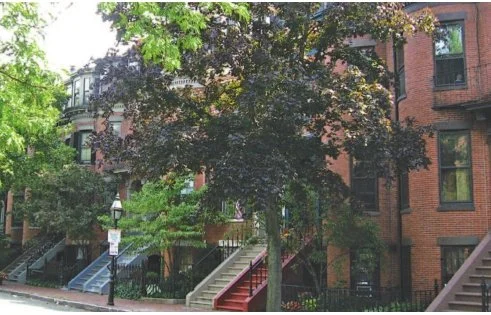
In the South End’s old brothel neighborhood.
Some South End lintels in the Ellis and Eight Streets sections of the neighborhood may still bear the signs of their lurid pasts.
In the late 1940s, fed up with johns knocking on their doors in search of prostitutes, residents came to an agreement with the area’s brothels that they would paint their first-floor lintels.
“They had to go to the bordellos and ask them to do it,” said Paul Duffy, longtime neighborhood resident, who was a little boy at the time.
“I think at that time {the paint} might have been red and turned salmon or pink.”
According to Duffy, there are still some buildings that have the mark from the past, but he could not name specific addresses.
Historians reached for more information were not familiar with the paint markings but provided details about South End prostitution half a century earlier.
“[The South End] became very active with brothels between 1890 and 1910,” said Mary Beaudry, chair of Boston University’s Archeology Department. “The johns were just about everybody.”’
‘Suspended in pools’

“XX is not < #13” (photographic giclée print on paper), by Julia Shepley, at Boston Sculptors Gallery.
Her Web site says:
“Her ever evolving iconography of marks and layered surfaces serves to visually translate her experience of light, shadow, and sound as they move through space, and is layered by time and memory. She works on sculpture, drawings, photography, and prints, simultaneously pulling the drawings into three dimensions and creating a graphic image with her wall sculpture and photography. She layers and combines materials, methods and imagery to create the illusion of movement and reassembly. Recent work includes a series of archival pigment photographic prints entitled XX is not < , created with her shadow box sculptures. In her enigmatic photographic images, forms appear to be traveling through - and suspended in - pools of atmospheric illumination and vibrant color.’’
Place for a calm brain?

Chris Evans
“To me, Boston is friends, family, and home… I’ve thought a lot about what ‘home’ means. For me, it’s where my brain stops asking so many questions. You can go to a lot of beautiful places, but even in those places my brain is a very active animal. By no means do I look down on the activity of the mind, but I also think the healthiest thing you can do for yourself is silencing that noise…. If you’re able to take a breath, to be still and be present, that’s living life. That’s bliss. Massachusetts is the place where my brain feels the most calm.”
— Chris Evans (born 1981), Boston-born movie actor. He grew up in the Boston suburb of Sudbury.
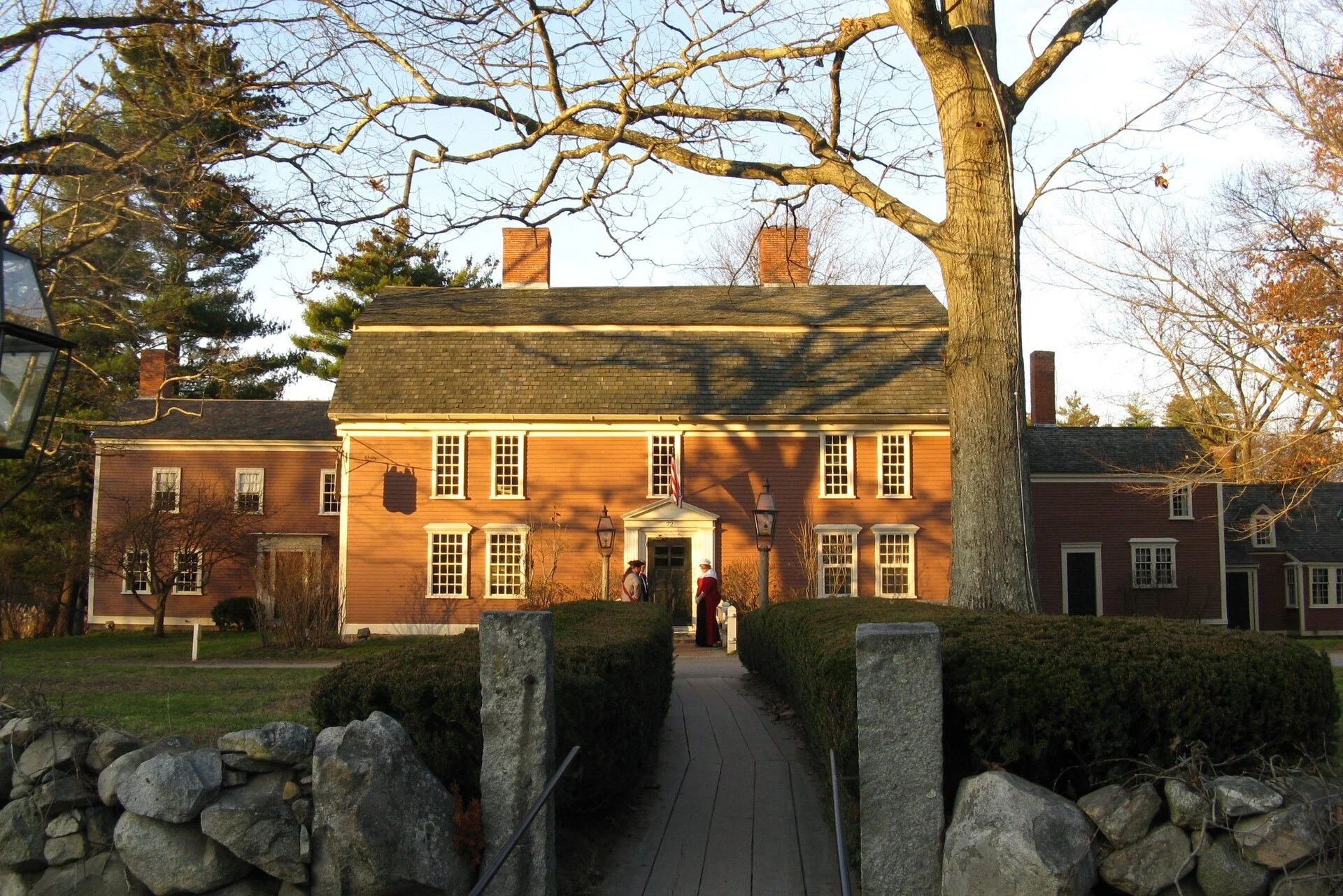
Wayside Inn, in Sudbury, Mass. It opened in 1716.
John Phelan photo
Before the weekend places

“The Wide Valley” (oil on canvas), by Paul Sample, at the Art Complex Museum, in Duxbury, Mass.
Paul Sample (1896-1974) was an American artist who portrayed life in New England in the 20th Century with a style that showed elements of "Social Realism and Regionalism." The painting above is almost a Vermont scene.
Atmospheric rivers are moving north


Note the atmospheric river stretching from the Caribbean to the British Isles.
Atmospheric rivers – those long, narrow bands of water vapor in the sky that bring heavy rain and storms to the U.S. West Coast and many other regions – are shifting toward higher latitudes, and that’s changing weather patterns around the world.
The shift is worsening droughts in some regions, intensifying flooding in others, and putting water resources that many communities rely on at risk. When atmospheric rivers reach far northward into the Arctic, they can also melt sea ice, affecting the global climate.
In a new study published in Science Advances, University of California, Santa Barbara, climate scientist Qinghua Ding and I show that atmospheric rivers have shifted about 6 to 10 degrees toward the two poles over the past four decades.
Atmospheric rivers on the move
Atmospheric rivers aren’t just a U.S West Coast thing. They form in many parts of the world and provide over half of the mean annual runoff in these regions, including the U.S. Southeast coasts and West Coast, Southeast Asia, New Zealand, northern Spain, Portugal, the United Kingdom and south-central Chile.
California relies on atmospheric rivers for up to 50% of its yearly rainfall. A series of winter atmospheric rivers there can bring enough rain and snow to end a drought, as parts of the region saw in 2023.
Atmospheric rivers occur all over the world, as this animation of global satellite data from February 2017 shows. NASA/Goddard Space Flight Center Scientific Visualization Studio
While atmospheric rivers share a similar origin – moisture supply from the tropics – atmospheric instability of the jet stream allows them to curve poleward in different ways. No two atmospheric rivers are exactly alike.
What particularly interests climate scientists, including us, is the collective behavior of atmospheric rivers. Atmospheric rivers are commonly seen in the extratropics, a region between the latitudes of 30 and 50 degrees in both hemispheres that includes most of the continental U.S., southern Australia and Chile.
Our study shows that atmospheric rivers have been shifting poleward over the past four decades. In both hemispheres, activity has increased along 50 degrees north and 50 degrees south, while it has decreased along 30 degrees north and 30 degrees south since 1979. In North America, that means more atmospheric rivers drenching British Columbia and Alaska.
A global chain reaction
One main reason for this shift is changes in sea surface temperatures in the eastern tropical Pacific. Since 2000, waters in the eastern tropical Pacific have had a cooling tendency, which affects atmospheric circulation worldwide. This cooling, often associated with La Niña conditions, pushes atmospheric rivers toward the poles.
The poleward movement of atmospheric rivers can be explained as a chain of interconnected processes.
During La Niña conditions, when sea surface temperatures cool in the eastern tropical Pacific, the Walker circulation – giant loops of air that affect precipitation as they rise and fall over different parts of the tropics – strengthens over the western Pacific. This stronger circulation causes the tropical rainfall belt to expand. The expanded tropical rainfall, combined with changes in atmospheric eddy patterns, results in high-pressure anomalies and wind patterns that steer atmospheric rivers farther poleward.
La Niña, with cooler water in the eastern Pacific, fades, and El Niño, with warmer water, starts to form in the tropical Pacific Ocean in 2023. NOAA Climate.gov
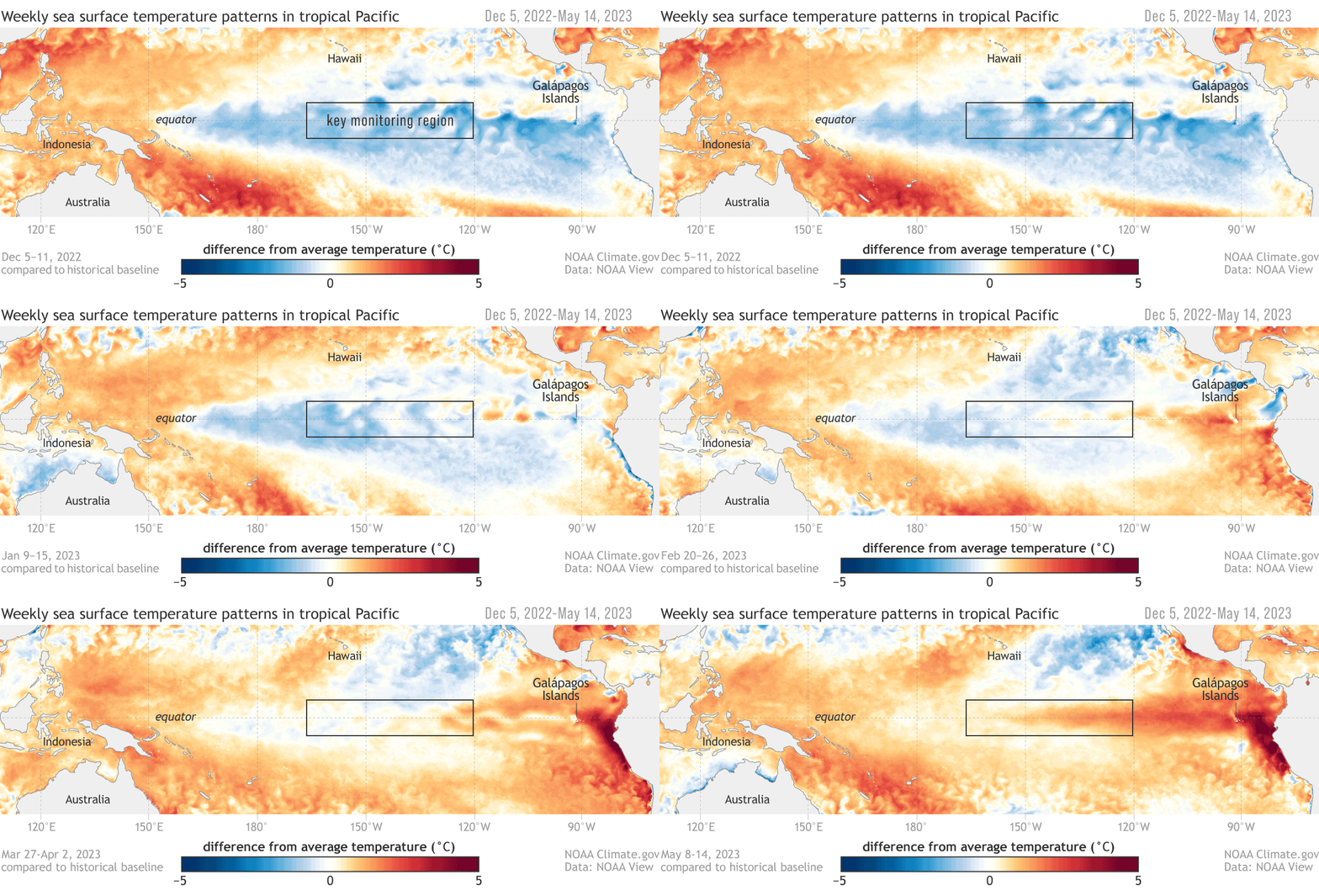
Conversely, during El Niño conditions, with warmer sea surface temperatures, the mechanism operates in the opposite direction, shifting atmospheric rivers so they don’t travel as far from the equator.
The shifts raise important questions about how climate models predict future changes in atmospheric rivers. Current models might underestimate natural variability, such as changes in the tropical Pacific, which can significantly affect atmospheric rivers. Understanding this connection can help forecasters make better predictions about future rainfall patterns and water availability.
Why does this poleward shift matter?
A shift in atmospheric rivers can have big effects on local climates.
In the subtropics, where atmospheric rivers are becoming less common, the result could be longer droughts and less water. Many areas, such as California and southern Brazil, depend on atmospheric rivers for rainfall to fill reservoirs and support farming. Without this moisture, these areas could face more water shortages, putting stress on communities, farms and ecosystems.
In higher latitudes, atmospheric rivers moving poleward could lead to more extreme rainfall, flooding and landslides in places such as the U.S. Pacific Northwest, Europe, and even in polar regions.
A satellite image on Feb. 20, 2017, shows an atmospheric river stretching from Hawaii to California, where it brought drenching rain. NASA/Earth Observatory/Jesse Allen
In the Arctic, more atmospheric rivers could speed up sea ice melting, adding to global warming and affecting animals that rely on the ice. An earlier study I was involved in found that the trend in summertime atmospheric river activity may contribute 36% of the increasing trend in summer moisture over the entire Arctic since 1979.
What it means for the future
So far, the shifts we have seen still mainly reflect changes due to natural processes, but human-induced global warming also plays a role. Global warming is expected to increase the overall frequency and intensity of atmospheric rivers because a warmer atmosphere can hold more moisture.
How that might change as the planet continues to warm is less clear. Predicting future changes remains uncertain due largely to the difficulty in predicting the natural swings between El Niño and La Niña, which play an important role in atmospheric river shifts.
As the world gets warmer, atmospheric rivers – and the critical rains they bring – will keep changing course. We need to understand and adapt to these changes so communities can keep thriving in a changing climate.
Zhe Li is a postdoctoral researcher in Earth System Science, University Corporation for Atmospheric Research
Disclosure statement
Zhe Li does not work for, consult, own shares in or receive funding from any company or organization that would benefit from this article, and has disclosed no relevant affiliations beyond their academic appointment.