

Chris Powell: Extending medical insurance to illegal immigrants draws in more of them

MANCHESTER, Conn.
Connecticut's nullification of federal immigration law proceeded this month as state government extended its welfare system's medical insurance to illegal immigrant children by three years, from 12 and under to 15 and under. The children being added will be able to keep their state coverage until they turn 19 -- and maybe, as seems likely, by the time they turn 19 Connecticut will have extended eligibility to a higher age.
Such gradualism is how Gov. Ned Lamont and the Democratic majority in the General Assembly have been handling the issue for years now. They have been maintaining both that decency requires covering all illegal immigrant children and -- in contradiction -- that the state can afford to cover only a few thousand more every year. This gradualism obscures the budgetary and nullification issues enough that most people don't notice and make a fuss about them.
While the policy being pursued by state government may make political sense, it is still mistaken. Its logic is that Connecticut somehow can afford to lift all of Central America and much of the rest of the world out of poverty in the next decade, and it encourages more people to violate federal immigration law.
Advocates of extending the medical insurance to more illegal immigrant children note that even without such insurance Connecticut's hospitals will always have to treat illegal immigrant children when they come to emergency rooms with urgent conditions, and that when such patients or their guardians don't pay, hospitals essentially will transfer the expense to state government and patients who do pay for themselves.
But this rationale does not acknowledge that providing medical insurance to illegal immigrant children rewards and incentivizes illegal immigration to Connecticut and that if the state did not extend the insurance, the parents or guardians of the children being covered might relocate to other states providing coverage. It's not as if illegal immigrants in the United States have no choice but to live in Connecticut. Like everyone else they may look for the place where they are treated best.
While Governor Lamont supported the latest extension of insurance, when it took effect the other day he implied that he had some reservations about it, saying it should be accompanied by "comprehensive immigration reform." But of course it has not been accompanied by "comprehensive immigration reform," and the governor didn't specify what "comprehensive immigration reform" is.
Is it mass amnesty, making all illegal immigrants legal, as many other Democrats want?
Is it deporting all 12 million or so illegal immigrants estimated to be in the country, the objective that has been proclaimed by presidential candidate Donald Trump without an explanation of how the logistical difficulties would be met?
Is it to continue having open borders most of the time, as advocated by Connecticut U.S. Sen. Chris Murphy via the dishonest "compromise" legislation he proposed in February with Sens. James Lankford (R.-Okla.), and Kyrsten Sinema, the former Democrat and now nominal independent from Arizona?
In any case the millions of illegal and unvetted immigrants who have entered the country since President Biden took office are not an accident but policy, a policy of devaluing citizenship and hastening change in the country's demographics and its democratic and secular culture. Extending medical insurance to illegal immigrants -- on top of driver's licenses and other government identification documents, housing, and food subsidies -- is part of that policy. So is forbidding state and municipal police from assisting federal immigration agents, as Connecticut forbids them, thereby making itself a "sanctuary state."
If illegal immigration is never to be simply stopped and immigration law simply enforced, the country won't be a country anymore.
The United States long has welcomed immigration and should continue to do so. But immigration must be limited to what the country can assimilate in normal circumstances. A desperate national housing shortage, strain on hospitals, and schools overwhelmed with students who don't speak English signify the obliviousness to illegal immigration by both the federal government and state government.
Chris Powell has written about Connecticut government and politics for many years (CPowell@cox.net).
‘Between the literal and abstract’

“Tokyo Moose” (acrylic and oil on canvas), by Patrick McCay, in his show “And She Feeds You Tea and Oranges That Come All the Way From China,’’ at Whistler House Museum of Art, Lowell, Mass.
The museum says:
“Patrick McCay’s work occupies the space between the literal and abstract. Skillfully orchestrated colors pepper the expressive surfaces of chosen icons. Grounded in a scaffold of remarkable drawings and an immediacy of gestural brushstrokes, he tempts and teases with a visual theatricality, adding the dignity of the ‘unknown’ to that which is all too well ‘known.’ McCay focuses his visual explorations within the imposed contours and attentive challenge of thematic expression.’’
Jordan Rau: The perils of nursing homes, in R.I. and elsewhere, ignoring minimum staffing rules
From Knight Family Foundation Health News
SMITHFIELD, Conn.
For hours, John Pernorio repeatedly mashed the call button at his bedside in the Heritage Hills nursing home in Rhode Island. A retired truck driver, he had injured his spine in a fall on the job decades earlier and could no longer walk. The antibiotics he was taking made him need to go to the bathroom frequently. But he could get there only if someone helped him into his wheelchair.
By the time an aide finally responded, he’d been lying in soiled briefs for hours, he said. It happened time and again.
“It was degrading,” said Pernorio, 79. “I spent 21 hours a day in bed.”
Payroll records show that during his stay at Heritage Hills, daily aide staffing levels were 25% below the minimums under state law. The nursing home said it provided high-quality care to all residents. Regardless, it wasn’t in trouble with the state, because Rhode Island does not enforce its staffing rule.
An acute shortage of nurses and aides in the nation’s nearly 15,000 nursing homes is at the root of many of the most disturbing shortfalls in care for the 1.2 million Americans who live in them, including many of the nation’s frailest old people.
They get festering bedsores because they aren’t turned. They lie in feces because no one comes to attend to them. They have devastating falls because no one helps them get around. They are subjected to chemical and physical restraints to sedate and pacify them.
California, Florida, Massachusetts, New York and Rhode Island have sought to improve nursing home quality by mandating the highest minimum hours of care per resident among states. But an examination of records in those states revealed that putting a law on the books was no guarantee of better staffing. Instead, many nursing homes operated with fewer workers than required, often with the permission of regulators or with no consequences at all.
“Just setting a number doesn’t mean anything if you’re not going to enforce it,” said Mark Miller, former president of the national organization of long-term care ombudsmen, advocates in each state who help residents resolve problems in their nursing homes. “What’s the point?”
Now the Biden administration is trying to guarantee adequate staffing the same way states have, unsuccessfully, for years: with tougher standards. Federal rules issued in April are expected to require 4 out of 5 homes to boost staffing.
The administration’s plan also has some of the same weaknesses that have hampered states. It relies on underfunded health inspectors for enforcement, lacks explicit penalties for violations, and offers broad exemptions for nursing homes in areas with labor shortages. And the administration isn’t providing more money for homes that can’t afford additional employees.
Serious health violations have become more widespread since covid-19 swept through nursing homes, killing more than 170,000 residents and driving employees out the door.
Pay remains so low — nursing assistants earn $19 an hour on average — that homes frequently lose workers to retail stores and fast-food restaurants that pay as well or better and offer jobs that are far less grueling. Average turnover in nursing homes is extraordinarily high: Federal records show half of employees leave their jobs each year.
Even the most passionate nurses and aides are burning out in short-staffed homes because they are stretched too thin to provide the quality care they believe residents deserve. “It was impossible,” said Shirley Lomba, a medication aide from Providence. She left her job at a nursing home that paid $18.50 an hour for one at an assisted living facility that paid $4 more per hour and involved residents with fewer needs.
The mostly for-profit nursing home industry argues that staffing problems stem from low rates of reimbursement by Medicaid, the program funded by states and the federal government that covers most people in nursing homes. Yet a growing body of research and court evidence shows that owners and investors often extract hefty profits that could be used for care.
Nursing home trade groups have complained about the tougher state standards and have sued to block the new federal standards, which they say are unworkable given how much trouble nursing homes already have filling jobs. “It’s a really tough business right now,” said Mark Parkinson, president and chief executive of one trade group, the American Health Care Association.
And federal enforcement of those rules is still years off. Nursing homes have as long as five years to comply with the new regulations; for some, that means enforcement would fully kick in only at the tail end of a second Biden administration, if the president wins reelection. Former President Donald Trump’s campaign declined to comment on what Trump would do if elected.
Persistent Shortages
Nursing home payroll records submitted to the federal government for the most recent quarter available, October to December 2023, and state regulatory records show that homes in states with tougher standards frequently did not meet them.
In more than two-thirds of nursing homes in New York and more than half of those in Massachusetts, staffing was below the state’s required minimums. Even California, which passed the nation’s first minimum staffing law two decades ago, has not achieved universal compliance with its requirements: at least 3½ hours of care for the average resident each day, including two hours and 24 minutes of care from nursing assistants, who help residents eat and get to the bathroom.
During inspections since 2021, state regulators cited a third of California homes — more than 400 of them — for inadequate staffing. Regulators also granted waivers to 236 homes that said workforce shortages prevented them from recruiting enough nurse aides to meet the state minimum, exempting them from fines as high as $50,000.
In New York, Gov. Kathy Hochul declared an acute labor shortage, which allows homes to petition for reduced or waived fines. The state health department said it had cited more than 400 of the state’s 600-odd homes for understaffing but declined to say how many of them had appealed for leniency.
In Florida, Gov. Ron DeSantis signed legislation in 2022 to loosen the staffing rules for all homes. The law allows homes to count almost any employee who engages with residents, instead of just nurses and aides, toward their overall staffing. Florida also reduced the daily minimum of nurse aide time for each resident by 30 minutes, to two hours.
Now only 1 in 20 Florida nursing homes are staffed below the minimum — but if the former, more rigorous rules were still in place, 4 in 5 homes would not meet them, an analysis of payroll records shows.
“Staffing is the most important part of providing high-quality nursing home care,” said David Stevenson, chair of the health policy department at Vanderbilt University School of Medicine. “It comes down to political will to enforce staffing.”\
The Human Toll
There is a yawning gap between law and practice in Rhode Island. In the last three months of 2023, only 12 of 74 homes met the state’s minimum of three hours and 49 minutes of care per resident, including at least two hours and 36 minutes of care from certified nursing assistants, payroll records show. One of the homes below the minimum was Heritage Hills Rehabilitation & Healthcare Center in Smithfield, where Pernorio, president of the Rhode Island Alliance for Retired Americans, went last October after a stint in a hospital.
“From the minute the ambulance took me in there, it was downhill,” he said in an interview.
Sometimes, after waiting an hour, he would telephone the home’s main office for help. A nurse would come, turn off his call light, and walk right back out, and he would push the button again, Pernorio reported in his weekly e-newsletter.
While he praised some workers’ dedication, he said others frequently did not show up for their shifts. He said staff members told him they could earn more flipping hamburgers at McDonald’s than they could cleaning soiled patients in a nursing home.
In a written statement, Heritage Hills did not dispute that its staffing, while higher than that of many homes, was below the minimum under state law.
Heritage Hills said that after Pernorio complained, state inspectors visited the home and did not cite it for violations. “We take every resident concern seriously,” it said in the statement. Pernorio said inspectors never interviewed him after he called in his complaint.
In interviews, residents of other nursing homes in the state and their relatives reported neglect by overwhelmed nurses and aides.
Jason Travers said his 87-year-old father, George, fell on the way to the bathroom because no one answered his call button.
“I think the lunch crew finally came in and saw him on the floor and put him in the bed,” Travers said. His father died in April 2023, four months after he entered the home.
Relatives of Mary DiBiasio, 92, who had a hip fracture, said they once found her sitting on the toilet unattended, hanging on to the grab bar with both hands. “I don’t need to be a medical professional to know you don’t leave somebody hanging off the toilet with a hip fracture,” said her granddaughter Keri Rossi-D’entremont.
When DiBiasio died in January 2022, Rhode Island was preparing to enact a law with nurse and aide staffing requirements higher than anywhere else in the country except Washington, D.C. But Gov. Daniel McKee suspended enforcement, saying the industry was in poor financial shape and nursing homes couldn’t even fill existing jobs. The governor’s executive order noted that several homes had closed because of problems finding workers.
Yet Rhode Island inspectors continue to find serious problems with care. Since January 2023, regulators have found deficiencies of the highest severity, known as immediate jeopardy, at 23 of the state’s 74 nursing homes.
Homes have been cited for failing to get a dialysis patient to treatment and for giving one resident a roommate’s methadone, causing an overdose. They have also been cited for violent behavior by unsupervised residents, including one who shoved pillow stuffing into a resident’s mouth and another who turned a roommate’s oxygen off because it was too noisy. Both the resident who was attacked and the one who lost oxygen died.
Bottom Lines
Even some of the nonprofit nursing homes, which don’t have to pay investors, are having trouble meeting the state minimums — or simply staying open.
Rick Gamache, chief executive of the nonprofit Aldersbridge Communities, which owns Linn Health & Rehabilitation in East Providence, said Rhode Island’s Medicaid program paid too little for the home to keep operating — about $292 per bed, when the daily cost was $411. Aldersbridge closed Linn this summer and converted it into an assisted living facility.
“We’re seeing the collapse of post-acute care in America,” Gamache said.
Many nursing homes are owned by for-profit chains, and some researchers, lawyers, and state authorities argue that they could reinvest more of the money they make into their facilities.
Bannister Center, a Providence nursing home that payroll records show is staffed 10% below the state minimum, is part of Centers Health Care, a New York-based private chain that owns or operates 31 skilled nursing homes, according to Medicare records. Bannister lost $430,524 in 2021, according to a financial statement it filed with Rhode Island regulators.
Last year, the New York attorney general sued the chain’s owners and investors and their relatives, accusing them of improperly siphoning $83 million in Medicaid funds out of their New York nursing homes by paying salaries for “no-show” jobs, profits above what state law allowed, and inflated rents and fees to other companies they owned. For instance, one of those companies, which purported to provide staff to the homes, paid $5 million to the wife of Kenny Rozenberg, the chain’s chief executive, from 2019 to 2021, the lawsuit said.
The defendants argued in court papers that the payments to investors and owners were legal and that the state could not prove they were Medicaid funds. They have asked for much of the lawsuit to be dismissed.
Jeff Jacomowitz, a Centers Health Care spokesperson, declined to answer questions about Bannister, Centers’ operations, or the chain’s owners.
Miller, the District of Columbia’s long-term care ombudsman, said many nursing home owners could pay better wages if they didn’t demand such high profits. In D.C., 7 in 10 nursing homes meet minimum standards, payroll records show.
“There’s no staffing shortage — there’s a shortage of good-paying jobs,” he said. “I’ve been doing this since 1984 and they’ve been going broke all the time. If it really is that bad of an investment, there wouldn’t be any nursing homes left.”
The new federal rules call for a minimum of three hours and 29 minutes of care each day per resident, including two hours and 27 minutes from nurse aides and 33 minutes from registered nurses, and an RN on-site at all times.
Homes in areas with worker shortages can apply to be exempted from the rules. Dora Hughes, acting chief medical officer for the U.S. Centers for Medicare & Medicaid Services, said in a statement that those waivers would be “time-limited” and that having a clear national staffing minimum “will facilitate strengthened oversight and enforcement.”
David Grabowski, a health policy professor at Harvard Medical School, said federal health authorities have a “terrible” track record of policing nursing homes. “If they don’t enforce this,” he said, “I don’t imagine it’s going to really move the needle a lot.”
The KFF Health News data analysis focused on five states with the most rigorous staffing requirements: California, Florida, Massachusetts, New York, and Rhode Island.
To determine staffing levels, the analysis used the daily payroll journals that each nursing home is required to submit to the federal government. These publicly available records include the number of hours each category of nursing home employee, including registered nurses and certified nursing assistants, worked each day and the number of residents in each home. We used the most recent data, which included a combined 1.3 million records covering the final three months of 2023.
We calculated staffing levels by following each state’s rules, which specify which occupations are counted and what minimums homes must meet. The analysis differed for each state. Massachusetts, for instance, has a separate requirement for the minimum number of hours of care registered nurses must provide each day.
In California, we used state enforcement action records to identify homes that had been fined for not meeting its law. We also tallied how many California homes had been granted waivers from the law because they couldn’t find enough workers to hire.
For each state and Washington, D.C., we calculated what proportion of homes complied with state or district law. We shared our conclusions with each state’s nursing home regulatory agency and gave them an opportunity to respond.
This analysis was performed by senior KFFHealth News correspondent Jordan Rau, who wrote this article, and data editor Holly K. Hacker.
In Bellows Falls, Bug from the ‘70s;’ precontact petroglyphs

“Beep-Beep,’’ by Medora Hebert, at the Canal Street Gallery, Bellows Falls, Vt.

The Bellows Falls Petroglyph Site, an archaeological site containing panels of pre-European- contact Native American petroglyphs in Bellows Falls. They are a rarely seen assemblage of figures believed to be unique in New England.

Llewellyn King: Scotus mandates confusion, intense judicial power; myths about ‘faceless bureaucrats


Buildings in Washington, D.C., housing federal agencies.
WEST WARWICK, R.I.
Myths are powerful things. So powerful that one has been endorsed by the U.S. Supreme Court and now has the federal government by the throat.
Its effects will be far-reaching and, at times, disastrous and dangerous. Although a conservative favorite, it will hurt business, in some cases, severely.
The myth is that the government is dominated by “faceless, unelected bureaucrats” with an agenda of their own. These bureaucrats, according to myth, are out to frustrate the will of Congress, avoid the courts and ignore their political masters.
In striking down the Chevron deference on June 28 – the actual case was Loper Bright Enterprises v. Raimondo — the Supreme Court sided with critics of the bureaucracy, ending what has been an operational reality for 40 years.
The Chevron deference is a Reagan-area, bipartisan accommodation which recognized that when Congress makes laws in broad strokes and big declarations of intent, the intent often requires refinement of minute scientific detail, like parts per billion of carcinogens allowed in drinking water.
Under the Chevron deference, when Congress had been sloppy, or too general, in its legislation writing, the agencies were empowered to interpret the law and — with public and stakeholder input in the form of hearings and comment periods — make rules.
It is the crux of the administrative state. If those rules were seen to be “reasonable” they couldn’t be litigated: They got “deference.” Although they could be challenged, the implied immunity of deference was mostly honored.
Clinton Vince, who heads the U.S. energy practice at Dentons, the world’s largest law firm, told me that the Supreme Court has upheld Chevron 70 times and that it has been cited in cases 18,000 times. He was speaking on my PBS television program, “White House Chronicle.”
Now, many of the agency decisions, which affect everything from drugs and medical products’ safety to the protection of human health and the environment, to workplace safety, to aviation safety and to the supply of electricity will be made in myriads of court cases.
Vince said that while reasonable people will disagree on the extent of the national disruption, “I believe that there will be an avalanche of litigation by affected stakeholders of different ideologies and that an entirely different paradigm of agency regulation will occur when the courts, rather than the agencies, will be the dominant decision makers,” he said.
Under Chevron, the courts would write the fine print (promulgate is the term used) that Congress didn’t or was unqualified to define in its legislation.
This fine print, this rendition of what Congress intended, was implemented and seldom challenged in the courts because the understanding embodied in Chevron was that if the rules were reasonable the courts would stand back.
Conservative argument postulated that this rule-making in such areas as the environment, energy, health and labor favored the liberal biases of the permanent bureaucracy.
Charles Bayless, who has been president of two investor-owned electric utilities, in Arizona and Illinois, and of the West Virginia University Institute of Technology, and who has been a party to the Federal Energy Regulatory Commission rule-makings, told me he fears widespread chaos, jammed courts and extensive “forum shopping.”
“Each side will find very liberal and very conservative circuits and find a plaintiff in that jurisdiction. As the judges cannot understand the science, the outcome is likely preordained,” Bayless said.
“Thus, the appeals courts will be jammed with appeals from jurisdictions with biased judges writing opinions where neither they nor the jury understand the science,” he said.
A judge in, say, Wyoming could be asked in one submission to rule on the safety — yes, the safety — of a treatment for malaria and in another on the allowable radioactive releases from a nuclear reactor. This is a recipe for confusion and bad law, which will affect business and the public in deleterious ways.
As someone who covered Washington for 50 years, I have to say that the bureaucracy gets a bad rap. It isn’t monolithic — as the word implies — and is made up of men and women, some of whom (as in any other large group) may be biased and unfit for what they do.
But it also has a huge number of hardworking, ordinary Americans. This is particularly so in agencies, such as the Food and Drug Administration and the Federal Energy Regulatory Commission, which administer technologically and scientifically based law. I call them the “hard” agencies because they rely on scientific and engineering expertise in their operation.
It is pure myth that they constitute a swamp or that they have pre-set agendas. Oh, and they do have faces.
Llewellyn King is executive producer and host of White House Chronicle, on PBS. His email is llewellynking1@gmail.com, and he’s based in Rhode Island.

His 'killing instinct'

Arthur Miller (1915-2005) at his wedding, in 1956, to his second wife, Marilyn Monroe (1926-1962). They were divorced in 1961.
“I don’t know, I just couldn’t bear the idea of people trying to destroy each other, ‘cause I sensed very early on that all real arguments are murderous. There was a killing instinct in there that I feared. So, I put it into the theater.”
—Arthur Miller, American playwright and essayist) and long-time resident of Roxbury, Conn.
Without a helmet

“Finding the Sweet Spot’’ (collage), by Essex, Conn.-based artist Molly Lund, in the show “Play, Pastimes and Recreation,’’ at Spectrum Art Gallery, Centerbrook, Conn., July 26-Sept. 14.

View from Essex Park
— Photo by Joe Mabel
Conn. tobacco crop was once a big deal, if cancerous
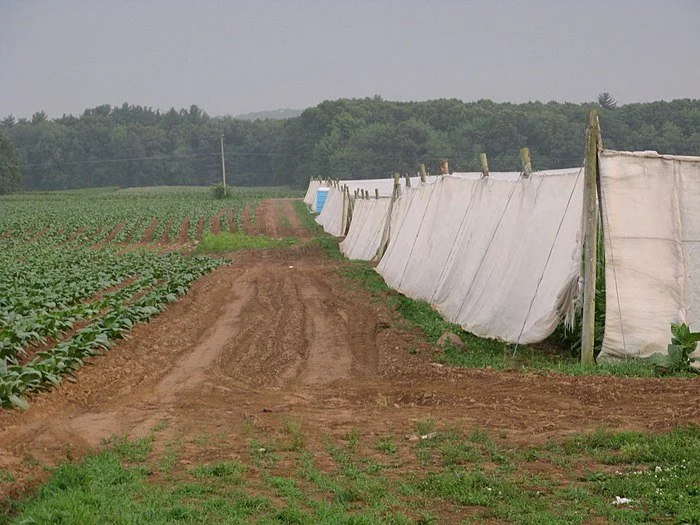
Tobacco field with shade tents in East Windsor, Conn.

Field workers, all children, at the Goodrich Tobacco Farm near Gildersleeve, Conn., in 1917.
Text excerpted from a New England Historical Society report.
“The billowing white tents, once a feature of the northern Connecticut landscape, have almost disappeared, replaced by condos, parking lots and an Amazon warehouse. The vast acres of Connecticut Shade tobacco, 30,000 at their peak, have shrunk to just over 2,000.
“Cigar markers use Connecticut Shade as a wrapper – the outside of the cigar. It makes the finest wrapper in the world. As unlikely as it seems, Connecticut Shade ranks up there with tobacco from Cuba, Dominican Republic, Honduras, Mexico and Cameroon. Silky and golden, it looks good on a cigar.
“The highly prized tobacco is one of the priciest agricultural commodities on the planet. The leaves must be perfect – no holes or imperfections – for the ultimate appeal to the cigar smoker. It therefore requires more labor than other kinds of tobacco.
“The work begins in May, with weeding and transplanting seedlings. Then field workers fasten the plants to guide wires and spread cloth tents over them. As the plants grow, workers pick off shoots and tobacco worms. They harvest the leaves and bring them to sheds, where workers used to sew the leaves together and string them on wooden lathes. They’re hung up in the rafters where they cure, then they go to sorting sheds and warehouses.’’
Editor’s note: By the way, there’s a campy 1961 movie titled Parrish that’s set in the Connecticut tobacco country.
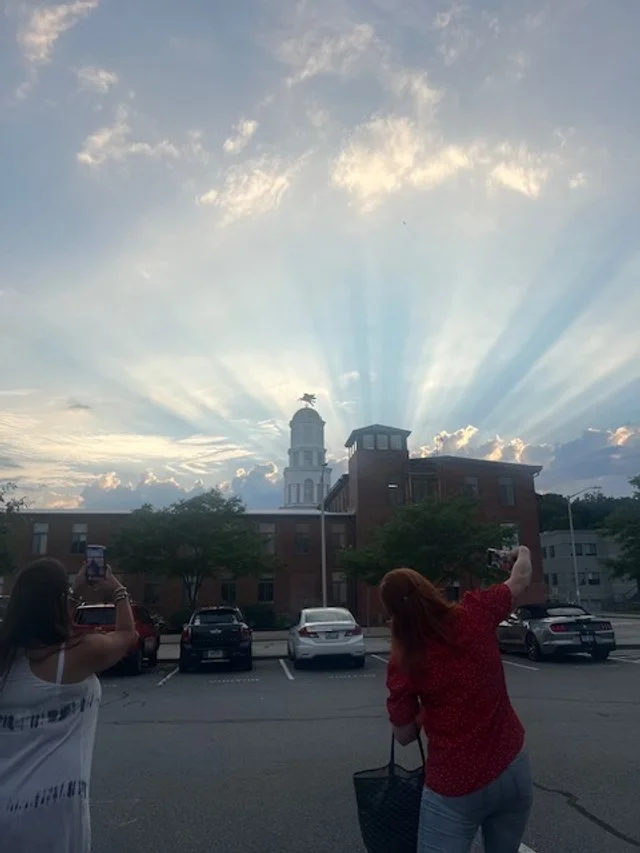

Happy and/or high in New England?
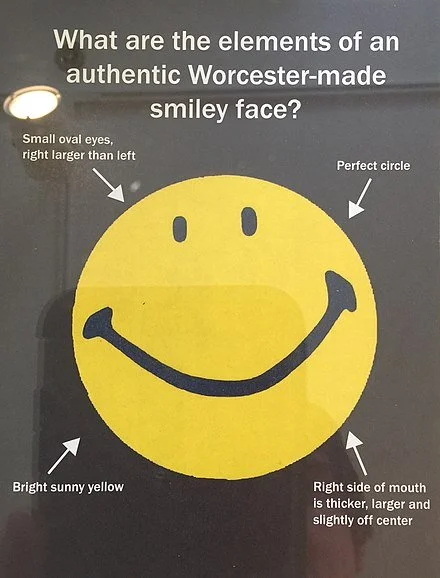
Hit this link for Smiley Face history.
Adapted from Robert Whitcomb’s “Digital Diary,’’ in GoLocal24.com
Rankings of places and institutions are often full of baloney because they’re comparing apples and oranges, but not always.
Here’s one from last year that ranks, by certain criteria, the happiest states. This one ranked Massachusetts, Rhode Island and Connecticut, in that order, as the best.
Note that a cannabis company (!) did the rankings, in which, as in most rankings of states in health and other important criteria, the South is at the bottom.
Joy Organics said:
“There are lots of ideas as to what constitutes happiness for different people. With this research, we aimed to include a number of factors that either influence a state’s happiness or serve as indicators of it. Mental well being, support and suicide rates were weighted more heavily in the ranking, accounting for a larger proportion of each state’s overall score, as these were deemed to be the most important factors."
And easy access to marijuana products? Maybe not.
Away from it all

“Big Thompson Falls”,” (in Colorado) by Richard Sneary, in the annual “Green Mountain Watercolor Exhibition,’’ at the Galleries at Lareau Farm, Waitsfield, Vt., through July 20.

Nature-based early-childhood education at the University of Maine, Farmington

At the Sweatt-Winter Child Care and Early Education Center
Edited from a New England Council article
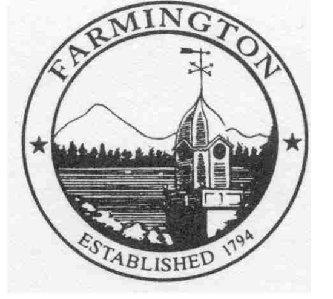
”The University of Maine at Farmington’s new Sweatt-Winter Child Care and Early Education Center recently received the Maine division of the American Institute of Architects’ design award.
“Designed by the CHA Architecture P.C. ,of Portland, Maine, the center for children comprises observation areas, digital observation technology, a child-scaled learning environment, a sunlit versatile space, and an outdoor natural playground that can be reached from every classroom. Each space has its own color, and there is a nature mural on every alcove. Nature-based education allows children to explore and interact with the natural environment. This kind of education fosters creativity, problem-solving, and critical thinking skills.
“‘We want children to connect with the natural world at a young age, but it is not just about child development. It also is so they will learn to love the earth and grow up to take care of it. So, we are helping them develop an environmental ethic and conservation values in addition to learning with nature to develop in all domains of early childhood,”’ said UMF Early Childhood Prof. Patti Bailie.
Where ‘Jimmies' came from

From a Boston Guardian article by Jonathan Brand
(Robert Whitcomb, New England Diary’s editor, is The Guardian’s chairman)
Newcomers to Boston’s many unusual words and phrases are often perplexed about their origins. Those indulging in ice cream in the city might sometimes wish that they had brought along a personal cryptanalyst, a number 2 pencil and Advil.
When ordering, for example, a large Green Monstah sundae they must learn to expect the final topping to be Jimmies, aka, chocolate sprinkles. This beloved Bostonian word has its origins back in the 1940s during a young boy’s battle against cancer and a feature on the radio.
And bring food

“Diagonal Waffle,’’ by Michael Heffernan, in the group show “What’s Cooking,’’ at Studio Place Arts, Barre, Vt., through Aug. 16.
The gallery says:
“What's Cooking?’’ features 25 artists who examine "our lives at the kitchen counter, stove and the dining room…. Our relationship to food and the everyday moments that surround it are some of the most well-loved yet most overlooked parts of our lives. These artists put those moments at the forefront. Visitors are asked to bring shelf-stable food items that will be donated to Vermont-based non-profit Capstone Community Action.’’
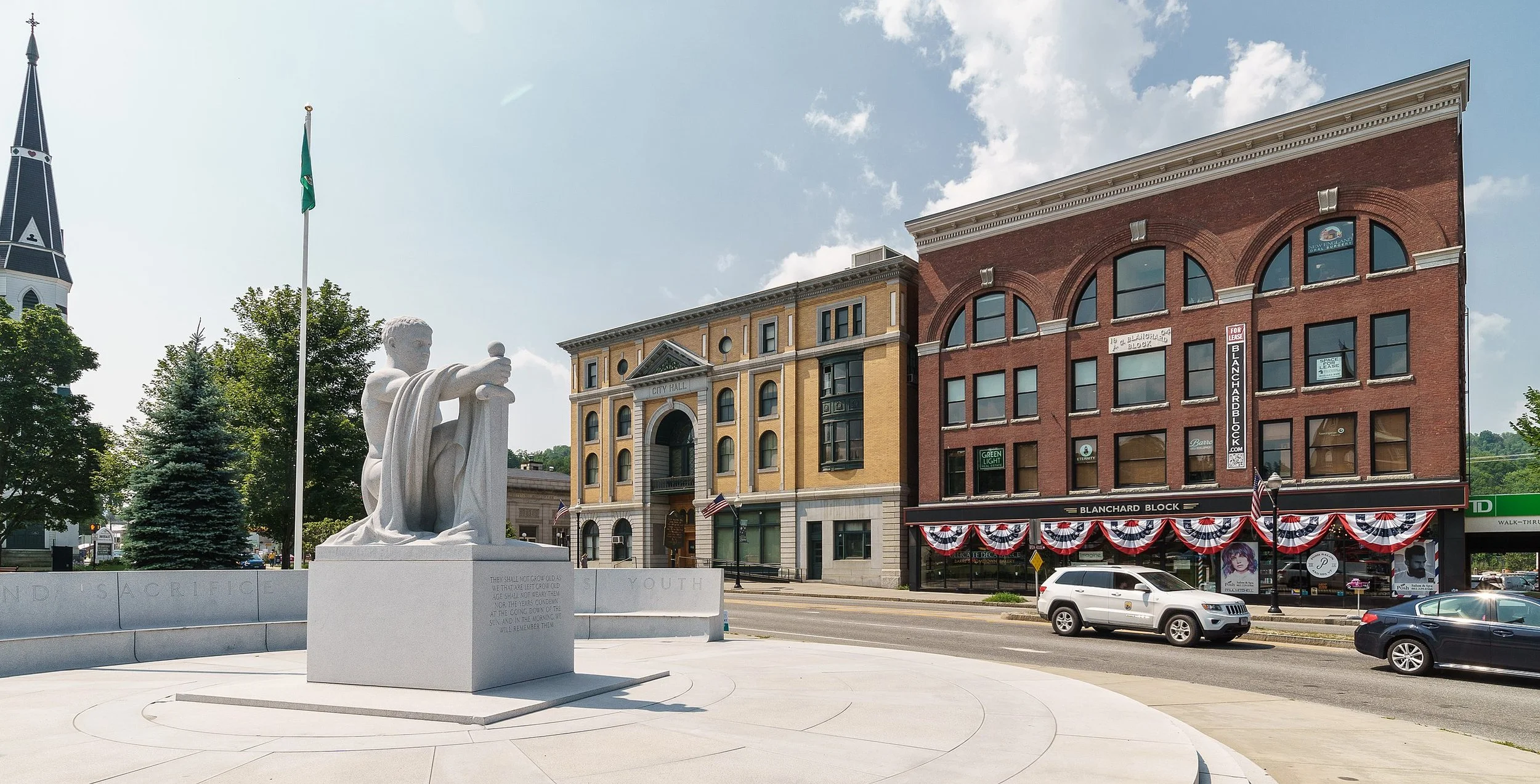
"Youth Triumphant" welcomes visitors to Barre, famed for its granite quarries and sculptures.
— Photo by Kenneth C. Zirkel

Chris Powell: ‘Mansion tax’ wouldn’t help address Conn. housing crisis

The Lauder Greenway Estate, in Greenwich, Conn.
MANCHESTER, Coon.
Apparently you don't have to do much thinking to run a "think tank" in Washington, or at least not a liberal "think tank." The Connecticut Mirror reports that two such "think tanks" -- the Center on Budget and Policy Priorities and the Institute on Taxation and Economic Policy -- have produced a study concluding that Connecticut could raise tens of millions of dollars every year to spend on reducing homelessness (or spend on something else) by imposing an extra conveyance tax on the state's most expensive homes.
Well, duh! Connecticut could get that kind of money by raising taxes or imposing new ones on nearly anything, not just property transfers.
What is the connection between Connecticut's desperate shortage of housing and its most expensive homes? There isn't one. The mansions of "mansion tax" proposals aren't why the state is short of housing and why housing prices have been rising so fast. While mansions typically occupy larger lots, Connecticut remains full of vacant land and, especially in its cities, decrepit former industrial and residential sites. The state has plenty of room for more housing. Land hogging by the wealthy is not getting in the way.
Connecticut's housing shortage has four major causes.
First is the soaring inflation of the last few years, engineered, in my view, by President Biden and Congress. This has driven up prices and mortgage rates far faster than the incomes of ordinary people. People who own residential and other substantial property, especially the wealthy, profit from inflation, but most others suffer from it.
Another cause is the flood of illegal immigration, a matter of Democratic Party policy on both the federal and state levels. It may be no coincidence that the number of illegal immigrants estimated to be living in Connecticut, more than 100,000, is close to the number of housing units the state is said to lack.
A cause of longer duration is exclusive zoning in suburbs and rural towns, zoning that discriminates against less expensive housing, particularly apartments and condominiums. Such zoning generally has community support, since most people don't want their neighborhoods to become more crowded, though of course their own arrival may have increased the neighborhood's population.
Exclusive zoning has its own cause. In some places exclusive zoning arose long ago from racism or ethnic or religious bigotry. But for many years now exclusive zoning has been sustained mainly by fear of poor people generally, a fear largely justified by the disaster inflicted on the cities, their residents, and everyone else by mistaken state and federal welfare and education policies. People don't want the pathologies of poverty -- fatherlessness, child neglect, crime, ignorance, indolence, and dependence -- imported into their neighborhoods by new housing accessible to the poor. This fear has produced zoning and community opposition that now often obstruct even middle-class, owner-occupied housing.
State government has responded with a law that weakens the use of exclusive zoning against housing, but it hasn't been very effective, and in any case inflation, declining real wages, and illegal immigration still stand in the way.
That's why that Washington "think tank" study on raising taxes on the sale of "mansions" and a similar proposal by state Senate President Martin M. Looney (D.-New Haven), to impose a punitive statewide property tax on "mansions" are so dishonest. While these ideas will raise money, there's no guarantee that much of it will be spent to build housing. More likely the money will be used as most extra tax revenue in Connecticut is used -- to pay the compensation of government's own employees, the Democratic Party's campaign army, while punitive taxes on "mansions" provide camouflage for the real objective.
Housing supply can be increased without punitive taxes on large homes -- by stopping inflation, enforcing immigration law, having state government cover all extra school and police costs of new housing, and revoking the welfare and education policies that manufacture poverty.
But that would take the fun out of blaming "mansions" for the declining living standards caused by elected officials who style themselves defenders of the poor even as they make poverty worse.
Chris Powell has written about Connecticut government and politics for many years (CPowell@cox.net).

Jamie Hartmann-Boyce: Benefits of menthol-flavored e-cigarettes may outweigh the risks

An e-cigarette with transparent clearomizer and changeable dual-coil head. This model allows for a wide range of settings.
On June 21, 2024, the U.S. Food and Drug Administration authorized the marketing of the first electronic cigarette products in flavors other than tobacco in the U.S. Of the four new authorized products, two are sealed, prefilled pods with menthol-flavored nicotine liquid that can be used in certain types of e-cigarettes. The other two are disposable nicotine e-cigarettes – meaning once the prefilled menthol liquid is used, the device cannot be used again.
The Conversation asked Jamie Hartmann-Boyce, a health-policy expert who specializes in tobacco control and e-cigarette products, to explain the pros and cons of the FDA’s authorization and what it could mean for vulnerable populations.
AMHERST, MASS.
E-cigarettes, also known as vapes, are hand-held, battery-operated devices that heat a liquid to form a vapor that can be inhaled. This vapor can be manufactured to include flavors. Unlike traditional cigarettes, e-cigarettes do not contain tobacco leaf. E-cigarettes can – but don’t always – contain nicotine.
Until June 21, the only nicotine e-cigarettes authorized for sale in the U.S. were tobacco-flavored. Some organizations, including some tobacco industry advocates, described this as a “de facto flavor ban.”
The Centers for Disease Control and Prevention defines menthol as a chemical compound found naturally in peppermint and other similar plants.
This is the first time the FDA has authorized marketing of an e-cigarette flavor other than tobacco. “Tobacco flavor” describes a range of flavors that are designed to taste similar to traditional cigarettes.
What are the potential harms, such as risks to kids?
Tobacco companies have historically added menthol to traditional cigarettes to make them seem less harsh and more appealing. Tobacco companies have aggressively marketed menthol cigarettes to Black people. In 2022, the FDA proposed a ban on menthol cigarettes based on their appeal, including to youth, and the potential of such a ban to improve health and prevent deaths. But the proposal has stalled.
Research shows that nontobacco, e-liquid flavors are more appealing than tobacco flavors, including to young people. The FDA has previously denied applications for menthol e-cigarettes, stating that the applications “did not present sufficient scientific evidence to show that the potential benefit to adult smokers outweighs the risks of youth initiation and use.”
How are e-cigarettes regulated in the U.S.?
In the U.S, e-cigarettes with nicotine fall under the authority of the FDA’s Center for Tobacco Products. For their products to be legally marketed and sold in the U.S., e-cigarette manufacturers must apply for marketing authorization from the FDA.
The FDA evaluates these applications based on the scientific evidence provided by the manufacturers. To be approved, the applications must demonstrate that permitting marketing of the products would be appropriate for protection of public health.
This means the FDA needs to weigh whether the potential benefits of the product – in other words, its ability to help adults quit smoking – outweigh its risks, including its appeal to youth. Though not risk-free, e-cigarettes are considered much less harmful than smoking. This means that adults who switch from smoking to vaping may benefit from improvements in their health.
The FDA’s authorization of menthol-flavored e-cigarettes underscores the growing body of evidence that vaping can reduce the harms of traditional smoking. But many experts are concerned that the new products will entice more young people and nonsmokers to begin vaping and smoking.
Weren’t flavored vapes already available in the U.S.?
Even though only tobacco e-liquids were authorized for sale before this new announcement, many Americans report using flavored e-liquids, with sweet, fruit and mint and menthol flavors being the most popular. This is in part because many vaping products available in the U.S. haven’t been authorized for marketing or sale. These are referred to as illicit products. In addition, some of the products currently available are still being reviewed by the FDA.
Many of the harms the public associates with vaping – such as the serious vaping-related lung injuries that were widely reported in 2019 and 2020 – have been linked to illicit products and the harmful chemicals some contain, which are not present in FDA-authorized products. Earlier in June, the Justice Department and FDA announced a federal multi-agency taskforce to curb distribution and sale of illegal e-cigarettes. Meanwhile, the U.S. is awash in sleek, colorful and highly potent vapes manufactured in China.
What are the potential health effects?
The best available research doesn’t show any clear differences between menthol and tobacco flavored e-liquid in terms of direct health risks to users.
As mentioned above, research suggests that nontobacco e-liquid flavors are more appealing than tobacco-flavored ones, at least in some groups. This might mean an increase in the risk of nonsmoking youth taking up vaping. But it might also encourage people who smoke to switch to vaping, which can pose fewer risks than smoking. Quitting smoking can also improve the health of other people, by reducing secondhand smoke exposure.
Smoking kills half of its regular users and is the leading cause of preventable death in the U.S. and worldwide. So alternatives that increase chances of successfully quitting smoking can bring substantial health benefits.
To grant authorization for the four new approved products, the FDA had to review an extensive amount of documents and research showing that the benefits of the new products outweighed their risks.
Jamie Hartmann-Boyce is an assistant professor of health promotion and policy at the University of Massachusetts at Amherst.
She receives funding from the National Institutes of Health, the U.S. Food and Drug Administration, and Cancer Research UK, on topics related to tobacco control. She sits on Health Canada's Scientific Advisory Board on Vaping Products and consults for the Truth Initiative.
‘The pitiful knaves’


Vermont quarter dollar coin
Ho—all to the borders! Vermonters, come down
With your britches of deerskin, and jackets of brown;
With your red woolen caps, and your moccasins come
To the gathering summons of trumpet and drum
Come down with your rifle!—let grey wolf and fox
Howl on in the shadow of primitive rocks;
Let bear feed securely from pig-pen and stall;
Here's two-legged game for your powder and ball
[Chorus]
And cheer, cheer, the green mountaineer!
And cheer, cheer, the green mountaineer!
[Verse 2]
On the south came the Hessians, our land to police;
And, armed for the battle, while canting of peace;
On our East came the British, the red-coated band
To hang up our leaders and eat up our land
Ho—all to the rescue! for Satan shall work
No gain for the legions of Hampshire and York!
They claim our possession,—the pitiful knaves—
The tribute we pay, shall be prisons and graves!
[Chorus]
And cheer, cheer, the green mountaineer!
And cheer, cheer, the green mountaineer!
[Verse 3]
We owe no allegiance; we bow to no throne;
Our ruler is law, and the Law is our own;
Our leaders themselves are our own fellow-men
Who can handle the sword, and the scythe, and the pen
Hurrah for Vermont! For the land that we till
Must have sons to defend her from valley and hill;
Our vow is recorded—our banner unfurled;
In the name of Vermont we defy all the world!
[Chorus]
And cheer, cheer, the green mountaineer!
And cheer, cheer, the green mountaineer!
And cheer, cheer, the green mountaineer!
“Song of the Vermonters,’’ by John Greenlead Whittier (1807-1892), Massachusetts poet and abolitionist.
Two bucks a shell?

“Daily Catch” (oil on board), by Julie Gifford, at Alpers Fine Art, Rockport, Mass. See this book and read this.

Photo of Rockport inner harbor showing what’s left of its lobster fleet and Motif #1 (red building), much beloved by Sunday painters.
Patriotic peas

— Photo by Rasbak
“No New England garden was considered a success if it did not furnish a large mess of green peas for Fourth of July dinner. If the season were a late one, the whole family watched the rows of peas anxiously. If the season were early, the peas were left on the vine to be sure enough to go with the fresh salmon and lemon sherbet.’’
— From Secrets of New England cooking (1947), by Ella Shannon Bowles and Dorothy S. Towle
Urban myth — From Wikipedia:
“Abigail Adams is said to have served salmon, peas, and new potatoes for her husband, John Adams, in 1776, on the first Fourth of July, but historians point out that the couple were in different cities during the first Fourth of July celebration.’’