
Barely out of shark range

“Brighton Beach” (pastels), by Tony Schwartz, who lives in Boston and Peru, Vt., in the show “National Exhibition: Exuberance,’’ at the Copley Society of Art, Boston, July 11-Aug. 17.
The gallery says:
“Like the title describes, this show celebrates the exuberance of daily life. Artists submitted works in figurative and abstract forms, in many different mediums. Whether it be the warm sun breaking through the clouds or the unbridled enthusiasm of running through a summer shower, this exhibition aspires to reflect the exuberance found in every corner of life," according to a curatorial statement. ‘‘
'Or die at its portals'
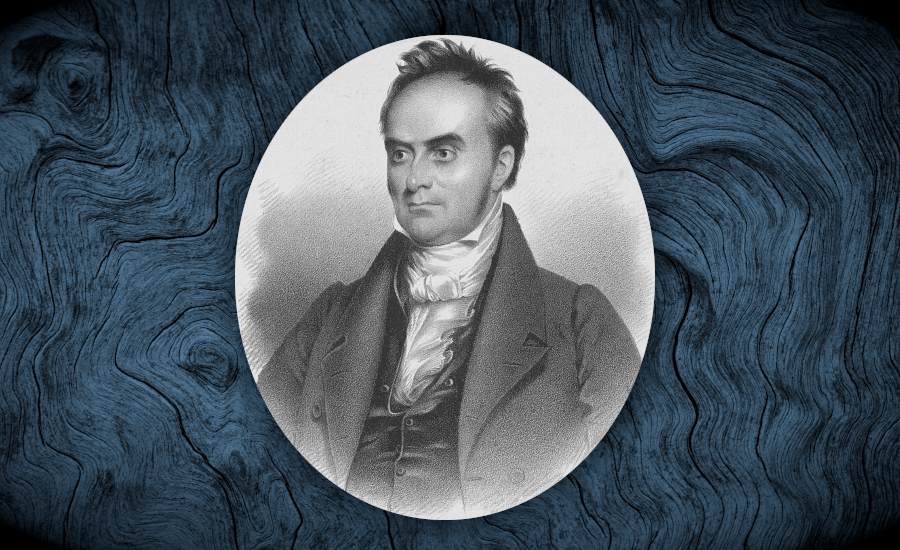
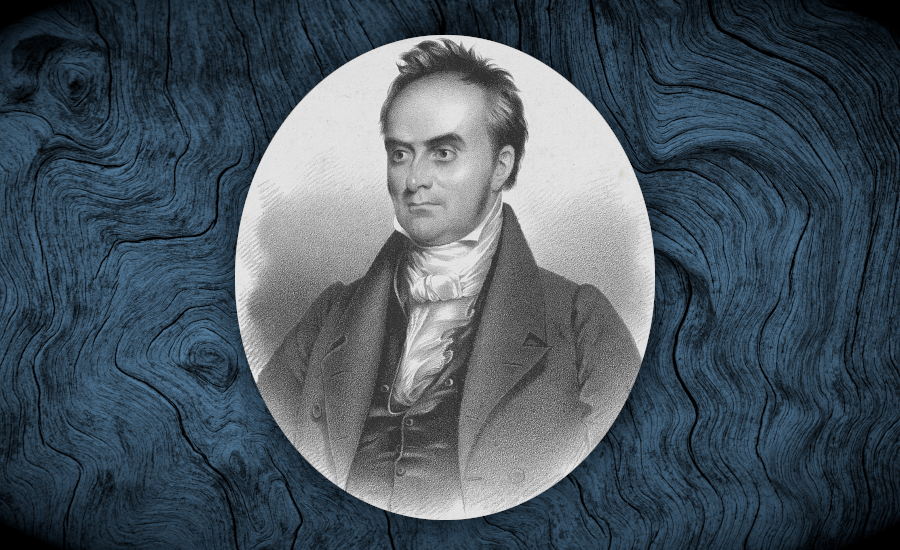
Daniel Webster sometime in early middle age.
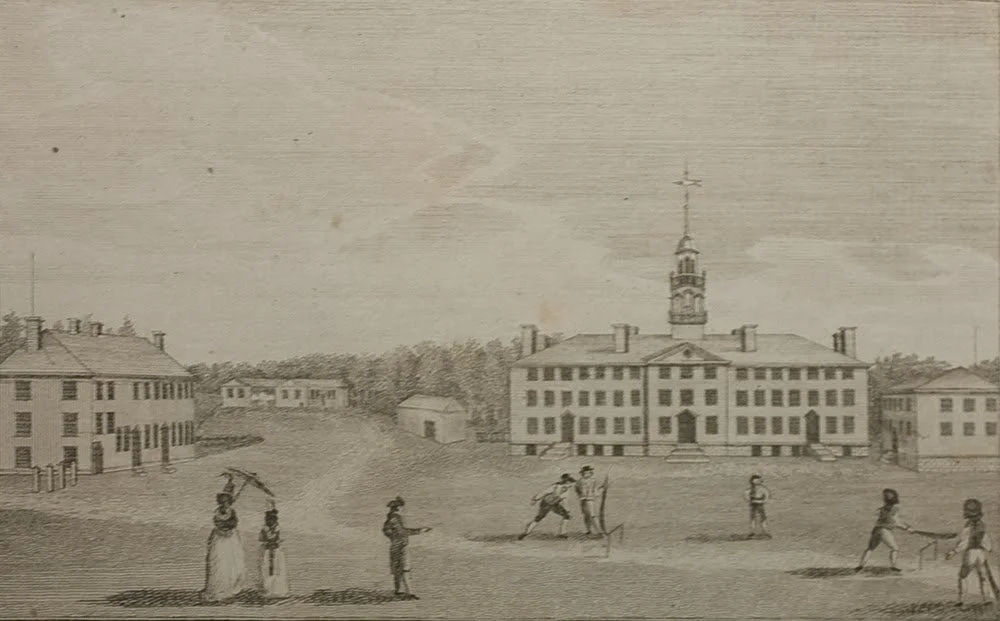
This, the earliest known image of Dartmouth College, appeared in the February 1793 issue of Massachusetts Magazine. The engraving may also be the first visual proof of cricket being played in the United States.
This glorious stretch of purple prose, delivered in Hanover, N.H., by Daniel Webster (1782-1852), eventually to become a formidable lawyer, U.S. senator, secretary of state and perhaps America’s greatest orator, was delivered on July, 4, 1800, when Webster was a mere junior at Dartmouth College.
COUNTRYMEN, BRETHREN, AND FATHERS,
We are now assembled to celebrate an anniversary, ever to be held in dear remembrance by the sons of freedom. Nothing less than the birth of a nation, nothing less than the emancipation of three millions of people, from the degrading chains of foreign dominion, is the event we commemorate.
TWENTY FOUR years have this day elapsed, since United Columbia first raised the standard of Liberty, and echoed the shouts of Independence!
THOSE of you, who were then reaping the iron harvest of the martial field, whose bosoms then palpitated for the honor of America, will, at this time, experience a renewal of all that fervent patriotism, of all those indescribable emotions, which then agitated your breasts. As for us, who were either then unborn, or not far enough advanced beyond the threshold of existence, to engage in the grand conflict for Liberty, we now most cordially unite with you, to greet the return of this joyous anniversary, to hail the day that gave us Freedom, and hail the rising glories of our country!
ON occasions like this, you have heretofore been addressed, from this stage, on the nature, the origin, the expediency of civil government.—The field of political speculation has here been explored, by persons, possessing talents, to which the speaker of the day can have no pretensions. Declining therefore a dissertation on the principles of civil polity, you will indulge me in slightly sketching on those events, which have originated, nurtured, and raised to its present grandeur the empire of Columbia.
As no nation on the globe can rival us in the rapidity of our growth, since the conclusion of the revolutionary war—so none, perhaps, ever endured greater hardships, and distresses, than the people of this country, previous to that period.
WE behold a feeble band of colonists, engaged in the arduous undertaking of a new settlement, in the wilds of North America. Their civil liberty being mutilated, and the enjoyment of their religious sentiments denied them, in the land that gave them birth, they fled their country, they braved the dangers of the then almost unnavigated ocean, and sought, on the other side the globe, an asylum from the iron grasp of tyranny, and the more intolerable scourge of ecclesiastical persecution. But gloomy, indeed, was their prospect, when arrived on this side the Atlantic. Scattered, in detachments, along a coast immensely extensive, at a remove of more than three thousand miles from their friends on the eastern continent, they were exposed to all those evils, and endured all those difficulties, to which human nature seems liable. Destitute of convenient habitations, the inclemencies of the seasons attacked them, the midnight beasts of prey prowled terribly around them, and the more portentous yell of savage fury incessantly assailed them! But the same undiminished confidence in Almighty GOD, which prompted the first settlers of this country to forsake the unfriendly climes of Europe, still supported them, under all their calamities, and inspired them with fortitude almost divine. Having a glorious issue to their labors now in prospect, they cheerfully endured the rigors of the climate, pursued the savage beast to his remotest haunt, and stood, undismayed, in the dismal hour of Indian battle!
SCARCELY were the infant settlements freed from those dangers, which at first environed them, ere the clashing interests of France and Britain involved them anew in war. The colonists were now destined to combat with well appointed, well disciplined troops from Europe; and the horrors of the tomahawk and the scalping knife were again renewed. But these frowns of fortune, distressing as they were, had been met without a sigh, and endured without a groan, had not imperious Britain presumptuously arrogated to herself the glory of victories, achieved by the bravery of American militia. Louishurgh must be taken, Canada attacked, and a frontier of more than one thousand miles defended by untutored yeomanry; while the honor of every conquest must be ascribed to an English army.
BUT while Great-Britain was thus ignominiously stripping her colonies of their well earned laurel, and triumphantly weaving it into the stupendous wreath of her own martial glories, she was unwittingly teaching them to value themselves, and effectually to resist, in a future day, her unjust encroachments.
THE pitiful tale of taxation now commences—the unhappy quarrel, which issued in the dismemberment of the British empire, has here its origin.
ENGLAND, now triumphant over the united powers of France and Spain, is determined to reduce, to the condition of slaves, her American subjects.
WE might now display the Legislatures of the several States, together with the general Congress, petitioning, praying, remonstrating; and, like dutiful subjects, humbly laying their grievances before the throne. On the other hand, we could exhibit a British Parliament, assiduously devising means to subjugate America—disdaining our petitions, trampling on our rights, and menacingly telling us, in language not to be misunderstood, “Ye shall be slaves!”—We could mention the haughty, tyrannical, perfidious GAGE, at the head of a standing army; we could show our brethren attacked and slaughtered at Lexington! our property plundered and destroyed at Concord! Recollection can still pain us, with the spiral flames of burning Charleston, the agonizing groans of aged parents, the shrieks of widows, orphans and infants!—Indelibly impressed on our memories, still live the dismal scenes of Bunker’s awful mount, the grand theatre of New-England bravery; where slaughter stalked, grimly triumphant! where relentless Britain saw her soldiers, the unhappy instruments of despotism, fallen, in heaps, beneath the nervous arm of injured freemen!—There the great WARREN fought, and there, alas, he fell! Valuing life only as it enabled him to serve his country, he freely resigned himself, a willing martyr in the cause of Liberty, and now lies encircled in the arms of glory!
Peace to the patriot’s shades—let no rude blast
Disturb the willow, that nods o’er his tomb.
Let orphan tears bedew his sacred urn,
And fame’s loud trump proclaim the heroe’s name,
Far as the circuit of the spheres extends.
BUT, haughty Albion, thy reign shall soon be over,—thou shalt triumph no longer! thine empire already reels and totters! thy laurels even now begin to wither, and thy fame decays! Thou hast, at length, roused the indignation of an insulted people—thine oppressions they deem no longer tolerable!
THE 4th day of July, 1776, is now arrived; and America, manfully springing from the torturing fangs of the British Lion, now rises majestic in the pride of her sovereignty, and bids her Eagle elevate his wings!—The solemn declaration of Independence is now pronounced, amidst crowds of admiring citizens, by the supreme council of our nation; and received with the unbounded plaudits of a grateful people!!
THAT was the hour, when heroism was proved, when the souls of men were tried. It was then, ye venerable patriots, it was then you stretched the indignant arm, and unitedly swore to be free! Despising such toys as subjugated empires, you then knew no middle fortune between liberty and death. Firmly relying on the patronage of heaven, unwarped in the resolution you had taken, you, then undaunted, met, engaged, defeated the gigantic power of Britain, and rose triumphant over the ruins of your enemies!—Trenton, Princeton, Bennington and Saratoga were the successive theatres of your victories, and the utmost bounds of creation are the limits to your fame!—The sacred fire of freedom, then enkindled in your breasts, shall be perpetuated through the long descent of future ages, and burn, with undiminished fervor, in the bosoms of millions yet unborn.
FINALLY, to close the sanguinary conflict, to grant America the blessings of an honorable peace, and clothe her heroes with laurels, CORN-WALLIS, at whose feet the kings and princes of Asia have since thrown their diadems, was compelled to submit to the sword of our father WASHINGTON.—The great drama is now completed—our Independence is now acknowledged; and the hopes of our enemies are blasted forever!—Columbia is now seated in the forum of nations, and the empires of the world are lost in the bright effulgence of her glory!
THUS, friends and citizens, did the kind hand of over-ruling Providence conduct us, through toils, fatigues and dangers, to Independence and Peace. If piety be the rational exercise of the human soul, if religion be not a chimera, and if the vestiges of heavenly assistance are clearly traced in those events, which mark the annals of our nation, it becomes us, on this day, in consideration of the great things, which the LORD has done for us, to render the tribute of unfeigned thanks, to that GOD, who superintends the Universe, and holds aloft the scale, that weighs the destinies of nations.
THE conclusion of the revolutionary war did not conclude the great achievements of our countrymen. Their military character was then, indeed, sufficiently established; but the time was coming, which should prove their political sagacity.
NO sooner was peace restored with England, the first grand article of which was the acknowledgment of our Independence, than the old system of confederation, dictated, at first, by necessity, and adopted for the purposes of the moment, was found inadequate to the government of an extensive empire. Under a full conviction of this, we then saw the people of these States, engaged in a transaction, which is, undoubtedly, the greatest approximation towards human perfection the political world ever yet experienced; and which, perhaps, will forever stand on the history of mankind, without a parallel. A great Republic, composed of different States, whose interest in all respects could not be perfectly compatible, then came deliberately forward, discarded one system of government and adopted another, without the loss of one man’s blood.
THERE is not a single government now existing in Europe, which is not based in usurpation, and established, if established at all, by the sacrifice of thousands. But in the adoption of our present system of jurisprudence, we see the powers necessary for government, voluntarily springing from the people, their only proper origin, and directed to the public good, their only proper object.
WITH peculiar propriety, we may now felicitate ourselves, on that happy form of mixed government under which we live. The advantages, resulting to the citizens of the Union, from the operation of the Federal Constitution, are utterly incalculable; and the day, when it was received by a majority of the States, shall stand on the catalogue of American anniversaries, second to none but the birth day of Independence.
IN consequence of the adoption of our present system of government, and the virtuous manner in which it has been administered, by a WASHINGTON and an ADAMS, we are this day in the enjoyment of peace, while war devastates Europe! We can now sit down beneath the shadow of the olive, while her cities blaze, her streams run purple with blood, and her fields glitter, a forest of bayonets!—The citizens of America can this day throng the temples of freedom, and renew their oaths of fealty to Independence; while Holland, our once sister republic, is erased from the catalogue of nations; while Venice is destroyed, Italy ravaged, and Switzerland, the once happy, the once united, the once flourishing Switzerland lies bleeding at every pore!
No ambitious foe dares now invade our country. No standing army now endangers our liberty.—Our commerce, though subject in some degree to the depredations of the belligerent powers, is extended from pole to pole; and our navy, though just emerging from nonexistence, shall soon vouch for the safety of our merchantmen, and bear the thunder of freedom around the ball!
FAIR Science too, holds her gentle empire amongst us, and almost innumerable altars are raised to her divinity, from Brunswick to Florida. Yale, Providence and Harvard now grace our land; and DARTMOUTH, towering majestic above the groves, which encircle her, now inscribes her glory on the registers of same!—Oxford and Cambridge, those oriental stars of literature, shall now be lost, while the bright sun of American science displays his broad circumference in uneclipsed radiance.
PLEASING, indeed, were it here to dilate on the future grandeur of America; but we forbear; and pause, for a moment, to drop the tear of affection over the graves of our departed warriors. Their names should be mentioned on every anniversary of Independence, that the youth, of each successive generation, may learn not to value life, when held in competition with their country’s safety.
WOOSTER, MONTGOMERY and MERCER, fell bravely in battle, and their ashes are now entombed on the fields that witnessed their valor. Let their exertions in our country’s cause be remembered, while Liberty has an advocate, or gratitude has place in the human heart.
GREENE, the immortal hero of the Carolinas, has since gone down to the grave, loaded with honors, and high in the estimation of his countrymen. The courageous PUTNAM has long slept with his fathers; and SULLIVAN and CILLEY, New-Hampshire’s veteran sons, are no more numbered with the living!
WITH hearts penetrated by unutterable grief, we are at length constrained to ask, where is our WASHINGTON? where the hero, who led us to victory—where the man, who gave us freedom? Where is he, who headed our feeble army, when destruction threatened us, who came upon our enemies like the storms of winter; and scattered them like leaves before the Borean blast? Where, O my country! is thy political saviour? where, O humanity! thy favorite son?
THE solemnity of this assembly, the lamentations of the American people will answer, “alas, he is now no more—the Mighty is fallen!”
YES, Americans, your WASHINGTON is gone! he is now consigned to dust, and “sleeps in dull, cold marble.” The man, who never felt a wound, but when it pierced his country, who never groaned, but when fair freedom bled, is now forever silent!—Wrapped in the shroud of death, the dark dominions of the grave long since received him, and he rests in undisturbed repose! Vain were the attempt to express our loss—vain the attempt to describe the feelings of our souls! Though months have rolled away, since he left this terrestrial orb, and sought the shining worlds on high, yet the sad event is still remembered with increased sorrow. The hoary headed patriot of ‘76 still tells the mournful story to the listening infant, till the loss of his country touches his heart, and patriotism fires his breast. The aged matron still laments the loss of the man, beneath whose banners her husband has fought, or her son has fallen.—At the name of WASHINGTON, the sympathetic tear still glistens in the eye of every youthful hero, nor does the tender sigh yet cease to heave, in the fair bosom of Columbia’s daughters.
Farewel, O WASHINGTON, a long farewel!
Thy country’s tears embalm thy memory;
Thy virtues challenge immortality;
Impressed on grateful hearts, thy name shall live,
Till dissolution’s deluge drown the world!
ALTHOUGH we must feel the keenest sorrow, at the demise of our WASHINGTON, yet we console ourselves with the reflection, that his virtuous compatriot, his worthy successor, the firm, the wise, the inflexible ADAMS still survives.—Elevated, by the voice of his country, to the supreme executive magistracy, he constantly adheres to her essential interests; and, with steady hand, draws the disguising veil from the intrigues of foreign enemies, and the plots of domestic foes. Having the honor of America always in view, never fearing, when wisdom dictates, to stem the impetuous torrent of popular resentment, he stands amidst the fluctuations of party, and the explosions of faction, unmoved as Atlas,
“While storms and tempests thunder on its brow,
“And oceans break their billows at its feet.”
Yet, all the vigilance of our Executive, and all the wisdom of our Congress have not been sufficient to prevent this country from being in some degree agitated by the convulsions of Europe. But why shall every quarrel on the other side the Atlantic interest us in its issue? Why shall the rise, or depression of every party there, produce here a corresponding vibration? Was this continent designed as a mere satellite to the other?—Has not nature here wrought all her operations on her broadest scale? Where are the Missisippis and the Amazons, the Alleganies and the Andes of Europe, Asia or Africa? The natural superiority of America clearly indicates, that it was designed to be inhabited by a nobler race of men, possessing a superior form of government, superior patriotism, superior talents, and superior virtues. Let then the nations of the East vainly waste their strength in destroying each other. Let them aspire at conquest, and contend for dominion, till their continent is deluged in blood. But let none, however elated by victory, however proud of triumphs, ever presume to intrude on the neutral station assumed by our country.
BRITAIN, twice humbled for her aggressions, has at length been taught to respect us. But France, once our ally, has dared to insult us! she has violated her obligations; she has depredated our commerce—she has abused our government, and riveted the chains of bondage on our unhappy fellow citizens! Not content with ravaging and depopulating the fairest countries of Europe, not yet satiated with the contortions of expiring republics, the convulsive agonies of subjugated nations, and the groans of her own slaughtered citizens, she has spouted her fury across the Atlantic; and the stars and stripes of Independence have almost been attacked in our harbours! When we have demanded reparation, she has told us, “give us your money, and we will give you peace.”—Mighty Nation! Magnanimous Republic!—Let her fill her coffers from those towns and cities, which she has plundered; and grant peace, if she can, to the shades of those millions, whose death she has caused.
BUT Columbia stoops not to tyrants; her sons will never cringe to France; neither a supercilious, five-headed Directory, nor the gasconading pilgrim of Egypt will ever dictate terms to sovereign America. The thunder of our cannon shall insure the performance of our treaties, and fulminate destruction on Frenchmen, till old ocean is crimsoned with blood, and gorged with pirates!
IT becomes us, on whom the defence of our country will ere long devolve, this day, most seriously to reflect on the duties incumbent upon us. Our ancestors bravely snatched expiring liberty from the grasp of Britain, whose touch is poison; shall we now consign it to France, whose embrace is death? We have seen our fathers, in the days of Columbia’s trouble, assume the rough habiliments of war, and seek the hostile field. Too full of sorrow to speak, we have seen them wave a last farewel to a disconsolate, a woestung family! We have seen them return, worn down with fatigue, and scarred with wounds; or we have seen them, perhaps, no more!—For us they fought! for us they bled! for us they conquered! Shall we, their descendants, now basely disgrace our lineage, and pusilanimously disclaim the legacy bequeathed us? Shall we pronounce the sad valediction to freedom, and immolate liberty on the altars our fathers have raise to her? NO!—The response of a nation is—”NO!” Let it be registered in the archives of Heaven!—Ere the religion we profess, and the privileges we enjoy, are sacrificed at the shrines of despots and demagogues, let the pillars of creation tremble! let world be wrecked on world, and systems rush to ruin!—Let the sons of Europe be vassals; let her hosts of nations be a vast congregation of slaves; but let us, who are this day FREE, whose hearts are yet unappalled, and whose right arms are yet nerved for war, assemble before the hallowed temple of Columbian Freedom, AND SWEAR, TO THE GOD OF OUR FATHERS, TO PRESERVE IT SECURE, OR DIE AT ITS PORTALS!
Fuzzy borders
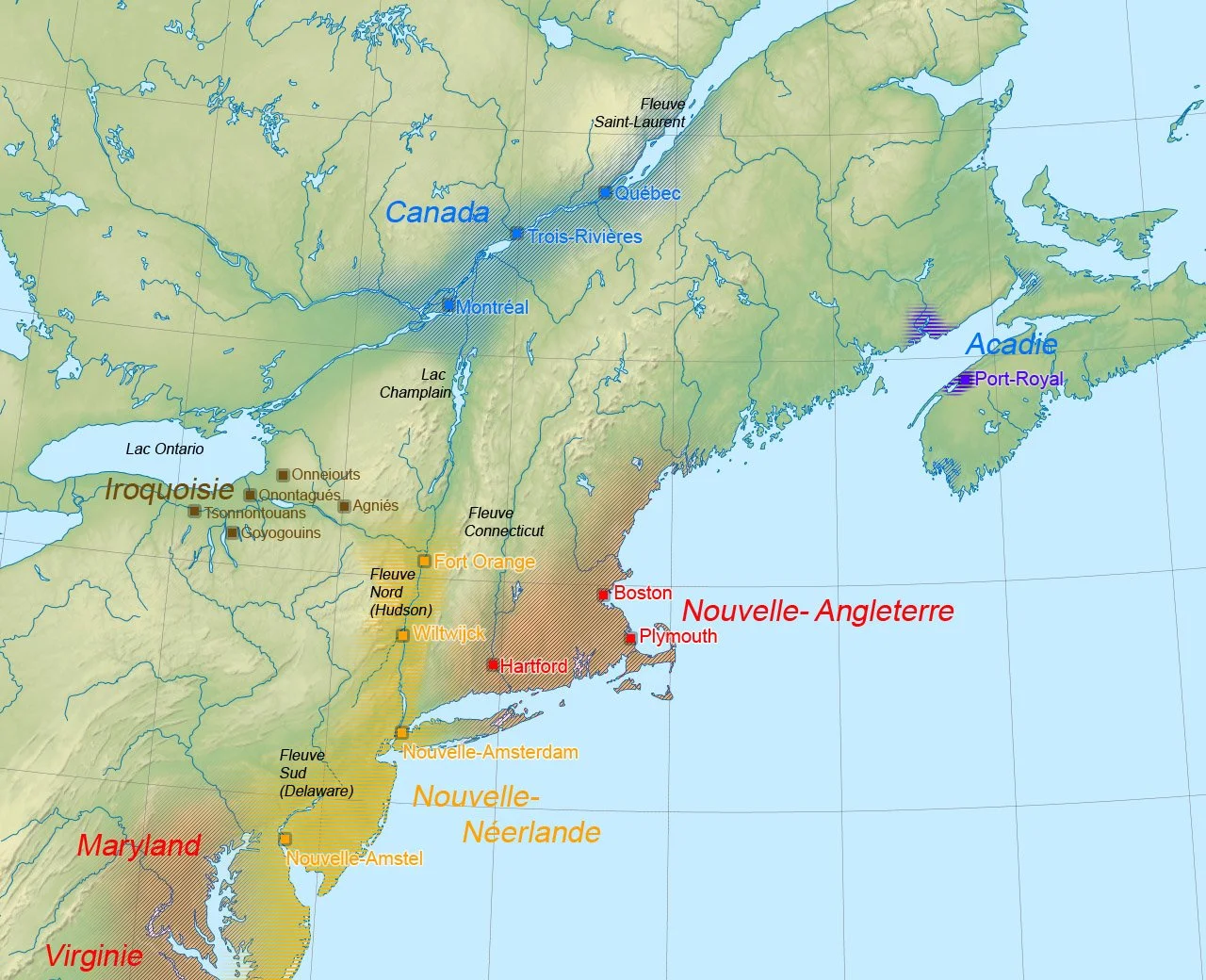
Political map of the main European establishment in North America north of Mexico in 1664: Blue: French; Orange: Dutch; Red: English; Purple: French territories under English control; Brown: Iroquois
Goodnight Essex, Mass.

Photo by Daisy Nell, a native of Essex and a folksinger and educator
In Maine, pushing the boundaries of basket art

“First Light” (ash, sweetgrass, birchbark, porcupine quills, and synthetic dye), by Jeremy Frey, a member of the Passamaquoddy Tribe, in his show “Jeremy Frey: Woven,’’ through Sept. 15, at the Portland Museum of Art. It’s from the collection of the Farnsworth Museum of Art, Rockland, Maine. Copyright Jeremy Frey
Photograph by Jared Lank (Mi'kmaq)
The museum says:
“Jeremy Frey is a seventh-generation basket maker who is one of the most celebrated Indigenous weavers in the country. His work is meticulously detailed and pushes the boundaries of what is possible in his medium. "I try to create a newer and more elaborate version of my work each time I weave," he said.

Prepare for ruthless kleptocratic tyranny after Nov. 5; you can't hide
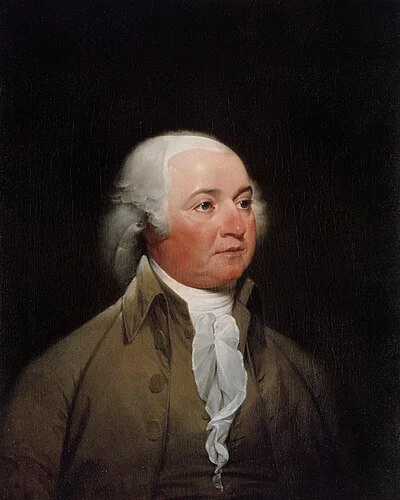
John Adams, in a 1793 painting by John Trumbull. Adams would have been mortified by Trump and his followers.

Birthplace of John Adams, in Quincy, Mass. This house is now part of the Adams National Historical Park, operated by the National Park Service, and open to the public.
— Photo by Daderot
"The fundamental article of my political creed is that despotism, or unlimited sovereignty, or absolute power is the same in a majority of a popular assembly, an aristocratical council, an oligarchical junto, and a single emperor. Equally arbitrary, cruel, bloody, and in every respect diabolical."
— John Adams (1735-1826), a Founding Father and second president of the United States, in a letter to Thomas Jefferson, dated Nov. 13, 1815. Both of them died on the 50th anniversary of the Declaration of Independence.
Park in the shade and charge when you leave

Parking lot with solar panels as canopies and charging stations serving guests of the famous Brutalist-style Hotel Marcel in New Haven, Conn.
— Photo by pedrik
Adapted from Robert Whitcomb’s “Digital Diary,’’ in GoLocal24.com
Having done more driving in New England than I had wished the last few weeks, I’ve passed many parking lots. It struck me how useful it would be if many could be roofed with solar panels, as above.
Placing solar canopies on parking lots makes use of land that’s already cleared — no chopping down trees — produces electricity close to those who need it, and shades cars from sun, rain and snow.

The Marcel was designed by famous modernist architect Marcel Breuer. It operates as a zero-energy building, generating enough renewable energy to sustain its operations.
— Photo by Ɱ
John Rossheim: Concierge medicine: Better access for affluent, trouble for others
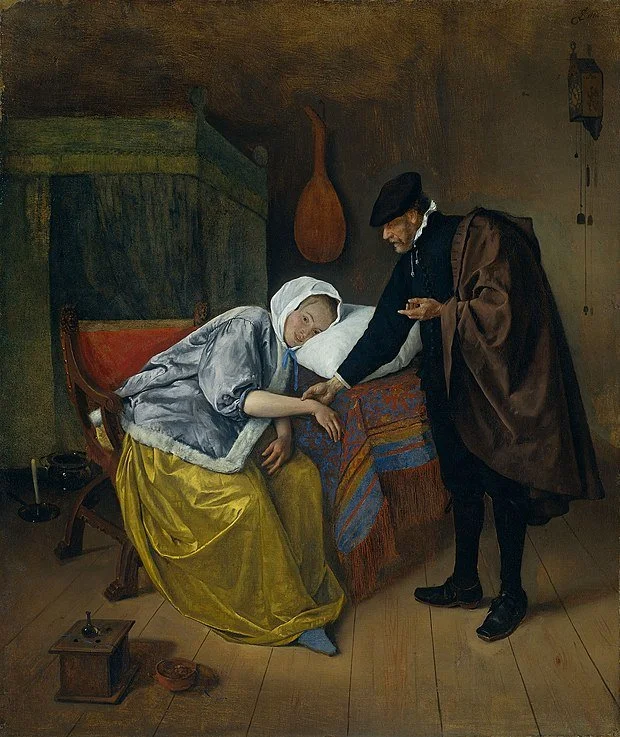
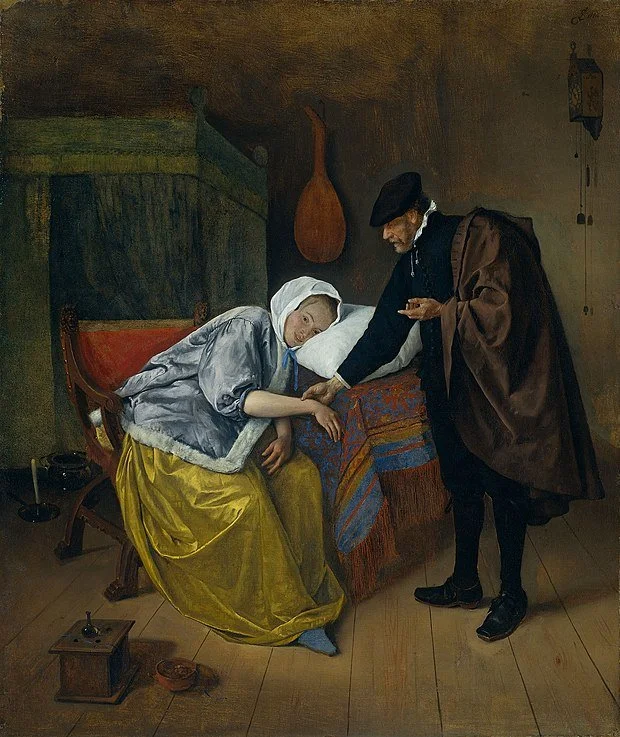
“The Doctor's Visit,’’ by Jan Steen, circa 1663.
Via Kaiser Family Foundation Health News
“I was shocked that they literally said, ‘You can go to urgent care.’’’
— Deb Gordon, of Cambridge, Mass.
PROVIDENCE
“You had to pay the fee, or the doctor wasn’t going to see you anymore.”
That was the takeaway for Terri Marroquin of Midland, Texas, when her longtime physician began charging a membership fee in 2019. She found out about the change when someone at the physician’s front desk pointed to a posted notice.
At first, she stuck with the practice; in her area, she said, it is now tough to find a primary-care doctor who doesn’t charge an annual membership fee from $350 to $500.
But last year, Marroquin finally left to join a practice with no membership fee where she sees a physician assistant rather than a doctor. “I had had enough. The concierge fee kept going up, and the doctor’s office kept getting nicer and nicer,” she said, referring to the décor.
With the national shortage of primary-care physicians reaching 17,637 in 2023 and projected to worsen, more Americans are paying for the privilege of seeing a doctor — on top of insurance premiums that cover most services that a doctor might provide or order. Many people seeking a new doctor are calling a long list of primary-care practices only to be told they’re not taking new patients.
“Concierge medicine potentially leads to disproportionately richer people being able to pay for the scarce resource of physician time and crowding out people who have lower incomes and are sicker,” said Adam Leive, lead author of a 2023 study on concierge medicine and researcher at University of California-Berkeley’s Goldman School of Public Policy.
Leive’s research showed no decrease in mortality for concierge patients compared with similar patients who saw non-concierge physicians, suggesting concierge care may not notably improve some health outcomes.
A 2005 study showed concierge physicians had smaller proportions of patients with diabetes than their non-concierge counterparts and provided care for fewer Black and Hispanic patients.
There’s little reliable data available on the size of the concierge medicine market. But one market research firm projects that concierge medicine revenue will grow about 10.4% annually through 2030. About 5,000 to 7,000 physicians and practices provide concierge care in the United States, most of whom are primary care providers, according to Concierge Medicine Today. (Yes, the burgeoning field already has a trade publication.).
The concierge pitch is simple: More time with your doctor, in-person or remotely, promptly and at your convenience. With many primary care physicians caring for thousands of patients each in appointments of 15 minutes or less, some people who can afford the fee say they feel forced to pay it just to maintain adequate access to their doctor.
As primary-care providers convert to concierge medicine, many patients could face the financial and health consequences of a potentially lengthy search for a new provider. With fewer physicians in non-concierge practices, the pool available to people who can’t or won’t pay is smaller. For them, it is harder to find a doctor.
Concierge care models vary widely, but all involve paying a periodic fee to be a patient of the practice.
These fees are generally not covered by insurance nor payable with a tax-advantaged flexible spending account or health savings account. Annual fees range from $199 for Amazon’s One Medical (with a discount available for Prime members) to low four figures for companies like MDVIP and SignatureMD that partner with physicians, to $10,000 or more for top-branded practices like Massachusetts General Hospital’s.
Many patients are exasperated with the prospect of pay-to-play primary care. For one thing, under the Affordable Care Act, insurers are required to cover a variety of preventive services without a patient paying out-of-pocket. “Your annual physical should be free,” said Caitlin Donovan, a spokesperson for the National Patient Advocate Foundation. “Why are you paying $2,000 for it?”
Liz Glatzer felt her doctor in Providence, R.I., was competent but didn’t have time to absorb her full health history. “I had double mastectomy 25 years ago,” she said. “At my first physical, the doctor ran through my meds and whatever else, and she said, ‘Oh, you haven’t had a mammogram.’ I said, ‘I don’t have breasts to have mammography.’”
In 2023, after repeating that same exchange during her next two physicals, Glatzer signed up to pay $1,900 a year for MDVIP, a concierge staffing service that contracts with her new doctor, who is also a friend’s husband. In her first couple of visits, Glatzer’s new physician took hours to get to know her, she said.
For the growing numbers of Americans who can’t or won’t pay when their doctor switches to concierge care, finding new primary care can mean frustration, delayed or missed tests or treatments, and fragmented health care.
“I’ve met so many patients who couldn’t afford the concierge services and needed to look for a new primary care physician,” said Yalda Jabbarpour, director of the Robert Graham Center and a practicing family physician. Separating from a doctor who’s transitioning to concierge care “breaks the continuity with the provider that we know is so important for good health outcomes,” she said.
That disruption has consequences. “People don’t get the preventive services that they should, and they use more expensive and inefficient avenues for care that could have otherwise been provided by their doctor,” said Abbie Leibowitz, chief medical officer at Health Advocate, a company that helps patients find care and resolve insurance issues.
What happens to patients who find themselves at loose ends when a physician transitions to concierge practice?
Patients who lose their doctors often give up on having an ongoing relationship with a primary-care clinician. They may rely solely on a pharmacy-based clinic or urgent care center or even a hospital emergency department for primary care.
Some concierge providers say that they are responding to concerns about access and equity by allowing patients to opt out of concierge care but stay with the practice group at a lower tier of service. This might entail longer waits for shorter appointments, fewer visits with a physician, and more visits with midlevel providers, for example.
Deb Gordon of Cambridge, Mass., said she is searching for a new primary-care doctor after hers switched to concierge medicine — a challenge that involves finding someone in her network who has admitting privileges at her preferred hospitals and is accepting new patients.
Gordon, who is co-director of the Alliance of Professional Health Advocates, which provides support services to patient advocates, said the practice that her doctor left has not assigned her a new provider, and her health plan said it was OK if she went without one. “I was shocked that they literally said, ‘You can go to urgent care,’” she said.
Some patients find themselves turning to physician assistants and other midlevel providers. But those clinicians have much less training than physicians with board certification in family medicine or internal medicine and so may not be fully qualified to treat patients with complex health problems. “The expertise of physician assistants and nurse practitioners can really vary widely,” said Russell Phillips, director of the Harvard Medical School Center for Primary Care.
John Rossheim, based in Providence, reports for Kaiser Family Foundation Health News.
Promote N.E. artists’ work

“Veil” (offset lithograph and screenprint on paper), by Mikel Elam, in the group show “Sacred Space,’’ at the Fairfield (Conn.) University Art Museum, Sept. 21-Dec. 21.
The museum says:
“‘Sacred Space’ encourages a deep exploration of spiritual connection, inviting viewers to reflect on the ancestral wisdom and memory passed down through generations. The exhibition serves as a portal into the interconnected realms of spirituality, time, space, memory, and culture. The artists pay homage to their forebears, drawing upon cultural traditions, rituals, and sacred practices to honor and preserve, as well as question, the invaluable heritage that shapes our identities.’’

“Christina’s World’’, by Andrew Wyeth (1917-2009), set on a farm in the Maine Coast town of Cushing. It’s in the Museum of Modern Art, New York, a few miles from New England.

The house depicted in the painting is known as the Olson House. It’s open to the public and is operated by the Farnsworth Art Museum, in Rockland, Maine.
New England Diary welcome images of work by New England artists, new, old and in-between. Please send images and caption and other information to:
rwhit6@yahoo.com
‘Circularity’: Recyling wind-turbine blades

Wind turbine at the Massachusetts Maritime Academy, in the town of Buzzards Bay.
Edited from a New England Council report.
BOSTON
“Avangrid, which is based in Orange, Conn., has begun working with a student-led startup from Yale University on an initiative to recycle wind-turbine blades. According to Avangrid, the company has donated 300 pounds of decommissioned wind-turbine blades to the startup, WindLoop.
“The blades are recycled using a process that allows 90 percent of the material, including glass fiber and epoxy resin, to be reused. This process is very useful, because wind turbines need blade replacements every 10 to 15 years. The blades donated by Avangrid came from the company’s wind farm in Kenedy County, Texas. Avangrid said that it plans to recycle 100 percent of its decommissioned wind-turbine blades by 2030.
“‘Avangrid is one of America’s most innovative leaders in renewable energy, and this is yet another example of our forward-thinking approach to accelerating a clean energy transition across the United States,’ said Avangrid CEO Pedro Azagra. ‘We recognize the great challenges in front of us, and we are helping lay the groundwork to find new and efficient methods to recycle blades that will improve the circularity of our industry.”’
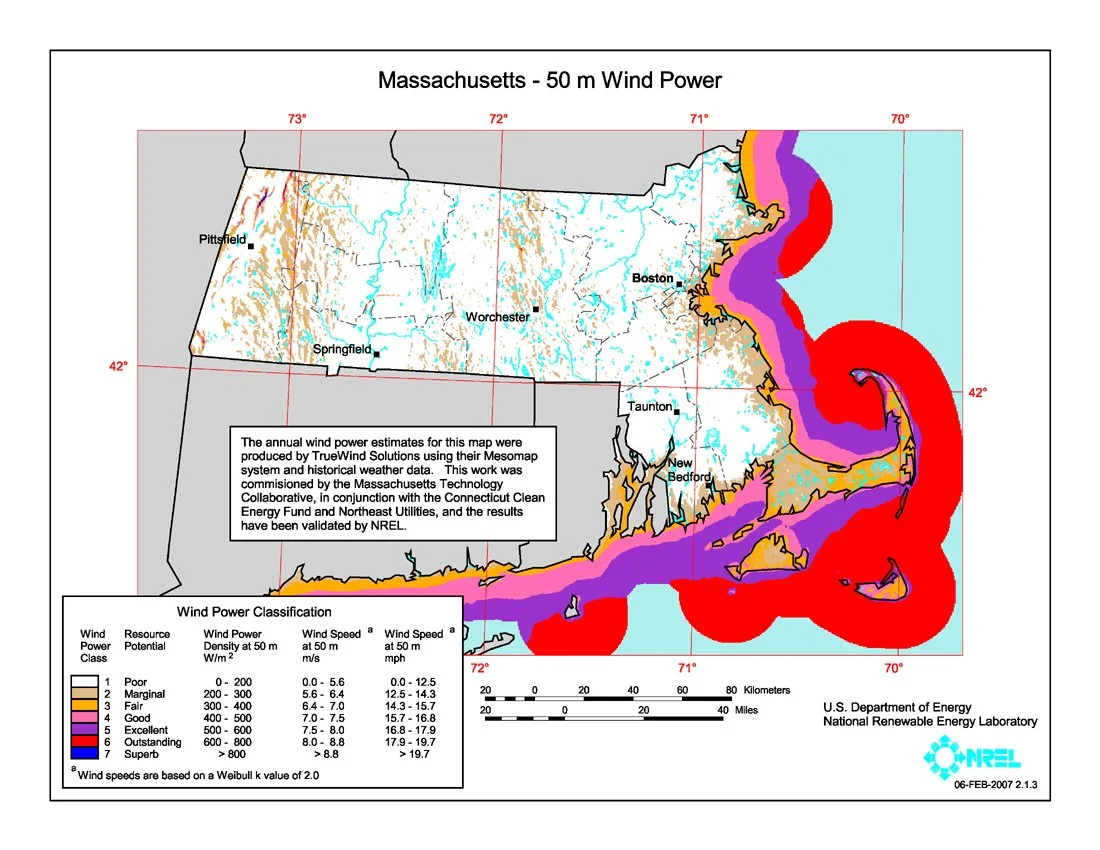
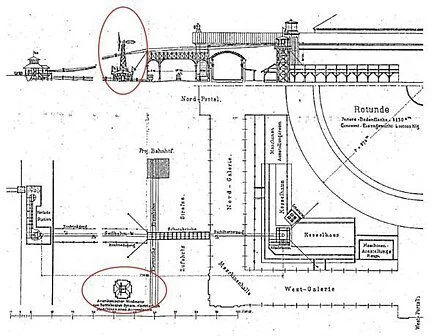
Illustration of a wind turbine for power generation erected by Josef Friedlaender at the International Electrical Exhibition in Vienna in 1883.

William Morgan: Why Providence is indeed one of the 'Best Towns'

The Rhode Island State House is just the crowning example of brilliant civic architecture in Providence. Few other American cities can match Providence in the richness of its architectural patrimony.
—- Photo by William Morgan
Providence got a welcome pat on the back when CNN Travel recently ranked it Number 2 on its list of “Best Towns in America To Visit’’; Richmond, Va. was Number 1. Our high scores included Art, Architecture, Design and Food (of the other nine cities, only Macon, Ga., got a nod for its historic buildings). Such a positive national spotlight on Rhode Island’s capital is briefly heartwarming, but it barely hints at why Providence is one of the best towns anywhere in which to live.
Americans seem obsessed with lists and rankings, most of which are so superficial as to be meaningless. The worst are the college ratings, which seem only to increase applications to fewer schools (often called “elite’’) and to create a general atmosphere of insecurity for all the rest. (Examples of criteria used: Last time I checked, The New York Times’s list of the 300 Best Colleges had Providence College dead last in terms of student diversity; the University of Chicago held the bottom rung on the ladder for social life.)
The Zumper real-estate study listed Providence as 98th in 100 spots for best city for this year’s college graduates. Such metrics as median rents and the unemployment rate produced findings giving top spots to far-from-the- ocean Minneapolis, Columbus and Oklahoma City, while admittedly much more vibrant cities with higher costs of living, such as Boston or New York, lagged far behind. Where are the rankings for character, for beauty, for soul?

Beacon Hill, Boston. Who would trade this for Grand Rapids or Duluth?
— Photo by Willliam Morgan
When I was a professor of urban studies at the University of Louisville, students would often ask me what makes a great city. Somewhat tongue in cheek, yet also in a way deadly serious, I said that a great city was one that poets would write poems about and to which musicians would write love songs (“I left my heart in Duluth” doesn’t work). A few other pedagogical chestnuts: All great cities are on water. Street life and the strength of the neighborhoods are key indicators of livable cities. And the acceptance in a city of its gay citizens is also a strong indication of its livability.

A collection of the author’s columns that he wrote as architecture critic of the Louisville Courier-Journal were published as this book.
When my wife, Carolyn, and I decided to leave Kentucky for a new home somewhere in New England, we tried to heed my own urbanism lessons. We agreed that we would seek the ideal place to live in, and then look for work, rather than let a job dictate where we would settle. We drew up a stringent list of urban wants, headed by proximity to the ocean and a city’s strong sense of its history. Needing to work, we wanted a city with several colleges and universities where we could teach.
Our ideal new hometown would have inviting sidewalks with interesting stores and restaurants alongside, including independent bookstores, and and with larger cities nearby. We craved ethnic diversity and a variety of cuisines. Most of all it had to look and “feel right,” with a distinguished collection of high-style and vernacular architecture, gathered together in a human scale. A preservation-minded mayor, the late Vincent “Buddy” Cianci, with seemingly off-the-wall ideas, played an important promotional role. He and other local leaders weren’t afraid to help arrange for the likes of Venetian gondolas and to light up a river.
Note that there were no econometrics in our city-search template.

WaterFire was one of the urban inventions that impressed this city shopper.
— Sketch by William Morgan
Size is not really an accurate gauge of a city’s desirability – CNN Best Towns are actually smaller cities, from about 50,000 to about 225,000 residents. One interesting aspect of the story, however, is that it uses the term town. The word seems to suggest something more accessible than canyons of concrete and glass.
In Britain, the people who shape metropolises are called town planners. Before consolidation into Greater London following World War II, the British capital had been a collection of 23 boroughs, each with its own government, identity and traditions. One thinks of Providence’s two dozen neighborhoods, from Silver Lake to Fox Point, collectively contributing to a lively mosaic instead of an Anywhere USA blanket of sprawl.

Great towns need boldness and innovative out-of-the-box thinking. Providence uncovered a river and moved an interstate highway.
— Photo by William Morgan
Let’s stop worrying about lists and ratings and simply strengthen those attributes that make a place beloved – attributes that Providence has in spades. Economic development has a major role, of course, but stressing monetary concerns over humanizing factors cannot ensure a high quality of urban life. And worse than lists are one-size-fits-all advertising, such as the current slick but trite “All that …” campaign. If Providence is an urban success, people will come to visit those who live here and who have helped make it one the best towns anywhere.

People connecting make a lively town, not statistics. Hope Street is the main drag of Providence’s East Side.
— Photo by William Morgan
Architectural historian, critic and photographer William Morgan has lived in Providence for 25 years. His latest book is Academia: Collegiate Gothic Architecture in the United States.
Appearances are deceiving
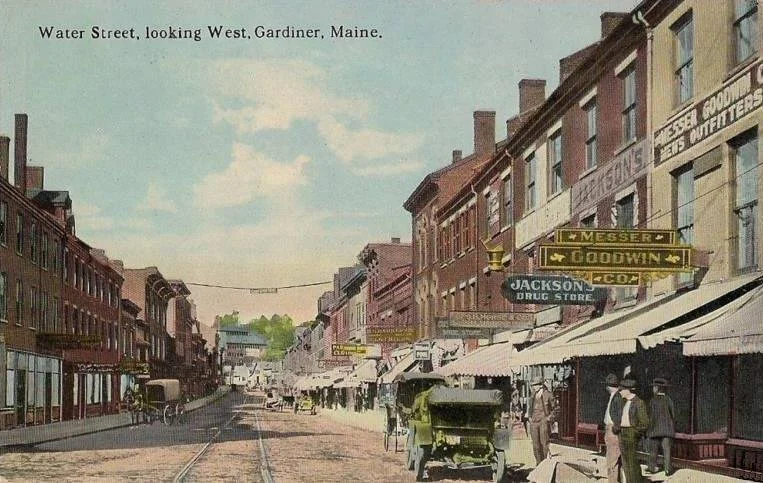
1914 photo
Whenever Richard Cory went down town,
We people on the pavement looked at him:
He was a gentleman from sole to crown,
Clean favored and imperially slim.
And he was always quietly arrayed,
And he was always human when he talked,
But still he fluttered pulses when he said,
"Good-morning," and he glittered when he walked.
And he was rich--yes, richer than a king--
And admirably schooled in every grace:
In fine, we thought that he was everything
To make us wish that we were in his place.
So on we worked, and waited for the light,
And went without the meat and cursed the bread;
And Richard Cory, one calm summer night,
Went home and put a bullet through his head.
‘‘Richard Cory,’’ by Edwin Arlington Robinson (1869-1935). He grew up in Gardiner, Maine, whence came the themes of many of his poems.

Chris Powell: Totalitarian ‘climate-change’ protestors

Climate-change protestors in Germany.

Cromwell Meadows, in Cromwell, Conn.
MANCHESTER, Conn.
When, in 1955, Rosa Parks, a courageous Black woman, refused to give up her seat to a white passenger on a bus in Montgomery, Ala., was arrested, and dramatically advanced the modern U.S. civil-rights movement, the connection between her protest and her objective was clear: to end the racial segregation maintained by the bus service.
When, in 1960, courageous Black college students sat down at the white sections of racially segregated lunch counters throughout the segregated South and refused to leave until they were served, the connection between their protest and their objective was clear again: to end the racial segregation maintained at of lunch counters.
In those protests and many others during that era, the demands of the protesters could be easily granted by the targets of the protest without any loss or harm to anyone.
But what is to be construed from the sort of protest that is erupting in Western Europe and now the United States, such as the protest that disrupted the final minutes of play at the Travelers Championship golf tournament in Cromwell, Conn., two weekends ago? The protesters, wearing shirts with the legend "No golf on a dead planet," ran onto the putting green and sprayed colored powder on it before police intercepted them, took them away, and charged them with criminal mischief.
The protesters in Cromwell want to eliminate oil and natural-gas fuels, in the belief that those fuels are causing devastating "climate change." In other venues such protesters are defacing paintings and statues. But the golf tournament, a major money-raiser for charity, and the defaced paintings and statues have no special connection to fuel use and their operators and custodians have no special responsibility for fuel policy. They don't use oil and gas any more than everyone else does.
Sometimes fuel protesters block roadways, halting traffic. Of course most vehicles use fuel, but most of their operators of the vehicles being blocked use fuel no more than everyone else does.
The fuel issue is a society-wide issue but the targets selected by the fuel protesters are not objectionable by the protesters' own standards, and hindering them won't affect fuel policy. The protesters have selected the targets instead for their capacity to cause annoyance when impaired and thus generate publicity.
But the fuel issue long has been getting plenty of publicity quite apart from the efforts of the protesters. It is a major political controversy in the United States and Western Europe, where it is politically correct to imagine that there are readily available and adequate alternatives to oil and natural gas. But fuel is not a political controversy in most of the rest of the world, and especially not in the developing world, which will be needing not just oil and natural gas but also coal, the dirtiest conventional fuel, for decades to come.
Calculating the benefits and harms of conventional fuels and striking a balance between them is a task for democratic politics. But the fuel protesters are so sure they are right, and so self-righteous, that they claim the right to nullify the rights of all people who disagree with them or don't heed them.
These protests go far beyond civil disobedience. They go far beyond criminal mischief as well. They are totalitarian. and any prosecutor who pursues the criminal charges from the golf tournament, and any court that tries them, should keep this in mind.
MORE SCHOOLS CRASH: Add Stamford to the list of Connecticut cities whose schools are getting out of control.
Teachers at Stamford's Turn of River Middle School say that they are being abused, bullied, threatened, and even assaulted by students, adding that the school administration has failed to report the assaults to the police.
The administration says it will make changes, including adding a third security officer to the school. That officer is needed not to protect the school against outsiders but against its own students, since under Connecticut law even the most disruptive students are almost impossible to expel, lest their feelings be hurt and the public notice social disintegration.
Chris Powell has written about Connecticut government and politics for many years (CPowell@cox.net) .

Ryan McGrady/Ethan Zuckerman: Your personal and family videos are stuff for AI and so a privacy risk

From The Conversation
AMHERST, Mass.
The promised artificial intelligence revolution requires data. Lots and lots of data. OpenAI and Google have begun using YouTube videos to train their text-based AI models. But what does the YouTube archive actually include?
Our team of digital media researchers at the University of Massachusetts Amherst collected and analyzed random samples of YouTube videos to learn more about that archive. We published an 85-page paper about that dataset and set up a website called TubeStats for researchers and journalists who need basic information about YouTube.
Now, we’re taking a closer look at some of our more surprising findings to better understand how these obscure videos might become part of powerful AI systems. We’ve found that many YouTube videos are meant for personal use or for small groups of people, and a significant proportion were created by children who appear to be under 13.
Most people’s experience of YouTube is algorithmically curated: Up to 70% of the videos users watch are recommended by the site’s algorithms. Recommended videos are typically popular content such as influencer stunts, news clips, explainer videos, travel vlogs and video game reviews, while content that is not recommended languishes in obscurity.
Some YouTube content emulates popular creators or fits into established genres, but much of it is personal: family celebrations, selfies set to music, homework assignments, video game clips without context and kids dancing. The obscure side of YouTube – the vast majority of the estimated 14.8 billion videos created and uploaded to the platform – is poorly understood.
Illuminating this aspect of YouTube – and social media generally – is difficult because big tech companies have become increasingly hostile to researchers.
We’ve found that many videos on YouTube were never meant to be shared widely. We documented thousands of short, personal videos that have few views but high engagement – likes and comments – implying a small but highly engaged audience. These were clearly meant for a small audience of friends and family. Such social uses of YouTube contrast with videos that try to maximize their audience, suggesting another way to use YouTube: as a video-centered social network for small groups.
Other videos seem intended for a different kind of small, fixed audience: recorded classes from pandemic-era virtual instruction, school board meetings and work meetings. While not what most people think of as social uses, they likewise imply that their creators have a different expectation about the audience for the videos than creators of the kind of content people see in their recommendations.
Fuel for the AI Machine
It was with this broader understanding that we read The New York Times exposé on how OpenAI and Google turned to YouTube in a race to find new troves of data to train their large language models. An archive of YouTube transcripts makes an extraordinary dataset for text-based models.
There is also speculation, fueled in part by an evasive answer from OpenAI’s chief technology officer Mira Murati, that the videos themselves could be used to train AI text-to-video models such as OpenAI’s Sora.
The New York Times story raised concerns about YouTube’s terms of service and, of course, the copyright issues that pervade much of the debate about AI. But there’s another problem: How could anyone know what an archive of more than 14 billion videos, uploaded by people all over the world, actually contains? It’s not entirely clear that Google knows or even could know if it wanted to.
Kids as Content Creators
We were surprised to find an unsettling number of videos featuring kids or apparently created by them. YouTube requires uploaders to be at least 13 years old, but we frequently saw children who appeared to be much younger than that, typically dancing, singing or playing video games.
In our preliminary research, our coders determined nearly a fifth of random videos with at least one person’s face visible likely included someone under 13. We didn’t take into account videos that were clearly shot with the consent of a parent or guardian.
Our current sample size of 250 is relatively small – we are working on coding a much larger sample – but the findings thus far are consistent with what we’ve seen in the past. We’re not aiming to scold Google. Age validation on the internet is infamously difficult and fraught, and we have no way of determining whether these videos were uploaded with the consent of a parent or guardian. But we want to underscore what is being ingested by these large companies’ AI models.
Small Reach, Big Influence
It’s tempting to assume OpenAI is using highly produced influencer videos or TV newscasts posted to the platform to train its models, but previous research on large language model training data shows that the most popular content is not always the most influential in training AI models. A virtually unwatched conversation between three friends could have much more linguistic value in training a chatbot language model than a music video with millions of views.
Unfortunately, OpenAI and other AI companies are quite opaque about their training materials: They don’t specify what goes in and what doesn’t. Most of the time, researchers can infer problems with training data through biases in AI systems’ output. But when we do get a glimpse at training data, there’s often cause for concern. For example, Human Rights Watch released a report on June 10, 2024, that showed that a popular training dataset includes many photos of identifiable kids.
The history of big tech self-regulation is filled with moving goal posts. OpenAI in particular is notorious for asking for forgiveness rather than permission and has faced increasing criticism for putting profit over safety.
Concerns over the use of user-generated content for training AI models typically center on intellectual property, but there are also privacy issues. YouTube is a vast, unwieldy archive, impossible to fully review.
Models trained on a subset of professionally produced videos could conceivably be an AI company’s first training corpus. But without strong policies in place, any company that ingests more than the popular tip of the iceberg is likely including content that violates the Federal Trade Commission’s Children’s Online Privacy Protection Rule, which prevents companies from collecting data from children under 13 without notice.
With last year’s executive order on AI and at least one promising proposal on the table for comprehensive privacy legislation, there are signs that legal protections for user data in the U.S. might become more robust.
When the Wall Street Journal’s Joanna Stern asked OpenAI CTO Mira Murati whether OpenAI trained its text-to-video generator Sora on YouTube videos, she said she wasn’t sure.
Have You Unwittingly Helped Train ChatGPT?
The intentions of a YouTube uploader simply aren’t as consistent or predictable as those of someone publishing a book, writing an article for a magazine or displaying a painting in a gallery. But even if YouTube’s algorithm ignores your upload and it never gets more than a couple of views, it may be used to train models like ChatGPT and Gemini.
As far as AI is concerned, your family reunion video may be just as important as those uploaded by influencer giant Mr. Beast or CNN.
Ryan McGrady is a senior researcher, Initiative for Digital Public Infrastructure at the University of Massachusetts at Amherst.
Ethan Zuckerman is an associate professor of public policy, communication and Information at UMass Amherst.
Disclosure statement
Ethan Zuckerman says: “My work - and the work we refer to in this article - is supported by the MacArthur Foundation, the Ford Foundation, the Knight Foundation and the National Science Foundation. I am on the board of several nonprofit organizations, including Global Voices, but none are directly connected to politics.’’
Ryan McGrady does not work for, consult, own shares in or receive funding from any company or organization that would benefit from this article, and has disclosed no relevant affiliations.
Re-examining her life

“Snake Den Mesa” (screen printed collage), by Jungil Hong, in her show “Jungil Hong: The Time Being,’’ at the ODD-KIN gallery, East Providence, R.I., through July 21.
The exhibition examines and reexamines Hong’s personal life and career. “In the time between oldest and newest work in the exhibition I have questioned parts of my identity—as an immigrant, a mother, a daughter, a partner, an artist,” said Hong.
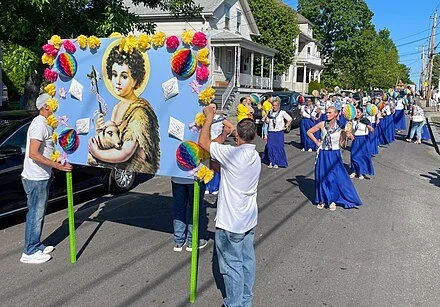
Portuguese Bodo de Leite parade on Orchard Street, in East Providence. The city has many residents with Portuguese and Cape Verdean origins.
Jim Hightower: Big companies’ CEO’s impose ‘shrinkflation’ on us
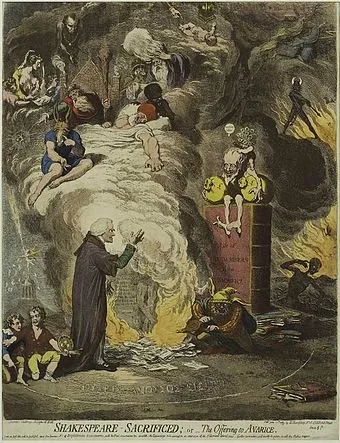
“Shakespeare Sacrificed: Or the Offering to Avarice ,’’ by James Gillray

Believed to be the first coupon ever, this ticket for a free glass of Coca-Cola was first distributed in 1888 to help promote the drink. By 1913, the company had redeemed 8.5 million tickets.
Via OtherWords.org
We should pay attention to corporate America’s fluctuating wordplay, for their frequent contortions of language disguise ploys to dupe, confuse and rip off us hoi polloi — i.e., their customers.
For example, here’s a mouthful that’s been gaining popularity among manufacturers of food products: price pack architecture.
It’s a bit of gobbledygook meant to obscure the profiteering practice of ever so quietly shrinking the size and contents of their packages — without lowering prices. Economists dubbed this “shrinkflation,” but that too clearly implied gouging. Thus, corporate image-makers invented the incomprehensible nonsense phrase of PPA to cloak their anti-consumer trickery.
This convoluted codeword also allows the tricksters to brag openly about their cleverness to their Wall Street investors. Here’s Coca-Cola’s CEO, for example, doing corporate-speak to bankers in February: “We are leveraging our revenue growth management capabilities to tailor our offerings and price pack architecture to meet consumers’ evolving needs.”
English translation: Consumers will need to pay us more for less Coke. You could almost hear the bankers weep for joy over Coke’s sneaky scheme to stiff its customers.
Perhaps you’ve wondered what big-time corporate CEOs actually do to rake in their exorbitant salaries, now averaging more than $8,000 an hour! Well, there it is: The CEO’s main job is to keep workers’ pay low, monopolize markets, and constantly invent slick ways to squeeze another dime from each consumer’s pocket.
It’s not honest work, but it does pay well. Coca-Cola’s CEO James Quincey, for example, hauled in $25 million in pay last year. That’s 1,800 times more than the annual income of the typical Coca-Cola worker, who will now pay more for a sip of Coke, thanks to Quincey’s “price pack architecture.”
Jim Hightower is a radio commentator, writer and public speaker.
Fiber festival
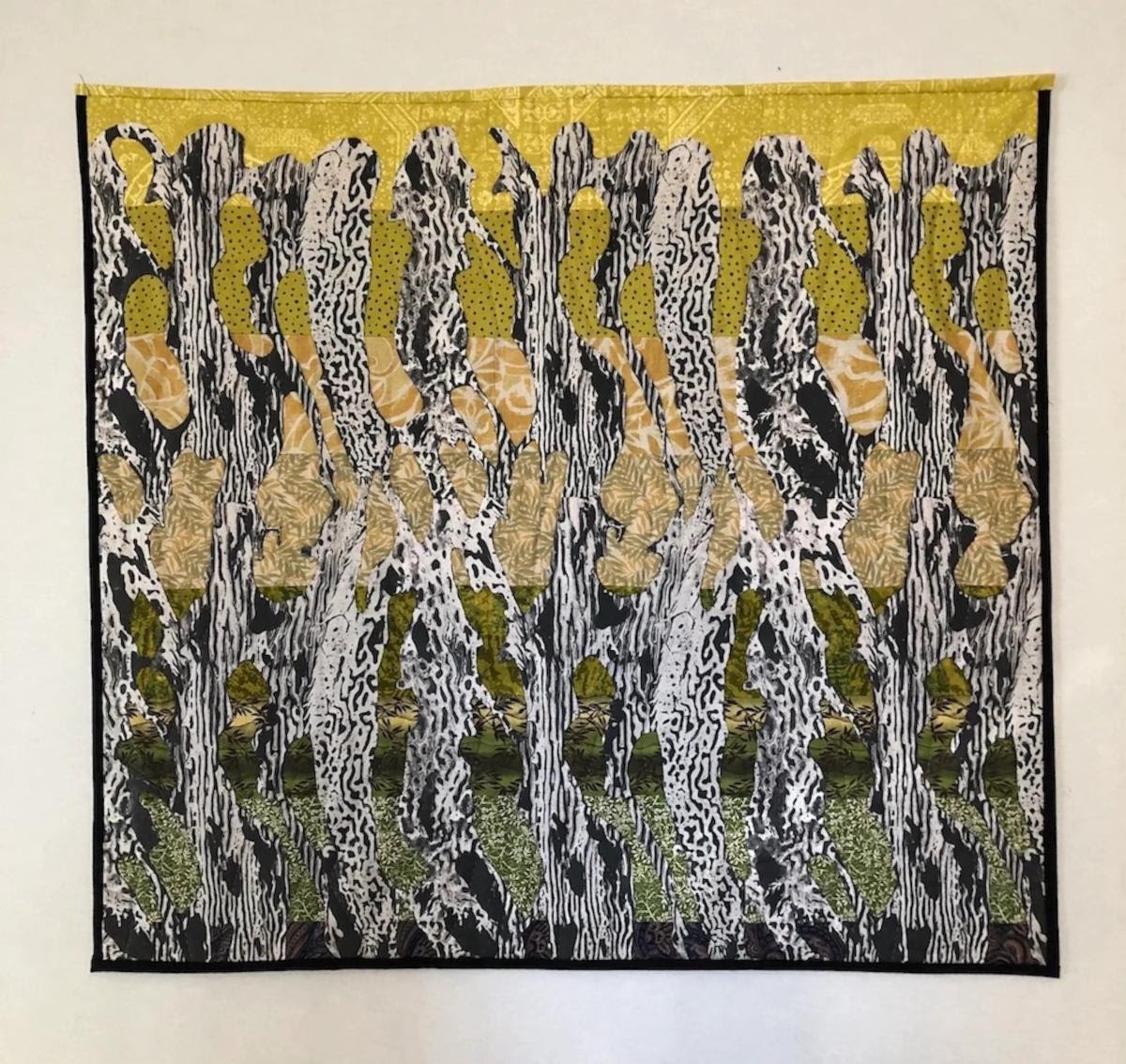
“Dance of the Bull Kelp” (quilted cottons), by Boston-based Nancy Crasco, in the show “Untangled: Original Fiber,’’ sponsored by ArtSpace Maynard (Mass.) and 6Bridges Gallery, in Maynard. The show is being presented at 6Bridges.
- Image courtesy of the artist.
The show’s curator says artists were invited to submit works in fiber in every shape and form. Aside from the stipulation that all works must be in fiber, artists were free to run wild and create quilts, sculptures and anything else in any fiber technique.

See this story about kelp growing by Natutical Farms, in Machias, Maine.

Llewellyn King: Big Tech conquers American culture, including politics; striving to be first past the post

WEST WARWICK, R.I.
I sometimes write about the propensity for technology to be imperial, to conquer and to force itself on the world whether the world wants it or not. Now with AI taking hold, I have to say, “You ain’t seen nothing yet.”
The wise people who write about international trade say that globalization is dead, killed off by nationalism and protectionism.
Well, you might not be able to get a Big Mac in Russia these days, but I bet they know who Taylor Swift is. Tom Friedman may be a well-read New York Times columnist, but his penetration is nothing compared to that of the influencers on TikTok, or maybe even Heather Cox Richardson on Substack.
Then there is the money.
The Computer Age has spawned a new class of ultra-rich, dwarfing the rich of the past, such as John D. Rockefeller, Andrew Carnegie and the Rothschilds. Names like Bezos, Gates, Zuckerberg and Musk dominate the age.
The descendants of the great Internet-based companies will form a new aristocracy with money so abundant that they will be able to influence our lives culturally and politically.
Culture will be shaped by them via what they sponsor. The rich have always sponsored the arts, but now there will be so much money, seeming to dwarf what Carnegie, Rockefeller, Getty, Guggenheim and their millions wrought.
If a multibillionaire wants to weigh in politically with big money, both political parties and individual politicians will tailor their offerings to get some of that campaign cash. That is occurring now. But in the future it will be occurring even more.
One could reasonably argue that the political class has already sold out to its backers. It isn’t the kind of government that a candidate will provide so much as how much that worthy raised to get elected.
I suspect that we are only at the very beginning of the effects of money in politics and how it may well reshape the future.
The people creating innovative technologies today have little idea where their inventions will take them.
Did the guys who launched Uber in San Francisco ever think that it would go nationwide, let alone that it would sweep the world and wipe out many taxi fleets? One would have believed that every county or region would have its own rideshare operator. But no. Uber went global thanks to the controlling computer technology.
One of the realities of computer-based technology is that it picks winners and losers early on — and winners win bigger than anything heretofore seen. Losers fade away, as they did after the first tranche of tech upheaval: the dot-com bubble.
It turns out that computer tech favors monopoly, and the monopoly in each market segment wins.
With AI coming into daily use, and likely to command the way we live and work after a few decades, the companies that provide that service today, and will come to control it, will potentially dwarf the existing tech mega-giants. In theory, an AI company can employ AI to consolidate its authority in the field and to vanquish competition.
If that happens, a single company will have greater wealth and greater social and political power than any aspirant for global domination ever has had.
The backstory to why early bots are error-riddled and why we get hilarious “hallucinations” is that the companies — the big techies — are so aware of the stakes that they are rushing to market their products before they have perfected them. They calculate that it is better to achieve some market penetration with an inferior product than to wait for the perfected one, when a rival has become the bot of choice and technological world conquest is at hand. Never let the perfect get in the way of market share.
Consider the evolution of Google. When it perfected its search engine it was one of a handful of search engines (Remember Jeeves?). But it grabbed market share, and the rest is history. Microsoft’s Bing can do everything that Google does, but it has a third of the users. Google got the reputation and was first past the post.
Where does Taylor Swift fit in? Is she the greatest singer about the travails of love? Almost certainly not, but social media loved her.
Tech loved Taylor, and she is the brightest star ever seen in the firmament of tech-influenced culture — the equivalent in entertainment of world conquest. It is the future.
Llewellyn King is executive producer and host of White House Chronicle, on PBS. His email is llewellynking1@gmail.com, and he based in Rhode Island.
--
Co-host and Producer
"White House Chronicle" on PBS
Mobile: (202) 441-2703
Website: whchronicle.com
Shedding season
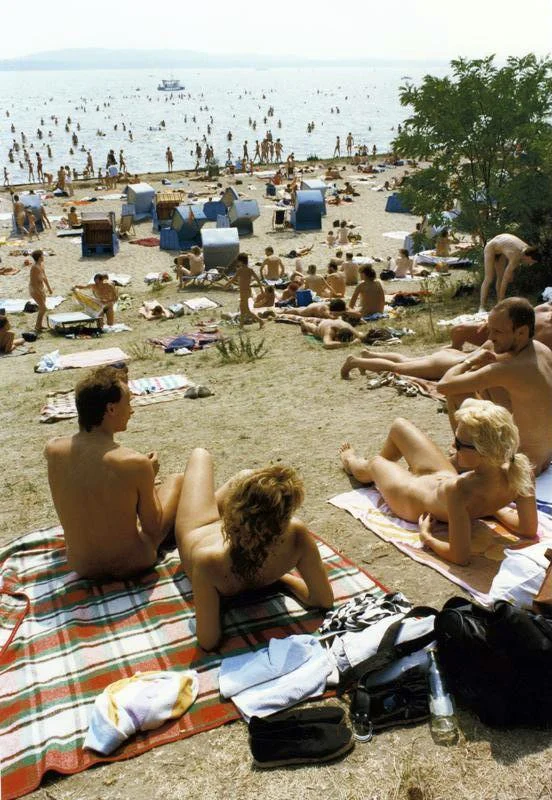
“Summer is the time when one sheds one's tensions with one's clothes, and the right kind of day is jeweled balm for the battered spirit. A few of those days and you can become drunk with the belief that all's right with the world.”
— Ada Louise Huxtable (1921-2013), famed architectural writer. She spent about half of each year in a ranch house in Marblehead, on the Massachusetts North Shore.
Don't go out in public without it
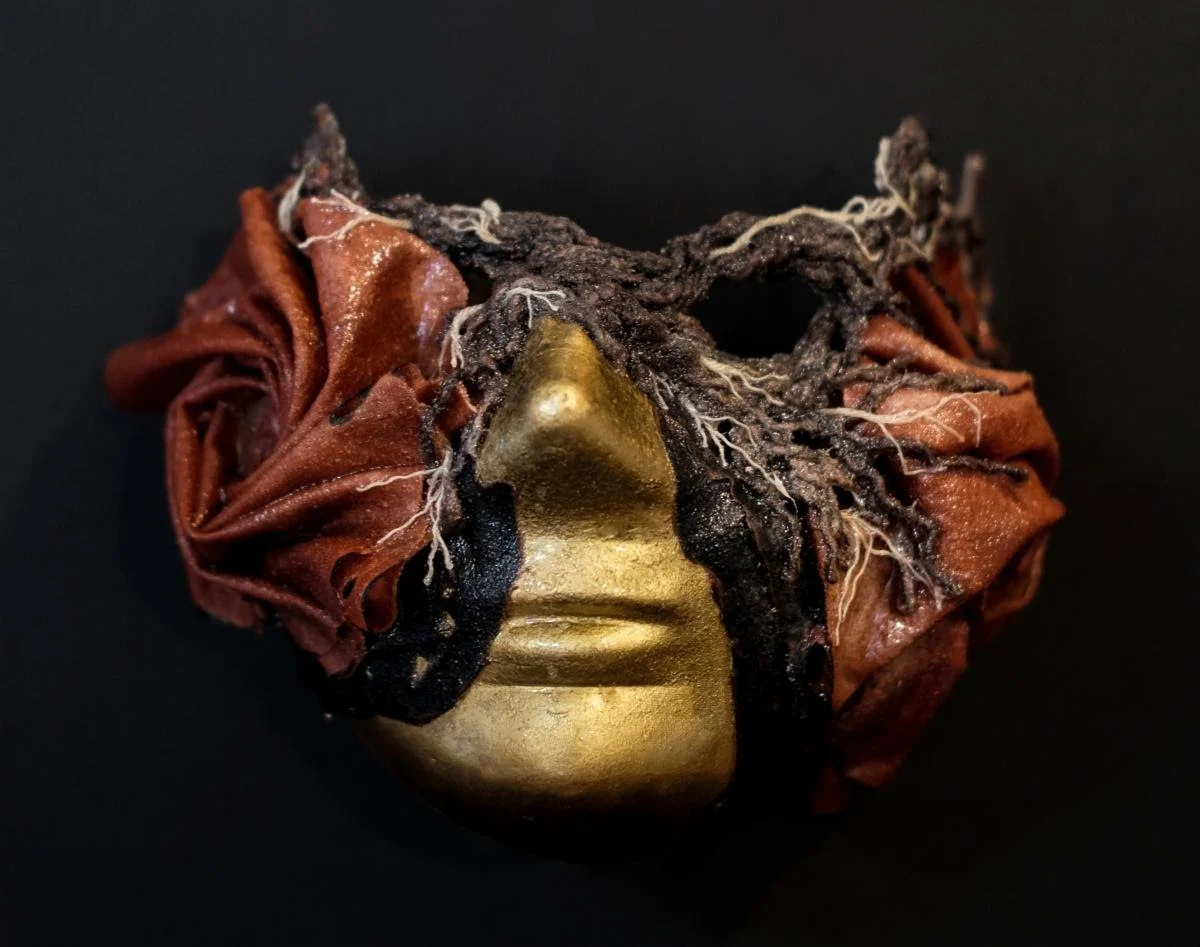
“La Commedia: Juliet's Mask” (cotton yarn, acrylic paint resin), by Anna Fubini, in her show “Unraveled Realities,’’ at Galatea Fine Art, Boston, July 5-July 28.
The gallery says:
“‘Unraveled Realities’ is a collection of fiber art and mixed-media works, including collaborative pieces and projects with fellow visual and performing artists. At its core, ‘Unraveled Realities ‘seeks to disrupt traditional narratives of canonical art and challenge the notion of a fixed nature of being, asserting the inherent dualities present in all things. The works showcase the interplay between materials, the creative process, and the thematic approach, embodying the concepts of deconstruction and reconstruction.’’