
A kind of genius
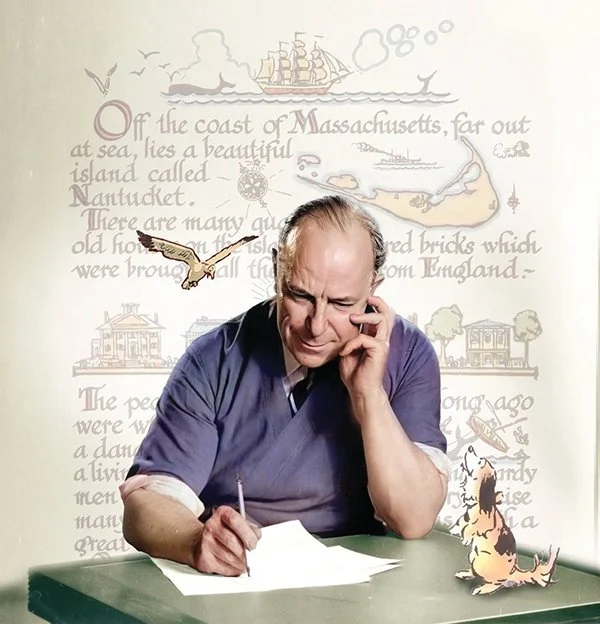
From the show “Tony Sarg: Genius at Play,” now at the Nantucket Historical Association/Whaling Museum.
Edited from the gallery’s statement:
This is is “the first comprehensive exhibition exploring the life, art, and adventures of Tony Sarg (1880–1942). Known as the father of modern puppetry in North America and the originator of the iconic Macy’s Thanksgiving Day parade balloons, Sarg was a famed illustrator, animator, designer and nimble entrepreneur who summered on, and took inspiration from, Nantucket for nearly 20 years. Organized and in partnership with the Normal Rockwell Museum, in Stockbridge, Mass.’’
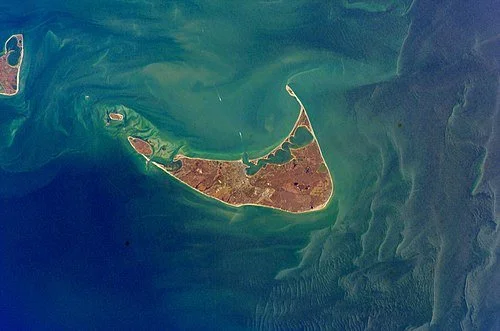
Nantucket from a NASA satellite
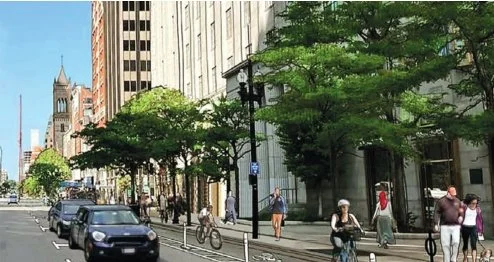
New bike, bus lanes on Boylston have fans and foes
On Boylston Street
Excerpted from The Boston Guardian
The city has begun adding bike and bus lanes to Boylston Street in Boston’s Back Bay, kicking off weeks of intermittent road work along with furious debate among residents and commuters.
Boylston’s redesign comes courtesy of the Back Bay Mobility Projects, a sweeping initiative covering almost the entire neighborhood. Workers broke ground for the Boylston section on June 9, with the aim of installing bus and bike lanes, changing parking with new moped loading zones and new signals separating turn lights from crossing periods.
The redesign will be starting on Massachusetts Avenue and working its way east to Arlington Street. Sidewalks will remain open, but planners do anticipate the need for parking restrictions around affected areas.
A city spokesperson said they expect work to continue for about three weeks, probably ending near the start of July. Workers will be installing new markings and flex posts at night, saving daytimes for signal changes and sign installation.
"The changes on Boylston Street will make the roadway safer for all who live, work and visit in the Back Bay, improving speed and reliability for the more than 13,000 people who ride on the bus each day,” said the Boston Transportation Department (BTD). {But not everyone, especially some business people, agrees.}
'Economic development'
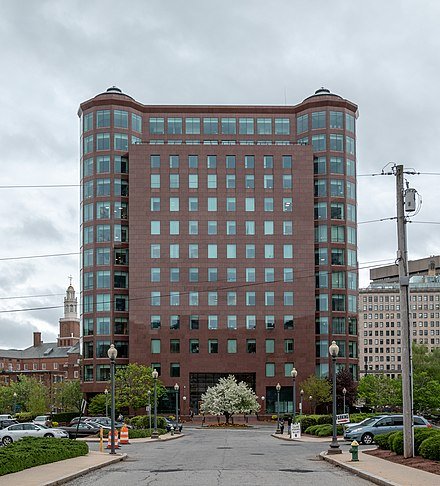
Citizens Bank headquarters, between two rivers in downtown Providence.
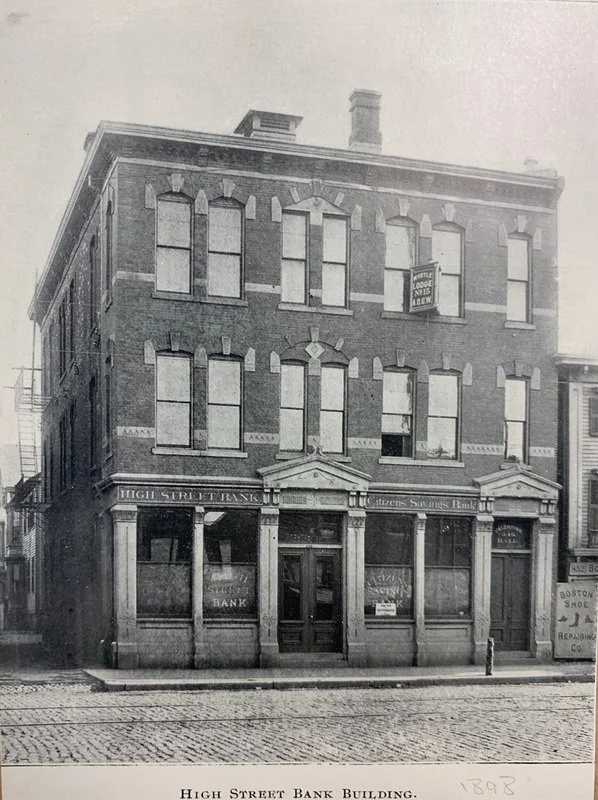
High Street Bank, founded in 1828, a precursor of Citizens Bank, in an 1898 photo. High Street established Citizens Savings Bank in 1871.
Adapted from Robert Whitcomb’s “Digital Diary’’ in GoLocal.24.com
Companies and their senior executives will always try to play states off against other in order to boost profits and thus executive compensation via friendlier tax and regulatory policies. So it is with Providence-based Citizens Bank’s apparently successful drive to get Rhode Island to give it a new tax break like the one that Massachusetts is giving to banks there. Citizens is the 14th biggest banking institution in the United States.
This involves jettisoning the current system, which bases a financial institution’s state taxes on the value of its property, payroll and sales, and letting Citizens, et al., use only sales to calculate their state corporate-income tax. This would give Citizens an effective $7.5 million tax cut.
Would Citizens move its headquarters (and perhaps some other operations, too) out of state, say to the Boston area, without the break? Maybe eventually, which would be a disaster for Rhode Island.
The painful fact is that Rhode Island must try to be competitive with its much bigger and richer neighbor and so is at the mercy of what Bay State policymakers decide in economic matters.
Much of what constitutes states’ economic-development policies is simply paying big companies to stay.
I increasingly believe that corporate-income taxes should be abolished and the loss of money to be offset by higher personal-income taxes. In the end, people, not some inorganic entity called a business, pay taxes, and the effort to avoid corporate taxes leads to what is in effect bribery of public officials through campaign contributions, etc.
Times past on Block Island
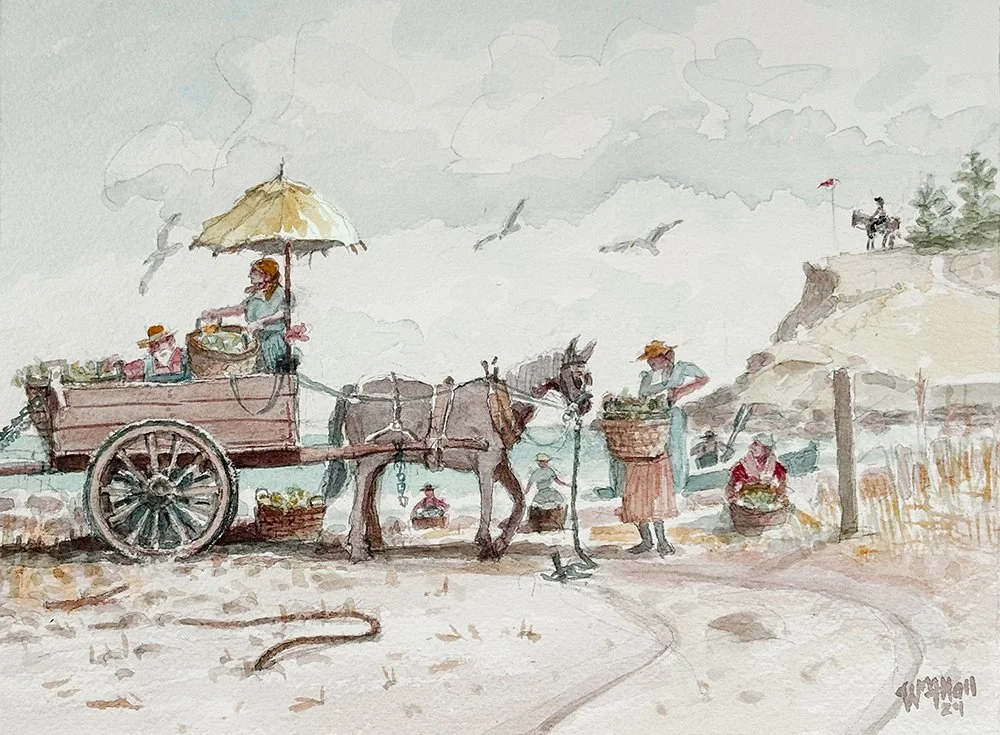
“Gathering Seaweed (watercolor), in the show “Times Past: New Works by William Talmadge Hall,’’ at the Jessie Edwards Gallery, Block Island, through July 2.
He writes: “Seaweed from the beaches on Block Island was gathered as fertilizer and for food. The rule on Block Island in the 1800’s was that access to all beaches was protected for islanders to gather whatever they could find. This included seaweed, fish, salvage from shipwrecks, heating fuel, such as driftwood, and virtually anything else that would help them survive.’’
{Editor’s note: Seaweed aquaculture has been expanding at a good clip in New England in the past few years. Seaweed has many uses and growing it removes carbon dioxide from the atmosphere.}
The gallery says:
The show “displays the artist’s love of Block Island and history. These works are personal for Hall, a third-generation islander, and encompass a past he hopes that people think about as he immortalizes the rich and fabulous, and now too-often forgotten, history of the island’s people, land and sea in his beautiful watercolors.’’
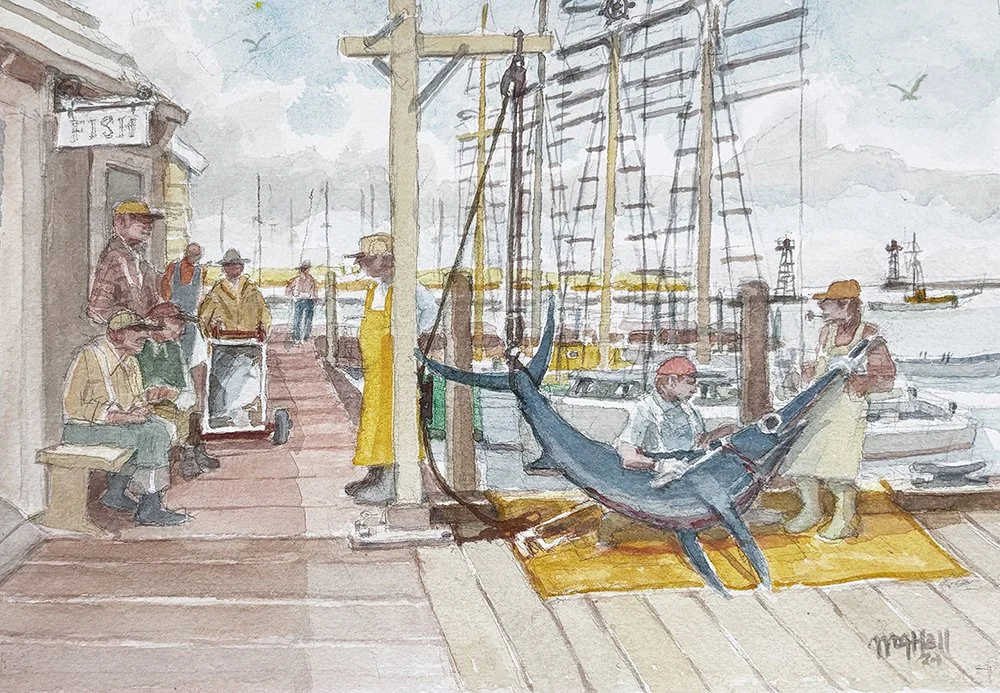
“Fisherman’s Corner-Old Harbor Block Island’’
Mr. Hall explains:
“Once thick with fishing shacks, the west corner of Old Harbor was the domain of the Block Island fishing fleet. When the steamers on the Fall River Line docked on the east side of this harbor of refuge, the passengers from New York City, Providence, Boston and elsewhere in the region were delivered into a bustling port. But the hurricane of 1938 devastated this fleet; 80 percent of it was destroyed in a few hours. In its heyday, these docks landed enough fresh fish to meet a substantial part of the demands of urban centers in southern New England as well as of the summer resort season.’’
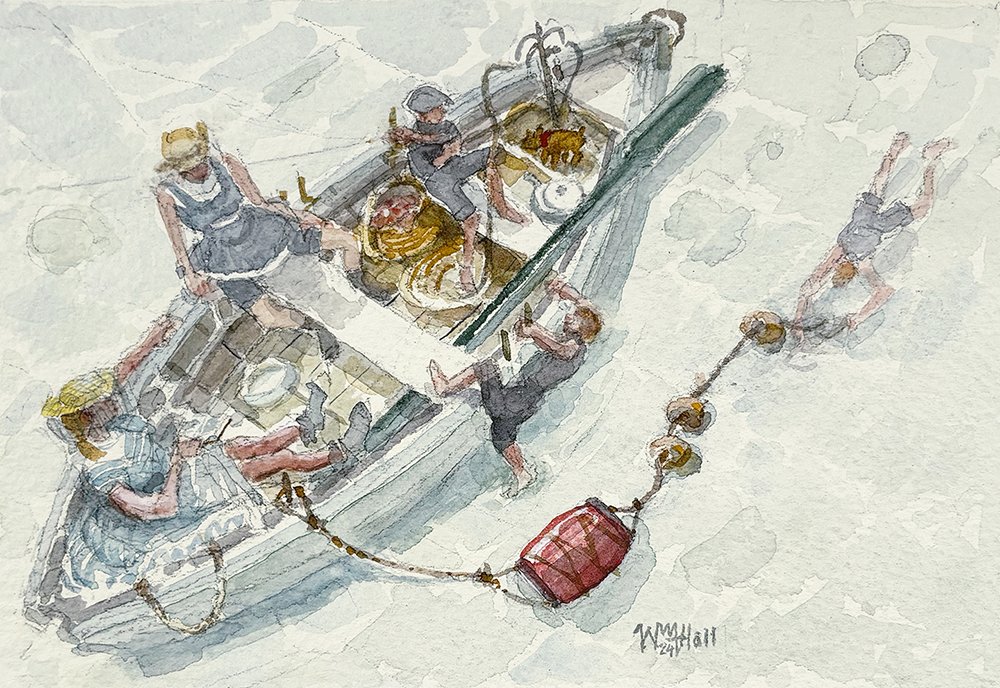
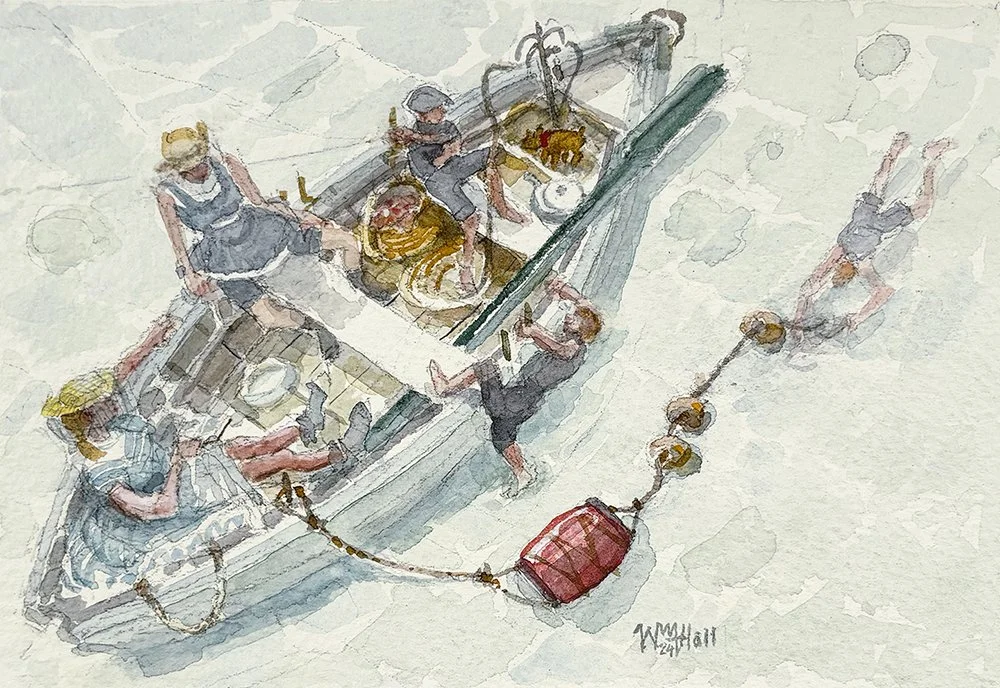
‘‘Victorian Swim Party” (1889)
“During the late Victorian era, which came to be called ‘The Gilded Age,’ Block Island became know as a tourist venue without the social restrictions imposed by, say, Newport high society. Large luxurious hotels offered a more open attitude to anyone, no matter who they were or where their money came from
“The beautiful and romantic scenery and relatively remote location encouraged discreet pleasure and relaxation.
“This painting evokes a slackening of Victorian dress codes and the pure pleasure
of being alive.’’


Elevated agriculture at Boston Medical Center

Expanded farming on a roof of the Boston Medical Center.
Edited from a New England Council report
“Boston Medical Center has opened a second farm on the roof of one of its administrative buildings, which will produce food to be donated to local nonprofits and community centers.
‘‘BMC’s first farm, Power Plant Farm, opened in 2017 to provide fresh and nutritious food for patients. Now BMC expects its new Newmarket Farm to quadruple the amount of produce grown annually while partnering with a local food-access nonprofit, in Boston Area Gleaners. The farms support a clinical program at BMC called the Preventive Food Pantry, which is meant for doctors to prescribe certain foods for recovery from certain illnesses.
“‘Our rooftop farms increase green space in our community, reduce the hospital’s carbon footprint, and strengthen at-risk local food systems,’ said senior director of support services at BMC David Maffeo.’’
'A primal presence'

“Half Tree” (oil on canvas), by Barbara Groh, at Gallery Sitka, Newport, R.I.
She says in her artist statement:
“My visual inspiration began early with Abstract Expressionism. As I am primarily an abstract artist, I aspire to have my work affect others as I have been by provoking thought, emotional experiences, moods, and aesthetic pleasure.
“Landscape is a primal presence for me. I explore by walking in diverse environments and return to the studio to transform my experiences into physical being. These inspirations can happen just outside my studio door or in distant lands with unfamiliar landscapes and cultures.
“My paintings in oil, acrylic, or cold wax may reflect a quiet practice of noticing inner space, peace, and presence, while others may reflect a desire and will to express freedom and unencumbered thought. Both encompass the moment and the past – a synthesis of physicality, perception, meditation, and inner movement.’’

Founders Hall at the U.S. Naval War College, in Newport.

Chris Powell: What is ‘enough’? One-man crime wave in Conn.

“The Worship of Mammon,’’ by Evelyn De Morgan
MA NCHESTER, Conn.
Connecticut is not just thrilled that UConn men's basketball coach Dan Hurley has declined a lucrative offer from the Los Angeles Lakers. People are also moved by the expressions of loyalty from the coach and his wife, Andrea -- not just loyalty to the state but, as Mrs. Hurley noted in a television interview, loyalty to the players the coach had recruited and who expected to be playing for him next year.
Of course this loyalty was not exactly reciprocated by some of the players on this year's championship UConn team. They are leaving college early for what will be their own lucrative contracts with the pros.
But there's a big difference between the situations of the players and the coach. The players aren't making much if any money and may suddenly earn millions of dollars for each year of early departure. But the coach already is making millions each year, and for having won consecutive national tournaments he is likely to make millions more from UConn with a big raise that will bring his annual compensation close to what the Lakers were offering him.
When one is already earning big money, loyalty isn't the sacrifice lately imagined and cheered by UConn basketball fans, people for whom a night out with the family for dinner and a game is a substantial expense. Indeed, as F. Scott Fitzgerald wrote, "the very rich are different from you and me."
But then there are differences among the rich too.
A recent essay recounted that two financially comfortable guys were discussing a billionaire who had just undertaken a business plan he expected would bring him even greater wealth. One guy boasted to the other: "I have what he'll never have." The other guy asked: "What's that?" The answer: "Enough."
If Hurley has enough for staying put at UConn -- even if "enough" includes a huge raise -- it still may be considered relative loyalty, and Connecticut may be glad of it all the same, but just shouldn't overdo it.
That wasn't a parody of criminal justice in Connecticut on the front page of The Hartford Courant the other day. It was reality that should have been shocking, except that repeat offenders on the loose are now so numerous in the state that few people -- and apparently none in authority -- are shocked.
State police say a 35-year-old Bozrah man with a long criminal record sped through a stop sign in Griswold, ramming another car and killing one of its passengers, Charlotte Degrado, 96, of Branford. The Courant says the offending driver has at least a dozen criminal convictions, has 10 more criminal cases pending against him, and was free because, after being arrested six times since January, he had managed to post $275,000 in bonds.
State police say the driver and his companions in the speeding car ran away after the crash but the driver was apprehended while hiding in nearby woods with a bag of fentanyl pills and $4,693 in cash.
The driver's convictions, according to the Courant, include larceny, burglary, narcotics possession, and engaging police in pursuit, and he has served three prison sentences since 2016 -- 18 months, a year, 90 days. He repeatedly has violated his probations.
If elected officials in Connecticut were more concerned about public safety than in reducing the state's prison population, they might investigate this situation urgently, interviewing every prosecutor and judge involved with the repeat offender's cases. While individually some of his crimes may seem minor, cumulatively they scream incorrigibility.
Could no one in the criminal-justice system perceive this before the fatality? Could no one note the chronic offender's 10 pending cases and realize that speedy trials and maximum sentences would be necessary to halt his crime wave?
Since Gov. Ned Lamont and state legislators don't seem to be taking note of the atrocity, will anyone in journalism confront them about it?
Or will the always dim prospect of reform be left to any efforts made by the dead woman's grieving family?]
Chris Powell has written about Connecticut government and politics for many years (CPowell@cox.net).
'Anatomy of the human soul'
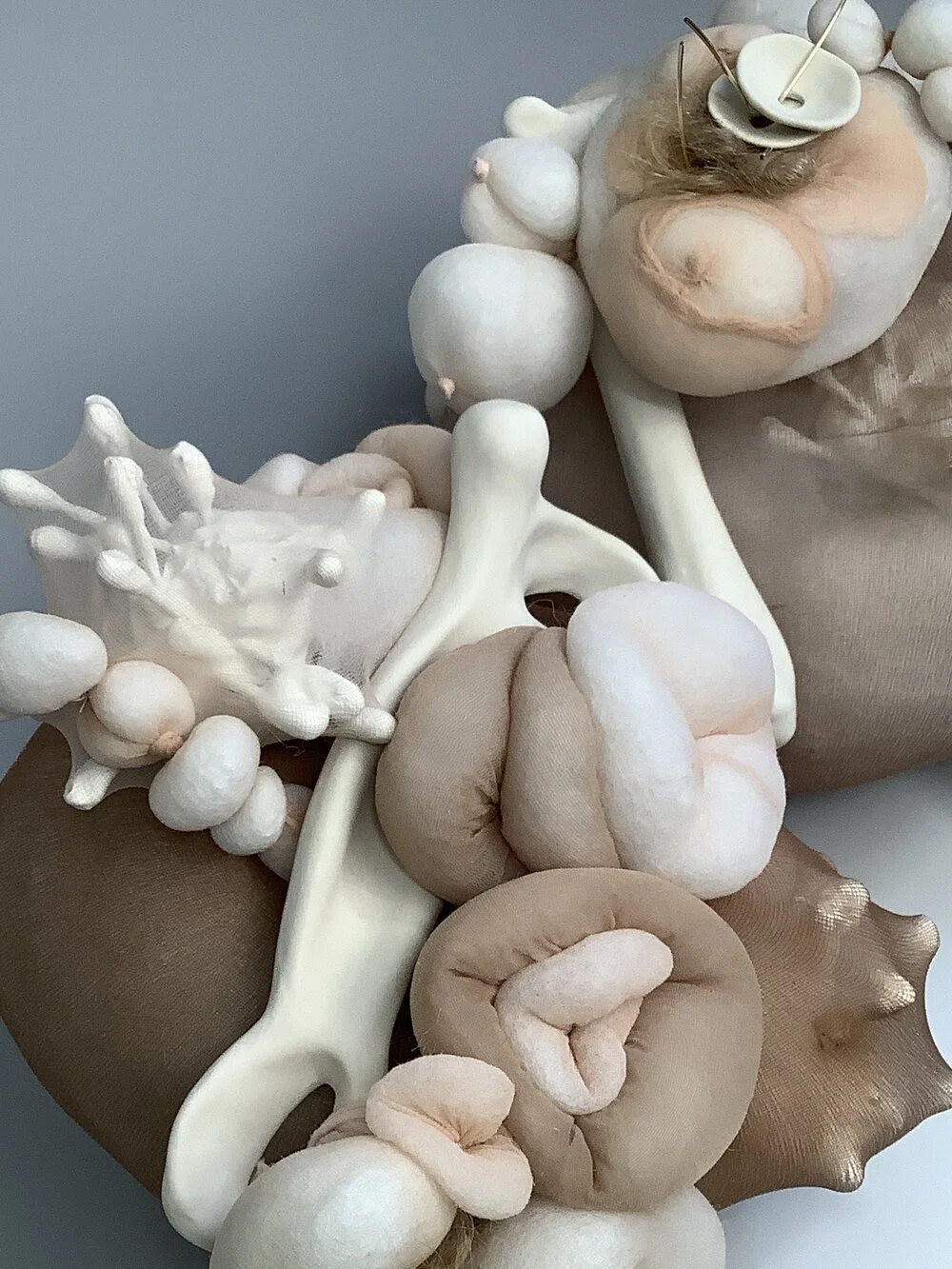
Detail from “Meditation,’’ in Keri Straka’s show “Biological Tithing,’' at Boston Sculptors Gallery through July 14.
The gallery says:
The gallery says that ‘“Keri Straka: Biological Tithing’ combines textiles and ceramics to create clusters of cells, tissue, organs, and bones, while posing intimate questions about the anatomy of the human soul as witnessed by the aging human body. …Straka uses delicate, organic shapes created from fabrics and hard, striking ceramic accents to muse on the concept of tithing, wondering whether molted cells could be collected and used to patch and protect skin as it becomes threadbare with age or illness."

Natives, residents and ticks

There are, generally speaking, five sorts of people found on Cape Cod at one time or another: native residents, natives who are not residents, residents who are not natives, summer residents who are natives, and summer residents who are not natives. A sixth classification…is the group known as ‘guests.’ Native residents have had company all their lives, as have summer residents who are natives. These hosts are fairly casual about guests, seeing them as a natural and inevitable part of any year – like ticks.’’
-- Marcia J. Monbleau, in her 2000 book The Inevitable Guest: A Survival Guide to Being Company and Having Company on Cape Cod
‘Sculptural perches’
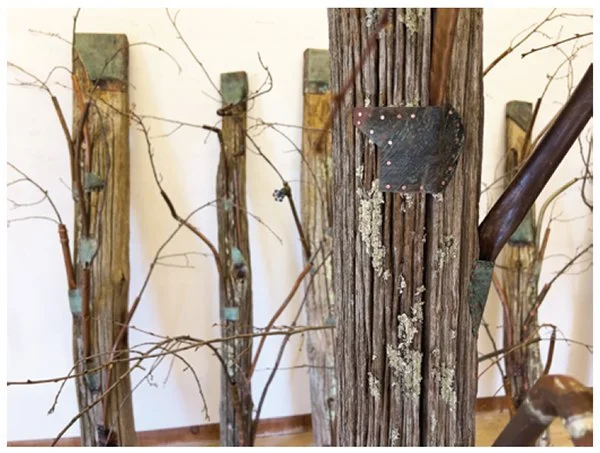
“Perch,’’ by Jean Shin, at Appleton Farms, Ipswich, Mass. Studio shot.
Appleton Farms explains:
“‘Perch’ explores temporality (ecological and agricultural time) and regeneration. Bobolinks—songbirds who make the migratory journey from the Southern Hemisphere and whose populations are in decline—are the primary birds that use Appleton’s grasslands and hayfields as their nesting site. Shin created sculptural platforms made from Appleton’s fallen and dead trees that visitors can engage with, as they become participants in this critical monitoring throughout the project’s run. Within the nesting area, Shin will create sculptural perches made from fallen trees and salvaged copper in which male bobolinks can perch to search for mates and mark their territory.’’

Llewellyn King: Fusion power is looking more than dreamlike

Commonwealth Fusion Systems (CFS) facility in Devens, Mass.

The Sun (here in X-ray) like other stars, is a natural fusion reactor, where stellar nucleosynthesis transforms lighter elements into heavier elements with the release of energy.
WEST WARWICK, R.I.
Fusion power, the Holy Grail of nuclear power for decades, may finally be within our grasp.
If the scientists and engineers at Commonwealth Fusion Systems (CFS), a company with close ties to the Massachusetts Institute of Technology Plasma Science and Fusion Center, are right, fusion is nearly ready for power market entry.
CFS, based in Devens, Mass., says it will be ready to ship its first devices in the early 2030s.
That is astounding news, which has been so long in the making that much of the nuclear industry has failed to grasp it.
I first started writing about fusion power in the 1970s. Having been on hand for many of its false starts, I was one of the doubters.
But after I visited the CFS factory in Devens and saw the precision production of the giant magnets, which are the key to the company’s system, I am on my way to being a believer.
I think that it’s likely that CFS can manufacture a device they can ship to users — utilities or big data centers — in the early 2030s. If so, the news is huge; it is a moment in science history like the first telephone call or the first incandescent light bulb.
Governments, grasping the potential for clean and essentially limitless power without weapons proliferation or radioactive waste, have lavished billions of dollars on fusion energy research worldwide. Intergovernmental effort in recent years has concentrated on the Joint European Torus (JET), which has wrapped up in Britain, and the International Thermonuclear Experimental Reactor (ITER), a mega-project, involving 35 nations, is ongoing in France. Both are firmly in the category of scientific research.
But in the commercial world, there is a sense that fusion power is at hand, and many companies have raised money and are pressing forward. In the front of that pack is CFS.
There are two different technologies chasing the fusion dream: magnetic fusion energy (MFE) and inertial fusion energy (IFE). The former is where plasma at millions of degrees is contained in a magnetic bottle. The trick here isn’t in the plasma, but in the bottle.
A version of MFE, called the tokamak, is the technology expected to produce the first power plant. Worldwide dozens of startups are looking at fusion and in the United States, eight are considered frontline.
The other method, IFE, consists of hitting a small target pellet with an intense beam of energy, which can come from a laser or other device. It is still in the realm of research.
CFS has raised over $2 billion and is seen by many as the frontrunner in the fusion power stakes. It has been supported from its inception in 2018 by the Italian energy giant ENI. Bill Gates’s ubiquitous Breakthrough Energy is an investor. Altogether there are about 60 investors, mostly looking for a huge return as CFS begins to sell its devices.
According to Brandon Sorbom, co-founder and chief scientist at CFS, the big advance has been in the superconducting magnets that create containment bottles for plasma. He told me this had enabled them to design a device many times smaller than had previously been possible.
What makes CFS magnets different and revolutionary is the superconducting wire that is wound to make the magnets.
Think of the tape in a tape recorder, and you have an idea of the flat wire, called HTS, that is wound into each magnet. The HTS tape is first wound into VIPER cable, or NINT pancakes — acronyms for two types of magnet technology, developed by MIT in conjunction with CFS. Then the VIPER cable, or NINT pancakes, are assembled into magnets which make up the tokamak.
This superconducting wire enables a large amount of current to course through the magnet at many times the levels which have been unavailable previously. This means that the device can be smaller — about the size of a large truck.
The next stage is to complete the first full demonstration device at CFS, known as SPARC. Already, it is half-built and should become operational next year.
After that will come the first commercial fusion device, called ARC, which may be deployed in a decade. It will contain, as Sorbom said, “a star in a bottle using magnetic fields in a tokamak design,” and perchance bring abundant zero-carbon energy to users near you.
Llewellyn King is executive producer and host of White House Chronicle, on PBS. His email is llewellynking1@gmail.com and he’s based in Rhode Island.
whchronicle.com
The thrill is gone
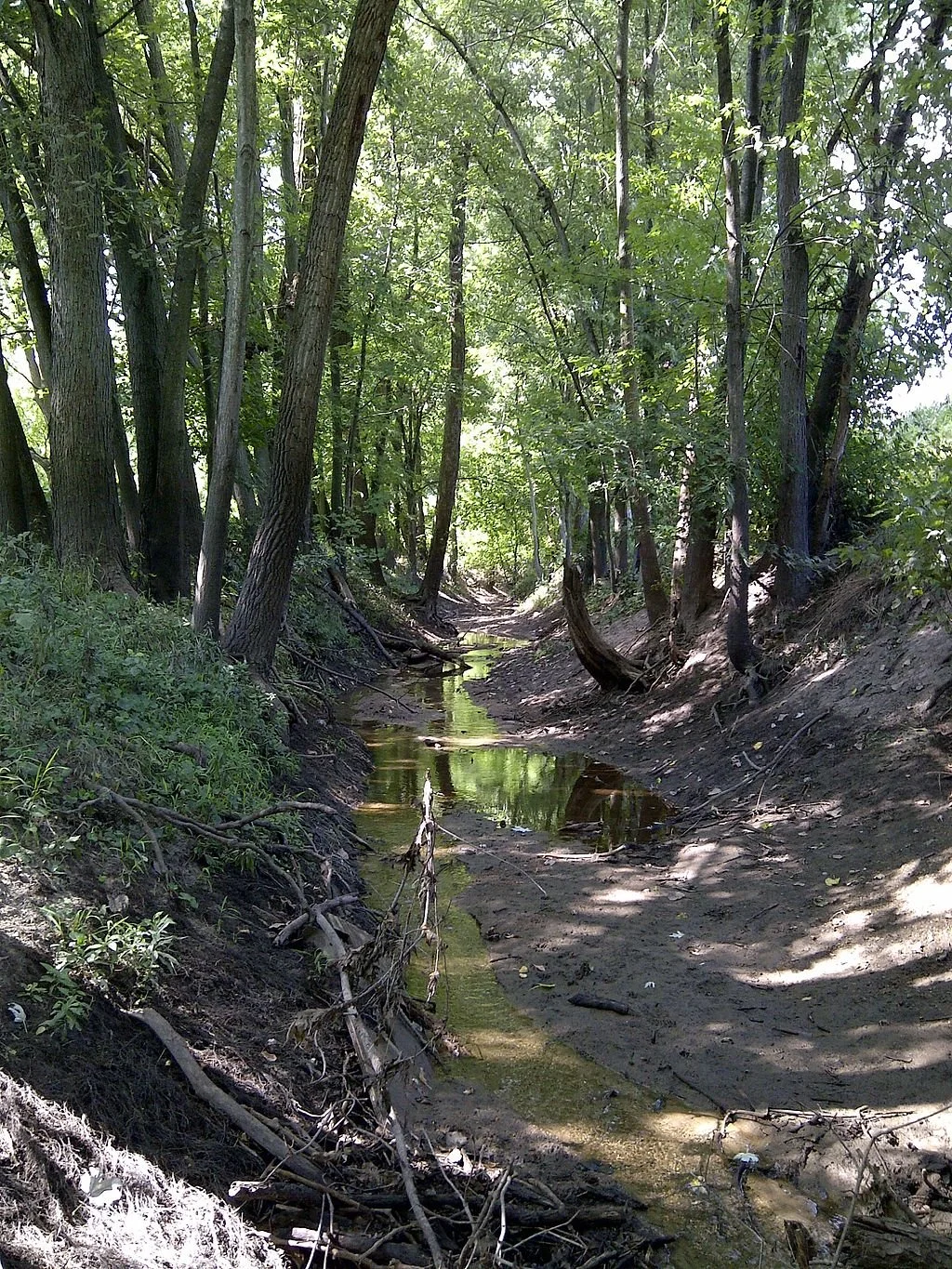
Photo by J. Pinta (Redline2200)
By June our brook's run out of song and speed.
Sought for much after that, it will be found
Either to have gone groping underground
(And taken with it all the Hyla breed
That shouted in the mist a month ago,
Like ghost of sleigh-bells in a ghost of snow)—
Or flourished and come up in jewel-weed,
Weak foliage that is blown upon and bent
Even against the way its waters went.
Its bed is left a faded paper sheet
Of dead leaves stuck together by the heat—
A brook to none but who remember long.
This as it will be seen is other far
Than with brooks taken otherwhere in song.
We love the things we love for what they are.
— “Hyla Brook,’’ by Robert Frost (1874-1963). The brook was near the property where Frost lived with his family in 1900-1911
‘Whispers of the Wild’ in a resort town

“As the Sun Sets,’’ by Jessica Fligg, in the joint show with Linda McDermott,“Whispers of the Wild: Imagery of Land and Life,’’ at the WREN Gallery, Bethlehem, N.H., through June 23.
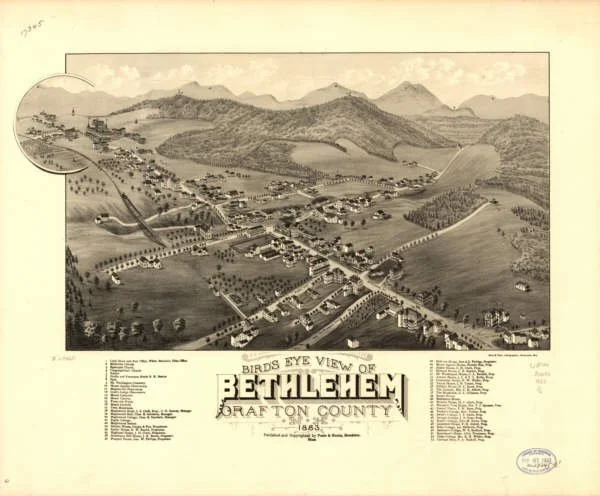
Bethlehem in 1883, as it was becoming a major summer resort.

Judith Graham: Older women’s health is woefully understudied

From Kaiser Family Foundation Health News
“This is an area where we really need to have clear messages for women and effective interventions that are feasible and accessible.’’
—Jo Ann Manson, chief of the Division of Preventive Medicine at Brigham and Women’s Hospital, in Boston
Medical research has shortchanged women for decades. This is particularly true of older women, leaving physicians without critically important information about how to best manage their health.
Late last year, the Biden administration promised to address this problem with a new effort called the White House Initiative on Women’s Health Research. That inspires a compelling question: What priorities should be on the initiative’s list when it comes to older women?
Stephanie Faubion, director of the Mayo Clinic’s Center for Women’s Health, launched into a critique when I asked about the current state of research on older women’s health. “It’s completely inadequate,” she told me.
One example: Many drugs widely prescribed to older adults, including statins for high cholesterol, were studied mostly in men, with results extrapolated to women.
“It’s assumed that women’s biology doesn’t matter and that women who are premenopausal and those who are postmenopausal respond similarly,” Faubion said.
“This has got to stop: The FDA has to require that clinical trial data be reported by sex and age for us to tell if drugs work the same, better, or not as well in women,” Faubion insisted.
Consider the Alzheimer’s drug Leqembi, approved by the FDA last year after the manufacturer reported a 27% slower rate of cognitive decline in people who took the medication. A supplementary appendix to a Leqembi study published in the New England Journal of Medicine revealed that sex differences were substantial — a 12% slowdown for women, compared with a 43% slowdown for men — raising questions about the drug’s effectiveness for women.
This is especially important because nearly two-thirds of older adults with Alzheimer’s disease are women. Older women are also more likely than older men to have multiple medical conditions, disabilities, difficulties with daily activities, autoimmune illness, depression and anxiety, uncontrolled high blood pressure, and osteoarthritis, among other issues, according to scores of research studies.
Even so, women are resilient and outlive men by more than five years in the U.S. As people move into their 70s and 80s, women outnumber men by significant margins. If we’re concerned about the health of the older population, we need to be concerned about the health of older women.
As for research priorities, here’s some of what physicians and medical researchers suggested:
Heart Disease
Why is it that women with heart disease, which becomes far more common after menopause and kills more women than any other condition — are given less recommended care than men?
“We’re notably less aggressive in treating women,” said Martha Gulati, director of preventive cardiology and associate director of the Barbra Streisand Women’s Heart Center at Cedars-Sinai, a health system in Los Angeles. “We delay evaluations for chest pain. We don’t give blood thinners at the same rate. We don’t do procedures like aortic valve replacements as often. We’re not adequately addressing hypertension.
“We need to figure out why these biases in care exist and how to remove them.”
Gulati also noted that older women are less likely than their male peers to have obstructive coronary artery disease — blockages in large blood vessels —and more likely to have damage to smaller blood vessels that remains undetected. When they get procedures such as cardiac catheterizations, women have more bleeding and complications.
What are the best treatments for older women given these issues? “We have very limited data. This needs to be a focus,” Gulati said.
Brain Health
How can women reduce their risk of cognitive decline and dementia as they age?
“This is an area where we really need to have clear messages for women and effective interventions that are feasible and accessible,” said JoAnn Manson, chief of the Division of Preventive Medicine at Brigham and Women’s Hospital in Boston and a key researcher for the Women’s Health Initiative, the largest study of women’s health in the U.S.
Numerous factors affect women’s brain health, including stress — dealing with sexism, caregiving responsibilities, and financial strain — which can fuel inflammation. Women experience the loss of estrogen, a hormone important to brain health, with menopause. They also have a higher incidence of conditions with serious impacts on the brain, such as multiple sclerosis and stroke.
“Alzheimer’s disease doesn’t just start at the age of 75 or 80,” said Gillian Einstein, the Wilfred and Joyce Posluns Chair in Women’s Brain Health and Aging at the University of Toronto. “Let’s take a life course approach and try to understand how what happens earlier in women’s lives predisposes them to Alzheimer’s.”
Mental Health
What accounts for older women’s greater vulnerability to anxiety and depression?
Studies suggest a variety of factors, including hormonal changes and the cumulative impact of stress. In the journal Nature Aging, Paula Rochon, a professor of geriatrics at the University of Toronto, also faulted “gendered ageism,” an unfortunate combination of ageism and sexism, which renders older women “largely invisible,” in an interview in Nature Aging.
Helen Lavretsky, a professor of psychiatry at UCLA and past president of the American Association for Geriatric Psychiatry, suggests several topics that need further investigation. How does the menopausal transition impact mood and stress-related disorders? What nonpharmaceutical interventions can promote psychological resilience in older women and help them recover from stress and trauma? (Think yoga, meditation, music therapy, tai chi, sleep therapy, and other possibilities.) What combination of interventions is likely to be most effective?
Cancer
How can cancer screening recommendations and cancer treatments for older women be improved?
Supriya Gupta Mohile, director of the Geriatric Oncology Research Group at the Wilmot Cancer Institute at the University of Rochester, wants better guidance about breast cancer screening for older women, broken down by health status. Currently, women 75 and older are lumped together even though some are remarkably healthy and others notably frail.
Recently, the U. S. Preventive Services Task Force noted “the current evidence is insufficient to assess the balance of benefits and harms of screening mammography in women 75 years or older,” leaving physicians without clear guidance. “Right now, I think we’re underscreening fit older women and overscreening frail older women,” Mohile said.
The doctor also wants more research about effective and safe treatments for lung cancer in older women, many of whom have multiple medical conditions and functional impairments. The age-sensitive condition kills more women than breast cancer.
“For this population, it’s decisions about who can tolerate treatment based on health status and whether there are sex differences in tolerability for older men and women that need investigation,” Mohile said.
Bone Health, Functional Health, and Frailty
How can older women maintain mobility and preserve their ability to take care of themselves?
Osteoporosis, which causes bones to weaken and become brittle, is more common in older women than in older men, increasing the risk of dangerous fractures and falls. Once again, the loss of estrogen with menopause is implicated.
“This is hugely important to older women’s quality of life and longevity, but it’s an overlooked area that is understudied,” said Manson of Brigham and Women’s.
Jane Cauley, a distinguished professor at the University of Pittsburgh School of Public Health who studies bone health, would like to see more data about osteoporosis among older Black, Asian, and Hispanic women, who are undertreated for the condition. She would also like to see better drugs with fewer side effects.
Marcia Stefanick, a professor of medicine at Stanford University School of Medicine, wants to know which strategies are most likely to motivate older women to be physically active. And she’d like more studies investigating how older women can best preserve muscle mass, strength, and the ability to care for themselves.
“Frailty is one of the biggest problems for older women, and learning what can be done to prevent that is essential,” she said.
Judith Graham is a Kaiser Family Foundation Health News reporter.

Baseball and civilization

Connie Mack on an 1887 baseball card.
“Humanity is the keystone that holds nations and men together. When that collapses, the whole structure crumbles. This is as true of baseball teams as any other pursuit in life.’’
— Connie Mack (1862-1956), Major League catcher, manager and owner. He was a native of tiny East Brookfield, Mass.

The Keith Block, formerly the East Brookfield Municipal Building.
Mysteries of the past

Installation view of the show “Not a Story to Pass On,’’ of Jennifer Davis Carey and Scarlett Hoey, at the Danforth Art Museum, Framingham, Mass.

A matter of 'marital privacy'
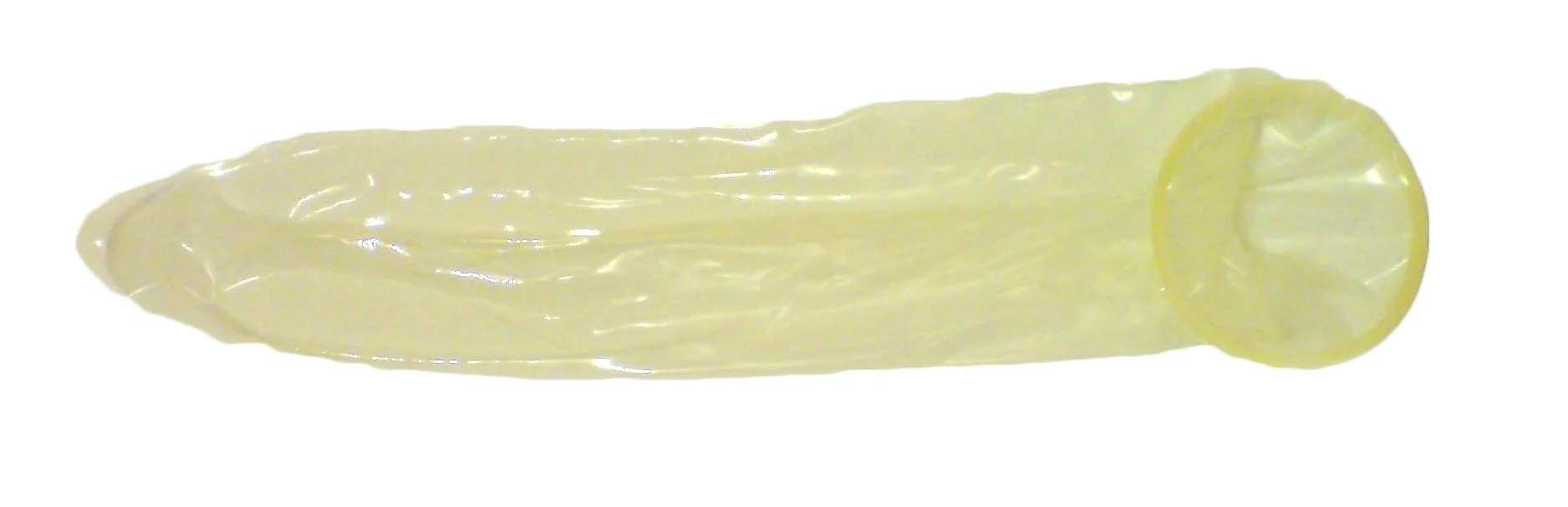
“Late every night in Connecticut, lights go out in the cities and towns, and citizens by the thousands proceed zestfully to break the law.’’
—From the March 10, 1961, issue of Time magazine on the now long gone Connecticut law banning contraceptives. In 1879, Connecticut enacted a statute that banned the use of any drug, medical device or other instrument used to prevent contraception.
In its 1965 ruling Griswold v. Connecticut, the U.S. Supreme Court ruled that the U.S. Constitution protects the liberty of married couples to use contraceptives without government restriction. The Connecticut law, they decided, violated the "right to marital privacy".
Toward megalopolis on the ‘Vermonter’

“Southbound” (pastel), by Ann Wickham, in the show “White River Junction: A Pastel Perspective, ‘‘ at the Long River Gallery, White River Junction, Vt., through July 31.
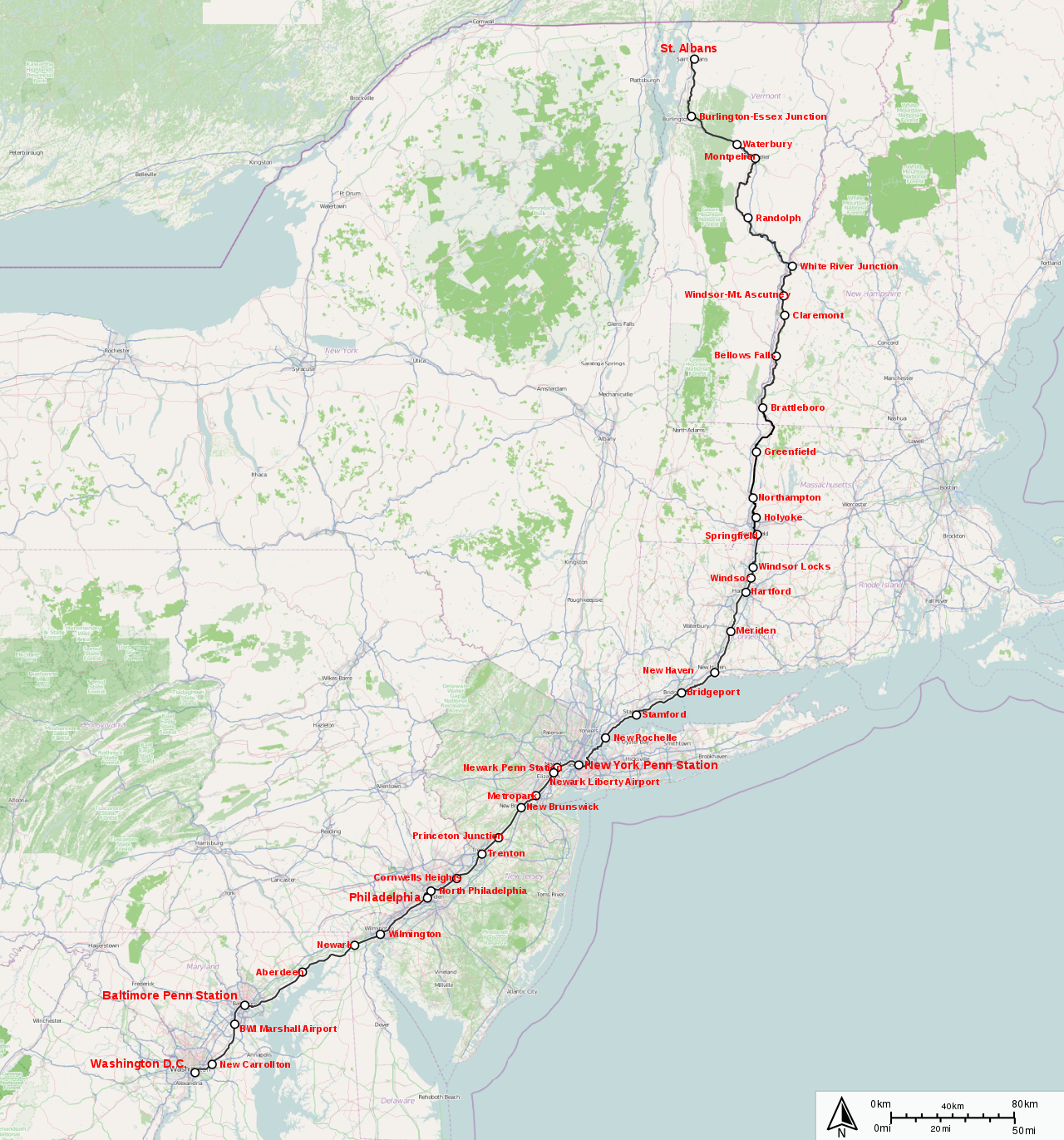
Map of Amtrak’s “Vermonter” route
— by Jkan997
Then better get off the road
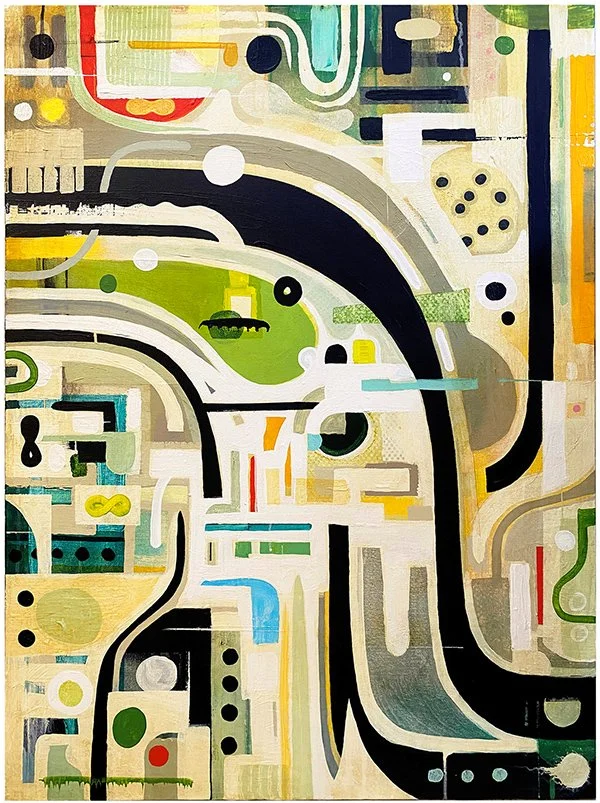
“Sleepless” (acrylic on linen), by Boston-based artist J.S. Dykes, at the Cape Cod Museum of Art, Dennis, Mass., through July 14.

On the Bass River in Dennis.
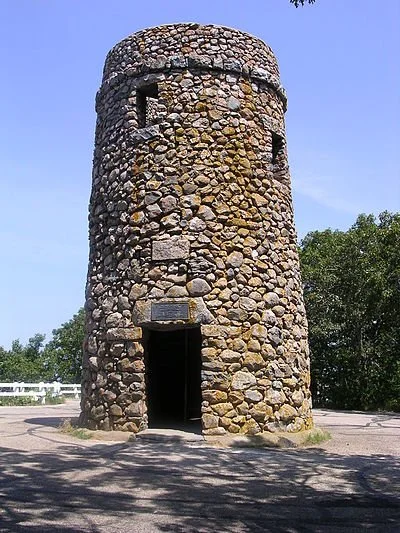
Scargo Tower, at the top of Scargo Hill, in Dennis.