
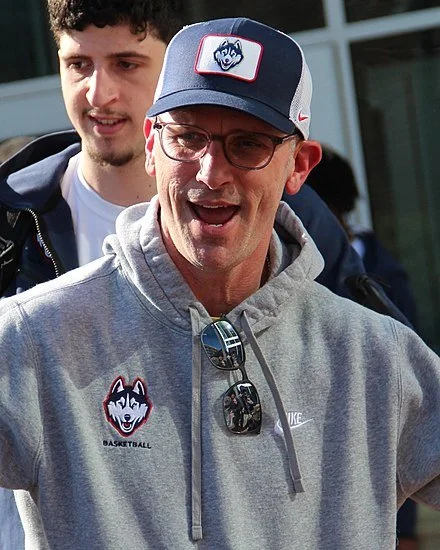
Chris Powell: Coaching a college basketball team is easier than legislating
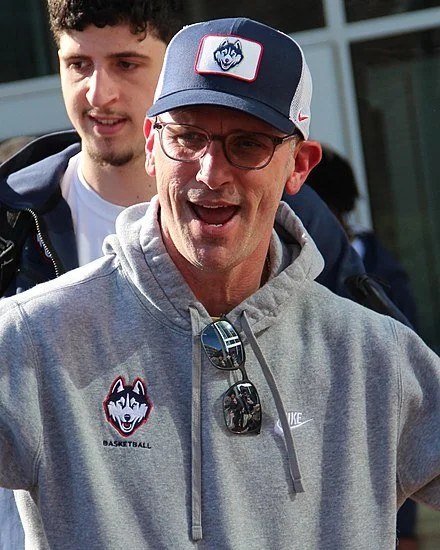
Dan Hurley
MANCHESTER, Conn.
Celebrating Dan Hurley's decision this week to keep coaching the men's basketball team at the University of Connecticut, state House Speaker Matt Ritter confirmed a thought previously reserved for cynics.
That is, UConn's success with basketball is state government's great rationalization for giving the university whatever it wants financially year after year.
Ritter said: "I think there are times when legislators wonder, 'Why UConn? Why higher education?' There were comments about how we were giving so much money to UConn even this year. But Dan Hurley and [women's basketball coach] Geno Auriemma are four million more times popular than the most popular state legislator."
True. But then in a crucial respect the coaching jobs are much easier than those of state legislators -- at least the jobs of legislators who aspire to serve the public interest.
All the coaches have to do to please their constituents is win basketball games. Their players are united on this objective.
The coaches have luxurious contracts that indemnify themselves against failure, as was recently demonstrated by UConn's embarrassing and spectacularly expensive experience with former men's basketball coach Kevin Ollie.
There are no luxurious contracts for state legislators. They are elected for two-year terms with part-time salaries for what is often full-time work or close to it.
Their teams aren't unified. No, their constituents have a thousand objectives, many of them contradictory.
While UConn always gets plenty of money despite its many management failures and financial excesses, state legislators have to find money themselves, first to pay for government and then for their own campaigns.
But most of a legislator's constituents want someone else to pay for the goodies government gives them. As the economist Frederic Bastiat put it long ago, "Government is the great fiction by which everybody tries to live at the expense of everybody else."
And even when the public interest is clear, there is usually a venal special interest with enough politically active adherents to get their way amid the public's obliviousness.
The popularity of Hurley and Auriemma might crash as soon as they had to assemble a state budget or take a position on a controversial policy issue -- say, having 6-foot-4, 240-pound transgender players on high school and college women's basketball teams.
If many state legislators are the tools of special interests, it's because so few of their constituents pay attention that making any friends requires being a tool.
MONEY WON'T FIX SCHOOLS: What exactly does it mean that the state Education Department has instructed its commissioner to look into improving the finances of Hartford's ever-struggling school system?
Certainly there is much to improve. The academic performance of the city's students long has been terrible. Hartford's schools are facing a $40 million budget deficit and laying off hundreds of employees even as the system has tens of millions of dollars of emergency federal aid waiting to be spent.
Republicans in the state Senate have good questions about the state's intervention: Will state money be spent? Will Education Department employees be embedded in the Hartford school administration? Who will make decisions? Will labor contracts be reviewed? Will other struggling school systems in the state get similar evaluations? (They should.)
The most important question here may be whether schools can accomplish much of anything when most of their students lack responsible parents and are largely neglected. Since this may be the most important question, it has never been asked officially.
In any case there is a small indication of progress. Hartford school officials lately have been openly complaining that their schools are being drained financially by tuition transfers required by the regional "magnet" schools craze prompted in the Hartford area by the long-running Sheff v. O'Neill school desegregation case. The magnets are also draining the city's neighborhood schools of their better students. Measured by educational and integrational results, the Sheff case has been a billion-dollar disaster.
Money will never solve the education problem. It's a matter of far bigger issues that politics isn't ready to face.
Chris Powell has written about Connecticut government and politics for many years. (CPowell@cox.net) .

Llewellyn King: Will AI be mankind’s greatest adventure so far? There’s hope and fear


MIT Computer Science and Artificial Intelligence Laboratory, in Cambridge, Mass. Its architecture can produce some of the anxiety that goes with the AI revolution. We’re in an increasingly strange world.

Some ways in which an advanced misaligned AI could try to gain more power.
Hit this link for video on the birth of artificial intelligence, whose founding as a discipline happened at Dartmouth College back in the summer of 1956.
WEST WARWICK, R.I.
A new age in the human experience on Earth is underway. It is an age of change as profound — and possibly more so — than the Industrial Revolution with the steam engine introducing the concept of post-animal labor, known as shaft horsepower.
Artificial intelligence in this new age is infiltrating in all areas of human endeavor.
Some things, it will change totally, like work: It will end much menial work and a whole tranche of white-collar jobs. Some it will enhance our lives beyond imagination, such as in medicine and associated longevity.
Some AI will threaten, some it will annihilate.
It will test our understanding of the truth in what has become a post-fact world. The veracity of every assertion will be subject to investigation, from what happened in history to current election results. It will end much menial work and a whole tranche of white-collar jobs.
At the center of the upheaval in AI is electricity. It is the one essential element — the obedient ingredient — for AI.
Electricity is essential for the computers that support AI. But AI is putting an incalculable strain on electric supply.
The United States Energy Association, at its annual meeting, learned that a search on Google today uses a tenth of the electricity as the same search on ChatGPT.
Across the world, data centers are demanding an increasing supply of uninterruptible electricity 24/7. Utilities love this new business, but they fear that they won’t be able to service it going forward.
Fortunately AI is a valuable tool for utilities, and they are beginning to employ it increasingly in their operations, from customer services to harnessing distributed resources in what are called virtual power plants, to such things as weather prediction, counting dead trees for fire suppression, and mapping future demand.
Electricity is on the verge of a new age. And new technologies, in tandem with the relentless growth in AI use, are set to overhaul our expectations for electricity generation and increase demand for it.
Fusion power, small modular reactors, viable flexible storage in the form of new battery technology and upgraded old battery technology, better transmission lines, doubling the amount of power that can be moved from where it is made to where it is desperately needed are all on the horizon, and will penetrate the market in the next 10 years.
Synchronizing new demand with new supply is yet to happen, but electricity provision is on the march as inexorably as is AI. Together they hold the keys to a new human future.
A new book by Omar Hatamleh, a gifted visionary, titled This Time It’s Different, lifts the curtain on AI. Hatamleh, who is chief AI officer for NASA’s Goddard Space Flight Center, in Greenbelt, Md., says, “This time, it truly is different … Witness AI’s awakening, revealing its potential for both awe-inspiring transformation and trepidation.”
Hatamleh organized NASA’s first symposium on AI on June 11 at Goddard. Crème de la crème in AI participants came from OpenAI, Google, Microsoft, Nvidia, Qantm AI, Boeing and JP Morgan.
The consensus view was, to my mind, optimistically expressed by Pilar Manchon, Google’s senior director of AI, who said she thought that this was the beginning of humankind’s greatest adventure. The very beginning of a new age.
A bit of backstage criticism was that the commercial pressure for the tech giants to get to market with their generative AI products has been so great that they have been releasing them before all the bugs have been ironed out — hence some of the recent ludicrous search results, like the one from this question, “How do you keep the cheese on pizza?" The answer, apparently, was with “glue.”
However, these and other hallucinations won’t affect the conquering march of AI, everyone agreed.
Government regulation? How do you regulate something that is metamorphosing second by second?
A word about Hatamleh: I first met him when he was chief engineering innovation officer at NASA in Houston. He was already thinking about AI in his pursuit of off-label drugs to treat disease, and his desire to cross-reference data to find drugs and therapies that worked in one situation, but hadn’t been tried in another, especially cancer. This is now job No. 1 for AI.
During Covid, he wrangled 73 global scientists to produce a seminal report in May 2020, “Never Normal,’' which predicted with eerie accuracy how Covid would affect how we work, play, socialize and how life would change. And it has. A mere foretaste of AI?
Llewellyn King is executive producer and host of White House Chronicle, on PBS. His email is llewellynking1@gmail.com, and he’s based in Rhode Island.
In a beautiful but sometimes grim region

“Pears,’’ by Audrey Shachnow, in the show’”, through Oct. 20, “Sculpture at The Mount’,’ the former (mostly) summer estate, in Lenox, Mass., in the Berkshires, of Pulitzer Prize-winning novelist Edith Wharton (1862-1937). Ms. Wharton wrote a grim classic novel titled Ethan Frome about characters in the Berkshires.
The Mount staff says:
“‘Sculpture at The Mount’ showcases a diverse range of sculptures of varying scale and media produced by emerging and internationally established artists. This immersion of art in the natural world is free and open for the public to explore.’’
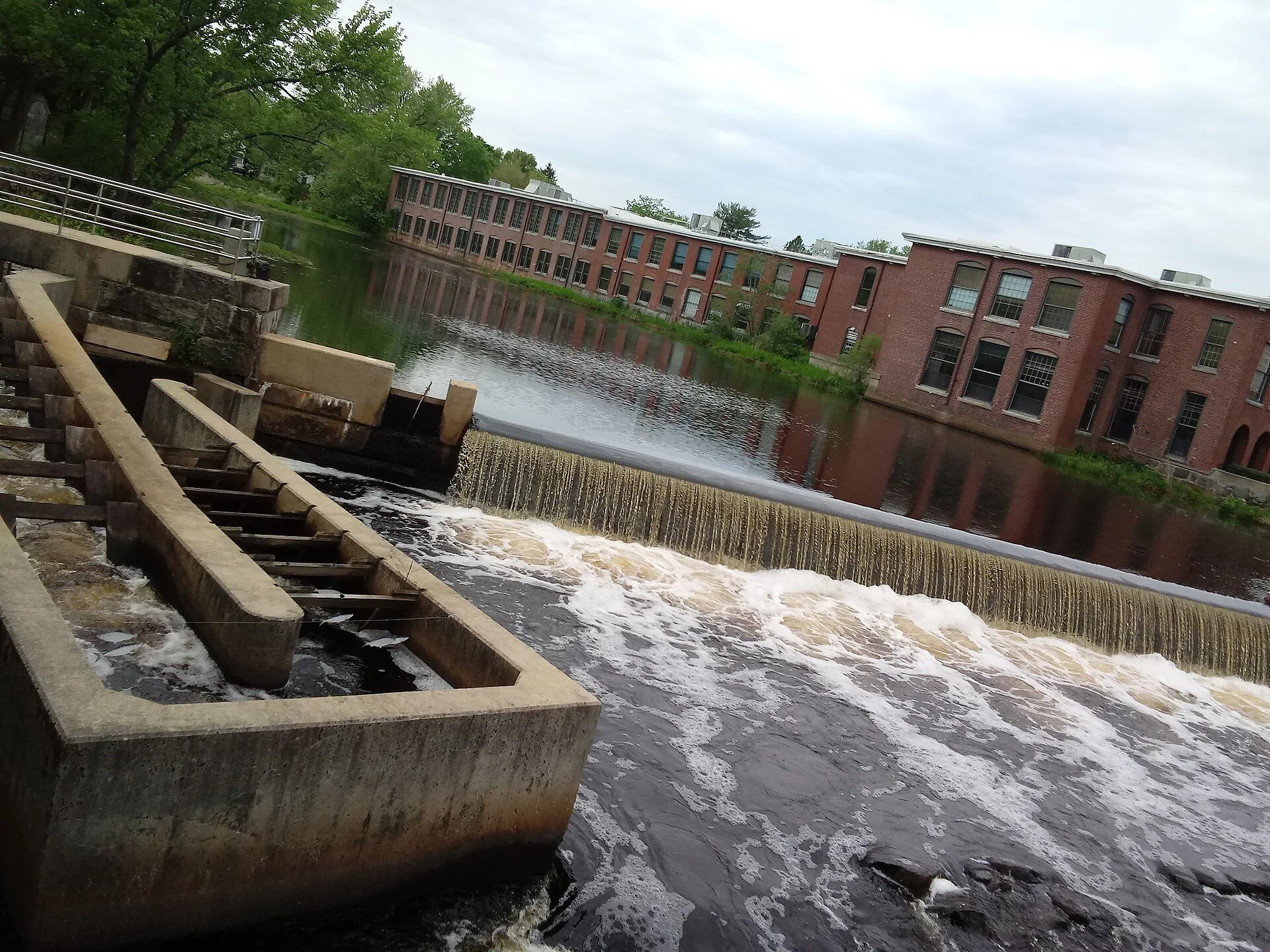
Liberate the fish? Keeping the pond less than ‘great’
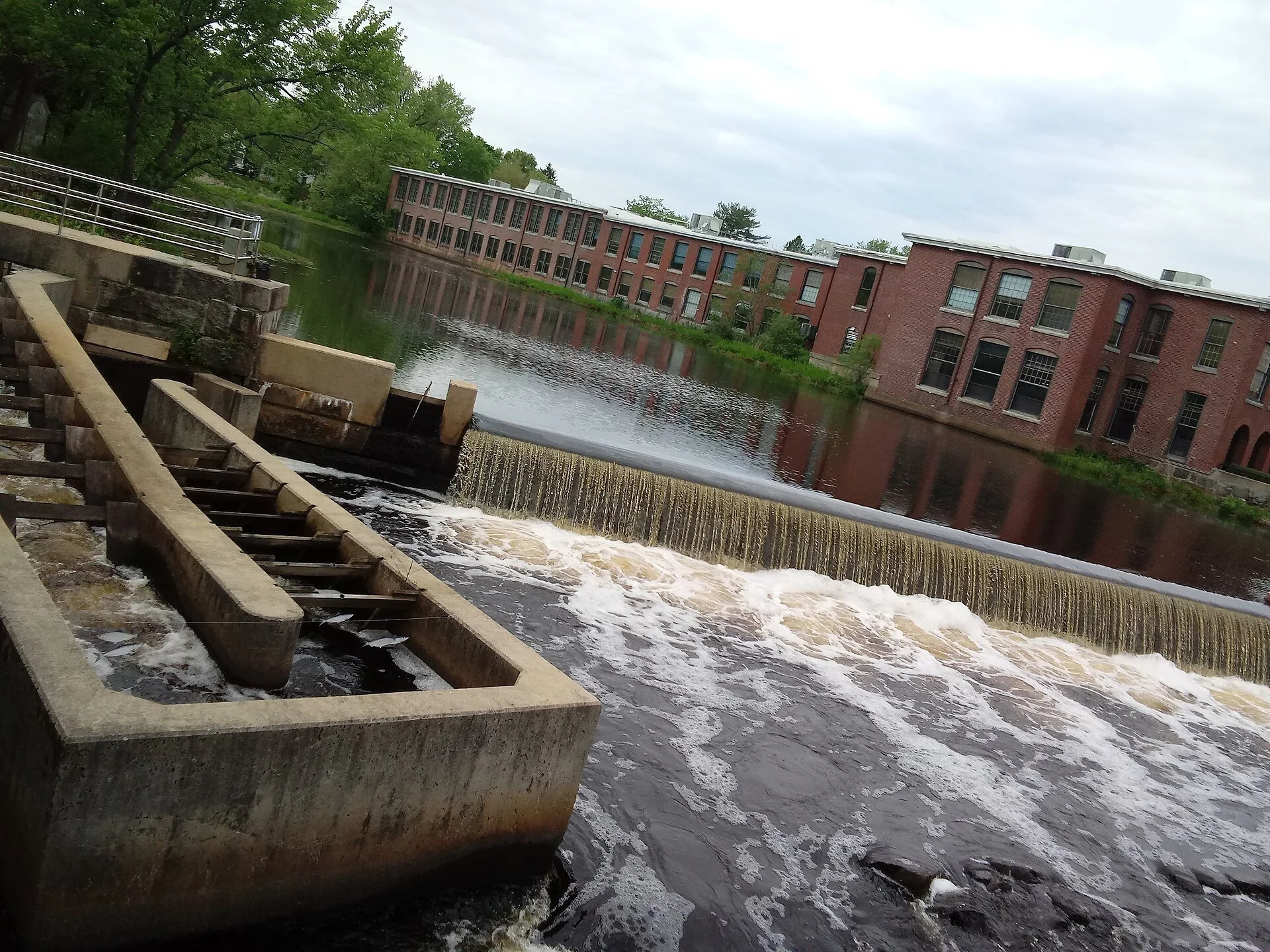
Fish ladder, dam and waterfall at the Ipswich (Mass.) Mills Historic District, with mill pond, dating to the 17th Century, behind it.
— Photo by Mmangan333
Adapted from Robert Whitcomb’s “Digital Diary,’’ in GoLocal24.com
Here’s a quintessentially New England story about a heated debate in the Massachusetts North Shore town of Ipswich over whether to take down the Ipswich Mills Dam and fish ladder. The current dam was built in 1908, but there’s been a dam there since the 17th Century. It’s a reminder of the town’s industrial past. The idea, which seems to be supported by the majority of town residents, is to let the Ipswich River flow freely again, with associated environmental benefits, including better fishing and flood control.
But many love the pond that the dam created -- just to look at it and its waterfall, as well as for the skating and, I suppose, swimming, that it provided.
Lots of dams were built (and rebuilt) from colonial days to the early 20th Century to create waterfalls to power mills in New England towns large and small – at first to mill corn and for sawmills -- and many of us like those historic reminders, though few of the remaining mills serve any practical purpose anymore. But of course letting the rivers flow freely (when beavers allowed it), as they did when Native Americans lived along them, is much more “historic.’’
By the way, my parents lived for a few years on a mill pond in Norwell, Mass. The size of the pond could be adjusted by raising or lowering a board at the dam. The idea was to keep the pond at under 10 acres. If it got bigger than that, it would be classified under state law as a “great pond,’’ to which the public would have access.
'Deconstructing and rebuilding'

“Heart Relic” (conte and charcoal on paper, fabric, thread, found wood, soil), by Luba Shapiro Grenader, in her show “Lament & Renewal: Restringing the Heart, Reviving the Self,’’ at Galatea Fine Art, Boston, July 5-28.
The artist, based on the Massachusets North Shore and an immigrant from Russia, says:
“This work is a contemplation on personal loss and global change. Seeing those close to me suffer through illness and pain is excruciating; global suffering echoes this personal grief. While I find beauty in the act of drawing, I find solace in deconstructing and rebuilding. Threads make connections between the drawn elements and beyond – connecting the physical and ethereal. Cloth reimagines the drawings by mending the forms and extending the images.’’

What the Lobster Institute does

Lobsters awaiting purchase in Trenton, Maine
— Photo by Billy Hathorn
Edited from a New England Council article
ORONO, Maine
“The University of Maine has named Maine native and UMaine graduate Christina Cash to head up its Lobster Institute. Cash had served as the interim director since last summer, succeeding previous executive director Richard Wahle, who retired. Cash has been with the Institute since 2021, serving as assistant director of communication and outreach before coming into the interim role.
“Cash previously served as an advancement officer at the Bigelow Laboratory for Ocean Sciences and as program and development director at the Frances Perkins Center. She expressed her goals for the Lobster Institute, which include expanding student opportunities and programs at the Darling Marine Center, in Walpole.
“‘It is an honor to be in this position as a liaison between industry and the university,’ Cash said. ‘There’s so much going on in the lobster world right now and I look forward to collaborating with partners from industry, management and academia on research that can help the fishery.’
“Established in 1987, the Lobster Institute has been a center for discovery, innovation, and outreach for the University of Maine regarding the sustainability of the vital American lobster fishery for the U.S. and Canada. Research projects over the years have included an analysis of how rapid Arctic change has impacted fisheries and fishing communities, supporting research into lobster byproducts, and a study on how commercial lobstering data can be used to inform offshore wind farm developments. Serving as UMaine’s laboratory for marine research, Darling has undergone a $5.2 million waterfront infrastructure improvement project to enhance its research and business incubator projects.’’

Charles Colgan: Warming seas are slamming coastal economies
MIDDLEBURY, Vt.
Ocean-related tourism and recreation supports more than 320,000 jobs and US$13.5 billion in goods and services in Florida. But a swim in the ocean became much less attractive in the summer of 2023, when the water temperatures off Miami reached as high as 101 degrees Fahrenheit (37.8 Celsius).
The future of some jobs and businesses across the ocean economy have also become less secure as the ocean warms and damage from storms, sea-level rise and marine heat waves increases.
Ocean temperatures have been heating up over the past century, and hitting record highs for much of the past year, driven primarily by the rise in greenhouse gas emissions from burning fossil fuels. Scientists estimate that more than 90% of the excess heat produced by human activities has been taken up by the ocean.
That warming, hidden for years in data of interest only to oceanographers, is now having profound consequences for coastal economies around the world.
Understanding the role of the ocean in the economy is something I have been working on for more than 40 years, currently at the Center for the Blue Economy of the Middlebury Institute of International Studies. Mostly, I study the positive contributions of the ocean, but this has begun to change, sometimes dramatically. Climate change has made the ocean a threat to the economy in multiple ways.
The dangers of sea-level rise
One of the big threats to economies from ocean warming is sea-level rise. As water warms, it expands. Along with meltwater from glaciers and ice sheets, thermal expansion of the water has increased flooding in low-lying coastal areas and put the future of island nations at risk.
In the U.S., rising sea levels will soon overwhelm Isle de Jean Charles in Louisiana and Tangier Island in Chesapeake Bay.
Flooding at high tide, even on sunny days, is becoming increasingly common in places such as Miami Beach; Annapolis, Maryland; Norfolk, Virginia; and San Francisco. High-tide flooding has more than doubled since 2000 and is on track to triple by 2050 along the country’s coasts.
Satellite and tide gauge data show sea-level change from 1993 to 2020. National Climate Assessment 2023
Rising sea levels also push salt water into freshwater aquifers, from which water is drawn to support agriculture. The strawberry crop in coastal California is already being affected.
These effects are still small and highly localized. Much larger effects come with storms enhanced by sea level.
Higher sea level can worsen storm damage
Warmer ocean water fuels tropical storms. It’s one reason forecasters are warning of a busy 2024 hurricane season.
Tropical storms pick up moisture over warm water and transfer it to cooler areas. The warmer the water, the faster the storm can form, the quicker it can intensify and the longer it can last, resulting in destructive storms and heavy downpours that can flood cities even far from the coasts.
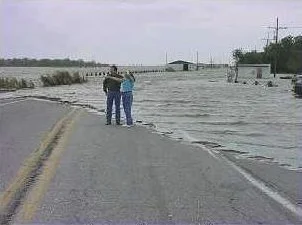
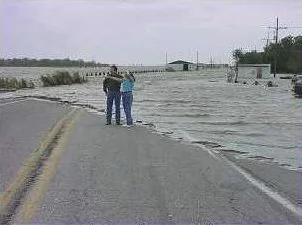
When these storms now come in on top of already higher sea levels, the waves and storm surge can dramatically increase coastal flooding.
What Hurricane Hugo’s flooding would look like in Charleston, S.C., with today’s higher sea levels.
Tropical cyclones caused more than $1.3 trillion in damage in the U.S. from 1980 to 2023, with an average cost of $22.8 billion per storm. Much of that cost has been absorbed by federal taxpayers.
It is not just tropical storms. Maine saw what can happen when a winter storm in January 2024 generated tides 5 feet above normal that filled coastal streets with seawater.
A winter storm that hit at high tide sent water rushing into streets in Portland, Maine, in January 2024.
What does that mean for the economy?
The possible future economic damages from sea-level rise are not known because the pace and extent of rising sea levels are unknown.
One estimate puts the costs from sea-level rise and storm surge alone at over $990 billion this century, with adaptation measures able to reduce this by only $100 billion. These estimates include direct property damage and damage to infrastructure such as transportation, water systems and ports. Not included are impacts on agriculture from saltwater intrusion into aquifers that support agriculture.
Marine heat waves leave fisheries in trouble
Rising ocean temperatures are also affecting marine life through extreme events, known as marine heat waves, and more gradual long-term shifts in temperature.
In spring 2024, one third of the global ocean was experiencing heat waves. Corals are struggling through their fourth global bleaching event on record as warm ocean temperatures cause them to expel the algae that live in their shells and give the corals color and provide food. While corals sometimes recover from bleaching, about half of the world’s coral reefs have died since 1950, and their future beyond the middle of this century is bleak.
Healthy coral reefs serve as fish nurseries and habitat. These schoolmaster snappers were spotted on Davey Crocker Reef near Islamorada in the Florida Keys. Jstuby/wikimedia, CC BY
Losing coral reefs is about more than their beauty. Coral reefs serve as nurseries and feeding grounds for thousands of species of fish. By NOAA’s estimate, about half of all federally managed fisheries, including snapper and grouper, rely on reefs at some point in their life cycle.
Warmer waters cause fish to migrate to cooler areas. This is particularly notable with species that like cold water, such as lobsters, which have been steadily migrating north to flee warming seas. Once-robust lobstering in southern New England has declined significantly.
How three fish and shellfish species migrated between 1974 and 2019 off the U.S. Atlantic Coast. Dots shows the annual average location. NOAA
In the Gulf of Alaska, rising temperatures almost wiped out the snow crabs, and a $270 million fishery had to be completely closed for two years. A major heat wave off the Pacific coast extended over several years in the 2010s and disrupted fishing from Alaska to Oregon.
This won’t turn around soon
The accumulated ocean heat and greenhouse gases in the atmosphere will continue to affect ocean temperatures for centuries, even if countries cut their greenhouse gas emissions to net zero by 2050 as hoped. So, while ocean temperatures fluctuate year to year, the overall trend is likely to continue upward for at least a century.
There is no cold-water tap that we can simply turn on to quickly return ocean temperatures to “normal,” so communities will have to adapt while the entire planet works to slow greenhouse gas emissions to protect ocean economies for the future.
Charles Colgan is director of Research for the Center for the Blue Economy at the Middlebury Institute of International Studies at Middlebury (Vt.)
Charles Colgan receives funding from several sources including NOAA and Lloyds of London. He was an author of the 5th National Climate Assessment chapter on oceans and the 4th California Climate Assessment chapter on coasts and oceans.
Taking it underground, away from the horse manure

Photo of the opening, on Sept. 1, 1897, of the first subway in the United States, a segment of the Green Line tunnel between Park Street and Boylston stations.
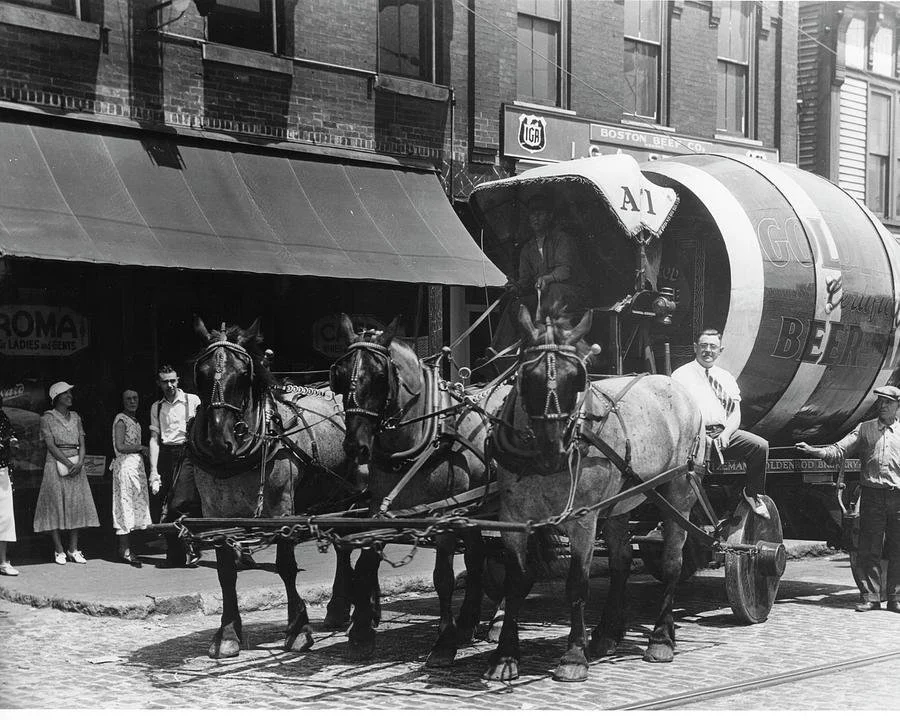
Horse-drawn beer wagon in Boston in early 20th Century.
Loneliness and landscape

Video still from Lake Valley, by American artist Rachel Rose, at Burlington (Vt.) City Arts.
The gallery says Lake Valley is a “visually rich animated video incorporating themes from children’s literature to create a dreamlike story about loneliness and imagination.’’
She looks at how mankind’s changing relationship to landscape has shaped storytelling and belief systems.
Burlington is sited spectacularly on Lake Champlain.

Invasive species are crowding out New England’s native species

An Asian shore crab

Multiflora rose
Text excerpted from an ecoRI News article by Frank Carini
“Invasive Asian shore crabs are outcompeting young lobsters. Invasive snake worms and hammerhead worms are burying themselves deeper into southern New England, where the former consumes the top layer of soil and dead leaves where the seeds of plants germinate, and the latter is toxic and transmits harmful parasites to humans and animals.
“Invasive multiflora rose and oriental bittersweet have long been embedded in the region, crowding out native vegetation and strangling trees. Some Rhode Island nurseries and garden centers still sell foreign species that don’t mix well with local flora and fauna.
“The spread of invasive species has long been recognized as a global threat to the environment, the economy, and people. Last summer, the Intergovernmental Science-Policy Platform on Biodiversity and Ecosystem Services (IPBES) for the United Nations issued a global assessment providing clear evidence of this growing threat.’’
Julie Appleby: Mass. company settles criminal case against it for lead-test malfunction coverup
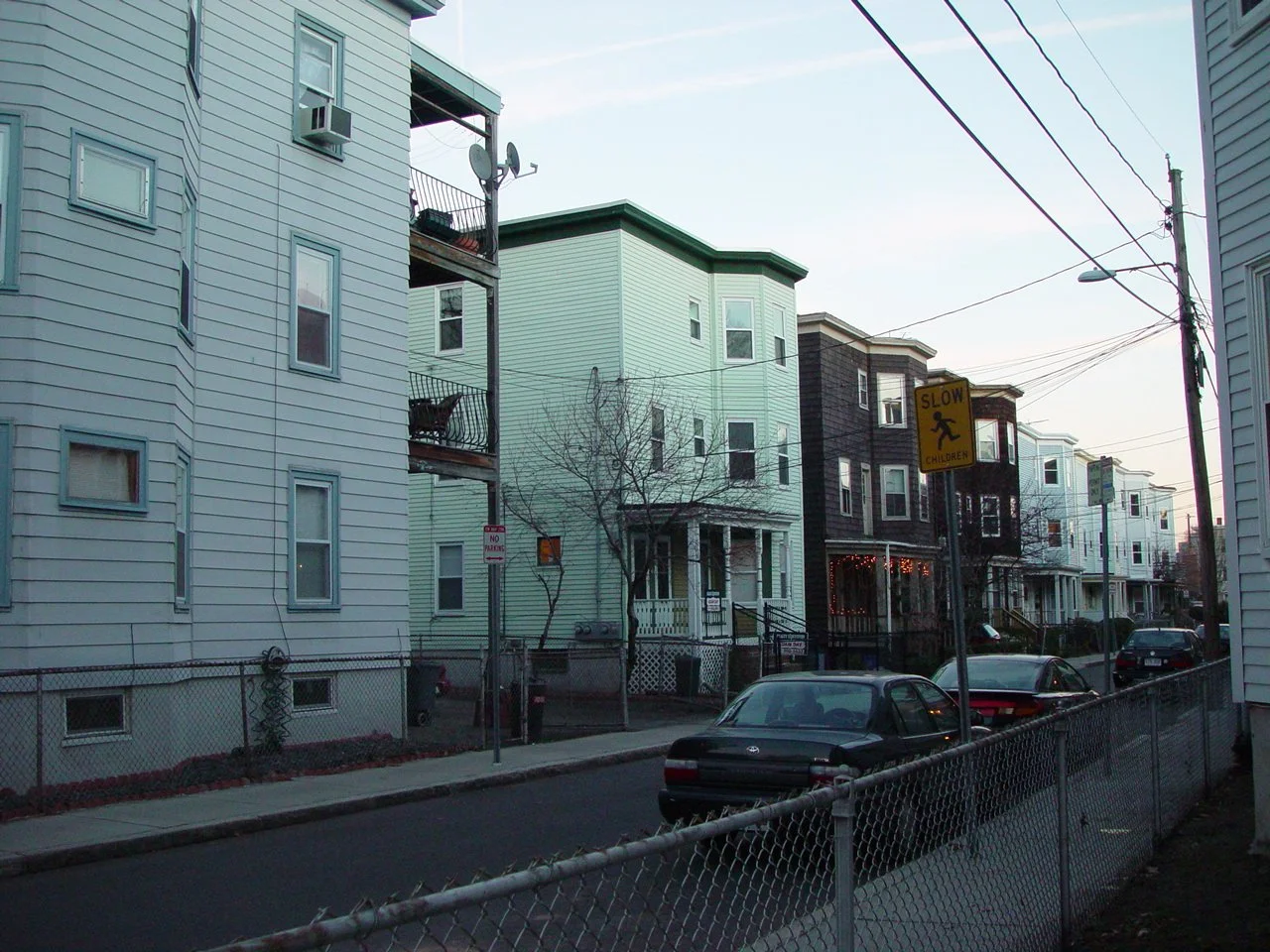
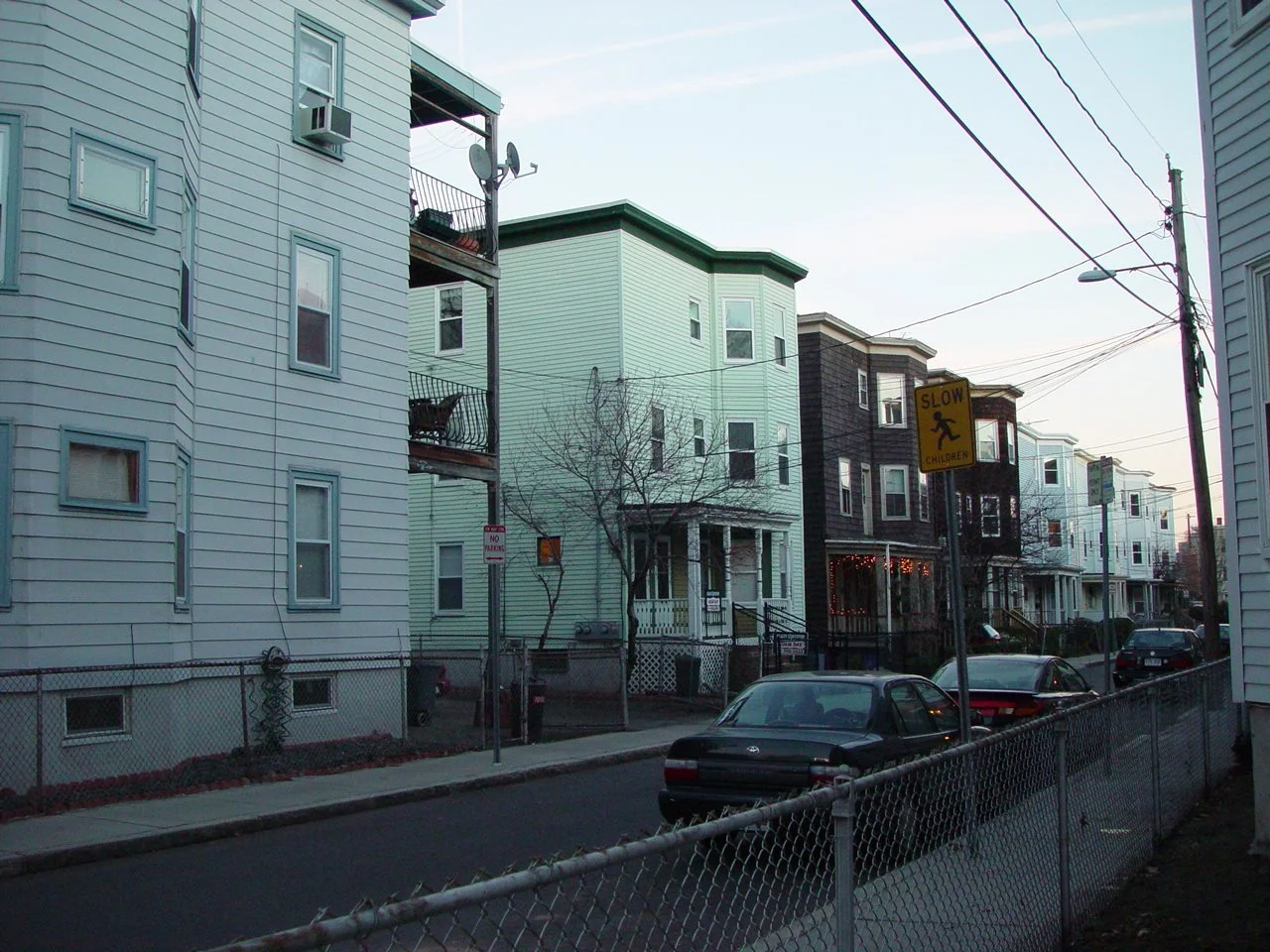
Children living in such old urban dwellings as these three deckers in Cambridge, Mass., tend to have higher levels of lead exposure than average.
From Kaiser Family Foundation Health News
A company that makes tests for lead poisoning has agreed to resolve criminal charges that it concealed for years a malfunction that resulted in inaccurately low results.
It’s the latest in a long-running saga involving North Billerica, Mass.-based Magellan Diagnostics, which will pay $42 million in penalties, according to the Department of Justice.
While many of the fault-prone devices were used from 2013 to 2017, some were being recalled as late as 2021. The Justice Department said the malfunction produced inaccurate results for “potentially tens of thousands” of children and other patients.
Doctors don’t consider any level of lead in the blood to be safe, especially for children. Several U.S. cities, including Washington, D.C., and Flint, Michigan, have struggled with widespread lead contamination of their water supplies in the last two decades, making accurate tests critical for public health.
It’s possible faulty Magellan kits were used to test children for lead exposure into the early 2020s, based on the recall in 2021. Here’s what parents should know.
What tests were affected?
The inaccurate results came from three Magellan devices: LeadCare Ultra, LeadCare II, and LeadCare Plus. One, the LeadCare II, uses finger-stick samples primarily and accounted for more than half of all blood lead tests conducted in the U.S. from 2013 to 2017, according to the Justice Department. It was often used in physician offices to check children’s lead levels.
The other two could also be used with blood drawn from a vein and may have been more common in labs than doctor’s offices. The company “first learned that a malfunction in its LeadCare Ultra device could cause inaccurate lead test results – specifically, lead test results that were falsely low” in June 2013 while seeking regulatory clearance to sell the product, the DOJ said. But it did not disclose that information and went on to market the tests, according to the settlement.
The agency said 2013 testing indicated the same flaw affected the LeadCare II device. A 2021 recall included most of all three types of test kits distributed since October 27, 2020.
The company said in a press release announcing the resolution that “the underlying issues that affected the results of some of Magellan’s products from 2013 to 2018 have been fully and effectively remediated,” and that the tests it currently sells are safe.
What does a falsely low result mean?
Children are often tested during pediatrician visits at age 1 and again at age 2. Elevated lead levels can put kids at risk of developmental delay, lower IQ, and other problems. And symptoms, such as stomachache, poor appetite, or irritability, may not appear until high levels are reached.
Falsely low test results could mean parents and physicians were unaware of the problem.
That’s a concern because treatment for lead poisoning is, initially, mainly preventive. Results showing elevated levels should prompt parents and health officials to determine the sources of lead and take steps to prevent continued lead intake, said Janine Kerr, health educator with the Virginia Department of Health’s Childhood Lead Poisoning Prevention Program.
Children can be exposed to lead in a variety of ways, including by drinking water contaminated with lead from old pipes, such as in Flint and Washington; ingesting lead-based paint flakes often found in older homes; or, as reported recently, eating some brands of cinnamon-flavored applesauce.
What should parents do now?
“Parents can contact their child’s pediatrician to determine if their child had a blood lead test with a LeadCare device” and discuss whether a repeat blood lead test is needed, said Maida Galvez, a pediatrician and professor at the Icahn School of Medicine at Mount Sinai in New York.
During an earlier recall of some Magellan devices, in 2017, the Centers for Disease Control and Prevention recommended that patients be retested if they were pregnant, nursing, or children younger than 6 and had a blood lead level of less than 10 micrograms per deciliter as determined by a Magellan device from a venous blood draw.
The 2021 recall of Magellan devices recommended retesting children whose results were less than the current CDC reference level of 3.5 micrograms per deciliter. Many of those tests were of the finger-stick variety.
Kerr, at the Virginia health department, said her agency has not had many calls about that recall.
The finger-stick tests “are not that widely used in Virginia,” said Kerr, adding that “we did get a lot of questions about the applesauce recall.”
In any case, she said, the “best course of action for parents is to talk with a health care provider.”
Julie Appleby is a KFF Health News reporter.
You’ll need it

Work by American conceptional artist Michael C. Thorpe, in his current show, “Homeowners’ Insurance,’’ at the Fuller Craft Museum, Brockton, Mass.
The museum says:
“‘Michael C. Thorpe: Homeowners Insurance’ presents some of his quilt-based work. The 15 forms on view illustrate Thorpe’s distinct visual language known for its geometric shapes, colorful textures, and energetic stitching. A true storyteller, Thorpe shares his world through his expressions—his friends and family, inspirational figures, daily surroundings, athletic endeavors, even painterly abstractions and meaningful texts. By depicting harmonious narratives, Thorpe aims to inspire connection between people from all walks of life.’’
Cozy space for youth

“I reveled in the smallness, the coziness of an upstairs bedroom in a traditional American Cape Cod house, the half-floor that forces you to duck, to feel small and naive again, ready for anything, dying for love, your body a chimney filled with odd, black smoke. These square, squat, awkward rooms are like a fifty-square-foot paean to teenage-hood, to ripeness, to the first and last taste of youth.’’
— Gary Shteyngart (born 1972), Soviet-born) American writer

DEI drive at some colleges can lead to dishonesty by job applicants
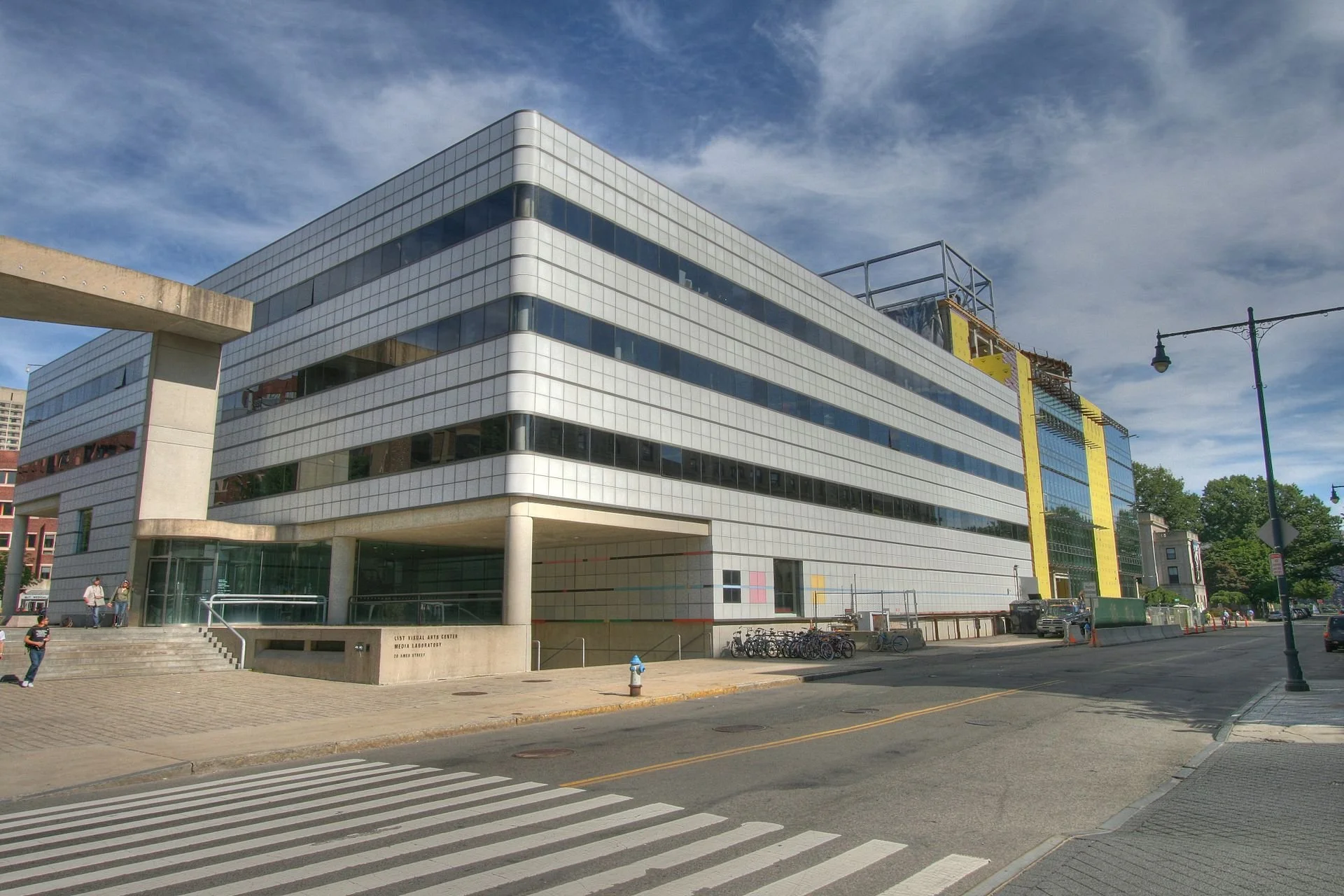
The MIT Media Lab, in Cambridge, Mass.
— Photo by Madcoverboy
Adapted from Robert Whitcomb’s “Digital Diary,’’ in GoLocal24.com
The right wing greatly exaggerates the degree of “wokeness” in U.S. higher education, but there’s no doubt that the anxious, hyper-self-conscious drive to achieve “diversity, equity and inclusion’’ has gotten out of control at some institutions. The Washington Post gave a couple of examples in a recent editorial. They show an alarming focus on characterizing people on the basis of their ethnic, sexual and other identity and/or their (real or fabricated) views on identity rather than on individuals’ intellectual achievements and ambitions.
It cited the MIT Communication Lab, which demanded that job applicants submit a diversity statement as an “opportunity to show that you care about the inclusion of many forms of identity in academia and in your field, including but not limited to gender, race/ethnicity, age, nationality, sexual orientation, religion, and ability status,” and “it may be appropriate to acknowledge aspects of your own marginalized identity and/or your own privilege.” The Post also cited Harvard University’s Bok Center for Teaching and Learning, which asks applicants, “Do you seek to identify and mitigate how inequitable and colonial social systems are reinforced in the academy by attending to and adjusting the power dynamics in your courses?”
In other words, people are asked to take what are basically political stands when the emphasis in academia should presumably be to hire people on the basis of their knowledge of their specialties, their ability to teach undergraduate and graduate students, their potential to undertake important peer-reviewed research and their integrity.
Of course, the intense competition for academic jobs, especially at elite institutions, will lead some candidates to lie about their views of DEI-related matters.
Here’s some related material on this issue.
Fair or not, DEI programs, along with such unworkable programs as “reparations” to Black Americans for slavery, and referring to a person as “they’’ in order to sound “gender-neutral” are potent ammunition for Trumpers.
The terror of making art

“The Pressure of the Blank Canvas,’’ by Duncan Reid, at SONO Arts Space at Norwood (Mass.) Arts Center June 16.
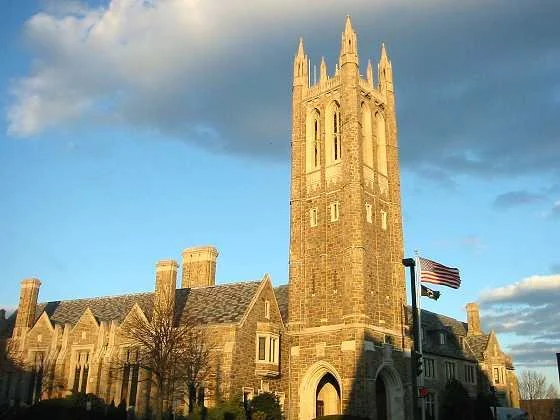
The astonishing Norwood Memorial Municipal Building.
— Photo Daniel P. B. Smith
They eat seaweed too

“Goats of Bass Harbor” (acrylic on canvas), by Maine-based painter and filmmaker Sharyn Paul Brusie, at Yarmouth, (Maine) Frame and Gallery.


Bass Harbor, Maine
— Photo (via drone) by King of Hearts

Chris Powell: Silly anti- ‘climate change’ drives in Vermont and Connecticut

MANCHESTER, Conn.
While it may be hard to believe, Vermont seems to have gotten ahead of Connecticut in "climate change" craziness.
The Green Mountain State has just passed a law allowing itself to charge big oil and natural gas companies for the cost to the state of the "greenhouse gases" emitted by use of the fuel sold by the companies between 1995 and 2024. The state itself will choose the criteria for calculating the cost. Mainly Vermont wants to blame the oil and gas companies for the extensive damage done in the state last year by terrible flooding.
Under the new law it won't matter that the fuel products on which "climate change" is being blamed were and remain not just perfectly legal but also crucial to modern civilization. No matter also that nearly everyone in Vermont has been using those products ever since they became available. Vermont wants to blame the manufacturers of the fuel products, not their users, the people for whom those products were made -- the people without whose demand the products wouldn't have been made at all.
Indeed, the mere manufacture of fuel didn't emit the "greenhouse gases" Vermont is complaining about. The use of them did.
Like all other states, Vermont already has a fuel tax. If the state wants to recover what it believes are its costs of the "climate change" caused by use fuel, it can raise that tax and get the money from the parties responsible for their use: its own residents. And if the state really believes that "climate change" disasters are being caused by the use of oil and gas, Vermont already should have outlawed those fuels.
Of course the legislators who passed the law don't really believe its premises. The new law is just a money grab that, if ever implemented, will be nullified in one court or another after years of expensive litigation. But until then legislators who voted for the law will pose as saviors of the environment.
Meanwhile Connecticut's climate alarmists want Gov. Ned Lamont and leaders of the Democratic majority in the General Assembly to put "climate crisis" legislation on the agenda of a special legislative session that is to be called to make a fix in motor vehicle assessment law, a special session that was supposed to be brief.
The "climate crisis" bill at issue passed the House of Representatives during the recent regular session but was stalled by some of the majority Democrats in the Senate who thought that it was more important to guard against climate change by modifying municipal zoning. (The Senate's Republican minority almost certainly would have opposed the "climate crisis" bill, as the Republican minority in the House did.)
After declaring a "climate crisis," the bill would just specify options for reducing "greenhouse gases" by 2050 -- safely beyond the political lifespans of most current legislators. Actual sacrifices would await another day.
Whatever one thinks of "climate change" and its causes -- natural phenomena or manmade phenomena arising only in recent decades -- the "climate crisis" legislation is silly. For even if "climate change" is substantially the result of the use of oil, gas and coal as fuel, Connecticut can do nothing meaningful about it.
The state could outlaw those fuels and shut down all its industry requiring a smokestack and all its transportation requiring a tailpipe and the rest of the country and the rest of the world would continue to use those fuels. Since Connecticut's contribution to the world's "greenhouse gases" is tiny, the state would only disadvantage itself without achieving any measurable reduction in those gases.
Even a national policy of eliminating oil, gas and coal as fuel would have little impact on "greenhouse gases" worldwide, since the developing world, including industrial giant China, will continue to use those fuels until something better comes along. Only a worldwide solution is worth pursuing -- if there really is a problem to solve.
Chris Powell has written about Connecticut government and politics for many years (CPowell@cox.net).
Nervous gay times on lower Washington Street

Washington Street in the 1920’s.
Excerpted from From The Boston Guardian
(New England Diary’s editor, Robert Whitcomb, is chairman of The Boston Guardian.)
“Before the Combat Zone, lower Washington Street was Gay Times Square, a mecca of bright lights, entertainment and a tolerance for life beyond the societal norms of heterosexuality….
“Prior to being plagued with strip joints with names like The Naked i Cabaret and the Pussycat Lounge, the neighborhood was home to Playland, the Petty Lounge and Touraine Cafe. The gathering places drew an LGBTQ crowd, while the local theaters, such as the Stuart Theater and the Pilgrim, created a show-business atmosphere that New York’s Times Square is known for.
“Many of the bar owners in the area often used bribery or connections with organized crime to keep police from raiding their establishments, according to research from The History Project, a Boston-based LGBTQ history organization.
“In the 1950s and 1960s, threats of persecution and prosecution kept the LGBTQ community underground, making many of the bars on Washington Street appealing….”
But I won't ask

Work by Barbara Kruger, in her show, through Dec. 1, at the Hall Art Foundation, Reading , Vt. She’s an American conceptual artist and collagist.
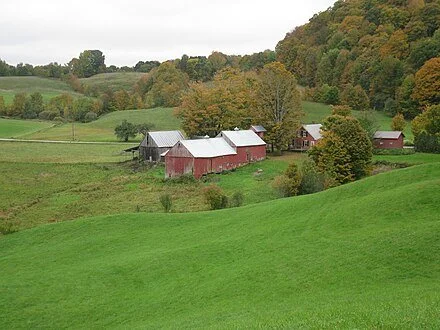

Jenne Farm, in Reading. It’s one of the most photographed farms in the world.