
Llewellyn King: Tech giants want in on electricity
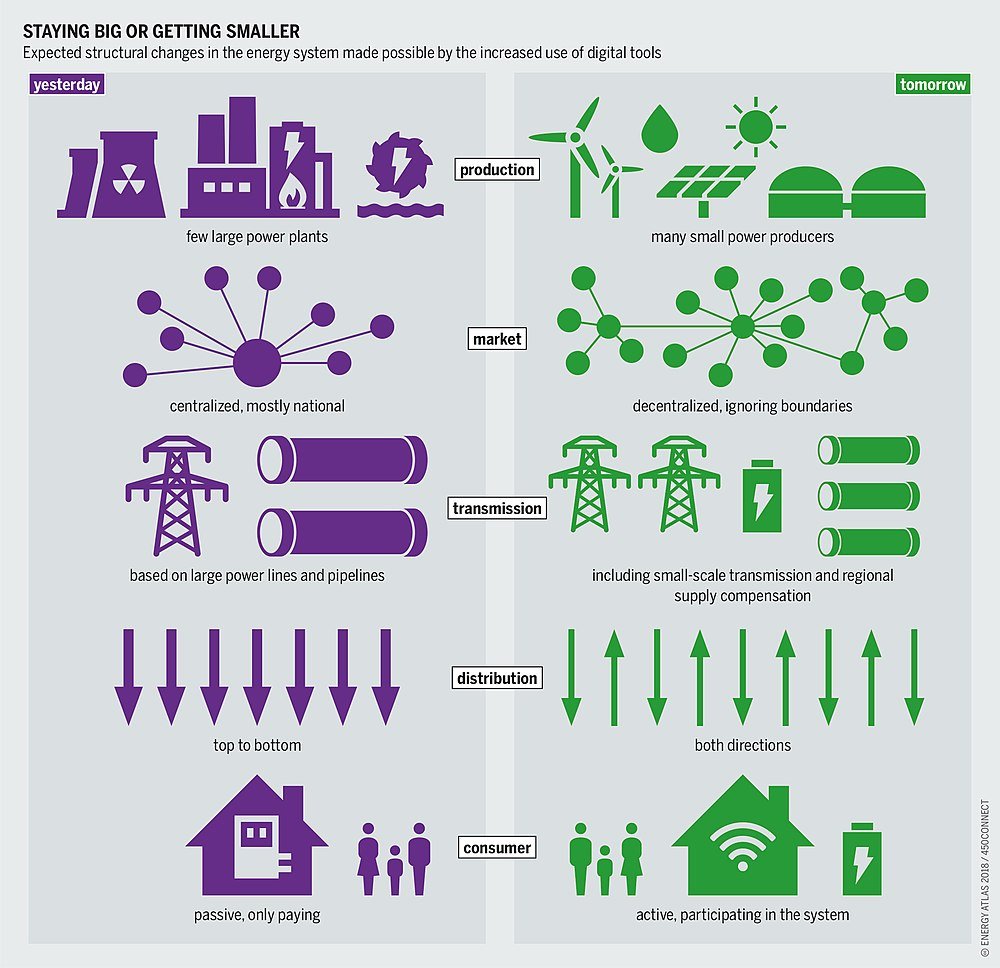
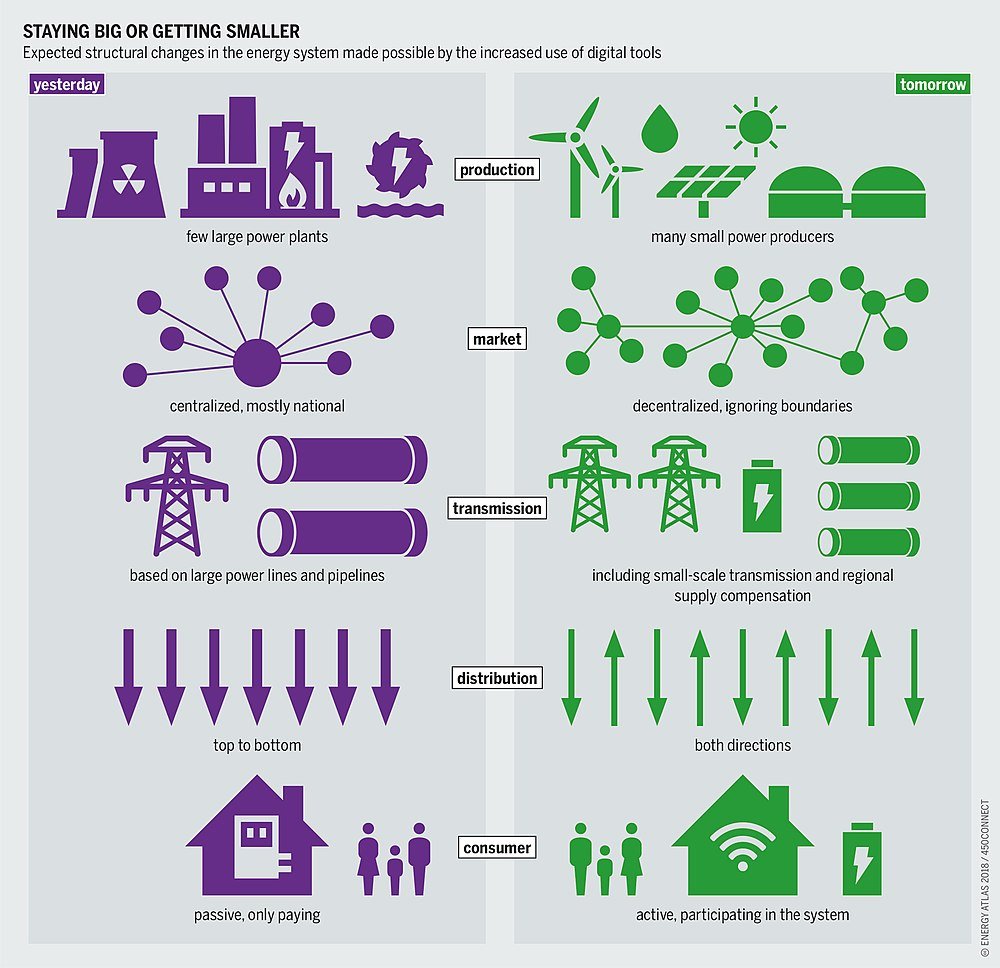
Centralized (left) vs. distributed electricity systems
WEST WARWICK, R.I.
During the desperate days of the energy crisis in the 1970s, it looked as though the shortage was permanent and we would have to change the way we lived, worked and played to allow for that.
In the end, technology solved the crisis.
For fossil fuels, it was 3D seismic, horizontal drilling and fracking. For electricity, it was wind and solar and better technology for making electricity with natural gas — a swing from burning it under boilers to burning it in aeroderivative turbines, essentially airplane engines on the ground.
A new energy shortage — this time confined to electricity — is in the making and there are a lot of people who think that, magically, the big tech companies, headed by Alphabet’s Google, will jump in and use their tech muscle to solve the crisis.
The fact is that the tech giants, including Google but also Amazon, Microsoft, Apple and Meta, are extremely interested in electricity because they depend on it supplies of it to their voracious data centers. The demand for electricity will increase exponentially as AI takes hold, according to many experts.
The tech giants are well aware of this and have been busy as collaborators and at times innovators in the electric space. They want to ensure an adequate supply of electricity, but also they insist that it be green and carbon-free.
Google has been a player in the energy field for some time with its Nest Renew service. This year, it stepped up its participation by merging with OhmConnect to form Renew Home. It is what its president, Ben Brown, and others call a virtual power plant (VPP). These are favored by environmentalists and utilities.
A VPP collects or saves energy from the system without requiring additional generation. It can be hooking up solar panels and domestic batteries, or plugging in and reversing the flow from an electric vehicle (EV) at night.
For Renew Home, the emphasis is definitely in the home, Brown told me in an interview.
Participants, for cash or other incentives (like rebates), cut their home consumption, managed by a smart meter, so that air conditioning can be put up a few notches, washing machines are turned off, and an EV can be reversed to feed the grid.
At present, Brown said, Renew Home controls about 3 gigawatts of residential energy use — a gigawatt is sometimes described as enough electricity to power San Francisco — and plans to expand that to 50 GW by 2030. All of it is already in the system and doesn't require new lines, power plants or infrastructure.
“We are hooking up millions of customers,” he said, adding that Renew Home is cooperating with 100 utilities.
Fortunately, peak demand and the ability to save on home consumption coincide between 5 p.m. and 9 p.m.
There is no question that more electricity will be needed as the nation electrifies its transportation and its manufacturing — and especially as AI takes hold across the board.
Todd Snitchler, president of the Electric Power Supply Association, told the annual meeting of the United States Energy Association that a web search using ChatGPT uses nine times as much power as a routine Google search.
Google, and the other four tech giants, are in the electricity-supply space, but not in the way people expect. Renew Home is an example; although Google’s name isn’t directly connected, it is the driving force behind Renew Home.
Sidewalk Infrastructure Partners (SIP), a development fund, financed largely by Google, has invested $100 million in Renew Home. Brown is a former Google executive as is Jonathan Winer, co-CEO and cofounder of SIP.
As Jim Robb, president of the North American Electric Reliability Corporation, the congressionally mandated, not-for-profit supply watchdog, told me recently on the TV show White House Chronicle, the expectation that Google will go out and build power plants is silly as they would face the same hurdles that electric utilities already face.
But Google is keenly interested in power supply, as are the other tech behemoths. The Economist reports they are talking to utilities and plant operators about partnering on new capacity.
Also, they are showing an interest in small modular reactors and are working with entrepreneurial power providers on building new capacity with the tech company taking the risk. Microsoft has signed a power-purchase agreement with Helion Energy, a fusion power developer.
Big tech is on the move in the electric space. It may even pull nuclear across the finish line.
Llewellyn King is executive producer and host of White House Chronicle, on PBS. His email is llewellynking1@gmail.com, and he’s based in Rhode Island.

Waiting for a friend

“Milo” (digital photograph, digital print), by Navid Abedzadeh, at Cambridge Art Association.
Two Connecticuts
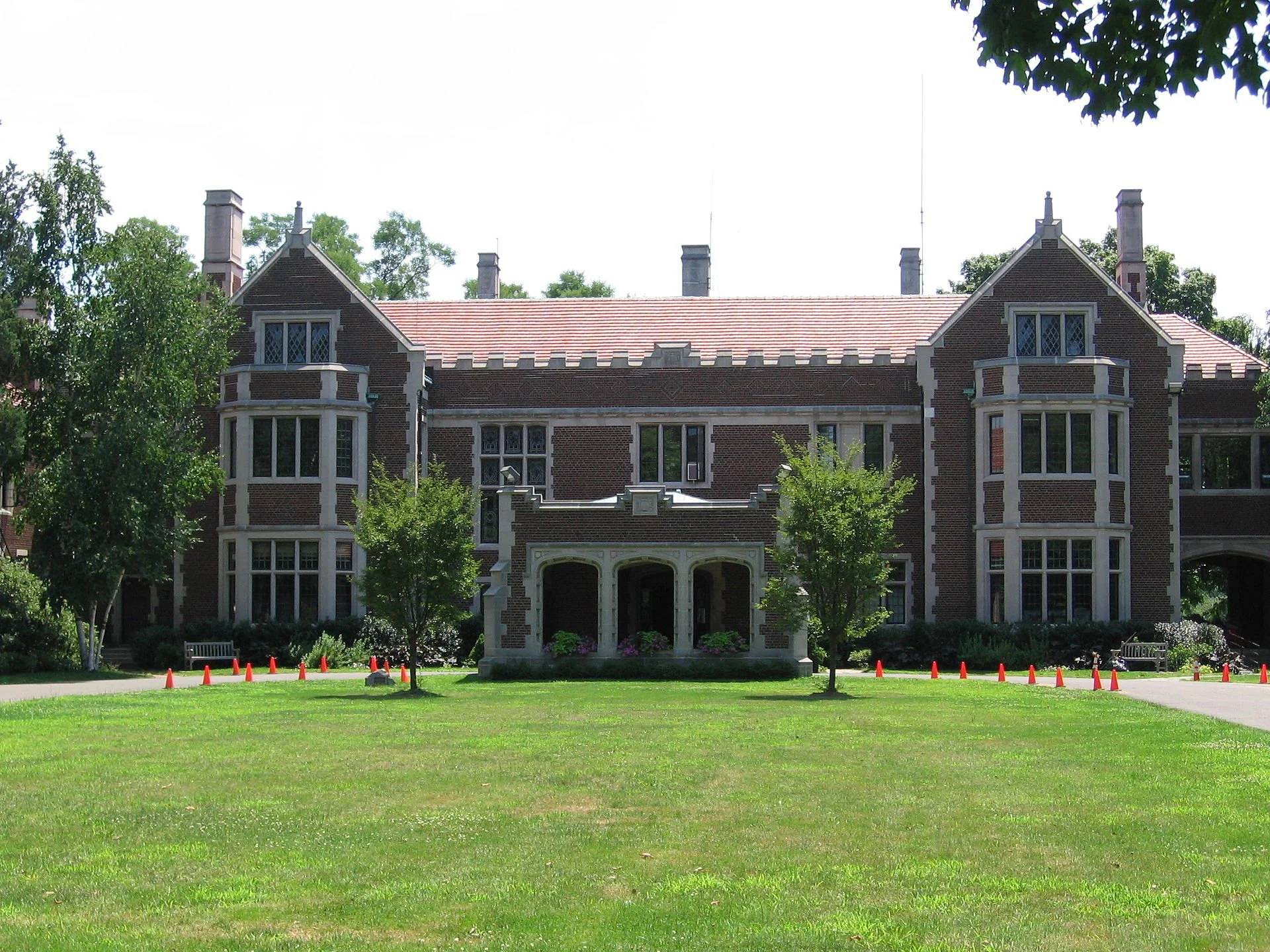
“I lived in a town called New Canaan {Conn.}, which is far too snobby to even mention celebrities. Many American towns are famous for things like ‘See the World’s Largest Ball of String.’ I think my town’s would probably have to be ‘Most Pretentious People.”’
-- Katherine Heigl (born 1978), American actress
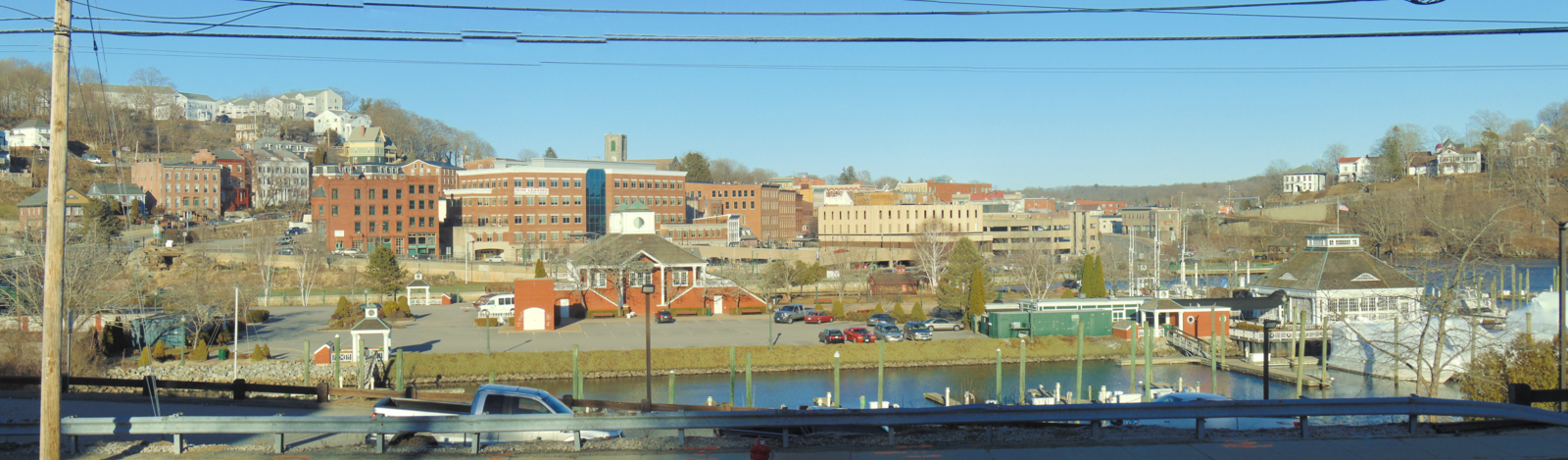
Skyline of Norwich, Conn.
“Eastern Connecticut is very different from western.; we’re more liverwurst than pate, more bowling than polo.’’
— Wally Lamb (born 1950), American novelist and native of the old industrial town of Norwich, Conn.
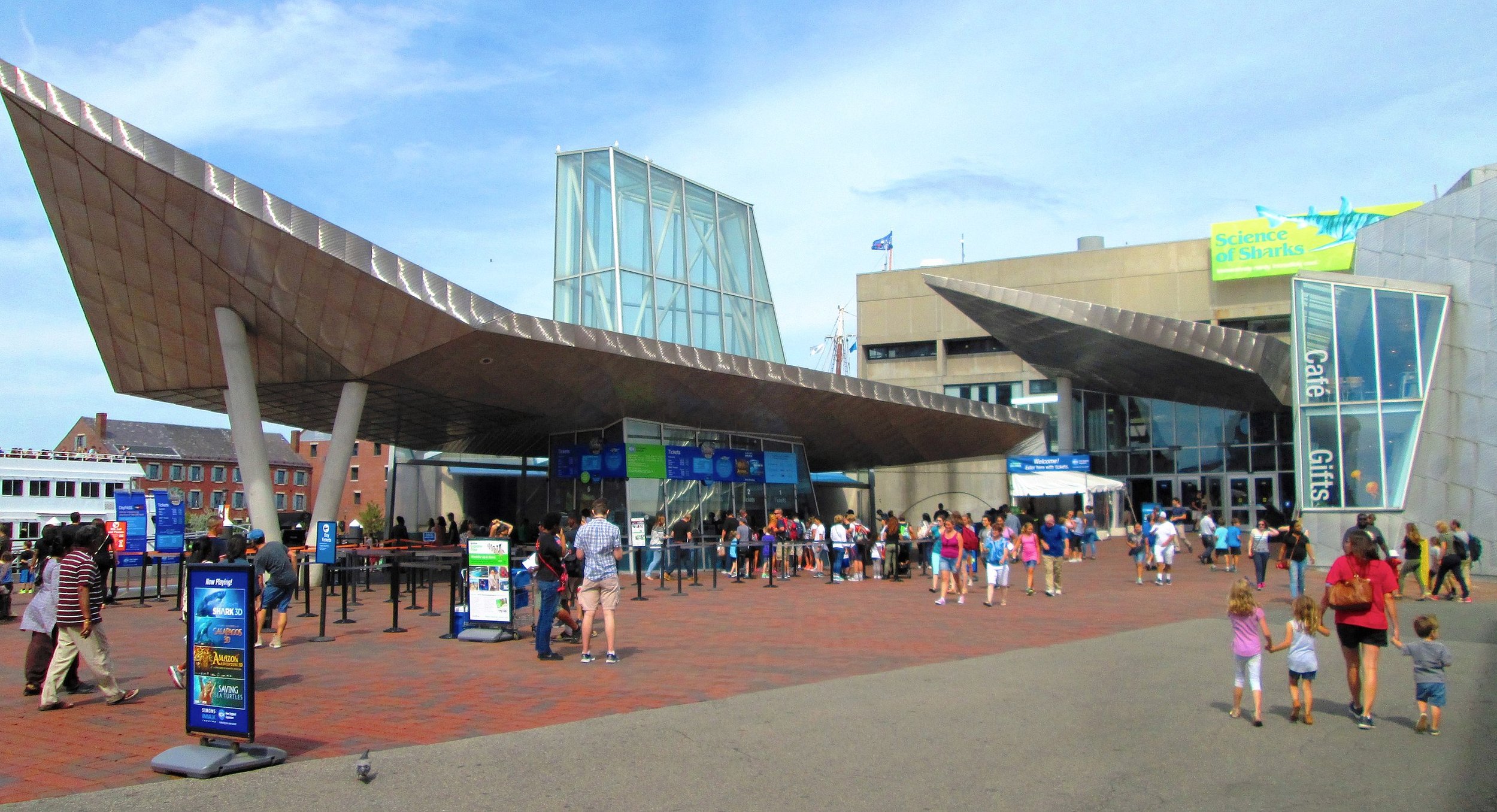
The New England Aquarium and the blue economy
The New England Aquarium’s plaza, in a 2017 photo.
— Photo by Beyond My Ken
Edited from a New England Council report
BOSTON
“The New England Aquarium is using its family-oriented reputation to educate and help grow the blue economy. This multi-pronged approach brings together big names from the industry, young and small startups and businesses, and academic experts.
‘‘The first initiative involves industry and the market working with the aquarium’s BalanceBlue lab to help promote sustainable ocean use, from improved fishing practices and carbon removal innovations. ‘You can’t have a climate conversation without the ocean. All the programs come together to think about how we are going to create new pathways to promote responsible ocean use,’ said Emiley Lockhart, the aquarium’s associate vice president for ocean sustainability.
“The BalanceBlue lab includes the bluetech incubator BlueSwell, which helps startups working on both ocean sustainability and the marine economy. BlueSwell has helped four startups receive funding and mentorship since 2020. An additional part of the BalanceBlue umbrella is the UpSwell program, which runs in collaboration with SeaAhead and is publishing a series of webinars and papers about ocean tech. According to Lockhart, the blue economy will be expanding rapidly, and he believes that ocean-derived technology will be an important part of that growth, with the New England Aquarium leading that growth.’’
Tangled web

“Spring Peepers” (oil on canvas), by Kathy Hodge, in the show “Complex World: Paintings by Kathy Hodge and Nick Paciorek,’’ at the Providence Art Club through June 28.
The gallery says:
“Hodge’s wild and tangled vegetation of New England and Paciorek’s colorful celebration of the bounty of vineyards reveal the hidden order within the apparent chaos of the natural world.’’

“Southern France Vineyard ‘‘ (oil on canvas), by Nick Paciorek.
Complex water view

“Parhelion, Full Flower Moon,’’ by Maine-based art photographer Linda Mahoney, in the group show “Lens Remembrance,’’ a collection of the work of Maine and New Hampshire artists using photography as an art form, at the Lakes Gallery at Chi-Lin, Laconia, N.H., June 6-July 21
Jhordanne Jones: The science behind this year’s menacing hurricane-season forecast
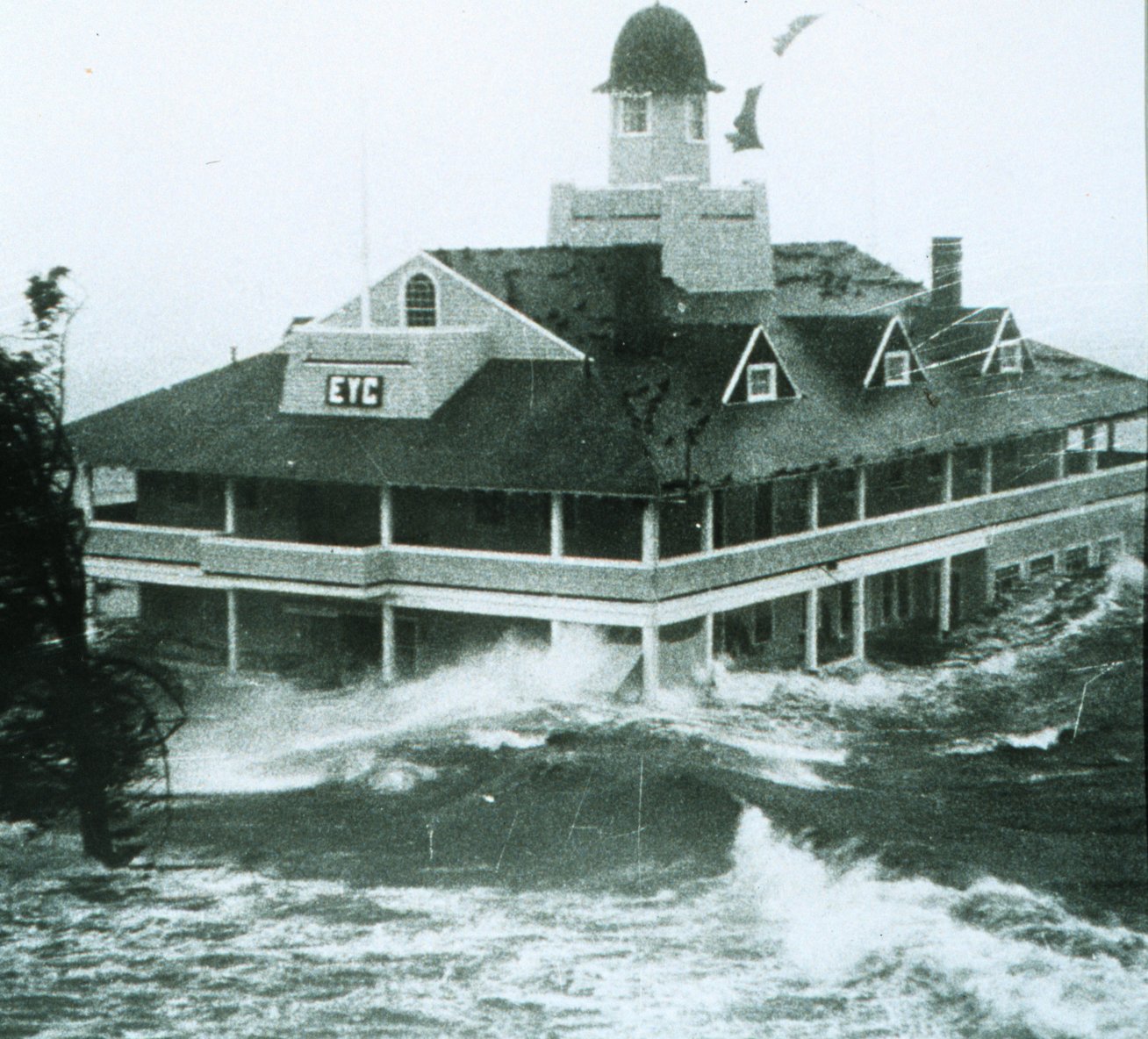
The Edgewood Yacht Club, in Cranston, R.I., ravaged by Hurricane Carol’s storm surge, on Aug. 31, 1954.
The 2024 Atlantic hurricane season started on June 1, and forecasters are predicting an exceptionally active season.
If the National Hurricane Center’s early forecast, released May 23, is right, the North Atlantic could see 17 to 25 named storms, eight to 13 hurricanes, and four to seven major hurricanes by the end of November. That’s the highest number of named storms in any NOAA preseason forecast.
Other forecasts for the season have been just as intense. Colorado State University’s early outlook, released in April, predicted an average of 23 named storms, 11 hurricanes and five major hurricanes. The European Centre for Medium-Range Weather Forecasts anticipates 21 named storms.
Colorado State also forecasts a whopping 210 accumulated cyclone energy units for 2024, and NOAA forecasts the second-highest ACE on record. Accumulated cyclone energy is a score for how active a given season is by combining intensity and duration of all storms occurring within a given season. Anything over 103 is considered above normal.
These outlooks place the 2024 season in league with 2020, when so many tropical cyclones formed in the Atlantic that they exhausted the usual list of storm names: A record 30 named storms, 13 hurricanes and six major hurricanes formed that year, combining for 245 accumulated cyclone energy units.
So, what makes for a highly active Atlantic hurricane season?
I am a climate scientist who has worked on seasonal hurricane outlooks and examined how climate change affects our ability to predict hurricanes. Forecasters and climatologists look for two main clues when assessing the risks from upcoming Atlantic hurricane seasons: a warm tropical Atlantic Ocean and a cool tropical eastern Pacific Ocean.
Warm Atlantic water can fuel hurricanes
During the summer, the Atlantic Ocean warms up, resulting in generally favorable conditions for hurricanes to form.
Warm ocean surface water – about 79 degrees Fahrenheit (26 degrees Celsius) and above – provides increasing heat energy, or latent heat, that is released through evaporation. That latent heat triggers an upward motion, helping form clusters of storm clouds and the rotating circulation that can bring these storm together to form rainbands around a vortex.
How hurricanes form. NOAA
Ocean heat in 2024 is a big reason why forecasters are warning of a busy hurricane season.
The North Atlantic sea surface temperature has been shattering heat records for most of the past year, so temperatures are starting out high already and are expected to remain high during the summer. Globally, ocean temperatures have been rising as the planet warms.
A long-term temperature pattern known as the Atlantic Multidecadal Oscillation, or AMO, also comes into play. The summer Atlantic ocean surface can be warmer or cooler than usual for several seasons in a row, sometimes lasing decades.
Climate patterns associated with the warm phase of the Atlantic Multidecadal Oscillation, or AMO. NOAA Climate.gov
Warm phases of the AMO mean more energy for hurricanes, while cold phases help suppress hurricane activity by increasing trade wind strength and vertical wind shear. The Atlantic Ocean has been in a warm phase AMO since 1995, which has coincided with an era of highly active Atlantic hurricane seasons.
How the Pacific can interfere with Atlantic storms
It might seem odd to look to the Pacific for clues about Atlantic hurricanes, but Pacific Ocean temperatures also play an important role in the winds that can affect hurricanes.
Like the Atlantic, water temperatures in the eastern Pacific oscillate between warm and cold phases, but on shorter time spans. Scientists call this the El Niño Southern Oscillation, or ENSO. The warm phases are known as El Niño; cold phases are called La Niña.
La Niña promotes the upward motion of air over the Atlantic, which fuels deeper rain clouds and more intense rainfall.
During La Niña, the Atlantic is stormier as warm air rises there. Fiona Martin, NOAA Climate.gov
During El Niño, more storms form off California as warm air rises over the warmer waters of the eastern Pacific. Fiona Martin, NOAA Climate.gov
La Niña’s effects also weaken the trade winds, reducing vertical wind shear. Vertical wind shear, a difference in wind strength and direction between the upper atmosphere and the atmosphere near Earth’s surface, makes it harder for hurricanes to form and can pull apart a storm’s vortex.
In contrast, El Niño promotes stronger trade winds, increasing wind shear. It also centers the upward motion and rainfall in the Pacific, triggering a downward motion that promotes fair weather over the Atlantic.
The map shows recent temperatures compared with the 1971-2000 average. In the eastern Pacific, the cooler water along the equator suggests El Niño is ending. Climate Reanalyzer, Climate Change Institute, University of Maine
El Niño was strong during the winter of 2023-24, but it was expected to dissipate by June, meaning less wind shear to keep hurricanes in check. La Niña conditions are likely by late summer.
Where ENSO is in its transition may determine how early in the season tropical storms form – and how late. A quick transition to La Niña may indicate an early start to the season as well as a longer season, as La Niña – along with a warm Atlantic – maintains a hurricane-friendly environment earlier and longer within the year.
This ocean tag team controls hurricane activity
The Atlantic and eastern Pacific ocean temperatures together control Atlantic hurricane activity. This is like bouncing in a bounce house or on a trampoline. You get a good bounce when you’re jumping on your own but reach far greater heights when you have one or two more people jumping with you.
When the eastern Pacific is in its cold phase (La Niña) and the Atlantic waters are warm, Atlantic hurricane activity tends to be more frequent, with a higher likelihood of more intense and longer-lived storms.
The record 2020 hurricane season had the influence of both La Niña and high Atlantic ocean temperatures, and that’s what forecasters expect to see in 2024.
It is also important to remember that storms can also intensify under moderately unfavorable environments as long as there is a warm ocean to fuel them. For example, the storm that eventually became Hurricane Dorian in 2019 was surrounded by dry air as it headed into the Caribbean, but it rapidly intensified into an extremely destructive Category 5 hurricane over the Bahamas.
This article has been updated with NOAA officials describing the forecast as the highest number of storms it has ever forecast.
Jhordanne Jones is a Postdoctoral Research Fellow in Climate and Weather Extremes at Purdue University.
She completed her PhD in the Atmospheric Science Department at Colorado State University (CSU) and continues to collaborate with forecasters associated with CSU's seasonal hurricane outlook.

A state for small business

At Dan and Whit’s General Store, in Norwich, Vt.
“I represent a rural state and live in a small town. Small merchants make up the majority of Vermont's small businesses and thread our state together. It is the mom-and-pop grocers, farm-supply stores, coffee shops, bookstores and barber shops where Vermonters connect, conduct business and check in on one another.’’
Peter Welch (born 1947), U.S, senator from Vermont

Beyond the scandals
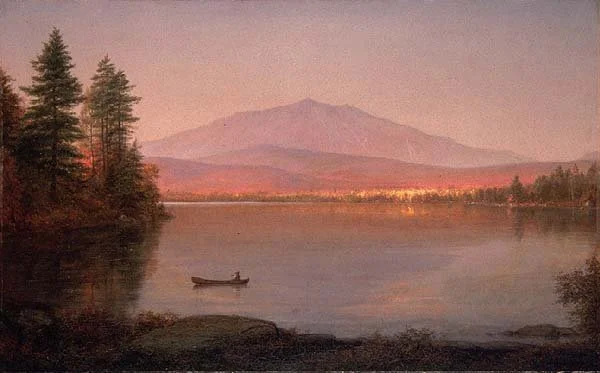
Mount Katahdin, in northern Maine.
“We were beyond fences, away from the clash of town-clocks, the clink of town-dollars, the hiss of town scandals. As soon as one is fairly in camp and has begun to eat with this fingers, he is free.’’
— Theodore Winthrop (1828-1861), in Life in the Open Air, an account of the author's adventures in northern Maine and the ascent of Mount Katahdin in the mid-19th Century. The Connecticut native, writer, lawyer and traveler was killed in the Civil War; this book was published posthumously.
The beauty of bugs

“In the Midnight Garden” (detail from “Wonder’’), by Jennifer Angus, in her show “Jennifer Angus: The Golden Hour,’’ at the Bruce Museum, Greenwich, Conn., June 6-Sept. 8.
Know the ending
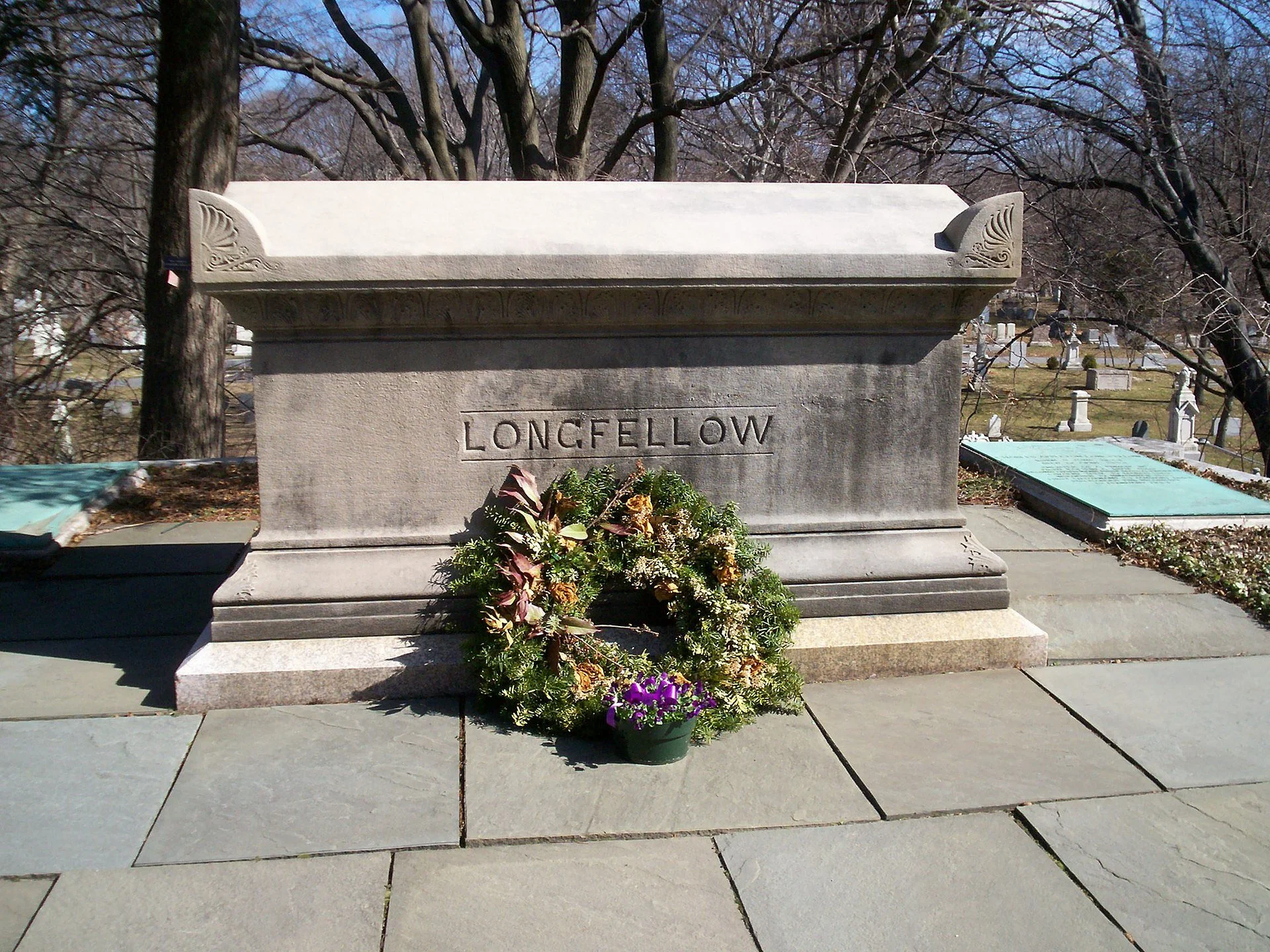
Grave of Henry Wadsworth Longfellow (1807-1882), in Mt. Auburn Cemetery, Cambridge, Mass. The Maine native was America’s most famous poet for decades.
‘‘Haroun Al Raschid,’’ by Henry Wadsworth Longfellow
One day, Haroun Al Raschid read
A book wherein the poet said —
Where are the kings, and where the rest
Of those who once the world possessed?
They're gone with all their pomp and show,
They're gone the way that thou shalt go.
O thou that choosest for thy share
The world, and what the world calls fair,
Take all that it can give or lend,
But know that death is at the end.
Haroun Al Raschid bowed his head.
Tears fell upon the page he read.
Trying to save 'the little things that run the world'

A red-belted bumblebee, found in New England, though less so than decades ago.

“Garden in the Woods,’’ in Framingham, Mass. A perfect place for pollinators.
—Photo by Daderot
Text excerpted from an ecoRI News article
KINGSTON, R.I.
Steven Alm and Casey Johnson in the University of Rhode Island Bee Lab want property owners to think small. Though the creatures at issue are tiny, the issues the duo is examining are anything but trivial. In fact, the issues they are studying are bellwethers for larger issues facing the natural world.
They want to reminding us of the importance of, as E.O. Wilson said, “the little things that run the world.”
A professor at URI and keeper of the university’s Insect Collection, which dates to the late 1800s, Alm is concerned about the insect loss he has witnessed in the course of his career, never mind the species that now only exist in pinned specimen form, no longer in the wild.
“We’re in trouble with the insects,” he said. Birds, fish, and other members of the food web need insects, but their numbers are dwindling. Pollinators in particular are vulnerable.
Entomologists are seeing notable declines in insect diversity worldwide, caused by habitat loss, introduced species, novel pathogens, pesticides, pollution, and climate change.
To read the whole article, hit this link.
Chris Powell: Innovation is needed to fight poverty and violence; Conn. customer satisfaction
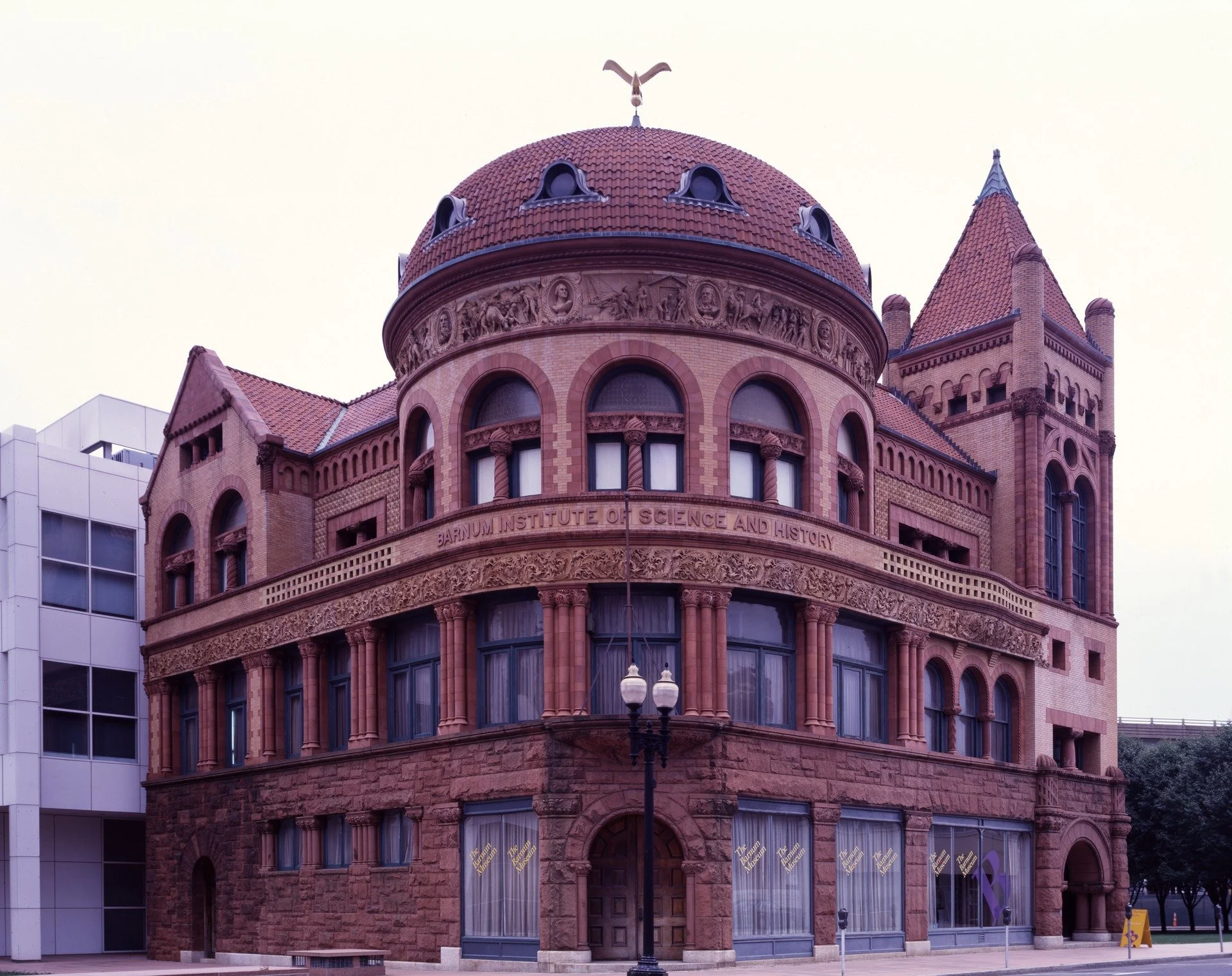
The P.T. Barnum (the circus guy) Museum, in Bridgeport.
MANCHESTER, CONN.
Appalled by the shooting of five people in several incidents in Bridgeport over the Memorial Day weekend, Connecticut Gov. Ned Lamont hurried to the city on May 28 to meet Mayor Joe Ganim and other officials and show moral support.
While Bridgeport's police department is said to be understaffed and to suffer high turnover -- police work may be easier almost anywhere else -- the governor didn't promise any extra help for the city. He thought state initiatives that are already underway with city government are enough for the time being.
In contrast .Mayor Ganim thundered emptily for the television cameras that the city would ensure that the perpetrators of the weekend shootings and other shootings are punished severely. Of course they'll have to be apprehended first.
Just a few hours later four people were shot in an incident in Waterbury. This one didn't prompt a visit from the governor, as the daily business of state government had resumed with the governor's announcement of the allocation of $100 million to the state Economic and Community Development Department for establishing "innovation clusters." This is the euphemism for more political patronage dressed up as economic growth.
If only one of those clusters could figure out how to end gun violence in the cities, or, better still, figure out how to reduce poverty in Connecticut.
Most people in the state -- at least most of those who don't hold elective office -- have noticed that violent crime is closely correlated with poverty. So most people won't be surprised that three of the shootings that appalled the governor took place at the P.T. Barnum Apartments public housing project in Bridgeport and not in exclusive neighborhoods in Darien or Avon. This has been the way of life in Connecticut for many decades.
Nor have the two major state government policies involving poverty changed over that time. Connecticut long has maintained a welfare system that subsidizes childbearing outside marriage and thus deprives children of fathers and the income, discipline, and guidance they provide. The state also long has promoted children throughout school even if they fail to learn anything, thereby destroying their incentive to learn.
These policies have delivered tens of thousands of young people to adulthood largely demoralized and unable to provide for themselves adequately. They are even less able to provide for themselves now that government-instigated inflation has sharply raised the price of necessities. In such circumstances people get stressed, alienated, angry, disturbed, and predatory.
Announcing that $100 million for "innovation clusters," the governor said: "Connecticut has the best-educated and best-trained workforce in the nation. ... We are the home of innovation."
Maybe, but it wasn't the success of an educated and trained workforce that compelled the governor to rush to Bridgeport the other day. The visit was compelled by another deadly manifestation of the state's huge and growing underclass, which still gets no innovation from state government no matter how many lives are lost or damaged.
WE'RE NOT THAT BAD: According to Seattle-based survey firm Qualtrics, the services provided by Connecticut state government produce the second-worst customer satisfaction rate among the 50 states and the District of Columbia, with Connecticut's 51 percent rate leading only that of Illinois with 49 percent.
Are government services in Connecticut really that bad, or are the state residents who responded to the survey just more demanding and would find themselves even less satisfied if they lived elsewhere?
In any case, a customer-satisfaction rate as low as the one reported by the Qualtrics survey would suggest great political dissatisfaction too. But it's hard to find much evidence of that in Connecticut. For many years the same political party has controlled all major state and federal elective offices and has held comfortable majorities in the General Assembly.
Political dissatisfaction? It's hard to find even political competition here.
Of course, some state agencies could be friendlier, but next-to-last in the country in customer satisfaction is almost impossible to believe.
Chris Powell has written about Connecticut government and politics for many years (CPowell@cox.net).

It’s less ghostly now

The Deerfield Massacre took place on Feb. 29, 1704, when French and Native American raiders under the command of Jean-Baptiste Hertel de Rouville attacked the English colonial settlement of Deerfield, part of the Massachusetts Bay Colony, just before dawn. They burned parts of the town and killed 47 colonists.
— 1900 illustration

Old Maine Street, Deerfield, in about 1910.
“If it is no exaggeration to say that Deerfield {Mass.} is not so much a town as the ghost of a town, its dimness almost transparent, its quiet almost a cessation, it is essential to add that it is probably quite the most beautiful ghost of its kind, and with the deepest poetic and historic significance to be found in America….It is, and will probably always remain, the perfect and beautiful statement of the tragic and creative moment when one civilization is destroyed by another.’’
— From the WPA Guide to Massachusetts (1937)
Like us all

“Impermanence’’ (acrylic on canvas), by Catherine Greer, at Portland (Maine) Art Gallery.

Llewellyn King: Why this is our decade of anxiety

“Anxiety” (1894), by Edvard Munch

WEST WARWICK, R.I.
They say that Generation Z is a generation of anxiety. Prima facie, I say they should get a grip. They are self-indulgent, self-absorbed and spoiled — just like every other generation.
Yet they reflect a much wider societal anxiety. It isn’t confined to those who are on the threshold of their lives.
I would highlight five causes of this anxiety:
The presidential election.
Global warming
Fear of wider war in Europe and the Middle East.
The impact of AI from job losses to the difficulty of knowing real from fake in everything.
The worsening housing shortage.
The election bears on all these issues. There is a feeling that the nation is headed for a train wreck no matter who wins.
Both President Joe Biden and former President Donald Trump are known quantities. And there’s the rub.
Biden is an old man who has failed to convey strength either against Israeli Prime Minister Bibi Netanyahu or the pro-Russian President Vladimir Putin movement in Congress.
He has led on climate change but failed to tell the story.
He has been unable to use the bully pulpit of his presidency and lay out, with clear and convincing rhetoric, where the nation should be headed and how he will lead it there.
And if his health should further deteriorate, there is the prospect of Vice President Kamala Harris taking over. She has distinguished herself by walking away from every assignment Biden has given her, in a cloud of giggles. She has no base, just Biden’s support.
Trump inspires that part of the electorate that makes up his base, many of them working people who have a sense of loss and disgruntlement. They really believe that this, the most unlikely man ever to climb the ramparts of American politics, will miraculously mend their world. More reprehensible are those members of the Republican Party who are scared of Trump, who have hitched their wagon to his star because they fear him, and love holding on to power at any price.
You will know them by their refusal to admit that the last election was honest and or to commit to accepting the result of the next election. In doing this, they are supporting a silent platform of insurrection.
The heat of summer has arrived early, and it is not the summer of our memories, of gentle winds, warm sun and wondrous beaches.
The sunshine of summer has turned into an ugly, frightening harbinger of a future climate that won’t support the life we have known. Before May was over, heat and related tornados took lives and spread destruction across Texas, the Mideast and the South.
I wonder about children who have to stay indoors all summer in parts of Texas, the South and West, where you can get burned by touching an automobile and where sports have to be played at dawn or after dusk. That should make us all anxious about climate change and about the strength and security of the electric grid as we depend more and more on 24/7 air conditioning.
The wars in Europe and the Middle East are troubling in new ways, ways beyond the carnage, the incalculable suffering, the buildings and homes fallen to bombs and shells.
Our belief that peace had come to Europe for all time has fallen. Surely as the Russians marched into Ukraine, they will march on unless they are stopped. Who will stop them? Isolation has a U.S. constituency it hasn’t had for 90 years.
In the Middle East, a war goes on, suffering is industrial and relentless in its awful volume, and the dangers of a wider conflict have grown exponentially. Will there ever be a durable peace?
Artificial intelligence is undermining our ability to contemplate the future. It is so vast in its possibilities, so unknown even to its aficionados and such a threat to jobs and veracity that it is like a frontier of old where people feared there were demons living. Employment will change, and the battle for the truth against the fake will be epic.
Finally, there is housing: the quiet crisis that saps expectations. There aren’t enough places to live in.
A nation that can’t house itself isn’t fulfilled. But the political class is so busy with its own housekeeping that it has lost sight of the need for housing solutions.
There are economic consequences that will be felt in time, the largest of which might be a loss of labor mobility — always one of the great U.S. strengths. We followed the jobs. Now we stay put, worried about shelter should we move.
This is ultimately the decade of anxiety, mostly because it is a decade in which we feel we are losing what we had. Time for us to get a grip.
Llewellyn King is executive producer and host of White House Chronicle, on PBS. His email is llewellynking1@gmail.com, and he’s based in Rhode Island.

The Mass. surtax experiment

In ancient times, Egyptians seized for failing to pay taxes.
Adapted from Robert Whitcomb’s “Digital Diary,’’ in GoLocal24.com
Massachusetts collected about $1.8 billion from a new voter-approved levy on rich residents through the first nine months of this fiscal year; the year ends June 30. That’s $800 million more than what the legislature and Gov. Maura Healey had projected for this revenue for all of fiscal 2024! The levy, which many call “the millionaires’ tax,’’ is a 4 percent surtax on personal income over $1 million.
The money is supposed to go to transportation (especially in fixing and expanding the MBTA, which, reminder, also serves Rhode Island) and education. A big question is whether those improvements, by making the state more competitive from a physical-infrastructure and services standpoint, will more than offset the macroeconomic effects of folks taking their money to such tax havens for the affluent as New Hampshire, “The Parasite State,” with their much thinner public services.
Some businesspeople, for example, might decide that education and transportation improvements financed by the surtax will make the state enough of a better place to make money in the long term as to more than offset the increase in their income tax. Of course, for many millionaires and billionaires, any tax is too much; and they don’t need many of the public services used by the poor and middle class, including public schools, though I suppose they do like having, say, highways and airports.
We’ll probably know within a couple of years how this tax experiment is working out, and what the lessons might be for other states, especially in New England, though a recession may make it difficult to measure its long-term effects. It seems unlikely that Red States, most of which are in the South, will do anything like it. Rich folks have too much power there. But some Blue States might try variants of the Massachusetts experiment.
Dialogue in wood

“Wall Cabinet #3” ( Karelian birch burl, block mottled anigre, madrone burl, genuine mahogany, cherry), by Mark Del Guidice, in his show :”Lost in the Woods,’’ at the Fitchburg (Mass.) Art Museum June 21-Sept. 8
—Photo courtesy of the artist.
The museum says (this is edited):
“Mark Del Guidice lives in Concord, Mass., and maintains a studio in Stow, Mass. He is a long-time participant in the American Studio Furniture Movement, creating one-of-a-kind artworks that meld the expressive potential of contemporary sculpture, the artisanal craft of woodworking, and the functionality of furniture. His aesthetic is grounded in the juxtaposition of diverse woods and surface treatments, a dialogue between two- and three-dimensional elements, and curved forms inspired by nature. All of his artworks include carved surface elements – a system of hieroglyphs that are both symbolically personal, and evocative for viewers.’’

Stow, Mass., town center, with the Randall Library.
— Photos by Tim Pierce

Getting into AI ‘black boxes’

Edited from a New England Council report
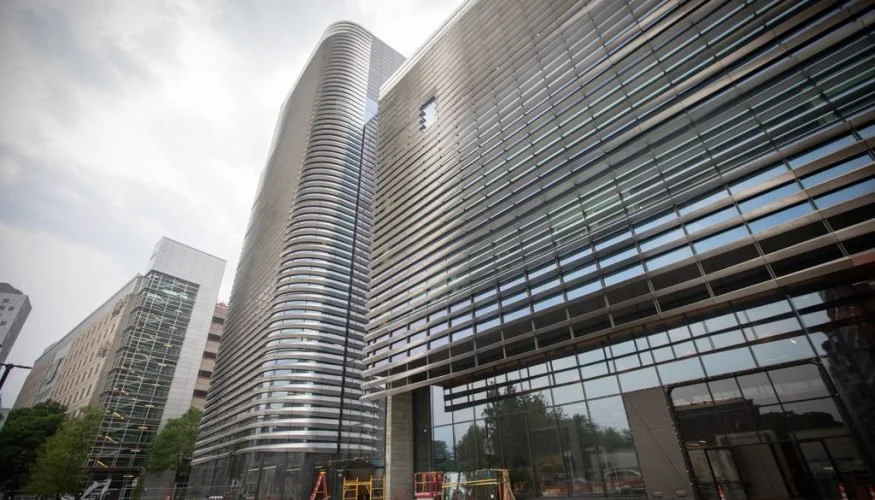
“Northeastern University, in Boston, has been granted $9 million to study how advanced artificial intelligence systems operate and their societal impacts. The grant, announced by the National Science Foundation (NSF), will let Northeastern to create a collaborative research platform.
“This platform aims to let researchers across the U.S. examine the internal computation systems of advanced AI, which are currently opaque because of their ‘black box’ nature.
“NSF Director Sethuraman Panchanathan said: “Chatbots have transformed society’s relationship with AI. However, the inner workings of these systems are not yet fully understood.’
“The research will focus on large language models, such as ChatGPT and Google’s Gemini. These models will be used alongside public-interest tech groups to ensure that AI advancements adhere to ethical and social standards.’’
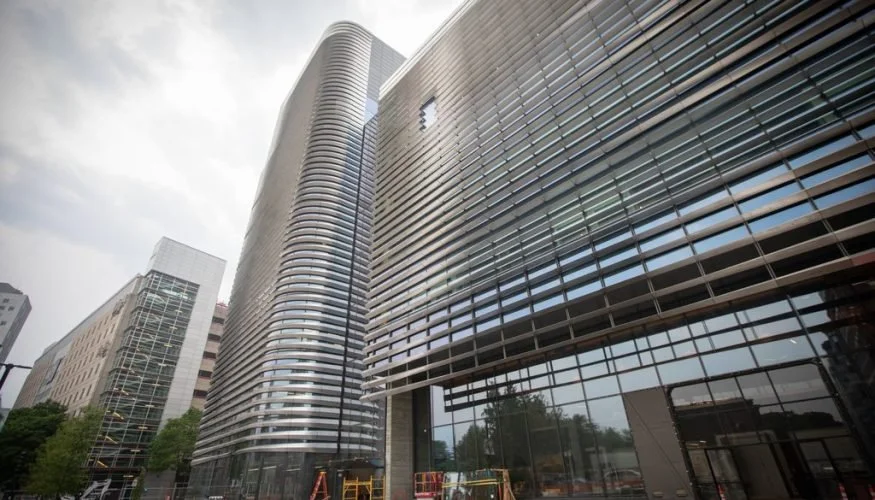
Northeastern University's EXP research building.
Pre-computer chip action

From “Action Figures: Objects in Motion,’’ at the Shelburne Museum, Shelburne, Vt.
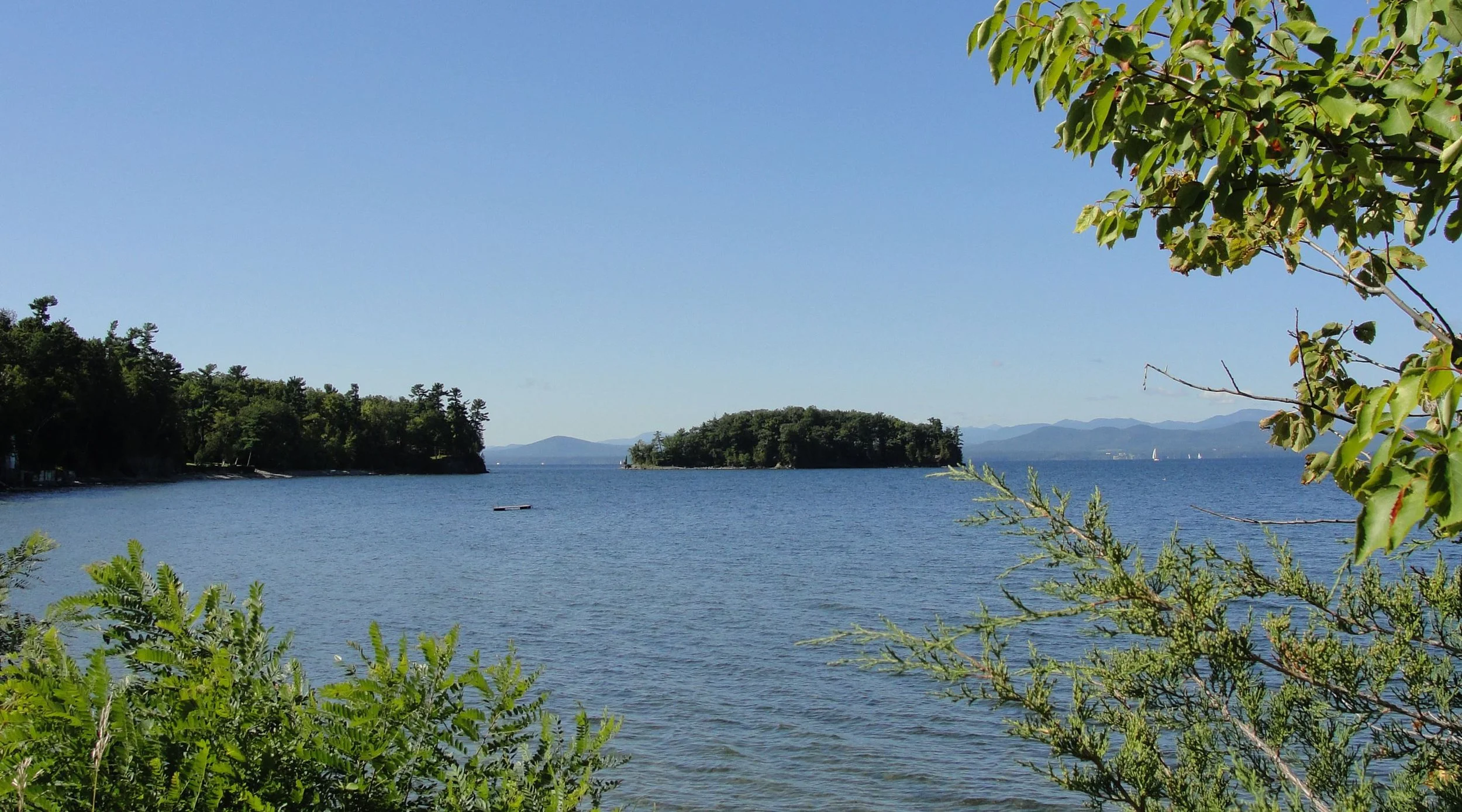
Gorgeous Lake Champlain from the Shelburne shoreline.