
Vox clamantis in deserto






Melissa Bright: Rethinking ways to prevent sexual abuse of children

Children playing ball games, Roman artwork, 2nd Century AD.
DURHAM, N.H.
Child sexual abuse is uncomfortable to think about, much less talk about. The idea of an adult engaging in sexual behaviors with a child feels sickening. It’s easiest to believe that it rarely happens, and when it does, that it’s only to children whose parents aren’t protecting them.
This belief stayed with me during my early days as a parent. I kept an eye out for creepy men at the playground and was skeptical of men who worked with young children, such as teachers and coaches. When my kids were old enough, I taught them what a “good touch” was, like a hug from a family member, and what a “bad touch” was, like someone touching their private parts.
But after nearly a quarter-century of conducting research – 15 years on family violence, another eight on child abuse prevention, including sexual abuse – I realized that many people, including me, were using antiquated strategies to protect our children.
As the founder of the Center for Violence Prevention Research, I work with organizations that educate their communities and provide direct services to survivors of child sexual abuse. From them, I have learned much about the everyday actions all of us can take to help keep our children safe. Some of it may surprise you.
First, my view of what constitutes child sexual abuse was too narrow. Certainly, all sexual activities between adults and children are a form of abuse.
But child sexual abuse also includes nonconsensual sexual contact between two children. It includes noncontact offenses such as sexual harassment, exhibitionism and using children to produce imagery of sexual abuse. Technology-based child sexual abuse is rising quickly with the rapid evolution of internet-based games, social media, and content generated by artificial intelligence. Reports to the National Center for Missing & Exploited Children of online enticements increased 300% from 2021 to 2023.
My assumption that child sexual abuse didn’t happen in my community was wrong too. The latest data shows that at least 1 in 10 children, but likely closer to 1 in 5, experience sexual abuse. Statistically, that’s at least two children in my son’s kindergarten class.
Child sexual abuse happens across all ethnoracial groups, socioeconomic statuses and all gender identities. Reports of female victims outnumber males, but male victimization is likely underreported because of stigma and cultural norms about masculinity.
I’ve learned that identifying the “creepy man” at the playground is not an effective strategy. At least 90% of child sexual abusers know their victims or the victims’ family prior to offending. Usually, the abuser is a trusted member of the community; sometimes, it’s a family member.
In other words, rather than search for a predator in the park, parents need to look at the circle of people they invite into their home.
To be clear, abuse by strangers does happen, and teaching our kids to be wary of strangers is necessary. But it’s the exception, not the norm, for child sexual abuse offenses.
Most of the time, it’s not even adults causing the harm. The latest data shows more than 70% of self-reported child sexual abuse is committed by other juveniles. Nearly 1 in 10 young people say they caused some type of sexual harm to another child. Their average age at the time of causing harm is between 14 and 16.
Drastic changes in behavior – either positive or negative – can be an indication of potential sexual abuse.
Now for a bit of good news: The belief that people who sexually abuse children are innately evil is an oversimplification. In reality, only about 13% of adults and approximately 5% of adolescents who sexually harm children commit another sexual offense after five years. The recidivism rate is even lower for those who receive therapeutic help.
By contrast, approximately 44% of adults who commit a felony of any kind will commit another offense within a year of prison release.
What parents can do
The latest research says uncomfortable conversations are necessary to keep kids safe. Here are some recommended strategies:
Avoid confusing language. “Good touches” and “bad touches” are no longer appropriate descriptors of abuse. Harmful touches can feel physically good, rather than painful or “bad.” Abusers can also manipulate children to believe their touches are acts of love.
The research shows that it’s better to talk to children about touches that are “OK” or “not OK,” based on who does the touching and where they touch. This dissipates the confusion of something being bad but feeling good.
These conversations require clear identification of all body parts, from head and shoulders to penis and vagina. Using accurate anatomical labels teaches children that all body parts can be discussed openly with safe adults. Also, when children use accurate labels to disclose abuse, they are more likely to be understood and believed.
One tip: Teach children the anatomical names for their body parts, not “code” or “cute” names.
Encourage bodily autonomy. Telling my children that hugs from family members were universally good touches was also wrong. If children think they have to give hugs on demand, it conveys the message they do not have authority over their body.
Instead, I watch when my child is asked for a hug at family gatherings – if he hesitates, I advocate for him. I tell family members that physical touch is not mandatory and explain why – something like: “He prefers a bit more personal space, and we’re working on teaching him that he can decide who touches him and when. He really likes to give high-fives to show affection.” A heads-up: Often, the adults are put off, at least initially.
In my family, we also don’t allow the use of guilt to encourage affection. That includes phrases like: “You’ll make me sad if you don’t give me a hug.”
Promote empowerment. Research on adult sexual offenders found the greatest deterrence to completing the act was a vocal child – one who expressed their desire to stop, or said they would tell others.
Monitor your child’s social media. Multiple studies show that monitoring guards against sexting or viewing of pornography, both of which are risk factors for child sexual abuse. Monitoring can also reveal permissive or dangerous sexual attitudes the child might have.
Talk to the adults in your circle. Ask those watching your child how they plan to keep your child safe when in their care. Admittedly, this can be an awkward conversation. I might say, “Hey, I have a few questions that might sound weird, but I think they’re important for parents to ask. I’m sure my child will be safe with you, but I’m trying to talk about these things regularly, so this is good practice for me.” You may need to educate them on what the research shows.
Ask your child’s school what they’re doing to educate students and staff about child sexual abuse. Many states require schools to provide prevention education; recent research suggests these programs help children protect themselves from sexual abuse.
Talk to your child’s sports or activity organization. Ask what procedures are in place to keep children safe. This includes their screening and hiring practices, how they train and educate staff, and their guidelines for reporting abuse. The Centers for Disease Control and Prevention provides a guide for organizations on keeping children safe.
Rely on updated research. Finally, when searching online for information, look for research that’s relatively recent – dated within the past five years. These studies should be published in peer-reviewed journals.
And then be prepared for a jolt. You may discover the conventional wisdom you’ve clung to all these years may be based on outdated – and even harmful – information.
Melissa Bright is founder and executive director of the Center for Violence Prevention Research and an affiliate faculty member at the Crimes Against Children Research Center at the University of New Hampshire
She receives funding from the Centers for Disease Control and Prevention and the World Childhood Foundation (via work with Stop it Now!).
Chris Powell: If you chant ‘Trump!’ enough, Conn. Democrats’ problems vanish
MANCHESTER, Conn.
While Donald Trump can be intemperate, reckless, and megalomaniacal, that is not why he has been so damaging to politics in Connecticut. Trump is most damaging to politics here because he has provided an excuse for so many members of the state's majority party, the Democrats, as well as their allies in the news media, to avoid serious discussion of the many failures of public policy essentially just by chanting: "Trump! Trump! Trump!"
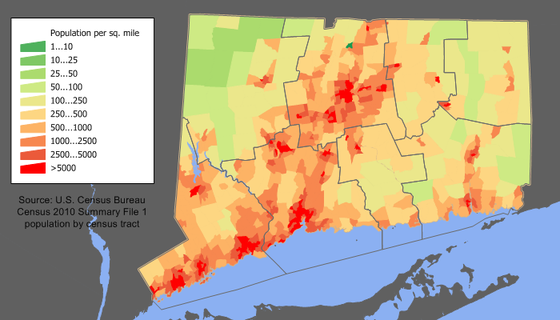
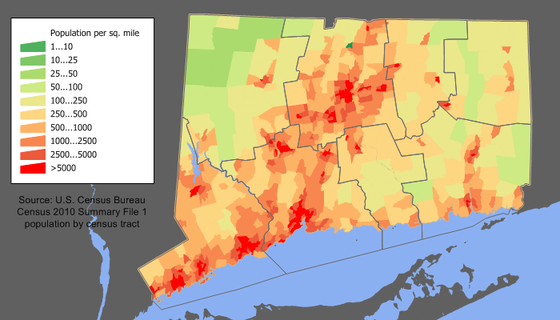
Connecticut has big problems that have not been addressed seriously: education and the declining skill level of the rising workforce, worsening poverty, prohibitive housing prices, state government's indebtedness, a lack of economic and population growth, racial segregation, and taxes that are high even though none of these problems has been alleviated much if at all.
Not that the minority party, the Republicans, necessarily would do much better with these problems. Indeed, the most recent 16 years of Republican state administration (1995-2011) differed from Democratic administration only insofar as taxes didn't go up as much as they might have under a Democratic administration. Of course that's something, but under Republican administration Connecticut's downward trends weren't halted, much less reversed. Connecticut didn't get more value from its government.
While Trump, the presumptive Republican nominee for president, is leading the presumptive Democratic nominee, President Biden, in the recent national polls, nobody expects Trump to carry Connecticut. The state is too Democratic, and just chanting "Trump! Trump! Trump!" here will probably distract enough from the big national issues -- inflation and the economy in general, illegal immigration, and the expensive and unnecessary proxy war in Ukraine and the danger that it will erupt into a European war or even a world war. (A currency war arising in part from the Ukraine war is already being waged.)
The Democratic chant will help sustain the political status quo in the state but it won't make Connecticut great again. For that to happen, many mistaken premises of policy will have to be challenged.
xxx
WHY GO TO SCHOOL?: Last week Gov. Ned Lamont joined a White House conference about chronic absenteeism from school, a problem nationally as well as in Connecticut. Among the participants were U.S. Education Secretary Miguel Cardona, formerly Meriden's school superintendent and Connecticut's education commissioner.
They discussed the slight success in getting children to attend school more often by having school employees call or visit the homes of the chronically absent and asking parents what the problem is and if government can help them solve it.
Warning parents that not getting their children get to school is neglect is not planned. The politically correct presumption is that parents, especially single parents, really shouldn't be held responsible for themselves and their children. Many neglectful parents probably sense this presumption and feel excused.
Connecticut's elected officials should look deeper into the problem, especially since student proficiency in the state has been declining for years. They should ask: What exactly is the incentive for children to go to school today and for parents to get them there?
In the old days social pressure helped get children to school and to learn. For failure to learn risked the embarrassment of being held back a grade.
But no more. For Connecticut's main educational policy long has been social promotion: All students are promoted regardless of academic failure, in the belief that being held back is too damaging to a child's self-esteem -- as if failure to learn is not more damaging when a child grows up.
Meanwhile, the decline in the skill level of Connecticut students, and thus the decline in their ability to support themselves, is being met with more government subsidies for them as impoverished adults, so neglecting one's education is less costly to the individual and more costly to taxpayers.
In the old days most people thought education was crucial to a better life. Today many people seem to think otherwise. So chronic absenteeism may continue until something changes that thinking. Politically correct as it may be, asking negligent parents nicely isn't likely to help much.
Chris Powell has written about Connecticut government and politics for many years. (CPowell@cox.net) .
The Bay State’s most educated place

Recreation in Boston’s Seaport District.

Boston Convention and Exhibition Center’s entry canopy. The center brings throngs to the Seaport District.
—Photo by Generaltso

Looking north up the Fort Point Channel in the Seaport District. The channel, once infamous for its pollution, in recent decades has been much cleaned up. You’ll often see kayakers on it.
— Photo by Shorelander
Edited from a Boston Guardian article.
(New England Diary’s editor, Robert Whitcomb, is chairman of The Boston Guardian)
Not only is the Seaport District the wealthiest neighborhood in Boston and the most expensive place in the city in which to buy or rent, it’s also the most highly educated community in the entire state.
According to data compiled by The Boston Business Journal, 93.1 percent of adult residents have a college degree or higher.
The only other city neighborhood in the top 20 statewide is the Fenway, with 83.7 percent of adult inhabitants with at least a college degree. The Fenway ranks number 13.
The top 10 smartest areas are:
Seaport 93.1%
Waban 90.1%
Wellesley Hills 89.7%
Dover 87.7%
Lincoln 87.3%
Newton Highlands 86.8%
Harvard Square (Cambridge) 86.7%
Newton Centre 86.2%
Needham 84.9%
Coolidge Corner (Brookline) 84.6%

Rhode Island might soon ban captive hunting

Female white-tailed deer (a very common species in New England) with tail in alarm posture. There’s worry that bringing in elk and other species from other parts of American could introduce diseases.
— Photo by D. Gordon E. Robertson
Excerpted from an ecoRI News article by Rob Smith
“Five years after the plan was first introduced, state lawmakers are on the cusp of banning captive hunting practices in Rhode Island.
“Also known as ‘canned hunting,’ captive hunting refers to the practice of importing wild animals into a specific, fenced-in location for the intended purpose of hunting game that, in theory, cannot escape. Critics of the practice have argued that legalizing captive hunting would be a backdoor way into introducing wild game and even diseases that currently have no presence in Rhode Island, and would interrupt local hunters’ longstanding free-chase traditions….
“Identical bans (S2732A/H7294A) were introduced in the House and Senate earlier this year. ..
Tres gay in Hartford

“Studio Still Life” (acrylic on wood panel), by New York painter Kyle Dunn, in his show Matrix 194, at the Wadsworth Athenaeum Museum of Art, Hartford, June 7-Sept. 1
- Courtesy of the Artist and P·P·O·W, New York
- Photo by JSP Art Photography
The museum says:
“Kyle Dunn’s luminous paintings dramatize themes of intimacy and alienation. In alluring domestic scenes, men perform everyday rituals against the backdrop of the big city, whose glow shines through the windows of their small apartments. Some of his composite figures sit in quiet contemplation, while others are seemingly caught during romantic encounters. Spatially ambiguous settings collapse interior and exterior worlds—both physical and psychological—inviting us to question the boundaries between public and private, individual and collective.’’
Why to be a vegan?

“Prosciutta” (clay, glaze, acrylic and epoxy), by Boston area artist Joe Caruso, in the show DIG, at the Art Complex Museum, Duxbury, Mass., through Aug. 11
— Image courtesy of Art Complex Museum
The museum says that DIG features the work of Joe Caruso, Jennifer Liston Munson, Palamidessi and Marsha Odabashian in a show that "recalls traditions, events, and customs across a range of cultures.’’ The artists in explore "what makes us human" by exploring the past and how it connects to the future. The show "values, preserves and calls attention to what came before so we can learn from the past as we cope with the present and prepare for the future."
Llewellyn King: You’ll feel better with a bit of silken style around your neck

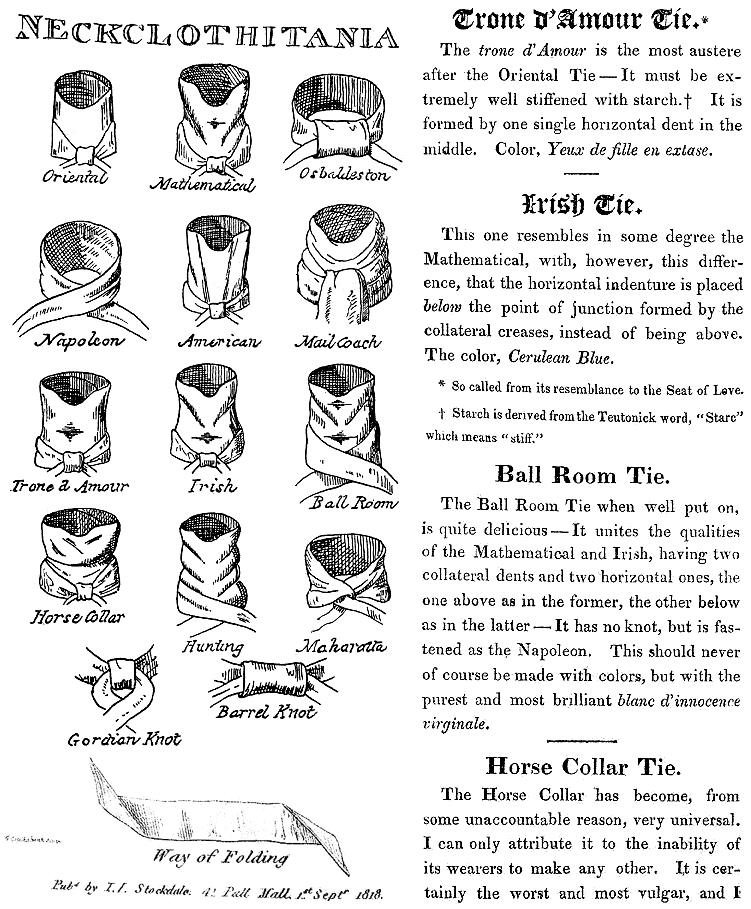
Archibald Cox (1912-2004), who served as Watergate scandal special prosecutor, solicitor general and Harvard Law School professor, wearing, as usual, a bow tie — a popular accessory of New England WASP’s.
WEST WARWICK, R.I.
I admire Ben Mankiewicz, host of Turner Classic Movies. He is the man we all think we are in our dreams: handsome, urbane, authoritative and oh-so charming — a member of one of the great families of film, an aristocrat of that realm.
I would like to look like Ben; his job is appealing, too.
But wait, Ben has suffered a savage downfall. He isn’t the man he used to be to me. I nearly fell off the couch when I saw Ben, an inspiration to men, introducing a movie without his necktie.
Yes, Ben was open-collared in a suit, looking a little like an unmade bed, which is what most men look like when pursuing the current fashion of no necktie.
Shock Horror! Another bastion of masculinity has fallen.
The problem — and I aver this to be an unassailable truth — is men wearing dress shirts without ties look less than their best. If they have a bit of age on them, a lot less than their best.
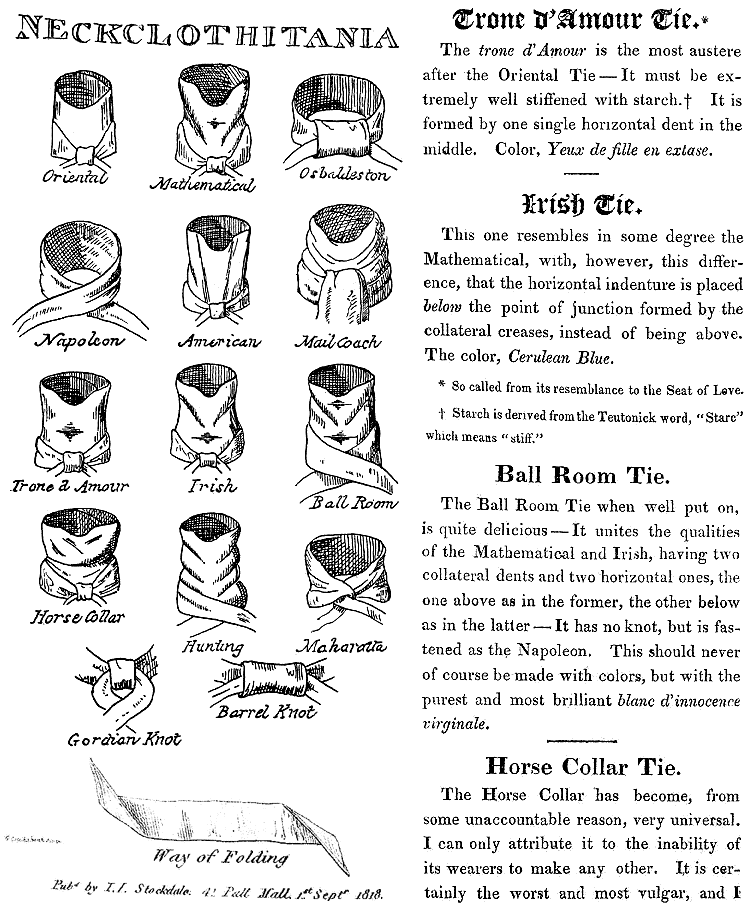
The dress shirt, which hasn’t been replaced, is designed for a necktie, long or in a bow. Without them men look diminished, incomplete, as though they had to leave the house with no time to finish dressing.
Let me state that the necktie is indeed a useless piece of clothing, like other dress items of the past: spats, watch chains and detached collars. The passing of none of these do I regret – but ties? Cry, the lost masculine adornment of yesteryear.
The necktie was something a man could glory in. Tying a long tie and throwing the long end over the short end always gave me the same feeling as mounting my horse; when my right leg cleared the saddle, I knew something good was going to happen. A great day in the Virginia countryside usually.
Ties were something to treasure; fine silk, great patterns, elegance written with restraint. Just long enough, just obvious enough, conveying refinement and masculine savoir faire.
Now men are running around open-necked in shirts that weren’t designed to be worn that way.
Have a care for the great names in ties, those who saved us on Father’s Day, Christmas and birthdays, are losing money or gone to other pursuits.
Have a care for Hermes, Liberty, Tyrwhitt, Brioni, Fumagalli, Brooks Brothers and all those who created lovely things for the neck out of silk, finely woven wool or linen.
Just the sight of the box lit up the male face, ensuring the giver some future preferment or an extra helping at the table. The power of the tie was formidable — as Omar Khayyam, the Persian poet, might have said, it could transmute life’s leaden metal into gold.
At least it kept Dad smiling through some de rigueur family events. Ever noticed how he slipped off to the bathroom not to engage the porcelain but to admire himself in the mirror with the new gift around his neck?
Not so long ago, great restaurants had spare ties for guests who showed up without them. Now that is over.
The last holdout I know of is the Metropolitan Club in Washington. I have been to two events there recently and the hosts thought it wise to advise their guests on dress etiquette: ties and no white-soled shoes. But no cravats or ascots as well. Strange.
I am hoping the cravat or its cousin the ascot will come back vigorously. It will save those master craftspeople who dyed silk, wove wool and shaped their handiwork over canvas to adorn men’s necks of no practical value but so dressy, so uplifting, so defining.
Give a cravat and tell the man in your life or your father, “You look like David Niven.”
Come to think of it, I bet that Ben Mankiewicz looks stupendous wearing a cravat.
Llewellyn King is executive producer and host of White House Chronicle, on PBS. His email is llewellynking1@gmail.com, and he’s based in Rhode Island.
Never-ending work
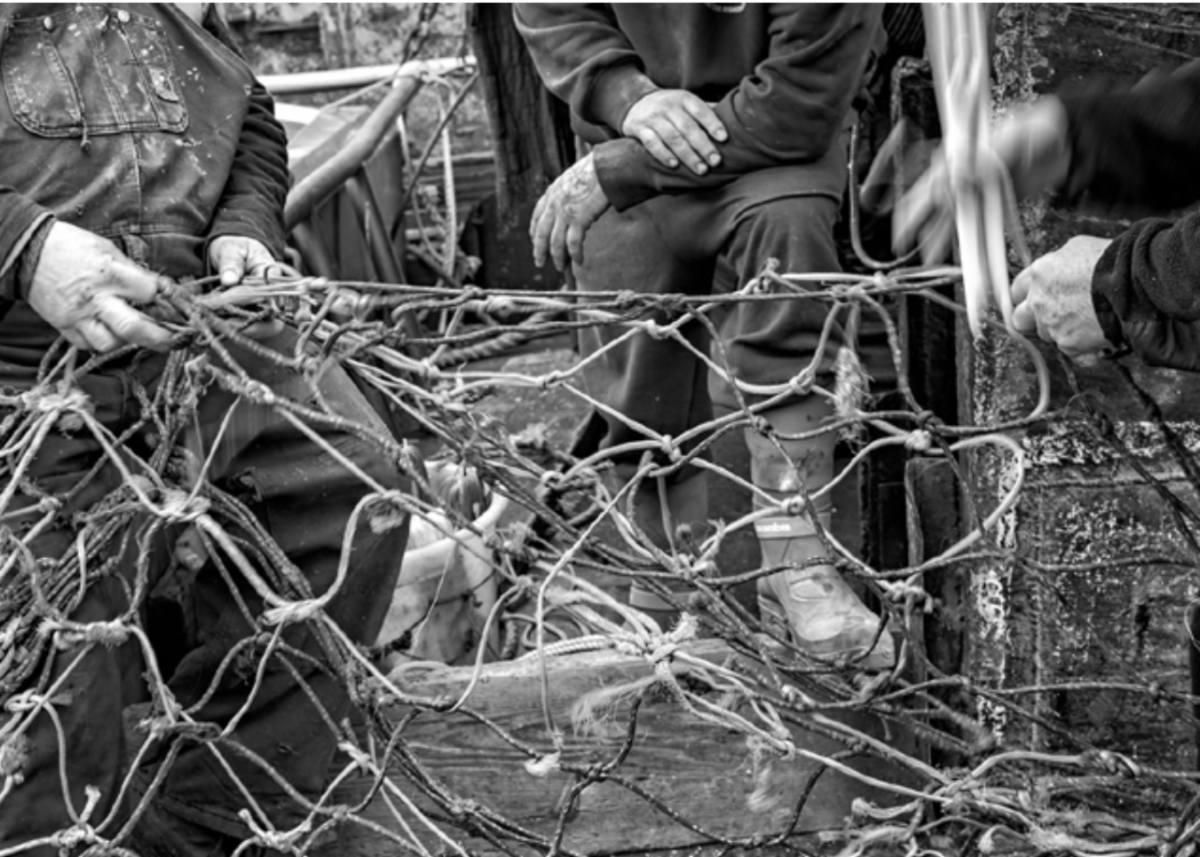
“Mending Nets, F/V Miss Trish II” (photograph), by Paul Cary Goldberg, at Manship Arts and Residence, Gloucester, Mass.
Why they stayed
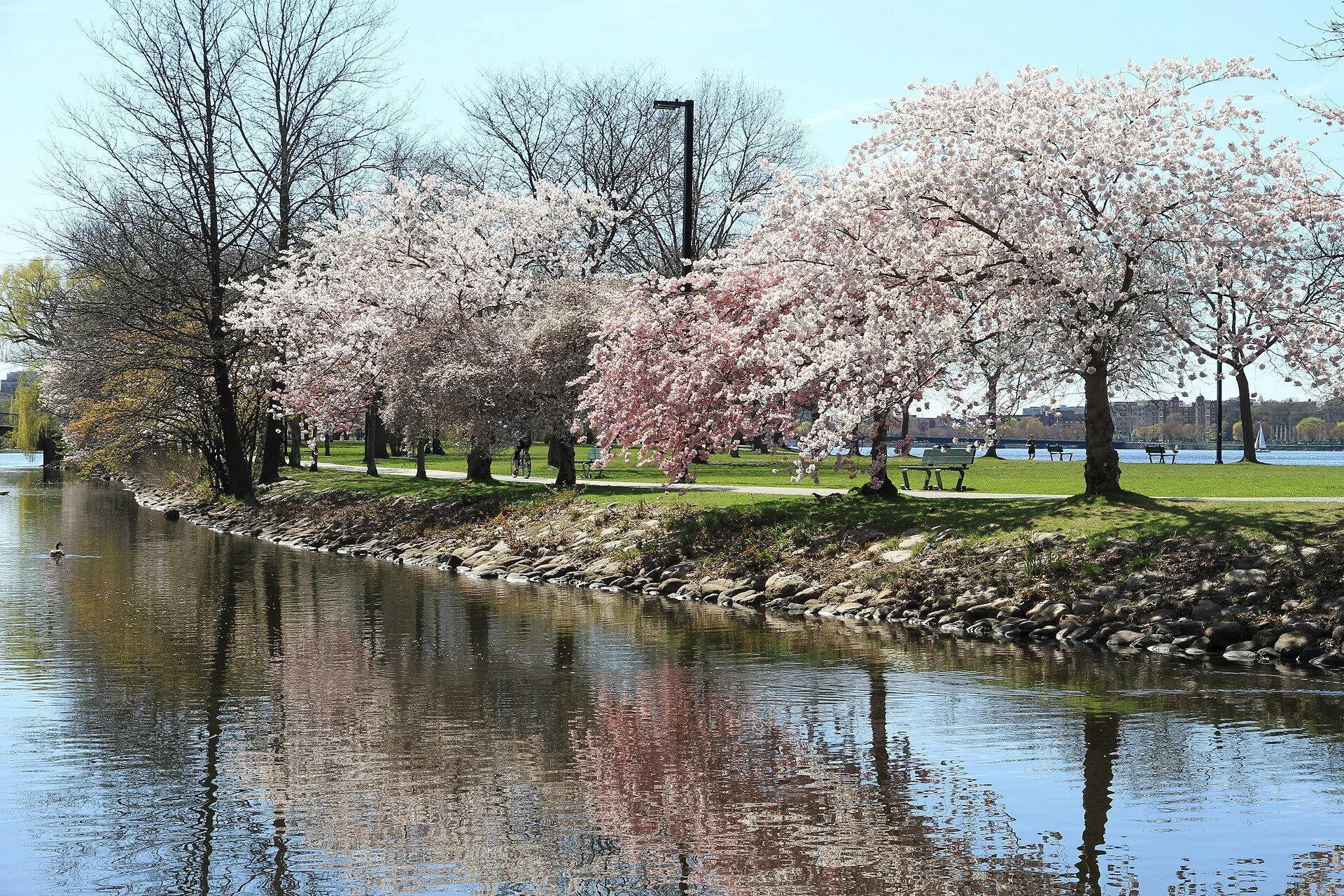
The path along the Charles River on the Esplanade, in Boston.
—Photo by Ingfbruno
—Photo by Milos Milosevic
Kim Stanley Robinson (born 1952), American writer
John O. Harney: The Rose Kennedy Greenway bursts into bloom

The Rose Kennedy Greenway
Some sights on the Greenway:

BOSTON
I began volunteering as a phenologist on the Rose Kennedy Greenway, in downtown Boston, in spring 2023 and returned a few weeks ago for the 2024 season.
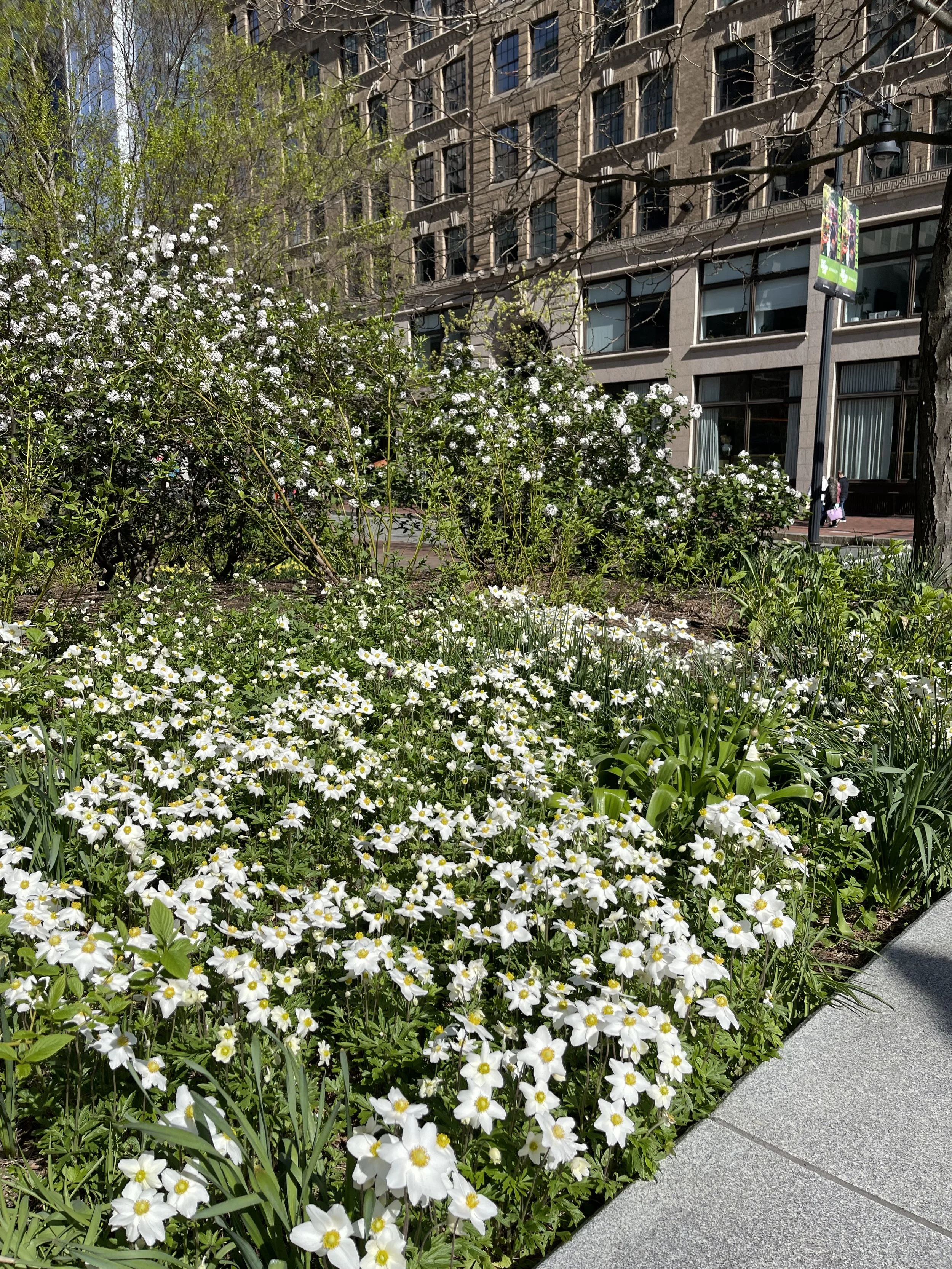
Peppermint-striped tulips were flowering along Pearl Street. Grape hyacinths create purple blankets; anemones whitish carpets. Hellebores that made an early spring show with dusty green-white and pink flowers were already fading. In one spot, it looked like a resting animal has flattened a bed of irises and allium.
Last year, all narcissuses were daffodils to my hardly trained eye. This year, I think I was seeing poeticus with white petals and yellow and reddish-outlined centers, sagitta with yellow double flowers around an orange tube and pheasants eye with its complex yellow and orange center. But I could be wrong.
Many plants were leafing but not yet flowering: irises, alliums, yellow- and red-twig dogwoods, lamb’s ear, roses, penstemon leafing purplish, dracunculus, astilbes, peonies, tickseed in a tough place along Purchase Street, nepeta, grasses near the tunnel vent still yellowish but with a few strands of green, achillea, aruncus and hosta shoots I’ve watched turn from young purplish shoots to fat green leaves reminiscent of a Rousseau painting. Few veggies or fruits visible. No sunflowers yet.
(By the way, in my old job as the executive editor of the New England Journal of Higher Education I was in charge of editorial style rules … things such as when to capitalize words, including names of plants I suppose. It always seemed too arbitrary, and, in retirement, I don’t bother.)
At the corner of Congress Street, I notices a mat of creeping blue phlox with its many light blue-purplish flowers—not, to my eye at least, the pink phlox associated with April 2024’s pink moon.
Speaking of such connections, serviceberry shrubs (also known as shadbushes) had flowered, mirroring the season when shad fish run up New England rivers and, for me, the promise of the delicious season of shad roe.
Jumping out to me on Parcel 21 was a humble dandelion. I note that, sure, it’s a pest, but it’s flowering full yellow, so it gets a 3 in the Greenway ranking system that I’ve never quite got my head around, as they say. The “best” rank among 1 to 5 is 3, not the lowest or highest, but 3 for full flower … peak.
A few other observations …
Maybe it’s the natural magnificence of the Greenway that somehow makes man-made signs catch my eye. Even the troubles of the world pierce the serenity of the park. Take the spot near the North End where a Priority Mail sticker on a park sign reads: “FROM: POWER TO THE RESISTANCE TO: GLOBALIZE THE INTIFADA’’.
Then the welcome reminder of “No mow May on the Greenway … The Greenway Conservancy is participating in Plantlife’s No Mow May initiative to support local pollinators, reduce lawn inputs, and grow healthier lawns. Certain areas of the Greenway will not be mowed in May.” A noble goal for homeowners too.
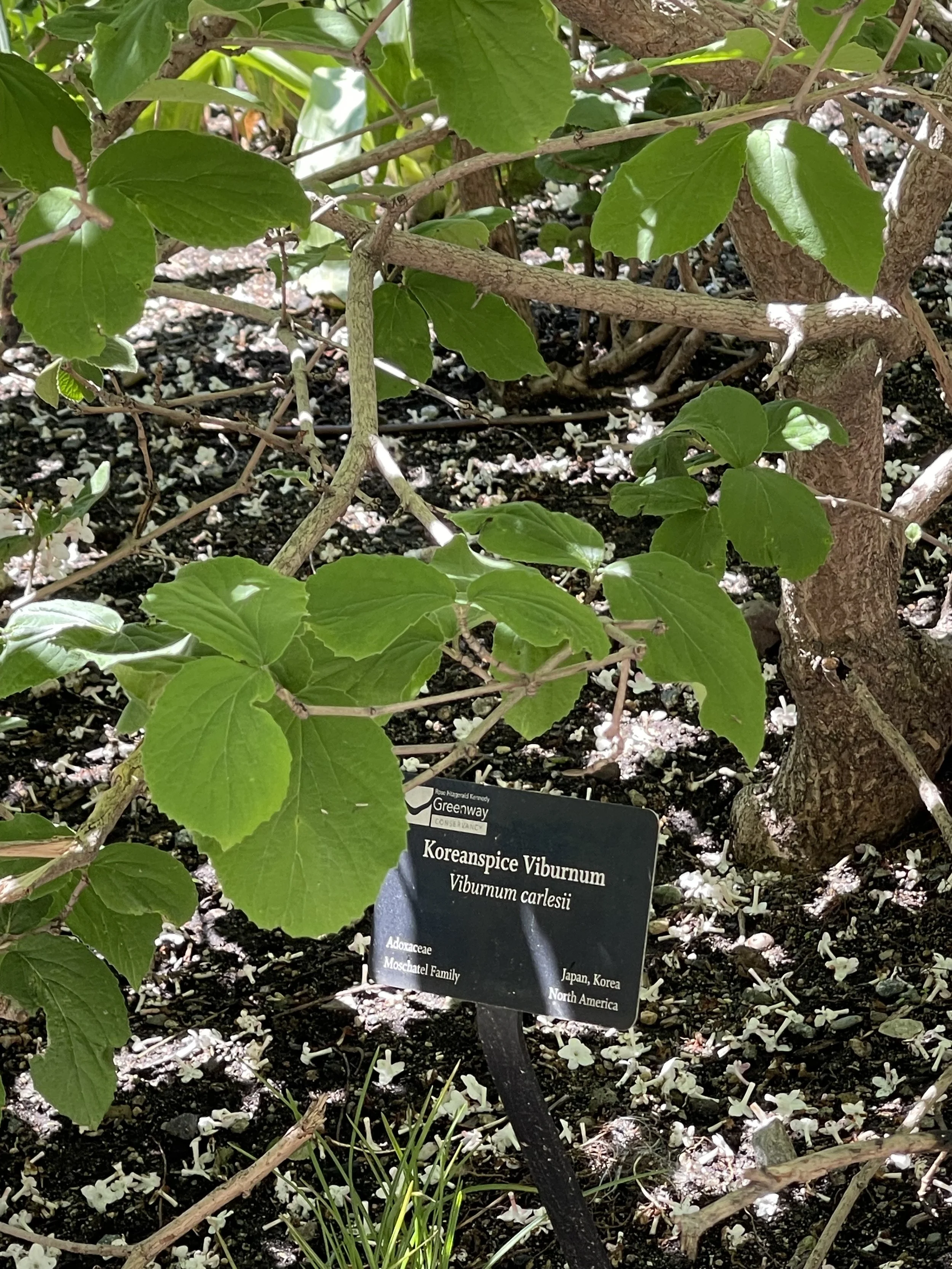
Nice to see a rare nametag on the Greenway identifying the good-looking and great-smelling Koreanspice viburnum. I had proposed such tagging last year in my piece on A Volunteer Life. Undoubtedly, others made similar suggestions. Still, I naively congratulated myself for any role in the tag, as two houseless people tried to tell me that there are apps on the market that ID plants. Immersed in my headphones, I reacted dismissively. Like a jerk, really. Quickly realizing my rudeness, I returned and apologized. These gardens are theirs more than mine.
With the helpful tips from the houseless on my mind and my interest in signs piqued, I also noticed for the first time, in Parcel 22, a green sign reading: “PARK CLOSED, 11 PM – 7 AM Trespassers will be prosecuted.”
With its tunnel vent, Parcel 22 is a big part of my Greenway life partly for its proximity to the park’s edible and pollinator gardens and Dewey Square and the Red Line plaza. The tunnel vent holds the Greenway mural. A sign reads: “What has this mural meant to you?” A mailbox is supplied for reader comments. One of the recent murals depicted a youth from the city, who critics insisted was a Middle Eastern terrorist. (Murals are dangerous business in New England. See here and here.)
And now to presumably dazzle the Greenway: colorful coneflowers, sturdy Joe Pye weeds, beebalm, furry salvia, white fringe trees, flowering black elderberries and hydangeas.

Jay L. Zagorsky: What about all that small change we leave at airports?
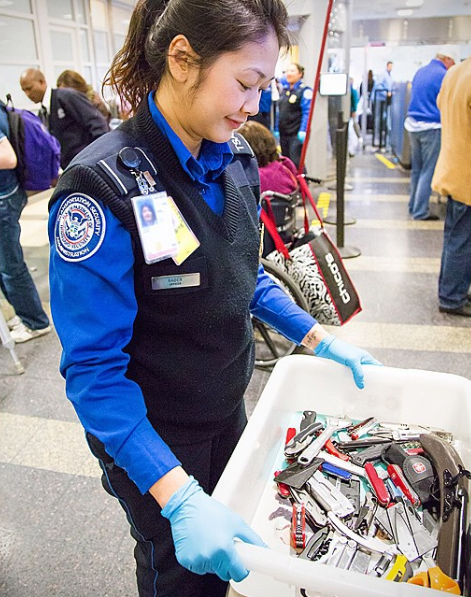
TSA officer at airport with a tray of prohibited items.
BOSTON
Should the U.S. get rid of pennies, nickels and dimes? The debate has gone on for years. Many people argue for keeping coins on economic-fairness grounds. Others call for eliminating them because the government loses money minting low-value coins.
One way to resolve the debate is to check whether people are still using small-value coins. And there’s an unlikely source of information showing how much people are using pocket change: the Transportation Security Administration, or TSA. Yes, the same people who screen passengers at airport checkpoints can answer whether people are still using coins – and whether that usage is trending up or down over the years.
Each year, the TSA provides a detailed report to Congress showing how much money is left behind at checkpoints. A decreasing amount of change would suggest fewer people have coins in their pockets, while a steady or increasing amount indicates people are still carrying coins.
The latest TSA figure shows that during 2023, air travelers left almost US$1 million in small change at checkpoints. This is roughly double the amount left behind in 2012.
At first glance, this suggests more people are carrying around and using coins. But as a university researcher who studies both travel and money usage – as well as a keen observer of habits while lining up at airport checkpoints – I know the story is more complicated than these numbers suggest.
What gets left behind?
More than 2 million people fly each day in the U.S., passing through hundreds of airport checkpoints manned by the TSA. Each flyer going through a checkpoint is asked to place items from their pockets such as wallets, phones, keys and coins in either a bin or their carry-on bag. Not everyone remembers to pick up all their items on the other side of the scanner. About 90,000 to 100,000 items are left behind each month, the TSA estimates.
For expensive or identifiable items such as cellphones, wallets and laptops, the TSA has a lost-and-found department. For coins and the occasional paper bills that end up in the scanner bins, TSA has a different procedure. It collects all that money, catalogs the amount and periodically deposits it into a special account that the TSA uses to improve security operations.
That money adds up, with travelers leaving behind almost $10 million in change over the past 12 years.
The amount of money left varies by airport. JFK International Airport in New York City is consistently in one of the top slots for most money lost, with travelers leaving almost $60,000 behind in 2022. Harry Reid International Airport, which serves Las Vegas, also sees a large amount of money left behind. Love Field in Dallas, headquarters of Southwest Airlines, is often near the bottom of the list, with only about $100 lost in 2022.
People lose money while going through security for a few reasons. First, some cut it close getting to the airport, and in their rush to avoid missing their plane, they don’t pick up everything after screening. Second, sometimes TSA lines are exceptionally long, leaving people to again scramble to make up time. And finally, TSA checkpoints are often confusing and noisy places, especially for new or infrequent travelers. Making it more confusing is that some airports have bins featuring advertisements, which distract travelers who only quickly glance to check for all their items.
How much is lost?
TSA keeps careful track of how much is lost because the agency is allowed to keep any unclaimed money left behind at checkpoints. TSA records show people left behind half a million dollars in 2012. This rose to almost a million in 2018. The drop in travel due to the COVID-19 pandemic reduced the figure back to half a million in 2020. In 2023, people left $956,000.
These raw figures need two adjustments to accurately track trends in coins lost. First, the numbers need to be adjusted for inflation. From 2012 to 2023, the consumer price index rose by 33%. This means a dollar of change in 2012 purchased one-third more than it did 12 years later.
Second, the number of people flying and passing through TSA screening has changed dramatically over time. In 2012, about 638 million people went through the checkpoints. By 2023, that had risen to 859 million people, which is about 1,000 people every 30 seconds across the entire U.S. when airports and checkpoints are open.
Adjusting for both inflation and the number of people screened shows no change in the amount of money lost. My calculations show back in 2012 about $1.10 in coins was lost for every 1,000 people screened. In 2023, about one penny more, or $1.11, was lost per 1,000.
The peak year for money being lost was 2020, when $1.80 per 1,000 people was left behind. This was likely due to people not wanting to touch objects out of misplaced fear they could contact COVID-19. During the pandemic, people in general carried less money.
The world is increasingly using electronic payments. The data from TSA checkpoints, however, clearly shows people are carrying coins at roughly the same rate as back in 2012. This suggests Americans are still using physical money, at least for making small payments – and that the drive to get rid of pennies, nickels and dimes should hold off a while longer.
Jay L. Zagorsky is associate professor of markets, public policy and law at Boston University.
He does not work for, consult, own shares in or receive funding from any company or organization that would benefit from this article, and has disclosed no relevant affiliations beyond his academic appointment.
Chased by spring
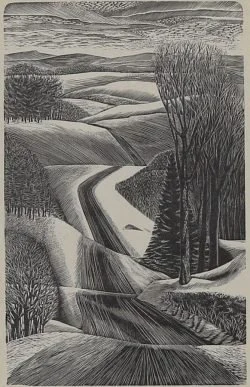
‘The Road North,’’ by Nora S. Unwin (1907-1982), at the Monadnock Center for History and Culture, Peterboro, N.H., through Sept. 28.
The gallery says:
Artist, engraver, illustrator and teacher, Nora S. Unwin had a long and successful career in her native England and her adopted home in New Hampshire. This retrospective exhibition features more than 80 works spanning her 60-year career.
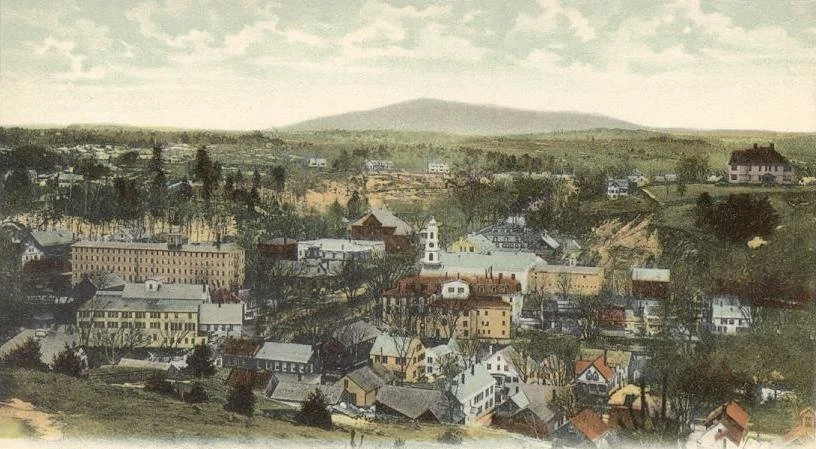
Peterboro in 1907.

Jessica Garcia: Insurance ‘bluelining’ for the vulnerable as they face disasters spawned by global warming

Flooding in Montpelier, Vt. on July11, 2023.
Via OtherWords.org
In an era of climate disasters, Americans in vulnerable regions will need to rely more than ever on their home insurance. But as floods, wildfires and severe storms become more common, a troubling practice known as “bluelining” threatens to leave many communities unable to afford insurance — or obtain it at any price.
Bluelining is an insidious practice with similarities to redlining — the notorious past government-sanctioned practice of financial institutions denying mortgages and credit to Black and brown communities, which were often marked by red lines on map.
These days, financial institutions are now drawing “blue lines” around many of these same communities, restricting such services as insurance based on environmental risks. Even worse, many of those same institutions are bankrolling those risks by funding and insuring the fossil fuel industry.
Originally, bluelining referred to blue-water flood risks, but it now includes such other climate-related disasters as wildfires, hurricanes, and severe thunderstorms, all of which are driving private-sector decisions. (Severe thunderstorms, in fact, were responsible for about 61 percent of insured natural catastrophe losses in 2023.)
In the case of property insurance, we’re already seeing insurers pull out of entire states, such as California and Florida. The financial impacts of these decisions are considerable for everyone they affect — and often fall hardest on those in low-income and historically disadvantaged communities.
A Redfin study from 2021 illustrated that areas previously affected by redlining are now also those prone to flooding and higher temperatures, a problem compounded by poor infrastructure that fails to mitigate these risks. This overlap is not a coincidence but a further consequence of systemic discrimination and disinvestment.
This financial problem exists no matter where you live. In 2024, the national average home-insurance cost has risen about 23 percent above the cost of similar coverage last year. Homeowners across more and more states are left grappling with soaring premiums or no insurance options at all. And the lack of federal oversight means there is little uniformity or coordination in addressing these retreats.
This situation will demand a radical rethink of how we approach investing in our communities based on climate risks. For one thing, financial institutions must pivot from funding fossil fuel expansion to investing in renewable energy, natural climate solutions, and climate resilience, including infrastructure upgrades.
What about communities in especially vulnerable areas?
One strategy is community-driven relocation and managed retreat. By relocating communities to low-risk areas, we not only safeguard them against immediate physical dangers but also against ensuing financial hardships. Additionally, preventing development in known high-risk areas can significantly decrease financial instability and economic losses from future disasters.
As part of this strategic shift, financial policies must be realigned. We need regulations that compel financial institutions to manage and mitigate financial risk to the system and to consumers. We also need them to invest in affordable housing development that is energy-efficient, climate-resilient, and located in areas less susceptible to climate change in the mid- to long-term.
Meanwhile, green infrastructure and stricter energy efficiency and other resilience-related building codes can serve as bulwarks against extreme temperatures and weather events.
The challenge of bluelining offers us an opportunity to forge a path towards a more resilient and equitable society. We owe it to the future generations to do more than just adapt to climate change. We also need to confront and overhaul the systems that harm our climate. The communities most exposed to climate change deserve no less.
Jessica Garcia is a senior policy analyst for climate finance at Americans for Financial Reform Education Fund.
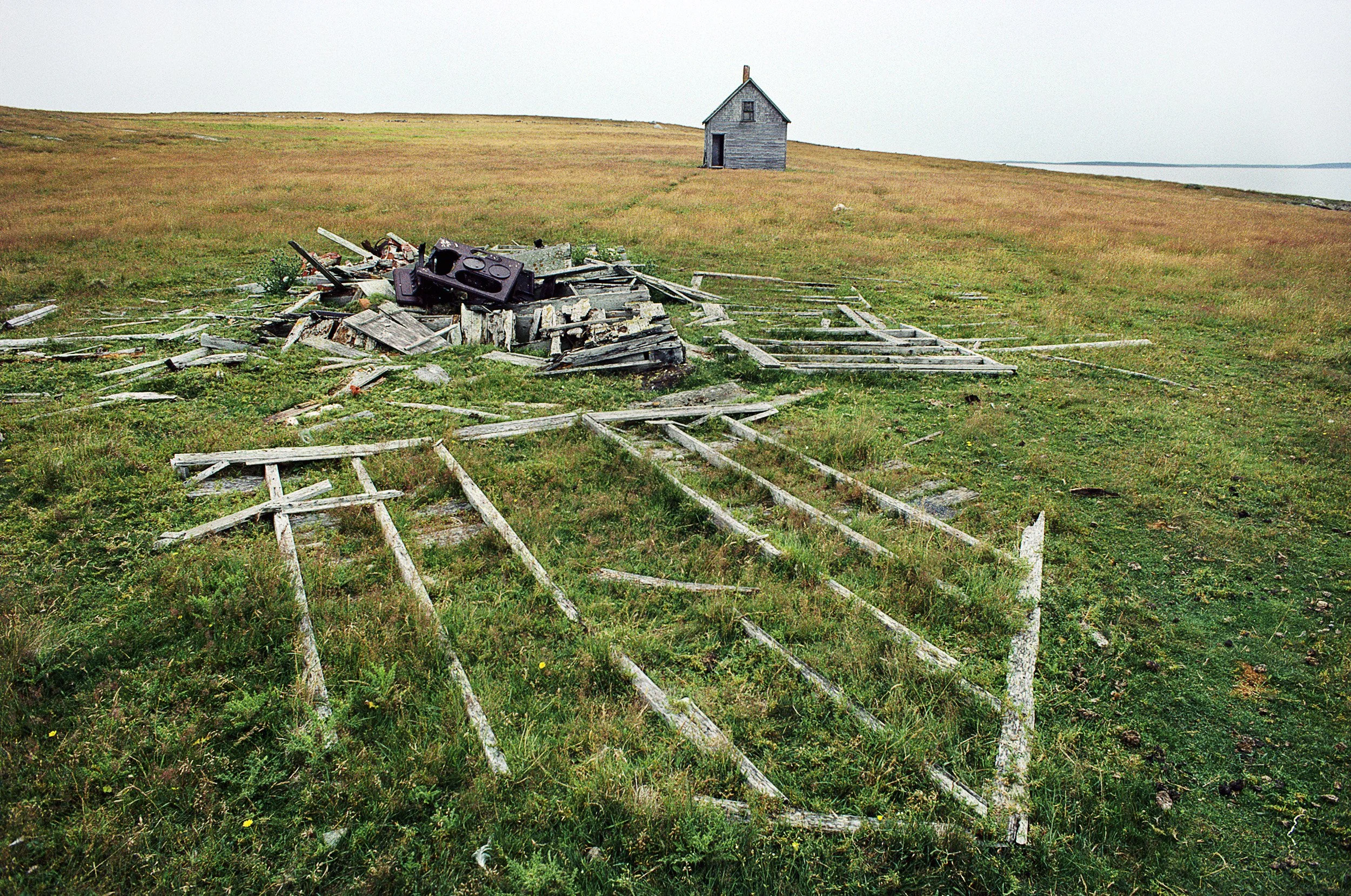
Island skeletons
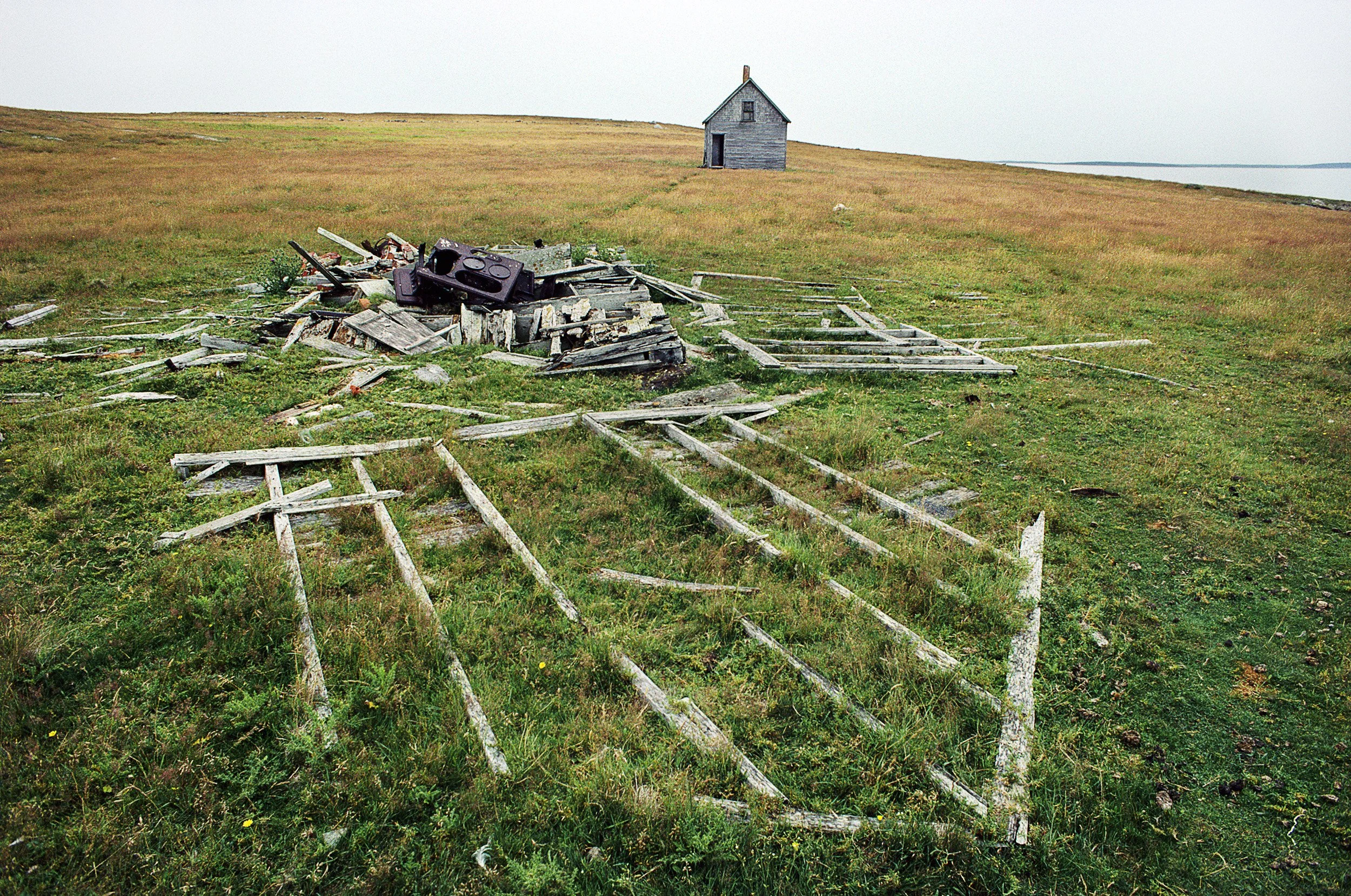
‘‘Tumblehome,’’ by Peter Ralston, a Rockport, Maine-based photographer and gallery owner.
“It was the first time I had walked that end of the island {Matinicus} and I was deeply moved by the old fishing camps up there. No cellar holes, just decaying remnants of what was once a thriving little seasonal community.
“The place reeked of the past and I wandered in a reverie, surrounded by the evidence of so many lives lived and, now, gone.
“I beheld this particular juxtaposition of buildings and that was that.’’
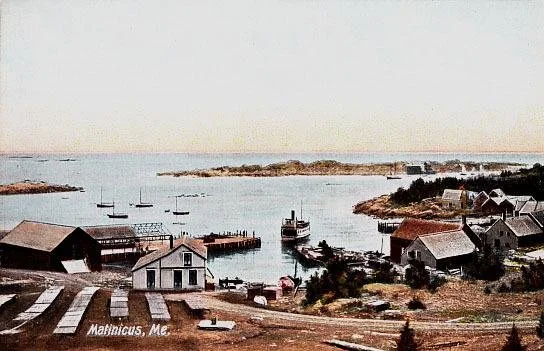
Matinicus Isle Harbor in about 1908. The island is about 20 miles off the mainland. With an official population of 53, it’s the farthest out inhabited land off the U.S. East Coast, and is both a year-round community and a summer colony.
Trying to identify New England’s oldest golf clubs

The imposing clubhouse of the Newport Country Club
Excerpted text from aNew England Historical Society article.
“In 1728, Royal Governor William Dummer arrived in Massachusetts with nine ‘goffe clubs,’ but it would be another 150 years before golf clubs formed in New England.
“But to name the oldest golf clubs in New England is to invite controversy. Can a golf club claim to be the oldest if it started out as a boat or a tennis club and later added a golf course?
“We relied on the U.S. Golf Association’s list of the oldest golf clubs in America. However, we chose the oldest golf clubs in each state according to the year the golf course was built.’’
Turbulent world

“Cyano-Collage 191,’’ (collaged cyanotypes and Xuan paper with acrylic gel and acrylic, mounted on aluminum board), by Wu Chi-Tsung, at the Worcester Art Museum

Bancroft Tower Castle, in Worcester
— Photo by Anatoli Lvov

Chris Powell: Hartford’s new archbishop eyes the poverty factory
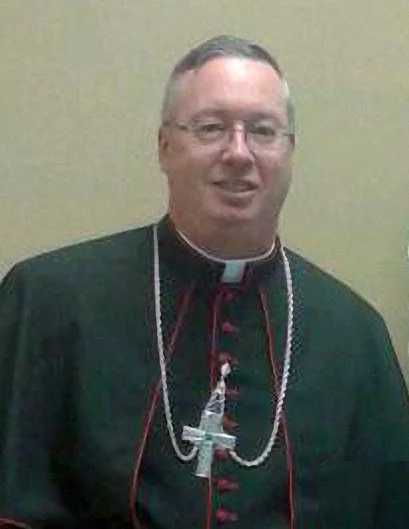
Archbishop Christopher J. Coyne

Cathedral of Saint Joseph in Hartford
— Photo by Sage Ross
MANCHESTER, Conn.
When he was installed two weeks ago, Hartford’s new Catholic archbishop, Christopher J. Coyne, said he has several big objectives, though he conceded that with two of them he may be dreaming.
Coyne’s most practical objective is simply restoring the local church and regaining parishioners. "In recent years," Coyne said, "we have given folks no shortage of causes to walk away from the faith -- parish closings, the abuse scandal and associated betrayals by leaders who should have known and done better, and pastoral approaches that at times have done more to judge people than serve them."
The archbishop can’t undo those scandals but he can be candid about them and make sure that the wrath of God quickly falls -- publicly -- on any agents of the archdiocese who betray their trust.
As for unhappy judgments on people, archbishops are stuck with church doctrines that many think contradict modernity, such as the refusal to ordain women or sanction same-sex relationships. Given the conservative bent of the places where the church is growing, those doctrines are unlikely to be changed soon.
Not that modernity is always right. Indeed, the basic Catholic morality of old is less primitive than today’s morality of anything goes. It wasn’t entirely because of religious doctrine, but Connecticut was better before state government started pushing gambling and marijuana on the public and pretending that men can be women and vice-versa.
Sad as Catholic parish closings are, ripping roots out of the community and leaving empty buildings as stark monuments to a vanished era, the decline in church membership requires closings and it has not been caused primarily by the scandals. While spirituality is not dead in the developed world, religious dogma is losing adherents fast. Perceptions of the divine today are much broader.
Fortunately the church has much to offer beyond dogma, starting with the Sermon on the Mount, and evangelical and non-denominational churches are growing. Catholic leaders might study their appeal.
In his inaugural remarks, the new archbishop noted that parish and school closings have left the church with many buildings that might be converted to inexpensive housing, of which Connecticut is desperately short. Of course this is easier said than done. While nearly everyone purports to want the state to have more housing, nearly everyone wants it built somewhere else. The fear of the underclass is real and often justified, as indicated by violent crime and terrible school performance in the cities.
The new archbishop has an idea about his new city, Hartford, a poverty factory where two high school students were shot to death the other day. His dreamiest objective is to restore Catholic schools in the city -- there are none left -- and make them tuition-free.
The excellence of Catholic schools is generally acknowledged. The schools have behavioral discipline and academic standards, which now are virtually prohibited in public schools. Unlike public schools, church schools can choose their students, but they use this freedom not to exclude but to pursue the most motivated students and parents.
Thus church schools can offer students an escape from the demoralization of city life, and with their better environment they can retain good staff while paying less than public schools.
Regional public "magnet" schools offer some escape as well but are still somewhat impaired in discipline and academic standards. They also impose more transportation burdens on students and parents than neighborhood schools.
In any case, as indicated by the litigation of the past quarter century over school segregation in Hartford, the city and other cities in Connecticut can use much more school choice. The return of Catholic schools could help provide it, but avoiding tuition would require money from somewhere.
A scholarship program from state government might provide it and educate students better and less expensively than government’s own system, but the teacher unions would never consent, and they run government in Connecticut. They have no interest in improving student performance, reducing poverty, and saving money. Only dreamers care about such stuff. Good for the new archbishop for being one.]
Chris Powell has written about Connecticut government and politics for many years (CPowell@cox.net).
Elemental mountains
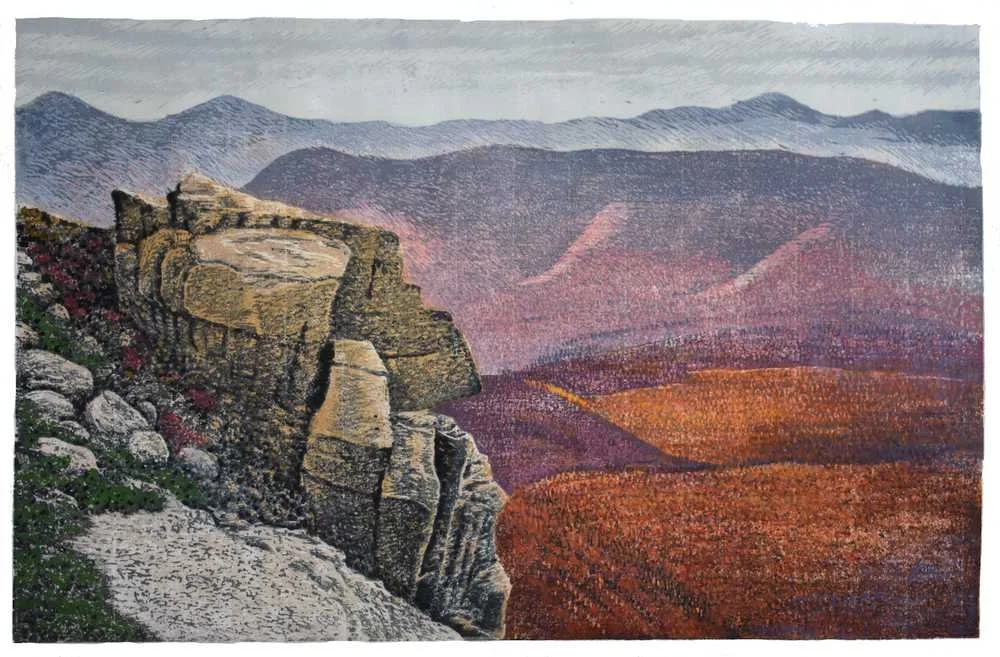
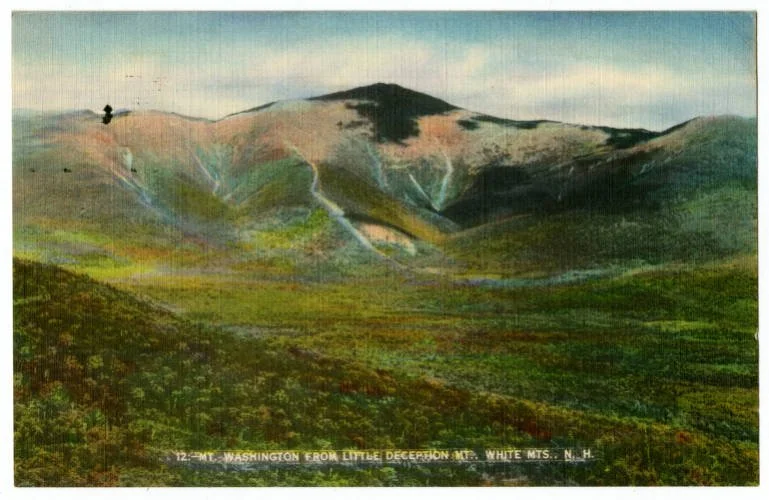
“Bond Cliff’ (color woodblock print), on Mt.. Bond in the White Mountains, by Fremont, N.H.-based artist Rick Garber, at New Leaf Gallery, Lyme, N.H.
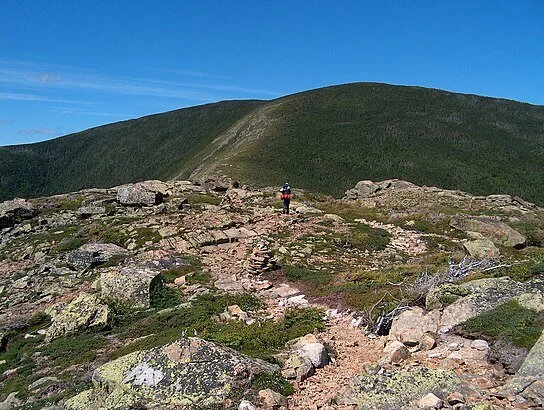
Above the timber line on Mt. Bond.
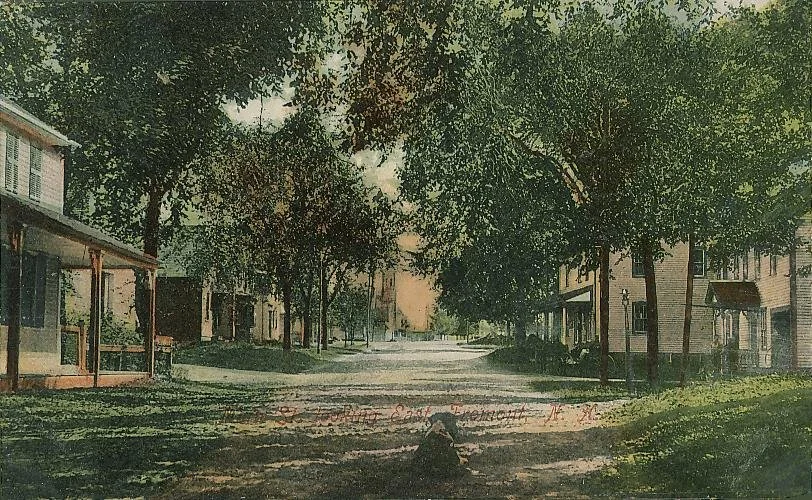
Main Street in Fremont, N.H., in 1909.
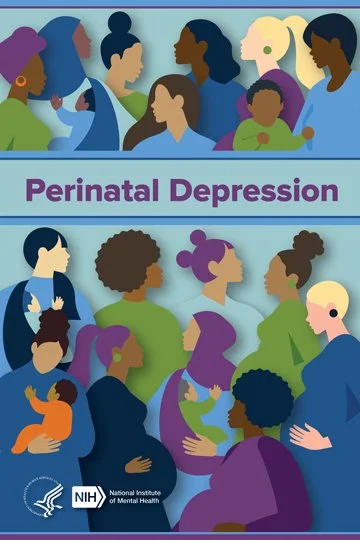
Cheryl Platzman Weinstock: New federal approach being developed to address sometimes lethal maternal depression
From Kaiser Family Foundation Health News (KFF Health News)
BRIDGEPORT, Conn.
Milagros Aquino was trying to find a new place to live and had been struggling to get used to new foods after she moved to Bridgeport from Peru with her husband and young son in 2023.
When Aquino, now 31, got pregnant in May 2023, “instantly everything got so much worse than before,” she said. “I was so sad and lying in bed all day. I was really lost and just surviving.”
Aquino has lots of company.
Perinatal depression affects as many as 20% of women in the United States during pregnancy, the postpartum period, or both, according to studies. In some states, anxiety or depression afflicts nearly a quarter of new mothers or pregnant women.
Many women in the U.S. go untreated because there is no widely deployed system to screen for mental illness in mothers, despite widespread recommendations to do so. Experts say the lack of screening has driven higher rates of mental illness, suicide, and drug overdoses that are now the leading causes of death in the first year after a woman gives birth.
“This is a systemic issue, a medical issue, and a human rights issue,” said Lindsay R. Standeven, a perinatal psychiatrist and the clinical and education director of the Johns Hopkins Reproductive Mental Health Center.
Standeven said the root causes of the problem include racial and socioeconomic disparities in maternal care and a lack of support systems for new mothers. She also pointed a finger at a shortage of mental-health professionals, insufficient maternal mental-health training for providers, and insufficient reimbursement for mental health services. Finally, Standeven said, the problem is exacerbated by the absence of national maternity leave policies, and the access to weapons.
Those factors helped drive a 105% increase in postpartum depression from 2010 to 2021, according to the American Journal of Obstetrics & Gynecology.
For Aquino, it wasn’t until the last weeks of her pregnancy, when she signed up for acupuncture to relieve her stress, that a social worker helped her get care through the Emme Coalition, which connects girls and women with financial help, mental health counseling services, and other resources.
Mothers diagnosed with perinatal depression or anxiety during or after pregnancy are at about three times the risk of suicidal behavior and six times the risk of suicide compared with mothers without a mood disorder, according to recent U.S. and international studies in JAMA Network Open and The BMJ.
The toll of the maternal mental-health crisis is particularly acute in rural communities that have become maternity care deserts, as small hospitals close their labor and delivery units because of plummeting birth rates, or because of financial or staffing issues.
The Maternal Mental Health Task Force — co-led by the Office on Women’s Health and the Substance Abuse and Mental Health Services Administration and formed in September to respond to the problem — recommended creating maternity care centers that could serve as hubs of integrated care and birthing facilities by building upon the services and personnel already in communities.
The task force will soon determine what portions of the plan will require congressional action and funding to implement and what will be “low-hanging fruit,” said Joy Burkhard, a member of the task force and the executive director of the nonprofit Policy Center for Maternal Mental Health.
Burkhard said equitable access to care is essential. The task force recommended that federal officials identify areas where maternity centers should be placed based on data identifying the underserved. “Rural America,” she said, “is first and foremost.”
There are shortages of care in “unlikely areas,” including Los Angeles County, where some maternity wards have recently closed, said Burkhard. Urban areas that are underserved would also be eligible to get the new centers.
“All that mothers are asking for is maternity care that makes sense. Right now, none of that exists,” she said.
Several pilot programs are designed to help struggling mothers by training and equipping midwives and doulas, people who provide guidance and support to the mothers of newborns.
In Montana, rates of maternal depression before, during, and after pregnancy are higher than the national average. From 2017 to 2020, approximately 15% of mothers experienced postpartum depression and 27% experienced perinatal depression, according to the Montana Pregnancy Risk Assessment Monitoring System. The state had the sixth-highest maternal mortality rate in the country in 2019, when it received a federal grant to begin training doulas.
To date, the program has trained 108 doulas, many of whom are Native American. Native Americans make up 6.6% of Montana’s population. Indigenous people, particularly those in rural areas, have twice the national rate of severe maternal morbidity and mortality compared with white women, according to a study in Obstetrics and Gynecology.
Stephanie Fitch, grant manager at Montana Obstetrics & Maternal Support at Billings Clinic, said training doulas “has the potential to counter systemic barriers that disproportionately impact our tribal communities and improve overall community health.”
Twelve states and Washington, D.C., have Medicaid coverage for doula care, according to the National Health Law Program. They are California, Florida, Maryland, Massachusetts, Michigan, Minnesota, Nevada, New Jersey, Oklahoma, Oregon, Rhode Island, and Virginia. Medicaid pays for about 41% of births in the U.S., according to the Centers for Disease Control and Prevention.
Jacqueline Carrizo, a doula assigned to Aquino through the Emme Coalition, played an important role in Aquino’s recovery. Aquino said she couldn’t have imagined going through such a “dark time alone.” With Carrizo’s support, “I could make it,” she said.
Genetic and environmental factors, or a past mental health disorder, can increase the risk of depression or anxiety during pregnancy. But mood disorders can happen to anyone.
Teresa Martinez, 30, of Price, Utah, had struggled with anxiety and infertility for years before she conceived her first child. The joy and relief of giving birth to her son in 2012 were short-lived.
Without warning, “a dark cloud came over me,” she said.
Martinez was afraid to tell her husband. “As a woman, you feel so much pressure and you don’t want that stigma of not being a good mom,” she said.
In recent years, programs around the country have started to help doctors recognize mothers’ mood disorders and learn how to help them before any harm is done.
One of the most successful is the Massachusetts Child Psychiatry Access Program for Moms, which began a decade ago and has since spread to 29 states. The program, supported by federal and state funding, provides tools and training for physicians and other providers to screen and identify disorders, triage patients, and offer treatment options.
But the expansion of maternal mental health programs is taking place amid sparse resources in much of rural America. Many programs across the country have run out of money.
The federal task force proposed that Congress fund and create consultation programs similar to the one in Massachusetts, but not to replace the ones already in place, said Burkhard.
In April, Missouri became the latest state to adopt the Massachusetts model. Women on Medicaid in Missouri are 10 times as likely to die within one year of pregnancy as those with private insurance. From 2018 through 2020, an average of 70 Missouri women died each year while pregnant or within one year of giving birth, according to state government statistics.
Wendy Ell, executive director of the Maternal Health Access Project in Missouri, called her service a “lifesaving resource” that is free and easy to access for any health care provider in the state who sees patients in the perinatal period.
About 50 health care providers have signed up for Ell’s program since it began. Within 30 minutes of a request, the providers can consult over the phone with one of three perinatal psychiatrists. But while the doctors can get help from the psychiatrists, mental health resources for patients are not as readily available.
The task force called for federal funding to train more mental health providers and place them in high-need areas like Missouri. The task force also recommended training and certifying a more diverse workforce of community mental health workers, patient navigators, doulas, and peer support specialists in areas where they are most needed.
A new voluntary curriculum in reproductive psychiatry is designed to help psychiatry residents, fellows, and mental health practitioners who may have little or no training or education about the management of psychiatric illness in the perinatal period. A small study found that the curriculum significantly improved psychiatrists’ ability to treat perinatal women with mental illness, said Standeven, who contributed to the training program and is one of the study’s authors.
Nancy Byatt, a perinatal psychiatrist at the University of Massachusetts Chan School of Medicine who led the launch of the Massachusetts Child Psychiatry Access Program for Moms in 2014, said there is still a lot of work to do.
“I think that the most important thing is that we have made a lot of progress and, in that sense, I am kind of hopeful,” Byatt said.
Cheryl Platzman Weinstock reports for KFF Health News. Her work is supported by a grant from the National Institute for Health Care Management Foundation.