
Beautiful fantasies and landscapes
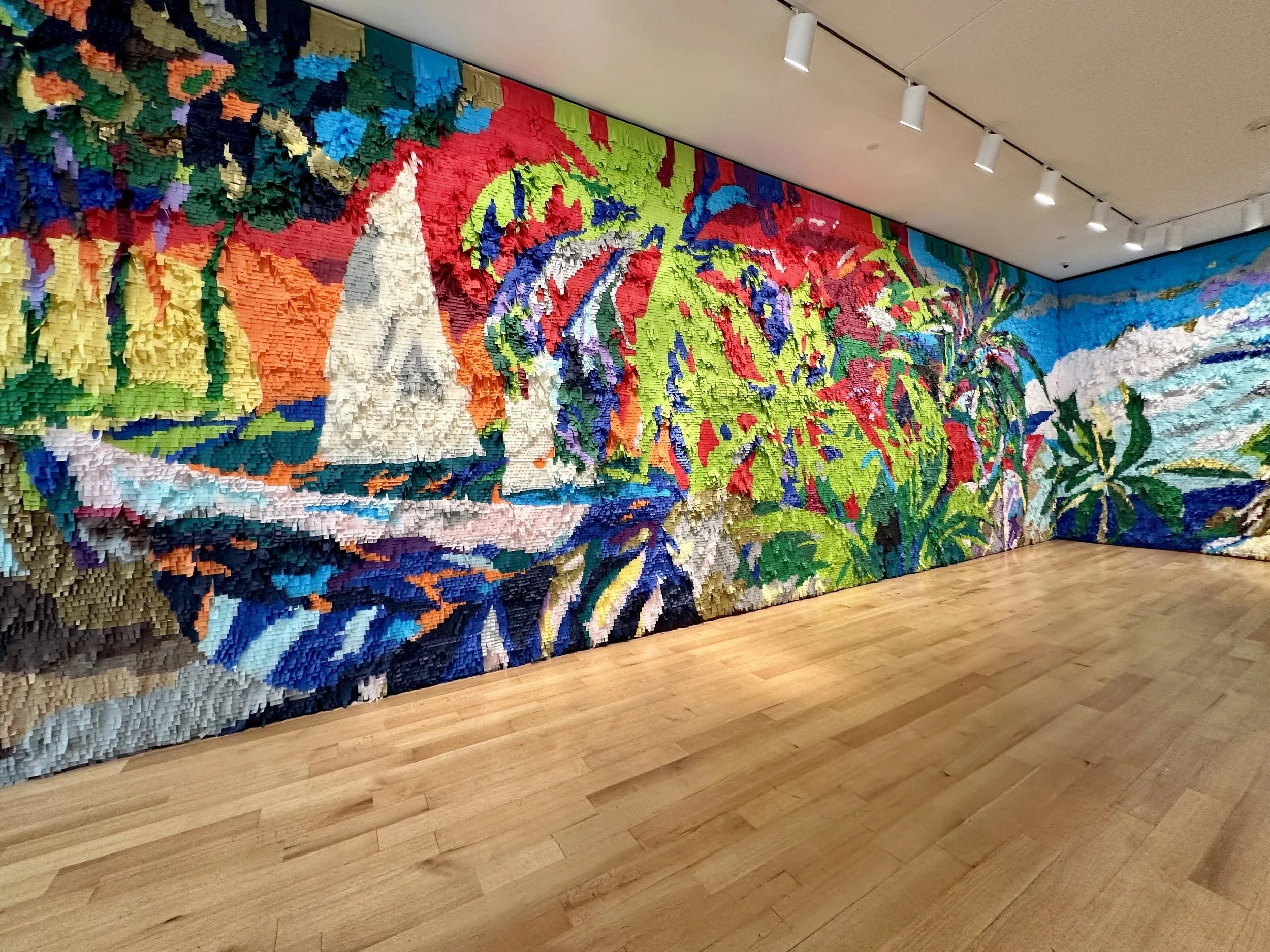
Mural by Justin Favela in his show “Do You See What I See?’’, at the New Britain (Conn.) Museum of America Art through Dec. 1
From the museum’s description:
“Brilliant colors, tissue paper, cardboard, and untold stories converge in ‘Do You See What I See?’, featuring works by Las Vegas-based artist Justin Favela (born 1986). Nestled throughout the galleries, this exhibition is an exploration of the artist's quest to see himself and the vibrant Latinx community represented within the museum's esteemed collection.
“‘CONERICOT,’ Favela’s piñata-inspired mural, above, draws inspiration from depictions of Latin America from the permanent collection. His immersive installation alludes to the beauty of those landscapes, as well as the fantasies that often color Americans' perceptions of these underrepresented cultures.
“‘Do You See What I See?’ extends its presence throughout the museum with several reinterpretations of 19th- and 20th-century paintings and works on paper. These dispersed works serve as thoughtful interventions within the existing collection, bringing past and present into conversation and addressing Latinx presence—or absence—in the story of American art.”
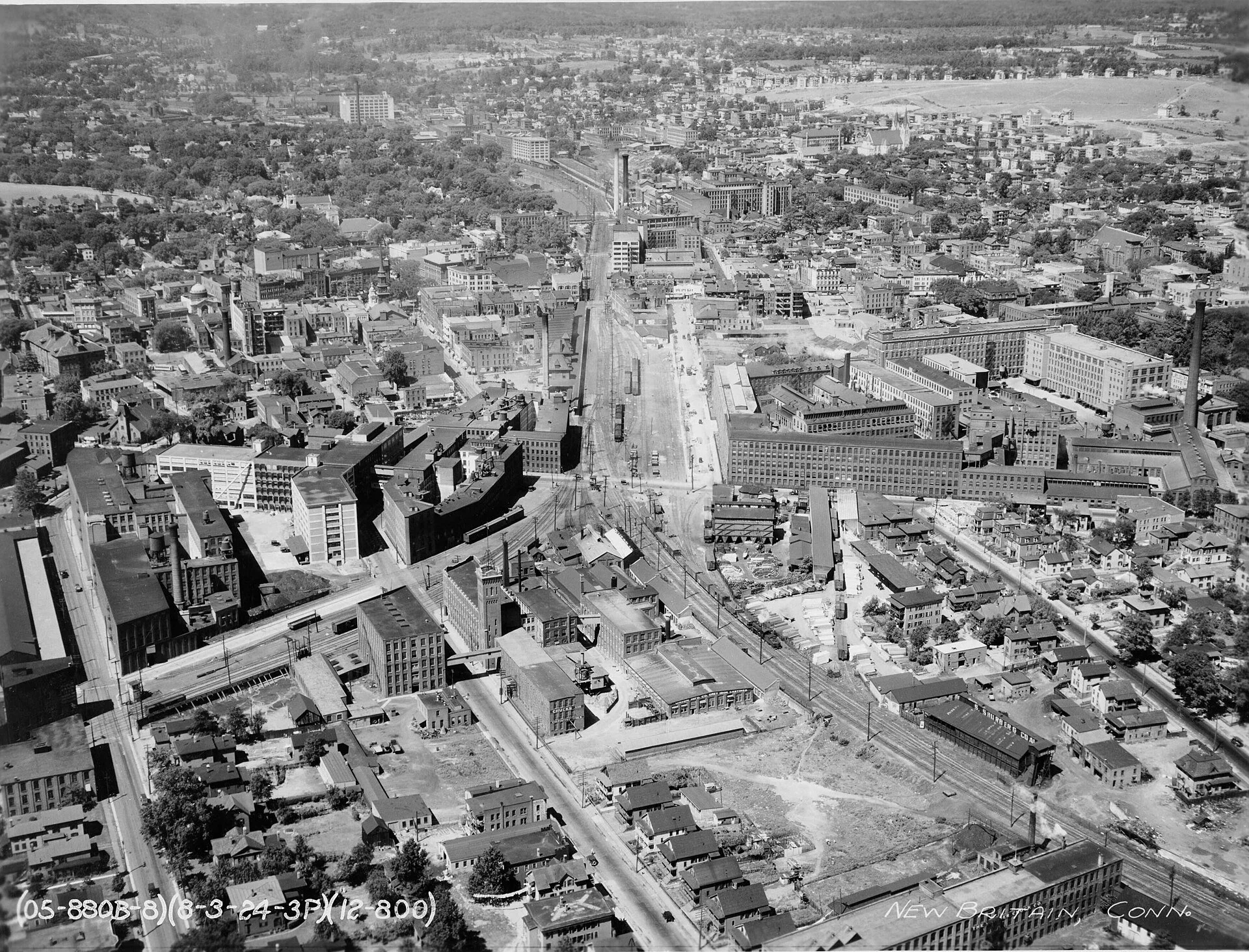
Downtown New Britain in 1930, as the once manufacturing powerhouse slipped into the Great Depression. Few of the industrial buildings above are still there.
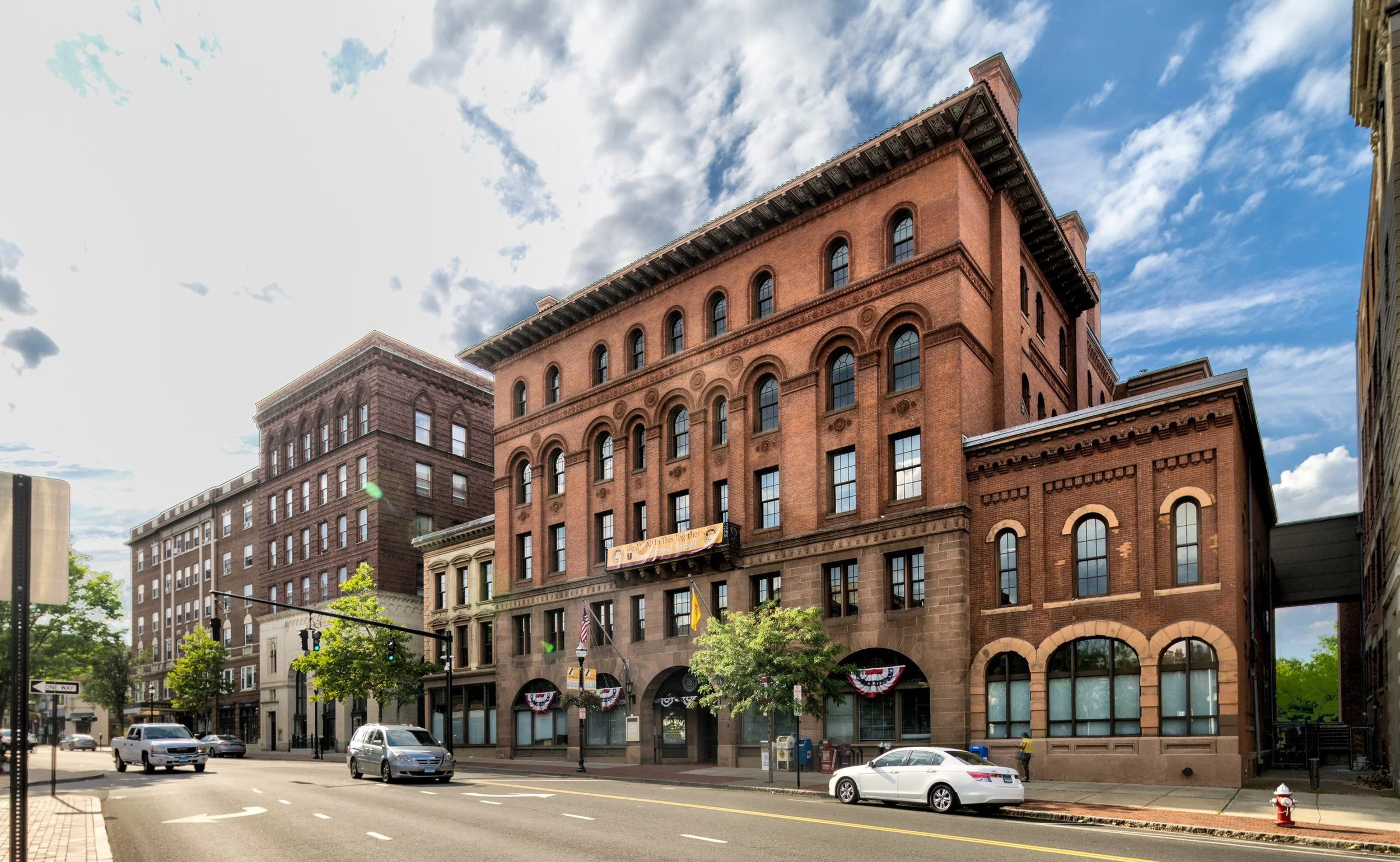
Downtown New Britain a few years ago.
— Photo by Kenneth C. Zirkel
Indie bookstores in Boston doing well
(New England Diary’s editor, Robert Whitcomb, is chairman of The Boston Guardian)
Boston’s independent bookstore scene is at its healthiest in decades, and it could continue communities, while three existing stores have expanded their operations, according to The Boston Globe. Boston’s downtown neighborhoods have seen the lion’s share of this growth, growing in 2024.
Since 2020, at least eight claiming four of the openings and bookstores have set up shop one of the expansions.
Paired with bookstores’ slim margins, Boston’s expensive commercial real estate has largely prevented bookstores from opening downtown over the past few decades, said Beth Ineson, executive director of the New England Independent Booksellers Association, a trade association. But that changed after a dip in real estate prices following the pandemic.
“My association has seen an unprecedented amount of growth across the entire region during that time because there was more commercial real estate easily available,” she said. Even after its recent renaissance, downtown’s bookstore scene could still have some room to grow. Ineson said that because of Boston’s highly educated population, the city still has fewer bookstores than one would expect for a city of its size.
“Our demographics in Boston proper really should support far more independent bookstores than have previously been downtown,” she said. “Given the population here, there’s certainly always room for more stores, and I’m delighted that we see stores opening in different neighborhoods in the city.”
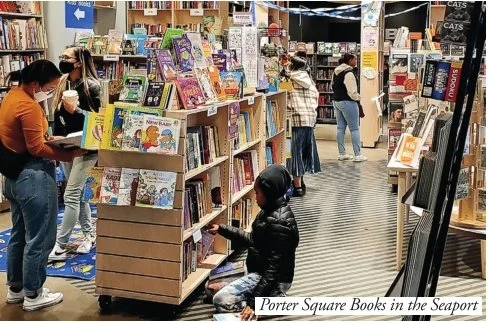
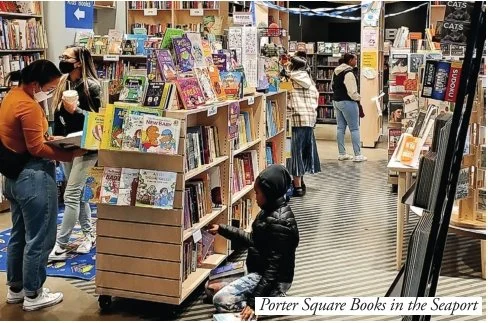
Of Boston’s downtown neighborhoods, the Seaport has seen some of the most impressive growth in its bookstore scene. Though it didn’t have a bookstore before the pandemic, the fast-growing and once- industrial neighborhood now has two just blocks apart.
Help keep ‘White House Chronicle’ on the air!
From Llewellyn King:
Dear Friends,
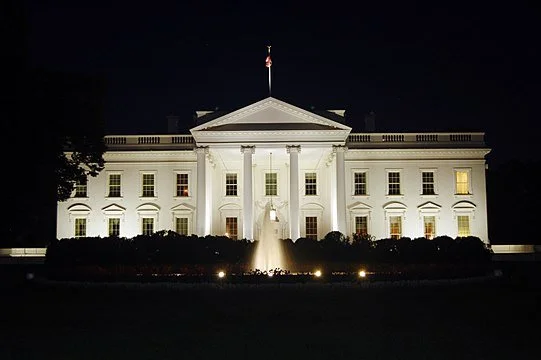
My long-running news and public affairs program, White House Chronicle, which airs weekly on PBS and public, educational and government cable access channels across the country, is looking for sponsors.
We have had some wonderful support over the years, including the Stevens Institute of Technology, the American Petroleum Institute, Exelon Corporation, Anterix, the Edison Electric Institute, the Salt River Project, and the Large Public Power Council.
Due to recent realignments and retirements, we are now seeking new support.
Sponsoring the program can be a great branding tool. In Washington, for example, it airs on WETA, Channel 26, leading the Sunday morning talk shows. The audio airs four times on SiriusXM Radio’s popular POTUS (Politics of the United States), Channel 124.
White House Chronicle has worldwide carriage on Voice of America Television and Radio in English.
The program is the mother ship of my operations. It makes all my other work possible. Its mission is to examine the intersection of science, technology and society. How we live today, and how we will live tomorrow.
It is my belief that this intersection often has a greater impact than does politics alone.
My and co-host Adam Clayton Powell III's guests have been some of the leading lights of technological and scientific progress. Recently they have included Ernest Moniz, former secretary of energy; Vint Cerf, vice president and chief internet evangelist at Google; Stuart Russell, professor of computer science at the University of California, Berkeley; and John Savage, professor emeritus of computer science at Brown University.
The program has been ahead on the issues of the transformative impact of artificial intelligence, the use of hobbyist drones in warfare, and the crisis in electricity supply.
If you would like to get the benefit of a variable branding message on all our broadcast platforms, please get in touch with me at llewellynking1@gmail.com.
Cheers,
Llewellyn
Executive Producer and Host
White House Chronicle on PBS;
Columnist, InsideSources Syndicate;
Contributor, Forbes and Energy Central;
Commentator, SiriusXM Radio
When it’s ‘puddle-wonderful’

in Just-
spring when the world is mud-
luscious the little
lame balloonman
whistles far and wee
and eddieandbill come
running from marbles and
piracies and it's
spring
when the world is puddle-wonderful
the queer
old balloonman whistles
far and wee
and bettyandisbel come dancing
from hop-scotch and jump-rope and
it's
spring
and
the
goat-footed
balloonMan whistles
far
and
wee
“In Just Spring,’’ by E.E. Cummings (1894-1962), a poet who grew up in Cambridge, Mass., and as an adult continued to spend a lof of time in New England, particularly at his vacation home in Madison. N.H. At his death, he was considered the second most widely read poet in the United States, after Robert Frost.
While they can

“Dancing at the A-House” (1990) (acrylic on canvas), by Ronni Farrell (1947-2019), at Larkin Gallery, Harwich Port, Mass.

Mitre’s BlueTechLab

— Mitre photo
Edited from a New England Council report
BOSTON
“The nonprofit Mitre Corp. recently announced that a team from Chelmsford, Mass.-based product-development company Triton Systems Inc. has become the first commercial enterprise to use Mitre’s new BlueTech Lab for testing. The lab is at Mitre’s Bedford, Mass., campus and was built to support the company’s expanding marine-technology work. (Mitre is headquartered in Bedford and McLean, Va.) The lab incudes a 620,000-gallon test tank (above) that can be used to study communication and acoustic sensing on uncrewed undersea and surface vehicles.
“Triton Systems used the lab’s test tank to analyze the behavior of a small vehicle they are developing for a Department of Defense client. Angelica Cardona, a Triton engineer, had told Mitre that her company was eager to use the lab because of its ample workspace and controlled atmosphere.
“‘Being here saves us so much time and money. Without this resource, we’d be dealing with the logistical burden of getting out to sea and testing in mucky waters,’ said Cardona.’’
‘A farewell gesture’


Audubon Center Bent of the River trail in Southbury, Conn.
— Photo by Karl Thomas Moore
“March brings many things, but not hurricanes. But yesterday it brought a storm and a temperature drop, a farewell gesture from winter. The pipes froze again in the back part of the house. And as I viewed the solidly frozen bath mat in my shower, I felt I could do without any record-breaking statistics.’’
— Gladys Taber (1899-1980), in The Stillmeadow Road (1959), about life in her Southbury, Conn., farmhouse
Chris Powell: Ban investors from taking over and looting charitable hospitals
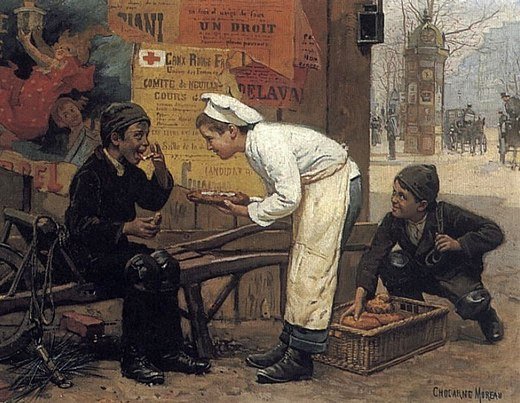
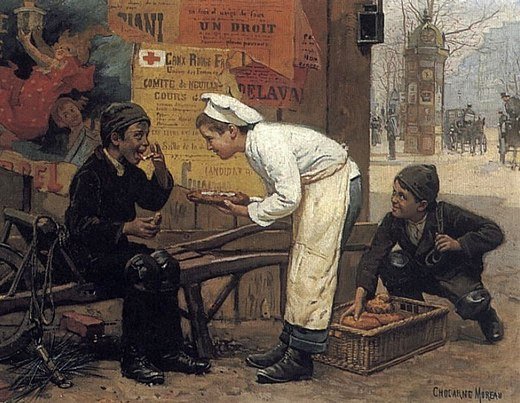
“The Cunning Thief,’’ by Paul-Charles Chocarne-Moreau, depicting a thief about to steal a baked good.
MANCHESTER, Conn.
Connecticut Gov. Ned Lamont and state legislative leaders have not yet completed their health-care proposals for the new session of the General Assembly but they should include legislation forbidding the sale of nonprofit hospitals to profit-making entities.
Many nonprofit hospitals in Connecticut have been acquired in recent years by large nonprofit chains, such as Hartford HealthCare and Yale New Haven Health, and so may not be vulnerable to acquisition by profit-making entities. But many other nonprofit hospitals in the state may be -- the ones owned by smaller chains of nonprofits and the few nonprofit hospitals that remain independent.
Good luck to anyone who can start a private hospital and make money from it. But state government must protect the nonprofit hospitals insofar as they have been built over many years by community charity and voluntarism and their capital properly belongs to the community. An investment company's 2016 acquisition of three Connecticut nonprofit hospitals -- Waterbury, Manchester Memorial, and Rockville General, in Vernon -- has resulted in the liquidation of that community capital for private profit.
The investment company sold the real estate of the three hospitals, paid the money to its investors, and then leased the property back so hospitals could continue operating but with the added expense of rent. This was essentially what in high finance is called a leveraged buyout. More simply it is looting.
Now the three hospitals are insolvent, operating under financial duress, and being offered for sale but there appears to be only one potential buyer, Yale New Haven Health, and it wants a subsidy from state government to make the deal. It's starting to seem as if the hospitals may fail before a deal is made.
The same situation has unfolded recently in Massachusetts, where an investment company bought the six nonprofit hospitals of Caritas Christi Health Care and eventually liquidated their real estate for profit for investors. Now those hospitals are insolvent and in severe trouble as well.
In a statement last month the entire Massachusetts congressional delegation wrote that the investment company "stripped out and sold the property from underneath these hospitals, creating hundreds of millions of dollars in profits for private equity executives while leaving the facilities with long-term liabilities that are magnifying -- if not creating -- the current crisis."
The acquisition of nonprofit hospitals by private investors is a racket. Connecticut should outlaw it. If nonprofit hospitals can't survive financially, their assets should default to state government, which should reorganize them in the public interest, not the private interest, so the charity that built them endures.
Can armed civilian patrols reduce the violent crime in Hartford's Garden Street neighborhood, where two people were shot to death Feb. 10? A city pastor, Dexter Burke of The Light Church of God, thinks so and is organizing the patrols as well as a block watch and trash-collection efforts.
Hartford police will welcome the extra eyes and ears if not necessarily the extra pistols to be carried, though the people in the patrols will be licensed.
Burke is tired of the prayer vigils led by another city clergyman that always pop up following shootings in the city. While television news often publicizes them, the vigils do no more than display the righteousness and ineffectiveness of their participants.
Burke's accusation that Hartford's police are "unwilling or unable" to protect the neighborhood is less justified, since Hartford is full of poverty and crime, not just around Garden Street. Of course Connecticut's other cities are full of poverty and crime too, and nobody ever does anything about that either -- or at least nothing effective.
Citizen patrols and block watches may help but may not reduce crime as much as push it into other areas. Still, that might not be so bad, for with more crime in middle-class suburbs, maybe state government could be prompted to examine why nothing it does to reduce poverty and crime has much effect.
Chris Powell has written about Connecticut government and politics for many years (CPowell@cox.net).
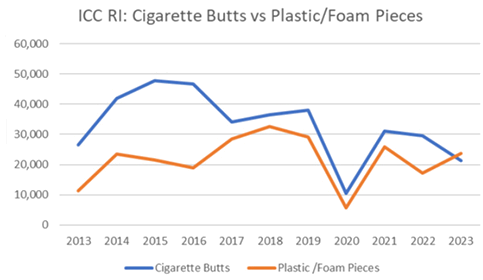
Plastic pieces edge out cigarette butts as beach waste in Rhode Island

Pieces of plastic on beach.
Text from ecoRI News
“For the first time in the history of Rhode Island’s participation in the International Coastal Cleanup program, cigarette butts were not the item most collected by volunteer participants. Instead, small plastic and foam pieces — those pulverized bits that accumulate in wrack lines — took the lead, according to Save The Bay’s recently released 2023 International Coastal Cleanup Report.
“‘When this project started over 35 years ago, the focus was on recording the most common types of identifiable trash so that we could get a picture of what was littering our shores and where it was coming from,’ Save The Bay volunteer and internship manager July Lewis said. ‘In terms of the number of items picked up, cigarette butts were always at the top of the list.”’
“Last year, however, 2,830 local volunteers collected 23,468 plastic and foam pieces — and 21,165 cigarette butts.’’
To read the whole article, please hit this link.
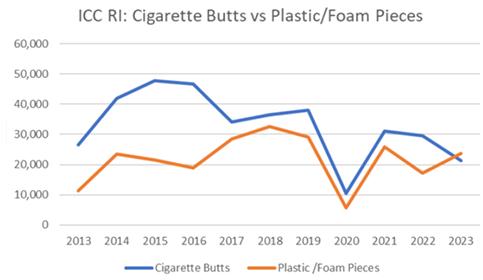
— Save The Bay graphic
Between dislocation and belonging

From Yvette Mayorga’s current show, “Dreaming of You,’’ at the Aldrich Contemporary Art Museum, in Greenwich, Conn.
The museum says:
“Inspired by her mother’s work at a bakery after immigrating to the United States from Jalisco, Mexico, Mayorga frosts thick acrylics onto sculptures and canvases with piping bags and icing tips to achieve delectable textures. … Mayorga’s handicraft intimately immerses the viewer in the tension between dislocation and belonging that defined her girlhood as a first-generation Mexican-American in the Midwest in the ‘90s and 2000s.’’

Llewellyn King: More and more, be happy you speak English

English-speaking peoples monument on Bush House, London
— Photo by Goodwillgames
ATHENS
If you hold a professional certificate, whether it is for information technology or language proficiency, or if you hold one for best practices in project management, you may have a Greek entrepreneur to thank.
He is Byron Nicolaides, founder and CEO of PeopleCert, the global testing company based in Athens.
I sat down with him in his office in the city’s center recently to find out how a businessman in Greece could affect standards of conduct and performance around the world.
It is a tale that begins with a very poor Greek family living in Istanbul — Nicolaides uses the old name for the Turkish capital, Constantinople, where once, he said, there was a community of more than 100,000 Greeks, which has dwindled to just 2,000 today. His parents were English teachers and had no fixed incomes. “Sometimes,” he said, “they would be paid in kind with a chicken or some bread.”
From this poverty their son, Byron, rose to be one of the richest men in Greece or Turkey. The company he created in 2000, is a global leader in professional and language skills certification. In 2021, it became the first Greek unicorn, reaching a capital value of more than $1 billion.
Note that his parents were English teachers — and this is important.
As I talked to Nicolaides, he enthused about the universality of English and how it has been a unifying force in the world. No worry about how English may crush marginal but traditional languages.
Nicolaides is passionate about English. Without it, he wouldn’t be the success he is today. He sees it as a great binding force, a great way for peoples and nations to talk to each other and to avoid friction. He wants everyone to know English
He asked me, “What is the second-biggest language in the world?” I look at the ceiling and start thinking about the two large population countries, India and China. I say uncertainly, “Hindi.”
With boyish happiness, Nicolaides, a young 65 of athletic build and a full head of hair, says, “Bad English.”
His enthusiasm for the English language becomes a man whose company tests English proficiency around the world — and he lists Fortune 500 companies (including Goldman Sachs and Citibank), NASA, the FBI, the CIA, universities and other institutions.
As Nicolaides unspools his life story, one is captivated by how a poor boy of Greek heritage made his way to Bosphorus University, where he earned a BA in business administration, and then to the University of La Verne in Southern California, where he earned an MBA.
Whereas Nicolaides’ upbringing and education in Turkey might seem to be a challenge — Turkey and Greece are seldom on the best of terms — it has been a great advantage to him.
His break was in 1986, when he went to work for Merrill Lynch in Greece, becoming its highest earner. The company was looking for someone to open the Turkish market, offering a $5,000 to $10,000 signing bonus. Nicolaides took the bonus, and the job made him a millionaire by age 31.
At that point, he told me, he had more money than he knew what to do with, so he did the thing all Greeks with money do, “I went into shipping.”
Nicolaides spent a year in the shipping industry and hated it. He said the only thing all the other shipping millionaires could talk about was “money, money, money.” Although today he has much, much more money, he feels he is helping humanity with the educational purpose of PeopleCert.
If he lucked out beyond expectations with Merrill Lynch, he lucked out with British Prime Minister Margaret Thatcher, too, albeit indirectly.
During the Falklands War, Nicolaides said, the Iron Lady was appalled at the lack of interoperability between the British forces. She demanded the introduction of the kind of best practices and certification which later became a pillar of PeopleCert.
Thatcher’s requirement was developed by a British company in which Nicolaides had an investment. Later, he bought that company and PeopleCert became unstoppable: It has certified 7 million people around the world and is growing at 36 percent a year.
Reflecting on this odyssey by a golden Greek, I realize that native English speakers start with a huge advantage in that the world is open in a way that it isn’t to those who don’t speak English.
When I first visited Athens in the 1960s, getting around depended on finding an English speaker. They were few and far between. Today everyone seems to speak English, and well.
Llewellyn King is executive producer and host of White House Chronicle, on PBS. His email is llewellynking1@gmail.com, and he’s based in Rhode Iskand.

Byron Nicolaides
Observation and reinvention

Work by Marlboro, Vt.-based Cathy Osman, in her show “I Chose These Things,’’ at Bromfield Gallery, Boston, through March 31. These are still lifes inspired by the landscape of southern Vermont.
Her artist’s statement says:
“The foundation of my work grows from a deeply felt respect and connection to my natural surroundings. As a painter and printmaker living in Southern Vermont, I am attentive to the landscape’s inherent beauty. The work is a synthesis of the observed, a quirky need to re-invent through process, the particularity of materials, as a means to reconsider the appearance of things.
“This series of images incorporates renderings of the humble honey bee, generic references to birds, cell structures, and industrial detritus. The environmental and biological stresses affecting an insect, for instance, are not merely emblematic, but serve as a barometer reflecting the enormity of impact that the loss of insect life will have upon the security of our world.
“The work is often collage-based. I am constructing primarily using materials I surface through my printing press with different surface textures and color. With this raw material, I layer the collages, creating a substrata made dense with an overlay of marks, color and assemblage of shapes. Some of the work can be read as landscape, others as fragments of the man-made.
“Recently I have returned to oil painting, focusing my eye on the observed and invented structure of flowers and plants.’’

The Whetstone Inn, on the Marlboro, Vt., Town Common, was built c. 1775
— Photo by Beyond My Ken
Housing solutions should include thinking small

Tiny homes in Detroit
Photo by Andrew Jameson
Adapted from Robert Whitcomb’s “Digital Diary,’’ in GoLocal24.com
Exurban/suburban Burrillville, R.I., has admirably been in the forefront of making housing available to people with minimal means. And I particularly like that the town has tried to concentrate new housing in its village centers. This reduces sprawl and makes it easier for people to shop without having to use a car.
Meanwhile, in a national sign of moves to make housing, including owner-occupied dwellings, more affordable, very small houses (some only 400 square feet) are going up in some communities as larger, but still small, houses become increasingly unaffordable to people with low or moderate incomes.
In 2022, the average size of a single-family home in the United States was 2,522 square feet. Although in the past five years American homes have been shrinking a bit, since 1975, they have almost doubled in size. That’s even as the size of families has shrunk, more people are living alone and the population is aging.
It's about time that many more smaller dwellings were built.
Finally, look for more confrontations between state governments that are pressing communities to change zoning ordinances and make other changes to encourage more “affordable” housing construction, especially near public transit and shopping. Consider Milton, Mass., some of which is very affluent, rejecting in a referendum a state mandate meant to promote affordable housing in communities with MBTA lines. The state will yank some state grants to the town unless it swiftly comes into compliance.
Read:
Excluded: How Snob Zoning, NIMBYism and Class Bias Build the Walls We Don’t See, by Richard D. Kahlenberg
The communities are legal children of the state, and the housing crisis will demand that it compel some of the pull-up-the-bridge towns to change their housing policies. This is not just a matter of fairness. The long-term health of our economy will depend in no small part on adequate housing for the full range of workers and their families.
Maybe there should be a surtax on some vacant urban and suburban land to encourage building housing there.
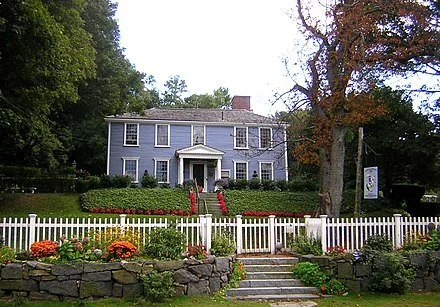
The 18th Century Suffolk Resolves House, in Milton, now a museum

To 'reinvigorate the landscape'

Work in Ana Flores’s show “Wood River,’’ at Boston Sculptors Gallery, through March 31.
The gallery says the show features sculpture from her “Sacred Grove’’ and “Cultivate’’ series, “celebrating our powers to rebuild and reinvigorate the landscape, and offering a glint of optimism in the face of our dangerous human default of destruction and deforestation. Flores lives at the edge of the forest by the Wood River in southern Rhode Island. Working manually on her land over the years, she feels the land also worked on her, reawakening a deep ‘sense of place.’ For Flores, the phrase is no longer metaphorical. The artist contends that her sense of place is just as real as her sense of smell or sight—a multi-sensory connection and understanding of not only the biological history of a place, but also of its layered human traces.’’

The Wood River watershed
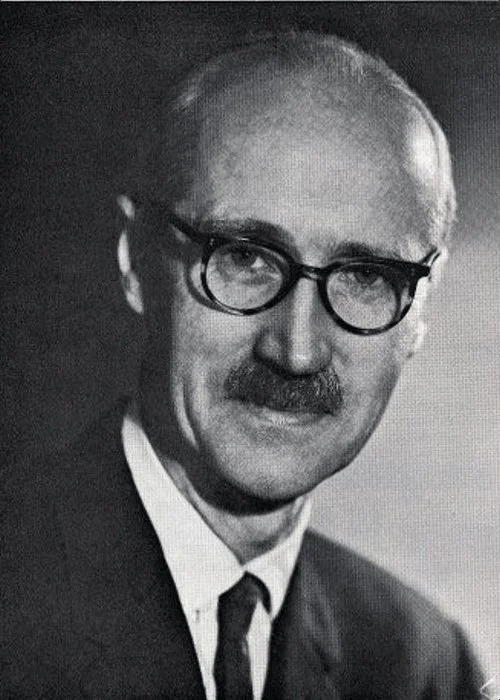
David Warsh: What an economist and public servant! And his brother was a spy
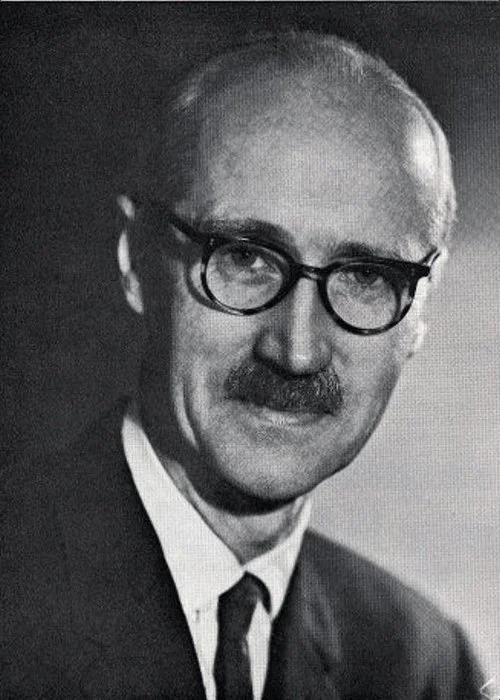
Sir Alexander Cairncross
Milton Friedman was recognized with a Nobel Memorial Prize in 1976, but something more important to economics happened that year, and I don’t mean the bicentennial of the American Revolution. The Glasgow Edition of the Works of Adam Smith appeared that year as well, timed to commemorate the two hundredth anniversary of the publication of An Inquiry into the Nature and Causes of The Wealth of Nations.
“Modern economics can be said to have begun with the discovery of the market,” began Sir Alexander Cairncross, chancellor of the University of Glasgow, in his opening address to the convocation that introduced the new edition.
He continued:
“Although the term ‘market economy’ had yet to be invented, its essential features have debated the strength and limitations of market forces [ever since] and have rejoiced in their superior understanding of these forces. The state, by contrast, needed no such discovery.”
Cultural entrepreneurs in economics, even the most effective among them, such as John Maynard Keynes and Milton Friedman, do their work against the background of hard-earned knowledge of others, standing on the shoulders of giants and all that.
Eight beautiful volumes had rolled off the presses: two containing The Wealth of Nations; another with Smith’s first book, The Theory of Moral Sentiments,; three more volumes of essays, on philosophical subjects (which includes the famous essay on the history of astronomy), jurisprudence, and rhetoric and belles letters; a collection of correspondence and some odds and ends; and, in the eighth, an index to them all.
Each contains introductions by top Smith scholars, with edifying asides tucked in among the footnotes. Two companion volumes accompanied the release, published by Oxford University Press: Essays on Adam Smith, and The Market and the State: Essays in Honor of Adam Smith, by way of penance. Smith had been educated at the University of Glasgow but scorned Oxford, where he spent six post-graduate years, mostly reading. Inexpensive volumes of any or all of the Glasgow edition can be had from the Liberty Fund.
A feast, in other words, for those interested in thinking about such things.
One such was Cairncross, whose Wikipedia entry begins this way:
“Sir Alexander Kirkland Cairncross KCMG FRSE FBA (11 February 1911 – 21 October 1998), known as Sir Alec Cairncross, was a British economist. He was the brother of the spy John Cairncross [worth reading!] and father of journalist Frances Cairncross and public health engineer and epidemiologist Sandy Cairncross.”
More to our point, for twenty-five years Cairncross was chancellor of Glasgow University (1971-1996). It was he who commissioned the Glasgow edition of Smith. He delivered the inaugural address I quoted above.
Before that, however, Cairncross became an economist, as an under graduate at Glasgow and then, beginning in 1932, at Trinity College, Cambridge, under John Maynard Keynes and his increasingly incensed rival, Dennis Robertson. Keynes published his General Theory of Employment, Interest, and Money to great excitement in 1936; Robertson steered Cairncross away from theory and into applied economics. After graduating with honors, he returned to Glasgow as a lecturer and wrote a textbook.
His service in government during World War II and after was extensive and exemplary: the Ministry of Aircraft Production; Treasury representative at the Potsdam Conference; a stint at The Economist; adviser first to the Board of Trade, then to the Organization for European Economic Cooperation; 10 years as Professor of Applied Economics at Glasgow; then, for another decade, various high-ranking positions in the Treasury. The appointment as Glasgow’s chancellor came in 1971.
If you are interested in post-war Britain, particularly the Sixties, the Royal Academy’s biographical minute on Cairncross makes interesting reading. Quietly told in 1964 about his brother’s treachery as a paid agent of the KGB, he called it “perhaps the greatest shock I ever experienced.”
Cairncross was a Keynesian economist, his biographers say. He was critical of monetarism and dismissed the idea of a “natural” rate of unemployment as absurd. He considered that industrial planning, while necessary in wartime, was no model for peacetime governments. Cairncross “shows that you don’t have to be flamboyant to achieve great influence,” wrote a former boss, “and that you do not have to be malicious to be interesting.”
“By some odd quirk of memory,” his biographers write, in his autobiography, A Life in the Century, Cairncross neglected to mention the Glasgow edition of the works of his fellow Scot that he commissioned, “although he himself had given the opening paper.” Yet that comprehensive record of the circumstances, and, at their center, the founding work – An Inquiry into the Nature and Causes of the Wealth of Nations – from which modern economics emerged may have been his single most durable accomplishment. Cairncross concluded his introductory address to the convocation this way:
“We are more conscious perhaps than Adam Smith of the need to see the market within a social framework and of the ways in which the state can usefully rig the market without destroying its thrust. We are certainly far more willing to concede a larger role for state activities of all kinds, But it is a nice question whether this is because we can lay claim, after two centuries, to a deeper insight in determining the forces determining the wealth of nations or whether more obvious forces have played the largest part: the spread of democratic ideals, increasing affluence, the growth of knowledge, and a centralizing technology that delivers us over to the bureaucrats.”
For an accounting of the lives among the bureaucrats of some distinguished present-day economists, see this column next week.
David Warsh, a veteran columnist and an economic historian, is proprietor of Somerville-based economicprincipals.com, where this column originated.
David Warsh: What an economist and what a family!
Milton Friedman was recognized with a Nobel Memorial Prize in 1976, but something more important to economics happened that year, and I don’t mean the bicentennial of the American Revolution. The Glasgow Edition of the Works of Adam Smith appeared that year as well, timed to commemorate the two hundredth anniversary of the publication of An Inquiry into the Nature and Causes of The Wealth of Nations.
“Modern economics can be said to have begun with the discovery of the market,” began Sir Alexander Cairncross, Chancellor of the University of Glasgow, in his opening address to the convocation that introduced the new edition.
He continued:
“Although the term “market economy” had yet to be invented, its essential features have debated the strength and limitations of market forces [ever since] and have rejoiced in their superior understanding of these forces. The state, by contrast, needed no such discovery.”
Cultural entrepreneurs in economics, even the most effective among them, such as John Maynard Keynes and Milton Friedman, do their work against the background of hard-earned knowledge of others, standing on the shoulders of giants and all that.
Eight beautiful volumes had rolled off the presses: two containing The Wealth of Nations; another with Smith’s first book, The Theory of Moral Sentiments,; three more volumes of essays, on philosophical subjects (which includes the famous essay on the history of astronomy), jurisprudence, and rhetoric and belles letters; a collection of correspondence and some odds and ends; and, in the eighth, an index to them all.
Each contains introductions by top Smith scholars, with edifying asides tucked in among the footnotes. Two companion volumes accompanied the release, published by Oxford University Press: Essays on Adam Smith, and The Market and the State: Essays in Honor of Adam Smith, by way of penance. Smith had been educated at the University of Glasgow but scorned Oxford, where he spent six post-graduate years, mostly reading. Inexpensive volumes of any or all of the Glasgow edition can be had from the Liberty Fund.
A feast, in other words, for those interested in thinking about such things.
One such was Cairncross, whose Wikipedia entry begins this way:
“Sir Alexander Kirkland Cairncross KCMG FRSE FBA (11 February 1911 – 21 October 1998), known as Sir Alec Cairncross, was a British economist. He was the brother of the spy John Cairncross [worth reading!] and father of journalist Frances Cairncross and public health engineer and epidemiologist Sandy Cairncross.”
More to our point, for twenty-five years Cairncross was chancellor of Glasgow University (1971-1996). It was he who commissioned the Glasgow edition of Smith. He delivered the inaugural address I quoted above.
Before that, however, Cairncross became an economist, as an under graduate at Glasgow (where his namesake had been Chancellor three centuries before, then, beginning in 1932, at Trinity College, Cambridge, under John Maynard Keynes and his increasingly incensed rival, Dennis Robertson. Keynes published his General Theory of Employment, Interest, and Money to great excitement in 1936; Roberson steered Cairncross away from theory and into applied economics. After graduating with honors, he returned to Glasgow as a lecturer and wrote a textbook.
His service in government during World War Two and after was extensive and exemplary: the Ministry of Aircraft Production; Treasury representative at the Potsdam Conference; a stint at The Economist; advisor first to the Board of Trade, then to the Organization for European Economic Cooperation; ten years as Professor of Applied Economics at Glasgow; then, for another decade, various high-ranking positions in the Treasury. The appointment as Glasgow’s Chancellor came in 1971.
If you are interested in post-war Britain, particularly the Sixties, the Royal Academy’s biographical minute on Cairncross makes interesting reading. Quietly told in 1964 about his brother’s treachery as a paid agent of the KGB, he called it “perhaps the greatest shock I ever experienced.”
Cairncross was a Keynesian economist, his biographers say. He was critical of monetarism and dismissed the idea of a “natural” rate of unemployment as absurd. He considered that industrial planning, while necessary in wartime, was no model for peacetime governments. Cairncross “shows that you don’t have to be flamboyant to achieve great influence,” wrote a former boss, “and that you do not have to be malicious to be interesting.”
“By some odd quirk of memory,” his biographers write, in his autobiography, A Life in the Century, Cairncross neglected to mention the Glasgow edition of the works of his fellow Scot that he commissioned, “although he himself had given the opening paper.” Yet that comprehensive record of the circumstances, and, at their center, the founding work – An Inquiry into the Nature and Causes of the Wealth of Nations – from which modern economics emerged may have been his single most durable accomplishment. Cairncross concluded his introductory address to the convocation this way:
“We are more conscious perhaps than Adam Smith of the need to see the market within a social framework and of the ways in which the state can usefully rig the market without destroying its thrust. We are certainly far more willing to concede a larger role for state activities of all kinds, But it is a nice question whether this is because we can lay claim, after two centuries, to a deeper insight in determining the forces determining the wealth of nations or whether more obvious forces have played the largest part: the spread of democratic ideals, increasing affluence, the growth of knowledge, and a centralizing technology that delivers us over to the bureaucrats.”
For an accounting of the lives among the bureaucrats of some distinguished present-day economists, see EP next week.
Aerial view

“Skyway’’, by Sarah Giannobile, in her show at Lanoue Gallery, Boston, March 1-30.
The gallery says:
“So much of that natural world that inspires Giannobile is from observing what is above. ‘Skyway,’ both the title of her exhibition and of one of the paintings in it (above), is a reference to birds and other winged creatures that inhabit that realm and whose abstracted forms frequently appear in her compositions.’’
The march of industry
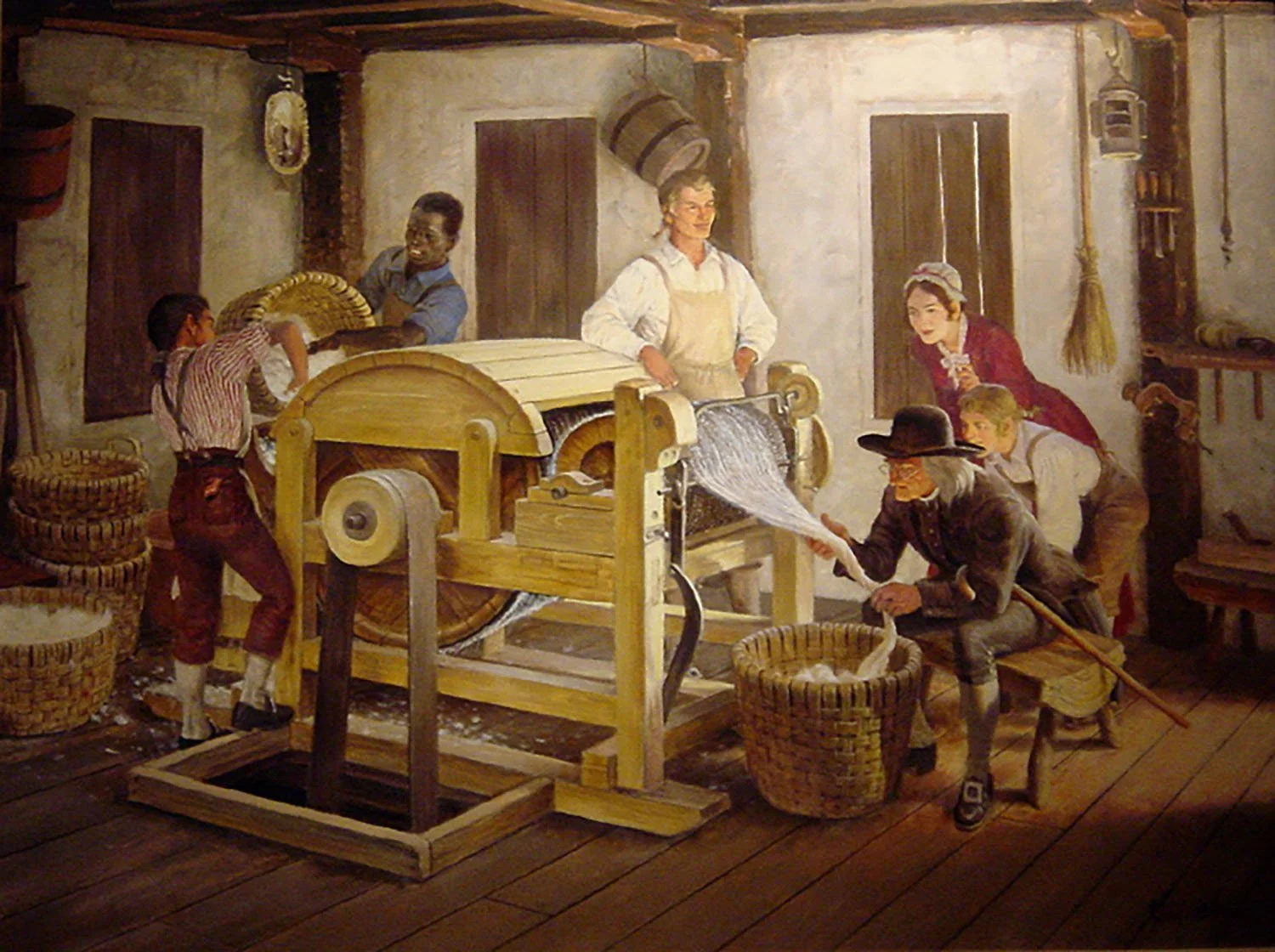
”Samuel Slater Demonstrates the First Successful Textile Machinery,’’ in Pawtucket, R.I., circa 1793 (oil on board), by Adam Cl,ymer (1907-1989), from American Cyanamid corporate calendar 1968, at the National Museum of American Museum, Newport, R.I.
— Copyright National Museum of American Illustration
‘Its wholesome strength’

“View of Manchester, Vermont” (1870), by DeWitt Clinton Boutelle
“In Vermont, wherever you turn, you drink up beauty like rich milk, and feel its wholesome strength seep into your sinews.”
— Sarah N. Cleghorn (1876-1959), in Threescore: The Autobiography of Sarah N. Cleghorn (1936). A resident of Manchester, Vt., she was a poet, novelist and political activist.