
Techno ‘ghosts’

“Free Standard #2, by Boston-based multimedia artist Andrew Neumann, in his show “Free Standards,’’ at Kingston Gallery, Boston, through Dec. 30.
He explains:
“‘Free Standards’ is a series of sculptures that explore the cinematic apparatus, while excluding the actual camera itself. Coming from a technical filmmaking background, the technician is offered a bevy of components to help the cinematic apparatus function in a myriad of ways. For these works, I have stripped away the camera itself, and let these pieces act as ghosts, so to speak….”

A heavyweight character
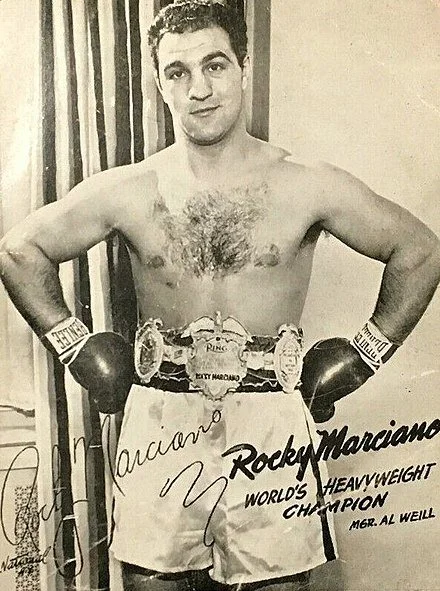
Rocky Marciano (1923-1969) in about 1953. He was heavyweight boxing champion of the world in 1952-1956 and retired undefeated. He grew up in the old shoemaking city of Brockton, Mass.
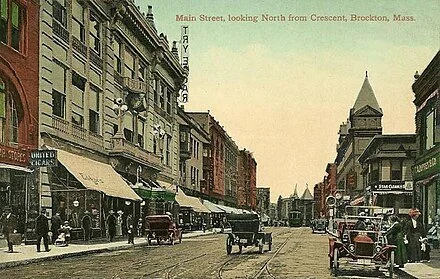
Main Street in Brockton in the early 20th Century.
”I was on a plane with him one time when he was the champion. And of course coming from Massachusetts, Rocky Marciano was my favorite. You play your character and it isn't right to step out of it. You have to stay in that character….Rocky Marciano had such guts and heart. He was something special.’’
— Robert Goulet (1933-2007), Canadian-American singer and actor. He was a native of Lawrence, Mass.

Traffic traumas
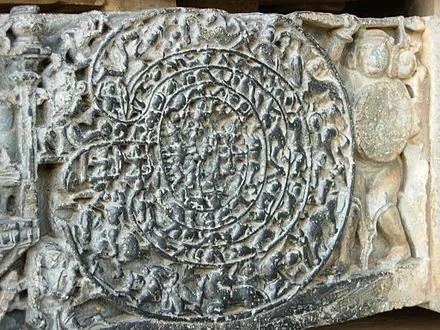
Carving showing the warrior Abhimanyu enteringa a labyrinth in the Hoysaleswara temple, Halebidu, India
Adapted from Robert Whitcomb’s “Digital Diary,’ in GoLocal24.com
On the west-bound closing on Route 195’s Washington Bridge: Once more fear and chaos triumph.
Meanwhile, I know that highway engineering can be difficult, especially in densely populated areas, but surely the Rhode Island Department of Transportation can make it easier to navigate the new rotary on the east side of the always-being-rebuilt Henderson Bridge project between Providence’s East Side and that speed-trap capital called East Providence. The current signage sends many people in circles or facing the peril of a head-on collision, especially at night and during rush hours.
Rotaries (aka “roundabouts”), by smoothing and calming traffic, can reduce accidents, and they cut pollution from the idling of gasoline-fueled vehicles and can eliminate the need for expensive traffic lights. But the signage must be very clear – especially at night.
Better study the bridge project carefully before entering it — if you can get to it through the mess/anarchy caused by the Washington Bridge’s partial closing.
And now there’s the inevitable flap over a proposed rotary in Portsmouth, R.I. Drivers, like most people, fear change.

National Register of Historic Places plaque on the first traffic circle in the United States, at the intersection of River and Pleasant streets in Yarmouth, Mass.
Meanwhile, my friend Lisette Prince, who lives in Newport, reminded me that planting ground cover instead of grass on median strips and otherwise along the roads reduces pollution caused by gasoline-powered lawn mowers, virtually eliminates erosion and can stay green without watering for much longer than grass.

Soothing Big Periwinkle ground cover
Interacting environments
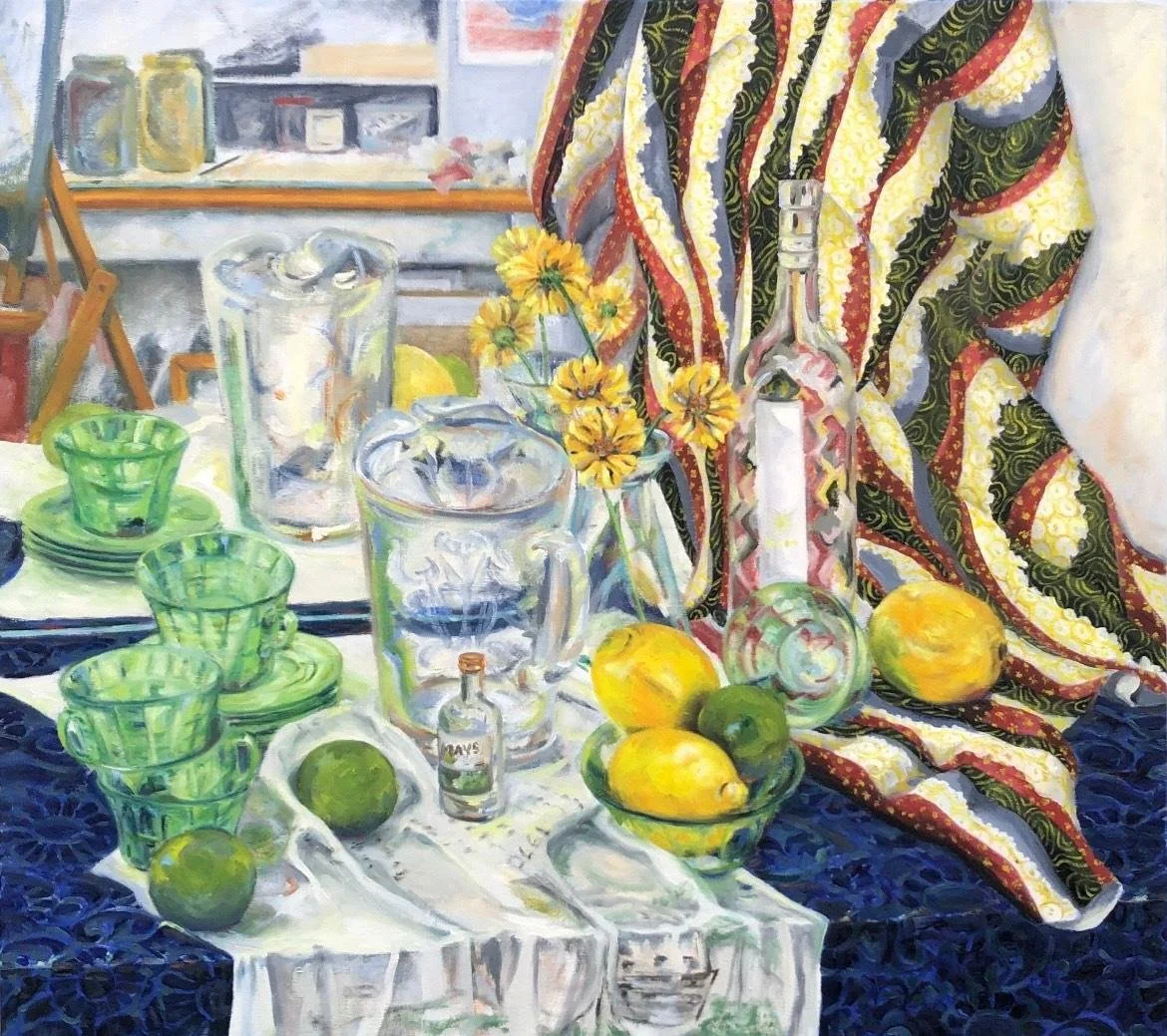
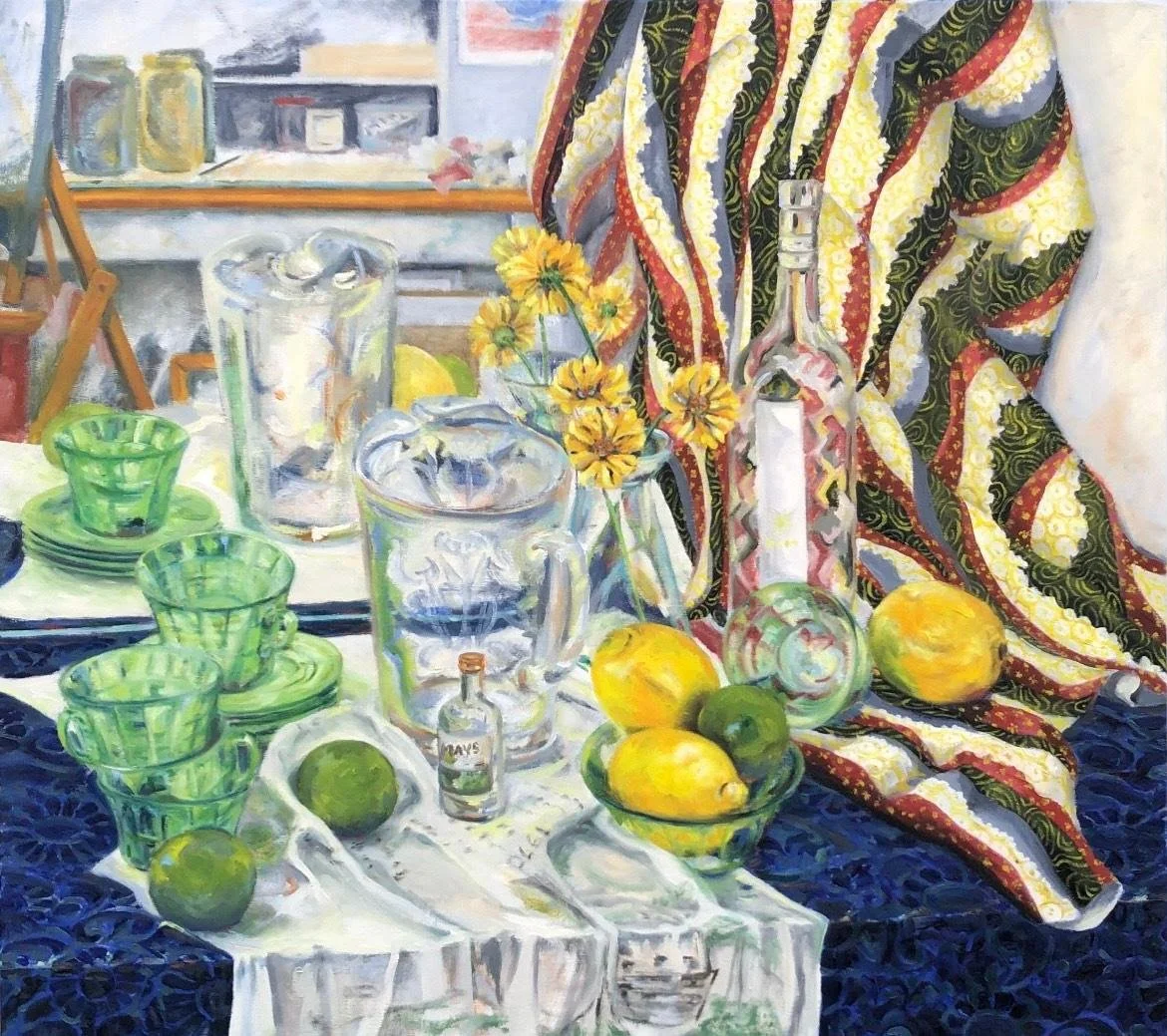
From “Stems — Paintings by Melinda Lane’’, at Colo Colo Gallery, New Bedford, Mass., through Dec 31.
‘
She says on her Web site:
“Influenced by New England's architecture, and decorative arts I create paintings of interior spaces filled with objects that interest me. I focus on the interaction of decorative materials and nature. The interplay of the natural world and the decorative environment reveals itself as I study the selected objects and the surfaces they occupy. Patterns and rhythms develop as I work to create the structure and space of an interior landscape.
”The process begins with the consideration of objects, surfaces, and vantage points. Common items mix with found objects and plant material as I use color, design, and materials to create an entry point for each painting. These spaces evolve through I study of the objects in situ and develop a geometric scaffold which creates a compositional framework. How do objects interact with each other? How do they sit in space and on the surface? Do color and pattern create movement and rhythm? What shapes and ideas do I discover as I spend time looking? How many layers do I see, and do these layers create an engaging image?
”Over time, sustained observation moves me beyond literal representation, and I create a singular space from a myriad of instances, both observed in the moment and remembered experiences. Rather than present an image, I work to create a space in which the viewer can dwell, explore, and discover their own thoughts and pleasures.’’
Seasonal anonymity

Torrance York, “Untitled 5365” ( archival pigment print), by Connecticut-based photographer Torrance York, at the Danforth Art Museum, Framingham, Mass.
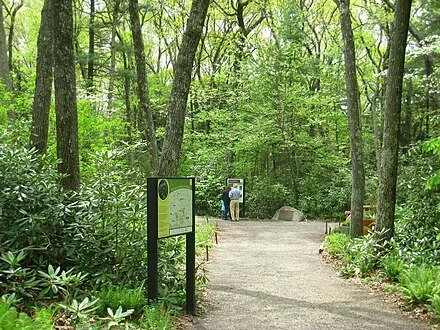
In Garden in the Woods, operated by the New England Wild Flower Society. It features the largest landscaped collection of native wildflowers in New England.

David Warsh: Getting personal about the Israeli-Hamas warTheY

Hamas logo

The Israeli flag
SOMERVILLE, Mass.
Is it possible to criticize Israeli policy in Gaza and the West Bank without being anti-Semitic? The question seems worth asking, even if it almost certainly means being called anti-Semitic by some. Surely it is possible to deplore Hamas without being called anti-Palestinian.
I don’t know what to do with this except to be personal about it.
I grew up in a suburb of Chicago in which racism was pervasive, though mostly polite, because no people of color lived there. Unspoken replacement theology held sway – that is, the premise that Jews, followers of the Old Testament – the Hebrew Bible – eventually would be converted to the principles of the New Testament, the Christian Bible.
Folkways of the village in the Fifties exhibited some pretty strange ideas about gender, too. The use of atomic bombs and carpet bombing against civilian populations during World War II raised few objections. And as for the indigenous populations we had displaced? The hockey team was named for them.
A large part of my education since has involved escaping those prejudices, by degrees, via participation in “movements” of various sorts: college, civil rights, anti-war, pro-women, and now, opposition to Israel’s “Second War of Independence;” that is, its special military operation in Gaza.
Revolted as I was by the Hamas raid, my first reaction to the news of the massacre of some 1,200 innocents was to ask myself what Israeli Prime Minister Benjamin Netanyahu should have done? I had grown up to become a member of a Congregational church; I could use my confirmation instead of a birth certificate to obtain a passport, or so I was told. For a time, I had been a Zionist: I knew a good deal about the Holocaust; I had thrilled to the film Exodus in high school.
Netanyahu should have turned the other cheek, I thought, called out Hamas to worldwide disgust and scorn, and resigned. It took only a day to realize that recommending the Sermon on the Mount to the Israeli Defense Force was no solution. That set in motion this skein of thought.
I had never seen, until I came across the other day, , in an article in The Atlantic, President Dwight Eisenhower’s advice in a letter to one of his brothers, in 1954, in the early stages of the Cold War:
You speak of the “Judaic-Christian heritage.” I would suggest that you use a term on the order of “religious heritage” – this is for the reason that we should find some way of including the vast numbers of people who hold to the Islamic and Buddhist religions when we compare the religious world against the Communist world. I think you could still point out the debt we all owe to the ancients of Judea and Greece for the introduction of new ideas.
Advice as sage today as it was then. Even much-loathed former Commies might be included in the heritage of humanity today. I’ll leave it to historians, Biblical scholars, ethnologists, anthropologists, and sociologists to pick apart the differences. But theologian Paul Tillich’s phrase “Judaic-Christian heritage,” which offered such comfort during the years after World War II, is no longer part of my vocabulary.
Having said this much, I must come to the point. I am aghast at the Israeli government’s invasion and occupation of Gaza; appalled by its plan to occupy the territory after the slaughter stops; embarrassed by the United States’ veto of the 13-1 United Nations Security Council resolution calling for an immediate cease-fire.
I object to the congressional and donor bullying of university presidents. The American newspapers I follow seem to have been somewhat intimidated as well. (Here is a long view of the situation in The Guardian that makes sense to me.) The stain on the reputations of the leaders and policymakers involved, including those in the United States and Iran, can never be erased.
I have had this privilege of writing this column, called Economic Principals, for 40 years. I couldn’t live with myself if I didn’t say this much about current events in the Middle East. It is, however, as much as I have to say. I’m against the war in Ukraine, too, but after twenty years of following its genesis, it is a problem I know something about.
The relevance to these matters of economics should be clear, at least intuitively. I pledge to work harder to spell it out.
xxx
Swedish Television does an excellent job on its short profiles of each year’s well Nobel laureates. The link offered here last week to their visit with Harvard economist Claudia Goldin didn’t work. Here is one that does. At fourteen minutes, it is well worth watching.
David Warsh, a veteran columnist and an economic historian, is proprietor of Somerville-based economicprincipals.com, where this column originated.

Our single-cell world
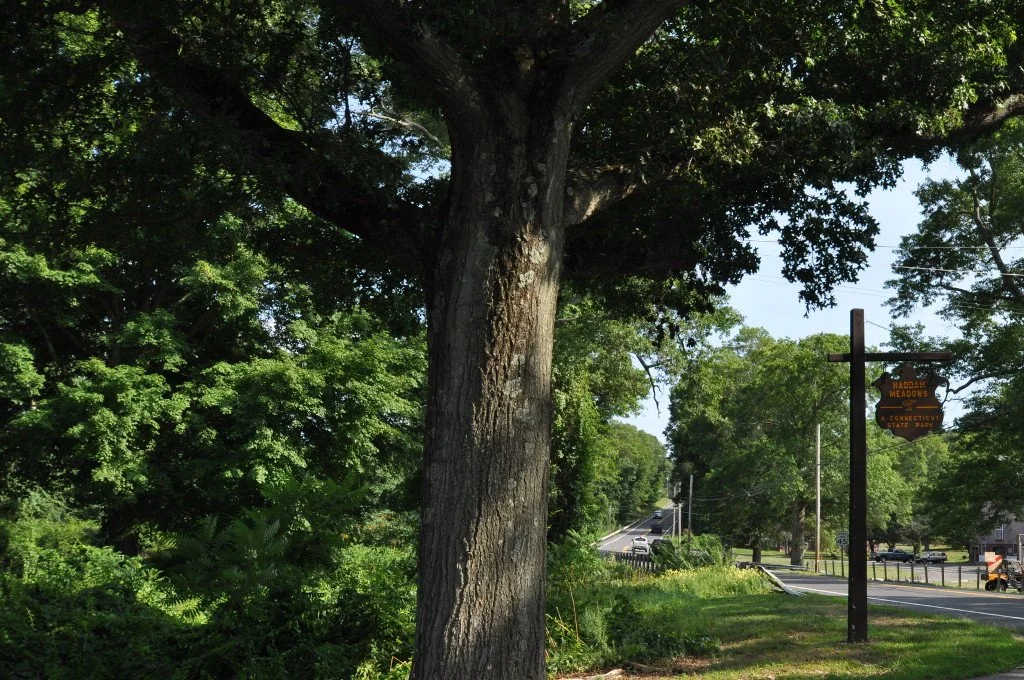
Entrance to Haddam Meadows State Park, in Haddam, Conn.

“I have been trying to think of the earth as a kind of organism, but it is no go. I cannot think of it this way. It is too big, too complex, with too many working parts lacking visible connections. The other night, driving through a hilly, wooded part of southern New England, I wondered about this. If not like an organism, what is it like, what is it most like? Then, satisfactorily for that moment, it came to me: it is most like a single cell.’’
–— Lewis Thomas (1913-1993), American physician, researcher, writer and health-care executive.
Not for rent

“Burano Venezia’’ (glicee pigment print), by Rob Skinnon, at Mix Design, Guilford, Conn.
Mr. Skinnon’s photographs display his journeys through villages of Italy, hidden backroads of New England, seascapes at Martha’s Vineyard, and beyond.

Henry Whitfield House, built in 1639, is the oldest house in Connecticut and the oldest stone house in New England. It’s very English looking.
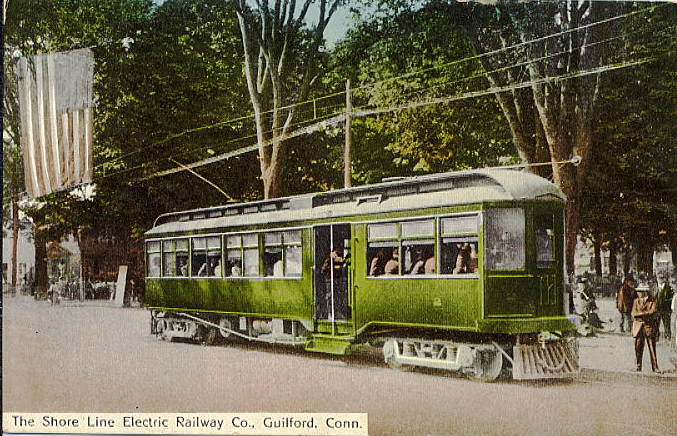
Circa 1900 colorized postcard
Winter 'star'
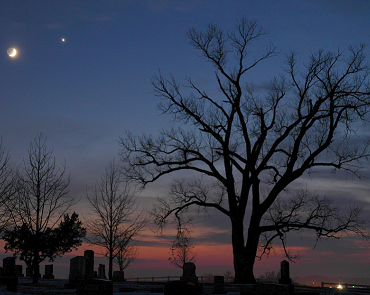
The “Evening Star” Venus next to the Moon just after sunset.
— image from NASA
“Only this evening I saw again low in the sky
The evening star, at the beginning of winter, the star
That in spring will crown every western horizon….’’
— From “Martial Cadenza,’’ by Wallace Stevens poet (1879-1955), American poet, insurance executive and lawyer. He spent most of his adult life in Hartford, Conn.
Chris Powell: Enough pandering and stereotyping already!
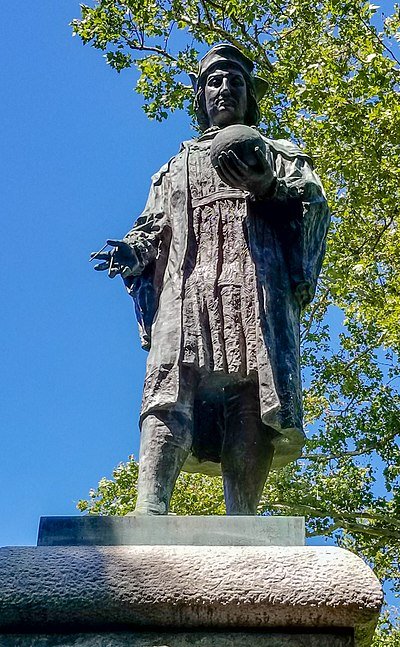
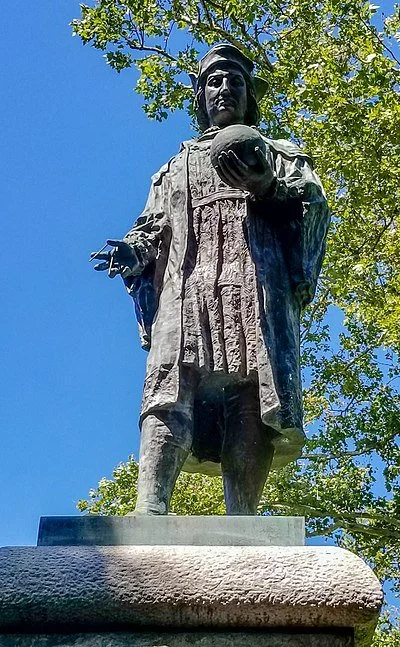
Statue of Christopher Columbus in New Haven. In 2017, the statue was vandalized before Columbus Day, with red paint splashed on the statue and the words "kill the colonizer" spray-painted along its base.
The statue was removed on June 24, 2020.
MANCHESTER, Conn.
Has Connecticut been more Balkanized or less so by Groton's decision to replace its observance of Columbus Day with a holiday that will be both Italian Heritage Day and Indigenous Peoples Day?
Columbus is now considered politically incorrect for having helped to open the Western Hemisphere to the European exploration and colonization that displaced the hemisphere's original inhabitants, who had spent hundreds of years displacing each other without European interference. Political correctness lately has elevated them to the "noble savages" of old romantic literature.
But a century ago Columbus was a worldwide hero, and since he was Italian he was appropriated for a national holiday apologizing for the scorn that had been heaped on the Italian immigrants of recent decades, as scorn had been heaped on the Irish immigrants before them and even then was being heaped on Jews.
So in Groton and other places Italian Heritage Day will be what Columbus Day was meant to be all along, more a sop to people of Italian descent than a tribute to the great navigator. Meanwhile the descendants of the inhabitants displaced long ago by the Europeans are getting Indigenous Peoples Day, also as an apology for the abuse their ancestors took, as if most people in the United States now aren't just as "indigenous" as anyone with "indigenous" ancestors.
Why must the country keep patronizing ethnicity? While people may gain much identity from their ethnicity, no one has earned anything by it. It is simply bequeathed to them and they deserve no credit for it any more than anyone should be disparaged for it. But politicians love to pander on the basis of ethnicity, especially when they have little to say about anything that matters.
It is 2½ centuries since the national charter declared that all men are created equal. Lately the charter seems to have been amended to add that, as George Orwell wrote, some are more equal than others.
The pandering to people of Italian and "indigenous" descent as if they deserve an apology or special recognition of their acceptance is especially silly in Connecticut. The state has the country's largest percentage of people of Italian descent and two of its three largest Indian casinos, which enjoy lucrative monopolies bestowed on the premise that today's reconstituted tribes are owed tribute for the wars lost by their ancestors nearly four centuries years ago. Apparently the fantastic wealth given to the tribes by the state, much of that wealth being extracted from people who are far more oppressed than the proprietors of the casinos ever were, isn't apology enough. Supposedly a special holiday is needed too.
But there is already a holiday that celebrates everyone in the country: Independence Day, July 4. It marks the supreme principle of equality under the law. When will that ever be enough?
For that matter, when will high school sports teams and their followers acknowledge that mascots drawn from an ethnic group -- particularly those drawn from Indians -- constitute stereotyping and that stereotyping ethnic groups is offensive?
That has yet to dawn on school systems in Windsor, Canton, Killingly and Derby, though most towns have replaced their Indian mascots, and state law penalizes use of such mascots by withholding financial aid drawn from the Indian casinos.
Windsor and Canton remain the "Warriors," which may sound ambiguous but is not, since the teams formerly used Indian imagery with the name. Killingly's teams are the "Redmen" and "Red Gals," a reference to skin color, also confirmed by past use of Indian imagery. Derby still gets away with "Red Raiders" because it has the endorsement of a minor tribe, the Schaghticokes, which long has been trying to curry favor with palefaces in hope of winning casino rights.
The stereotype here is undeniable -- that of ferocity and brutality. No team calls itself the Fighting Bunnies.
State government's financial incentives to replace Indian mascots haven't finished the job. Such mascots should be forthrightly outlawed by the next session of the General Assembly.
Chris Powell has written about Connecticut government and politics for many years (CPowell@cox.net).
'Diasporic identity'
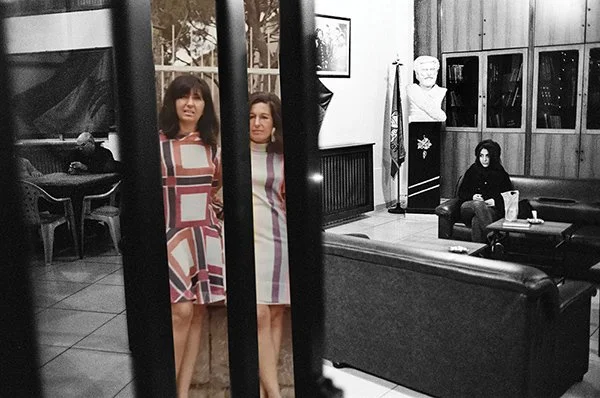
“Beirut Memory Project #49” (digital collage, archival pigment print on velvet fine art paper), in the show “Disrupted, Borders,’’ by Ara Oshagan, at Armenian Museum of America, Watertown, Mass., through Dec. 30.
— Courtesy of the artist.
The museum says:
Drawing on his own history and identity, photographer and installation artist Ara Oshagan brings together several series of work that focus on his interest in “diasporic identity, afterlives of displacement and colonization, erasure and (un)imagined futures’’.
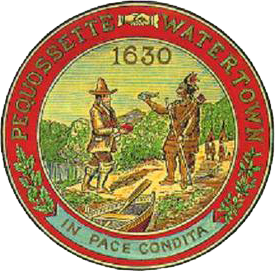
City seal of Watertown.
Vector in Vermont

“Kites and Darts-7” ( mokuhanga collage, sumi and silver on handmade paper), by Underhill, Vt.-based artist Patty Hudak, in the group show “Dynamism’’, at Vermont Studio Center, in Johnson, through Jan. 25.
— Image courtesy of the artist.
The show features work by 10 artists who work in traditional forms and those who work in new media. Each artist explores their practice in different ways: from site-specific installations to vibrant abstract landscapes to digital imagery. All artists involved in this show are local to Vermont Studio Center and have studios on site.
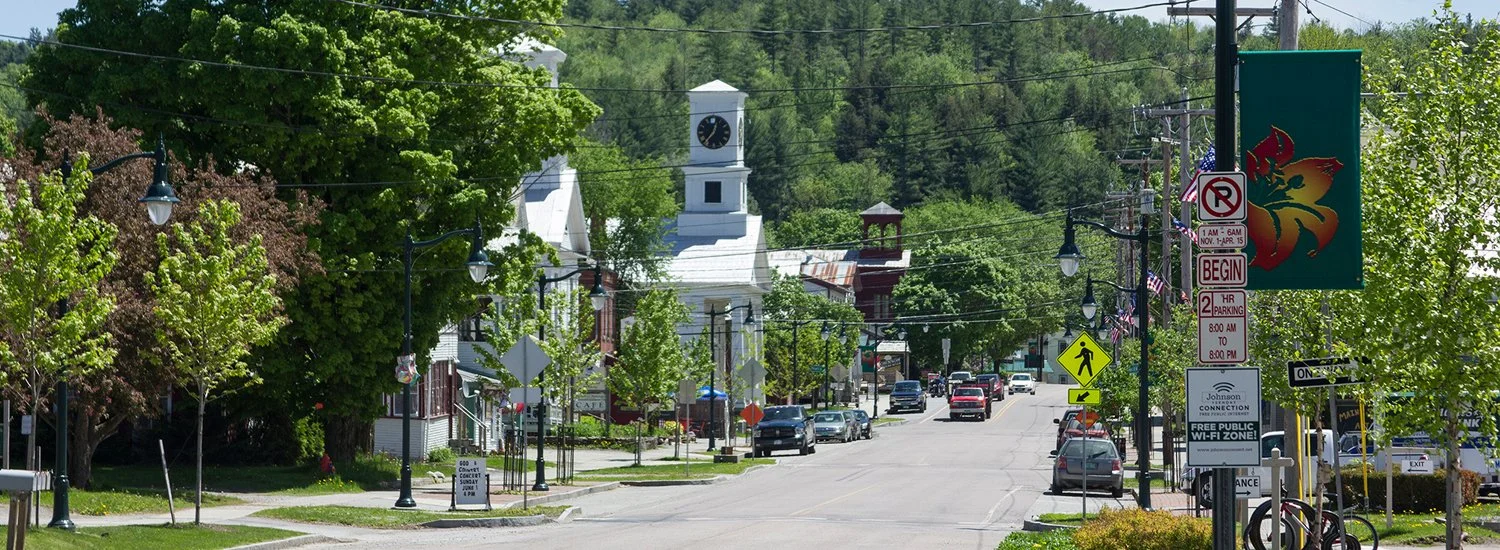
Downtown Johnson in the college town’s brief but bucolic summer.

View of Underhill, Vt., and the famous ski mountain Mt. Mansfield, at 4,393 feet the state’s highest peak.
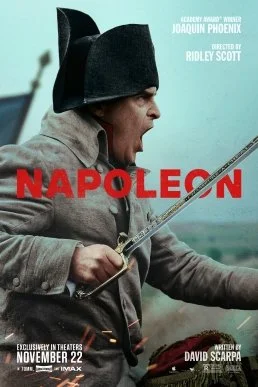
Llewellyn King: History is very malleable in writers’ and filmmakers’ hands
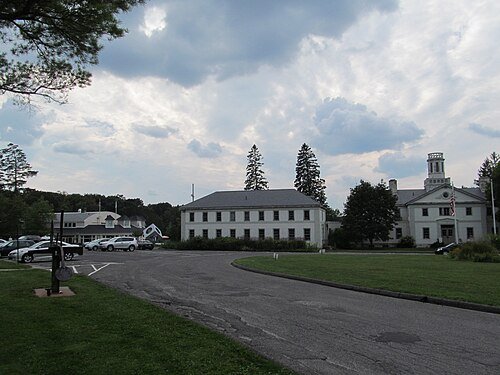
Shakespeare & Company’s campus, in Lenox, Mass. The organization is a theater company and venue complex founded in 1978. Shakespeare took innumerable liberties with the historical record.
WEST WARWICK, R.I.
The trouble with history is that no one can agree on what happened. That is how historians can wrangle over events 2,000 years ago — or two months ago.
Prominent historians become more famous when they feud with other prominent historians. One such feud, which became very public, was between the British historians Hugh Trevor-Roper and A.J.P. Taylor over the origins of World War II. They went at it as only academics can.
The trouble worsens when fiction enters; and fiction always enters and distorts. Fiction doesn’t let the facts stand in the way of a good story. The Greeks did it with Homer, and it has gone on ever since.
But the greatest muddier of history was William Shakespeare, whether it was the demonization of Richard III and the two young princes in the tower, or whether Marc Antony was a great orator or whether Cleopatra was a gorgeous seductress. Mostly, what we think we know about these historical figures, we got from Shakespeare or some other creative writer.
The playwright George Bernard Shaw couldn’t leave Cleopatra or alone either. He also had a go at Joan of Arc and muddied the history there, not that it has ever been clear — history never is.
Historical fiction is historical distortion by definition, which gets steroidal when movies are involved.
Two recent movies are opposed in the degree of historical truthfulness the directors, both British, have cared about. Christopher Nolan gave us Oppenheimer, which is extraordinary in its fidelity to the facts, and even mood. Oppenheimer captures the ethos of a congressional hearing exactly.
Ridley Scott has made Napoleon without interest in Napoleon besides a sort of comic-book acquaintance with his subject.
He was, it would seem, more interested in what happens when a cannon takes out a horse, than facts about the niceties of the little Corsican’s extraordinary career. Also, he has based much of the story line on Napoleon’s relationship with Josephine, little on his administrative ability, which was the underpinning of his military success, and made modern France.
Napoleon makes life difficult for filmmakers because he was a romantic figure, even in Britain, when he was at war with the British. Witness how his affair with Josephine has taken on legendary proportions as one of history’s great love affairs. Or his defeat at Waterloo.
There is a puzzler: Waterloo was a great victory for Britain and its allies, but in idiomatic English, Waterloo has become a metaphor for defeat. A belated victory for Napoleon, you might say.
Then there is the general’s name. Why does history call Napoleon Bonaparte by his first name? The Duke of Wellington’s “real” name was Arthur Wellesley. And does anyone know or care that he was Tory prime minister twice or that he was from Ireland?
No, Bonaparte carries off the honors and continues to win the information war long after his death.
The two inaccuracies which bother historians most about Scott’s film are that Napoleon didn’t witness the guillotining of Marie Antoinette and French didn’t launch artillery at the pyramids, nor did they blast the nose off the Sphinx.
Another challenge is historical fiction on television — much of it produced by the BBC.
The BBC has an edict that casting must reflect the current multiracial face of Britain. This results in black and Asian courtiers and noblemen romping around England in the time of Henry VIII. So long as the story and the acting keeps to the high standard, which has been established by BBC drama, I don’t mind. It is just actors and many of them are excellent. However, what will young people, who don’t learn much history these days, make of this?
We don’t expect that something similar would happen in Japanese TV drama, like English noble ladies and gents romping around the divine emperor’s medieval court; nor would we expect to see Hollywood’s finest cavorting in China’s Forbidden City.
It intrigues me that history can become so malleable in the writers’ and filmmakers’ hands. Scott is said to have dismissed one critic on the grounds that he wasn’t there, and he wasn’t entitled to comment.
While many, like Scott, believe that it is okay to mess with the facts, another set of historical vandals has passed judgment on the past and wants to punish heroes of yesteryear for what they did as judged by today’s standards. Those revisionists are busy tearing down statues and trashing all kinds of figures in an effort to serve posthumous justice.
Bringing down the marble or bronze is a current obsession with what passes as history, whether we get it right or not.
Llewellyn King is executive producer and host of White House Chronicle, on PBS. His email is llewellynking1@gmail.com, and he’s based in Rhode Island and Washington, D.C.


Loveable or finished?

Boston’s Scollay Square in the late 19th Century. The square, now modernist/Brutalist Government Center, became famous in the 20th Century as Boston’s sin (or fun?) center — hookers, strip shows, etc. “Hey, sailor!”
“There is no section in America half so good to live in as splendid old New England — and there is no city on this continent as loveable as Boston.’’
— Mark Twain (real name Samuel Clemens) (1835-1910), in a letter to his sister-in -law Mollie Clemens, in January 1971.
xxx
“There broods over the real Boston an immense effect of finality. One feels in Boston, as one feels in no other part of the States, that the intellectual movement has ceased.’’
— H.G. Wells (1866-1946), prolific English author, in The Future in America (1906)
Green thermometers
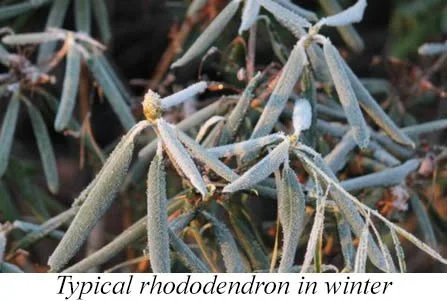
Rhododendrons are living thermometers at this time of year in New England. As the temperature rises to around 40 F, the leaves become full. But as it drops below 32, the leaves droop, then curl and eventually become pale green cylinders.
Starting with black
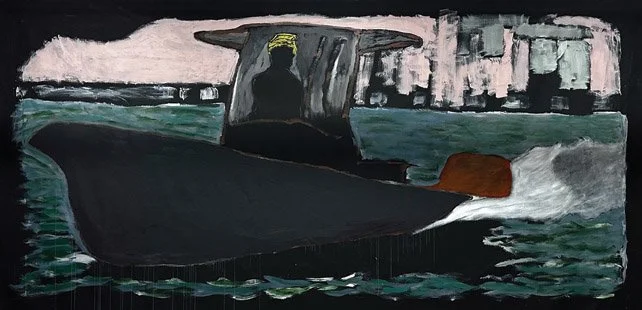
“Chromium Dip” (acrylic on linen), by Lewiston, Maine-based artist Reggie Burrows Hodges, in his show “Turning a Big Ship,’’ at the Addison Gallery of American Art, Andover, Mass.
© Reggie Burrows Hodges. Courtesy of the artist and Karma.
The Maine College of Art and Design, in Portland, where Mr. Hodges teaches, describes him thus:
“Reggie Burrows Hodges is a narrative figurative painter whose work centers around visual metaphor and storytelling. He works primarily large-scale on raw canvas, wood and rag paper with acrylic and pastel — exploring themes such as identity, truth, surveillance, and often childhood memories. As method, Hodges paints from a black ground, developing the environment around the figure so it emerges from its surroundings, examining the possibility that we are all products of our environment.”
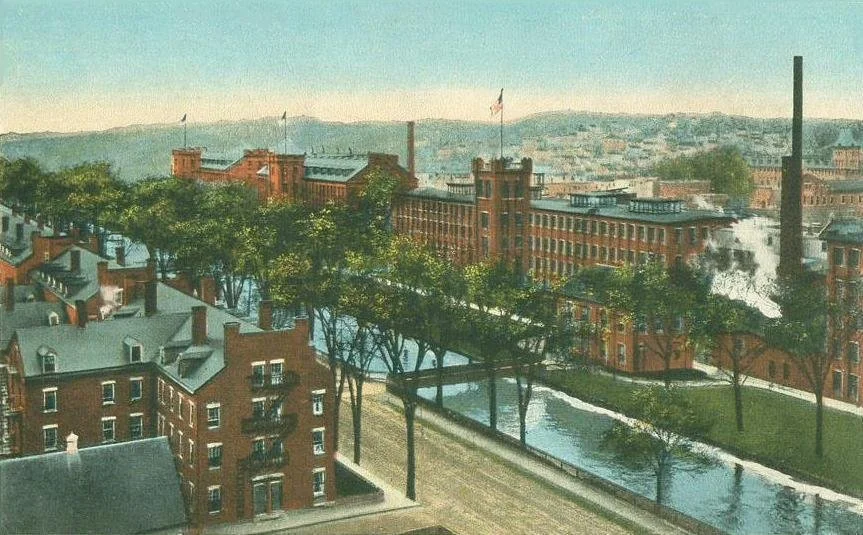
Bates Mill (as in Lewiston’s well-regarded Bates College) and canal in 1915, when the city was a major manufacturing center.
Honesty and guilt
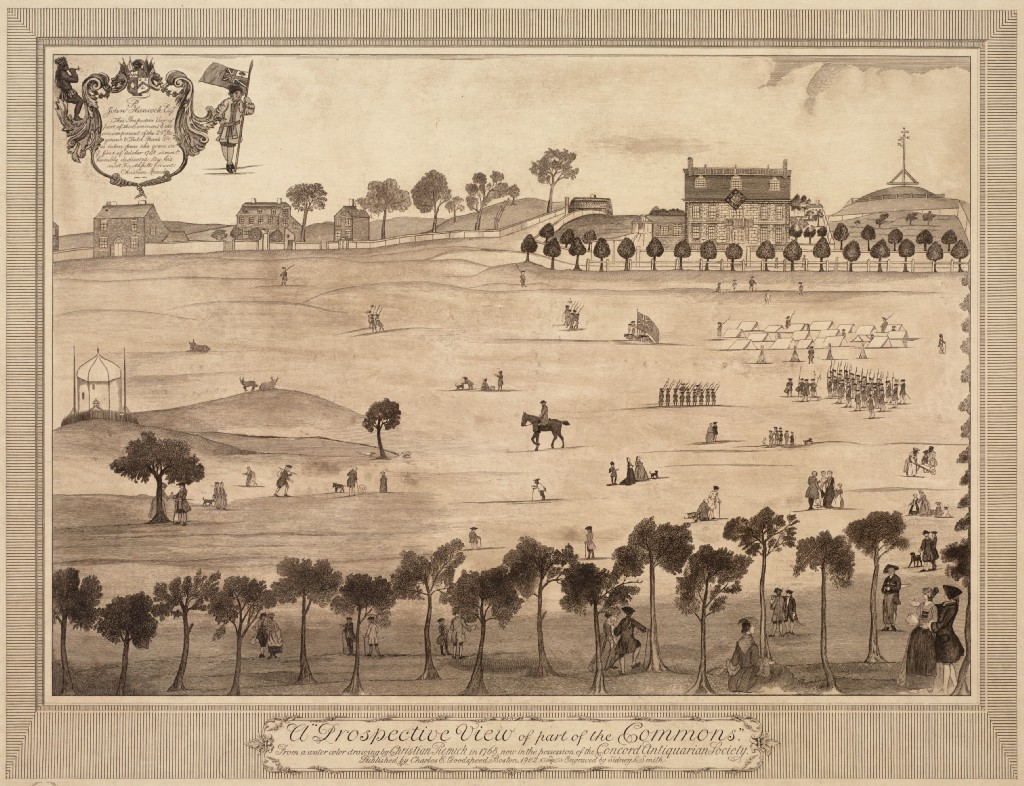
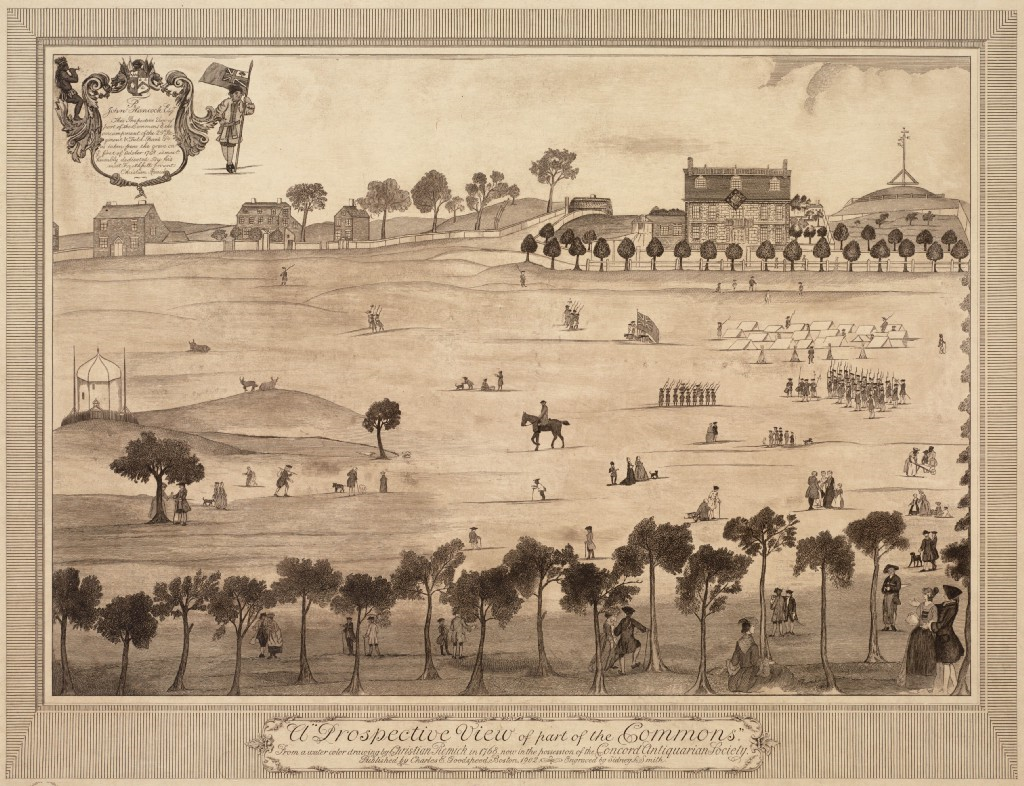
Boston Common in 1768.
“The Yankee mind was quick and sharp, but mainly it was singularly honest.’’
— Van Wyck Brooks (1886-1963), historian and critic, in The Flowering of New England
xxx
“The New England conscience does not stop you from doing what you shouldn’t; it just stops you from enjoying. it .’’
— Cleveland Amory (1917-1998), writer and animal-rights advocate. He came from a Boston Brahmin family.
‘Connected life’
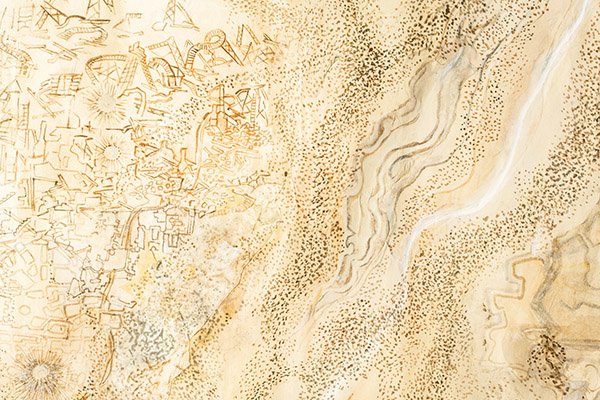
From Falmouth, Maine-based artist Allison Hildreth’s show “Darkness Visible,’’ at the Center for Maine Contemporary Art, Rockland, through Jan. 7.
She has said:
“Our earth is a connected fabric of life, interdependent, a product of a long evolutionary process. Bats, the animals that weave the night sky in a chaotic flight, are, for me, the epitome of the wildness of nature.’’
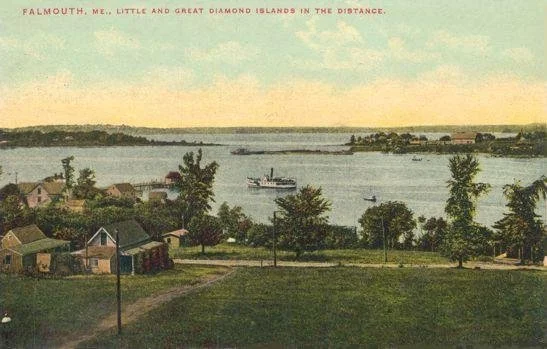
Casco Bay from Falmouth, Maine in 1905.
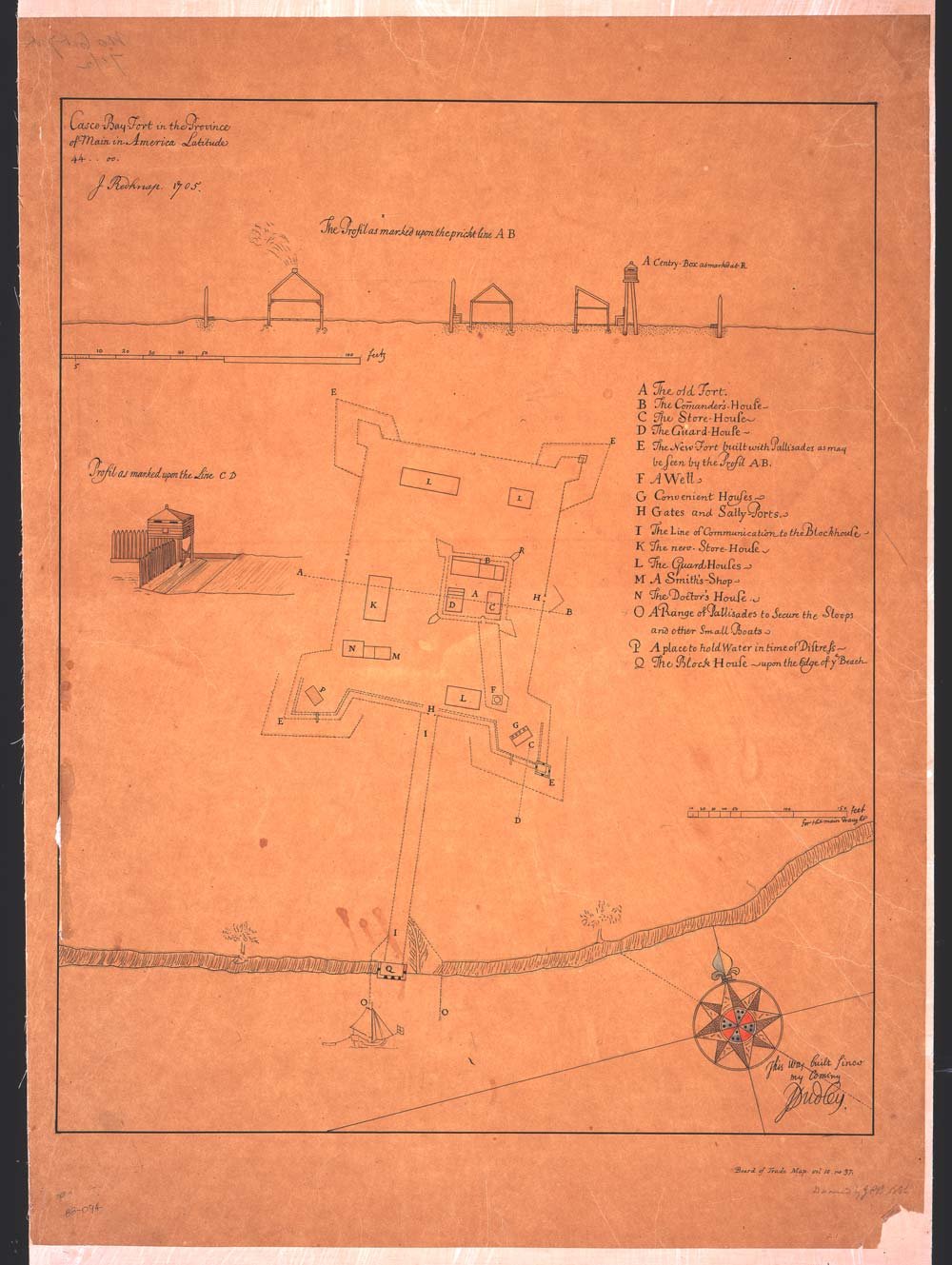
Rendering of Fort Casco, in Falmouth, in 1705.

He had to blast it

Elm Street in Milford, N.H. in 1915
“New Hampshire is called the Granite State, because it is built entirely of granite, covered with a couple of inches of dirt. The New Hampshire farmer does not “till the soil,’’ he blasts it. For nine months of the year he brings in wood, shovels snow, thaws out the pump, and wonders why {Robert} Peary wanted to discover the North Pole. The other three months he blasts, plants, and hopes.’’
— Will M. Cressey (1864-1930), writer, actor and humorist, in his The History of New Hampshire (1920’s)
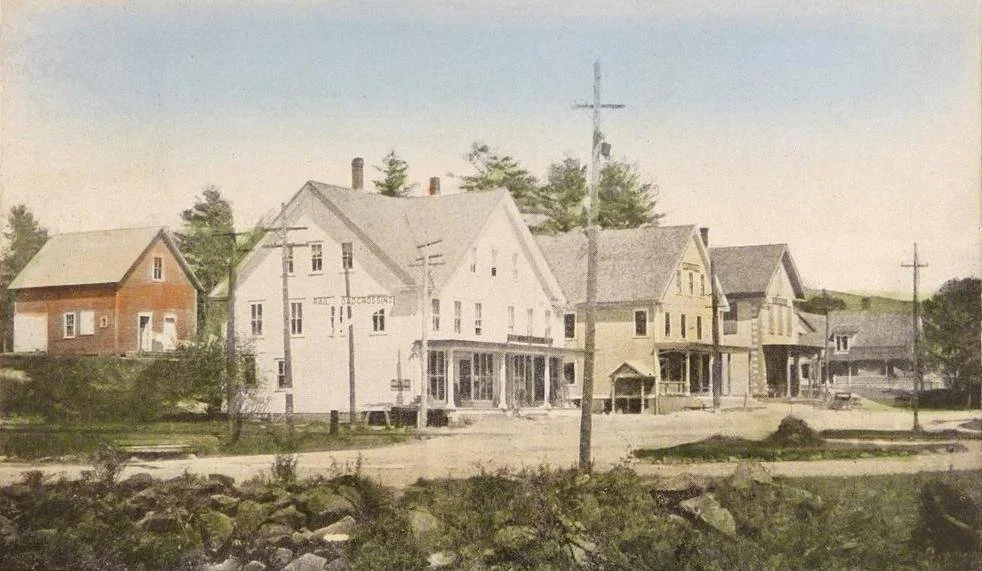
Depot Square in Bradford, N.H., in 1913