
Vox clamantis in deserto




Don Pesci: In Connecticut (!) at a glorious center of conservatism on the Glorious Fourth
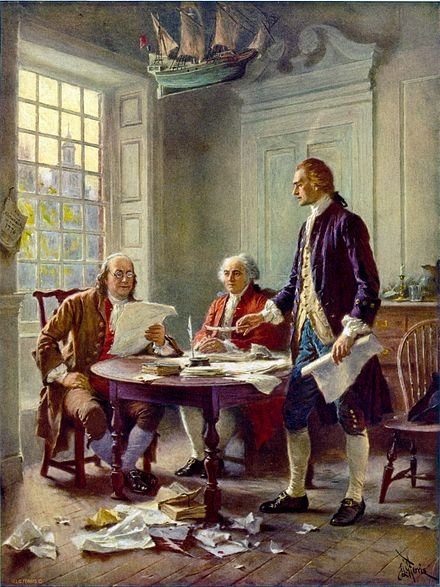
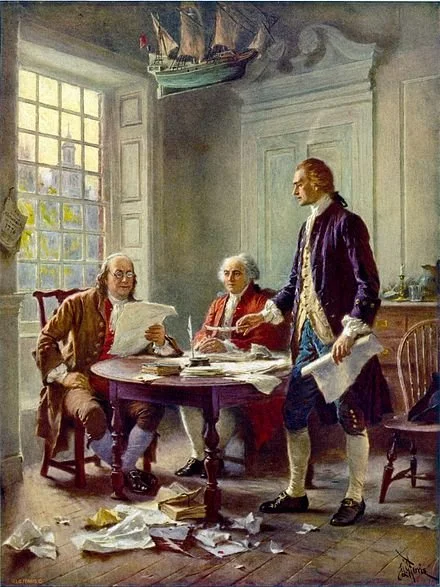
“Writing the Declaration of Independence, 1776,” a 1900 painting by Jean Leon Gerome Ferris depicting Benjamin Franklin, John Adams and Thomas Jefferson working on the document.
SOMERS, Conn.
The Fourth of July this year, as everyone in Connecticut who has tolerated the weather the past few days well knows, was wet. The weather, along with fidgety concerns about the effect of fireworks displays on an apparently violated environment, have thrown cold water on John Adams’s view of a proper celebration of independence.
“The Second Day of July 1776,” Adams wrote to his wife, Abigail, on the occasion of the signing of the Declaration of Independence, “will be the most memorable Epocha, in the History of America. I am apt to believe that it will be celebrated, by succeeding Generations, as the great anniversary Festival [of Independence] …It ought to be solemnized with Pomp and Parade, with Shews, Games, Sports, Guns, Bells, Bonfires and Illuminations from one End of this Continent to the other from this Time forward forever more.”
The official celebration of Independence on July 4, pedants will note, is off by two days.
The weather did not matter on this July 4, as the Blake Center for Faith and Freedom, an offshoot of Hillsdale College, in the city of the same name in Michigan, celebrated the real founding in 1776 of the United States of America. All the fireworks were inside the center in Somers.
My wife, Andree, and I were in attendance and found the building itself, a brick-by-brick recreation of Thomas Jefferson’s Monticello, astonishing, along with the company in attendance, a crowd who draw comfort and illumination from the Founding Fathers of the country; the Blake Center’s executive director, Labin Duke, and the two speakers – Hillsdale Professors Thomas West and David Azerrad, – who shed illumination, if not pomp, on the subjects they chose to present.
The first speaker, West, the author of The Political Theory of the American Founding; Natural Rights, Public Policy, and the Moral Conditions of Freedom, limited his remarks to a discussion of the foundational understanding of modern views concerning the odd shape of our post-liberal foreign and domestic policy. What would the Founders, for instance, have thought of an interventionist foreign policy – that is, an activist foreign policy in which one nation imposes its political views upon another?
Most of them would have felt, as John Adams did, that “America is the friend of liberty everywhere, but the custodian only of our own.” And then, too, there is Washington, the weld of the American Revolution, warning his fellows to avoid “entangling alliances.”
The second speaker, David Azerrad, ventured into our current Marxist-inflected mare’s nest – are we all racists?
The short answer, although there continues to exist in our relatively racist-free society some real racists who continue by their morally offensive and unorthodox behavior to prove the rule that the United States has left racism behind us. Such obnoxious idiots might well profit from a Hillsdale education and a careful reading of the Declaration of Independence, written chiefly by Thomas Jefferson -- “We hold these truths to be self-evident, that all men are created equal, that they are endowed by their Creator with certain unalienable Rights, that among these are Life, Liberty and the pursuit of Happiness” -- himself a slave owner.
That declaratory bit concerning “natural rights” having been authored by the Christian God who endowed mankind with “certain unalienable Rights,” among which are “Life, Liberty and the pursuit of Happiness…” is the wooden stake thrust into the heart of a vampire-like slavery, done to death in a Union-shattering Civil War watered with the blood of patriots at Shiloh and Gettysburg.
The founder of the Friendly’s restaurant chain, S. Prestley Blake, and his wife, Helen, at first sold the property to one buyer, later repurchased it and then more or less gifted it to Hillsdale, in 2019.
In four short years, The Blake Center for Faith and Freedom has become, its patrons realize, an inestimable pearl of wisdom located providentially on the border of Connecticut and Massachusetts.
We should count ourselves lucky – though the center itself regards such “luck” as providential – to have in our presence such a pearl buried deep in an ocean of muddy neo-progressive nonsense. And all of us know for a certainty that no one may reach the pearl without a deep personal dive into history, the U.S. Constitution, the deposit of Christian faith and morals, and the luminous writings of honored precursors of the American experiment in ordered liberty.
Don Pesci is a Vernon, Conn.-based columnist.
#Blake Center for Faith and Freedom
Stare from the deep past
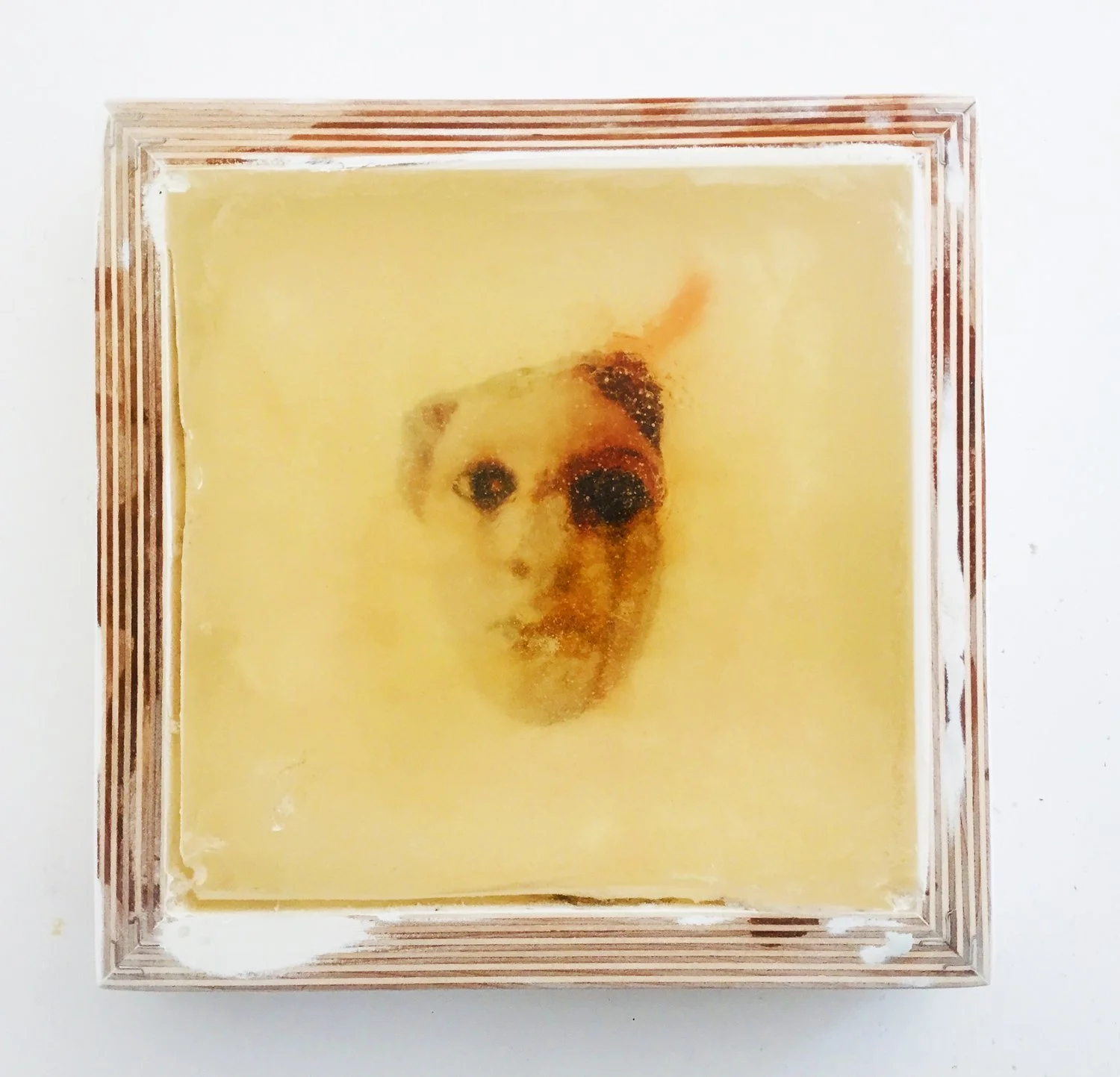
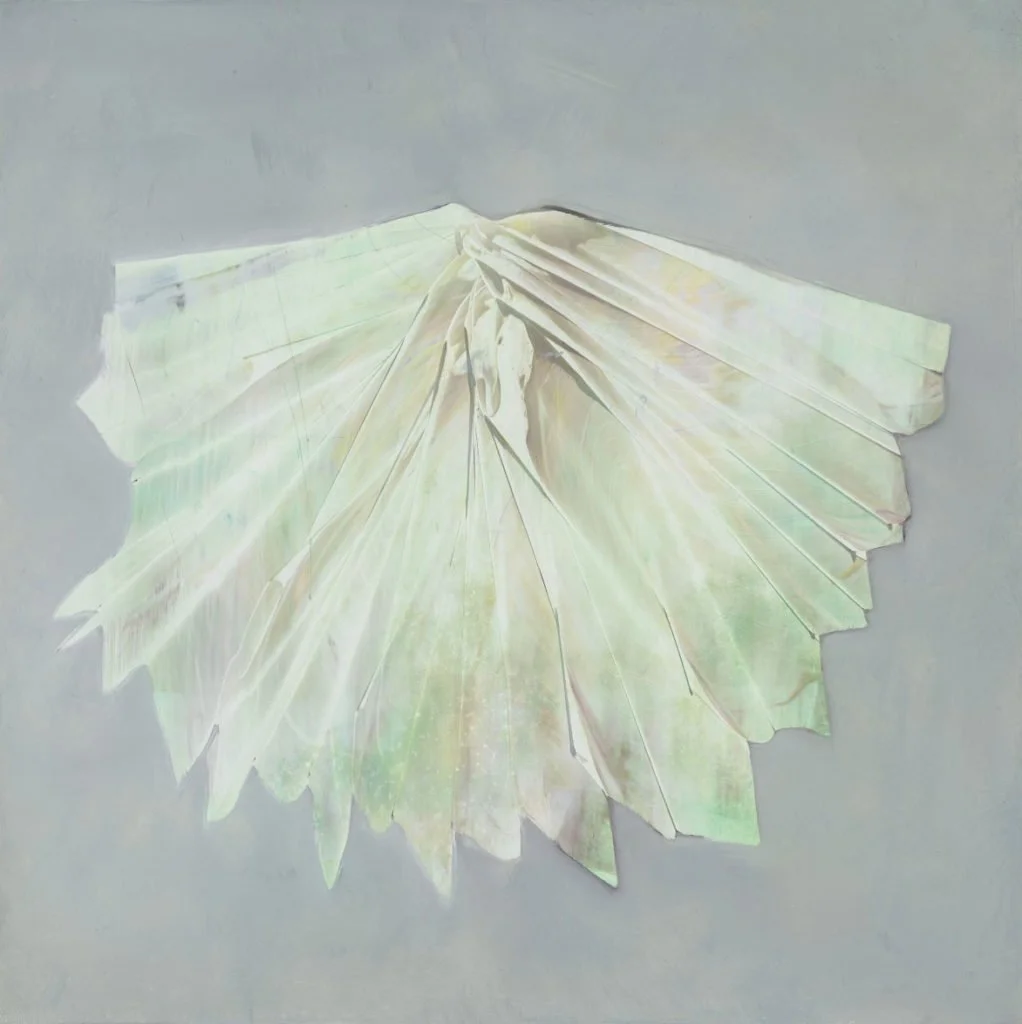
“Athenian fragment of a face,’’ (archival pigment print, oil, resin, wood ), by Boston-based artist Jennifer Liston Munson, in her show “Looking In + Looking Out,’’ at Kingston Gallery, Boston, July 5-July 30.
Her artist’s statement includes:
“Jennifer Liston Munson’s work for her show …. creates lenses for the viewer to look in and for the subjects themselves to look back out. Her selection of art objects, ghostly figures, and landscapes call into question historical collection practices, the complexity of narratives, and the notion of belonging. ‘Looking In + Looking Out’ incorporates images of objects held in museum collections, photographs of unknown relatives, and abandoned historically significant interiors. In some of the pieces, Liston Munson makes the landscape the subject; spaces, trees, and enigmatic watery pools that remain while the bodies they contain dissolve to time, as layers of paint ooze from the edges to mark the art making process and the past. Other works look at architecture and history close up, making the past present.’’
#Kingston Gallery
‘Dread revelations’
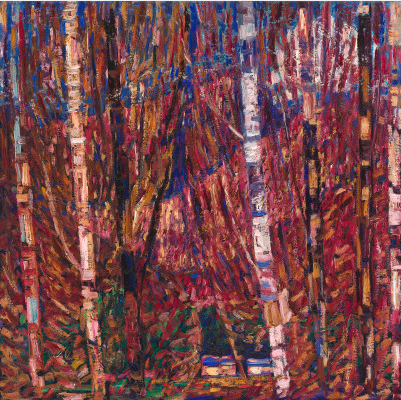
“Maine Woods” (oil paint), by Marsden Hartley (1877-1943)
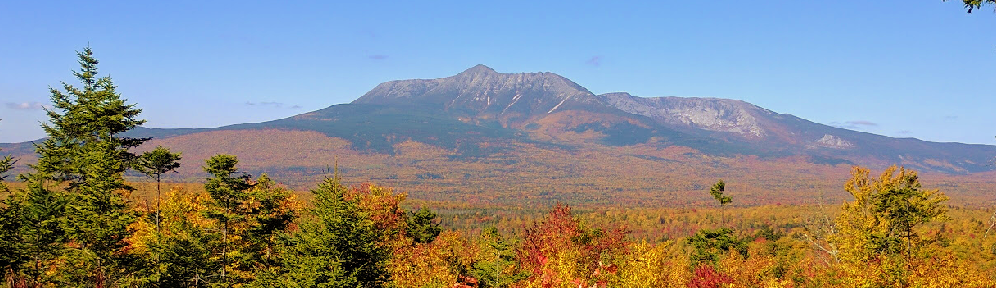
Mount Katahdin in October
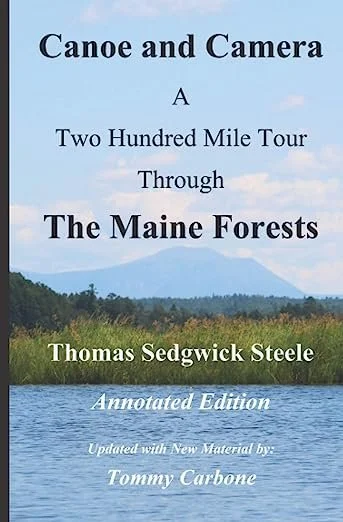
“Oh that we might be left alone for hours, to watch the changes of the landscape and hear the secret voice and dread revelations of these magnificent mountains! There are thoughts, deep and holy, which float through one’s mind, as, gazing down upon such a scene, one contrasts the smallness of man with the magnitude of God’s works, and in the weird silence contemplates the perishable of this world with the everlasting hills.
— From Canoe and Camera: A Two Hundred Mile Tour Through the Maine Forests, by Thomas Sedgwick Steele (1845-1903), American painter, photographer, writer and outdoorsman
Llewellyn King: Beware the dead hand of bad regulation
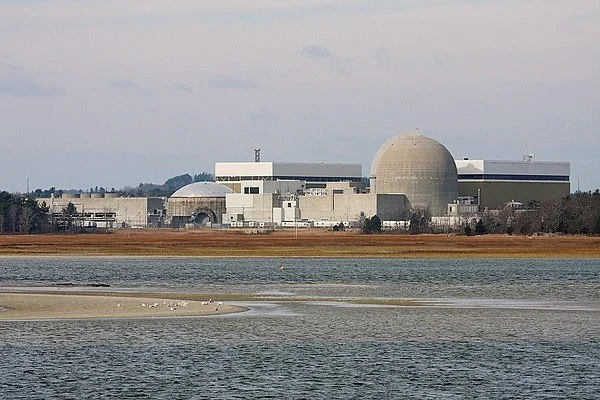
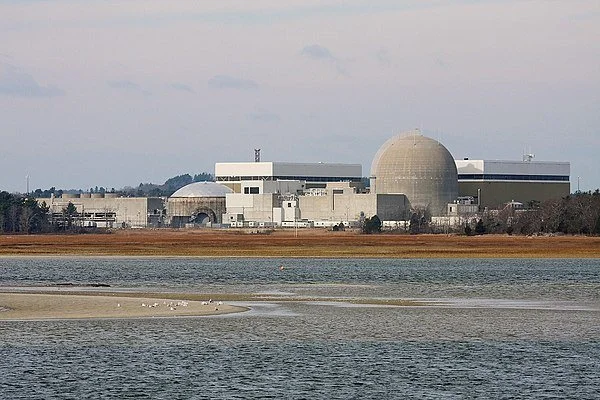
The Seabrook Nuclear
WEST WARWICK, R.I.
It is argued that if the Titan submersible had been certified (read peer-reviewed), the deadly accident, which killed all five on board, wouldn’t have taken place. That may or not be true.
Now there are calls for adventurism tourism to be regulated. I submit that if it is subject to regulation (read licensing), there will be very little of it — and it will be more expensive.
These days, there are calls to regulate everything from artificial intelligence to social media. Be warned: Whereas regulation does and should protect the public’s safety, it also has a dead hand. It curbs invention. It is comfortable with the known not the unknown. Purely seeking safety sets up a timid regime.
You want inventions to be safe but also free to evolve. The dynamic of the undertaking is crucial.
Regulations can have a negative dynamic or a positive one. They both seek to protect the public’s health and safety but with differing results.
The Nuclear Regulatory Commission has the duty to regulate nuclear power and materials. It does this conscientiously but not progressively.
Evolution in nuclear power is very slow and difficult because of the NRC. Every wire, nut and bolt, pump and pipe in the nuclear steam supply system gets certified. And every change needs certification.
The result is that engineers design to pass NRC muster, not to reach into the great unknown of possibility or the soaring spirit of creative invention. The problem isn’t with the NRC staff but with its mandate.
Nowadays, there is a resurgence of interest in nuclear power with small modular reactors, some using unproven but promising designs and technologies that haven’t been investigated since the 1960s, which was the end of the first wave of nuclear invention.
Some small modular reactors are being developed by U.S. companies in Canada and China so as to avoid initial NRC approval. Not that the promoters want to make an unsafe reactor but because if you are at the cutting-edge of invention, it is hard to deal with the safety mandate that is the driving force in the NRC.
Originally, safety and promotion were both handled by the Atomic Energy Commission. That agency had promotion as its primary function but as it well understood that nuclear can be very dangerous, it also had a regulatory function.
I covered the AEC as a reporter and, frankly, its regulation worked as well as what has succeeded it, namely the NRC.
The argument against the AEC reached a crescendo in the early 1970s, with relentless pressure from environmentalists and consumer groups, spearheaded by Ralph Nader, behind the slogan,“It’s its own policeman.”
But what the AEC had, which is now lacking, is a creative dynamic to develop new uses for nuclear but safely. It worked: Experimental reactors were built and experimentation with everything from nuclear stimulation of natural gas reserves — basically nuclear fracking — to a variety of cutting-edge reactors at the Idaho and Oak Ridge national laboratories.
Contrast the stultification in nuclear with the progress in aviation where the Federal Aviation Administration both promotes flying and regulates it, and certifies airplanes.
Of course, there have been mistakes and there are frequent accusations that the FAA is too close to Boeing and the airlines. The most egregious failure might have been in certifying the Boeing 737 Max without insisting on better pilot training on a tricky airplane. The result was two catastrophic crashes with non-U.S. airlines.
Yet the skies are still safe, and they are filled with passenger and cargo aircraft that are evolving with each new technology coming along. When it comes to light aircraft, the FAA has been able to accommodate and find airworthy many new airplanes, from ultralights to aerobatic-certified engines and airframes, some from overseas.
These are exciting times for technology and the recreation it makes possible, and we shouldn’t regulate with the wrong dynamics.
Llewellyn King is executive producer and host of White House Chronicle, on PBS. His email is llewellynking1@gmail.com, and he’s based in Rhode Island and Washington, D.C.
Dragons on the other side of the fog?

Foggy Cotuit Harbor, on Cape Cod, on this long, long July 4th weekend.
— Photo by Lydia Whitcomb

Close-up view of the dragons on the 1265 Psalter world map. Medieval mapmakers would often draw dragons to populate unexplored parts of the world.
Six historic New England Fourth of July celebrations; deconstructing inherited patriotic ‘pride’

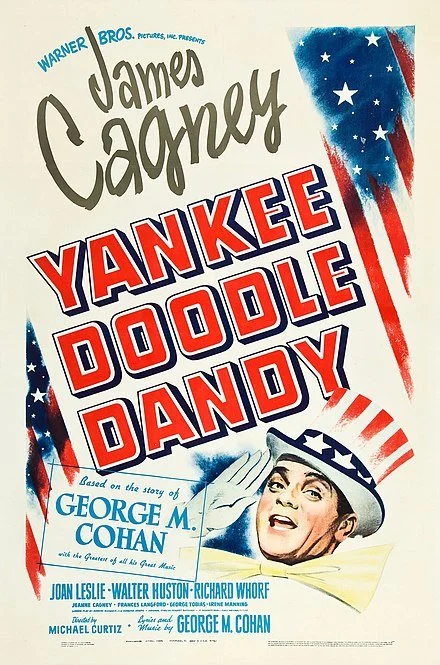
Poster for the 1942 hit movie about Providence native George M. Cohan, starring the mega movie star and part-time Martha’s Vineyard resident James Cagney
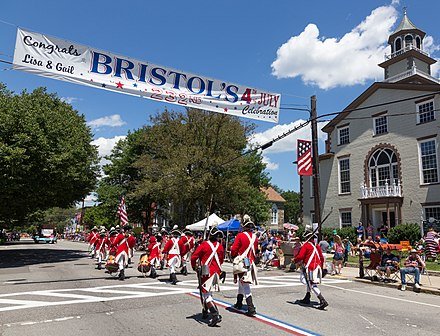
Bristol, R.I.’s 232nd Fourth of July parade, in 2017
Read here about six historic New England Fourth of July celebrations.
Adapted from Robert Whitcomb’s “Digital Diary,’’ in GoLocal24.com
Especially on “The Glorious Fourth,’’ we’re all supposed to say that we’re proud to be Americans, though most of us became citizens through the accident of birth; we didn’t choose to be here, however much we like it or not. If we had been born in another nation and stayed there, we’d probably be waving its flag and saying how “proud’’ we are to be its citizens. Call it passive pride. Or vacuous.
Of course, there are some American things to be “proud of’’’ and some to be ashamed of. I’ve never quite gotten all this “proud” stuff – “proud to have blue eyes,’’ “proud to be black and gay,” “Pride Week,’’ etc.
“Proud to exist”?
It’s one of those quirky things, such as religious believers and their clergies saying that they firmly believe that such and such dead person is heading to eternal joy in heaven even as they call the death a tragedy. And why have so many people become so afraid of death that more and more of them say someone “passed’’ instead of died? That reminds me of when writers of newspaper obituaries were warned by survivors, funeral homes and editors not to give “cancer” as the cause of death. Too scary. It was almost as if they feared using the word would give them the disease.
Like patriotism, religion is mostly inherited. If we’re born in, say, Iran we’re almost certainly Muslim, in India, Hindu, and in America, probably Christian. Not a lot of personal theological exploration going in.
I’ve never been particularly patriotic in the “my country right or wrong’’ way. Rather, I’m “proud’’ to say that I support the principles of liberal democracy and open societies that originated in Western Europe and are always under attack, including, increasingly, in the United States in the past few years.
To me, the real patriots are those who openly recognize America’s good and bad elements and try to help make the nation more just, fair and prosperous, not those who wrap themselves in flags and yell “USA! USA! USA!’’.
Don’t blow off your fingers with an illegal M-80 on Tuesday! When I was a kid, we often set off our July 4 explosives on a beach -- less chance of starting a conflagration. I still can smell the rich mingled aromas of black powder and seaweed.
‘For what they are’
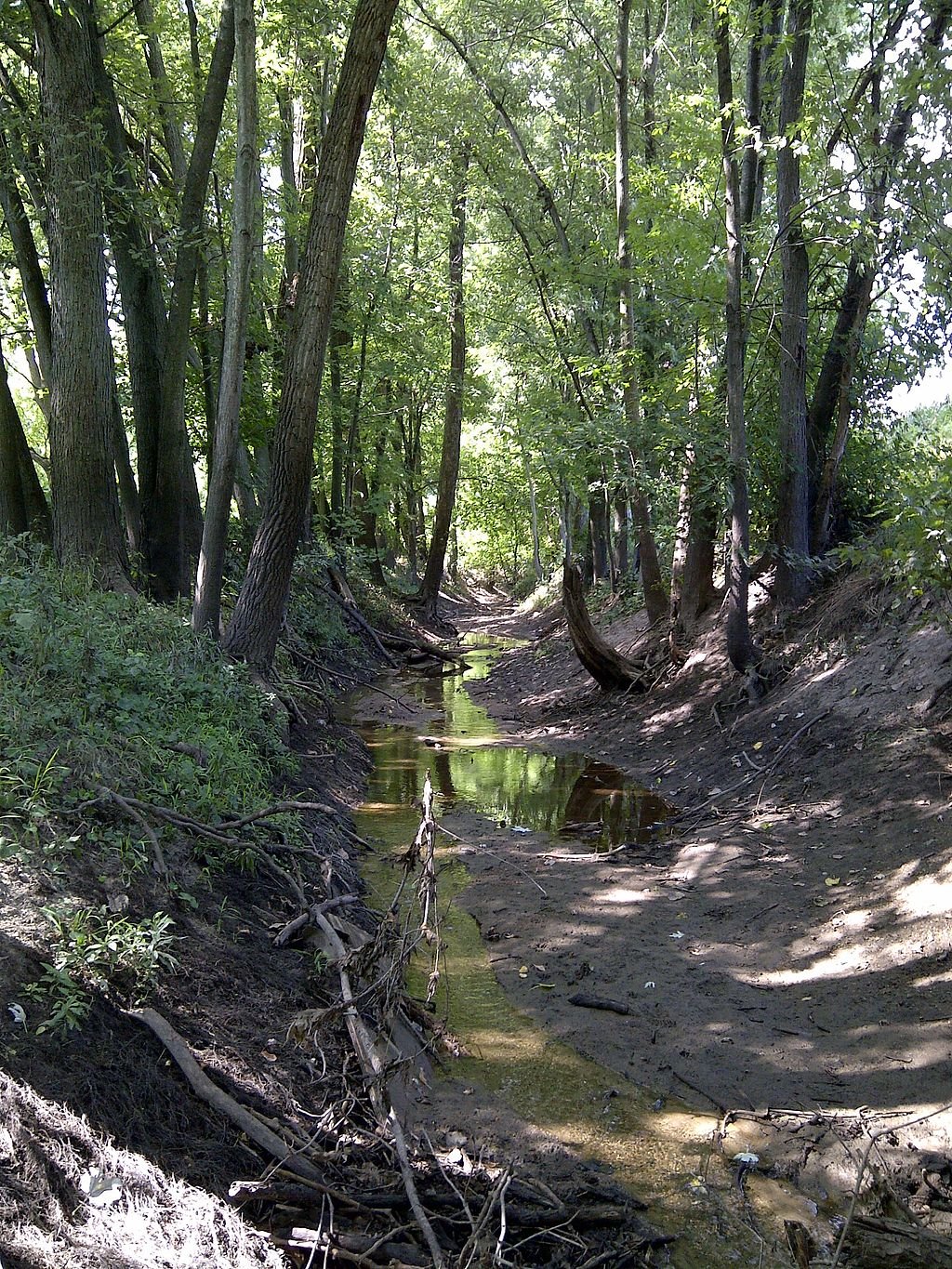
— Photo J. Pinta (Redline2200)
By June our brook’s run out of song and speed.
Sought for much after that, it will be found
Either to have gone groping underground
(And taken with it all the Hyla breed
That shouted in the mist a month ago,
Like ghost of sleigh-bells in a ghost of snow)—
Or flourished and come up in jewel-weed,
Weak foliage that is blown upon and bent
Even against the way its waters went.
Its bed is left a faded paper sheet
Of dead leaves stuck together by the heat—
A brook to none but who remember long.
This as it will be seen is other far
Than with brooks taken otherwhere in song.
We love the things we love for what they are.
— “Hyla Brook,’’ by Robert Frost (1874-1963). Hyla Brook is near the farm in Derry, N.H., where Frost lived with his family in 1900-1911, before he became famous.
J. Pinta (Redline2200) -
Chris Powell: Medical debt doesn’t vanish; graffiti causes hysteria

MANCHESTER, Conn.
Like the rest of the country, Connecticut is full of people who can't afford their hospital bills. These people may have medical insurance with high deductibles or have exhausted their coverage because of chronic ailments. While nobody is going to prison for medical debt, it can impair credit records and hold people back in life, especially people who were poor to begin with.
Hospitals are often ready to sell the least collectible of their patient debts for a tiny fraction of their nominal value. So with its new budget state government is joining a movement to extinguish the medical debts of people who probably will never be able to repay them. The budget include $6.5 million for distribution to nonprofit organizations that buy medical debt from hospitals and then cancel it. Advocates of the appropriation, including Gov. Ned Lamont, think it might eliminate as much as $650 million in medical debt to hospitals in Connecticut.
While this undertaking is well worth a try, journalism about it has been superficial to the point of misleading. For the debt involved here isn't really being eliminated at all, merely transferred. Indeed, in effect the debt already has been transferred back to the hospitals that have been carrying it. It has been built into hospital operating costs and is being recovered either through efficiencies at the hospitals or higher charges to medical insurers and patients who pay for themselves.
Like nearly everything in medicine, medical-debt-elimination programs are mechanisms of cost shifting. Medical insurers negotiate lower rates with hospitals, causing them to reduce costs or shift them to the less insured. The federal government medical-insurance programs, Medicare and Medicaid, pay less than what hospitals consider the full cost of treatment, and so hospitals must economize again or recover the government discounts with higher charges elsewhere.
Hospitals cannot operate at a loss for long, and if government wants them to stay in business, it has to subsidize them directly or indirectly, as by increasing government insurance payments. If government pays, then all taxpayers do, along with countries that buy the federal government's apparently infinite debt.
Medical care isn't ever really free, and medical debt can't simply be written off. Someone always will be paying for the people who don't pay. Such cost shifting is inevitable in any jurisdiction that won't let people die in the street, but it's not a magic wand.
Medical-debt elimination will be a boon to hard-luck cases and the poor, but it won't reduce the cost of medical care. It won't improve medical-insurance coverage. It won't lift anyone out of poverty. It will only recognize that many people remain poor.
While medical-debt elimination will repair some credit records, it won't prevent the same people from getting stuck with medical debt again. It also will make medicine a little more complicated and may even give people the idea that hospital bills are easily evaded if they hold out long enough. It will validate the principle articulated by the French economist Frederic Bastiat, who two centuries ago anticipated the modern world. Government, Bastiat wrote, is the great fiction by which everybody tries to live at the expense of everybody else.
One reason that the Connecticut General Assembly entertains many questionable proposals is the decline in journalism about the legislative process. Questionable proposals would die faster if local news organizations strove to do frequent surveys of legislators about their positions. As local news coverage has weakened, that kind of political journalism has disappeared.
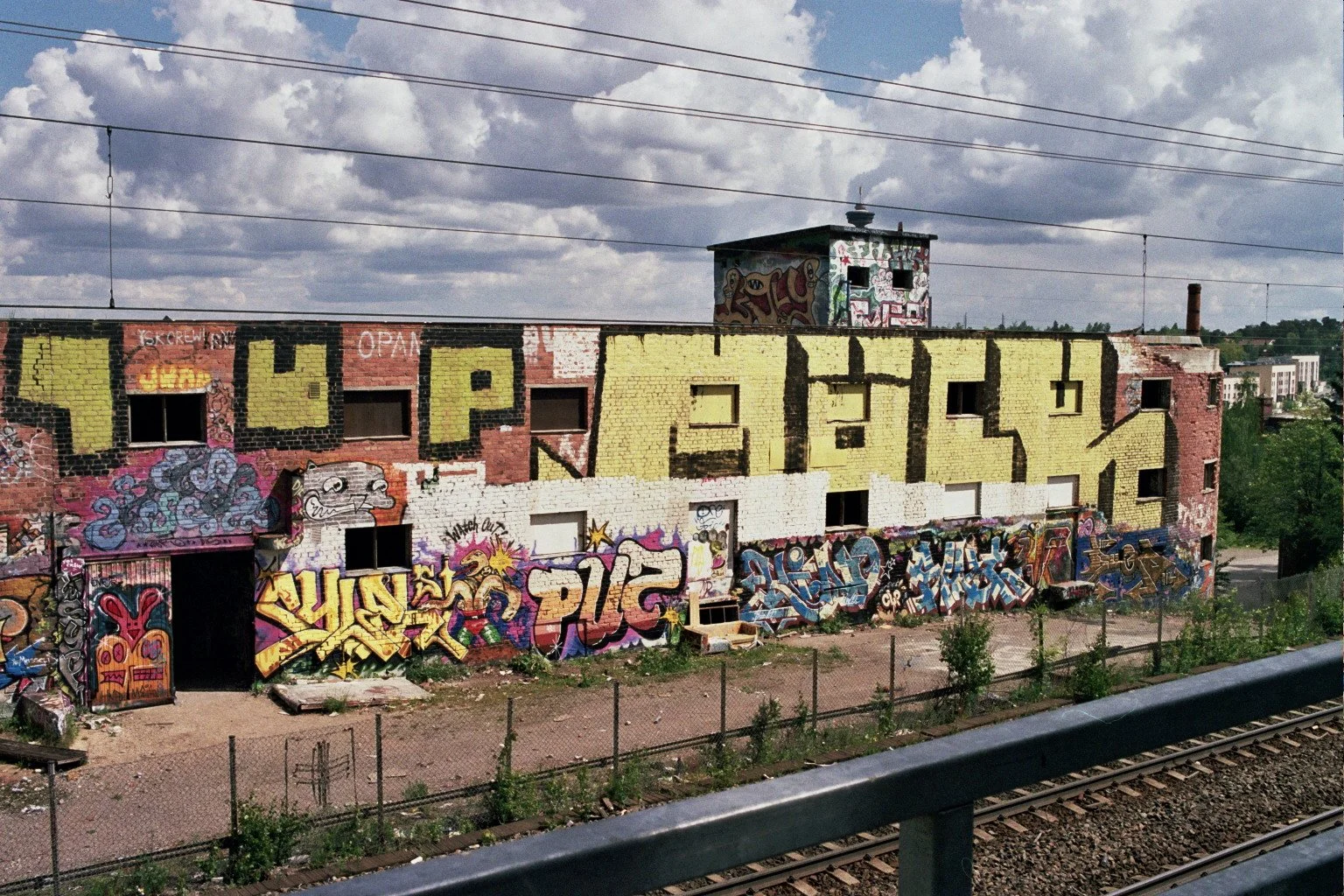
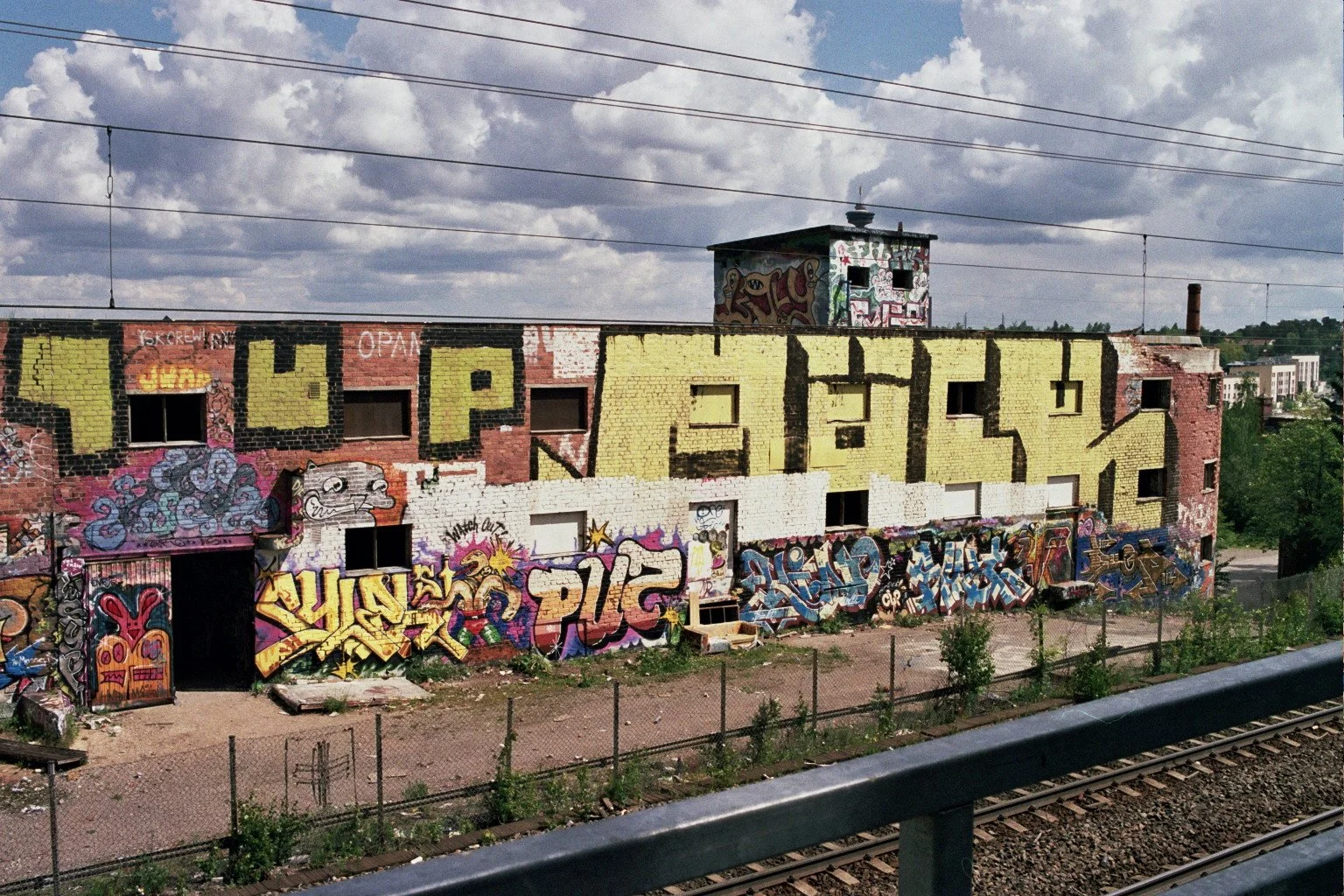
Instead every other bit of graffiti and vandalism in Connecticut now is causing hysteria, being treated as the rebirth of the Ku Klux Klan or Nazi Party and a tidal wave of "hate" sweeping the state. Such was the case with the recent defacement of the Hartford street mural that celebrates the Black Lives Matter movement.
Perhaps glad to be distracted from murder investigations, Hartford police quickly found the culprit -- a local vagrant with a long criminal record and many pending charges. Since he's not Donald Trump, reporters didn't ask why he wasn't already in jail.
Chris Powell has written about Connecticut government and politics for many years. (CPowell@cox.net)
#medical debt
#Connecticut
#Chris Powell

New England may have to grow more of its own food
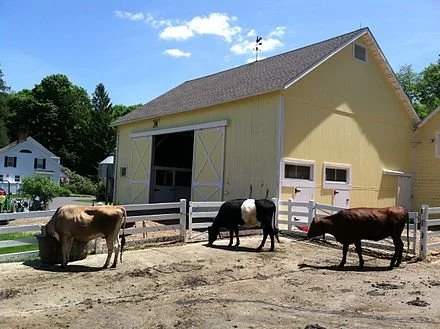
At a dairy farm in Redding, Conn., an exurban town. The state’s two biggest agriculture sectors are horticulture and dairy.

Vermont’s coat of arms reminds us of how important farming, especially dairy, has been to the Green Mountain State. But in the first half of the 19th Century, raising Merino sheep for wool was the big thing.
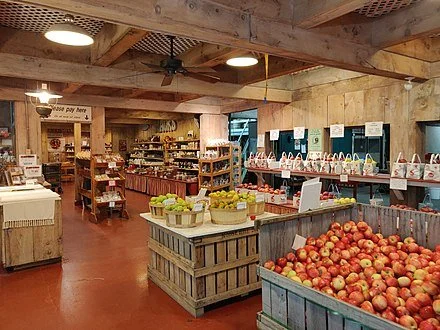
Produce from Mack’s Apples, a farm in Londonderry, N.H., that goes back to 1732.
Adapted from Robert Whitcomb’s “Digital Diary,’’ in GoLocal24.com
The New England State Food System Planners Partnership has looked into how the region could boost its food production so that it could produce 30 percent of the food it consumes by 2030. We’ve been harvesting less than about 20 percent of the food we eat.
Wouldn’t it be nice if the six states could grow enough vegetables and grains, and catch and grow enough animal protein (especially finfish and shellfish), so that it wouldn’t have to import nearly as much from far away, much of it from huge agribusinesses, with the accompanying energy and other costs. In so doing we’d get fresher food, employ many more New Englanders, reduce fossil-fuel burning and in some places get cheaper stuff to eat.
Something else to consider: Global warming and all its associated issues are expected to hit hard in such huge agribusiness regions as the Midwest, Florida and California’s Central Valley. New England’s climate outlook is much less forbidding. In any event, we may have to grow more of our food.
Of course, we think about this more in the summer, when we enjoy locally grown super-fresh vegetables. But an increasing number of large indoor “farms’’ are slowly adding to our locally grown year-round vegetable crops. And the warming climate might substantially extend our growing season.
Most of New England’s farmland is in the three northern states, which are largely rural. That won’t change, but we ought to encourage more agriculture near cities in Massachusetts, Rhode Island and Connecticut. That would reduce shipping costs. Many farms in Europe and elsewhere abroad are remarkably close to large and small cities.
Where to find the land? One is to use some of the open space (parking lots, etc.) freed up by the demise of many shopping centers in the Age of Amazon. Of course, much of this acreage would require extensive remediation to make it safe for agriculture. Then there’s cutting down trees in some places to convert to farmland. There used to be much, much more open land devoted to farming (especially for dairy cows) in New England before the opening up of the flat and fertile farmland in the Middle West, California’s Central Valley and elsewhere. That made many of our region’s farms, most of which were small because of the hilly and rocky terrain in much of our region, economically uncompetitive. (There were some big exceptions, most notably the Connecticut River Valley.) Thus New England is far more wooded than it was 150 years ago.
But we’d need studies on how reducing our woodlands to plant food might worsen global warming. Trees absorb huge amounts of carbon dioxide.
There’s been a bit of revival in raising cattle and pigs in some parts of New England for high-end markets. But raising such animals for slaughter is, in food-production and nutrition terms, very wasteful compared to raising plants. Most Americans still love eating red meat, though many who know the health drawbacks and/or have seen the horrific slaughtering process have given it up.
Then there’s aquaculture, a source of high-quality protein that could be greatly expanded. It was mild good news that Perry Raso, the South Kingstown, R.I. restaurateur and shellfish farmer, has reportedly received approval to modestly expand his farming.
The National Oceanic and Atmospheric Administration is getting $3.3 billion under the Biden Administration’s Inflation Reduction Act to invest in science-based management and conservation of marine resources amidst global warming. Let’s hope that some of this money promotes coastal aquaculture.
Bravo to the New England State Food System Planners Partnership as it presses for greater regional food independence – good for public health, our economy and the environment.
Enjoy the sweet corn, tomatoes and other treasures of the New England summer. Patronize those farmstands.
Paper art in Portsmouth
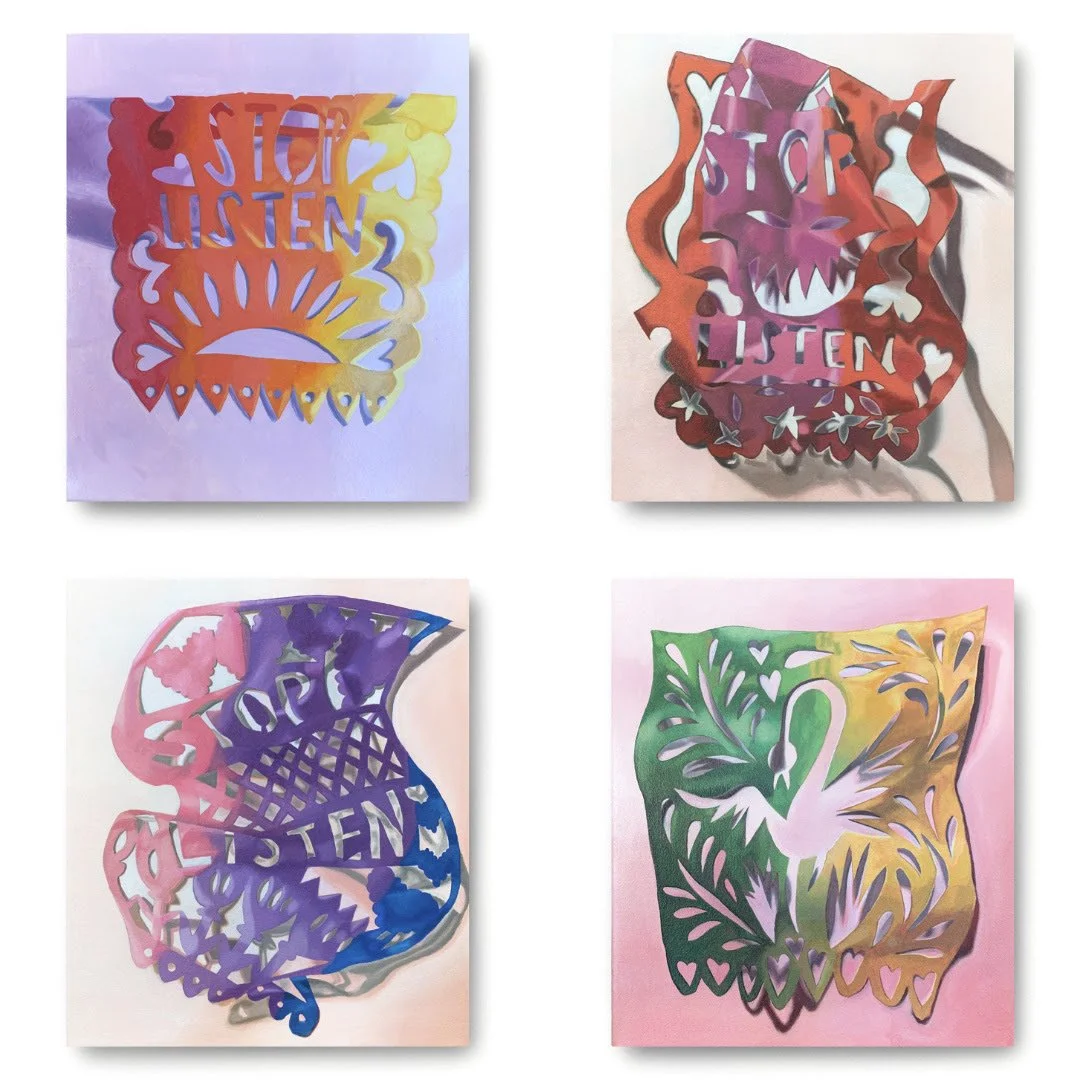
Pieces from Natalie Fisk’s show "Why am I Here?", at 3S Artspace, Portsmouth, N.H., through Aug. 20
The gallery says:
{The} show {features} the artwork of Mexican American artist Natalie Fisk, “who makes sculptures, drawings, and paintings that use … Papel Picado to draw attention to the experiences that have marked [her] life. Papel Picado is a decorative craft made by cutting elaborate designs into sheets of tissue paper."
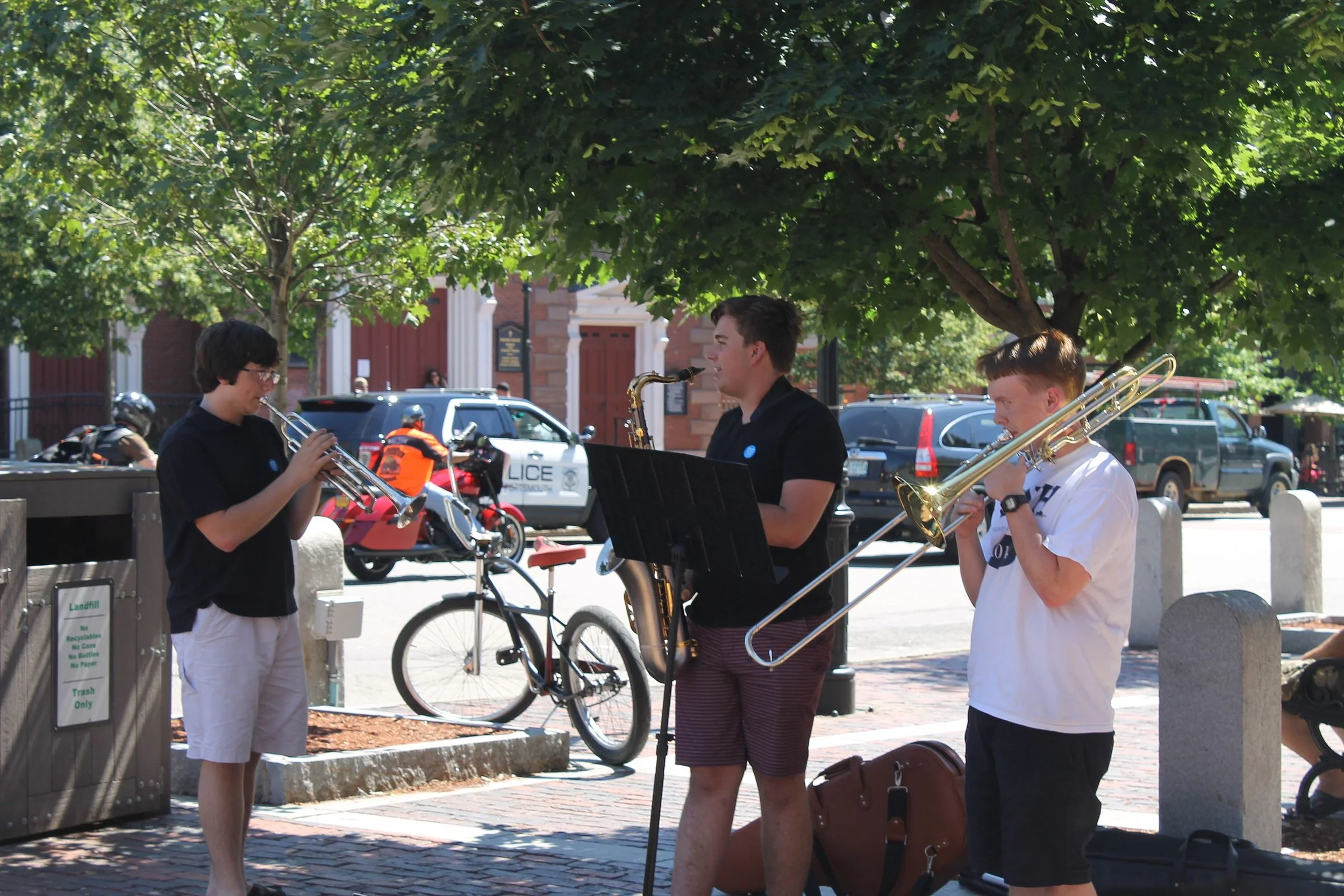
Street musicians perform across from North Church, in Portsmouth
— Photo by Billy Hathorn
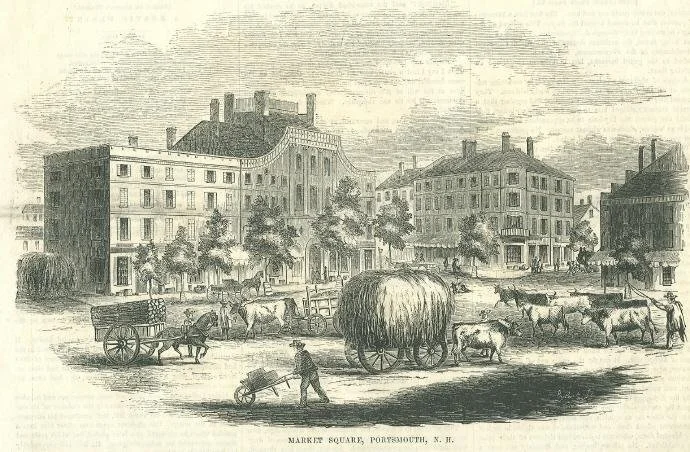
Downtown Portsmouth in 1853

Providing access to ‘blue data’

Edited from a New England Council report:
“MITRE is launching the BlueNERVE Network to provide secure, real-time access to maritime data and testing resources for organizations involved in maritime technology research. The initiative is supported by a $2.2 million grant from the Massachusetts Technology Collaborative and the administration of Gov. Maura Healey.
{Mitre is a not-for-profit organization with dual headquarters in Bedford, Mass., and McLean, Va. It manages federally funded research and development centers supporting various U.S. government agencies in aviation, defense, health-care, homeland security and cybersecurity, among others.}
“The network aims to facilitate the growth of the global Blue Economy by offering researchers and entrepreneurs access to ‘blue data’ to drive new discoveries, innovations and companies. BlueNERVE will connect various institutions, including universities and research centers, allowing researchers to conduct experiments and access real-time data remotely. MITRE’s BlueTech Lab, in Bedford, Mass., will serve as the central hub for the network.
“‘The oceans are an invaluable resource tied to many of the nation’s biggest challenges, including national security, climate resilience, and economic growth,’ said Douglas Robbins, vice president of engineering and prototyping at MITRE Labs. ‘This project will foster an attractive innovation ecosystem for BlueTech startup companies, providing a first-in-the-nation data sharing capability that will maximize advantages for the region and grow the BlueTech workforce to meet the needs of the New Blue Economy.”’
Art inspired by a bygone industry

Untitled photo by Tsar Fedorsky, from "The Quarry Project" series (archival inkjet printed on washi paper) in the Cape Ann Museum’s group show “QuarryArt,’’ through July 30
— Courtesy of the artist.
The museum explains:
{The} “exhibition … brings together the work of nine artists in collaboration with freelance photographer and Boston Globe reporter David Arnold. The nine artists, Tsar Fedorsky, Albert Glazier, Paul Cary Goldberg, Skip Montello, Olivia Parker, Martin Ray, Katherine Richmond, Steve Rosenthal and Constance Vallis photographed area {granite} quarries to ‘highlight economic importance of quarries centuries ago."‘
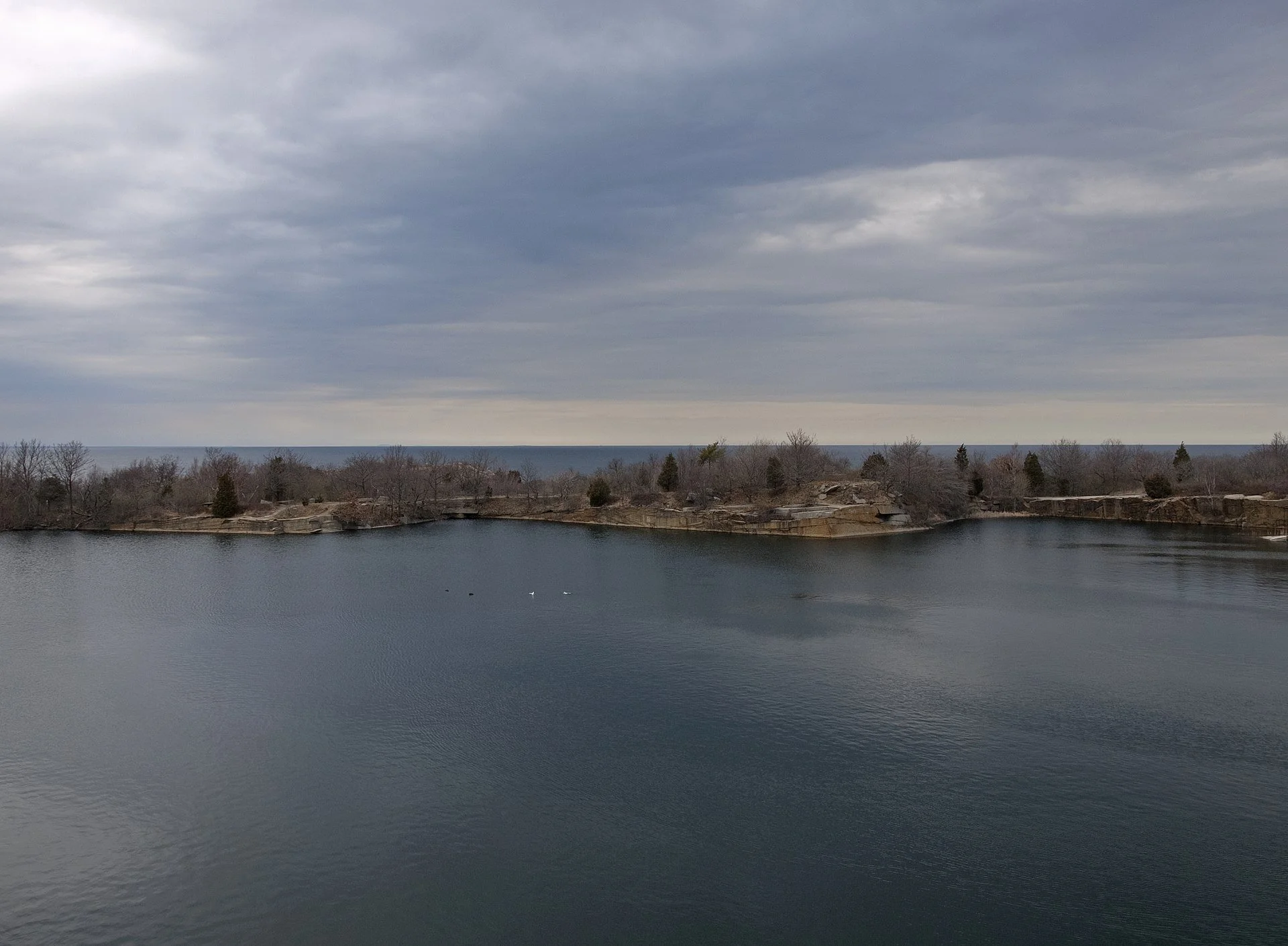
Panorama of the former quarry at Halibut Point State Park in Gloucester
— Photo by Ymblanter
Lessons from one-room schoolhouses

Outside a one-room schoolhouse in Norwich, Vt., about 1937
Back to School: Lessons from Norwich’s One-Room Schoolhouses is a new documentary film that explores the effort to preserve two remaining schoolhouses in Norwich, Vt.
Hear from the last generation of students who went to school there, and find out how the community uses these historic buildings today.
Back to School is part of Historic New England’s Everyone’s History series.
Still 'a great lake' to us
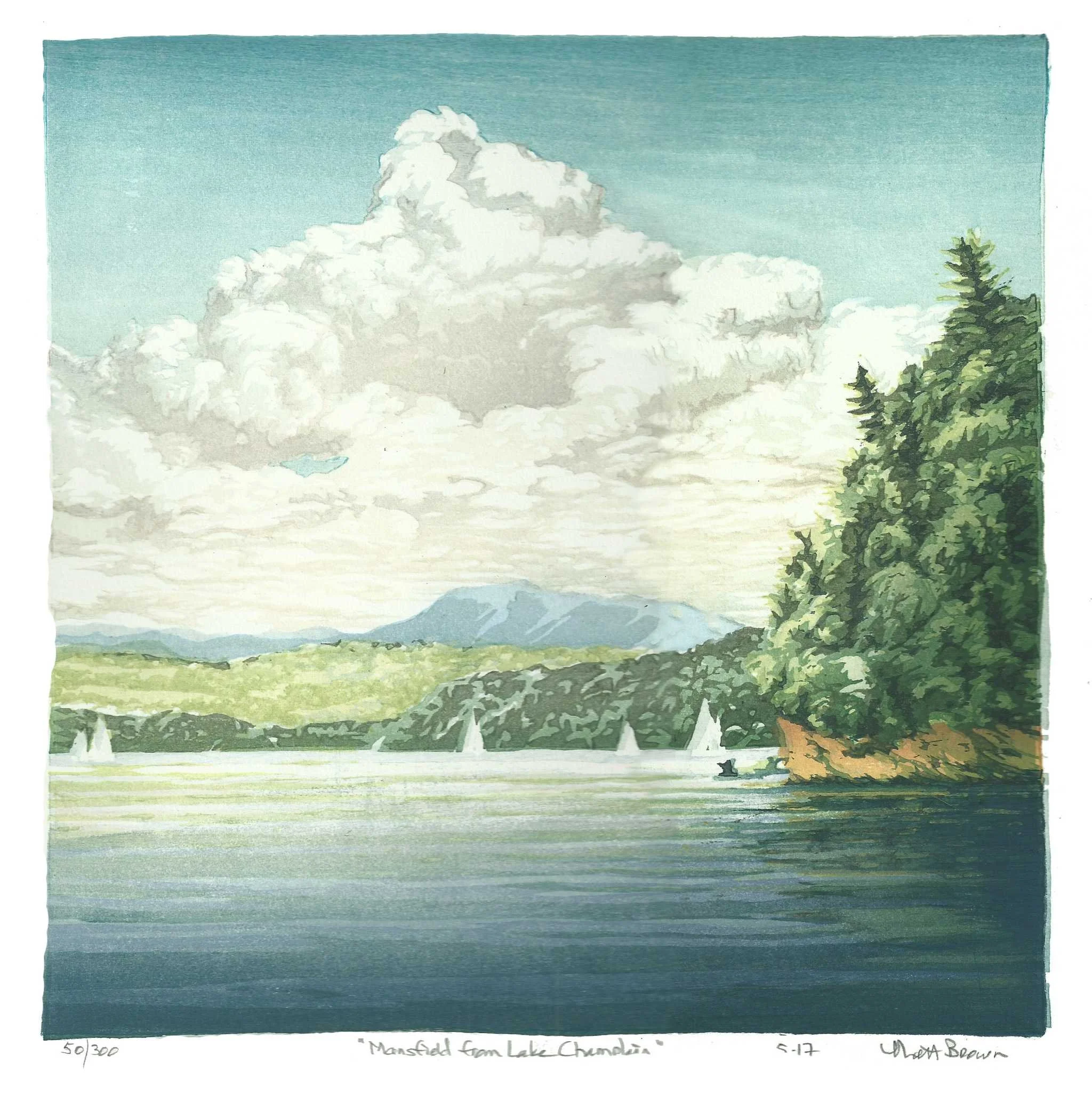
(Mt.) Mansfield from Lake Champlain, by Matt Brown, at Matt Brown Fine Art, Lyme, N.H. Champlain was briefly officially listed as one of the Great Lakes.
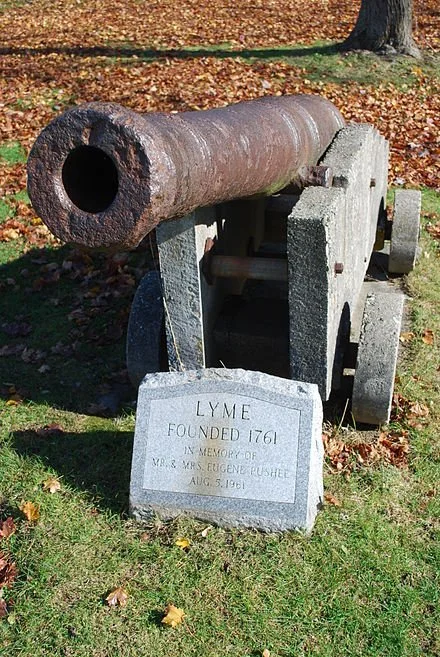
On the Lyme Green
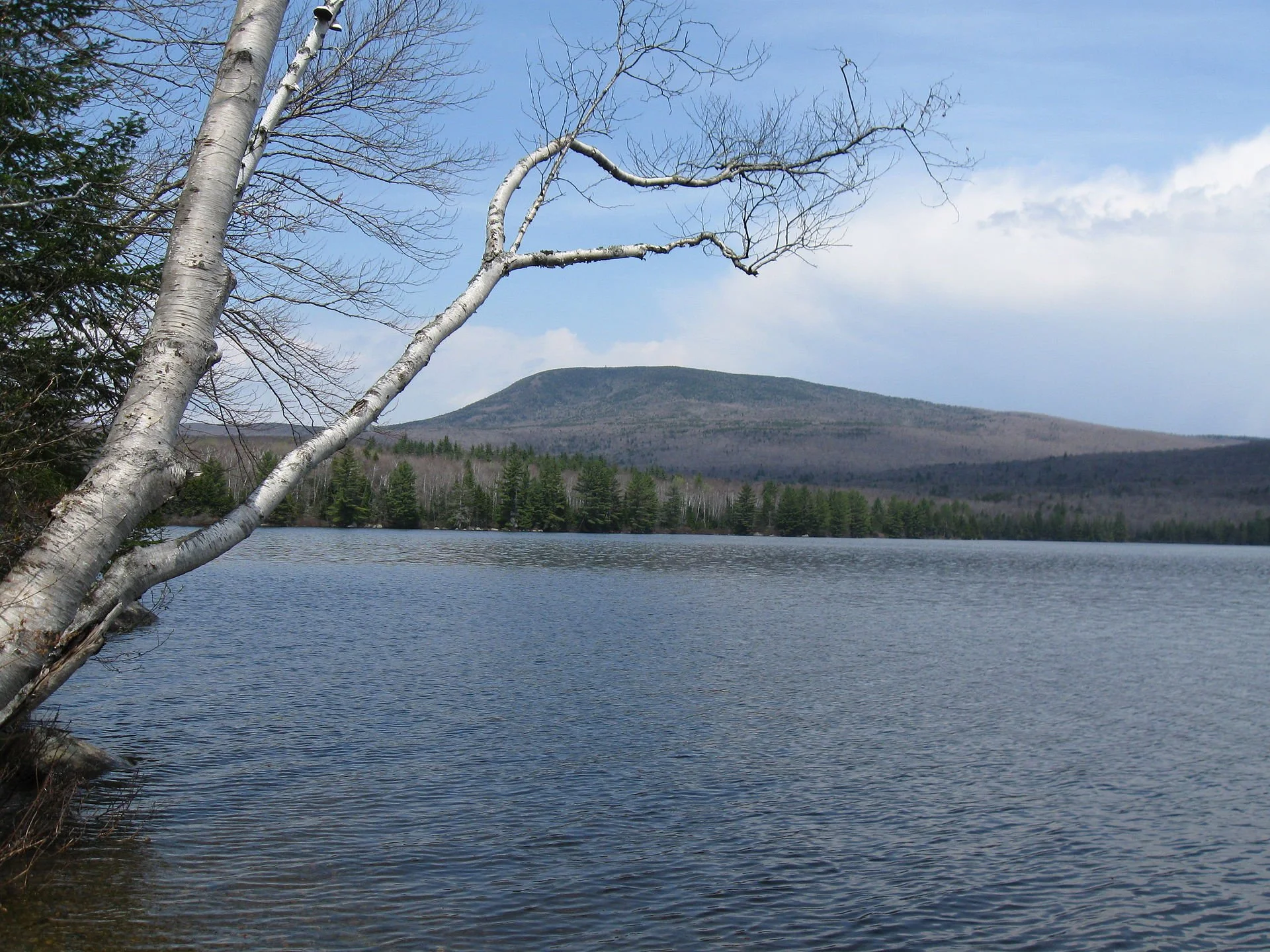
Smarts Mountain looms over Reservoir Pond, in Lyme.
—Photo by Ken Gallager
Phyllis Bennis: A tale of two tragedies at sea
Via OtherWords.org
Recent weeks saw two terrible tragedies at sea.
In one, five explorers died when the Titan submersible imploded in the North Atlantic. In the other, over 600 refugees — most of them women and children — drowned in the Mediterranean when their fishing trawler sank.
Both voyages ended in a heartbreaking loss of life. But there were vast differences between the two tragedies in media attention and government response, highlighting just how unequal our world has become.
On board the Titan were two billionaires and one of their sons, along with a CEO and research director of companies tied to undersea adventure tourism. They were headed for the wreckage of the Titanic, which sank 111 years ago.
When the Titan lost contact with its mother ship less than two hours after descent began, calls for assistance immediately went out. Help came quickly from the U.S. and Canadian coast guards and navies, along with support from France and offers from other countries.
Sonar-equipped planes, undersea diving equipment, trained divers, and search ships of every variety steamed to the area. Meanwhile, breathless coverage of the tragedy stayed on the front pages around the world as TV news counted down the hours of oxygen left in the small craft.
The rescue cost is unknown, but initial estimates are around $100 million — a cost that will be footed by taxpayers.
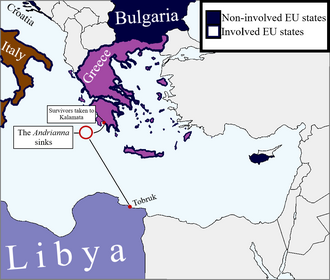
Compare this to the story of the Andriana, which sank off the coast of Greece just two days after the Titan went down. The Andriana was thought to be carrying over 700 people, of whom just 104 survived. No women or children were among the survivors.
The limited news coverage of the Andriana included nothing like the up-close-and-personal human stories of the lives and dreams of the five men aboard the Titan. Except for a few, we don’t even know their names.
They were desperate migrants, many of them refugees, from countries wracked by war, poverty, climate disasters and human-rights violations — including Afghanistan, Syria, Palestine, Pakistan and Egypt. They were sailing from Libya in a decrepit fishing boat, hoping to make it to Europe alive.
The Greek coast guard quickly realized that the ship was in trouble, but didn’t try to rescue the desperate passengers on the deck. Greek authorities made assertions — vehemently disputed by ship captains nearby, migrant advocates, and the passengers themselves — that the ship had turned down offers of assistance.
The ship had been in distress almost two days before it sank, but help didn’t come until it was too late. How many might have been rescued with one-tenth the resources that were rushed to save the very, very people on the Titan?
Europe’s racist approach to migration starts and ends with preventing African, Asian and Arab migrants from entering European territory. But it’s not just a European problem.
Indeed, the continent’s policies on migrants bear a tragic — indeed criminal — similarity to our own in the United States. As thousands of desperate refugees and migrants have died crossing the Mediterranean, thousands more from Central America, the Caribbean, and beyond have died trying to cross the desert along the U.S.-Mexico border.
How many might have been saved if immigration policy were grounded in keeping migrants safe, rather than keeping them out?
The rescue effort mounted for those lost on the Titan shows what’s possible when those in danger are treated like they matter. U.S. officials should work just as hard to rescue poor and endangered migrants as they do the billionaires — their lives matter just as much.
Phyllis Bennis directs the New Internationalism Project at the Institute for Policy Studies.
#Titan
#Andrina
#migrants
David Warsh: AI firms and news publishers are dickering over revenue sharing
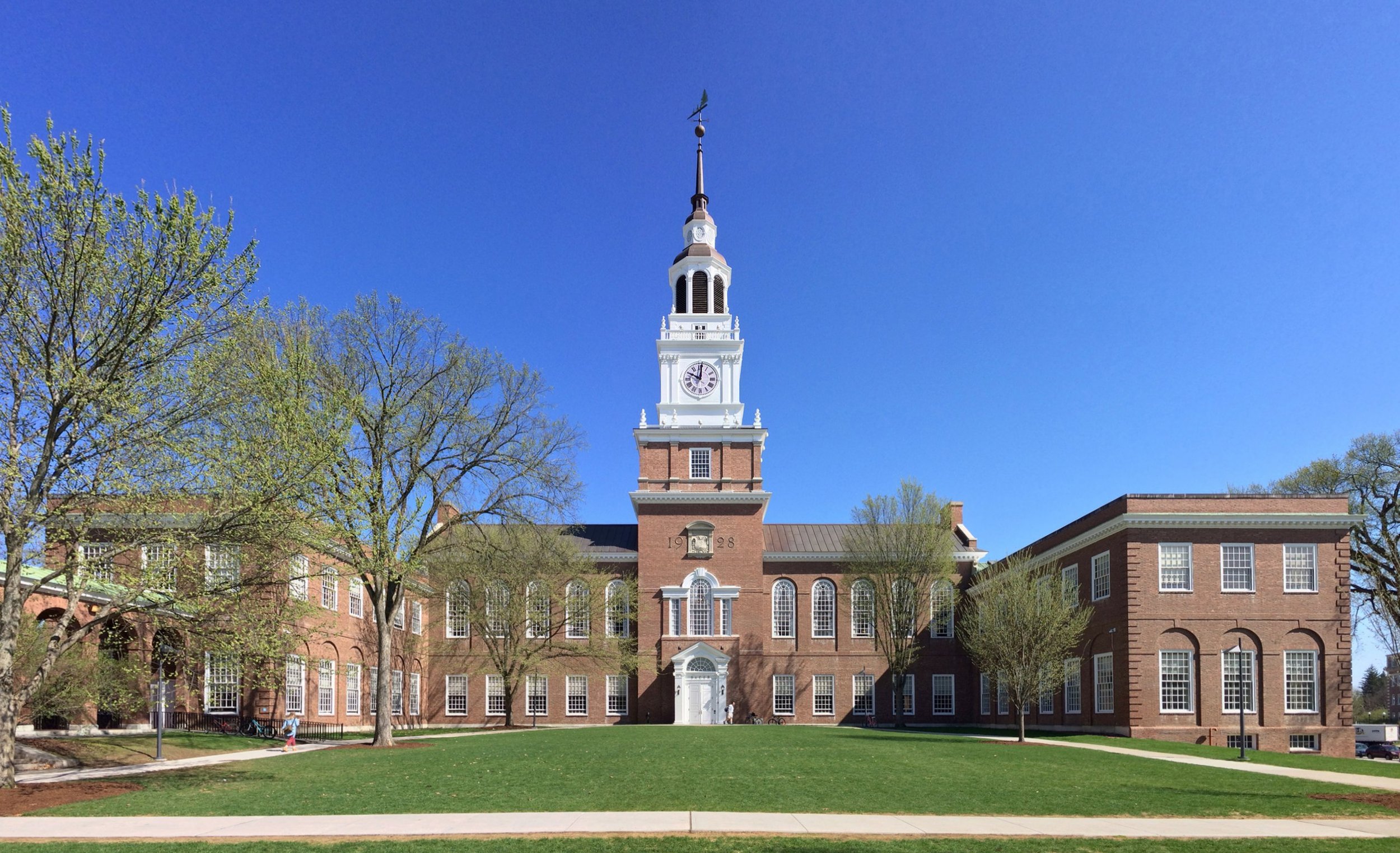
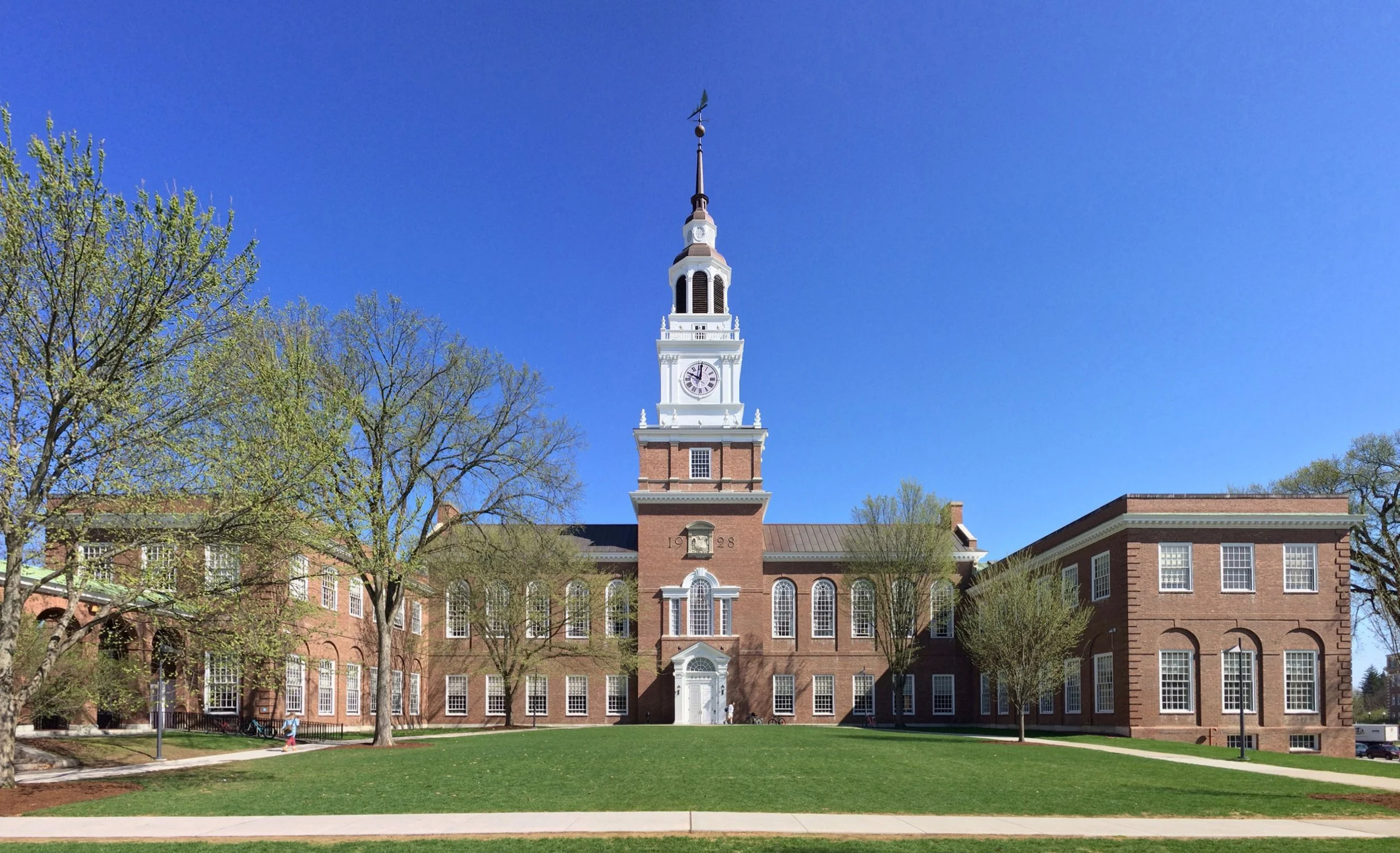
Baker Library at Dartmouth College

Dartmouth College’s Kiewit Computation Center, cutting edge when it was built, in 1966, and torn down as outdated, in 2018
From Cantor’s Paradise:
“The Dartmouth (College) Summer Research Project on Artificial Intelligence was a summer workshop widely considered to be the founding moment of artificial intelligence as a field of research. Held for eight weeks in Hanover, New Hampshire in 1956 the conference gathered 20 of the brightest minds in computer- and cognitive science for a workshop dedicated to the conjecture:
"..that every aspect of learning or any other feature of intelligence can in principle be so precisely described that a machine can be made to simulate it. An attempt will be made to find how to make machines use language, form abstractions and concepts, solve kinds of problems now reserved for humans, and improve themselves. We think that a significant advance can be made in one or more of these problems if a carefully selected group of scientists work on it together for a summer."
-- A Proposal for the Dartmouth Summer Research Project on Artificial Intelligence (McCarthy et al., 1955)
Somerville, Mass.
Why the speed with which artificial intelligence technologies have been sprung on the world? The answer may have something to do with the model that AI companies have in mind for the most potentially lucrative among their new businesses. Once again it seems to have to do mostly with advertising.
As a result, the newspaper business, broadly defined to include data-base/software businesses such Bloomberg, Reuters and Adobe, is taking stock of itself and its prospects as never before. Readers are learning about the capabilities and limitations of generative artificial intelligence engines, which can produce on demand Wiki-like articles containing detailed but not necessarily dependable information. In the bargain, we may even learn something important about the systems of industrial standards that govern much of our lives.
Those implications emerged from a Financial Times story other week that Google, Microsoft, Adobe and several other AI developers have been meeting with news company executives in recent months to discuss copyright issues involving their AI products, such as search engines, chatbots and image generators, according to several people familiar with the talks.
FT sources said that publishers including News Corp, Axel Springer, The New York Times, The Financial Times and The Guardian have each been in discussions with at least one major tech company. Negotiations remain in their early stages, those involved in them told the FT. Details remain hazy: annual subscriptions ranging from $5 million to $20 million have been discussed, one publisher said.
This much is already clear: Media companies are seeking to avoid compounding the mistakes that allowed Google and Facebook to take over from print, broadcast and cable concerns the lion’s share of the advertising business, in a wave of disruption that began around the start of the 21st Century.
A major problem involves avoiding further concentration among media goliaths. At stake is the privilege of decentralized newspapers, competing among themselves, to remain arbiters of democracies’ provisional truth, the best that can be arrived at quickly, day after day.
Mathais Döpfner. whose Berlin-based media company owns the German tabloid Bild and the broadsheet Die Welt, told FT reporters that an annual agreement for unlimited use of a media company’s content would be a “second best option,” because small regional or local news outlets would find it harder to benefit under such terms. “We need an industry-wide solution,” Döpfner said. “We have to work together on this.”
The background against which such discussions take place is copyright law. Obscured is the role frequently played by privately negotiated industry standards.
Behind the scenes talks will continue. But the changing nature of advertising-based search is a breaking story. Newspapers remain free to take their case to the public, in hopes of government intervention of unspecified sorts.
The adage applies about lessons learned from experience: fool me once, shame on you; fool me twice, shame on me.
David Warsh, a veteran columnist and an economic historian, is proprietor of Somerville-based economicprincipals.com, where this column originated.
#David Warsh
#artificial intelligence
Just get us there

“‘We don’t want rapists or sexual deviants driving cabs,’ an official of the City of Boston Cab Association was once quoted as declaring. However, most Bostonians would gladly travel to their destinations with a sexual deviant if only said driver could be counted upon to know the way.’’
— Nathan Cobb, in “Taxing Toward a Fun City,’’ from CITYSIDE/COUNTRYSIDE, by Mr. Cobb and John N. Cole (1980)
Exploring intimacy

“Sam in the Studio,’’ by Barbara Ishikura, in the show “Frippery, Finery, Frills: Works in Conversation,’’ with Sam Fields at the Southern Vermont Arts Center, Manchester, Vt., July 1-Sept. 24. Both artists are Massachusetts-based.
The gallery says:
“Drawing from historicized images of women in art, fiction, and our collective imagination, Barbara Ishikura and Sam Fields explore intimacy through imagery, process, and materials.
“Sam Fields is a multimedia artist who creates intricate, layered sculptures. In her work, crocheted ruffle upon ruffle, beads, sequins, lace, and embroidery elevate what has been traditionally considered low brow in western society.
“In her paintings, Barbara Ishikura depicts women who display their unabashed sexuality and crass pleasures. Their presence within beautiful and refined interior spaces creates tension.
“Using a visual language associated with the feminine and traditionally viewed as unsophisticated, their work celebrates and reclaims an opulence of ornament, a particular aesthetic of glorious beauty. These artists are giving form and color to domestic objects and intimate spaces in order to expand what women’s sexuality and being can look, feel, smell, sound, and taste like.’’
#Barbara Ishikura
#Sam Fields

History of India in New England; Llewellyn King on what holds back that huge nation
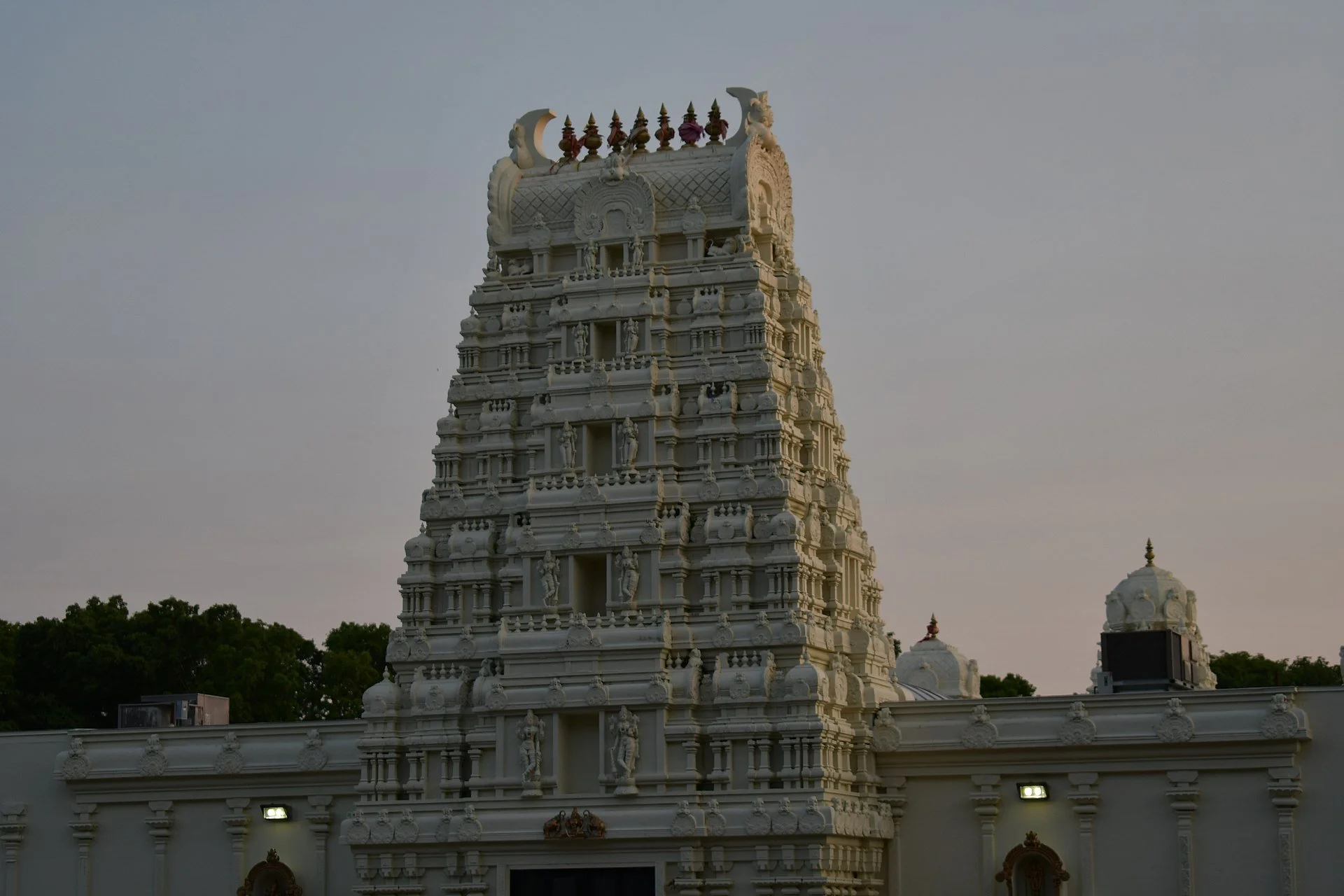
Sri Lakshmi {Hindu} Temple, in Ashland, Mass.
— Photo by Tshiv
From “The Indian Presence in New England: People and Ideas” . Hit this link to read the whole article.
“There were some exceptions to this general atmosphere of non-acceptance {of Indians in America}. In general, the intellectuals of the Northeast were not active participants in such overt racialized discourse. Jane Jensen states that New England intellectuals developed a deep interest in Indian religions in the early 19th century, at about the time the New England-India trade developed. She describes how Boston society became interested in Indian literature and in Indian religions, especially Hinduism, Buddhism and the Brahmo Samaj movement. Intellectuals at universities such as Harvard began to cultivate an active scholarship and also initiated a nascent Indian art collection at the Boston Museum of Fine Arts. The theosophical writing of Ralph Waldo Emerson and Henry David Thoreau, as well as Walt Whitman’s poems (such as “Passage to India” and “Leaves of Grass”), are reflective of this trend. These earlier writings of the Transcendentalists, on the “life of the spirit” (developed on the basis of an earlier encounters with Hinduism), prepared the ground for Vivekananda and his message.’’

Indian Prime Minister Narendra Modi
By Llewellyn King
WEST WARWICK, R.I.
By the diplomatic hoopla in Washington that greeted Indian Prime Minister Narendra Modi last week, it would seem that intrepid U.S. explorers had just discovered India and were celebrating him in the way Britain treated tribal leaders in the 19th Century: Show them the big time. Then co-opt them to vow allegiance.
In this century, the U.S. equivalent of the big time is a state visit and endless professions of friendship. Experience says Modi won’t bite.
Historically, India has been reluctant to accept the embrace of the West. Although it is democratic, capitalist and has the largest diaspora, India’s affections have been hard to capture.
Since independence from Britain in 1947, India has sought global status by standing aloof and leaning toward countries and regimes that are anathema to the West. Its first prime minister, Jawaharlal Nehru, fostered the concept of a third force in the world: a constellation of unaligned nations with India at the center.
It showed a perverse affection for the Soviet Union — which was hardly nonaligned — and didn’t reflect the values of India: free movement of people, free press, capitalism and democracy.
Years ago, a retired executive editor of the Times of India, whom I knew socially, told me, “There are maybe a million Indians living in the United States and only a handful who live in the Soviet Union, but our leaders have always leaned toward them. It is a puzzle.”
There are now 4.2 million Indians living in the United States.
At the same time, Indians migrated across the world and made inroads into professions from Canada to New Zealand. In Britain, they are prominent in politics and the prime minister, Rishi Sunak, is of Indian descent.
In the United States, executives of Indian descent run some of the largest tech companies, including IBM, Google and Microsoft.
Indians are a huge force in English literature. Every year Indian writers feature on the prize lists for best new English novels. Whereas the computers most of us use may have been made in China, much of the software was written in India.
Indian words abound in English: Pajamas, ketchup, bungalow, jungle, avatar, verandah, juggernaut and cot are just a few.
The effect of Indian culture on the world is evident from curry and rice to polo to yoga.
Yet, India remains a distant shore, elusive and obvious at the same time. A country of enormous talent that lags economically. It now has the fifth-largest economy in the world. With 1.4 billion people, many of whom of obvious ability, the question must be, why does it still have crushing poverty?
Andres Carvallo, professor of innovation at Texas State University, told the “Digital 360” webinar, for which I am a regular panelist, he thought it was partly because India lagged in essential electricity production, pointing out that China has four times the electricity output of India.
But is this symptom or cause? I have been puzzling over why India doesn’t do better for decades. It seems to me that the causes are multiple, but some can be laid at Britain’s feet — not because the British were occupiers in India but because of some of the good things they left there that have perversely remained time-warped.
One of India’s ambassadors to Washington told me with pride that every occupier had enriched India and left something of value behind, from Alexander the Great to the Moguls and, of course, Britain and the Raj.
But the Brits also left behind a sluggish bureaucracy to the point of sclerosis and a legal system that is independent but takes an eternity to reach a decision. Additionally, some of the ideas prevalent in British Labor Party thinking — and long since abandoned — took hold in India and have been extremely detrimental. These included protectionism, a state’s role in the economy, and a fear of competition from abroad.
I believe that protectionism is the greatest evil. It discouraged competition, innovation and creativity. It inadvertently allowed a few families to concentrate too much wealth and economic power and to work to protect that.
India is more open now, but it needs to be vigilant against the evils that go with protectionism, which is still part of its DNA.
At one time, you could buy a brand-new Indian made-car — Fiat or Morris design — which was 30 years out of date. No need to innovate; just make the same car year after year.
If it liberalizes its economy, India may one day outpace China. Meantime, do luxuriate in those Indian words that have so spiced up English.
Llewellyn King is executive producer and host of White House Chronicle, on PBS. He’s based in Rhode Island and Washington, D.C.
On Twitter: @llewellynking2
Watch or Listen to White House Chronicle
Streaming: All episodes are free to watch on Vimeo [link]
On television: Visit our website [link] to find your location carrying station.
SiriusXM radio: Listen to White House Chronicle on P.O.T.U.S., Channel 124: Saturday at 8 a.m. and 6 p.m. ET; and Sunday at 4 p.m. and 11 p.m. ET.
#India
#White House Chronicle
Maybe don’t go any further
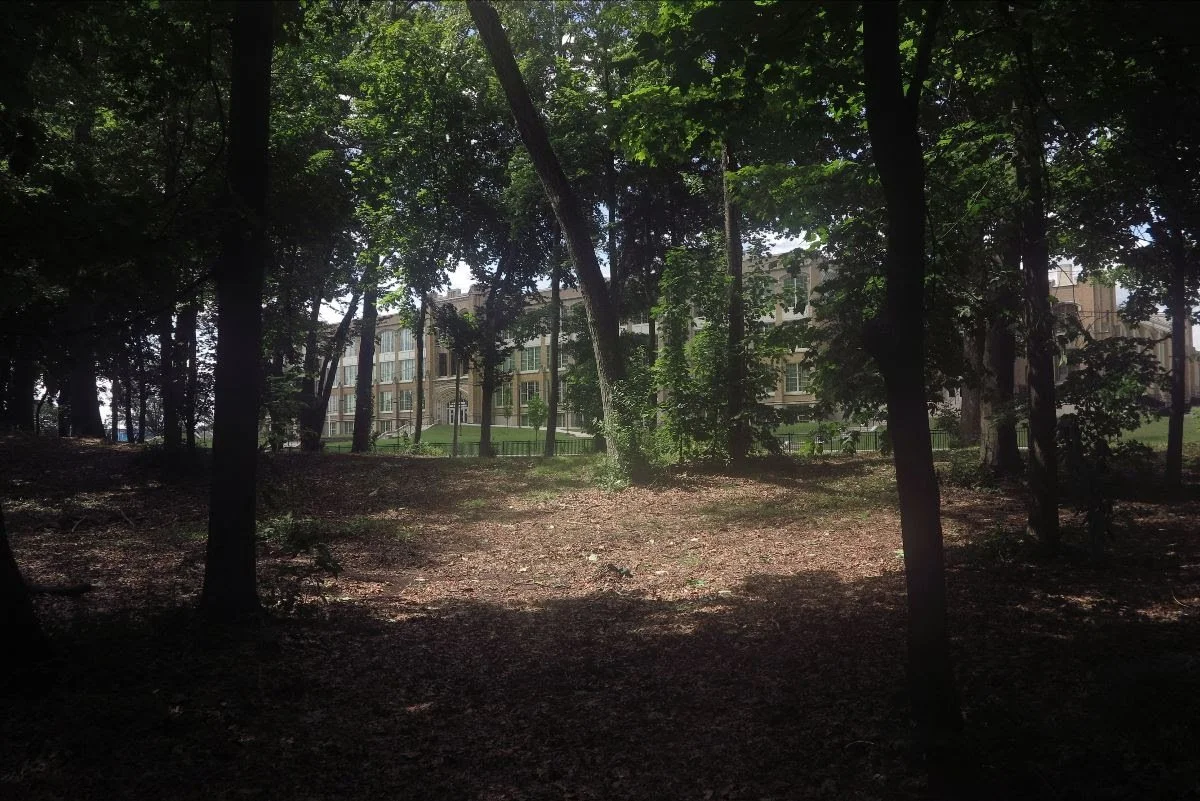
Photo by Massachusetts-based artist Chantal Zakari, in her show “Chantal Zakari: New Works,’’ at Kingston Gallery, Boston, Aug. 30-Oct. 1
She says:
“I am inspired by social phenomena and position myself in relation to the public. I freely combine research methodologies and artistic strategies from various disciplines such as photography, documentary, graphic design, performance, storytelling, installation, and social interventions. Text and language are an inherent part of my work; interviews, personal narrative, found text, all have the potential to contextualize the imagery. My work is project based. As I explore projects over the span of several years, the work can transform into exhibitions, installations, publications, performances and street happenings. Designing and redesigning the work into different contexts brings me a greater understanding of the ideas, and makes it more accessible to different groups of audiences.”