Vox clamantis in deserto









Using drones to monitor changing Eastern forests

Mt. Katahdin, in the midst of the Maine Woods.

Log jam at Ripogenus Gorge, Maine, during 1870s log driving.
Edited from a New England Council report (newenglandcouncil.com)
“The U.S. Department of Agriculture has awarded a $10 million grant to research teams from the University of Maine, Purdue University and the University of Georgia to develop technology that would use drones to monitor forests.
“The main goal of this research project is to help landowners and stakeholders better adapt forests to complicated economic and climate conditions in the Eastern region of the United States, aiming to improve the management of 15 million acres of those forests. With this, the University of Maine will be receiving $2.7 million of the overall $10 million for its efforts on ‘PERSEUS,’ or ‘promoting economic resilience and sustainability of the eastern United States forests.’ This project will use digital technology including drones, piloted aircraft, and satellite-based sensors which will provide real-time, accurate measurements of the forests. The information collected from this project will be extremely influential to forest policy and the lawmaking of the region.
“‘Forestry generally prides itself as a boots-on-the-ground business, while technology is rapidly changing access to information, [but] PERSEUS will provide the necessary training to help both students and landowners alike leverage these new tools,’ said Aaron Weiskittel, professor of forest biometrics and modeling, and director of the Center for Research on Sustainable Forests, at the University of Maine.’’
Mountain Men

“Moat Mountain {in the White Mountains} from North Conway,’' by Benjamin Champney (1817–1907)
“Men hang out their signs indicative of their respective trades; shoe makers hang out a gigantic shoe; jewelers a monster watch, and the dentist hangs out a gold tooth; but up in the Mountains of New Hampshire, God Almighty has hung out a sign to show that there He makes men.”
— Daniel Webster (1782-1852), American statesman, politician, lawyer and orator.
Boating formal wear

Advertisement mock-up for “This is Boatwear,” in the MIGHTY-MAC Collection of the Cape Ann Museum Library and Archives, Gloucester, Mass.

The Eastern Yacht Club, in Gloucester.
— Photo by Oceanhistory
Playing with light

“Salvator” (acrylic, gloss gel and modeling paste on linen), by Ryan Crotty, in the group shpw “Glow,’’ at the Flinn Gallery, Greenwich, Conn., through March 22.
The gallery says: “With work that wouldn't look out of place on a sci-fi movie set, cyberpunk future or high-end gallery, these artists play with light in creative and interesting ways. ‘‘

Llewellyn King: Folks want more power but not power lines

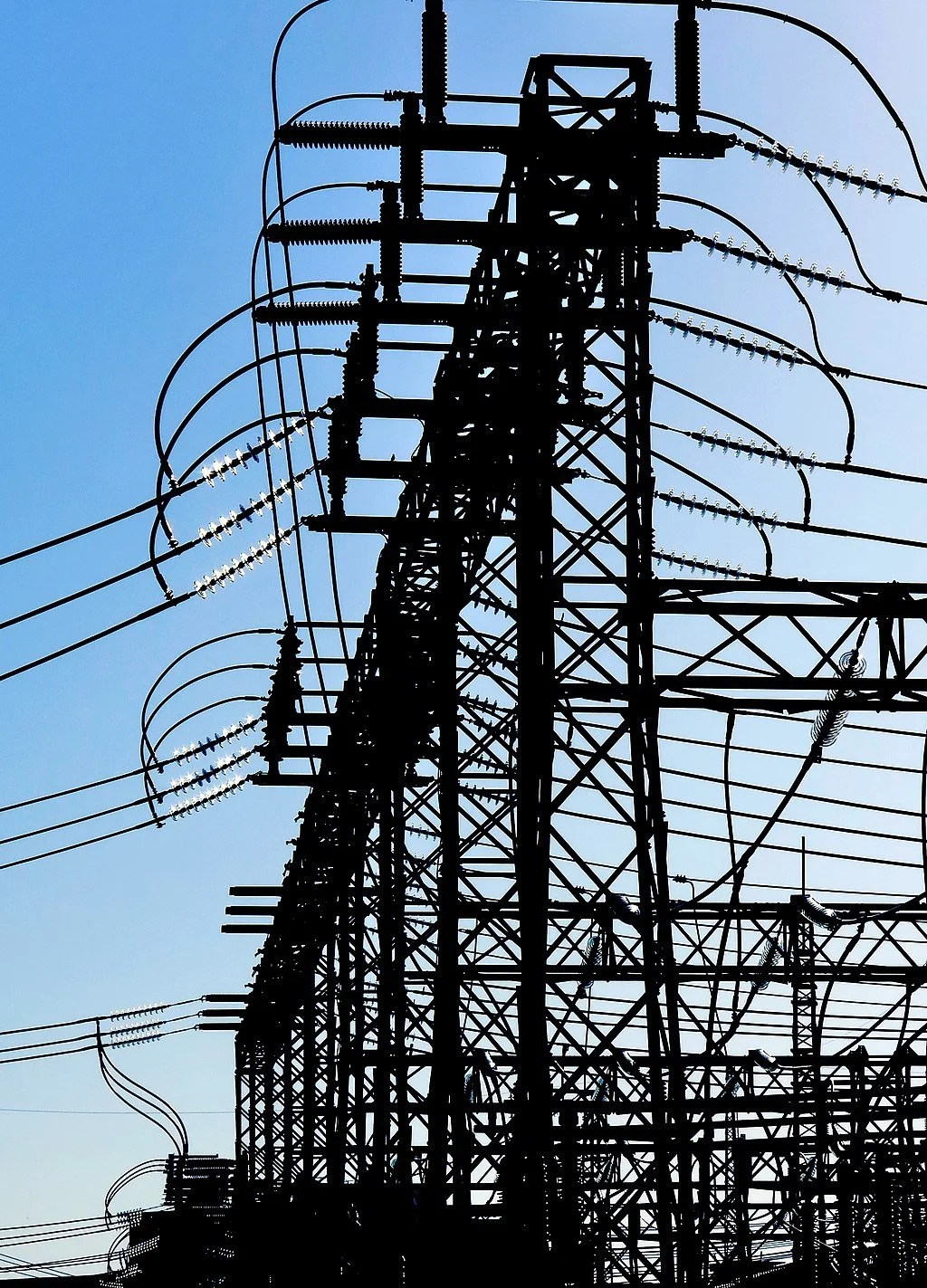
High-voltage overhead power lines.
— Photo by Magnolia677
WEST WARWICK,R.I.
If you punch in “outage map” in a search engine, you will get a series of maps, ranging from the whole country to state by state and even smaller jurisdictions. These maps show electrical outages across the United States and territories and are within 10 minutes of real time. The data come from the electrical utilities themselves.
The maps are enlightening. At this writing, there are some areas in the dark in Michigan and California. As severe weather sweeps across the country, more outages appear on the maps.
Today’s outages are all weather-caused. But in just a few years, they will reflect something else, something more ominous: shortages in the available amount of electricity. They will occur when demand begins to outstrip supply, as it frequently does in some developing countries.
The nation is in the grips of two great transitions: a transition from fossil-based generation (coal, natural gas and some oil) to renewables (primarily wind and solar) and a transition to electricity, especially in transportation with electric vehicles.
We are in a rush to electrify in order to reduce carbon emissions.
There are an astounding 3,000 utilities, ranging in size from very small public and rural electric cooperatives to very large, investor-owned firms such as Southern Company and Exelon.
These make up the electric supply system, which has been described as the world’s largest engine. They all work together with surprising unity and are variously connected to the three electric grids, the Eastern Grid, the Western Grid and ERCOT, the free-standing Texas grid.
Their challenge isn’t only where will the power come from, but also will there be enough transmission to move it to where it is needed? Duane Highley, CEO of Tri-State Generation and Transmission Association Inc., an electric cooperative based in Westminster, Colo., told me that the addition of two electric cars to a family home can raise electric consumption by as much as 40 percent.
Many utilities, including those in such rapid growth states as Texas, are counting on distributed generation, which is when the utility enters into agreements with its customers to share the burden. This can involve agreements with incentives to allow the utility remotely to turn off certain functions during peak hours, and to buy power from its customers if they have rooftop solar installations or if they have backup generators.
After Texas was felled by Winter Storm Uri, in February 2021, many electric customers are turning to generators and rooftop solar to protect themselves, David Naylor, president of Rayburn Country Electric Cooperative Inc., in Rockwall, Texas, told me. Faced with a growth rate that has been as high as 8 and 9 percent in recent years. Naylor is vigorously pursuing distributed generation.
In the electric-utility industry, distributed generation is spoken of as “the first step in the virtual power plant.” In Connecticut there are two pilot projects, promoted by SmartPower, a nonprofit green-energy concern, with a utility, Eversource, and Connecticut Green Bank. They’re helping customers to install solar power and a substantial battery. In return the utility acquires the right to draw down from that battery on certain days at times of high demand.
All of this will help, but it doesn’t overcome the fact that between now and 2050, a target year for carbon reduction, electricity demand will double in the nation, according to many experts, and there is no way that demand can be met on the present generation and transmission trajectory.
The biggest frustration in the industry isn’t siting new wind farms and solar plants, but building new transmission to move electricity from the resource-rich areas where, as Tri-State’s Highley says, “the wind blows and the sun shines,” such as the Western states, to where it is needed.
With money pouring out of the Department of Energy for projects, the problem isn’t money but selfishness — selfishness as in “not in my backyard.” No one wants power lines, just the power. And everyone wants more of it.
The fact is that if the nation continues to electrify at the present rate, shortages could begin at the end of the decade and worsen as the century rolls on.
Those outage maps might become must-watching — until the power for our computers fails, and your region gets color-coded on the outage map you can’t see.
Llewellyn King is executive producer and host of White House Chronicle, on PBS. His email is llewellynking1@gmail.com, and he’s based in Rhode Island and Washington, D.C.
What we have

Frozen forest in Hillsborough County, N.H.

Damage done to pine forests in Wolfeboro, N.H., in the 1938 hurricane
— Photo by Peter Roome
and Lakewentworth

— Graphic by Icy98 -
“New York has people, the Northwest rain, Iowa soybeans, and Texas money. New Hampshire has weather and seasons.”
— Donald Hall (1928-2018), poet and essayist who lived for many years at his family farm, in Wilmot, N.H.

Artificial art?

“All Watched Over By Machines Of Loving Grace and Deeper Meditations #1-#6” (video still), by Memo Akten, at Burlington (Vt.) City Arts, in the group show “Co-Created: The Artist in the Age of Intelligent Machines’’.
— Photo courtesy Burlington City Arts
The gallery says the exhibition “explores the impact, ethics and aesthetics of art created by artifical intelligence. The show tackles tough questions about the nature of artwork through the work of eight artists’’ — Jane Adams, Memo Akten, Minne Atairu, Lapo Frati, Jenn Karson, Mauro Martino, Casey Reas and Jason Rohrer.

ECHO, Leahy Center for Lake Champlain, in Burlington.
From slush to lush (in two months)

On Feb. 28, gradations of gray along a western Long Island Sound estuary in Connecticut. But March 1 marks the start of meteorological spring.
— Photo by Hilary Cosell
Sweetening a false spring
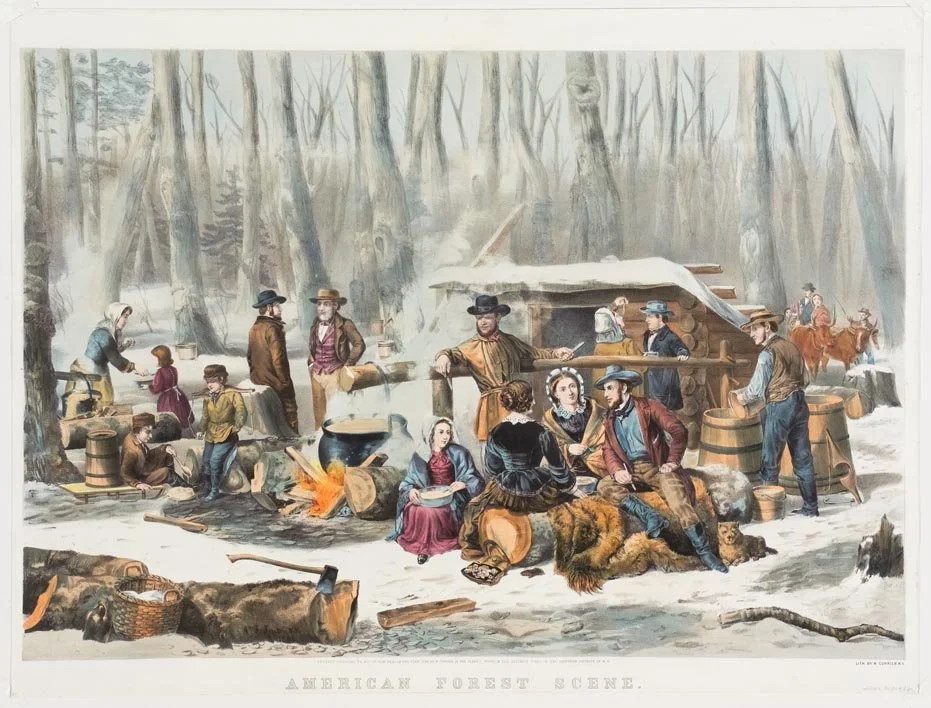
Making maple syrup in the New England woods (hand-painted lithograph, 1856), by Nathaniel Currier, at the D’Amour Museum of Fine Arts, Springfield, Mass.

Bringing them back at night

The Shubert Theatre at the Boch Center, in Boston’s threatre district.

The Paradise Rock Club (formerly known as the Paradise Theater) is a 933-person capacity music venue in Boston.
Adapted from Robert Whitcomb’s “Digital Diary,’’ in GoLocal24.com
I love the title. Corean Reynolds has been named Boston’s “director of nightlife economy,’’ by Mayor Michelle Wu, in a post-COVID bid to re-energize consumers to patronize the capital of New England’s entertainment and eating-and-drinking sectors.
Her duties will include improving transportation and law enforcement.
Ms. Wu, like some other big city mayors, is animated by the desire to make the city less dependent on office workers as the move to remote work has slammed the city’s commercial real estate sector. This must include getting more people to live in the city, some via the conversion of office buildings into housing (much easier said than done) and, say, turning some streets into pedestrian-only ways.
I’m sure that Brett Smiley, Providence’s new mayor, will be watching how it goes
NHL promoting street hockey

A street hockey game.
Edited from a New England Council report:
“The National Hockey League has announced a partnership with RCX Sports, a leader in youth-organized sports, to create ‘NHL Street,’ a North American wide, youth street hockey league.
“Although the NHL was involved in street hockey programs in the 1990s, this rebirth has rebranded with a new look and its mission, NHL Street is a program with the intent to build a new era in street hockey that is fun, relevant and aimed at getting more kids involved in playing the game. This program also breaks down financial barriers that have prevented children from playing in the past by advocating for an accessible form of the game….
“‘We want to create good memories,’ said Andrew Ference, National Hockey League director of social impact, growth and fan development. ‘We don’t need to create a whole batch of the next NHLers. That might happen organically on its own, but we just want [to] create really fun times and memories with hockey.’’’
Scup popular, but not so much where a lot of it comes from -- R.I.

Scup
Consider the humble scup.
Ignored, disrespected, even feared, scup is one of the most plentiful fish in Narragansett Bay, a climate-change winner whose numbers are rising with Rhode Island’s water temperatures. Yet many Rhode Islanders have never heard of it, let alone tasted one.
Rhode Island fishermen caught more than 4 million pounds of scup in 2021, making it the state’s biggest catch among fish and second in the state’s commercial seafood school only to that better-known kingpin — squid, aka calamari.
While calamari is Rhode Island’s popular state appetizer, you won’t find scup in most supermarket seafood cases in the Ocean State. Instead, most of the commercial catch is exported to large cities like New York, Philadelphia, and Chicago with large immigrant populations whose cultures are more familiar with scup.
To read the article, please hit this link.
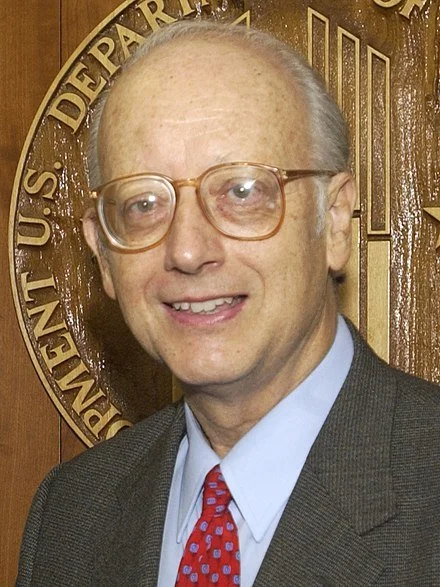
Warren Getler: Constantine Menges and the threat from the Russia-China axis

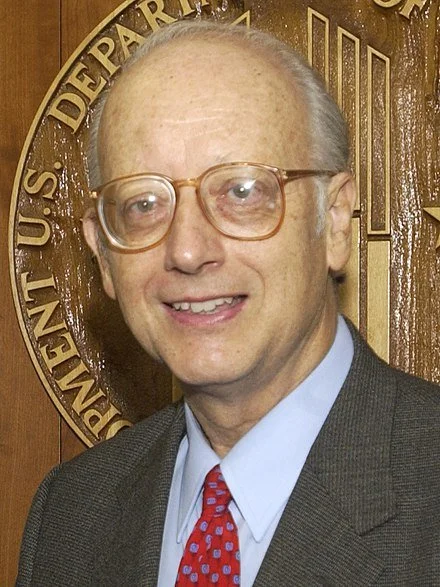
Constantine Menges (1939-2004)
While China last week floated a relative non-starter of a peace plan to end Russia's unprovoked war in Ukraine, Beijing at the same time is reported to be preparing the sale of artillery shells and other munitions to Moscow. We take a look at the current dynamic through the lens of the late Constantine Menges, a former senior national security adviser to President Ronald Reagan.
Sometime in the next couple of months, China’s leader, Xi Jinping, is expected to land in Moscow to meet with his Russian counterpart, Vladimir Putin. That meeting could push world events toward a negotiated settlement in the war in Ukraine; or, more likely, it could lead to a prolongation of that year-long conflagration through the supply of Chinese-made offensive weaponry to the struggling Russian military.
Whatever the outcome, the Xi-Putin meeting exemplifies a further solidification of the post-Soviet Russian-China alliance, something which my late neighbor and U.S. presidential adviser, Constantine Menges, predicted would take hold with a vengeance and would threaten U.S. national security interests on an unprecedented scale.
Those predictions date back some 20 years, and they seem to be very much worth addressing amid the current geopolitical landscape. We ignore Menges at our peril.
In Washington-area policy circles, Menges (who worked in senior roles at the White House and the CIA) was known for being both persistent and prescient. “Constant Menace” was his light-hearted handle among those who respected his analytic skills and his passion for putting views forward on how to best protect U.S. national security and economic interests in an emergent tri-lateral world.
Menges, who died of cancer in 2004, made it his dying wish to his wife, Nancy, that his deeply researched work, China: The Gathering Threat, be published posthumously. Today, it’s extremely hard to find the book (published by Nelson Current in 2005,) and its ranking on Amazon is, sadly, way back in the dusty-shelf space.
Yet Menges’s unquestionably powerful and illuminating tome stands as the potential successor to statesman George F. Kennan’s remarkable article published under the pseudonym “X” in Foreign Affairs in July 1947. Kennan’s article, urging containment of the Soviet Union, set a course for U.S. foreign policy – rigorous Cold War policy -- in the immediate wake of World War II and throughout the closing decades of the last century. Menges’s overlooked work, which goes to the “big picture” kind of thinking that is often absent from today’s debates, should set descriptive swim-lanes for U.S. foreign, economic and military policy in the years running up to 2050. Kennan’s seminal article, entitled “The Sources of Soviet Conduct,” clearly has its 21st Century match in Menges’s work, a richly footnoted book that focuses in excruciating detail on the sources of post-Soviet Russian conduct and associated Chinese conduct on the world stage.
In these times of heightened geopolitical uncertainty amid the ongoing tragedy in Ukraine, I’m reminded of the over-the-fence talks in Georgetown I had in the early 2000s with Dr. Menges: about the new Russian leader, Putin, and about the emergent economic powerhouse, China.
Menges, in his quiet professorial way, would assert that while Middle East turmoil and state-sponsored terrorism would provide major challenges to American and Western interests, the “long-game” had to be focused on what he described as the coming dualistic challenge from both the People’s Republic of China and the Russian Federation, working in concert with each other.
Menges’s prescriptive book, written in 2004, lays out these key points, foreshadowing the current state of play.
*America’s most strategic challenge: the “China-Russia strategic axis is explicitly intended to counter the United States around the world and provide the basis for a still undefined ‘new political and economic order’ that China has declared to be a major global objective and which Putin endorsed at his first summit,” with the then Chinese leadership some 20 years ago.
*The “China-Russia strategic axis makes the world more dangerous. For the first time in forty years, the U.S. faces these nuclear-armed major powers coordinating their international actions or secretly providing each other with military guarantees in the event of conflict with the U.S. or other countries.”
*China’s ultimate goal is “regional dominance,” including the South China Sea zone of influence, leading to potential hemispheric dominance stretching to Europe through both economic muscle (direct investment) and military presence. Taiwan – the forever hot-button target -- sits in the cross-hairs of China’s growing shore-based phalanx of ballistic-missile systems, and the U.S. strategic response to an invasion by Beijing remains less than certain.
*Putin, “since assuming the presidency of Russia ….in 2000, is an intelligent, disciplined and systematic leader. He has said Russia should become a ‘strong state’ under a ‘dictatorship of law’ and that it must again play a major role in world affairs.”
*Russia “now stands precariously at the crossroads of a democratic or autocratic future. Which road Russia chooses will have historic and long-term consequences for the United States. The path favored by China and hardline elements in Russia could well plunge the U.S. back into a replay of the darkest days of the Cold War.”
We should read Menges, dive into his probing analysis of the inner-thinking of the hard-boiled Tier 1 autocrats in Beijing and Moscow over the past half-century. And, most important, we should listen to his call to action: “It’s time to get serious about strategy toward China and Russia and about geopolitics. The United States ‘must manage the peace,’ in confronting an expansionist Russia and “the rising, globally active, nuclear-armed and increasingly wealthy Communist regime in China.”
This upcoming summit in Moscow, a tete-a-tete of the world’s top two “autocrats for life,” is of critical significance for peace in Europe and beyond.
If the summit’s true agenda is to prolong the war in Ukraine through advanced-weapon supplies from Beijing to Russian troops, it would severely deepen the suffering of the Ukrainian people and heighten the risks of an even broader war beyond current battlelines.
Putin, playing his China card like never before, would gain immensely from Chinese arms deliveries through a renewed ability to prosecute an invasion that keeps him in power as long as he is seen as having the upper hand on the battleground (currently very much in question by all observers.) Xi, in turn, would gain by keeping the global media’s focus on the hot war on Europe’s edge while quietly and steadily increasing the People’s Liberation Army presence in and around Taiwan and the South China Sea disputed territories.
How the Biden administration, and future U.S. administrations, deal with the “long-game” China-Russia challenge is first among priorities for America and the West. We would do well to consider the prescient wisdom of Dr. Menges, one of the key architects of the Reagan Doctrine and a most-thoughtful “framework” practitioner of big-picture foreign, economic and military policy.
Warren Getler, based in Washington, D.C., writes on foreign and military affairs. He has worked as a journalist at Foreign Affairs Magazine, the International Herald Tribune, The Wall Street Journal and Bloomberg News.
Thick with life

“Pond Edge” (oil on canvas), by Massachusetts-based artist Michael Mazur (1935-2009), at the Currier Museum of Art, in Manchester, N.H.
‘The ideal pursuit’

Headquarters, in Boston, of the New England Historic Genealogical Society, founded in 1845 and the oldest and largest genealogical society in the United States.
Elizabeth Hardwick (1916-2007), American literary critic, novelist and short-story writer. She had a sometimes tumultuous marriage with poet Robert Lowell (1917-1977), a Boston Brahmin who was bi-polar.
Chris Powell: Time for ranked-choice voting; the bear facts
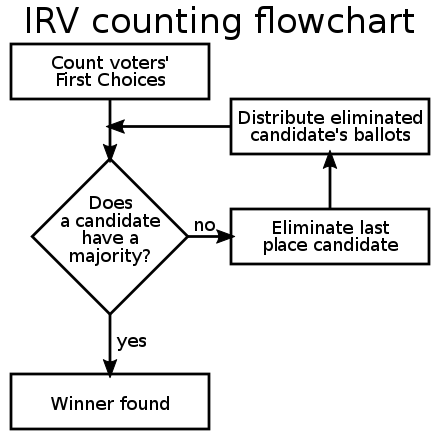
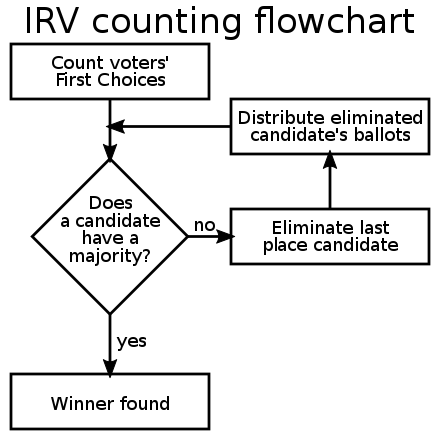
Typical counting process of a single seat ranked choice voting election. RCV/IRV = ranked-choice voting / instant run-off voting are synonymous.
MANCHESTER, Conn.
While it's good that Donald Trump now has some official competition for the Republican nomination for president in 2024 -- former South Carolina Gov. Nikki Haley, who was Trump's ambassador to the United Nations -- the problem is likely to be that Trump will have too much competition for the nomination, as he did when he first ran in 2016.
Back then 16 candidates of some standing ran against Trump for the Republican nomination, and they split the anti-Trump vote in the party so badly that he had a surprisingly easy path through the primaries to the Republican National Convention.
Trump retains much support among Republicans, though he is probably the weakest candidate they could choose to challenge President Biden or any other Democrat. Recent polls have suggested that Florida Gov. Ron DeSantis, who is acting like a potential presidential candidate, might defeat Trump in one-on-one Republican primaries but that Trump would win if he faced more than one challenger.
Despite the incompetence of the Biden administration, there is little chance that Trump could ever carry Connecticut. Maybe no Republican candidate for president could. But surely there are potential Republican candidates for president who might do better in Connecticut than Trump and thus harm other Republican candidates here less and help restore political competition to the state.
The prospect of Trump's renomination is an urgent reason for Connecticut to adopt ranked-choice voting, which encourages candidates to try to win by becoming more acceptable to majorities instead of by carving out the biggest and most extreme minority.
xxx
MUST MISTAKES BE FOREVER?: In a newspaper letter the other day defending the monopoly enjoyed by Connecticut's liquor stores on sale of wine, former Enfield state Rep. William Kiner inadvertently showed not only what is wrong with the state's liquor law but also what long has been wrong with state politics generally.
Liquor-store operators, Kiner wrote, "purchased their stores with the knowledge that they alone could sell wine." So, he continued, for state government to let supermarkets sell wine would be "changing the rules in the middle of the game when people's livelihoods are at stake."
That is, mistakes in policy must be preserved forever, no matter how unfair and contrary to the public interest -- especially if an influential special interest draws its livelihood from the mistake. Even the basic rules of a market economy, like free competition, must be suspended if they threaten someone's profitability -- the public interest be damned. That's the Kiner Rule.
But preventing supermarkets from selling wine isn't the only anti-competitive aspect of Connecticut law on alcoholic beverages. State law also establishes a system of minimum pricing for those beverages, a system that inflates prices, ensuring the profitability of beverage distributors and retailers.
If policy is to make alcohol expensive for health reasons, state government should receive the extra revenue as a tax. Instead in Connecticut the extra revenue from the law inflating prices goes to the distributors and retailers themselves. It's a racket that, according to Kiner, must never end.
Of course state law does not guarantee such privileges for any other business. All other businesses in Connecticut are always subject to changes in state law that may and often do diminish their profitability.
If, as many liquor store operators now admit, they can't compete in a free market with lower prices, they should leave the business to people who can.
xxx
ONLY HUNTING MIGHT WORK: Another lobby at the state Capitol, the bear lobby, argues that Connecticut should continue to prohibit hunting of the animals because their infiltration of the state is caused by people failing to secure food and garbage outside.
But if bear food was really so plentiful outside, bears would not increasingly be breaking into Connecticut homes in search of something to eat. No, the bear population has been increasing in the state mainly because hunting them was outlawed long ago.
Yes, getting people to secure their garbage might sometimes induce bears to move along faster. But the state will never eliminate people's negligence, and the bears are already here and causing more trouble. They won't be leaving voluntarily.
Chris Powell is a columnist for the Journal Inquirer in Manchester. (CPowell@JournalInquirer.com)
Not for tourism promotion

“Tally’s Corner” (oil on canvas), by Gloucester, Mass.-based artist Jeff Weaver, in his show “This Unique Place,’’ at the Cape Ann Museum, Gloucester, starting March 18. His work focuses on the built and natural landscape of Cape Ann. Tally’s Corner is in downtown Gloucester.

May 2008 view of Cape Ann. Gloucester and its harbor are visible to the upper right, Manchester-by-the-Sea is at center, just west of Singing Beach.
— Photo by Doc Searls

Llewellyn King: The lethal global infection of drones

Skydio’s X2 drone, made in the U.S. The company has a contract with the U.S. military.
WEST WARWICK, R.I.
Drones are the new weapons of war, causing military tactics and force structure to be reimagined. They bring a particularly deadly reality to guerrilla warfare, posing an existential threat in many theaters, especially the Middle East. Cities are almost defenseless.
Now Iranian drones are being deployed in North Africa and are posing a direct threat to Morocco.
Moroccan diplomats are actively raising the issue with Western governments. Iran, they say, in collusion with Algeria, is supplying the Polisario Front rebels, who are engaged in guerrilla attacks against Morocco over the kingdom’s position in the Western Sahara.
While the world was mesmerized by its nuclear program, Iran built itself into a powerful supplier of military drones to dictators and insurgents. Notably, of course, to Russia for use in Ukraine, but also to Iran’s proxies across the Middle East.
Iran’s experience with drones goes back to the war that Iran and Iraq fought between 1980 and 1988. In those days the drones were line-of-sight, simplistic and only good for surveillance.
Since then Iran has built generations of drones, large and small, but increasingly sophisticated. They were helped by captured U.S. drones that they reengineered, incorporating the latest technology.
Engines and parts have often been smuggled into Iran from the West. For example engines capable of powering drones were smuggled into Iran by declaring them for jet skis or snowmobiles. This was the case with the Austrian-built Rotax engine until the subterfuge was detected.
Now the Iranian military claims that its defense industrial complex can make the engines and all the parts of its drones domestically. One way or another, Iran now supplies an impressive array of drones with great loitering times and long delivery distances.
Ilan Berman, senior vice president of the American Foreign Policy Council, told me that Iran has come to the conclusion that its strength is not in force-on-force competition, but in aiding asymmetric conflicts “which is why they spent so much money and time on terrorism, and so much money and time on ballistic missiles. Then they hit upon drones as the evolution of precisely this strategy.”
Morocco is right to be worried about its new vulnerability. Drones, while they might not win a war, can inflict severe damage on a variety of targets, from tourist centers to military installations to vital power grids and power stations.
Drones are light, cheap and easily transported and hidden. Today’s generation of Iranian drones can carry substantial ballistic loads, as well as loitering for as long as 24 hours and sending back vital material on critical infrastructure.
There is a drone arms race in the Middle East region. After Iran, the largest manufacturer of drones in the region is Turkey — even small but wealthy countries such as the United Arab Emirates are building up drone- manufacturing capability. Turkish drones were critical in Azerbaijan’s recent conflict with Armenia, and they were used by both sides in the Libyan conflict.
What is lacking is adequate defenses against drone attacks, whether these are single mischief-making assaults or swarms designed for substantial damage. Berman said the only effective defensive system against drones is the Israeli “Iron Dome,” built with Israeli technology and assisted and financed by the United States.
Israel has so far been reluctant to sell Iron Dome, which catches low-flying projectiles fired from as close as 2.5 miles from the place of intercept. It is a complex, radar-based, portable defense arrangement, designed to destroy incoming rockets and drones from Gaza and its neighbors Syria and Lebanon, both of which host non-state Iranian proxies.
Berman believes that since Morocco is a signatory to the Abraham Accords, Israel might sell the Iron Dome system to Morocco, but that would take years of negotiation and sales are subject to a U.S. veto.
At present, Morocco’s strategy is to alert the world to the changing dynamics in the region and to the vulnerability of almost any country to drone attack — a new addition to guerrilla warfare and a deadly vulnerability of countries like Morocco, where state and non-players can cause mayhem without winning on the ground.
“What the Iranians bring to the table is that it is known that they are the world’s leading state sponsor of terrorism, now moving into Africa, enhancing the capability of their proxy groups,” Berman said.
Morocco is right to be worried, but so is the world. Drones are a lethal infection, spreading fast.
Llewellyn King is executive producer and host of White House Chronicle, on PBS. His email is llewellynking1@gmail.com, and he’s based in Rhode Island and Washington, D.C.
Ready to pounce

“Shadow Cat” ( pan pastel, encaustic, toner transfer, pen & ink on cradled panel), by Heather Leigh Douglas, a member of New England Wax who’s based in Middlebury, Vt., and Upstate New York.
She says:
“I find it very important to have an emotional connection to that which I am painting. For me that occurs from actually being present and seeing the subject with my own eyes. This allows me to paint the images from my own perspective. In addition the emotions that are generated from my time spent in a certain place, as well as the emotions and memories that occur during the painting process, all become a part of the final piece. In this way each painting is unique and one of a kind.’’

Middlebury College