
‘The ideal pursuit’

Headquarters, in Boston, of the New England Historic Genealogical Society, founded in 1845 and the oldest and largest genealogical society in the United States.
Elizabeth Hardwick (1916-2007), American literary critic, novelist and short-story writer. She had a sometimes tumultuous marriage with poet Robert Lowell (1917-1977), a Boston Brahmin who was bi-polar.

Chris Powell: Time for ranked-choice voting; the bear facts

Typical counting process of a single seat ranked choice voting election. RCV/IRV = ranked-choice voting / instant run-off voting are synonymous.
MANCHESTER, Conn.
While it's good that Donald Trump now has some official competition for the Republican nomination for president in 2024 -- former South Carolina Gov. Nikki Haley, who was Trump's ambassador to the United Nations -- the problem is likely to be that Trump will have too much competition for the nomination, as he did when he first ran in 2016.
Back then 16 candidates of some standing ran against Trump for the Republican nomination, and they split the anti-Trump vote in the party so badly that he had a surprisingly easy path through the primaries to the Republican National Convention.
Trump retains much support among Republicans, though he is probably the weakest candidate they could choose to challenge President Biden or any other Democrat. Recent polls have suggested that Florida Gov. Ron DeSantis, who is acting like a potential presidential candidate, might defeat Trump in one-on-one Republican primaries but that Trump would win if he faced more than one challenger.
Despite the incompetence of the Biden administration, there is little chance that Trump could ever carry Connecticut. Maybe no Republican candidate for president could. But surely there are potential Republican candidates for president who might do better in Connecticut than Trump and thus harm other Republican candidates here less and help restore political competition to the state.
The prospect of Trump's renomination is an urgent reason for Connecticut to adopt ranked-choice voting, which encourages candidates to try to win by becoming more acceptable to majorities instead of by carving out the biggest and most extreme minority.
xxx
MUST MISTAKES BE FOREVER?: In a newspaper letter the other day defending the monopoly enjoyed by Connecticut's liquor stores on sale of wine, former Enfield state Rep. William Kiner inadvertently showed not only what is wrong with the state's liquor law but also what long has been wrong with state politics generally.
Liquor-store operators, Kiner wrote, "purchased their stores with the knowledge that they alone could sell wine." So, he continued, for state government to let supermarkets sell wine would be "changing the rules in the middle of the game when people's livelihoods are at stake."
That is, mistakes in policy must be preserved forever, no matter how unfair and contrary to the public interest -- especially if an influential special interest draws its livelihood from the mistake. Even the basic rules of a market economy, like free competition, must be suspended if they threaten someone's profitability -- the public interest be damned. That's the Kiner Rule.
But preventing supermarkets from selling wine isn't the only anti-competitive aspect of Connecticut law on alcoholic beverages. State law also establishes a system of minimum pricing for those beverages, a system that inflates prices, ensuring the profitability of beverage distributors and retailers.
If policy is to make alcohol expensive for health reasons, state government should receive the extra revenue as a tax. Instead in Connecticut the extra revenue from the law inflating prices goes to the distributors and retailers themselves. It's a racket that, according to Kiner, must never end.
Of course state law does not guarantee such privileges for any other business. All other businesses in Connecticut are always subject to changes in state law that may and often do diminish their profitability.
If, as many liquor store operators now admit, they can't compete in a free market with lower prices, they should leave the business to people who can.
xxx
ONLY HUNTING MIGHT WORK: Another lobby at the state Capitol, the bear lobby, argues that Connecticut should continue to prohibit hunting of the animals because their infiltration of the state is caused by people failing to secure food and garbage outside.
But if bear food was really so plentiful outside, bears would not increasingly be breaking into Connecticut homes in search of something to eat. No, the bear population has been increasing in the state mainly because hunting them was outlawed long ago.
Yes, getting people to secure their garbage might sometimes induce bears to move along faster. But the state will never eliminate people's negligence, and the bears are already here and causing more trouble. They won't be leaving voluntarily.
Chris Powell is a columnist for the Journal Inquirer in Manchester. (CPowell@JournalInquirer.com)
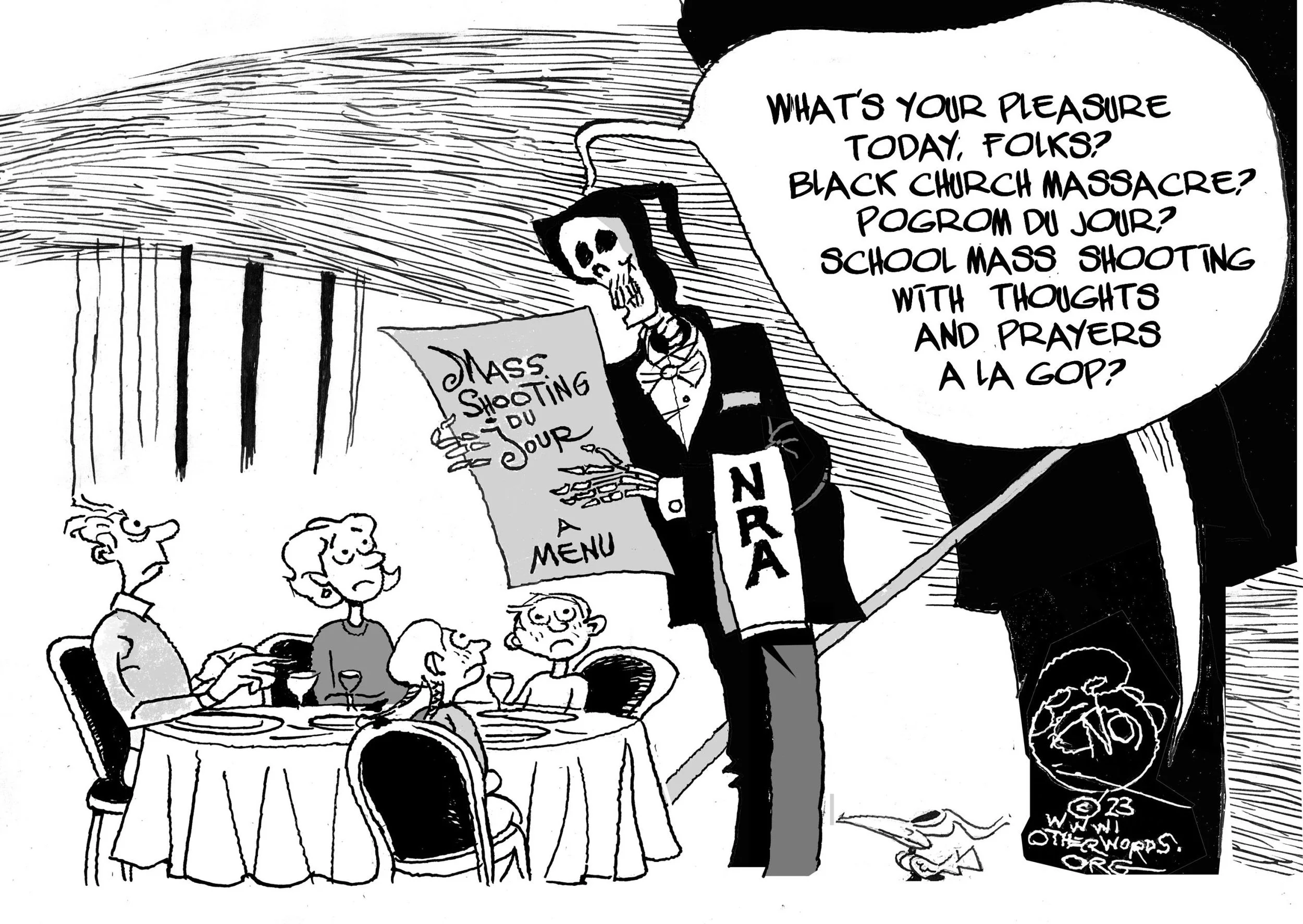
Not for tourism promotion

“Tally’s Corner” (oil on canvas), by Gloucester, Mass.-based artist Jeff Weaver, in his show “This Unique Place,’’ at the Cape Ann Museum, Gloucester, starting March 18. His work focuses on the built and natural landscape of Cape Ann. Tally’s Corner is in downtown Gloucester.

May 2008 view of Cape Ann. Gloucester and its harbor are visible to the upper right, Manchester-by-the-Sea is at center, just west of Singing Beach.
— Photo by Doc Searls

Llewellyn King: The lethal global infection of drones

Skydio’s X2 drone, made in the U.S. The company has a contract with the U.S. military.
WEST WARWICK, R.I.
Drones are the new weapons of war, causing military tactics and force structure to be reimagined. They bring a particularly deadly reality to guerrilla warfare, posing an existential threat in many theaters, especially the Middle East. Cities are almost defenseless.
Now Iranian drones are being deployed in North Africa and are posing a direct threat to Morocco.
Moroccan diplomats are actively raising the issue with Western governments. Iran, they say, in collusion with Algeria, is supplying the Polisario Front rebels, who are engaged in guerrilla attacks against Morocco over the kingdom’s position in the Western Sahara.
While the world was mesmerized by its nuclear program, Iran built itself into a powerful supplier of military drones to dictators and insurgents. Notably, of course, to Russia for use in Ukraine, but also to Iran’s proxies across the Middle East.
Iran’s experience with drones goes back to the war that Iran and Iraq fought between 1980 and 1988. In those days the drones were line-of-sight, simplistic and only good for surveillance.
Since then Iran has built generations of drones, large and small, but increasingly sophisticated. They were helped by captured U.S. drones that they reengineered, incorporating the latest technology.
Engines and parts have often been smuggled into Iran from the West. For example engines capable of powering drones were smuggled into Iran by declaring them for jet skis or snowmobiles. This was the case with the Austrian-built Rotax engine until the subterfuge was detected.
Now the Iranian military claims that its defense industrial complex can make the engines and all the parts of its drones domestically. One way or another, Iran now supplies an impressive array of drones with great loitering times and long delivery distances.
Ilan Berman, senior vice president of the American Foreign Policy Council, told me that Iran has come to the conclusion that its strength is not in force-on-force competition, but in aiding asymmetric conflicts “which is why they spent so much money and time on terrorism, and so much money and time on ballistic missiles. Then they hit upon drones as the evolution of precisely this strategy.”
Morocco is right to be worried about its new vulnerability. Drones, while they might not win a war, can inflict severe damage on a variety of targets, from tourist centers to military installations to vital power grids and power stations.
Drones are light, cheap and easily transported and hidden. Today’s generation of Iranian drones can carry substantial ballistic loads, as well as loitering for as long as 24 hours and sending back vital material on critical infrastructure.
There is a drone arms race in the Middle East region. After Iran, the largest manufacturer of drones in the region is Turkey — even small but wealthy countries such as the United Arab Emirates are building up drone- manufacturing capability. Turkish drones were critical in Azerbaijan’s recent conflict with Armenia, and they were used by both sides in the Libyan conflict.
What is lacking is adequate defenses against drone attacks, whether these are single mischief-making assaults or swarms designed for substantial damage. Berman said the only effective defensive system against drones is the Israeli “Iron Dome,” built with Israeli technology and assisted and financed by the United States.
Israel has so far been reluctant to sell Iron Dome, which catches low-flying projectiles fired from as close as 2.5 miles from the place of intercept. It is a complex, radar-based, portable defense arrangement, designed to destroy incoming rockets and drones from Gaza and its neighbors Syria and Lebanon, both of which host non-state Iranian proxies.
Berman believes that since Morocco is a signatory to the Abraham Accords, Israel might sell the Iron Dome system to Morocco, but that would take years of negotiation and sales are subject to a U.S. veto.
At present, Morocco’s strategy is to alert the world to the changing dynamics in the region and to the vulnerability of almost any country to drone attack — a new addition to guerrilla warfare and a deadly vulnerability of countries like Morocco, where state and non-players can cause mayhem without winning on the ground.
“What the Iranians bring to the table is that it is known that they are the world’s leading state sponsor of terrorism, now moving into Africa, enhancing the capability of their proxy groups,” Berman said.
Morocco is right to be worried, but so is the world. Drones are a lethal infection, spreading fast.
Llewellyn King is executive producer and host of White House Chronicle, on PBS. His email is llewellynking1@gmail.com, and he’s based in Rhode Island and Washington, D.C.
Ready to pounce

“Shadow Cat” ( pan pastel, encaustic, toner transfer, pen & ink on cradled panel), by Heather Leigh Douglas, a member of New England Wax who’s based in Middlebury, Vt., and Upstate New York.
She says:
“I find it very important to have an emotional connection to that which I am painting. For me that occurs from actually being present and seeing the subject with my own eyes. This allows me to paint the images from my own perspective. In addition the emotions that are generated from my time spent in a certain place, as well as the emotions and memories that occur during the painting process, all become a part of the final piece. In this way each painting is unique and one of a kind.’’

Middlebury College

'Ignorant hayseed" and 'pompous ignoramus'
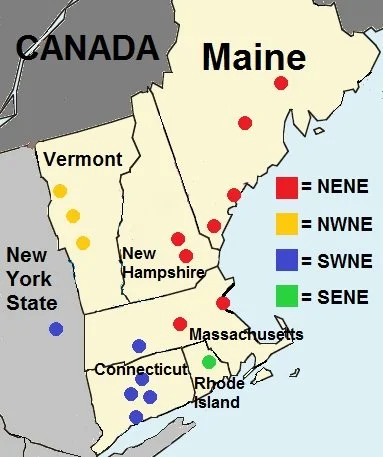
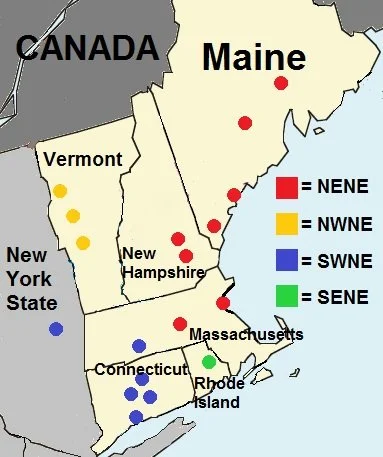
Northeastern (NENE), Northwestern (NWNE), Southwestern (SWNE), and Southeastern (SENE) New England English represented here, as mapped by the Atlas of North American English.
"Basically, there are two New Englands, northern and southern, with plenty of shared schizophrenia between them....The Connecticut Yankee and the Maine Yankee may both trade on rurality for their wit, but one is garrulous and the other taciturn. When the Bostonian tells a story the Vermonter becomes an ignorant hayseed; when the Vermonter tells a story the Bostonian is a pompous ignoramus. Usually in such a match there's no contest; the Vermonter will inevitably prevail.''
-- From Jim Brunelle, in The Best of New England Humor

David Warsh: In the Ukraine war, look at the view from the other side

— Map by Viewsridge
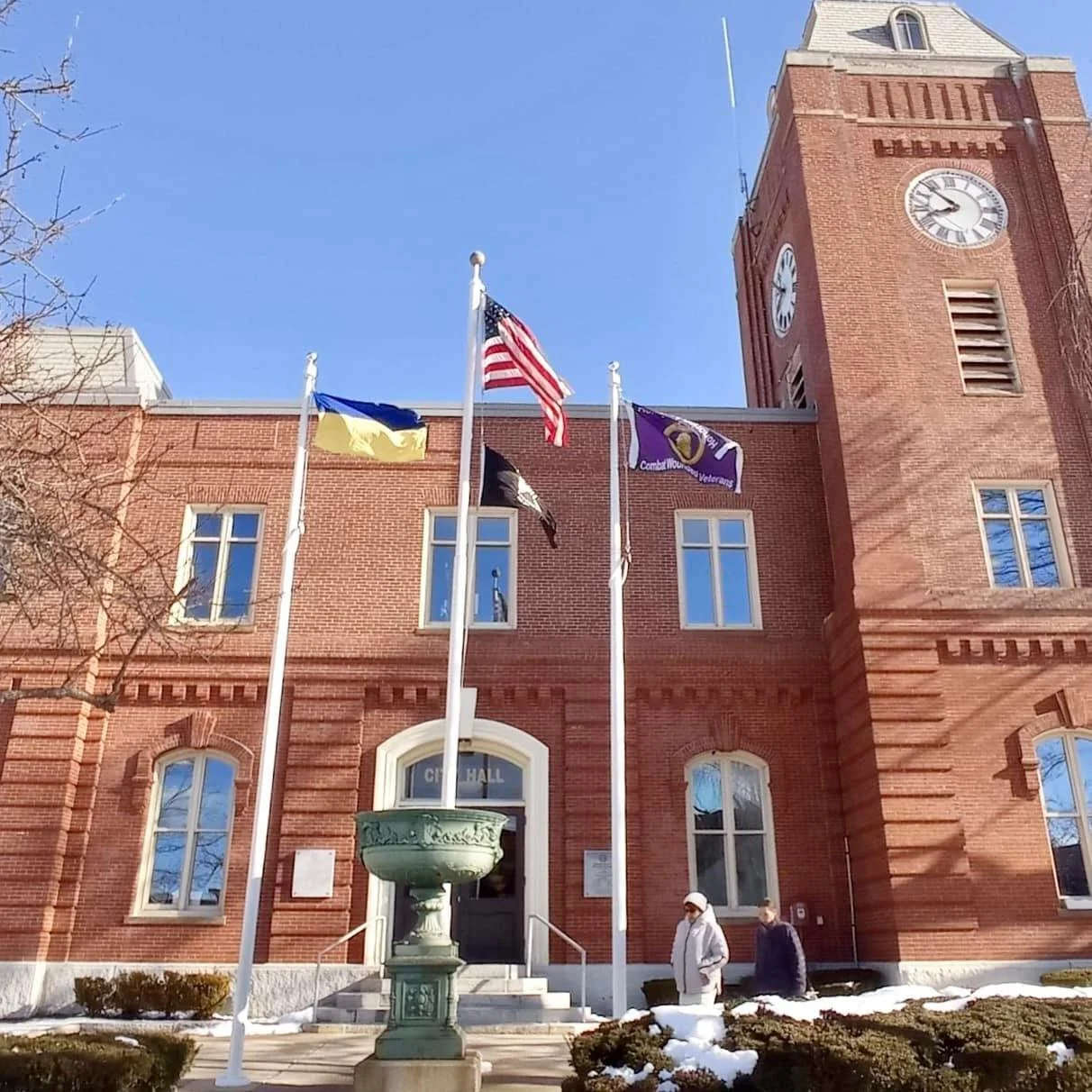
The Ukrainian Cultural Center of New England headquarters in the Melrose, Mass., City Hall.
SOMERVILLE, Mass.
It was Kremlinologist Jonathan Haslam who spotted the overconfident press release and dubbed it Putin’s Premature Victory Roll. Two days after the invasion of Ukraine began a year ago, the Russian press service Novosti posted a broadside that began “A new world is coming into being before our very eyes.” In Haslam’s translation, lightly edited for clarity;
Russia’s military operation has opened a new epoch…Russia is recovering its unity – the tragedy of 1991, this horrendous catastrophe in our history, its unnatural caesura, has been overcome. Yes, at a great price; yes, through the tragic events of what amounts to a civil war, because now for the time being brothers are shooting one another… but Ukraine as anti-Russia will no longer exist.
By not leaving the Ukrainian question to future generations. Putin has taken upon himself a historic responsibility. The issue of national security, the creation of an anti-Russia out of Ukraine as an outpost for the West to pressure us is only the second most important among the key reasons [for acting]. Instead [presumed primary reason], the Great Russians, the Byelorussians and the Little Russians (Ukrainians) would come together as a whole.
So much for that. The triumphant proclamation was quickly taken down after it became came clear that it was premature. We know now that Russia’s planned lightning invasion of Ukraine, including the assassination of President Volodymyr Zelensky, had failed to achieve the anticipated three-or-four-day takeover, due to unexpectedly robust Ukrainian defense, aided by American intelligence.
On the other hand, we know next to nothing about the State Department formal communique that may have been the final straw for Vladimir Putin. The U.S.-Ukraine Charter on Strategic Partnership, of Nov. 10, 2021, reiterated America’s commitment to eventual NATO membership for Ukraine. It was a clear and formal dismissal of Putin’s “red line,” as described to the Bush administration in “Nyet Means Nyet,’’ a 2008 cable from then-Ambassador to Russia William Burns obtained illegally by Wikileaks.
By 2022, Burns was serving as CIA director in the Biden administration. He had flown to Moscow in October, the week before the Charter was announced, hoping to meet with Putin, He talked to him by phone in Sochi instead, The Russian leader “recited his usual complaints about NATO expansion, the threat to Russian security, and illegitimate leadership in Ukraine” (according to The Washington Post); in person, in Moscow, so did a senior aide. In December, with Russian forces continuing to mass on the border, Biden assured Putin in a video call that Ukraine wouldn’t be admitted to NATO “any time soon”
A few days later, the Russians formally proposed a pair of treaties: first, agree to end expansion of NATO; and, second, limit NATO activity in states that had joined the treaty since 1997. In January, U.S. Secretary of State Antony Blinken flew to Geneva for one last conversation with Foreign Minister Sergei Lavrov, who, in the end, walked out of a private room on him. Russia invaded Ukraine on Feb. 24.
It seems to me the road to war is impossible to understand without some knowledge of the view from the other side of the road. Without the November Charter of Strategic Partnership, and the story behind it, the war in Ukraine is like World War One without Sarajevo.
Yet a search of The Washington Post Web site found no mention of it; one of The New York Times discovered a single reference, by war critic Christopher Caldwell; and a third, of The Wall Street Journal, yielded only the interview with historian Robert Service that first brought the Charter to my attention.
Instead, poking around in newspaper histories of the U.S.-Russia tangle over the future of Ukraine finds things sufficiently one-sided that these histories could reasonably be called, not propaganda, but cheerleading, of the sort that has preceded every American war since Vietnam. The best of them I found also happens to be an example of impeccable shoe-leather reporting – of one side of the story. “Road to War,’’ a 14-part Washington Post series, from which much of the above timeline is drawn, probably will be nominated for a Pulitzer Prize. Some of the most talented foreign-affairs reporters and editors in the business put it together; others employed by The Post remained on the sidelines.
Yet almost all of the story is conveyed though sources gathered from a single side, a collectivity of widely shared and mutually reinforcing opinions drawn from, in this case, the Biden Administration, the foreign-policy establishment of Washington, and various European circles radiating from NATO headquarters in Brussels. Skepticism arising outside the echo chamber are not part of the yarn. So serene in self-assurance is “Road to War” that its premises are asserted in two separated passages near the beginning:
[A]nalysts who had spent their careers studying Putin were increasingly convinced the Russian leader – himself a former intelligence officer – saw a window of opportunity closing. Ukrainians had already twice risen up to demand a democratic future, free from corruption, and Moscow’s interference, during the 2004-2005 Orange Revolution, and the 2013-2014 Maidan protests that preceded Russia’s annexation of Crimea. While not a member of NATO or the European Union, Ukraine was now moving steadily into the Western economic, political, and cultural orbit. That drift fed Putin’s broader resentment about Russia’s loss of empire
The Kremlin did not respond to repeated requests for comment.
It turned out the Western analysts were right, By Novosti’s own account, Putin acted because he saw an opportunity to reunify Russia as he understood it fading. His sentiments on the Soviet Union are well known: “Anyone who doesn’t regret the passing of the Soviet Union has no heart. Anyone who wants it restored has no brains.” (For a fascinating elaboration of that sentiment, see The Soviet Century: Archeology of a Lost World, by Karl Schgel,) I loathed the Soviet Union from since I was a child, but when I look at a map of eastern Europe, I see not the isobars and isotherms of imperial vicissitudes that I know are there, but, those two ancient rivers, the Volga and Dneiper, flowing from Russia’s border near Finland to the Black and Caspian seas.
NATO expansion, on the other hand, is a tricky topic. It is impossible not to admire the Ukrainian government’s mastery and resolve; not to sympathize with its desire for independence, not to grieve for its citizens.. Still, the outcome of the war is far from clear. Perhaps the Russian army will turn out to be a paper tiger, unaccustomed to conquest and reluctant to fight after decades of peace. Indeed, the Russian campaign so far has often gone wrong. Yet the beginnings of long wars often start that way.
Meanwhile, a trickle of anti-war sentiment has grown to a stream. The indefatigable David Johnson takes a clear-eyed view nearly daily in his Johnson’s Russia List. Political theorist John Mearsheimer, of the University of Chicago, writes at intervals for Foreign Affairs; see “Why the Ukrainian Crisis is the West’s Fault’’ and “Playing with Fire in Ukraine’’ (and, for a counterargument, “It makes no sense to blame the west for the Ukraine war,” by Gideon Rachman, of the Financial Times, as long as you are a digital subscriber). Christopher Caldwell wrote “Russia and Ukraine Have Incentives to Negotiate. The U.S. Has Other Plans” earlier this month in The New York Times.
And the bigger picture? Among others, historian M. E. Sarotte, of Johns Hopkins University, is on the case, having completed Not One Inch: America, Russian and the Making of Post- Cold War Stalemate in 2021. In the magazine Financial Times this weekend, Sarotte writes,
“[M]oscow has failed at a quintessentially 19th-century challenge. It has botched the imperial incorporation of a proximate territory. As the Yale historians Paul Kennedy and Arne Westad have argued, states that over-extend themselves in such a profound way tend to meet unhappy fates in the long run. But they do a lot of damage on the way down.” Writing the next chapter of the story will take years. I look forward to Sarotte’s next book.
David Warsh, a veteran columnist and an economic historian, is proprietor of Somerville-based economicprincipals.com, where this column first ran.
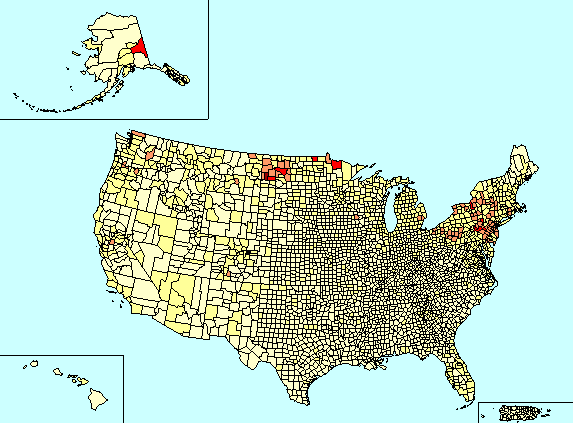
Distribution of Ukrainian-Americans by county. The red ones have the thickest densities of Ukainian-Americans.

St. Vladimir's Cathedral is a Ukrainian Catholic cathedral in Stamford, Conn. It is the seat for the Eparchy of Stamford. The parish was established in 1916, and the simple brick Romanesque Revival-inspired church building was completed in 1957.

‘Sliver at the end of time’

The Moore Homestead on Gotts Island, Maine, c. 1910.
“A little sliver on the end of Time
Unhinged the doors, dropped walls and dried the wells.
The stubborn seeds drove up through lath and lime,
The tough wild roses hid the weathered shells.’’
— From “Remembrance of a Deserted Coastal Village,’’ by Ruth Moore (1903-1989), Maine novelist and poet who once had a national reputation.
‘The best plants’

The Mayflower, Massachusetts’s official state flower.
“I was raised to believe that New England is the best place on the planet…best plants, the best grass .. and all that good stuff.”
— Abigail Johnson (born 1961), CEO of giant, Boston-based Fidelity Investments, started by her father Edward “Ned’’ Johnson (1930-2022) in 1946
Symbolic thread

“Baggage” (fiber, resin, modeling paste and paint), by Westport, Conn.-based artist Norma Minkowitz, at the Fairfield (Conn.) University Art Museum.
—Courtesy of the artist and browngrotta arts. ©Norma Minkowitz.
“This solo exhibition surveys the artist’s four-decade engagement with the physical and symbolic properties of thread. Minkowitz reinvents traditional needlework by crocheting fantastical forms, coating them in resin and shellac to create rigid sculptures and hangings. The delicate, mesh-like surfaces of her artworks break down oppositions between soft and hard, inside and outside, body and soul.’’
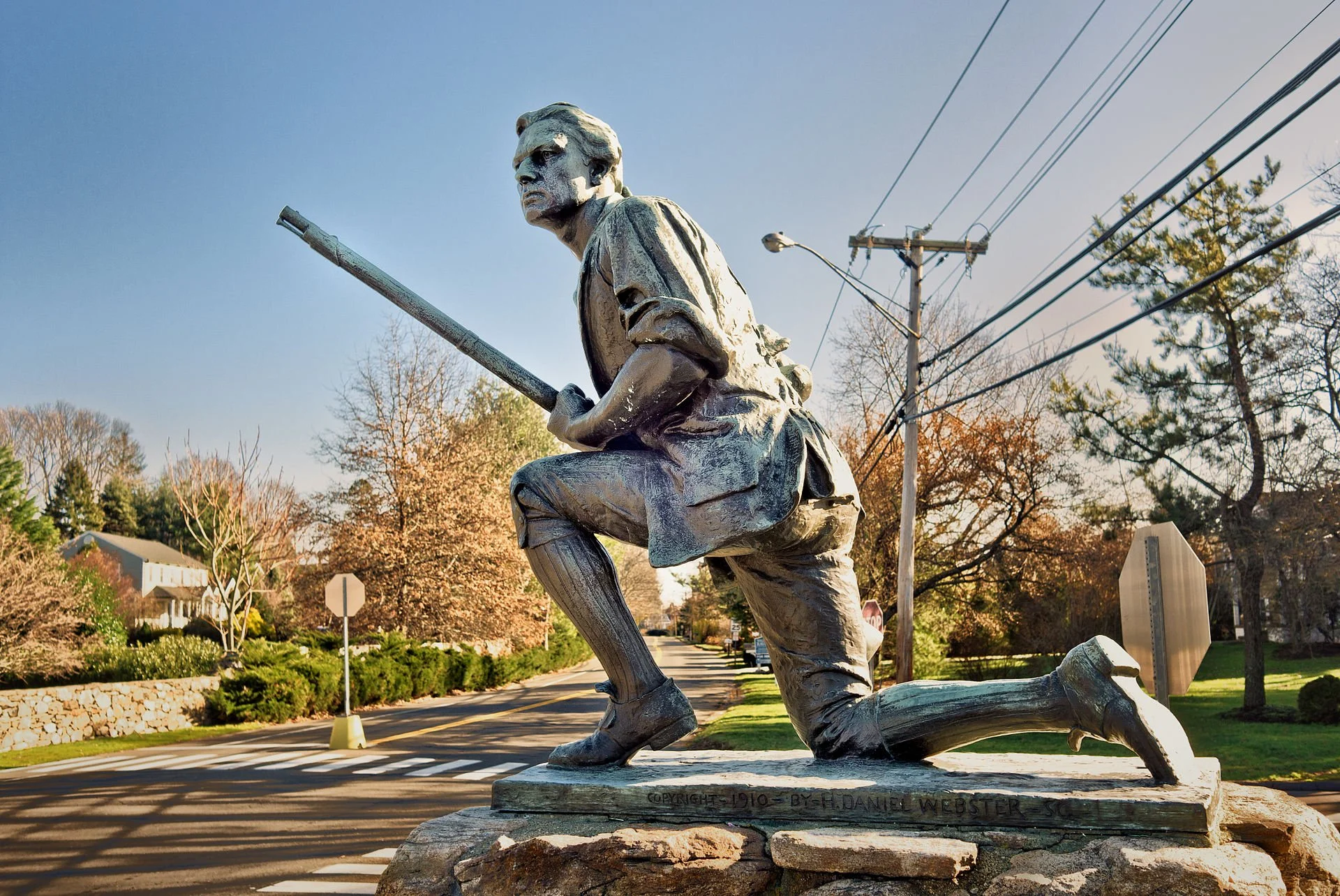
Minuteman Statue at Compo Beach, Westport

Aiming to decarbonize Boston’s Fenway neighborhood

Fenway–Kenmore neighborhood seen from Prudential Skywalk in 2012, with Fenway Park the dominant feature.
—Photo by Melikamp
Edited from a New England Council report (newenglandcouncil.com)
Boston-based Vicinity Energy has announced a partnership with IQHQ Inc., a life-sciences real estate development company, in which Vicinity’s carbon-free, renewable thermal energy will be used in IQHQ’s developments in Boston’s Fenway neighborhood.
Vicinity Energy has been active in efforts to decarbonize communities, from buildings to college campuses to entire neighborhoods. Now, with this partnership, the company is bringing this technology to Fenway. The first stop will be IQHQ’s development at 109 Brookline Ave., set to be Boston’s first entirely carbon-neutral building. To achieve these goals, Vicinity has been developing a technology referred to as ‘eSteam,’ an energy that uses decarbonized operators and does not require on-site boilers or chillers. Vicinity officials plan to start delivering eSteam in 2024.
“This eSteam partnership not only signifies our commitment to a clean energy future, but it also demonstrates the commitment from progressive, innovative industry leaders, like IQHQ, who are committed to lower carbon emissions and to combat climate change,” said Bill DiCroce, president and chief executive of Vicinity Energy.
‘Crystal symbol of a new faith’

The Gropius House (1938) in Lincoln, Mass., an affluent Boston suburb. Walter Gropius (1883-1969), founder of the famous German design school the Bauhaus, designed the house, now a museum, as his family home after he came to teach architecture at Harvard’s Graduate School of Design after fleeing Nazi Germany.
“Together let us desire, conceive, and create the new structure of the future, which will embrace architecture and sculpture and painting in one unity and which will one day rise toward Heaven from the hands of a million workers like the crystal symbol of a new faith.’’
— Walter Gropius
Historic New England says:
“Gropius House {now a museum} combined traditional elements of New England architecture—wood, brick, and fieldstone—with innovative materials including glass block, acoustical plaster, chrome banisters, and the latest technology in fixtures. It features furniture designed by Marcel Breuer and fabricated in Bauhaus workshops. With the family’s possessions still in place, Gropius House has a sense of immediacy and intimacy.’’

Llewellyn King: Remembering an engineering giant

Richard Morley
WEST WARWICK, R.I
People often ask me who are the most interesting or most influential people I have met. It is easy to say Margaret Thatcher or Bill Clinton, but sometimes the real history makers are never known outside of their specialty. One such was Richard Morley (1932-2017).
A mutual friend took me to meet Morley at his home, in Mason, N.H., about 23 years ago. We spent a delightful afternoon there. He let me move a pile of earth from one spot to another with a backhoe operated by a personal computer.
I didn’t realize that I was in the presence of a great inventor, a member of industrial royalty, who had moved technology a giant step forward and sped up the automation revolution.
Morley did that in 1968 when he and colleagues at General Motors perfected the programmable logic controller. With the PLC, automation had arrived for the car industry and much else.
If it is moved, stored, welded, shaped, collated and shoved out the door, a series of programmed controllers ordered all that. In fact, for everything manufactured, PLCs are at work translating the blueprints into products.
They are everywhere, from the factory floor to advanced farms, to city water plants, to oil and gas drilling. They occupy a part of the modern world known as operational technology, or OT.
Vital though OT is, it gets less attention than its big sibling, information technology, or IT.
Matt Morris, managing director of security and risk consulting at 1898 & Co., the consulting arm of Burns & McDonnell, the big architecture, engineering and construction firm, told me, “IT is the ‘carpeted space,’ and OT is the ‘uncarpeted space’ ”
In other words, much of industry’s heavy lifting is done by OT, while IT has taken over all of the other more obvious functions of society, from accounting to airline reservations, from doctors’ offices to designing aircraft.
IT is king, but that is only part of the story.
Regarding cybersecurity, OT and IT differ, but both have their vulnerabilities. When we say cybersecurity, we mostly mean IT. OT is different, and the threats emanating from attacks on it are usually more strategic and harder to identify.
Attacks on OT aren’t necessarily as immediately detectable as those on IT. They can be very subtle but also highly destructive and expensive.
The classic example of what can be done to OT was provided not in an attack on the United States but by the United States in 2007 (and revealed in 2010) when the nation’s cyber-warriors were able to slow down or speed up uranium-enrichment centrifuges in Iran. The Iranians didn’t know that their operating systems had been fooled surreptitiously. Their engineers were at a loss.
Now, 1898 & Co. is taking a bold step into the world of critical infrastructure resiliency with the creation of a new service aimed at offering full-time, proactive cybersecurity at critical infrastructure sites, like utilities, embracing IT and OT.
The company and its parent have enormous experience in utilities and other critical infrastructure, including oil rigs, refineries and water systems. Through a program they call “Managed Threat Protection and Response,” their aim is to take critical infrastructure defense and response to new levels. The capability is an addition to its existing Managed Security Services solution.
To implement this, the company has set up its program in Houston, far from its home base in Kansas City, Mo., to be near the customers — much critical infrastructure has links to Houston — but also, as Mark Mattei, 1898 & Co. director of cybersecurity, told me, to avail itself of the talent in the area.
The company is opening up a new horizon in cybersecurity, focusing on OT.
With IT, you would want to throw a switch, avert or stop the attack as fast as possible. But with OT, a more measured response might be called for. You wouldn’t want to shut down a whole plant because one pump had had its controller attacked or bring down part of the electricity grid because a single substation had evidence that it was malfunctioning because of an attack in one component.
The more one learns about cybersecurity, the more one appreciates the unsung heroes who take on unknown enemies 24 hours a day, every day of the year.
We are on the threshold of something big in defending critical infrastructure. I am sure that Richard Morley would have approved of this new approach.
On Twitter: @llewellynking2
Llewellyn King is executive producer and host of White House Chronicle, on PBS.
White House Chronicle
InsideSources
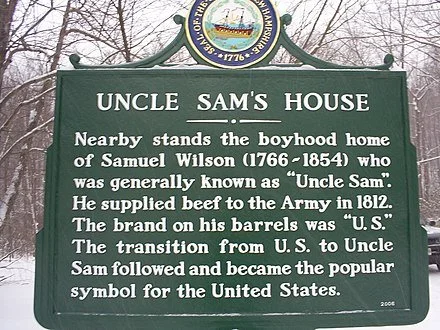
Sign for “Uncle Sam's House,’’ in Mason, N.H.
— Photo by Craig Michaud
Editor’s note:
Mr. Morley lived on his farm in Mason, N.H., for over 40 years, where he worked out of a renovated barn.
Always knitting, especially in Congress

“NRA Knitting Pattern” (drawing, encaustic and netting), by Nancy Whitcomb, in the Providence Art Club’s “Winter Members Exhibition,’’ through March 3.
No watering needed

“Round and Round” (glass smalti mosaic), by Boston-based artist Lisa Houck, in her show “Botanical Explorations: Mosaics and Paintings,’’ at the Art Complex Museum, Duxbury, Mass.
— Photo courtesy artist.
The museum says she creates "vibrant, imaginative images filled with color and pattern," capturing the shapes of the natural world using found and created ceramic tiles.

The Myles Standish Monument, in Duxbury

Chris Powell: School violence starts at home

Candles outside of Marjory Stoneman Douglas High School, in Parkland, Fla., after Nikolas Cruz shot to death 17 students there on Feb. 14, 2018.
MANCHESTER, Conn.
Legislation has been proposed in the General Assembly to diminish the use of police in Connecticut's schools, and some of its supporters suggested the other day at the state Capitol that the presence of police in schools actually causes crime -- that if the police weren't there, students wouldn't be arrested. Of course that's not quite to say that bad stuff wouldn't happen anyway.
"The story is simple," said Robert Goodrich, executive director of Waterbury-based Radical Advocates for Cross-Cultural Education. "The moment police started being implemented in our schools, arrests rose dramatically, and they continue to rise. The more police we have in schools, the more likely it is that any student is going to be arrested," especially Black and Hispanic students.
The far-left child-welfare organization Connecticut Voices for Children made a similar claim a year ago.
So did boards of education request the permanent stationing of "school resource officers" to get more minority kids in trouble with the law?
Or were police requested -- especially for schools in impoverished and crime-ridden cities -- because schools increasingly were having trouble maintaining order with teachers and administrators alone?
Of course, it was the latter. Indeed, in the days just preceding the recent clamor at the Connecticut Capitol for expelling cops from schools, students were arrested for bringing guns or knives to school or brawling at school in Waterbury, Hamden, Meriden and Manchester.
The racial disproportions in arrests in school are no more remarkable than the racial disproportions in crime and arrests everywhere, nor more remarkable than the racial disproportions in poverty, child neglect and mental illness, which all correlate with crime.
The people complaining about police in schools don't seem to have noticed the long rise in misbehavior by students, nor the special schools that have been established in recent years to try to educate the kids who can't behave, nor the recent calls to put mental-health clinics in schools because so many more students these days are disturbed.
The kids aren't disturbed because of "school resource officers." No, they come to school disturbed -- that is, when they come to school at all, the chronic absenteeism rate in Connecticut's schools now being up to 25 percent. Most of these kids get little parenting and especially little from fathers.
Nor is it remarkable that students who behave, and their parents, favor having police in schools for protection against the kids who don't behave.
Connecticut and the country are awash in social disintegration -- from the schools to the streets and highways, where reckless driving now abounds; to crude behavior in markets and at public meetings; to shootings, including shootings at schools. Government claims misleadingly that crime is declining even as murders and shootings increase and much of the worst crime involves repeat offenders who should have been jailed for life a dozen convictions ago.
The people who blame this disintegration on cops in schools think that social workers and therapists can handle it. But it already is straining the capacity of the police, as indicated by the high unsolved murder rates in the cities.
The people who blame cops in school scorn what they call the "school-to-prison pipeline." But that pipeline is a lot longer than they acknowledge. Crucially, it starts at home.
xxx
PRETEND PROTECTION: Another of Connecticut's "protective orders" proved its worthlessness Jan. 31 as Traci-Marie Jones was shot to death at home in Bethel by her estranged husband, Lester Jones, who then killed himself. Traci-Marie had gotten the order from a court a week earlier.
It prohibited her killer from any contact with her and required him to stay at least 100 yards away and to give up any guns and ammunition. He didn't, and of course nothing was done to enforce the order. Nothing is ever done to enforce such orders.
The only solutions in such circumstances are to provide the endangered person with round-the-clock police protection, move her permanently to a secret location, or arm her.
Every time a woman with a protective order is murdered, state legislators say they'll do something about the problem. But they will do nothing. For two of the solutions are expensive and the third is too politically incorrect.
Chris Powell is a columnist for the Journal Inquirer in Manchester. =(CPowell@JournalInquirer.com)

Quiet transport

“Harbour Scene” (oil), by New England painter C. Arnold Slade (1882-1961), in the Attleboro (Mass.) Arts Museum’s permanent collection, in the current show “Influencer.’’
The museum says “Influencer” highlights artwork from the museum's permanent collection and art produced by the museum's W. Charles Thompson Museum School students. The students were influenced by the work of masters held in the museum's collection. Ranging in age from 5 -17 years the students created art in a wide range of media.
Settle for tents

— Photo by Verne Equinox

Inside South Shore Plaza in 2012
— Photo by John Phelan
Adapted from Robert Whitcomb’s “Digital Diary,’’ in GoLocal24.com
Everybody knows that we need more housing, but far too many groups fight building it even in places where it makes the most sense.
Consider how neighborhood groups in Braintree, Mass., are fighting a proposal by ZOM Living to put up 495 apartments on part of the aged South Shore Plaza’s parking lots, which are now often much less than half filled even in prime shopping hours amidst the brick-and-mortar store implosion. The mall opened in 1961.
The idea is to turn the location into a vibrant mixed-use community on what is now wasted space. It’s in a densely populated area very close to Boston and is served by the MBTA. Further, the project would bring the town much needed property-tax revenue, some of it as a result of new business at the surviving stores from people living in the new complex.
Braintree’s population grew by about 3,000, to about 39,000, between 2010 and 2020, during which time the town only added 775 housing units, according to a town planning document.
But the housing plan has fervent foes, who say that they don’t want more traffic, though many of the apartments’ residents would take public transportation and do much of their shopping and other activities right there in the ZOM development. The foes also fear that it would crowd Braintree’s now-underfunded public schools, though the project could produce more money for the schools. There also seems to be concern that riff raff will occupy some of the apartments, rather than the allegedly respectable suburban folks who live in houses.
In any event, whether it’s solar arrays, wind turbines or much needed housing, we need to use the ever increasing wasted space on mall parking lots.
Hit this link for the aforementioned Braintree master plan.
What’s next? Huge tent cities to house those who can’t afford to live under roofs?
If Blue States are to compete with Red ones in luring and keeping workers, they must put up much more housing to bring rental and purchase costs under control. The pull-up-the-bridge approach looks like a slow-motion economic disaster.
Unless artificial intelligence makes many of those workers redundant.

The Gen. Sylvanus Thayer birthplace in Braintree.

‘Pick up your clothes, Jack’

Dining hall at Choate Rosemary Hall
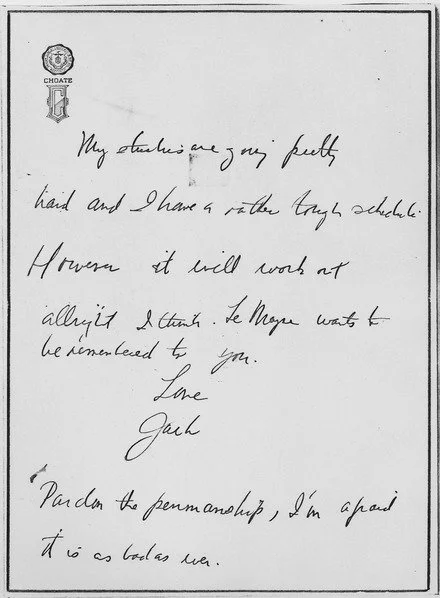
John F. Kennedy, Choate Class of 1935, writes home on school stationery to say his "studies are going pretty hard" and mentions LeMoyne (“Lem’’) Billings '35, his roommate and lifelong closest friend. Billings was gay.
“Dear Jack: In looking over the monthly statement from Choate, I notice there is a charge of $10.80 for suit pressing for the month of March. It strikes me that this is very high and while I want you to keep looking well, I think that if you spent a little more time picking up your clothes instead of leaving them on the floor, it wouldn’t be necessary to have them pressed so often.’’
Letter in 1932 from business mogul Joseph P. Kennedy to his 14-year old son, John F. Kennedy, then at the Choate School, the exclusive boarding school in Wallingford, Conn. The institution is now called Choate Rosemary Hall, after the two schools merged, in 1971. Rosemary Hall was a girls’ school, and so the merger created a co-ed institution.
The future president could be very careless about a number of things, including in his future hyper-active sex life.