
Vox clamantis in deserto








‘The best plants’

The Mayflower, Massachusetts’s official state flower.
“I was raised to believe that New England is the best place on the planet…best plants, the best grass .. and all that good stuff.”
— Abigail Johnson (born 1961), CEO of giant, Boston-based Fidelity Investments, started by her father Edward “Ned’’ Johnson (1930-2022) in 1946
Symbolic thread

“Baggage” (fiber, resin, modeling paste and paint), by Westport, Conn.-based artist Norma Minkowitz, at the Fairfield (Conn.) University Art Museum.
—Courtesy of the artist and browngrotta arts. ©Norma Minkowitz.
“This solo exhibition surveys the artist’s four-decade engagement with the physical and symbolic properties of thread. Minkowitz reinvents traditional needlework by crocheting fantastical forms, coating them in resin and shellac to create rigid sculptures and hangings. The delicate, mesh-like surfaces of her artworks break down oppositions between soft and hard, inside and outside, body and soul.’’

Minuteman Statue at Compo Beach, Westport

Aiming to decarbonize Boston’s Fenway neighborhood

Fenway–Kenmore neighborhood seen from Prudential Skywalk in 2012, with Fenway Park the dominant feature.
—Photo by Melikamp
Edited from a New England Council report (newenglandcouncil.com)
Boston-based Vicinity Energy has announced a partnership with IQHQ Inc., a life-sciences real estate development company, in which Vicinity’s carbon-free, renewable thermal energy will be used in IQHQ’s developments in Boston’s Fenway neighborhood.
Vicinity Energy has been active in efforts to decarbonize communities, from buildings to college campuses to entire neighborhoods. Now, with this partnership, the company is bringing this technology to Fenway. The first stop will be IQHQ’s development at 109 Brookline Ave., set to be Boston’s first entirely carbon-neutral building. To achieve these goals, Vicinity has been developing a technology referred to as ‘eSteam,’ an energy that uses decarbonized operators and does not require on-site boilers or chillers. Vicinity officials plan to start delivering eSteam in 2024.
“This eSteam partnership not only signifies our commitment to a clean energy future, but it also demonstrates the commitment from progressive, innovative industry leaders, like IQHQ, who are committed to lower carbon emissions and to combat climate change,” said Bill DiCroce, president and chief executive of Vicinity Energy.
‘Crystal symbol of a new faith’

The Gropius House (1938) in Lincoln, Mass., an affluent Boston suburb. Walter Gropius (1883-1969), founder of the famous German design school the Bauhaus, designed the house, now a museum, as his family home after he came to teach architecture at Harvard’s Graduate School of Design after fleeing Nazi Germany.
“Together let us desire, conceive, and create the new structure of the future, which will embrace architecture and sculpture and painting in one unity and which will one day rise toward Heaven from the hands of a million workers like the crystal symbol of a new faith.’’
— Walter Gropius
Historic New England says:
“Gropius House {now a museum} combined traditional elements of New England architecture—wood, brick, and fieldstone—with innovative materials including glass block, acoustical plaster, chrome banisters, and the latest technology in fixtures. It features furniture designed by Marcel Breuer and fabricated in Bauhaus workshops. With the family’s possessions still in place, Gropius House has a sense of immediacy and intimacy.’’

Llewellyn King: Remembering an engineering giant

Richard Morley
WEST WARWICK, R.I
People often ask me who are the most interesting or most influential people I have met. It is easy to say Margaret Thatcher or Bill Clinton, but sometimes the real history makers are never known outside of their specialty. One such was Richard Morley (1932-2017).
A mutual friend took me to meet Morley at his home, in Mason, N.H., about 23 years ago. We spent a delightful afternoon there. He let me move a pile of earth from one spot to another with a backhoe operated by a personal computer.
I didn’t realize that I was in the presence of a great inventor, a member of industrial royalty, who had moved technology a giant step forward and sped up the automation revolution.
Morley did that in 1968 when he and colleagues at General Motors perfected the programmable logic controller. With the PLC, automation had arrived for the car industry and much else.
If it is moved, stored, welded, shaped, collated and shoved out the door, a series of programmed controllers ordered all that. In fact, for everything manufactured, PLCs are at work translating the blueprints into products.
They are everywhere, from the factory floor to advanced farms, to city water plants, to oil and gas drilling. They occupy a part of the modern world known as operational technology, or OT.
Vital though OT is, it gets less attention than its big sibling, information technology, or IT.
Matt Morris, managing director of security and risk consulting at 1898 & Co., the consulting arm of Burns & McDonnell, the big architecture, engineering and construction firm, told me, “IT is the ‘carpeted space,’ and OT is the ‘uncarpeted space’ ”
In other words, much of industry’s heavy lifting is done by OT, while IT has taken over all of the other more obvious functions of society, from accounting to airline reservations, from doctors’ offices to designing aircraft.
IT is king, but that is only part of the story.
Regarding cybersecurity, OT and IT differ, but both have their vulnerabilities. When we say cybersecurity, we mostly mean IT. OT is different, and the threats emanating from attacks on it are usually more strategic and harder to identify.
Attacks on OT aren’t necessarily as immediately detectable as those on IT. They can be very subtle but also highly destructive and expensive.
The classic example of what can be done to OT was provided not in an attack on the United States but by the United States in 2007 (and revealed in 2010) when the nation’s cyber-warriors were able to slow down or speed up uranium-enrichment centrifuges in Iran. The Iranians didn’t know that their operating systems had been fooled surreptitiously. Their engineers were at a loss.
Now, 1898 & Co. is taking a bold step into the world of critical infrastructure resiliency with the creation of a new service aimed at offering full-time, proactive cybersecurity at critical infrastructure sites, like utilities, embracing IT and OT.
The company and its parent have enormous experience in utilities and other critical infrastructure, including oil rigs, refineries and water systems. Through a program they call “Managed Threat Protection and Response,” their aim is to take critical infrastructure defense and response to new levels. The capability is an addition to its existing Managed Security Services solution.
To implement this, the company has set up its program in Houston, far from its home base in Kansas City, Mo., to be near the customers — much critical infrastructure has links to Houston — but also, as Mark Mattei, 1898 & Co. director of cybersecurity, told me, to avail itself of the talent in the area.
The company is opening up a new horizon in cybersecurity, focusing on OT.
With IT, you would want to throw a switch, avert or stop the attack as fast as possible. But with OT, a more measured response might be called for. You wouldn’t want to shut down a whole plant because one pump had had its controller attacked or bring down part of the electricity grid because a single substation had evidence that it was malfunctioning because of an attack in one component.
The more one learns about cybersecurity, the more one appreciates the unsung heroes who take on unknown enemies 24 hours a day, every day of the year.
We are on the threshold of something big in defending critical infrastructure. I am sure that Richard Morley would have approved of this new approach.
On Twitter: @llewellynking2
Llewellyn King is executive producer and host of White House Chronicle, on PBS.
White House Chronicle
InsideSources
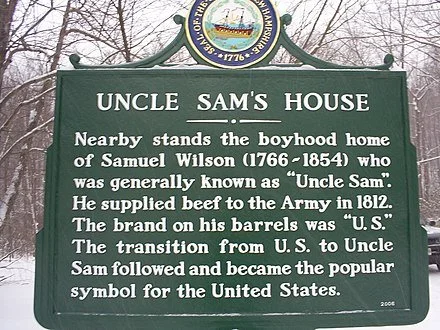
Sign for “Uncle Sam's House,’’ in Mason, N.H.
— Photo by Craig Michaud
Editor’s note:
Mr. Morley lived on his farm in Mason, N.H., for over 40 years, where he worked out of a renovated barn.
Always knitting, especially in Congress

“NRA Knitting Pattern” (drawing, encaustic and netting), by Nancy Whitcomb, in the Providence Art Club’s “Winter Members Exhibition,’’ through March 3.
No watering needed

“Round and Round” (glass smalti mosaic), by Boston-based artist Lisa Houck, in her show “Botanical Explorations: Mosaics and Paintings,’’ at the Art Complex Museum, Duxbury, Mass.
— Photo courtesy artist.
The museum says she creates "vibrant, imaginative images filled with color and pattern," capturing the shapes of the natural world using found and created ceramic tiles.
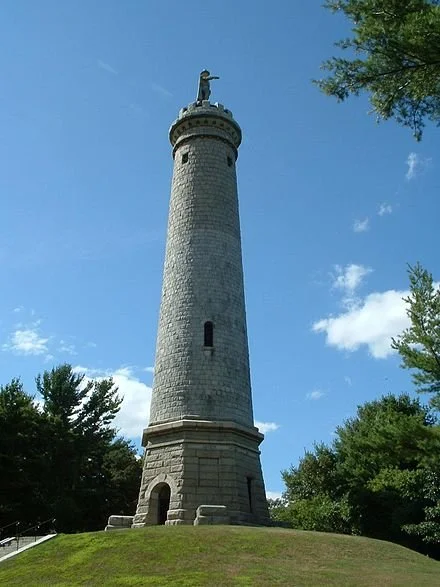
The Myles Standish Monument, in Duxbury

Chris Powell: School violence starts at home

Candles outside of Marjory Stoneman Douglas High School, in Parkland, Fla., after Nikolas Cruz shot to death 17 students there on Feb. 14, 2018.
MANCHESTER, Conn.
Legislation has been proposed in the General Assembly to diminish the use of police in Connecticut's schools, and some of its supporters suggested the other day at the state Capitol that the presence of police in schools actually causes crime -- that if the police weren't there, students wouldn't be arrested. Of course that's not quite to say that bad stuff wouldn't happen anyway.
"The story is simple," said Robert Goodrich, executive director of Waterbury-based Radical Advocates for Cross-Cultural Education. "The moment police started being implemented in our schools, arrests rose dramatically, and they continue to rise. The more police we have in schools, the more likely it is that any student is going to be arrested," especially Black and Hispanic students.
The far-left child-welfare organization Connecticut Voices for Children made a similar claim a year ago.
So did boards of education request the permanent stationing of "school resource officers" to get more minority kids in trouble with the law?
Or were police requested -- especially for schools in impoverished and crime-ridden cities -- because schools increasingly were having trouble maintaining order with teachers and administrators alone?
Of course, it was the latter. Indeed, in the days just preceding the recent clamor at the Connecticut Capitol for expelling cops from schools, students were arrested for bringing guns or knives to school or brawling at school in Waterbury, Hamden, Meriden and Manchester.
The racial disproportions in arrests in school are no more remarkable than the racial disproportions in crime and arrests everywhere, nor more remarkable than the racial disproportions in poverty, child neglect and mental illness, which all correlate with crime.
The people complaining about police in schools don't seem to have noticed the long rise in misbehavior by students, nor the special schools that have been established in recent years to try to educate the kids who can't behave, nor the recent calls to put mental-health clinics in schools because so many more students these days are disturbed.
The kids aren't disturbed because of "school resource officers." No, they come to school disturbed -- that is, when they come to school at all, the chronic absenteeism rate in Connecticut's schools now being up to 25 percent. Most of these kids get little parenting and especially little from fathers.
Nor is it remarkable that students who behave, and their parents, favor having police in schools for protection against the kids who don't behave.
Connecticut and the country are awash in social disintegration -- from the schools to the streets and highways, where reckless driving now abounds; to crude behavior in markets and at public meetings; to shootings, including shootings at schools. Government claims misleadingly that crime is declining even as murders and shootings increase and much of the worst crime involves repeat offenders who should have been jailed for life a dozen convictions ago.
The people who blame this disintegration on cops in schools think that social workers and therapists can handle it. But it already is straining the capacity of the police, as indicated by the high unsolved murder rates in the cities.
The people who blame cops in school scorn what they call the "school-to-prison pipeline." But that pipeline is a lot longer than they acknowledge. Crucially, it starts at home.
xxx
PRETEND PROTECTION: Another of Connecticut's "protective orders" proved its worthlessness Jan. 31 as Traci-Marie Jones was shot to death at home in Bethel by her estranged husband, Lester Jones, who then killed himself. Traci-Marie had gotten the order from a court a week earlier.
It prohibited her killer from any contact with her and required him to stay at least 100 yards away and to give up any guns and ammunition. He didn't, and of course nothing was done to enforce the order. Nothing is ever done to enforce such orders.
The only solutions in such circumstances are to provide the endangered person with round-the-clock police protection, move her permanently to a secret location, or arm her.
Every time a woman with a protective order is murdered, state legislators say they'll do something about the problem. But they will do nothing. For two of the solutions are expensive and the third is too politically incorrect.
Chris Powell is a columnist for the Journal Inquirer in Manchester. =(CPowell@JournalInquirer.com)

Quiet transport

“Harbour Scene” (oil), by New England painter C. Arnold Slade (1882-1961), in the Attleboro (Mass.) Arts Museum’s permanent collection, in the current show “Influencer.’’
The museum says “Influencer” highlights artwork from the museum's permanent collection and art produced by the museum's W. Charles Thompson Museum School students. The students were influenced by the work of masters held in the museum's collection. Ranging in age from 5 -17 years the students created art in a wide range of media.
Settle for tents

— Photo by Verne Equinox

Inside South Shore Plaza in 2012
— Photo by John Phelan
Adapted from Robert Whitcomb’s “Digital Diary,’’ in GoLocal24.com
Everybody knows that we need more housing, but far too many groups fight building it even in places where it makes the most sense.
Consider how neighborhood groups in Braintree, Mass., are fighting a proposal by ZOM Living to put up 495 apartments on part of the aged South Shore Plaza’s parking lots, which are now often much less than half filled even in prime shopping hours amidst the brick-and-mortar store implosion. The mall opened in 1961.
The idea is to turn the location into a vibrant mixed-use community on what is now wasted space. It’s in a densely populated area very close to Boston and is served by the MBTA. Further, the project would bring the town much needed property-tax revenue, some of it as a result of new business at the surviving stores from people living in the new complex.
Braintree’s population grew by about 3,000, to about 39,000, between 2010 and 2020, during which time the town only added 775 housing units, according to a town planning document.
But the housing plan has fervent foes, who say that they don’t want more traffic, though many of the apartments’ residents would take public transportation and do much of their shopping and other activities right there in the ZOM development. The foes also fear that it would crowd Braintree’s now-underfunded public schools, though the project could produce more money for the schools. There also seems to be concern that riff raff will occupy some of the apartments, rather than the allegedly respectable suburban folks who live in houses.
In any event, whether it’s solar arrays, wind turbines or much needed housing, we need to use the ever increasing wasted space on mall parking lots.
Hit this link for the aforementioned Braintree master plan.
What’s next? Huge tent cities to house those who can’t afford to live under roofs?
If Blue States are to compete with Red ones in luring and keeping workers, they must put up much more housing to bring rental and purchase costs under control. The pull-up-the-bridge approach looks like a slow-motion economic disaster.
Unless artificial intelligence makes many of those workers redundant.

The Gen. Sylvanus Thayer birthplace in Braintree.

‘Pick up your clothes, Jack’
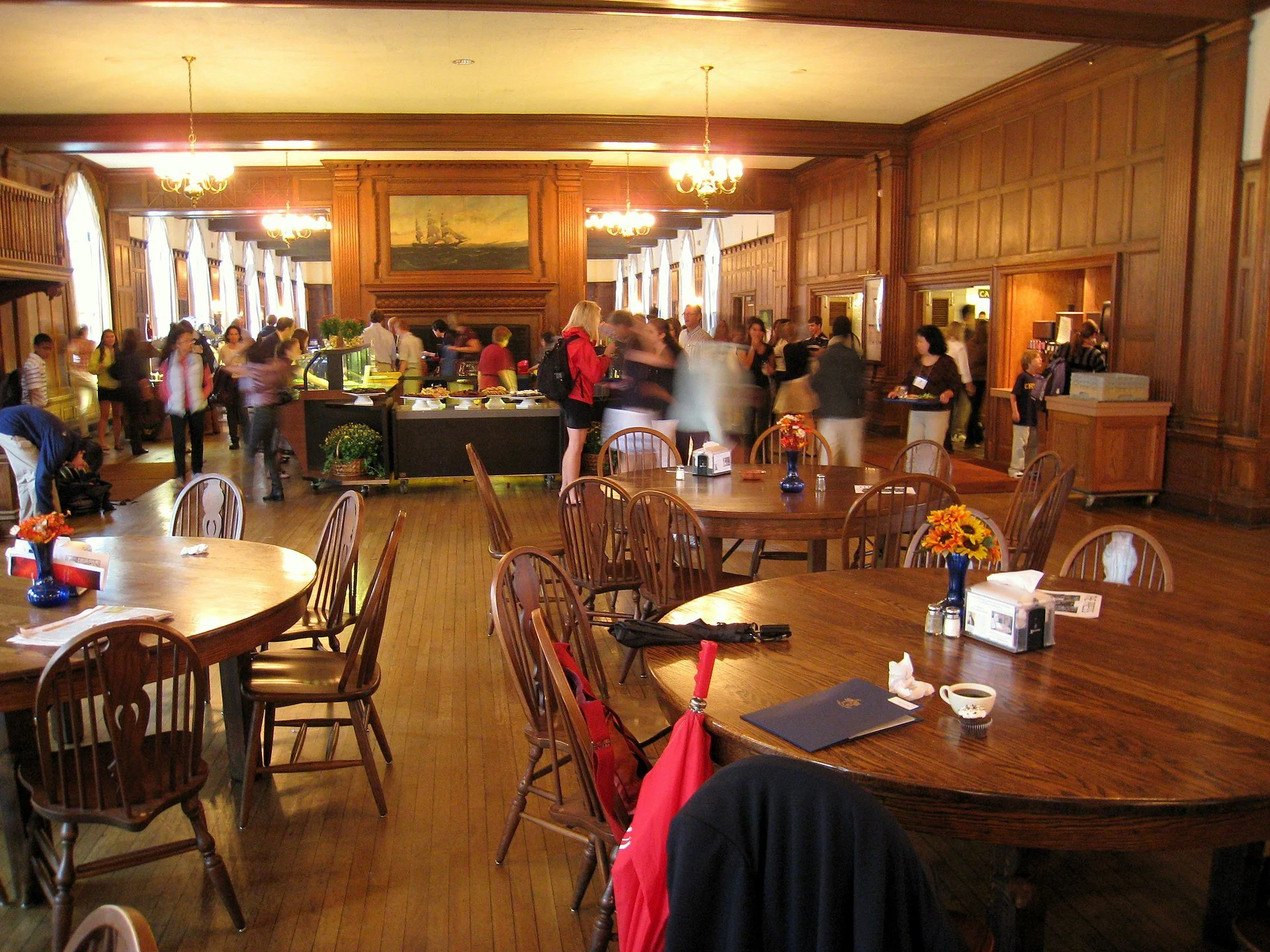
Dining hall at Choate Rosemary Hall
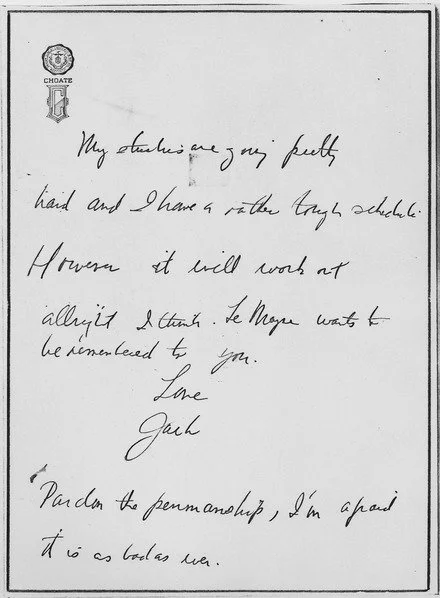
John F. Kennedy, Choate Class of 1935, writes home on school stationery to say his "studies are going pretty hard" and mentions LeMoyne (“Lem’’) Billings '35, his roommate and lifelong closest friend. Billings was gay.
“Dear Jack: In looking over the monthly statement from Choate, I notice there is a charge of $10.80 for suit pressing for the month of March. It strikes me that this is very high and while I want you to keep looking well, I think that if you spent a little more time picking up your clothes instead of leaving them on the floor, it wouldn’t be necessary to have them pressed so often.’’
Letter in 1932 from business mogul Joseph P. Kennedy to his 14-year old son, John F. Kennedy, then at the Choate School, the exclusive boarding school in Wallingford, Conn. The institution is now called Choate Rosemary Hall, after the two schools merged, in 1971. Rosemary Hall was a girls’ school, and so the merger created a co-ed institution.
The future president could be very careless about a number of things, including in his future hyper-active sex life.
‘Humble observer of the world’

“The Air We Breathe” (oil on canvas), by Bernardson, Mass.-based artist Cameron Schmitz, in her show, “The Space Between,’’ at Kingston Gallery, Boston, May 3-28.
The gallery says:
“Painting is a metaphor for Cameron Schmitz’s perception of life, where she explores the inspiration of tender relationships, and the wonder and despair of being a woman, mother, working artist, and humble observer of the world. Working primarily in the mode of intuitive abstraction, Schmitz has discovered how a painting can create space for both an understanding of life and the valuable admission of not knowing. Her approach to abstract painting is informed by a background in both landscape and figurative painting.”
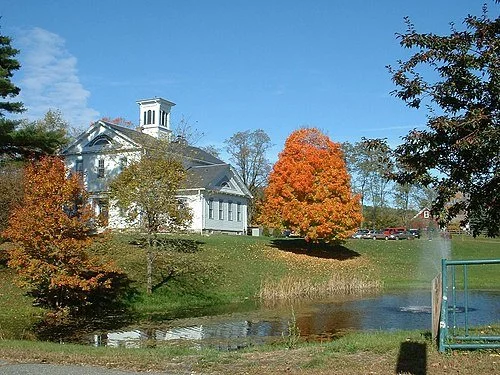
This building, now housing the Bernardson Historical Society, was formerly the home of the historically important educational institution called The Powers Institute.
Trying to understand offshore wind turbines' ecological effects

Wind energy lease areas off the southern coasts of Massachusetts and Rhode Island as of October, 2022


From Mary Lhowe’s very valuable article in ecoRI News:
“{C}an wind turbines off the coast of Rhode Island live up to their renewable energy promise? And what effects will they have on life in the sea?
“Hundreds of experts from the U.S. Department of the Interior down to local fishermen and town planners are puzzling over these questions, especially now, during the permitting and approval process of the Revolution Wind project, in which developers Ørsted and Eversource hope to install up to 100 wind turbines on the Outer Continental Shelf (OCS) about 18 miles southeast of Point Judith. Cables to transmit power to the grid would make landfall in North Kingstown, and the project is expected to be online by 2025. The Draft Environmental Impact Statement for the project was published last fall.’’

Jim Hightower: Would they kill your granny to make a buck?
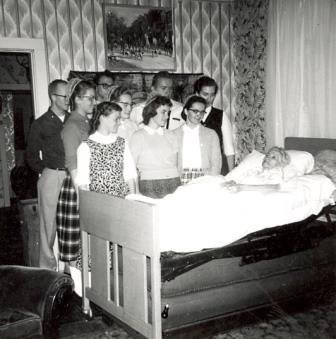
From OtherWords.org
There are industries that occasionally do something rotten. And there are industries, such as Big Oil, Big Pharma and Big Tobacco, that persistently do rotten things.
Then there is the nursing-home industry — where rottenness has become a core business principle.
The end-of-life experience can be rotten enough on its own, with an assortment of natural indignities bedeviling us. Good nursing homes help patients gently through this time. In the past couple of decades, though, an entirely unnatural force has come to dominate the delivery of aged care: profiteering corporate chains and Wall Street speculators.
The very fact that this essential and sensitive social function, which ought to be the domain of health professionals and charitable enterprises, is now called an “industry” reflects a total perversion of its purpose.
Some 70 percent of nursing homes are now corporate operations, often run by absentee executives who have no experience in nursing homes and who are guided by the market imperative of maximizing investor profits. They constantly demand “efficiencies” from their facilities — which invariably means reducing the number of nurses, which invariably reduces care, which means more injuries, illness and deaths.
As one nursing expert quoted by The New Yorker rightly says, “It’s criminal.”
But it’s not against the law, since the industry’s lobbying front — a major donor to congressional campaigns — effectively writes the laws, which lets corporate hustlers provide only one nurse on duty, no matter how many patients are in the facility.
When a humane nurse-staffing requirement was proposed last year, the lobby group furiously opposed it, and Congress dutifully bowed to industry profits over grandma’s decent end-time. After all, granny probably doesn’t make campaign donations.
So, as a health-policy analyst bluntly puts it, “The only kind of groups that seem to be interested in investing in nursing homes are bad actors.” To help push for better, contact TheConsumerVoice.org.
OtherWords columnist Jim Hightower is a radio commentator, writer and public speaker.
Artists from the top of the world

By Tibet native Tashi Norbu, in the group show “Across Shared Waters,’’ at the Williams College Museum of Art, Williamstown, Mass., through July 16.
— Photo courtesy artist.
The museum says:
“Across Shared Waters’’ is exhibition of work by contemporary artists of Himalayan heritage alongside traditional Tibetan Buddhist artwork from the Jack Shear Collection. The work explore "themes of identity, consumerism, place, and cultural expectations." Some use traditional Tibetan cultural markers while others work outside of that framework.
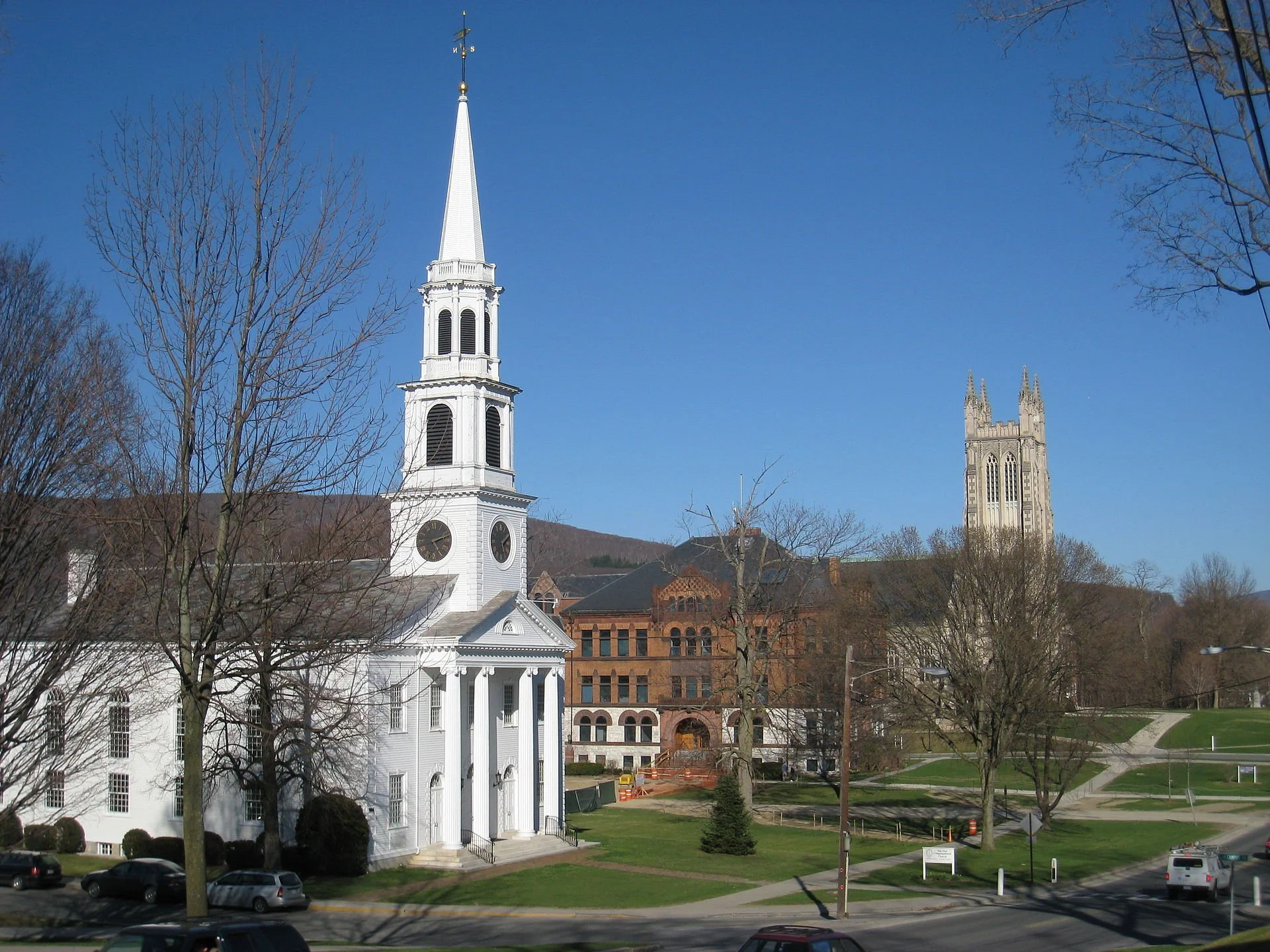
Main Street in Williamstown
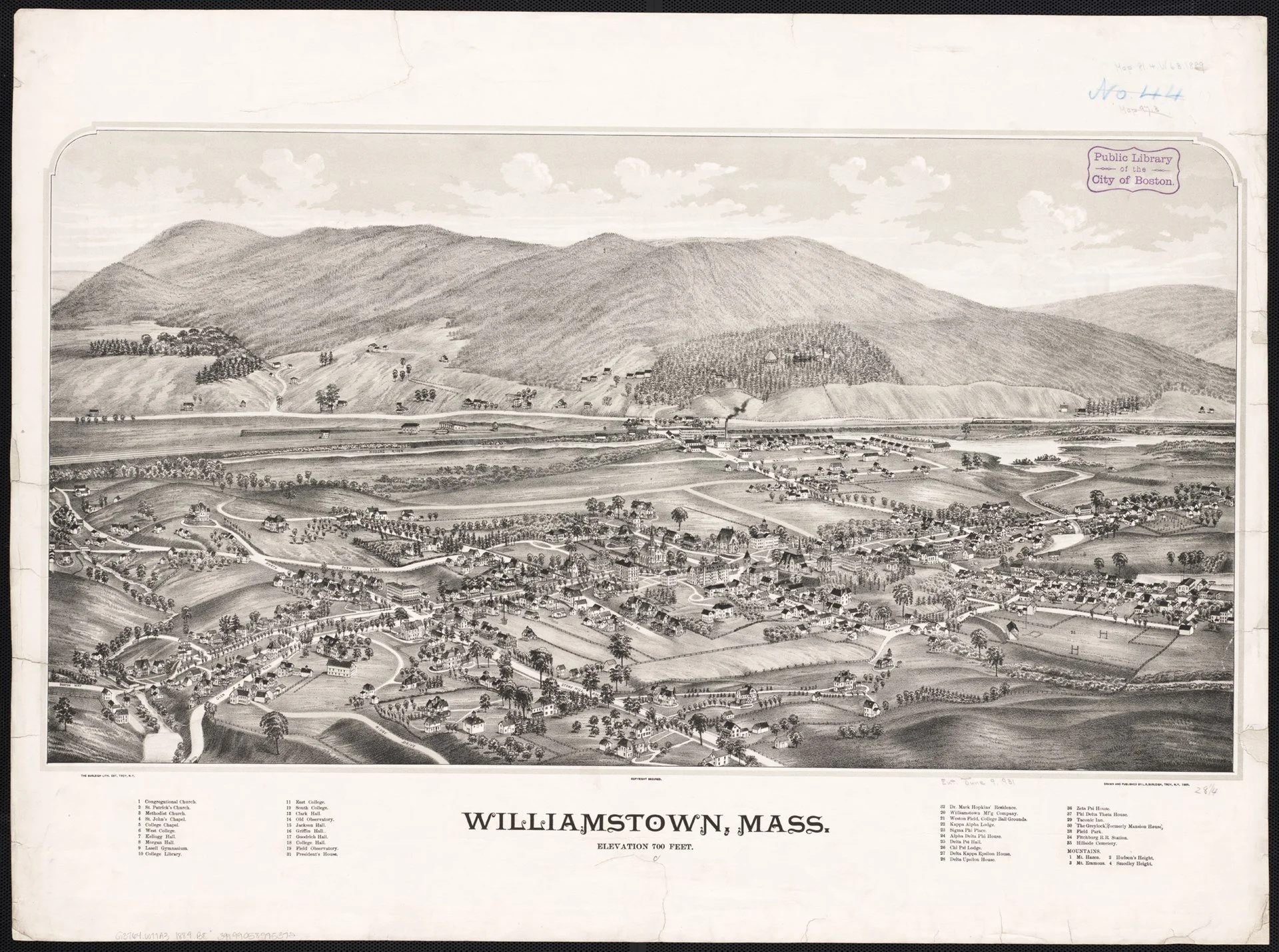
1880’s map, with Mt. Greylock looming.
Just a quick kiss

“Petite Confidence” (steel), by Franco-American artist Pascal Pierme, in his show at Lanoue Gallery, Boston, through March 18.
He says:
“{The late French President| Francois Mitterrand said, ‘I love the person who is searching, yet I am afraid of the one who thinks he has found the answer.’ In my life I have much more pleasure with the questions than with finding the answers, except when the answer is a new question. And that is where the obsession to create begins.
‘‘...For decades, balance, movement, inquiry, architecture and nature have been reoccurring themes in my work. I am interested in assimilating what is not supposed to fit – the combining of contrasting elements. My main ingredient is chemistry. I feel the movement and then freeze that moment in the interaction and take a ‘snapshot’ – capturing a split second in the evolution. Thereby creating something that is abstract and at the same time, quite figurative. As such, my work can be experienced as organic. It moves. It is alive, it comes from somewhere, it is going somewhere, and you feel that by what you see.
‘‘I try to sculpt in a way where I can change my mind until the last minute. My creativity is at its best when I push the medium of my work to its limit.’’
Death village
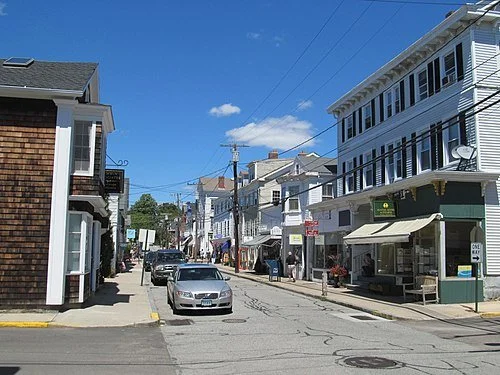
Water Street in Stonington, Conn.
“Shortly before I died,
Or possibly after,
I moved to a small village by the sea….
The rocky sliver of land, the little houses where the fishermen once lived.…”
— From “In the Village,’’ by James Longenbach (1959-2022), America poet. The poem is inspired by his time in Stonington, Conn.

The origins of the U.S. Valentine’s Day card business

Esther Howland Valentine card, "Affection" ca. 1870s
Edited from a New England Historical Society report:
“Worcester once reigned as the Valentine Capital of the United States. Esther Howland, born in Worcester in 1828, went into the Valentine business in her home town after graduating from Mount Holyoke College. It grew into the world’s largest greeting-card enterprise, until World War II caused paper shortages that put an end to the business. Her company was called the New England Valentine Co.’’
New program to use blood tests to identify Alzheimer’s risk
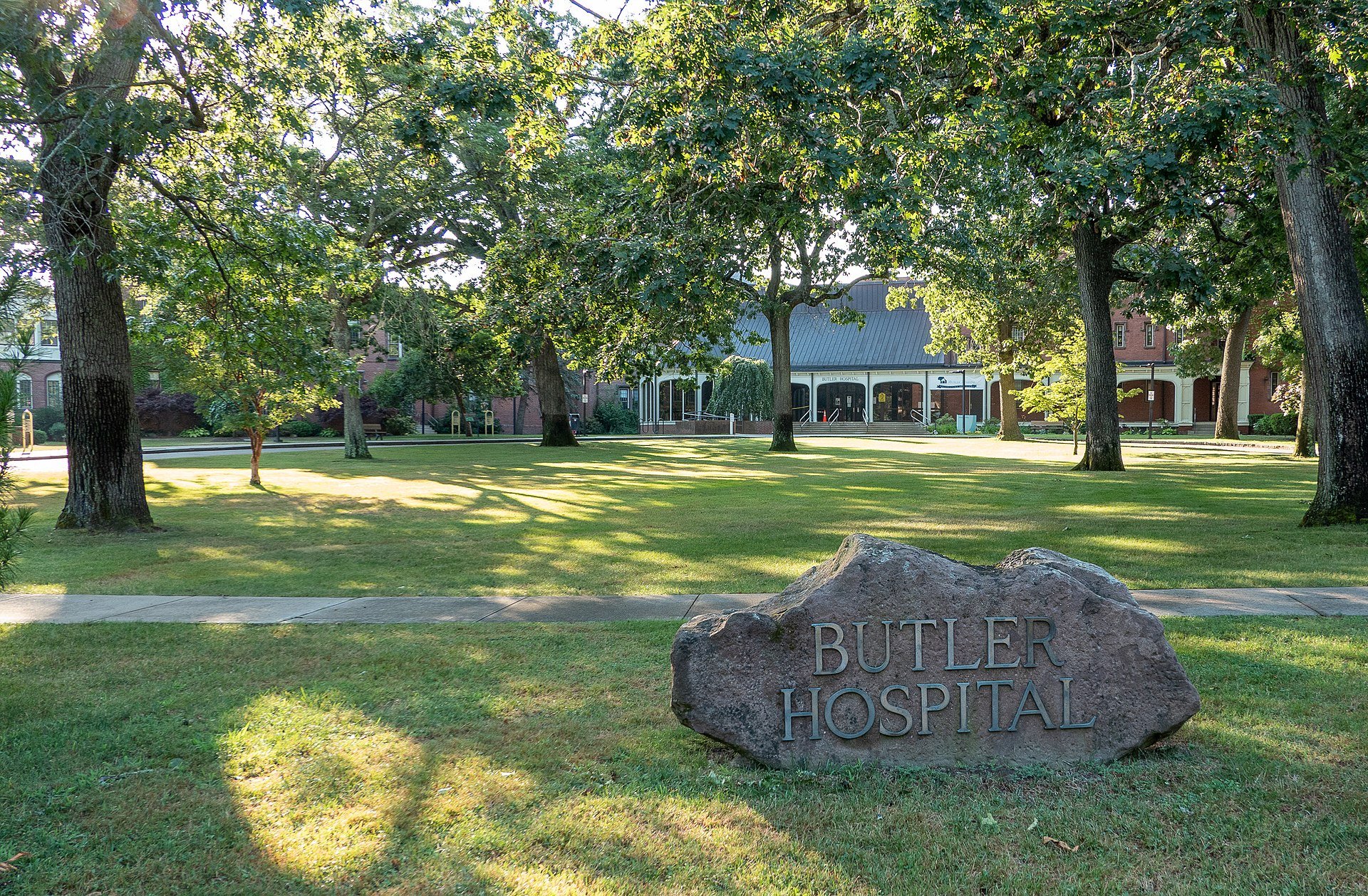
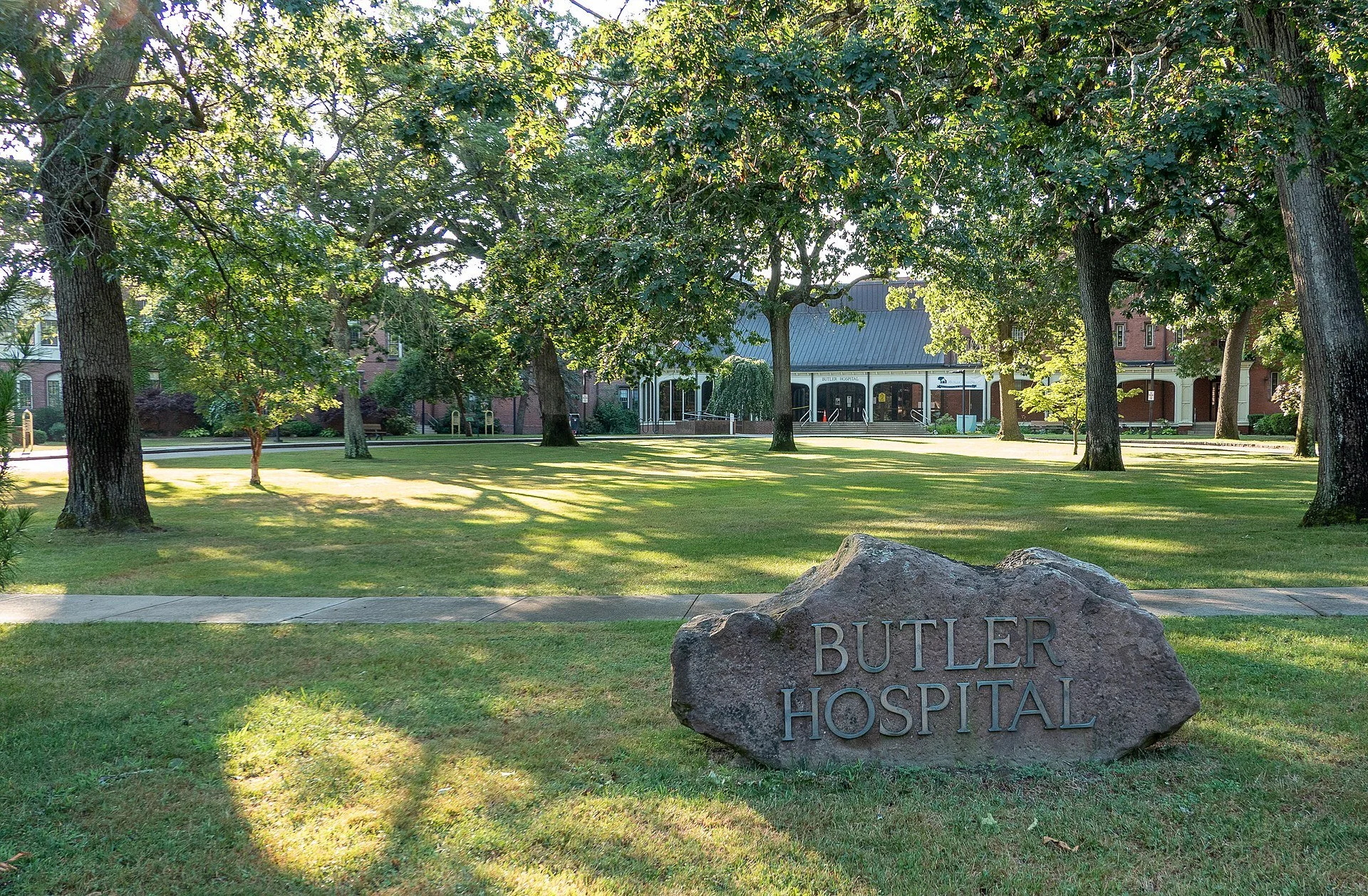
On Butler Hospital’s verdant campus, on the mostly affluent East Side of Providence. Founded in 1844, it’s one of the oldest hospitals in America for the treatment of psychiatric and neurological illnesses. It has treated more than a few well-known people.
— Photo by Kenneth C. Zirkel
Edited from a New England Council (newenglandcouncil.com) report
Brown University, in Providence, is partnering with the Memory and Aging Program of Butler Hospital, in Providence, to start a new BioFinder aimed at developing new methods to access risk for developing Alzheimer’s disease.
The study will look at blood tests of individuals between 50 and 80 who are currently healthy but face higher risk for developing Alzheimer’s than the general population. It will include 200 participants overseen by Brown and 400 by Lund University, in Lund, Sweden.
“Developing easy-to-use blood tests will lead to early diagnosis and treatment and be a game-changer in the fight against Alzheimer’s disease,” said Dr. Stephen Salloway, the principal investigator of the BioFinder-Brown site.
Can’t run the Nutmeg state at the same time

The governor’s mansion in Hartford.
“I’m having trouble managing the mansion {official governor’s residence in Hartford}. What I need is a wife.’’
—Ella T. Grasso (1919-1981), a moderate Democrat who was Connecticut’s governor from 1975 to 1980, when she resigned because of illness.
