
Vox clamantis in deserto









‘Bringing The Holy Land Home’

Photographic composite showing roundels surrounded by partial Latin text in the show “Bringing the Holy Land Home: The Crusades, Chertsey Abbey, and the Reconstruction of a Medieval Masterpiece” in the Iris and B. Cantor Art Gallery, at The College of the Holy Cross, Worcester, through April 6.
— Photo © Janis Desmarais and Amanda Luyster.
The gallery says that the exhibition is focused on “the famed Chertsy Combat Tiles, a series of tiles that was created around 1250 forChertsey Abbey, in England. This exhibit includes artwork on loan from the British Museum, the Metropolitan Museum of Art, and the (Boston) Museum of Fine Arts, Boston. The tiles are put into context alongside Islamic and Byzantine artwork that lends a wider view to the historical works.’’
A business transaction
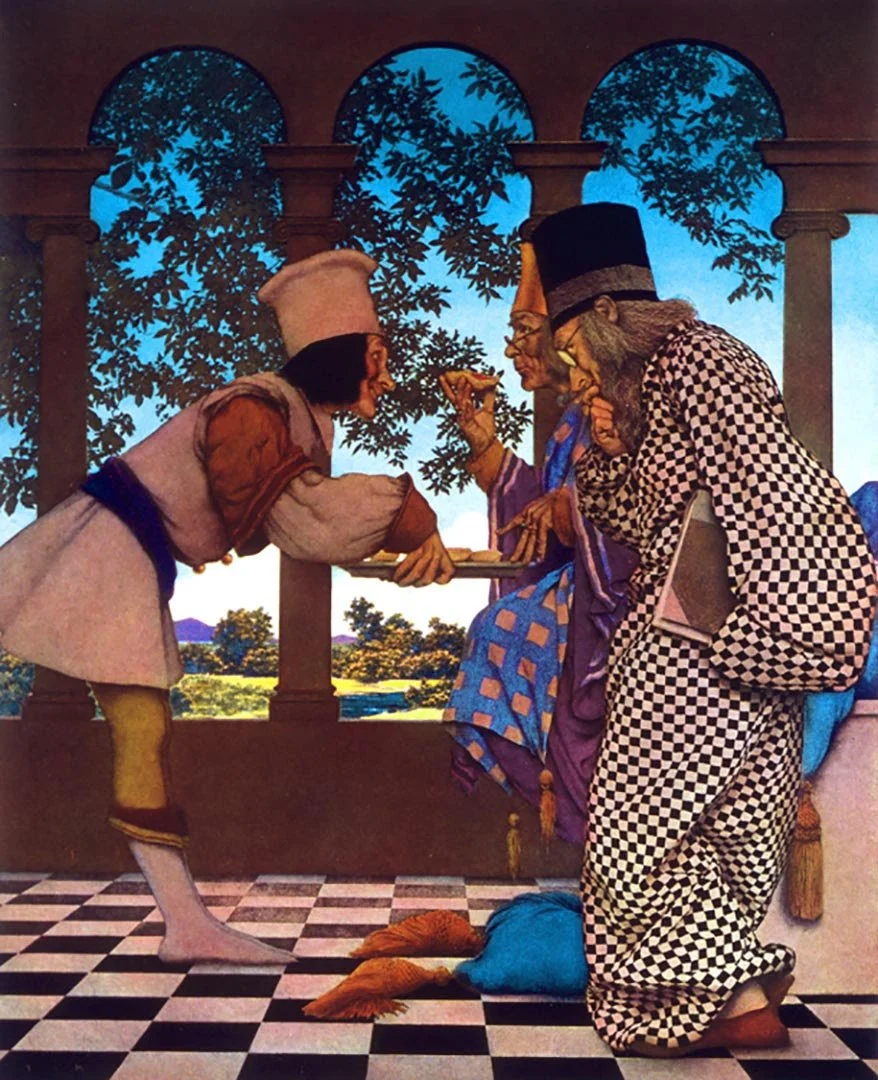
“The Knave of Hearts - The King Samples the Tarts” (oil on paper on board), by Maxfield Parrish (1870-1966), at the National Museum of American Illustration, Newport, R.I.
— Copyright the National Museum of American Illustration
Parrish was an important member of the famous art colony in Cornish, N.H., where he had an estate called The Oaks, which is still standing. See the Saint-Gaudens National Historical Park, also in Cornish. The famously reclusive writer J.D. Salinger lived in Cornish.
Video: Explaining the colorful career of a too little known Founding Father
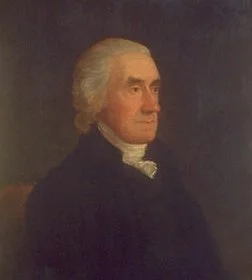
Portrait of Robert Treat Paine, by Edward Savage and John Coles, Jr.
— Collection of the Massachusetts Historical Society, Boston.
A descendent, Thomas M. Paine, tells us the riveting story of American Founding Father/signer of The Declaration of Independence, lawyer, prosecutor, judge, politician and science-and-technology enthusiast {hit this link for video} Robert Treat Paine (1731-1814). (He had a special interest in gunpowder and fireworks and in clocks. )
In legal and government settings, the courageous and eloquent Paine was known for the frequency of his objections.

Statue of Robert Treat Paine, by Richard E. Brooks (1904), in Taunton, Mass., where Paine was mostly based in 1761-1780.

Llewellyn King: What made me an AI enthusiast.

WEST WARWICK, R.I.
I have gone over. All the way. I have fallen in love with artificial intelligence. We need it, and I’m on board.
My conversion was sudden. It happened on one memorable day, Feb. 8, 2023. It was a sudden strike in a well-worn heart by Cupid’s arrow.
My love life with technology has been either unrequited or messy. I was always the one who blew the relationship, I admit that.
It started with computer typesetting. I was a committed hot-lead-type man. I didn’t want to see that painted lady, computer technology, destroying my divine relationship with hot type. But she did and when I tried to make amends, she was, er, cold, froze me out.
Likewise, as an old-time newspaperman, I was very proficient and happy with Telex. Computer technology separated us.
The worst of all was my first encounter with the internet.
I was pursuing the story of nuclear fusion at the Lawrence Livermore National Laboratory, in California. A lab technician tried to interest me in the new device he was using to send messages: the Internet. I blew it off. “That is just Telex on steroids,” I said.
Ms. Internet doesn’t care to be scorned and she nearly cost me my manhood — well, my publishing company — when she took her terrible revenge. She killed print papers as well as hot type. She was a vengeful siren that way.
My conversion to AI began innocently enough. I was listening to a reporter on National Public Radio explaining how Microsoft’s new AI search engine would not only change the world of online searching but would also give Google a serious run for its money — billions of dollars, I might say parenthetically.
The writing's on the wall for Google unless it can get its AI to market fast. I was intrigued.
The illustration used by NPR reporter Bobby Allyn was that of buying a couch and carrying it home in your car. The new search engine, Allyn explained, will tell you if the couch you want to buy will fit in your car. It will know the dimensions of the car and, maybe, of the couch too. Wow!
Then I went on to watch a wild, unruly hearing before the U.S. House Oversight Committee. A long-suffering panel of former Twitter executives faced some pointed abuse from the Republican members. Some of those members never got to pose a question: Their time was entirely taken up castigating the witnesses over alleged collusion with the Biden administration and over Hunter Biden’s laptop — the holy grail for conspiracy theorists. It was a performance worthy of a Soviet show trial.
The worst aspects of the new House were on display. Alexandria Ocasio-Cortez (D.-N.Y.) was visibly flustered because she wasn’t in her seat when her time to question the witnesses arrived. She rushed back to it and was so excitable that she was nearly incoherent.
Then there was Marjorie Taylor Greene (R.-Ga.), who was adamant that Twitter was advancing a political agenda by accepting the science that vaccines helped control the COVID-19 outbreak. She asserted that Twitter had a political objective when it denied her free-speech rights by suspending her account, after frequent warnings about her dangerous public health positions opposing vaccinations.
The lady's not for turning. Not by facts, anyway. That was clear. Any Southern charm she may possess was shelved in favor of invective. She told the former Twitter executives that she was glad they had been fired.
The clincher in my conversion to AI had nothing to do with the brutal thrashing of the experts, but with the explanation by Yoel Roth, former head of Trust and Safety at Twitter, who with forbearance explained that there were then and are now hundreds of Russian false accounts on Twitter aimed at influencing our elections and reaching deeply into our politics. Likewise, Iranian and Chinese accounts.
That is when it occurred to me: AI is the answer. Not the answer to the mannerless ways of the House hearing, but to the whole vulnerability of social media.
We have to fight cyber excess with cyber: Only AI can deal with the volumes of malicious domestic and foreign material on the net. Too bad it won’t resolve the free-speech issues, or the one that emerged at the House hearing: the right to lie without restraint.
This AI doubter is now an enthusiast. Bring it on.
Llewellyn King is executive producer and host of White House Chronicle, on PBS. His email is llewellynking1@gmail.com and he’s based in Rhode Island and Washington. D.C.


The flippers make Mass. housing crisis worse

“There Goes the Neighborhood (mixed-media installation), by Brookline-based Ronni Komarow, at Galatea Fine Art, Boston, March 2-April 2.
She explains:
"In 2021, business entities purchased nearly 6,600 single-family homes in Massachusetts, more than 9 percent of all single-family homes sold and nearly double the rate of such purchases a decade before. Investors and other businesses...spent more than $5.6 billion in Massachusetts purchasing these properties, the majority in cash, to rent or flip as the state’s housing market rises.
“Investors are spurred by high demand for housing, rising rents and soaring home values, making it a lucrative business. But housing advocates say the trend is making it harder for individual homeowners to buy and driving up rents, so renters get priced out….
“As an advocate for historic preservation in Boston, I'm mindful that many of these would-be buyers would demolish a purchased home quickly and replace it with the largest, cheapest structure possible, to be sold at the greatest profit. None of these would-be buyers live in the city or have any interest in neighborhoods, community preservation, or quality of life for local residents.’’


Those not entirely wasted hours at journo-favored bars

— Photo by Ragesoss
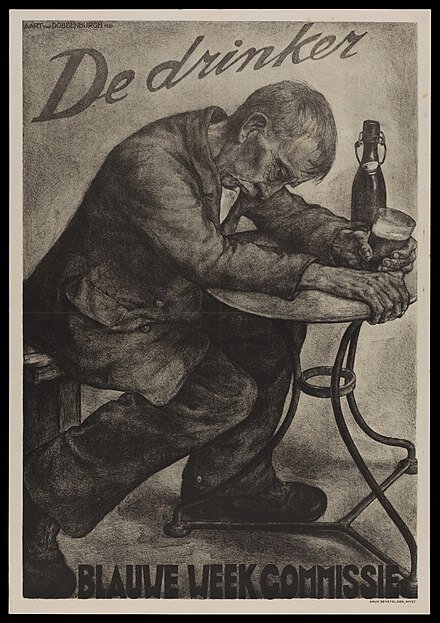
A 1936 anti-drinking poster by Aart van Dobbenburgh
Adapted from Robert Whitcomb’s “Digital Diary,’’ in GoLocal24.com
For various reasons, going to New York City, as I did recently, reminds me of the bars that we newspaper and magazine reporters and editors used to patronize. This wasn’t a particularly healthy practice, but these places planted some evergreen memories.
Some of the joints I most remember:
Foley’s, in Boston, beloved of Boston Herald Traveler, Record American and Globe editors and reporters, especially scruffy police reporters, with their tales of gruesome or comic crimes and police and political corruption, and news and copy editors having their “lunch” at around 8:30 p.m. between edition deadlines.
Some actually consumed the bar’s pickled eggs as they knocked back their boilermakers --- a shot of whiskey followed by a beer, or pouring a shot of whiskey into their beers and then chugging that – or downing other, not very elegant beverages. I was often amazed that some of these journos could function at all under deadline pressure upon returning to the newsroom after “lunch” at Foley’s. Certainly many of them looked ill and aged fast. Some had noses that were tributes to the distillers’ art.
The older guys (and virtually all these colleagues were men) told vivid stories going back to the ’40s of life in what was then a gritty city. Others were taciturn, as if battered into silence by bad hours and what they had seen and heard on the job in a business in which grim news usually sells better than good.
Then there was the bar off Broad Street in Lower Manhattan where a couple of Wall Street Journal editing colleagues and I would occasionally retreat in mid-evening after work. (We’d stop working soon after listening to WQXR, then The New York Times’s radio station, to learn if we had missed a story that our biggest rival had so we could make necessary adjustments. The station helpfully broadcast a review of its next day’s Page One at 9 p.m.)
One night we came across what appeared to be a corpse on the sidewalk outside the bar that appeared to have been there for a while. A cop came along to deal with the body. (The neighborhood was virtually deserted at night in those days because few people lived there then and there were few food stores, etc., to serve them. Now there are many apartment buildings, put up during the off-and-on boom years from the mid-‘90s to COVID, and so it has much more of a 24/7 feel, though less than before the pandemic.)
In the bar we almost got into a fist fight with a drunk who insulted our colleague Ruth; in the event, he was evicted from the establishment.
I well recall the bar/restaurant in Wilmington, Del., called The Bar Door. That’s where some of us working for the News Journal, The First State’s statewide rag, then owned by the remarkably kindly DuPont family, would lunch at least once or twice a week. My colleagues there were the most abstemious of the newspaper types I hung out with in my career, usually just confining themselves to a Rolling Rock beer. And the food, especially softshell crab from nearby Chesapeake Bay, was good, so there was less drinking on empty stomachs.
The local pols, such as, I think, Joe Biden, then a recently elected U.S. senator, would show up to gossip. My favorite was Melvin Slawik, the charming New Castle County (which includes Wilmington) executive, who was a font of stories, including very funny, self-deprecating ones about himself. He later served time for perjury, obstruction of justice and bribery. He was one of the most likeable people I’ve ever met.
There was Le Village, a bar and restaurant dangerously close to the offices of the International Herald Tribune, in the affluent Paris inner suburb of Neuilly. Because French labor law mandates frequent work breaks, too many of the staff spent too much time there drinking, and, as at all journalist hangouts in those days, smoking. Several were what you might call merely recreational alcoholics. (Growing up, I learned enough about alcoholics, recreational and full time, to last me several lifetimes.)
As the finance editor, in charge of overseeing a third of the paper, I was sometimes put in the awkward position of trying to stop the working-hours drinking of people reporting to me. In one case, I had to remove an engaging and smart, but too often drunk, colleague from consideration for a promotion. In any case, labor law sharply restricted disciplining staffers. It was tough to hire people and even tougher to fire them.
There were other journo bars too, where I heard wild stories that could be the bases of a few novels and/or film-noirish movies, some of which stories were actually true. But my time in such places mostly ended about 30 years ago. One reason I’m still alive.
Oh, yes! There was a bar called Hope’s that was heavily patronized by Providence Journal people, and owned by two of them, but I only made a few clinical research visits.
Malcolm Muggeridge (1903-1990), the great English journalist, satirist, spy, womanizer and late-in-life religious fanatic, once said something to the effect that he regretted the smoking he did, but not the drinking, because of the stories and camaraderie he got out of the latter. But drinking and smoking are two devils embracing.
Great circle route

“Circle Party” (encaustic on panel), by Willa Vennema, a Portland-based painter.
Her Web site notes:
“As teachers, both Vennema and her husband are able to spend the summer with their two children, Oriana, and Casey. They quickly settle in to ‘Island Time,’ on Swan’s Island, a small island off Mt. Desert Island, where Vennema's family has summered for over 53 years. Here, Vennema paints the waters, woods, rocks and trees of Swan's and surrounding islands ‘en plain air’ using acrylic paints. During the winter months, back in her home studio in Portland, Vennema pushes herself to experiment. Her studio works are executed using the hot wax medium known as encaustic, and these works have ranged from semi-abstract landscapes, to fully abstract mixed media works.’’

Burnt Coat Harbor Light, on Swan’s Island.


Arthur Allen: Not profitable enough for CVS

Parenteral formula
NEW YORK — The fear started when a few patients saw their nurses and dietitians posting job searches on LinkedIn.
Word spread to Facebook groups, and patients started calling Coram CVS, a major U.S. supplier of the compounded IV nutrients on which they rely for survival. To their dismay, CVS Health, based in Woonsocket, R.I., confirmed the rumors on June 1: It was closing 36 of the 71 branches of its Coram home-infusion business and laying off about 2,000 nurses, dietitians, pharmacists and other employees.
Many of the patients left in the lurch have life-threatening digestive disorders that render them unable to eat or drink. They depend on parenteral nutrition, or PN — in which amino acids, sugars, fats, vitamins, and electrolytes are pumped, in most cases, through a specialized catheter directly into a large vein near the heart.
The day after CVS’s move, another big supplier, Optum Rx, announced its own consolidation. Suddenly, thousands would be without their highly complex, shortage-plagued, essential drugs and nutrients.
“With this kind of disruption, patients can’t get through on the phones. They panic,” said Cynthia Reddick, a senior nutritionist who was let go in the CVS restructuring.
“It was very difficult. Many emails, many phone calls, acting as a liaison between my doctor and the company,” said Elizabeth Fisher Smith, a 32-year-old public-health instructor in New York City, whose Coram branch was closed. A rare medical disorder has forced her to rely on PN for survival since 2017. “In the end, I got my supplies, but it added to my mental burden. And I’m someone who has worked in health care nearly my entire adult life.”
CVS had abandoned most of its less lucrative market in home parenteral nutrition, or HPN, and “acute care” drugs like IV antibiotics. Instead, it would focus on high-dollar, specialty intravenous medications like Remicade, which is used for arthritis and other autoimmune conditions.
Home and outpatient infusions are a growing business in the United States, as new drugs for chronic illness enable patients, health care providers, and insurers to bypass in-person treatment. Even the wellness industry is cashing in, with spa storefronts and home hydration services.
But while reimbursement for expensive new drugs has drawn the interest of big corporations and private equity, the industry is strained by a lack of nurses and pharmacists. And the less profitable parts of the business — as well as the vulnerable patients they serve — are at serious risk.
This includes the 30,000-plus Americans who rely for survival on parenteral nutrition, which has 72 ingredients. Among those patients are premature infants and post-surgery patients with digestive problems, and people with short or damaged bowels, often the result of genetic defects.
While some specialty infusion drugs are billed through pharmacy benefit managers that typically pay suppliers in a few weeks, medical plans that cover HPN, IV antibiotics, and some other infusion drugs can take 90 days to pay, said Dan Manchise, president of Mann Medical Consultants, a home-care consulting company.
In the 2010s, CVS bought Coram, and Optum bought up smaller home infusion companies, both with the hope that consolidation and scale would offer more negotiating power with insurers and manufacturers, leading to a more stable market. But the level of patient care required was too high for them to make money, industry officials said.
“With the margins seen in the industry,” Manchise said, “if you’ve taken on expensive patients and you don’t get paid, you’re dead.”
In September, CVS announced its purchase of Signify Health, a high-tech company that sends out home-health workers to evaluate billing rates for “high-priority” Medicare Advantage patients, according to an analyst’s report. In other words, as CVS shed one group of patients whose care yields low margins, it was spending $8 billion to seek more profitable ones.
CVS “pivots when necessary,” spokesperson Mike DeAngelis told KHN. “We decided to focus more resources on patients who receive infusion services for specialty medications” that “continue to see sustained growth.” Optum declined to discuss its move, but a spokesperson said the company was “steadfastly committed to serving the needs” of more than 2,000 HPN patients.
DeAngelis said CVS worked with its HPN patients to “seamlessly transition their care” to new companies.
However, several Coram patients interviewed about the transition indicated that it was hardly smooth. Other HPN businesses were strained by the new demand for services, and frightening disruptions occurred.
Smith had to convince her new supplier that she still needed two IV pumps — one for HPN, the other for hydration. Without two, she’d rely partly on “gravity” infusion, in which the IV bag hangs from a pole that must move with the patient, making it impossible for her to keep her job.
“They just blatantly told her they weren’t giving her a pump because it was more expensive, she didn’t need it, and that’s why Coram went out of business,” Smith said.
Many patients who were hospitalized at the time of the switch — several inpatient stays a year are not unusual for HPN patients — had to remain in the hospital until they could find new suppliers. Such hospitalizations typically cost at least $3,000 a day.
“The biggest problem was getting people out of the hospital until other companies had ramped up,” said Dr. David Seres, a professor of medicine at the Institute of Human Nutrition at Columbia University Medical Center. Even over a few days, he said, “there was a lot of emotional hardship and fear over losing long-term relationships.”
To address HPN patients’ nutritional needs, a team of physicians, nurses, and dietitians must work with their supplier, Seres said. The companies conduct weekly bloodwork and adjust the contents of the HPN bags, all under sterile conditions because these patients are at risk of blood infections, which can be grave.
As for Coram, “it’s pretty obvious they had to trim down business that was not making money,” Reddick said, adding that it was noteworthy both Coram and Optum Rx “pivoted the same way to focus on higher-dollar, higher-reimbursement, high-margin populations.”
“I get it, from the business perspective,” Smith said. “At the same time, they left a lot of patients in a not great situation.”)
Smith shares a postage-stamp Queens apartment with her husband, Matt; his enormous flight simulator (he’s an amateur pilot); cabinets and fridges full of medical supplies; and two large, friendly dogs, Caspian and Gretl. On a recent morning, she went about her routine: detaching the bag of milky IV fluid that had pumped all night through a central line implanted in her chest, flushing the line with saline, injecting medications into another saline bag, and then hooking it through a paperback-sized pump into her central line.
Smith has a connective tissue disorder called Ehlers-Danlos syndrome, which can cause many health problems. As a child, Smith had frequent issues, such as a torn Achilles tendon and shoulder dislocations. In her 20s, while working as an EMT, she developed severe gut blockages and became progressively less able to digest food. In 2017, she went on HPN and takes nothing by mouth except for an occasional sip of liquid or bite of soft food, in hopes of preventing the total atrophy of her intestines. HPN enabled her to commute to George Washington University, in Washington, D.C., where in 2020 she completed a master’s in public health.
On days when she teaches at LaGuardia Community College — she had 35 students this semester — Smith is up at 6 a.m. to tend to her medical care, leaves the house at 9:15 for class, comes home in the afternoon for a bag of IV hydration, then returns for a late afternoon or evening class. In the evening she gets more hydration, then hooks up the HPN bag for the night. On rare occasions she skips the HPN, “but then I regret it,” she said. The next day she’ll have headaches and feel dizzy, sometimes losing her train of thought in class.
Smith describes a “love-hate relationship” with HPN. She hates being dependent on it, the sour smell of the stuff when it spills, and the mountains of unrecyclable garbage from the 120 pounds of supplies couriered to her apartment weekly. She worries about blood clots and infections. She finds the smell of food disconcerting; Matt tries not to cook when she’s home. Other HPN patients speak of sudden cravings for pasta or Frosted Mini-Wheats.
Yet HPN “has given me my life back,” Smith said.
She is a zealous self-caretaker, but some dangers are beyond her control. IV feeding over time is associated with liver damage. The assemblage of HPN bags by compounding pharmacists is risky. If the ingredients aren’t mixed in the right order, they can crystallize and kill a patient, said Seres, Smith’s doctor.
He and other doctors would like to transition patients to food, but this isn’t always possible. Some eventually seek drastic treatments such as bowel lengthening or even transplants of the entire digestive tract.
“When they run out of options, they could die,” said Dr. Ryan Hurt, a Mayo Clinic physician and president of the American Society for Parenteral and Enteral Nutrition.
xxx
And then there are the shortages.
In 2017, Hurricane Maria crippled dozens of labs and factories making IV components in Puerto Rico; next came the covid-19 emergency, which shifted vital supplies to gravely ill hospital patients.
Prices for vital HPN ingredients can fluctuate unpredictably as companies making them come and go. For example, in recent years the cost of the sodium acetate used as an electrolyte in a bag of HPN ballooned from $2 to $25, then briefly to $300, said Michael Rigas, a co-founder of the home infusion pharmacy KabaFusion.
“There may be 50 different companies involved in producing everything in an HPN bag,” Rigas said. “They’re all doing their own thing — expanding, contracting, looking for ways to make money.” This leaves patients struggling to deal with various shortages from saline and IV bags to special tubing and vitamins.
“In the last five years I’ve seen more things out of stock or on shortage than the previous 35 years combined,” said Rigas.
The sudden retrenchment of CVS and Optum Rx made things worse. Another, infuriating source of worry: the steady rise of IV spas and concierge services, staffed by moonlighting or burned-out hospital nurses, offering IV vitamins and hydration to well-off people who enjoy the rush of infusions to relieve symptoms of a cold, morning sickness, a hangover, or just a case of the blahs.
In January, infusion professionals urged FDA Commissioner Robert Califf to examine spa and concierge services’ use of IV products as an “emerging contributing factor” to shortages.
The FDA, however, has little authority over IV spas. The Federal Trade Commission has cracked down on some spa operations — for unsubstantiated health claims rather than resource misuse.
Bracha Banayan’s concierge service, called IVDRIPS, started in 2017 in New York City and now employs 90 people, including 60 registered nurses, in four states, she said. They visit about 5,000 patrons each year, providing IV hydration and vitamins in sessions of an hour or two for up to $600 a visit. The goal is “to hydrate and be healthy” with a “boost that makes us feel better,” Banayan said.
Although experts don’t recommend IV hydration outside of medical settings, the market has exploded, Banayan said: “Every med spa is like, ‘We want to bring in IV services.’ Every single paramedic I know is opening an IV center.”
Matt Smith, Elizabeth’s husband, isn’t surprised. Trained as a lawyer, he is a paramedic who trains others at Columbia University Irving Medical Center. “You give someone a choice of go up to some rich person’s apartment and start an IV on them, or carry a 500-pound person living in squalor down from their apartment,” he said. “There’s one that’s going to be very hard on your body and one very easy on your body.”
The very existence of IV spa companies can feel like an insult.
“These people are using resources that are literally a matter of life or death to us,” Elizabeth Smith said.
Shortages in HPN supplies have caused serious health problems including organ failure, severe blisters, rashes, and brain damage.
For five months last year, Rylee Cornwell, 18 and living in Spokane, Washington, could rarely procure lipids for her HPN treatment. She grew dizzy or fainted when she tried to stand, so she mostly slept. Eventually she moved to Phoenix, where the Mayo Clinic has many Ehlers-Danlos patients and supplies are easier to access.
Mike Sherels was a University of Minnesota football coach when an allergic reaction caused him to lose most of his intestines. At times he’s had to rely on an ethanol solution that damages the ports on his central line, a potentially deadly problem “since you can only have so many central access sites put into your body during your life,” he said.
When Faith Johnson, a 22-year-old Las Vegas student, was unable to get IV multivitamins, she tried crushing vitamin pills and swallowing the powder, but couldn’t keep the substance down and became malnourished. She has been hospitalized five times this past year.
Dread stalks Matt Smith, who daily fears that Elizabeth will call to say she has a headache, which could mean a minor allergic or viral issue — or a bloodstream infection that will land her in the hospital.
Even more worrying, he said: “What happens if all these companies stop doing it? What is the alternative? I don’t know what the economics of HPN are. All I know is the stuff either comes or it doesn’t.”
Arthur Allen is Kaiser Health News reporter.
Homage to a lost home

In Hangama Amiri’s show “A Homage to Home,’’ at the Aldrich Contemporary Art Museum, Ridgefield, Conn., through June 11.
The museum says:
“Afghan Canadian artist Hangama Amiri combines painting and printmaking techniques with textiles, weaving together stories based on memories of her homeland and her diasporic experience. She fled Kabul with her family in 1996 when she was 7.’’

No owners in off season

On The Great Beach (aka Nauset Beach) of the Cape Cod National Seashore.
— Photo by Donna Benevides
“In the ‘off’ and empty season, after the tides have erased all signs of a hundred thousand human feet, it was hard to believe that the beach could be owned or claimed by anyone.’’
— John Hay (1915-2011), nature writer, in The Great Beach
Treasure your enemies

The Westport (Conn.) Country Playhouse, founded in 1931. It became a nonprofit in 1973. For many years it was supported by movie star and philanthropist. Paul Newman (1925-2008) and his actress wife, Joanne Woodward (born 1930), who were long-time residents of the affluent New York suburb, eschewing life in Hollywood. She served as its artistic director from 2000 through 2005, following an 18-month, multimillion-[dollar renovation. Paul Newman remained a part-owner of a restaurant next to the theater until his death.
“A man with no enemies is a man with no character.’’
— Paul Newman
Ex-river

“Canyon Waterlines” (acrylic on canvas), by Newton, Mass.-based artist Patty Stone, in the show “New Works by Gallery Artists,’’ at Bromfield Gallery, Boston, all this month. The show includes paintings, drawings, sculptures, prints and artists books.

‘Nature’s boldest sketch’

“Monadnock, Winter Sunrise” (1919), by Abbott Handerson Thayer. Kiping would have seen and admired Mt. Monadnock by looking straight east toward southwest New Hampshire.

“Naulakha,’’ aka the Rudyard Kipling House, in Dummerston, Vt.
“Thirty below freezing! It was inconceivable till one stepped out into it at midnight, and the first shock of that clear, still air took away the breath as does a plunge into sea-water. A walrus sitting on a woolpack was our host in his sleigh, and he wrapped us in hairy goatskin coats, caps that came down over the ears, buffalo robes and blankets, and yet more buffalo-robes till we, too, looked like walruses and moved almost as gracefully. The night was as keen as the edge of a newly-ground sword; breath froze on the coat-lapels in snow; the nose became without sensation, and the eyes wept bitterly because the horses were in a hurry to get home; and whirling through air at zero brings tears. But for the jingle of the sleigh-bells the ride might have taken place in a dream, for there was no sound of hoofs upon the snow, the runners sighed a little now and again as they glided over an inequality, and all the sheeted hills round about were as dumb as death. Only the Connecticut River kept up its heart and a lane of black water through the packed ice; we could hear the stream worrying round the heels of its small bergs. Elsewhere there was nothing but snow under the moon—snow drifted to the level of the stone fences or curling over their tops in a lip of frosted silver; snow banked high on either side of the road, or lying heavy on the pines and the hemlocks in the woods, where the air seemed, by comparison, as warm as a conservatory. It was beautiful beyond expression, Nature’s boldest sketch in black and white, done with a Japanese disregard of perspective, and daringly altered from time to time by the restless pencils of the moon.
“In the morning the other side of the picture was revealed in the colours of the sunlight. There was never a cloud in the sky that rested on the snow-line of the horizon as a sapphire on white velvet. Hills of pure white, or speckled and furred with woods, rose up above the solid white levels of the fields, and the sun rioted over their embroideries till the eyes ached. Here and there on the exposed slopes the day’s warmth—the thermometer was nearly forty degrees—and the night’s cold had made a bald and shining crust upon the snow; but the most part was soft powdered stuff, ready to catch the light on a thousand crystals and multiply it sevenfold. Through this magnificence, and thinking nothing of it, a wood-sledge drawn by two shaggy red steers, the unbarked logs diamond-dusted with snow, shouldered down the road in a cloud of frosty breath.’’
— From In Sight of Monadnock, by the great English novelist, poet and short-story writer Rudyard Kipling (1865-1936), who lived in the Brattleboro, Vt., area in 1892-1896. He wrote some of most famous works there, including The Jungle Book and Captains Courageous, and loved many aspects of living in The Green Mountain State. But a dispute with his crazy American brother-in-law and Kipling’s sensitivity to some Americans’ anti-British emotions sadly drove him to return to England.
Chris Powell: Conn. politicians strike hypocritical poses about distant police outrages; Afghans blew their chance to defeat Islamo-Fascism


MANCHESTER, Conn.
Connecticut’s population is barely growing (only 0.1 percent in 2022) and its economy growing very slowly, but its elected officials are as busy as ever deploring the awful things happening elsewhere in the country, and they may be thankful for the distraction. In recent days mass shootings in California and murderous misconduct by police in Tennessee have prompted Connecticut's leaders to issue proclamation after proclamation deploring the incidents, as if their constituents had any doubt about their feelings, or thought that those feelings might make any difference.
Connecticut's leaders seemed to feel the need to strike a pose -- to gain publicity for their self-righteousness.
The people who do the hiring for the Memphis Police Department may have a lot to answer for, but then Connecticut has enough of its own police misconduct to answer for, misconduct captured on body-camera video just as it was captured the other day in Memphis.
A Connecticut state trooper is facing a charge of manslaughter for repeatedly shooting a young man, Mubarek Soulemane, three years ago as he sat quietly in a car that had been stopped on a highway in West Haven after a wild chase.
Five New Haven officers are facing charges of reckless endangerment and cruelty for dragging and dumping Randy Cox, whose neck had been broken during an abrupt stop in a police van last June.
The execution in West Haven and the rough treatment of the man in police custody in New Haven evoked from Connecticut's leaders only a fraction of the indignation they have mustered for the police misconduct a thousand miles away in Tennessee.
And while elected officials should avoid prejudicing proceedings in criminal justice, Connecticut's elected officials might do well to show more awareness of the social disintegration that police officers confront every day -- social disintegration that has made recruiting officers critically difficult, especially in the cities, which have the worst crime.
As Connecticut's elected officials were fulminating about the mass shootings in California and the police riot in Memphis, two 16-year-olds were shot on the streets of Hartford. The incident passed without official comment and nearly without any notice at all by news organizations, this kind of thing long having become typical of Connecticut's cities, too common to deplore. Besides, any elected official who deplored what has become so common might be obliged to fix responsibility for it, a search that would lead him to some of his own constituents.
Better to deplore California and Tennessee, since nobody there votes here.
xxx
Afghanistan and especially its women are getting sympathy around the world as the theocratic fascists again ruling the benighted place, the Taliban, are banning women from education and service with the international charitable organizations that are trying to prevent starvation and disease in the country.
But disgraceful as the Taliban regime is, sympathy for the Afghans is misplaced. For Afghanistan's men and women alike had their chance during the Western world's 20-year attempt at nation building there.
While some Afghans showed courage in pursuit of a more democratic society, most Afghans, including most Afghan women, were indifferent. Many Afghan women now realize that they won't have much of a future without education, but they can do nothing about it -- unless, of course, they want to pick up a gun, learn how to use it, and fight a revolution.
Few want to do that. Instead many will try to leave the country. Some will head for the United States, and a few may deserve consideration.
But most Afghans now deserve to live under the oppression they refused to fight, and the United States should not make that oppression any easier for the oppressors with financial or material assistance of any kind. Neither should the United States intervene to help overthrow the Taliban. No, Afghanistan should be left in peace to evolve gradually in its misery.
If Afghan women want a better life, they will have to contend for it themselves over the long term, just as women in Iran, Saudi Arabia, Pakistan, and other women-oppressing theocracies will have to.
No one will be liberating them but themselves.
Chris Powell (CPowell@JournalInquirer.com) is a columnist for the Journal Inquirer in Manchester.
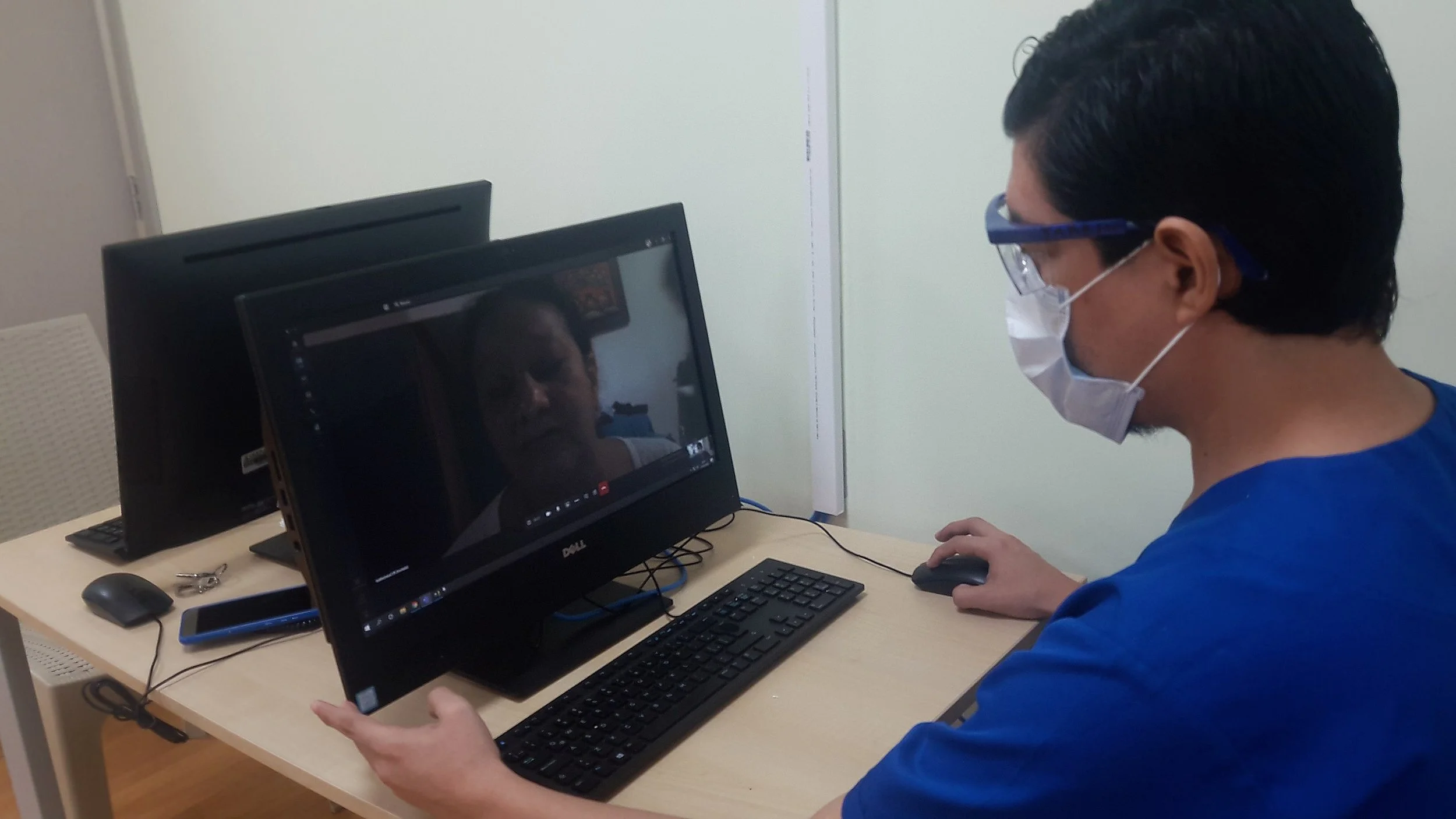
Sarah Jane Tribble: It can be telehealth vs. no care
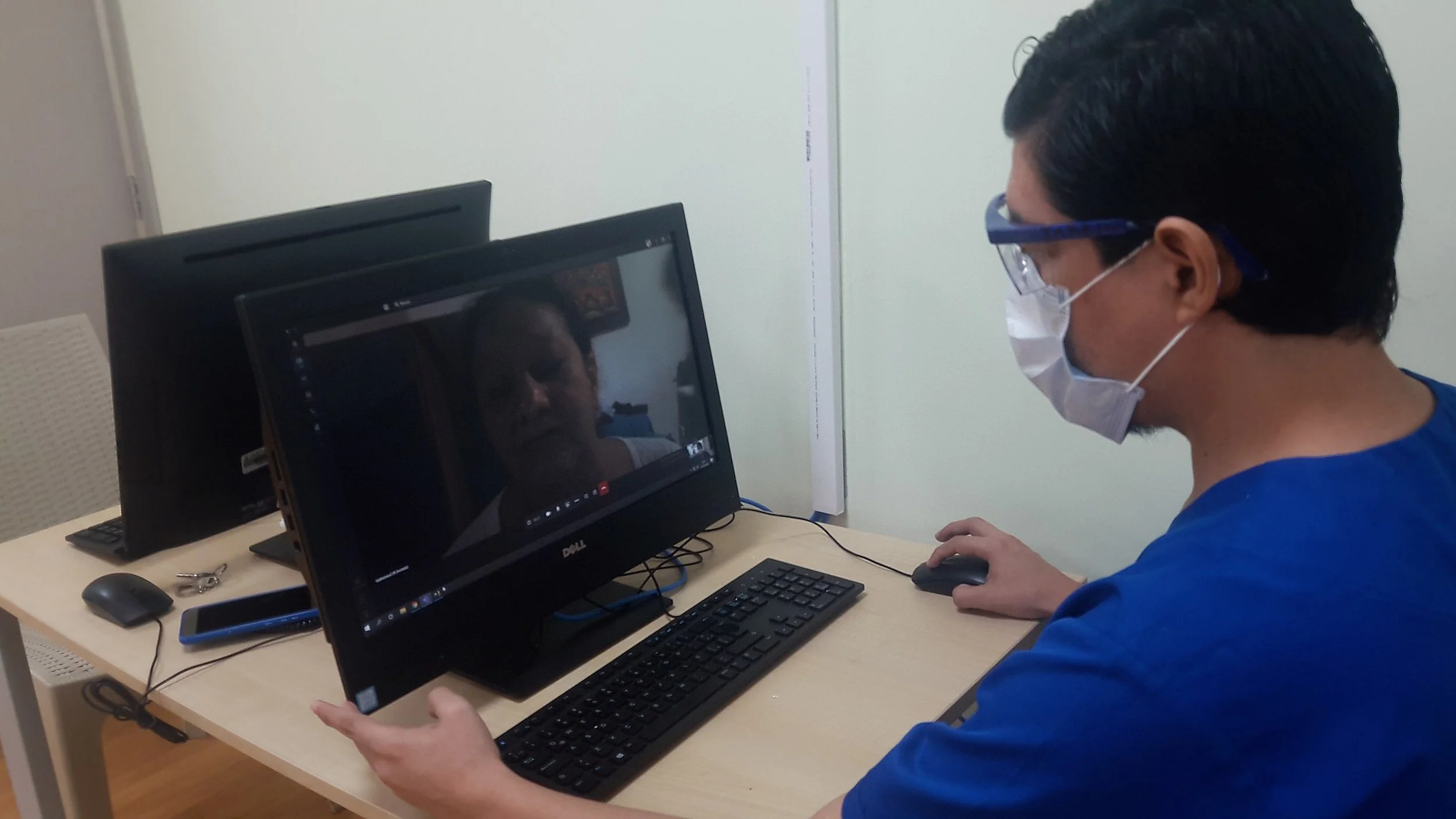
— Photo by Ceibos
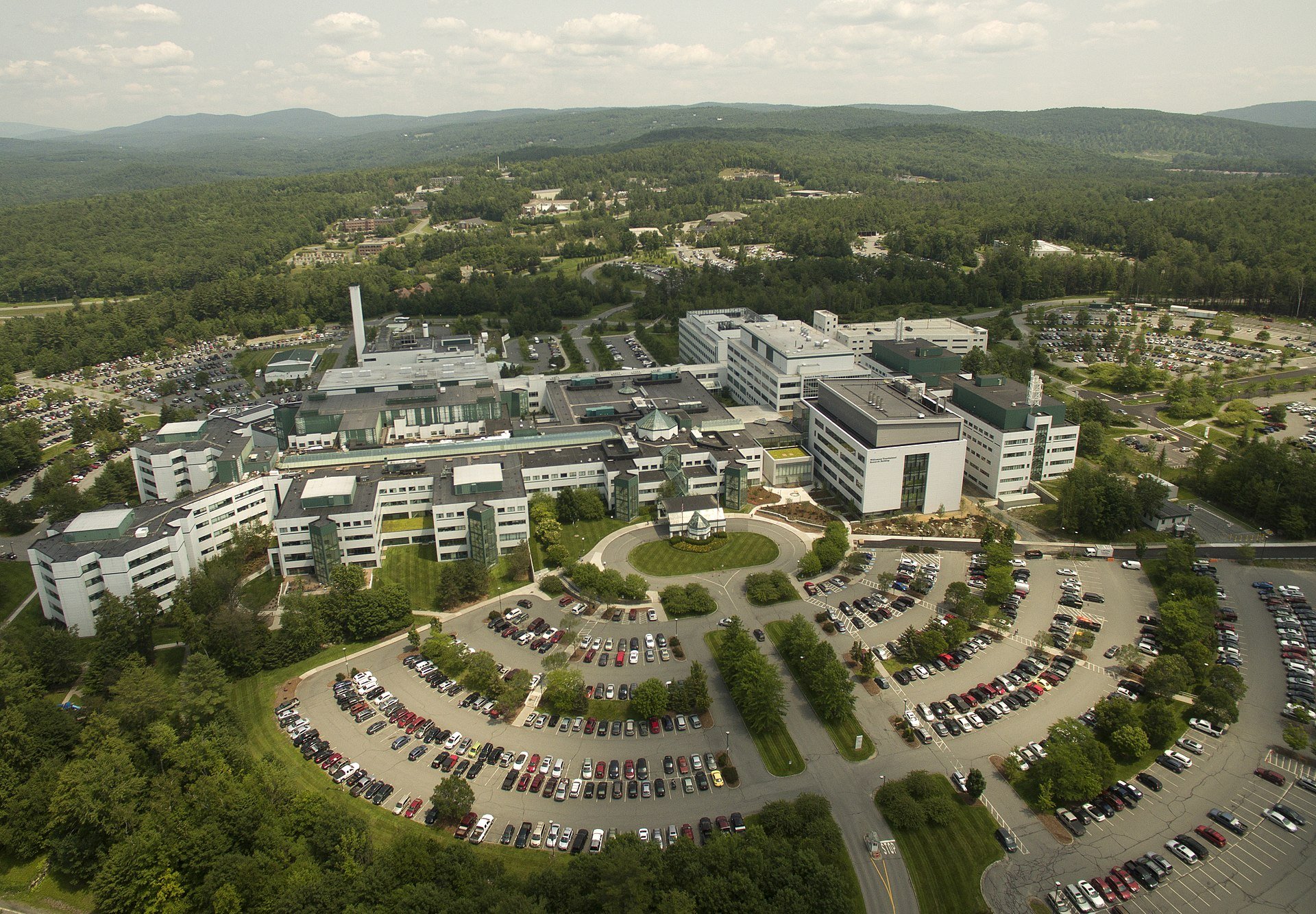
Dartmouth-Hitchcock Medical Center, in Lebanon, N.H.
— Photo by Jared C. Benedict
When the COVID-19 pandemic hit, Dr. Corey Siegel was more prepared than most of his peers.
Half of Siegel’s patients — many with private insurance and Medicaid — were already using telehealth, logging onto appointments through phones or computers. “You get to meet their family members; you get to meet their pets,” Siegel said. “You see more into their lives than you do when they come to you.”
Siegel’s Medicare patients weren’t covered for telehealth visits until the pandemic drove Congress and regulators to temporarily pay for remote medical treatment just as they would in-person care.
Siegel, section chief for gastroenterology and hepatology at Dartmouth-Hitchcock Medical Center, in Lebanon, N.H., is licensed in three states and many of his Medicare patients were frequently driving two to three hours round trip for appointments, “which isn’t a small feat,” he said.
The $1.7 trillion spending package that Congress passed in December included a two-year extension of key telehealth provisions, such as coverage for Medicare beneficiaries to have phone or video medical appointments at home. But it also signaled political reluctance to make the payment changes permanent, requiring federal regulators to study how Medicare enrollees use telehealth.
The federal extension “basically just kicked the can down the road for two years,” said Julia Harris, associate director for the health program at the Washington, D.C.-based Bipartisan Policy Center think tank. At issue are questions about the value and cost of telehealth, who will benefit from its use, and whether audio and video appointments should continue to be reimbursed at the same rate as face-to-face care.
Before the pandemic, Medicare paid for only narrow uses of remote medicine, such as emergency stroke care provided at hospitals. Medicare also covered telehealth for patients in rural areas but not in their homes — patients were required to travel to a designated site such as a hospital or doctor’s office.
But the pandemic brought a “seismic change in perception” and telehealth “became a household term,” said Kyle Zebley, senior vice president of public policy at the American Telemedicine Association.
The omnibus bill’s provisions include: paying for audio-only and home care; allowing for a variety of doctors and others, such as occupational therapists, to use telehealth; delaying in-person requirements for mental health patients; and continuing existing telehealth services for federally qualified health clinics and rural health clinics.
Telehealth use among Medicare beneficiaries grew from less than 1% before the pandemic to more than 32% in April 2020. By July 2021, the use of remote appointments retreated somewhat, settling at 13% to 17% of claims submitted, according to a fee-for-service claims analysis by McKinsey & Co.
Fears over potential fraud and the cost of expanding telehealth have made politicians hesitant, said Josh LaRosa, vice president at the Wynne Health Group, which focuses on payment and care delivery reform. The report required in the omnibus package “is really going to help to provide more clarity,” LaRosa said.
In a 2021 report, the Government Accountability Office warned that using telehealth could increase spending in Medicare and Medicaid, and historically the Congressional Budget Office has said telehealth could make it easier for people to use more health care, which would lead to more spending.
Dr. Corey Siegel and his colleagues at Dartmouth-Hitchcock Medical Center see remote care as a tool for helping chronically ill patients receive ongoing care and preventing expensive emergency episodes. It “allows patients to not be burdened by their illnesses,” he says. “It’s critical that we keep this going.”
Advocates like Zebley counter that remote care doesn’t necessarily cost more. “If the priority is preventive care and expanding access, that should be taken into account when considering costs,” Zebley said, explaining that increased use of preventative care could drive down more expensive spending.
Siegel and his colleagues at Dartmouth see remote care as a tool for helping chronically ill patients receive ongoing care and preventing expensive emergency episodes. It “allows patients to not be burdened by their illnesses,” he said. “It’s critical that we keep this going.”
Some of Seigel’s work is funded by The Leona M. and Harry B. Helmsley Charitable Trust.
For the past nine months, Dartmouth Health’s telehealth visits plateaued at more than 500 per day. That’s 10% to 15% of all outpatient visits, said Katelyn Darling, director of operations for Dartmouth’s virtual care center.
“Patients like it and they want to continue doing it,” Darling said, adding that doctors — especially psychologists — like telehealth too. If Congress decides not to continue funding for remote at-home visits after 2024, Darling said, she fears patients will have to drive again for appointments that could have been handled remotely.
The same fears are worrying leaders at Sanford Health, which provides services across the Upper Midwest.
“We absolutely need those provisions to become permanent,” said Brad Schipper, president of virtual care at Sanford, which has health plan members, hospitals, clinics, and other facilities in the Dakotas, Iowa, and Minnesota. In addition to the provisions, Sanford is closely watching whether physicians will continue to get paid for providing care across state lines.
During the pandemic, licensing requirements in states were often relaxed to enable doctors to practice in other states and many of those requirements are set to expire at the end of the public-health emergency.
Licensing requirements were not addressed in the omnibus, and to ensure telehealth access, states need to allow physicians to treat patients across state lines, said Dr. Jeremy Cauwels, Sanford Health’s chief physician. This has been particularly important in providing mental health care, he said; virtual visits now account for about 20% of Sanford’s appointments.
Sanford is based in Sioux Falls, S.D., and Cauwels recalled one case in which a patient lived four hours from the closest child-adolescent psychiatrist and was “on the wrong side of the border.” Because of the current licensing waivers, Cauwels said, the patient’s wait for an appointment was cut from several weeks to six days.
“We were able to get that kid seen without Mom taking a day off to drive back and forth, without a six-week delay, and we were able to do all the things virtually for that family,” Cauwels said.
Psychiatrist Dr. Sara Gibson has used telehealth for decades in rural Apache County, Arizona. “There are some people who have no access to care without telehealth,” she said. “That has to be added into the equation.”
Gibson, who is also medical director for Little Colorado Behavioral Health Centers in Arizona, said one key question for policymakers as they look ahead is not whether telehealth is better than face-to-face. It’s “telehealth vs. no care,” she said.
Sarah Jane Tribble is a Kaiser Health News reporter.
Those nuns


Adapted from Robert Whitcomb’s “Digital Diary,’’ in GoLocal24.com
For the first time in quite a while, I encountered a nun, in a traditional habit, the other day, at the main Providence Post Office. She had a beatific smile.
When I was growing up in the Boston area, or even when I lived and worked in New York City, it seemed that nuns in habits were everywhere, connected to parishes, teaching school, acting as nurses and so on. Whether or not you agreed with their theology, they had edifying roles in society. A few, especially in some parochial schools, were battle-axes but most were kindly. I miss them. Of course, we used to call them penguins.
There are far fewer nuns these days but more than you might think because many have stopped wearing habits.
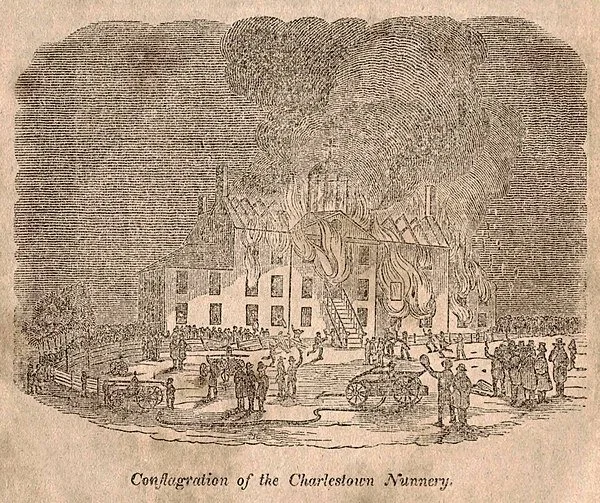
The Ursuline Convent riots took place on Aug. 11 and 12, 1834, in what is now Somerville, Mass. During the anti-Catholic riot, a convent of Roman Catholic Ursuline nuns was burned down by a Protestant mob.
Separated, 'haunted' art in Amherst

“Ruins of the Supposed Temple of Hercules in the City of Cori (Rovine del Tempio supposto di Ercole nella cita di Cora)” (1769 etching), by Giovanni Battista Piranesi, (Italian, 1720-1778), in the show “Architectural Ghosts,’’ at the Mead Art Museum, Amherst, Mass., through June 25.
The show presents architectural drawings, sculptures and other subjects in the museum's collection. From 8th Century Assyrian reliefs to 20th Century Yoruba and Dogon doors, everything in this show has been "separated from their original architectural surroundings and cultural moments," bringing a "haunted" and "ghostly" sense to these works of art.

Llewellyn King: My brief for America’s embattled police

Los Angeles Police Department officers arresting suspects during a traffic stop. Such stops can be life-threatening for the police.
— Photo by Jim Winstead
WEST WARWICK, R.I.
Police excess has gained huge attention after the death of George Floyd, in Minneapolis in 2020, and the alleged beating death of Tyre Nichols, in Memphis, last month. But police excess isn’t new.
A friend of mine, who had been drinking and could be quite truculent when drunk, was severely beaten in the police cells in Leesburg, VA., a couple of decades ago. I have never seen a man so badly hurt in a beating -- and I have done my share of police reporting.
That he provoked the police, I have no doubt. But no one should be beaten by the police anywhere, ever, for any amount of provocation. I might mention that my friend -- and the officers who might have killed him -- were white.
I used to cover the Thames Police Court, in the East End of London. That was before immigration had changed the makeup of the East End. It was then, as it had been for a long time, solidly white working class.
Every so often, a defendant would appear in the dock showing signs that he had been in a fight. One man had an arm in a sling, another had a black eye, a third had bruises on his face. One thing was common: If they looked beaten-up, they would be charged with “resisting arrest,” along with such other charges as drunkenness and petty larceny.
In the press benches, we shrugged and would just say something like, “They worked that bloke over.” We never thought to raise the issue of police brutality. It was just the way things were.
At least nowadays, when social norms don’t allow for police hitting suspects, there is a slight chance of redress. Although I would wager that nearly all police violence goes unreported, and the “blue wall” closes tightly around it.
People in uniform, men and women, hold dominion over a prisoner. If there is ethnic bias or verbal provocation, bad things can and do happen.
Yet I hold a brief for the police. Policing is dangerous and heartbreaking work, especially in the United States where guns are everywhere, Also it is shift work, itself a stressing factor.
Wearing the blue isn’t easy, and abuse and danger go with the job. Sean Bell, a former British policeman, now a professor at the Open University, described the police workload in the United Kingdom this way, “Those in the policing environment can become a human vacuum for the grief, sorrow, distress and misfortune for the victims of crime, road crashes and the plethora of other incidents dealt with time after time.”
Many of the incidents of American police being shot and police exceeding their authority have as their genesis at a traffic stop, as with Tyre Nichols. These are a cause of fear for both the police and criminals. It is where the rubber meets the road of law enforcement.
We motorists form our opinions of the police largely through traffic stops, which we rail against. But to the police, they are a life-threatening hazard as they approach a car that may have a crazed or dangerous criminal driver with a gun. They face danger and tragedy in plain sight.
The only thing that police officers are more wary of than traffic stops are domestic-violence calls. They are the worst, officers in Washington have told me.
Yet the traffic stop is an essential police tool, partly for controlling traffic but importantly for arresting criminals, fugitives and drug transporters. It is how the police work within the constitutional prohibition on illegal search and seizure.
People who have control of other people — drill sergeants, wardens and the police — are in a position to abuse, and some do. A uniform and authority can bring out the inner beast. Remember what went on in Abu Ghraib prison, in Iraq?
Following the two terrible incidents of police excess, Floyd and Nichols, all the solutions seem inadequate. But when out on the streets or in our homes, most of us are vitally aware that we feel secure because a call to 911 will bring the law — the men and women in blue who guarantee our safety and well being.
What to do about police violence? Vigilance is the first line of defense, but appreciating the police as well as holding them to account helps. Not many police officers feel appreciated, and that isn’t good for them or for society.
“The policeman’s lot is not a happy one!” So wrote British dramatist W.S. Gilbert in The Pirates of Penzance, an 1879 comic opera, one of his collaborations with composer Arthur Sullivan.
And Gilbert and Sullivan had never dreamt of a traffic stop.
Llewellyn King is executive producer and host of White House Chronicle, on PBS. His email is llewellynking1@gmail.com and he based in Rhode Island and Washington, D.C.

Boston has the oldest municipal police department in America.
‘Purely to the heavens’

Typical New England-style church steeple.
— Photo by Mangoe
“In this wind to wrench the eye
And curdle the ear,
The church steeple rises purely to the heavens;
The sky is clear.’’
— From “Fiend’s Weather,’’ by Louise Bogan (1897-1970), a native of Livermore Falls, Maine, and a U.S. poet laureate
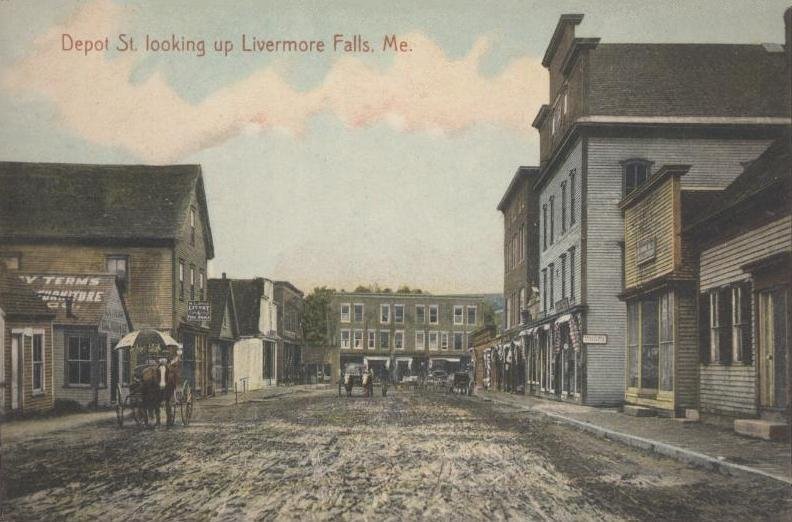
Depressing Depot Street in Livermore Falls in 1909, when the place was a busy mill town like so many others in New England.