Vox clamantis in deserto







Reinterpreting portraiture

“Doña-Maria” (collage on archival paper), by Rodriguez Calero, in the show “Self, assembled,’’ at the Flinn Gallery, Greenwich, Conn., through Feb. 1.
— Photo courtesy of Flinn Gallery.
The gallery explains that the show is a collection of collages that "probe the nature of identity" by "appropriating, fragmenting, layering, and unexpectedly juxtaposing images derived from personal and collective histories." Rodriguez Calero, Kevin Hetzel and Jason Noushin use diverse skills and experiences to create artwork that asks us to rethink how we interpret portraiture.

Finally, no climbing

Enthusiasm for skiing spread rapidly in New England in the years before America’s entry in World War II. The arrival of rope tows, usually connected to truck engines, was one reason, as at this farm in Lisbon, N.H. , in 1936. Farm Security Administration photographer Marion Post Wolcott took pictures of local teenagers skiing on Dickinson’s farm in March 1939. She explained:
“On Saturday afternoon many high school students come to Dickinson’s farm to ski. Mr Dickinson built a ski tow on his farm three years ago at a cost of one thousand dollars. This is the first year he had made any money {from the ski business} although business is increasing rapidly now. He has a small dairy farm and until the hurricane last year destroyed his entire grove of maple trees, he made and sold maple syrup.”
Calling in company
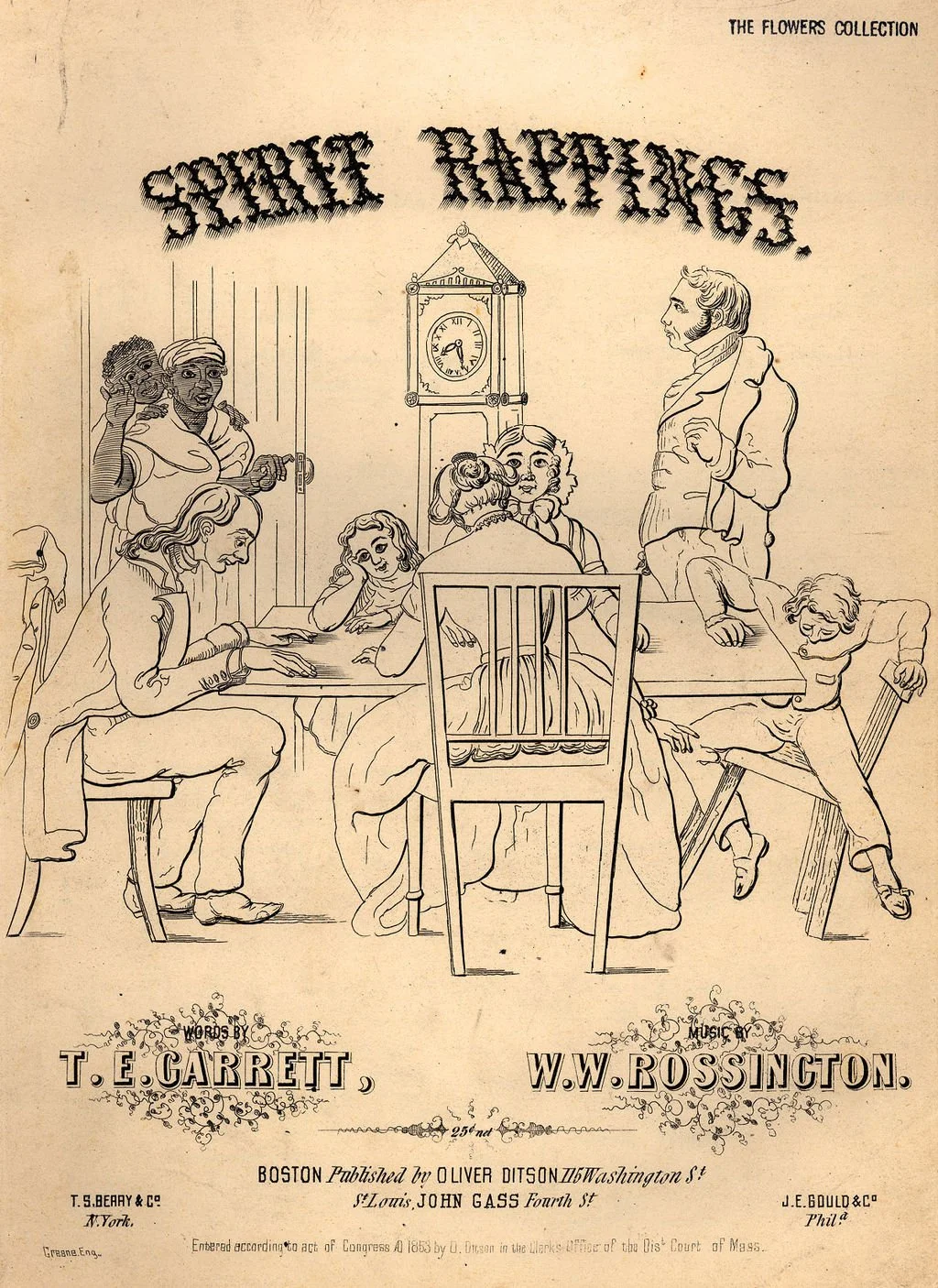
By 1853, when the popular song “Spirit Rappings” was published, Spiritualism was an object of intense curiosity in New England.
“For a night when sleep eludes you, I have,
At last, found the formula. Try to summon
All those ever known who are dead now, and soon
It will seem they are there in your room, not chairs enough
For the party, or standing space even….’’
From “Better Than Counting Sheep,’’ by Robert Penn Warren (1905-1989), celebrated poet, novelist and critic, a Kentucky native, he lived the latter part of his life in Connecticut and Vermont

‘Creative genius in the air’

Early classification of snow crystals by Israel Perkins Warren (1814-1892), New England author, journalist and Congregational minister.

Louis Prang may have introduced the first American Christmas cards, such as this one. He fled German disorder in 1848 and came to Boston. Prang went to work for an engraver, eventually setting up his own lithography shop. He started producing Christmas cards in New England in the 1870s.
“All praise to winter, then, was Henry's feeling. Let others have their sultry luxuries. How full of creative genius was the air in which these snow-crystals were generated. He could hardly have marveled more if real stars had fallen and lodged on his coat. What a world to live in, where myriads of these little discs, so beautiful to the most prying eye, were whirled down on every traveler's coat, on the restless squirrel's fur and on the far-stretching fields and forests, the wooded dells and mountain-tops -- these glorious spangles, the sweepings of heaven's floor.”
― Van Wyck Brooks (1886-1963), literary critic and historian, in his book The Flowering of New England, 1815-1865. The “Henry’’ refers to Henry David Thoreau (1817-1862).
Unless you can’t find an aluminum one

”The Perfect Christmas Tree” (1930 watercolor and gouache on paper), by John Clymer (1907-1989), in This Week magazine, Dec. 24, 1939. at the National Museum of American Illustration, Newport, R.I.
— Copyright 2022, the National Museum of American Illustration

Mr. Clymer established his career in the artists center of Westport, Conn., whose Campo Beach is seen here.

Llewellyn King: 2022’s biggest crises will be 2023’s, too

The Apocalypse, depicted in Orthodox Christian traditional fresco scenes in Osogovo Monastery, North Macedonia.
WEST WARWICK, R.I.
There are no new years, just new dates.
As the old year flees, I always have the feeling that it is doing so too fast; that I haven’t finished with it, even though the same troubles are in store on the first day of the new year.
Many things are hanging over the world this transition. None is subject to quick fixes.
Here are the three leading, intractable mega-issues:
First, the war in Ukraine. There is no resolution in sight as Ukrainians survive as best they can in the rubble of their country, subject to endless pounding by Russian President Vladimir Putin. It is as ugly and flagrant an aggression as Europe has seen since days of Hitler and Stalin.
Eventually, there will be a political solution or a Russian victory. Ukraine can’t go on for very long, despite its awesome gallantry, without the full engagement of NATO as a combatant. It isn’t possible that it can wear down Russia with the latter’s huge human advantage and Putin’s dodgy friends in Iran and China.
One scenario is that after winter has taken its toll on Ukraine, and the invading forces, a ceasefire-in-place is declared, costing Ukraine territory already held by Russia. This will be hard for Kyiv to accept -- huge losses and nothing won.
Kyiv’s position is that the only acceptable borders are those that were in place before the Russian invasion of Crimea in 2014. That almost certainly would be too high a price for Russia.
Henry Kissinger, writing in the British magazine “The Spectator,” has proposed a ceasefire along the borders that existed before the invasion of last February. Not ideal but perhaps acceptable in Moscow, especially if Putin falls. Otherwise, the war drags on, as does the suffering, and allies begin to distance themselves from Ukraine.
A second huge, continuing crisis is immigration. In the United States, we tend to think that this is unique to us. It isn’t. It is global.
Every country of relative peace and stability is facing surging, uncontrolled immigration. Britain pulled out of the European Union partly because of immigration. Nothing has helped.
This year 504,000 immigrants are reported to have made it to Britain. People crossing the English Channel in small boats, with periodic drownings, has worsened the problem.
All of Europe is awash with people on the move. This year tens of thousands have crossed the Mediterranean from North Africa and landed in Malta, Spain, Greece and Italy. It is changing the politics of Europe: Witness the new right-wing government in Italy.
Other migrant masses are fleeing eastern Europe for western Europe. Ukraine has a migrant population in the millions seeking peace and survival in Poland and other nearby countries.
The Middle East is inundated with refugees from Syria and Yemen. These millions follow a pattern of desperate people wanting shelter and services, but eventually destabilizing their host lands.
Much of Africa is on the move. South Africa has millions of migrants, many from Zimbabwe, where drought has worsened chaotic government, and economic activity has come to a halt because of electricity shortages.
Venezuelans are flooding into neighboring Latin American countries, and many are journeying on to the southern border of the United States.
The enormous movement of people worldwide in this decade will have long-lasting effects on politics and cultures. Conquest by immigration is a fear in many places.
My final mega-issue is energy. Just when we thought the energy crisis that shaped the 1970s and 1980s was firmly behind us, it is back -- and is as meddlesome as ever.
Much of what will happen in Ukraine depends on energy. Will NATO hold together or be seduced by Russian gas? Will Ukrainians survive the frigid winter without gas and often without electricity? Will the United States become a dependable global supplier of oil and gas, or will domestic climate concerns curb oil and gas exports? Will small modular reactors begin to meet their promise? Ditto new storage technologies for electricity and green hydrogen?
Energy will still be a driver of inflation, a driver of geopolitical realignments, and a driver of instability in 2023.
Add to worsening weather and the need to curb carbon emissions, and energy is as volatile, political, and controversial as it has ever been. And that may have started when English King Edward I banned the burning of coal in 1304 to curb air pollution in the cities.
Happy New Year, anyway.
Llewellyn King is executive producer and host of White House Chronicle, on PBS. His email is llewellynking1@gmail.com, and he’s based in Rhode Island and Washington, D.C.
Insurer’s app for injured employees
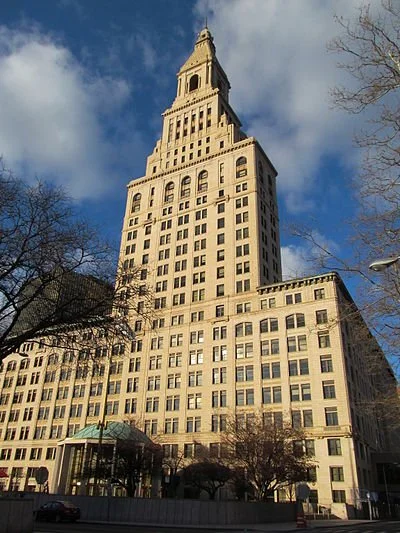
The 24-story Travelers Tower, in Hartford, built in 1919. The tower remains the largest office of the big insurance company, although Travelers’ headquarters is now in New York City. Hartford was once called “The Insurance Capital of the World.’’
Edited from a New England Council report (newenglandcouncil.com)
“Travelers Cos. Inc has launched an app to help promote mental health and facilitate recovery for injured employees. By using technology from Wysa called ‘The Wysa for Return to Work’ app, which is programmed by artificial intelligence, Travelers has found a way to help employees improve their mental resilience.
“Travelers found that around 40 perceny of injured employees experienced a psychosocial barrier that stagnated their recovery. Nurses at Travelers define psychosocial barriers as an attitude, state or consciousness that affects a person’s ability to communicate.
‘‘‘The Wysa for Return to Work’ app responds to users through a secure texting-style platform to offer assistance such as cognitive behavioral techniques and breathing exercises to alleviate mental health struggles. The results from the initial launch of the app have been promising. Travelers report that workers using the app missed one-third fewer workdays versus employees not using the app.
“Dr. Marcos Iglesias, chief medical director at Travelers, said, ‘Factors unrelated to an individual’s injury, such as fear, unrealistic expectations, lack of sleep or minimal social support, can hinder the recovery process. Helping injured employees bounce back requires an approach that addresses an individual’s physical and mental health challenges.”’
‘The Great Mystery’

“Sumi Shrine” (mixed media construction), by Berkshires-based artist Thomas Schneider, in his show, opening Feb. 4, “Ecstatic Gates: Devotional Objects, Paintings, Drawings and Sculpture’,’ at Creative Connections Gallery, Ashburnham, Mass.
The gallery says:
“Thomas Schneider is an artist who has recently moved his studio to North Adams, Mass. His work for the past 10 years has been evolving through different art forms and mediums, guided by his own personal awakening. His current project , ‘Ecstatic Gates,’ features a series of miniature wall shrines. Each piece is a kind devotional object, altar, or chapel, as well as a dwelling place for the imagination. These shrines express Thomas’s sense of wonder for the Great Mystery, his penchant for whimsy, and his connection to the wild. They are delicately crafted in wood, with adornments in gold leaf, bone, porcupine needles, horse hair, and other natural materials. “
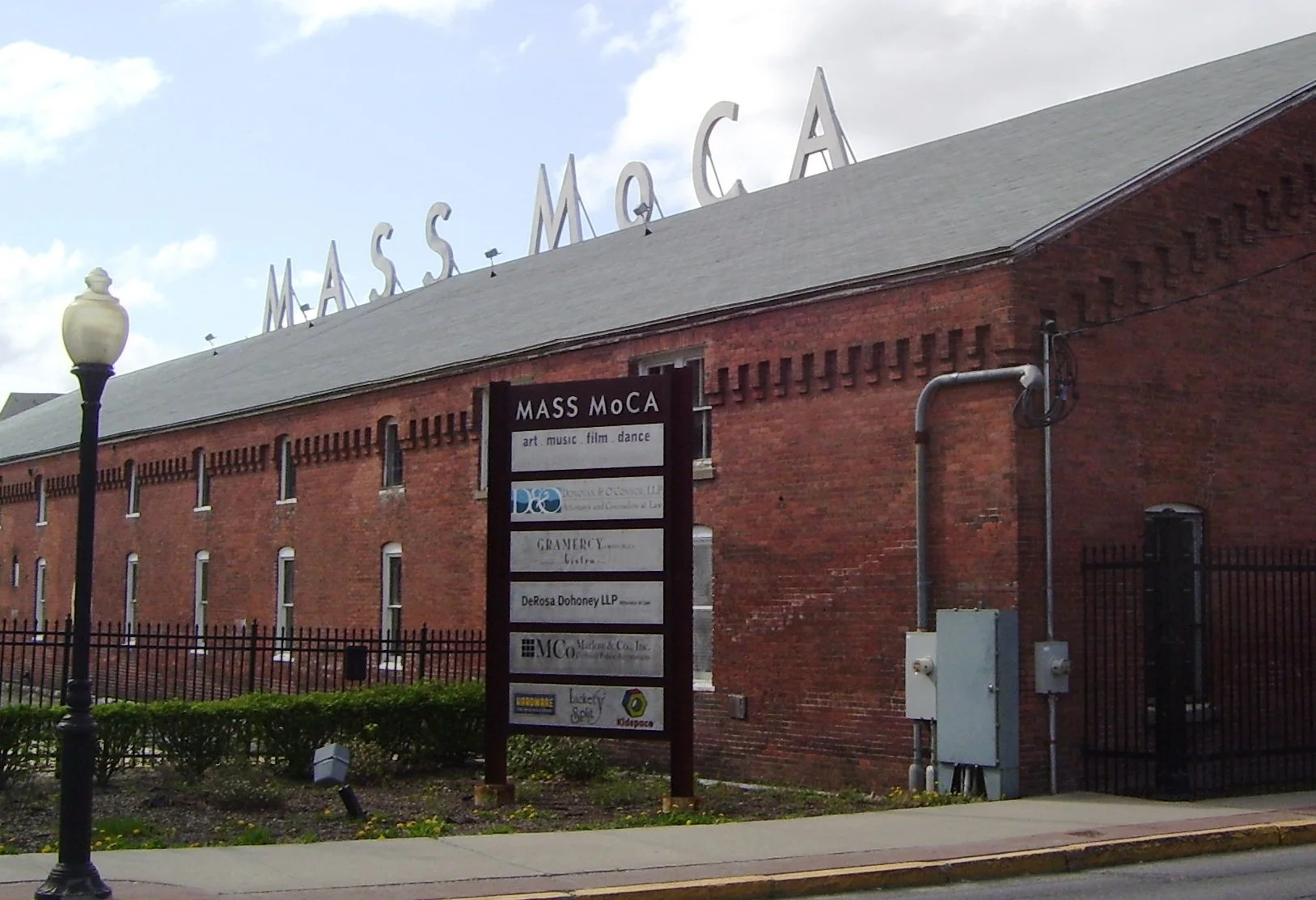
In North Adams, the Massachusetts Museum of Contemporary Art (MASS MoCA), formerly the Arnold Print Works and a facility of Sprague Electronics.
— Photo by Beyond My Ken
Joy from the cloud

“Last night
the rain
spoke to me
slowly, saying,
what joy
to come falling
out of the brisk cloud,
to be happy again…’’
— From “The Rain Spoke to Me,’’ by Mary Oliver (1935-2019), American poet. She spent much of her life in Provincetown, of which wrote: , "I too fell in love with the town, that marvelous convergence of land and water; Mediterranean light; fishermen who made their living by hard and difficult work from frighteningly small boats; and, both residents and sometime visitors, the many artists and writers….’’
Honking commuter

Charlie Longtine, “Mass Ave, 8:45 AM” (oil on panel), at the Copley Society of Art, Boston, in the show “Holiday Small Works 2022.’’
— Photo courtesy Copley Society of Art
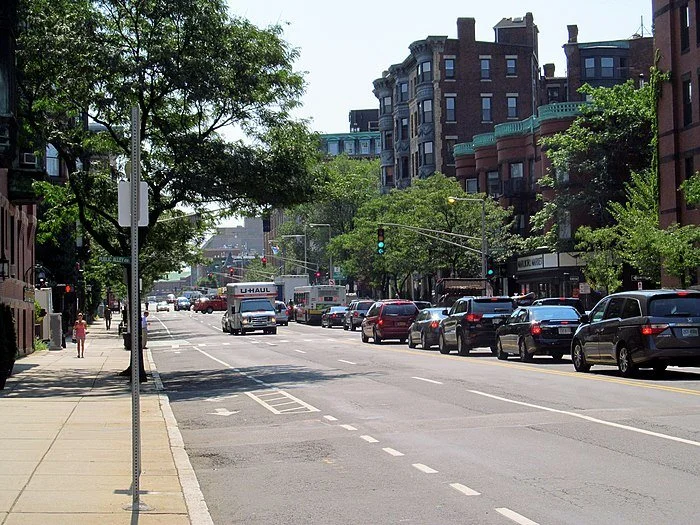
Massachusetts Avenue in Boston.
Lara Pfadt: Decarbonizing New England campuses
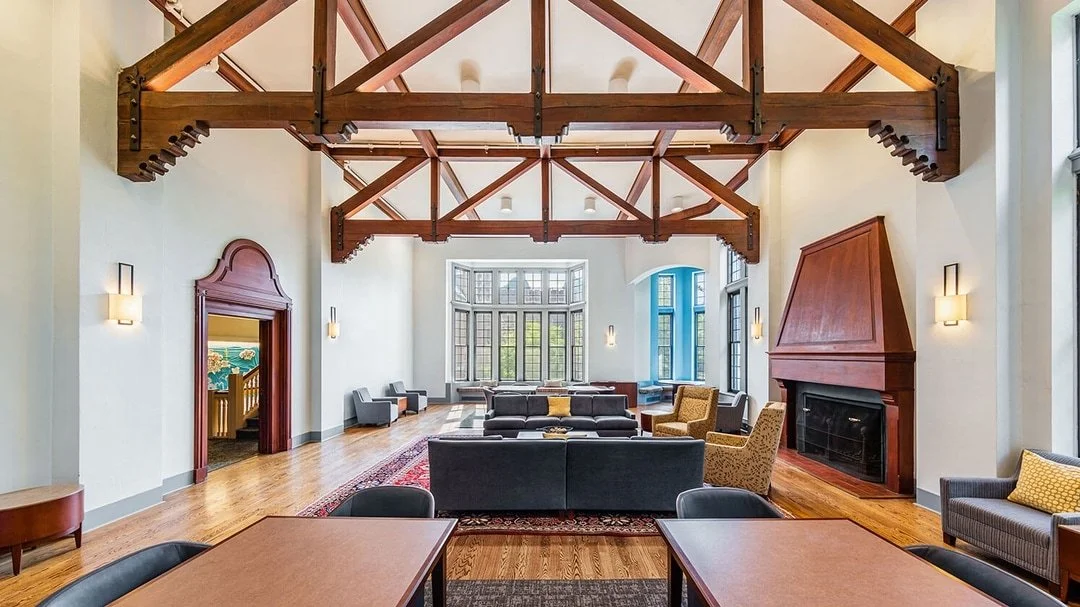
Wellesley College’s Pomeroy Hall living room showing upgrades, including new lighting and sensitive paint colors.
—Photo courtesy of Raj Das Photography
From The England Journal of Higher Education, a service of The New England Board of Higher Education (nebhe.org).
Over the past decades, universities have been at the forefront of establishing ambitious goals for decarbonizing campuses. While there are many variables in how to advance energy efficiency in the campus-built environment, some universities have taken the strategic approach of combining energy efforts with the heavy maintenance and upkeep needs of the buildings.
Universities must identify and solve challenges associated with buildings of different eras, programmatic uses, MEP (mechanical, electrical and plumbing) systems, and energy generation. This can be daunting, but necessary for a carbon-neutral future, and collaboration with university stakeholders, contractors, and engineers can be the key to success.
Our Boston-based architectural firm Finegold Alexander has had the opportunity to work with several campuses, including Amherst College, the Massachusetts Institute of Technology, in Cambridge, Wellesley College, in the town of the same name,. and Brandeis University, in Waltham, on energy master plans and targeted renovations to achieve decarbonization goals. This work includes collaborating with an interdisciplinary team to identify targeted, cost-effective actions at individual buildings that meet institutional priorities of energy reduction, deferred maintenance, and accessibility.
A case study at Wellesley
In 2019, Finegold Alexander was engaged by Wellesley College to study early 20th Century residence halls to realize significant deferred maintenance, infrastructure, and accessibility upgrades across campus. Simultaneously, Wellesley was in the midst of an energy master plan to determine how to meet its “E2040” goals of reducing its greenhouse gas (GHG) emissions by 90 percent below 2010 levels.
The energy master plan looked at ways to reduce GHG emissions from space heating and cooling across the entire portfolio of buildings. The historic residence halls connect to the campus steam loop and are heated with steam or hot-water radiators. Salas O’Brien (formerly named MEP Associates) led the master plan, which involves the conversion of the campus from a steam distribution loop to low-temperature hot water. This changeover to low-temperature water supports potential geothermal installations, gradually reducing energy input and, therefore, carbon emissions.
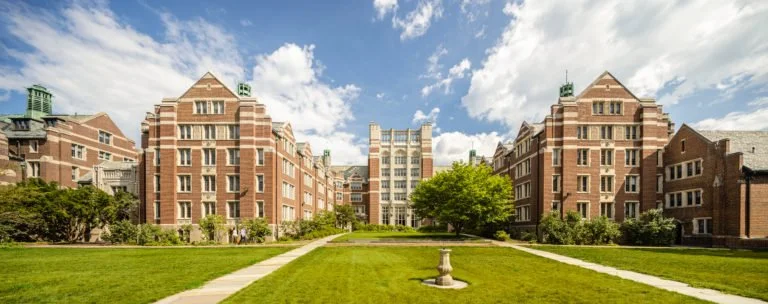
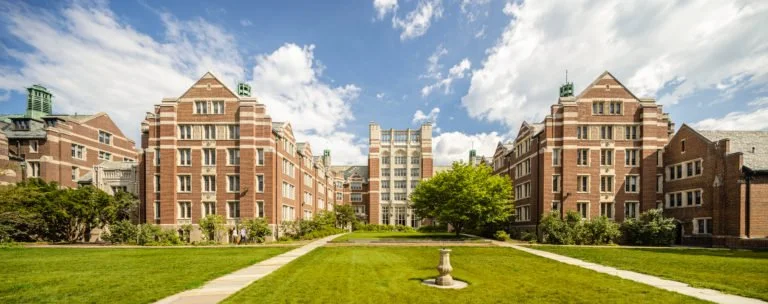
Tower Court at Wellesley College.
The built environment, and energy used to power it, is a major contributor to GHG emissions on campuses. Wellesley College is no different. Many of its buildings date from the early 20th century and produce higher energy usage due to mass masonry wall construction, original steel windows, slate roofs, and complex gothic detailing. Working alongside Salas O’Brien, Finegold Alexander asked questions about the implications of this work for the architecture of the campus’s historic and existing buildings. Were the colleges considering envelope upgrades? What about potential code triggers when infrastructure work exceeds certain dollar values? Were there synergies to be found by addressing deferred maintenance at the same time as energy infrastructure? How can embodied carbon be measured simultaneously with operational carbon in these plans?
One targeted renovation includes Severance Hall, built in 1926 and part of the college’s iconic Tower Court complex. Finegold Alexander started at the building envelope exploring upgrade options and energy conservation measures, testing each through energy modeling and providing lifecycle costing for each. Energy conservation measures were also reviewed to curb deferred maintenance issues, such as water intrusion and occupant comfort issues. Through this comparison, the design team and college settled on a path combining new insulated walls at the exterior with interior storm windows. This plan allowed for a decrease in the radiator size of the new low-temperature system while providing greater comfort for occupants.
In addition to the envelope efforts, conversations with residential life stakeholders set program and energy goals, allowing the project to incorporate outward-facing improvements and stay within budget. These items include updates to the historic living room and other gathering spaces—focusing on an infusion of new A/V, functional and decorative lighting, and technology to showcase historic features. Renovations, including kitchenettes, bathrooms and common spaces, provide fully accessible and more functional spaces, carving out small gathering areas off the long corridors of this Victorian-era residence hall.
What’s next?
Universities and colleges continue to pave the way in terms of sustainability goals, but in recent years, such goals can be found across other sectors, such as towns and cities developing sustainability master plans and adopting net zero goals. The increased federal and state support, largely stemming from the U.S. Infrastructure Investment and Jobs Act and the Inflation Reduction Act, in the form of grants and building code modifications, supports the energy efficiency efforts in our communities and institutions.
Lara Pfadt is a senior associate architect and sustainability strategist at Finegold Alexander Architects.
Darker times back then
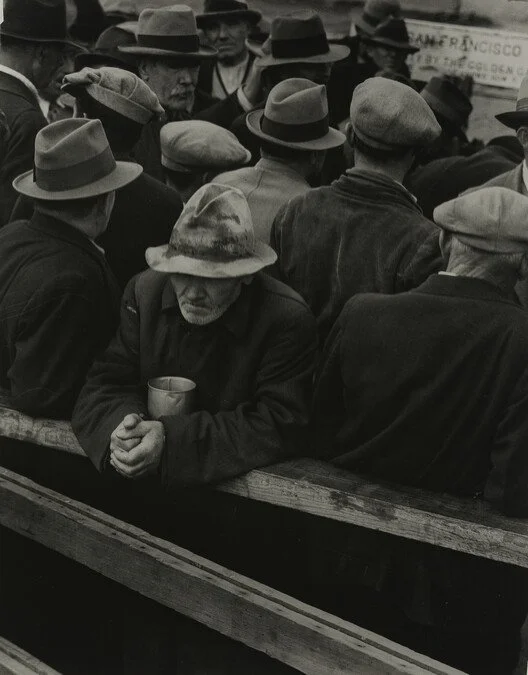
“White Angel Breadline 1932’’ (gelatin silver enlargement print), by Dorothea Lange (1895-1965), at the Hood Museum of Art at Dartmouth College, Hanover, N.H.
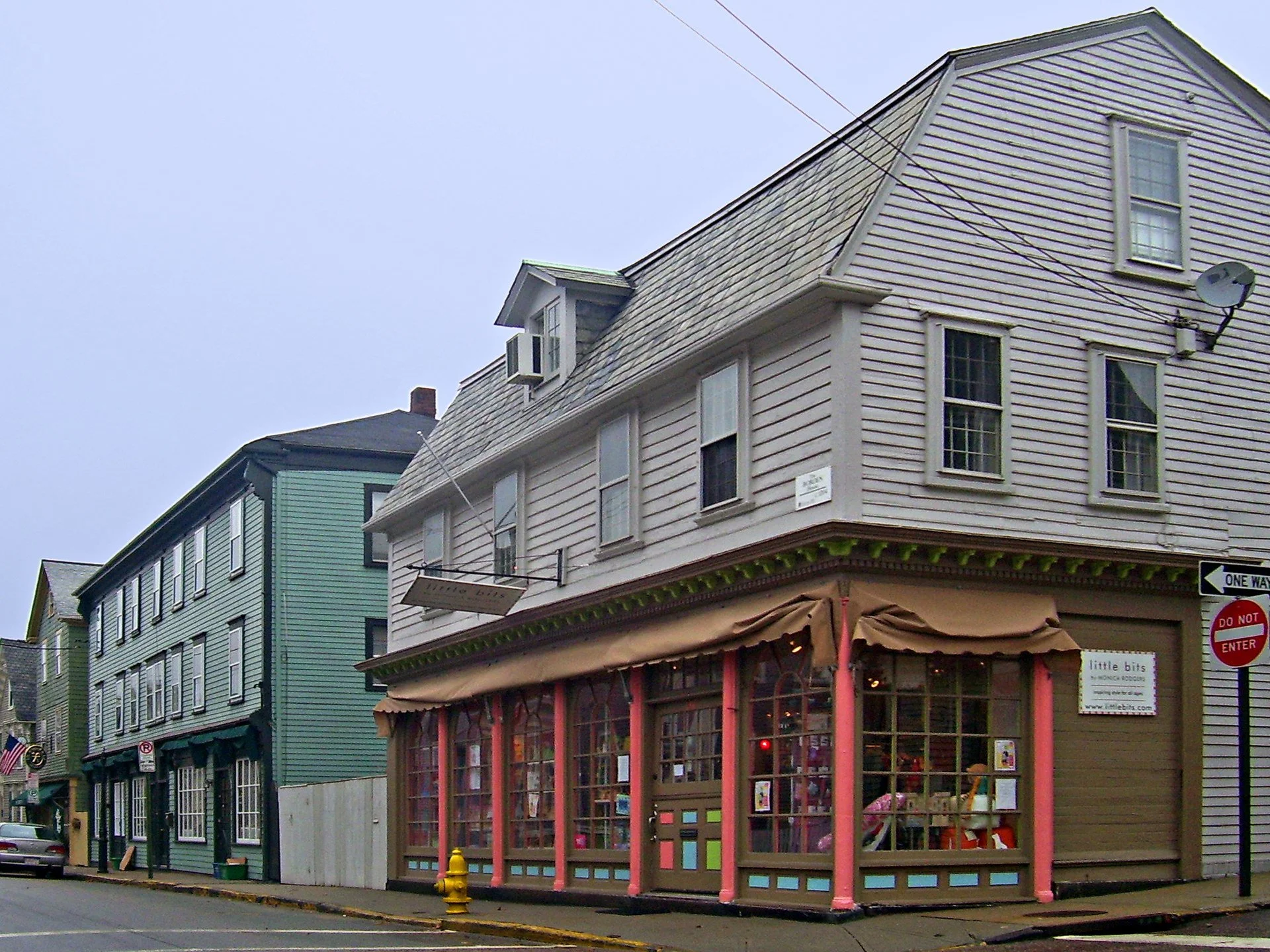
Tax challenges in a resort town
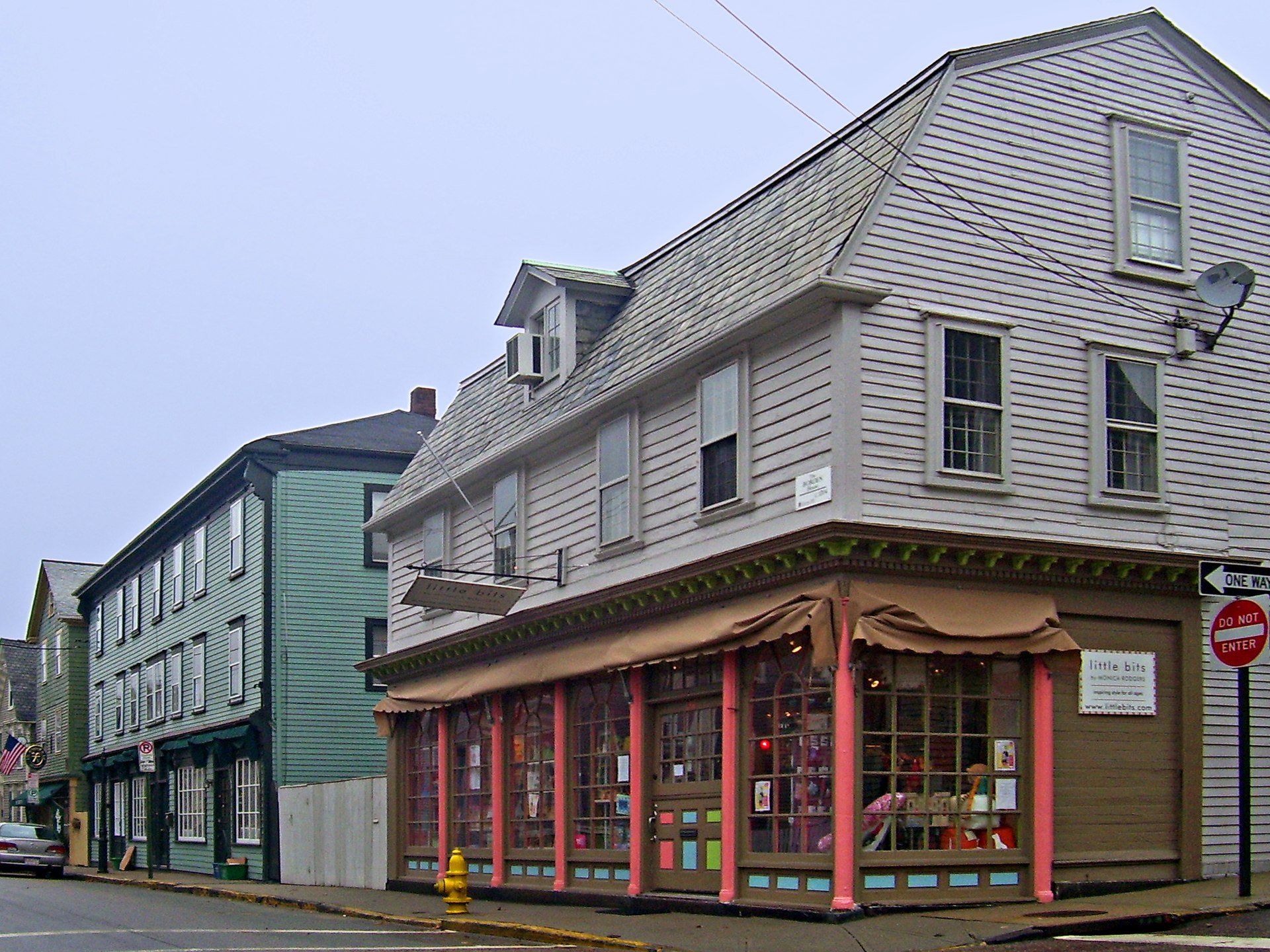
Colonial era buildings in a Newport historic district.
— Photo by Daniel Case
Newport Tax Change
Adapted from Robert Whitcomb’s “Digital Diary,’’ in GoLocal24.com
Newport has adopted a new two-tier residential tax system that may cut taxes for many homeowners. The people who would get the break include owners of single-family homes who prove that they’re residents of the City by the Sea for more than seven months a year as well as owners of residential rental properties of three or fewer units whose renters’ leases run for at least a year.
The tax rate will remain higher for non-owner-occupied housing.
Earlier this year, Rhode Island state Sen. Dawn Euer said of the state legislation authorizing the change:
“As we know, our whole state and Newport especially are deep in an affordable housing crisis, and residential property tax relief is one tool to help address affordability…. Vacation rentals and short-term rentals take away from year-round housing, and while they do provide revenue, they contribute to our city’s housing crisis. Making a distinction between them will give residents the tax relief they need, and encourage property owners to create and maintain the permanent housing we desperately need.”
This arrangement should help stabilize housing in the city, which has long been destabilized by the high number of financially alluring (for property owners) expensive short-term warm-weather or even weekend rentals. But it’s hard to know what the effect on total property-tax revenue for the city might be. It will probably take a year to find out.
In any event, some lessons for other communities will come out of the Newport program, especially those in coastal resort areas.
Chris Powell: What housing emergency?

In Danbury: Clockwise from top left: Main Street Historic District, The Summit at Danbury, Tarrywile Mansion, Praxair Headquarters, Danbury Municipal Airport, Danbury Fair Mall, David Wooster Monument, Western Connecticut State University, and the Danbury Railway Museum
— Wikipedia
MANCHESTER, Conn.
Maybe the recession that has begun will loosen up Connecticut's housing market, but it will take a while even as the poor get poorer. The housing shortage is already making life desperate for many of the poor. But state government doesn't yet consider it an emergency, not even in the face of what seems about to happen in Danbury.
For the two years of the virus epidemic a former hotel building in Danbury has been operated as a shelter for the homeless by a social-service organization based in Stamford, Pacific House. The organization got state financing to purchase the building for use as a shelter but Danbury's zoning board has refused to approve it. The shelter has stayed in operation only because of one of Gov. Ned Lamont's emergency orders arising from the epidemic, but those orders expire Dec. 28.
The former hotel is adjacent to Interstate 84 and few residences are nearby, so the shelter is no more of a nuisance than the hotel was. While it is far from medical and commercial facilities and thus not the most convenient location for the homeless, Pacific House can bring services to them or help them get where they need to go as they work to gain self-sufficiency.
If state government really cared about the poor and troubled, it would pass a law exempting shelters from zoning regulations just as it has exempted group homes for the mentally handicapped.
Danbury lacks any facility that can accommodate all the people now being housed at the former hotel. Most may be out on the street at the end of the month just as the dead of winter sets in. Surely state government can put aside less essential matters until it solves the emergency housing problem.
Crooked guards
Connecticut's Correction Department lately worsened the state's housing problem. It was inadvertent but predictable.
Since prison guards work in tightly confined spaces and were at more risk of contracting COVID 19, the department used federal epidemic emergency money to let them rent hotel rooms so they might avoid infecting their families.
But, the Connecticut Mirror reports, state auditors found that the program was badly abused. Correction Department employees, the Mirror says, "used the program to book hotel rooms during a wedding, to celebrate New Year's Eve, and to live full-time in the hotels with their families. ... Others booked rooms in multiple hotels on the same days, and at least one correction officer used the program while he was on military leave." Some employees used the program to live in hotels for five months or more.
There were rules again this kind of thing but since this was an emergency, no one was hired to enforce them. Some employees who abused the program suffered short suspensions but it seems that no one was fired or prosecuted.
Of course, much federal emergency money has been defrauded throughout the country, just as it was defrauded by the corrupt city government in West Haven, where more than a million dollars was stolen or misdirected by a City Council aide who was also a state representative.
The lesson seems to be that any emergency's first order of business should be to hire extra auditors.
Another murder despite protective order
Another Connecticut woman who had a protective order was murdered the other week, apparently by the former boyfriend she got the order against. Julie Minogue of Milford was battered to death with an ax after her ex had harassed her with hundreds of text messages. An arrest warrant application for the harasser had been pending, left incomplete, for weeks.
The Connecticut Coalition Against Domestic Violence says there have been 12 intimate partner murders in the state so far this year.
The only way to stop them is to require police, prosecutors, and courts to give priority to domestic threats and violence and to impose heavy penalties upon conviction, even for first offenses. Here too state government is always doing many less important things.
Chris Powell is a columnist for the Journal Inquirer in Manchester. (CPowell@JournalInquirer.com)
And Hell that way
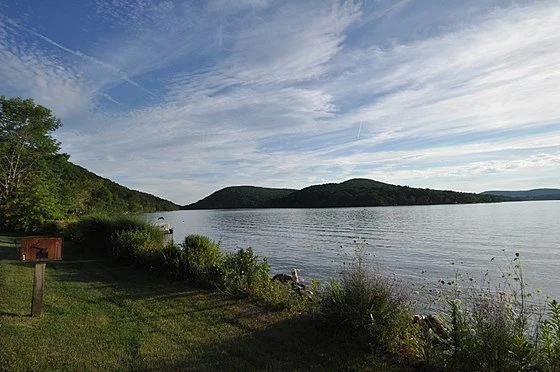
Lake Waramaug, in Litchfield, Conn., with Mt. Bushnell across the water.Z
“This was a little valley all to myself
In Connecticut’s northern hills: Cornwall was there;
Warren to westward: Waramaug Lake to the south;
And the great Gehenna {hell} sufficient six-score leagues—’’
“From “Death at The Purple Rim,’’ by Hyam Plutzik (1911-1962), a poet who grew up in Connecticut.
Your own tyrants
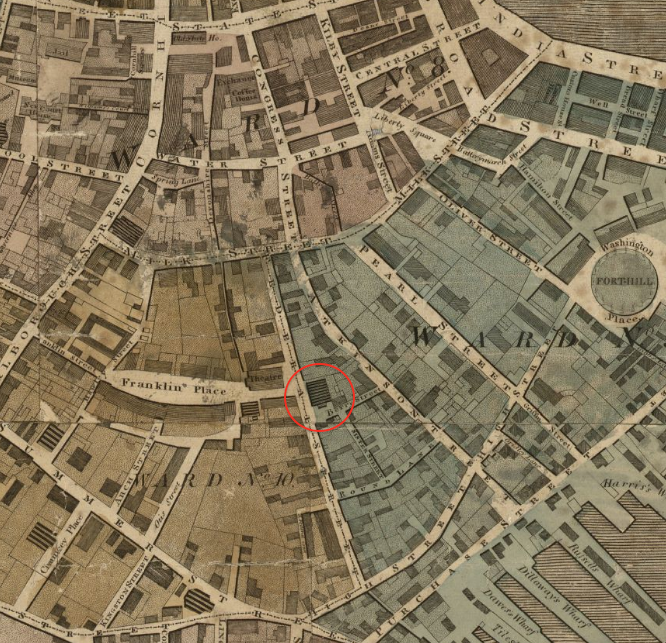
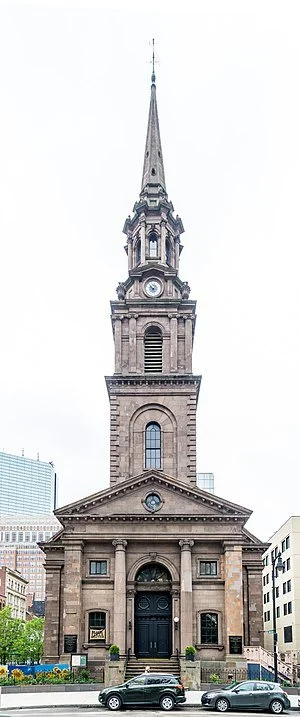
1814 map showing the location of the Federal Street Church, led by William Ellery Channing. The building was eventually abandoned because of the neighborhood’s density and the congregation moved to the Arlington Street Church (built 1861), below, often called “the Unitarian Vatican.’’
“The worst tyrants are those which establish themselves in our own breasts.”
— William Ellery Channing (1780-1842), Boston-based Unitarian minister and theologian
Reminder

”Global Inversion” (wool felt, human hair and acrylic hair), by Diane Jacobs (America and Jewish), at the Portland (Maine) Museum of Art.
Museum of Science, gaming firm join the metaverse

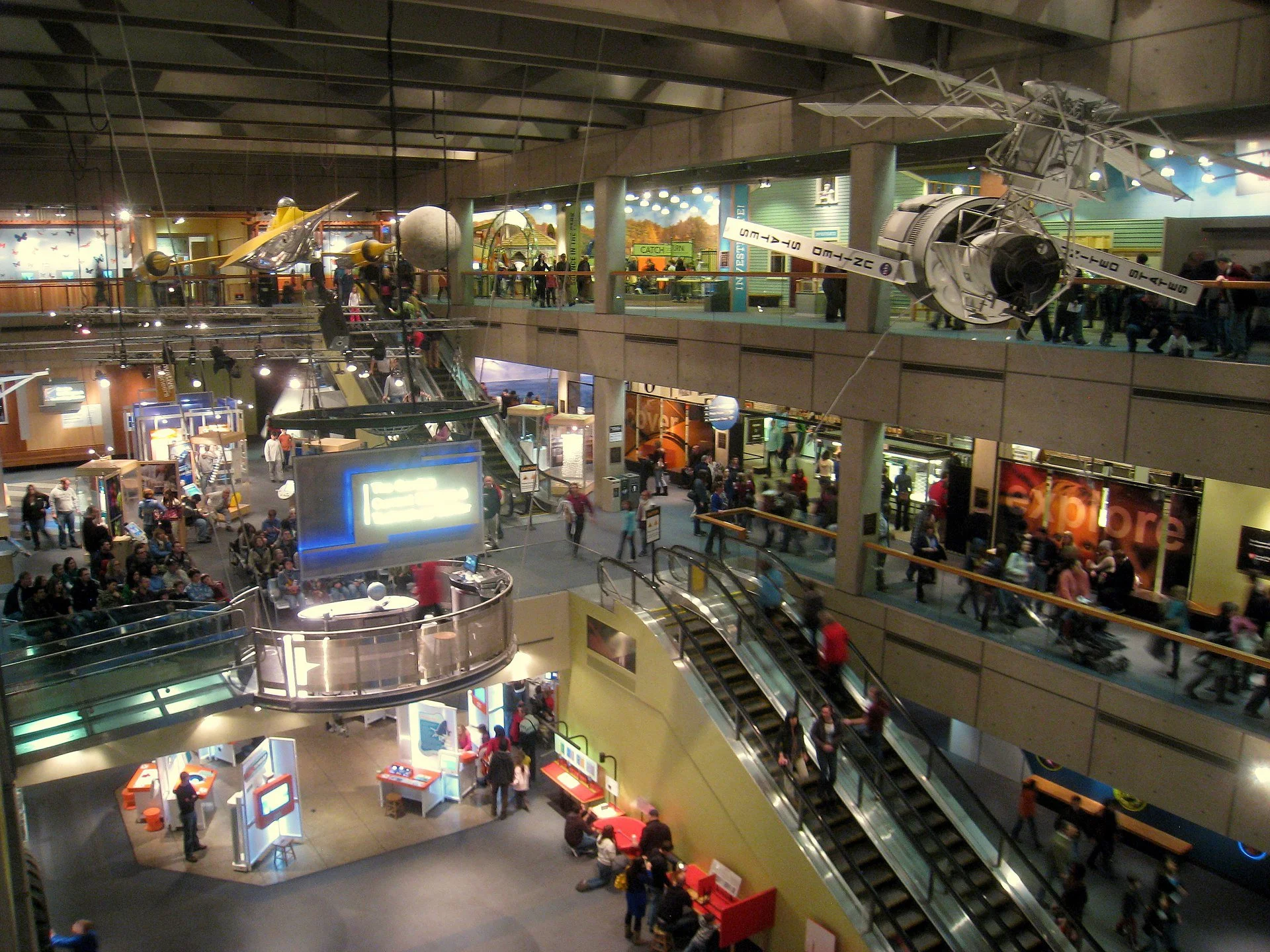
Inside the Blue Wing of the Boston Museum of Science
Edited from a New England Council (newenglandcouncil.com) report
The Boston Museum of Science is teaming up with the gaming company Roblox to join the metaverse by launching an immersive online game titled ‘‘Mission: Mars”.
Using data provided by NASA, Mission: Mars will encourage players to navigate engineering challenges around the planet. Some missions will recall science fiction, such as rescuing virtual explorers, but most challenges are inspired by the experiences of real astronauts.
Staff at the museum say that the game will expand beyond just using virtual reality. Mission: Mars will be available for free at schools to encourage teachers to incorporate the game into their teaching. The museum would like to continue to develop programs using Roblox’s platform in an effort to expand access to academic resources.
The Museum of Science’s president, Tim Ritchie, said, “I think you can build and design and use your heart and your mind and your hands, so to speak, by building things and designing things in a digital world. And in fact, it’s a lot less expensive to do so. And you can reach people all over this country and all over the world.”
Tough customers
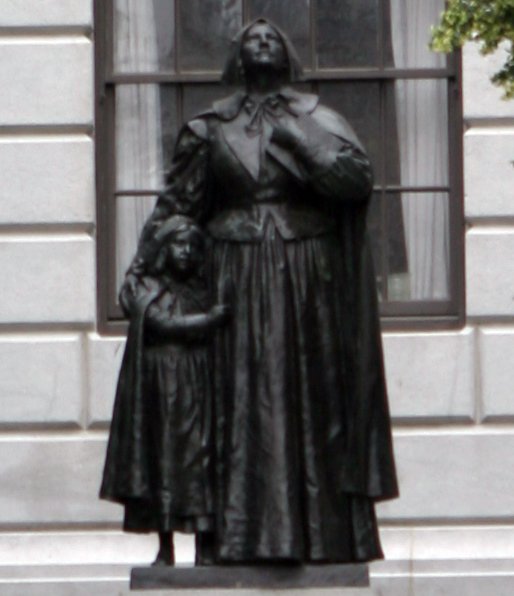
This is a statue at the Massachusetts State House of the formidable Anne Hutchinson (1591-1643), a Puritan spiritual adviser, religious reformer and a founder of Portsmouth, R.I.
“The clear lesson of New England's history is that when there are not enough suitable men around to run the world, women are perfectly capable of doing so. “
— Wallace Stegner (1909-1993), American novelist, short-story writer and environmentalist