
Vox clamantis in deserto







Boston needs 4 ‘Big Lifts’ to meet its climate goals
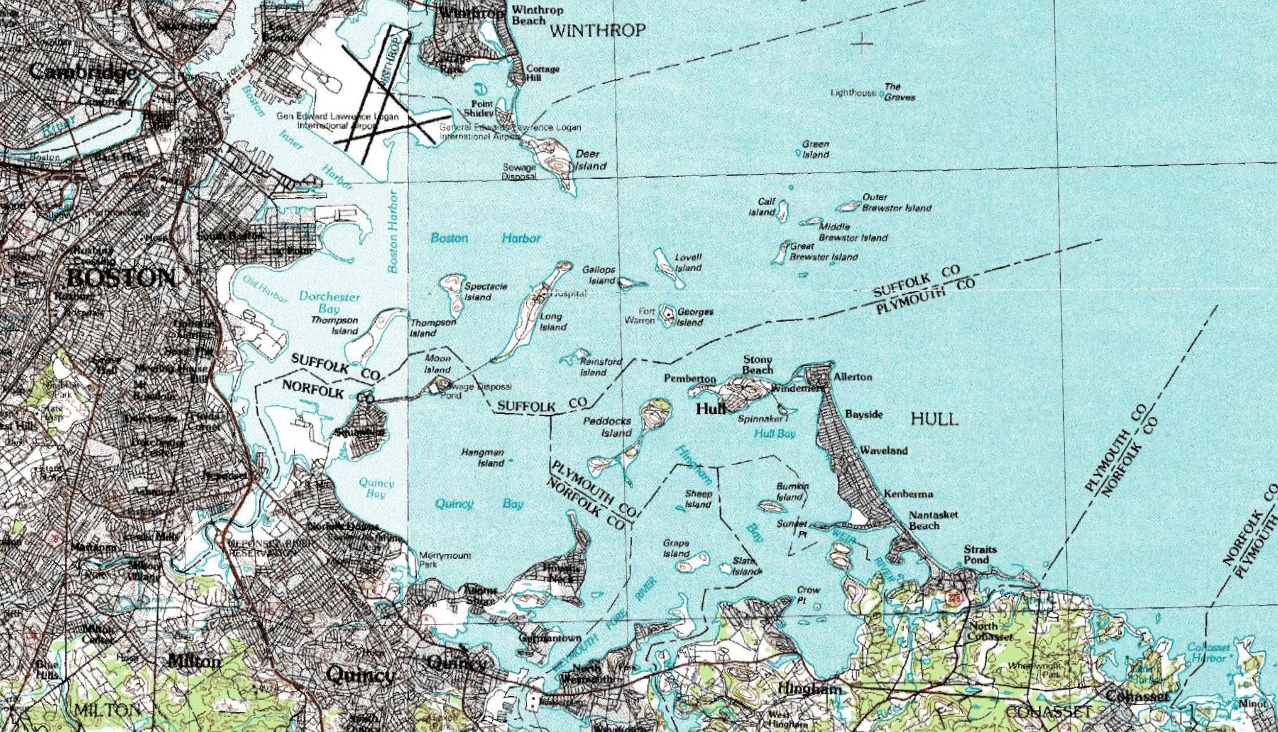
The shoreline of Boston Harbor is increasingly threatened by flooding associated witg global warming.
The Boston Foundation says that the “First Boston Climate Progress Report’’ “highlights progress {and} systemic obstacles to the city’s ambitious climate goals.’’ Northeastern University researchers have found that the city is off the pace it needs to maintain to cut carbon emissions by 50 percent before 2030. Four ‘‘Big Lifts’’ are listed to get it back on track.
Michelle Andrews: Don't get dropped by your doctor

Harvard Medical School quadrangle in Longwood Medical Area, Boston.
“Most primary care practices are incredibly busy, in part due to pent-up demand due to COVID. Even though continuity of care is important, if the patient hasn’t been in and we don’t know if they’re going to come in, it’s hard to leave space for them.’’
— Russell Phillips, M.D., director of Harvard Medical School’s Center for Primary Care and a general internist at Beth Israel Deaconess Medical Center, in Boston
When Claudia Siegel got a stomach bug earlier this year, she reached out to her primary care doctor to prescribe something to relieve her diarrhea. The Philadelphia resident was surprised when she received an online message informing her that because she hadn’t visited her doctor in more than three years, she was no longer a patient..
And since he wasn’t accepting new patients, she would have to find a new primary care physician.
“I think it’s unconscionable,” Siegel said, noting that many patients may have stayed away from the doctor’s office the past few years because of the covid pandemic. “There was no notification to patients that they’re on the verge of losing their doctor.”
Though it is dismaying to learn you’ve been dropped from a physician’s practice because a few years have passed since your last visit, the approach isn’t uncommon. Exactly how widespread the experience is, no one can say. But specialists also do this.
The argument for dropping the occasional patient makes some sense. Since many primary care doctors have a waiting list of prospective patients, removing those they rarely see opens up patient slots and improves access for others.
“Most primary care practices are incredibly busy, in part due to pent-up demand due to covid,” said Dr. Russell Phillips, director of Harvard Medical School’s Center for Primary Care and a general internist at Beth Israel Deaconess Medical Center.
“Even though continuity of care is important, if the patient hasn’t been in and we don’t know if they’re going to come in, it’s hard to leave space for them,” he said.
Patients often move away or find a different doctor when their insurance changes without notifying the practice, experts say. In addition, physicians may seek to classify people they haven’t seen in a long time as new patients since their medical, family, and social history may require a time-consuming update after a lengthy break. Patient status is one element that determines how much doctors get paid.
Still, the transition can be trying for patients.
“I can completely understand the patient’s perspective,” said Courtney Jones, a senior director of case management at the Patient Advocate Foundation. “You believe you have a medical team that you’ve trusted previously to help you make decisions, and now you have to find another trusted team.”
Siegel said she rarely went to the doctor, adhering to her physician father’s counsel that people shouldn’t go unless they’re sick. Although she hadn’t been to her doctor’s office in person recently, Siegel said she had corresponded with the practice staff, including keeping them up to date on her covid vaccination status.
After receiving the online dismissal through the patient portal for the Jefferson Health system, Siegel called the family medicine practice’s patient line directly. They told her three years was the protocol and they had to follow it.
“I asked, ‘What about the patient?’” Siegel said. “They didn’t have an answer for that.”
It was a month before Siegel, who has coverage under Medicare’s traditional fee-for-service program, could see a doctor who was accepting new patients. By that time, her stomach virus symptoms had resolved.
Jefferson Health doesn’t have a policy that patients lose their doctor if they’re not seen regularly, according to a statement from spokesperson Damien Woods.
However, he said, “Patients not seen by their provider for three years or more are classified in the electronic medical records as new patients (rather than established patients), per Center for Medicare and Medicaid Services (CMS) guidance. Whenever possible, Jefferson works with these patients to keep them with their primary care provider and offers options for new providers in certain circumstances.”
American Medical Association ethics guidelines recommend that physicians notify patients in advance when they’re withdrawing from a case so they have time to find another physician.
But the organization, which represents physicians, has no guidance about maintaining a panel of patients, said AMA spokesperson Robert Mills.
The American Academy of Family Physicians, which represents and advocates for family physicians, declined to comment for this story.
A primary care physician’s panel of patients typically includes those who have been seen in the past two years, said Phillips, of Harvard. Doctors may have 2,000 or more patients, studies show. Maintaining a workable number of patients is crucial, both for effective patient care and for the doctors.
“Practices realize that a major contributor to physician burnout is having more patients than you can deal with,” Phillips said.
Demand for physician services is expected to continue to outstrip supply in the coming decades, as people age and need more care at the same time the number of retiring physicians is on the upswing. According to projections from the Association of American Medical Colleges, by 2034 there will be a shortage of up to 48,000 primary care physicians.
Maintaining a regular relationship with a primary care provider can help people manage chronic conditions and promptly identify new issues. Regularly checking in also helps ensure people receive important routine services such as immunizations and blood pressure checks, said Dr. David Blumenthal, a former primary care physician who is president of the Commonwealth Fund, a research and policy organization.
Health care organizations increasingly focus on requiring doctors to meet certain quality metrics, such as managing patients’ high blood pressure or providing comprehensive diabetes care. In this environment, “it could be problematic for physicians to be accountable for the health of patients who do not see them,” Blumenthal said.
Money also figures into it. Steady visits are good for a practice’s bottom line. Practices may also decide to avoid new Medicare patients or those with certain types of insurance because the payments are too low, said Owen Dahl, a consultant with Medical Group Management Association, an organization for health care managers.
In general, doctors aren’t obligated to continue seeing a patient. A doctor might dismiss patients because they aren’t following clinical recommendations or routinely cancel or miss appointments. Belligerent or abusive behavior is also grounds for dropping a patient.
In certain instances, physicians may be legally liable for “patient abandonment,” a form of medical malpractice. State rules vary, but there are common elements. Those rules generally apply when a doctor harms a patient by dropping them abruptly at a critical stage of treatment. It would generally not apply if a patient has not seen the physician for several years.
Even though quietly dropping a seldom-seen patient might not have an immediate medical consequence, patients ought to be informed, experts said.
“It’s really good customer service to explain the situation,” said Rick Gundling, senior vice president at the Healthcare Financial Management Association, an organization for finance professionals. As for Siegel, he said, “This woman should not be left hanging. If you’re the patient, the physician should be proactive.”
Michelle Andrews is a Kaiser Health News journalist.
‘Alive and already ghosts’


Video stills from Jeremy Newman’s “The Dreaming Biome” show, at the sidewalk video gallery of Fountain Street galleries, Boston, through Nov. 12.
Mr. Newman explains:
“This experimental film immerses viewers in an imagined ecosystem where plants and animals from various locations co-exist through juxtaposition and video effects. The natural elements are familiar yet made to appear strange. There is beauty and wonder, but within a Surrealist nightmare. The pacing echoes the rhythms of life from the spider’s climb to the rabbit’s breath. Throughout the film, the ephemeral nature of things is palpable. These creatures are alive and they are already ghosts.”
John O. Harney: All you can eat — interesting data From New England and beyond
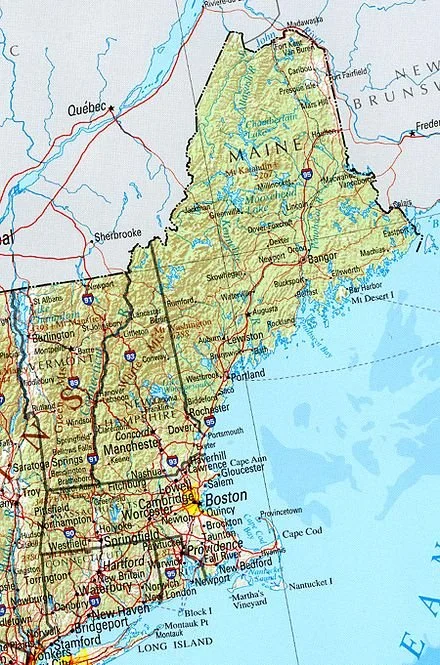
From The New England Journal of Higher Education, a service of The New England Board of Higher Education (nebhe.org)
BOSTON
The ranks of New Hampshire, Vermont and Maine as the least diverse states in America, based on measures of socioeconomic, cultural, economic, household, religious and political diversity: 47th, 48th, 49th WalletHub
Ranks of Connecticut, Massachusetts, Vermont, Rhode Island, Maine and New Hampshire among the most expensive U.S. states to retire in: 3rd, 4th, 6th, 7th, 10th, 14th Bankrate
Increase in lifetime earning associated with lifetime labor union membership: $1,300,000 Parolin, Z., & VanHeuvelen, T., The Cumulative Advantage of a Unionized Career for Lifetime Earnings, ILR Review
Support for labor unions among Gen Zers (defined as being 23 years old or younger in 2020): 64% Center for American Progress
World rank of California’s economy if it were a country: 5th (soon to be 4th) Bloomberg News
Percentage of Americans who rely on autocorrect to correct misspellings: 79% Unscrambled Words
Percentage who say they judge someone who often misspells: 61% Unscrambled Words
Share of New Bedford (Mass.) High School students who were “chronically absent” in 2022, meaning they missed at least 18 days, or 10% of school: 70% The New Bedford Light on NAEP Data
Number of reports of book bans received by the nonprofit PEN America during a nine-month period from July 2021 through March 2022: 1,586 PEN America (PEN American reports 671 additional book bans during that period have come to light. A further 275 more bans followed from April through June, bringing the total for the 2021-22 school year to 2,532 bans.)
Percentage of those banned books that had a protagonist or main character of color: 41% PEN America
Percentage of those banned books that had LGBTQ themes: 33% PEN America
Number of America’s approximately 90,000 school board members who are known to be LGBTQ: 90 Victory Institute
Number of additional LGBTQ school board members who would have to be elected to match the 7% of the adult U.S. population that identifies as LGBTQ: 6,300 Victory Institute
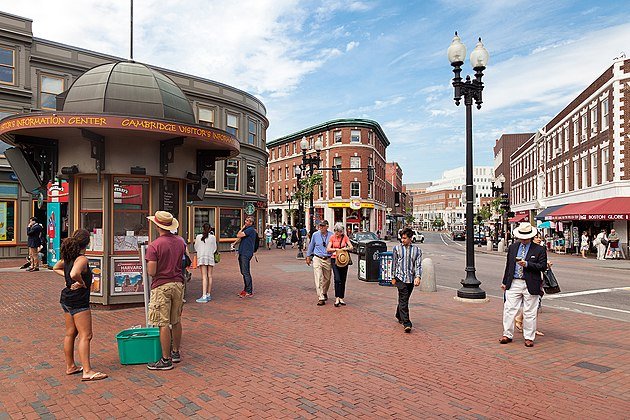
At Harvard Square, in Cambridge, Mass.
From 2010 to 2015, Harvard University’s admission rate for “legacy” applicants with at least one Harvard-educated parent: 34% Jennifer Lee, sociology professor at Columbia University, op-ed in Los Angeles Times
Admission rate for “non-legacy” applicants who do not have a Harvard-educated parent: 6% Jennifer Lee, sociology professor at Columbia University, op-ed in Los Angeles Times
John O. Harney is executive editor of The New England Journal of Higher Education.

Painting of “Still Life with Kitaj’s Death mask,” by Montserrat College of Art (Beverly, Mass.) professor Timothy Harney.

Llewellyn King: Sites of mass murder past and present; ‘what would I do?’

Memorial of the Distomo Massacre
— Photo by Dawetie
ERETRIA, Greece
The sites of horror -- the places where mass murder happened -- are seared into my memory. Holocaust sites such as the Warsaw Ghetto and Auschwitz or Kigali, where the Hutus butchered the Tutus, or the Falls Road in Belfast, where many died over the decades of strife.
A new one has just been fixed firmly in my memory: Distomo.
These sites of slaughter trigger the sense of how fragile human society is – and such slaughter is taking place this day, this hour, this minute in Ukraine.
I am not enthralled by history per se. My lens is mostly confined to what happened in my lifetime, whether as a small child during World War II or in the years since.
But the horrors of the past aren’t confined in the past. They leak into the present as new bleak chapters on human conduct are written.
I say this because I have just visited Distomo, where barbarity reached a crescendo on June 10, 1944. There, for two hours, the Waffen-SS killed villagers with machine guns, bayonets and any other handy weapons. They killed the unborn, infants and older children, women and men. They beheaded the village priest.
If they paused, it was to rape.
The Association of European Journalists, the 60-year-old organization with sections spread across Europe, had invited me to its annual congress in central Greece. After two busloads of delegates had visited the Oracle at Delphi, we stopped at Distomo: a trip from the celestial to the bestial.
My mind is set afire with questions at these World War II sites. If I had been a young Jew, swept up by the Nazis, would I have been killed in a camp? If I had been a young German guard, would I have participated in the killing, and how much enthusiasm would I have brought to the work?
I wonder how the young men who did the butchery at Distomo lived with themselves afterward. Did they dream of bayonetting pregnant women, of old people begging to be killed instead of their spouses, children and grandchildren?
In the end, few were spared -- only those who were left for dead. Conservative estimates are that 238 people died in the massacre.
My journalistic colleagues and I went from the foibles of the Greek gods of antiquity to the horrors of humans in the 20th Century.
I was just a child during World War II, but I feel especially connected because this and other Nazi atrocities happened in my lifetime.
When I visited Auschwitz and saw the hair, the shoes, the toys and other jetsam of children, my thought wasn’t that it could have been me, but that those could have been my friends, my playmates and every Jew I have been close to, and there have been many.
At the Distomo museum, they show a graphic film with eyewitness accounts of those who survived, those who bore witness, such as the woman who describes scooping the brains back into her dead toddler’s head and carrying his corpse home -- but her house, and nearly all those in the village, was burned by the SS. That is what she did and lived to tell -- to tell of that butchered child. She said in the film that she couldn’t forgive. Who with that memory could?
The young men who carried out the Distomo killings, under their 26-year-old leader, SS-Hauptsturmfurer Fritz Lautenbach, did so in reprisal for partisan attacks on German troops.
After visiting many killing fields – and I don’t seek them out -- I wonder what I would have done? Would I have followed orders? Would I, in seconds, persuade myself that what I was doing was right?
What would I do if I were on the Russian frontlines in Ukraine today? There is savagery equal to Distomo going on right now in wars in many places, carried out by people just like us.
Llewellyn King is executive producer and host of White House Chronicle, on PBS. His email is llewellynking1@gmail.com and he’s based in Rhode Island and Washington, D.C.
Linda Gasparello
Co-host and Producer
"White House Chronicle" on PBS
Mobile: (202) 441-2703
Website: whchronicle.com
ReplyReply allForward

David Warsh: Will the GOP abandonUkraine soon after the mid-term election?

— Map by Viewsridge
SOMERVILLE, Mass.
Only a few days before an election is no time to be a columnist. This column is written some distance from Washington, D.C., but Edward Luce, of the Financial Times, is there in the thick of things. On Oct. 29, in “America’s Brittle Consensus on Ukraine,’’ he wrote “In the Republican quest to make a scorched earth of Biden’s presidency nothing will be sacred, including Ukraine’s military pipeline.” The “pro-Putin wing” of the GOP is still a minority, Luce added, but “almost every Republican will back {likely next House Speaker Kevin} McCarthy’s likely effort to impeach Biden and hold the U.S. debt ceiling hostage to their demands.”
That much, at least, remains to be seen. The presumptive speaker will settle on his plans only after the election results are known and thoroughly construed. Until then there remains a possibility that McCarthy’s Trump-based agenda will dissipate in a mood of grudging forgiveness following what may turn out to be a nobody-knows-anything election.
“The fact remains, however, that fifty-seven House Republicans and eleven senators voted against Biden’s $40 billion Ukraine aid package earlier this year. And though it hasn’t yet sunk in, Russian president Vladimir Putin took an active hand in the US election Thursday when, in an important speech, he asserted there were
“[T]wo Wests – at least two and maybe more but two at least – the West of traditional, primarily Christian values, freedom, patriotism, great culture and now Islamic values as well – a substantial part of the population in many Western countries follows Islam. This West is close to us in some things. We share with it common, even ancient roots. But there is also a different West – aggressive, cosmopolitan, and neocolonial… a tool of neoliberal elites [embracing what I believe are strange and trendy ideas like dozens of genders or gay pride parades].’’
He might as well have identified them as being, in his view, Republicans and Democrats.
Putin believes this is the basis for his war on Ukraine. It may be MAGA’s view as well. I don’t believe it is McCarthy’s. It certainly is not mine. But it will take time to work out the distinction. Less than a week before a very important election is no time to try.
Meanwhile, I’ve been been reading Not One Inch: America, Russia, and the Making of Post-Cold War Stalemate (Yale, 2021), by M.E. Sarotte; Macroeconomic Policies for Wartime Ukraine (Centre for Economic Policy Research, 2022), by Kenneth Rogoff, Maurice Obstfeld, and seven others; “Warfare without the State,’’ Adam Tooze’s recent criticism of the CEPR plan; and “Russia’s Crimea Disconnect’’, by Yale historian Timothy Snyder; and Johnson’s Russia List, more or less daily.
Halloween was scarier than usual this year.
David Warsh, a veteran columnist and an economic historian, is proprietor of Somerville-based economicprincipals.com, where this column originated.
The balm of blue
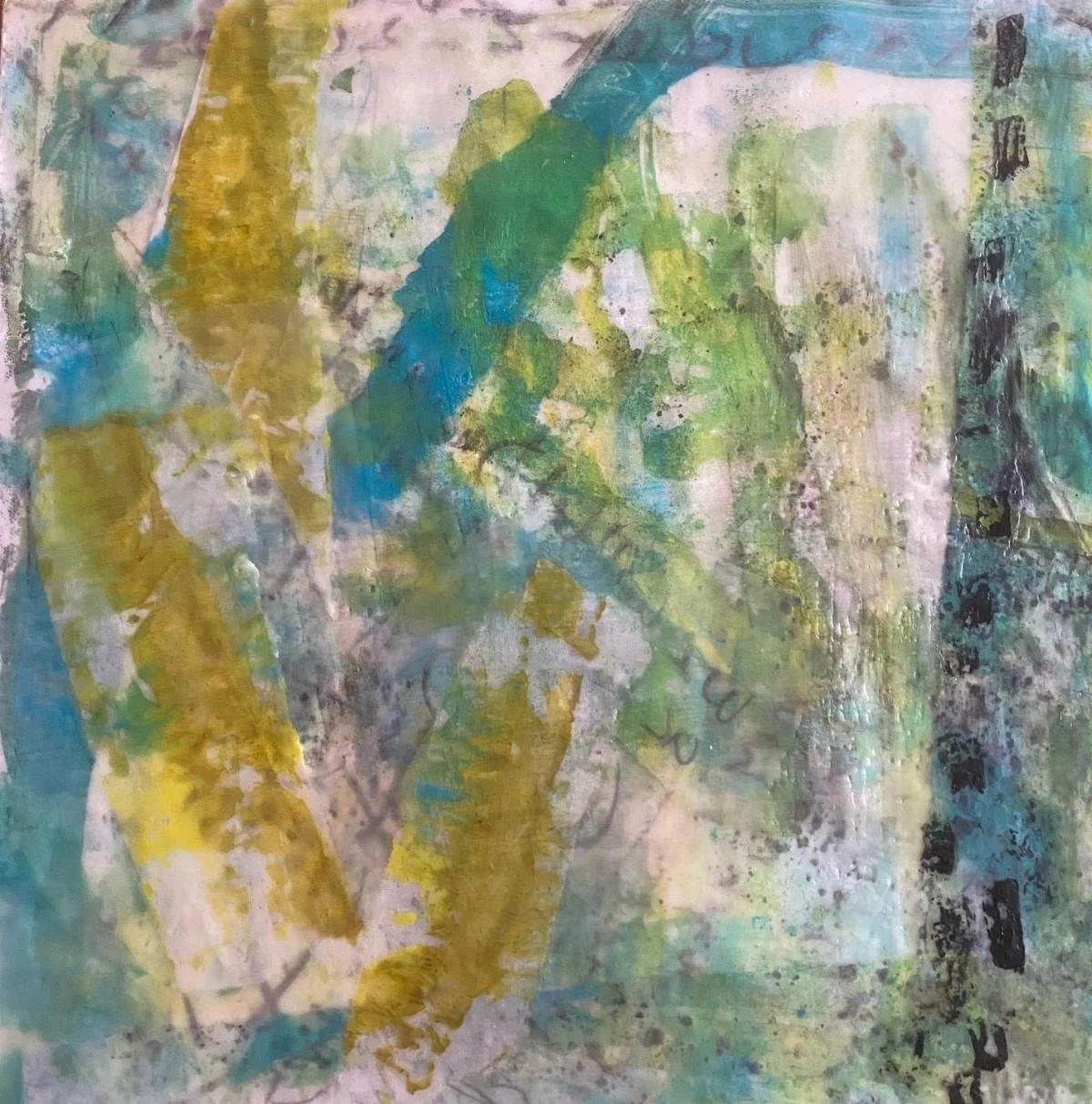
“I Have Loved Many Colors” (encaustic monoprint), by Brookline, Mass.-based Lola Baltzell, in her show ‘Dabbling in Blue Magic,’’ at Galatea Fine Art, Boston, Nov. 4-27.
She tells the gallery:
"One of my favorite authors is {the late novelist}Vladimir Nabokov, and the title of this show is a nod to his imagery. One remarkable thing about his writing is that English is his second language. He refers to color frequently, my true love language.
Blue. Why Blue Magic?
All the work in this show is encaustic, also known as hot wax, and includes collage, painting and monoprints. I don't typically work in blue, yet all the pieces in this show are blue. I've spent a lot of the pandemic in the water - metaphorically and literally. Feeling adrift, lost at sea, looking for terra firma, yet I sought solace on the water, spending as much time paddleboarding as possible. Working in blue has felt like a balm, soothing, healing. My own blue period."
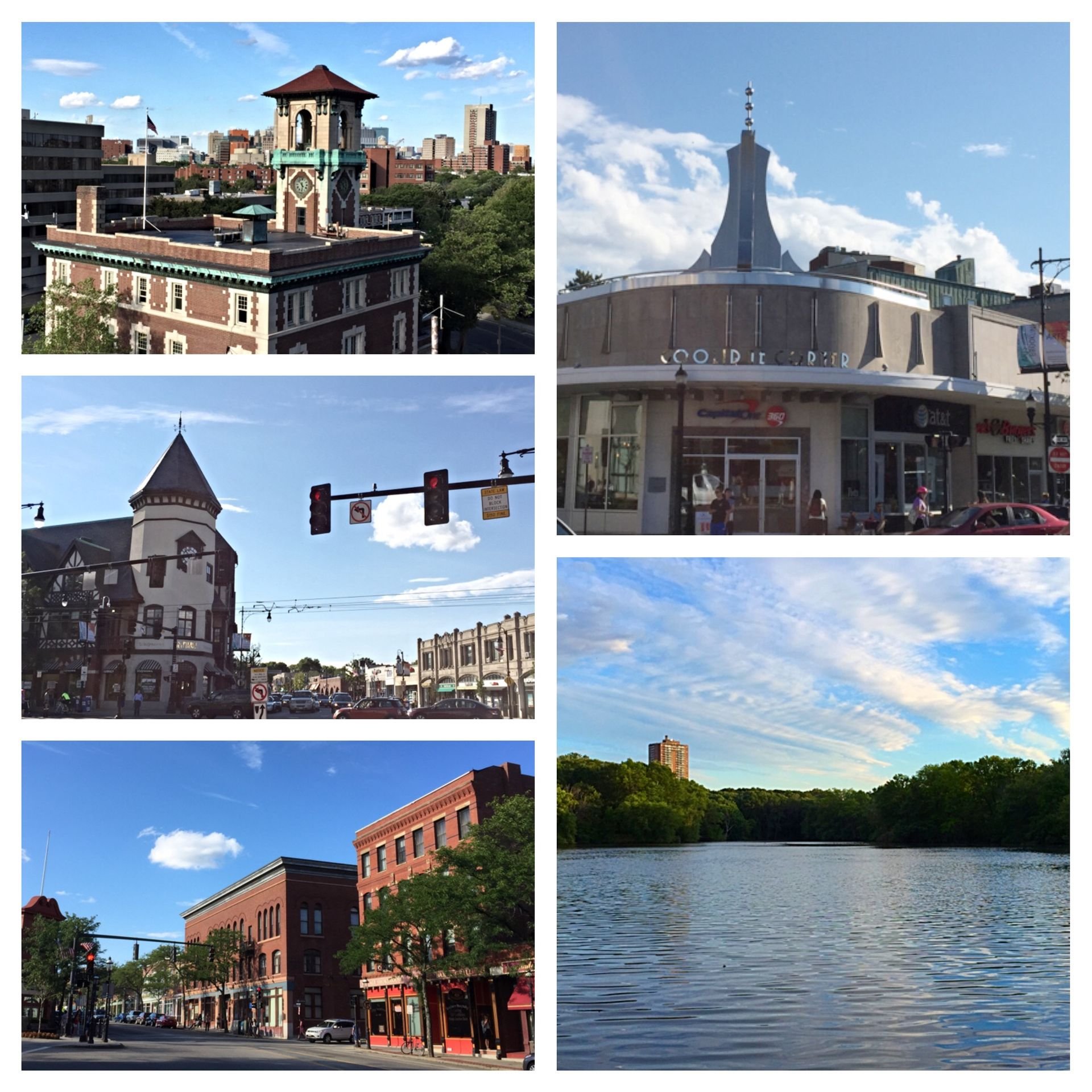
Views of Brookline
Photo collage by Ddogas
The advantages of blurred vision

“Your inability to see yourself clearly is what’s keeping you alive.’’
— Sarah Silverman (born 1970), American comedian, writer and actress. She was born in Bedford, N.H., and raised in nearby Manchester.

Manchester on a dreary October day.

Weston Observatory in Derryfield Park, Manchester. It was built in 1897, at the height of Manchester’s glory as a manufacturing center, especially for textiles.
— Photo by Magicpiano

The gigantic Amoskeag mill complex, along the Merrimack River, in 1911.

NHL wants to speed efforts to expand diversity

The Boston Bruins at work against the New Jersey Devils.
Edited from a New England Council (newenglandcouncil.com) report
“The National Hockey League has released its Diversity and Inclusion Report, which presents the NHL’s efforts to accelerate diversity and inclusion in the sport of hockey. This is an ongoing effort by the league to prioritize inclusion and to grow a stronger hockey community.
“By focusing on seven dimensions, including goals such as leadership, community engagement, partnerships and more, the NHL organized the report to present quantitative and qualitative progress the league has made over the last two years. The report found that 22 teams launched or are in the process of launching mentorship programs to develop BIPOC and female talent to create a pipeline of opportunities for candidates in front office and operation positions. BIPOC”: stands for Black, Indigenous, People of Color.
“The NHL emphasized its need to increase the exposure of the sport to women and BIPOC communities–in partnership with the NHL Player’s Association Industry Growth Fund, the NHL has distributed more than $135 million in funds in the US and Canada to fund programs to reach these audiences. Stepping outside the rink, the report noted a committed effort by the League to support community engagement both in the sport and local communities. To reach this goal the NHL has advocated for various legislation promoting social equality, including the Willie O’Ree Congressional Gold Medal Act to honor O’Ree’s contributions to the sport as the first NHL Black player. The report highlighted the accomplishments of the League but also acknowledged that there is still room for improvement. The NHL expressed its need to address issues of prejudice and discrimination by using the tools of education and accountability. To continue the conversation about social justice all 32 teams will participate in a program to which will address issues such as discrimination, harassment, and abuse. The NHL hotline was released to give both players and employees a way to report unethical conduct.
“Commissioner Gary Bettman said, ‘Our belief is stronger than ever that hockey has a powerful platform to build character, teach life skills, and support our society and our communities. We’re focused on ensuring the game and its related environments are safe, respectful, and inclusive. Diverse representation within inclusive environments is proven to advance innovation, creativity, and decision-making – all of which are critically important to the growth of the sport and our business.”’
‘We are still here’
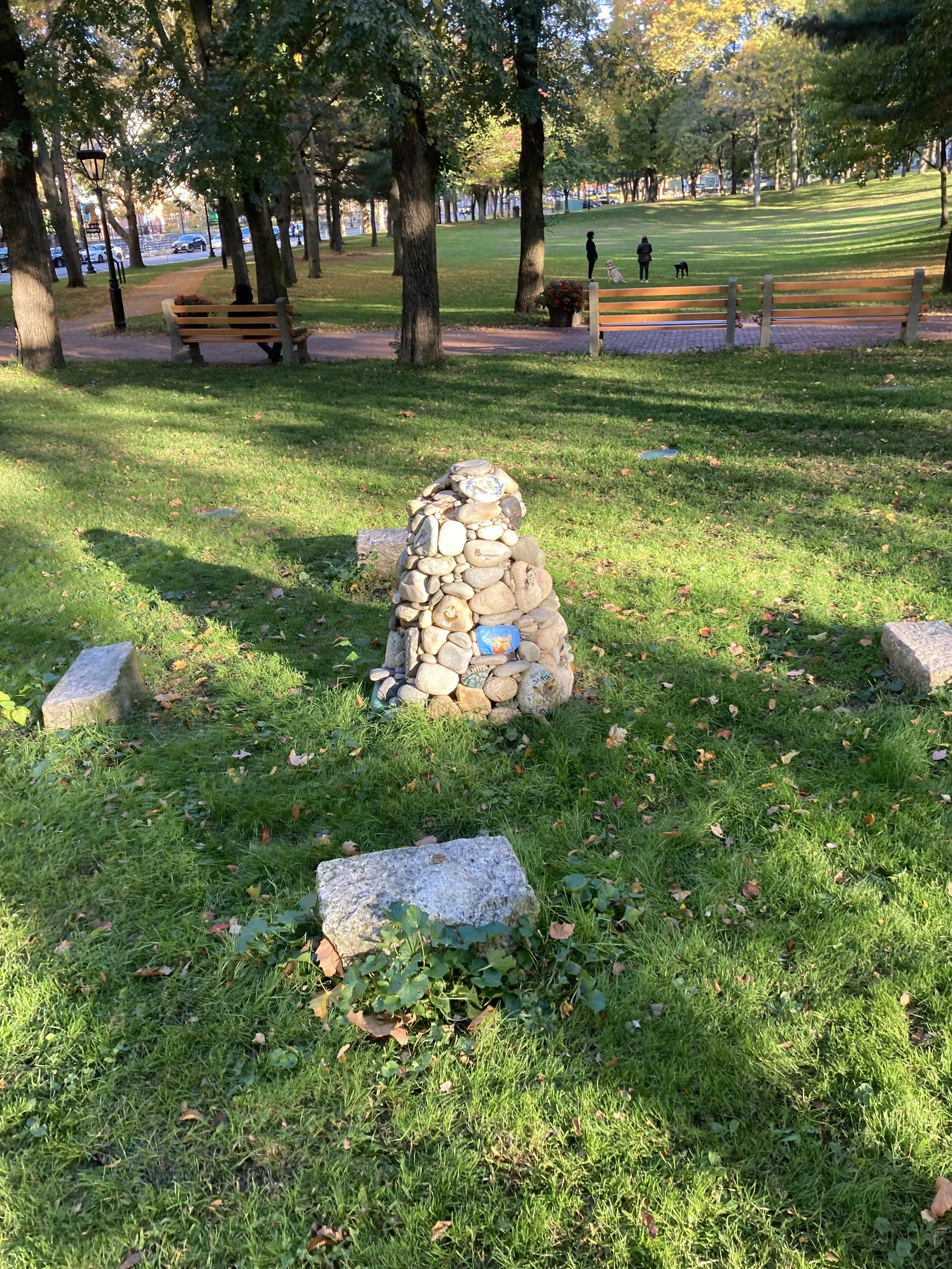
The cairn in question.
Adapted from Robert Whitcomb’s “Digital Diary,’’ in GoLocal24.com
I wrote too whimsically in an Oct. 23 column that I had come across this cairn while walking on the lawn at the Roger Williams National Memorial, in downtown Providence, and asked what it is. Here’s the answer from the National Park Service, via my friend Ken Williamson, who lives in Hawaii.
“This cairn, or stone pile, depicts pieces of Narragansett {Tribal Nation}
history from pre-contact {with Europeans} through today. Built by Narragansett artists associated with the Tomaquag Museum {in Exeter, R.I.} it expresses the fact that WE ARE STILL HERE. The cairn is at the center with 4 raised stones around it representing the Four Directions. It is a meditative circle, representing Narragansett lives, history, and future which brings us full circle. Sit down and reflect on your own past, present and future and its intersection with the Narragansett people.
“The Narragansett Tribal Nation has lived on these lands since time immemorial. Their ancestors respected all living things and gave thanks to the Creator for the gifts bestowed on them, as do Narragansett people of today. Lynsea Montanari & Robin Spears III, both Narragansett, served as summer arts interns at the memorial for this project. They incorporated their own cultural knowledge with teachings by tribal elders regarding first contact with European settlers, genocide, displacement, assimilative practices, enslavement, continuation of language, ceremony, and other cultural practices. The artists chose to create a cairn as it is a part of the history of all indigenous peoples. There are many historic cairns in the Narragansett landscape.’’
xxx
My strongest memory of Native American cairns comes from driving with my wife in the forests along the northern side of gorgeous Georgian Bay in Ontario. You can’t go far there without seeing a cairn or other stone sculpture on a slope above the road.
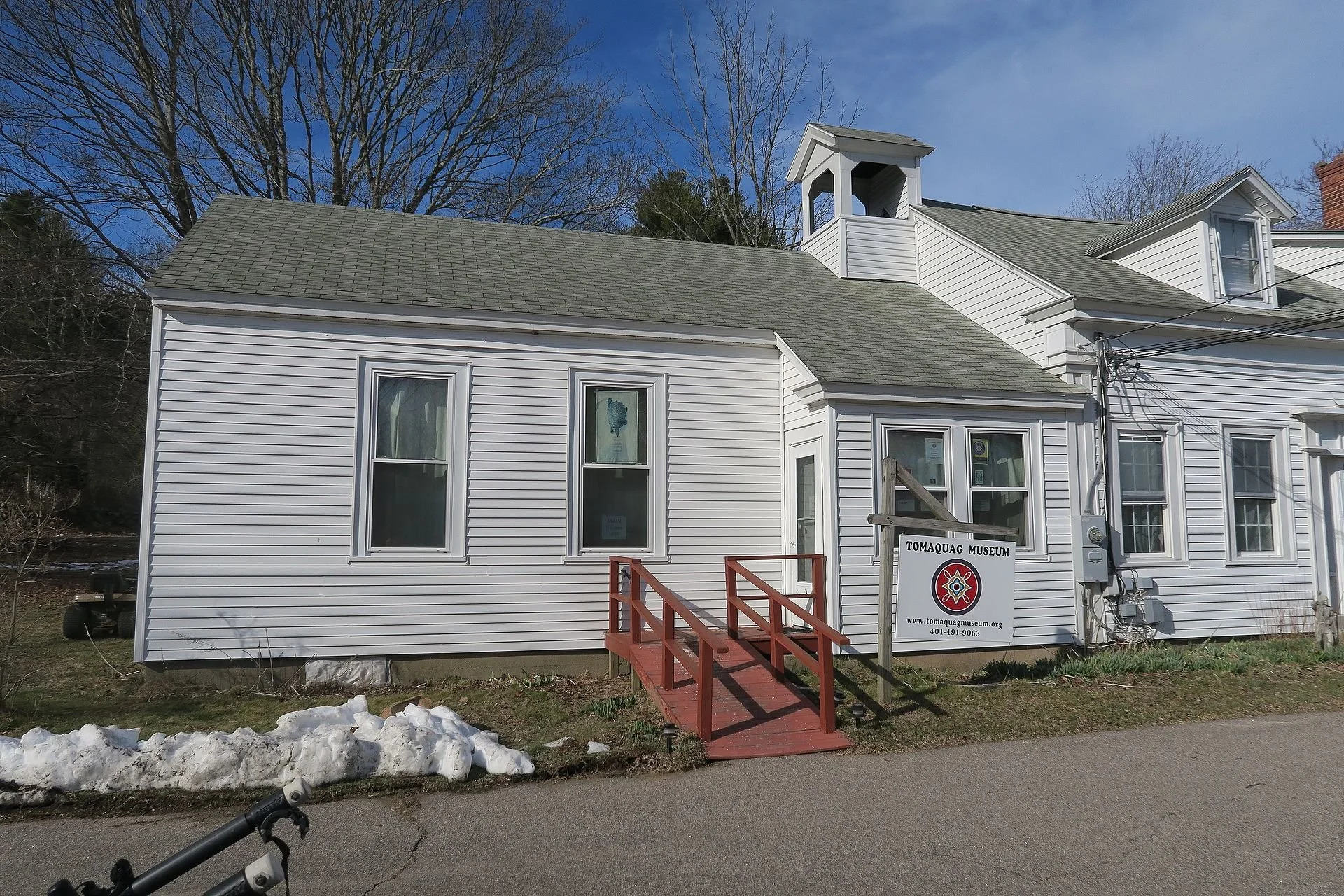
Tomaquag Museum, in the Arcadia section of Exeter, R.I.
—Photo by John Phelan
Take that!

“Hamada” (oil on canvas), by L.G. Talbot, in the show “LG Talbot: New Generation Abstraction,’’ at the University of Massachusetts Fine Arts Center, Amherst, Mass.
The exhibit features abstract work that takes on American abstract painting through large and bold paintings that "convey a distillation of lived experience,’’ says the artist whose home is in the western Massachusetts hill town of Conway and whose studio is in Easthampton, Mass.
Talbot’s artist statement says:
“In the new paintings, I work with palette knives to quickly establish images on the canvas. I keep 4-5 large canvases open – working them simultaneously – impatient for the oil to dry. Images organically surface on the picture plane. I layer more paint and create more texture. My colors have also changed. The primary colors of previous work have been usurped by a more nuanced palette replete with earthy tones. I mix the pigment, thin it out with turpentine, and build the painting in layers. This is my evolution: Borders gone, Colors blended. The pandemic is a reminder of the privilege of being alive – my every day in the studio is charged and intoxicating.’’
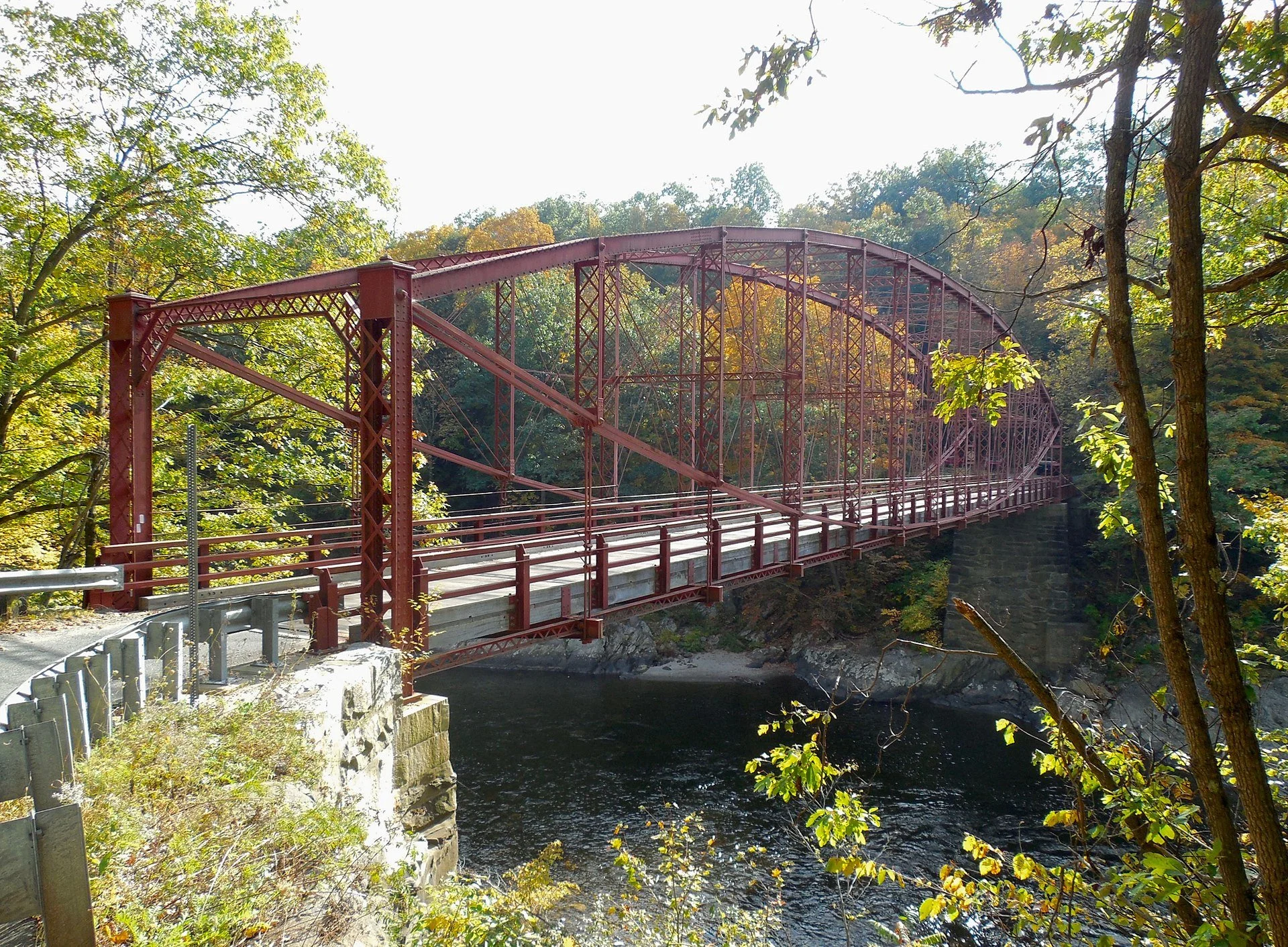
Historic Bardwell's Ferry Bridge, in Conway.
— Photo by Doug Kerr
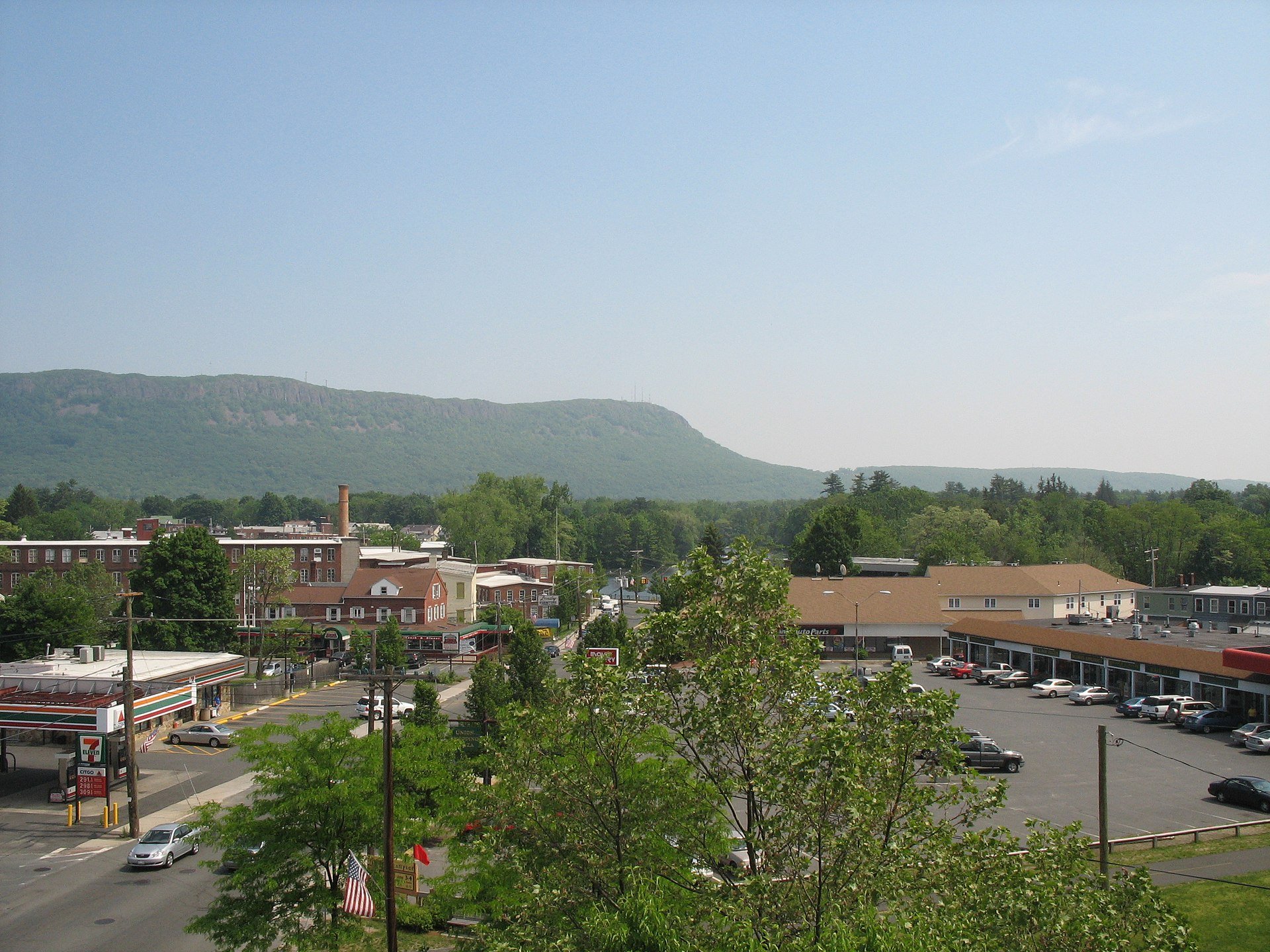
View of Mt. Tom from the center of Easthampton

Chris Powell: Rainbow flags are political and so don’t belong in classrooms

MANCHESTER, Conn.
Another front has opened in Connecticut's flag war, this time in Stonington, where, responding to a complaint and acting on legal advice, the school superintendent determined that the "rainbow" or gay pride flags teachers had placed in their classrooms are political and told teachers to remove them.
Whereupon students and others complained that the flags are necessary to show the school system's egalitarianism, and the teachers union asked for a private meeting with the state Board of Education's labor committee to discuss "inclusion." Maybe only a teacher union and a school board would miss the irony of excluding the public from a meeting about "inclusion," but then Connecticut has seen many other indications that some of public education actually despises the public and much prefers to make and implement policy in secret.
After being subjected to this political pressure, the superintendent reversed herself on the rainbow flags, decided that they are not political after all, and withdrew her order to remove them from classrooms.
But of course the rainbow flag is political and propagandistic, lending itself to various uses and interpretations, and so doesn't belong in government settings. If the flag signifies the acceptance and equality of people regardless of sexual orientation, so do the national and Connecticut flags, insofar as federal and state law prohibit discrimination on the basis of sexual orientation.
But the rainbow flag goes farther. To some it also means the right of biologically male students to use women's restrooms and participate in women's sports, thereby nullifying Title IX of federal civil-rights law. To others it means the right of school systems to treat the gender dysphoria of students and even facilitate their gender transition without the knowledge of their parents. The flag is used in various controversial contexts. There is and can be no official interpretation of it.
Municipal governments lately have been discovering that their endorsement is being sought for many flags, and that allowing some to fly on government property but not others raises a First Amendment issue. Some municipalities have decided, wisely, to stay out of the flag wars and confine themselves to government's own flags.
Of course, every school system and government agency should follow the laws against discrimination by sexual orientation. But a rainbow flag is not necessary to establish and publicize such a policy. Schools can act just as employers act at government direction and post notices of the policies required by law. If students of minority sexual orientation are really as timid as claimed by the advocates of putting the rainbow flag in classrooms and can't be comfortable in school without the flag being displayed, notices of non-discrimination policy can be posted in every classroom, even on every student's desk.
But neither such notices nor rainbow flags themselves are any defense against bullying, abuse, and other misconduct. The only defense is strong public administration, and Connecticut's schools are notorious for their lack of standards and discipline for students and employees alike.
Stonington's school administration has just shown itself to be another pushover.
xxx
Campaign commercials are often nasty and sometimes brutal and even deceitful. But Connecticut has seen few as disgraceful as one being aired by Gov. Ned Lamont, a Democrat seeking re-election.
The Lamont commercial depicts a bunch of people making fun of the name of the governor's Republican opponent, Bob Stefanowski. They call him "Stefa-nasty," though the Republican has maintained a softer and more informed tone than when he ran four years ago.
Name calling used to be considered childish and stupid, but apparently no longer at the highest level of state government.
Commercials for the re-election of 5th District Democratic U.S. Rep. Jahana Hayes have been attacking her Republican challenger, former state Sen. George Logan, signifying that the Democrats consider that race unusually competitive. But now commercials for the re-election of Democratic U.S. Sen. Richard Blumenthal are attacking his Republican opponent, Donald Trump devotee Leora Levy, implying that Democrats think that even Blumenthal, who has been in elective office for 38 years, may be in trouble too. Could it be?
Chris Powell is a columnist for the Journal Inquirer, in Manchester, Connecticut. (CPowell@JournalInquirer.com)
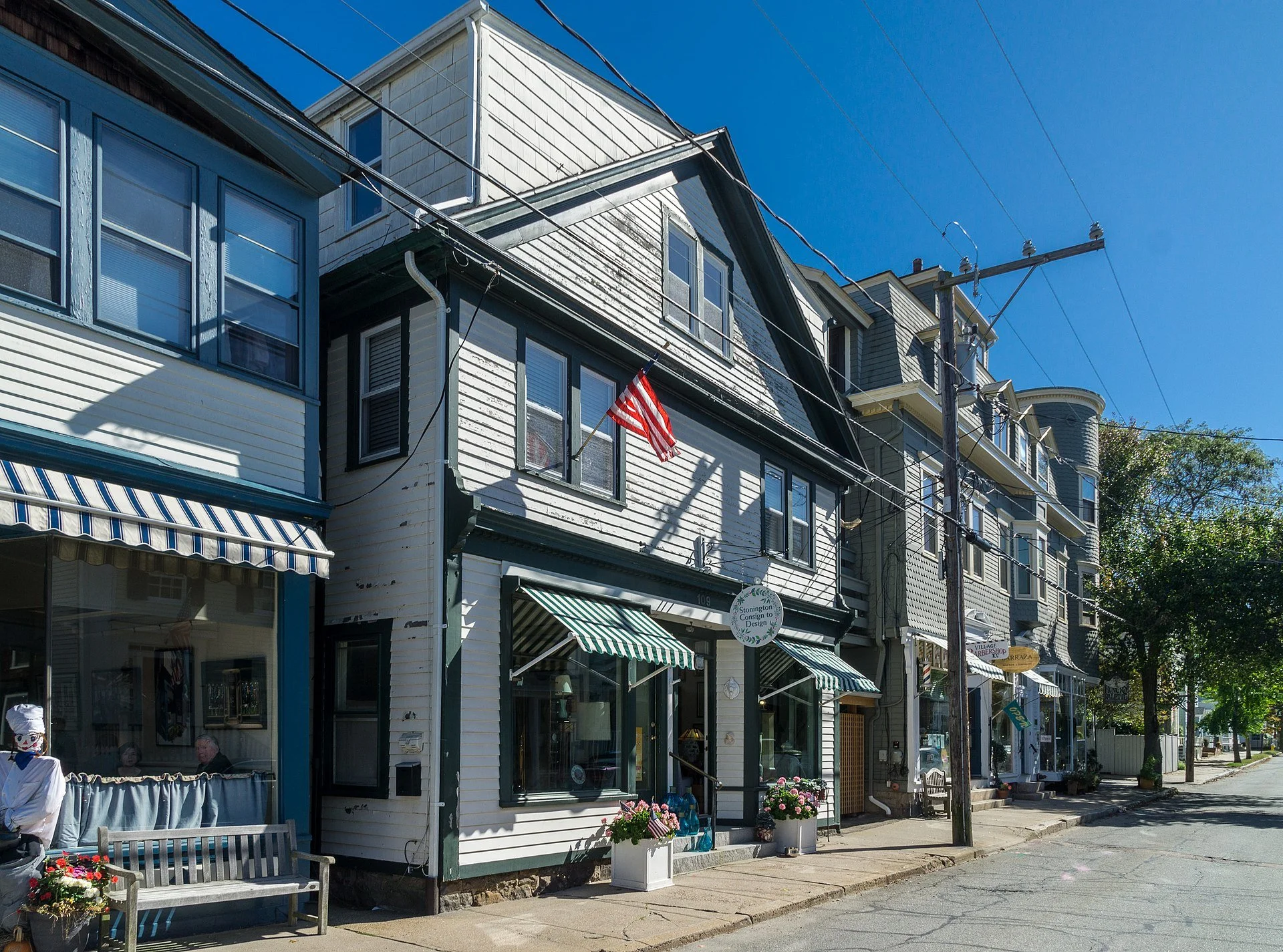
Water Street shops and restaurants in Historic (and rich) Stonington
— Photo by Kenneth C. Zirkel
Existential confusion

Inside Greg’s Famous Seafood, in Fairhaven, Mass.
— Photo by William Morgan

Llewellyn King: Save farmland from solar arrays, for which there are better places
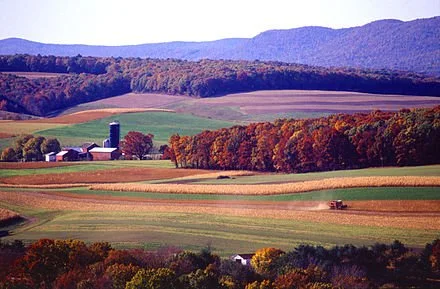
This becomes….
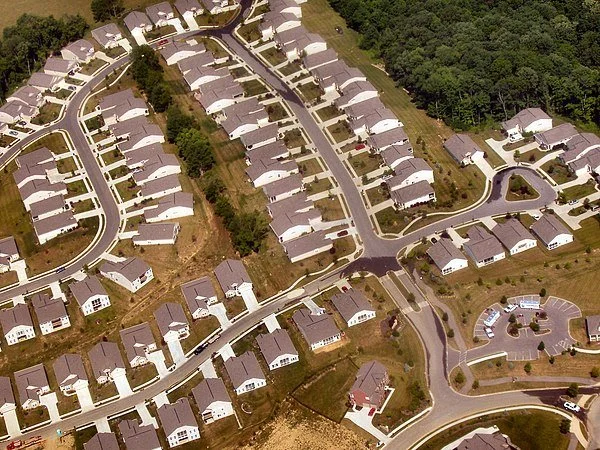
…. this

And this
WEST WARWICK, R.I.
In nearly every city in the United States, and many around the world, bulldozers are busy making dreams come true: Leveling land for a single-family home on a lot.
Who doesn’t want a lovely home with a nice bit of land on some tree-lined street? It is the American Dream manifested in bricks and mortar.
Trouble is dreams can morph into nightmares. A growing nightmare across the nation is the incursion of homes onto farmland – land that will be out of production essentially forever.
All around Washington, D.C., I watched year after year for decades lovely farms in adjacent Maryland and Virginia being turned into suburbs — sometimes 70 and more miles from the city center.
It has been a simple tradeoff: There has been a relentless demand for single-family homes and builders see farms, usually family-owned, as ripe fruit ready for picking. When age is an issue, they almost always sell. Farming is a tough, 365-days-a-year undertaking, and a fat check at the end of a farming career is irresistible.
No villains here, but there are consequences. Mark Twain said, “Buy land, they aren’t making it anymore.” Sadly, Twain didn’t take his own advice and instead invested in the tech world of the day: Among other bad investments, he lost a fortune in a company that was trying to perfect a typesetter.
Farmers are special to me. They are the real renaissance men and women. They know a lot about a lot, from being able to gauge the pH levels of soil on their tongues to how to birth a calf, repair a tractor, or raise a barn.
They also know a thing or two about how the government works and filling out forms. They are regulated but have no guaranteed rate of return. They are as subject to the weather over their own land as floods around the world.
Businesses talk about being rewarded for taking a risk. Farmers take a risk with every seed they plant — and the returns aren’t guaranteed.
But, as Gail Chaddock, host, and producer of No Farms, No Future, a podcast of the American Farmland Trust, said, “You can’t blame the farmers, and you can’t blame the developers. But the land we’ll need for food production in the future is being taken.”
What is happening is the irreversible destruction of millions of acres of prime farmland every year. A reverence for farmland needs to enter the culture, she said.
No longer, however, is it just developers buying up farms. Farmland is now being sought by another kind of developer: renewable energy companies. They are buying it for large solar arrays. They also contract with farmers to install windmills which, while not taking so much land out of agricultural use, cumulatively take a lot.
But it is solar farms that are the real problem. Britain is thinking of legislating to prohibit the use of agricultural land for energy production. Other countries are waking to the realization that a field of shining solar collectors is not the same as a field of waving wheat or even lowly cabbages.
As over time we exported our manufacturing, we also have exported our food production. What was once raised on truck farms around the cities is now raised in neighboring Canada and Mexico, or as far away as Chile and South Africa.

Big roofs like this as well as abandoned-mall parking lots and roadsides are far better places to put solar panels than farmland.
There is no compelling reason to cover huge acreages with solar panels. Roofs, rights of way, and urban parking lots could be pressed into service. Railroad tracks cry out for a solar canopy.
Just because energy or housing is a higher economic use for land today doesn’t mean that it won’t have a higher future value, feeding future generations.
Llewellyn King, a veteran columnist and an international energy and utility consultant, is executive producer and host of White House Chronicle, on PBS. He’s based in Rhode Island and Washington, D.C.
On Twitter: @llewellynking2
White House Chronicle

Connected farm in Windham, Maine. The barn dates from the late 18th Century, and the house was built in three stages during the 19th Century. The unconnected garage was a 20th-Century addition. All doors of the structure are visible in this view from the south side, where winter sun would melt accumulated snow and ice. Following the 20th Century outbreak of Dutch elm disease, only one American elm remains of the line that had provided summer shade along the southern and western sides of the building.
‘Spectral New England’
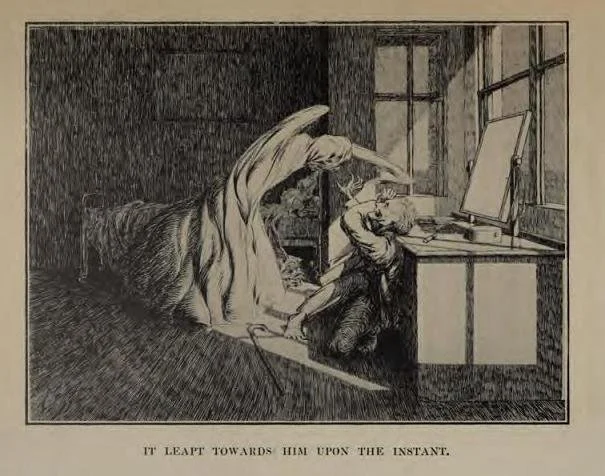
Rhode Island PBS will air Spectral New England at 1 p.m. on Oct. 29 and 10 p.m. on Oct. 31.
Hit this link for some flavor.
‘Since Eden went wrong’

“It was the dingiest bird
you ever saw, all the color
washed from him, as if
he had been standing in the rain,
friendless and stiff and cold,
since Eden went wrong.''
—From “Robin Redbreast,’’ by Stanley Kunitz (1905-2006), American poet and teacher. A Worcester native, he divided much of time in adult life between Provincetown and New York City.
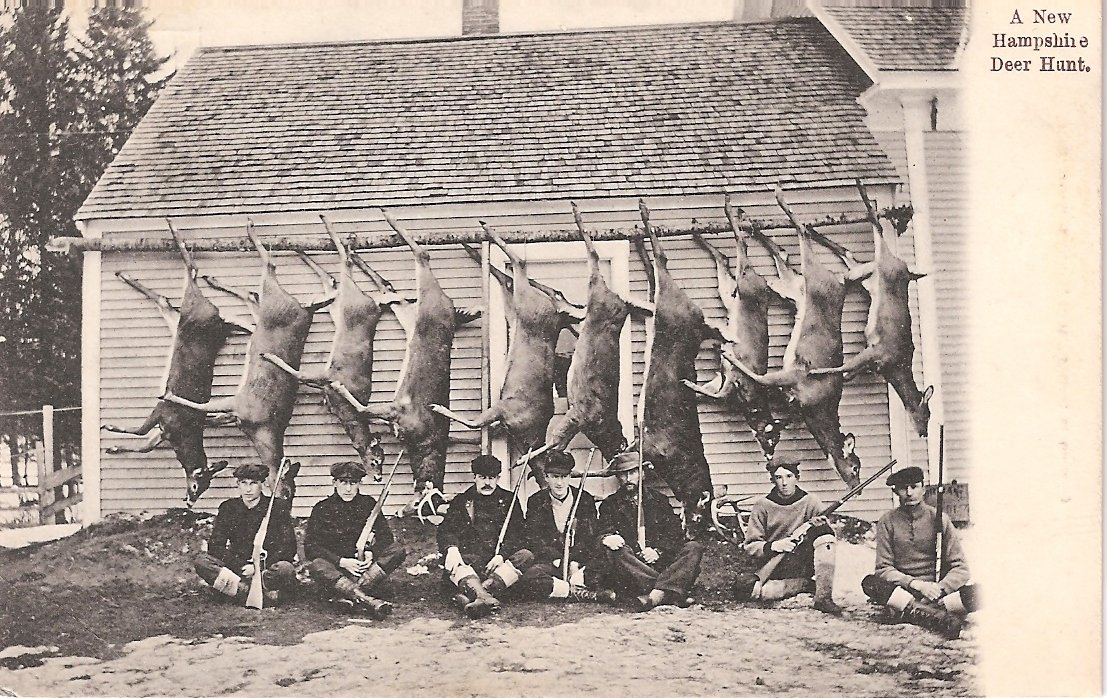
Must have been his brown coat
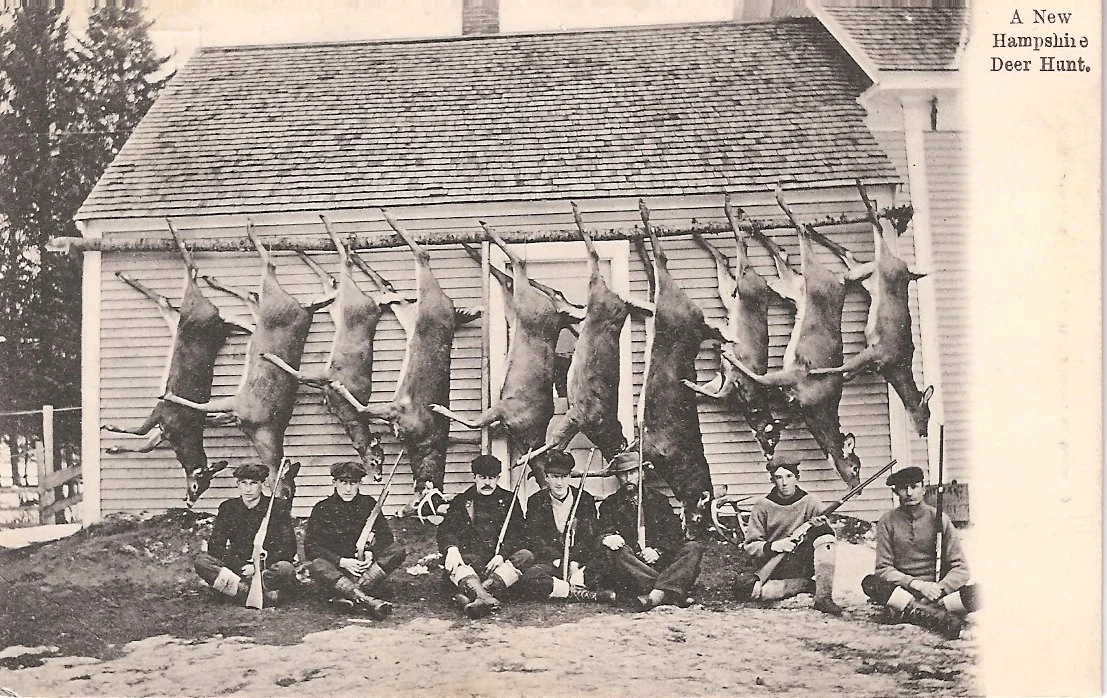
“{During the Maine hunting season} there’s a lot of noise, and now and then we hear a bullet slap into the clapboards, and once in a while we have to stop husking corn and go up in the woods and bring out a wounded hunter. Bringing out a wounded hunter wouldn’t be so bad if you didn’t have to listen to his companion explain how he looked like a deer.’’
— John Gould (1908-2003), in Neither Hay nor Grass (1951). He lived in Brunswick, Maine.
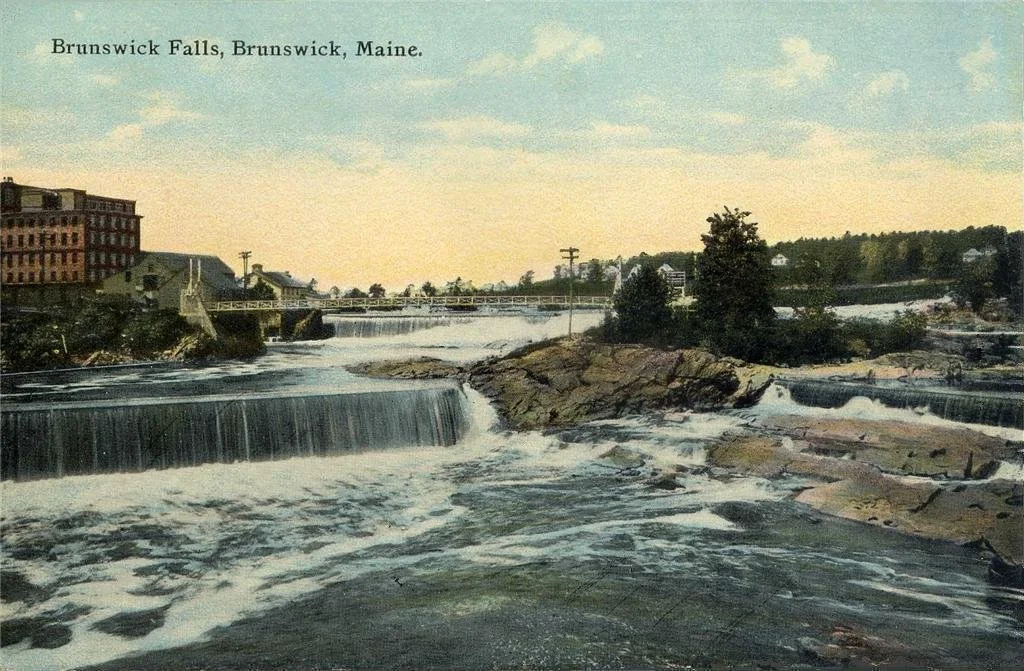
1912 postcard. The river is the Androscoggin, which starts in the White Mountains.
‘Light and metaphor’ in New England

“Forest Sunset" (pastel on paper), by Anne Emerson, in her show “Sinking Into Nature,’’ at Creative Connections Gallery, Ashburnham, Mass., starting Nov. 5.
Ms. Emerson says in her Web site:
“I am a New England painter and a writer. The two actions seem to me to feed each other, opening me to see the world simultaneously in light and metaphor. I paint what pleases me and what moves me. My paintings are of people, things and places I love, and most of my paintings have personal historical references. The act of painting is a meditation for me, awakening me to ‘all this joy and beauty,’ in the words of my grandmother's favorite prayer. In a way my painting is also an act of longing. It is an effort to capture the extraordinary feeling of being held in a natural place or emotion, suspended in beauty, power, solitude and light.’’
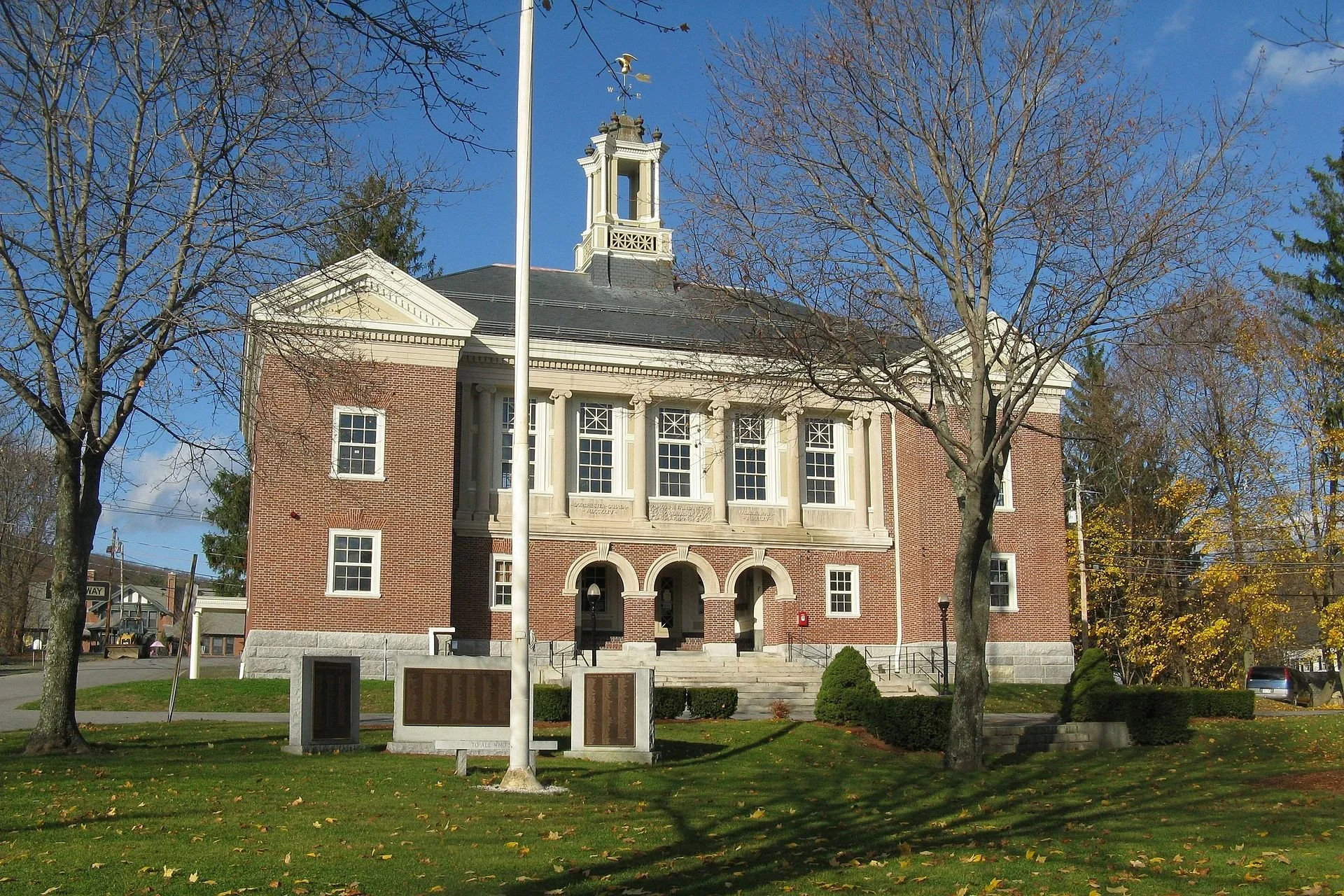
Ashburnham Town Hall
— Photo by John Phelan
Glittery sale

Bid to be luxurious! Sign on East Side of Providence.
— Photo by Robert Whitcomb