
Vox clamantis in deserto








Heating cities by extracting warmth from cold ocean water

Boston skyline from Spectacle Island.
Adapted from Robert Whitcomb’s “Digital Diary,’’ in GoLocal24.com
Of course, Putin’s attack on Ukraine and the resulting European energy crisis have accelerated efforts to create economies not based on gas, oil and coal from petrostate dictatorships such as Russia. It reminds me of the stuff that came out of the pressure of World War II – mass use of antibiotics and radar, jet engines, new building materials and, yes, the atomic bomb, which was used to end the war in Asia and the Pacific started by the brutal Japanese Empire – adding a new kind of existential fear.
One of the most interesting examples of this recent reactive innovation is in Helsinki, Finland.
There, a new, carbon-neutral heating system is planned in which a tunnel will be used to pull water from the seabed, where water temperature stays constant. The water would then be processed through heat pumps.
Bloomberg City Lab reports that “{H}eat exchangers will remove about 2.7 degrees (Fahrenheit) of heat from the seawater, which will later be returned to the sea via another nine-kilometer tunnel. The energy collected will then be refined via the heat pump process to reach temperatures of up to 203 degrees.’’
Bloomberg reports that “by processing the water through underground heat pumps, the system could generate enough heat to serve as much as 40 percent of the Finnish capital.’’
This is something that should be looked into by some New England coastal communities, especially the biggest ones — Boston, Providence, New Haven, Portland, New London, etc. Meanwhile, if you can scrounge the several thousand dollars to buy and install a heat pump for your home, you can save a lot of money over the long run.
Ships of state need smiles
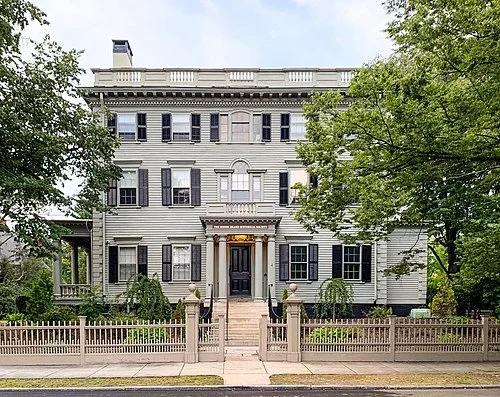
The Aldrich House on College Hill in Providence, where Abby Rockefeller spent much of her youth.
“A nation without humor is not only sad but dangerous.’’
— Abby Aldrich Rockefeller (1874-1948), philanthropist, most famously as a patron of modern art, daughter of very powerful U.S. Sen. Nelson Aldrich of Rhode Island, wife of John D. Rockefeller Jr. and socialite.
Emotional flowers

“Trumpet Vines” (archival pigment print), in the show“Eat Flowers,’’ by Cig Harvey, at Robert Klein Gallery, Boston, through Dec. 18.
The gallery says:
“In this exhibit, the photography of Cig Harvey focuses almost completely on flowers. Harvey wrote that she ‘[wants her] photos to be sensory,’ and with only a quick glance it is clear that the emotion and presence of each piece is palpable.’’

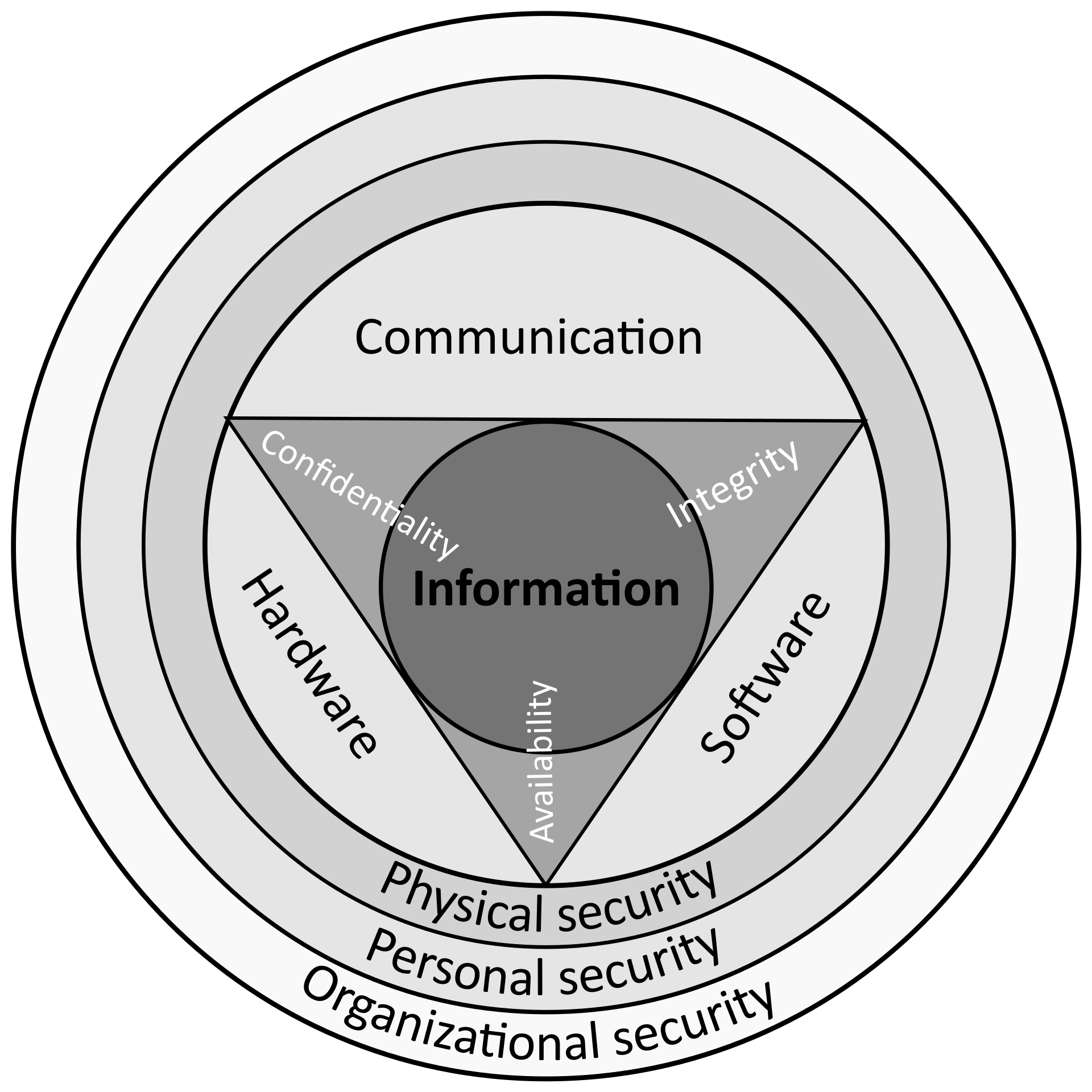
Viktoria Popovska: For New England higher education, cybersecurity signals news threats and opportunities
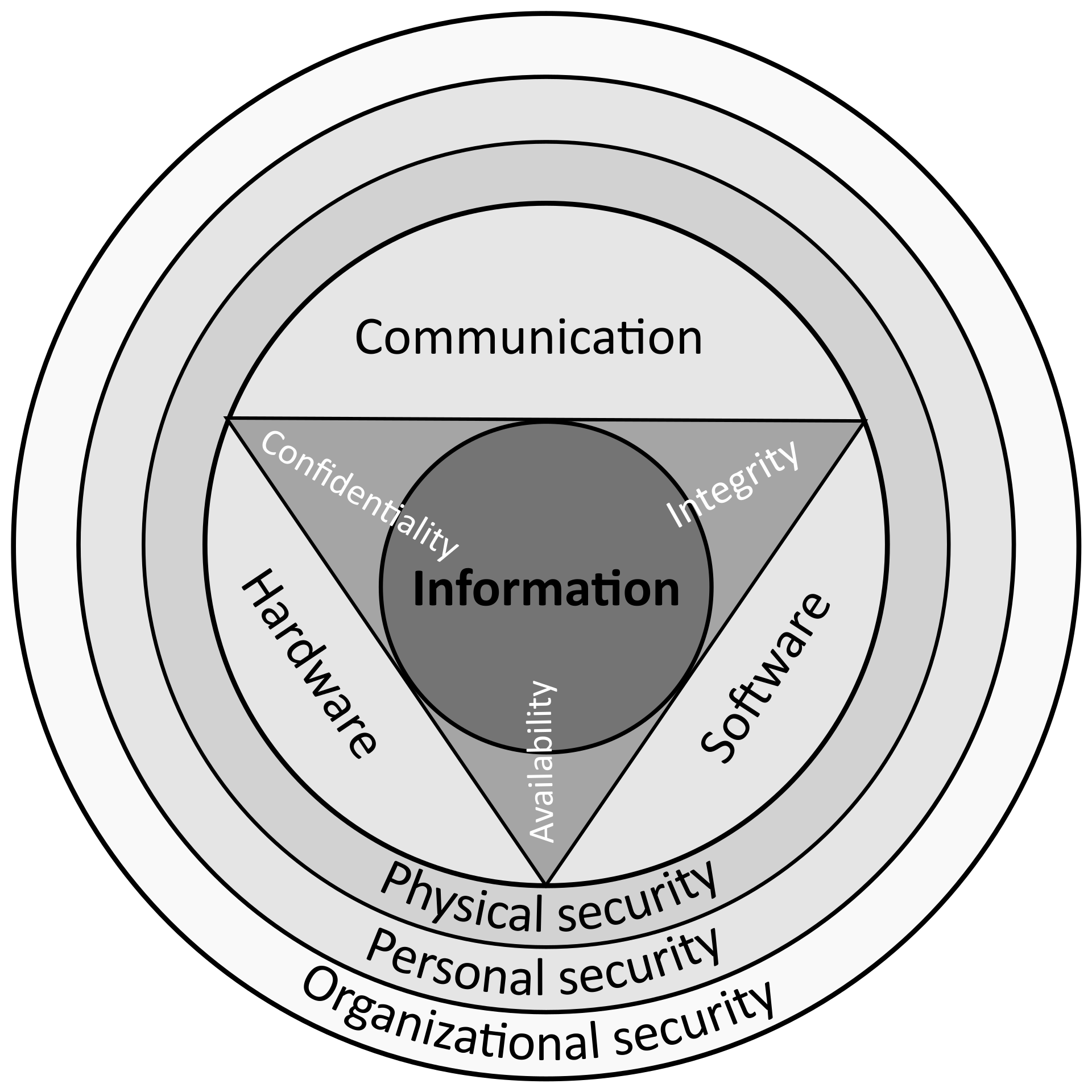
— Graphic by Michel Bakni
From The New England Journal of Higher Education, a service of The New England Board of Higher Education (nebhe.org)
BOSTON
Some of the most common cybersecurity threats are malware, ransomware, phishing and spam. For their victims, including higher education institutions (HEIs), cybercrimes range from inconveniences to data breaches to grand heists like the one that struck Cape Cod Community College (CCCC) four years ago.
In 2018, CCCC, in West Barnstable, experienced a cybersecurity attack resulting in $800,000 stolen from school bank accounts. CCCC was ultimately able to recover more than 80% of the money stolen by the hackers, but impacts of the attack still affect the college.
The cyberattack prompted CCCC, known as the 4Cs, to work with an independent consulting firm to learn best practices related to the institution’s cybersafety. These included, for example, installing endpoint protection software applications that protect servers and PCs from malware campuswide.
President John Cox of Cape Cod Community College spoke about the school’s cyberattack and what he has learned from the situation.
“One of the major takeaways from that is when you are looking at a website or anything electronic and you are being asked to open something up or go to a certain website or scan a QR code, unless you are 99% sure that it’s the real deal, then you shouldn’t hesitate to call the people who sent it to verify it.”
The CCCC attack also prompted the community college to reevaluate its degree programs. In the 2020-21 academic year, CCCC began offering a degree and certification in Information Technology: Cybersecurity. Previously, this pathway had been Information Technology: Security Penetration Testing and though the course requirements haven’t changed much, the new name and reframing of the program is a sign that the 4Cs and other HEIs are realizing the importance of offering cybersecurity programs, and prospective students are taking notice.
Will Markow, the vice president of applied research at LightCast, estimated that his labor market analytics company has seen at least a 40% increase in cybersecurity graduates in the last few years. Despite the rise in people completing cybersecurity degrees, the growth rate of cybersecurity job positions is still double the graduation rate, meaning a cybersecurity skills gap continues to persist.
NEBHE and cybersecurity
NEBHE, with its longtime interest in changing skilled labor demands, has been covering the need for cybersecurity talent for several years. In a 2014 piece in The New England Journal of Higher Education, Yves Salomon-Fernandez, then a vice president at MassBay Community College, wrote about the cybergap and the demand for cybersecurity talent along with New England’s response to the need. Salomon-Fernandez discussed the creation of the New England Cyber Security research consortium, a collaboration between Mass Insight and the Advanced Cyber Security Center. The consortium has evolved into the Cybersecurity Education and Training Consortium, which aims to improve the cybersecurity talent pool. The consortium holds an annual conference where new research is shared and cybersecurity experts lead various workshops.
In 2015, NEBHE announced that cybersecurity was among new academic subject areas to be offered under Tuition Break, NEBHE’s initiative to help students and institutions share high-demand programs. These offerings included associate degree programs in specialized fields such as cybersecurity infrastructure, cybersecurity and healthcare IT, and cybersecurity-digital forensics.
In July 2022, NEBHE, in collaboration with the Business-Higher Education Forum (BHEF), awarded tech talent grants to seven business-higher education partnerships in Connecticut. The grants are a part of an initiative to target growth in tech skills like cybersecurity. Quinnipiac University, the University of Bridgeport and Mitchell college were awarded tech talent grants focused on cybersecurity.
The skills gap
The cybersecurity skills shortage continues to persist and organizations of all types face cybersecurity challenges.
In its 2022 Cybersecurity Skills Gap Global Research Report, Fortinet found that “worldwide, 80% of organizations suffered one or more breaches that they could attribute to a lack of cybersecurity skills and/or awareness.”
The Fortinet report also found that recruiting and retaining cybersecurity talent was a key issue. 60% of organizations have difficulty recruiting cybersecurity professionals and 52% have a difficult time retaining those professionals.
In 2018, The New York Times reported on a prediction from CyberSecurity Ventures that estimated 3.5 million cybersecurity positions will be available but unfulfilled by 2021. CyberSecurity Ventures has since updated its prediction for 2025, but continues to project vacancies at 3.5 million. “Despite industry-wide efforts to reduce the skills gap, the world’s open cybersecurity position in 2021 is enough to fill 50 NFL stadiums,” according to CyberSecurity Ventures.
Clearly, there is a need for more cybersecurity professionals, but why have efforts to reduce the skills gap not worked?
One reason is that people simply aren’t getting the right credentials to secure a cybersecurity position. Many top cybersecurity jobs require not just a bachelor’s degree, but also a master’s and may also require credentials such as a CISSP certification. CISSP stands for Certified Information Systems Security Professional and is independently granted by the International Information System Security Certification Consortium.
Despite the demand for cybersecurity positions to be filled, the industry is slow to soften the credentials or education requirements. But some companies, such as Deloitte, have begun creating a talent pipeline where they train candidates in skills they would not have previously been qualified for.
Cybersecurity and higher education
Cape Cod Community College is far from alone in facing cybersecurity threats.
The threat that cyberattacks pose for HEIs is extremely costly and increasingly frequent, according to April 2022 coverage in Forbes. Ransomware attacks are the most frequent problem for HEIs, with each attack costing on average $112,000 in ransom payments. Forbes writes that HEIs are prime targets for cyberattacks because of their historically underfunded cybersecurity efforts and the way that information sharing and computer systems work in the institutions.
Austin Berglas, global head of professional services and founding member of the cybersecurity firm BlueVoyant, told Forbes that his company had seen a large increase in ransomware attacks in 2020 and 2021 since everyone went remote.
In 2022, a handful of U.S. HEIs have publicly disclosed cyberattacks, according to Hackmageddon, a security breach tracker. Still, most cyberattacks on institutions go unreported unless forced to by law.
Universities have begun upgrading their cyberdefense systems, partially as a result of nudging from the insurance industry.
With the understanding of the threat of cyberattacks, HEIs are working on pumping out cybersecurity professionals.
Consider the University of Bridgeport (Conn.), one of the universities that received a tech talent grant from NEBHE and BHEF. The university announced that it will use the grant money to launch a 12-week course in cybersecurity and information security geared toward the finance and tech sectors. The university plans to offer a certificate to course participants that will allow students to be workforce ready in the cybersecurity field.
Other New England HEIs are also looking to impact the cybersecurity world. Yale University is partnering with other institutions to support the Secure and Trustworthy Cyberspace Program, a research program supported by the National Science Foundation. That program is working on initiatives like the creation of a confidential computing center, making a secure software supply chain and working to improve computing in marginalized communities.
In addition to the programs offered through NEBHE’s Tuition Break, five Massachusetts universities offer bachelor’s degrees in a cybersecurity-related field as well as two in Connecticut, two in Vermont, three in Maine, three in Rhode Island and one in New Hampshire, according to Cybersecurity Guide. Various other associate, master’s and doctoral degrees in cybersecurity fields are also available at New England HEIs.
Cox, of CCCC, also spoke about the school’s partnership with Bridgewater State University, which is developing a cyber range to simulate and test cybersecurity networks. This cyber range will allow students and professionals to perform mock cybercrime investigations to better prepare for any situation.
This is unlikely the last you’ll read on the complex challenges of cybersecurity in The New England Journal of Higher Education.
Viktoria Popovska is a NEBHE journalism intern and a junior at Boston University.
Trust traumas
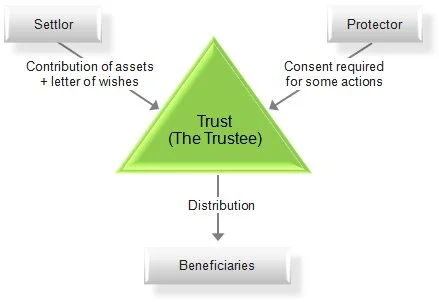
Graphic by Anja Bauer
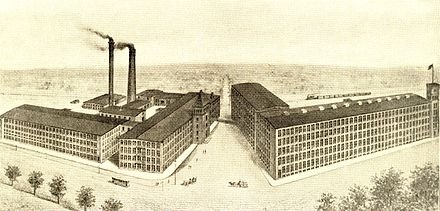
Berkshire Cotton Mills, in Adams, Mass., in the 19th Century, part of a predecessor operation of Berkshire Hathaway.
Adapted from Robert Whitcomb’s “Digital Diary,’’ in GoLocal24.com
Most people enjoy reading about rich heirs to family fortunes fighting via nasty lawsuits over inherited money, which is usually held in complex trusts. Thus it has been with the widow of Michael Metcalf (who died in 1987) and their three children, who are suing her lawyers. Michael Metcalf ran the late-lamented big multimedia company The Providence Journal Co. Then there are a couple of Chace family cousins in Providence whose family owned Berkshire Hathaway, an old New England textile company that Warren Buffett turned into a kind of mutual fund for rich people.
Most people don’t have much money, and many live paycheck to paycheck. It makes them feel a bit better to see wealthy people angry and unhappy, though these privileged folks, often what the late Providence Mayor Vincent Cianci crudely called simply members of “the lucky sperm club,’’ almost always stay rich, and thus happier than most people.
Hit these links for details on the aforementioned fights:
https://www.golocalprov.com/business/Billionaires-Legacy-Chace-Family-Battle-Over-Control-of-Hundreds-of-Milli
Rob Smith: Ferries, charter boats along East Coast may have to slow down to protect endangered whale species
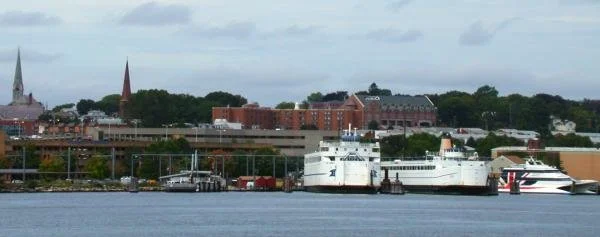
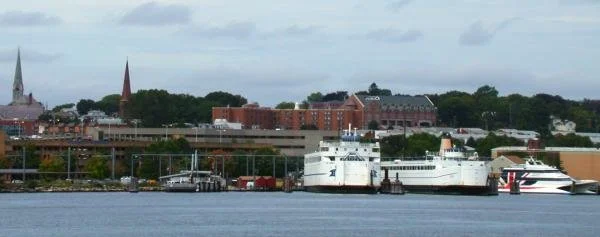
The New London, Conn., ferry terminal, which serves the Cross Sound Ferry and the Block Island Express, as viewed from across the Thames River. Both ferry services would be affected by proposed federal rules to help protect North Atlantic Right Whales.
From ecoRI News (ecori.org)
NARRAGANSETT, R.I.
Ferries and charter boats might have to move a lot slower along the New England coast during the off-season if federal regulators accept new nautical speed limits to protect an endangered species of whale.
Officials with the National Oceanic and Atmospheric Administration have proposed restricting existing nautical speed limits to 10 knots per hour for all vessels longer than 35 feet. If approved, the new rule would go into effect between Nov. 1 and May 30 and apply to all vessels sailing along the Atlantic seaboard from Massachusetts to North Carolina.
The rule is intended to curb the amount of vessel strikes on the Atlantic’s already limited North Atlantic Right Whale population, which is close to extinction. NOAA estimates at least four right whales have died from colliding with marine vessels since 2017.
“The biggest impact to charter boats is the loss of fishing time for our clients,” said Capt. Rick Bellavance, president of the Rhode Island Party and Charter Boat Association. “If we’re driving 10 miles an hour instead of 15, that’s 5 miles of travel every hour. It could be a half hour or an hour each day of less fishing and more driving.”
The off season isn’t quite as off it used to be. Bellavance says more and more customers charter boats to fish for tautog, also known as blackfish, which has had a resurgence thanks to, among other things, careful conservation by the Rhode Island Department of Environmental Management (DEM), and is almost an attraction for the state in November and December.
Daily ferry service to Block Island could also be curtailed under the new rules. Currently the Block Island Ferry runs eight hour-long trips from the Port of Galilee to the island and back every weekday, with the average vessel speed clocking 16 knots per hour. Under the new restrictions, the daily ferry ride could take upwards of 90 minutes per one-way trip, with a reduced number of trips per day.
Block Island Ferry declined to comment for this article.
Protecting the right whales
Considered by NOAA to be “one of the world’s most endangered large whale species,” North Atlantic Right Whales feed in coastal waters ranging from New England to Newfoundland from spring to autumn. They then migrate to calving grounds off the southern United States, near the Carolinas, Georgia and Florida.
As of 2021 it is estimated there are only 350 North Atlantic Right Whales left worldwide. Once a plentiful species throughout the Atlantic, their populations were culled over the centuries due to aggressive whale hunters in the Northeast, who called them “right whales” because they were easily killed and their corpses floated to the surface.
Now right whales are protected under federal law and the Endangered Species Act, but the population has struggled to bounce back, with only an estimated 42 calves being born since 2017. Overall the right whale population has significantly declined since 2010, and 54 right whales have died or been seriously injured since 2017.
The real threat to right whales is no longer crusty old New England fishermen. According to federal officials, the real threat comes from entanglement in commercial fishing nets and vessel collisions. NOAA estimates over 85 percent of all right whales have been entangled in fishing nets at least once. The agency also estimates at least four whales have died because of vessel collisions since 2017 — and that number may be higher. NOAA estimates two-thirds of whale deaths go unreported.
“Collisions with vessels continue to impede North Atlantic right whale recovery. [Vessel speed limits are] necessary to stabilize the ongoing right whale population decline, in combination with other efforts to address right whale entanglement and vessel strikes in the U.S. and Canada,” said Janet Coit, assistant administrator for NOAA Fisheries.
Speed limits to curb collisions and protect right whales have existed since 2008, but the restrictions limited them to narrow geographic areas – for Rhode Island it only applied in waters south of Block Island, not affecting most marine traffic going in and out of Narragansett Bay – and ships greater than 65 feet long.
A risk analysis performed by NOAA suggested expanding vessel speed restrictions in the areas of highest risks could reduce right whale mortalities from vessel strikes by 27.5 percent.
The economic impact would also be minimal, according to NOAA. The agency’s economic impact report estimated the direct costs and impacts on transit times would cost the economy $28.3 million to $39.4 million annually, with much of that amount borne by the commercial shipping industry.
RIDEM, which owns and maintains the Port of Galilee, estimated the impact on commercial fishing vessels operating out of the port would be minimal. “Vessels in that size range aren’t traveling much faster than 10 knots anyway, even when transiting,” said DEM spokesman Mike Healey.
Not all agree. Bellavance thinks it will hurt the charter boat owners, who need the most business.
“There’s a smaller group of folks who do this to provide for their families, that’s their job,” said Bellavance. “Those are the ones that are impacted when you start to mess with the winter season, cause they’re still trying to go fishing year-round.”
NOAA is accepting public comment on the proposed rule until the end of October.
Rob Smith is an ecoRI staffer.
'Fear of clutter'
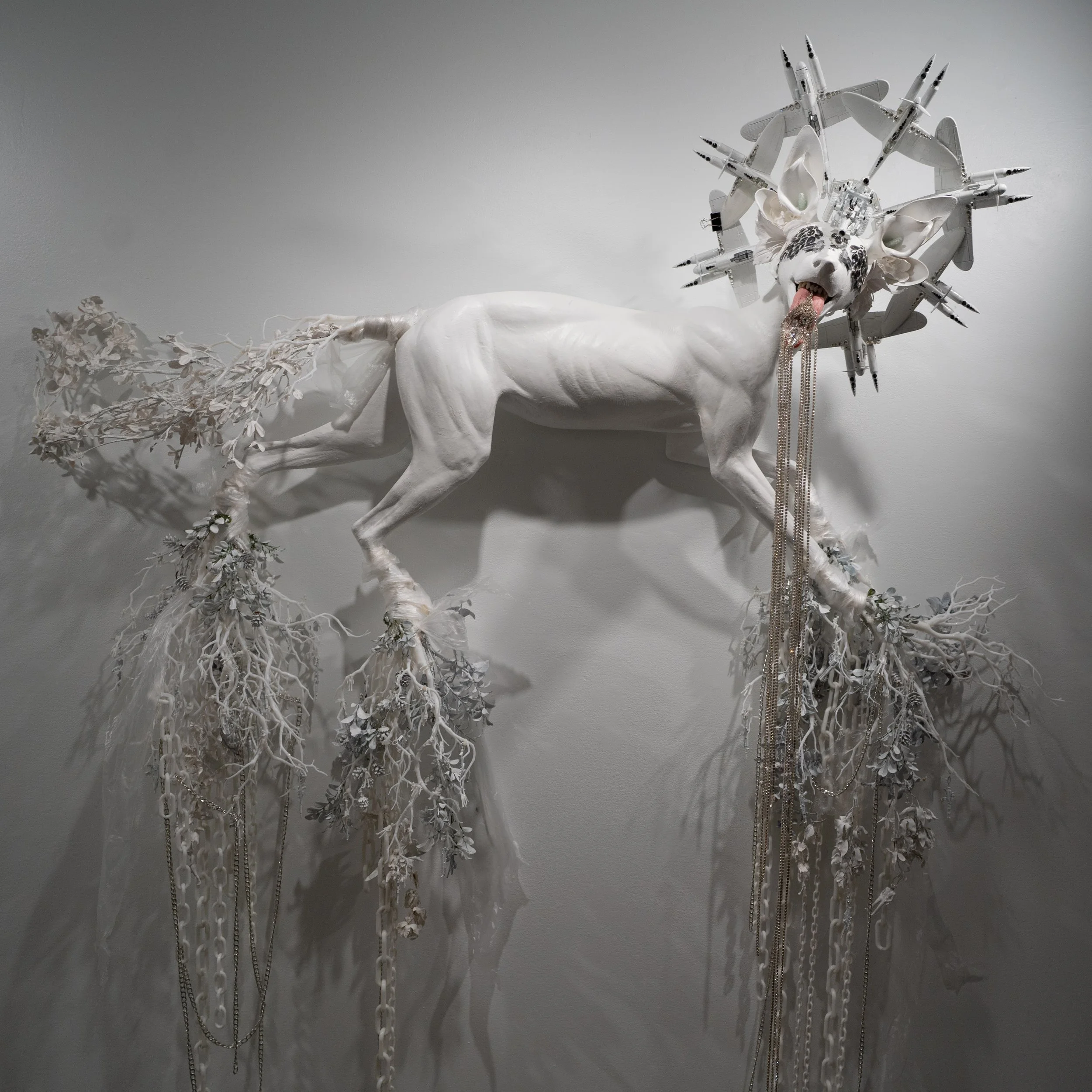
From “Ataxophilia,’’ Boston-based Zoe Friend’s show at Boston Sculptors Gallery Nov. 9-Dec. 11.
The gallery explains:
“A play on the term ataxophobia, a clinical condition described as ‘a fear of clutter or messy surroundings,’ the exhibition features assemblage sculptural works exploring the fetishization of objects through the artist’s baroque-inspired maximal aesthetic.’’
Western society defines us by our consumption, our belongings and now, very much by our waste. Focusing on the consumer sublime as well as examining the intersection of our relationship with nature and societal detritus, Friend presents highly ornate and sumptuous motifs juxtaposed with the mundane disposable materials from which they are made. Assembled from items such as plastic utensils, cheap costume jewelry, and fake fauna, the artist strips these elements of all familiar color cues, allowing the viewer to experience form before discerning the materials.
Friend has let this fear of things and her ever-evolving relationship with compulsion guide what she calls “an encapsulation of my own consumer anxieties,” laid bare in the collection of over-embellished objects which tell the story of our own excesses.
‘Enigmatic languages’
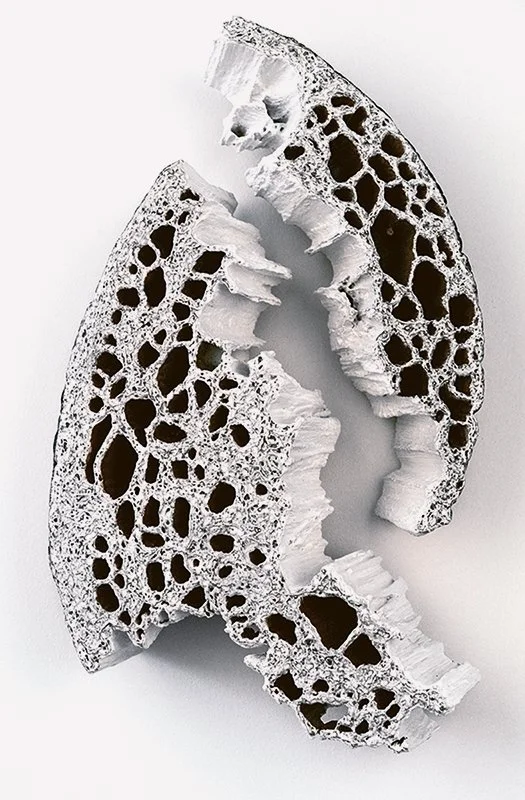
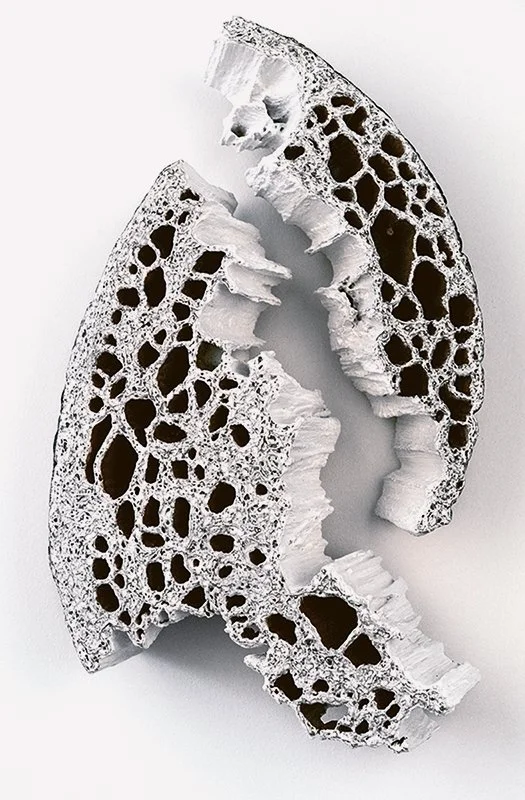
“Presence/Absence” (wooden found object with encaustic, sumi ink, cold wax), by Hanover, N.H.-based artist Lia Rothstein
Her artist statement says:
“I am fascinated by the complexity of the natural world and our own human anatomy. As an artist I have continually explored textures and abstracted forms, negative and positive spaces, light and shadow, linear elements that convey both connectedness and disconnection and, more recently, permanence and fragility. The calligraphic lines and the spaces in between them that I observe in the landscape and in my research about the brain and how we think, process information, and form memories feel like enigmatic languages to me, unique unto themselves, endlessly exquisite yet tenuous. Using waxes and other art materials I feel I can extend the meaning of my work beyond literal representation by creating layers of meaning, metaphor, translucency, physicality and temporality.’’

Students playing cricket at Dartmouth College, in Hanover, N.H., in 1793. The town is mostly known for hosting Dartmouth, chartered in 1769 and whose predecessor institution was Moor’s Indian Charity School, founded in Lebanon, Conn., in 1754.
Josiah Dunham (artist), S. Hill (engraver)

Dartmouth’s Hood Museum of Art.
‘It tasted like winter’

— Photo by Kembangraps
”…inspired by ants
I tasted the sap
that oozed in great drops
from the bark of the pine
it tasted like its needles smelled
like winter like mountains or early morning….’’
— From “Amber Necklace,’’ by Cheryl Savageau, a Worcester, Mass., native of Abenaki and French-Canadian background

Don Pesci: Time to study the ‘principle of subsidiarity’

I want to be sure to thank Pam Salamone and Mary Beeman for inviting me to speak to you today. I’ll begin by saying something about liberty and heroism, move on to discuss the status of Connecticut’s two political parties, and close with a Q&A session that, I hope, will open my own eyes to your genuine concerns. I won’t take much more than 20 minutes of your time.
You probably will not mind if, along the way, I take a paddle to the deserving backsides of Governor Ned Lamont and President Joe Biden.
People in this room will be aware that they are outnumbered by registered Democrats in the state by about two to one. Unaffiliateds outnumber Democrats by a small margin. Connecticut’s larger cities have been in the Democrat hopper for a half century or more – and it shows. Democrats in the General Assembly have nearly a veto-proof majority. All the state’s constitutional offices are held by Democrats. Jodi Rell was the state’s last “moderate” Republican governor. She was followed by a bristly Dannel – please don’t call him “Dan” – Malloy, now chancellor of Maine’s higher- education system. And Malloy was followed by Ned Lamont, Lowell Weicker Jr.’s protégé. Need I mention that Connecticut’s news media were positioned during all these years to the left of center?
The state’s media have quite given up their necessary role as a contrarian force for good in Connecticut. Where’s my proof? Show me three contrarian editorials in any newspaper that hold Lamont’s feet to a right of center bonfire.
I’ve just described the condition of the Alamo prior to Santa Anna’s successful attack upon it.
John F. Kennedy, running for the presidency in 1960, visited the Alamo and delivered a short speech there – short because his schedule was tight and he was due somewhere else. He kept looking at his watch, finished his speech to a smattering of applause, and turned to the tour guide, a young woman, to ask, “Where’s the back door?”
“Senator,” the young lady responded, “There are no back doors to the Alamo – only heroes.”
It will take a heroic effort to reform Connecticut, but the thing can be done. And when it is done, it will be found that activist women and politically oppressed minorities had played a major role in the state’s reformation. “Reformation” is a solid word suggesting a return to a politics centered in the liberty of the person, combined with political action that enriches people rather than government, lifting them up from despair and poverty to independence and self-reliance.
The relationship between governors and the governed throughout history has always been an inverse one. It goes like this: The richer the government, the poorer the people; the more active the government, the more sluggish and inert the people; a government of experts will produce a citizenry of dolts; where the government does everything, the people need do nothing, and nothing, as my dear old Italian mom used to say, leads to nothing.
Where the liberties of the government extend to infinitude, the natural freedoms of the people are reduced to a reluctant obedience. And unease eventually leads to a reassertion of the natural liberties of the person.
Davy Crockett did not die at the Alamo so that Santa Anna could clothe himself in glory.
When King George III of Britain heard that President George Washington intended to give up his presidency and resume his life at Mount Vernon as a rich farmer, he said, “If he does that, he will be the greatest man alive.”
Despite the strenuous efforts of our Educrats – mostly over-schooled and undereducated “experts” – to redraft and reform the historical record, we know who our heroes are. We know they are modest, self-effacing – and fiercely determined to carry forward to our progeny the grace and power of liberties bathed in the blood, sweat and tears of our forbearers.
Shut Up and Obey
As everyone here surely knows, the two contestants for governor of Connecticut – Democrat incumbent Ned Lamont and Republican nominee Bob Stefanowski – debated each other at the end of September. Post-modern debates, unlike the Lincoln-Douglas debates, are little more than media availabilities.
Democrats seem determined not to allow Republicans too many mano-a-mano press availabilities. Lamont has graciously agreed only to one and two thirds debates. In his previous gubernatorial contest with Stefanowski, Lamont allowed four debates. Apparently, his comfortable lead in early pre-debate polling, convinced Lamont and his debate coaches that mano-a-mono exposure would not be helpful.
Present at the September debate was the Independent candidate for governor Rob Hotaling , whose media availability cut by a third the face-time of the two principal gubernatorial contestants. There were no serious editorial objections in major Connecticut newspapers to a foreshortened debate schedule. I leave it to you to wonder why.
During the debate, Lamont made one serious unforced error, considerably downplayed by Connecticut’s pro-progressive, left of center media. I leave it to you to wonder why .
During their debate, Stefanowski objected to Connecticut’s obscenely large surplus. In a letter to Comptroller Natalie Braswell, CTNewsJunkie reported at the end of September, OPM [Office of Policy Management] Secretary Jeff Beckham wrote “The fund balance at the end of FY 2023 will exceed $5.6 billion, or 25.4 percent of net General Fund appropriations for the current year. The maximum allowed by law is 15% which means anything over that will automatically be used to pay down pension debt.”
A $5.6 billion surplus, 25.4 percent of net General Fund appropriations for the current year, most hard-pressed Connecticut taxpayers would agree, is not pocket change.
In 1986, Massachusetts, a deep Blue New England state like Connecticut, passed a piece of legislation – 62F – that mandated the return to taxpayers of all tax collections that grow faster than the three-year average of wage growth.
“Gov. Charlie Baker,” NBC Boston reported in mid-September, “filed a fiscal year 2022 closeout budget that sets aside $2.94 billion to be returned to taxpayers and leaves the legislature about $1.5 billion in surplus dollars to spend.”
Could there be a 62F statute, which ties tax growth to wage growth, in Connecticut’s future?
Lamont responded that his surplus would serve as a hedge against a coming RECESSION, and later, at a regional Chamber of Commerce session, Lamont said, according to CTPost, "Maybe we're going to have a surplus at the end of this fiscal year, maybe we're not, but don't spend the surplus we don't have.” How it’s possible to spend a surplus you don’t have may be a mystery to accountants.
Lamont continued, “That's the type of thing that got this state into such a mess over the last 30, 40 years.” Wrong, what got the state in trouble was spending beyond its means. Lamont continued, “I did a debate the other day and my opponent [Stefanowski] spent that surplus, you know, five times over. We're heading into what could be a REAL RECESSION."
Here, a trap door should have sprung open and swallowed whole Lamont and all the king’s debate coaches.
In the scale of economic evils, inflation is a step down from recession. And yet here was Lamont claiming a swollen surplus was necessary to offset the ravages of a recession steaming round the corner.
For months and months, the Biden administration had been hotly underplaying high inflation, universally defined as “too many dollars chasing too few goods.” The nation was and is, and will be for some time, suffering from high inflation. Any soccer mom filling up her gas tank in preparation for a game could have told the economic “experts” advising the inattentive Biden that they were all wet.
These implausible denials, including that the coming recession is a figment of fevered Republican and Make America Great Again (MAGA) imaginations – are exploding, like a fireworks display, all around us. And the denials here in Connecticut are all of a piece with majority Democrats’ successful attempts in the General Assembly to deny the realities lying right under their noses and to discourteously deny Republicans legislators an opportunity to effectively propose workable, non-progressive solutions to our most pressing economic and cultural problems.
Economist Don Klepper-Smith, the Hartford Courant tells us, very late in the game, “said he believes that Connecticut is in a recession. ‘Nothing here in this data takes me off the fact we are in a recession.”
What data? “Connecticut’s economy shrank by 4.7% on an annual basis in the three months ending June 30, as earnings weakened in manufacturing and finance and insurance, three key industries, the U.S. Commerce Department reported. The state ranked 49th in its economic performance in the second quarter. Only Wyoming’s economy was weaker. Overall, the U.S. economy shrank by 0.6% on an annual basis.”
Lamont’s solution to the recessionary monsoon already upon us -- pass around the bailing spoons -- is laughable. And his solution to such dire economic problems – the state’s governor and representatives are aboard the ship; tow up the lifeline – is a treacherous betrayal of a gubernatorial mandate.
The Democrats want you reform-minded Republican women, and any refor- persistent Democrats and Unaffiliateds to shut up and obey their infallible prescriptions. The good news is -- I sense some ardent resistance in this room. Pam Salamone has said very clearly in her past campaign that you cannot grow your way out of a recession through excessive taxation.
That resistance has been very lively in Boards of Education meetings across the state, and the pushback against unnecessary mask wearing and racy books introducing very young children to erotic experimentation, has been fierce.
It seems that mothers, if not Democrat politicians, fully understand the doctrine of subsidiarity, which holds “that a central authority should have a subsidiary function, performing only those tasks which cannot be performed at a more local level.”
With respect to educating children, the doctrine means that the central authority – whether it be the state, municipal government or local boards of education – should not override parental authority. Indeed, subsidiary authorities are authorized, in a well ordered republic, to enforce the will of parents, which is why we have elected boards of education.
The whole notion of democratic representation rests – always uneasily – on the principle of subsidiarity. The very right to govern, here in the land of the free and the home of the brave, still rests, always uneasily, on the will of the people. And the law of the land is the law laid down by our founders in the U.S. Constitution: “We the People of the United States, in Order to form a more perfect Union, establish Justice, insure domestic Tranquility, provide for the common defense,[promote the general Welfare, and secure the Blessings of Liberty to ourselves and our Posterity, do ordain and establish this Constitution for the United States of America.”
Republican governance, no one in this room need be told, does not depend upon the will to govern – it depends upon the will of the people to be responsibly governed. And good governance depends upon the will of publicly appointed representatives to promote the general welfare and secure the blessings of LIBERTY to ourselves and our posterity. Every tax, every regulation, every executive authoritarian dictat – we’ve had our fill of them during the COVID crisis – is a deprivation of the liberty of the person, which is why all of the above should be applied sparingly – very sparingly -- and judiciously.
I began this talk by hitting some rather somber notes. But I’d like to leave you with a light note. Newt Gingrich wrote yesterday:
“I recently received an email from Barry Casselman, an old friend and long-time election analyst who writes a regular newsletter on politics. On Saturday, he wrote to me, ‘Now Connecticut?’ He explained that a new poll found that Democrat Sen. Richard Blumenthal was only leading Republican challenger Leora Levy by five points (49 percent to 44 percent). Two weeks ago, a poll had him above 50 percent and leading by 13 points. Casselman simply asked, ‘Can CT be in play?’
“I checked with people who know Connecticut politics a lot better than I do, and the answer was surprisingly affirmative.
“This is a year when any Democrat incumbent below 50 is potentially vulnerable. In addition to Levy on the Connecticut ticket, Republican gubernatorial candidate Bob Stefanowski now trails Gov. Ned Lamont by only six points (40 percent to 46 percent), according to a Connecticut Examiner poll.
“Importantly, the poll was taken before the brutal killing of two police officers in Bristol, Connecticut. The police declined to let Gov. Lamont speak at a memorial service for the officers, because Lamont signed a law during the Black Lives Matters protests that restricted law enforcement and let criminals go free.”
Thank you all for being so patient and attentive. If you have any questions relating to anything on your minds, we can toss them around. Or if you have a comment, that will do just as well. I’d be very interested in hearing what you think an effective resistance to political stupidity in Connecticut might entail.
Don Pesci is a Vernon, Conn., columnist.

1908 postcard. Clinton is still a small town on Long Island Sound.
David Warsh: The WSJ ‘contains multitudes’

On Chicago’s Lakefront.
— Photo by Alanscottwalker
SOMERVILLE, MASS.
A headline on a story Oct. 21 in the in The Wall Street Journal revealed “Chicago’s Best-Kept Secret: It’s a Salmon Fishing Paradise; Locals crowd into inlets off Lake Michigan to catch fish imported from West Coast to counter effects of invasive species.”
Between vignettes of jubilant fishermen braving the lake-front weather, reporter Joe Barrett offered a concise account of how Great Lakes wildlife managers have coped with successive waves of invasive species over eighty years of globalization. In the beginning were native lake trout, apex predators thriving on shoals of perch. Sea lampreys arrived in the Forties, through the Welland Canal, which connects Lake Ontario with Lake Erie. The blood-sucking eels devastated the trout population, while alewives, another invasive species, grew disproportionately large with no other to prey on them.
Authorities controlled the lampreys with a new pesticide in the mid-Sixties, and imported Coho and later Chinook salmon from the West Coast to rejuvenate sport fishing. Fingerling salmon hatched in downstate Illinois nurseries were released in Chicago harbors, to return to the same waters to spawn at maturity. Meanwhile, ubiquitous European mussels, released from ballast tanks of ships entering the lakes via the St. Lawrence Seaway, improved water clarity, but consumed nutrients needed by small fish. As a native of the region, I remember every wave.
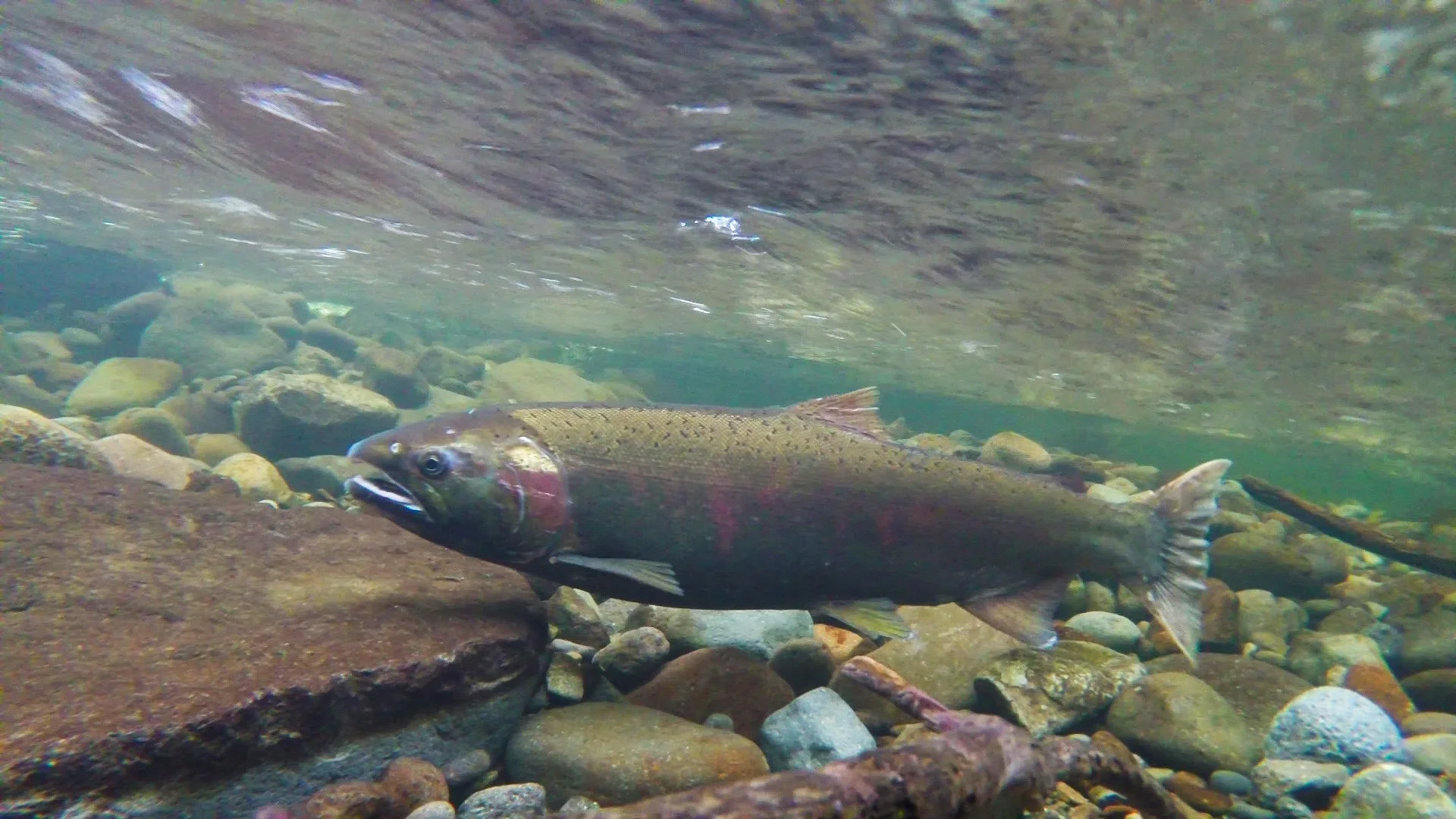
A Coho salmon.
I was struck by the artful sourcing of Barrett’s story. He quoted fishermen Andre Brown, “a 51-year-old electrician from Oak Park;” Martin Arriaga, “a 59-year-old truck driver from the city’s Chinatown neighborhood,” and Blas Escobedo, 56, “a carpet installer from the Humboldt Park neighborhood.”
Providing the narrative were Vic Santucci, Lake Michigan program manager for the Illinois Department of Natural Resources, and Sergiusz Jakob Czesny, director of the Lake Michigan Biological Station of the Illinois Natural History Survey and the Prairie Research Institute. The Illinois Department of Health chimed in with its recommendation: PCB concentration in the bigger fish meant no more than one meal a month.
Barrett did not mention the dangerous jumping Asia carp that now threaten to enter Lake Michigan; nor the armadillos, creeping north from Texas into Illinois, with global warming: much less the escalating crime rates in Chicago, which have McDonald’s threatening to move out of the city. But then his was a story about fishery management. And that’s what I like about the WSJ: it contains multitudes.
Earlier last week I had sought to convey to visiting friends the different sensibilities among the newspapers I read. I prize The New York Times for any number of reasons, but its concern for the future of democracy in America often seems overwrought. I look to The Washington Post for editorial balance (never mind the “Democracy Dies in Darkness” motto), and to the Financial Times for sophistication. But it is hard to exaggerate how much I enjoy The Wall Street Journal. I worked there for a time years ago; that surely has something to do with it. But I think it is the receptivity of its news pages I so admire. Like Joe Barrett’s fish story, its sentiments are inclusive. Read it if you have time.
Despites its sale to conservative newspaper baron Rupert Murdoch, the WSJ has preserved the separation between sensible news pages, its worldly cultural and lifestyle coverage, and its fractious editorial pages. Those editorial pages are still recovering from their enthusiasm for Donald Trump, and I sometimes think as I read them that they pose a threat to democracy, if only by their preference for derision. But still I read them, so they must be doing something right.
Barely two weeks remain before the mid-term elections. The races that interest me most are those seeking common ground: Ohio, Alaska, Pennsylvania, and Oregon. There will be time afterwards to sift the results. Is American democracy in danger? I doubt it. E pluribus unum! with a certain amount of thoughtful guidance along the way.
David Warsh, a veteran columnist and an economic historian, is proprietor of Somerville-based economicprincipals.com, where this essay originated.
What this cairn really is
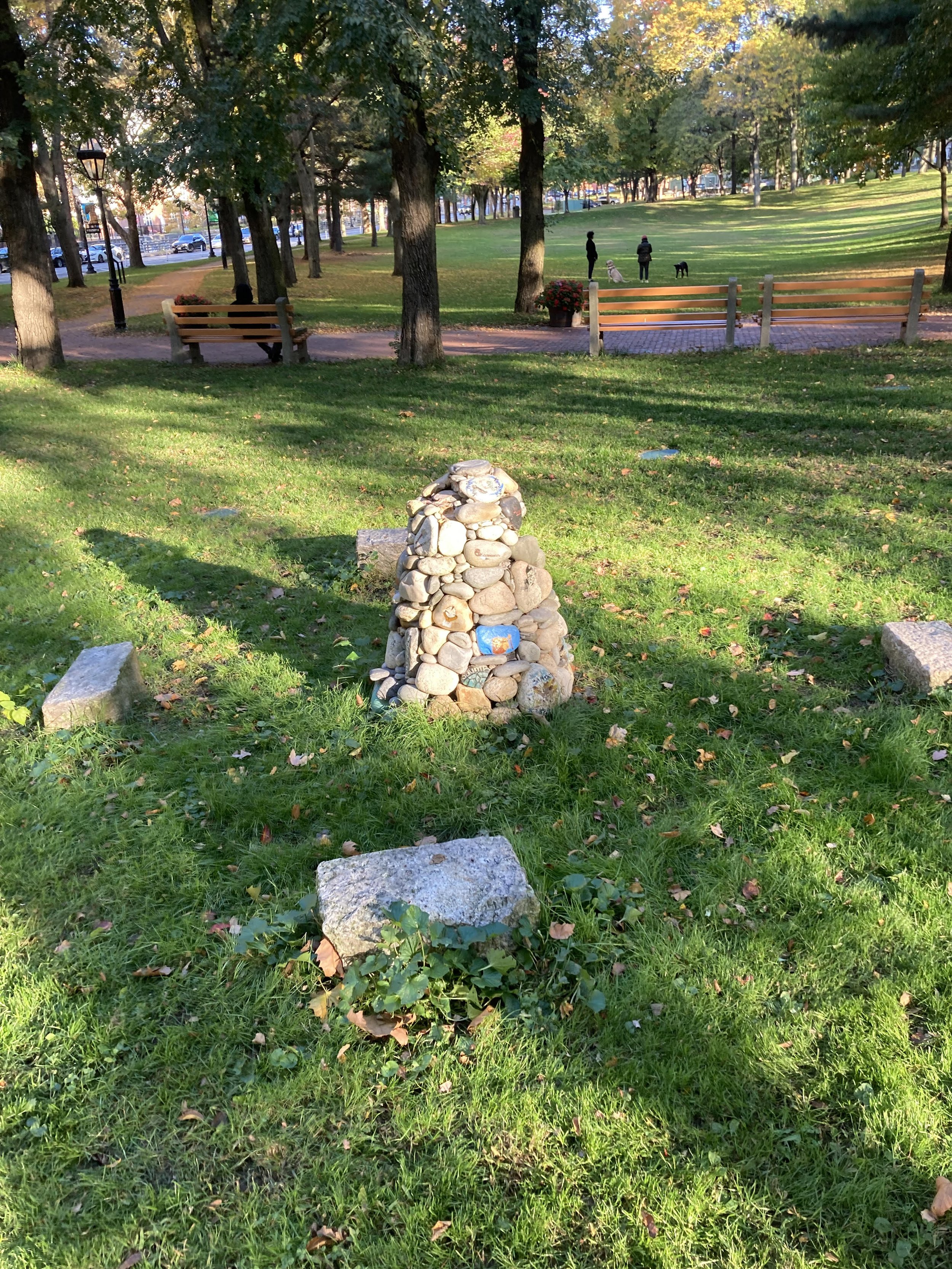
From Robert Whitcomb’s “Digital Diary,’’ in GoLocal24.com
“I came across this thing while walking in the park near the Roger Williams National Memorial, in Providence. What is it? A memorial to a dead tourist? A Druid astronomical measuring device? A New Age shrine?’’
A friend sent me the answer via the National Park Service. Sorry!
“This cairn, or stone pile, depicts pieces of Narragansett {Tribal Nation} history from pre-contact through today. Built by Narragansett artists associated with the Tomaquag Museum, it expresses the fact that WE ARE STILL HERE. The cairn is at the center with 4 raised stones around it representing the Four Directions. It is a meditative circle, representing Narragansett lives, history, and future which brings us full circle. Sit down and reflect on your own past, present and future and its intersection with the Narragansett people.
“The Narragansett Tribal Nation has lived on these lands since time immemorial. Their ancestors respected all living things and gave thanks to the Creator for the gifts bestowed on them, as do Narragansett people of today. Lynsea Montanari & Robin Spears III, both Narragansett, served as summer arts interns at the memorial for this project. They incorporated their own cultural knowledge with teachings by tribal elders regarding first contact with European settlers, genocide, displacement, assimilative practices, enslavement, continuation of language, ceremony, and other cultural practices. The artists chose to create a cairn as it is a part of the history of all indigenous peoples. There are many historic cairns in the Narragansett landscape.’’
Why we need schedules
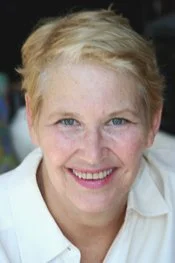
Annie Dillard.
— Photo by Phyllis Rose
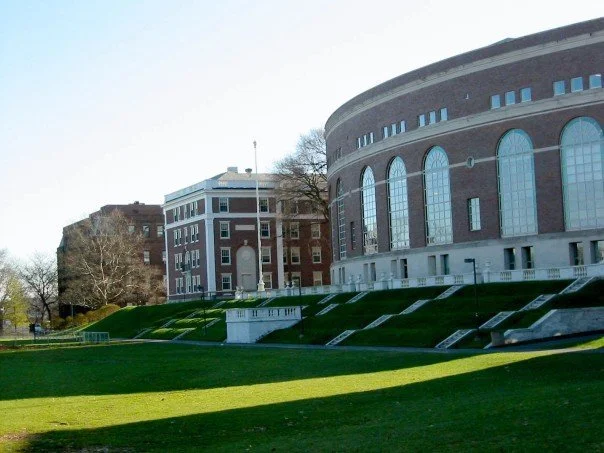
At Wesleyan University, in Middletown, Conn. The view from Foss Hill: From left to right: Judd Hall, Harriman Hall (which houses the Public Affairs Center), and Olin Memorial Library
“How we spend our days is, of course, how we spend our lives. What we do with this hour, and that one, is what we are doing. A schedule defends from chaos and whim. It is a net for catching days. It is a scaffolding on which a worker can stand and labor with both hands at sections of time. A schedule is a mock-up of reason and order—willed, faked, and so brought into being; it is a peace and a haven set into the wreck of time; it is a lifeboat on which you find yourself, decades later, still living.”
―Annie Dillard (born 1945), in The Writing Life. The American author of fiction and nonfiction books taught for 21 years at Wesleyan and has long had a summer house on Outer Cape Cod, a place that she has frequently written about.
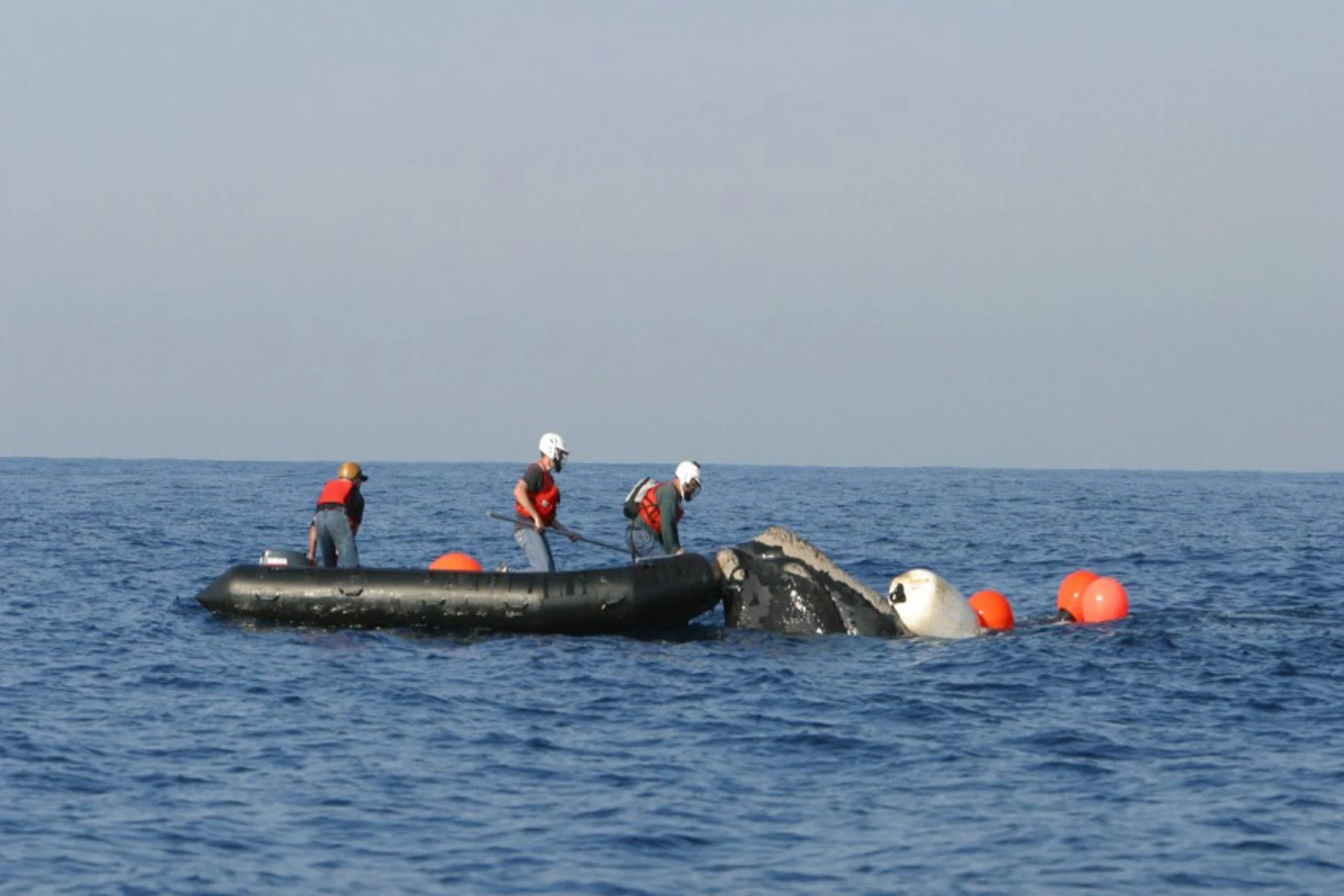
Driving another mammal species to extinction via painful deaths
National Oceanic and Atmospheric Administration staffers trying to free a North Atlantic Right Whale from fishing gear.
Adapted from Robert Whitcomb’s “Digital Diary,’’ in GoLocal24.com
It’s very sad to watch the slow and painful death of “Snow Cone,’’ one of the 350 or so remaining North Atlantic Right Whales. Snow Cone has been entangled in fishing lines south of New England, a reminder of how much we devastate wild fauna, including such highly intelligent mammals as whales. Surely the fishing industry can do much more to protect them. She may well be dead by the time you read this.
One is getting fisheries to use different systems, even if we have to subsidize this to start. To wit, consider this from Oceana:
“Using Innovative, Pop-up Fishing Gear to Avoid Entanglements While Continuing to Fish
“Pop-up fishing gear stays connected to traps on the ocean floor until a release mechanism is triggered that allows a flotation device to surface so fishermen can retrieve the catch. Release mechanisms can be set to release at a certain time (‘timed release’) or upon receiving an acoustic signal from a fishing vessel (“on-demand release”). Because there is no surface buoy, virtual gear marking can notify fishery managers and other fishermen of the location of traps.’’
And:
“Other proposed solutions would sever fishing lines in the event of entanglements, potentially allowing a whale to free itself. These include weak links, Yale grip sleeves and line cutters that in theory would only break the line after an entanglement. Despite these changes being easy to incorporate, none of these solutions prevent entanglements and there is no clear evidence that they allow an animal to free itself.’’ (Italics for my emphasis.)

North Atlantic Right Whale mother and calf.
The art of the found

“Sailor's Delight” (found painted wood), by Mike Wright, in her show “WOOD Works,’’ at the Cotuit (on Cape Cod) Center for the Arts, through Oct. 29.
— Photo courtesy Cotuit Center for the Arts
The exhibit displays Mike Wright’s work as a salvager and artist.
The gallery says: “Her whimsical wooden sculptures are assembled from found materials and given new life through clever arrangements. Wright sees the potential that each piece of discarded wood has to become something new, while still retaining its original, unique qualities.’’
Her artist statement says:
“I think of myself as a salvager, in that fascinating Cape Cod ‘Mooncusser’ tradition. My process starts with searching Provincetown beaches and dumpsters for old previously painted wood. The point of using found material is that, as debris, it seems unpromising but that lack of promise is also its appeal. The peeling paint, the color scrubbed by salt waves, sand or human use allows us to recognize the influence of its past. I like the moment when I place the first pieces of old wood, seeing all that potential, seeing relationships of form begin to take shape. I have learned to listen to this found wood and allow for any chance opportunity to emerge, achieving the sculpture through modifying form with minimal carpentry—cutting, joining, sandwiching. The wood had an experience as boat, cabinet or floorboard and it remembers its past. I interfere with what it was made to be, to make it something else: a sculpture that suggests the endless process of transformation of the things of human industry.’’
‘Metaphor for devastation’
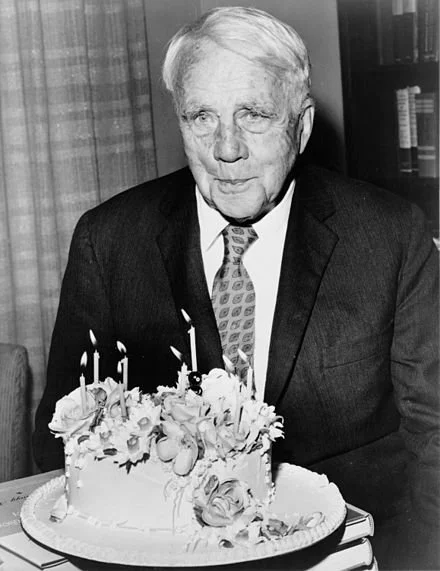
Frost at his 85th birthday party, in 1959.
“While he {Robert Frost) was talking he was looking out,
But stayed in, sagacity better indoors.
He became a metaphor for inner devastation,
Too scared to accept my invitation.’’
— From “Worldly Failure,’’ by Richard Eberhart (1904-2005), an American poet. He knew Frost (1874-1963), a giant of English language poetry.
Henge fun and Grace Farms

“Henge XII” (acrylic and oil on canvas; diptych), in Ian McKeever’s show “Henge Paintings,’’ at Heather Gaudio Fine Art, New Canaan, Conn., through Dec. 3
The gallery says:
“McKeever’s five-decade artistic career has been an ongoing exploration of abstraction through the use of oils and acrylics on canvas or paper. He typically creates works in groups, undertaking several canvases at a time which can take him two or three years to complete.’’

A lonely scene at New Canaan’s train station. It recalls the melancholy that pervades the TV series Mad Men, which mostly takes place in Manhattan and New York’s affluent suburbs in the late ‘50s and early ‘60s.

At Grace Farms, in New Canaan, an 80-acre cultural center. Grace Farms is owned and operated by the Grace Farms Foundation, a not-for-profit organization whose mission is to promote peace through nature, arts, justice, community, faith, and Design for Freedom, a new movement to remove forced labor from the built environment.
— Photo by Karl Thomas Moore

The River building at Grace Farms sits amongst meadows and woodlands in New Canaan.
— Photo by Adam.thatcher

Chris Powell: Delinquent derelict’s family gets rich on the taxpayers
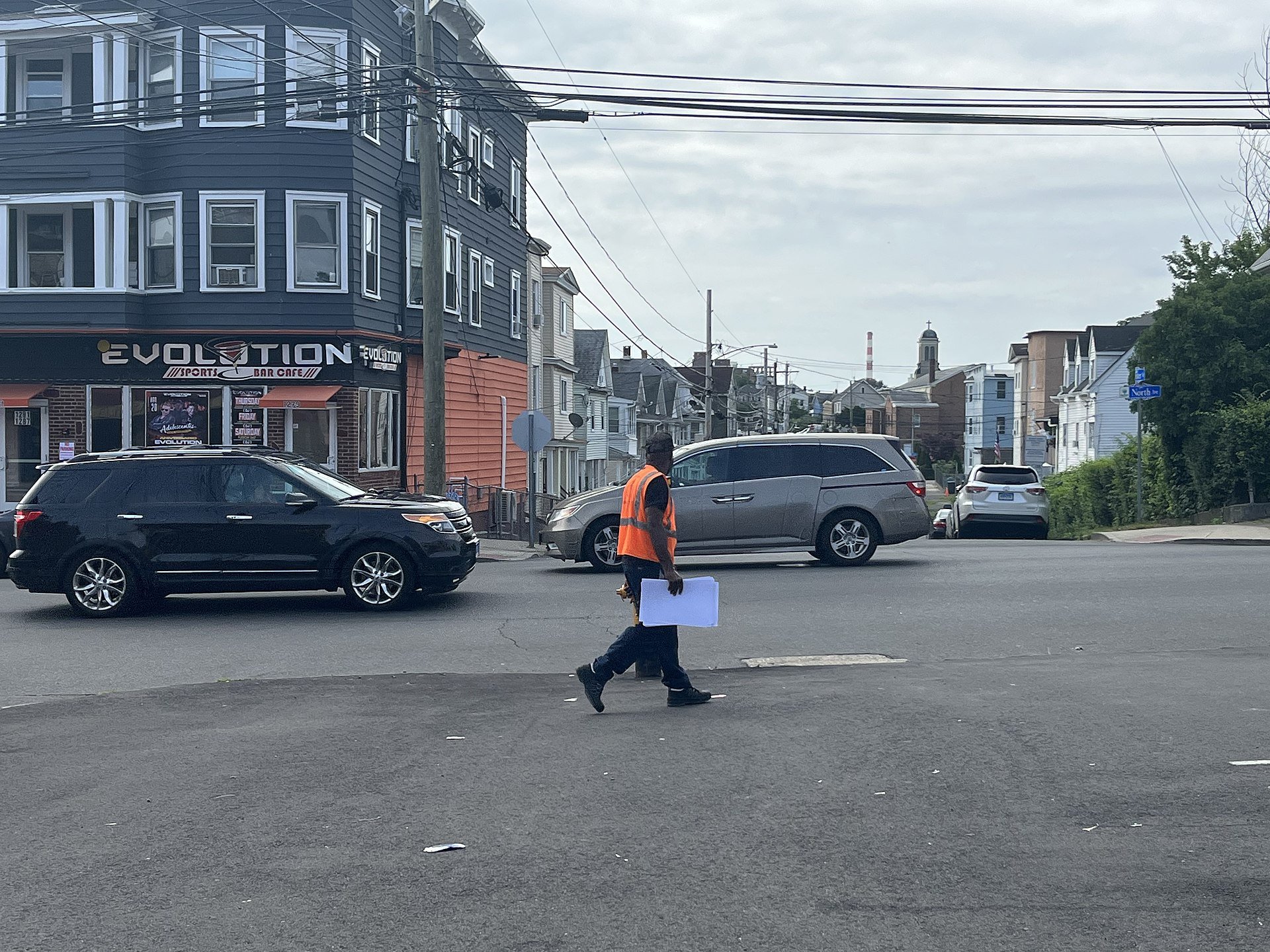
The Hollow neighborhood of Bridgeport, along North Avenue.
— Photo by Lima16
MANCHESTER, Conn.
What happens in Connecticut when a 15-year-old lives in a home with abusive and neglectful parents, drug abuse and violence, ends up on the street, joins his friends in car thefts, gets high on marijuana, steals another car, leads police on a chase, drives the wrong way on a one-way street, strikes other cars, is cornered in a parking lot, puts the car into reverse to escape, knocks over an officer, and is fatally shot by him?
In Connecticut what happens is that the boy's family, who messed him up, gets $500,000 from the City of Bridgeport to settle a lawsuit asserting that his death was actually a federal civil-rights violation.
This presumably will be the final chapter of the story of Jayson Negron, whose life ended in a fairly predictable way in 2017 and reflected the widespread neglect of Connecticut's children and the failure of government to do much about it.
Ironically, the settlement was approved by the Bridgeport City Council this week just as Connecticut, mourning two police officers murdered by a drunken madman in Bristol, sought to show support for police generally. Though the settlement falsely implied that the Bridgeport officer was in the wrong in the case of the young car thief, it did not provoke much comment around the state.
Neither side in the lawsuit wants to talk about the award. The City Council may have treated it as a nuisance settlement recommended by the city's insurer to avoid the risk that a judge or jury, sympathizing with the boy's survivors despite the facts, might produce an adverse verdict and a larger award.
But the officer who shot the boy had been fully vindicated by a state's attorney's investigation that, incidentally, showed that the boy's supporters, trying to provoke outrage, repeatedly lied when they claimed that the car the boy was driving was not stolen as police said it was.
Until recently Connecticut had been failing to exact the necessary accountability from its police officers. New law establishes the office of inspector general to investigate police use of force, curtails the immunity of officers from lawsuits, and prevents the state police from concealing complaints of misconduct. The new law is said to be demoralizing police, but then any greater accountability would. Accountability in government is a necessity and must take precedence over employee morale.
But the settlement of the lawsuit in Bridgeport was not a necessity but a convenience, an excuse for the city not to support its police when they are in the right and an excuse for government not to demand accountability from wrongdoers.
Jayson Negron became a danger to the public because his family catastrophically failed him. Now they're getting rich at public expense, some people will call it justice, and, in this age of political correctness, no one in authority will dare to contradict them.
The "justice for Jayson" for which the boy's defenders clamor would have been decent parents.
WHITHER COLUMBUS?
But there is also plenty of lawlessness on the official level in Bridgeport.
For two years Mayor Joe Ganim has been expropriating the statue of Christopher Columbus that stood at Seaside Park in the city, though, according to the city's legal department, the city's Parks Commission, which has been protesting the expropriation, is the statue's exclusive custodian.
It's not clear what the mayor wants to do with the statue. First he had it placed in a barn at the park and lately had it moved to an Italian social club.
Of course, the mayor may worry that the statue risks vandalism if it remains in a public place, just as Columbus statues in Waterbury and elsewhere have been vandalized by people who consider him an agent of brutal Spanish imperialism more than a daring and world-changing explorer. (Strange that the people who are so upset with Columbus that they vandalize his statues don't seem to have vandalized anything, or even protested, in regard to their own country's recent imperial adventures in Iraq and Afghanistan.)
In any case the Columbus statue in Bridgeport is for the Parks Commission to dispose. Expropriating and hiding it just avoids the decision that needs to be made in the open by the responsible agency.
The statue's expropriation also adds to Mayor Ganim's sorry record of lawbreaking.
Chris Powell is a columnist for the Journal Inquirer, in Manchester. (CPowell@JournalInquirer.com)
An economic-mobility hub

The spectacular fare lobby of the Alewife MBTA station. The station is also known for its art works, inside and out. See photo at bottom.
— Photo by Eric Kilby
Edited from a New England Council report (newenglandcouncil.com)
“Rockland Trust Bank, based in Rockland, Mass., has announced a grant of $50,000 to Just A Start. The grant will be used to help support Just A Start, a new economic-mobility hub near the Alewife MBTA station, in North Cambridge.
“The new Economic Mobility Hub will be a 70,000-square-foot, mixed-use project. The goal of the project is to create a thriving and equitable community to accelerate economic mobility. Once completed the building will include 24 affordable apartments, four pre-school classrooms and a 19,000-square-foot training center. This new home for Just A Start will offer workshops and other programming to serve 2,800 people in Cambridge and Metro-North communities. The project will be open in April 2024.
“Andrea Borowiecki, Vice President of Charitable Giving and Community Engagement at Rockland Trust, said, ‘Our Charitable Foundation is honored to contribute to the development of this important project for the Greater Boston communities. The project perfectly aligns with what Rockland Trust as a community-orientated bank believes in, by providing resources to our neighbors that enable them to flourish to their full potential.”’

“Alewife Cows,’’ by Joel Janowitz

Sculpture outside the Alewife station by Toshihiro Katayama
Photo by Pi.1415926535