
Vox clamantis in deserto





The essential monarch

Queen Elizabeth II at work in 2012 as part of her Diamond Jubilee tour.

Princess Elizabeth in 1928.
WEST WARWICK, R.I.
“The Queen is dead. Long live the King.”
Some would add to that traditional and ringing appeal, “God save the monarchy.” It may not need saving, but the British monarchy won’t be the same. Queen Elizabeth II was a one off, as they say.
I clearly remember the death of King George VI, and the ascent of the 25-year-old Elizabeth. I was living in a far corner of the British Empire, in Southern Rhodesia (now Zimbabwe).
In the colonies, we were a study in patriotism, and we believed in Britain and the empire itself as nearly a divine intention. We almost believed in the divinity of the monarch.
More, we believed that the new queen, so beautiful and young and hopeful, would usher in a new era of Elizabethan greatness. A new Queen Bess set to restore the fortunes of Britain after the savagery of two world wars.
I wasn’t to be, of course. The winds of change were rustling, if not yet howling, and Britain’s great global manufacturing eminence wasn’t to return. Gradually, we were to learn that our vision of Britain as the great civilizing force, the happy world policeman, was fantasy.
But Elizabeth kept her promise. The promise she made on her 21st birthday, “I declare before you all, that my whole life, whether it be long or short, shall be devoted to your service and the service of that great imperial family to which we all belong.”
She kept to the letter and the spirit of that promise. Through all these decades of convulsive change, Elizabeth has been as constant as the Rock of Gibraltar, one of the remnants of the time when the sun really didn’t set on the British Empire.
Elizabeth wasn’t a great mind, a visionary, or even a woman who understood a great deal of what she saw and was told. Arguably, she wasn’t even a very good mother. But she was, every day of her long, long reign, the embodiment of that word from the days of empire “duty.”
Elizabeth did her duty every day of her life and did it completely. How many thousands of native dances did she endure? How many school choirs did she hear? How many awful heads of state did she break bread with and chat about the weather? A famous cover of the satirical magazine Private Eye had a picture of her greeting Nicolae Ceausescu, the Romanian dictator, and a balloon quote from her said, “Do you have any interesting hobbies?” One from her husband, the late Prince Philip, said, “Yes, he is a mass murderer.”
Her greatest avocation was horses. She was a devoted equestrian who rode, against physicians’ advice, shortly before she died.
Queen Elizabeth II will be remembered for much, and it must include rising above her dysfunctional family.
In England, I covered the marriage of her sister, Margaret ,who, hiding behind the dubious cover of one forbidden love affair, lived the life of a princess about town -- no hint of duty or hard work there. At the time of her marriage to the photographer Anthony Armstrong-Jones, royal mania gripped the country. It was an emotional outpouring not to be equaled in intensity until the death of Princess Diana.
The Queen’s sense of humor shone through when she termed one awful personal year as an “annus horribilis.” Always her sense of being human was entwined with her regal demeanor.
Save for the funeral of the beloved Elizabeth, one can expect a huge loss of stature by the monarchy. Charles, the new king, is an odd duck. He has good intentions, but he does not inspire. His son the future King William has yet to prove that he is more than an average young man with a strong-willed wife, the future Queen Catherine.
The monarchy will survive because Brits like it, not the way they came to love Elizabeth, but because it is a useful institution. And, in a time of wobbly political leadership, institutions are an important shock absorber for democracy’s vagaries.
With a monarch, people can believe there is order beyond the disorder of the political process. When I moved to the United States, in 1963, I was struck by how we, the people, had no place to hang our emotions on, besides on the president – and, at any time, about half the people dislike the president.
Elizabeth wasn’t born to be queen but came into the succession because of the abdication of her uncle Edward VIII.
Never forget the royals provide the greatest show on earth with all that pomp and ceremony, loved by the Brits and the foreign tourists.
Watch the greatest funeral you have ever seen unfold on the television. This great queen will be buried as none other has -- on television.
Llewellyn King is executive producer and host of White House Chronicle, on PBS. His email is llewellynking1@gmail.com. As noted, he’s a native of Southern Rhodesia (now called Zimbabwe) and a former British subject. Mr. King was a journalist in London, among many other postings in the media. He’s now based in Rhode Island and Washington, D.C. and besides his journalism, is an internationally know energy expert and consultant.
--
Another chance for Quebec hydro-power line into New England
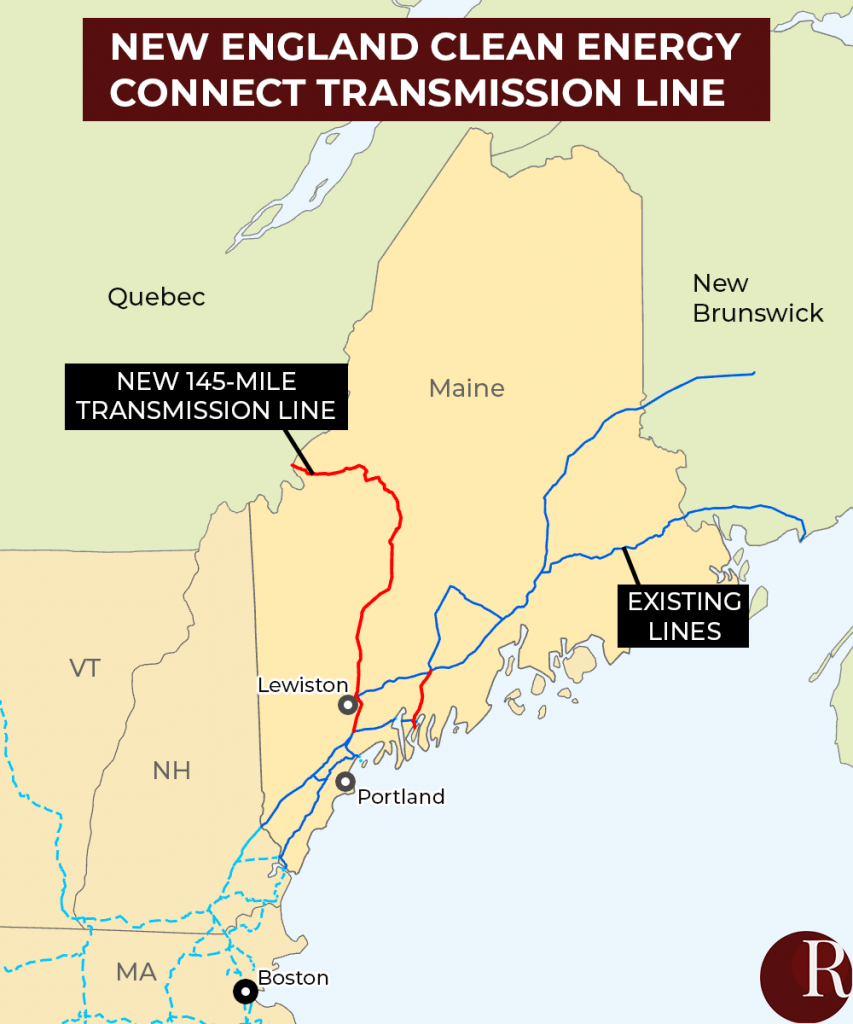
Adapted from Robert Whitcomb’s Digital Diary, in GoLocal24.com
It looked like the long-delayed power line to run from hydro-electric generation in Quebec (comfortably close to us) into the New England grid was kaput after a legally dubious referendum in Maine blocked the line. The project is called New England Clean Energy Connect.
But the Maine Supreme Judicial Court held last month that important sections of the law enacted by the referendum were unconstitutional because they deprived the company building the line -- Avangrid -- of rights that had already been legally vested before the vote. In short, the justices opposed the retroactive nature of the referendum.
Now the case goes back to a lower court for review.
Note that well-funded opposition to New England Clean Energy Connect includes such still fossil-fuel-heavy companies as NextEra Energy, which naturally see the power line as threatening their businesses.
The story is far from over, but in a world of accelerating global warming and countries held hostage by corrupt dictatorships financed by natural gas and oil, the Maine decision is a glimmer of good news.

Loving 'the vigor of decay'

— Photo by Andrija12345678
“Right now — September — is the crossover season, the delicious intersection of our geographic section: the final remnants of New England’s sweet corn in happy collision with the first press of apple cider.’’
— Journalist David Shribman in The Boston Globe
xxx
"Some of us spend our lives preferring fall to all the seasons, accepting winter’s blank as the completion or fulfillment that our season presages, taking spring only as a prologue, and summer as the gently inclined platform leading all too slowly to the annual dazzle. We are in love—not half in love, and not with easeful death—with the vigor of decay….’
— Donald Hall (1928-2018), New Hampshire-based poet and essayist
Summery elite

Painting by South Dartmouth, Mass., artist Sarah Benham in the group show “Coming Full Circle,’’ at Dedee Shattuck Gallery, Westport, Mass., through Sept. 16.
‘Where is everybody?’

“North Truro Red” (oil), by Mitchell Johnson, in his show “Nothing and Change, 1990-2022,” at Truro (Mass) Center for the Arts.
From Jesse Nathan’s commentary on the show:
"Fewer human figures populate Johnson’s spare but vibrant art than do {Edward} Hopper’s — and in this exhibition, you can almost count them on one hand — and Johnson’s often have their backs to us, or their faces blurred.
“Where is everybody? Where are the cars and their drivers? The beach houses and benches and lifeguard chairs are empty, as if the occupants are swimming or walking or long gone. Where did the lifeguards go? Where did any of us go? Because they seem almost peaceful, the weight of the sadness in these paintings didn’t hit me until later: humans are a mess.”
‘Cool cloak’
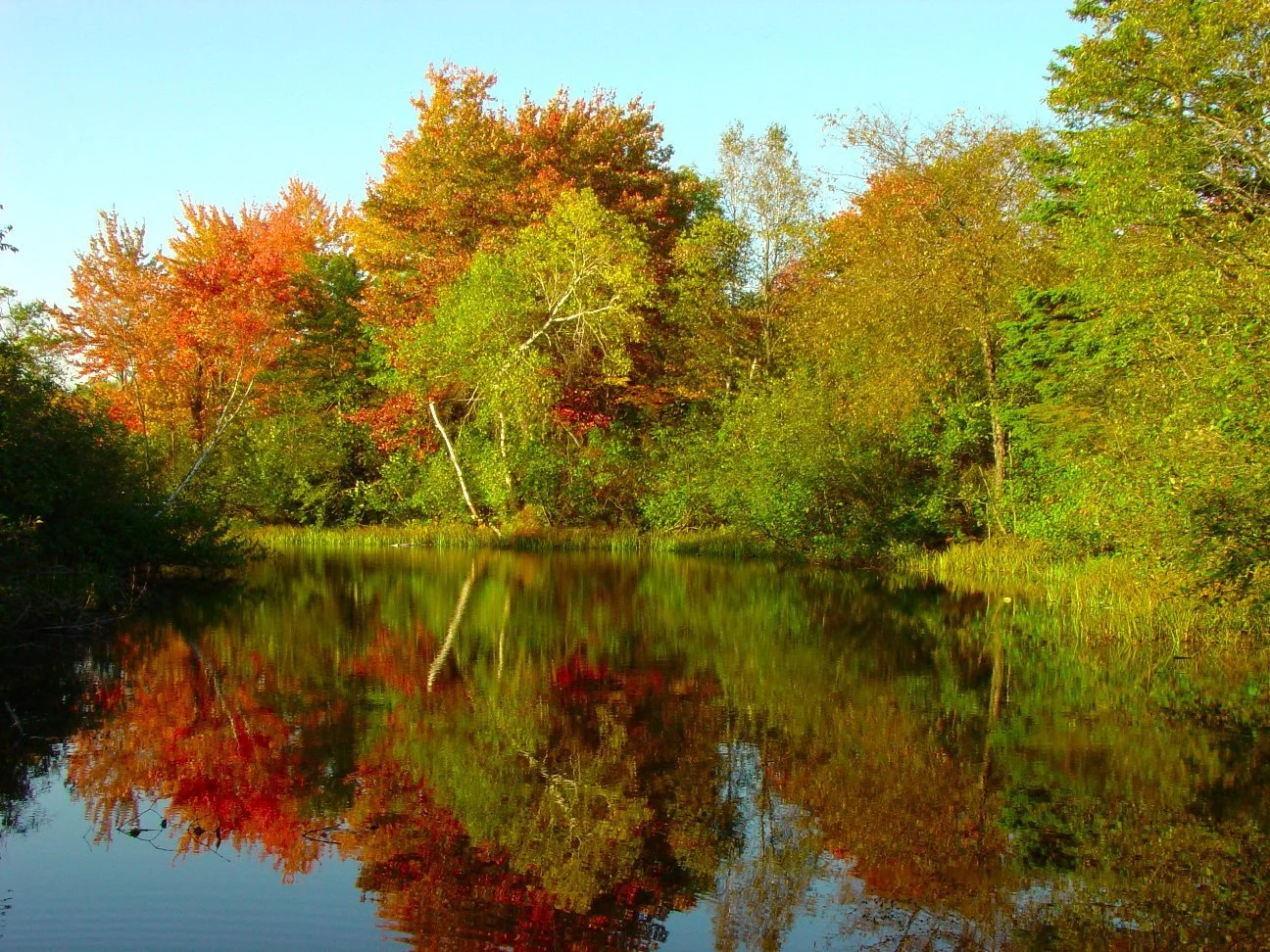
Lemon Stream, in Maine, on a September day.
—Photo by Cinclemflt
“This was one of those perfect New England days in late summer where the spirit of autumn takes a first stealing flight, like a spy, through the ripening country-side, and, with feigned sympathy for those who droop with August heat, puts her cool cloak of bracing air about leaf and flower and human shoulders.”
— Sarah Orne Jewett (1849-1909), American novelist, short-story writer and poet, best known for her works set along or near the southern coast of Maine.
‘Because our daddy owned it’
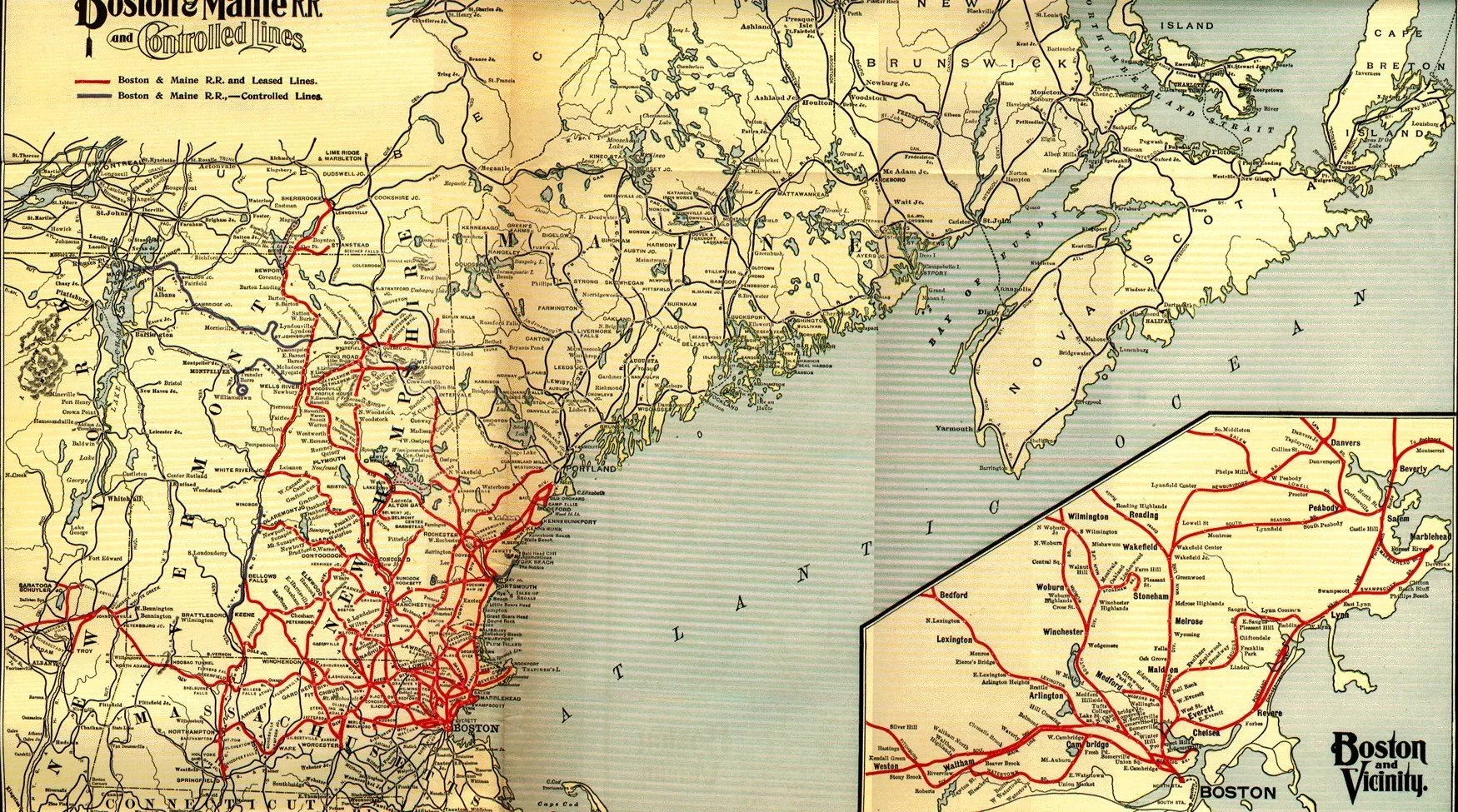
Boston & Maine Railroad map as of 1916.
”We would walk to the railroad station
then hop along the platform while mother
straightened her hat and checked to be sure
The Pass was in her purse, because
that meant we rode the B&M for free,
because our daddy owned it.’’
—From “The Magic Show,’’ by Mary Spofford French (born 1932), a New Hampshire-based writer

Littleton, Mass., B&M depot in 1910.
Things can get violent
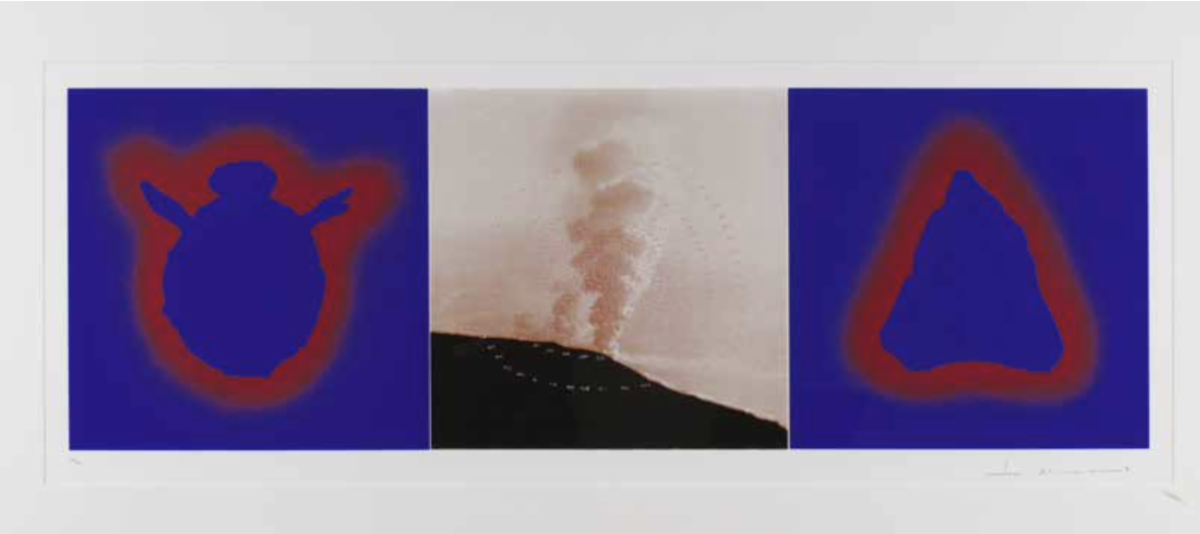
“Volcanic Equinox 20/100” (silkscreen print), by Lita Albuquerque, from “Joan Quinn’s Post-War L.A.’’, at the Armenian Museum of America, Watertown, Mass., through November.
— Photograph by Alan Shaffer
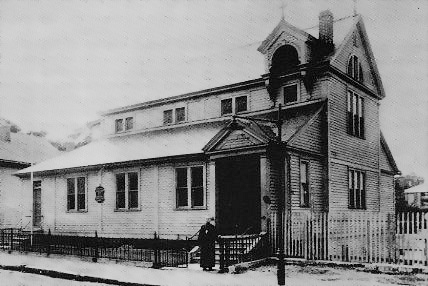
Built in 1891, the Church of Our Savior in Worcester was the first Armenian church in the U.S. It now hosts a Russian Orthodox congregation.
About time they’re getting this museum in New London

Rendering of the National Coast Guard Museum, on the New London, Conn., waterfront.
Adapted from Robert Whitcomb’s “Digital Diary,’’ in GoLocal24.com
New London will be the site of the long-awaited 80,000-square-foot National Coast Guard Museum, on which construction is finally set to begin soon. The facility, which will include immersive and interactive exhibits, is expected to open sometime in 2024.
It’s very appropriate that New London be the site since the Coast Guard Academy in there.
Given the Coast Guard’s age – it was founded in 1790 – and sometimes exciting activities, it’s surprising that such a museum hasn’t yet gone up.
Think of its maritime security work (watching for enemy submarines, etc.), search-and-rescue and anti-crime activities (against smugglers, bootleggers, etc.).
Then there’s chasing drunk weekend boaters.

Chris Powell: Time to stock up on antivenin; paying for utility deadbeats; coping cops

Don’t pet: Timber rattlesnake.
MANCHESTER, Conn.
Another protected species made news in Connecticut other week when a venomous timber rattlesnake attacked two dogs in their yard in Glastonbury. Their owner rushed the dogs to the Pieper Veterinary clinic, in Middletown, just in time for them to be saved with snakebite antidote, what is called antivenin. The dog owner is lucky he wasn't bitten, too.
Connecticut once treated rattlesnakes as the dangerous nuisances they are. They were widespread and it was open season on them. But now that their habitat is limited to the northwest corner of the state and Glastonbury, East Hampton, Marlborough and Portland, state government has made killing them illegal, as if Connecticut couldn't live without them.
State law feels the same way about bears and bobcats, other predators that attack domestic animals.
As a result the habitat of the predators is expanding. While zoning often is used by suburban and rural towns to exclude housing that might be inhabited by unrich people, it is considered environmentally sound and high-minded to expand the habitat of the predatory animals.
The predators even have their own lobby at the state Capitol, environmental extremists who frighten the state's timid legislators more than the predators themselves do.
So Connecticut residents should ask their legislators how many more rattlesnakes, bears, and bobcats state government plans to accommodate, and hospitals and veterinary clinics should stock up on antivenin.
xxx
Hospital and medical insurance bills are not the only places where state government has been hiding social-welfare costs from taxpayers. Such costs long have been hidden in electric and gas utility bills as well.
The Connecticut Examiner's Brendan Crowley reports that 25,000 utility users haven't been paying their bills for many months, some since as far back as October 2019, on account of state government's seasonal restrictions on disconnection and the disconnection moratorium imposed on electric and gas utilities when the virus epidemic started.
Eversource says it is carrying $171 million in bills overdue for 60 days or more. The company and United Illuminating have asked the Public Utilities Regulatory Authority to let them start disconnecting delinquents in September.
Eventually the expense of the unpaid bills is transferred to paying customers through higher rates.
Why should paying customers particularly have to pay the electricity and gas bills of customers who don't pay? For the same reason paying customers of hospitals and medical insurers are forced to pay for people who don't pay for their own treatment in Connecticut's hospitals. This is done because transferring social welfare costs out of state government through intermediaries lets state government escape political responsibility for them. So hospitals, medical insurers, and utility companies are wrongly blamed for price increases caused by government.
This doesn't mean that state government shouldn't assist with medical and utility costs for the indigent. It means that state government should cover those costs directly and honestly, through regular and general taxes.
But honesty would show that the cost of state government is far higher than people think, increasing the public's desire for efficiency in government and jeopardizing government's many less compelling expenses.
xxx
Police in New Haven in June were disgraced by their callous treatment of a man who had seemed drunk when arrested on a complaint that he was brandishing a gun at a block party. He was handcuffed and put in a van without seatbelts. Video showed his head smashing into the wall of the van when it stopped abruptly. More video showed him being dragged out of the van at headquarters when officers didn't believe his claim to be injured. At last report he was paralyzed.
But this month police video showed three New Haven officers hastening to rescue a young woman about to jump from the roof of a parking garage. The officers functioned not only as saviors but also as social workers.
The country is going nuts all around the police, so as tired of it and flawed as they may be, it's a wonder that they cope with it as well as they do.
Chris Powell is a columnist for the Journal Inquirer, in Manchester, Conn. (CPowell@JournalInquirer.com.)
Water view

Betsyann Duval: “Whales’ View” (oil/wax on plaster and canvas), by Betsyann Duval, in her show “Stream of Unconsciousness,’’ at Bromfield Gallery, Boston, through Oct. 2.
The gallery says her “artworks explore the current madness of our political, cultural and sexual” context.
‘The whole act’
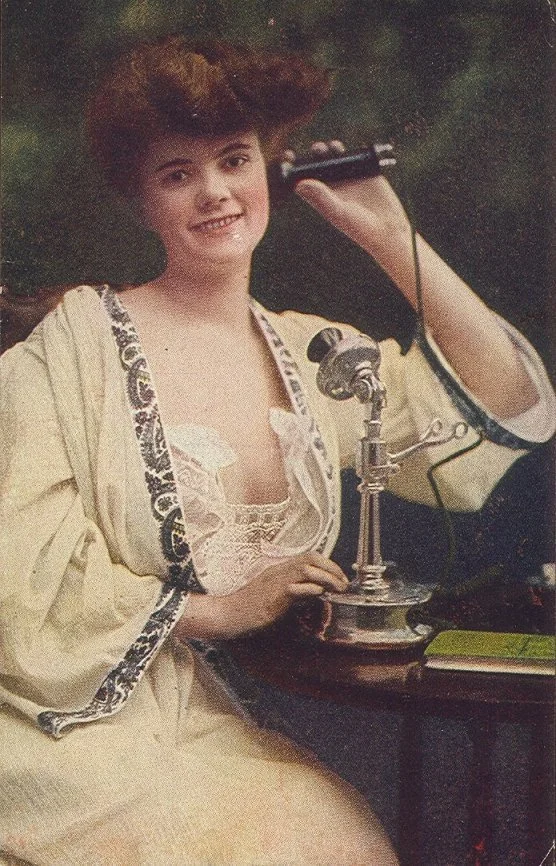
“The jokes over the phone. The memories packed
in the rapid-access file. The whole act.
Who will do it again? That's it: no one;
imitators and descendants aren't the same.’’
— From “Perfection Wasted,’’ by John Updike (1932-2009) novelist, short-story writer, essayist, critic and poet. He spent most of his adult life in various Massachusetts North Shore towns.
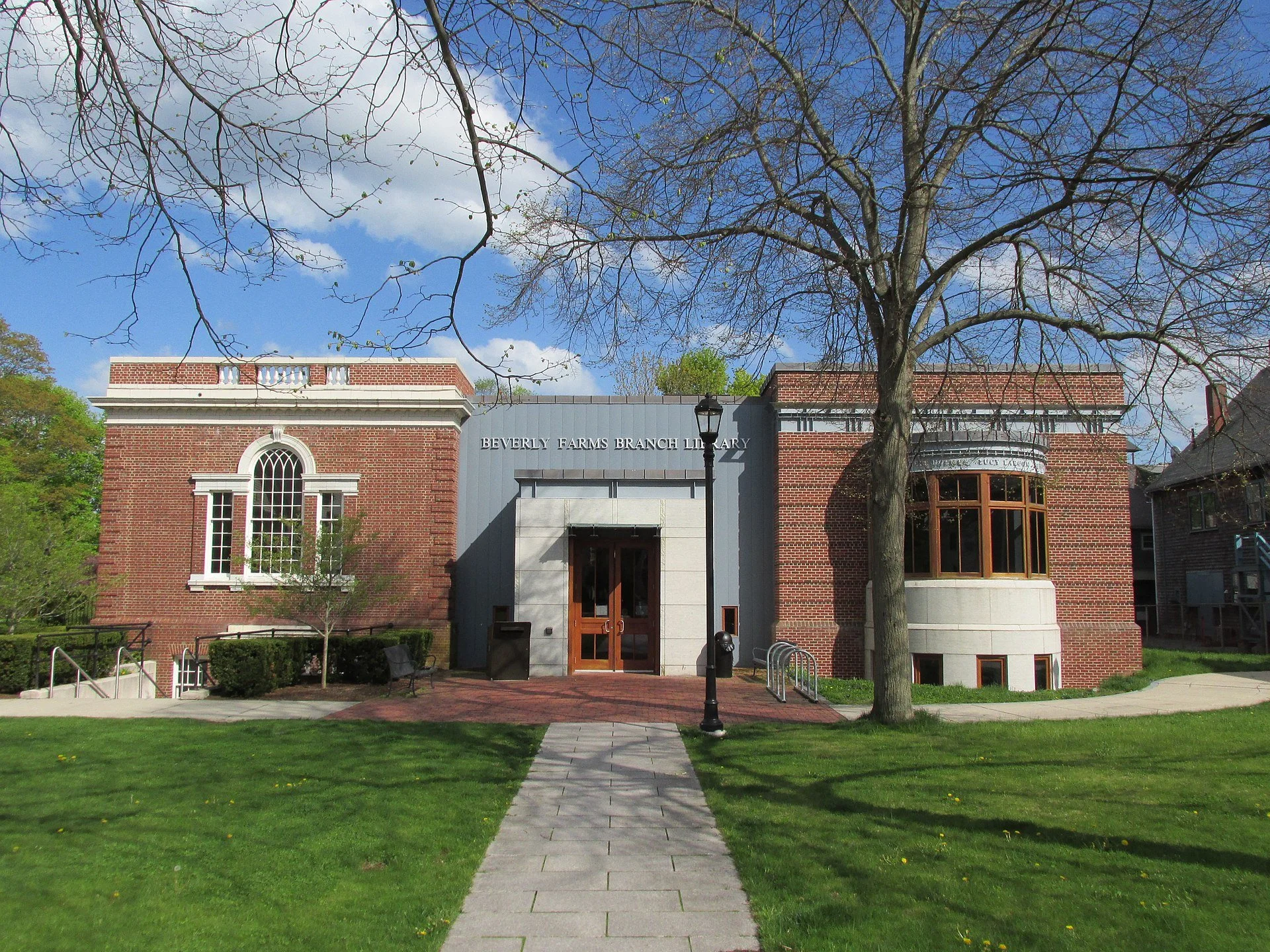
A view of the Beverly Farms, Mass., public library. Updike lived in Beverly Farms the latter years of his life.
— Photo by John Phelan
And you don’t have to tip them

Front view of a Kiwibot.
— Photo by Ganbaruby
Edited from a New England Council (newenglandcouncil.com) report:
Framingham State University will deploy food-delivery robots on campus. In partnership with Kiwibot, the new service will roll out 15 robots so that students can access affordable and eco-friendly on-campus food delivery.
This new service will work with Sodexo, the current food-service provider of Framingham State. Students will be able to order food from their devices and the robot will deliver the food directly to their door. To ensure the safety of students, the app will allow them to track the robot’s location on the delivery route and open the lid to grab their food. Kiwibots use semi-autonomous driving systems with human supervisors ready to assist with immediate support. The new technology will help Framingham students reduce their carbon footprint as the robots produce zero carbon emissions.
Nancy Niemi, president of Framingham State, said, “Sodexo has been a great food service partner for the University, as they continually evolve to meet the desires of our community. The addition of Kiwibot technology is the latest advance and I know many of our students will be excited to have these mini delivery systems coming right to them, on our campus.”
‘Natural patterns’
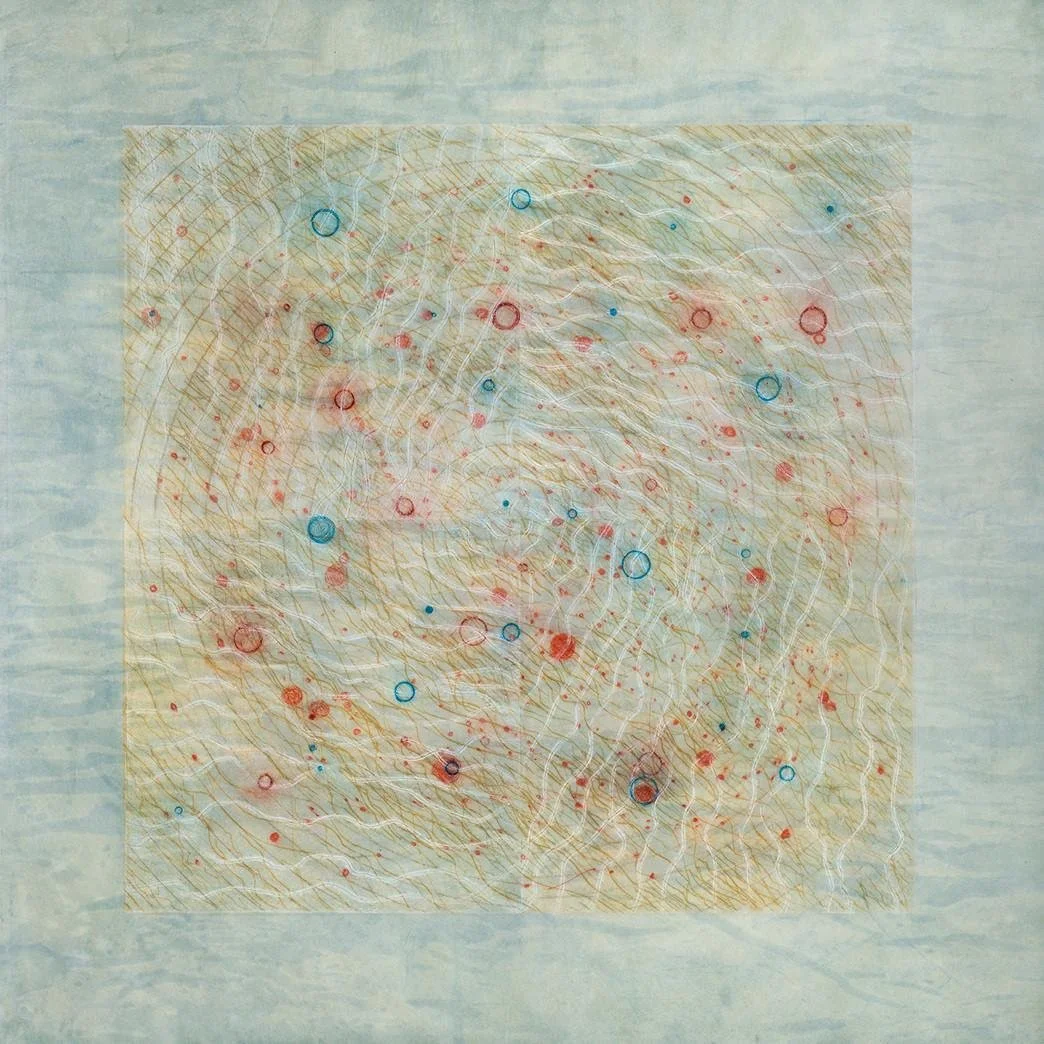
“What Was Scattered Gathers, v8” (drypoint and collagraph on stained Kitakata paper), by Massachusetts artist Carolyn Webb, in her show “Carolyn Webb: Works on paper: Drawings and Prints,’’ at Salmon Fall Gallery, Shelburne Falls, Mass., through Oct. 1
The gallery says:
“This show highlights Webb's intricate and twisting work on paper. Delicate, winding lines arranged in patterns that evoke images of the natural patterns are highlighted with ephemeral pops of color. Webb's work weaves print and drawing to create a larger whole.”
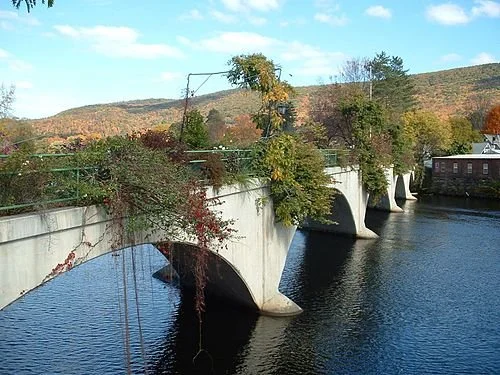
The famous Bridge of Flowers, in Shelburne Falls, over the Deerfield River. It connects that town with Buckland.
Berkshires bathos

Sweet-fern
“Even the abundant enumeration of sweet-fern, asters and mountain-laurel, and the conscientious reproduction of the vernacular, left me with the feeling that the outcropping granite had in both cases been overlooked. I give the impression merely as a personal one; it accounts for Ethan Frome, and may, to some readers, in a measure justify it.’’
Novelist Edith Wharton (1862-1937), who had a summer estate in The Berkshires, in her introduction to her tragic novel Ethan Frome (1911), which is set in that region.
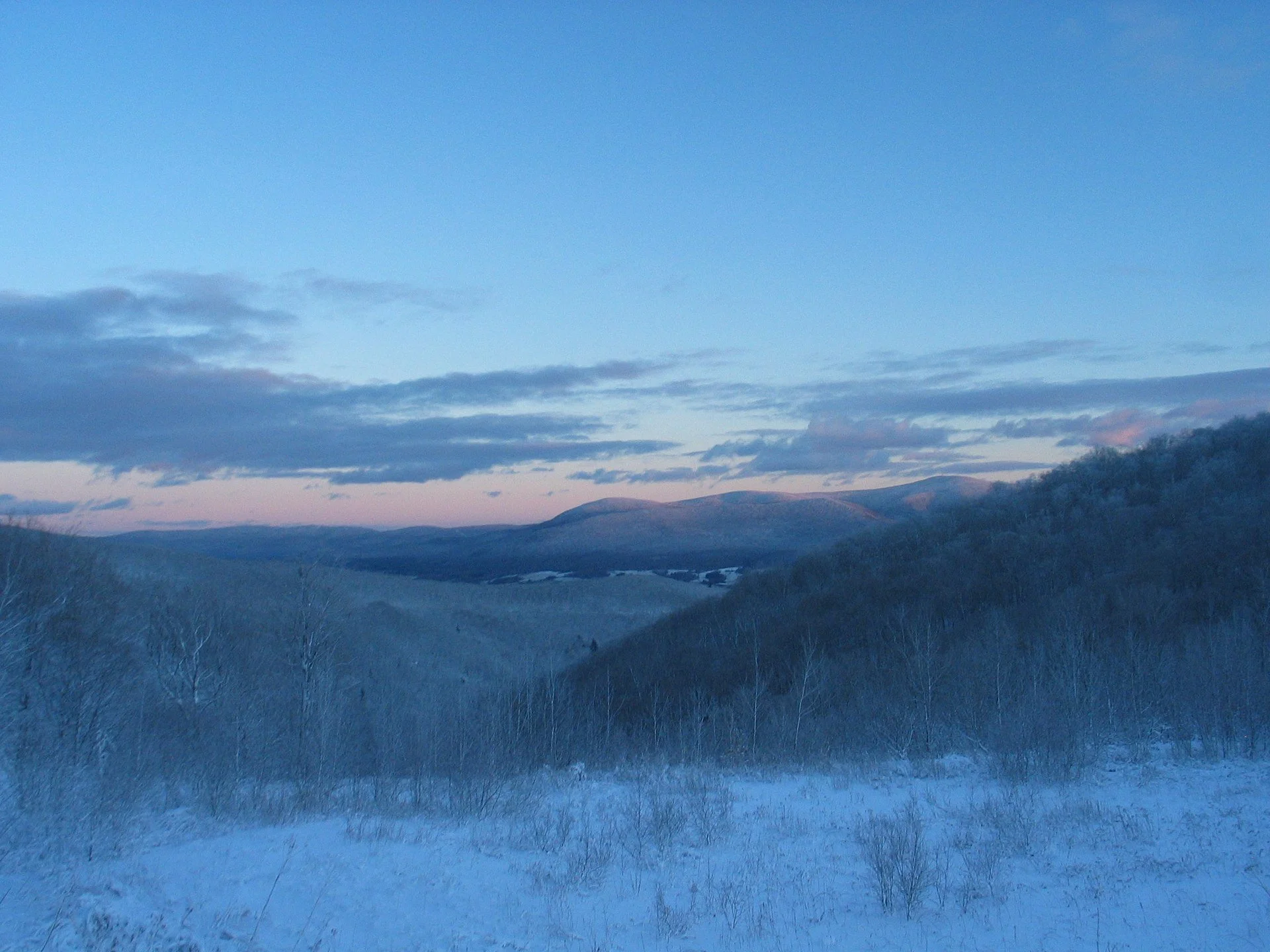
Vista overlooking The Berkshires from the New York State border at sunset
— Photo by BenFrantzDale~commonswiki
A start on the housing crisis
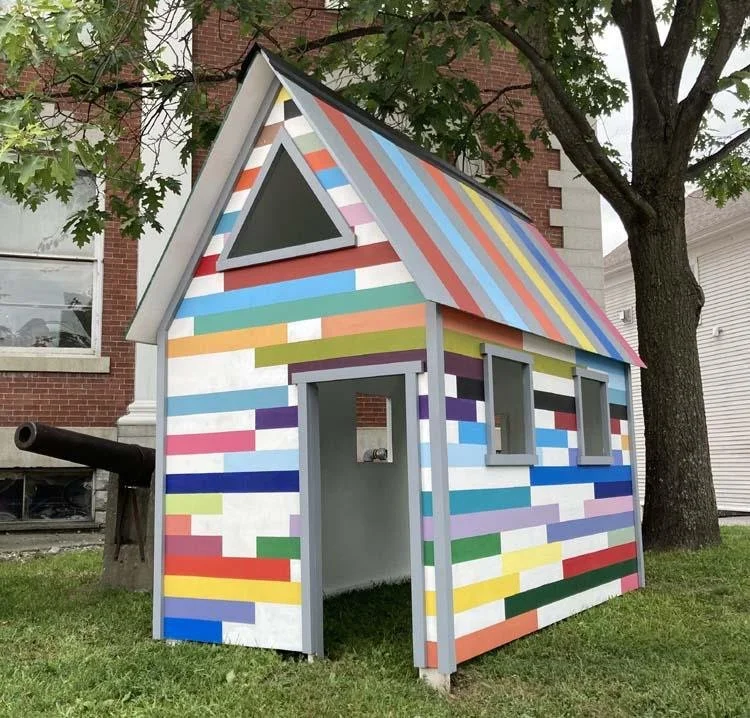
“Dream Home Dream” (exterior latex paint, plywood, metal, and chalk), by Rob Hitzig, in the group show “Exposed 2022’’, at The Current, in Stowe, Vt., through Oct. 22.
The gallery explains:
The show represents nine artists “in an outdoor sculpture exhibit sprawling across the streets of Stowe….'Dream Home Dream’ invites viewers to engage with the piece, covering it in chalk markings.’’
Mr. Hitzig is based in Montpelier, Vt.
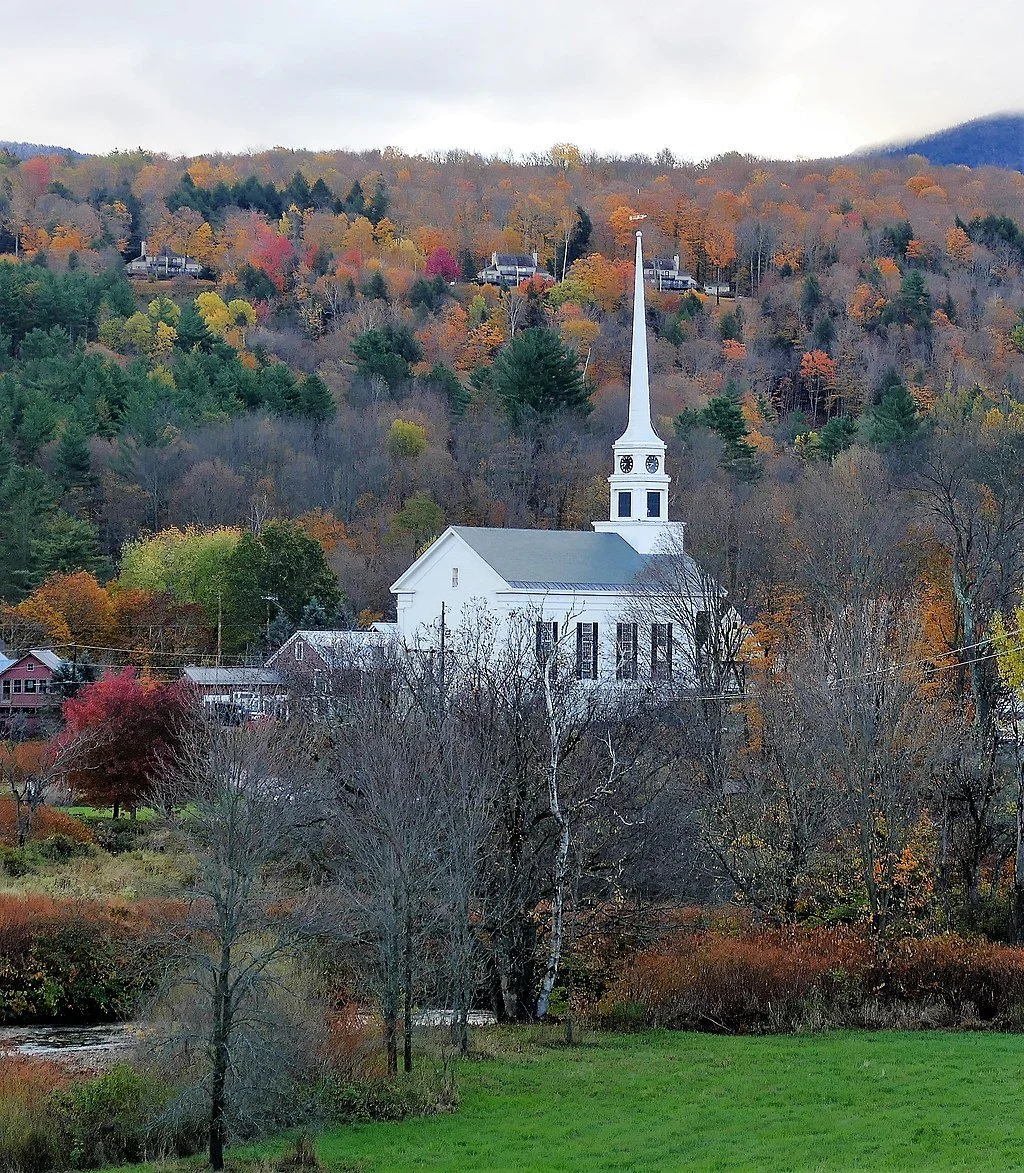
Stowe Community Church
-- Photo by Terry Foote
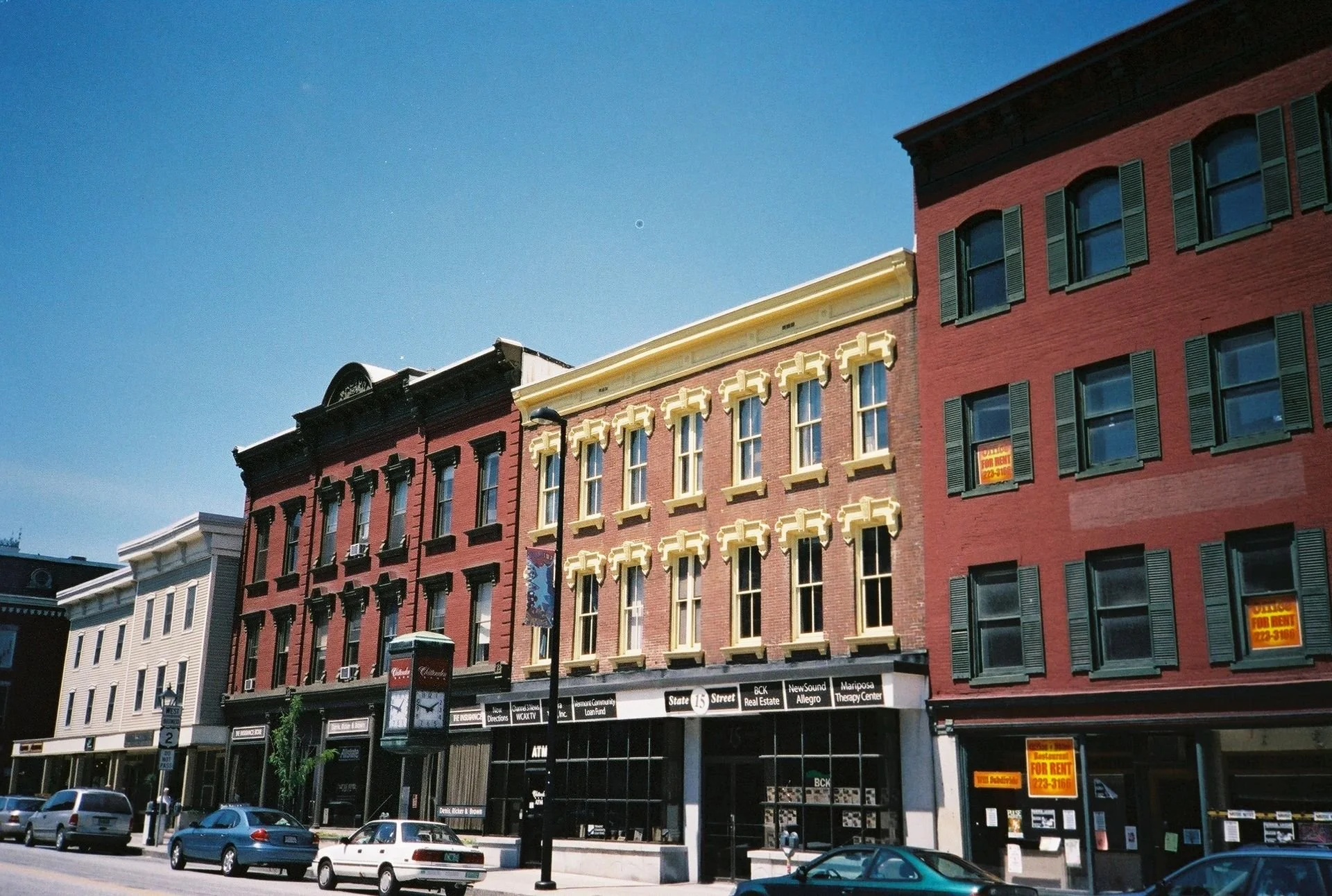
State Street, in the Montpelier Historic District
— Photo by Georgio

Llewellyn King: Uberizing your solar-paneled roof

WEST WARWICK, R.I.
The Uber model is changing America. First it made a business out of the family car. Then it made a business out of the spare room or vacation house.
Soon it might make a business out of the roof over your head.
That is the dream of a group of hugely successful entrepreneurs who see roofs as the next big monetization of a widely held capital asset.
This group, which at present chooses to remain anonymous, believes that with the right communications network and smart computer linkage, the nation’s sun-trapping roofs could become a new source of electricity and, if connected to in-home batteries, a virtual power plant of scale and reliability.
What Uber did for ride sharing and what Airbnb did for lodging, these entrepreneurs believe could be done for the electric-utility industry.
One of them told me, “A network can be many different things, but in the context of a network of potentially millions of solar rooftops, it means virtually real-time capture and analysis of billions of data points. Only a wireless network, using the latest broadband technologies – similar to those that support our smart phones – can handle that workload.”
Rewind the clock to when solar cells became generally available: Utilities encouraged their use and bought electricity from customers when it was generated, not when it was needed.
At the same time large solar plants began to be developed and owned by the utilities, which worked better for them, and they soured on rooftop solar.
In talking to utilities, I find them to be cool-to-indifferent to rooftop solar but enthusiastic about solar central station generation, particularly if linked with battery storage. Mostly, utilities like solar generation because of its predictability.
The idea of hooking together a vast network of millions of solar panels on roofs with their own batteries puts demand back in the hands of the utilities, giving them the flexibility of having a great new resource.
Also, like the Uber model, there would be variable pricing: In a crisis or a high-demand situation, the utility or the system operator would order power from homeowner batteries at surge prices, befitting all. Owners of solar rooftop and battery setups would become “citizen solarizers.”
The concept of a vast, on-demand, virtual power plant isn’t entirely speculative. Brian Keane, president of SmartPower, told me that what might be a frontrunner is already being tested in Connecticut.
“All residential customers who choose the ‘Connecticut Green Bank’s CT Storage Solution’ option receive the generous, upfront rebate incentives for agreeing to have their battery drawn from every weekday afternoon during June, July, and August, as well as on high-need 'critical’ days on the weekends, in September, and for a handful of days during the winter months. Customers will get a payment each year based on the amount of electricity that is drawn from the battery,” Keane explained.
The development of a national virtual power system would enhance something that is happening quietly, which is what I call the “buttressing of the grid.”
It is what might be seen as the tacit acceptance that the grid isn’t going to be rebuilt in any substantial way, but it will be buttressed by new generation and limited new transmission. Uberizing rooftop solar could be an important part of this buttressing – and a gift to the nation both as a source of clean power and citizen involvement.
It remains to be seen whether regional solar networks would be subject to regulation by the federal government or by the states.
Going forward, a rooftop solar installation might be more than a convenience for a household, and a way of signaling green virtue.
Llewellyn King is executive producer and host of White House Chronicle, on PBS. His email is llewellynking1@gmail.com and he’s based in Rhode Island and Washington, D.C.
‘Regimented chaos’

"Crack an Egg on your Head, Let the Yolk Drip Down, Seesaw" (flocking, resin, wood, metal, and mixed media), by Greater Boston-based artist Meagan Hepp, in her show “Play Date: Companions Club, at Kingston Gallery, Boston, through Oct 2.
The gallery says:
“Meagan Hepp’s work balances advanced planning with chance. Each Companion is made from a base of flocking and resin and is mixed with found objects, acting as a catalyst for regimented chaos. The Companions in the installation are based on nostalgic toys and pop culture references from the late 1990s and early 2000s that specifically resonate with Hepp’s childhood. Hepp combines discarded plywood, disco ball mirror, and other recycled materials taken from everyday life to give each piece a distinct personality, in a way creating a three-dimensional puzzle. Finding themself suddenly cut off from their social networks and communities during the COVID-19 crisis, Hepp began to think of their sculptures as company. As these sculptural friends started to accumulate and interact with the furniture, architectural built-ins, and everyday objects in Hepp’s home-studio, Hepp found themself yielding their space to what began to feel like a ‘Companion playground’’’.
Our clever masked neighbors
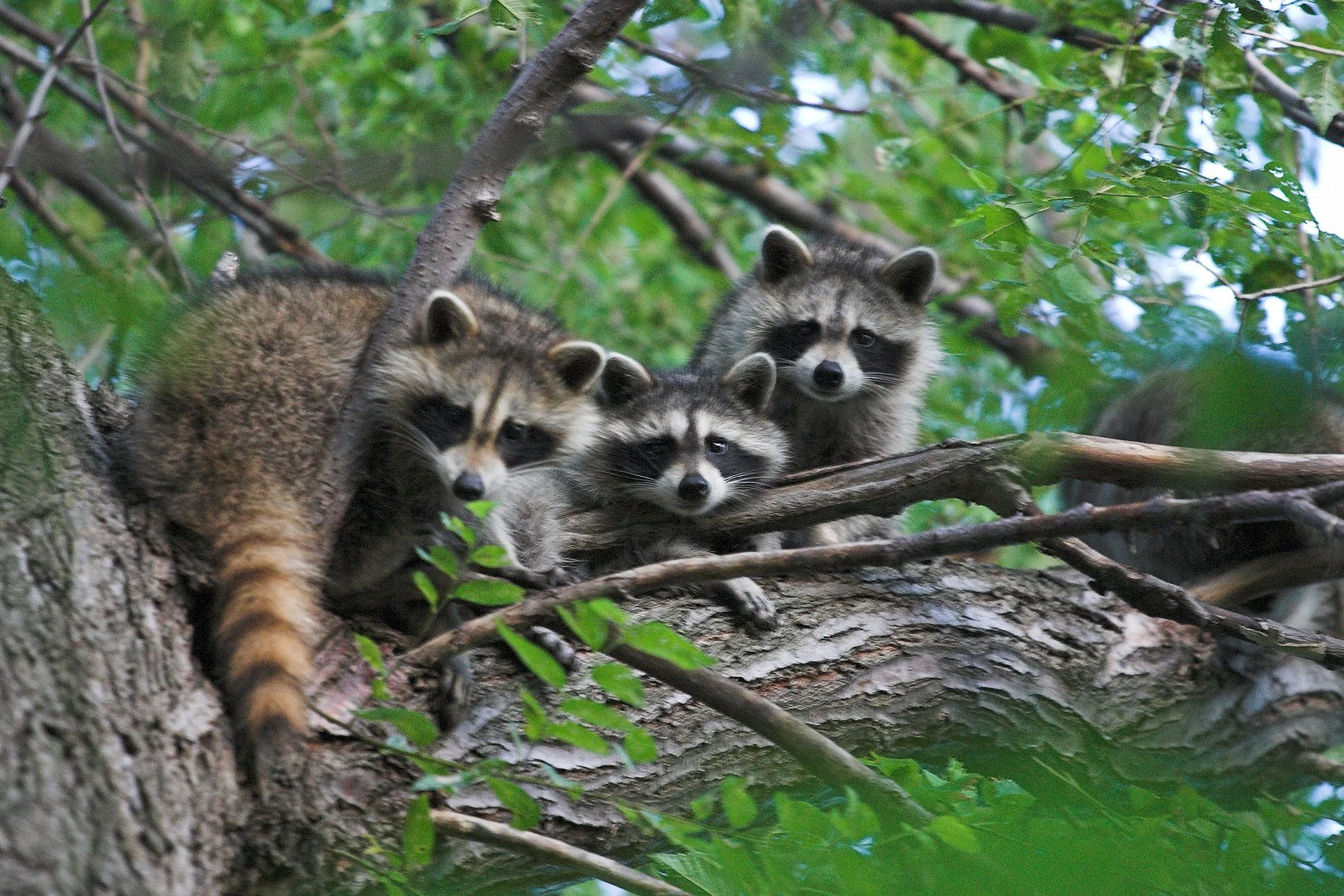
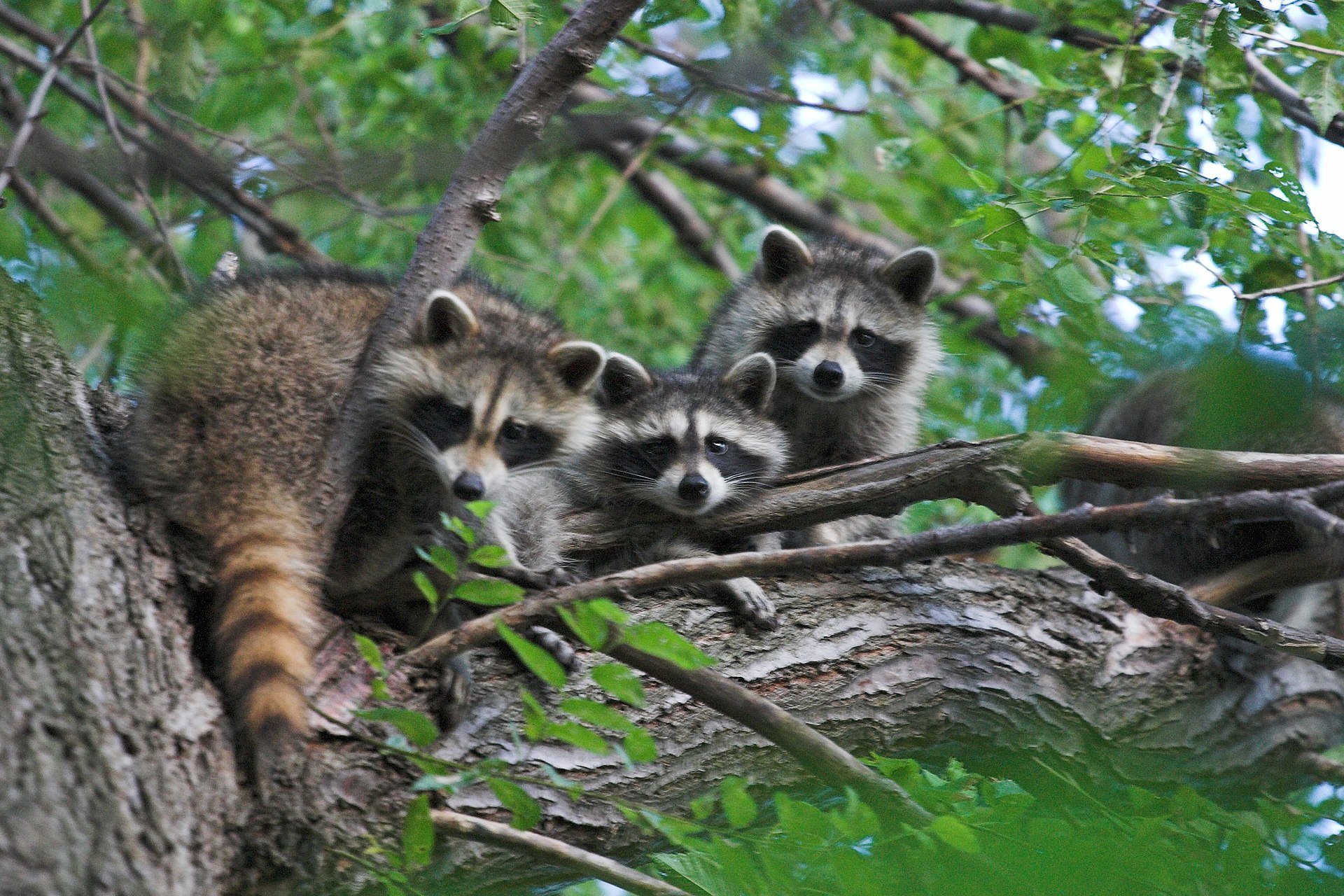
They’re watching you. The raccoon's social structure is said to be grouped into what Ulf Hohmann calls a "three-class society".
Adapted from Robert Whitcomb’s “Digital Diary,’’ in GoLocal24.com
As a reminder that humans are far from the only intelligent creatures around us, consider raccoons -- those wily, rather distant relatives of bears who have learned how to thrive in suburbia and cities. They may be smarter than dogs. We have some charming families of them near us in our Providence neighborhood. We see their heads pop out of holes in trees, stormwater culverts and other refuges. But cute as they are, don’t get too close to them. They’re wild animals, which can become very aggressive if they feel threatened, and you don’t want to be bitten or scratched by them. And, rarely, some contract rabies.
Their ability to get around our impediments in order to grab food seems to strengthen over the years. That may be because the smarter ones are more likely to survive and pass on their genes.
In any case, their dexterity and ingenuity (they’re good at opening trash cans, boxes and other manmade objects), not to mention their bank-robber-style masks, make them great fun to watch – from a few feet away. I love seeing them use their hands, or rather front paws, with five long, tapered fingers and long nails. They lack thumbs, so they can't grasp objects with one hand/paw as we can, but they use both forepaws together to lift and then manipulate objects with a curious elegance. If they also had opposable thumbs like us, we’d be in big competitive trouble.

Cherry tomatoes may give you the best value of vegetables you plant, at least within the limitations of city or suburban space. They grow fast, don’t take up much room and each plant produces lots of tomatoes, which serve as easy snacks. The main drawback is that they require a hell of a lot of water.
We recently planted a second crop, which should do well in our increasingly warm late summers and autumns. Maybe a third crop, too?
But raccoons, which are omnivorous like us, like tomatoes too. So you might want to sprinkle some Critter Ridder or similar product near your plantings.
Frank Carini: In search of old-growth forests
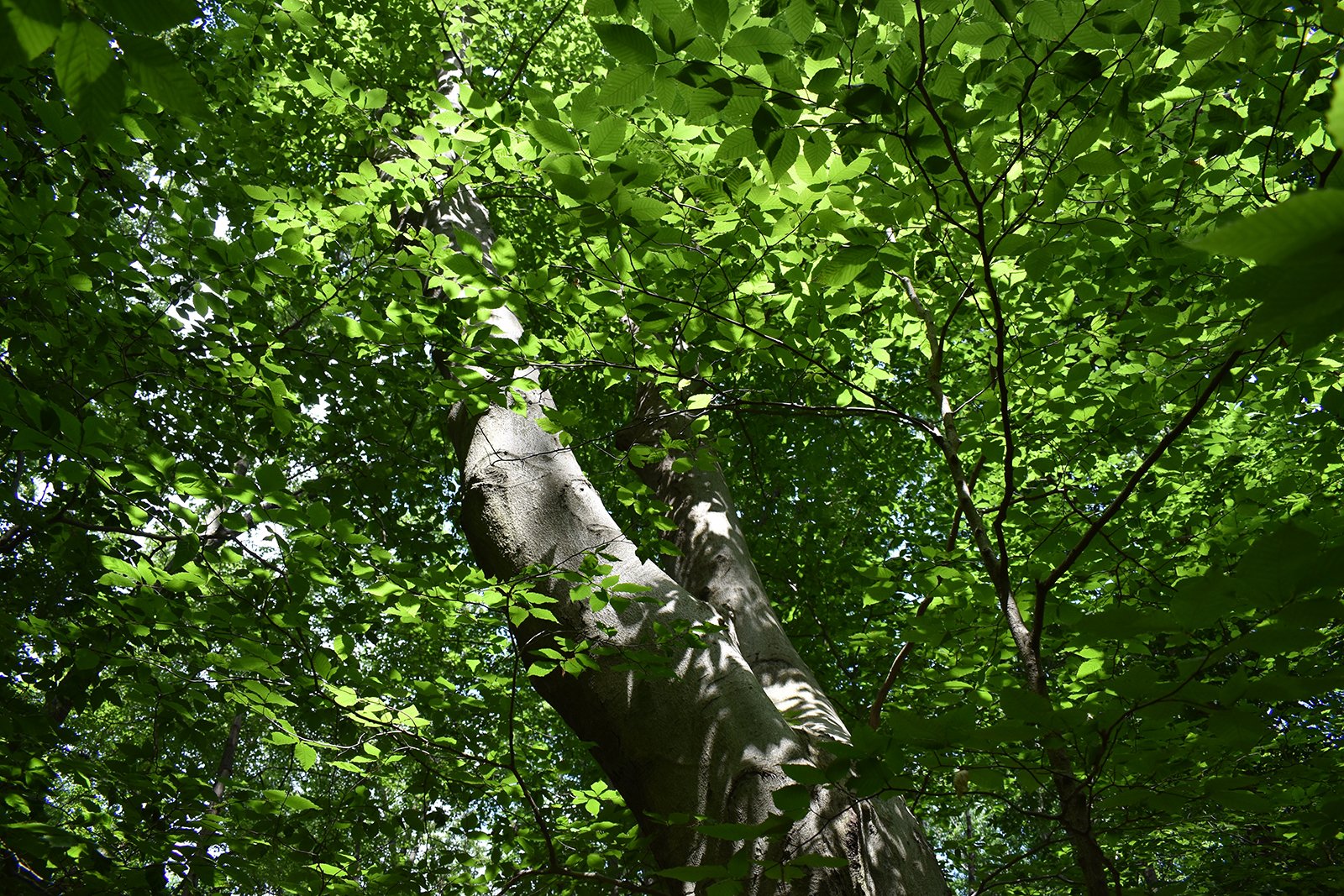
An old beech tree in the Rhode Island woods.
— Photo by Frank Carini
From ecoRI News (ecori.org)
WARWICK, R.I. — Last winter Nathan Cornell accidentally found himself “walking into a different world,” one that isn’t protected from human intervention. For the past two years, the University of Rhode Island graduate has been searching for old-growth forests in Rhode Island.
He found one not far from his Warwick home.
His hunt for old-growth forests led him and Rachel Briggs to found the Rhode Island Old Growth Tree Society, a nonprofit determined to locate, document, map and advocate for the preservation of all remaining old-growth and emerging old-growth trees and forests in the state. This means trees and groups of trees that are 100 years old and older.
Cornell, with the help of licensed arborist Matthew Largess, owner of Largess Forestry, in North Kingstown, R.I. has so far identified more than a dozen potential old-growth pockets, including on the University of Rhode Island campus in South Kingstown and in Cranston, North Kingstown, Portsmouth, Warwick and West Greenwich.
In mid-July, the 24-year-old took this ecoRI News reporter on a walking tour of the hidden-in-plain-sight “5- to 10-acre” Warwick property owned by the Community College of Rhode Island and Kent Hospital. To listen to the audio story, click the bar at the top.
Anyone interested in joining the Rhode Island Old Growth Tree Society, can contact Cornell at ncornell@my.uri.edu. To read an opinion piece written by Cornell and recently published on ecoRI News, click here.
Frank Carini is co-founder and a journalist at ecoRI News.