
Vox clamantis in deserto








Bucolic and unprofitable

”The Aqua Biscayne’’ (oil on canvas), by Hartland, Vt.-based William B. Hoyt, at Edgewater Gallery, Middlebury, Vt.

The wonderful (especially in name) Skunk Hollow Tavern, in Hartland, Vt. It was built around 1790.
— Photo by John Phelan
Sometimes it’s better if they don’t

An operant conditioning chamber (also known as a Skinner Box) is a laboratory apparatus used to study animal behavior. The operant conditioning chamber was created by B. F. Skinner while he was a graduate student at Harvard University.
“The real problem is not whether machines think but whether men do.’’
— B.F. Skinner (1904-1990), Harvard behavioral psychologist, in Contingencies of Reinforcement
Simplified sailing

“Allegory (San Bicola di Bari)’’ (oil on canvas), by Paul Resika (born 1928), in his show “Allegory,’’ at Berta Walker Gallery, Provincetown, Mass., Aug. 26-Sept. 17
Llewellyn King: Oh, the glory that was Beirut
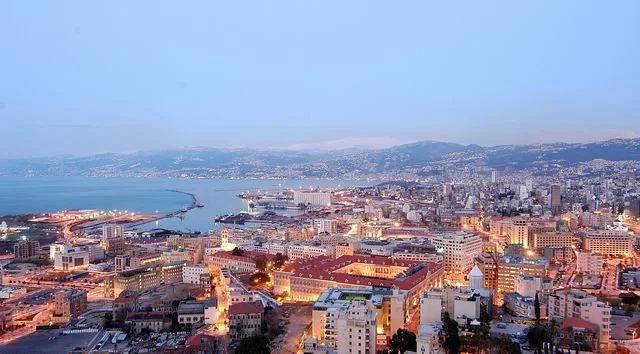
Beirut at sunset some years ago.
WEST WARWICK, R.I.
This last spring, I was in Washington for an awards dinner given by the American Task Force on Lebanon. The talents of the exceptionally gifted Lebanese were on display: The room was filled with accomplished expatriates and immigrants — business leaders, diplomats, physicians, writers and poets, an opera singer — from their troubled Middle Eastern homeland.
But the event’s high point was the recognition of the scientists who had saved countless lives by creating Moderna Inc.’s COVID-19 vaccine: four Lebanese Americans.
Among the children of the world’s many diasporas, few have made as large a mark as the Lebanese. Their native country has fewer than 6 million people, including a million or more refugees.
The Washington celebration was in painful contrast to the shambles that is Lebanon today: bankrupt, corrupt, violence-riven, starving and hopeless.
According to Edward Gabriel, a Lebanese-American who served as U.S. ambassador to Morocco during the Clinton administration, Lebanon is in danger of sinking so far that it will be a failed state, ungoverned and ungovernable.
Gabriel has just returned from a visit by the American Task Force on Lebanon, and he reports of a country in parlous disarray.
In a paper for the task force, Gabriel stated, “On this day (referring back to Aug. 4, 2020) two years ago, over 500 tons of ammonium nitrate stored in a warehouse at the Port of Beirut exploded, causing more than 220 deaths, 7,000 injuries, 300,000 displaced individuals, and at least $1.5 billion in property damage. Since then, there has not only been a lack of closure for the families of the victims but the very corruption and negligence that caused such carnage and suffering has yet to be addressed by those in power.”
In their meeting with the Lebanese leadership, Gabriel and the task force discussed the urgency of implementing reforms to access International Monetary Fund money and get aid from the United States and other allies, including Saudi Arabia. Food is critical. Consider that Lebanon imports 90 percent of its grain from Ukraine and Russia.
In the late 1950s and early 1960s, Lebanon, which stretches along the Mediterranean Sea north of Israel, was a treasure of a country. Its seaside capital, Beirut, was a sparkling jewel, rivaling Monaco in its incandescence.
Beirut in its heyday had all the cache of Tangier and Casablanca and was a destination for the adventurous, the sophisticated, and for artists, journalists and writers. A-listers headed there before that term existed.
It also was a haven for spies and the intelligence services that employed them. Its most famous spy was British double agent Kim Philby, who fled from Beirut to Moscow when he was about to be arrested, in January 1963.
As a young reporter in London, I was fascinated by the tales of the high life in Beirut as told by otherwise jaded foreign correspondents. “There’s nothing you can imagine you want that you won’t find in Beirut,” a famous photographer for the Magnum photo agency told me.
It wasn’t just nightlife and sin that drew the world’s press to Lebanon. It was a center of transport, and you could get anywhere from its airport by air or anywhere bordering the Mediterranean by ferry. Yes, Beirut addressed world-weary journalists’ appetites, but it also was a very practical place to work.
In 1963 Lebanon, a small country with a small population of 4 million, was a highly successful one, envied and copied. The basic layout of the beach development in Tel Aviv, I was told in Israel, is modeled on that of Beirut.
British intellectuals often cited Lebanon’s religious minority-respectful government as a model for diverse societies as Britain withdrew from its former colonies. Traditionally, the three major religious groups share power this way: The president is always a Maronite Christian, the prime minister is always a Sunni Muslim, and the speaker of parliament is always a Shia Muslim.
The fall of Lebanon began with a huge influx of destabilizing Palestinian refugees and was sped up by the arrival of rival terrorist militias, particularly Iran-backed Hezbollah, determined to prosecute a war with Israel.
Lebanon’s brightest prospect is the development of its gas reserves in the Mediterranean. Hezbollah has been frustrating the conclusion of a maritime agreement between Lebanon and Israel, which would enable drilling for natural gas in Lebanon’s offshore fields, where reserves are plentiful and proven.
That and a revival of tourism are Lebanon’s best, slender hopes. Hope is people, like me, will want to go, looking for the ghosts of a giddy nightlife and James Bondian intrigue. I hope to go this year.
Llewellyn King is host and executive producer of White House Chronicle, on PBS. He’s based in Rhode Island and Washington, D.C.
On Twitter: @llewellynking2
Yes, finally make it international; turning orange with frustration

Terminal at the very pleasant Green Airport looks like something that would fly.
From Robert Whitcomb’s “Digital Diary,’’ in GoLocal24.com
The local economic impact of Breeze Airways setting up a “base” at Rhode Island T. F. Green International Airport (what a name -- after you’ve said it you might have miss your flight) is probably exaggerated by state officials, though it’s certainly another feather in the cap of the indefatigable Iftikhar Ahmad, president and CEO of the Rhode Island Airport Corporation, and his colleagues, who have been working very hard to expand the airport’s services, which COVID has made a particularly laborious workout.
Remember that all promises by companies tend to be even more provisional than those by your friends and family, mostly because the economy and ownership can change fast.
I’d be more hopeful if the airline’s long-delayed nonstop service to the West Coast had finally started. Now it looks like that won’t happen until next year, apparently mostly because of staffing problems. And the airport is not yet really “international,” despite its name. But there’s lots of potential to market the ease and accessibility of cute, cozy Green compared to Boston’s congested and expensive Logan International Airport, including in getting frequent service to Europe. (Green’s “International” moniker reminds me of little colleges calling themselves “universities” to sound more important.)
xxx

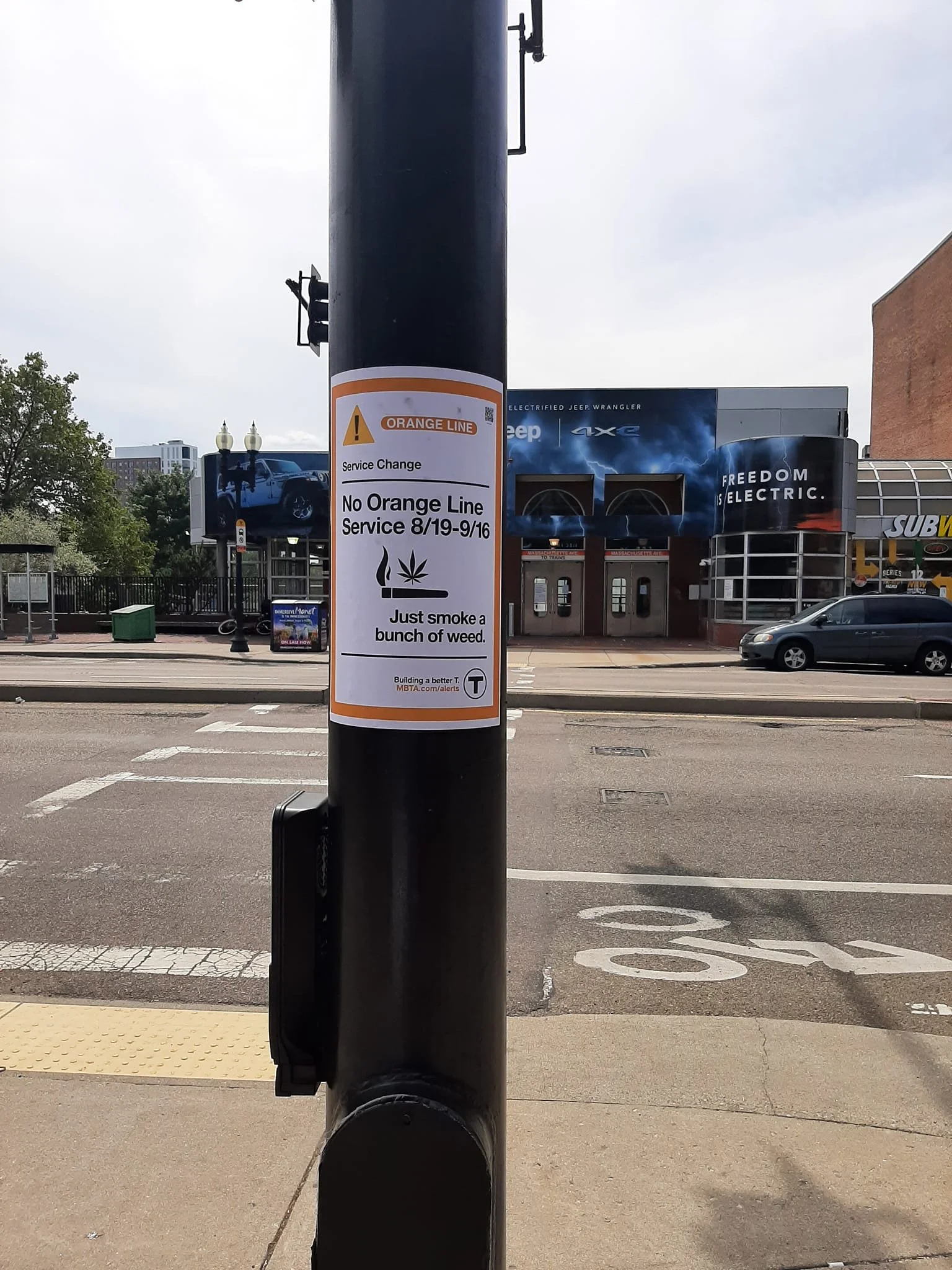
On the MBTA’s Orange Line, closed for repairs until late September. Most of the T’s problems stem from delayed maintenance and bad labor contracts.
The exasperating problems of the Massachusetts Bay Transportation Authority – line closures, equipment breakdowns, etc., etc., are Rhode Island’s problems, too, since Boston is the regional capital and depends on its mass transit to help maintain its prosperity. Lots of Rhode Islanders work in Greater Boston.
'Saturating the August air'
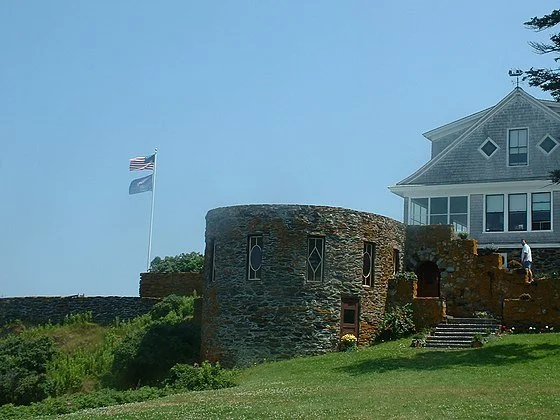
At the Eagle Island State Historic Site, on an island in Maine's Casco Bay and part of the town of Harpswell. It was the site of the retirement home of the polar explorer Admiral Robert Peary (1856-1920).
“….We are children of these accidental, but
nevertheless, communions.
“The loon wakes me. Sound of one voice
and another that answers,
tremolo saturating the August air
for miles….”
— From “Notes From Eagle Island {Maine},’’ by L.R. Berger, a Contoocook, N.H.-based poet
Good ferries
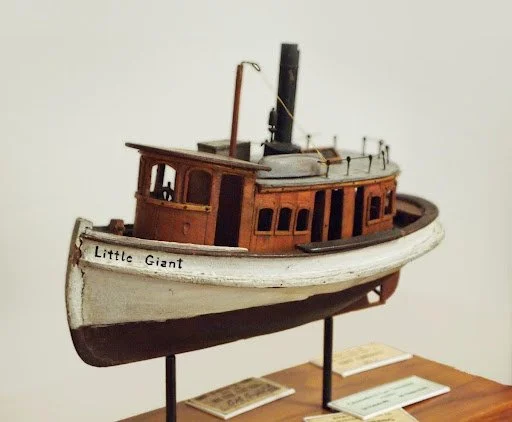
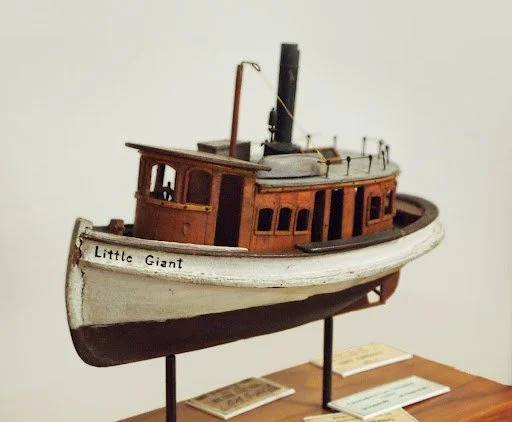
“Model of the Steam Ferry Little Giant (wood, metal), by John Gardner Weld (1879-1969), at the Cape Ann Museum, Gloucester, Mass.
The museum says:
“Steam-powered ferries were an important means of transportation throughout the 19th Century and into the early 20th, linking Cape Ann to seaports up and down the Eastern Seaboard and to the rest of the world. In Gloucester, ferry service was also available around the Inner Harbor, helping get residents to work and visitors to scenic sites around the city.
“The Little Giant provided passenger ferry service around Gloucester’s Inner Harbor for nearly 40 years. Built in 1878 at the John Bishop Shipyard in Gloucester, the jaunty vessel was 46 feet long and 16 feet in breadth. Her cabins were finished in black walnut and oak, and she had long wooden benches on her upper deck sheltered by a striped awning.’’

Transgenderism craze is mangling language; lawyer joke in Bridgeport

Transgender pride flag
MANCHESTER, Conn.
Languages belong to those who use them. Dictionaries standardize language on the basis of prevailing usage. If users want to be clearly understood, they will follow those standards pretty closely.
But the transgenderism craze that is sweeping politically correct circles, which include many news organizations, is upending and mangling the English language here and there, especially in regard to pronouns.
People who don't want to be recognized by their biological genders, some of whom claim that there are many other genders, are clamoring for new pronouns and have devised more than 70. But it is hard to imagine that many people will take the time to learn them all, much less abase themselves by trying to use them when hardly anyone else will understand them either and when using them will imply that the user believes that there really are more than two biological genders.
The recently invented pronouns hamper rather than facilitate understanding. That may be why some gender deniers or concealers want to scrap the individual gender-specific pronouns "he" and "she" and be cited with the plural pronoun "they," English lacking a gender-neutral singular pronoun. But since "they" signifies plural, its use in regard to an individual is silly and can only cause confusion.
In a free country people are free to invent words and use euphemisms to advance their politics. Already in politically correct circles "illegal immigrants" have become "undocumented people," as if they inadvertently left their passports and visas at home before heading to the border. People undergoing sex-change surgery or therapy are said to be getting "gender-affirming care," as if they had no gender at birth. Homosexuals are now "men who have sex with men."
Maybe heterosexuals will become "people who have sex with people of a different gender."
But in a free country people also are free to reject using euphemisms for perfectly good words and phrases and to reject denial of biology.
Besides, it's simple to avoid mangling the language when dealing with people who don't want their gender presumed upon by pronouns. That is: Just avoid pronouns where people don't want "he" or "she" and, instead, use names repeatedly, making them possessive as necessary. It will sound awkward but will preserve clarity without offending anyone, even though people increasingly want to be offended, since it confers power over the easily intimidated.
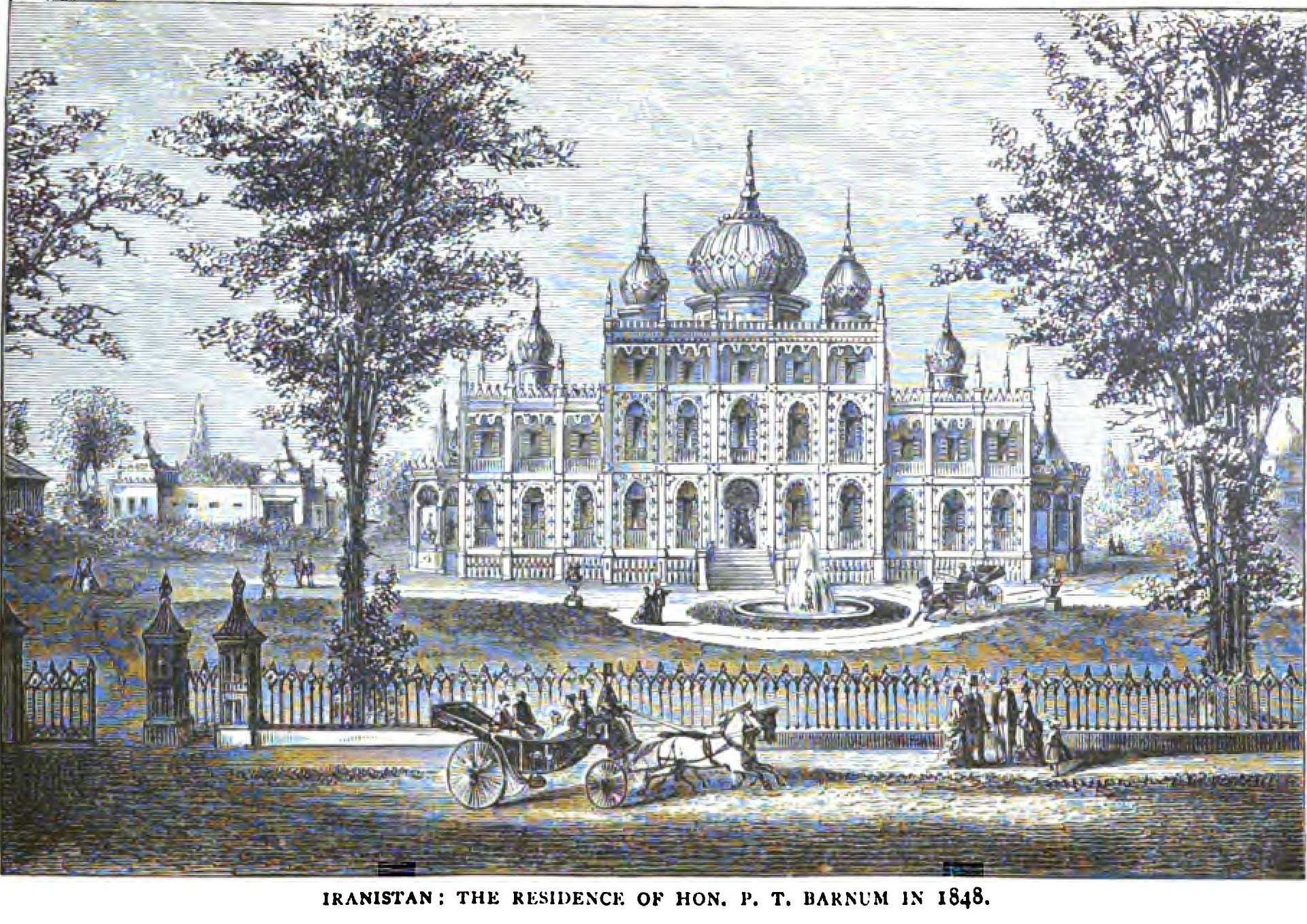
Iranistan, the residence of circus impresario P. T. Barnum, in 1848. The circus continues in poor old Bridgeport.
Lawyer jokes may be the funniest, most cynical and most accurate about the human condition, and the material for another one is gathering in Connecticut's courts.
Bridgeport Mayor Joe Ganim is trying again to recover his license to practice law, which he lost in 2003 upon his conviction for 16 federal corruption felonies committed during his first term as mayor, for which he served seven years in prison before persuading the voters of Bridgeport to return him to the scene of the crimes.
Ganim's first request to get his law license back was approved by a court committee of lawyers in 2012 but rejected by a three-judge court, which disapproved because it felt that Ganim had not shown enough remorse.
At a hearing last week before another court committee of lawyers, Ganim was more contrite, if not necessarily sincere. So presumably his next committee of judges will reinstate him, as other felonious lawyers have been reinstated in recent decades.
But the previous practice of Connecticut's courts was better. In the old days a felony conviction was enough to disbar a lawyer for life, so as to maintain the honor of the courts and the honor of the office every lawyer holds, commissioner of the Superior Court.
After all, lawyers who commit crimes, especially crimes of corruption, know better, having taken the lawyer's oath to "do nothing dishonest."
The honor of Connecticut's courts and those who would practice law here is no longer so rigorously defended. As a result, corruption is increasingly suspected about courts and lawyers. So maybe it will be better if Ganim returns as a commissioner of the Superior Court and confirms the suspicion, the public's remaining illusions are shattered, the law and the legal business are covered with more shame, and some of those who continue in the business may be more motivated to try cleaning it up.\
xxx
Chris Powell is a columnist for the Journal Inquirer, in Manchester, (CPowell@JournalInquirer.com).

Sterling Block-Bishop Arcade, a Victorian-era shopping arcade, in downtown Bridgeport.
Light reveals truth

“Lesson 316” (oil on linen), by Richard Nocera, in his joint show with McKay Otto, at Atelier Newport (R.I.), Aug. 27-Oct. 5.
The gallery says:
“Nocera contemplates the simplest concept of what light is: A powerful force that reveals truth. In these gently powerful works that swim in their mystical deep blue hues, the infinite possibilities of light begin to bloom forth in the mind of the inspired onlooker as they take note of how the paint seems to emerge into light from the canvas. Nocera paints outdoors to fully immerse himself in the clarity of the natural light as he works the painting’s surface. This physical, tactile surface along with the process of creating are most important in his artistic expression.’’
Toughing it out
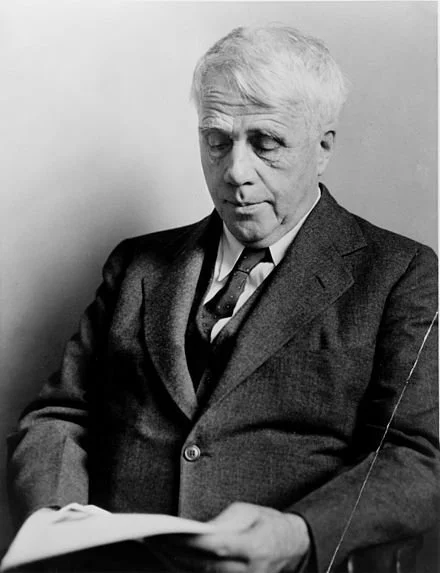
New England’s most famous poet, Robert Frost (1874-1963), was a brilliant ironist. He spent the largest part of his life in New Hampshire and Vermont.
“One reason a lot of us live here is probably that surviving and flourishing in this climate is such a good, moral thing to do. It’s decadent to be warm all the time.’’
xxx
“What New England is, is a state of mind, a place where dry humor and perpetual disappointment blend to produce an ironic pessimism that folks from away find most perplexing.’’
— Willem Lange (born 1935), an East Montpelier, Vt.-based writer and former building contractor. His weekly column, “A Yankee Notebook”, appears in several New England newspapers.

East Montpelier, Vt., town offices

David Warsh: Looking back at a big U.S. mistake and a great success

A protester on Wall Street in the wake of the AIG bonus payments controversy is interviewed by news media during 2008-2000 financial crisis.
SOMERVILLE, Mass.
If you strip away all that we have learned since, in order to look back at the election of 2016, the remarkable thing is that Donald Trump didn’t defeat Hillary Clinton by a wide margin then {and lost the popular vote by 3 million votes} and win re-election in a landslide. He was against America’s war in Iraq; soft on Russia; tough on China; phobic on immigration, especially from Mexico. He deplored blue-collar criminals, talked up investment in infrastructure, and sought tax cuts for corporations and the well-to-do. In a nation eager for change, Trump was a television populist running against a Yale Law School elitist who possessed an indelible record in government going back twenty-five years. Only climate change was missing from his platform.
The election was close mainly because a large number of swing voters, just short of preponderance, understood that Trump was a shady character who played well on fears. We know now that he is rotten to the core, at least most of us do, Republicans as well as Democrats. Yet the issues that Trump brought to the 2016 election remain at center of the of the 2024 campaign. While President Biden adopted as many of Trump’s positions as he dared, and modified others as much as he could, Trump’s all-but-forgotten core political agenda dominates debate today.
But never mind Trump, and his cunning political instincts. A better way to think about America’s future is to reflect on how the three decades unwound since the end of the Cold War, and ask, in the simplest possible terms, how events could have been otherwise. Arguments range the length of the policy spectrum – abortion, inflation, inequality, health care, mass incarceration, gun control, civil violence – the list is long. My aim here is to identify two overarching American policies with global reach that brought us to the present day. One has been a spectacular failure; the other, a brilliant, if inconspicuous, success.
The failure has been NATO enlargement, which Russian President Vladimir Putin asserts that the U.S. disavowed in 1990 in return for the acquiescence of the former Soviet Union to the reunification of Germany within NATO. Expansion was barely noticed when President Bill Clinton’s administration sought, in 1992, to admit Poland, Czechoslovakia and Hungary to the alliance. After Clinton added Estonia, Latvia, Lithuania, Bulgaria, Romania, Slovakia and Slovenia to the list of prospective members in 1997, Russia began to take umbrage – all the more so after Vladimir Putin took over in 2000.
George W. Bush paid little attention to Putin’s objections, and in 2008 put Ukraine and Georgia on the path to membership. Putin expressed strong opposition, starting and winning a small war, in Georgia. After Hillary Clinton and John Kerry kept up the NATO pressure as secretaries of state under President Obama, Putin annexed the Crimean Peninsula and began battling for portions of eastern Ukraine.
By the time that Trump began pandering to Putin, it was too late to change course. Secretary of State Antony Blinken last November signed a “strategic partnership charter” with Ukraine; the next day, Putin commenced planning an inept invasion of his sovereign neighbor. Finland and Sweden have signed on to the alliance in protest, but six months into a proxy war with Russia, NATO, if not Ukrainian President Volodymyr Zelenskyy, has lost sympathy in much of the rest of the world. Meanwhile, China’s plans to absorb Taiwan lie just over the horizon. Joe Biden has said the U.S. intends to prevent it. America’s deeply unpalatable alternative to war there is the same as it was in Ukraine. Let the weak negotiate with the strong, and do what it can to prepare itself for Cold War II.
And the most successful U.S. policy since 1990? That would be the management of the global monetary system by the Federal Reserve System, in concert with the central banks and treasuries of other leading nations, including China and Russia. I am not thinking of the “Great Moderation” of the Nineties and the run-up in the Oughts to the crisis that began in 2007. I doubt that sequence is as yet very well understood. But there should be no doubt about what happened in 2008. Under its primary mandate to serve as “lender of last resort” in a banking panic, the Fed led a desperate effort to fund and implement the response it had quietly organized in the course of the year before to halt the stampede that began after Lehman Brothers failed – a firebreak, not a “bailout.”
Had the panic continued, a second Great Depression might have taken hold, perhaps even more stubborn and costly to resolve than the first. There should be no doubt about what happened in 2008, yet to this point there is mainly confusion. The best book may still be Last Resort: The Financial Crisis and the Future of Bailouts (Chicago, 2018), by Eric Posner, but it is not good enough. Understanding in some detail the Fed’s response to the panic is important for what it says about the prospects for responding effectively to climate change. (In the same way, much can be learned from the rapid success of the multinational campaign to develop a COVID vaccine.)
“NATO enlargement” and “The Panic of 2008,” are on their way to becoming tropes, catch phrases, figures of speech, that evoke complicated historic developments, much as “The Titanic,” “The Guns of August,” “Pearl Harbor,” “Dunkirk” and “D-Day” do today. The process of distillation takes time and much exploration by countless interpreters. This is a weekly column; I try to keep it under a thousand words, eight paragraphs or so. But I return to these topics, and a few others, again and again, adding new material and elaborating.
The mistakes involved in “NATO enlargement” have yet to be acknowledged; central bankers’ resourceful response to “The Panic of 2008” is still poorly understood. To learn more, I can only suggest for now that you keep reading.
David Warsh, a veteran columnist and an economic historian, is proprietor of Somerville-based economicprincipals.com, where this column originated.
Don Pesci: Kant and legislators’ moral duty

German philosopher Immanuel Kant (1724-1804)
VERNON, Conn.
If you are a member of a legislature, state or federal, you will have discovered by now that there are inestimable benefits of introducing bills that cannot pass, the most important of which is that dead bills leave in their wake no appreciable consequences.
But dead-on-arrival bills have a useful after-life as campaign fodder. They can be used for boosting a candidate’s bonafides among narrow groups of possible voters from whom intersectional politicians hope to raise campaign cash.
In a bipartisan legislature – Connecticut has not had one for 30 years or more – dead-on-arrival bills usually originate in the House and are killed in the Senate. Of the two bodies, the Senate is often regarded as the more responsible body, brimming with realpolitikers whose eyes are sharply focused on the consequences, intended and unintended, cultural or economic, of proposed legislation.
Kant, we are told, is a deontologist — from the Greek, which refers to the science of duties. For Kant, morality is not defined by the consequences of our actions, our emotions, or an external factor. Morality is defined by duties and one’s action is moral if it is motivated by duty.
Of course most politicians are motivated by what they consider to be a “duty” to hang onto their offices, and this sometimes leads them down dark byways. Generally, politicians have no moral duty to cheat their way into office or, having achieved office, to maintain their positions by proposing dead-on-arrival legislation that they strongly suspect will have no consequences other than as fodder for political campaigns.
But politicians who have sworn off moral considerations rely on dead-end measures because, among other reasons, money and prestige are rewarded in the political afterlife. Former Democratic U.S. Sen. Chris Dodd, of Connecticut, did not become a millionaire until, having left office, he happily shouldered his duties as chairman of Hollywood’s Motion Picture Association of America (MPAA).
“Most ways of earning money,” Henry David Thoreau reminds us, “lead downward.”
In any case, real political morality is related entirely to the live political consequences of political action. All dead-on-arrival political legislation is therefore immoral by Kantian standards, because nonaction is unrelated to any political duty. Then too, the political duties of politicians in a democratic-republican system of government are to the whole polis, not to their own professional advancements, and the interests of the polis cannot be furthered by dead-on-arrival legislation.
In a legislature that is not bipartisan – think Connecticut – partisan legislation generally leads to unopposed live consequences, often buried beneath mounds of honeyed rhetoric.
Good legislation leads to good consequences, we were taught by our civics teachers, a mostly long-vanished species, and bad legislation leads, way down the road, to bad consequences. However, in politics, what is good for the political geese is not always immediately bad for the ganders they supposedly represent. Many legislative bills have long fuses, the unintended consequences appearing long after the legislation has been launched.
By way of example, we know that legislation leading to higher taxes and spending – the two are related – cannot reduce inflation; inflation itself is a hidden tax, and the solution to high taxes (i.e., inflation) cannot be higher taxes.
Kant would have had no difficulty faulting as “immoral” political actions that violate what he called the “categorical imperative.” We all have a moral duty to behave in such a way that each and every one of our actions may be considered as under a universal law, applicable to all mankind, including ourselves. This is why cheating and lying are inherently immoral. If cheating were a universal duty, everyone who cheated would in due course be cheated. If lies were tolerated in a constitutional republic, the representative principle would be constantly violated.
To return to dead-on-arrival legislation -- i.e., proposed legislation that cannot pass into law -- Kant might say all such legislation is immoral because a legislator has a moral duty in a constitutional republic to create legislation that benefits his or her constituents. And while dead-on-arrival legislation targeted to a narrow audience may help a legislator in his re-election campaign, dead-end legislation can never benefit the broader needs of the legislator’s constituents.
In fact, Kant might argue, it would be better for the legislator’s constituents if the legislator shirking his principal political responsibility were to be discharged from office by a morally awake constituency that is, unlike the legislator, able to distinguish properly lies from hard truths. No, sir, you may not have your cake and eat it, too, however enticing the thought may be.
All politics must be moral realpolitik and not some variant of magical thinking, according to which words are totems that change reality.
You can say, until the sun goes down, that the proper definition of inflation is not too many dollars chasing too few goods, but saying it, as our moral philosophizing moms and dads insisted – doesn’t make it so. After all the political rhetoric is put to bed, up is still up, down is still down, twice two makes four, and moral action is inescapably related to moral duties.
Don Pesci is a Vernon-based columnist.
There may be incriminating evidence

“now don’t show this to anybody” (colored pencil on paper), by Tom Butler, in his show at Sarah Bouchard Gallery, Woolwich, Maine, through Sept. 18.
The gallery says that the show includes Butler's work in photography, bronze casting, graphite drawings and more, with an emphasis on the “sculptural qualities of the medium.’’
The image above at “first seems simple upon first glance but opens up quickly through its varied and layered texture brought out by the artist’’.
Mr. Butler lives in London (England) and Portland, Maine.
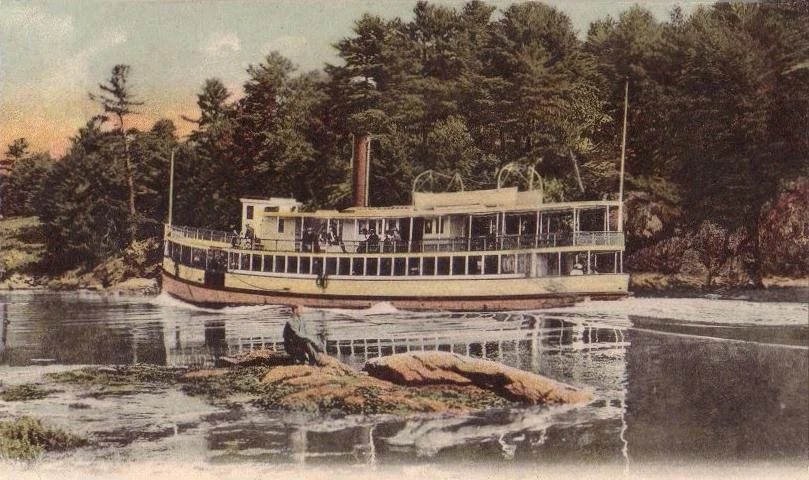
In Woolwich, Hell Gate on the Sasanoa River, circa 1906

The jet setters there are just as peculiar
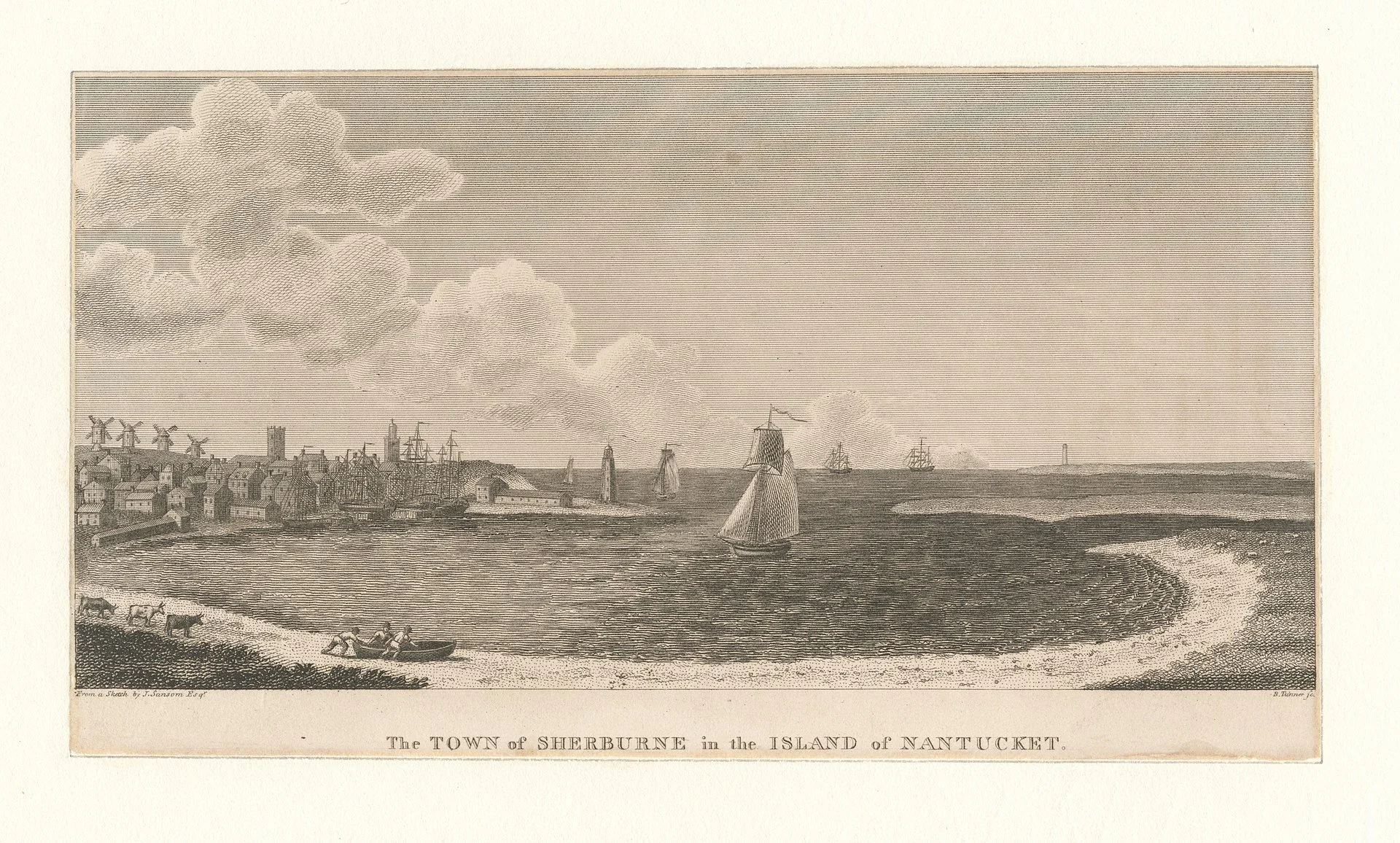
The main center (called Sherburne then) on Nantucket in 1775.


— Photo by MilborneOne

At Nantucket Memorial Airport, famous for the number of private jets that fly in and out of it.
"Yet each man kills the thing he loves….’’
— Oscar Wilde
“The manners of the Friends (Quakers} are entirely founded on that simplicity which is their boast, and their most distinguished characteristic; and those manners have acquired the authority of laws. Here they are strongly attached to plainness of dress, as well as to that of language; insomuch that though some part of it may be ungrammatical, yet should any person who was born and brought up here, attempt to speak more correctly, he would be looked upon as a fop or an innovator. On the other hand, should a stranger come here and adopt their idiom in all its purity (as they deem it) this accomplishment would immediately procure him the most cordial reception; and they would cherish him like an ancient member of their society. So many impositions have they suffered on this account, that they begin now indeed to grow more cautious. They are so tenacious of their ancient habits of industry and frugality, that if any of them were to be seen with a long coat made made of English cloth, on any other than the first-day {Sunday} he would be greatly ridiculed and censured; he would be looked upon as a careless spendthrift, whom it would be unsafe to trust, and in vain to relieve. A few years ago two single-horse chairs were imported from Boston, to the great offense of these prudent citizens; nothing appeared to them more culpable than the use of such gaudy painted vehicles, in contempt of the more useful and more simple single-horse carts of their fathers. This piece of extravagant and unknown luxury, almost caused a schism, and set every tongue a-going; some predicted the approaching ruin of those families that had imported them; others feared the dangers of example; never since the foundation of the town had there happened any thing which so much alarmed this primitive community. One of the possessors of these profane chairs, filled with repentance, wisely sent it back to the continent; the other, more obstinate and perverse, in defiance to all remonstrances, persisted in the use of his chair until by degrees they became more reconciled to it; though I observed that the wealthiest and the most respectable people still go to meeting or to their farms in a single-horse cart with a decent awning fixed over it: indeed, if you consider their sandy soil, and the badness of their roads, these appear to be the best contrived vehicles for this island.’’
— From “Peculiar Customs at Nantucket,’’ by French-American writer J. Hector St. John Crevecoeur (1735-1813)
‘Popping off the wall’ in White River Junction
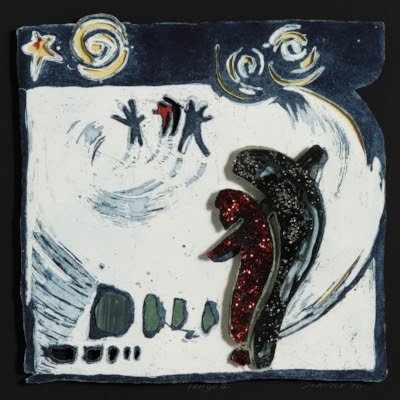
“Tango III” (etching, 3D sculpture), by Norwich, Vt.-based Sue Schiller, in her show “Sue Schiller: A Retrospective,’’ at Two Rivers Printmaking Studio, White River Junction, Vt., through Aug. 22.
The studio explains:
The show “features five decades of work done by New England print maker Schiller. Over the decades, her work has maintained an abstract and expressive look. Often using layers of paper to build up her pieces, Schiller's prints can range from intricate — popping off the wall and spreading out from the canvas — to deceptively simple. The studio is open by appointment. For more information, please visit here.’’

White River Junction, part of the Town of Hartford, in 1889.
The community has long had a major role in regional transportation, primarily as a railroad junction. From the arrival of the first railroads, in the late 1840s, until rail diminished in importance in the 1960s because of Interstate Highway System, whose Routes 91 and 89 met in White River, the community was the most important railroad community in Vermont.
Its original importance was due to its location at the confluence of the White River with the Connecticut River, whose valley was essential to the early development of the region. In 1803 Elias Lyman built a bridge across the Connecticut from the north bank of the White River to West Lebanon, N.H.

Booming White River Junction in 1915.
John O. Harney: Some intriguing N.H. and other indices

“The View from Andrew’s Room Collage Series #8″, by Timothy Harney, a professor at the Monserrat College of Art, Beverly, Mass.
From The New England Journal of Higher Education, a service of The New England Board of Higher Education (nebhe.org)
BOSTON
Percentage of U.S. counties where more people died than were born in 2021: 73% University of New Hampshire Carsey School of Public Policy analysis of National Center for Health Statistics data
Number of additional births that would have occurred in the past 14 years had pre-Great Recession fertility rates continued: 8,600,000 University of New Hampshire Carsey School of Public Policy analysis of National Center for Health Statistics data
Percentage of Americans who told the Annenberg Science Knowledge survey in July 2022 that they have returned to their “normal, pre-COVID-19 life”: 41% Annenberg Public Policy Center
Percentage who said that in January 2022: 16% Annenberg Public Policy Center
Percentage of teenagers who reported that their post-high school graduation plans changed between the March 2020 start of the COVID-19 pandemic and March 2022: 36% EdChoice\
Change during that period in percentage of teenagers who said they planned to enroll in a four-year college: -14% EdChoice
Ranks of “Self Discovery,” “Finances” and “Mental Health” among reasons for change in plans: 1st, 2nd, 3rd EdChoice
Percentage of college students who say they will pay their education expenses completely on their own: 67% Cengage
Percentage who say they have $250 or less left after paying for education costs each month: 46% Cengage
Ranks of “lower tuition,” “more affordable options for course materials” and “lowering on-campus costs, such as housing and meal plan costs” among actions students say their colleges could take to lower education costs: 1st, 2nd, 3rd Cengage
Percentage of Americans who graded their local public schools with an A or a B in 2019: 60% Education Next
Percentage who gave those grades in 2022 after two years of COVID-related disruption: 52% Education Next
Percentage of aircraft pilots and flight engineers who are women: 5% U.S. Bureau of Labor Statistics
Percentage of aircraft pilots and flight engineers who are Black: 4% U.S. Bureau of Labor Statistics
Percentage of aircraft pilots and flight engineers who are Asian: 2% U.S. Bureau of Labor Statistics
Percentage of aircraft pilots and flight engineers who are Hispanic: 6% U.S. Bureau of Labor Statistics
Approximate percentage increase in sworn personnel in New Hampshire State Police, from 2001 to 2020: 30% Concord Monitor
Percentage of New Hampshire State Police personnel who are white: 95% Concord Monitor reporting of N.H. Department of Safety data
Percentage of New Hampshire State Police personnel who are men: 91% Concord Monitor reporting of N.H. Department of Safety data
John O. Harney is executive editor of The New England Journal of Higher Education.

Lawns are killers

Groundcover of Vinca major. Better this than…

….this
Adapted from Robert Whitcomb’s “Digital Diary,’’ in GoLocal24.com
Looking at New England’s parched lawns in the past few weeks reminded me of the environmental damage done by America’s post-World War II obsession with lawns, which has a lot to do with the explosion of suburban growth, subsidized by federal, state and local policies. Showing off your lawn has been a competitive sport.
Think of all that water and the toxic fertilizers, pesticides and herbicides dumped on lawns to try to defy the cycles of nature! (Nature in New England wants woods, not lawns.) Of course, the chemicals in the fertilizers and pesticides end up in ground water, streams, ponds and the ocean. Then there are the heavily polluting, gasoline-fueled lawn mowers.
Still, it’s easy to see the attractions of lawns: soothing green open space around houses, to look at and lie, sit and play on.
Anyway, it’s been gratifying to see more people replacing all or part of their lawns with various ground covers that require much less water and little or no chemicals. They stay green with little care. And you don’t have to mow them, just occasionally do some clipping, depending on the height of the plants. And birds much prefer ground cover, which provide much more food than lawns as well as shelter for some species. Okay, I know that some people don’t like squirrels, rabbits and chipmunks….
But Americans have been indoctrinated to have lawns. It may take years of further environmental damage amidst climate change to get many more of us to sharply reduce the space we devote to them.
You might enjoy this video.

New England has long had many birders – in the countryside, the suburbs and even cities. Indeed, it may be the birding center of America. The hobby pays off for the rest of us not only as a fun force for identifying and photographing birds, many of which are beautiful, but also, in the case of endangered species, helping to save them through publicity. Birders also monitor the local conditions of nature in general. They’re watchmen (or is it watchpersons?) of the environment as they wander outside with their binoculars and notebooks.
When I think of birds I always remember a talk at my high school, in Connecticut, by Roger Tory Peterson, the famed American naturalist, ornithologist, illustrator and educator, about the centrality of birds in nature, and around the same time reading Silent Spring (silent because of the disappearance of bird song in many places) by Rachel Carson, about how pesticides were killing many creatures. The book helped lead to the creation of the EPA and the Endangered Species Act.
It seems hard to believe now that we blithely sprayed vast areas with DDT, dumped cancer-causing chemicals in the ground and water and used lead in most gasoline and house paint. (Yes, lead paint was popular because it lasted a long time on walls.)

Roger Tory Peterson at work, probably in or near the Connecticut River Valley.
In 'The Eastern Woodlands'


Note the water wheel. Many New England towns, with fast-flowing streams in hilly terrain, had mills to grind grain and later to manufacture stuff.
“I grew up in the unlikely place of Connecticut. The Eastern Woodlands. It was semi-rural where I grew up. I was fascinated by the Pequot and the (related) Mohegan Indians of that area.’’
— John Fusco, a screenwriter, producer, and television series creator who grew up in Prospect, Conn.

Classic Eastern Woodlands scene, in Borderland State Park, in Easton and Sharon, Mass.
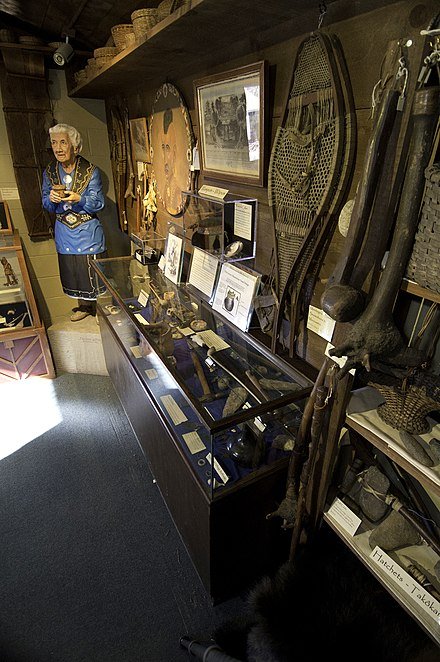
The Mohegan Tribe's museum is said to be the oldest Indian-owned and -operated museum in America. Gladys Tantaquidgeon along with her brother, Harold and father, John, built the museum in 1931 in Uncasville, Conn., as a place to keep Mohegan treasures.
The idea of a quarry

“Halibut Point Variation #9” (acrylic/ash on cotton duck), by Vincent Castagnacci, in his show “Vincent Castagnacci: Notes from a Quarry,’’ at the Cape Ann Museum, Gloucester, Mass., through Oct. 9.
The museum says:
“This exhibit displays his work from the mid-2000s onward. Castagnacci's (who has New England routes) work is striking while being utterly minimal, expertly utilizing line to draw the eye across the canvas. His use of muted, almost industrial, colors and drafting marks are reminiscent of architectural mock-ups elevated into art.’’

Halibut Point State Park and Halibut Point Reservation are adjacent parcels of conserved oceanside land on Cape Ann in the town of Rockport. Once the Babson Farm granite quarry, the properties are managed by the Massachusetts Trustees of Reservations and the Massachusetts Department of Conservation and Recreation. The adjacent Sea Rocks area is owned by Rockport and is also open to the public.