
Don Pesci: Chatting with Aristophanes about comedy
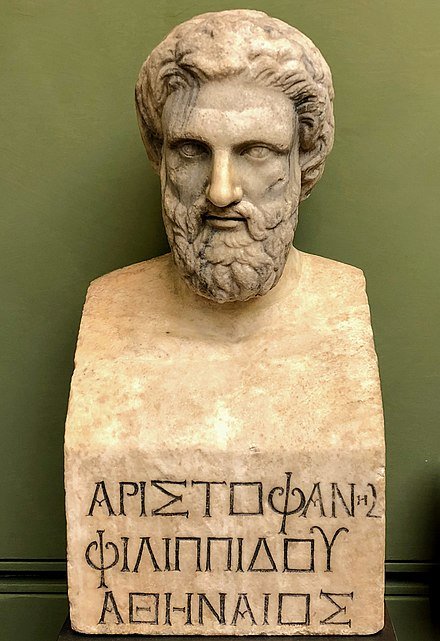
Bust of Aristophanes (First Century A.D.)

The Theater of Dionysus, Athens . In the time of comic playwright and poet Aristophanes (446-386, B.C.) the audience probably sat on wooden benches with earth foundations.
VERNON, Conn.
Q: It’s so good to meet you (chuckles) in person, so to speak.
Aristophanes: Funny. Would you mind if I use that in the future?
Q: I wasn’t aware there was a future for the dead.
A: That is what I might call an example of the arrogance of the living. You are forgetting William Faulkner, who said, "The past is never dead. It's not even past." He wrote most persuasively about the past by resurrecting the dead in his novels. We all do that, in one way or another. You must remember that the only advantage those who are alive at present have over the dead is that they are alive and the dead are dead. That’s it.
Q: I wonder if you can confirm a story about you, not that it has anything to do with the subject of our discussion, the role of comedy in culture. It is said that you died from a falling roof tile that struck you on the head. One of our commentators said your manner of death was ironically appropriate, for a comic writer.
A: (nonplussed, a vacant look)
Q: He was making a joke.
A: Ah, yes, I get it. And you want to know if the joke is true?
Q: Yes.
A: Well, jokes are always true. But how can I tell you that the incident happened if I had been struck dead by a falling roof tile? Besides, if you have done even minimal research on me – a quick glance at what I call Wickedpedia – you will know that little is known of me? I managed to keep myself well hidden in the plays. Your age is obsessed with facts, but it is important to understand that facts, provided they are all accounted for, are vehicles that may lead to truth. But, in some instances, fiction serves the same purpose, which is why we do not dismiss Shakespeare and Faulkner as unimportant.
Q: It’s Wikipedia, by the way.
A: Not when you are punning.
Q: One of the purposes of this interview is to gather comments from the real Aristophanes about the real world.
A: From what I know of your time and world, I’m not sure (very condescendingly) you people understand either reality or your time in it. And being introduced to your world is a frightening prospect for anyone but a comic writer, provided he is allowed to ventilate his opinions. All comedy is what the moderns call transgressive, and all comedians are at bottom contrarians. Think of “the fool” in Shakespeare’s plays. A real take on your real world would reduce Euripides to tears and make Socrates blush -- and, believe me, Socrates was not given to blushing or Euripides to weeping.
Q: I should ask you, since you and other dramatists were the journalists of your day, do you think, as a general rule, that journalists also should be contrarians?
A: I do. So did Joseph Pulitzer and H.L. Mencken.
Q: I’m guessing the tyrant Creon was cool to your plays in which he was, some say, mercilessly caricatured.
A: In the Athenian republic of my day, it was understood that comics, the Shakespearian “fools” of Greece, should be permitted to dress down world saviors. After Sparta defeated Athens at the close of the Peloponnesian War, comic writers became considerably more cautious – for obvious reasons. As you may have guessed from a close reading of Lysistrata, I was in favor of what Henry Kissinger might have called an Athenian “diplomatic entente,” rather than a 26-year war with Sparta. Actually, Sparta’s peace terms were far less draconian than the terms imposed by World War I’s victors on a humiliated Germany. Sparta won the war, but Athens won the peace, nothing short of a miracle. Old Comedy became a more politically genteel New Comedy after the war, and the New Comedy was less wearing on the nerves of tyrants the world over. Your situation is similar. You have in your country the same fixation with world saviors – naturally, all of them Americans. In a regime of authoritarians -- or, worse, experts -- comedy is rarely tolerated, because comedy is an attempt to readjust proper proportions. When things are out of shape, the comic is the person who whacks them, by means of his comedy, back into shape. It is impossible to imagine in Russia, for instance, a roast of Putin. When I was approached on the street by one of Creon’s lackeys who demanded, “Don’t you take anything seriously?” I responded, as any good comic should, “Of course, I take comedy seriously.” After Athens’s defeat by Sparta at the decisive Battle of Aegospotami, such responses became less advisable and comic wit suffered grievous indignities. Fortunately, I lived to see the revival of Athens after its crushing defeat by the Spartan General Lysander in 405 B.C. Creon wanted a war to the finish with Sparta – and he got one.
Q: Naturally we care more about our present than your past, despite what has been said by Faulkner. But what riches can you bring to our reality?
A: The French, who can be amusing if you catch them in a nonpolitical mood, say – a poor translation – “the more things change, the more they remain the same.” You are now in the process of scourging your comedians. It will not be long before you hoist them on a cross. Here is some advice worth something: comedy is the canary in the cultural mineshaft. And a poisonous culture will repress comedy first, and everyone else later, simply bury them under mounds of humorless, pretentious group-think. Just before the Hungarian revolt, a worker slated by Karl Marx as the future owner of the means of production was asked to comment on his condition under the Marxist-Leninist dispensation. “They pretend to pay us,” he said, “and we pretend to work.” That man understood the proper use of comedy.
Don Pesci is a Vernon-based columnist.

The Tower on Fox Hill in Henry Park, Vernon
Disinfecting corrupt stuff
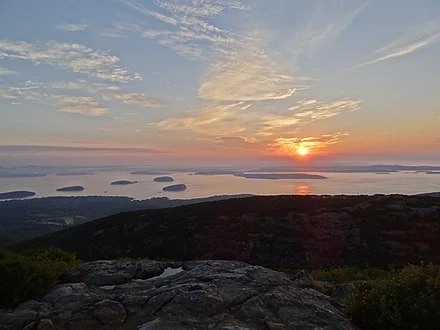
Sunrise from the top of Cadillac Mountain, in Acadia National Park, Maine. For part of the year it’s the site of America’s earliest sunrise.

“Publicity is justly commended as a remedy for social and industrial diseases. Sunlight is said to be the best of disinfectants; electric light the most efficient policeman.’’
“And publicity has already played an important part in the struggle against the Money Trust.’’
— Louis D. Brandeis (1856-1941), in a Harper’s Magazine article in 1913. A government and civic reformer through much of his life, Brandeis was a U.S. Supreme Court justice from 1916-1939. Before then he was a co-founder, in 1879, with Samuel Warren, and long-time partner of the Boston law that today is called Nutter, McClennen & Fish.
Self-defense training
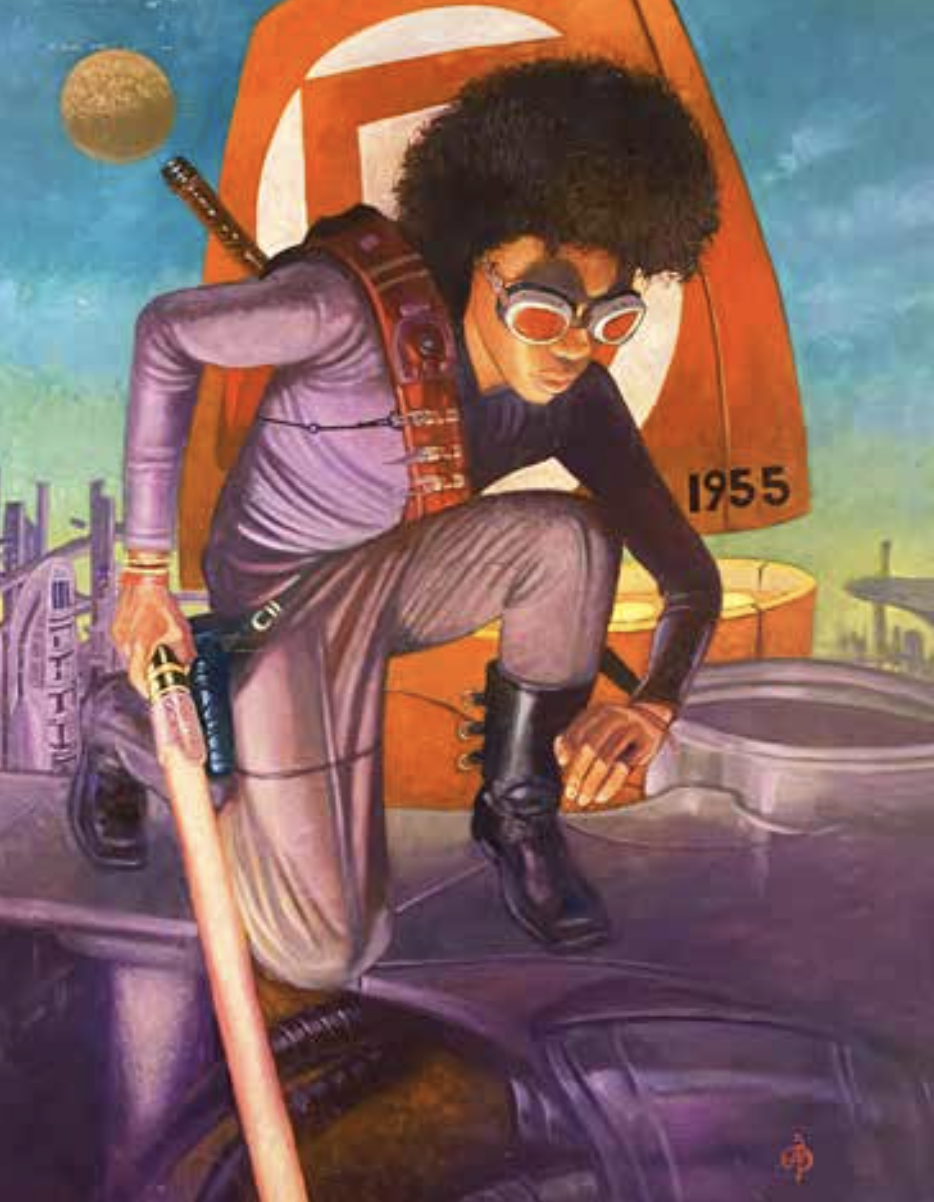
“Lando as a Boy” (oil on board), by Alexander Bostic, at the Norman Rockwell Museum, Stockbridge, Mass.
David Warsh: Three to watch in the mid-term elections
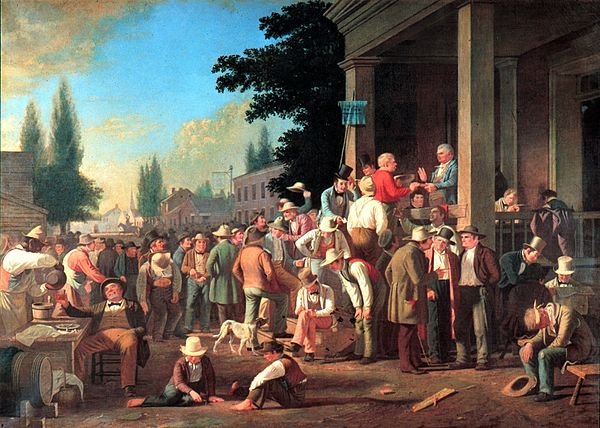
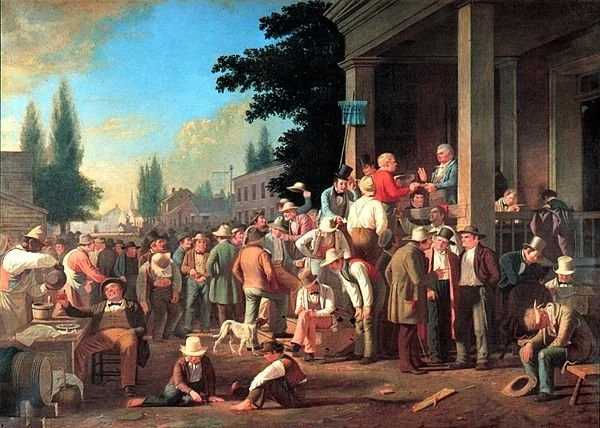
An 1846 painting by George Caleb Bingham showing a polling judge administering an oath to a voter
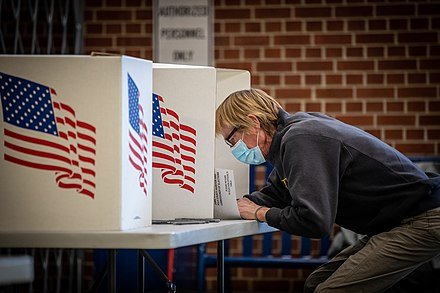
SOMERVILLE, Mass.
My Fourth of July resolution was to tune out stories about the possible 2024 presidential ambitions of Donald Trump and Hillary Clinton, and pay attention instead, at least until Nov. 8, to the Senate campaign in Ohio. Author-turned-venture capitalist J.D. Vance and Congressman Tim Ryan are running there to succeed retiring Republican Sen. Rob Portman.
Vance, 37, gained fame as author of Hillbilly Elegy: A Memoir of a Family and Culture in Crisis (2016). After high school, he enlisted in the U.S. Marine Corps and served as a public-affairs specialist in an air wing during the Iraq War. He then graduated from from Ohio State University, went on to Yale Law School and then left a corporate-law practice for a venture-capital firm in San Francisco. He returned to Ohio in 2016 to form, with partners, a venture fund of his own. Formerly an evangelical Protestant, he converted to Roman Catholicism in 2019. He opposes abortion rights.
Ryan. 49, is a 10-term congressman whose present district includes much of northeast Ohio, from Youngstown to Akron. In 2015, he explained to readers of the Akron Beacon Journal “Why I changed my thinking on abortion’’. The next year, he led an ultimately unsuccessful effort to unseat Nancy Pelosi as party leader of the House Democrats.
Might Ryan, if he wins, find a seat on that otherwise still all-but-empty bench of potential 2024 Democratic presidential candidates, at whose opposite end sits Clinton? It is plausible, if not likely. After all, former Ohio Gov. John Kasich had a shot at derailing Trump as Republican nominee in 2016. In any event, lie Vance, Ryan seems likely to remain in public life for years to come.
Jane Coaston, a journalist, is a third star rising in the mid-term elections, and probably well beyond. The New York Times hired her away from Vox last autumn to run a weekly discussion show, The Argument. Coaston grew up in suburban Cincinnati, according to Graham Vyse, of The Washington Post, the daughter of union Democrats who were “giant hippies,” before she learned to distinguish among varieties of conservative thought as editor of The Michigan Review at the University of Michigan. She gained prominence with a National Review article in 2017, “What if there is no such thing as Trumpism?” Her talk-show discussion with two leading Republican theorists after Vance’s Trump-endorsed primary victory in May was especially illuminating.
Control of the Senate will almost certainly become the dominant story of the mid-term elections. The Pennsylvania Senate race is interesting, too. To me, at least, it seems likely, that the Supreme Court’s decision to overturn Roe v. Wade will cost Minority Leader Mitch McConnell (R-Kentucky) his leadership of the Senate. This column is mostly about economics, but the investigation of preferences change is gradually becoming an important part of economics
Immigration, foreign wars, globalization and climate change: All these national issues will take a back seat in November elections, which are about leadership in particular states. They will resurface, along with women’s rights, in 2024. Harvard Historian Jill Lepore wrote a couple years ago that America, like any other nation-state, requires a “national story.” She was right. Voters write it, election by election.
David Warsh, a veteran columnist, is proprietor of Somerville-based economicprincipals.com, where this essay originated.
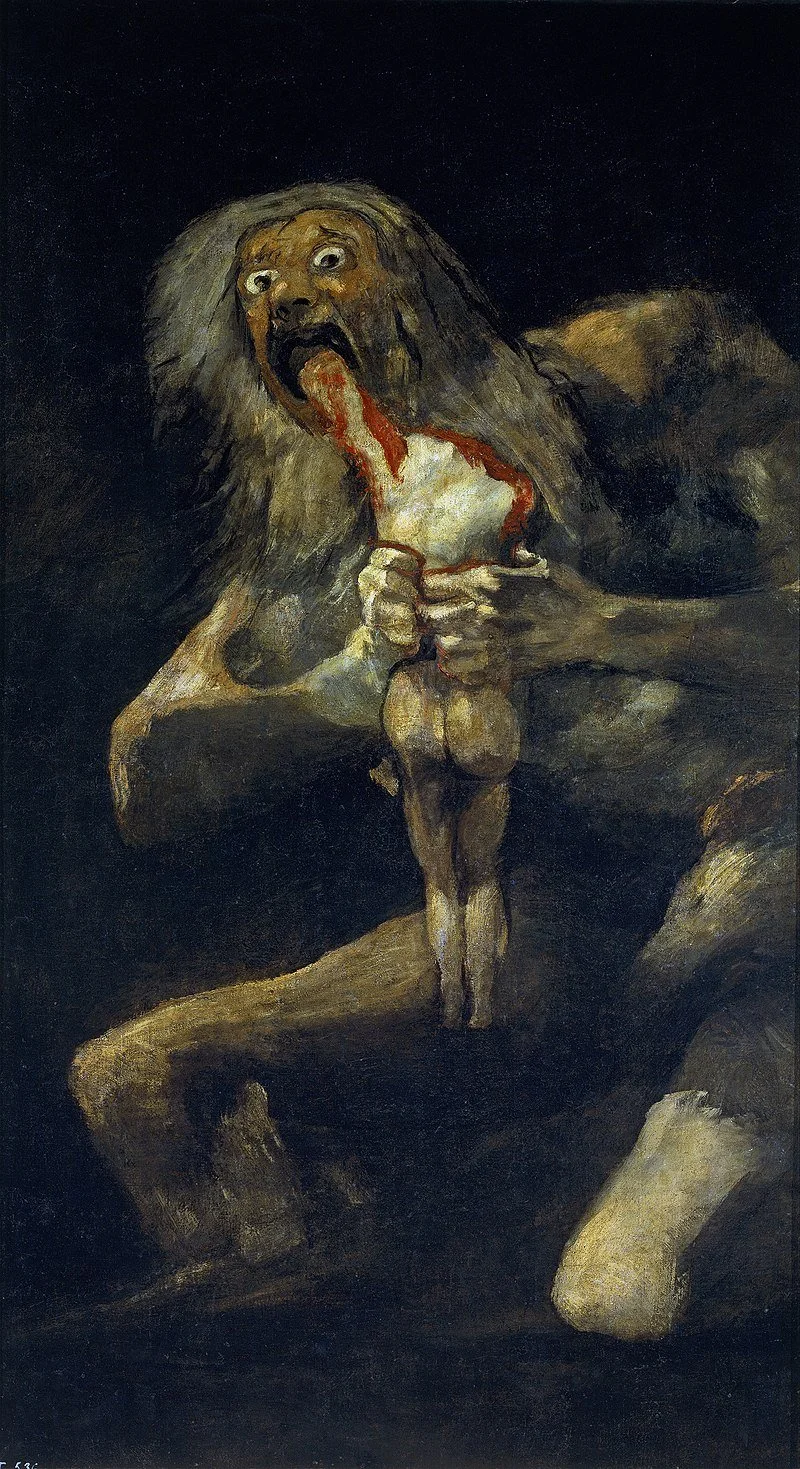
The scariest animal, drunk or sober
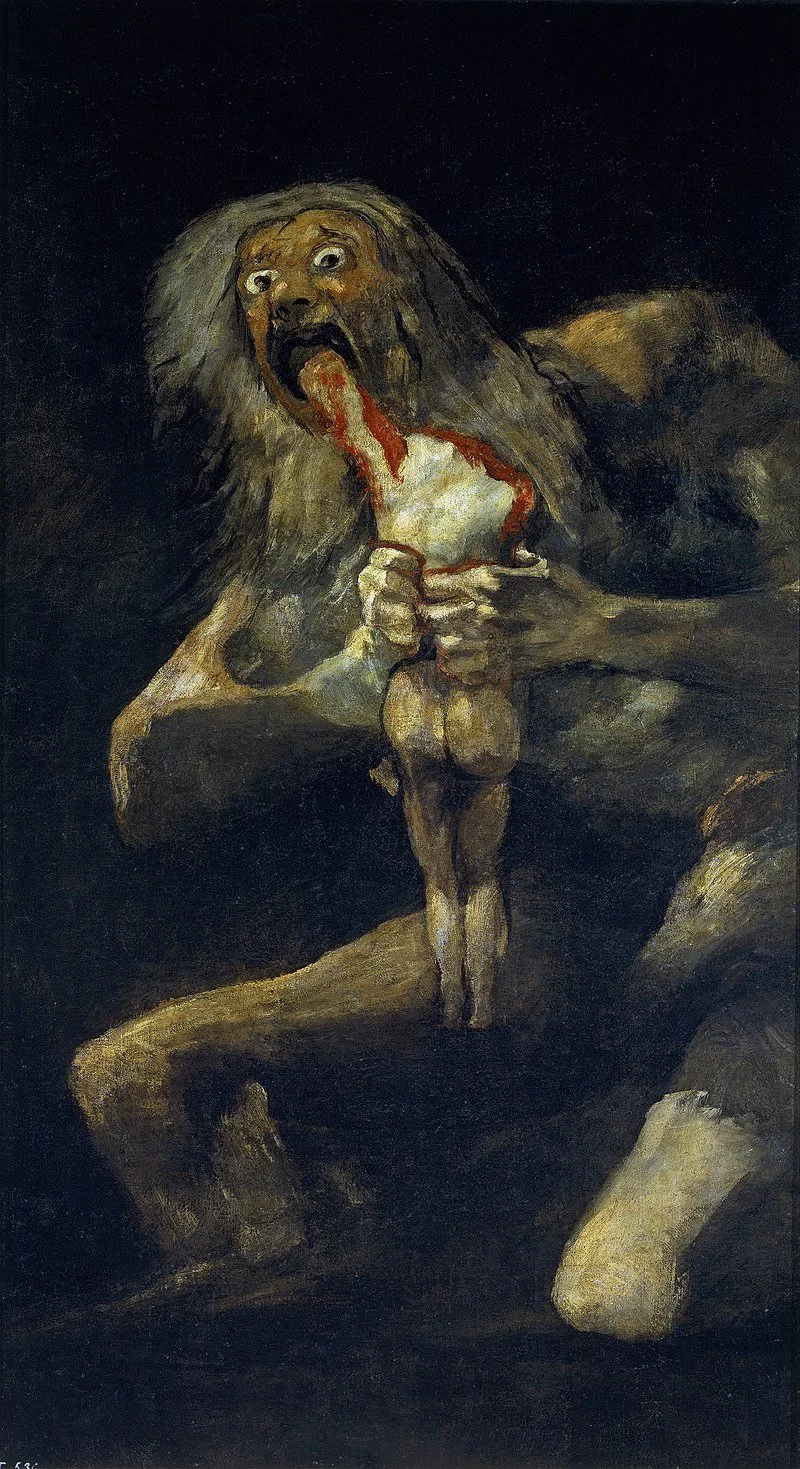
“Saturn Devouring His Son,’’ from the Black Paintings series, by Francisco de Goya, 1746-1828
“I think a human animal is far more wild and unpredictable and dangerous and destructive than any other animal.’’
—Jeff Corwin (born 1967), biologist, wildlife conservationist and animal-show host. He was raised in Norwell, Mass., and now lives in neighboring Marshfield.

Jacobs Farmhouse, in Norwell, Mass., built in early 19th Century
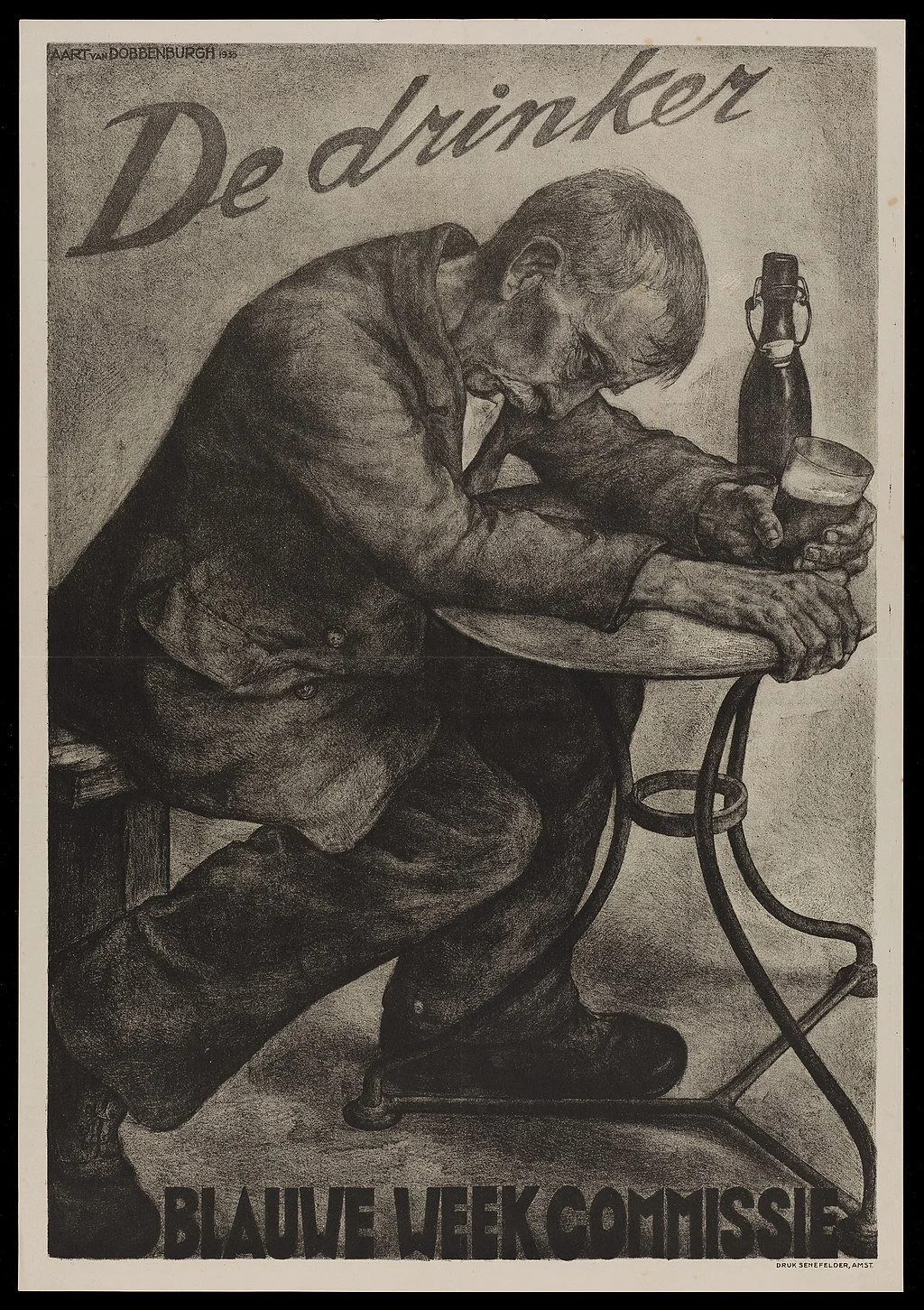
“Humanity I love you because when you’re hard up you pawn your intelligence to buy a drink.’’
— e.e. cummings (1894-1962), American poet, painter, essayist, author and playwright. He was born in Cambridge, Mass., and died in North Conway, Mass.
Through the haze of longing

“Still Life 8” (watercolor, 1990), by celebrated Providence-based painter and art professor Thomas Sgouros (1927-2012), in a show of his work at Cade Tompkins Projects, Providence, through July 22.
The sad decline of the newsstand

South Station

A newsstand in New York City before the print implosion.
— Photo by Neutrality, Talk
Adapted from Robert Whitcomb’s “Digital Diary,’’ in GoLocal24.com
To my dismay, there was no newsstand in Boston’s South Station, New England’s biggest train station, when I walked through it the other week. Maybe they’ll bring one back: They’re doing a lot of construction there.
I’ve spent a lot of time over the years browsing the now-disappeared stand and many others at home and abroad.
Big newsstands are a joy, with lots of serendipity, but they’re disappearing. Too bad. You see all sorts of magazines you wouldn’t usually have access to. And buying and leafing through a paper publication is more enjoyable than reading on a screen. Further, your retention of what you read is better, say neurologists. Big newsstands make waiting at a train or bus station or airport less onerous.
Porn or semi-porn magazines used to be widely available on newsstands, amongst the more dignified materials, but wrapped in camouflage. Now, with the World Wide Web drenched in porn, the paper version of it is disappearing. Can’t compete! An advance for public order and morality?

The staying power of ‘70s and ‘80s popular music

"Everything new is old again," says Provincetown, Mass., DJ Braintree Jim.
“So much of today's new music longs for nostalgia, this quest to regain or relive some semblance of what is believed to be better times from a bygone era. It's quite remarkable. You can hear it in the tunes, a steadfast reverential pastiche for ‘70s and ‘80s music. I think many of today's younger artists realize the staying power of music from that period. The evidence is all around us.
"If you look at the big streaming services it is the back catalog music that is getting all the attention. So it makes sense, therefore, that a lot of the new music I am listening to has this derivative aesthetic attached to it. I suppose each generation has pinched ideas from previous generations. Still, it's fun hearing new material infused with some of the old effects or instruments or even production techniques that were present back then. It's a hybrid mash-up for sure."
He believes that the recent resurgence and renaissance of English musician Kate Bush, now 63, and popular in the 1980s, is further proof.
Her song, "Running Up That Hill," released in 1985 on the “Hounds of Love’’ album, was recently featured on season 4 of the massively watched Netflix series Stranger Things. Ever since the song was featured it has rocketed back to the charts, both in the U.S. and U.K. It reached the top five in a recent Billboard Hot 100 chart in America, and hit no. 1 in the U.K. The recent chart success has broken all sorts of records. And a three-week period in June saw the song streamed a staggering 137 million times on Spotify.
Braintree Jim's radio show Chill & Dream returns to the airwaves on Wednesday, July 6, from 1 p.m. to 4 p.m. on WOMR (92.1 FM) the community radio station in Provincetown that recently celebrated 40 years on the air. It’s simulcast on sister station WMFR (91.3 FM) in Orleans.
Perhaps tellingly, the new show will showcase music from the 1980s. "It's very much a roots show," he says. "You can't escape the roots. And yes, I will be playing Kate Bush." The show can be streamed live on womr.org.
The building that houses WOMR, at 492-494 Commercial St., has a fascinating history. Hit this link to read about it and see photos from its history.
After awakening from a trance

“Free Association” (Encaustiflex, wax, silver pigment), by Bristol, R.I.- based Leila Stokes Weinstein
She explains:
“My process is a combination of working on an idea that I want to express or just playing with materials, allowing my subconscious to make the decisions.The later is fun because suddenly I ‘awaken’ from a sort of trance or meditation, a place of no thought, to find something pleasing has been created.
''The three-dimensional capability of wax calls to me, whether it is a buildup of layers on a panel or embedded objects in a sculptural piece.
"Like most of the world, I am very concerned about the degradation of our planet and the rapid extinction of wild plants and animals, so my work often reflects on that and the beauty of nature around us.
"My work usually incorporates visual movement. The flow of water, the lapping of waves and the blur between land, water and air call to me.’’
Her bio:
Lelia Stokes Weinstein was raised as a Quaker. She was taught that there was good in everyone. In her art she explores joy, hope and peace. As a small child she loved to do art and was allowed to go to art classes in Cambridge at the age of 9. The experience of commuting for 2 hours by herself from the World’s End section of Hingham, Mass., helped further develop an independent and adventurous spirit.
She went to Friends World College, which required study abroad in at least two countries. Living in India and traveling overland to England through Afghanistan, Iran and Turkey she discovered the vibrancy of these cultures and how they embraced color and texture.

A misty morning in the Hingham, Mass., peninsula called World’s End

The front of the 231st Bristol, R.I., Fourth of July Parade in 2016.
— Photo by Kenneth C. Zirkel

Llewellyn King: Why I love America but fear its political decay and paralysis

Fourth of July fireworks in America's easternmost town, Lubec, Maine, population 1,300. Canada is across the channel to the right.
— Photo by it'sOnlyMakeBelieve
WEST WARWICK, R.I.
Martin Walker, the gifted former Washington correspondent of The Guardian, used to start his speeches by saying that the Fourth of July wasn’t a time for sorrow for him because it was a time when good British yeomen farmers in the American colonies revolted against a German king and his German mercenaries.
Walker — who now lives in France and writes the hugely successful “Bruno” detective books set in the Perigord region — once told me, “It’s exciting living in a country where the president can order up an aircraft carrier to settle a dispute.”
He, an Englishman, and I, a former British colonial (from Zimbabwe) who moved here in 1963, shared our admiration for the United States. For America’s birthday this year, I have counted some things I most like and admire about this country of endless experimentation. Also, alas, I admit that it is getting harder to feel as proud of it as I once did.
America, for me, has always embodied a special freedom: the freedom to try. The wonderful thing about it is that you can try a business, an idea, a way of living, or even a way of thinking. I read in The Waist-High Culture, the 1958 book by Thomas Griffith, that Europe was a “no” culture and the United States was a “yes” culture. So true.
In my first year here, I wrote to a family member in England, marveling at the size and scope of the American market. I wrote to her, “You could make a fortune here making glass beads, so long as they were good glass beads.” I still believe that.
The other great freedom, which I treasure, is that you can move across the country and start all over again. If you feel you have failed in New York, you can take a fresh sheet and try again in Chicago, Austin or San Francisco. You can have failed in marriage, in business, in a career, and in some very public way, but you can go on anew somewhere else.
You can’t do that in what are, in many ways, city-states — for example, in the way England is dominated by London and France by Paris. There is geographic freedom in the United States that has an exhilaration all its own.
I was intoxicated by America from the first. I didn’t dwell on the sins of the past, from the cruelty of the Puritans, the pioneers and the planters to the folly of Prohibition. When I arrived, I embraced all that was in the present; the civil-rights movement was underway and gathering strength, and it was possible to believe that the United States would continue to be the shining example of how you get it right, how you correct big and small errors, and how you let people prosper. John F. Kennedy was president, and it was a new day.
When I covered Congress, I was enchanted with it: the committee power centers, the indifference to party discipline, and a system where you really did need majority approval to get a law passed.
Overall, members of Congress were among the hardest-working (and some were the hardest-drinking) around. They sought to understand issues from atomic energy to cancer. Congress wasn’t perfect, but it aspired to get things right.
For many years, I participated in the Humbert Summer School — a think tank — in the west of Ireland. I used to enjoy talking up the presidential system as superior to the parliamentary one, where a simple majority can wreak havoc.
Now, alas, Congress is experiencing the evils of parliamentary government and none of the virtues, particularly swift legislating. Party discipline — as in the case of House Minority Leader Kevin McCarthy, of California, shunning Rep. Liz Cheney, of Wyoming — has supplanted the old tolerance for differences within the party. It began with the 1994 Gingrich Revolution, abetted by the proliferation of single-point-of-view talk radio.
Like all unchecked decay, it has gotten worse.
America the Beautiful, I wish you a happy birthday. I thank you for your generosity over these decades, and I say sincerely, “Mind how you go.” The world needs your seeking to be fair and just, and full of possibility, not divided and rancorous, and a threat to yourself.
Llewellyn King is executive producer and host of White House Chronicle, on PBS. He’s based in Rhode Island and Washington.
‘Then she remembers’

Tree swallow
…."by the Mad River's (in Compton, N.H.) water-tangled weeds
grapevine and spruce bough, sparrow's lost
four-toed tracks disappear, her song's
a little heartbreak aria in blackberry bushes
then she remembers she can fly’’
— From “Mud Revolver’’, by Rick Agran, a Vermont-New Hampshire poet, teacher, photographer and journalist

Compton, N.H., in 1910, when much of the land was still open for pasturage.
Soothing with silk

“Imitating Symmetry” (silk), by Boston artist Evan Rosenberg, in his show “Mantra,’’ at Galatea Fine Art, Boston, through July 31.
He tells the gallery:
"My work utilizes silk as a medium to capture, interpret and cope with the chaotic and uncontrollable realities of the world around me. My interest in this material was born out of my research at a biotech startup, which uses silk protein to stabilize vaccines. Intrigued by the possibilities of silk as a material for art, I began exploring its properties and limitations by weaving it into three-dimensional spaces.
“The work I do is grounded in repetition and meditation. As I create, I am driven deeply into self-reflection and meditation. I use the work to disconnect from my thoughts and impulses and guide me into a flow state.’’
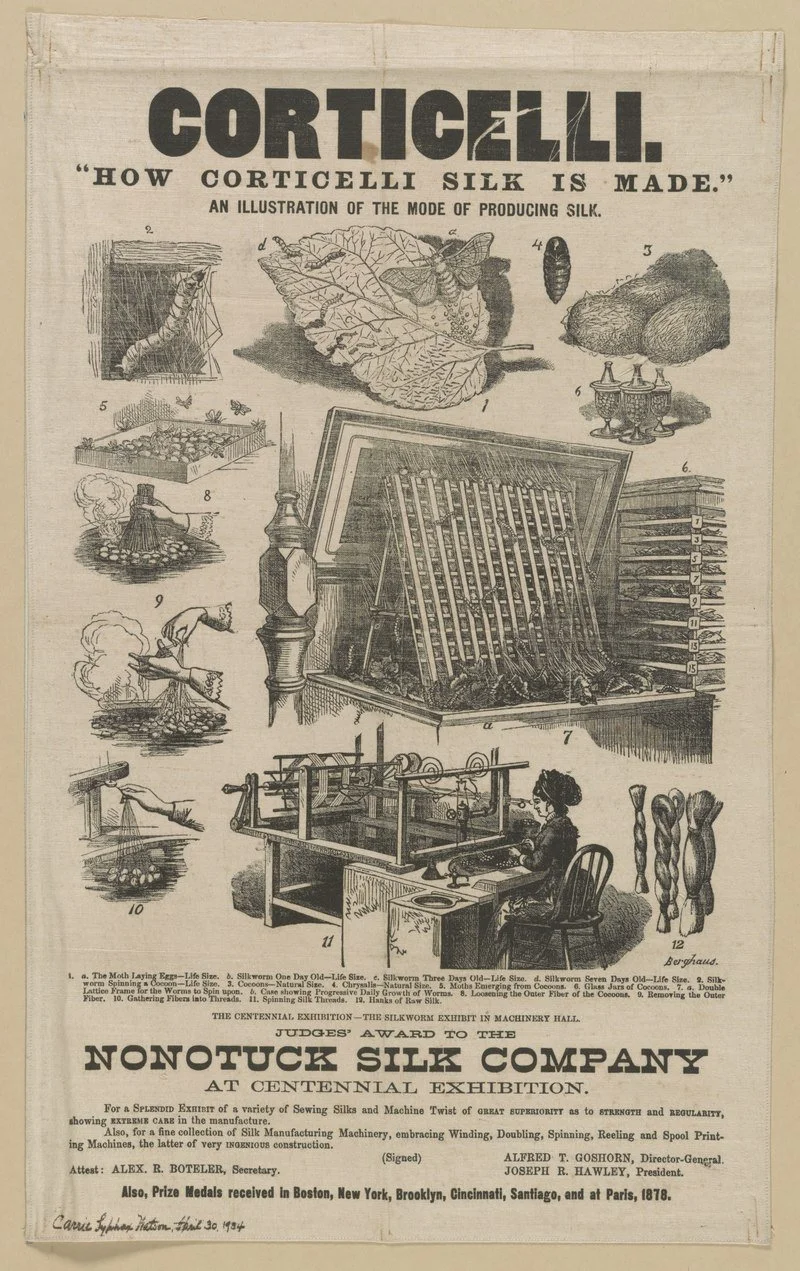
Nonotuck Silk Co. advertisement for Corticelli silk showing the stages of silk production.
Nonotuck Silk Company (1832-1930 in various incarnations) produced silk thread at a mill in Haydenville, Mass. It was established as the North Hampton Silk Company and operated for years by members of a utopian society active in abolitionism. The company later acquired the Corticelli Silk Mills, in Leeds, Mass., and became the Corticelli Silk Co.
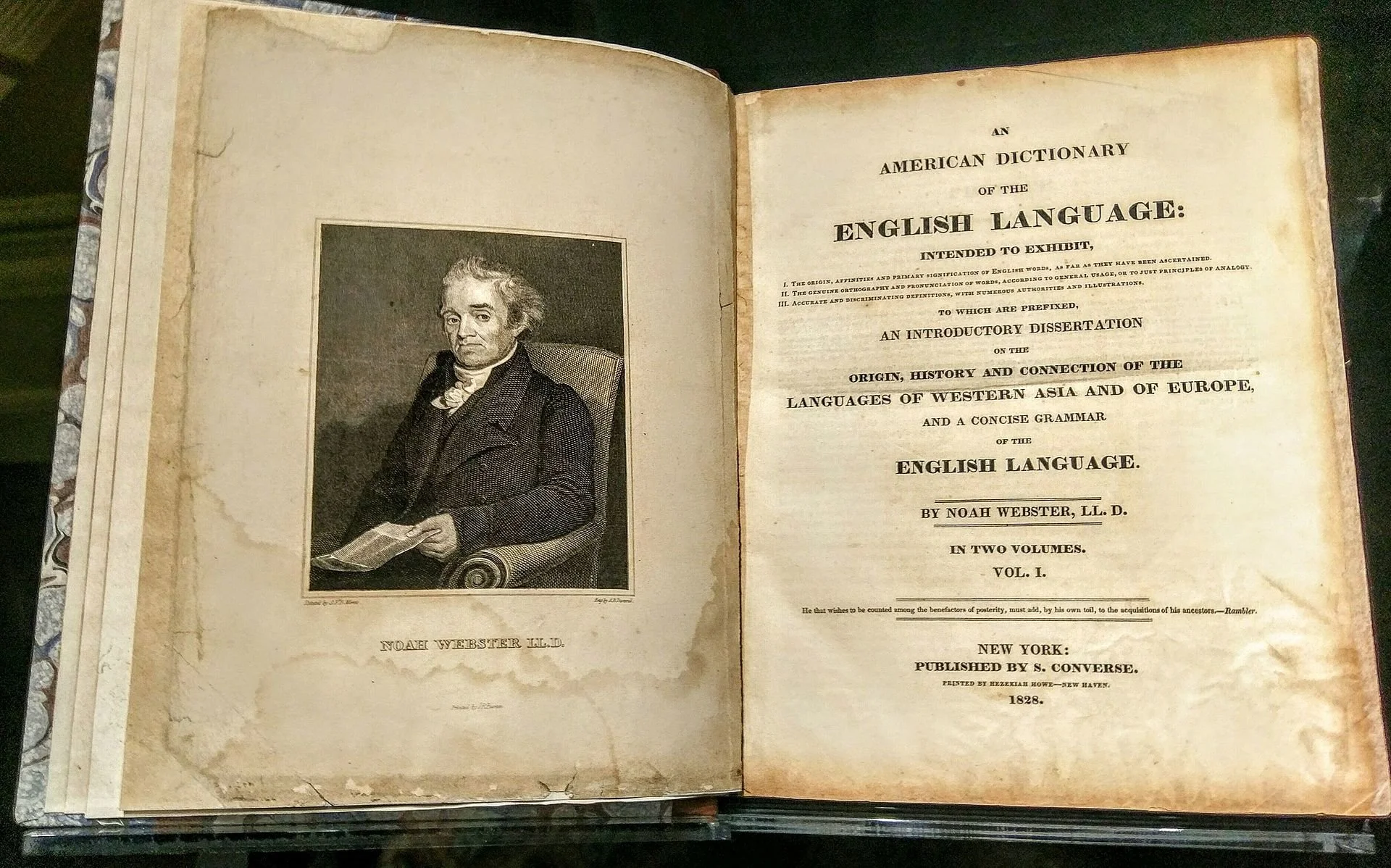
Two famous Websters on government

Noah Webster

Title page of the first edition, in 1828, of An American Dictionary of the English Language, featuring an engraving of Noah Webster
— Photo by Cullen328
“A pure democracy is generally a very bad government, It is often the most tyrannical government on earth; for a multitude is often rash, and will not hear reason.”
—- Noah Webster (1758-1843), lexicographer of dictionary fame, in The Original Blue Back Speller. He was born in Hartford, Conn., and died in New Haven.
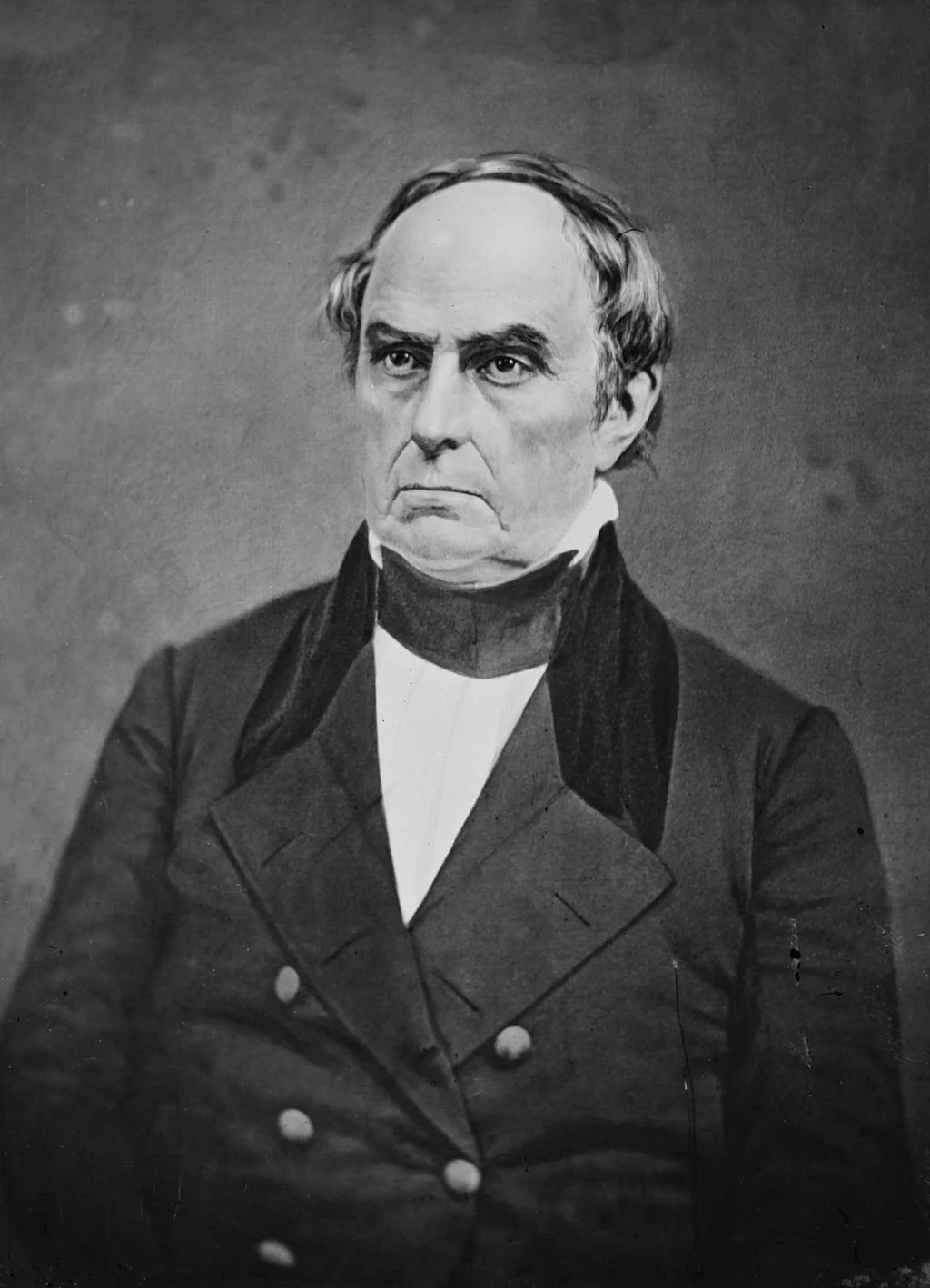
Daniel Webster, aka “Black Dan’’
"God grants liberty only to those who love it and are always ready to guard and defend it"
— Daniel Webster (1782-1852), U.S. senator, secretary of state, formidable lawyer and would-be president. He was the most famous American orator of his time. He was born in a part of Salisbury, N.H., that’s now part of Franklin and died in Marshfield, Mass.

New Hampshire historical marker at Daniel Webster’s birthplace, in Franklin, N.H.
— Photo by Craig Michaud
Trees that adapt

“Twisted Branches, pyrography on birch plywood,’’ in Brett S. Poza’s show “Plywood Forest,’’ at Kingston Gallery, Boston, through July 31.
Brett S. Poza’s show displays more than twenty small works depicting trees burned into the surface of plywood and repurposed woodblocks like tattoos. Poza’s focus is on the trees we ignore or discard — stationary witnesses to change over generations. Her trees are examples of adaptation in the face of climate change, unsuitable settings or disease. She says: “I draw trees, not perfect trees, nor particularly healthy trees. Instead, these are trees that represent resilience, steadfastness, and the persistence to keep growing despite isolation, invasion by other species or inclement weather.’’
xxx
During the past year, Brett relocated to Ashburnham, in North Central Massachusetts, with her family. This, her bio says, affords her “the opportunity to be in close contact with the area’s abundant wildlife, lakes and forests. She currently spends her evenings trying to figure out how to keep local predators from getting into her chicken coop and acting as a taxi service for flying squirrels, who show up in her attic.’’
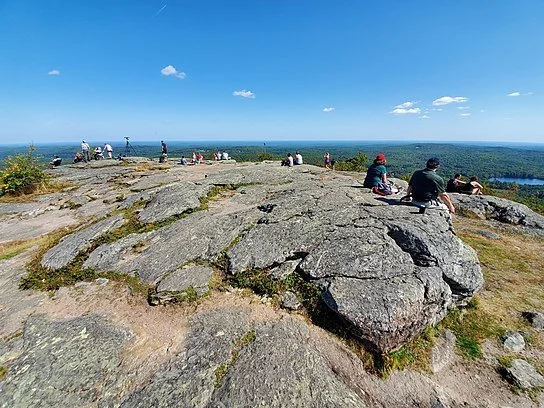
In Ashburnham, on top of 1,832-foot-high Mt. Watatic, a monadnock just south of the Massachusetts–New Hampshire border
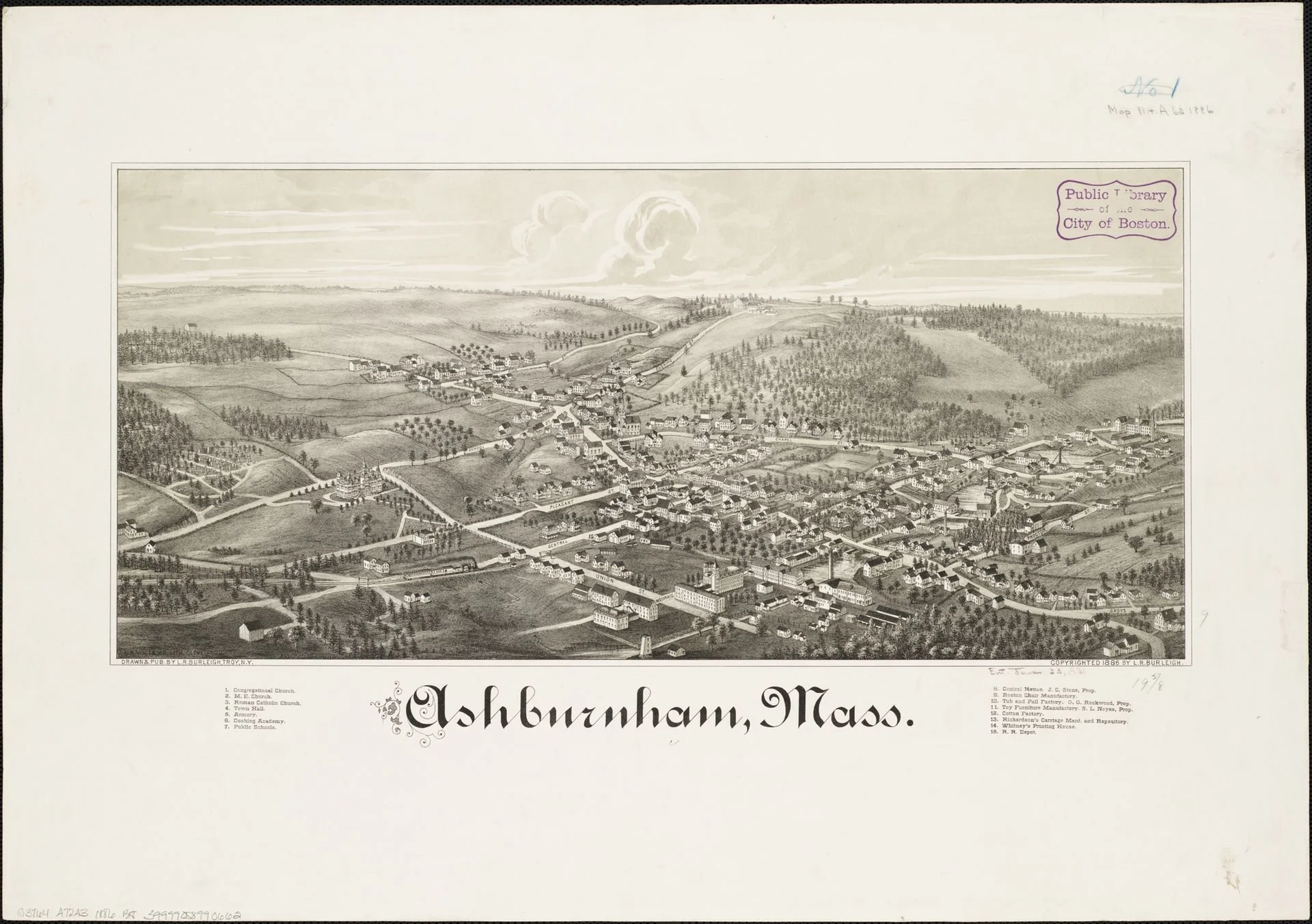
Print of Ashburnham map from 1886 by L.R. Burleigh with list of landmarks
Chris Powell: Bring back fathers! A lesson from Truman
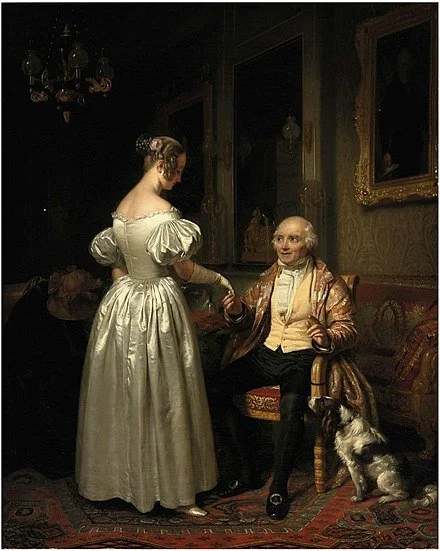
“Parental Advice,’’ by Belgian painter Josephus Laurentius Dyckmans (1811-1888)
MA NCHESTER, Conn.
For Father's Day the Connecticut Department of Children and Families publicized Connecticut's Fatherhood Initiative, a program that DCF runs with the state Department of Social Services that strives t men as involved with their children as those children are involved with welfare agencies.
The social science confirming that a father's involvement with his children is crucial long has been overwhelming and DCF laid it out well. Children involved with their fathers do better in every respect in life: educationally, emotionally and in physical and mental health and social development. They are far more likely to avoid poverty, to grow up happy, confident, and kind, and to find decent employment. They are far less likely to get in trouble.
"Children want to make fathers proud," the DCF stressed. Exactly!
The Fatherhood Initiative is great as far as it goes, but like so much else in government, it is remedial to the problem rather than what is most needed: prevention. That's because a third of U.S. children are living without a father in their home. Programs like the initiative will be lucky to reach a tiny percentage of them.
Especially required are changes to the welfare system to remove its perverse incentives, to stop it from discouraging family formation, from encouraging childbearing outside marriage, and from substituting economically for fathers. Indeed, if, as social science suggests, fatherlessness is the country's worst social problem, the root cause of most other social problems, then childbearing outside marriage is more anti-social than some things that are criminalized.
This needs to be taught in schools and all places where young people gather. But politically government is too scared to do it, lest it distress the many fatherless children who would hear the lesson and offend their single parents.
The lesson most needs to be taught in cities, where as many as 90% of children have no fathers in their home or lives. But that is where politics makes it least likely to be taught.
Before the start of "the War on Poverty," in the ‘60s, ago the prospect of having a child outside marriage terrified young men and women alike, for both moral and economic reasons, reasons that were essentially the wisdom of the ages.
But then public policy removed the economic reasons, hastening the erosion of the moral reasons. Government urgently should find ways of restoring the wisdom of the ages to welfare policy.
For as the country might have noticed by now -- from Los Angeles to Chicago to New York and to Hartford, Bridgeport and New Haven -- fatherless places are miserable and violent.
xxx
Winsted, Conn., native Ralph Nader, the great advocate of civic activism, wrote this week that Connecticut U.S. Rep. John B. Larson is clamoring -- privately, apparently to minimize embarrassment within his party -- to get House Democrats to push their party's tenuous majority in the Senate to start doing something.
That is, Nader suggests, Larson wants Senate Democrats to play Dirty Harry and tell Senate Republicans: "Go ahead and filibuster -- make our day!"
Nader notes that with the Senate tied 50-50 and with 60 votes needed to terminate debate and bring legislation to a vote, the Republican Senate leadership has needed only to threaten a filibuster to induce the Democratic Senate leadership to put aside any legislation from the Democratic-controlled House.
But Larson is said to argue that the Democratic senators should bring House bills to debate anyway and cause the Republican senators to be seen opposing them and to spend much time and energy doing so. For even if the Republican filibusters succeeded, issues would be illuminated and public pressure might change some minds.
A former history teacher, Larson may know that in 1948 Democrat Harry Truman overcame huge odds and got elected president in his own right in part by calling a special session of Congress, which had a Republican majority, to consider his administration's agenda and then denouncing the "do-nothing" Republicans when they wouldn't act favorably.
Today's Democratic agenda is hardly perfect but the country deserves a debate on it and some work from the Senate for a change.
Chris Powell is a columnist for the Journal Inquirer, in Manchester.

And which parts of the 'inerrant' Bible to teach with taxpayer money?

A Gutenberg Bible, the first printed Bible (mid-15th Century). It’s written in Latin Vulgate.
— Photo by NYC Wanderer (Kevin Eng)
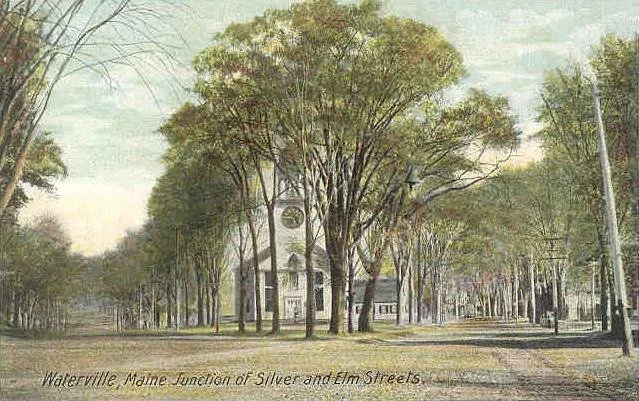
Silver and Elm streets in Waterville, Maine, in 1910, showing the Universalist Church, which was established in 1832. Colby College — and its superb art museum — is in Waterville. Note the beautiful elm trees.
Adapted from Robert Whitcomb’s “Digital Diary,’’ in GoLocal24.com
The U.S. Supreme Court, run by right-wing extremists called, very inaccurately, “conservatives,” continues to erode walls between religious organizations (real or purported) and government, ruling, for example, last week in the case of two “born again’’ Christian schools in Maine that they can’t be excluded from a state tuition program. Chief Justice John Roberts, writing for the 6-3 majority, says that states that subsidize private schools can’t discriminate against religious ones. But a couple of tricky things here are that some religious schools operate as theological propagandists to the public and as adjuncts of the Trump/QAnon Republican Party.
Consider:
One of the two schools, Temple Academy, in Waterville, says it expects its teachers “to integrate biblical principles with their teaching in every subject” (including science) and teaches students “to spread the word of Christianity.” It seeks:
“To foster within each student an attitude of love and reverence for the Bible as the infallible, inerrant, and authoritative Word of God.’’
But which translation/version of the Bible to use? Which one is “infallible”?
What about the Good Book’s innumerable contradictions? And its support in places for slavery and violence? Only God knows!
The other institution, Bangor Christian Schools, says it wants to develop “within each student a Christian worldview and Christian philosophy of life” – whatever that means in these days of public hyper-hypocrisy.
And both institutions’ admissions policies let them deny enrollment to students based on actual gender, gender self-identity, sexual orientation and religion, and require their teachers to be born-again Christians. (I admit, by the way, that I’m weary of “sexual-identity’’ issues.)
Fine.
It’s their business, until the matter of taxpayer money beclouds the situation.
Evangelicals are a key part of the coalition that has ardently supported the least Christian and most immoral president in American history, but Trump promised he’d get them the sort of judges they wanted and he came through. (And then he got them to send him millions of dollars, which he pocketed.)
This reminds me of the fact that too many organizations (including those run by TV con men preachers) claiming to be mainly “religious” in order to be tax-exempt are in fact political-propaganda or commercial organizations that under tax laws are not supposed to be tax-exempt. A lot of us are becoming increasingly irritated by having to pay their taxes for them.
For some reason, this reminds me of a school reunion I attended back in 2016 in which I was asked to preside over a memorial service for our departed schoolmates. After the school chaplain gave me the program printout, I noticed that it was a Christian service – Lord’s Prayer, Corinthians, etc. – and asked the minister (an Episcopalian): “What about the Jewish classmates?’’ of which there were a few. “They can suck it up,’’ he replied with a smile.
The service took place without incident.

Paul Bunyan statue in Bangor. Maine has an old and famous lumber industry because of its vast forests.
— Photo by Dennis Jarvis
Don Pesci: ‘Common sense’ and Connecticut’s gun laws

AR-15-style guns
VERNON, Conn.
Perhaps someone in Connecticut’s General Assembly should propose a law forbidding legislators and state officials from misusing the expression “common sense” and its derivatives.
“The nation’s highest court,” a Hartford paper reported in late June, “overturned a New York law that dates back to 1913 and says that applicants need to show ‘proper cause’ that they need a gun for self-defense in order to obtain a license that they could carry the concealed weapon in public.
“But the court ruled 6-3 that the New York law ‘violates the Fourteenth Amendment by preventing law-abiding citizens with ordinary self-defense needs from exercising their right to keep and bear arms in public.’”
The ruling produced a spate of objections from Connecticut politicians in which the expression “common sense” and its derivatives were painfully iterated by so called “gun control advocates.”
William Tong, Connecticut’s attorney general, advised that Connecticut gun-restriction laws, different than those of New York, are not “immediately impacted” by the high court’s ruling. However, Tong nevertheless characterized the ruling itself as “a radical rewrite of the court’s prior positions on the Second Amendment and states’ rights to pass common sense gun-safety legislation.”
Tong left it to others to explain how a ruling that supported the Second Amendment to the U.S. Constitution could possibly violate common sense. And Connecticut “fact checkers” were unmoved by Tong’s notion that the court’s most recent decision was a “radical rewrite” of the High Court’s previous Second Amendment decisions.
In effect, the ruling says, in blunt language, that state licensing laws cannot be permitted to trump Second Amendment rights, a decision most commonsensical lawmakers would regard as commonsensical.
After quelling the notion that the high court’s decision might put in jeopardy Connecticut’s gun-restriction laws, Tong went on to characterize the court decision as “reckless.” The consequences “for public safety nationwide are dire,” he said, but not so dire as to dethrone Connecticut’s own gun-restriction laws. Facing such absurdities, common sense immediately took flight.
U.S. Sen. Dick Blumenthal, the Connecticut Democrat, suffering for years from a nagging bout of hoplophobia, an irrational fear of guns, characterized the Supremes’ decision as a spur to gun violence: “This deeply destructive decision will unleash even more gun violence on American communities,” Blumenthal said. “It will only put more guns in public spaces and open the floodgates to invalidate sensible gun-safety laws in more states. Worse yet, it is a significant step backwards at a moment when horrendous shootings happen across our country every day, taking too many beautiful lives and terrorizing generations of Americans.”
And, in keeping with a Democratic Party campaign theme, the court’s ruling, Blumenthal added, fails to uphold “common sense safeguards to reduce gun violence.” However, “This opinion in no way impugns the constitutionality of the common sense Bipartisan Safer Communities Act that the Senate should approve this week. As gun violence soars, Congress must heed the will of the majority of Americans who support gun-safety measures and break the legislative logjam to stop this senseless violence. This activist Supreme Court is once again legislating from the bench, but Congress must continue to legislate for a safer America.”
By upholding the clear language of the Second Amendment, the court is “activist,” and “legislating from the bench.” However, the court’s “activist” decision in no way “impugns the constitutionality of the common sense Bipartisan Safer Communities Act that the Senate should approve this week,” a bill fashioned by a refreshingly bipartisan Congress and Blumenthal and Chris Murphy, the other Connecticut senator, just in time for the 2022 elections.
Are Blumenthal, Murphy and Tong prepared to cease and desist attaching invidious labels to a court that upholds uncommonly sensible Bill of Rights amendments?
Neither Tong nor Blumenthal nor Murphy have yet argued that the court’s recent decision subverts the Bill of Rights.
Surely none of these supposed constitutional scholars believe that licensure, often overused to subvert commonsensical processes, should take precedence over constitutional provisions such as the Second Amendment – “A well-regulated Militia, being necessary to the security of a free State, the right of the people to keep and bear Arms, shall not be infringed” or the Fourteenth Amendment -- “No State shall make or enforce any law which shall abridge the privileges or immunities of citizens of the United States; nor shall any State deprive any person of life, liberty, or property, without due process of law; nor deny to any person within its jurisdiction the equal protection of the laws” ?
Neither Blumenthal nor Murphy has been asked why their compromise legislation could not have passed bipartisan muster if offered immediately following Connecticut’s Sandy Hook massacre. Nor have they been asked to explain why murders involving guns in the nation’s urban areas have not been halted – say, in Chicago and Hartford, Connecticut’s capital – by highly restrictive gun laws.
Don Pesci is a Vernon-based columnist.
If not always welcoming

“Wide Ocean” (painting), by Newburyport, Mass.-based artist Jennifer Day, at Miller White Fine Arts, Dennis, Mass.
‘Not a distraction’

“Untitled,’’ by Boyan Moskov, a native of Bulgaria who now lives in New Hampshirel in the 13-artist show “Ceramics — New Work,’’ at Corey Daniels Gallery, Wells, Maine, July 9-Aug. 6.
He says: “When I create work, I don’t want it to interfere with its surroundings. My objects are simple and elegant with clean lines. At the same time, they stand bold and strong. A beautiful accent, not a distraction.’’

Ogunquit River in Wells
— Photo by MoVaughn123
Todd J. Leach: Clearing up some confusions about student debt
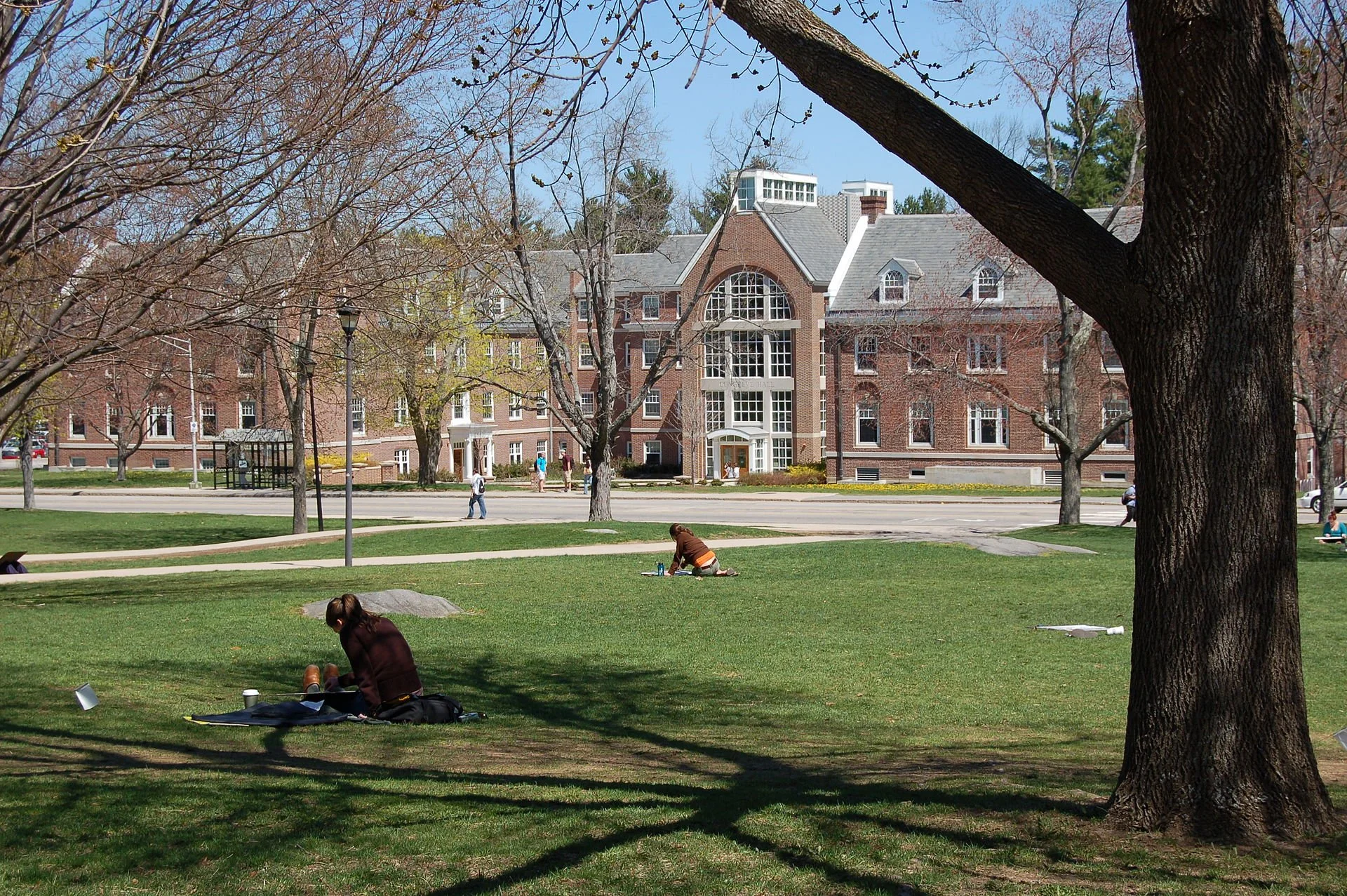
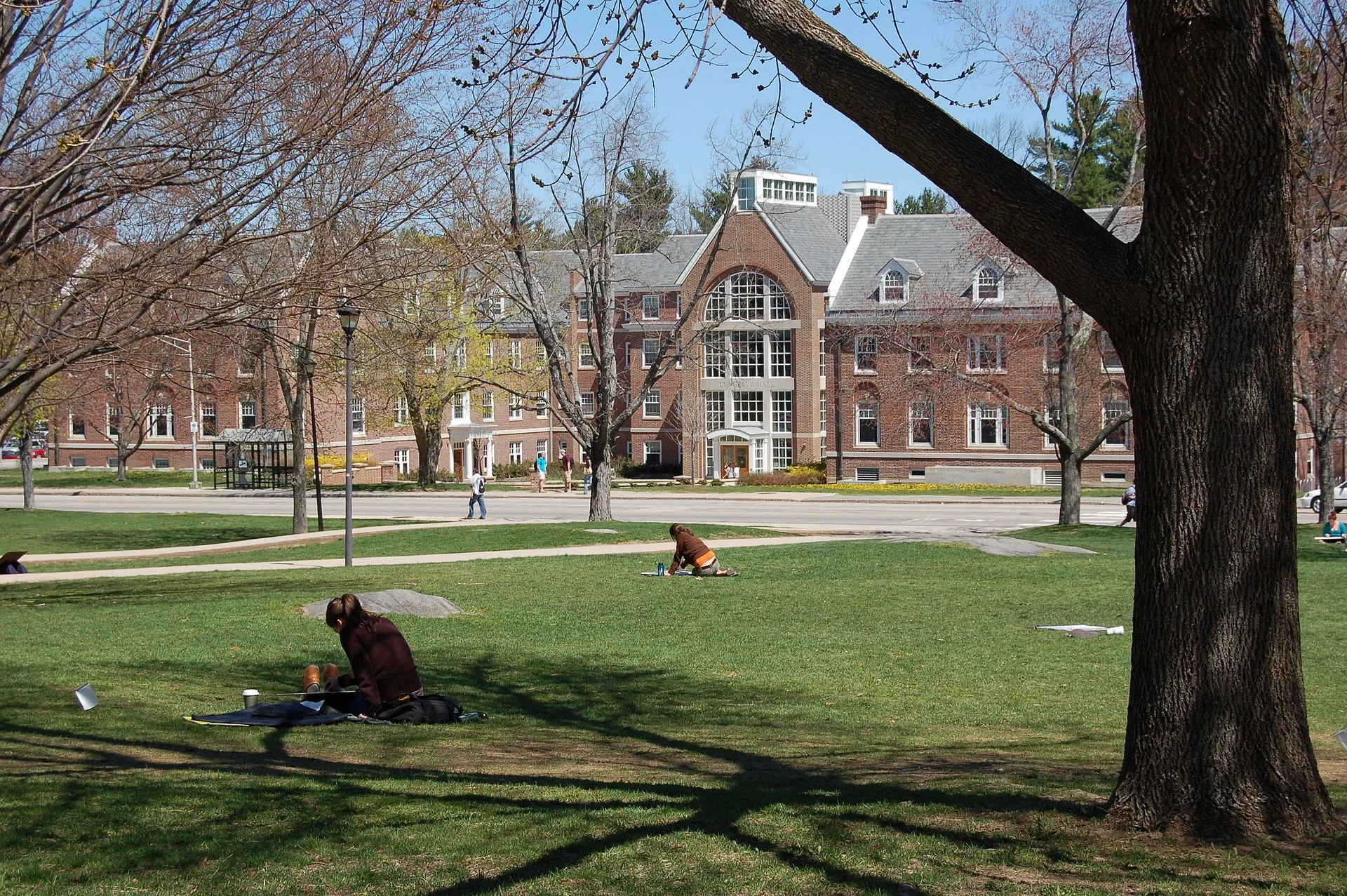
Congreve Hall at the University of New Hampshire’s flagship campus, in Durham.
— Photo by Kylejtod
BOSTON
From The New England Journal of Higher Education, a service of The New England Board of Higher Education (nebhe.org)
The student-debt narrative seems to be increasingly dominated by sensational anecdotes. I recently watched a segment on a national morning television show in which a student with $290,000 in student debt was being held up as an example of how big the problem is.
The story suggests that the cost of tuition for a four-year degree, one from a public institution in this case, is nearly $300,000. Only it isn’t, at least not for the institution that the example above was based on. In fact, the average cost of attendance at the institution used in this particular story was only $28,000 a year, according to the federal College Scorecard. One might still argue that $28,000 a year is too high an average cost for tuition, but that also includes room and board. A high-need student could receive up to $6,895 a year in Pell Grants and probably qualify for even more institutional student aid funding. In other words, a high-need student would likely be paying less than $22,000 a year.
This is not to say that there are no institutions that have a cost of attendance that could exceed $290,000, But for high-need students choosing to attend a public institution, or a low-cost pathway at a private institution, and who are eligible for full Pell Grants and institutional aid, it is still possible to find a path that is much less expensive. Some states, such as New Hampshire, offer gap programs that ensure high-need students can attend tuition free. While room and board is separate from tuition, students that are able to commute can further contain the cost of education.
So how is it a student might have two or three times in debt what it actually costs to attend four years of college?
To start with, there are many different loan types that might be lumped under the heading of student debt. As far as federal Direct Loans go, there are subsidized and unsubsidized loans. Direct subsidized loans require a student to demonstrate financial need. High-need students who are still considered “dependents” may borrow up to $23,000 in aggregate of subsidized loans (total across the four years).
In addition, those same dependent students may borrow an additional $8,000 in Direct unsubsidized loans. Independent high-need students can borrow up to $23,000 in subsidized Direct loans and an additional $34,500 in unsubsidized Direct loans. If you are keeping track of the math, it means that a dependent student may borrow up to $31,000 in Direct federal student loans and an independent student may borrow up to $57,500. Those number still do not add up to the $290,000 example showcased in the story referenced in this example.
What else could be in that $290,000 number? Several things, and almost anything. There are plenty of private loan options available that are not need-based and that have few if any restrictions on how that money can be used. In fact, not all debt incurred by students is for education purposes. Students may borrow money for vacations, cars, entertainment or to support a spouse and dependents while they are unable to work during their educational pursuits. When the numbers are self-reported, they might also include money borrowed from friends or family, as well as money the student has racked-up on their credit cards. The reality is that average Direct federal student debt is under $30,000, according to the Federal Reserve.
There have been numerous calls and proposals for debt relief, but to assess the merits of those varied proposals it is first important to understand the various forms of debt and know exactly what debt is being forgiven. It is also important to understand that debt relief would affect individual college graduates very differently.
For example, a student with no financial need who borrows $25,000 in order to fund summer travel experiences will not be affected the same way as a high-need student who minimized their debt by commuting and borrowing only $5,000.
An even greater equity issue may exist when it comes to students who avoided debt altogether. This is not to say that loan-forgiveness programs have no virtue. Like any investment, student-debt forgiveness should not only have a price tag attached to it, but also some specified goals. Some states have used loan forgiveness as a way to attract graduates to a particular region, while other programs are aimed at incentivizing students to choose particular career paths. In either of these cases, the type of loan does not matter since the objective is incentivizing choices, but if the objective is to address economic disparity or poverty in general, then the details, such as the current earning level of those receiving debt forgiveness, matters.
According to the Federal Reserve, the total amount of outstanding student debt is well above a trillion dollars, which raises one final question when assessing forgiveness options: What are the opportunity costs? Even forgiving all $1.5 trillion of outstanding debt will not lower the cost to attend college, improve access or build a stronger pipeline of graduates for the workforce the way an increase in Pell Grants would. Unfortunately, this may be a false choice. These are policy questions, and the reality may be that it is more feasible to gain support for some form of debt forgiveness than to increase direct subsidies such as Pell Grants.
Regardless of the ultimate decisions on debt forgiveness, we should be looking at ways to minimize student debt to begin with. The cost of attending a four-year institution is certainly one major factor and there are several ways that cost could be further reduced, such as: increasing Pell Grant awards; developing more low-cost delivery options (including online, community college transfer pathways and early college options); and, of course, encouraging institutions to continuously work to find efficiencies. Debt could also be reduced by increased screening and accountability for institutions that target vulnerable students with deceptive practices, as we have seen with some for-profit institutions. The federal government has already forgiven billions of dollars in student-loan debt associated with deceptive for-profits, including $5.8 billion that resulted from the failure of Corinthian Colleges. Beyond college costs and accountability, there are other measures that could be considered and that includes greater accountability for loan providers.
There are steps institutions in general can take to ensure careful borrowing decisions on the part of students. For example, a common practice today is to actually package student loans for accepted students and put the onus on the student to turn it down rather than simply informing the student what they are eligible for should they want to take out loans. Perhaps one of the most effective tools for reducing debt is better information. While not a perfect tool, the federal College Scorecard provides information on cost of attendance and on average earnings of graduates, but I suspect very few families and students are making the Scorecard a significant part of their decision process.
Perhaps it is time to expect institutions to more prominently make data, such as their student-loan default rates, available to prospective students. Students should not just be informed how much they can borrow but what are the chances they will be able to pay it back.
Ultimately, the bigger issue may not be the amount of student debt but that graduates are struggling to pay it back. While the focus is currently on whether or not students should be liable for the totality of their student-loan debt, institutions should anticipate greater focus on their student loan default rates and the return on investment for their graduates. Once again, not all student debt is the same.
Todd J. Leach is chancellor emeritus of the University System of New Hampshire and former chair of NEBHE.