
Milestones to headstones
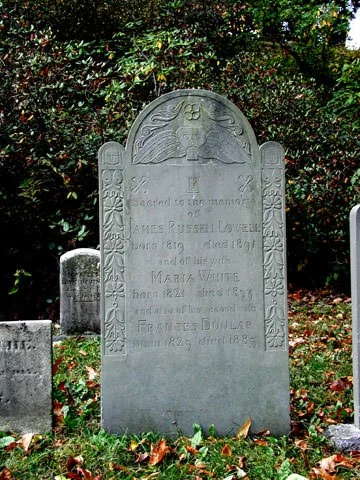
James Russell Lowell’s gravestone in Mount Auburn Cemetery, on the Cambridge-Watertown line.
As life runs on, the road grows strange
With faces new, and near the end
The milestones into headstones change,
'Neath every one a friend.
"Sixty-Eighth Birthday,’’ by James Russell Lowell (1819-1991)
Lowell, of a famous Boston Brahmin family, was a Romantic poet, critic, editor and diplomat. He is associated with the “Fireside Poets,’’ a group of New England writers who were among the first American poets whose popularity rivaled that of British poets.
Chris Powell: On gun control, considerTrump’s attempted ‘coup’ and Ukraine; vacuous school prayers
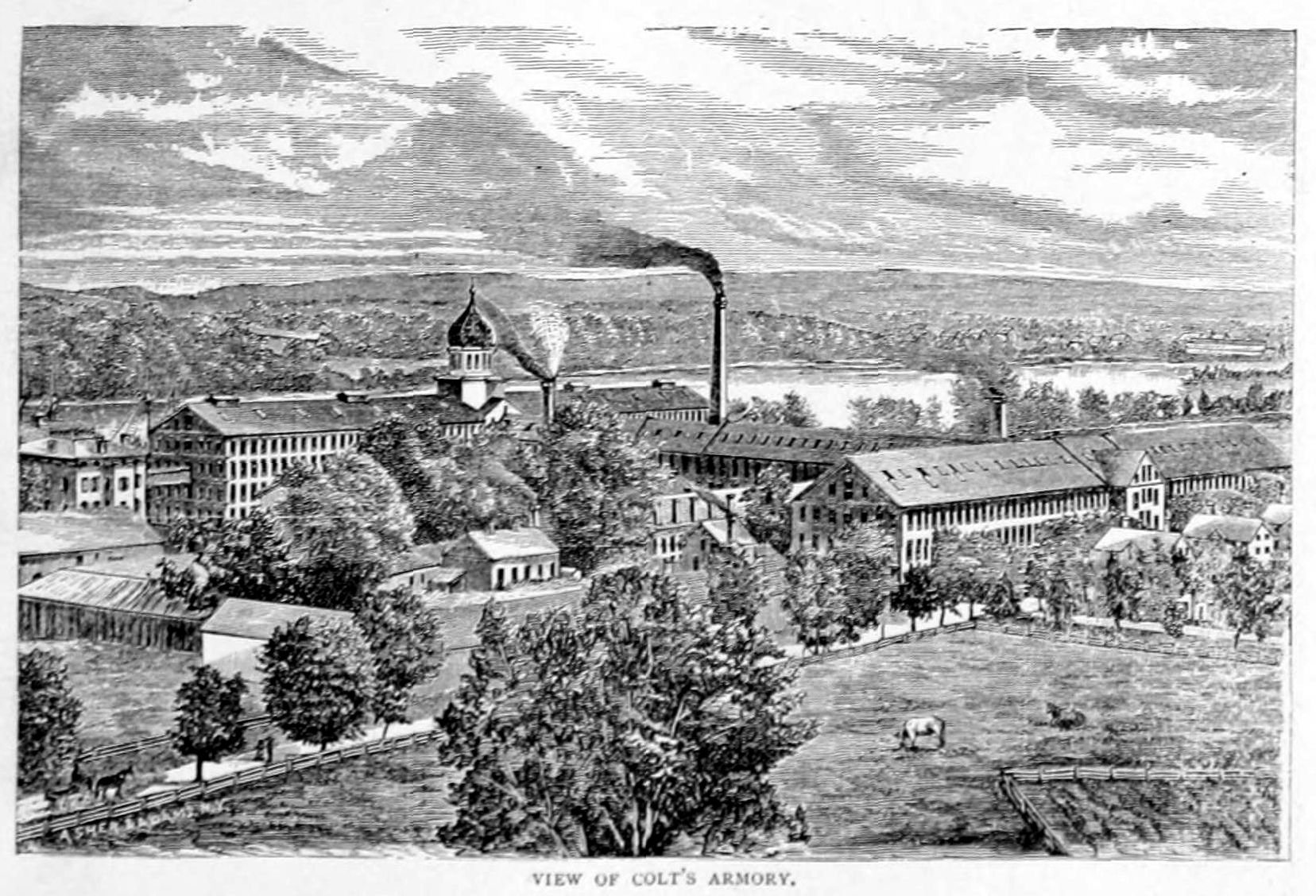
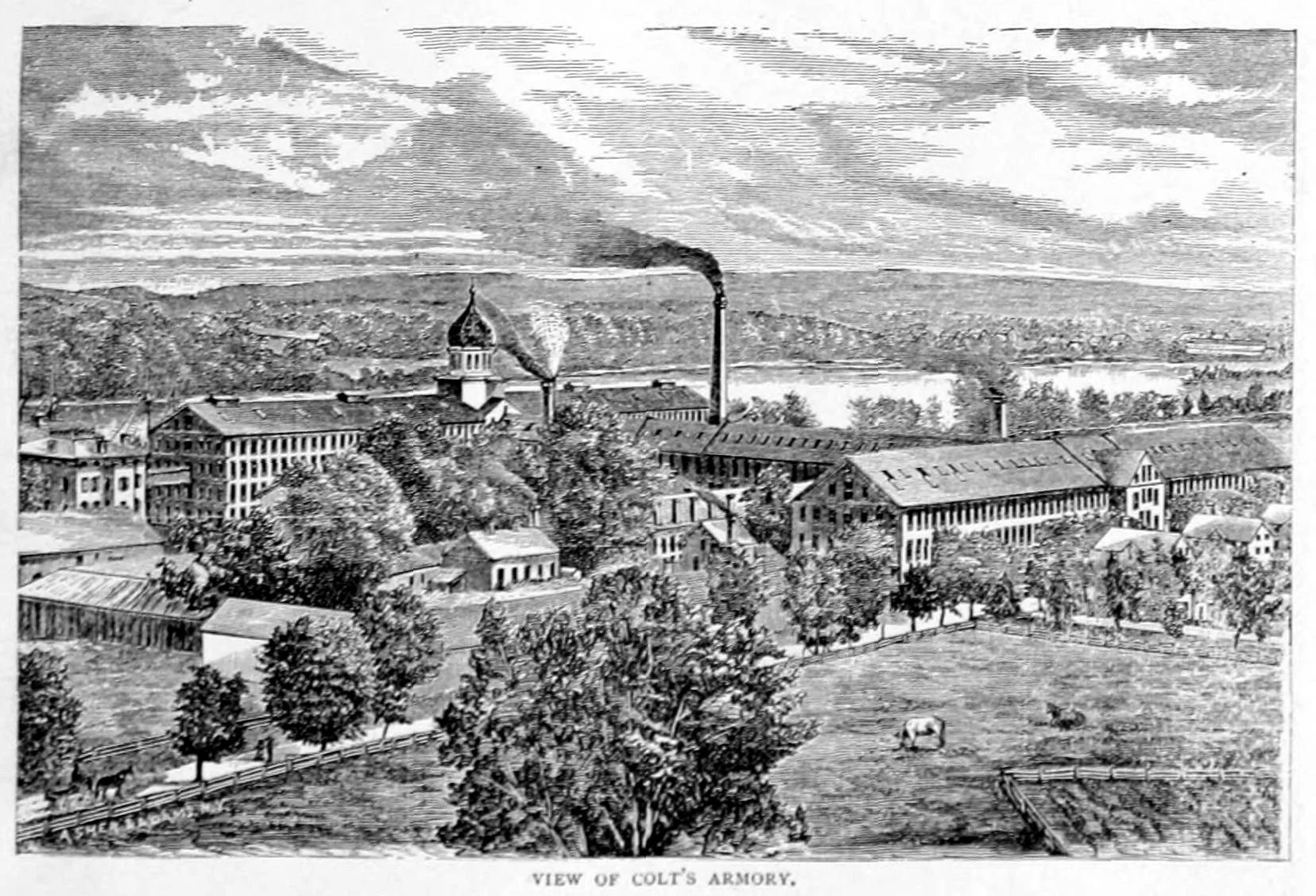
Colt’s Armory, in Hartford, in 1896. Connecticut has long been a major firearms maker.
MANCHESTER, Conn.
Eighteen months later the political left is still stewing about and running a congressional investigation into what it calls a "coup attempt" and "insurrection" instigated by President Trump and supported by many Republicans to steal the 2020 presidential election under the pretext that it was stolen from Trump because of widespread vote fraud.
"Coup" or "insurrection" or not, Trump's attempt to interfere with the normal counting of the electoral votes in the Senate was reprehensible, even if four years earlier many leading Democrats had claimed, also without much evidence, that the presidential election had been stolen from them.
But amid the agitation about the recent mass shootings, the left has failed to learn a lesson of the "coup" or "insurrection." That is -- to borrow from the old cautionary slogan of supporters of the Second Amendment -- if guns had been outlawed on Jan. 6, 2021, only Trump would have had guns, at least if the military continued to take orders from him.
Trump isn't the first president to have provoked fears of a coup. As he resisted impeachment in 1974, President Richard Nixon so frightened his defense secretary, James Schlesinger, that Schlesinger issued instructions to the Joint Chiefs of Staff that no force-deployment order from the White House was to be obeyed if it did not come through his office. That is, Nixon's own defense secretary thought him capable of trying to overthrow the Constitution to remain in office.
But even as much of the political left remains obsessed with Trump's "coup," it also proposes to disarm the population by outlawing and confiscating semiautomatic rifles. Meanwhile the government of embattled Ukraine is distributing such rifles to civilians to combat the Russian invasion and coup attempt in the country's east.
Of course this irony does not diminish this country's catastrophic problem with gun violence. While mass shootings with scary-looking rifles like the recent ones in Buffalo and Uvalde work people up, on average more than 40 people are murdered with handguns in the country every day without generating much concern.
Handgun violence in Chicago has become overwhelming but it is a rare day when there aren't shootings in Hartford, Bridgeport and New Haven -- all accepted as routine events of city life in Connecticut.
Tighter regulation of gun sales and possession -- comprehensive background checks, waiting periods, "red flag" procedures, increased screening for young people seeking guns, including a higher age of eligibility for purchases -- along with long sentences for repeat offenders, probably could reduce gun crime generally.
Soft targets such as schools can be protected better. Maybe someday government and society will be willing to examine even the epidemic of child neglect that produces so many disturbed teenagers and young men.
But a disarmed population will always be more susceptible to coups and totalitarianism. President Biden is so awful that Trump well may become president again, and there always could be another Nixon, a president corrupted by power into lawbreaking. The people getting hysterical about guns might do well to keep this in mind.
Former Connecticut U.S. Rep. Gary Franks notes that reducing gun violence requires healing "hearts, minds, and souls." But his prescription is silly: Bring prayer back to public schools, from which it supposedly was banished by the Supreme Court in 1962.
Actually the court found unconstitutional only government-sponsored prayer in public schools. Students always have been and remain free to pray in school without being disruptive. But it is fundamental to liberty that government cannot compel expression of religious or political belief.
This principle was affirmed by the court in 1943, in the middle of World War II, when the court exempted schoolchildren from being required to salute the flag. "Words uttered under coercion are proof of loyalty to nothing but self-interest," Justices Hugo Black and William O. Douglas wrote.
This precious liberty is exactly what makes the country worth supporting and the flag worth saluting.
Besides, the prayers of old in public schools were usually so superficial and designed only for appearances as to be meaningless and even mocking of the very exercise.
Chris Powell is a columnist for the Journal Inquirer, in Manchester.
It must have SOME use!

“A man was cleaning the attic of an old house in New England and he found a box that was full of tiny pieces of string. On the lid of the box there was an inscription in an old hand: ‘String too short to be saved.’’’
— Wilmot, N.H.-based poet and essayist Donald Hall (1928-2018) in String Too Short To Be Saved
Godine, the book’s publisher, notes:
“Donald Hall’s memoir of boyhood summers on his grandparents’ small New Hampshire farm has joined the pantheon of New England classics.
“Hall’s prose brims with limitless affection for the land and its people, but String Too Short to Be Saved it isn’t mere nostalgia. These are honest accounts about the passing of an agrarian culture, about how Hall’s grandparents aged and their farm became marginal until, finally, the cows were sold and the barn abandoned.
“But the story of Eagle Pond Farm continued when Hall returned in 1975 to live out the rest of his life in the house of memories and love and string too short to be saved.’’
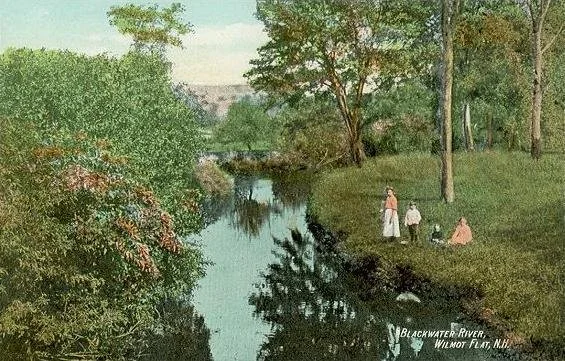
Blackwater River in Wilmot, N.H., in 1910.
Visuals of ‘Black humanity’

“Equestrian Portrait of the Count Duke Olivares” (oil on canvas), by Kehinde Wiley, in the show “30 Americans,’’ at the New Britain (Conn.) Museum of American Art, June 17-Oct. 30.
The museum says:
“Drawn from the acclaimed Rubell Museum, in Miami, 30 Americans tells the story of Black humanity through the gaze of some of the most significant artists of the last four decades, including Jean-Michel Basquiat, Mickalene Thomas, Kara Walker, Hank Willis Thomas and Kehinde Wiley’’.
Llewellyn King: Prepare for blackouts this summer in the heartland

WEST WARWICK, R.I.
Just when it didn’t seem things couldn’t get worse -- gasoline at $5 to $8 a gallon, supply shortages in everything from baby formula to new cars -- comes the devastating news that many of us will endure electricity blackouts this summer.
The alarm was sounded by the nonprofit North American Electric Reliability Corporation and the Federal Energy Regulatory Commission last month.
The North American electric grid is the largest machine on earth and the most complex, incorporating everything from the wonky pole you see at the roadside with a bird’s nest of wires, to some of the most sophisticated engineering ever devised. It runs in real time, even more so than the air traffic control system: All the airplanes in the sky don’t have to land at the same time, but electricity must be there at the flick of every switch.
Except it may not always be there this summer. Rod Kuckro, a respected energy journalist, says it depends on Mother Nature, but the prognosis isn’t good.
Speaking on White House Chronicle, the weekly news and public affairs program on PBS which I host and produce, Kuckro said, “There is a confluence of factors that could affect energy supply across the majority of the [lower] 48 states. These are continued, reduced hydroelectric production in the West and the continued drought in the Southwest.”
The biggest threat to power supply, according to the NERC and the FERC, is in the huge central region, reaching from Manitoba in Canada all the way down to the Gulf of Mexico. It is served by the regional transmission organization, the Midcontinent Independent System Operator (MISO).
These operational entities are nonprofit companies that organize and distribute the bulk power for utilities in their regions. In California, it is the California Independent System Operator, in the Mid-Atlantic it is PJM, and in the Northeast, it is the New England System Independent Operator. They generate no power, but they control power flows, and could initiate brownouts and blackouts.
With record storm activity and high temperatures predicted this summer, blackouts are likely to be deadly. The old, the young and the sick are all vulnerable. If the electric supply fails with it goes everything, from air conditioning to refrigeration to lights, and even the ability to pump gas or access money from ATMs.
The United States, along with other modern nations, runs on electricity and when that falls short, it is catastrophic. It is chaos writ large, especially if the failure lasts more than a few hours.
On the same episode of White House Chronicle, Daniel Brooks, vice president of integrated grid and energy systems at the Electric Power Research Institute, also referred to a “confluence of factors” contributing to the impending electricity crisis. Brooks said, “We’re going through a significant change in terms of the energy mix and resources, and the way those resources behave under certain weather conditions.”
If power supply is stressed this summer, change in the generating mix will get a lot of political attention: at heart is the switch from fossil-fuel generation to renewables. If there are power outages, a political storm will ensue. The Biden administration will be accused of speeding the switch to renewables, although the utilities don’t say that.
The fact is the weather is deteriorating, and the grid is stretched in dealing with new realities as well as coping with old bugaboos, like the extreme difficulty in building new transmission lines. Better transmission would relieve a lot of grid stress.
Peter Londa, president of Tantalus Systems, which helps its 260 utility customers digitize and cope with the new realities, explained some of the difficulties facing the utilities not only in the shifting sources of generation, but also in the new shape of the electric demand. For example, he said, electric vehicles, particularly the much-awaited Ford F-150 Lightning pickup, could be an asset both to homeowners and utilities. During a blackout, their EVs could be used to power their homes for days. They could be a source of storage if thousands of owners signed up with their utilities in a storage program.
So utilities are facing three major shifts: in generation to wind and solar, in customer demand, and especially in weather. Mother Nature is on a rampage and we all must adjust to that.
Llewellyn King is executive producer and host of White House Chronicle, on PBS. His email is llewellynking1@gmail.com and he’s based in Rhode Island and Washington, D.C.
Along with everything else
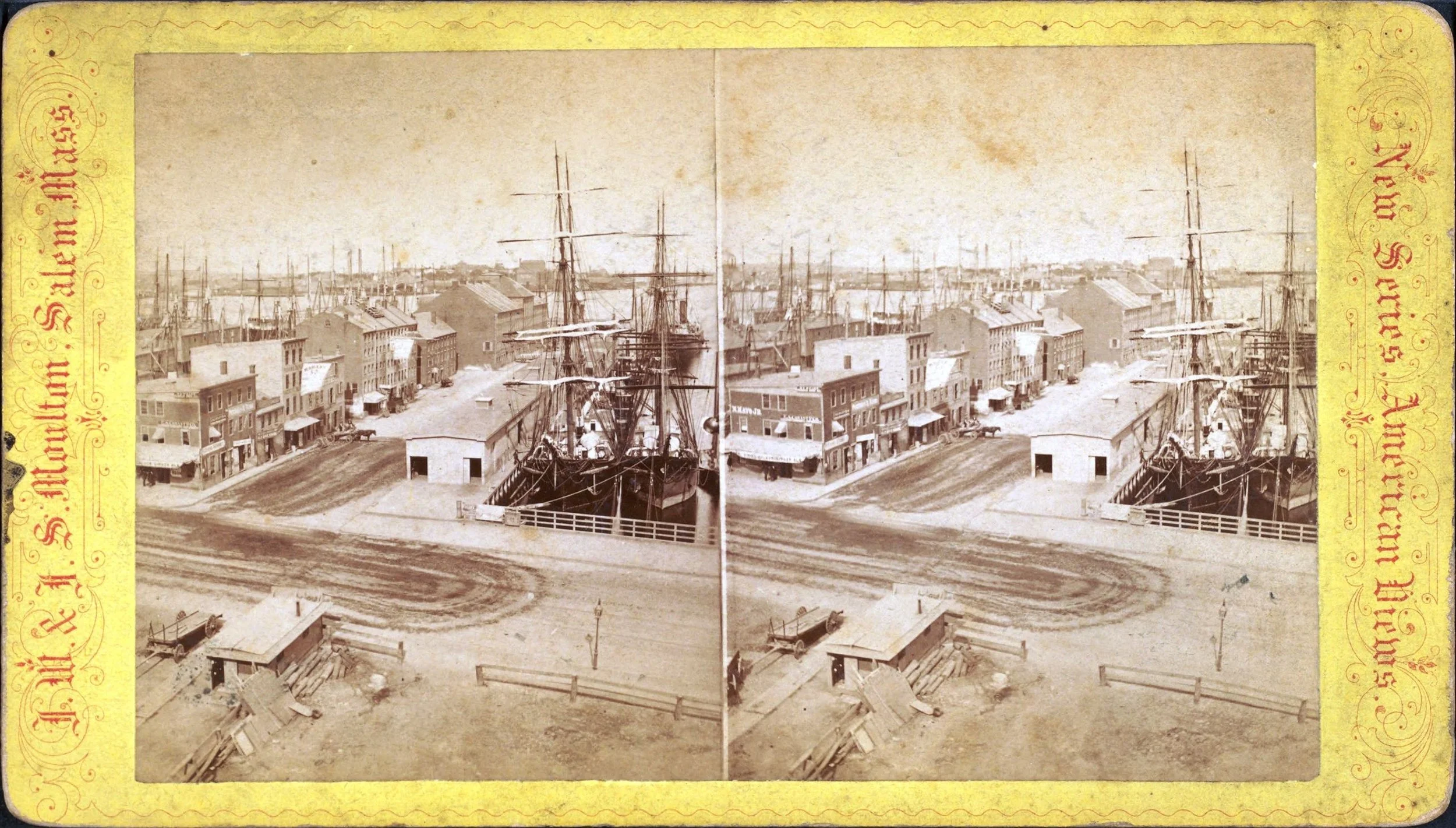
Stereoscopic view of Long Wharf in Boston in the19th Century
“Wharves with their warehouses sagging
on wooden slats, windows steamed up
and beaded with rain—it's a wonder
weather doesn't wash them away. In time,
they seem to say, you’ll be gone too….’’
— From “Here,’’ by Betsy Sholl (born 1945), former Maine poet laureate
Dressed up for the end
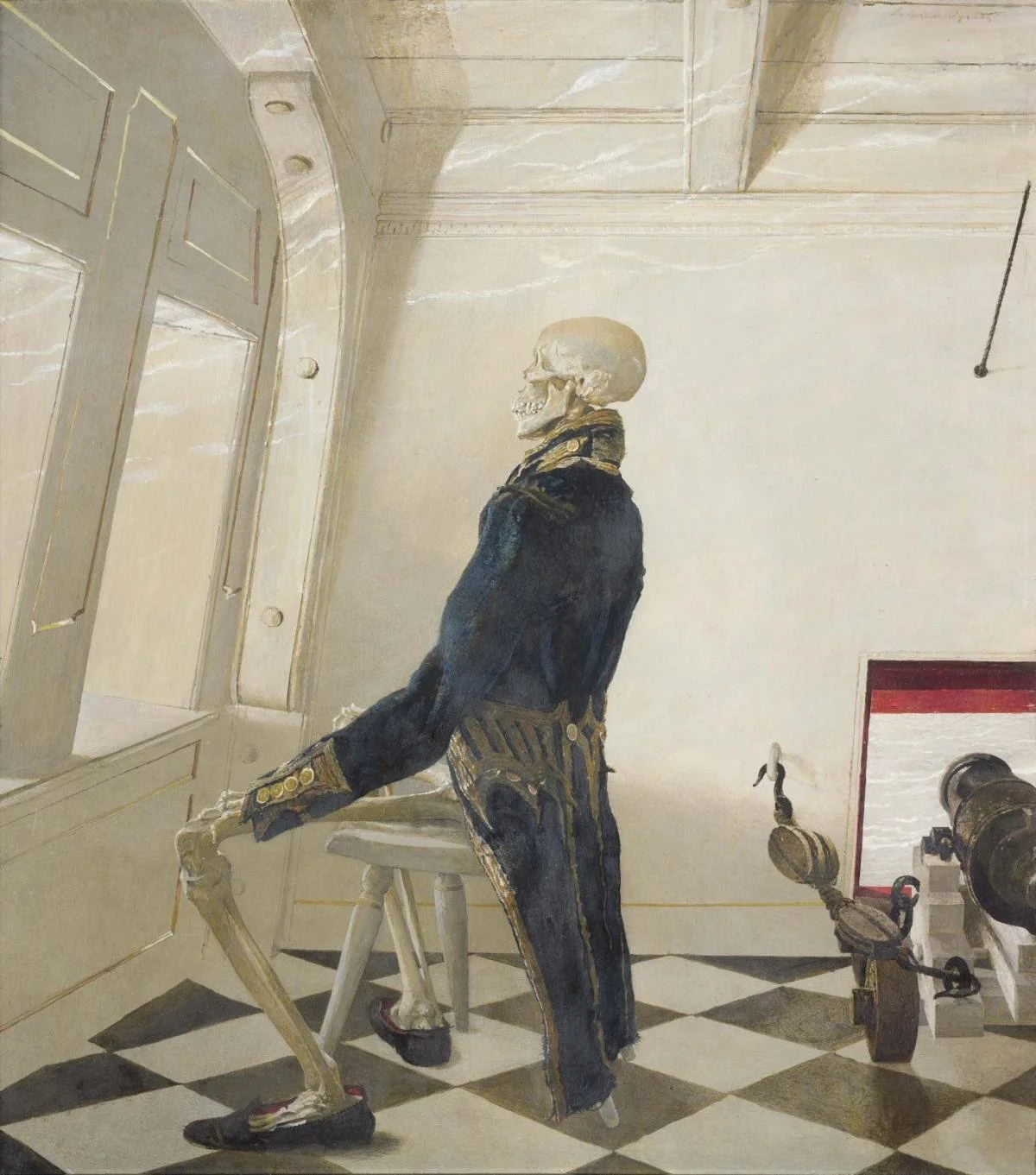
“Dr. Syn” (tempera on panel), by Andrew Wyeth, in the show “Andrew Wyeth: Life and Death,’’ at the Colby College Museum of Art, Waterville, Maine, through Oct. 16.
The museum says that famed painter Wyeth (1917-2009) envisions his own funeral in the recently rediscovered series of drawings from the 1990s. "The exhibition connects the sketches now known as the Funeral Group to Wyeth’s decades-long engagement with death as an artistic subject in painting, his relationships with the models depicted, and his expressive and exploratory use of drawing." Wyeth lived on the Maine Coast for much of his life.
About the title: The Reverend Doctor Christopher Syn is the smuggler hero of a series of novels by Russell Thorndike. The first book, Doctor Syn: A Tale of the Romney Marsh, was published in 1915. The story idea came from smuggling in the 18th-century Romney Marsh, in England, where brandy and tobacco were brought in at night by boat from France to avoid taxes.
Solar arrays and trees

On roofs when possible.
Adapted from Robert Whitcomb’s “Digital Diary,’’ in GoLocal24.com
Inevitably, some residents of New England suburban or exurban areas are duking it out with solar-energy developers. The residents complain that too much open land and woods are being taken for the solar arrays near them. Two recent hot spots for these fights are Johnston, R.I., and cranberry-bog country in Wareham and Carver, Mass.
Well, the world is heating up and the more renewables we use the worse it is for such murderous petrostate dictators as Vladimir Putin. And bear in mind that much land being eyed for solar arrays might instead be turned into housing projects if the solar is blocked. Most locals would probably hate that even more than “solar farms,’’ in part because local property taxes would have to go up to pay for public services.
The saddest thing in this is cutting down woods to make way for the arrays. Of course, trees are huge absorbers of the carbon dioxide spewed out by our burning fossil fuel. But putting up solar arrays more than makes up for the loss of the equivalent space in woodland in terms of CO2 control, at least given current and projected technology and (wasteful!) electricity use. (The Ukraine war and the energy crisis it has caused is speeding renewable-energy research and development.)
John Reilly, co-director of MIT's program on the science and policy of global change, estimated for WGBH how much power would be generated if about 2.5 acres were clear cut to put up solar panels. WGBH reported: “He figured out you’d make up for all the carbon stored in those trees in just 46 days, if you were preventing that same amount of energy from being generated by carbon-emitting coal, or 23 days, if you were offsetting natural gas.’’
He said: “’There is a carbon loss from the trees, but it's made up fairly quickly. You're going to operate that solar panel for 20 years."’
Of course, the flora and fauna in woods should be protected as much as possible amidst the urgent need for us to burn much less natural gas and oil. Still, there’s a little bit of irony here. Much of the woodland that neighbors are trying to protect was open farmland in the early and mid 19th Century, before competition from Midwest farms and the rise of manufacturing in New England drew most people off the farms and the woods grew back. Take a look at some old pictures.
In any case, solar developers should make sure that there’s vegetation (to give off oxygen and provide a bit of ecosystem for birds and animals) under the arrays and not just barren dirt. And hire goats to keep it from getting too high?
There will be painful, or at least inconvenient tradeoffs as we wean ourselves off the still necessary poison that is fossil fuel.
We certainly could do much more to minimize the aesthetic pain of some neighbors by putting solar panels on many more buildings large and small instead of on land. Use, for example, those vacant parking lots at dead malls and elsewhere for solar arrays, while waiting for new clean-energy sources, be it hydrogen, fusion or something else to come on line. There’s probably a recession coming soon, slowing building construction and cooling property-price inflation. Take advantage of that to take more vacant urban and suburban land for solar?
Hit this link for the WGBH trees vs. solar story.
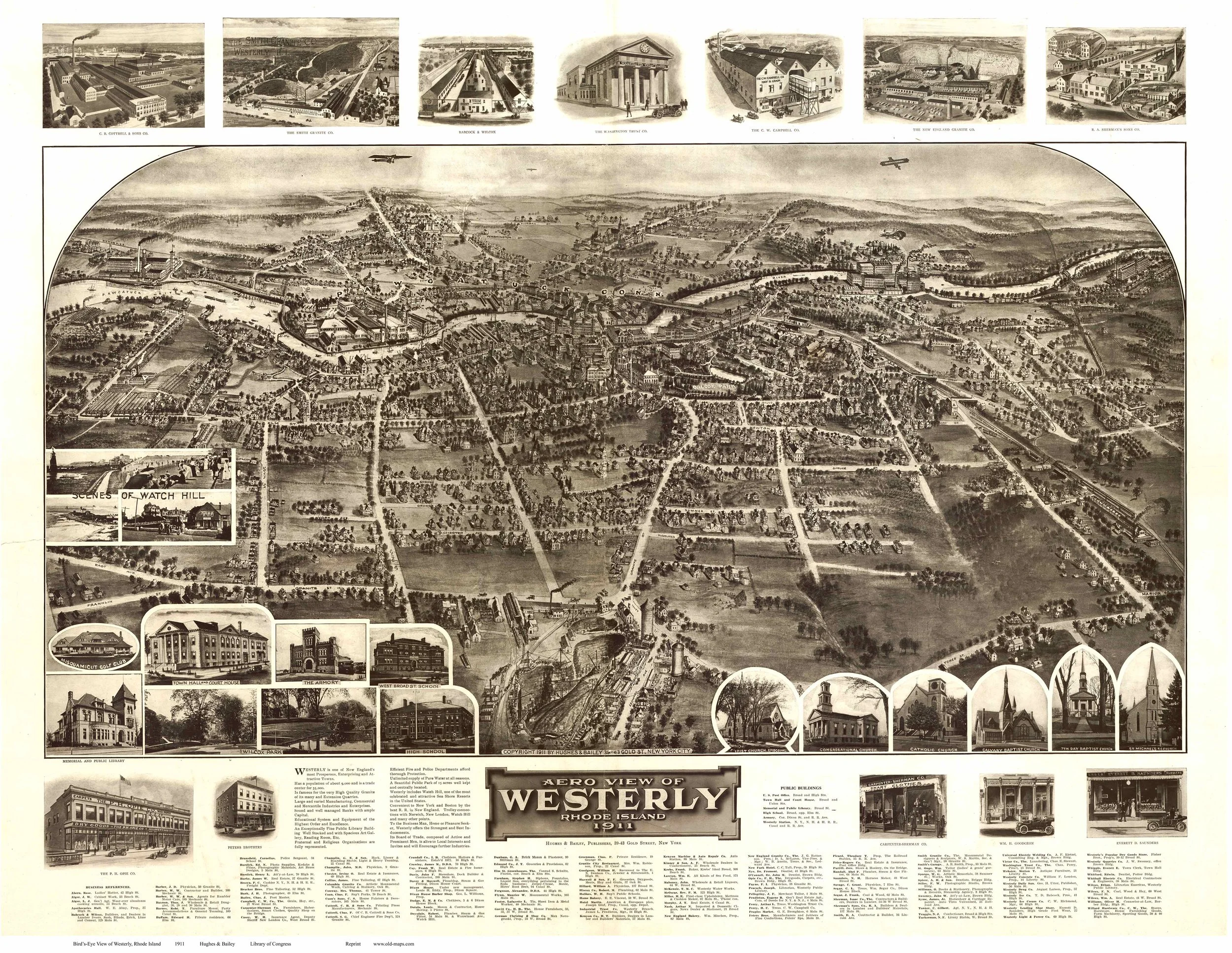
More trees now.
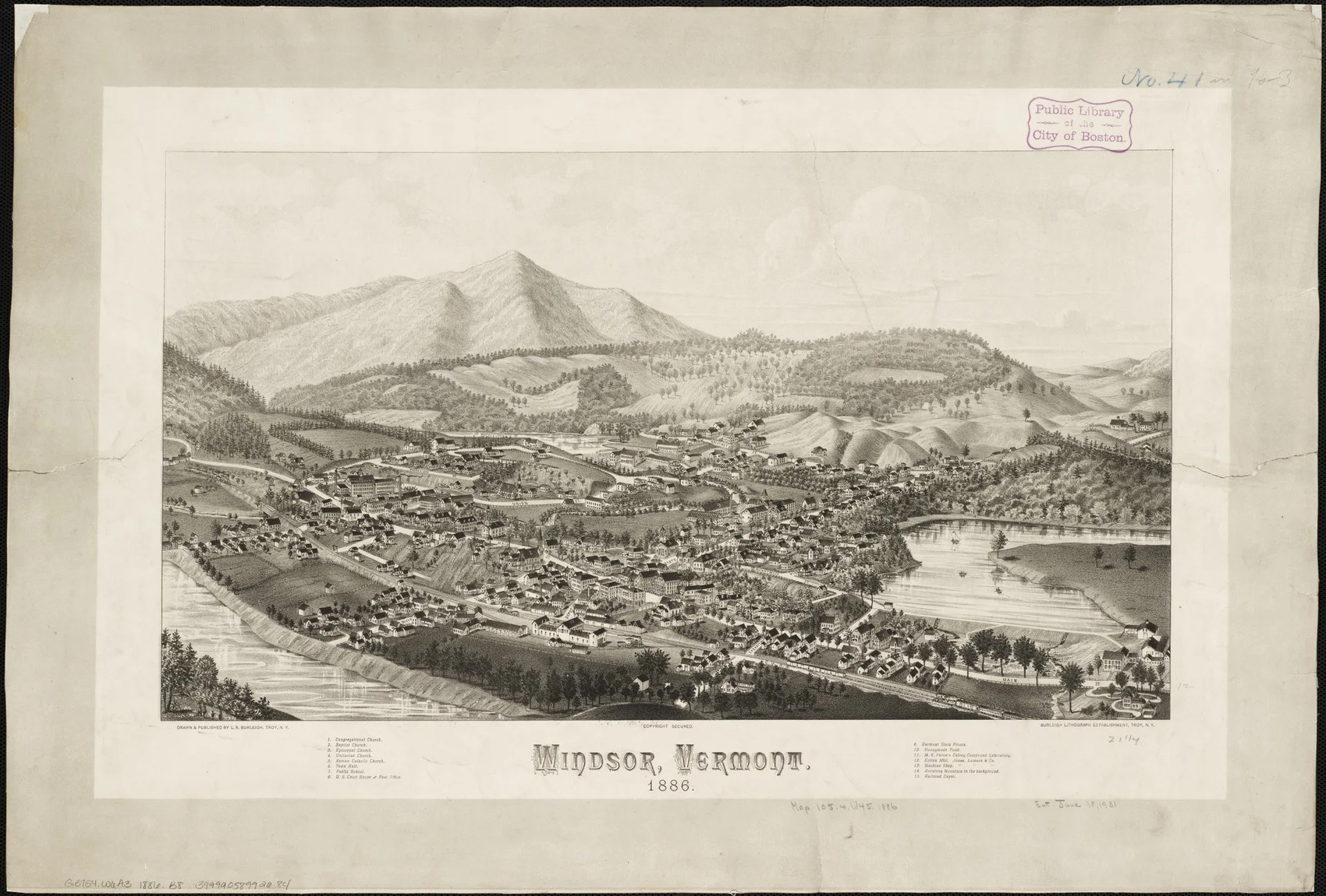
Note the open land.
Enough of summer! Back to character-building
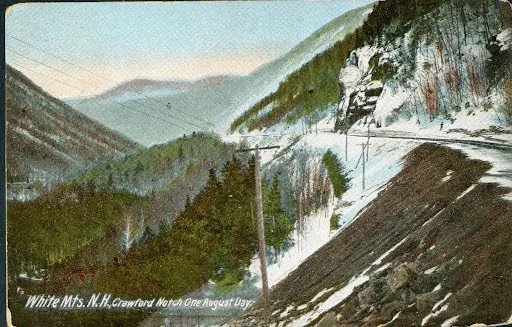
“White Mtns. N.H., Crawford Notch One August Day’’ (1913), at the Museum of the White Mountains, Plymouth, N.H., through Sept. 17 in the show “Watching the Seasons Change’’.
The museum, on the campus of Plymouth State University, says the exhibition features "a plurality of voices that span 300 years of appreciating and adapting to the seasons in the White Mountains."
Including are "Abenaki basketmakers joining with foresters to protect the brown ash tree; artists immersing themselves in experimental environmental research; scientists at Hubbard Brook Experimental Forest’’ and others presenting their collaborative artwork.
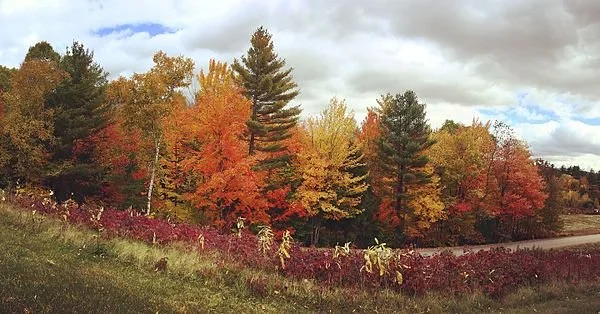
In the Hubbard Brook Experimental Forest, in the White Mountains.

Pfizer to conduct Lyme disease vaccine test in Maine

Deer ticks are the major spreaders of Lyme disease.
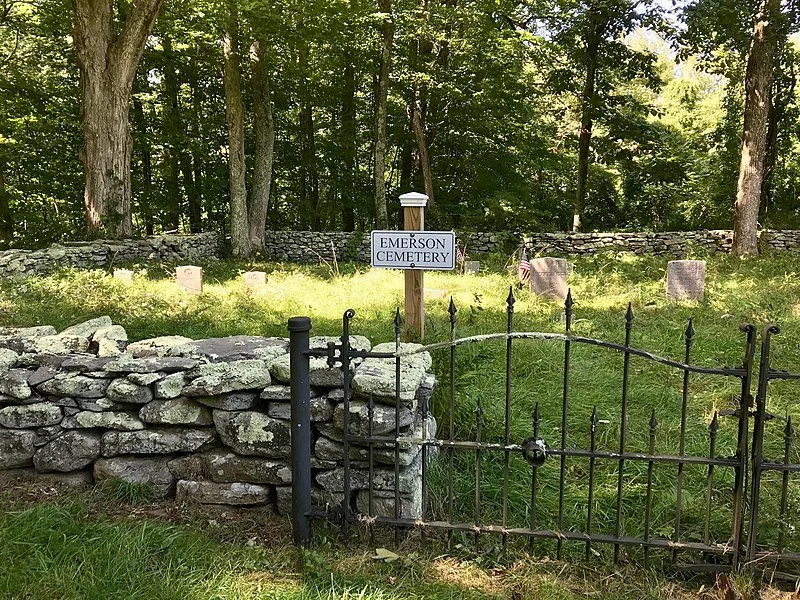
The Emerson Cemetery in Lyme. Wear long socks!
Edited from a report by The New England Council (newenglandcouncil.com)
“Pfizer has partnered with a Maine health care system to conduct the third phase of a Lyme disease clinical trial to test the efficacy of the company’s vaccine. Pfizer, a leading biomedical company, has chosen to work with Valneva, a French specialty vaccine company.
(Lyme disease gets its name from the coastal town in Connecticut where symptoms of the disease were documented and studied by Yale researchers in the 1970s. )
“The trial, held at Northern Light Health system in Brewer, will span over 13 months and require patients to take two shots two months apart. In March, the patients will need to receive a booster shot before the next summer’s tick season. Pfizer, and Valneva, choose to approach the Northern Light Health system during the clinical trial due to Maine having one of the highest rates of Lyme disease in the United States, according to the Centers for Disease Control and Prevention.
Kathrin U. Jansen, Ph.D., senior vice president and head of vaccine research & development at Pfizer, said, ‘{T}he medical need for vaccination against Lyme disease is steadily increasing as the geographic footprint of the disease widens. These positive pediatric data mark an important step forward in the ongoing development of VLA15, and we are excited to continue working with Valneva to potentially help protect both adults and children from Lyme disease.”’
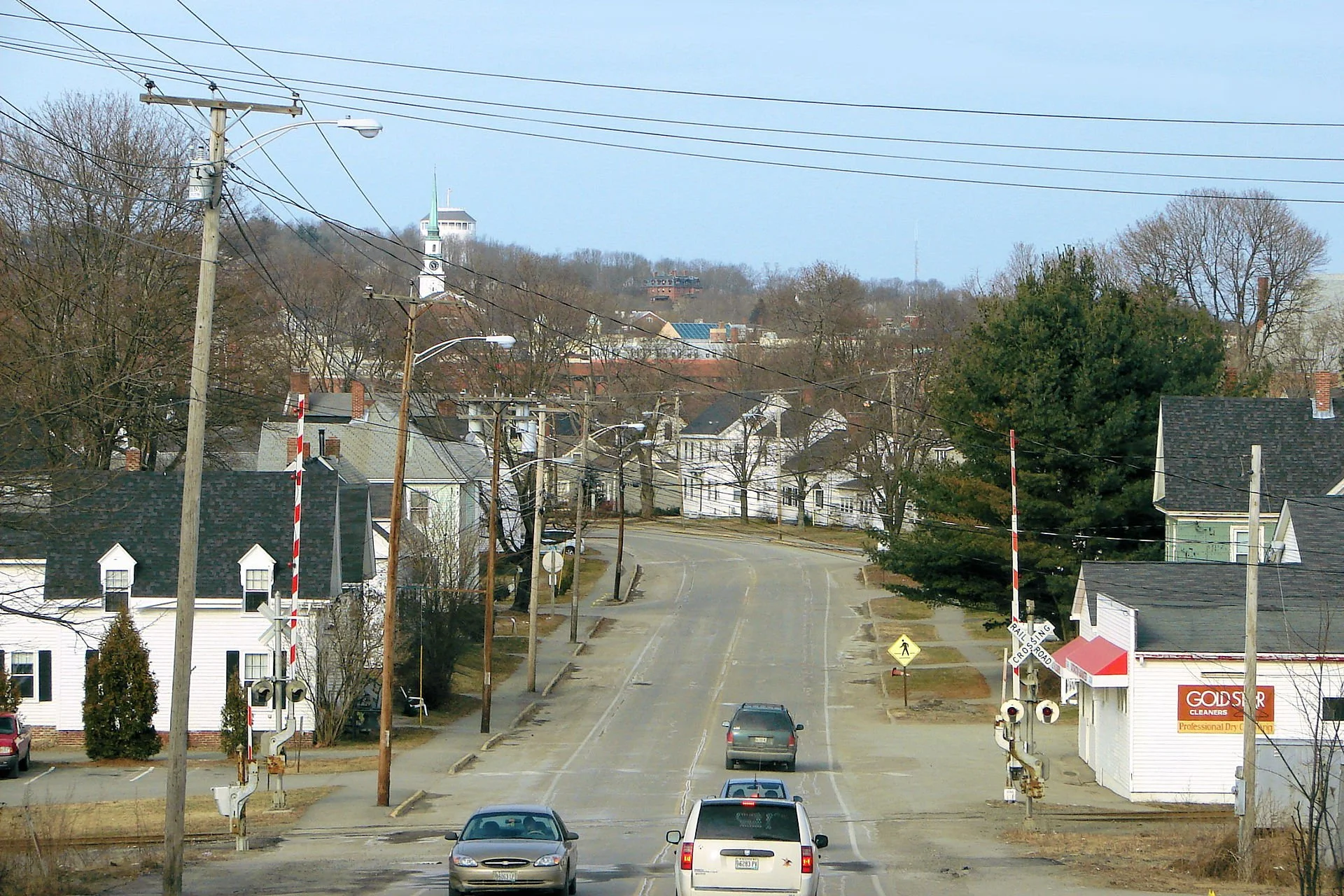
Wilson Street, Brewer, Maine. Lyme disease has been relentlessly moving north with the warming climate. The city was once well known for brick-making, shipbuilding and paper-making.
— Photo by P199
Don Pesci: The news media have a duty to cause turbulence
The Hartford Courant, which began as a weekly called the Connecticut Courant on Oct. 29, 1764, and become a daily in 1837, is considered the oldest continuously published newspaper in America.
VERNON, Conn.
If we can but prevent the government from wasting the labours of the people, under the pretense of taking care of them, they must become happy."
-- Thomas Jefferson to political philosopher Thomas Cooper, Nov. 29, 1802.
How much time should Connecticut politicians spend consulting Twitter and other like venues?
It depends how much time they have to waste. Positive comments are self-affirming, negative comments put a dent in swelling egos. Such sites are not a reliable guide to the majority temperaments of voters.
Do Washington, D.C., political-advisory groups offer winning advice to state non-incumbent politicians?
That has not been the case in Connecticut in the recent past. We all know that the second thing that happens after a non-unionized company becomes unionized is that “going out of business sales” are posted. The second thing that happens after a non-incumbent in Connecticut ties his or her political ascent to a Washington, D.C., campaign-advisory group is that the politician loses the race. State politics really is local. And politicians easily lose themselves in the gap that forms when they adopt unthinkingly a program hatched by underwriters detached from state issues. However, the financing of state campaigns is sometimes national. So, Washington contacts may be both financially necessary and politically lethal.
Is straddling the fence on “cultural issues” in Connecticut useful or not?
It is not useful. There is a problem with the nomenclature. Any issue not strictly economic is cultural. And there are very few economic issues that have no cultural ramifications. Inflation, for instance, is both an economic and a cultural issue, because excessive spending, excessive borrowing, and the devaluation of the currency through excessive printing of money causes cultural upheaval.
Straddling the fence on any issue, cultural or economic, does not generally achieve a positive purpose, because the straddler must engage in some form of dissimulation to garner the votes of both those who support A and not-A.
Now, political compromise is not the same sort of thing as embracing ends that exclude each other. You cannot both jump into the pool and not jump into the pool. But you may fashion an arrangement between swimmers and non-swimmers that may benefit both parties — for example by regulating the time during which the pool may be used. Gun regulation and abortion regulation are instances of this kind.
How much influence have Connecticut news media had in shaping the destiny of the state?
That depends on uniformity of purpose. A state’s media should be intellectually diverse enough to accommodate rival political viewpoints and, ideally, state media that have not simply surrendered to the status quo should be contrarian. This is what William Randolph Hearst meant when he said a newspaper “should have no friends.”
Politics is too important a business to leave entirely in the hands of incumbent politicians. When a state’s media offer political views that do not differ markedly from those officiating in what we might call a nearly permanent one-party state, it is fair to say that the nature of the state is what it is because the nature of journalism is what it is.
We are living when it has become exceedingly dangerous to let the reigning power think for us. As an institution, the media, which have changed a good deal over the years, have in the past been a sector whose members have jealously guarded their indispensable mandate – to think fearlessly, to say the thing that is, without fear or favor.
That is what a free press really means. Thomas Jefferson, the archangel of First Amendment freedoms, called our attention to the importance of a free press when he said that constitutional government in a republic, once destroyed by politicians, could be recovered and restored, provided that the press remained free.
In a letter to Edward Carrington in 1787, Jefferson wrote, “Were it left to me to decide whether we should have a government without newspapers or newspapers without a government, I should not hesitate a moment to prefer the latter. But I should mean that every man should receive those papers and be capable of reading them.”
Jefferson served as president from March 4, 1801, to March 4, 1809. The Jefferson/John Adams campaign, in 1800, was especially bruising. Yet we find Jefferson writing to the Marquis de Lafayette in 1823, “The only security of all, is in a free press. The force of public opinion cannot be resisted, when permitted freely to be expressed. The agitation it produces must be submitted to. It is necessary to keep the waters pure.” The turbulence aroused by a free press, Jefferson stressed, is “as necessary in the political world as storms in the physical… a medicine necessary for the sound health of government.”
Everyday upon awakening, reporters should ask themselves, “What turbulence have I caused today? Are we still free?”
Don Pesci is a Vernon-based columnist.
Or go directly to the trees

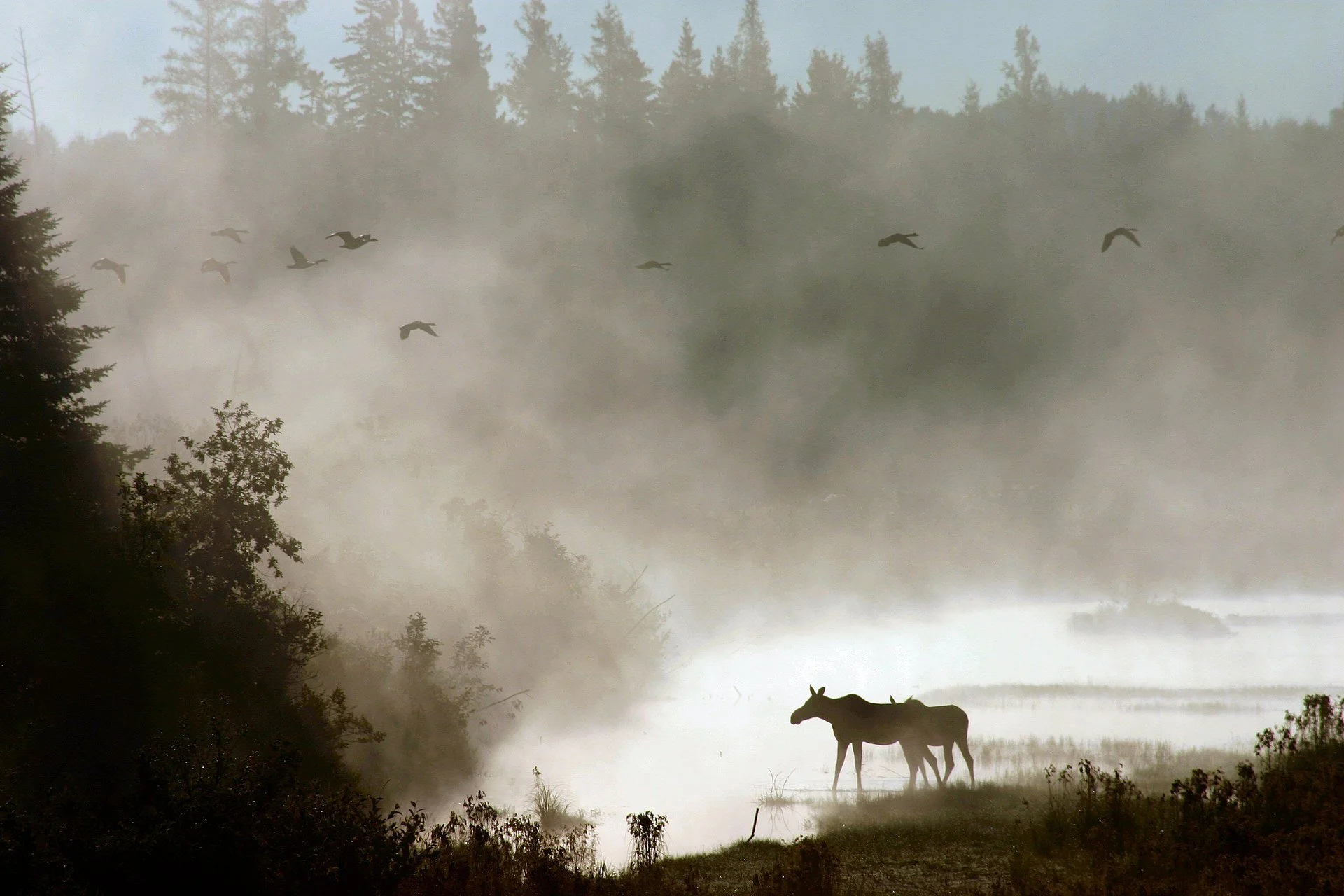
Two moose in the Aroostook National Wildlife Refuge, in northern Maine. The moose is Maine's state mammal.
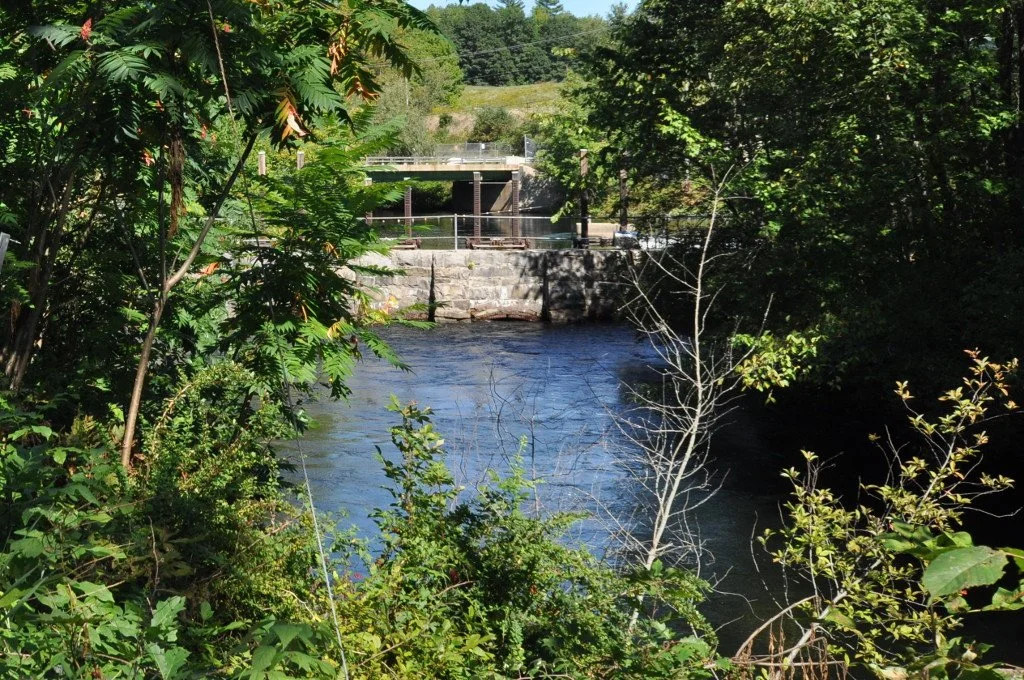
A section of the Cumberland and Oxford Canal in Windham, Maine. The long-abandoned canal was was constructed in the early 1830s to ship goods from some inland lakes to Portland.
— Photo by Magicpiano
“Rather than locate these observations in the abstract, though, I want to literally bring them down to earth as much as I can by suggesting how they derive from a close reading of a particular place: in this case, the New England in which I have spent over two-thirds of my life. And I use the word ‘reading’ advisedly, because I think it stands at the heart of my overall approach in this book, one that combines the interpretation of selected literary texts and specific New England landscapes to come to some understanding of the ways that natural places and cultural processes have intertwined to shape the region both on the ground and in the mind. You can learn a lot about human relationships with the natural world from reading books, to be sure — at least, I hope you’ll think so in the case of this particular book — but I also think you can learn just as much from bypassing the books and going directly to the trees they’re made from and the landscapes in which they live, reading these things and places as texts in their own right for the implicit narratives they contain about the mutual interaction of people and their nonhuman environments.’’
— Kent Ryden, on his book Landscape With Figures. He’s a professor of American and New England Studies at the University of Southern Maine.
Ready for anything

“Wilamaya Series: Harvest” (digital collage), by Alyn Carlson, in her joint show with Kevin Kusiolek and Colleen Pearce titled “Portraits: urban + natural + imagined,’’ at Three Stones Gallery, Concord, Mass., through July 10.
The gallery says: “The collage portraits of featured artist Alyn Carlson imagine strong female personas empowered in their environments."
She works in a converted rope-making factory in New Bedford.
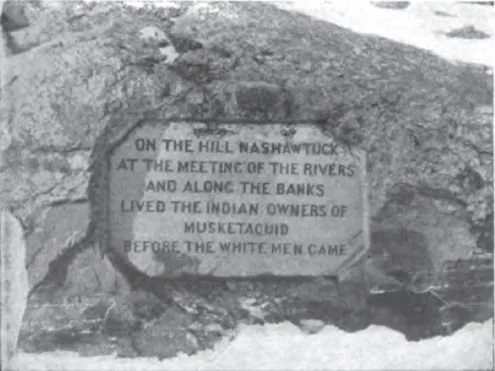
Photo of Egg Rock inscription, in Concord, circa 1900
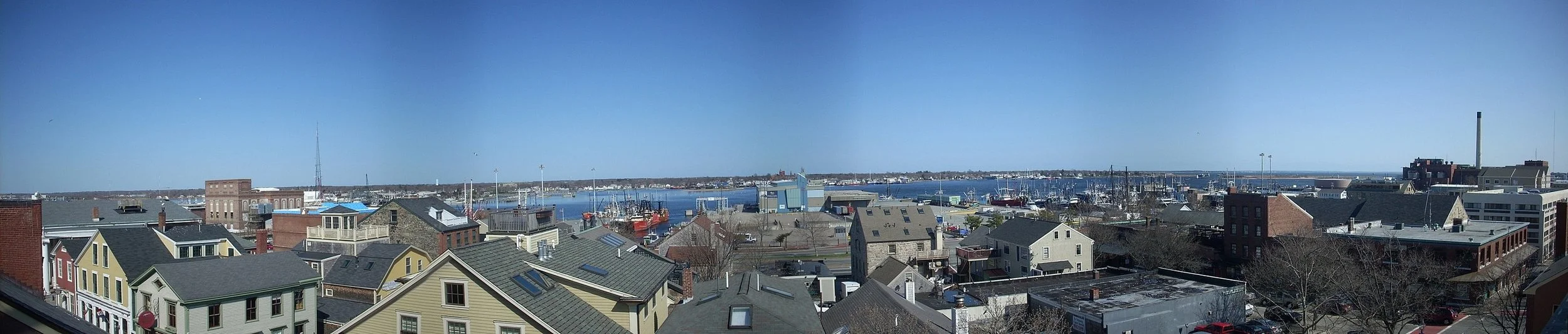
The port of New Bedford.
— Photo by gerrydincher
Oceanic character
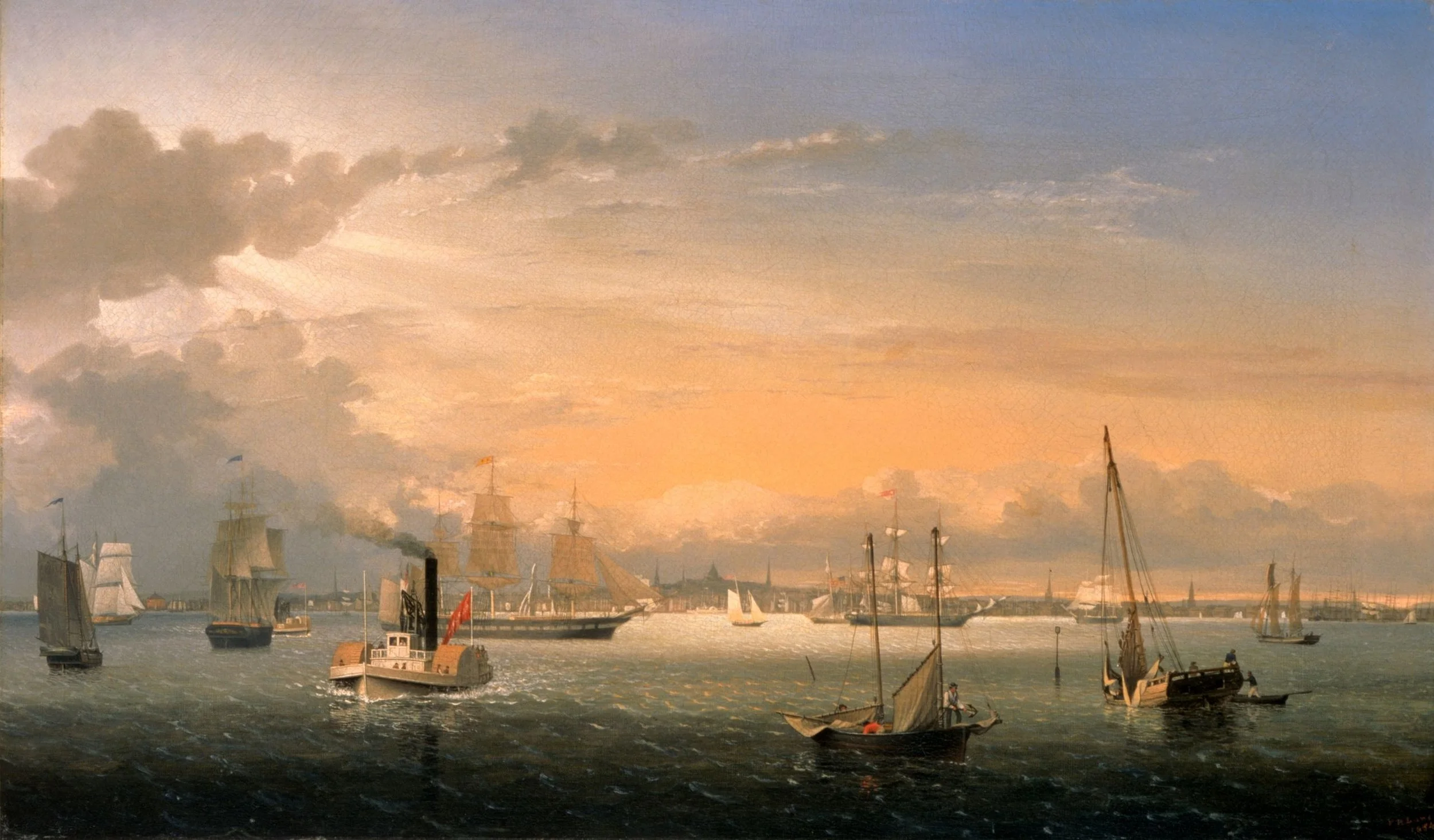
“Boston Harbor,’’ by Fitz Hugh Lane, 1854.
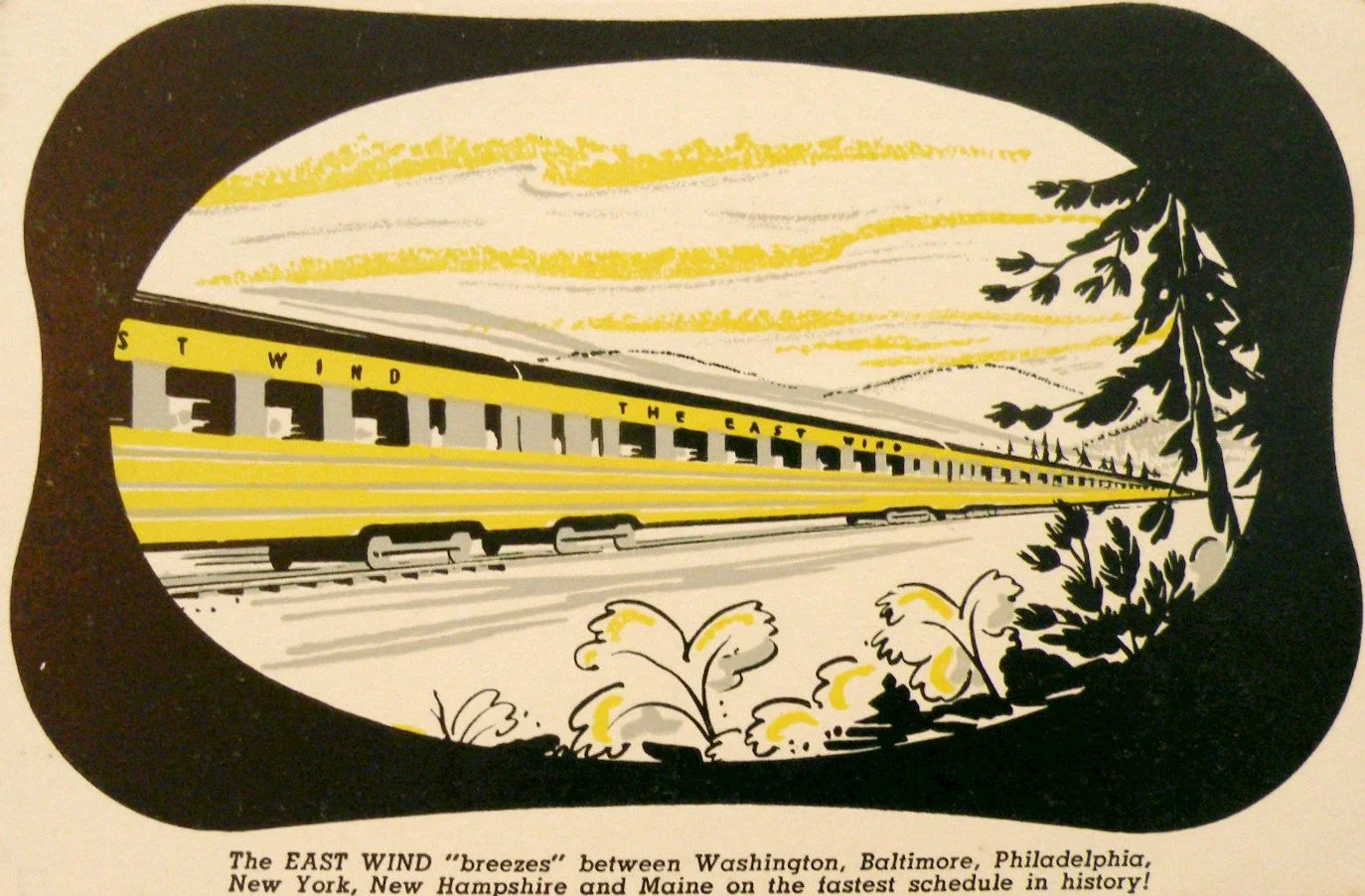
Postcard depiction of the seasonal passenger train “The East Wind’’ (1940-1955). The train originated on the Pennsylvania Railroad, but traveled on both Boston & Maine Railroad and New Haven Railroad tracks for part of its journey between Portland, Maine, and Washington, D.C., via Worcester, New York and Philadelphia.
"A Boston man is the east wind made flesh."
— Thomas Appleton (1812-1884), Boston-based writer
We're all losers in the end; 'right to farm' in Westport
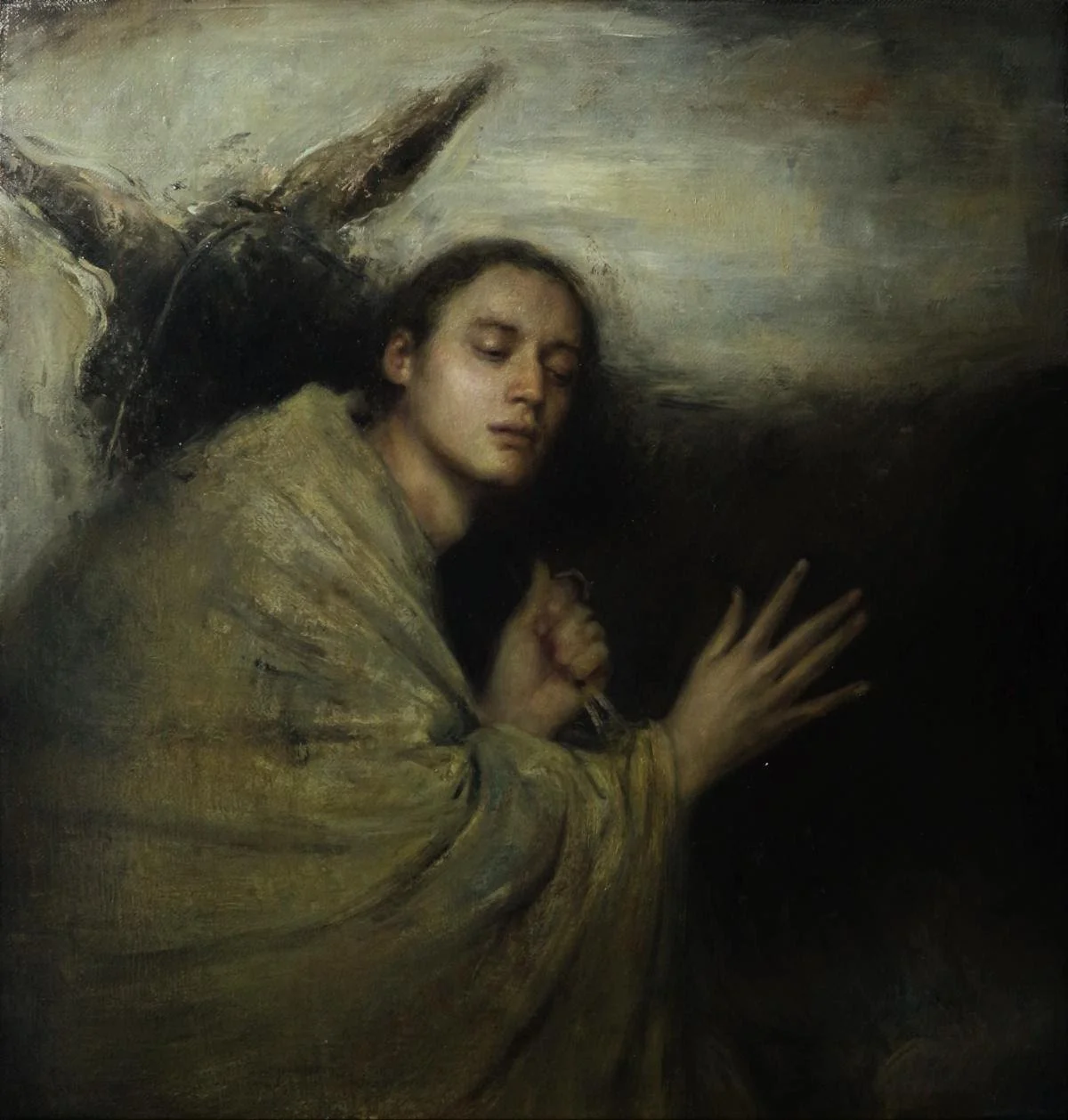
Painting by Irish artist Molly Judd in her show “Losing Stories,’’ at Dedee Shattuck Gallery, Westport, Mass., June 11-23.
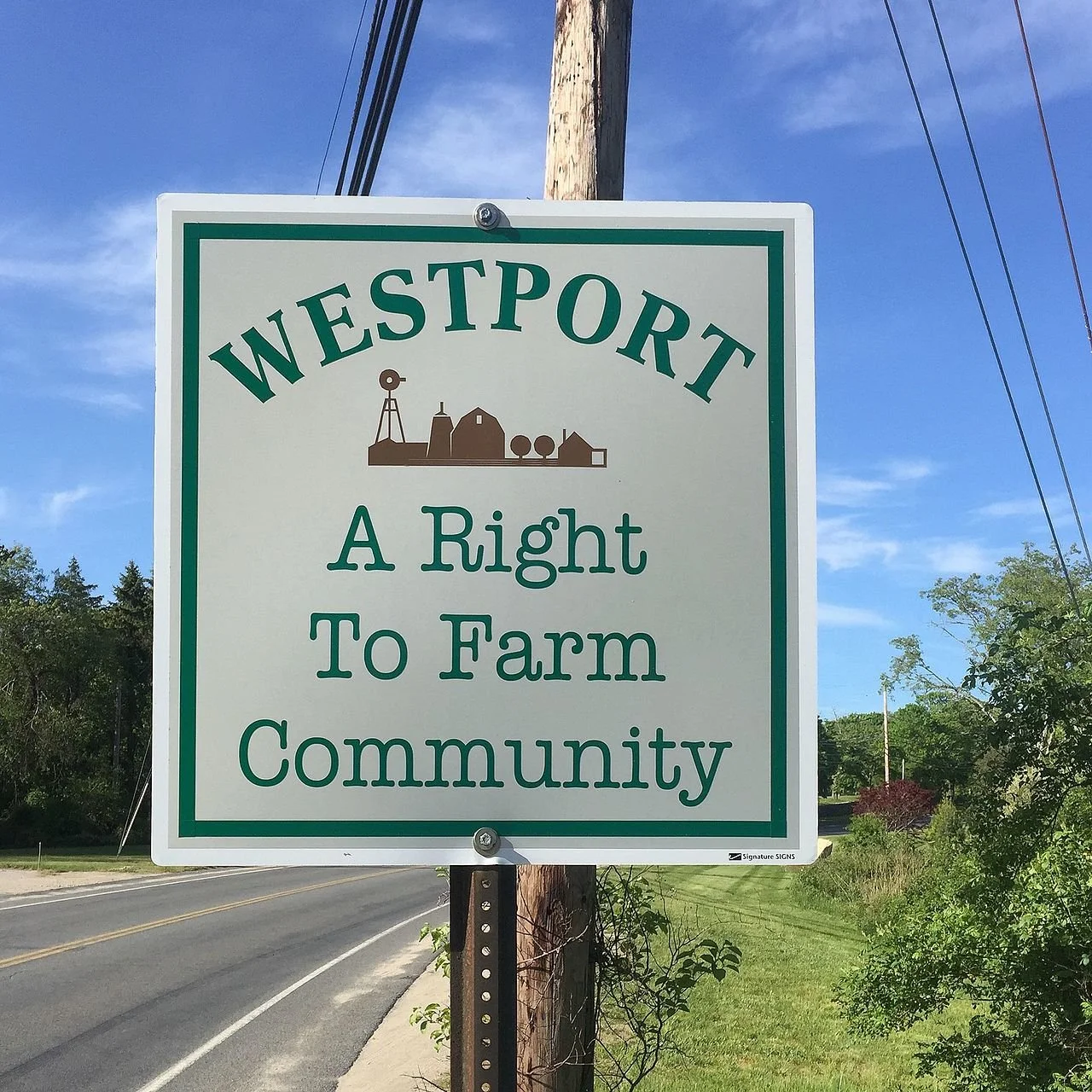
All 50 states have “right-to-farm’’ laws to try to protect qualifying farmers and ranchers from nuisance lawsuits by individuals who move into rural and exurban areas where normal farming operations exist, and who later use nuisance actions to try to stop those ongoing operations.
— Photo by Kenneth C. Zirkel

Fred Schulte: AARP’s dubious ties with Oak Street Health

In September, AARP, the giant organization for older Americans, agreed to promote a burgeoning Chicago-based chain of medical clinics called Oak Street Health, which has opened more than 100 primary-care outlets in nearly two dozen states, including in New England.
The deal gave Oak Street exclusive rights to use the trusted AARP brand in its marketing — for which the company pays AARP an undisclosed fee.
AARP doesn’t detail how this business relationship works or how companies are vetted to determine they are worthy of the group’s coveted seal of approval. But its financial reports to the IRS show that AARP collects a total of about $1 billion annually in these fees — mostly from health care-related businesses, which are eager to sell their wares to the group’s nearly 38 million dues-paying members. And a paid AARP partnership comes with a lot: AARP promotes its partners in mailings and on its Web site, and the partners can use the familiar AARP logo for advertisements in magazines, online, or on television. AARP calls the payments “royalties.”
AARP’s 2020 financial statement, the latest available, reports just over $1 billion in royalties. That’s more than three times what it collected in member dues, just over $300 million, according to the report. Of the royalties, $752 million were from unnamed “health products and services.”
But controversy has long dogged these sorts of alliances, which have multiplied over the years, and the latest is no exception. Are the chosen partners actually a good choice for AARP’s members, or are they buying the endorsement of one of the country’s most respected organizations with lavish payments?
“I don’t have a problem with AARP endorsing travel packages,” said Marilyn Moon, a health-policy analyst who worked for the group in the 1980s. But when AARP lobbies on Medicare issues while profiting off partnerships with those who are marketing to Medicare patients, “that certainly is a problem,” Moon said.
There are reasons for concern about the latest partnership. Less than two months after announcing the AARP deal, Oak Street revealed it was the subject of a Justice Department civil investigation into its marketing tactics, including whether it violated a federal law that imposes penalties for filing false claims for payment to the government. Oak Street has denied wrongdoing and says it is cooperating with the investigation.
Companies like Oak Street, whose funders have included private equity investors, have alarmed progressive Democrats and some health-policy analysts, who worry the companies may try to squeeze excessive profits from Medicare with the services they market mainly to people 65 or older. Oak Street hopes it can cut costs by keeping patients healthy and in the process turn a profit, though it has yet to show it can do so.
AARP has stood for decades as the dominant voice for older Americans, though people of any age can join. Members pay $16 a year or less and enjoy discounts on hundreds of items, from cellphones to groceries to hotels. AARP also staffs a busy lobbying shop that influences government policy on a plethora of issues that affect older people, including the future and solvency of Medicare.
Perhaps not as well known: that AARP depends on royalty income to help “serve the needs of those 50-plus through education, programs and advocacy,” said Jason Young, a former AARP senior vice president.
“Since our founding, AARP has engaged with the private sector to help advance our nonprofit social mission, including by licensing our brand to vetted companies that are meeting the needs of people as they age,” Young told KHN in an email before leaving his AARP position last month.
For years, AARP has drawn intermittent scrutiny for its longtime partnership with UnitedHealthcare, which uses the AARP seal of approval to market products that fill gaps in the traditional Medicare program — gaps filled by private insurers.
The arrangement has brought in hundreds of millions of dollars in annual royalties, according to court records.
Young said AARP “advocates for policies that are in the best interests of seniors without regard to how it may impact revenue or any licensing agreements.” He said AARP “has taken many strong stands against the insurance industry,” citing opposition in 2017 to proposed legislation that AARP said could have hiked seniors’ premiums by as much as $3,000 a year.
John Rother, who left AARP in 2011 after more than two decades as its policy chief, said business interests were “never a consideration” in these decisions. “I can absolutely say that was never the case,” Rother said. “We separated those operations.”
But that alliance raises alarms among critics who see a conflict of interest that undermines the group’s credibility to speak for all seniors on critical Medicare policy issues.
AARP “is in the insurance business,” said Bruce Vladeck, who ran the Medicare program for several years during the Clinton administration. “There ought to be accountability and visibility about it,” he said.
In 2020, a conservative group called American Commitment went further, concluding that AARP “has grown into a marketing and sales firm with a public policy advocacy group on the side.”
Keeping People Healthy
In a November 2021 conference call with analysts, Oak Street Health CEO Mike Pykosz said he was “thrilled” to be the first primary-care medical provider endorsed by AARP, a decision he said would “enhance our ability to attract and engage patients.”
The company offers “value-based” care to more than 150,000 Medicare patients. AARP officials would not discuss why the group had picked Oak Street Health, except to say that it favors experiments that could improve the quality of medical care and hold down costs.
Oak Street receives a flat monthly rate from insurers for each patient. That “allows us to focus on those services that have the greatest impact on keeping people healthy, such as behavioral health and screening 100% of our patients for the social determinants of health — including food and housing insecurity,” Erica Frank, the company’s vice president of public relations, said in an email.
Frank said Oak Street sees patients in many places where primary care is “either hard to come by or not available.” The company’s patients are seen almost eight times a year on average, versus just three visits for the average person on Medicare, Frank said.
Many of Oak Street’s treatment centers are in communities where poverty levels exceed national norms. The centers typically feature distinctive green and white colors throughout and contain a “community room” with a big-screen television that is also used for activities such as exercise, cooking, and computer classes.
Oak Street participates in a pilot project called “direct contracting,” which Medicare advanced in the final days of the Trump administration. In direct contracting, medical providers accept a set fee to cover all of a person’s medical needs.
In a Senate Finance Committee hearing on Feb. 2, Sen. Elizabeth Warren (D.-Mass.) argued that direct contracting rewards “corporate vultures.” Warren said companies could pocket as much as 40% of their payments as profit.
Supporters argued these concerns were overblown, but the federal Centers for Medicare & Medicaid Services, or CMS, announced a redesign of the pilot program in late February.
The scope of the Justice Department review of Oak Street is unclear. According to the company, DOJ is investigating whether it violated the False Claims Act and is seeking documents related to “third-party marketing agents” and “provision of free transportation” to patients.
Amanda Davis, an AARP senior adviser for advocacy and external relations, said the group learned of the DOJ matter when Oak Street disclosed it publicly on Nov. 8, 2021 — less than seven weeks after their joint venture was announced. “We are closely monitoring this issue’s development and expect all providers to fully comply with all laws and regulations,” she wrote in an email.
Likewise, AARP will not say how much Oak Street paid to become a partner, only that the fee is “for the use of its intellectual property” and that “these fees are used for the general purposes of AARP.” Some feel that’s not enough.
“I think the vast majority of people signing up for these products are not aware that AARP is paid a very large amount for use of their name,” said Dr. David Himmelstein, a physician and professor in the City University of New York’s School of Urban Public Health at Hunter College. He added: “If you are making hundreds of millions selling [health] insurance, it gives you a strong interest in assuring that product remains attractive for people to buy.”
Promoting Independence
Since its founding, in 1958 by a retired high school principal, Ethel Percy Andrus, AARP says it has acted “to promote independence, dignity and purpose for older persons.”
The AARP Foundation provides services such as passing out more than 3 million meals in low-income neighborhoods during the pandemic and assisting older people with tax preparation and legal matters. AARP also awards millions of dollars in annual grants to a wide range of organizations. (KFF, which operates KHN, received a $100,000 grant from the AARP Public Policy Institute for “general support” of KFF’s work on Medicare in 2020 and a similar amount the two previous years related to Medicare policy issues.)
Last year, AARP spent more than $13.6 million on lobbying, according to Open Secrets. More than 60 AARP lobbyists opined on dozens of legislative proposals, from bills intended to protect seniors from scammers to holding nursing homes accountable, according to the campaign finance watchdog group.
Although many supporters argue that AARP pursues worthy goals, criticism of its business dealings goes back years. A 2008 media exposé reported that some AARP members had overpaid for insurance policies because they assumed AARP had the cheapest deal. In 2011, a congressional investigation led by House Republicans found it “unlikely that AARP could survive financially, with its current expenses, if the hundreds of millions of dollars in annual insurance industry revenue disappeared.” The report also questioned whether AARP deserved its tax-exempt status as a nonprofit.
AARP’s health insurance pacts, which UnitedHealthcare refers to as a “strategic alliance,” have been challenged in nearly a dozen federal lawsuits as well — though AARP has prevailed so far.
One group of lawsuits has targeted a type of co-branded AARP-UnitedHealthcare policies called Medigap, which Medicare enrollees buy to pay for items such as copayments for hospital stays and doctor visits. These policies cover about 4.4 million people, according to the company.
AARP receives 4.95% of the premium, which it takes as its royalty, according to court filings. Several lawsuits have argued that amounts to an illegal commission because AARP is not licensed to sell insurance, court records show. The lawsuits cite AARP records showing annual income of hundreds of millions of dollars from the sales.
Federal judges have consistently dismissed such cases, however, ruling that state regulators had approved the rates or that buyers didn’t suffer any real damage.
Helen Krukas, a retiree who lives in Boca Raton, Fla., is appealing in the U.S. Court of Appeals for the District of Columbia Circuit. She claims AARP failed to disclose that it was “syphoning” 4.95% of what she paid for her policy.
In a deposition, Krukas testified that she “always thought of AARP as a club that negotiates on the behalf of retired people” and “it didn’t even occur to me to look anyplace else” for a policy. “Had I known that they were receiving money for it, I would have gone and shopped around with other brokers,” she said.
Calling for Transparency
AARP has also faced challenges for another type of UnitedHealthcare Medicare policy it has promoted in recent years, called Medicare Advantage.
Critics cite a range of fault-finding government reports, audits, and whistleblower lawsuits targeting such products.
Dr. Donald Berwick, a former administrator of CMS, said Medicare Advantage plans have devised “legal ways” to game the billing system so they get paid “a lot more for writing down things that don’t have much to do with the actual needs of the patients.”
AARP, which strongly supported the 2003 law that created Medicare Advantage, has received a fixed monthly fee from UnitedHealthcare for use of its name in marketing the health plans, according to the 2011 congressional investigation. How much AARP wouldn’t say, then or now.
Medicare pays the insurer a fixed monthly payment for each patient, which rises proportionally to each patient’s burden of illness. More than two dozen whistleblower lawsuits have accused health plans, including UnitedHealthcare, of ripping off Medicare by exaggerating how sick patients are.
Medicare Advantage plans offer tempting extra benefits, such as eyeglasses and hearing aids, and proponents say they cost seniors less than traditional Medicare. But many policy experts argue the plans soak taxpayers for billions of dollars in overpayments every year.
UnitedHealthcare spokesperson Heather Soule told KHN via email that the company “sees incredible value in Medicare Advantage.” When compared with original Medicare, Medicare Advantage “costs less, has better quality, access, and outcomes with greater coverage and benefits and nearly 100% consumer satisfaction,” according to the company.
But the Justice Department’s civil fraud case alleges that UnitedHealthcare reaped $1 billion or more in illegal overcharges. The company has denied the allegations, and the case is set for trial late next year.
As the debate over how to contain Medicare costs intensifies, reformers say AARP should be an ally, not a beneficiary of industry largess.
“It’s hard to know whether they’re advocating for their business interests or for the seniors that they are supposed to represent,” said Joshua Gordon, director of health policy for the Committee for a Responsible Federal Budget, a nonpartisan group.
Fred Schulte is a Kaiser Health News reporter.
Housing on old parking lots?
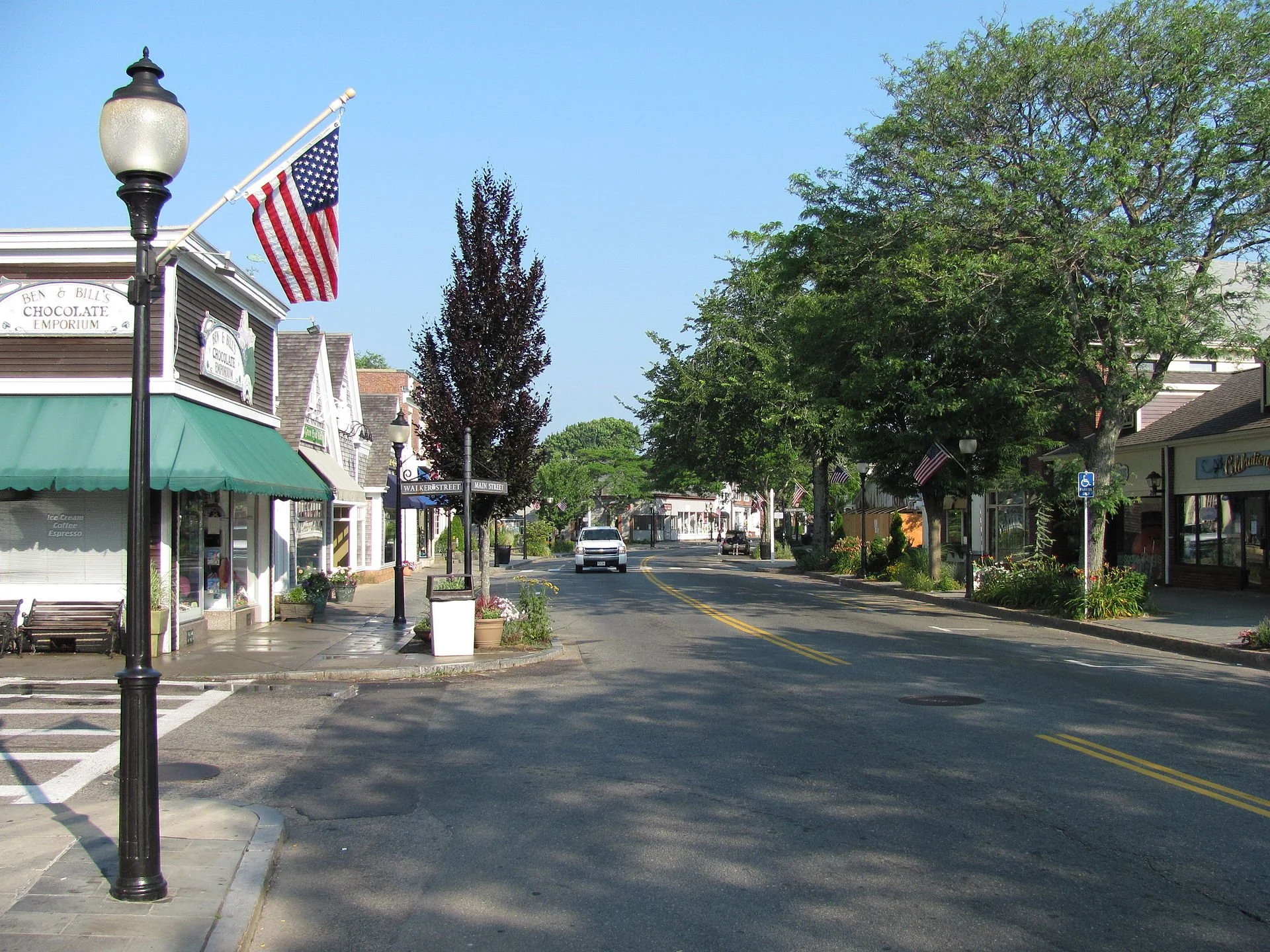
Main Street in Falmouth, Mass.
Adapted from Robert Whitcomb’s “Digital Diary,’’ in GoLocal24.com
The Cape Cod town of Falmouth, like many towns these days, has a surplus of closed big-box stores and other detritus, bordered by windy, gritty parking lots, left by Amazon’s assault on the brick-and-mortar world. The town, like most communities in New England, also has a very serious lack of affordable housing to buy or rent, made even more challenging by the fact that it’s also a summer-resort community.
So the town is now letting owners of business-zoned land in and near the downtown add up to 20 rental-housing units per acre, as long as it’s “affordable,’’ which generally means tenants paying no more than 30 percent of their gross income for housing.
Eric Turkington, a former state representative from Falmouth, reports in Commonwealth Magazine that the zoning change “has generated its first project: The owner of an auto repair shop on Main Street has submitted plans to replace it with a restaurant and 10 residential units. Further down the street, the owners of one of the big box stores with acres of asphalt is talking with the town about building a major rental housing development on their property.’’
A ‘typical American’?
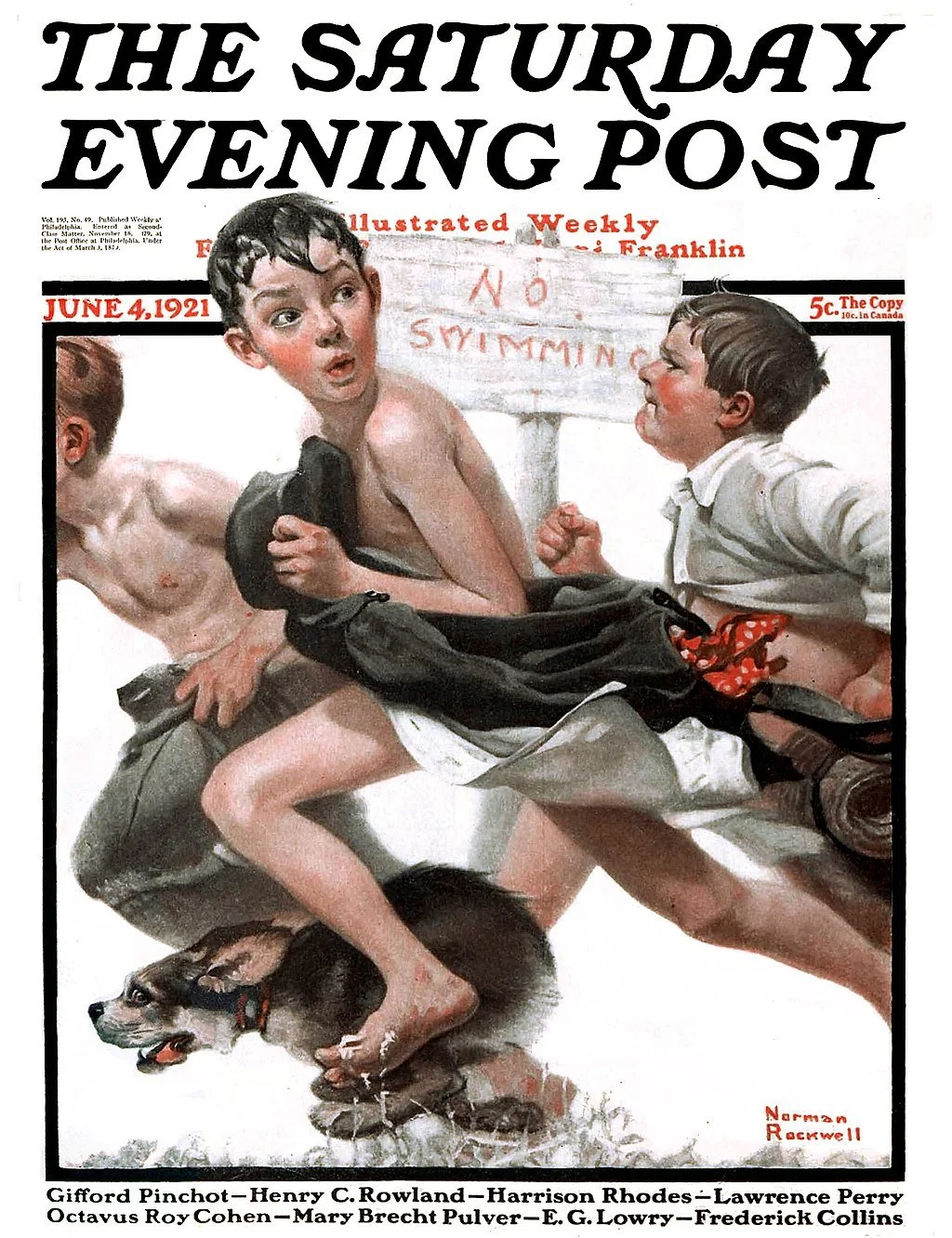
Norman Rockwell (1894-1978), the iconic painter and illustrator, was from the New York City area. He lived with his family in Arlington, Vt., in 1939-1953, when they moved to Stockbridge, Mass.
Rockwell said: "Without thinking too much about it, I was showing the America I knew to others who might not have noticed. My fundamental purpose is to interpret the typical American. I am a storyteller.’’
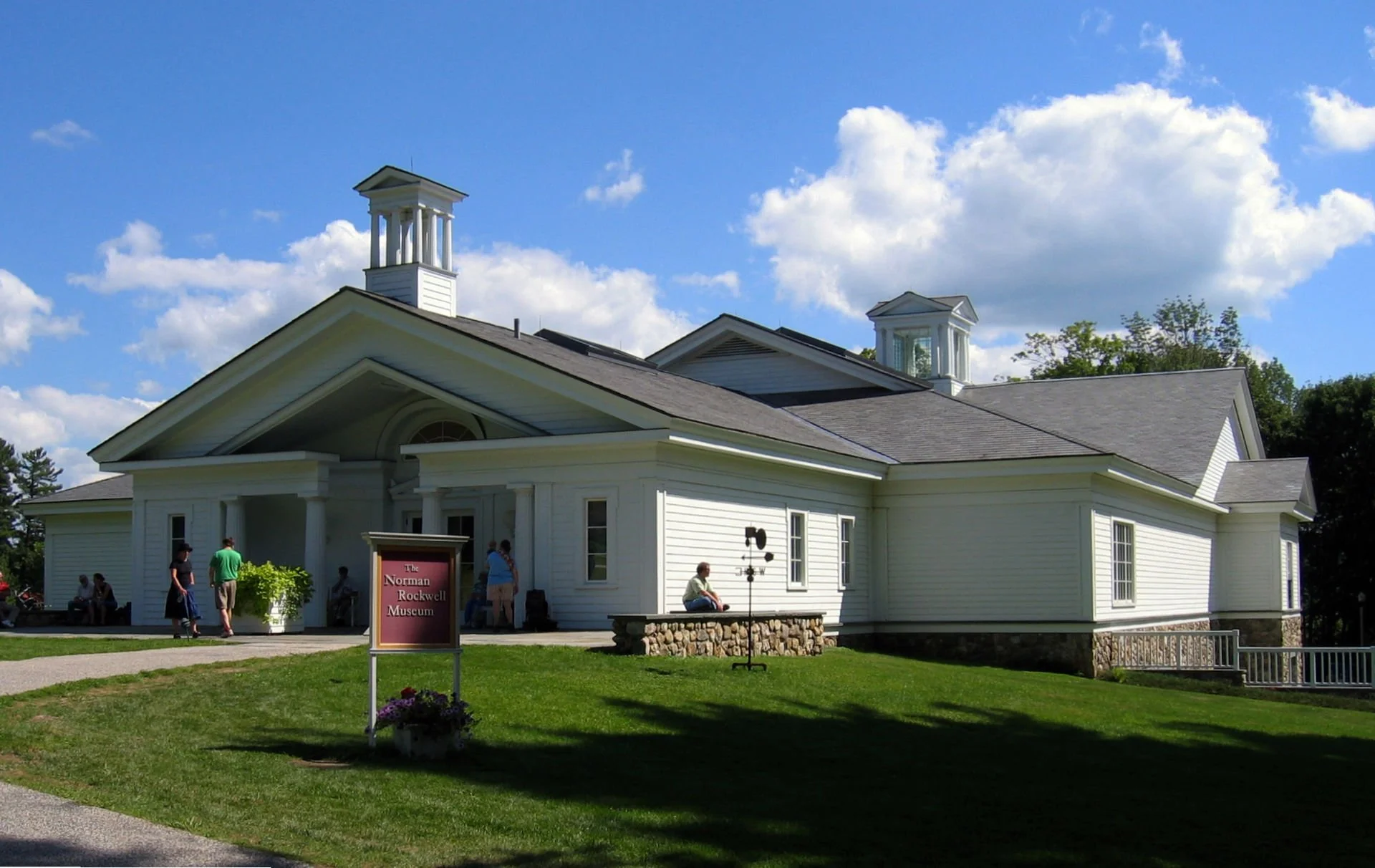
The Norman Rockwell Museum, in Stockbridge, Mass.
— Photo by Rmrfstar
And you can't change your mind

“Linked” (oil on panel), by Renee Levin, in the joint show, “Knotty Girls, with Jennifer Day, at Atelier Newport June 17-July 22.
The gallery says:
Ms. Levin’s “large-scale paintings allow her to emphasize the nuances, patterns and textures of these objects while celebrating their unique beauty. Each painting bears witness to her calm and meticulous process. There is a playful juxtaposition of light and shadow, which creates depth and movement in her work. Levin fuses a world of polish with grit, painting elements of her objects with perfect smoothness, yet adding harsh textures overtop creating a surprising harmony of modern, contemporary paintings. Her work was featured in Vogue, in 2021.’’
Chris Powell: Try a well-regulated militia to reduce massacres
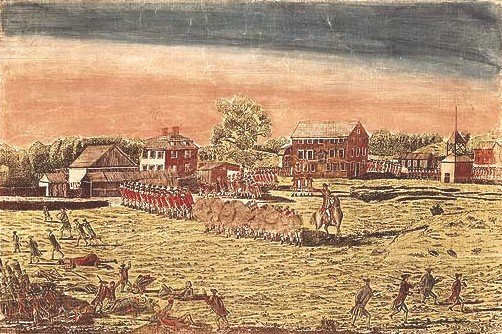
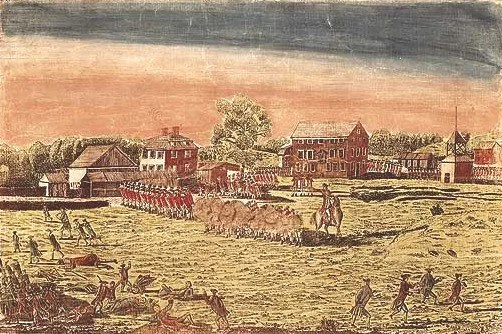
The Battle of Lexington, on April 19, 1775. Blue-coated militiamen in the foreground flee from the volley of gunshots from the red-coated British Army line in the background with dead and wounded militiamen on the ground.
— Amos Doolittle (engraver)
MANCHESTER, Conn.
As with the school massacre in Newtown, Conn., and the supermarket massacre in Buffalo, the school massacre in Uvalde has brought forth the usual legislative prescriptions to prevent a recurrence, prescriptions often delivered by bloviating politicians pretending to virtue. But the prescriptions seldom have much application to the atrocities that prompt them.
The private-sale exemption in the federal law requiring background checks for gun purchases should have been closed long ago. Even most supporters of Second Amendment rights favor ending it, and no sense can be made of the opposition of Republicans in Congress. But the purchases of the guns used in the Newtown, Buffalo and Uvalde massacres cleared background checks. The gun used in the Newtown massacre was stolen by the young perpetrator from his mother, who became his first victim.
That perpetrator was known to be disturbed but no "red flag" law would have had any effect on him, since the gun wasn't his.
The perpetrators of the Buffalo and Uvalde massacres seem to have been mentally ill but not ill enough to have been reported to authorities, so a "red flag" law would not have impeded their purchases.
While "red flag" laws sound good, and Connecticut has one, they raise civil rights and due process complications even as not all mass murderers give actionable warnings.
"Safe-storage" requirements make sense too but would have meant nothing with the Buffalo and Uvalde cases. "Safe storage" might have been preventive in Newtown but the perpetrator lived with his mother and was her companion on the shooting range and likely knew where the keys were kept.
Yes, "ghost guns" should be banned too but were not used in the massacres.
Then there is outlawing "assault rifles" -- that is, scary-looking rifles. The real objection to them is their semi-automatic properties -- that they automatically reload the firing chamber. But then most guns manufactured in the last century automatically reload and most rifles and handguns in the United States are semi-automatic.
Should civilian possession of semi-automatic rifles be banned? If so, it will be hard to ban one model without banning them all. Americans own tens of millions of them and few are registered, so confiscating them might not be terribly successful or effective.
Banning the sale and possession of semi-automatic rifles also might run afoul of the Second Amendment, since such rifles are so common and basic. But at least advocates of outlawing semi-automatics -- essentially national gun confiscation -- get far more relevant than other advocates of more gun restrictions.
Of course, there are also many mass shootings with mere handguns, like the one in Manchester, Conn., in 2010 in which eight people were murdered. So should handguns be banned too?
Who in politics wants to get relevant enough to propose repealing the Second Amendment?
But like immigration and abortion, guns are an issue the political parties seem to prefer sustaining rather than resolving.
Democrats blame the National Rifle Association and gun manufacturers for blocking more gun regulations just as they blame misogynistic men for limits on abortion. But there are heavily pro-gun and anti-abortion states and heavily anti-gun and pro-abortion states not because of the NRA, gun manufacturers, or Planned Parenthood but simply because many people feel strongly about the issues one way or the other.
Members of Congress are reflecting the views of their constituents.
So what might be politically possible to prevent mass shootings in a country with hundreds of millions of guns among a population with tens of millions of mentally ill or unstable people, including millions of boys growing up in broken homes without much parenting, like the killer in Uvalde?
The Second Amendment itself makes a suggestion: "a well-regulated militia." That is, what about a carefully trained, uniformed and armed volunteer national police auxiliary to help guard soft targets like schools and hospitals and to be visible everywhere in ordinary life?
After all, if guns aren't going to be confiscated, why not put some where they might provide a little protection?
Chris Powell is a columnist for the Journal Inquirer, in Manchester.