

Memories of landscape

"Granite in Spring" (painting) by Kathline Carr, in 29 her show “In Awe of Nature,’’ through May 29, at Fountain Street Fine Art, Boston. She lives in The Berkshires.
She tells the Gallery:
“I love hiking, particularly in wild, desolate places, and am fascinated by looking at the way light falls on the landscape when I am out on the trail, creating shapes that are craggy, or geometrical, or diffused—or shifting from one to the other. Sometimes I look at the sky or a mountain pass and try to remember the individual parts of the scene for later, when I will imagine the parts rearranged, the lights and darks reversed, or perhaps just one form that caught my eye. My dream travels take me to treks in Tibet, Alaska, Wyoming—I look at pictures of the landscapes in the places I’d like to go, and those images work their way into what I’m making as well. I am in awe of nature and the colors that exist and arise organically and atmospherically. Although I’m not painting the landscape representationally, my observations and memory of it is ever-present in my work, in some form.’’

A view of The Berkshires in North Adams, Mass.
— Photo by jbcurio
And without billionaires

“A Ride Into Space” (digital photo collage), by Jessica TranVo, at Pao Arts Center, Boston
Too libertarian and irascible?

A Sunday edition of the once much feared and admired Manchester Union-Leader, run for many years by far-right publisher William Loeb (1905-1981). A stepdaughter recently accused him of molesting her.

In high and chilly Dublin, N.H.
“There’s little question that Vermont (particularly Vermont), Maine, Boston, and Cape Cod, are, together, responsible for the New England image. New Hampshire just doesn’t fit in.’’
Judson D. Hale Sr., former long-time editor of Yankee Magazine, in “Vermont vs. New Hampshire,’’ in the April 1992 American Heritage magazine. And yet Yankee has always been based in Dublin, N.H.
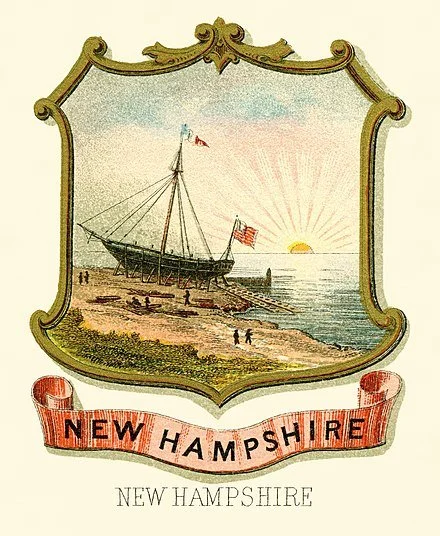
Historical coat of arms of New Hampshire, from 1876 — a reminder that the state has a (very short) seacoast.
Fascinating, complicated and scandal-rich Newport

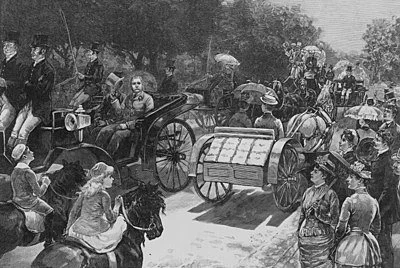
President Chester Arthur tips his hat while vacationing in Newport in 1884. The city has drawn many celebrities each year in the summer since the Civil War.
Adapted from Robert Whitcomb’s “Digital Diary,’’ in GoLocal24.com
The drive to Newport from Providence via Fall River has some dramatic stretches. The Spindle City rises up, with its beautiful old stone mill buildings, looking a bit like an English provincial city and, if you carefully crane your neck on the Braga Bridge, the view down Mt. Hope Bay is spectacular, as is, further south, the view from the Sakonnet River Bridge. If only they could clean up Middletown’s hideous West Main Road commercial strip, which mars the approach to Newport. More trees would help, as would some targeted demolitions.
Then you get into Newport, one of the country’s most interesting cities – dense with class, ethnic, economic, cultural and architectural complexity. Rich, poor, Navy people, current and former spies, engineers, socialites, TV celebrities, etc., etc., and some of the best gossip in the world, enriched with scandals, present and past. Among the most famous:
The late Claus von Bulow’s alleged attempted murder of his late utility heiress wife, Martha “Sunny’’ von Bulow, which led to two sensational trials in the ’80’s (and the movie Reversal of Fortune, a sort of dark comedy) and the late tobacco heiress Doris Duke’s apparent murder (by driving into him at her Newport estate, Rough Point) of an assistant, Eduardo Tirella, in 1966. Some Newporters connected to the city’s upper crust who knew these characters and those around them still talk about these cases, as I discovered last week at a lunch in the City by the Sea.
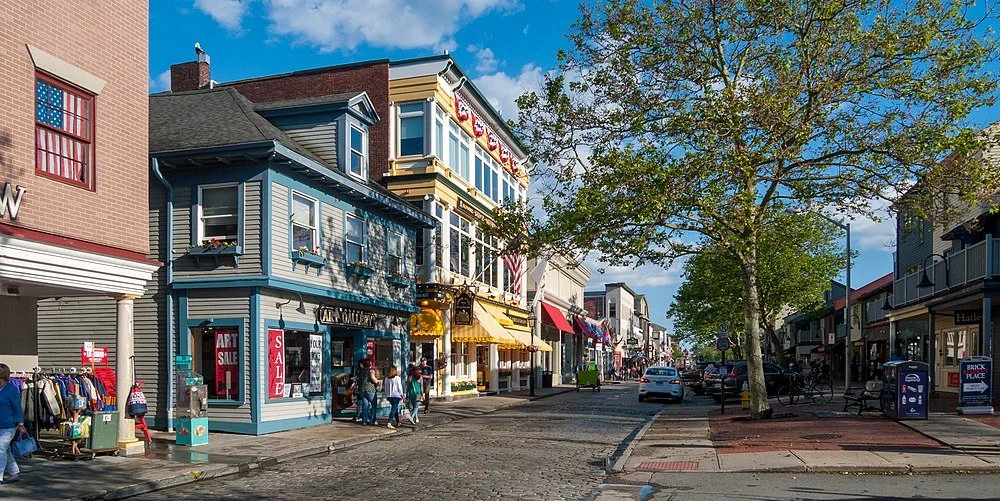
Thames Street, on Newport’s waterfront. In high summer, the street is often mobbed with shop patrons, restaurant and bar goers and just plain tourist/gawkers. Some are sober.
N.E Aquarium collaborating with SeaAhead in incubator project

New England Aquarium Plaza
BOSTON
Edited from a New England Council (newenglandcouncil.com) report:
“New England Aquarium is working with SeaAhead Inc. to create their BlueSwell Incubator program. The program is to support early-stage entrepreneurship in ocean sustainability solutions. BlueSwell aims to bring together founders, ocean experts, industry leaders and venture capitalists to develop bluetech projects.
“There were seven startups who completed BlueSwell’s latest program in March, with each startup having a different area of focus, including sea-urchin farming, data sharing among offshore wind farms, fishing communities and camera-based inventory systems for seafood processors. Now, each startup is working on different goals for the year ahead, from raising seed rounds to finding new clients. Each startup in this program will receive $50,000 in funding to help their projects become commercialization. The startups will also have access to support, including industry, investment, academia, government and NGO mentors.
“‘We are excited for the scientists and technical experts in the Anderson Cabot Center for Ocean Life to continue mentoring these transformational startups to maximize their positive impacts on ocean health,’ said John Mandelman, vice president and chief scientist at New England Aquarium. “Being part of BlueSwell provides invaluable expertise from New England Aquarium scientists with decades of experience guiding industry, policy, and ocean management.”
Juan Cole: Carlson’s ‘white replacement’ theory comes from an anti-American Nazi
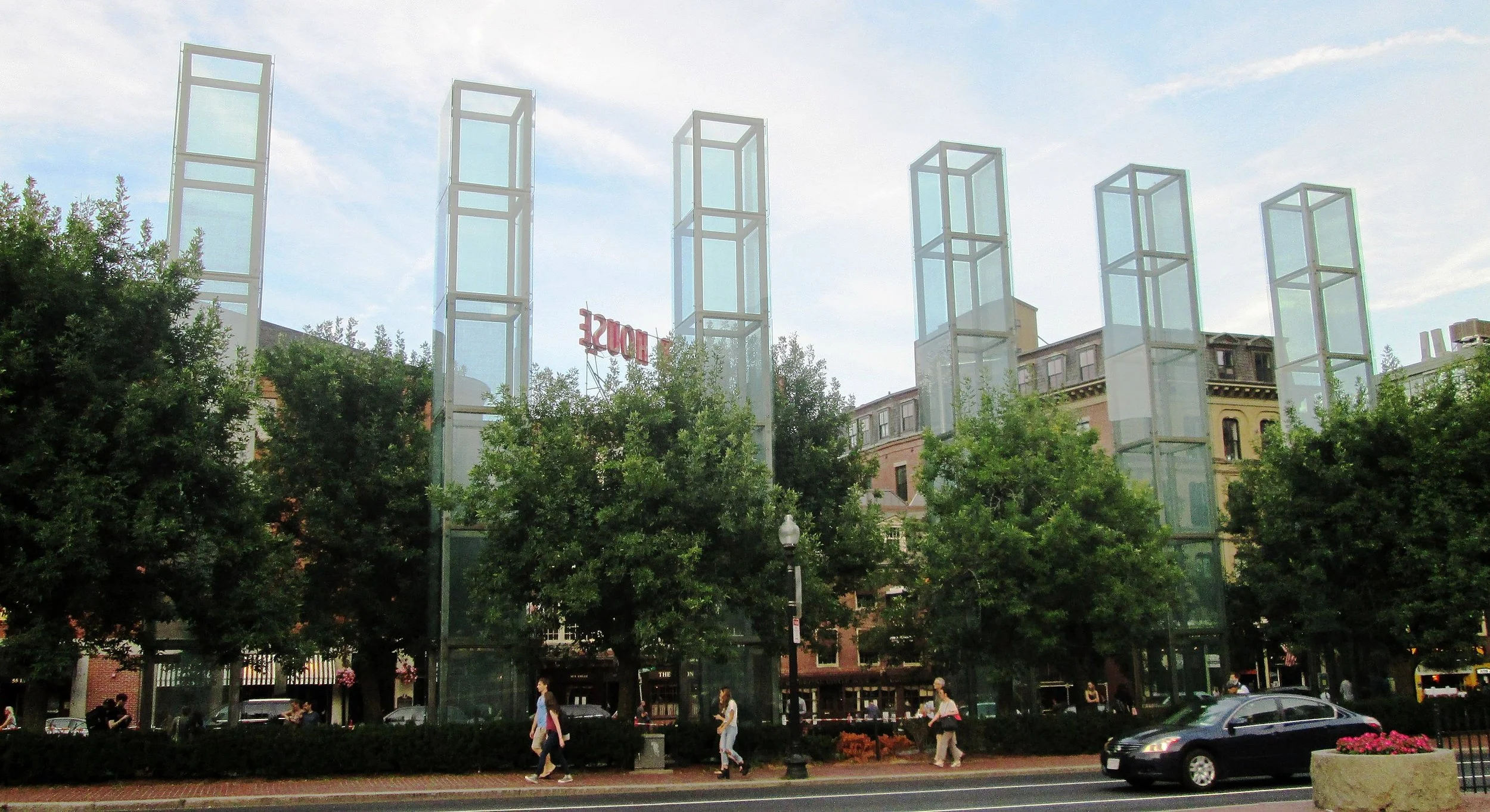
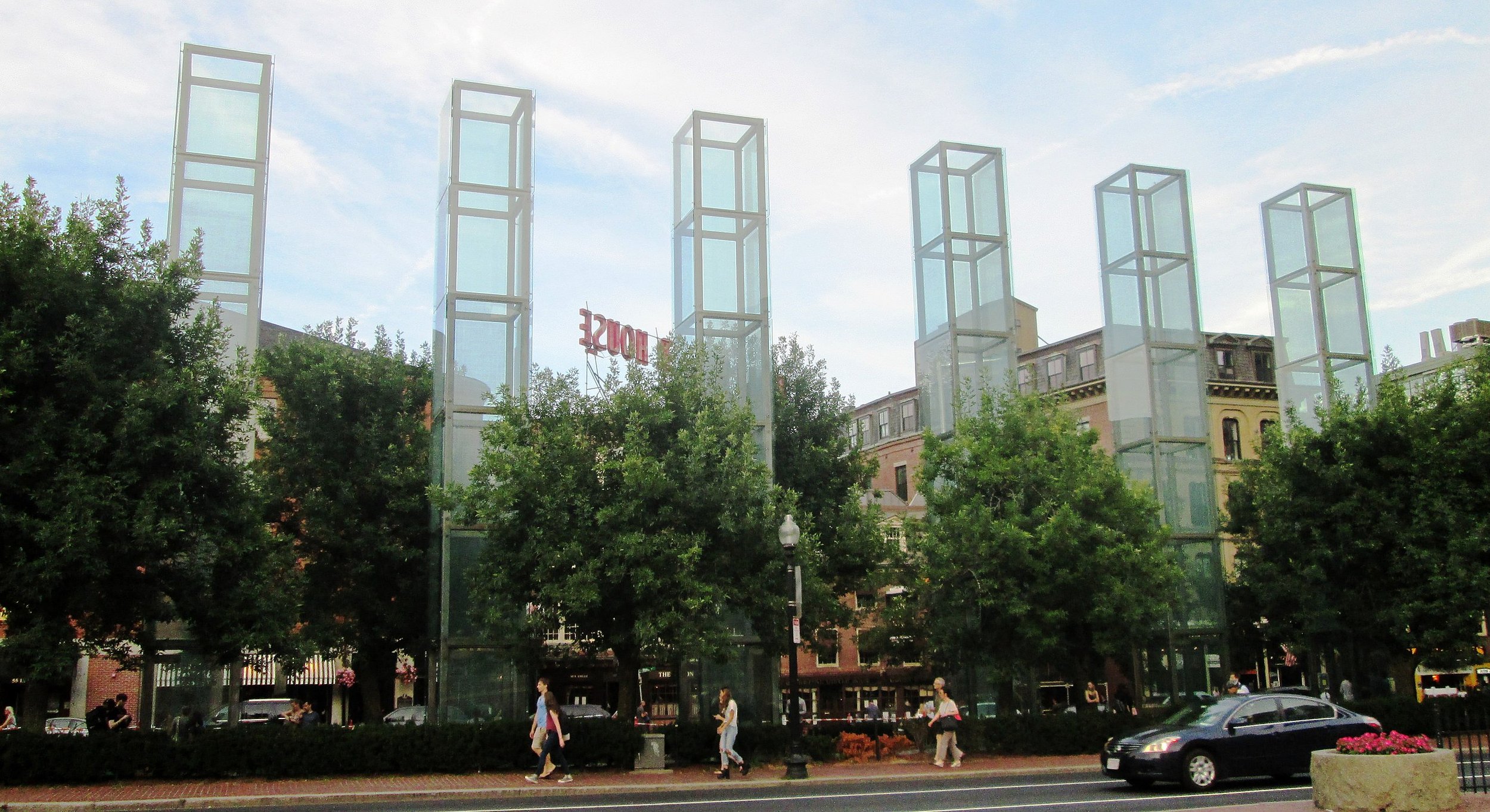
The New England Holocaust Memorial, in Carmen Park between Congress, Hanover, Union, and North Streets in Boston, was founded by Stephan Ross, a Holocaust survivor, and designed by Stanley Saitowitz. It was erected in 1995. Each tower symbolizes a different major Nazi extermination camp.
— Photo by Beyond My Ken
Via OtherWords.org
Before a hate-filled 18-year-old murdered 10 and wounded 3 African Americans in Buffalo on May 14, he penned a rambling screed about replacement theory.
The most common version of this whiny idea, imported from the more hysterical fringes of the French far right, holds that Jewish capitalists are importing cheap immigrant labor to replace more highly-paid white workers.
Notoriously, the Nazis who marched in Charlottesville, Va., in 2017 against the removal of Confederate statues chanted “Jews will not replace us.” The shooter who killed 11 Jewish Americans at a Pittsburgh synagogue in 2018 also espoused the idea of the “great replacement.”
This hateful ideology is shamelessly promoted by Fox News. The worst offender is the Lord Haw-Haw of the 21st Century, Tucker Carlson, who exposed his audience to great replacement excrement 400 times in the past year.
Republican legislators across the United States have been passing laws against teaching critical race theory, which hasn’t killed anyone — and which helps us understand the effect of ideas like the great replacement. But they don’t seem to be as eager to legislate against Nazi ideas.
And make no mistake: The great replacement is an explicitly Nazi idea.
The theory originated in Europe and had many exponents of various stripes. But the phrase, and the most extensive elaboration of the theory, originated with the French Nazi René Binet (1913-1957), who served during World War II in the Waffen Grenadier Brigade of the SS Charlemagne, which consisted of French Nazi collaborators.
You don’t get more Fascist than that. The Charlemagne Brigade included the last troops to defend Hitler’s bunker before his suicide.
Binet fulminated after the war against “the invasion of Europe by Negroes and Mongols,” by which he meant the Americans and Soviets who fought the Nazis. A biological racist, he saw all Americans as an impure mestizo “race.”
So this now far-right American nationalist idea actually originated in hatred for Americans and a denigration of their supposed “whiteness” by the European right, which did not see Russians as “white” either.
Unlike cowardly boot-lickers like Binet, the true patriots of the period were the multicultural French. The French Army and then Charles De Gaulle’s Free French Army included thousands of riflemen (or Tirailleurs) from Senegal.
History.net explains: “During World War II the French recruited 179,000 Tirailleurs; some 40,000 were deployed to Western Europe. Many were sent to bolster the French Maginot Line along its border with Germany and Belgium during the German invasion in 1940 — where many were killed or taken prisoner.”
Even after the fall of France, these Senegalese fighters “served in the Free French army in Tunisia, Corsica and Italy, and in the south of France during the liberation.”
I had two uncles who served in World War II, one at the Battle of the Bulge. In my family, we’re not in any doubt that it was the multi-racial Allies who were the good guys. With famous units like the Tuskegee Airmen, who bombed Nazi targets, the Allies drew srength from their diversity — and that gave them the strength to prevail.
People like Tucker Carlson are pitifully ignorant of history and so are wielding an anti-American, highly unpatriotic notion for the sake of their television ratings. Ironically, Tucker’s intellectual forebear, Binet, would have considered him a mongrel.
As defenders of illiberalism and implicitly of hatred of Jews, these useful idiots of the far right are symbolically still deployed around Hitler’s bunker, defending it from the approaching AlliesJuan Cole
Juan Cole is the Richard P. Mitchell Professor of History at the University of Michigan and the founder and editor of Informed Comment (JuanCole.com). This op-ed was adapted from Informed Comment and distributed by OtherWords.org.

'Untenable relationship'

“We're Made of the Same Stuff” (mixed media), by Susan Leskin, in her show ‘‘Feeling the Heat,’’ at Galatea Fine Art, Boston, June 3-26.
She says; "The relationship between humans and nature has become untenable: so very dangerous and so infinitely sad. Regardless, we must summon as much energy and will as possible, and repair what we can. At a basic level, it comes down to what each of us is willing to give up."

Cynthia Drummond: Global warming sends a toxic worm to southern New England

Model of a Hammerhead worm.

And a real one.
— Photo by SREEJITH VISWANATHAN
From ecoRI News (ecori.org)
HARRISVILLE, R.I.
Samantha Young was working in her father’s garden when she saw some strange-looking worms she hadn’t noticed before. What she had found were invasive hammerhead worms.
“The three Hammerhead Worms were all found in my dad’s yard on Round Top [Road] in Harrisville,” she wrote in an email. “I found them while cleaning up around the yard. They were all found underneath stuff like buckets, and rocks.”
Native to Asia and Madagascar, the Hammerhead Worm, or Bipalium Kewense, was transported to Europe and the United States in shipments of exotic plants. It has been in the United States since the early 1900s and is most commonly found in states such as Louisiana, where conditions are warm and humid. But now, as the climate warms, these invasive worms are spreading.
With their distinctive heads and long, flat bodies, hammerhead worms, which are members of a large family of flatworms, or planaria, are easy to identify. They are usually striped, and can grow in length to nearly a foot.
The biggest concern is the damage the carnivorous worms could do to agriculture, because they are predators of earthworms. While the glaciers killed almost all the native earthworms north of Pennsylvania, and most of the earthworm species in the United States were brought here by European settlers, earthworms are important for soil health.
The one thing you don’t want to do if you find a hammerhead worm is touch it, or let your pets, including backyard chickens, eat it.
Hammerhead Worms produce a neurotoxin, tetrodotoxin, which is also found in puffer fish, which are sometimes served in sushi restaurants as “fugu sashi,” where they are prepared by only the most highly skilled chefs.
Josef Görres, formerly of the University of Rhode Island, currently teaches soil science at the University of Vermont and is familiar with hammerhead worms.
“If you read some publications out of Texas, they’re kind of saying, ‘Hey you know, there are really big ones,’ of course, in Texas, they always have bigger things than anybody else, but they’re saying it may actually be a human health concern,” Görres said. “Most of that toxin is near the surface of the worm so you touch it or you play with it, or something like that, it might cause you harm.”
As if toxins weren’t enough, Hammerhead Worms can also transmit harmful parasites to humans and animals. And they have another unpleasant characteristic: they regenerate from segments if they are cut up, so chopping them into pieces will only make more.
Görres said these invasive worms weren’t considered a threat until they began to expand their range.
“On first introduction, there probably weren’t many of them and so now, as they’re spreading, they’re becoming more obvious to people,” he said. “I, certainly, over the last five years, have seen a lot more than even 10 years ago.”
Young said she had to research the three worms she found to identify them.
“I didn’t know what they were until I googled it,” she said. “I left them in a Tupperware container until they died.”
If people can’t handle the worms without protection and they can’t cut them up, what is the most efficient way to kill them? Görres recommends salting, bagging and freezing.
“I read somewhere that in order to kill them, you put them in a bag, you put salt in there and then you freeze them for 48 hours,” he said. “Double overkill. The salt will desiccate them and then freezing them, if anything is left, freezing them will also kill them — 48 hours at minus 20 degrees Celsius, which is what the freezer is at, usually.”
Since they are not perceived as a threat to agricultural crops, Hammerhead Worm research is not well-funded. Concern has instead focused on another invasive species from Asia, the Snake Worm, which devours the surface material or “duff” of the forest floor.
“They consume the forest floor, the duff layer and … by the time all that duff layer is gone, there’s a lot fewer plants in the understory of the forest,” Görres said.
The ecological damage caused by Hammerhead Worms, he said, is minor by comparison, at least so far.
“I am not really 100 percent concerned about them,” he said. “It’s just something I keep on my radar, because they’ve been reported in the Northeast now for a few years and I keep finding them in various places, woodlands as well as gardens.”
Görres also noted dry summers, which are becoming increasingly common in New England, might limit the spread of Hammerhead Worms, which need humidity to thrive.
“Things are getting dryer here,” he said. “They might just be confined to wetlands and areas where people irrigate.”
Cynthia Drummond is an ecoRI News contributor.
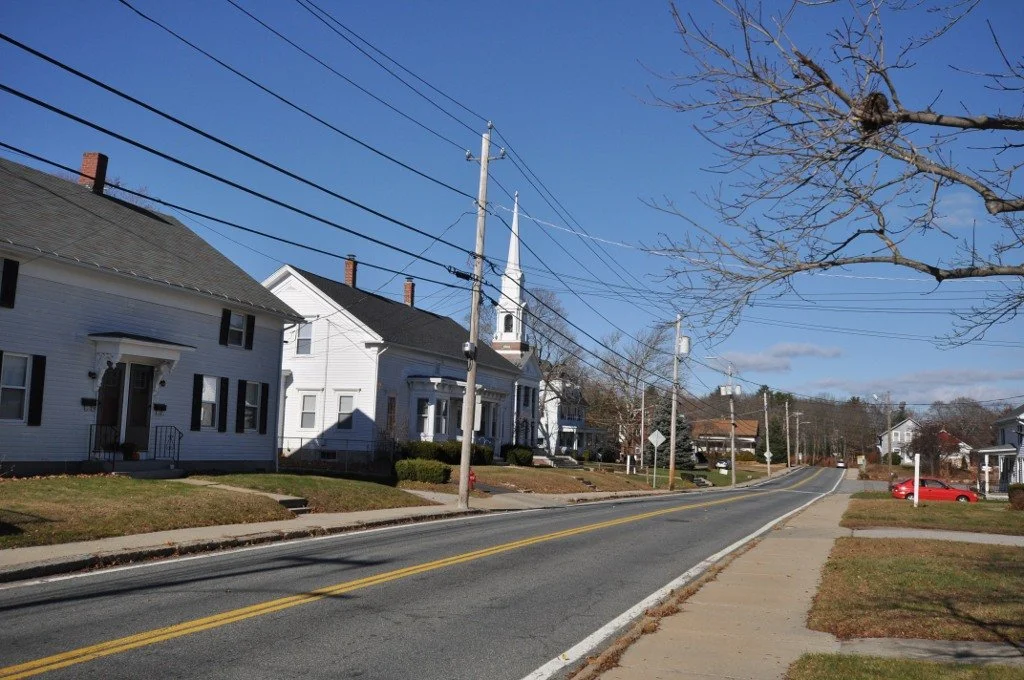
In exurban Harrisville, R.I.
—Photo by User:Magicpiano
'Blurring of life and art making'

From Nat Martin’s show, “Untitled Afternoon,’’ at Kingston Gallery, Boston, June 29-July 31. He lives in the Boston area.
The gallery says:
“This is a collection of small objects made outside the studio, within the orbit of his family. The title of the show suggests a blurring of life and art making, with a practice that is not reliant on the isolation of the art studio. Intimate, poetic, humorous and sometimes mournful, they are made of the stuff of life and family. In Martin’s words: ‘There are many references of our domestic life and what was around us - tipping laundry, toys, birthday cakes, aging, clutter, love, school projects, unfinished projects, marriage, cherubs, joy, sadness, mini golf.’ The work in the show has both a sense of discovery and surprise. They were inspired by the uninhibited creativity of his young kids, who were sometimes also his artistic collaborators.
“Known for his photography, Martin initially had no intentions of exhibiting his sculpture; rather he referred to their fabrication as his playground, a place where there were limitless possibilities of what he could make and the materials he could use. All the work reflects the poetry of everyday life and parenting with all its foibles and triumphs. Home and Art collide. Martin’s 12-year-old child has a memory of Martin at the stove cooking salmon, while melting a wax Minnie Mouse for the next piece.
Visit here for a bio of Nat Martin.
Amy Collinsworth: Amid attacks on Critical Race Theory, UMass Boston launches new institute
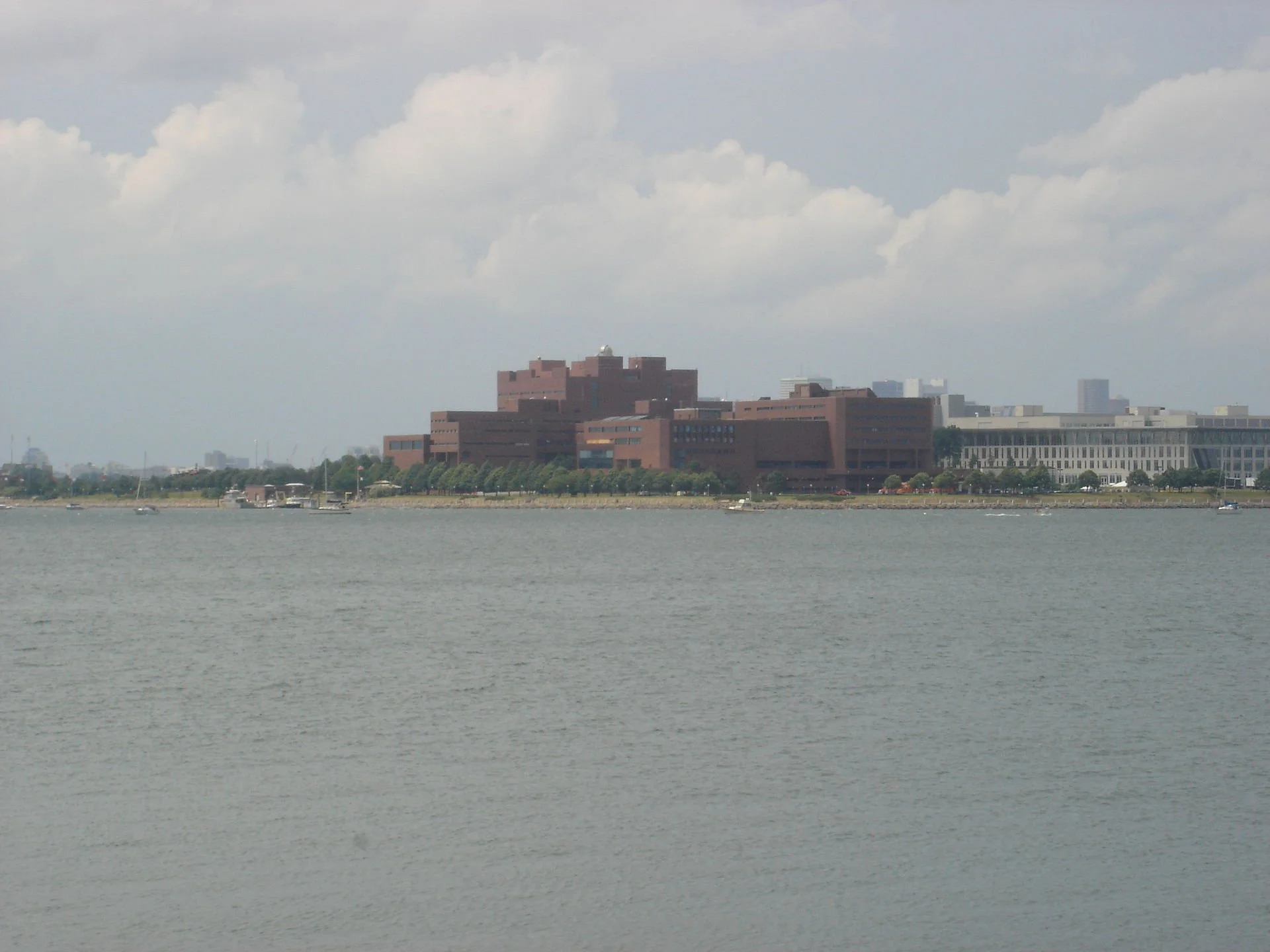
The UMass Boston campus from Squantum Point Park, in Quincy.The brick building in the foreground is Wheatley Hall and the white building to its right is the Campus Center.
— Photo by Fullobeans
From The New England Journal of Higher Education, a service of The New England Board of Higher Education (nebhe.org)
BOSTON
Since the murders of George Floyd, Breonna Taylor, Ahmaud Arbery and Tony McDade in 2020, among countless others, the leadership of the University of Massachusetts at Boston has publicly committed itself to becoming an antiracist and health-promoting university. The university’s stated institutional values and commitments are also intricately tied to an academic freedom that wholly defends the right to teach about race, gender and other equity issues—matters that speak directly to the lived experiences of those in our university and Boston communities.
Currently, more than 30 states have enacted bans or have bans pending related to teaching about Critical Race Theory (CRT), equity and race and gender justice. Additionally, more than 100 organizations have signed the Joint Statement on Legislative Efforts to Restrict Education about Racism and American History, a statement by the American Association of University Professors, PEN America, the American Historical Association and the Association of American Colleges & Universities, which expresses opposition to these legislative bans and emphasizes a commitment to academic freedom that includes teaching about racism in U.S. history.
While anti-CRT legislation is not currently pending in Massachusetts, there have been and remain real threats to racial justice in Boston by entities other than the state. The recent contention in Boston Public Schools about exam school admission and the defunding of Africana Studies at UMass Boston, for example, demonstrate the need for individuals, departments and organizations to commit to racial justice.
For more than 30 years, the Leadership in Education Department at UMass Boston has demonstrated its commitment to social justice in education, in part, by supporting educators for leadership roles in education, policy and community organizations. Our academic programs include Educational Administration (MEd and Certificate of Advanced Graduate Study), Higher Education (PhD and EdD) and Urban Education, Leadership and Policy Studies (PhD and EdD). As a collective, our community of faculty, students, staff and alumni is committed to research and practice that is grounded in equity, organizational change for racial justice and collaborative leadership.
Launching a new institute
As our department reflects on the changes we want to make in relation to community and racial justice, we are excited to start a new initiative that opens our department community beyond the structures of our academic programs: the Educational Leadership and Transformation Institute for Racial Justice. The institute will focus on building capacity and sustainability to transform schools, colleges and universities for racial equity.
This institute aligns with a resolution recently approved at UMass Boston to defend academic freedom to teach about race and gender justice. The institute’s programs and workshops will address issues of racial justice in education, including in teaching, learning, administration and policy. This institute makes actionable our department’s commitment to building capacity for addressing racism, whiteness and racial equity in educational institutions.
The Educational Leadership and Transformation Institute for Racial Justice is an extension of our department’s social and racial justice commitments, responding to the political and policy context in the U.S., our state and our own institution. This context includes attacks on CRT and ethnic studies at all levels and, in our own UMass Boston community, public charges of racism, defunding of our ethnic institutes and disagreement over mission and vision statement drafts on the university’s commitment to becoming an antiracist and health-promoting institution.
In the Leadership in Education Department at UMass Boston, where people of color comprise the majority of students and faculty, academic freedom is understood as central to a racial justice commitment. This is why we recently brought a resolution to our faculty governance process. The resolution, “Defending Academic Freedom to Teach About Race and Gender Justice and Critical Race Theory,’’ received a favorable vote from the UMass Boston Faculty Council. In addition to other efforts to advance racial justice within our department, throughout UMass Boston and in our professional and personal lives, we now turn to what we can do to uphold this resolution as a department through this institute.
Commitment to racial justice
With hundreds of graduates from our programs, many of whom continue to work and live in New England, our students, alumni and faculty truly lead education throughout this region. Many hold roles across public and private education, including as principals, college presidents, deans, consultants, teacher leaders, faculty members, teachers, board of trustee members, directors, elected officials and district and university administrators. As scholar-practitioners, our students explore dissertation topics that center on issues of educational equity.
The same is true of the research and scholarship that our faculty members pursue. Our members conduct research on a variety of equity-focused topics in K-12, higher education and public policy, such as African-centered education; the schooling experiences and educational and life outcomes of Black women and girls; power dynamics and conflict in the academic workplace; how students pay for college; faculty members’ work-life experiences; the design and implementation of equity reforms; critical race theory in higher education; community-engaged teaching, learning and research; developmental education; and identity-conscious leadership. We are a community committed to leadership for change.
In recent years, our department has collaborated in new ways to examine how we want to live in congruence with our social and racial justice values. Since June 2020 and the murder of George Floyd, many members of our department community have gathered as The Cypher. The Cypher is a group of students, staff and faculty who support each other in their work to advance racial justice. In our organic gatherings, we focus on healing, wholeness and taking action against racism and whiteness at the University of Massachusetts Boston.
We continue to engage in activism on our own campus, including building capacity for promoting racial justice by strengthening coalitions with other groups at UMass Boston who are also promoting racial justice. This includes several of the ethnic institutes at UMass Boston and the Undoing Racism Assembly, a university-wide group of students, staff, faculty and administrators who address different racial justice concerns on campus. We also host events for our community, like the recent “Cypher Presents” dialogue between education scholars and policymakers about current matters of educational equity impacting area educational institutions and communities.
The Cypher
We began our work in The Cypher with a document, authored by 70 people, The Cypher Report. In alignment with our administration’s commitment to antiracism and health promotion, this report calls on UMass Boston administration to take specific steps to address institutionalized inequities within our organization. In addition to supporting the restorative justice framework put forth by Africana Studies, The Cypher Report made more than 20 demands, including:
Restoring funding for the Institute for Asian American Studies (IAAS), the Institute for New England Native American Studies (INENAS), the Mauricio Gastón Institute for Latino Community Development and Public Policy, and the William Monroe Trotter Institute for the Study of Black History and Culture and rescinding the glide path toward requiring the institutes to be “self-sufficient.”
Hiring an external consultant to meet individually with each senior level administrator, dean, and department chair to assess their current understanding of the ways racism and whiteness are perpetuated at UMass Boston.
Developing a racial-equity dashboard and report card to monitor and identify inequities to improve campus racial climate and equitable educational/work experiences for the university community.
Restore the Leadership in Education Department to its full-time faculty baseline (specifically, fill the seven faculty vacancies in the department).
Our efforts to institutionalize change for racial equity as a Cypher and department—in response to the larger context highlighted above—are evident through the recent resolution we brought to the UMass Boston Faculty Council, “Defending Academic Freedom to Teach About Race and Gender Justice and Critical Race Theory’’.
Attacks on CRT have been waged through state legislation and the former federal Equity Gag Order that banned federal employees, contractors and grant recipients from addressing concepts including racism, sexism and white supremacy. In the past year, the African American Policy Forum, led by Kimberlé Crenshaw, has asked faculty councils across the U.S. to unite with those affected by this legislation. After presentations from several members of The Cypher and me, the UMass Boston Faculty Council voted to pass this resolution that rejects “any attempts by bodies external to the faculty to restrict or dictate university curriculum on any matter, including matters related to racial and social justice.” (For the full resolution, see the December 2021 Faculty Council meeting minutes.)
The resolution calls us to question what racial and gender justice mean in education, and our institute is one response to that call. Through our programs and workshops in the Educational Leadership and Transformation Institute for Racial Justice, we especially look forward to conversations among and beyond our campus community to explore the ways we engage in this work. For example, how do students feel when their cultures, histories and experiences are represented within courses taught by faculty who use a CRT lens or focus on highlighting matters of racial justice and gender justice in their classrooms? What are the implications for tenure and promotion when faculty do or do not center racial justice, gender justice and intersectionality in their scholarship? For staff members who participate in professional development related to racial and gender justice, how is participation perceived in relation to professional advancement? How often are budget decisions called into question when their focus is on initiatives of racial and gender justice? As educators and community members, we must use critical questions such as these to consider the meaning of our work beyond symbolic or performative actions if we believe equity matters.
Amy E. Collinsworth is graduate program manager and assistant to the department chair in the Leadership in Education Department at the University of Massachusetts Boston, where she is also a doctoral candidate in the Higher Education Program.
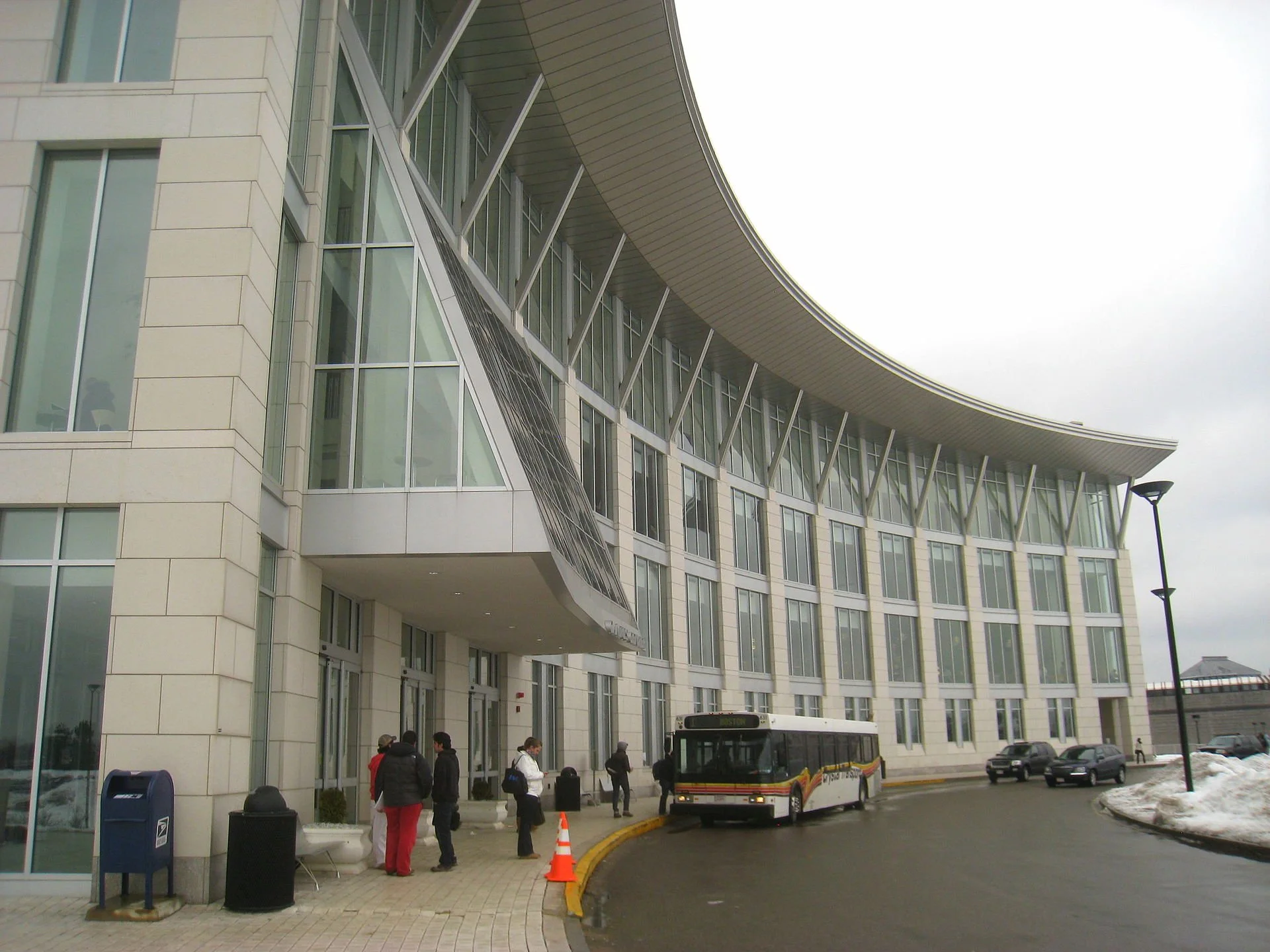
At the UMass Boston Campus Center.
Even in the winter?
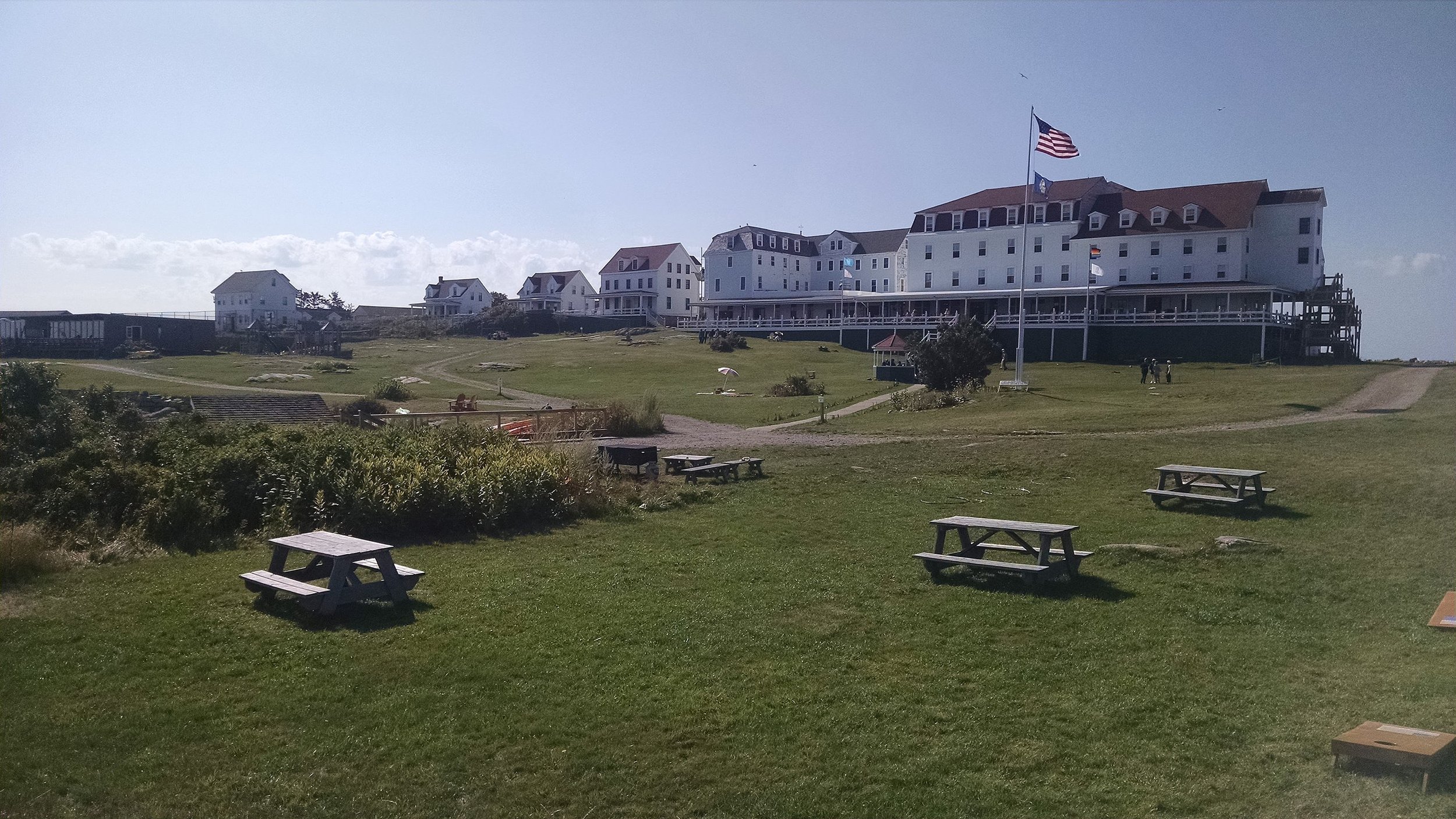
Oceanic Hotel on Star Island in the Isles of Shoals.
— Photo by DavidWBrooks
“The remarkeablest Isles and mountains for Landmarks are these… Smyth’s Isles are a heape together, none neere them, against Accominiticus… a many of barren rocks, the most overgrowne with such shrubs and sharpe whins you can hardly passe them; without either grasse or wood but there or foure short shrubby old Cedars… And of all foure parts of the world that I have yet seene not inhabited, could I have but meanes to transport a Colonie, I would rather live here then any where; and if it did not maintain it selfe, were wee but once indifferently well fitted, let us starve… By that acquaintance I have of them, I may call them my children; for they have bin my wife, my hounds, my cards, my dice, and in totall my best content.”
— English explorer John Smith in 1614 about the Isles of Shoals, off New Hampshire and Maine.
—
Death in Boston

In the Head of Charles Regatta.
“Mary Winslow is dead. Out on the Charles
The shells hold water and their oarblades drag,
Littered with captivated ducks, and now
The bell-rope in King's Chapel Tower unsnarls
And bells the bestial cow
From Boston Common; she is dead….’’
— From ‘‘Mary Winslow,’’ by Robert Lowell (1917-1977)
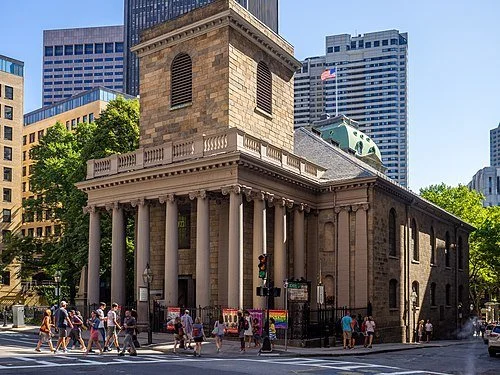
King’s Chapel (built 1754), in Boston.
David Warsh: What Putin had hoped in assaulting Ukraine

St. Andrew Ukrainian Orthodox Church in Boston.
SOMERVILLE, Mass.
Two days into Russia’s invasion of Ukraine, the dispatch from Russia’s state-owned news service seemed to reflect Vladimir Putin’s innermost reasoning.
A new world is coming into being before our very eyes. Russia’s military operation has opened a new epoch…. Russia is recovering its unity – the tragedy of 1991, this horrendous catastrophe in our history, its unnatural caesura, has been overcome. Yes, at a great price, yes through the tragic events of what amounts to a civil war, because now for the time being brothers are shooting one another… but Ukraine as anti-Russia will no longer exist.
Instead, the Novosti account continued, the Great Russians, the Belarusians and the Little Russians (Ukrainians) would come together as a whole – a reconstituted Russian Empire. Putin had undertaken the “historic responsibility” of reunification upon himself “rather than leaving the Ukrainian question to future generations.”
The pronouncement was quickly taken down, according to Jonathan Haslam, Kennan Professor at the Institute for Advanced Study, in Princeton, N.J., describing Putin’s Premature Victory Roll in early March. It wasn’t just the over-optimism that rendered it embarrassing. It was too transparent. The goal of reunification superseded Putin’s usual complaint about the threat to Russia posed by NATO expansion.
I was broadly sympathetic to Putin after 1999, when he published his essay on Russia in the Twenty-First Century as an appendix to his First Person interview in 2000, upon taking office. I overlooked the Second Chechen War. I began paying attention after he criticized the U.S. for its invasion of Iraq in a speech in Munich, in 2007. Even after Putin’s seizure of the Crimean Peninsula, in 2014, he seemed to be within his rights, though barely. Russia had a historic claim on the peninsula on which its Black Sea naval base in Sebastopol in situated, I reasoned.
No more. Last week I re-read Putin’s article from last August, On the historical unity of Russians and Ukrainians. Then I read When history is weaponized for war, historian Simon Schama’s scathing criticism of it, When the Pope sought to give Putin an excuse for his invasion, in an interview with an Italian newspaper earlier this month, asserting that NATO had been “barking at Russia’s door,” it rang hollow. Nobody is talking about a Morgenthau Plan for Russia after the war in Ukraine, but nobody is talking about a Marshall Plan, either. It has options – a stronger alliance with India? But regaining its reputation in Europe looks harder than ever.
NATO’s long-term strategy of “leaning-in” seems to have worked. Putin may or may not have cancer, as a report suggested yesterday in The Times of London, but something has seriously wrong gone wrong with the man. Haslam cites Shakespeare. Putin has waged a war he cannot win. He is cementing in place the fence around him of which he complained.
Consider that his war on Ukraine has persuaded Finland and Sweden to seek to join NATO.
David Warsh, a veteran columnist and an economic historian, is proprietor of Somerville-based economicprincipals.com, where this essay first ran. He’s the author of, among other books, Because They Could: The Harvard Russia Scandal (and NATO Enlargement) after Twenty-Five Years.

William Morgan: Less is more at RIC nursing-school building

At Rhode Island College, in the Mount Pleasant section of Providence.
— Photos by William Morgan
The home of the recently named Zvart Ononian School of Nursing at Rhode Island College is a handsome and noteworthy addition to the architectural scene in Providence. Not unlike the public-education sector that built it, and the nursing profession itself, the 12,000-square-foot facility is modest, accomplished and without pretense.
Since its beginning, in 1970, RIC’s nursing program has been in the Fogarty Life Sciences Building. In recent years it has been desperately in need of additional space. And an important need has been to establish a visual identity for the School of Nursing. Fogarty, to which the Ononian is attached, is typical of so many of the buildings at RIC: buff brick functionalism that proclaims its post-World War II public university aura.

The School of Nursing’s building went up six years ago, but received little notice until the school received $3 million this year in honor of licensed practical nurse Zvart Ononian
Rhode Island College moved out from downtown Providence to 180 acres of rolling Mount Pleasant landscape in 1958, but the countryside remained about the only thing that distinguished the campus. Its scattering of two-story, flat-roofed classroom buildings appeared like a combination of parochial high school and Midwestern agricultural college. (The style, no doubt, reflected economic reality as much as any philosophy of architects Howe, Prout & Ekman.) RIC’s architectural image started to look up with the construction of the John Nazarian Center for the Performing Arts, in 2000. The theater, designed by William Warner, a prime mover in the Providence Renaissance, has been joined by the sleek, copper-sheathed Alex + Ani Hall, by the respected Boston architects Schwartz/Silver
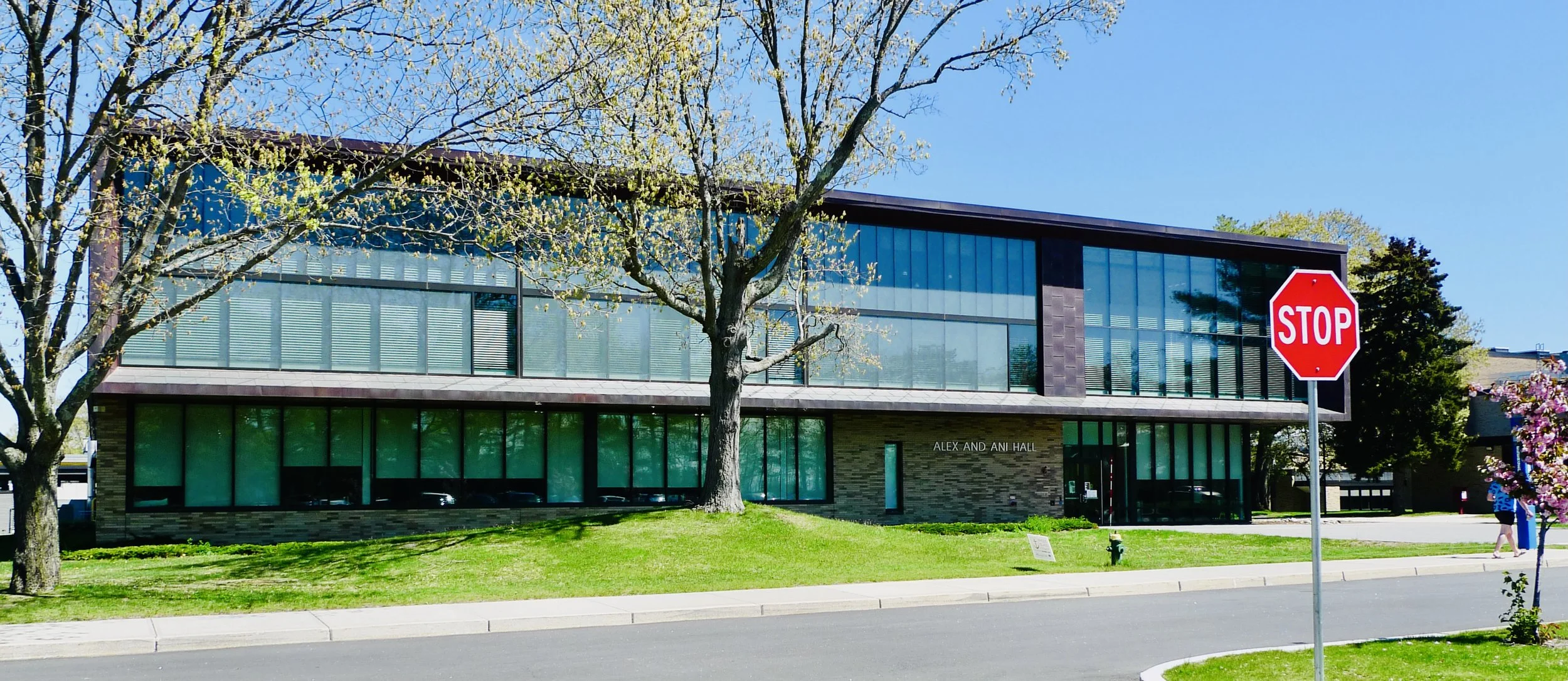
The Art classroom building at RIC, Alex + Ani Hall.
Unlike the art building’s stylistic variation on the theme of the earlier campus structures, the School of Nursing’s single-pitched, sloping roof creates a subtler, less institutional approach. And, instead of two stories squished together, the new building offers a high and welcoming gathering space, bathed in light from full-height windows. Gathered around this spacious hall are administrative offices, meeting rooms and simulation laboratories for hands-on training.

Inside the nursing school.
JMT Architecture, designers of the nursing school addition, have 1,600 employees, with offices in Baltimore, Philadelphia and Cleveland. While no one would confuse JMT with famous starchitects, or a small studio firm, they run a highly successful commercial enterprise that delivers dependable workmanlike buildings to satisfied clients. The RIC Nursing School doesn’t knock one’s socks off with architectural pyrotechnics, but it does not look money-starved, as publicly funded school design often does.

Entrance to Ononian School of Nursing. Thoughtful use of inexpensive materials.
The curtain wall mullions could be a little more sophisticatedly detailed, and the boxy entry vestibule is a little awkward. But the laminated timber implies strength; the entire materials palette, especially the concrete plank covering, complements the wood framing. This is a gentle, sensibly proportioned building that does not try too hard. The most appealing aspect of the school of nursing is perhaps the landscaping, where river birches set amidst natural grasses contribute a pastoral Scandinavian ambience.

Entrance to Ononian School of Nursing. Thoughtful use of inexpensive materials.
Administrators and the simulation-lab coordinator who spoke with GoLocal had only positive things to say about the nursing school building. The idea that appealing architectural design would attract students did not seem to be a consideration. Rather, it is the desire to offer an affordable nursing degree that matters. Even if the relationship of good design to academic success is unarticulated, the nursing facility is a happy place to teach and learn, as well as the attractive face of the school.
And compared to the silliness of expensive and inappropriate architectural statements, such as the fatuous RISD student center or Brown’s Performing Arts fiasco, the Zvart Ononian School of Nursing at Rhode Island is a welcome grace note.
Architecture writer and historian William Morgan is the author of a number of books about campus architecture, including Collegiate Gothic (Universty 0f Missouri Press) and The Almighty Wall (MIT Press).
And then call your cardiologist

Fish balls. Fish balls and codfish cakes were once very popular elements of New England cuisine.
— Photo by Moonguaocadine -
“She boiled three good-sized potatoes for 25 minutes; then mashed them and stirred the fish into them. To this mixture she added five eggs, five generous teaspoons of butter and a little pepper, beat everything generously together. She cooked them in deep fat, picking up generous dabs of the mixture in a potbellied spoon. The resulting fish balls, eaten with her own brand of ketchup, made ambrosia seem like pretty dull stuff.’’
--Kenneth Roberts (1885-1957), famed author of historical novels and a journalist, in Trending into Maine (1938). He was born in Kennebunk, Maine, and died in Kennebunkport.
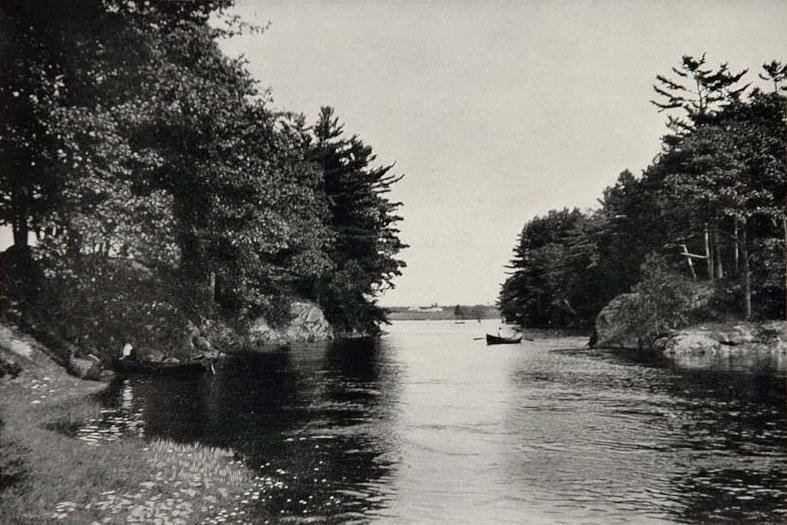
Kennebunk River in 1903
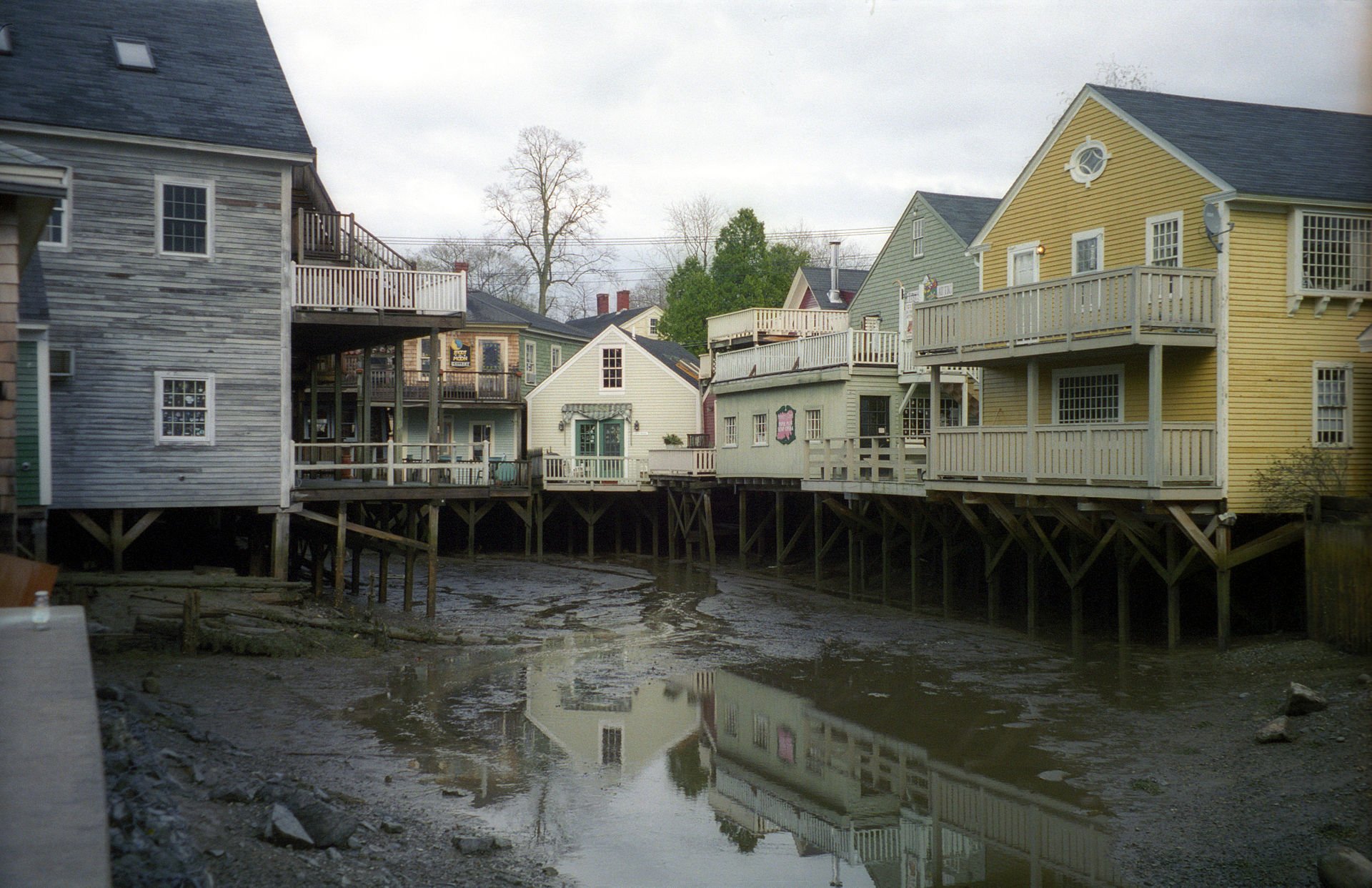
On the waterfront of Kennebunkport. The exposed mud indicates Maine’s famously wide tidal range.
— Photo by Peter Dutton
Chris Powell: Amidst the failure to lift the poor, cities need gentrification
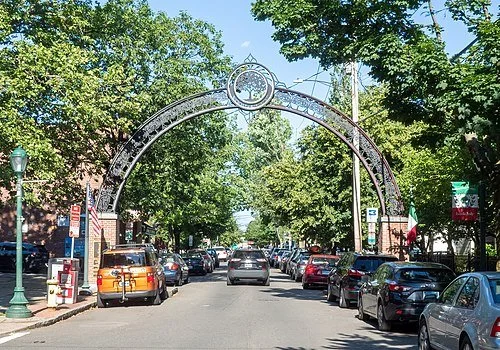
Approaching Wooster Square Park, in New Haven. The Wooster Street archway is decorated with a cherry blossom tree, a symbol of New Haven. It’s a reminder of the pleasure and advantages of city life, notes Chris Powell.
MANCHESTER, Conn.
Especially in Connecticut, elected officials claim credit for trying to solve the problems they themselves created. It happened again recently with legislation proposed in the General Assembly to require larger municipalities to create "fair rent" commissions with power to cancel or reduce residential rent increases.
Yes, along with housing prices generally, rents have been increasing dramatically since inflation exploded. By some calculations housing has never been more expensive relative to incomes. But the legislation effectively blamed landlords when the rent increases are largely the result of government's own policies.
Impairing the ability of landlords to make money would only discourage boosting the supply of rental housing.
Connecticut policy long has allowed municipal zoning regulations to stunt the housing supply. Like rent control, restrictive zoning subverts the market. If housing was easier to build, supply would grow and prices fall.
A recent state law aims to diminish the exclusivity of suburban zoning, but it is yet to have much effect even as it is prompting anger in some towns.
The housing shortage has bigger underlying problems.
First, people want to have children but don't want to ensure that housing is available nearby for their kids when they start out on their own. Of course, peace and quiet are great but many people want government to provide peace and quiet at the expense of people who don't yet have adequate housing -- to provide peace and quiet through restrictive zoning.
And second, people justifiably want good neighbors. Quite apart from racial and ethnic prejudices, which are fading, good neighbors means that people who will behave decently, pay more in taxes than they consume in government services, and not manifest the pathologies associated with the never-ending poverty and depravity of the cities.
Connecticut's zoning-reform legislation vindicates these concerns insofar as it calls itself "fair share" legislation, confirming that new residents are a burden. Once or twice even the mayors of Hartford and New Haven have been candid about wanting to disperse their poorest residents to the suburbs. Indeed, poverty is no virtue, for with the poor come crime, dependence, and neglected children who wreck schools.
Suburbs sneer at this while city mayors have to cope with it. If government's welfare, education and urban policies were not chronic failures, suburbs might be more welcoming to new residents and to the housing construction Connecticut needs so badly.
All state government has to do is stop manufacturing poverty.
But maybe with the housing legislation Connecticut has been putting too much focus on suburbs. Lately the glorious cherry blossoms in Wooster Square Park, in New Haven, have provided a spectacular reminder of the advantages and potential of city life.
After all, the main problem with cities today is not infrastructure as much as many of the people who live there. A city with "mixed-use development" has great virtues -- commerce, industry, hospitals and medical offices, various kinds of residences, markets, restaurants, churches, theaters, and parks, all within walking distance of each other, with shops and housing often in the same buildings. In such places it is possible not just to live without a car but to be glad to be free of its expense.
Thanks in large part to Yale University, downtown New Haven somewhat sustains this way of life. Downtown Hartford lost it 60 years ago with horribly misguided urban redevelopment. But under the same mayors who would like to export their poor, both cities are waking up, striving to increase middle-class housing downtown or nearby.
Sometimes this effort is scorned as "gentrification," but gentrification is exactly what the cities need. Why is Stamford booming while Bridgeport -- only 23 miles east on the same railroad, highways and coast, with a better harbor and an airport -- sinking in decrepitude and struggling to just keep the lights on downtown?
Maybe it's because, being closer to New York City, housing in Stamford long has tended to be more expensive and so being poor there wasn't as easy as it was and remains in Bridgeport.
The poor can't be deported. So why can't Connecticut ever raise them to the middle class? Why is the decades-long failure to lift them never even officially acknowledged?
Chris Powell is a columnist for the Journal Inquirer, in Manchester.
Some detritus of commercial civilization

Painting by Lincoln, R.I.-based artist Peter Campbell in his show through June 24 at Gallery 175, Pawtucket, R.I.

The Eleazar Arnold House (built in 1693), in Lincoln, R.I., is a rare surviving example of a stone-ender, a once-common building type in New England featuring a massive chimney end wall. The houses stone work reflects the origins and skills of settlers who emigrated to New England from southwest England, and it’s a National Historic Landmark.

Dune delirium

“White Kite’’ (oil on canvas), by Kitt Shaffer, M.D., in the South Coast Artists’ Spring Invitational, at Dedee Shattuck Gallery, in Westport, Mass., through May 29.
The 75 SCA member artists will present 165 works, including works in oil, acrylic, pastel, encaustic, watercolor, metal, clay, mixed media, photography, collage, and more. For more information please visit dedeeshattuckgallery.com and southcoastartists.org.
Dr. Shaffer is vice-chair for education in radiology at Boston Medical Center. She says:
“My interest in art began in junior high school, when I took painting and jewelry making, winning a trip to Chicago for a portrait I did for a local art fair. But I never considered art as a career, since I already knew I wanted to go to medical school. In college at Kansas State, I was a pre-med, but managed to take all of the art classes I could fit in, mostly drawing (especially figure drawing), painting and sculpture. After I entered residency, I signed up for a pottery class with a friend at the Cambridge Adult Ed center, and fell in love with that, although I continued to paint and for many years, had a studio at Joy Street in Somerville, as well as a painting studio in the tiny town of Monterosso, Calabria, where we would go for a month every spring. I cannot do pottery at the moment due to the need for social distancing, we are no longer able to travel to Italy, and I had to let my Somerville studio space go, but I am hoping to be able to set up a new studio in Westport, Massachusetts, where I am spending more time now. Most of the paintings I have shared are recent work done in Westport or Italy, the drawings are from my annual teaching trips to St George’s University in Grenada, and the figurative sculpture is from several years ago done at the Harvard ceramics studio.’’
Difficult rock songs from a brainy town

Tom Scholz in 2008
“All Boston songs are fairly difficult to translate to the stage. None of them are especially easy to play or sing. A lot of them, of course, have very involved arrangements with lots of different sounds and sections that are difficult to play and sing. The prospect of doing any Boston song live is always an endeavor in itself.’’
Tom Scholz (born 1947), the founder, main songwriter, primary guitarist and only remaining original member of the rock band Boston, named after Scholz’s home town.
He’s a MIT-trained engineer who designed and built his own recording studio in an apartment basement in the early 70's. Scholz began writing songs while earning his master's degree at MIT. The first Boston album was mostly recorded in his basement studio, mostly using devices he designed and invented.
