
Vox clamantis in deserto

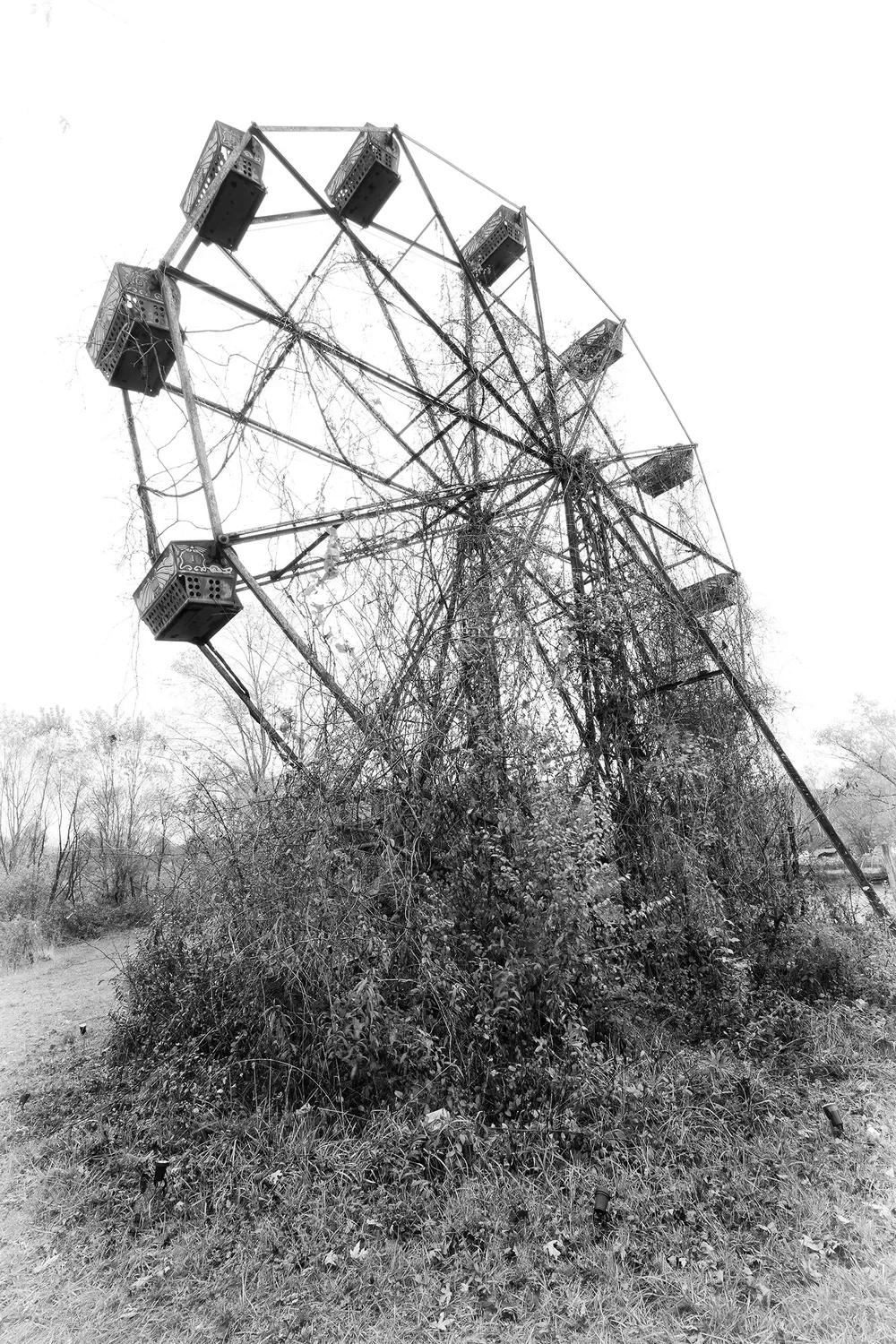



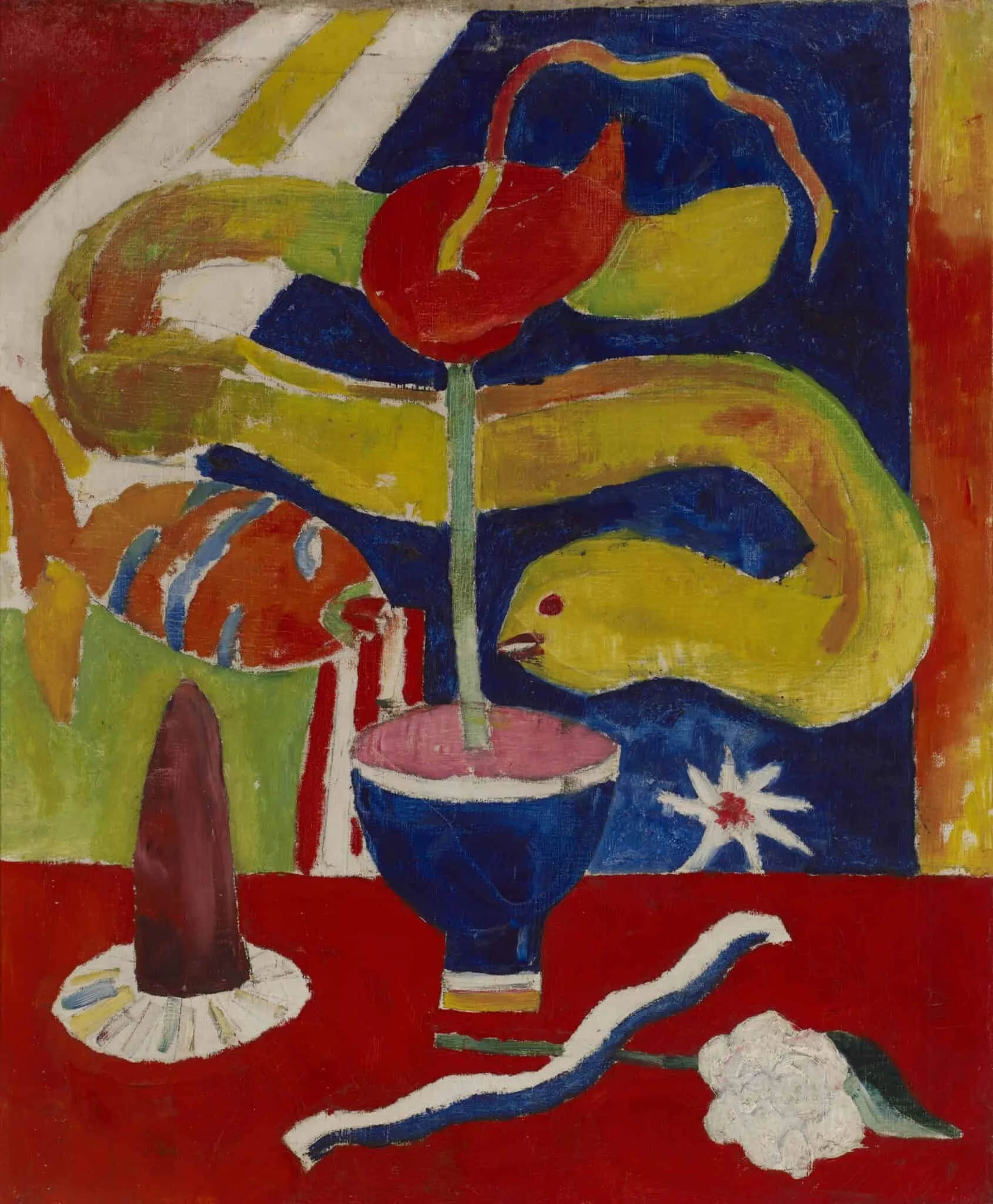




The Unexamined Life May Be Well Worth Living

First appeared in Daily Nous
Lloyd always acts without thinking.
Reflection is hardly for him.
Lillian’s mind has been shrinking.
Dementia is making her dim.
Both find enjoyment in living.
So don’t be so ready to scoff.
Why are y.ou so unforgiving?
How harsh to be writing them off.
—Felicia Nimue Ackerman
But don’t look down

‘‘Climb to the Rise’’ (oil on canvas), by Judith Brassard Brown, at Kingston Gallery, Boston.
Her artist statement:
‘The acts of making and viewing are opportunities to heal. While paintings may appear traditional at first glance, they do not recreate a specific location or event. Rather, each provides connections across boundaries of time or a captured moment, contrasts what we see with what we sense below the surface. Their qualities may activate our capacity to connect with others and with our own buried emotions. In recognizing what is compressed, that recognition may activate a corresponding release of psychic burden and an increase in joy.’’
She’s based in Boston’s Dorchester section.

Neponset River at Lower Mills (2009). Dorchester on the left, Milton on the right (south) side of the river.
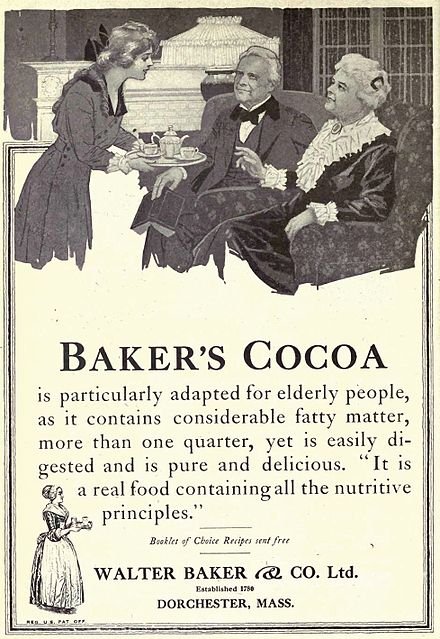
Baker's Cocoa Advertisement in Overland Monthly, in January 1919. The manufacture of chocolate had been introduced in the United States in 1765 by John Hannon and Dr. James Baker in Dorchester, then a separate town from Boston. The long-gone Walter Baker & Co. was based in Dorchester.
‘Help us’ indeed!

“The original settlers of Massachusetts Bay Colony, founded in 1630, adopted an official seal (above) designed in England before their journey. The central image depicts a near-naked native holding a harmless, flimsy-looking bow and arrow and inscribed with the plea, ‘Come over and help us.’ Nearly three hundred years later, the official seal of the U.S. military veterans of the ‘Spanish-American War; (the invasion and occupation of [Spanish colonies of] Puerto Rico, Cuba, and the Philippines) showed a naked woman kneeling before an armed U.S. soldier and a sailor, with a US battleship in the background. One may trace this recurrent altruistic theme into the early twenty-first century, when the United States still invades countries under the guise of rescue.”
― Roxanne Dunbar-Ortiz, in An Indigenous Peoples' History of the United States

The seal of the Commonwealth of Massachusetts
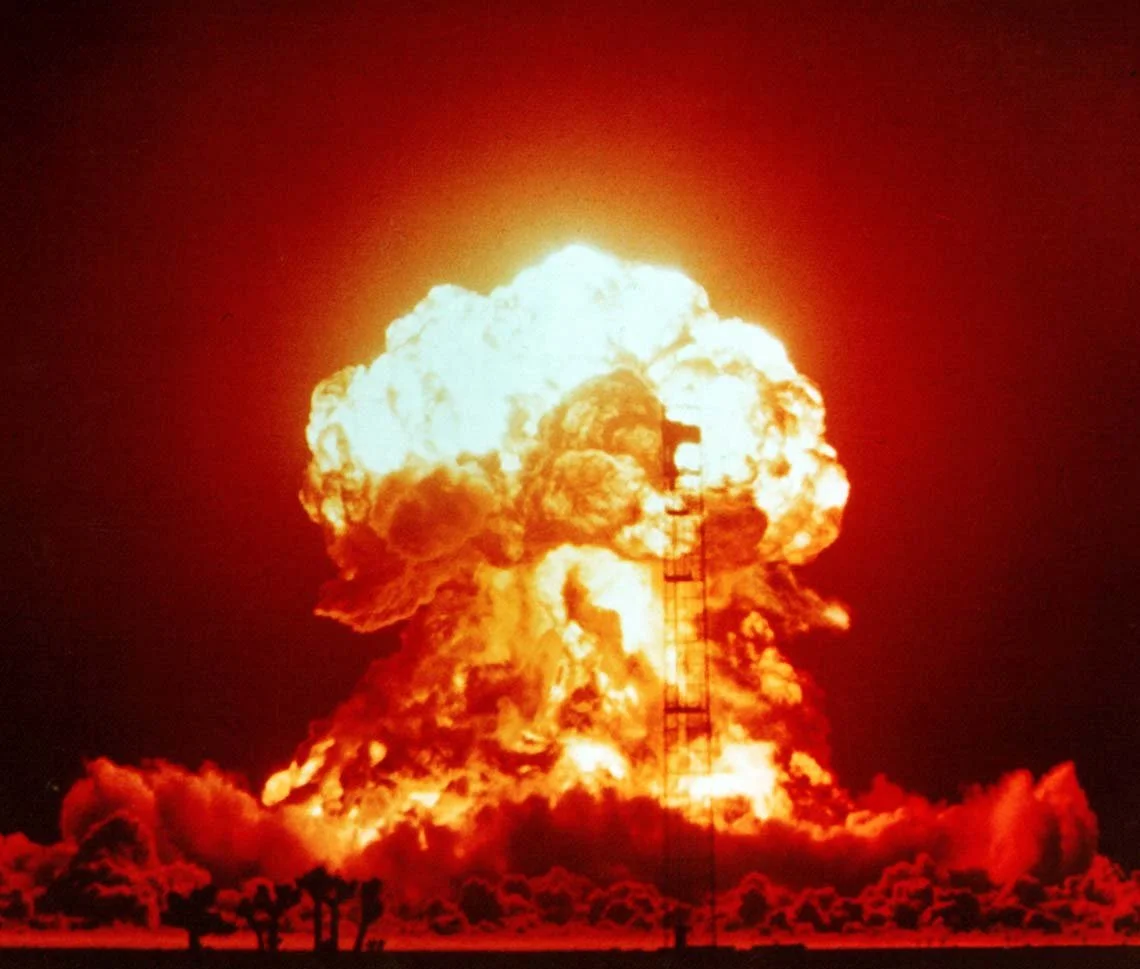
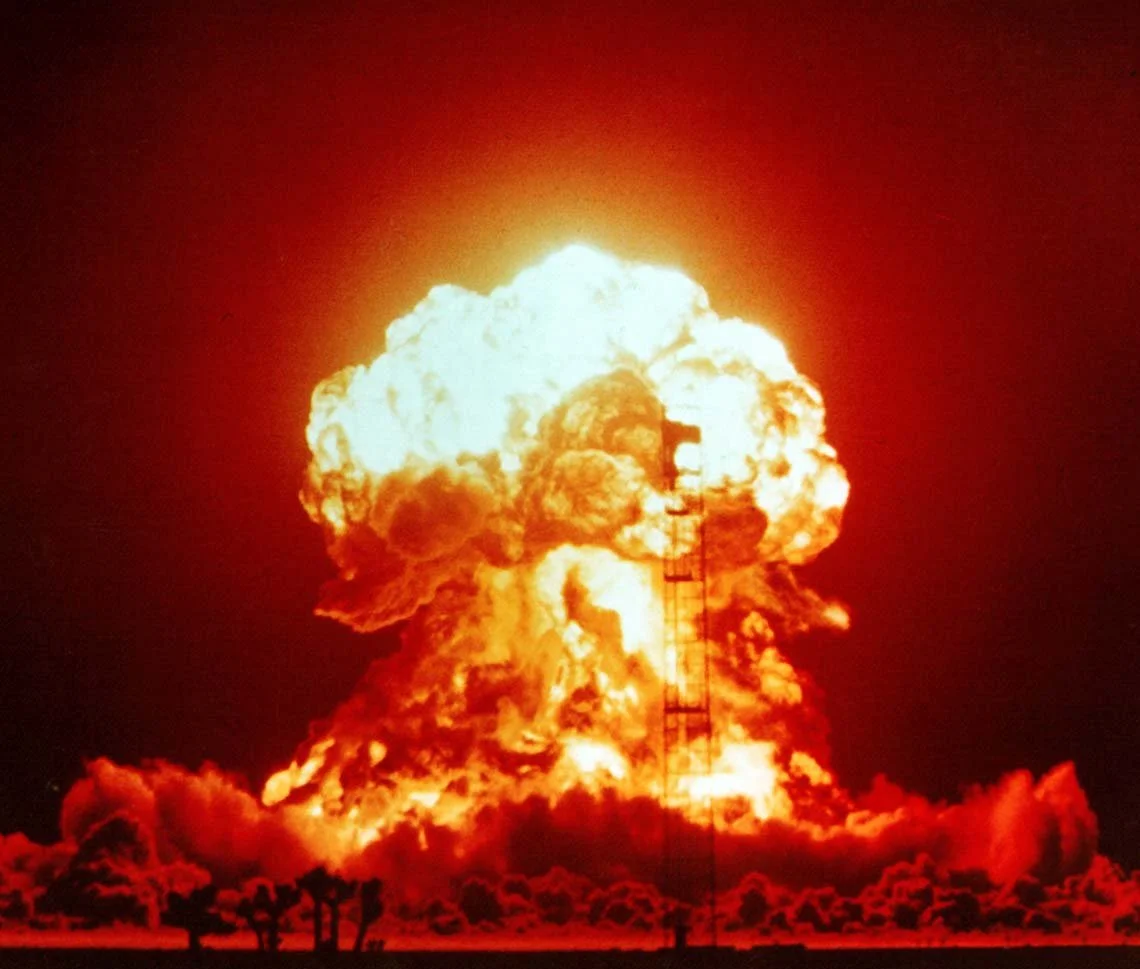
Llewellyn King: The threat of nuclear war and the license it has given Russia’s dictator
WEST WARWICK, R.I.
History isn’t short of people to blame. You could say of the present world crisis that it was former President Obama’s fault for not getting tougher with Russian President Putin in Syria. You could blame former President Trump for giving Putin a sense of entitlement and for undermining NATO, seeing it as a financial play. You could blame former German Chancellor Angela Merkel for encouraging Russian gas imports, shutting out the nuclear- energy option.
You could, of course, blame President Biden for explicitly telling Putin, and the world, what the United States wouldn’t do if he invaded Ukraine. And you could blame Biden and NATO for dribbling vital military aid to Ukraine over the first devastating weeks of the Russian invasion.
If you want to continue, you could blame the world’s military strategists for believing that Russia, after the fall of communism, had changed. You could, perhaps, blame NATO itself, for expanding its reach to the former Soviet republics of Estonia, Lithuania and Latvia.
But Putin is unequivocally the one to blame. The dictator is the one who wants to remake Russia in the image of the imperial tsars. It is a flawed scheme but a real one.
As the world grapples with the reality of Putin, the past informs but it doesn’t instruct.
If NATO were to engage Russia with conventional forces, it would triumph. That is one lesson of Ukraine. Russian military forces are woefully inefficient, even incompetent.
Would it were that simple.
The beast in the room, the feared monster, the threat that hangs over the whole world is nuclear war. It is the clear-and-present danger. It shapes our handling of Russia and will shape our response to China, if and when it invades Taiwan.
Nuclear-war avoidance is again dominating the world in ways we had nearly forgotten.
Will Russia, a caged, fierce bear, resort to nuclear, and how much nuclear to what effect against which targets?
The United States and the Soviet Union reached a modus vivendi: mutual assured destruction (MAD), which kept the peace even as nuclear armaments proliferated and stockpiles grew exponentially. Is that still the option? Is MAD -- so long after the collapse of the Soviet Union -- still the underlying realpolitik, the restraining factor between nuclear powers?
Does that mean that anyone with nuclear weapons can wage conventional warfare in the belief that they won’t face NATO or any other serious restraining military action because they can unleash terrifying global destruction?
Or is there, as some believe, the prospect of limited nuclear engagement, using area tactical nuclear weapons? This has never been tested.
There hasn’t been a limited nuclear ground war. Could it be contained? Should it be contemplated outside the deeper reaches of the defense establishment?
But it is what keeps the leaders of Europe, the United States and Canada awake nights. If you favor limited nuclear war, just look to the effects of a nuclear disaster, Chernobyl, and start multiplying.
It is the unthinkable scenario that must be thought about. It is the reality which holds back NATO and makes the West a spectator to the carnage in Ukraine.
Russia isn’t a rich country except in some natural resources. It has a large but poorly trained and equipped military. But it bristles with nuclear weapons aimed at North American and European cities. Its ability to threaten us with nuclear horror changes the balance between nations: an indelible change to future foreign policy.
In the short term, when contemplating the return of MAD in international relations, the question is: How mad – as in insane -- is Putin, and how ready is Biden?
The pieces on the world chess board have moved and they won’t be moved back. The intelligentsia has yet to grasp the extent to which Ukraine has changed the world – and made it a more dangerous place. They need to catch up fast.
Llewellyn King is executive producer and host of White House Chronicle, on PBS. His email is llewellynking1@gmail.com and he’s based in Rhode Island and Washington, D.C
Two sides of oyster farming
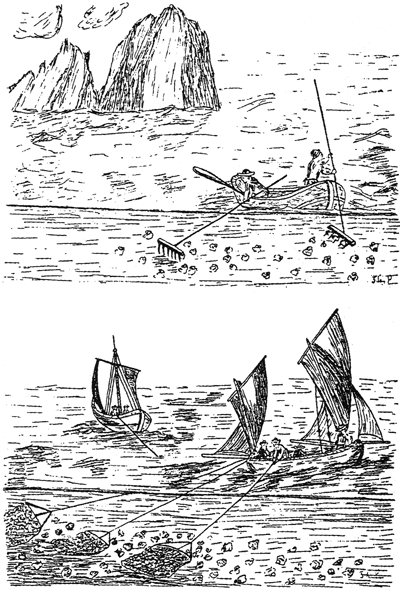
Excerpted from from an ecoRI News (ecori.org) article. To read the full article, please hit this link.
Oysters provide food, clean the water, generate jobs and create fish habitat, but shellfish farms have encountered opposition from residents who say they mar the appearance of their views and interfere with their use of the water.
Two recent public presentations on aquaculture focused on restorative aquaculture and how it is used to improve marine ecosystems in the United States and the different ways people perceive aquaculture facilities that grow shellfish. The talks — on March 21 and April 6 — were part of a series of educational webinars organized by the Narragansett Bay Special Area Management Plan (SAMP) of the Rhode Island Coastal Resources Management Council (CRMC).
War-time energy news

Outdoor part of house heat pump
Adapted from Robert Whitcomb’s “Digital Diary,’’ in GoLocal24.com
The United Kingdom will nationalize part of London-based National Grid to better secure the country’s electricity system in light of Russian aggression and to accelerate the move to non-fossil-fuel-based electricity generation.
National Grid runs the electricity and natural-gas system in Rhode Island, though it’s been trying to sell it to PPL.
In this wartime, look for more moves like Britain’s.
xxx
Every little bit helps. There’s a campaign to make and deliver to Europe by the fall millions of U.S. heat pumps – those air conditioners that also take ambient heat from outside to heat homes and offices. This would help reduce the use of Russian natural gas for heating as winter comes on. Revenue from that gas has been used to murder many thousands of men, women and children since Putin began his assault on Ukraine.
President Biden could use the Defense Production Act to get American factories to greatly increase its production of heat pumps.
xxx
It’s irritating that so many people leave their car and truck engines running and polluting while they’re away shopping, etc., because they want the heater or air conditioner to keep their vehicles at exactly the temperature they had while driving. What a waste. There is such massive energy waste in this country!

Don Pesci: Give the Ukrainians back their skies

The Black Madonna of Czestochowa
VERNON, Conn.
Just before the joy of Easter broke upon us, Austrian Chancellor Karl Nehammer met with Russian President Vladimir Putin in Moscow, far from Russian bombardments in Ukraine.
In an interviewed on NBC’s “Meet the Press,” Nehammer said that Putin thinks he is winning the war in Ukraine despite heavy military losses and the fruitless non-stop bombing of Ukrainian cities. Putin certainly has left his mark on Ukrainian cities, and will continue to do so as long as Ukraine’s military cannot close Ukrainian air space to what can only be called urban carpet bombing.
More bombing in Bucha and Mariupol, for instance, can do little more than disturb the rubble of Putin’s carefully chosen targets.
There is not a single military man in Connecticut, from private first class to general, who would not tell you that whoever controls the skies in a war also controls ground offenses, however brave and resolute the resistance.
“We have to confront him [Putin] with that, what we have seen in Ukraine,” said Nehammer.
What the entire world has seen in Ukraine are corpses. According to an Associated Press report, Nehammer “also said he confronted Putin with what he saw during a visit to the Kyiv suburb of Bucha, where more than 350 bodies have been found along with evidence of killings and torture under Russian occupation, and ‘it was not a friendly conversation.’"
A noble Ukrainian resistance to Putin’s terror regime is lost on Putin, who calculates that nobility, honor and patriotism can be sufficiently answered by more frequent remote bombing and deadly trip wire devices placed after strategic withdrawals in refrigerators, the trunks of cars and under corpses his troops have left behind in Bucha and Mariupol.
“In the Kyiv region,” the AP reported, “authorities have reported finding the bodies of more than 900 civilians, most shot dead, since Russian troops retreated two weeks ago.”
President Biden and other Democrats continue to tout the efficacy of sanctions, much appreciated by Ukrainian President Volodymyr Zelenskyy. But both presidents know that sanctions are neither offensive nor defensive weapons of a kind Ukraine needs to stop the Russian assault on Mariupol, for weeks Putin’s terrorist playground. Should Mariupo completly fall to Russia, Putin will be able to construct a land bridge from Russia to Crimea, surrendered to Russia during the administration of President Obama and Vice President Biden with hardly a whimper.
Even U.S. Sen. Dick Blumenthal, the Connecticut Democrat, believes that Ukraine may not be able to survive Putin’s latest attentions unless the United States is willing to supply the country with air power that will allow Ukraine to recover its skies from the Russians.
Newly returned from Poland, Blumenthal recently told New Britain Polish-American and Ukrainian American leaders, “If I have one plea to the president of the United States, it is provide more air defense to the people and the brave freedom fighters of Ukraine. The anguish and grief in their eyes is heartbreaking and harrowing. It was one of the most moving moments of my life to talk with them -- we spent the whole day at the border crossing where just hours before the Russians bombed the town just 12 miles away.”
There are many Ukrainian churches in Connecticut. Two weeks before Easter, my wife, Andree, and I visited a Ukrainian church in Hartford and after Mass had a brief talk with a priest who hails from Lviv, a city in western Ukraine that has not yet been entirely leveled by Putin, whom the priest likely regards, somewhat charitably, as the Judas of Christian Orthodoxy.
Diplomacy is fine, but it has not saved a single Ukrainian life, we were given to understand. Ukrainians are hopeful believers in the promises of God.
We spent Easter – Holy Saturday actually – in a church in Vernon my wife sometimes calls “the Polish church.” There the choir seems to call us from Heaven itself, and a representation of Poland's most well-known icon, the Black Madonna of Czestochowa, hangs just to the left of Christ on the cross.
When Mary, here portrayed sorrowfully near the cross, presented Jesus in the temple, she was told that, however joyful the moment, a sword one day would pierce her heart.
Simon clasped Jesus in his arms and, recognizing his divinity, said “Sovereign Lord, as you have promised, you may now dismiss your servant in peace. For my eyes have seen your salvation, which you have prepared in the sight of all nations a light for revelation to the Gentiles, and the glory of your people Israel.”
And then Simon, turning to Mary, said, “This child is destined to cause the falling and rising of many in Israel, and to be a sign that will be spoken against, so that the thoughts of many hearts will be revealed. And a sword will pierce your own soul too.”
There are forebodings of despair everywhere in the testimony of the Apostles and the Fathers of the Christian Church. Over and against them all, my Ukrainian priest reminded us, stands the towering promises of God that we Christians celebrate at Easter.
Christ meets Mary Magdalene at the empty tomb and asks, “Woman, why are you weeping? Whom are you seeking?”
Supposing Him to be the gardener, she pleads, “Sir, if you have carried Him away, tell me where you have laid Him, and I will take Him away.”
Jesus said to her, “Mary!”
She then recognizes Him.
“Rabboni!”
“Do not cling to Me, for I have not yet ascended to My Father; but go to My brethren and say to them, ‘I am ascending to My Father and your Father, and to My God and your God.’ Mary Magdalene came and told the disciples that she had seen the Lord, and that He had spoken these things to her.”
Later, the first word the risen Christ brings to his disciples, cowering as usual in fear, is “Peace be with you.”
But His is not peace “as the world knows peace. These things I have spoken unto you, that in me ye might have peace. In the world ye shall have tribulation. But be of good cheer -- I have overcome the world.”
A sword cleaves my priest’s heart. In Ukraine, the streets flow with blood and tears. My Ukrainians, the priest tells us, forget nothing, remember everything, and live in hope.
Don Pesci is a Vernon-based columnist.
The mornings are sometimes nice, too

“Cape Ann Evening” (c. 1979) (watercolor and pastel on paper), by Nell Blaine (1922-1996), at the Cape Ann Museum, Gloucester, Mass.

War imagery in Williamstown
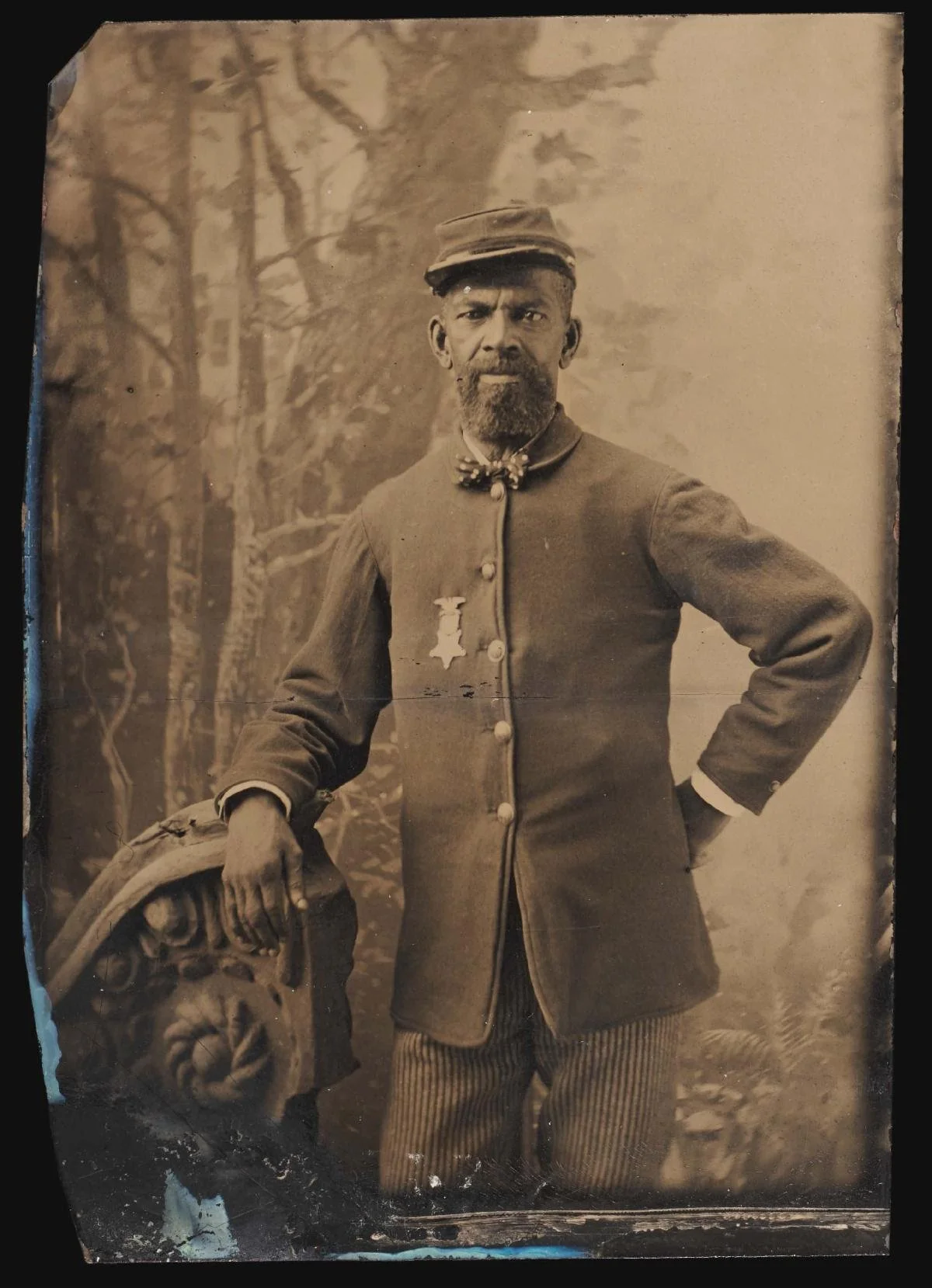
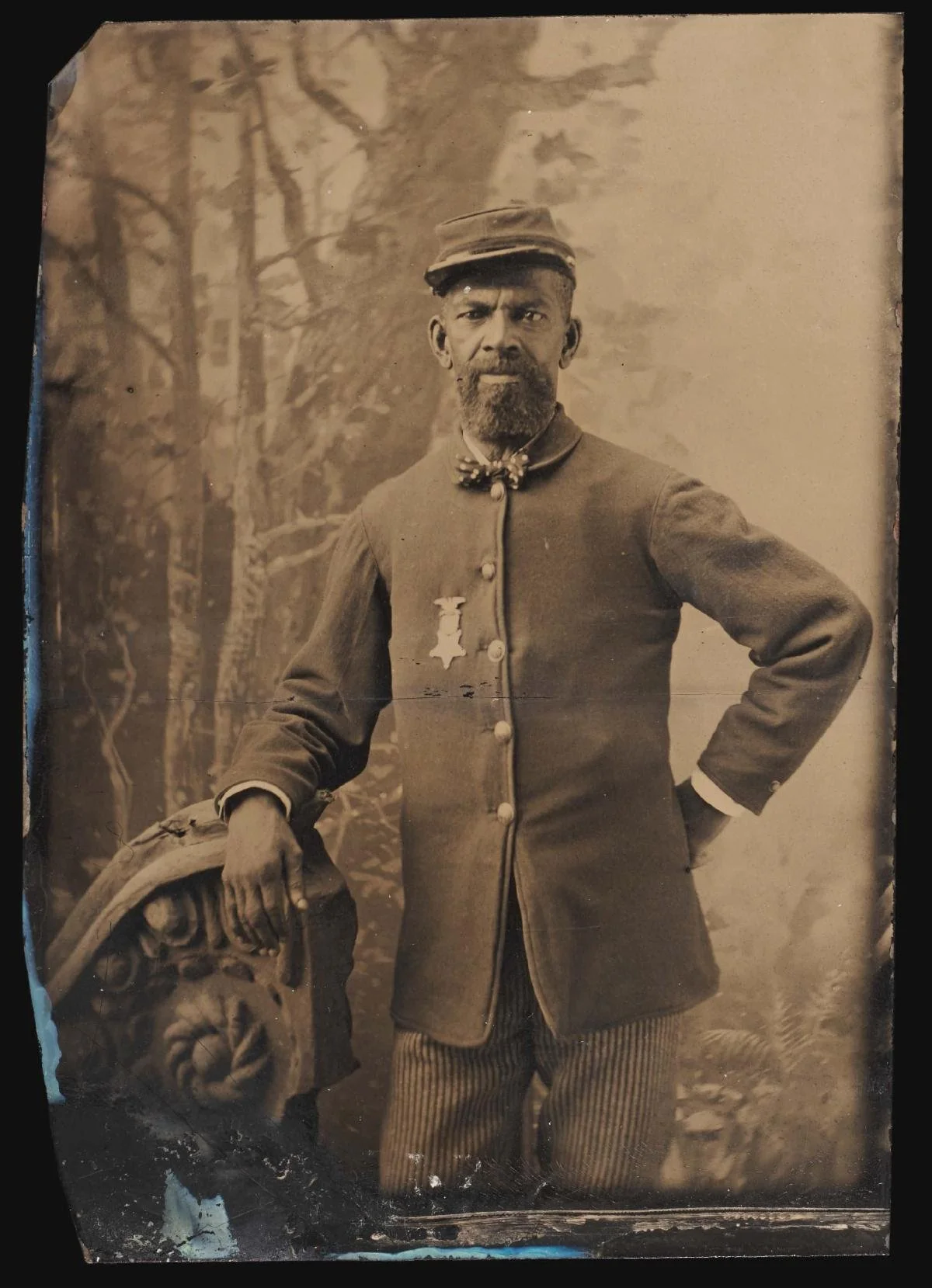
“Portrait of a Civil War Veteran Wearing a Grand Army of The Republic Medal” (tintype), in association with the show “As They Saw It,’’ which includes three films, at the Clark Art Institute, in Williamstown, Mass. The show runs through May 1. (Williamstown also has the fine Williams College Museum of Art.)
The museum says of the show, which presents four centuries of war imagery:
"Images have long been an accompaniment to war, whether to document fast-paced events in the heat of battle, to sway public opinion through propaganda, or to convey deep emotions like grief and fear."
'Here is best'
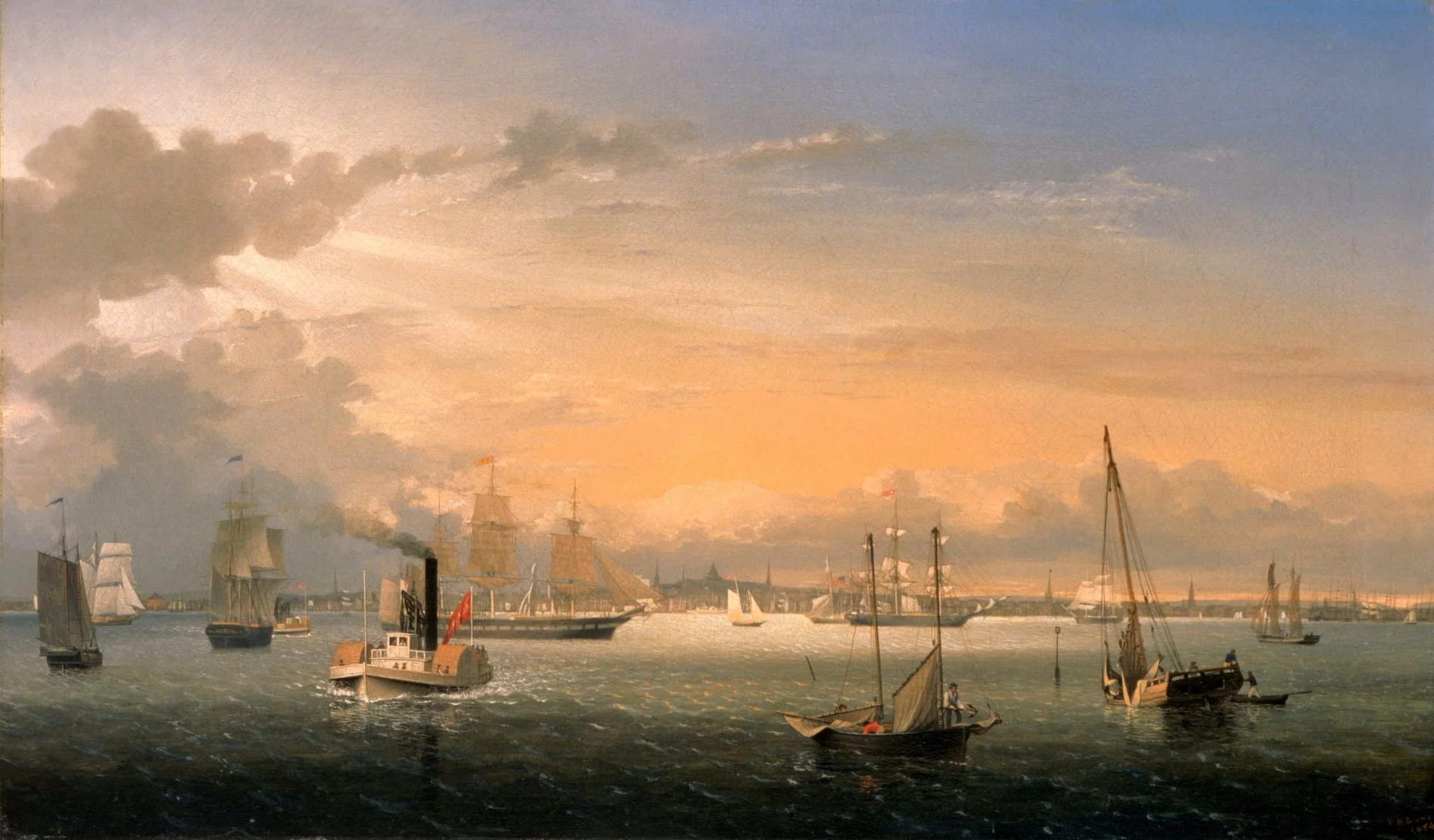
Boston Harbor by Fitz Hugh Lane, 1854
— Ralph Waldo Emerson (1803-1882), American essayist, lecturer, philosopher and poet who led the transcendentalist movement of the mid-19th century that was centered in and around Boston.
CVS seems to be reimagining its telehealth offerings
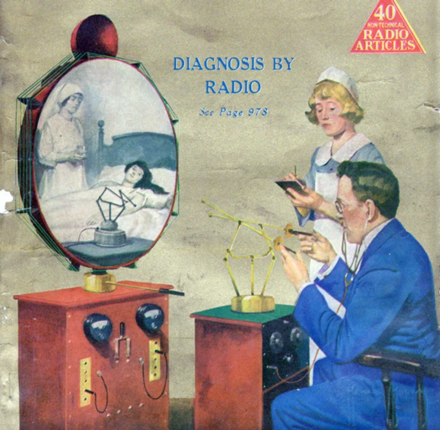
Telemedicine as imagined in 1925.
Edited from a New England Council (newenglandcouncil.com) report:
“Woonsocket, R.I.-based CVS Health has filed applications with the U.S. Patent and Trademark Office seeking protections to sell a wide range of downloadable virtual goods. The application would also secure trademark protection for all the company’s logos, images, branding, clinics, services, programs, and media online and in online virtual worlds.
“This patent would protect their downloadable virtual goods including merchandise created through ‘blockchain-based software technology,’ ‘crypto-collectibles,’ ‘online digital artwork’ and ‘non-fungible tokens,’ also known more widely as NFTs. While CVS has not publicly laid out a strategy for its engagement with these online goods, the applications do offer some clues about how this new technology would be used by them, including setting up ‘an online non-downloadable platform for users to browse, create, modify and manipulate virtual retail consumer goods.’
“The company would also seek to provide information and news on topics such as health and wellness and offer health care services ‘in virtual reality and augmented reality environments,’ including non-emergency medical treatment, wellness and nutrition programs, personal assessments, personalized routines, maintenance schedules and counseling services. These offerings would likely serve as an extension, or reimagining, of CVS’s telehealth efforts, which have been forced to ramp up due to the COVID pandemic.’’

Telemedicine in rehabilitation
— Photo by Ceibos
Who can pull hardest?

Part of Cedric "Vise1" Douglas's “Streets Memorial Project,’’ at The Rivers School, Weston, Mass., through May 16.
The school says:
"Much of his work aims to engage the audience in meaningful conversations and document powerful moments in history. ‘The Street Memorial Project’ is a collection of work exploring police brutality and racial injustice. His other projects include ‘The People’s Memorial Project,’ a pop-up public video projection installation addressing controversial public monuments, and the ‘Tools of Protest’ project, where printed rolls of caution tape reading ‘I can’t breathe’ and ‘Don’t shoot’ are passed out to protesters."

The Weston Observatory, in Weston. Part of Boston College, it’s an important facility for measuring earthquakes.

David Warsh: Trying to figure out how to measure ‘inflation’
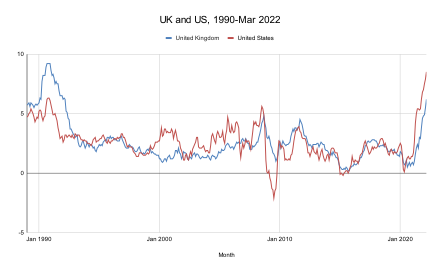
British and U.S. monthly inflation rates from January 1990 to February 2022.
SOMERVILLE, Mass.
President Biden calls it Putin’s inflation. Federal Reserve Board Chairman Jerome Powell says the problem began with the pandemic. Harvard University economist Lawrence Summers blames the Fed. Who’s right? Some 250 years of interplay between the science of pneumatics and its technological applications were the background against which economist Irving Fisher, in 1928, expanded the modern usage of the term “inflation” to mean something more than rising prices. Fisher is not a bad place to begin to look for an answer.
Arguments about whether or not such a thing as a vacuum can exist; quicksilver (meaning mercury); barometers; j-tubes; air pumps; valves, cylinders, and plungers; hot air balloons; footballs; the discovery of inert gases (starting with helium); the manufacture of incandescent light bulbs; pressure cookers; inflatable tires – these topics or objects became familiar before Fisher took advantage of relationships among pressure, volume, and temperature of gases, itself by then vaguely understood, in order to attach a new meaning to an old word.
“Anyone… reading [The Money Illusion] (Adelphi, 1928) by Fisher, or other books on monetary affairs published in this period, may have some difficulty with terminology” wrote Fisher’s biographer, Robert Loring Allen, many years after the fact. “For more than a generation, the words ‘inflation’ or ‘deflation’ [had] usually meant increasing or decreasing prices.” But in The Money Illusion. Allen wrote, Fisher coined new meanings: “the words inflation and deflation refer to the money supply, not to prices. Money inflates and in consequence prices rise and a deflation in the money supply causes falling prices.”
It was the first and only book about the subject that Fisher, a prominent Yale University professor and tireless reformer, would write for the general public. He was at pains to explain what he meant.
As I write, your dollar is worth about 70 cents. This means 70 cents of pre-war buying power. In other words, 70 cents would buy as much of all commodities in 1913 as 100 cents will buy at present. Your dollar now is not the dollar you knew before the War. The dollar always seems to be the same but it is changing. It is unstable. So are the British pound, the French franc, the Italian lira, the German mark, and every other unit of money. Important problems grow out of this great fact – that units of money are not stable in buying power.
A new interest in these problems has been aroused by the recent upheaval in prices caused by the World War. This interest nevertheless is still confined largely to a few special students of economic conditions, while the general public scarcely yet know that such questions exist.
Why this oversight?.. It is because of “the Money Illusion”; that is, the failure to perceive that the dollar, or any other unit of money, expands or shrinks in value. We simply take it for granted that “a dollar is a dollar” –that “a franc is a franc” that all money is stable, just as centuries ago, before Copernicus, people took it for granted that that the earth was stationary, that there was really such a fact as a sunrise or a sunset. We know now that sunrise and sunset are illusions produced by the rotation of the earth around its axis, and yet we still speak of, and even think of, the sun rising and setting!
Fisher is at pains to illustrate the illusion. He visits Germany with an economist friend, where the two interview 24 men and women. Only one considered that rising prices have anything to do with the government’s management of its currency.
They tried to explain it by ‘supply and demand’ of other goods, by the blockade; by the the destruction wrought by the War; by the American hoard of gold; by all manner of other things – exactly as in America when, a few years ago, we talked about “the high cost of living,” we seldom heard anybody say that a change in the dollar had anything to do with it.
Fisher went on to explain the system of gold, paper money, and bank “deposit currency,” as bank credit was known at the time. He noted that the Federal Reserve System had recently taken responsibility for the oversight of the money supply that occurred via the purchase and sale of government bonds by its Open Market Committee. He noted the suspension of the international gold standard during the World War and recommended its early resumption. Above all, he urged the adoption of price indices, carefully collected by government agencies, with which to measure changes in “the cost of living,” or, as he puts it, “fluctuations in the value of money.”
But the year was 1928. A world-wide boom was on. Fisher was already somewhat isolated from his university colleagues by his enthusiasm for business (he had sold his Rolodex card-filing system to Remington Rand Corp. and was trading millions in stocks). When the Depression began, instead of hedging his bets, he pursued business as usual a little while longer, and gradually lost his entire fortune. Meanwhile, economists turned their attention to John Maynard Keynes.
“It was particularly unfortunate,” Robert Dimand, of Brock University, has written, “that Fisher lost the attention of the economics profession, the public, and even his Yale colleagues just when he has something interesting to say about with what had gone wrong with his predictions and the economy,” to wit his article “The Debt-deflation Theory of the Great Depression” in the first volume of Econometrica, in lieu of an Econometric Society presidential address. He died in 1947.
But Fisher’s espousal of the value of index numbers to monitor variations in purchasing power stuck, as did his enthusiasm for the monetary, as opposed to real, explanation of rising prices. In Monetary Illusion, Fisher never mention Boyle; he offers a more homely analogy instead: “If more money pays for the same good, their price must rise, just as if more butter is spread over the same slice of bread, it must be spread thicker, the thickness representing the price level, the bread the quantDity of goods.” Twenty five years later, though, a master expositor of Keynesian economics, George Shackle, of Liverpool University, wrote,
How did we come to adopt the portentous word “inflation” to mean no more than a general rise in prices? I think this usage must have had its origin in a particular theory of the mechanism or cause of such a rise. When a given weight of gas is released from a steel cylinder into a large silk envelope, there may appear to be more gas, but in important senses, the amount of gas is unchanged. In a somewhat analogous way, we can make our total stock of currency spread over a larger number of paper notes, but this action in itself will not increase the size of the basket of goods (where various good are present in fixed proportion) that this total stock of currency would exchange for in the market…. Some such image as this may perhaps have been n the mind of the man, who first spoke of inflating the currency. This idea, that the general price level is closely related to the ostensible, apparent size of the money stock… has become formally enshrined in what is called the Quantity Theory of Money.
It’s been nearly 40 years since I published The Idea of Economic Complexity. What have I learned, in all the years since, about explaining generally rising prices? At least this: By all means let us continue to measure money and talk pneumatics. In hopes of narrowing differences of opinion, though, let us keep looking for something real and general in the economy to measure as well. I expect that the Fed has made a pretty good beginning on that.
David Warsh, a veteran columnist and an economic historian, is proprietor of Somerville-based economicprincipals.com, where this essay originated.
Balanced environments
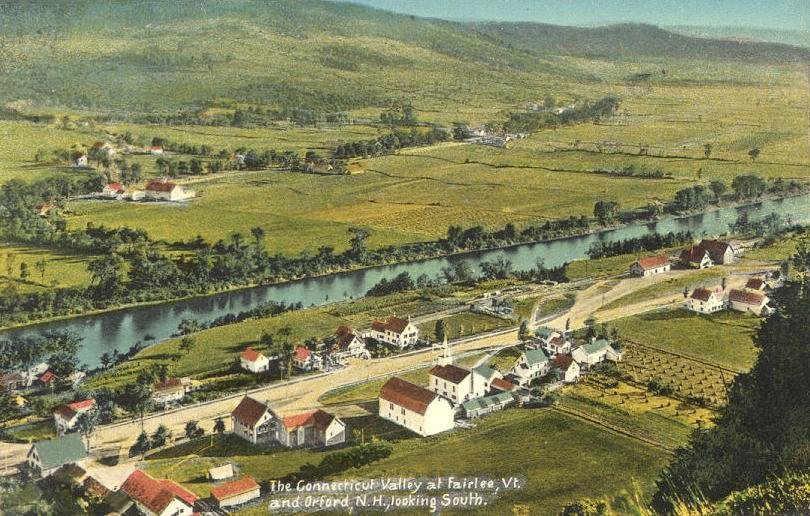
1907 postcard
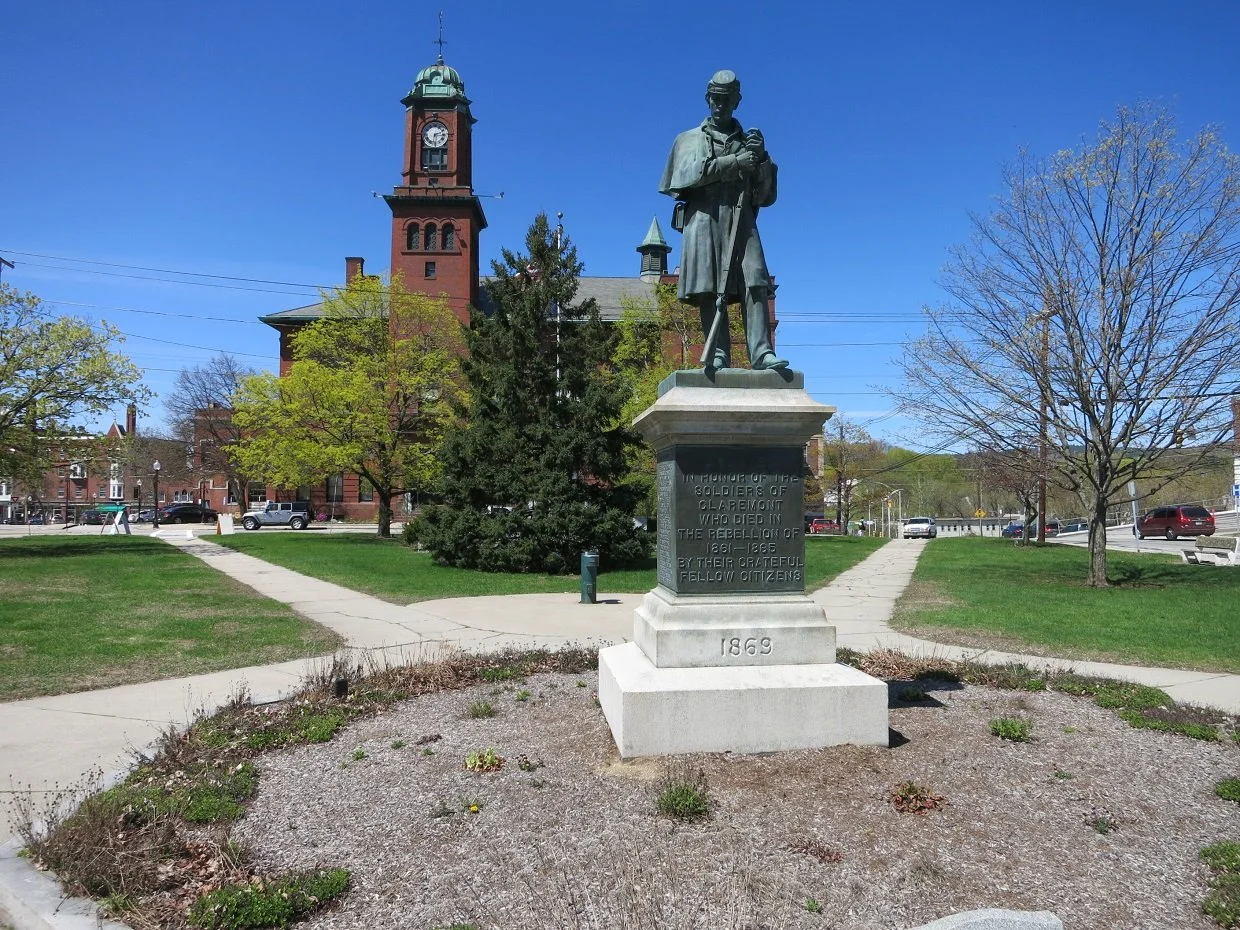
Statue and memorial to Civil War dead in Claremont, N.H.
— Photo by Djmaschek
"When people who have never lived in New Hampshire or Vermont visit here, they often say they feel like they've come home. Our urban center, commercial districts, small villages and industrial enterprises are set amid farmlands and forests. This is a landscape in which the natural and built environments are balanced on a human scale. This delicate balance is the nature of our ‘community character. It’s important to strengthen our distinctive, traditional patterns to counteract the commercial and residential sprawl that upsets this balance and destroys our social and economic stability.’’
— Richard J. Ewald, author of Proud To Live Here in The Connecticut River Valley Of Vermont and New Hampshire. He lives in Putney, Vt.

Sacketts Brook in downtown Putney
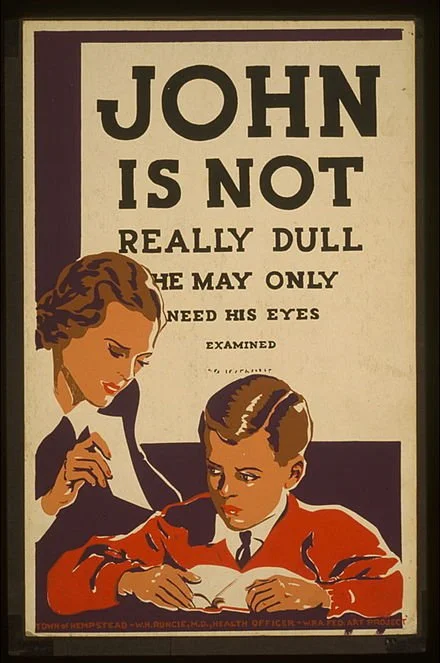
Chris Powell: Many poor kids can’t see well and neither can government
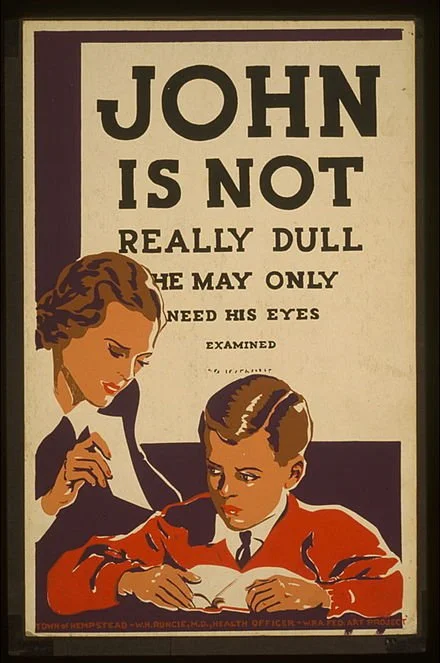
Public education poster urging eye exams for children — Works Progress Administration, circa 1937
MANCHESTER, Conn.
Someday, if the governor and state legislators ever tire of coddling the state employee unions and if the president and Congress ever tire of coddling investment banks and military contractors, maybe they should note what happened recently at Silver Lane Elementary School in East Hartford.
Most of East Hartford's students are from poor households and most have limited if any medical insurance. So a wonderful charity from Los Angeles called Vision to Learn has been visiting the town's schools, offering students free vision screenings and eye examinations, free optometric prescriptions for those who need them — and then free prescription eyeglasses too.
Participation is up to parents, but about two-thirds of Silver Lane Elementary's 300 students have participated in the program and three weeks ago 53 of them received their free prescription glasses.
That is, about 18 percent of the school's student population needed glasses but didn't have them, and the percentage of students in need at the school is almost certainly higher because another hundred or so students weren't examined.
Vision to Learn's premise is compelling: that children who can't see well aren't likely to learn as well as they should, that as many as a quarter of the nation's children will need glasses while they are in school, and that without the glasses they need, poor children may be misdiagnosed with behavioral problems and leave school prematurely.
If the Silver Lane Elementary experience of unmet vision need is projected nationally and considered along with the other unmet medical needs of students from poor households, the situation should horrify.
State government is aware of the problem. The state Public Health Department finances 90 student health clinics at schools in 28 towns, and a study group including state officials and state legislators has just reported that 157 more schools in poorer municipalities very much could use clinics as well. Legislation pending in the General Assembly would appropriate $21 million for increasing or expanding school clinics. That's nowhere near enough to address the need fully, especially since most of the clinics don't offer vision and dental services.
Meanwhile, the legislature seems ready to appropriate what is estimated at more than $300 million for raises and benefit increases for unionized state employees, though they never lost a paycheck during the virus epidemic. Meanwhile, the employees of community social-service agencies remain poorly paid and underinsured as they care for the needy at half the cost of state government employees.
A bigger disgrace here may be that amid its creation and distribution of infinite money for less compelling purposes, the federal government has not resolved to finance health clinics for all school systems in the country.
The biggest disgrace may be that more than 50 years after the federal government declared a war on poverty, there is still so much of it with so many people unable or unwilling to take care of their children. What passes for liberalism now pursues more vigorously what it sees as grander causes: unrestricted abortion and transgenderism.
xxx
A less expensive but more difficult issue of children's health also faces the General Assembly: whether state Medicaid insurance, known as HUSKY coverage, should be extended to more children living illegally in Connecticut.
Last year the legislature extended coverage to illegal residents 8 and younger, a strange compromise of budgeting. For except for the expense, why should 8-year-olds be covered but not children from 9 to 17?
The best arguments against extending coverage are that its cost is uncertain, that it will facilitate more violation of immigration laws, and that it may draw to Connecticut more immigration lawbreakers from other states.
The best arguments for extending coverage are that sick children will be treated anyway by walking into a hospital emergency room, with the cost passed along to other patients; that Medicaid insurance will treat illness before it becomes more expensive; and basic decency.
The cost of the new state employee union contract hasn't been fully calculated either, but the legislature will approve that one easily.
Chris Powell is a columnist for the Journal Inquirer, in Manchester.
Vermont ‘bows to nothing’

The Old Constitution House at Windsor, where the Constitution of Vermont was adopted on July 8, 1777
“Vermonters are really something quite special and unique….This state bows to nothing: the first legislative measure it ever passed was ‘to adopt the laws of God … until there is time to frame better.’’
— John Gunther in Inside USA (1947)

‘Seasons and Chaos’

“{Gas} Compressor Station” (oil on panel), by Yvonne Troxell Lamothe, in her show “Seasons and Chaos,’’ at Galatea Fine Art, Boston, May 1-June 1. {The painting refers to controversial compressor along Boston Harbor in Weymouth, Mass.}
She says: "Aware of the vulnerability of our environment by abusive corporate mandates and irresponsible policy, I make statements through my work that hopefully cause concern and evoke the sense of urgency I feel."
First vegetable crop of spring

“Fiddle ferns {aka fiddleheads}, if you know where to find them {in wet places}, are the first delicacy of spring, appearing even before asparagus. Plunge them briefly into rapidly boiling water, and serve with butter, salt, and if you like, lemon juice. Chapped almonds may be added, or the ferns may be served on hot buttered toast.’’
From Favorite New England recipes (1972), by Sara B.B. Stamm.

Llewellyn King: The new normal will take time, not politics
WEST WARWICK, R.I.
Loud detonations are going off in the economy. When the debris settles, new realities will emerge. We won’t return to the status quo ante, although that is what politicians like to promise.
After great cataclysmic events — wars, natural disasters or the impact of new technologies — we need to acknowledge the realities and find the opportunities.
The inflation that is shaking the world is the inflammation that arises as markets seek equilibrium — as markets always do.
The greatest disrupter has been the COVID-19 pandemic, and the ramifications of how it has reshaped economies and societies are still evolving. For example, will we need as much office space as we did pre-pandemic? Is the delivery revolution the new normal?
Russia’s war in Ukraine has added to the pandemic-caused changes before they have fully played out. They, in turn, were playing out against the larger imperatives of climate change, and the sweeping adjustments that are underway to head off climate disaster.
Some political actions have exacerbated the turbulence of the economic situation, but they aren’t the root causes, just additional economic inflammation. These include former president Donald Trump’s tariffs and President Biden’s mindless moves against pipelines, followed by attempts to lower gasoline prices, or wean us from natural gas while supplying more natural gas to Europe.
In the energy crisis (read shortage) of the 1970s, I invited Norman Macrae, the late, great deputy editor of The Economist, to give a speech at the annual meeting of The Energy Daily, which I had created in 1973 — and which was then a kind of bible to those interested in energy and the crisis. Macrae, who had a profound influence in making The Economist a power in world thinking, shared a simple economic verity with the audience: “Llewellyn has invited me here to discuss the energy crisis. That is simple: the consumption will fall, and the supply will increase. Poof! End of crisis. Now, can we talk about something interesting?”
Of the many, many experts I have brought to podiums around the world, never has one been as warmly received as Macrae. Not only did the audience stand and applaud, but many also climbed on their chairs and applauded. I’m not sure Washington’s venerable Shoreham Hotel had ever seen anything like that, at least not at a business conference.
In today’s chaotic situation with political accusations clashing with supply realities, the temptation is to find a political fix while the markets seek out the new balance. Politicians want to be seen to do something, no matter what, and before it has been established what needs to be done.
An example of this was Biden increasing the allowed amount of ethanol derived from corn and added to gasoline. It is so small an addition that it won’t affect the price at the pump, but it might affect the price of meat at the supermarket. Corn is important in raising cattle and feeding large parts of the world.
There is a global grain crisis as a result of Russia’s war in Ukraine, which is a huge grain producer. Parts of the world, especially Africa, face starvation. The last thing that is needed is to sop up American grain production by burning it as gasoline.
We are, in the United States, gradually moving from fossil fuels to renewables, but this is going to move our dependence offshore, and has the chance of creating new cartels in precious metals and minerals.
Essential to this move is the lithium-ion battery, the heart of electric vehicles and battery storage for renewables, and its tenuous supply chain. Lithium has increased in price nearly 500 percent in one year. It is so in demand that Elon Musk has suggested he might get into the lithium mining business.
But lithium isn’t the only key material coming from often unstable countries: There is cobalt, mostly supplied from the Democratic Republic of the Congo; nickel, mostly sourced in Indonesia; and copper, where supply comes primarily from Chile.
Across the board, supplies will increase, and demand will decline. Equilibrium will arrive, but vulnerability won’t be eliminated. That is an emerging supply chain constant as the economy shifts to the new normal.
The aftershocks of the pandemic and Russia’s war in Ukraine will be felt for a long time — and endured as inflation.
On Twitter: @llewellynking2
Llewellyn King is executive producer and host of White House Chronicle, on PBS. He’s based in Rhode Island and Washington, D.C.