
Vox clamantis in deserto


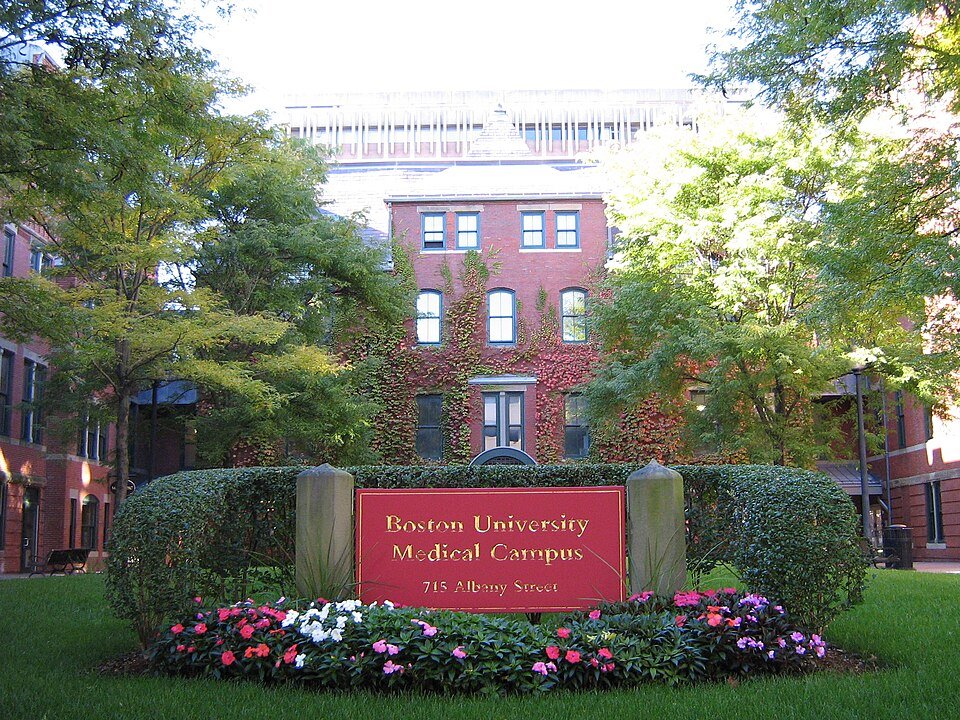






Protection art at Hammond Castle, in Gloucester

Part of Sarah Dineen’s show “Protection: An Abstract Art Installation,’’ at Hammond Castle Museum, Gloucester, Mass., March 19-March 30.
The museum says she has “amassed an army of painted helmets, shields, tubes, and microphone-trees... Working in multiples to magnify the uncanny human and industrial presence of each form, she uses abstraction to suggest familiarity while leaving open to the viewer the possibilities of their own imagination." The pieces will be available to buy, with some of the proceeds to go to support the museum.
The castle, built in 1926-1929, was the home and laboratory of John Hays Hammond, Jr., an inventor and pioneer in the study of remote control who held over 400 patents. The building had modern and 15th-, 16th-, and 18th-century architectural elements and sits on a rocky cliff overlooking Gloucester Harbor.

The front of Hammond castle
— Photo by Dale E. Martin
Chelsie Vokes: What will colleges do if Supreme Court bans affirmative action involving race?

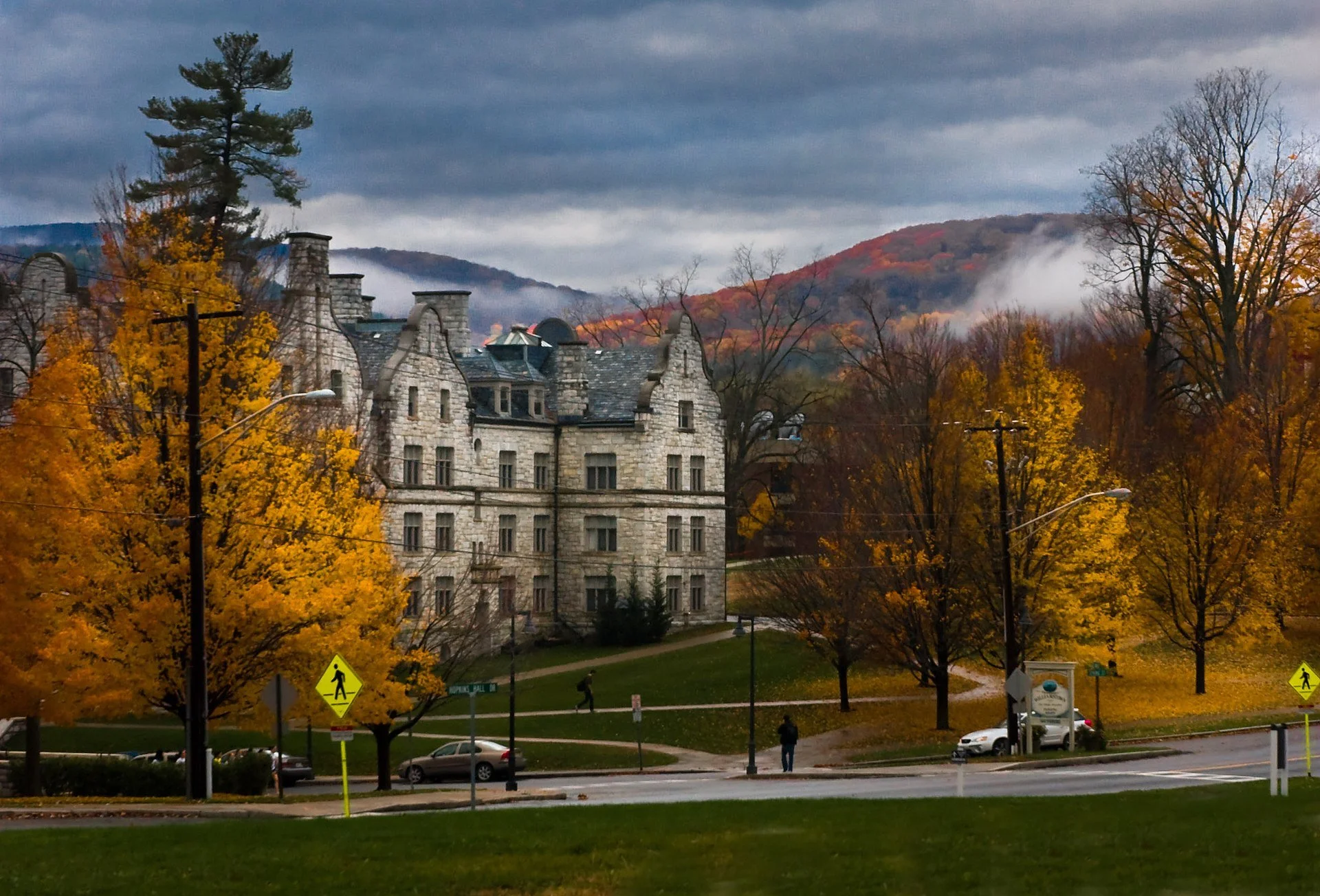
At elite Williams College, in Williamstown, Mass.
From The New England Journal of Higher Education, a service of The New England Board of Higher Education (nebhe.org)
When President Biden nominated Ketanji Brown Jackson for the U.S. Supreme Court, it seemed like a major civil rights victory.
But that victory could feel like a bitter irony this fall, when the high court hears two cases that will likely obliterate affirmative action. If Jackson gets approved by the Senate, she will probably be making two divergent types of history in her first months on the court: being its first black female and hearing cases that could likely overturn 40 years of legal precedents involving race-conscious admissions.
The cases, one against Harvard and the other against the University of North Carolina, were both brought by Students for Fair Admissions (“SFFA”), an organization founded by conservative entrepreneur and long-time affirmative-action foe Ed Blum. If the Supreme Court rules in favor of the plaintiffs, as expected, colleges and universities would not only be barred from using race as a factor in admissions but also prohibited from knowing the race of applicants.
The decisions will likely force schools to completely revamp their admissions policies and rethink how to apply for education grants. Depending on the scope and content of the Supreme Court’s ruling, the decision could affect preferences for first-generation students and reverberate well beyond the realm of education, even jeopardizing grant programs for minority-owned businesses. These cases could also lead to further scrutiny of common practices such as legacy admissions.
In the University of North Carolina case, SFFA argues that whites and Asian American applicants were discriminated against because the university used race as a criterion for admissions. Previous Supreme Court cases had ruled that colleges could use race as one of several criteria for admissions, while prohibiting the use of racial quotas. But now, SFFA says those precedents are wrong and that using race as a criterion is illegal.
Harvard has a holistic process to determine admissions, that is, considering each candidate’s entire high school career and not looking at race as an explicit factor. However, SFFA argued that the subjective and vague nature of these holistic policies leaves room for implicit bias and consequently holds Asian American applicants to a far higher standard than white applicants. In support of its argument, the SFFA questioned why Harvard admits the same percentage of Black, Hispanic, white and Asian American students each year, even though application rates for each racial group differ significantly over time. SFFA says that Harvard must design a new race-blind admissions system.
The court hasn’t issued any opinions on affirmative action since June 2016, which was before Donald Trump was elected president and eventually secured three staunchly conservative appointments to the bench. Unless something unexpected occurs in the next year, it seems likely that the court will ban affirmative action.
The legal change could have huge implications for colleges and universities. If affirmative action is struck down, many colleges will need to overhaul their admissions practices. More than 100 public colleges currently use race as an admissions factor and 59 of the top 100 private colleges consider race as well, according to data from the College Board reported by Ballotpedia. Numerous other colleges that don’t consider race may need to determine whether their admissions policies disproportionally affect one race over others—a big undertaking that could require protracted and complicated analyses.
Colleges believe that diversity is critical to the spread of ideas. But without any race-conscious admissions policies, it’s likely that there will be substantially fewer minorities on many campuses. Past affirmative action bans decreased Black student enrollment by as much as 25% and Hispanic student enrollment by nearly 20%, according to a 2012 study cited by the Civil Rights Project. These bans discourage minority applicants and don’t even result in better academically credentialed student bodies. The Civil Rights Project also reported that SAT math scores dropped by 25 points after such bans.
If the court bans affirmative action, though, colleges and universities can find other methods to create the diverse campuses they desire. Like private employers, who generally can’t consider race in hiring, they could work to expand their applicant pool and encourage minorities to apply. They might also develop increased financial aid and other support programs to boost access to education.
States looking for a race-neutral alternative may follow the lead of Texas, which guarantees public university admission to all students who graduated in the top 10% of their high school classes. However, it is still unclear whether this approach really increases diversity.
Colleges and universities will be able to find ways to preserve—and boost—diversity on their campuses. But they should not wait until the court issues what will likely be a landmark affirmative action decision in the spring of 2023. Colleges and universities will need to make sweeping changes to admissions policies. They need to start preparing now.
Chelsie Vokes is a labor, employment and higher education lawyer with Bowditch & Dewey LLP, in Boston.
Don Pesci: Self-nominating himself to be Lamont’s Machiavelli?
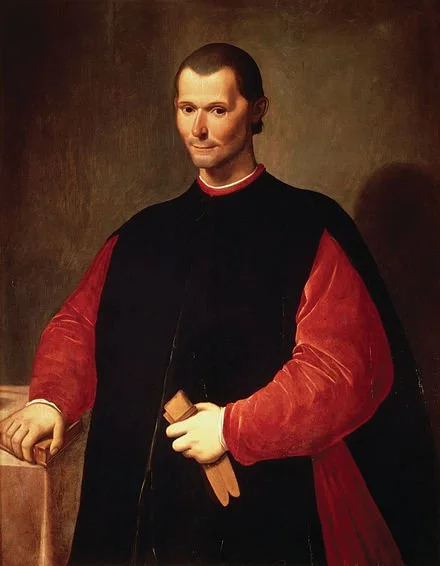
Niccolo Machiavelli (1469-1527), Florentine diplomat, writer and political theorist. He’s most famous as author of The Prince, a realist/cynical instruction guide for new princes and royals.
VERNON, Conn.
“If men were angels,” said James Madison, “no government would be necessary.’’
And if governors were angels, no political advisers such as John Droney, former Connecticut Democratic Party chairman and supporter of Gov. Ned Lamont, would be necessary
Droney along with other angels and academics, are now offering their expertise, which is considerable, to Governor Lamont, battered for the last couple of weeks for having been too opaque concerning the wicked Machiavellian way of professional politicians.
Somewhat like former President Trump, Lamont is not a professional politician; he is a millionaire who lives in toney Greenwich, along with other millionaires such as U.S. Sen. Dick Blumenthal. He makes lots of money – Greenwich is a rather high priced burg – but less than his enterprising wife, Annie Lamont.
Droney is caught spilling the political beans in a Hartford Courant piece titled “As Gov. Lamont faces questions on Annie Lamont’s investments and state contracts, critics say more transparency is needed.”
Here is Droney on the indispensability of Droney: “His [Lamont’s] crew is not the most sophisticated political operatives in the world. They didn’t have people who are very familiar with all the black arts of politics who would say, ‘You’ve got to do this, and you’ve got to do that.’ I don’t think that goes on in their minds.”
And: “He doesn’t have [former state Republican chairmen] Tom D’Amore and Dick Foley, and he doesn’t have John Droney. He’s got to get somebody who is really a politician as an informal adviser that says to him, ‘Don’t do this and don’t do that for political reasons’ while he’s running for office again.”
My deceased Italian mother whispered to me in a dream last night, “Sure sounds like Droney is angling for a job as the principal Machiavellian in the Lamont administration.”
I admonished her, “There is some truth in what Droney said though.” She nodded her assent, and my dream moved on.
Millionaire politicians could always make good use of campaign advisers. The services of millionaire Trump advisor Steve Bannon may be available at some point.
The general advice bearing down on Lamont like an onrushing freight train appears to be this: If only Lamont had been wiser in the black arts of politics or, failing that, if he had thought to hire someone such as Droney, intimately familiar with the black arts, he would not now be struggling with angelic academics, journalists and the political opposition. Somehow, such an advisor would have stood Lamont in good stead. He would have been transparent, against the best advice of his and Annie’s accountants -- more like likable Ned than the dastardly, redundantly rich Trump.
In other words, had Lamont been transparent, he would have gotten a pass rather than an ill-deserved back of the hand from Connecticut’s media which, to the misfortune of politicians dealing in black arts, appear to be committed to honest dealing in governmental affairs.
Underlying the desperate necessity for erring politicians to bring aboard their campaigns experts such as Droney – or, for that matter, the now unemployed brother of former New York Gov. Andrew Cuomo -- is the notion that destructive policies can be managed by honeyed tongues and political experts used to massaging the media. But occasionally, as was the case with former CNN twinkling star, Chris Cuomo, reality intervenes.
To provide just one example of a potential destructive downwind for Connecticut Democrats – consider the weather. “Everybody talks about the weather in New England, but nobody does anything about it,” quipped Mark Twain.
According to energy suppliers, it's going to be a cold, Biden Winter in New England. There may still be time to open pipelines closed by Biden in a fruitless attempt to convince car buyers they should go electric.
“Just in time for Winter, Eversource warns customers of a double-digit increase in natural gas prices. Heating and electricity costs also predicted to increase,” a Hartford paper tells us.
Republicans in Connecticut may take a campaign page from Democrats in 2022 and run against Biden, even as Democrats successfully ran against former President Donald Trump, though he was not on state election ballots.
"Cold" and "inflation" are sound campaign issues, American as apple pie and motherhood. “Natural gas pipeline constraints, global supply chain problems and even a shortage of fuel delivery truck drivers on local roads place New England’s power system at ‘heightened risk’ heading into the winter, the Holyoke, Mass.-based organization Eversource said."
A total of 469 seats in Congress (34 Senate seats and all 435 House seats) are up for election on Nov. 8, 2022, and the weather in New England, very much affected by Biden’s energy constrictions, cannot be adjusted by sweet talk, however honey-tongued the sweet talker may be. Reality will trump rhetoric, trip up the anti-realist, and stuff him down the rabbit hole every time.
Don Pesci is a Vernon-based columnist.
'We are always on the rise'

Examples of all MBTA services except for trolleybuses, including MBTA boat.
— Photo by Cran32
“We are Dorchester, Mattapan, Brighton and Allston
Roxbury, JP
Represent Boston
Orange line, Red line, Green line, Blue
Silver line
These are all parts of our commute
”Route 128 to Mass Pike at night
Might help me clear my mind
With the future in sight
”In this great place for me to grow and be embraced
By some hard-working people who won't compromise taste
“We're not LA
And we are not New York
We've got our own thing of the quite unusual sort
That's why I'm proud
I rep for my town
We are always on the rise
And you ain't keeping us down.’’
From the song “Boston Strong,’’ by hip-hop artist Jeffrey Haynes (born 1977), better known as Mr Tif. The song was written in 2013, after the Boston Marathon Bombing, on April 15 that year.

‘No propaganda value whatsover’

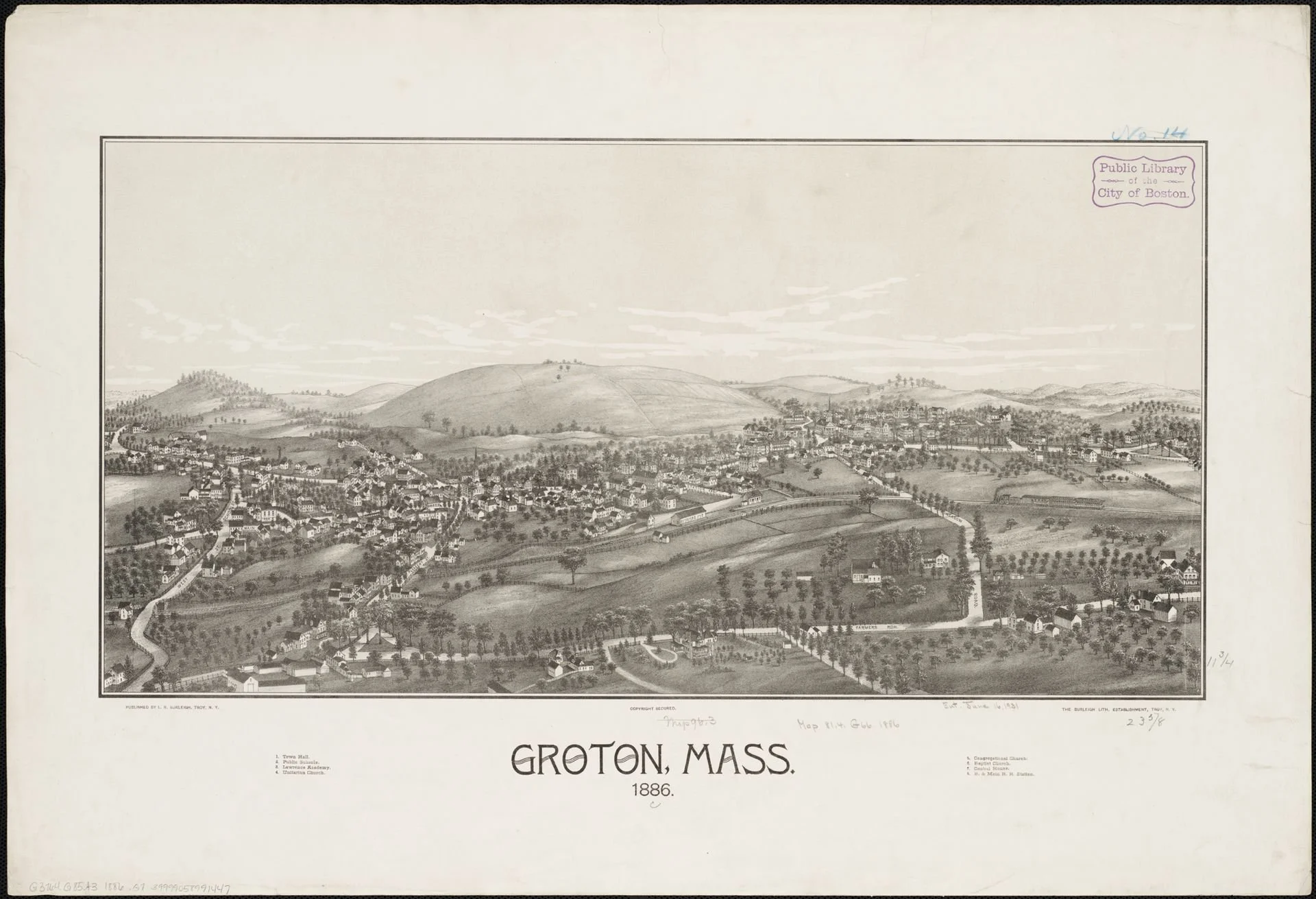
“Forget” (monotype and encaustic collage on panel), by Groton, Mass.-based artist Jeanne Borofsky
She writes in her Web site:
“Having grown up in the country I have always looked to nature to center myself – to restore balance to my mind and my world. I spend time in the woods or by the water letting the rhythms of the world become part of me. I create encaustic monotypes with patterns reminiscent of barks and leaves or water, and collage them onto panels, adding many bits of ephemera, both natural and not.
“My encaustic constructions (“castles”) usually start with encaustic monotypes. There is a monotype mounted to the panel, and I add origami boxes folded mostly from more encaustic monotypes. I spend a lot of my time folding, which is a kind of meditation, and then more time constructing and adding stamps, maps, bits of asemic writing and other ephemera to create my own world. I have often felt the way Alexander Calder felt when he said, ‘I want to make things that are fun to look at, that have no propaganda value whatsoever.’
“Stamps, maps and electronic bits are ever present in my work, nothing seems complete without one or the other. Creatures abound, and sometimes they are the main focus of my attention.
“I love the way beeswax creates both physical and visual depth and translucency to my work – adding to the mystery and magic I’m trying to understand and convey. Whatever I put into my art, it always includes the joy of creation, the love of art, and the happiness in my ability to create it.’’

Chapel at the Groton School, an elite Episcopalian boarding school.
John O. Harney: Some big changes at the top
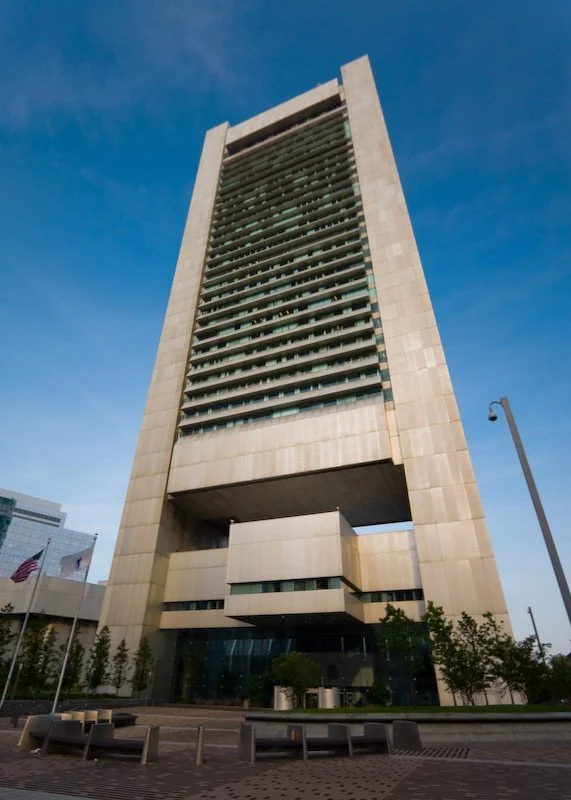
The (Brutalist) Federal Reserve Bank of Boston tower, at the edge of the Boston financial district.
— Photo by Fox-orian
(New England Diary is catching up with this report, first published Feb. 15.)
From The New England Journal of Higher Education, a service of The New England Board of Higher Education (nebhe.org)
BOSTON
The Federal Reserve Bank of Boston named University of Michigan Provost Susan M. Collins to be the bank’s next president and CEO. An international macroeconomist, Collins will be the first Black woman to lead a regional bank in the 108-year history of the Fed system. In addition to being the University of Michigan’s provost and executive vice president for academic affairs, Collins is the Edward M. Gramlich Collegiate Professor of Public Policy and Professor of Economics. She holds an undergraduate degree from Harvard University and a doctorate from the Massachusetts Institute of Technology. She will succeed Eric Rosengren, who retired in September after 14 years leading the Boston Fed.
Massachusetts Institute of Technology President L. Rafael Reif announced he will leave the post he has held for the past decade at the end of 2022. A native of Venezuela, Reif began working at MIT as an electrical engineering professor in 1980, then served seven years as provost before being named president in 2012. Among other things, he presided over a $1 billion commitment to a new College of Computing to address the global opportunities and challenges presented by the rise of artificial intelligence (AI) and oversaw the revitalization of MIT’s physical campus and the neighboring Kendall Square in Cambridge, Mass. Reif said he will take a sabbatical, then return to MIT’s faculty in its Department of Electrical Engineering and Computer Science.
Tufts University President Anthony Monaco told the campus that he will step down in the summer of 2023 after 12 years leading the university. A geneticist by training, Monaco ran a center for human genetics at Oxford University in the U.K. and, at Tufts, worked with the Broad Institute on COVID-19 testing programs that helped universities return to in-person learning. Among his accomplishments, Monaco oversaw the university’s 2016 acquisition of the School of the Museum of Fine Arts in Boston as well as the removal of the “Sackler” name from its medical school after the Sackler family and its company, Purdue Pharma, were found to be key players in the opioid crisis.
The Biden administration tapped David Cash, dean of the John W. McCormack Graduate School of Policy and Global Studies at UMass Boston and former commissioner of the Massachusetts Department of Environmental Protection, to be the regional administrator for the U.S. Environmental Protection Agency in New England.
John O. Harney is executive editor of The England Journal of Higher Education.
So throw them out

Grindel Point Lighthouse, in Islesboro, in Waldo County, Maine.
“Mrs. O’Finnicky flounces her dust
ruffles, her mind bent on spring. All winter
she has endured the turgid company
of tchotchkes and assorted bric-a-brac.’’
From “Spring Cleaning,’’ by John Canaday, American poet, teacher and science-history expert. He now lives in Brooks, Maine, a tiny town in Waldo, Maine.
Amazon to pay for tuitions at UConn and other schools
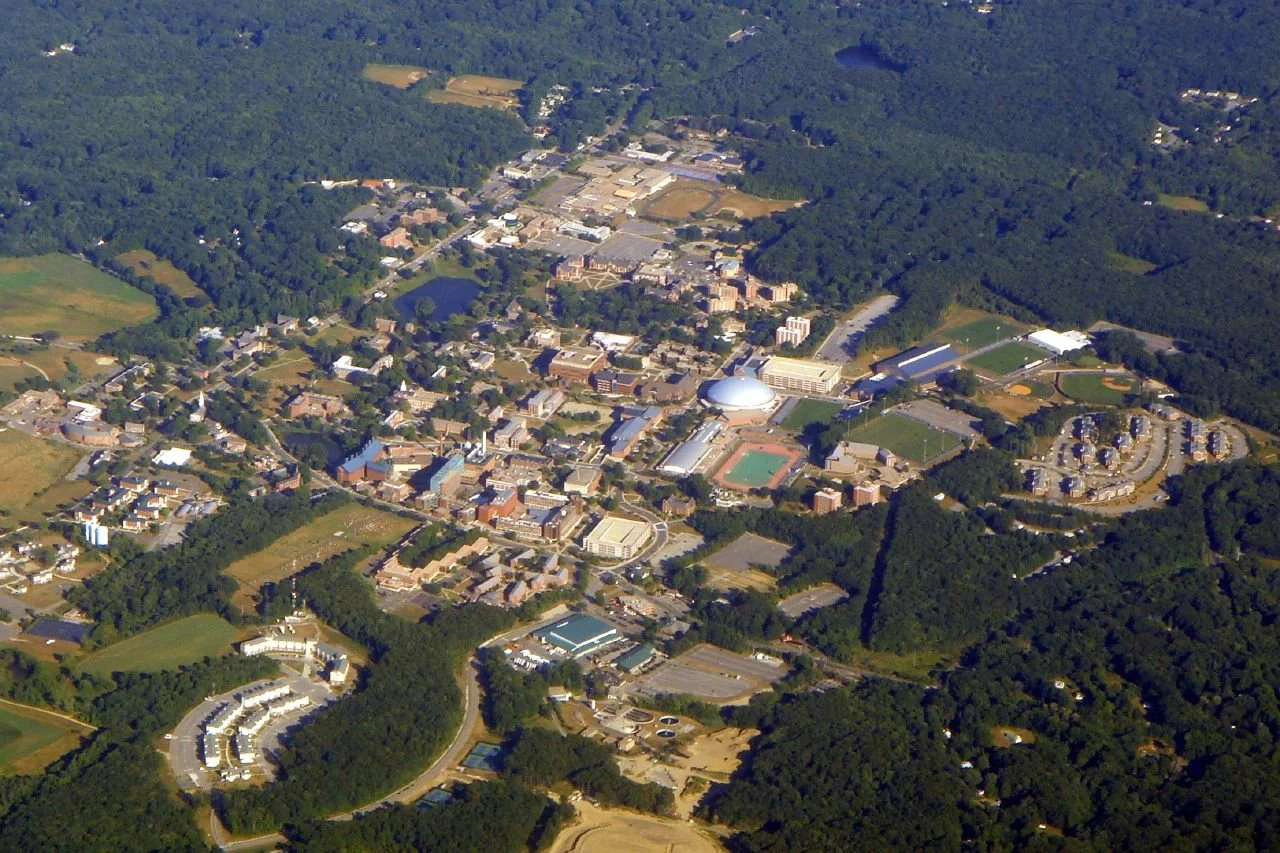
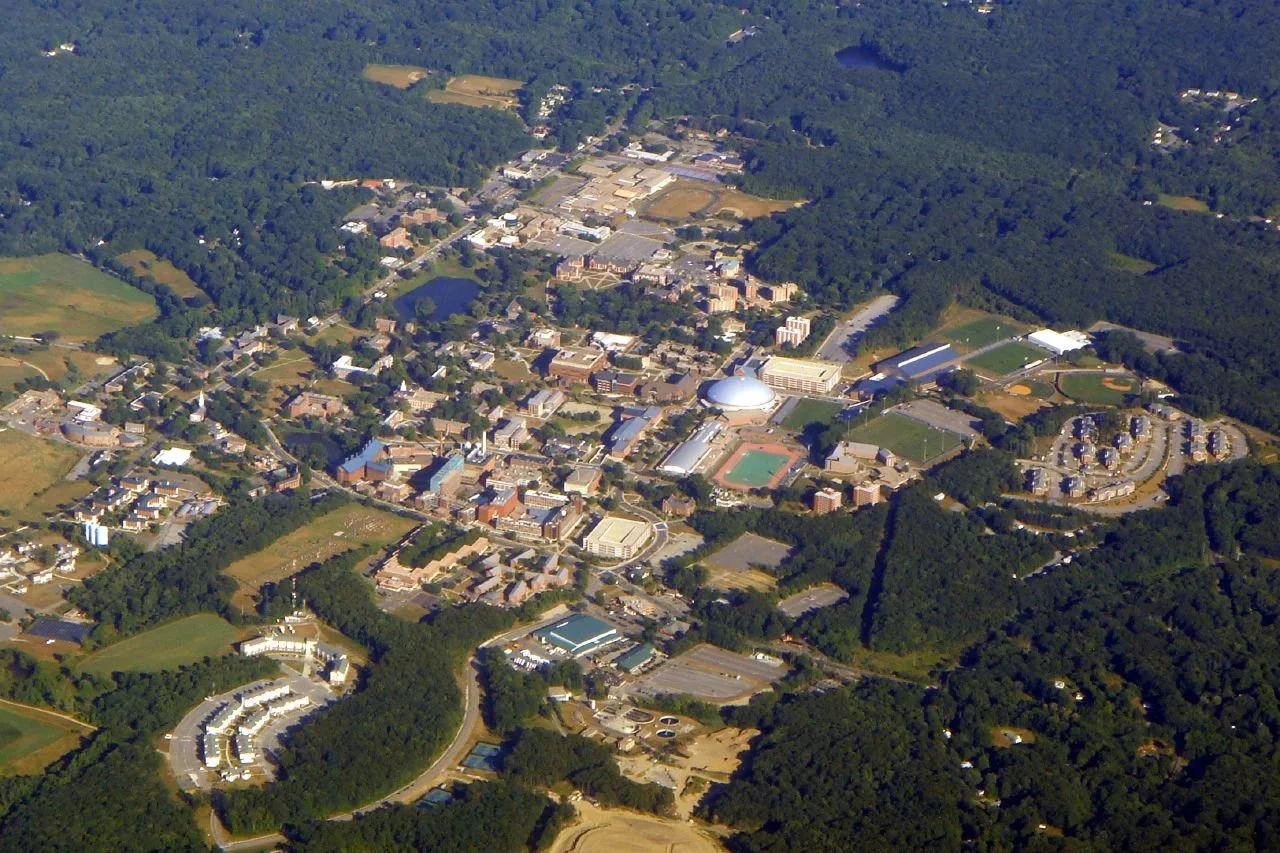
Aerial view of UConn’s flagship campus, in Storrs
— Photo by Global Jet
Edited from a report by the New England Council (newenglandcouncil.com)
BOSTON
“Amazon announced that it will now offer fully funded tuition to local hourly Amazon workers who attend the University of Connecticut {and Capital Community College, in Hartford} as well as some other colleges around America. This effort is a part of Amazon’s Career Choice program, in which the company partners with dozens of higher education institutions to help ‘upskill’ Amazon workers through the funding of their college tuitions.
“Ruth Kustoff, director of continuing and professional education at UConn, said that the university is ‘excited to be part of the Amazon Career Choice network,’ and is ‘looking forward to providing higher-education opportunities to Amazon employees through our Storrs and regional campuses.’ With Amazon’s investment of $1.2 billion into education projects, the company aims to assist 300,000 employees in obtaining new degrees and certifications by 2025.’’

Capital Community College, in downtown Hartford.
….what hit them
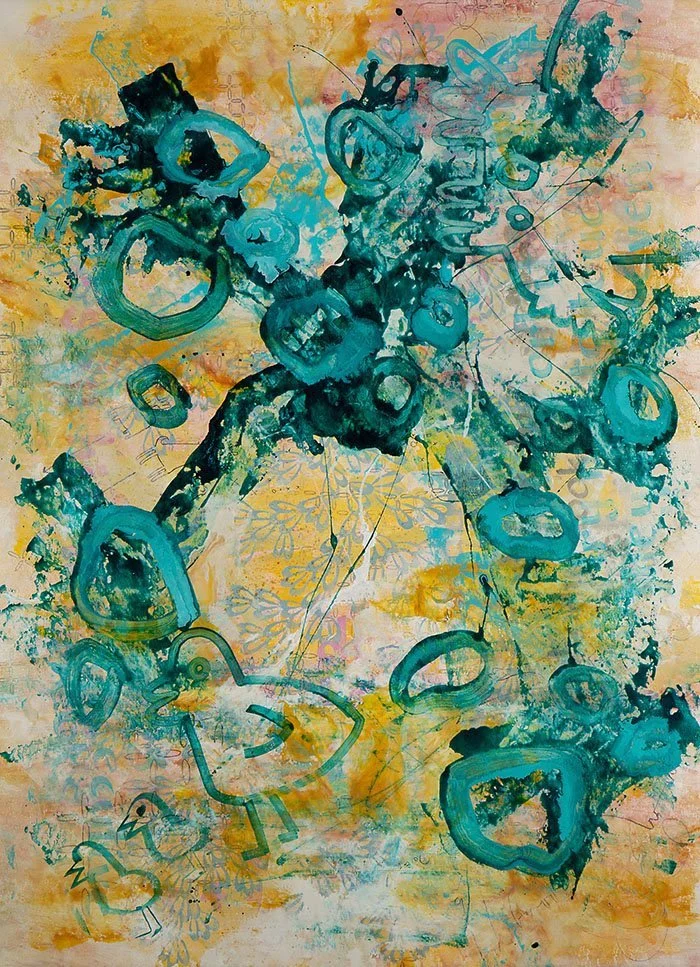
“They Never Even Knew’’ (acrylic and Sharpie on canvas), by Massachusetts-based artist (and robotics engineer) Blake Brasher, in his show “Experiencing Something,” through March 27, at Bromfield Gallery, Boston. The show is of mixed-media paintings on canvas or Yupo that act as abstract mind-scapes.
Sarah Barney: Are U.S. drug companies staying in Russia so greedy they’re complicit with Putin’s mass murder?

Maternity hospital in Mariupol, Ukraine, destroyed by Russian invaders on March 9.

U.S. drug companies that keep doing business in Russia are “being misguided at best, cynical in the medium case, and outright deplorably misleading and deceptive.’’
— Jeffrey Sonnenfeld, a professor at the Yale School of Management
Even as the war in Ukraine has prompted an exodus of international companies — from fast-food chains and oil producers to luxury retailers — from Russia, U.S. and global drug companies said they would continue manufacturing and selling their products there.
Airlines, automakers, banks, and technology giants — at least 320 companies by one count — are among the businesses curtailing operations or making high-profile exits from Russia as its invasion of Ukraine intensifies. McDonald’s, Starbucks and Coca-Cola announced a pause in sales this week.
But drugmakers, medical device manufacturers, and health care companies, which are exempted from U.S. and European sanctions, said Russians need access to medicines and medical equipment and contend that international humanitarian law requires they keep supply chains open.
“As a health care company, we have an important purpose, which is why at this time we continue to serve people in all countries in which we operate who depend on us for essential products, some life-sustaining,” said Scott Stoffel, divisional vice president for Illinois-based Abbott Laboratories, which manufactures and sells medicines in Russia for oncology, women’s health, pancreatic insufficiency, and liver health.
Johnson & Johnson — which has corporate offices in Moscow, Novosibirsk, St. Petersburg, and Yekaterinburg — said in a statement, “We remain committed to providing essential health products to those in need in Ukraine, Russia, and the region, in compliance with current sanctions and while adapting to the rapidly changing situation on the ground.”
The reluctance of drugmakers to pause operations in Russia is being met with a growing chorus of criticism.
Pharmaceutical companies that say they must continue to manufacture drugs in Russia for humanitarian reasons are “being misguided at best, cynical in the medium case, and outright deplorably misleading and deceptive,” said Jeffrey Sonnenfeld, a professor at the Yale School of Management who is tracking which companies have curtailed operations in Russia. He noted that banks and technology companies also provide essential services.
“Russians are put in a tragic position of unearned suffering. If we continue to make life palatable for them, then we are continuing to support the regime,” Sonnenfeld said. “These drug companies will be seen as complicit with the most vicious operation on the planet. Instead of protecting life, they are going to be seen as destroying life. The goal here is to show that Putin is not in control of all sectors of the economy.”
U.S. pharmaceutical and medical companies have operated in Russia for decades, and many ramped up operations after Russia invaded and annexed Crimea in 2014, navigating the fraught relationship between the U.S. and Russia amid sanctions. In 2010, Vladimir Putin, then Russian prime minister, announced an ambitious national plan for the Russian pharmaceutical industry that would be a pillar in his efforts to reestablish his country as an influential superpower and wean the country off Western pharmaceutical imports. Under the plan, called “Pharma-2020” and “Pharma-2030,” the government required Western pharmaceutical companies eager to sell to Russia’s growing middle class to locate production inside the country.
Pfizer, Johnson & Johnson, Novartis, and Abbott are among the drugmakers that manufacture pharmaceutical drugs at facilities in St. Petersburg and elsewhere in the country and typically sell those drugs as branded generics or under Russian brands.
Pfizer’s CEO, Albert Bourla, said on CBS that the giant drugmaker is not going to make further investments in Russia, but that it will not cut ties with Russia, as multinational companies in other industries are doing.
Pharmaceutical manufacturing plants in Kaluga, a major manufacturing center for Volkswagen and Volvo southwest of Moscow, have been funded through a partnership between Rusnano, a state-owned venture that promotes the development of high-tech enterprises, and U.S. venture capital firms.
Russia also has sought to position itself as an attractive research market, offering an inexpensive and lax regulatory environment for clinical drug trials. Last year, Pfizer conducted in Russia clinical trials of Paxlovid, its experimental antiviral pill to treat covid-19. Before the invasion began in late February, 3,072 trials were underway in Russia and 503 were underway in Ukraine, according to BioWorld, a reporting hub focused on drug development that features data from Cortellis.
AstraZeneca is the top sponsor of clinical trials in Russia, with 49 trials, followed by a subsidiary of Merck, with 48 trials.
So far, drugmakers’ response to the Ukraine invasion has largely centered on public pledges to donate essential medicines and vaccines to Ukrainian patients and refugees. They’ve also made general comments about the need to keep open the supply of medicines flowing within Russia.
Abbott has pledged $2 million to support humanitarian efforts in Ukraine, and Pfizer, based in New York, said it has supplied $1 million in humanitarian grants. Swiss drug maker Novartis said it was expanding humanitarian efforts in Ukraine and working to “ensure the continued supply of our medicines in Ukraine.”
But no major pharmaceutical or medical device maker has announced plans to shutter manufacturing plants or halt sales inside Russia.
In an open letter, hundreds of leaders of mainly smaller biotechnology companies have called on industry members to cease business activities in Russia, including “investment in Russian companies and new investment within the borders of Russia,” and to halt trade and collaboration with Russian companies, except for supplying food and medicines. How many of the signatories have business operations in Russia was unclear.
Ulrich Neumann, director for market access at Janssen, a Johnson & Johnson company, was among those who signed the letter, but whether he was speaking for the company was unclear. In its own statement posted on social media, the company said it’s “committed to providing access to our essential medical products in the countries where we operate, in compliance with current international sanctions.”
GlaxoSmithKline, headquartered in the United Kingdom, said in a statement that it’s stopping all advertising in Russia and will not enter into contracts that “directly support the Russian administration or military.” But the company said that as a “supplier of needed medicines, vaccines and everyday health products, we have a responsibility to do all we can to make them available. For this reason, we will continue to supply our products to the people of Russia, while we can.”
Nell Minow, vice chair of ValueEdge Advisors, an investment consulting firm, noted that drug companies have been treated differently than other industries during previous global conflicts. For example, some corporate ethicists advised against pharmaceutical companies’ total divestment from South Africa’s apartheid regime to ensure essential medicines flowed to the country.
“There is a difference between a hamburger and a pill,” Minow said. Companies should strongly condemn Russia’s actions, she said, but unless the U.S. enters directly into a war with Russia, companies that make essential medicines and health care products should continue to operate. Before U.S. involvement in World War II, she added, there were “some American companies that did business with Germany until the last minute.”
Sarah Varney is a Kaiser Health News reporter; KHN senior correspondent Arthur Allen contributed to this article.
'Spectral New England'
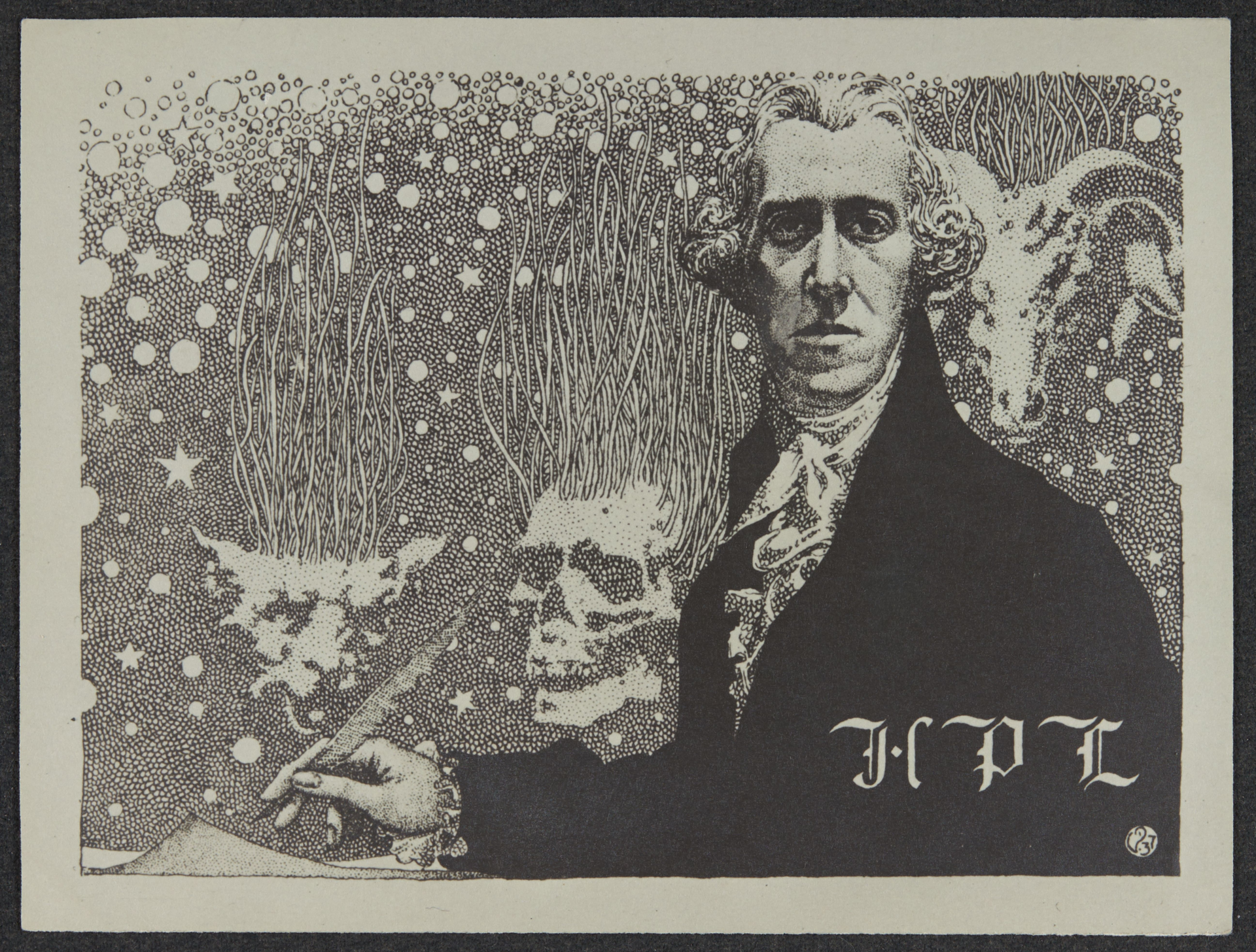
H. P. Lovecraft, the Providence-based horror (and horrible) writer as an 18th-Century gentleman, by Virgil Finlay
To see “Spectral New England,’’ please hit this think.
Out-of-staters vs. R.I. aquaculture

Oysters farmed in baskets on Prince Edward Island.
— Photo by Santryl
Adapted from Robert Whitcomb’s “Digital Diary,’’ in GoLocal24.com
New Rhode Island state rules mandate that people who want to expand or start new aquaculture farms (mostly shellfish) must identify property owners within 1,000 feet of their projects’ boundaries. The Coastal Resources Management Council will then notify those abutters about the proposal so that they have plenty of time to fight it.
Many, and in some places most, of the abutters will be wealthy out-of-state summer people who like to eat oysters, and can afford to buy lots of them, but many don’t want aquaculture near them, though it’s good for the area’s economy. They’ll get high-fee lawyers to try to block the farms.

From Cuba to Somerville

“Manolete” (bullfighter) (woodcut), by Rafael Zara, in the show “Connections/Conexiones,’’ at Brickbottom Gallery, Somerville, Mass., through April 9.
The gallery explains:
The Brickbottom Gallery is showing original prints by contemporary Cuban artists, most of whom are living on the island. This is the first half of an international print exchange. In 2019, Janette Brossard Duharte, president of the Printmaking section of the Visual Artist Association of Cuba, approached The Boston Printmakers with an idea for an international print exchange. She invited members of The Boston Printmakers to exhibit in Havana and asked the organization to sponsor an exhibit of Cuban artists in the Boston area. The Boston Printmakers happily accepted and the Brickbottom Gallery agreed to exhibit the original prints, never shown here before….
“Brossard brought the work of 37 artists to the gallery from Havana in 2019. The subjects of the prints explore themes ranging from politics to religion to eroticism. The graphic styles run the gamut from realism to colorful abstraction to the printed book. The history of Cuban printmaking began with the necessity to promote Cuban cigars and developed … with the production of strong silkscreen prints to advertise films and to make political statements. Contemporary printmakers have expanded their output to include lithography, etching, woodcuts as well as silkscreen. All of these mediums are present in the Brickbottom Gallery exhibition.’’

Lindsay Owens: Firms use ‘inflation’ as cover for price-gouging and record profits
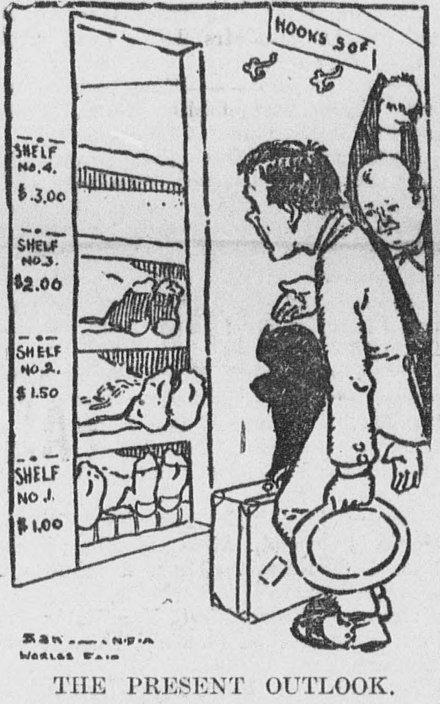
1904 cartoon warning attendees of the St. Louis World's Fair of hotel room price-gouging.
Via OtherWords.org
If you’ve been slammed lately by higher prices on everything from groceries to rental cars and gas prices, you’re probably wondering what on earth is behind these skyrocketing costs.
Corporations are quick to blame this new reality on the pandemic, but another major culprit is hiding in plain sight: their own profiteering.
Four times a year, corporations are required by law to update their investors on how they’re doing in terms of sales and profits. These are called “earnings reports,” and the companies will usually hold calls with the investors to walk them through the latest report.
My organization, Groundwork Collaborative, recently got our hands on the transcripts from hundreds of these earnings calls. And you won’t believe what CEOs are boasting about.
Knowing that the current inflation frenzy is a convenient scapegoat, these companies are charging customers even more to pad their profit margins. They are just admitting it — they’re openly bragging to investors about how well it’s working.
“I think we’ve done a great job with our pricing,” boasted the CFO of Hormel, a maker of popular grocery brands. “I think it’s been very effective.” As prices went up, the company improved its operating income by 19 percent in the first quarter of 2022 compared to 2021.
Constellation Brands, the parent company of popular beers Modelo and Corona, is also engaging in bald-faced profiteering. On its January call, Constellation’s CFO admitted that its consumer base “skews a bit more Hispanic” and the company wants to “take as much as [we] can” from them.
And now, the conflict in Ukraine is providing yet another opportunity for oil and gas companies to pad their bottom lines. “It’s tragic what’s going on in Eastern Europe,” said one oil executive in late February. “But if anything, these high prices, the volatility, drive even more energy security and long-term contracting.”
This pandemic profiteering is taking a massive toll on consumers, workers and small businesses.
Low-income Americans are pinching pennies to feed their families and pay their bills. And while mega-companies can use their market power to raise prices and generate record profits, small businesses and independent retailers are struggling to keep their doors open.
The appalling price-gouging and monopolistic behavior we’re monitoring comes on top of decades of disinvestment in our workers and supply chain, excessive corporate power and financial markets maximizing short-term profits. This broken system left us wholly unprepared to accommodate increases in demand.
But make no mistake: next time you experience sticker shock in the checkout line, it’s a safe bet that corporate executives and shareholders are reaping the rewards.
People are catching on: A new poll from Data for Progress and Groundwork finds that 63 percent of voters believe that “large corporations are taking advantage of the pandemic to raise prices unfairly on consumers and increase profits.”
Policy makers are taking notice, too. The New York state attorney general’s office just announced new price-gouging rules, paving the way for other states to follow suit.
And days after President Biden promised action on pandemic price-gouging, congressional oversight panels opened investigations into the three major ocean shipping alliances. These outfits control about 80 percent of seaborne cargo and have seen their profits increase seven-fold from the previous year.
Finally, a recently introduced bill, the COVID-19 Price Gouging Prevention Act, would help the Federal Trade Commission and State Attorneys General protect people across the country from pandemic profiteering.
Without competition and robust regulation to keep them in check, big corporations have gotten away with using the pandemic to push up prices and fatten their profit margins — and if they aren’t reined in, high prices could be here to stay.
Lindsay Owens is the executive director of Groundwork Collaborative.

Chris Powell: Making somone else pay for what you get

Egyptian peasants seized for non-payment of taxes at the time of the pharaohs.
From The Outline of History (1920), by H.G. Wells
MANCHESTER, Conn.
Liberal Democratic members of the Connecticut General Assembly again are pursuing what they call fairness in taxation, their euphemism for state government's raising and spending a lot more money. Gov. Ned Lamont, a Democrat, opposes increasing taxes while state government has a lot of emergency federal cash on hand. But the governor may be glad of the tax- fairness clamor, since it emphasizes his moderation in his party as he seeks re-election in a campaign that increasingly seems competitive.
According to the tax-fairness clamor, the poorest people in Connecticut pay a bigger percentage of their income in taxes than the state's rich do. But then the poor also receive more in direct government benefits than nearly everyone else and cause far more problems than most other people. Poverty hasn't yet become a civic virtue, even if few people remember Teddy Roosevelt's contention that the first duty of the citizen is to pull his own weight.
That so many able-bodied people in Connecticut can't pull their own weight has not prompted the tribunes of liberalism to ask why, though some questions are elementary. How does the welfare system's depriving so many children of fathers help them grow up able to pull their own weight? How does social promotion in the schools incentivize them to learn what they need to pull their own weight?
Instead these government policies proletarianize children to grow up to be dependent on government.
The country's tax structure is set up to make state and municipal taxation less progressive -- to be much less geared to personal income. Federal income taxes are heavier than state and municipal income taxes and produce far more revenue. Since the federal income tax is so heavy, states and municipalities don't tax income as much, relying instead on sales and property taxes, which tend to be regressive.
But citizenship requires even the poor to feel some of the burden of government, and in its totality the tax system is more progressive than its seems at a glance. After all, states and municipalities receive, especially now, enormous amounts of financial aid from the federal government and the federal government finances the bulk of assistance to the poor through medical insurance, housing and food programs.
More progressive taxation on the state level is never advocated for progressivity's sake alone but always as a more tolerable mechanism for increasing government revenue and spending.
For state government easily could achieve more progressivity in taxation without raising taxes on anyone and without spending more -- just by reallocating appropriations.
For example, state government could end the priority given to government employee raises and benefits and use the savings to reduce the sales tax, a regressive tax. State government could use the savings to assume the full cost of “special education” in municipal schools, thereby enabling reduction of the municipal property tax, another regressive tax, especially damaging in the cities, where most of the poor live.
Indeed, if more progressive taxation is a matter of justice, why do Connecticut's liberal Democrats seek repeal of the $10,000 limit on the federal income tax deduction for state and municipal taxes? Nearly all the tax benefit of lifting the cap would go to wealthy people, but in high-tax states like Connecticut, many wealthy people are Democrats and major political donors.
Liberalism in Connecticut sees fairness in taxation as little more than compelling someone else to pay for what you get, with government employees taking a cut as the money is moved around.
xxx
Connecticut shouldn't be done with the issue of police accountability.
The recent legislation that appears to remove the “qualified immunity” enjoyed by police officers against damage lawsuits should be reconsidered, since no one is sure how it will be construed.
And a new legislative proposal should be enacted: to prohibit police departments from hiring officers who, after due process, have been fired for misconduct or malfeasance by other departments.
It's bad enough that Connecticut school systems trade teachers who have performed poorly or engaged in misconduct, a practice facilitated by the state law preventing disclosure of teacher evaluations.
But at least teachers don't carry guns at work.
Chris Powell is a columnist for the Journal Inquirer, in Manchester.
At Boston Museum of Science: ‘Change Climate Change’
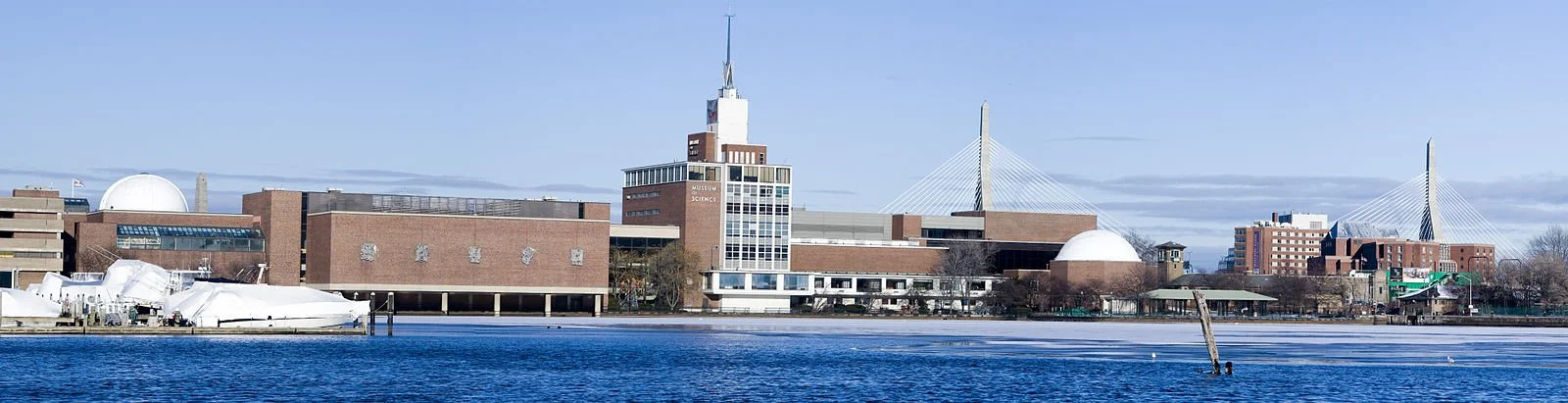
The Museum of Science spans the length of the Charles River Dam, including a parking garage at far left. The Leonard P. Zakim Bunker Hill Memorial Bridge is visible in the background.
From The New England Council (newenglandcouncil.com)
“Boston’s Museum of Science is raising awareness of climate change through its new “Change Climate Change” initiative. Situated in the museum’s Green Wing, “Change Climate Change” consists of exhibits aimed to help visualize climate change and bring attention to the present and future of our planet.
Included in this exhibit is “Gaia,” a 23-foot-wide inflatable globe that includes high-definition NASA imagery. According to British artist Luke Jerram, this art installment aims to evoke the “Overview Effect,” a sensation that astronauts report feeling when they see the Earth from space.
"Also in the Green Wing, visitors can find a “New England Climate Stories” exhibit, which displays how the climate crisis is impacting the habitats and lives of plants and animals found in the New England region. Another part of this initiative is “Resilient Venice: Adapting to Climate Change,” an exhibit that displays how sea-level rise caused by climate change threatens Venice, which is mostly at sea level.
“When discussing the museum’s Change Climate Change initiative and how she hopes the exhibits will impact visitors, Julia Tate, project manager of touring exhibitions and exhibit production, stated that the museum ‘want[s] people to feel empowered about what they can do and what actions they can take.”’

These zones continue to change with global warming.
‘Luminescent isolation’

“I Come from a Place Where No One Has Ever Been’’ (oil on canvas), by Ann Young, at Catamount Arts center in St. Johnsbury, Vt. She lives in Barton, Vt., not far from St. Johnsbury, the cultural center of Vermont’s “Northeast Kingdom’’.
The center says: Young’s outsize oil embodies a surreal luminescent isolation in both the background landscape and the foreground of a girl’s face. If you go in person, and linger, it may remind you of looking at “Girl with a Pearl Earring’’ (1665), by the Dutch painter Johannes Vermeer.

St. Johnsbury hosts the Fairbanks Museum & Planetarium which opened in 1891 as a gift of Franklin Fairbanks, a businessman, naturalist and philanthropist, to the community. His donated collections remain northern New England’s most extensive natural history display, and the National Register-listed building is a splendid example of the Richardsonian Romanesque style.

Aerial view of beautiful by remote Barton
— Photo by King of Hearts

Llewellyn King: Putin’s diabolical romanticism is sinking the global economy; deconstructing the NATO as threat myth

Face of evil: Vladimir Putin in the KGB in 1980
WEST WARWICK, R.I.
The barbarity of the Russian assault on Ukraine is neither mitigated by the ineptitude of the Russian Army nor can hearts be uplifted by the bravery of the Ukrainians. Murder on a colossal scale is taking place in plain sight on television day after day.
At this writing, there are 3.5 million refugees and thousands of civilian casualties reported. This is killing, killing, killing without respite. The Russian economy is destroyed, and the consequence of this bloody slaughter is affecting the world economy.
Even pusillanimous nations like India and Brazil feel the hot breath of the crazed organ grinder Vladimir Putin and his Russian bear.
The invasion of Ukraine was folly and a criminal act, but its continuation has become pure and sustained evil.
Some in the U.S. commentariat have suggested with amazing thought gymnastics that all this is because of the expansion of NATO. But if NATO hadn’t expanded after the fall of the Berlin Wall, then Russia wouldn’t have felt threatened and wouldn’t have invaded Ukraine. Nonsense. Russia has felt threatened in Europe since the days of the tsar. If NATO hadn’t expanded to include the Baltic nations of Estonia, Lithuania, and Latvia, Russian troops would be billeted there right now.
Had Ukraine joined NATO, the United States wouldn’t be paying the price at the pump and Europe wouldn’t be shivering out the last days of winter, wondering how it will get through the coming months without enough fuel to produce electricity.
Security is the abiding fault line in Russia’s thinking about the West. Sure, St. Petersburg is close to the rest of Europe and could be overrun. And Moscow isn’t so far from European neighbors that it couldn’t be reached easily by an invader: Napoleon got there, and Hitler could have if he had been a better strategist. But most of Russia with its 11 time zones is geographically out of reach. That makes it hard to swallow the security argument.
Putin wants to restore Imperial Russia and the empire that reached even farther under communism -- which makes him a diabolical romanticist. He wants to restore Russian hegemony over its former states: Ukraine is the biggest.
Larry O’Donnell, the MSNBC host, correctly postulated that for NATO, or the United States alone, to intervene to help Ukraine, nuclear war could result; war not just in Europe, but also between the United States and Russia -- the very thing that dominated the world from 1945 to the fall of the Soviet Union.
O’Donnell’s argument reveals the impotence that comes with nuclear weapons and sets up this question: Can we never challenge Russia, China or any other country with a substantial nuclear arsenal and the ability to deliver its weapons into the United States and our European and other democratic allies?
If that is so, does it inoculate Russia from invading the Baltic states?
We know the reality that lurks behind China’s ambitions for Taiwan. Is that more inevitable than ever? President George W. Bush said we would do “whatever it takes to defend Taiwan.” That is very unlikely now, if it ever was.
It isn’t that the reality of the international scene has changed so much as it has come into a clear and harsh light. However, one thing has changed: The slaughter, the unspeakable suffering in Ukraine will change the attitude of a generation to Russia in Europe. Russia will be a pariah, not a partner.
The United States fears war with Russia, but Russia, much weaker in every way, must fear war with NATO and the United States.
On a visit to Moscow, toward the end of the Soviet occupation of Afghanistan, I heard a four-star Russian general say, “Never again.” But the Ukraine invasion is again. Will Russia and other aggressors be deterred long after the last of the dead are buried in Ukraine, and long after the last body bag has gone back to Russia? Maybe for a generation, which is about how long it will take to rebuild the global economy after the Russian invasion of Ukraine has run its ghastly course.
Llewellyn King is executive producer and host of White House Chronicle, on PBS. His email is llewellynking1@gmail.com and he’s based in Rhode Island and Washington, D.C.
Web site: whchronicle.com
Anxious gun fetishist in heavily armed Burrillville

Some of the firearms found in the basement of Ronald Armand Andruchuk's house in Burrillville.
— U.S. District Court of Rhode Island photo
Adapted from Robert Whitcomb’s “Digital Diary,’’ in GoLocal24.com
The arrest of far-right Republican and unsuccessful legislative candidate Ronald Andruchuk of (natch!) exurban, Trumpist and SUV-and-pickup-truck-heavy Burrillville, R.I., who had more than 200 guns and heaps of ammunition, raises a couple of issues.
First, why is it apparently so easy to create such perilously big arsenals, even considering that America is awash in guns and that the gun lobby and the GOP/QAnon have merged? Burrillville has many gun lovers.
Second, it seems that gun ownership has increasingly turned into a comforting fetish for men troubled by generalized anxiety and paranoia, as well as insecurity about their masculinity. I grew up in a towns where many of us (including me) had guns, most often .22 rifles, but I never heard of the sort of huge arsenals that turn up in the news these days. A triumph of marketing by gun makers!

Town offices in gun-dense Burrillville