
Vox clamantis in deserto









Judith Graham: Patients sharply divided over Alzheimer’s drug

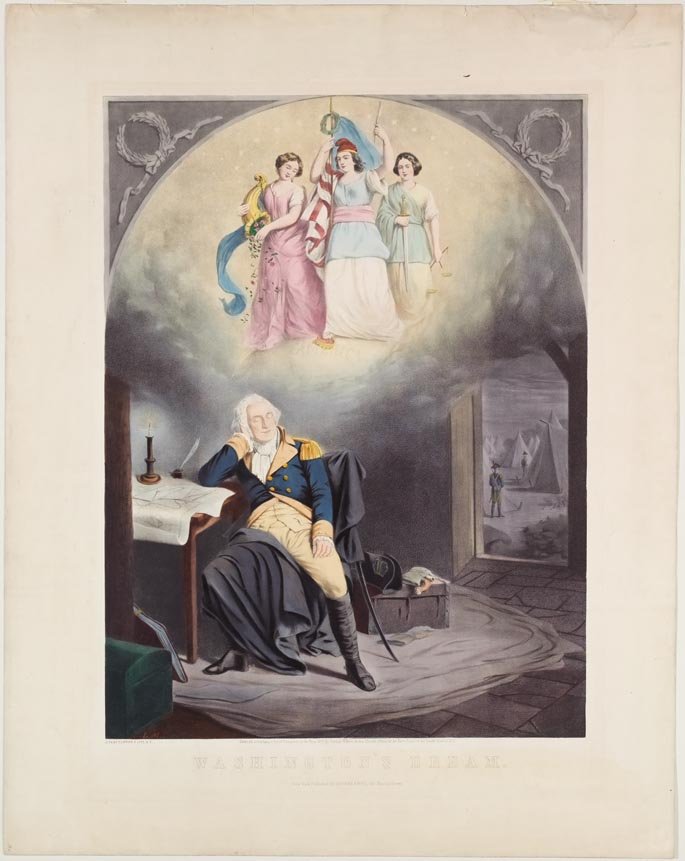
Self-portrait of American figurative artist William Utermohlen, created after he was diagnosed with Alzheimer's disease, in 1995. He experienced memory loss beginning in 1991. After his diagnosis he began creating self-portraits and continued it for another six years, until he made the final self-portraits in 2001. He died in 2007. In the years after the publication of his works in The Lancet in 2001, Utermohlen's self-portraits have been displayed in several exhibitions. His self-portraits inspired the 2019 short film Mémorable.
If you listen to the nation’s largest Alzheimer’s disease advocacy organizations, you might think everyone living with Alzheimer’s wants unfettered access to Aduhelm, a controversial new treatment produced by the Cambridge, Mass., biotech company Biogen.
But you’d be wrong.
Opinions about Aduhelm (also known as aducanumab) in the dementia community are diverse, ranging from “we want the government to cover this drug” to “we’re concerned about this medication and think it should be studied further.”
The Alzheimer’s Association and UsAgainstAlzheimer’s, the most influential advocacy organizations in the field, are in the former camp.
Both are pushing for Medicare to cover Aduhelm’s $28,000 annual per-patient cost and fiercely oppose the Centers for Medicare & Medicaid Services’ January proposal to restrict coverage only to people enrolled in clinical trials. Nearly 10,000 comments were received on that proposal, and a final decision is expected in April.
“With respect, we have no more time for debate or delay,” the Alzheimer’s Association national Early-Stage Advisory Group wrote in a Feb. 10 comment. “Every passing day without access to potential treatments subjects us to a future of irreversible decline.” For its part, UsAgainstAlzheimer’s called CMS’ proposal “anti-patient.”
Yet the scientific evidence behind Aduhelm is inconclusive, its efficacy in preventing the progression of Alzheimer’s remains unproved, and there are concerns about its safety. The FDA granted accelerated approval to the medication last June but ordered the drugmaker, Biogen, to conduct a new clinical trial to verify its benefit. And the agency’s decision came despite a 10-0 recommendation against doing so from its scientific advisory committee. (One committee member abstained, citing uncertainty.)
Other organizations representing people living with dementia are more cautious, calling for more research about Aduhelm’s effectiveness and potential side effects. More than 40 percent of people who take the medication have swelling or bleeding in the brain — complications that need to be carefully monitored.
The Dementia Action Alliance, which supports people living with dementia, is among them. In a statement forwarded to me by CEO Karen Love, the organization said, “DAA strongly supports CMS’s decision to limit access to aducanumab to people enrolled in qualifying clinical trials in order to better study aducanumab’s efficacy and adverse effects.”
Meanwhile, Dementia Alliance International — the world’s largest organization run by and for people with dementia, with more than 5,000 members — has not taken a position on Aduhelm. “We felt that coming out with a statement on one side or another would split our organization,” said Diana Blackwelder, its treasurer, who lives in Washington, D.C.
Blackwelder, 60, who was diagnosed with early-onset Alzheimer’s in 2017, told me, “To say that millions of people afflicted with a disease are all up in arms against CMS’s proposal is just wrong. We’re all individuals, not a collective.”
“I understand the need for hope,” she said, expressing a personal opinion, “but people living with dementia need to be protected as well. This drug has very serious, frequent side effects. My concern is that whatever CMS decides, they at least put in some guardrails so that people taking this drug get proper workups and monitoring.”
The debate over Medicare’s decision on Aduhelm is crucial, since most people with Alzheimer’s are older or seriously disabled and covered by the government health program.
To learn more, I talked to several people living with dementia. Here’s some of what they told me:
Jay Reinstein, 60, is married and lives in Raleigh, N.C. He was diagnosed with early-onset Alzheimer’s disease three years ago and formerly served on the national board of directors of the Alzheimer’s Association.
“I understand [Aduhelm] is controversial, but to me it’s a risk I’m willing to take because there’s nothing else out there,” Reinstein said, noting that people he’s met through support groups have progressed in their disease very quickly. “Even if it’s a 10 percent chance of slowing [Alzheimer’s] down by six months, I am still willing to take it. While I am progressing slowly, I want more time.”
Laurie Scherrer of Albertville, Ala., was diagnosed with early-onset Alzheimer’s and frontotemporal dementia in 2013, at age 55.
Early on, she was prescribed Aricept (donepezil), one of a handful of medications that address Alzheimer’s symptoms. “I became totally confused and disoriented, I couldn’t think, I couldn’t concentrate,” she told me. After stopping the medication, those symptoms went away.
“I am not for CMS approving this drug, and I wouldn’t take it,” Scherrer said. At discussion groups on Aduhelm hosted by the Dementia Action Alliance (Scherrer is on the board), only two of 50 participants wanted the drug to be made widely available. The reason, she said: “They don’t think there are enough benefits to counteract the possible harms.”
Rebecca Chopp, 69, of Broomfield, Colo., was diagnosed with early-onset Alzheimer’s in March 2019. She’s a former chancellor of the University of Denver.
Chopp is a member of a newly formed group of five people with dementia who meet regularly, “support one another,” and want to “tell the story of Alzheimer’s from our perspective,” she said.
Two people in the group have taken Aduhelm, and both report that it has improved their well-being. “I believe in science, and I am very respectful of the large number of scientists who feel that [Aduhelm] should not have been approved,” she told me. “But I’m equally compassionate toward those who are desperate and who feel this [drug] might help them.”
Chopp opposes CMS’s decision because “Aduhelm has been FDA-approved and I think it should be funded for those who choose to take it.”
Joanna Fix, 53, of Colorado Springs was diagnosed with early-onset Alzheimer’s disease in October 2016. She, too, developed serious complications after taking Aricept and another dementia medication, Namenda (memantine).
“I would love it if tomorrow somebody said, ‘Here’s something that can cure you,’ but I don’t think we’re at that point with Aduhelm,” Fix told me. “We haven’t been looking at this [drug] long enough. It feels like this is just throwing something at the disease because there’s nothing else to do.”
“Please, please take it from someone living with this disease: There is more to life than taking a magic pill,” Fix continued. “All I care about is my quality of life. My marriage. Educating and helping other people living with dementia. And what I can still do day to day.”
Phil Gutis, 60, of Solebury, Penn., has participated in clinical trials and taken Aduhelm for 5½ years after being diagnosed with early-onset Alzheimer’s in 2016.
He’s convinced the medication has helped him. “I don’t know how to describe it other than to say my head feels so much clearer now,” he told me. “I feel much more capable of doing things now. It’s not like I’ve gained my memories back, but I certainly haven’t deteriorated.”
Gutis thinks CMS’s proposed restrictions on Aduhelm are misguided. “When the FDA approved it, there was this sense of excitement — oh, we’re getting somewhere. With the CMS decision, I feel we are setting the field back again. It’s this constant feeling that progress is being made and then — whack.”
Christine Thelker, 62, is a widow who lives alone in Vernon, British Columbia. She was diagnosed with vascular dementia seven years ago and is a board member for Dementia Advocacy Canada, which supports restrictions on Aduhelm’s availability.
“Most of us who live with dementia understand a cure is not likely: There are too many different types of dementia, and it’s just too complicated,” Thelker told me. “To think we’re just going to take a pill and be better is not realistic. Don’t give us false hope.”
What people with Alzheimer’s and other types of dementia need, instead, is “various types of rehabilitation and assistance that can improve our quality of life and help us maintain a sense of hope and purpose,” Thelker said.
Jim Taylor of New York City and Sherman, Conn., is a caregiver for his wife, Geri Taylor, 78, who has moderate Alzheimer’s. She joined a clinical trial for Aduhelm in 2015 and has been on the drug since, with the exception of about 12 months when Biogen temporarily stopped the clinical trial. “In that period, her short-term memory and communications skills noticeably declined,” Jim Taylor said.
“We’re convinced the medication is a good thing, though we know it’s not helpful for everybody,” Taylor continued. “It really boosts [Geri’s] spirits to think she’s part of research and doing everything she can.
“If it’s helpful for some and it can be monitored so that any side effects are caught in a timely way, then I think [Aduhelm] should be available. That decision should be left up to the person with the disease and their care partner.”
Judith Graham is a Kaiser Health News reporter.

Biogen headquarters in Cambridge, one of the world’s biotech centers.
Maybe we should leave some stuff behind

“What We Carry: Balance” (encaustic on panel), by Helene Farrar, who is based in Manchester, Maine, which is on the Kennebec River.
Her site says:
Hélène Farrar has taught and worked in the visual arts for 20 years while exhibiting in commercial, nonprofit and university galleries in New England, New York City, Pennsylvania, Italy and England. Farrar has a B.A. in Studio Art from the University of Maine and a Masters of Fine Art Degree in Interdisciplinary Arts from Goddard College in Vermont. Hélène currently owns and operates her own private art school in Maine out of her “Farmhouse” studio, where she holds varied workshops and classes. Her paintings have most recently been accepted into curated exhibits at the Cape Cod Community College, Fuller Craft Museum, the Saco Museum, the University of New England Art Gallery and Twiggs Gallery.
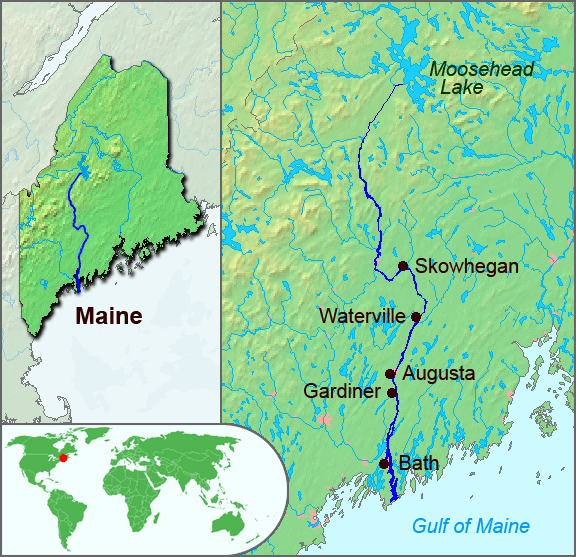
Dark blue line is the Kennebec River.

Frank Carini: Working to reduce environmental impact of ocean racing sailboats

From ecoRI News (ecori.org)
While the United States flails about trying to reduce its enormous share of world-altering climate pollution, one part of the transportation/recreational sector is routinely ignored: boating.
Yachting and sailing are steadily gaining in popularity, so an urgency to act is essential if greenhouse-gas emissions are to be significantly reduced.
Yes, sailing burns little fossil fuel, but the resources consumed to build some of these vessels is swelling.
For instance, over the past decade, the carbon footprint of 60-foot International Monohull Open Class Association (IMOCA) racing boats has grown by nearly two-thirds, from 340 to 550 tons — the equivalent of driving an average car 1.4 million miles, according to the 11th Hour Racing Team.
“This is an overall trend we see in pretty much any industry, driven by performance we have accelerated too fast in the wrong direction, and are only just waking up to reality,” according to Damian Foxall, sustainability program manager for the 11th Hour Racing Team. “The need to reduce our emissions in the marine industry is urgent — 50% by 2030, and that’s just eight years away. We are far away from that right now.”
The 11th Hour Racing Team is sponsored by 11th Hour Racing, a Newport, R.I.-based nonprofit that works with the sailing community and maritime industries to “advance solutions and practices that protect and restore the health of our ocean.”
Late last year the team published a report about the importance of building a more sustainable ocean racing boat and better understanding the industry’s environmental impact. It showed performance doesn’t need to be sacrificed to build a more environmentally friendly boat.
“Business as usual is no longer an option. While the performance sailing sector and much of the leisure marine industry is geographically centered in the global North and a few other well-off regions, we live in a fragile bubble of prosperity,” according to the report. “This alternative reality does not reflect either the reality for most of the world’s citizens, or the availability of the earth’s resources.
“Inherently tied to the ongoing growth of global economies, we would need 1.7 Earths each year just to maintain the situation for the average global citizen. Scaled to the typical lifestyles associated with the marine industry this is more like 5+ Earths each year: a growing annual debt,” the report says.
The 128-page report includes a detailed study of material life cycles and alternative composites, such as flax to replace ubiquitous virgin carbon fiber. About 80 percent of greenhouse gas emissions in a boat build are associated with the use of composite materials, most notably carbon fiber, which is perfect for racing because it is light and stiff. Reducing the use of this material and others would significantly lessen climate emissions tied to the building of a new racing boat, according to the 11th Hour Racing Team.
In fact, the 11th Hour Racing Team and its partners are advocating for radical change across the marine industry to transform the way boats are built. They believe that only by “prioritizing sustainability along with performance, can the marine industry take urgent action to fight climate change.”
Foxall recently told ecoRI News that sustainable sourcing and using as much renewable energy as possible are the two biggest things racing teams can do right now to lower their carbon footprints.
The 11th Hour Racing Team, for instance, now leases an electric support vessel during races, which has lowered climate emissions from both a transportation and manufacturing perspective.
Foxall said rule changes would require sailing teams to incorporate more sustainable materials into their design and build. He noted, for example, reused carbon fiber is mostly avoided because the virgin material makes for better performance. But if rules required every team to use recycled fiber, no team would have an advantage.
“In our sport, rules define what the boats are … as much as one team or a couple of teams or even an event might want to improve the footprints, that cannot happen until the rules incentivize it,” Foxall said. “And the rules for the longest time have incentivized performance, whether it is carrying more sacks of coal or corn from Australia to Europe or transporting more people from Europe to North America or now racing faster and going faster through the water. It’s all about performance.”
He added the sport can no longer “just make decisions based purely on performance. We need to be taking into account the direct and indirect impacts” on the environment.
The December report recommends establishing minimum standards on sourcing, energy, waste, and resource circularity; defining a threshold for carbon emissions based on life cycle assessment (LCA) data; incentivizing the marine industry to use its inherent capacity for innovation to focus on sustainability; and setting an internal price for carbon emissions.
Amy Munro, sustainability officer for the 11th Hour Racing Team, noted the building of a racing boat is a complex process involving a number of stakeholders, materials, and components.
“You need to break it down in detail to fully understand what are the major impacts,” according to Munro. “This is why we have meticulously measured the impact of every step in the design and build process of our new boat and conducted a life cycle analysis that helps to uncover underlying issues.”
Last month, Charlie Enright, 11th Hour Racing Team skipper, spoke at the U.N.-supported One Ocean Summit in Brest, France, to highlight key findings of the organization’s “Sustainable Design and Build Report,” notably the importance of industry-wide collaboration to push sustainable innovation to align with the Paris Agreement.
“Within our sport, for too long we have chased performance over a responsibility for the environment and people,” the Bristol, R.I., native told an audience of experts, politicians, activists, and decision-makers. “We must work together to reduce the impact of boat builds, adopt the use of alternative materials like bio-resins and recycled carbon, lobby for a change to class and event rules to reward sustainable innovations, and support races and events that are managed with a positive impact on our planet and people.”
Foxall noted about 50 percent of sailors are onboard when it comes to making their sport more sustainable. He said it is their responsibility to bring the others up to speed about the impacts of the climate crisis.
In an email to ecoRI News, Enright noted the sport’s awareness of climate and environmental issues is “definitely increasing.” He said big events such as The Ocean Race and the Transat Jacques Vabre have “strong sustainability policies” in place, including plastic-free race villages, onboard waste calculation initiatives, and efforts to educate teams and fans about these matters. “This is relatively new in our sport.”
The Ocean Race also runs an ocean science program in partnership with 11th Hour Racing, collecting data on water temperature, salinity, and other potential climate change impacts. The Transat Jacques Vabre uses the 11th Hour Racing Team’s Sustainability Toolbox, which, among other things, commits to efforts to limit waste, use renewable energy and reduce emissions wherever possible, as a framework for its own sustainability program.
“Of course there are those who need a bit more convincing on the importance of it,” Foxall said. “But, quite frankly … kids coming home from school today know what the issue is.”
In 2019, greenhouse-gas emissions from ships and boats in the United States alone totaled 40.4 million metric tons of carbon dioxide equivalent. Globally, bulk carriers are the main source of shipping/boating climate emissions. Some 90 percent of world trade is carried across the world’s oceans by some 90,000 marine vessels. Carbon dioxide emissions from these vessels are largely unregulated.
Last year, the Environmental Protection Agency (EPA) did adopt exhaust emission standards for marine diesel engines installed in a variety of marine vessels, ranging in size and application from small recreational boats to large ocean-going ships.
While the shipping industry is responsible for a significant proportion of global climate emissions — if global shipping were a country, it would be the sixth-largest producer of greenhouse gases behind China, the U.S., Russia, India and Japan — the climate impacts of the recreational powerboat industry, most notably yachts, are considerable.
The propulsion systems on many yachts are arguably the least-efficient modes of transportation ever devised. The typical 40- to 50-foot yacht guzzles fuel.
U.S. recreational boaters spend about 500 million hours annually cruising fresh and salt waters. In 2010, more stringent EPA emissions standards for marine engines, both in-board and outboard, went into effect. But, unlike cars, private boats are not inspected. They can be checked by the Coast Guard or law enforcement, but there is no annual emissions check.
Many recreational boats and some jet-propelled watercraft have two-stroke engines. Conventional two-stroke engines produce about 14 times as much climate pollution as four-stroke engines.
Last year new U.S. powerboat sales surpassed 300,000 units for the second consecutive year, closing 2021 about 6 percent below record highs in 2020 and some 7 percent above the five-year sales average, according to the National Marine Manufacturers Association. In 2020, annual U.S. sales of boats, marine products and services totaled $49.3 billion, up 14 percent from 2019.
The oceans play an essential role in keeping atmospheric carbon dioxide in balance by absorbing about 30 percent of the CO2 that is released, from all sources. This blue carbon sink, however, has been working overtime since the Industrial Revolution began belching fossil fuels into the atmosphere.
The ocean, though, can only swallow so much of this colorless gas. When carbon dioxide is absorbed by seawater, chemical reactions occur that increase the acidity of the water through a process known as ocean acidification.
Acidifying marine waters are bad news for marine life with calcium carbonate in their shells or skeletons, such as oysters, corals, crabs, scallops, and mussels. Studies have found that more acidic salt waters make it more difficult for them to develop their hardened protection.
As of early last month, the recorded amount of carbon dioxide in the atmosphere was a tick away from 418 parts per million (ppm) — well beyond the 350 ppm that climate scientists have deemed safe for humans, never mind most of the planet’s other living inhabitants.
“While the situation is extremely urgent and ‘business-as-usual’ is clearly no longer an option, it is still technically possible to close your eyes and look away,” Enright wrote. “This is why we have to act now and we have to create our own pressure. What we need is a radical change and one of the most important parts here is that the marine industry works together to achieve it.”
Frank Carini is co-founder and senior reporter of ecoRI News.

Azzam, at 592.5 feet, was the longest superyacht, as of 2020.
— Photo by ChrisKarsten

Paul Newman on character

“A man with no enemies is a man with no character.’’
— Paul Newman (1925-2008), movie star and philanthropist. He eschewed living in Southern California, instead living most of his adult life in Westport, Conn., an affluent New York suburb on Long Island Sound.
With writer A. E. Hotchner, Newman founded Newman's Own, a line of food products, in 1982. All proceeds after taxes are donated to charity.
Among other awards, Newman's Own co-sponsors the PEN/Newman's Own First Amendment Award, a $25,000 reward designed to recognize those who protect the First Amendment.
Another beneficiary of his philanthropy is the Hole in the Wall Gang Camp, a residential summer camp for seriously ill children in Ashford, Conn., which Newman co-founded in 1988. It is named after the gang in his film Butch Cassidy and the Sundance Kid (1969), and the real-life, historic Hole-in-the-Wall outlaw hangout in Wyoming. The original camp has grown to include Hole in the Wall Gang Camps in the U.S., Ireland, France and Israel.

The Westport Country Playhouse, which was heavily supported by Mr. Newman and his widow, movie star Joanne Woodward, for many years.
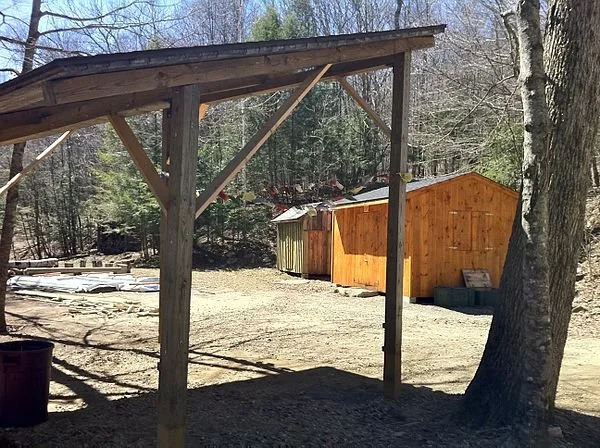
Hole in the Wall Gang Camp in Ashford in the off-season
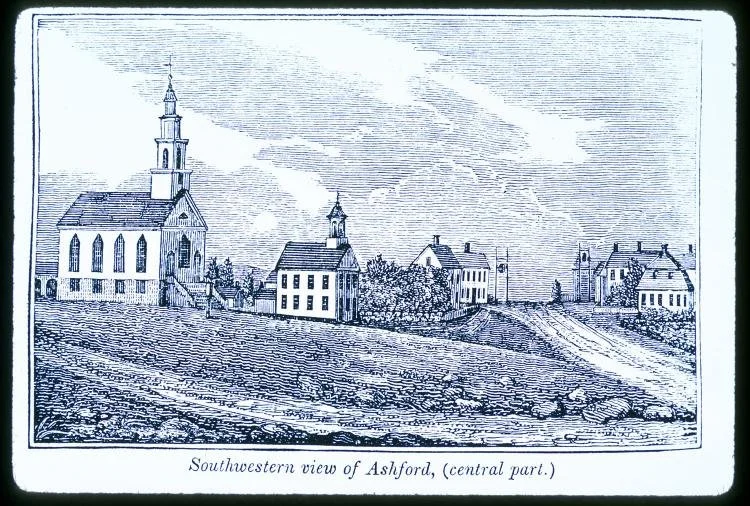
Ashford in 1838

David Warsh: Squeezed between pushing democracy and fighting global warming

The Fall of the Berlin Wall, in 1989, marked a huge turning point in NATO's role in Europe. Here you can see section of the wall displayed outside NATO headquarters, in Brussels.
SOMERVILLE, Mass.
Which is the more pressing concern: advancing the cause of democracy in the face of opposition, or combatting global warming?
NATO enlargement has been the policy of the United States since Bill Clinton was first elected president, in 1992. The course of action he adopted was embraced and extended by successors George W. Bush and Barack Obama.
Was it a good idea?
Anne Applebaum thinks so. The Pulitzer Prize-winning author and journalist has been among NATO expansion’s most ardent advocates since becoming a correspondent for The Economist, in 1988, and moving to Warsaw. In a panel podcast last week for The Atlantic, where she is now a contributing writer, she said,
I think that the expansion of NATO was the most successful, if not the only successful, piece of American foreign policy of the past thirty years. It created a zone of safety and security for sixty million people in part of the world that has been the source of two world wars…. We would be having this fight in East Germany now if we had not done it.
I have been on the other side of that argument for nearly twenty years, a thin voice in the back of a relatively small chorus of dissenters that included, in 1994, Defense Secretary Les Aspin, his deputy William Perry, and most senior American military commanders at the time; in 1996, diplomat George Kennan and a group of distinguished foreign-policy experts; and, that same year, Brent Scowcroft, a lone authority from the administration of George H. W. Bush.
In 2018, in Because They Could: The Harvard-Russia Scandal (and NATO Expansion) after Twenty-five Years, I wrote, “No aspect looms larger in these 25 years [of US-Russia relations] than the story of NATO enlargement.”
Now that Vladimir Putin has sent the Russian army to invade Ukraine, the reasoning behind NATO enlargement has become ripe for reassessment– not now, while people are fighting, dying and fleeing, but after the carnage has ended, And then only gradually, calmly, without rancor.
Who know what drove Putin crazy enough to invade Ukraine? That’s for analysts, biographers and historians to puzzle out. Certainly apprehension over NATO expansion was part of it. So was his experience as “a boy once bullied in the back streets of Leningrad.” Meanwhile, the costs of his war are already staggering. Not just the loss of Ukrainian sovereignty. Nor Russian civil society’s forty years’ of gains since the former Soviet Union began to come apart.
The opportunities that mattered most had lain ahead. Good-faith cooperation among nations to control emission, adapt habitats and reduce solar radiation will be harder to organize than it would have been otherwise.
Even if the fondest dreams of the NATO expansionists are realized – if Russian elites and everyday citizens combine to overthrow Putin – this disastrous war makes the steadily increasing pressure on Russia’s borders seem like a hell of a risk to have run.
The problem of Taiwan is next.
Grounds for rapprochement can be found in the years ahead, but the search will require policy-makers of more sober temperament and, even then, many years will be required to restore the trust and mutual respect that has been lost.
xxx
Bill Clinton made it official in1994: NATO expansion would take place “not whether but when.” Harvard historian Tim Colton wrote in his 2008 biography of Boris Yeltsin, “A ticking time bomb had been set.” It took four more U.S. presidencies – George W. Bush, Barack Obama, Donald Trump, and Joe Biden – for it to explode.
Meanwhile, Vice President Al Gore in 1993 persuaded Clinton to formally commit the nation to the Rio de Janeiro targets for greenhouse gas emissions, but conservative politicians continued to scoff.
David Warsh is a veteran columnist and an economic historian. He’s also proprietor of Somerville-based economicprincipals.com, where this column first ran.


Don Pesci: ‘Cheap tears’ about Putin’s rape of Ukraine

Result of Russian terror shelling of residential areas in the Chernihiv district of Ukraine.
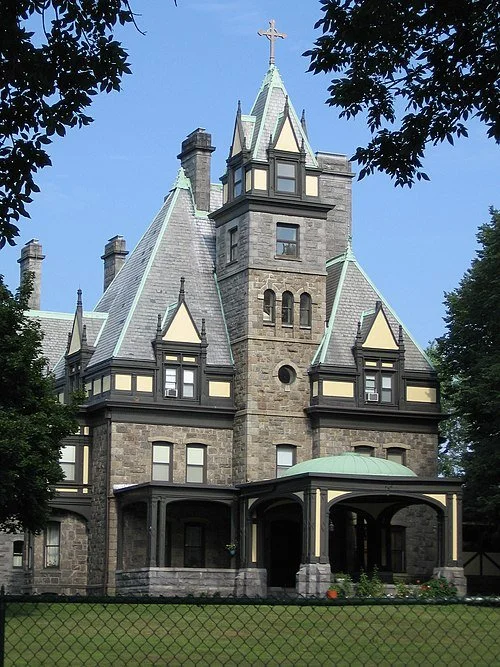
"The Chateau" at St. Basil College Seminary in Stamford, Conn. It was originally a college dormitory and now houses the Ukrainian Museum and Library of Stamford.
VERNON, Conn.
People in the United States, some of them foreign-policy “experts,” were surprised, surprised when the Ukrainian military has pushed back against Putin’s merciless invasion of the country for many days on end. Ukrainians in Connecticut were not surprised. Neither will they be surprised at the imminent collapse of the Ukrainian resistance.
Nor will U.S. intelligence services or politicians in the United States sympathetic to Ukraine, the Alamo of Europe, be surprised. There have been no surprises, and there should in the near future be no surprises.
Putin’s 40-mile Russian convoy is approaching Kiev. The Russian military already is in possession of the largest nuclear plant in the world, having bombed it first. Not to worry, it appears that no one in NATO, putatively a defense corridor against Russian aggression, will be harmed by Chernobyl ll.
Putin is using cluster bombs, outlawed by virtually all Western nations years ago, to terrorize the civilian population of Ukraine which – no big surprise – will over the course of the coming days be efficiently and effectively bombed into submission. What we are witnessing on a global scale is a new “trail of tears,” and an Alamo defense by Ukrainians. The Alamo, it should be recalled, surrounded by Santa Ana’s superior Mexican army, was also given up as lost by the intelligence services of Davy Crockett’s day.
So, what’s next for Ukraine? There is not a single general in the Pentagon who does not know that the spoils of war will go to Putin.
Ukraine is being abducted, and the United States has already more or less written off the corpses and captives as NATO’s collateral damage. Moldova, which managed to struggle free of Stalin’s chains, is likely next on Putin’s checkoff list. Moldova, like Ukraine, is not affiliated with NATO, nor is Finland. And when it too falls, one may expect lots of bedroom slipper analysis (see Camus on Hungary here) and tears flowing like rivers from the reddened eyes of politicians in Congress empathetic to Ukraine.
Theologians sometimes speak of “cheap grace.” These are cheap tears.
Ukrainian President Volodymyr Zelenskyy, whose courage under fire has been widely praised by President Biden and the entire Connecticut U.S. congressional delegation, has repeatedly said he needed many more armor-piercing weapons to stop the 40- mile convoy of Russian tanks and missile launchers methodically preparing to overrun Kiev, not American boots on the ground or – Heaven forefend! – an effective boots on the ground resistance from cowed NATO countries.
The United States, still cursed by former President Obama’s “lead from behind” foreign-policy timidity, has followed – sort of – Britain’s lead in supplying Ukraine with minimal defensive munitions in an attempt to prevent Ukraine from toppling back into a Russian-controlled police state of the sort that Putin also wishes to reconstruct in the Baltic States that he falsely supposes threaten Russia’s sovereignty.
Apparently NATO is to be a new “red line” that Putin and his 40-mile long military convoy will not be permitted to cross with impunity — without an effective military response. In bygone days, the U.S. southern border sometimes was a red line that border-jumpers were not permitted to cross with impunity. But the red lines laid down by U.S. presidents in the have tended to be drawn with disappearing ink and resolve.
The copious congressional tears and nods of “solidarity” with Ukraine are little more than political bitcoins to purchase votes. There has been no shortage of empathy for Ukraine issuing from Connecticut’s congressional delegation.
One thinks of U.S. Sen. Dick Blumenthal, whose veins are filled with tears rather than blood. Blumenthal, who has long accustomed himself to bleed tears from every political stump in Connecticut at the slightest provocation, has yet to explain to Connecticut Ukrainian-Americans he has visited in churches why U.S. intelligence services (see “US delays real-time intel to Ukraine, officials say”) have been reluctant to share with Ukrainian leaders information in their possession that would aid the country’s military in its defense of a civilian population against which Putin, not beloved of Democrats, has declared total war.
The news item cited above appeared on Saturday, March 5 in The Hartford Courant, a paper Blumenthal’s staff frequently consults. Blumenthal, accustomed to ventilating his domestic- and foreign-policy views wherever and whenever he wishes, is on the Senate Committee on Armed Services.
Though Zelenskyy has several times vividly portrayed Ukraine’s vulnerability to Russian assaults operating in airspace that remains open in the midst of pulverizing bomb and missile strikes, his multiple requests to close off the airspace have been turned aside by the United States and all other NATO countries on the grounds that acceding to the request would require the destruction of Russian aircraft violating closed air space. And this, it has been whispered by Russian invaders, could theoretically precipitate a declared war with nuclear-armed Russia.
If Putin is successful in occupying Ukraine, he will have achieved a tactical and strategic victory that will move the border of Russia west so that it will impinge on all the Baltic States, as well as Poland and Finland, NATO countries that had wrested their freedom from Russian domination when Eastern Bloc nations had cast off their chains starting in 1989. Putin’s nuclear blackmail would then apply not just to Ukraine but to all nations, NATO or not, facing a future 40-mile, menacing Russian caravan.
The nuclear blackmail that has intimidated Western free states from supplying intelligence and war material necessary for the survival of an independent Ukraine is a constant of Putin’s terrorist policy. Putin has no intention of disarming Russia of nuclear weapons. He now says that even sanctions are a declaration of war. The weapons remaining a live option, the threat will remain a live option, however many civilians Putin chooses to murder in Ukraine -- or in any other country he wishes to incorporate into his new visionary map of Europe.
Ukraine having been imprisoned behind a refabricated Iron Curtain, what will Blumenthal say to the congregants of Ukrainian churches in Connecticut with whom he has expressed “solidarity”? How solid is a solidarity that stands aside, watching in horror the methodical destruction of an independent democracy, twisting its fingers while bravely inveighing against “Son Of Stalin” Putin, bleeding tears, and churning with useless chatter, while Putin reassembles a new Eastern Bloc corridor of states subservient to terrorist Russia?
Don Pesci is a Vernon-based columnist.
World on fire

“Fruit of Silence, Panel #3,’’ by Entang Wiharso, an artist who lives in Rhode Island and Indonesia, in his show “Meta Landscape,’’ at the Jamestown (R.I.) Art Center, May 14-June 18.
The gallery says:
“{His} recent work focuses on the duality of cultures and experiences in his two homelands, building on ideas that connect spirituality and transcendence with national narratives about progress and destiny through a sustained exploration of landscape and geopolitical structures.’’
‘Vermonters fear no man’

From atop Mount Equinox.
“Vermont is a state I love.
“I could not look upon the peaks of Ascutney, Killington, Mansfield and Equinox without being moved in a way that no other scene could move me.
“It was here that I first saw the light of day; here I received my bride; here my dead lie pillowed on the loving breast of our everlasting hills.
“I love Vermont because of her hills and valleys, her scenery and invigorating climate, but most of all, because of her indomitable people. They are a race of pioneers who have almost beggared themselves to serve others. If the spirit of liberty should vanish in other parts of the union and support of our institutions should languish, it could all be replenished from the generous store held by the people of this brave little state of Vermont.
“Vermont is my birthright. Here one gets close to nature, in the mountains, in the brooks, the waters which hurry to the sea; in the lakes, shining like silver in their green setting; fields tilled, not by machinery, but by the brain and hand of man. My folks are happy and contented. They belong to themselves, live within their incomes, and fear no man.’’
— President Calvin Coolidge (18720-1933) on Sept. 21, 1928. He grew up in Plymouth Notch, Vt., though he went to college (Amherst College), practiced law and rose to governor in Massachusetts.
Visit the Coolidge homestead. Hit this link.
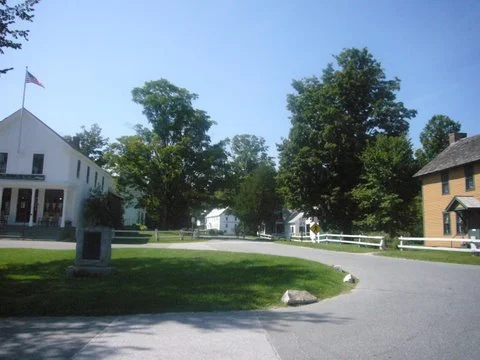
At the Coolidge homestead, in Plymouth Notch, Vt. Calvin Coolidge was born in the rear of the general store in the foreground and the Coolidges’ still operative cheese company is in the distance.
— Photo by Swampyank
Wind-power sector gaining speed

Adapted from Robert Whitcomb’s “Digital Diary,’’ in GoLocal24.com
The offshore-wind sector is slowly paying economic dividends onshore. The latest example is that Prysmian Group, an Italian company, will buy 47 acres on Brayton Point, in Somerset, Mass., to put up a $200-million facility to make subsea transmission cables to bring power generated by offshore wind turbines to the New England grid. It’s nice symbolism because Brayton Point, on beautiful Mount Hope Bay, was the site of New England’s last big coal-fired power plant.
Just down Route 195, there’s a facility to support offshore wind in New Bedford, like the Somerset site in connection with wind-turbine arrays to go up south of New England. The Whaling City facility will handle assembly and deployment of the turbines. And a site in Salem, Mass., is eyed as a staging area for turbine assembly, including for arrays in the Gulf of Maine.
Problematic purchases

“Half of what they sell
Will kill you
The other half
Makes you go back for more.’’
— From “Grocery,’’ by Charles Simic (born 1938), Serbian-American poet and long-time teacher at the University of New Hampshire.
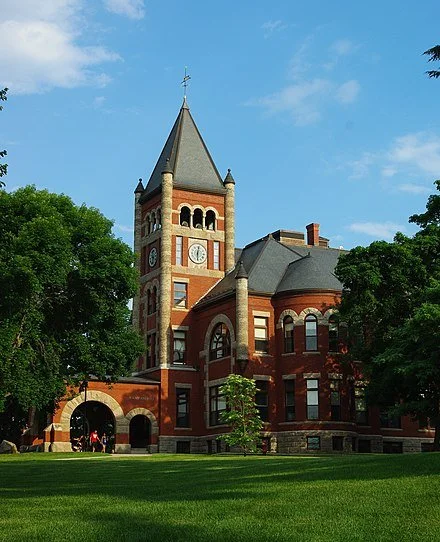
Thompson Hall (built in 1892), at the University of New Hampshire.

‘It’s still the same old story’

“Love and War” (encaustic, rusted paper, old letter, graphite and ink), by Pembroke, Mass.- based artist and honey-product producer Stephanie Roberts-Camello.

The North River, which flows through the Pembroke area.
— Photo by John Phelan
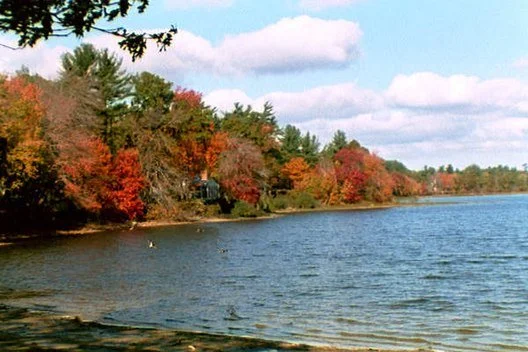
Great Sandy Bottom Pond, in Pembroke.
She writes:
“Discovering a box of old family letters in my family's basement would change the way I painted and how I thought about my work. There were stacks of letters bound i twine according to who sent them. They dated back as far as 1919 through 1946. Many of these letters reference the dust bowl days of Texas and the Great Depression. I come from a family of cattlemen and farmers who were dependent on the weather for their survival. Loss of crops due to droughts and tough conditions in raising cattle are common themes coupled with money problems. These problems are not mine, but I couldn't help relate them to obstacles and set backs that we all have.
“Encaustic is a medium that can be worked flat or sculpturally. One of its many attributes is it can retain any stress mark or scrape once it cools. It has an innate feature for documentation. These letters; represent a period of suffering, loss and endurance in our country, and for me, the intricately-worked encaustic shrouds became metaphors for struggle and change. Layers of wax literally cover up the past. I peel them back to reveal a portion of what once was. Revealed, exhumed, manipulated, up-ended, exposed-all of these actions give me a sense of freedom, and the ability to step outside myself. Seemingly destructive to the surface, the peeling plays a positive role in removing a build up and seeing what has been lying dormant. It holds a stratum of time much like the earths core. The depth created working this way is jarring to me, confrontational, alluring and frightening.There is risk involved, but the presence of this relief work conveys a sense of resilience and life which keeps me returning. It speaks with a boldness and beauty that is also fragile. This opposition between image/content and material is the catalyst for the development of my encaustic relief series. This work continues to evolve as I find new ways to shed light on the past that enlightens and informs the future.’’
A sadistic month

“Anyone who lives in Boston knows that it’s March that’s cruelest, holding out a few days of false hope and then gleefully hitting you with the s@#t.’’
— Stephen King (born 1947), the Maine-based novelist, in his novel Dreamcatcher.
Chris Powell: Gasoline-tax pandering in Conn.

I-95 crossing the Connecticut River in Old Saybrook/Old Lyme, Conn.
— Photo by JJBers Public -
MANCHESTER, Conn.
Are things getting so bad for the Democrats that even Connecticut's senior U.S. senator, Richard Blumenthal, is worried about winning re-election this year?
That might have been construed from the senator's silly pandering last week about gasoline taxes.
Blumenthal -- for 20 years the "eternal {state attorney} general" who now, at age 76, is seeking a third six-year term in the Senate -- called for suspending the federal gas tax, which is 18 cents per gallon. Because gas prices have risen dramatically in recent months, the senator said, people need immediate relief. Meanwhile, the senator added, the federal gas tax isn't needed because its revenue is dedicated to highways and the federal government has just appropriated billions of dollars for highways.
Blumenthal's rationale raised some big questions he didn't address.
That is, where did those billions of dollars for highways come from if not from federal gas taxes?
Mostly they were just created electronically from computer keystrokes.
And if finding money for highways is that easy, why has the country bothered with the federal gas tax in the first place -- or, for that matter, with any taxes at all?
While the federal highway fund may not need any revenue, Blumenthal's colleague in Connecticut's congressional delegation, First District U.S. Rep. John B. Larson, might remind him that the Social Security Trust Fund is projected to be insolvent in another decade and might be glad to take whatever money the highway fund doesn't need.
But even if the federal gas tax is suspended as Blumenthal and other members of Congress propose, people still will be paying its equivalent. Most just won't understand how they pay, nor that they are already paying -- through the devaluation of their money, the inflation tax on their wages and savings, which is already running at about 15 percent annually once the government's deceitful skewing of the data is corrected.
This inflation is largely a matter of the imbalance between government's money creation and national and -- since the U.S. dollar is the world reserve currency -- international production. Much more money lately has been created than goods and services have been produced.
Indeed, when it comes to government appropriations there is hardly any discussion anymore of where the money is to come from. It now is widely assumed that money is infinite, even as inflation screams that production is not.
Political responsibility for surging inflation is bipartisan, but since Democrats control the presidency and Congress, they will catch the blame. Blumenthal's pose on the gas tax shows he realizes this and is planning an escape.
A big part of the production problem is entirely a Democratic responsibility -- the Biden administration's crippling of U.S. energy production in pursuit of "greener" energy even as "greener" energy isn't close to being ready to replace the oil and natural gas supplies that are being diminished.
The environmental fanaticism of the Democrats is feeding Russia's imperialism toward Ukraine and the other former Soviet satellite states in eastern Europe. Western Europe has crippled its conventional energy production even more than the United States has and long has been heavily dependent on Russian natural gas, which can be cut off if its recipients get serious with economic penalties against Russia.
Meanwhile, since it has hampered its own energy production, the United States is unable to help Europe much at this crucial moment.
Until a few months ago Gov. Ned Lamont, a Democrat, and many Democratic state legislators sought to raise Connecticut's gas tax invisibly through a regional scheme to raise wholesale gas taxes without providing people with any transportation alternatives, though cars are a necessity for most in a state as suburban as Connecticut.
The explosion in gas prices and inflation has prompted the governor and those Democratic legislators to shelve their hidden gas tax idea. But the Democrats long have been Connecticut's tax-raising party and bear most responsibility for making the state so expensive to inhabit -- and for what? Are the state's cities any less destitute and violent? Are its poor any more self-sufficient? Are its socially promoted children any better parented and educated?
Or is inflation the main result of policy on the state level too?
Chris Powell is a columnist for the Journal Inquirer, in Manchester.
Just ignore him

“Thistle” (color reductive link print, oil based ink on arches), by Gloucester, Mass-based artist Coco Berkman, at Concord (Mass.) Art Center, though March 24.

The Wayside, in Concord, home in turn to famous writers Louisa May Alcott, Nathaniel Hawthorne and Margaret Sidney
— Photo by Daderot
Wandering and ‘sealed intact’
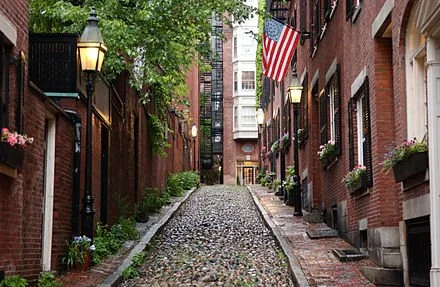
Elegant alley-like Acorn Street on Boston’s Beacon Hill.
“All day all over the city every person
Wanders a different city, sealed intact
And haunted as the abandoned subway stations
Under the city. Where is my alley doorway?’’
— From “The Day Dreamers,’’ by Robert Pinsky (born 1940), an American poet, essayist, literary critic and translator. This poem is set in Boston, where Pinsky teaches at Boston University.

Old MBTA (formerly MTA) streetcar.
Artfully mapping climate change

“From Rhode Island to South Carolina (Rand Mc-Nally’s The Great Geographical Atlas)” (1991), by Maya Lin (Maya Lin Studio, courtesy of Pace Gallery, photograph by G.R. Christmas), in the show “Maya Lin: Mappings” through Aug. 7, at the Smith College Museum of Art, Northampton, Mass.
The gallery says that Lin's art promotes awareness about climate change as we experience its effects daily. "Using a variety of materials, including steel pins, marble, and bound atlases, Lin distills complicated scientific and quantitative information into resonant objects. These artworks open a dialogue between the artist and the viewer."

On the Connecticut River in Northampton.


John O. Harney: The state of the New England states as COVID winds down (for now?)
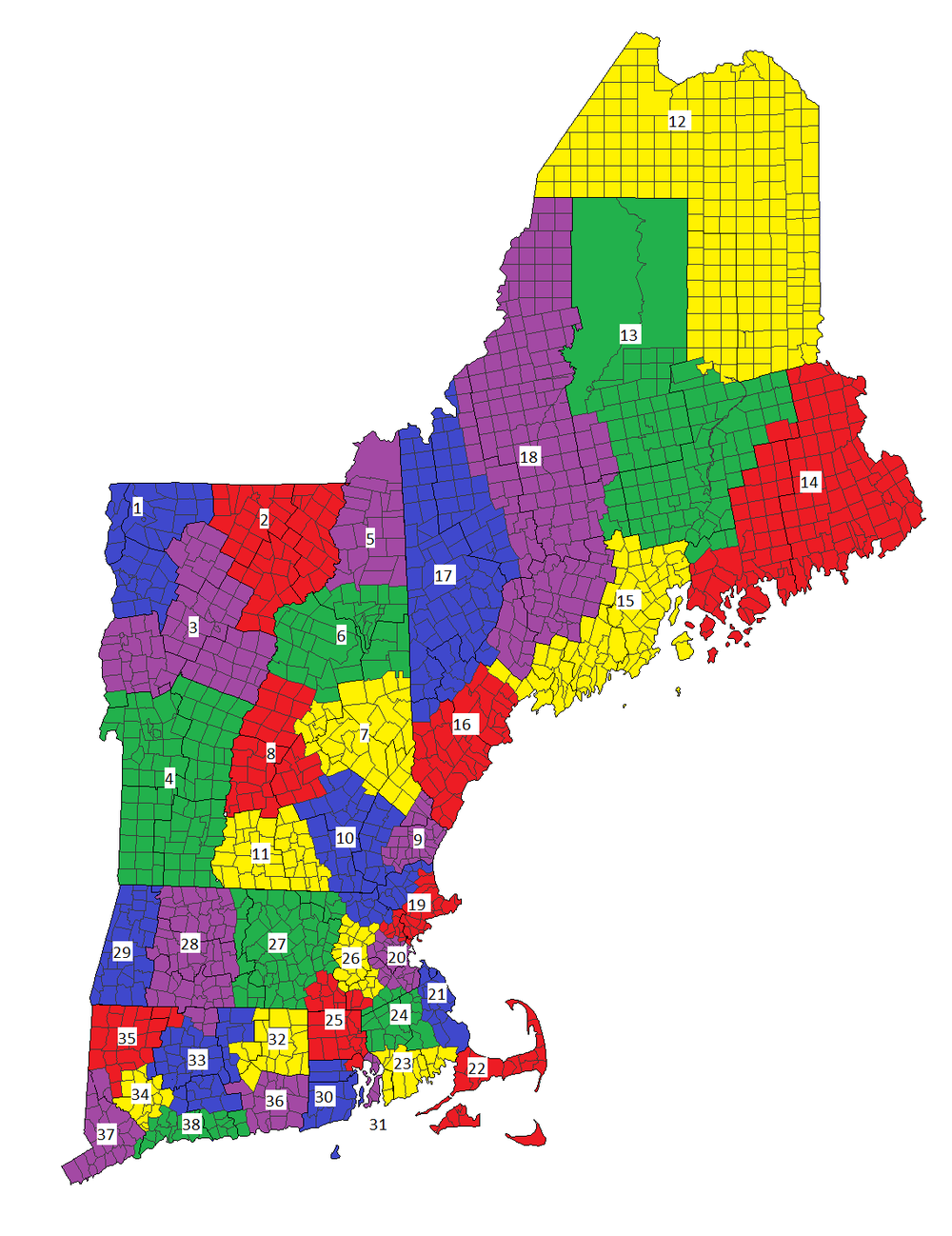
Regions of New England:
1. Northwest Vermont/Champlain Valley
2. Northeast Kingdom
3. Central Vermont
4. Southern Vermont
5. Great North Woods Region
6. White Mountains
7. Lakes Region
8. Dartmouth/Lake Sunapee Region
9. Seacoast Region
10. Merrimack Valley
11. Monadnock Region
12. Aroostook
13. Maine Highlands
14. Acadia/Down East
15. Mid-Coast/Penobscot Bay
16. Southern Maine/South Coast
17. Mountain and Lakes Region
18. Kennebec Valley
19. North Shore
20. Metro Boston
21. South Shore
22. Cape Cod and Islands
23. South Coast
24. Southeastern Massachusetts
25. Blackstone River Valley
26. Metrowest/Greater Boston
27. Central Massachusetts
28. Pioneer Valley
29. The Berkshires
30. South County
31. East Bay
32. Quiet Corner
33. Greater Hartford
34. Central Naugatuck Valley
35. Northwest Hills
36. Southeastern Connecticut/Greater New London
37. Western Connecticut
38. Connecticut Shoreline
From The New England Journal of Higher Education (NEJHE), a service of The New England Board of Higher Education (nebhe.org)
BOSTON
“This Covid-19 pandemic has been part of our lives for nearly two years now. It’s what we talk about at our kitchen tables over breakfast in the morning, and again over dinner at night. It gets brought up in nearly every conversation we have throughout the day, and it’s a topic at nearly every special gathering we attend,” Rhode Island Gov. Daniel McKee noted in his recent 2022 State of the State address.
Indeed, that was a consistent theme among all six New England governors’ 2022 State of the State speeches. As were plugs for innovation in healthcare, especially mental health, housing, workforce development, climate strategies, children’s services, transportation, schools, budgets and, with varying degrees of gratitude, acknowledgement of federal infusions of relief money.
Here are links to the full New England State of the State addresses, highlighting some key points from the beat:
Connecticut Gov. Ned Lamont’s 2022 State of the State Address
“Our budget invests 10 times more money than ever before in workforce development—with a hyper focus on trade schools, apprentice programs and tuition-free certificate programs where students of all ages can earn an industry-recognized credential in half the time, with a full-time job all but guaranteed.
This investment will train over 10,000 students and job seekers this year in courses designed by businesses around the skills that they need.
This isn’t just about providing people with credentials; this is about changing people’s lives.
A stay-at-home mom whose husband lost his job earned her pharmacy tech certificate in three months and now works at Yale New Haven Hospital.
A man who was homeless was provided housing, transportation, a laptop and training. He’s now a user support specialist for a large tech company.
These are just two examples of opportunities that completely change the course of someone’s life.
We are working with our partners in the trade unions to develop programs for the next generation of laser welders and pipefitters. Building on the amazing partnership between Hartford Hospital and Quinnipiac University, we are also ramping up our next generation of healthcare workers.
I want students and trainees to take a job in Connecticut, and I want Connecticut employers to hire from Connecticut first! To encourage that, we’re expanding a tax credit for small businesses that help repay their employees’ student loans. More reasons for your business to hire in Connecticut, and for graduates to stay in Connecticut—that’s the Connecticut difference.”
Maine Gov. Janet Mills’s 2022 State of the State Address
“It is also our responsibility to ensure that higher education is affordable.
And I’ve got some ideas to tackle that.
First, I am proposing funding in my supplemental budget to stave off tuition hikes across the University of Maine System, to keep university education in Maine affordable.
Secondly, thinking especially about all those young people whose aspirations have been most impacted by the pandemic, I propose making two years of community college free.
To the high school classes of 2020 through 2023—if you enroll full-time in a Maine community college this fall or next, the State of Maine will cover every last dollar of your tuition so you can obtain a one-year certificate or two-year associate degree and graduate unburdened by debt and ready to enter the workforce.
And if you are someone who’s already started a two-year program, we’ve got your back too. We will cover the last dollar of your second year.”
Massachusetts Gov. Charlie Baker’s 2022 State of the State Address
“We increased public school spending by $1.6 billion, and fully funded the game-changing Student Opportunity Act.
We invested over $100 million in modernizing equipment at our vocational and technical programs, bringing opportunities to thousands of students and young adults.
We dramatically expanded STEM programming, and we helped thousands of high school students from Gateway Cities earn college credits free through our Early College programs.”
New Hampshire Gov. Chris Sununu’s State of the State Address
“Our way of life here in the 603 is the best of the best.
We didn’t get here by accident—we did it through smart management, prioritizing individuals over government, citizens over systems, and delivering results with the immense responsibility of properly managing our citizens tax dollars.
As other states were forced to buckle down and weather the storm, we took a more proactive approach in 2021. In just the last year, we:
• Cut the statewide property tax by $100 million to provide relief to New Hampshire taxpayers
• Cut the rooms and meals tax
• Cut business taxes—again
• Began permanently phasing out the interest and dividends tax
And while we heard scary stories of how cutting taxes and returning such large amounts of money to citizens and towns would ‘cost too much’, the actual results have played out exactly as we planned, record tax revenue pouring into New Hampshire, exceeding all surplus estimates, allowing us to double the State’s Rainy Day Fund to over $250 million.”
Rhode Island Gov. Daniel McKee’s State of the State Address
“We all know that the economy was changing well before the pandemic. A college degree or credential is a basic qualification for over 70 percent of jobs created since 2008. Although we have made great progress over the last decade, there’s more to do.
Let’s launch Rhode Island’s first Higher Ed Academy, a statewide effort to meet Rhode Islanders where they are and provide access to education and training, that leads to a good-paying job. Through this initiative, which will be run by our Postsecondary Education Commissioner Shannon Gilkey, we expect to support over a thousand Rhode Islanders helping them gain the skills needed to be successful in obtaining a credential or degree.
Having a strong, educated workforce is critical for a strong economy—and Rhode Island’s economy is built on small businesses. Small businesses employ over half of our workforce. As these businesses continue to recover from the pandemic, we know that challenges still persist. That’s why in the first several weeks of my administration, I put millions of unspent CARES Act dollars that we received in 2020 into grants to help more than 3,600 small businesses stay afloat.
My budget will call for key small business supports like more funding for small business grants, especially for severely impacted industries like tourism and hospitality. It will also increase grant funding for Rhode Island’s small farms.
As our businesses deal with workforce challenges, I’ll also propose more funding to forgive student loan debt, especially for health-care professionals, and $40 million to continue the Real Jobs Rhode Island program which has already helped thousands of Rhode Islanders get back to work.”
Vermont Gov. Phil Scott’s State of the State Address
“The hardest part of addressing our workforce shortage is that it is so intertwined with other big challenges, from affordability and education to our economy and recovery. Each problem makes the others harder to solve, creating a vicious cycle that’s been difficult to break.
Specifically, I believe our high cost of living has contributed to a declining workforce and stunted our growth. As we lose Vermonters who cannot afford to live, do business or even retire here, that burden—from taxes and utility rates to healthcare and education costs—falls on fewer and fewer of us, making life even less affordable.
With fewer working families comes fewer kids in our schools. But lower enrollment hasn’t meant lower costs and from district to district, kids are not offered the same opportunities, like foreign languages, AP courses or electives. And with fewer school offerings, it is hard to attract families, workers and jobs to those communities.
Fewer workers and fewer students mean our businesses struggle to fill the jobs they need to survive, deepening the economic divide from region to region.
And for years, state budgets and policies failed to adapt to this reality. …
Let’s start with the people already here and do more to connect them with great jobs.
First, our internship, returnship and apprenticeship programs have been incredibly successful, not only giving workers job experience, but also building ties to local employers. To improve on this work, the Department of Labor assists employers to fill and manage internships statewide and we’ll invest more to help cover interns’ wages.
And let’s not forget about retired Vermonters who want to go back to work and have a lot to offer. I look forward to working with Representative Marcotte and the House Commerce Committee on this issue and may others.
Next, let’s put a greater focus on trades training. And here’s why:
We all know we need more nurses and healthcare workers. And as I previewed with {state} Senator Sanders and {state} Senator Balint earlier this week, I will propose investments in this area. But if we don’t have enough CDL drivers, mechanics and technicians, hospital staff won’t get to work; there will be issues getting the life-saving equipment and supplies we need; and we will see fewer EMTs available to get patients to emergency rooms. If we don’t have enough carpenters, plumbers and electricians, or heating, ventilation, air handling and refrigeration techs, there are fewer to construct and maintain the facilities in our health-care system or build homes for the workers we are trying to attract.”
John O. Harney is the executive editor of The New England Journal of Higher Education.
Solid and plane geometry

“Geometry 101” (encaustic and mixed-media collage on panel), by Southboro, Mass.-based artist Catherine M. Weber.
Ms. Weber, a member of New England Wax (newenglandwax.com) says:
“My earliest memories are of homesteading on our family farm, where I learned how to use the materials in nature to create art, and where the landscape was often my subject matter. These influences have lead me to feature trees prominently in my work, directly or indirectly, including work that uses slices of trees as a substrate, print making of logs, and photograph trees and the recreation of lichens, which often grow on trees.
“I achieve this using encaustic medium and paint, photography, textiles, Japanese papers, and found objects to make harmony of my world and communicate thoughts and emotions.
“I’ve studied many mediums and continue to be a voracious learner, pursuing an independent study, self-directed ‘MFA’ exploring a wide variety of medium including natural dye making, mosaics, printmaking, macro photography, and sewing. It is my goal to use whatever technique or medium can achieve my vision of illuminating nature and inspiring others to cherish the natural world.’’

In Boston suburb Southboro, which has a few high-tech companies but might be best known as the home of the elite, mostly rich kids boarding school St. Mark’s School and the prep-school feeder the Fay School, for younger students.