
Vox clamantis in deserto







Jim Hightower: Save our political cartoonists from Wall Street

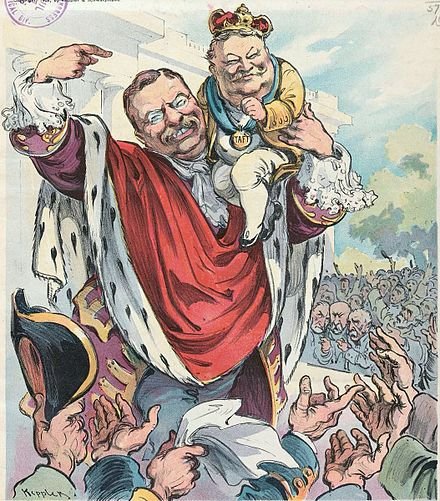
Theodore Roosevelt introduces William Howard Taft as his crown prince in a 1906 Puck magazine cover.

“Join, or Die,’’ by Benjamin Franklin (1754), a cartoon on the disunity of the Thirteen Colonies during the French and Indian War. It was later used to encourage the former colonies to unite for the cause of independence during the Revolutionary War.
Via OtherWords. org
Right before our eyes, an invaluable American species is fast disappearing from view: Kartoonus Amerikanas.
These are the newspaper cartoonists who’ve long delighted readers and infuriated power elites. And there’s nothing natural about their sudden decline. It’s not the result of a declining talent pool, and certainly not due to a lack of political targets.
What’s happening is that their media habitat is being intentionally destroyed.
Around the start of the 20th Century, some 2,000 newspapers featured their own full-time cartoonists. But in just the last decade, those healthy media environments have shriveled. So now, only a couple dozen newspapers have these vibrant artistic journalists on staff.
One major reason is that most U.S. papers have been gobbled up by profiteering hedge funds that have merged, purged and plundered these essential local sources of news and democratic discourse. The overriding interest of these Wall Street owners is to cash out a paper’s financial assets and haul off the booty to boost their personal wealth — journalism and democracy be damned.
They view cartoonists as a paycheck that can be easily diverted into their corporate pockets, dismissing the fact that enjoying good local cartoonists ranks as one of top reasons people give for buying the paper.
Note that this mass extermination is not old-school media censorship, but slight-of-hand financial censorship by the new monopolistic order of newspapering.
Political cartoonists are still free to express any opinion they want, but the Wall Street system locks them out of their primary marketplace. Censorship is ugly, but eliminating paychecks — well, that’s just business.
The good news is that these freewheeling artistic spirits of the cartooning craft are inventing new ways to connect with America’s strong consumer demand for their fun and important work. To get connected and get active with them, go to EditorialCartoonists.com.
OtherWords columnist Jim Hightower is a radio commentator, writer, and public speaker.

Why Boston is relatively peaceful

A Boston Police Dept. special operations officer
Adapted from Robert Whitcomb’s “Digital Diary,’’ in GoLocal24.com
Boston is one of those few big American cities that hasn’t had a surging homicide rate in the last few years. (The national crime rate, including for murder, remains lower than it was in the 1970’s to 1990’s.)
In 2020, for example, Boston had 56 murders, close to its five-year average of 51, and last year that number fell to 40. The city has in recent years been ranked at about 45th among American cities in murder rates. Consider that Baltimore, which has almost 100,000 fewer people than Boston, had 337 murders last year!
Boston’s relatively good record can be attributed to such things as a neighborhood-focused approach to policing that makes heavy use of local nonprofit and other organizations, including religious organizations. But it’s also that Boston lacks the entrenched culture of violence of many cities and that its residents tend to have fewer guns than residents of most big American cities. Indeed, the gun culture has always been weaker in New England than in most of America, with the notable exception of some thinly populated rural parts, mostly in northern New England. And perhaps the much-noticed proliferation of surveillance cameras in parts of Boston may play some small role in discouraging crime.
And, for that matter, New England, of which Boston is the regional capital, has less crime in general than other regions, in part because it has a more stable population and stronger civic culture, with less of the anomie found in the Sun Belt.
Those who misinterpret (ignoring the line about a “well-regulated militia’’) the Second Amendment like to say “guns don’t kill people, people kill people,’’ so the more guns out there the better!
How disingenuous! It’s “people with guns who kill people,’’ and much faster and more efficiently than with other weapons. Details, details!
In any event, Boston has some lessons for other American cities.
Call pest control?And treating Norman Rockwell

“Scritchy Scratchy,” by Jan Brett (watercolor on paper, illustration for Gingerbread Friends), in the show “Jan Brett: Stories Near and Far,’’ at the Norman Rockwell Museum, Stockbridge, Mass., through March 6.
Ms. Brett is the author/illustrator of such books for kids as The Mitten, Cozy and Gingerbread Baby. She has homes in the Berkshires and in Norwell, Mass., where she grew up.

The North River, with beautiful marshes, forms the southeast boundary of Norwell.
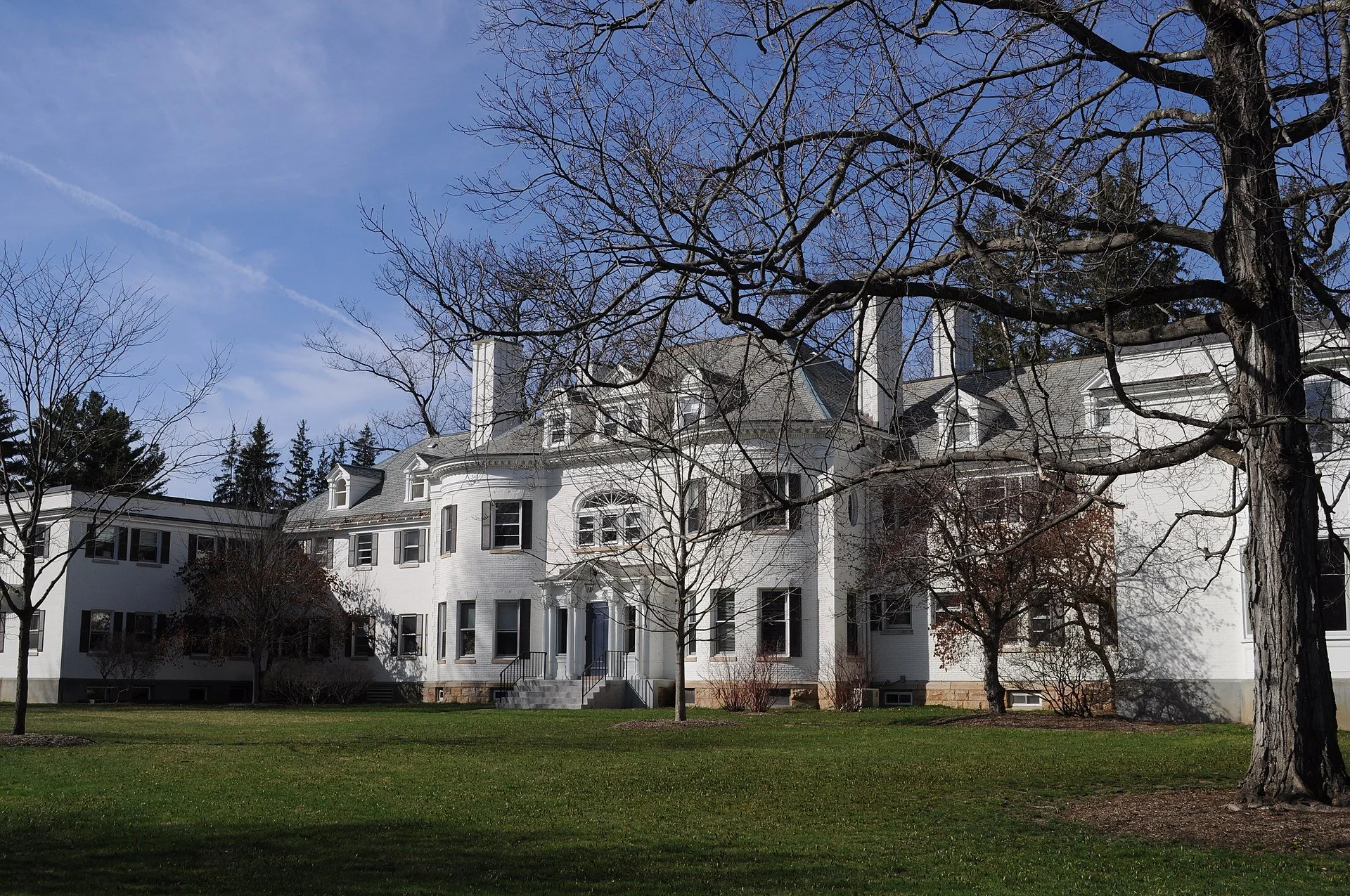
The famous Austen Riggs Center, a psychiatric institution in Stockbridge, the Berkshires town that the famed painter and illustrator Norman Rockwell (1894-1978) moved to at least in part because of Riggs, where he and his second wife, Mary Barstow, were both treated for mental illness. His wife, the more seriously ill of the two, suffered from depression and alcoholism and Rockwell from depression and anxiety.
The very expensive Riggs had the reputation of drawing well-known patients and celebrated psychiatrists.
Rockwell once said: "I paint life as I would like it to be.’’

Llewellyn King: How I fell for Taylor Swift big time

Taylor Swift
WEST WARWICK, R.I.
If Taylor Swift sat next to me on a bus – an unlikely confluence — I wouldn’t know that she was a famous singer, an idol to millions of young people (who call themselves Swifties), and especially to young women. But I have fallen for her big time.
Popular culture – with which I’ve never been very familiar, even when I wrote about movies and the theater -- has given me a wider-and-wider berth as time has passed. Truth is that I am more familiar with the evolution of technology than I am with the history of pop music, more comfortable with Turner Classic Movies than I am with this year’s releases.
This from a man who was paid by the London Dispatch to follow Elizabeth Taylor and Richard Burton around London when they were making Cleopatra — and making whoopee -- in 1962.
I might mention that when I did catch up with the most famous lovers of the day, they were lunching in a pub near where I lived in the leafy Dulwich area of South London. They were everything you would want of lovers: they glowed, held each other’s eyes, and were so clearly in the thralls of enchantment that I didn’t call for a photographer, or in any way fulfill my assignment for the newspaper. It was an active dereliction of duty, but they were so compelling.
The Romantic poet Lord Byron -- who knew a thing or two about adulterous love -- described an adulterous pair as “happy in the illicit indulgence of their innocent desires.” Taylor and Burton seemed to be lost in their affair, and then it was adultery -- they were both married, although later they wed each other, twice.
So much as I have been aware of the couplings of the rich and famous since those days, I have thought of them as tawdry. If you had seen Taylor and Burton in love, you would have dined at the table of the gods: love, fame, wealth and talent in one sublime package.
Enter Taylor Swift. I had gleaned indirectly -- the way one picks up information about subjects that don’t really interest one -- that she has had a string of lovers and almost ritually wrote songs about them. Self-indulgent, I thought. So many not very good modern singers seem to sing about themselves and their luckless love lives. Sing what you know, as it were.
So how come I’m head over heels for Swift? I have said I don’t know what she looks like, and I don’t believe I would recognize her music -- that is until I listen to the lyrics.
I met Swift and fell for her on one of those Web sites that aggregates quotations. I tell you the woman is a poet, a remarkable poet of love and its turbulence.
Just take just these lines from four different songs:
“Who could ever leave me, darling/But who could stay?”
“You’re not my homeland anymore/So what am I defending now?”
“You kept me like a secret/But I kept you like an oath.”
“Cold was the steel of my axe to grind/For the boys who broke my heart/Now I send their babies presents.”
They are so elegant and so true that they belong up among the great lyrics of the great love songs of the musical theater, the world of Ira Gershwin, Cole Porter, Lorenz Hart, Oscar Hammerstein, and others from the golden age.
I don’t expect to meet her, nor do I have any special desire to. But if I did, I would say, “Keep writing, Taylor. You comfort young hearts and light up old ones.”
Llewellyn King is executive producer and host of White House Chronicle, on PBS. His email is llewellynking1@gmail.com and he’s based in Rhode Island and Washington, D.C.
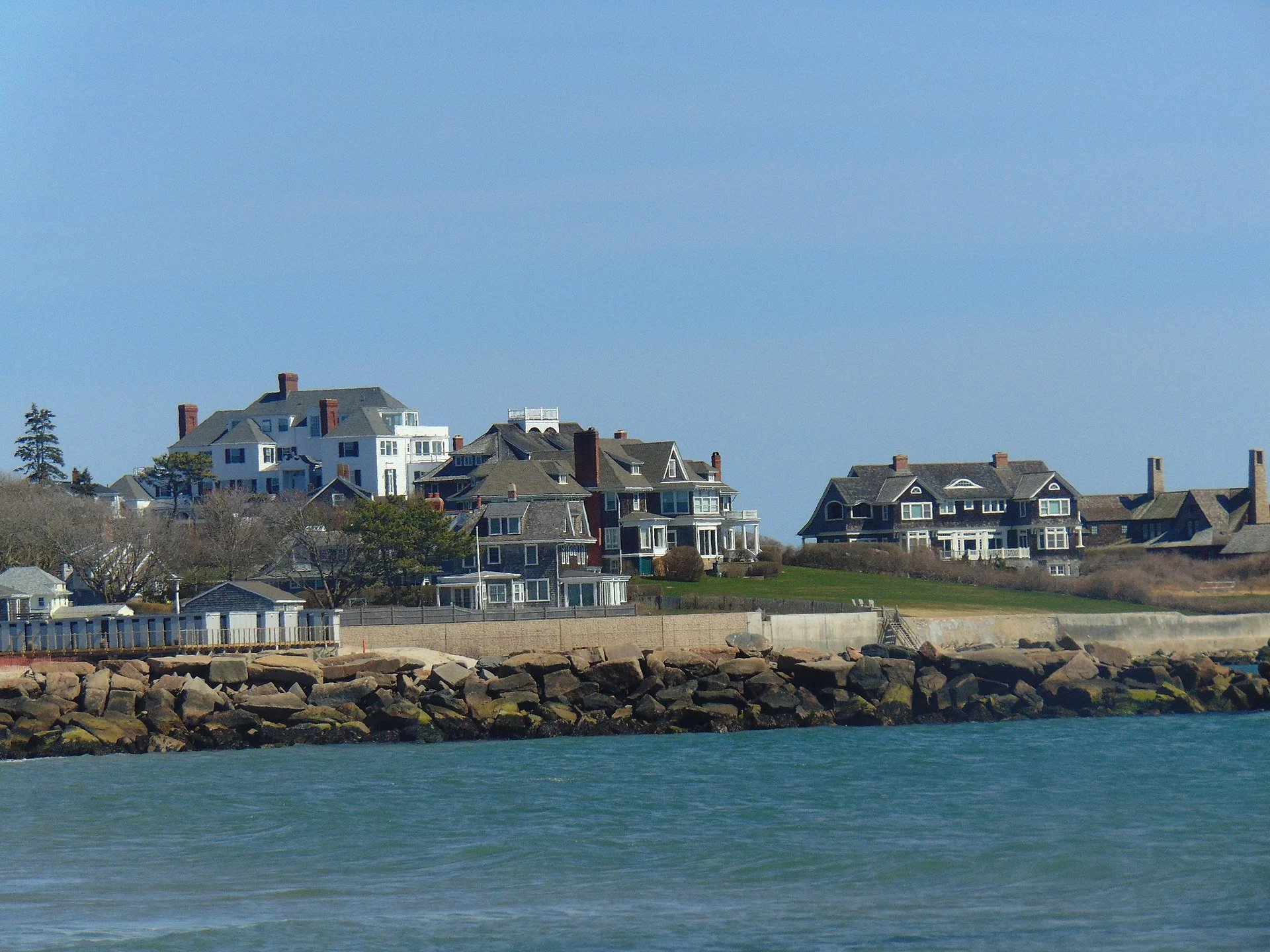
Holiday House (the white house on the left) is Taylor Swift’s home in the Watch Hill section of Westerly, R.I.
— Photo by JJBers
Bleery Boston
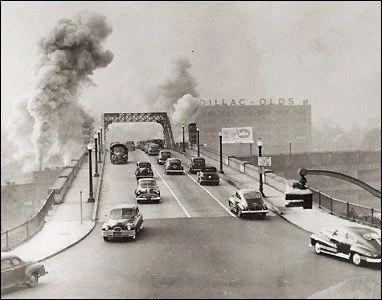
In the late’ 40s, the Boston University Bridge, connecting the BU campus and Commonwealth Avenue with Cambridge across the Charles River. Note the factory and other smoke that was so common in cities then, and Peter Fuller’s long-gone big high-end car dealership. There was still plenty of manufacturing in Greater Boston then.
Regional ruminations
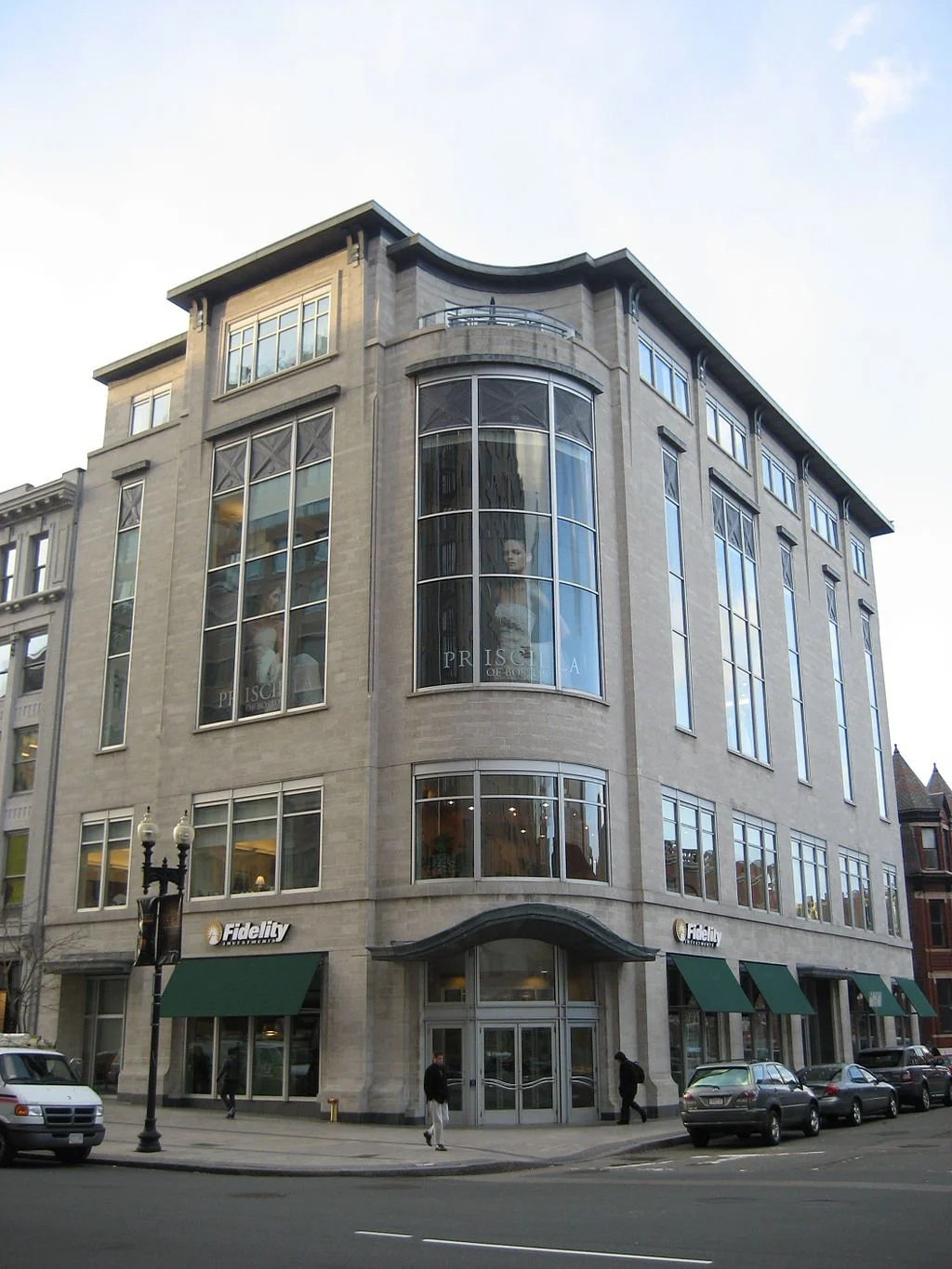
A Fidelity Investments Investor Center on Boylston Street, Boston
— Photo by Grk1011
“I was raised to believe that New England is the best place on the planet.’’
— Abigail Johnson (born 1961), CEO of giant, Boston-based Fidelity Investments, founded by her father, Edward (Ned) Johnson, in 1946.

Connecticut River Oxbow, in Northampton, Mass., from Skinner State Park on Mount Holyoke. Contrary to what Senator Lodge may imply below, there is much very fertile farmland in New England’s river valleys, with the Connecticut having some of the most productive agriculture in the East.
—Photo by Theo886
“New England has a harsh climate, a barren soil, a rough and stormy coast, and yet we love it, even with a love passing that of dwellers in more favored regions.’’
— Henry Cabot Lodge (1850-1924), powerful U.S. senator and historian
xxx
“But let’s face it…those of us from New England know we’re the real Yankees. We can’t bear being confused with folks from other parts of the country. Proud and stubborn, self-sufficient and independent. What a pain in the ass we can be. And as much as we piss and moan about the weather, we stay put. Until we don’t. Statistically half of all New Englanders who leave in search of greener pastures and warmer climates return. For good. As a stranger on a plane, from Vermont as a matter of fact, so he was the real deal according to Mr. White, said to me, as I we were hurtling through the air headed back to the biggest movestake of my life, “It gets under your skin. Some of us just can’t shake it.”
— From yankeesoul.com, which is defunct
A looming void

An image from James Hunt’s show “The Draper Factory Demolition,’’ at the RI Center for Photographic Arts, Providence, through Feb. 11.
The Draper factory, in Hopedale, Mass., was once the world’s largest manufacturer of powered cotton looms, with the machines built there playing a role in the American Industrial Revolution. The demolition of the 80-acre complex, in 2020, came after it had stood vacant since 1980, creating a void in the fabric of Hopedale.
A utopian Christian community (there were a lot of them in the mid-19th Century) was established in 1842 in Hopedale. It went bankrupt in 1856, and its assets were purchased by Ebenezer and George Draper, manufacturers of looms.
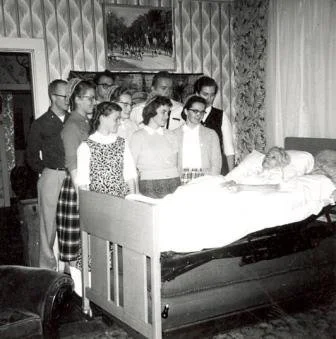
Judith Graham: New COVID rules for visitors distress relatives of elderly people in nursing homes
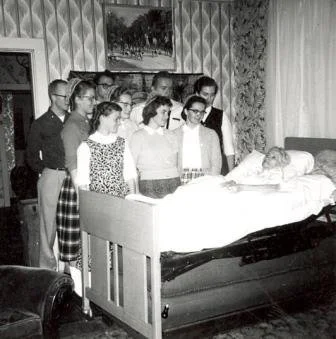
As COVID-19 cases rise again in nursing homes, at least for now, a few states have begun requiring visitors to present proof that they’re not infected before entering facilities, stoking frustration and dismay among family members.
Navigating Aging focuses on medical issues and advice associated with aging and end-of-life care, helping America’s 45 million seniors and their families navigate the health-care system.
Officials in California, New York, and Rhode Island say new COVID testing requirements are necessary to protect residents — an enormously vulnerable population — from exposure to the highly contagious omicron variant. But many family members say they can’t secure tests amid enormous demand and scarce supplies, leaving them unable to see loved ones. And being shut out of facilities feels unbearable, like a nightmare recurring without end.
Severe staff shortages are complicating the effort to ensure safety while keeping facilities open; these shortages also jeopardize care at long-term care facilities — a concern of many family members.
Andrea DuBrow’s 75-year-old mother, who has severe Alzheimer’s disease, has lived for almost four years in a nursing home in Danville, Calif. When DuBrow wasn’t able to see her for months earlier in the pandemic, she said, her mother forgot who she was.
“This latest restriction is essentially another lockdown,” DuBrow said at a meeting last week about California’s new regulations. “The time that my mom has left when she can recognize in some small locked-away part of her that it is me, her daughter, cleaning her, feeding her, holding her hand, singing her favorite songs — that time is being stolen from us.”
“This is a huge inconvenience, but what’s most upsetting is that no one seems to have any kind of long-term plan for families and residents,” said Ozzie Rohm, whose 94-year-old father lives in a San Francisco nursing home.
Why are family members subject to testing requirements that aren’t applied to staffers, Rohm wondered. If family members are vaccinated and boosted, wear good masks, stay in a resident’s room, and practice rigorous hand hygiene, do they pose more of a risk than staffers who follow these procedures?
California was the first state to announce new policies for visitors to nursing homes and other long-term care facilities on Dec. 31. Those took effect on Jan. 7 and remain in place for at least 30 days. To see a resident, a person must show evidence of a negative covid rapid test taken within 24 hours or a PCR test taken within 48 hours. Also, covid vaccinations are required.
In a statement announcing the new policy, the California Department of Public Health cited “the greater transmissibility” of the omicron variant and the need to “protect the particularly vulnerable populations in long-term care settings.” Throughout the pandemic, nursing home residents have suffered disproportionately high rates of illness and death.
New York followed California with a Jan. 7 announcement that nursing home visitors would need to show proof of a negative rapid test taken no more than a day before. And on Jan. 10, Rhode Island announced a new rule requiring proof of vaccination or a negative covid test.
Patient advocates are worried other states might adopt similar measures. “We are concerned that omicron will be used as an excuse to shut down visitation again,” said Sam Brooks, program and policy manager for the National Consumer Voice for Quality Long-Term Care, an advocacy group for people living in these facilities.
“We do not want to go back to the past two years of lockdowns in nursing homes and resident isolation and neglect,” he continued.
That’s also a priority for the federal Centers for Medicare & Medicaid Services, which has emphasized since Nov. 12 residents’ right to receive visitors without restriction as long as safety protocols are followed. Nursing homes could encourage but not require visitors to take tests in advance or provide proof of covid vaccination, guidance from CMS explained. Safety protocols included wearing masks, rigorous hand hygiene, and maintaining adequate physical distance from other residents.
With the rise of omicron, however, facilities pushed back. On Dec. 17, an organization representing nursing home medical directors and two national long-term care associations sent a letter to CMS’ administrator asking for more flexibility to “protect resident safety” and “place temporary visitation restrictions in nursing homes.” On Jan. 6, CMS affirmed residents’ right to visitation but said states could “take additional measures to make visitation safer.”
Asked for comment about the states’ recent actions, the federal agency said in a statement to KHN that “a state may require nursing homes to test visitors as long as the facility provides the rapid antigen tests, and there are enough testing supplies. … However, if there are not enough rapid testing supplies, the visits must be allowed to occur without a test (while still adhering to other practices, such as masking and physical distancing).”
Some relief from test shortages may be at hand under the Biden administration’s new plan to distribute four free tests per household. But for family members who visit nursing home residents several times a week, that supply won’t go very far.
Since the start of the year, tension over the balance between safety and residents’ rights to visitation has intensified. In the week ended Jan. 9, 57,243 nursing home staffers reported covid infections, almost 10 times as many as three weeks before. During the same period, resident infections rose to 32,061, almost eight times as many as three weeks earlier.
But outbreaks are occurring against a different backdrop today. More than 87 percent of nursing-home residents have been fully vaccinated, according to CMS, and 63 percent have also received boosters, reducing the risk that covid poses. Also, nursing homes have gained experience handling outbreaks. And the toll of nursing home lockdowns — loneliness, despair, neglect, and physical deterioration — is now far better understood.
“We have all seen the negative effects of restricting visitation on residents’ health and well-being,” said Joseph Gaugler, a professor who studies long-term care at the University of Minnesota’s School of Public Health. “For nursing homes to go back into a bunker mentality and shut everything down, that’s not a solution.”
Amid egregious staffing shortages, “we need people in these buildings who can take care of residents, and often those are visitors who are basically functioning as unpaid certified nursing assistants: grooming and toileting residents, turning and repositioning them, feeding them, stretching, and exercising them,” said Tony Chicotel, a staff attorney at California Advocates for Nursing Home Reform.
Nearly 420,000 staffers have left nursing homes since February 2020, according to the U.S. Bureau of Labor Statistics, worsening existing shortages.
When DuBrow learned of California’s new testing requirement for visitors, she arranged to get a PCR test at a testing site on Jan. 6, expecting results within 48 hours. Instead, she waited 104 hours before getting a response. (Her test was negative.) Eager to visit her mother, DuBrow called every CVS, Walgreens, and Target in a 25-mile radius of her home asking for a test but came up empty.
In a statement, the California Department of Public Health said the state had established 6,288 covid testing sites and sent millions of at-home tests to counties and local jurisdictions.
In New York, Democratic Gov. Kathy Hochul has pledged to deliver nearly 1 million COVID tests to nursing homes, where visitors can take them on the spot, but that presents its own problems. “We don’t want to test visitors who are lining up at the door. We don’t have the clinical staff to do that, and we need to focus all our staff on the care of residents,” said Stephen Hanse, president and CEO of the New York State Health Facilities Association, an industry organization.
With current staff shortages, trying to ensure that visitors are wearing masks, physical distancing, and adhering to infection control practices is “taxing on the staff,” said Janine Finck-Boyle, vice president of regulatory affairs at Leading Age, which represents not-for-profit long-term care providers.
“Really, the challenges are enormous,” said Gaugler, of the University of Minnesota, “and I wish there were easy answers.”
Judith Graham is a Kaiser Health News reporter.
Use beets to battle ice

Brine sprayed on road before a snowstorm
Adapted from Robert Whitcomb’s “Digital Diary,’’ in GoLocal24.com
Now that real winter seems to be here, at least for a few days, let’s lobby cities and towns to go easier on pouring rock salt on the roads during and after ice and snowstorms. This stuff is highly corrosive and its runoff pollutes local water supplies. And it hurts the feet of animals and kills plants. Quite a few places are instead using a mix of beet extract (!) with brine. That’s been found to be a very effective melter and somewhat biodegradable.
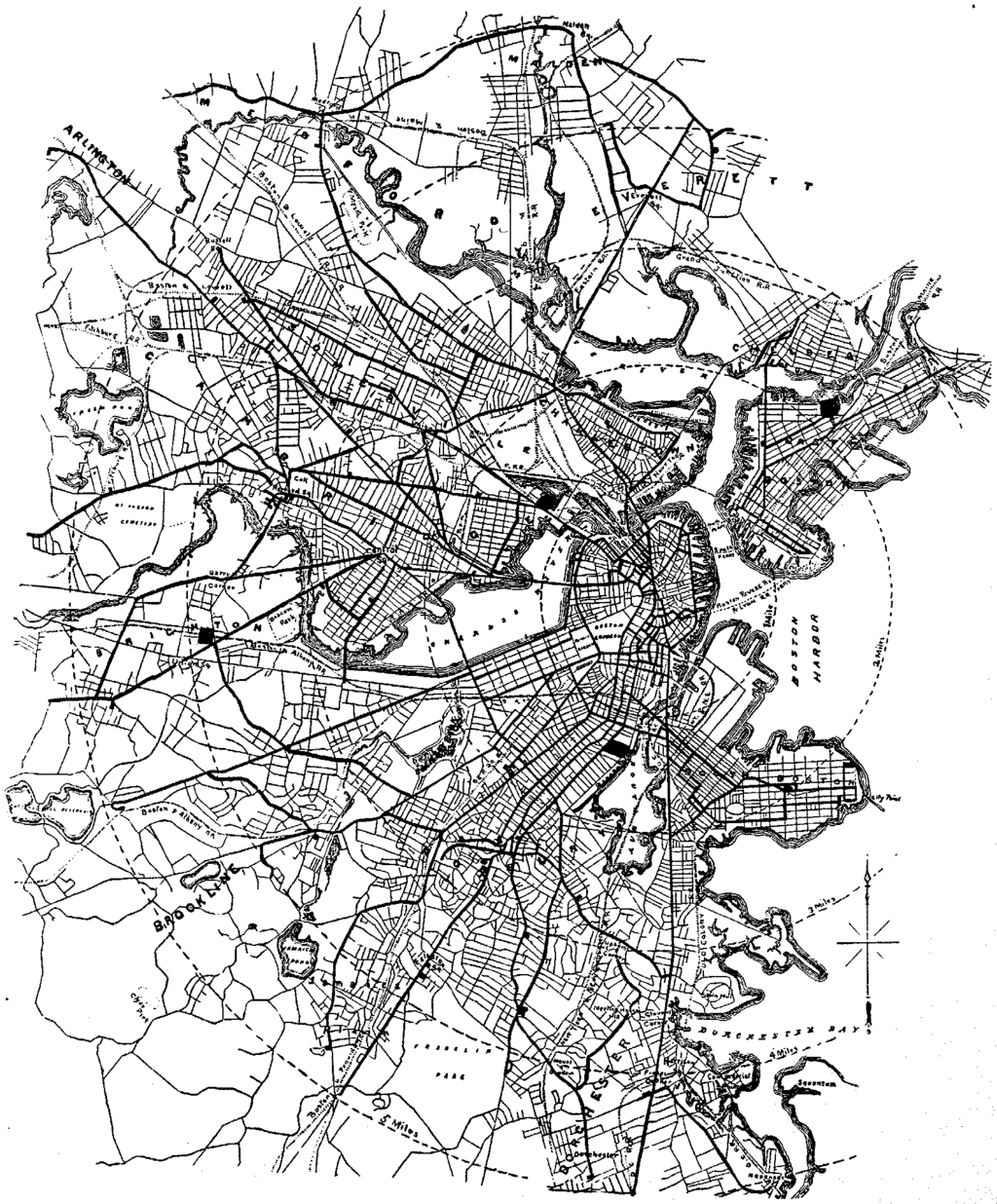
Boston’s Planned West End Street Railway system, 1885; consolidation of these lines was complete by 1887.
The Feds are expected to approve a two-year experiment in free fares on several MBTA lines in Boston. That’s good news. Worcester’s experiment in free fares has been underway since the start of the pandemic and has just been extended another year. But trying it in a big city, with a dense public-transit system, such as Boston, is much more important.
A big question is how much savings from the resulting decline (if there is one) in car traffic, and thus less wear and tear, and fewer accidents, on the roads, can offset the loss of fare revenue? There would also be less air pollution. Give it a try!
Cloudy at Colby
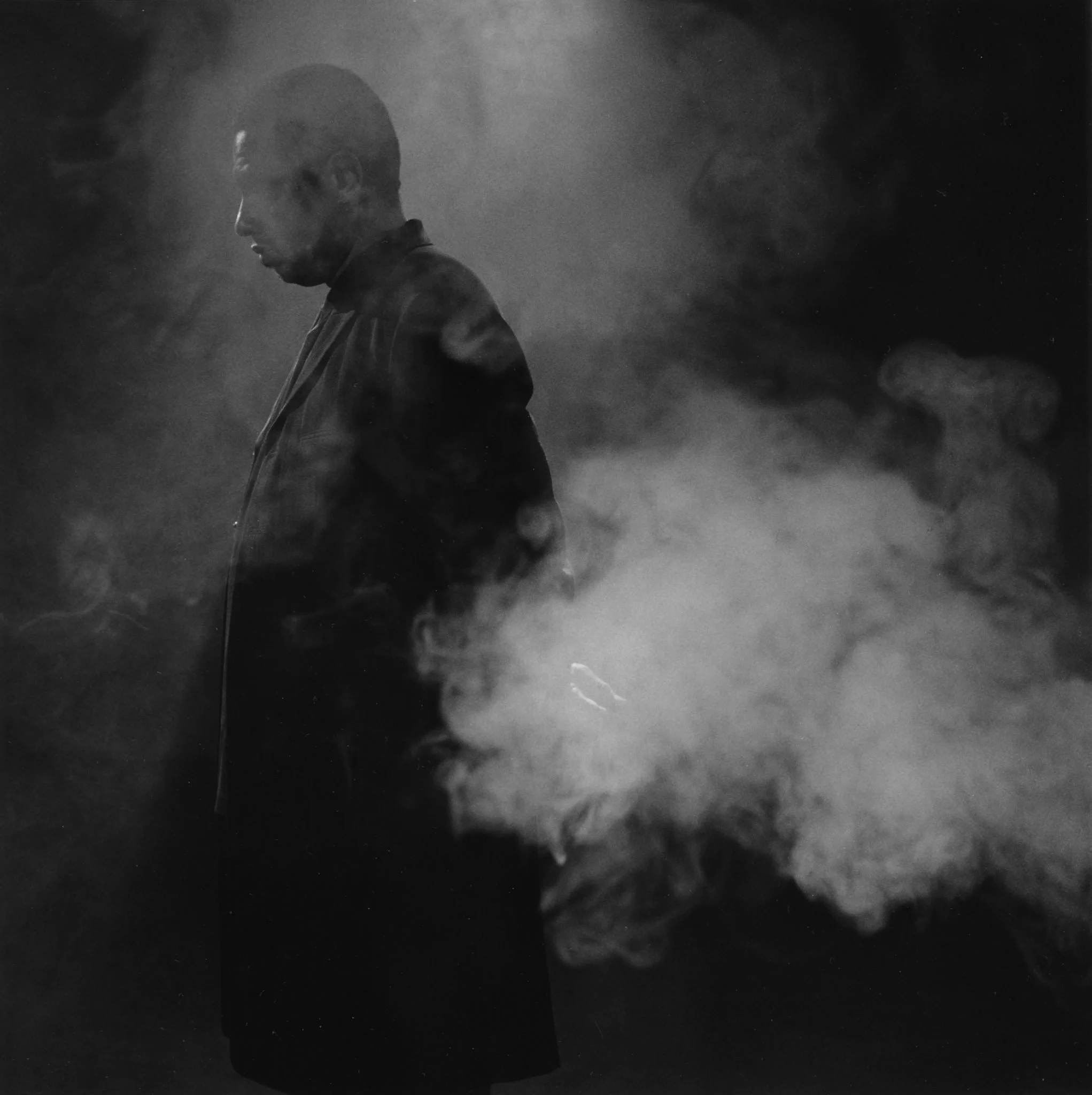
“Cloudscape’’ (still, video, sound), by Lorna Simpson, in the show “The Poetics of Atmosphere: Lorna Simpson’s ‘Cloudscape’ and Other Works from The Collection,’’ at the (surprisingly large) Colby College Museum, Waterville, Maine, Feb 3.-April 17.
The museum says:
“Simpson’s work examines how identity, specifically Black identity, is formed, perceived, and experienced. ‘Cloudscape’ features a singular figure, the artist Terry Adkins, whistling as he is slowly engulfed in clouds. His seeming ability to fade—to appear ethereal, even to disappear—evokes the ways that race and gender inform a person’s capacity, or lack thereof, to determine their desired level of public visibility. ‘Cloudscape’ makes Adkins an apparition, more spirit than body, while distorting the viewer’s temporal and spatial understanding of the world within the video.
‘‘The artworks accompanying ‘Cloudscape’ allude to atmospheric conditions while also reflecting individualized articulations of weight. They challenge, and even circumvent, the embodied ways that we relate to our surroundings.’’

They overlooked the granite outcroppings

Looking east into The Berkshires from the New York state line
— Photo by BenFrantzDale~commonswiki
“I had known something of New England village life long before I made my home in the same county as my imaginary Starkfield; though, during the years spent there, certain of its aspects became much more familiar to me. Even before that final initiation, however, I had had an uneasy sense that the New England of fiction bore little — except a vague botanical and dialectical — resemblance to the harsh and beautiful land as I had seen it. Even the abundant enumeration of sweet-fern, asters and mountain-laurel, and the conscientious reproduction of the vernacular, left me with the feeling that the outcropping granite had in both cases been overlooked. I give the impression merely as a personal one; it accounts for Ethan Frome, and may, to some readers, in a measure justify it.’’
Edith Wharton (1867-1937), in the introduction to her novel Ethan Frome (1911). The town of Starkfield is based on Lenox, Mass., in The Berkshires, where Mrs. Wharton had a large country mansion called The Mount, which is now a museum.
Similar worlds, actually

In Monument Square Historic District, a city park and its surrounding buildings at the top of Breed's Hill in the Charlestown neighborhood of Boston. The location is the site of the 1775 Battle of Bunker Hill. Monument Square was laid out in the 19th Century, when the Bunker Hill Monument (a National Historic Landmark) was erected there. The neighborhood has in recent decades been intensely gentrified.
“I grew up, as I joke around, in the 'People's Republic of Charlestown' in the city of Boston. And I was blessed to be raised right there on Monument Square in Charlestown, and every morning I'd hop on the bus and go on a 45-minute ride out to the suburbs in Brookline for elementary school. And I got to have my seat, really, in both worlds.’’
— Jonathan Tucker (born 1982), American actor
Frozen food indeed

“Ready for work on the Trawler Saturn” (January 1928). Collection of the Cape Ann Museum Library & Archives, Gloucester, Mass.

Chris Powell: On whom will pandemic resentments fall?

Representation of resentment
MANCHESTER, Conn.
Teachers and nurses in Connecticut who are government employees, along with employees of nursing homes, whose industry is mostly funded by government, are feeling so overworked because of the virus epidemic that their allegiance to Gov. Ned Lamont and the Democratic Party is coming into question.
Surveying leaders of the teachers and nurses unions last week, the Connecticut Post's Ken Dixon found no rebellion but little enthusiasm. Some union leaders acknowledged that state government had made special efforts for their members but insisted that more was owed to them. Prison workers weren't surveyed but might have expressed the greatest bitterness, since the prisons are full of virus cases.
But beyond government's employees and quasi-employees, parents of schoolchildren and relatives of people ailing with something other than the virus have resentments too. For the more safety measures are demanded by teachers and nurses, the less schooling will be delivered and the less medical care will be available to people afflicted with something other than the virus. Some people whose treatment was delayed have died.
While teachers and nurses think of themselves as workplace martyrs to the epidemic, they are hardly alone.
Restaurants, bars, and the rest of the hospitality industry have been devastated. Even when restaurants and bars have been allowed to reopen, many customers have stayed away.
Retailers have been devastated too, as personal incomes were cut throughout the nation by a decline in working hours. Even when hours were restored, wages were overtaken by inflation, which in part is a result of the government's distributing so much free money even as millions of people have stopped working and producing things to buy.
Amid the hysteria of the government and news organizations, which treat even asymptomatic virus cases as the plague, workers in all sectors of the economy increasingly call out sick. This hobbles far more than schools, as society discovers that school bus drivers and trash haulers are really "essential workers" too.

Are those electrons over the state capitol dome?
There may be only one set of workers who are neither overworked nor forced to sacrifice income and benefits: employees of the government bureaucracy, many of whom, in Connecticut, are allowed to work from home most of the time, pushing electrons when they are not pushing paper.
In the name of "solidarity forever" could these employees sacrifice a little income or time on the job in favor of the government employees and quasi-employees who are overwhelmed in schools, hospitals, and nursing homes? Of course not; the paper and electron pushers will insist on every last cent of their wages and every last restriction on their working conditions as promised by their union contract. And since the paper and electron pushers are represented by unions affiliated with the unions of the teachers and nurses, the teachers and nurses will give them a pass anyway -- in the name of "solidarity forever."
So now that the epidemic in Connecticut is suddenly worsening after fading for many months, on whom should the state's political resentments fall?
The Communist government of China might be the place to start, since the virus may have originated from bio-weapons research at the Wuhan Institute of Virology. But Americans can't vote for the Chinese government; even the Chinese themselves can't.
Dr. Anthony S. Fauci, director of the U.S. National Institute of Allergy and Infectious Diseases, has gotten off easy for funding research at the Wuhan laboratory. Americans might be tired of Fauci, but he's not elected either.
President Biden ordinarily would be a prime target of resentment, but as he dodders ineffectually from day to day -- spending a quarter of his time away from the office, apparently to regain his senses -- what would be the point of bashing him?
That leaves Governor Lamont, who got all the credit when the epidemic was fading and who is up for re-election this year and thus the most available target. At least Lamont didn't constantly make a mess of things as New York Gov. Andrew Cuomo and New York City Mayor Bill de Blasio did, but how much enthusiasm will be sparked by a campaign slogan like "It Could Have Been Worse"?
Chris Powell is a columnist for the Journal Inquirer, in Manchester.
Welcome wintry wakeup
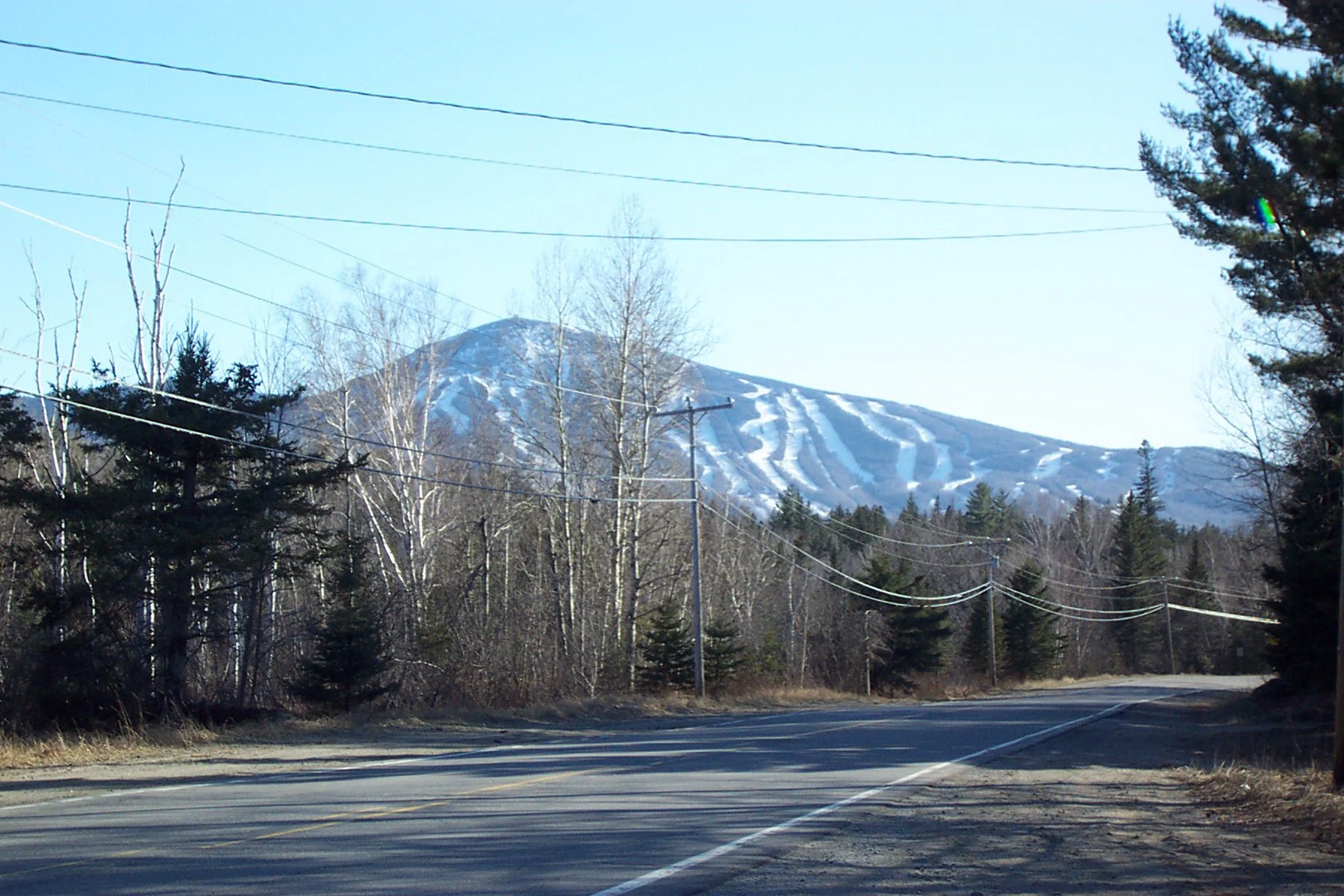
“I like waking up by the lake
frozen over, the frosty meadow
where a white horse still huffs and chafes
by the fence post and a few fog clouds
cling to the tree line of the Sugar Loaf range.’’
— From “I Like Waking Up,’’ by Ira Sadoff (born 1945), an American poet and professor of literature at Colby College, in Waterville, Maine.

David Warsh: Meet the Putin-run CSTO; The Monitor's Fred Weir explains Russia well

Emblem of the Russia-led Collective Security Treaty Organization
SOMERVILLE, Mass.
I started writing about Russia in July, 2002, with “The Thing’s a Mess,” a glimpse of a story from the kleptomaniacal decade that followed the collapse of the USSR: how a prominent Harvard economist, his wife and two sidekicks, working in Russia on behalf of the U.S. State Department, covered by high-level friends in the Clinton administration, had been caught seeking to cut to the head of the queue to enter the country’s new mutual- fund business with a firm of their own.
This column followed the saga through the U.S. invasion of Iraq; Vladimir Putin’s objections; his brief 2008 war in former-Soviet Georgia to caution against further NATO expansion; Ukraine’s Maidan protest of 2014 and its aftermath; and the 2016 election of Donald Trump. Its little book, Because They Could: The Harvard Russia Scandal (and NATO Expansion) after Twenty-Five Years, appeared in 2018.
I still scan four daily newspapers to see what government sources are saying about Russia. I look regularly at Johnson’s Russia List, a Web-based compendium with a good eye for non-standard views. But mostly I form my views from dispatches of Fred Weir, Moscow correspondent for the Boston-based Christian Science Monitor. They are thoughtful, well-informed, and empathetic.
Last week I read three Weir articles to which I am entitled for the month (you can do the same). Why Russia’s troop surge near Ukraine may really be a message for the West made clear that the aim of large troop deployments – for the second time in a year – was to concentrate minds on Russian demands in Kyiv and the West. Russia want guarantees that Ukraine and other former Soviet states won’t join NATO as a basis for regional stability.
How the Kazakhstan crisis reveals a bigger post-Soviet problem explains the Collective Security Treaty Organization (CSTO), the six-member post-Soviet, Russian-led military alliance that intervened briefly in Kazakhstan to restore order and preserve the current poo-Moscow government. Weir wrote, “The swift and efficient injection of 2,600 troops [mostly Russian paratroopers, but contingents from Armenia, Belarus, Tajikistan, and Kyrgyzstan as well] demonstrated an unprecedented level of elite solidarity among emerging post-Soviet states, which are often depicted as allergic to Russian leadership.”
What’s in a name? For Russia’s “Putin Generation,” not as much as you’d think contrasted the experiences of Russians born in the 21st Century with those of those of their grandparents and parents. Russians born after World War II lived lives of enforced conformity and struggled to satisfy basic consumer needs, Weir writes, before the disintegration of Soviet economic life in the ‘80’s gave way to the desperate 90’s, when people reinvented themselves while struggling to survive.
Instead, this [Putin] generation, at least among those young people that the Monitor interviewed, seems to have a sense of optimism about life and a desire to reach beyond simple material security and do something to improve the world around them. That’s something relatively new in Russia.
Despite his ubiquity in their lives, Mr. Putin is not a symbol or icon to his namesake generation, many experts say, but merely a flashy pop-sociology way to demarcate them without taking into account social class, education, gender, and other critical markers.
When I was finished reading my three stories, I subscribed to The Monitor and read a fourth: Russian human rights group under threat: What soured the Kremlin? It was written before Russia’s Supreme Court shut down Memorial, a human-rights organization formed in the buoyant days of perestroika to document Soviet-era abuse, for having violated the country’s intricate “foreign agent” laws.
Weir wrote, “[M]ost experts see [the decision] as part of an accelerating campaign to close down any space for independent political action or criticism amid deepening antagonism with the West, a stagnating economy, and uncertainties about the continuing stability of Mr. Putin’s regime.”
In other words, there is still plenty of room for improvement in Russian civil society. I doubt, however, there will be war in Ukraine. Putin has made his point more forcefully than ever about the cavalier disrespect that America has shown since 1992. My sense is that he has been doing a pretty good job of putting his country back on its feet, after a surpassingly difficult century. I don’t have that feeling about Xi Jinping and China. But the situation that concerns me most is that of my own country. Bring on those mid-term elections! There is a great deal of rebuilding to begin.
xxx
Here are complementary links to a handful of especially interesting sessions at the American Economic Association meetings on Zoom earlier this month. Eight of the discussions deal with important meat-and-potatoes issues, while the ninth link connects to the hour-long lecture on preference formation, by Nathan Nunn, of Harvard University, that I found so interesting and mentioned last week.
David Warsh, a veteran columnist and an economic historian, is proprietor of Somerville-based economicprincipals.com, where this column originated.

The First Church of Christ, Scientist in Boston, with the mother church and administrative headquarters of the denomination
Use boarding houses to reduce housing problem
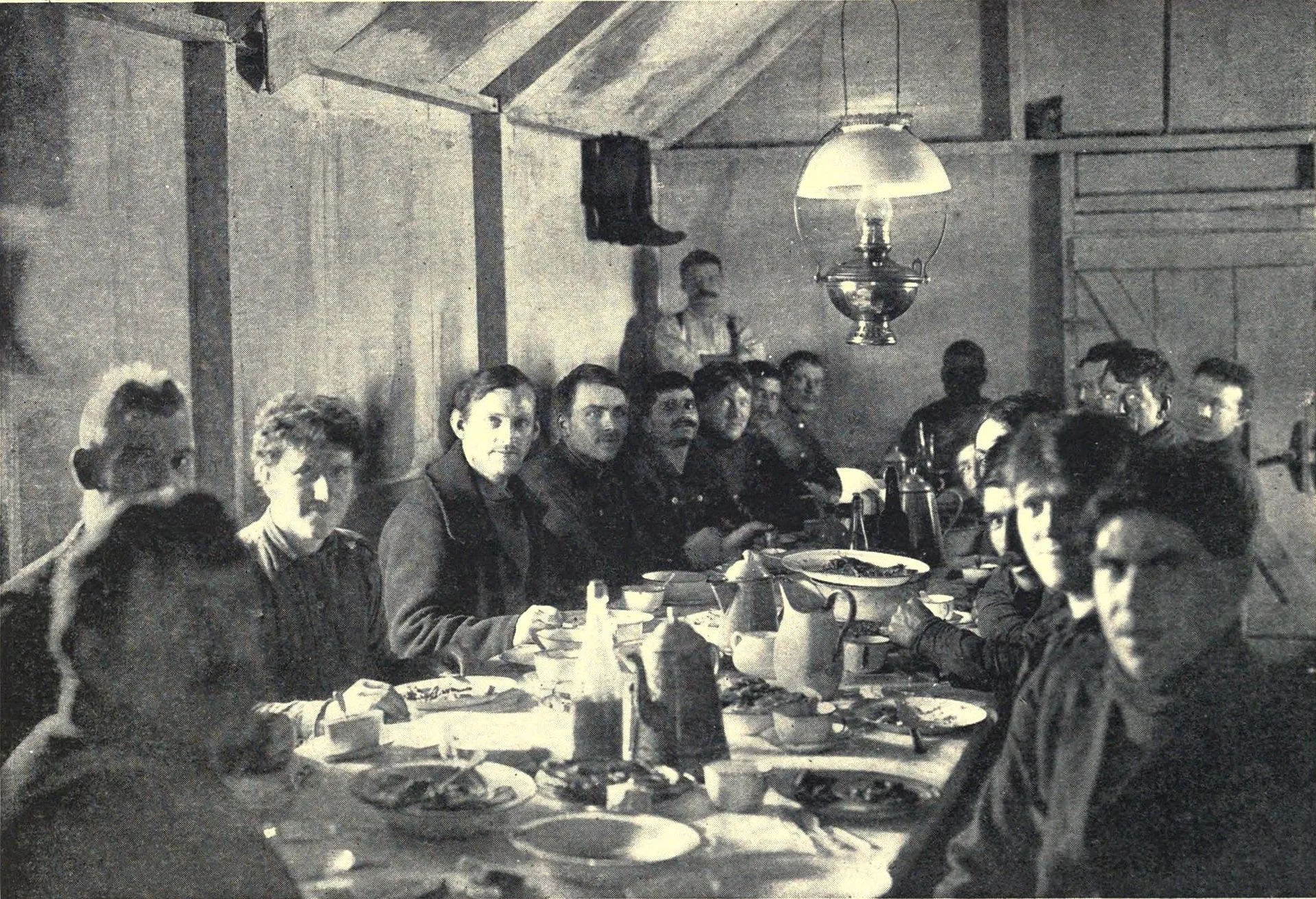
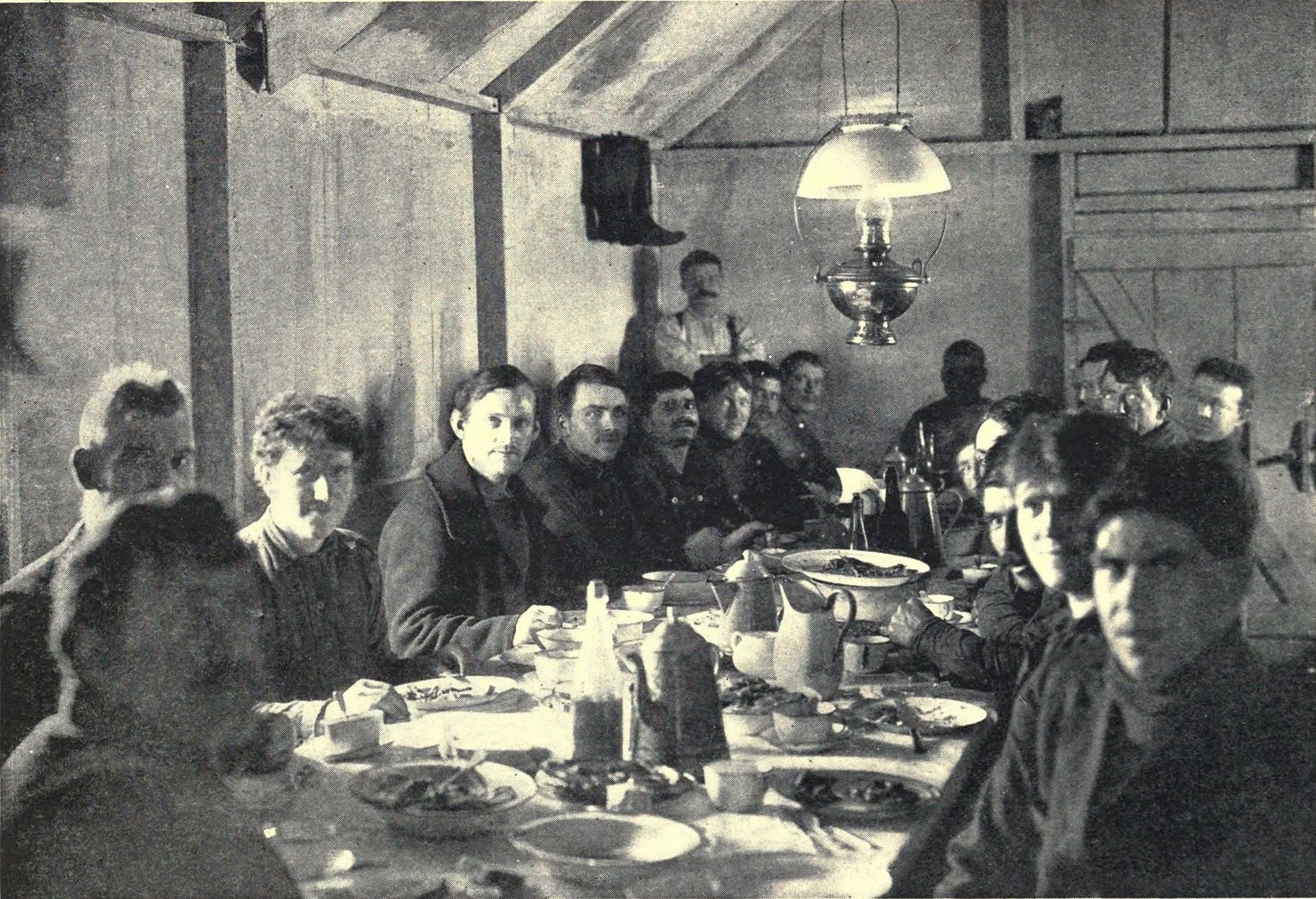
Early-20th-Century dinner in a miners' boarding house in northern Canada.
Adapted from Robert Whitcomb’s “Digital Diary,’’ in GoLocal24.com
Housing, its lack thereof and its expense, continues to be a big issue in Rhode Island. One way to alleviate the crisis in “affordable housing,’’ at least for single people, would be to encourage a revival of that old standby, the boarding house.
Or maybe call them dorms.
Put up buildings, subsidized or not, with one-bedroom units, each with a bathroom, bed, table, chair and utilities, including Internet. Obviously, you could provide far more units than with a conventional apartment house, which would attract developers.
There could be a central kitchen, maybe on each floor, with food lockers for each tenant and maybe some central lounge/living room.
Such housing would be particularly handy for young or other single people, retirees, people in transitory service jobs, and those between long-term housing. Building them near public transit would make them even more useful.
It might even reduce, a little, the pressure for sprawl development that the pandemic has depressingly accelerated, especially with the rapid increase in remote work, while helping to moderate housing-cost inflation. This sprawling is chewing up yet more countryside, increasing air and water pollution and stressing municipalities trying to serve a population that’s becoming even more spread out and car-dependent.
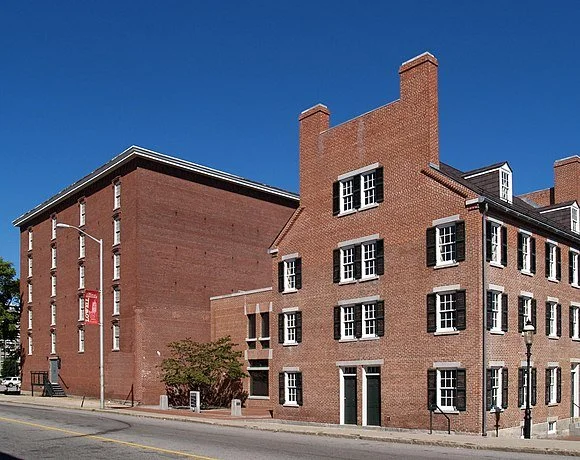
At right, one of the last remaining structures built as a boarding house for 19th Century textile workers in Lowell, Mass.. It’s now part of the Lowell National Historical Park.
Nothing good about being a good loser?
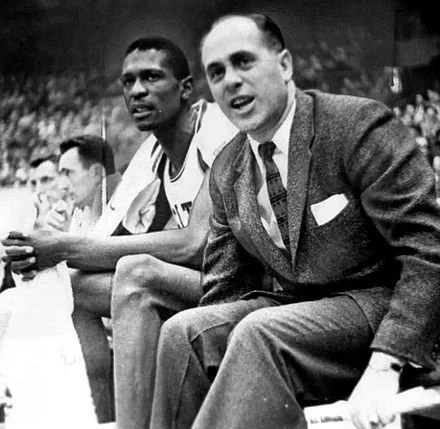
Red Auerbach on the bench next to rookie Bill Russell during a game at the old Boston Garden, Dec. 26, 1956. Bob Cousy can be seen in the background.
“Show me a good loser, and I’ll show you a loser.’’
— Arnold “Red’’ Auerbach (1917-2006), legendary and highly successful head coach (1950-1966), and then general manager, of the Boston Celtics.
xxx
“Part-time information and full-time opinions can be very dangerous.’’
{Even in sports?}
— Chris Berman (born 1955), a sportscaster for ESPN (originally short for Entertainment and Sports Programming Network) virtually since ESPN was launched, in 1979, as one of the first major cable-TV networks. It has been based since its founding in Bristol, Conn.

ESPN’s palatial headquarters, in Bristol, Conn.
— Photo by Jkinsocal
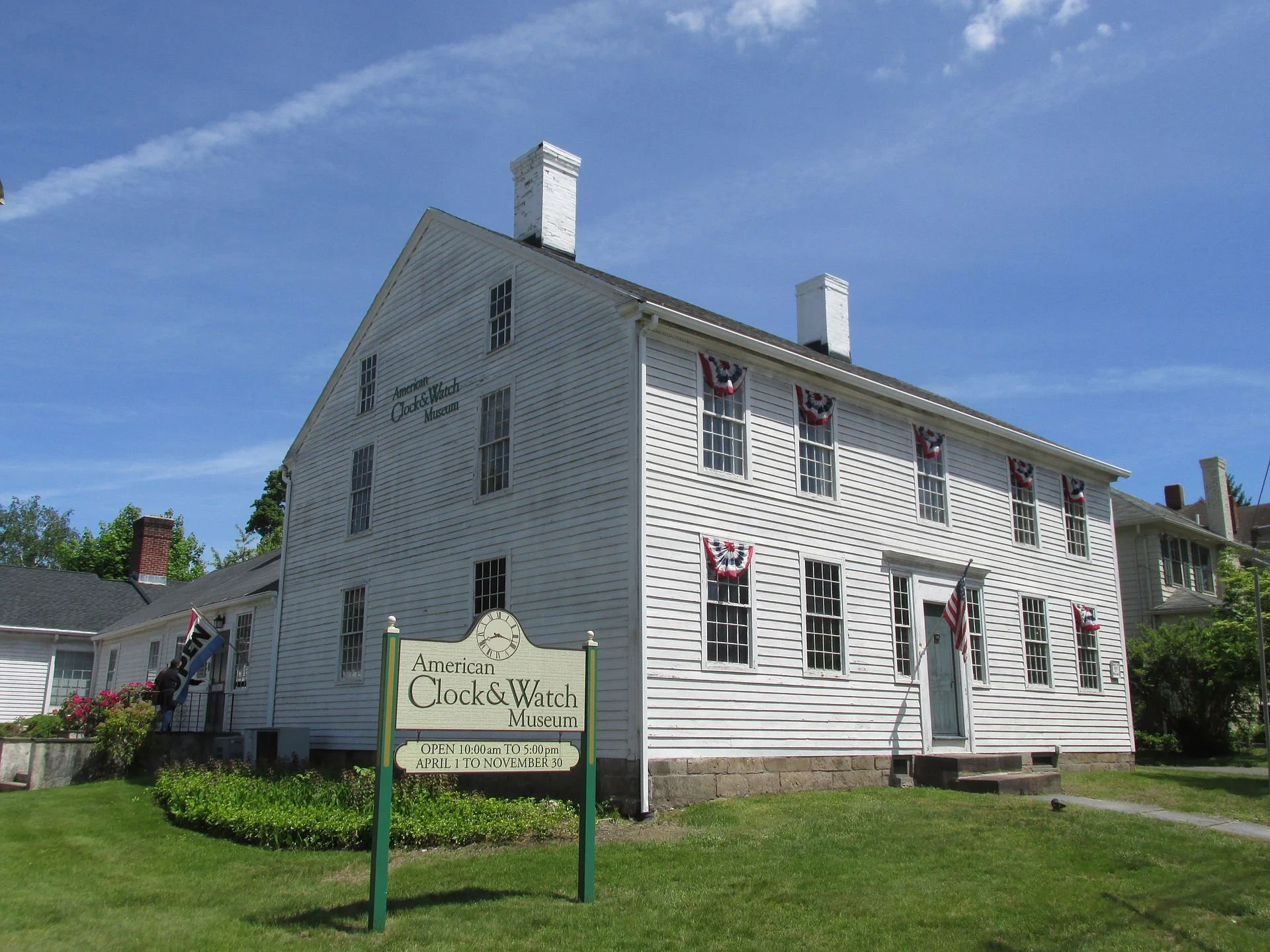
American Clock and Watch Museum, in Bristol, which, like Waterbury, Conn., was a major maker of clocks.
Wood for paper and WPA in New Hampshire

“Pulpwood Logging” (oil on canvas, 1941), by Philip Guston (Canadian-American, 1913-1980), in the show “WPA in NH: Philip Guston and Musa McKim,’’ through Jan. 30 at the Currier Museum of Art, Manchester, N.H. Pulpwood was used to make paper — a once-large, and heavily polluting (of air and water), industry in the Granite State.
The museum explains:
“In 1941, the famed artist Philip Guston and the {American} poet/painter Musa McKim painted a pair of monumental murals for what at the time was the Federal (aka Forestry) Building in Laconia, N.H. Each measuring 14 feet, the expansive paintings depict sustainable logging and the restoration of New Hampshire forests around the White Mountains. The images were commissioned by the Works Progress Administration to carry out public projects and support artists under the New Deal.
“Although these magnificent murals are of great artistic significance, they have long been forgotten as the original building in Laconia was repurposed. The paintings have been carefully restored by the federal General Services Administration and are back in New Hampshire, where they can now be seen at the Currier Museum of Art….
“The paintings mark important points in the careers of the two artists, who were married to each other. Shortly after completing this mural, Philip Guston gave up realistic painting to focus on Abstract Expressionism; he became a leader of the New York School. Musa McKim focused her career on poetry and writing; her collection Alone with the Moon was published in 1994.”

"Wildlife in the White Mountains” (1941, oil on canvas), by Musa McKim (1908-1992)
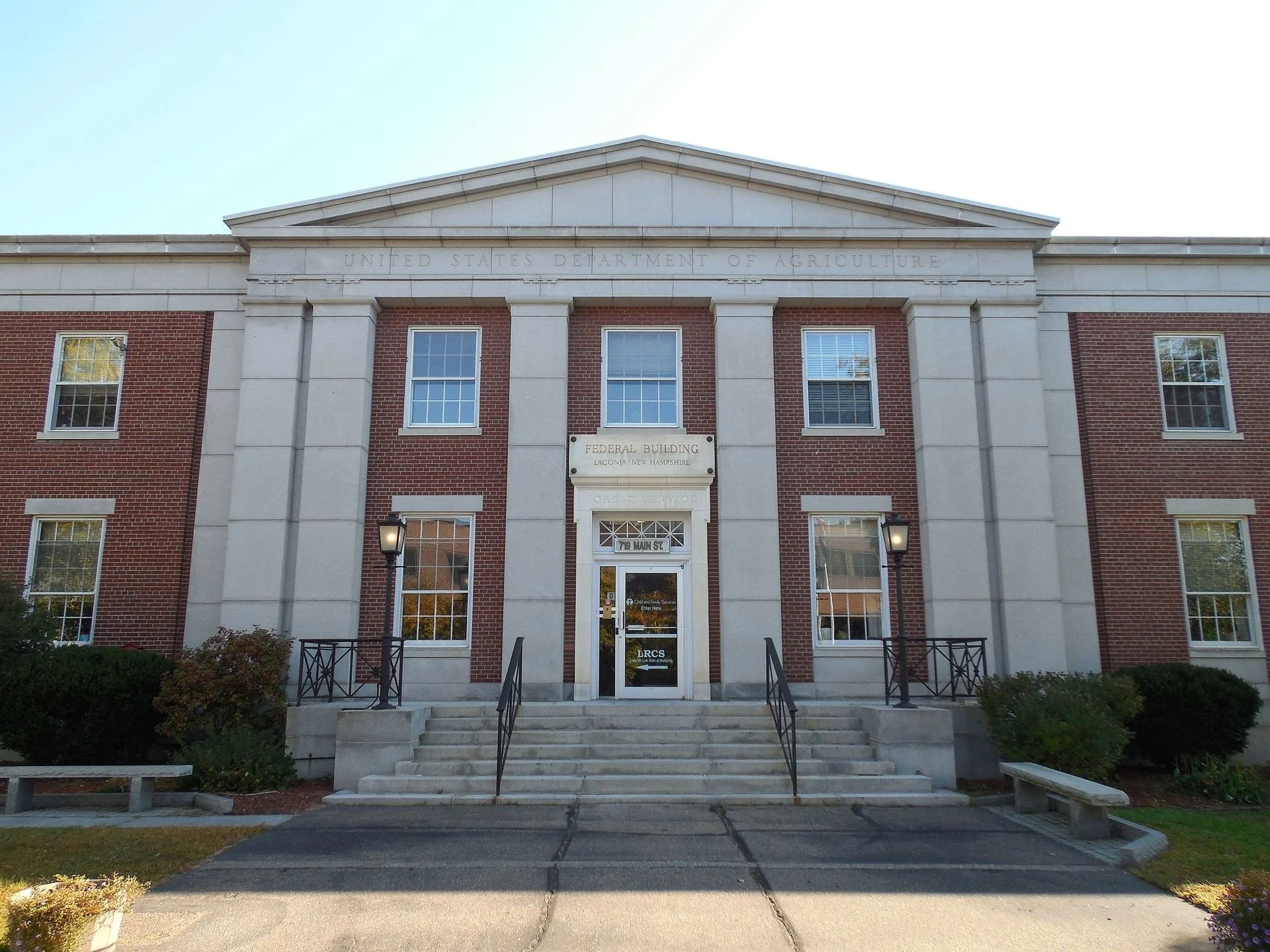
Former Federal Building in Laconia, N.H. It now houses a local social-service agency.
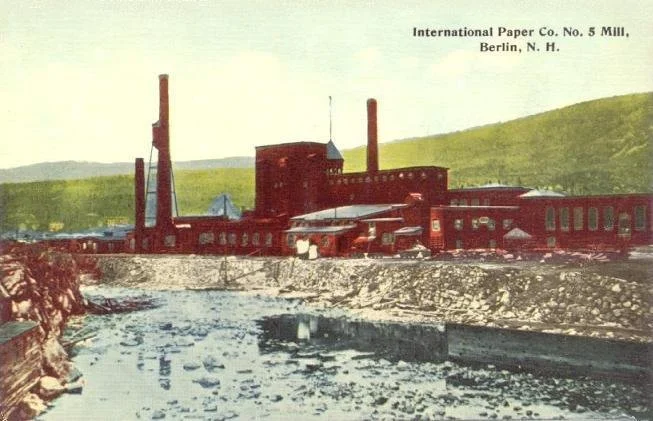
Circa 1912

Cynthia Hammond: Does Conn.-R.I. Amtrak bypass plan still live?

Amtrak Acela train near Old Saybrook, Conn.
From ecoRI News (ecori.org)
CHARLESTOWN, R.I.
A U.S. Department of Transportation “Providence to New Haven Capacity Planning Study” has some local officials wondering whether the original plan to run train tracks through sections of their town, and other Rhode Island and Connecticut towns, might not be dead after all.
The study is part of the Northeast Corridor 2035 Plan, or “C35,” a 15-year plan to guide investment in rail service in the Northeast.
The C35 describes the plan, which has an estimated cost of $130 billion, as the first phase of the long-term vision for the corridor described in the Federal Railroad Administration’s 2017 NEC Future plan, which includes “making significant improvements to NEC rail service for both existing and new riders, on both commuter rail systems and Amtrak.”
In 2016, Charlestown officials learned, by chance, that the Federal Railroad Administration (FRA) had released its Tier 1 environmental impact statement (EIS) on a plan to straighten train tracks in the Northeast to accommodate high-speed rail service. The plan wasn’t met with broad enthusiasm.
The FRA had sent letters to affected towns and the Narragansett Indian Tribe in 2015, soliciting comments on the draft EIS, but according to a blog post on the plan by the Charlestown Citizens Alliance political action committee, there was no specific mention of new tracks going through Charlestown or other neighboring towns.
"Most of these governments have no recollection of receiving communication from the FRA,” the post read. “The letter does not say that new rails and a new rail route are proposed in your community. When no comments came from one of the most impacted towns, this should have suggested to the FRA that the local community and local stakeholders were not aware and engaged in the review process.”
The unpleasant surprise included in the plan was the Old Saybrook to Kenyon Bypass, which would have moved rail traffic directly through Old Saybrook, Conn., Westerly and Charlestown, bisecting neighborhoods, nature preserves and historic farms. The towns and Narragansett Indian Tribal officials fought the plan, and the Record of Decision, released in 2017, omitted the bypass.
But the omission didn’t mean that the bypass had simply gone away, and the Charlestown Citizens Alliance warned that the decision left the door open to a study which could resurrect the bypass.
The alliance’s blog post published after the decision reads: “The July 12, 2017 ROD calls for a study that could possibly bring back the Bypass. We will remain vigilant throughout this study process to work to stop the Bypass from being resurrected.”
In an effort to learn more about the FRA’s intentions, Town Council President Deborah Carney spoke last August with Amtrak’s chief executive officer, William J. Flynn, who said the most likely route for a New Haven to Providence high-speed rail track would be along the Interstate 95 corridor.
Carney, who said she had been put in contact with Flynn by a mutual acquaintance in Charlestown, acknowledged that while there is no guarantee that plans for the original bypass that would have bisected the town would not be revived, she felt reassured that the I-95 route would be preferred.
“They’re doing the feasibility study and analysis, so there’s no concrete plan at all, but [Flynn] said if they were to go forward with something, it would most likely either to parallel Route 95, like the northern part of the state, or it would involve improving the existing line that goes along the southern coast - where it is now.”
Rhode Island Department of Transportation (DOT) director Peter Alviti represents the state on the 18-member FRA Northeast Corridor Commission (NECC), which is studying rail demand and capacity in the Northeast New Haven to Providence rail corridor.
Alviti, and DOT intermodal programs chief Stephen Devine, met in November with Charlestown officials, Rhode Island state Rep. Blake Filippi, R-New Shoreham, and state Sen. Elaine Morgan, R-Hopkinton.
Alviti told the group the NECC would require a study of future ridership demand on the New Haven to Providence route before any decision was made. (DOT did not support the originally proposed Old Saybrook to Kenyon bypass.)
DOT spokesperson Charles St. Martin said in a recent emailed statement that his agency was counting on more public consultation this time around.
“Yes, RIDOT met recently with Charlestown officials regarding this proposal,” he said. “We told them we are aware that Amtrak is retaining a consultant to do an initial market study only to first determine the demand for higher speed services. This effort will be starting soon and will include a robust public participation component.”
St. Martin also noted, “Rhode Island’s position remains the same as in 2017, when the state indicated opposition of the bypass route in Charlestown.”
What still vexes some Charlestown officials, however, is the continued lack of any FRA response to the town’s inquiries.
In August 2021, at the request of the Town Council, town administrator Mark Stankiewicz wrote a letter to FRA interim administrator Amit Bose, asking for more information regarding the New Haven to Providence study.
After receiving no response to the first letter, Stankiewicz sent a second letter on Dec. 10, which read, in part, “Given the limited available information and the absence of any communication from the FRA, we are in a quandary as to how to ensure Charlestown receives timely information and is able to relay our input and concerns about the New Haven to Providence Capacity Planning Study.”
Charlestown Planning Commission chair Ruth Platner, who was not mollified by Flynn’s statements, said she had not expected the FRA to respond.
“I’m not surprised that they’re not answering, but I think it’s important that the town is asking,” she said. “The thing is, they took the [Old Saybrook to Kenyon] bypass out of the decision, but they didn’t replace it with anything, and the whole rail plan is based on the assumption that there’s going to be huge job growth in the big cities — in Washington, Philadelphia New York and Boston, but that’s not Rhode Island and that’s not Connecticut. The high-speed rail is to connect those big cities, and they want to do it, one way or another.”
Platner said she believed that pandemic-related changes which have made it possible for many Americans to move out of large cities and work from home will impact the study.
“I think what’s happened now, because of the pandemic, there’s kind of a wait and see, to see what this means for growth. Are the cities not going to grow?” she said.
Another factor to consider, Platner said, is the proximity of the I-95 corridor to the coast, and therefore, its vulnerability to rising sea levels.
“It’s a beautiful ride, and it’s right along the coast, and the water is right there. The tracks are going to be under water, so they have to do something, and the problem has to be solved, and it’s going to be solved with some sort of realignment away from the coast,” she said.
Carney said her concerns had been largely put to rest after her conversation with Flynn and the meeting with Alviti.
“In our conversations with Peter Alviti, and also William Flynn, it doesn’t seem as though that Old Saybrook to Kenyon is going to be revived, but I understand where people are coming from,” she said. “You know, if it’s their property that’s impacted, obviously they’re concerned about it, but I will say that Director Alviti kind of put our minds at ease, you know, in saying ‘This is not in the 10-year plan.’”
Platner, however, warned the affected towns to remain vigilant.
“The town of Charlestown needs to be involved, so that we can protect the people and the environment here,” she said. “What we don’t want is to have a plan be created that we don’t know about.”
The FRA did not respond to several requests for comment.
Cynthia Hammond is an ecoRI News contributor